City, University of London Institutional Repository
Citation
: Johnston, L. (2016). Reporting the Syria conflict on television (2011-2014): how
the use of user generated content (UGC) has shaped BBC World News TV coverage and affected journalistic practices. (Unpublished Doctoral thesis, City, University of London)This is the accepted version of the paper.
This version of the publication may differ from the final published
version.
Permanent repository link:
http://openaccess.city.ac.uk/18077/Link to published version
:
Copyright and reuse:
City Research Online aims to make research
outputs of City, University of London available to a wider audience.
Copyright and Moral Rights remain with the author(s) and/or copyright
holders. URLs from City Research Online may be freely distributed and
linked to.
1 City University London
Department of Journalism
Reporting the Syria conflict on television (2011-2014):
How the use of user-generated content (UGC) has shaped BBC
World News TV coverage and affected journalistic practices
Submitted by: Lisette May Johnston 10 Northampton Square London EC1V 0HB November 2015
Supervisors: Professor Suzanne Franks and Dr Neil Thurman
Submitted in partial fulfillment of the requirements for the degree of:
2
Table of Contents
Introduction ... 10
Thesis structure ... 11
Contextualising the research ... 12
Situating the research ... 14
Socio-political history of Syria ... 15
Response to the protests ... 17
Media in Syria in context ... 18
2011 onwards: humanitarian cost ... 20
Rise of Islamic State ... 22
Understanding UGC at the BBC ... 24
Justification for this research ... 25
Chapter 1: Literature Review ... 28
UGC at the BBC ... 30
Journalistic roles ... 32
Do Assad’s troops wear trainers? ... 35
Labels and warnings ... 40
The BBC and the Arab uprisings ... 42
Issues of labelling ... 45
Looking to Syria ... 46
Referencing ‘video’ ... 48
Engaging with activists ... 49
Definitions: Citizen journalism ... 51
Citizen witnessing ... 51
User-Generated Content ... 53
Networked journalism ... 55
Will the real citizen content please stand up? ... 56
Incorporating old ideas and new content ... 57
Outlining the theories ... 61
The development of gatekeeping theory ... 63
3
Analysing the process of gatekeeping ... 68
Evolution of gatekeeping theory ... 69
Media sociology and gatekeeping ... 72
Engaging with sources ... 76
Looking at the role of journalists ... 77
Guarding the gates: information and channels ... 79
Gatewatching as a developing theory ... 81
A critique of Bruns ... 82
Outlining theoretical frameworks ... 85
Chapter 3: Methodology ... 87
Research overview ... 88
Data collection methods ... 89
Pilot interviews ... 90
Visible researcher and the insider: outsider perspective ... 92
Ethical considerations ... 95
Justifying the data collection methods ... 96
Access and carrying out research ... 98
Explaining processes ... 100
Limitations ... 100
Content analysis preparation ... 102
Devising the codebook ... 105
Sourcing ... 108
Intercoder reliability ... 109
Other Limitations ... 113
Chapter 4: Content Analysis ... 116
Method ... 116
Varying percentages ... 120
Verification ... 121
Audience awareness ... 124
Crediting content ... 125
Sources of content ... 127
Explaining sub-categories ... 127
4
Content source results ... 133
Chapter 4: Document Analysis ... 137
Analysing the data ... 137
Categorical differences ... 138
Delving for more detail ... 141
Verification processes ... 142
Content found ‘in the field’ ... 144
Verification during chemical attacks ... 146
Warnings ... 147
Limitations ... 149
Discussion ... 150
Chapter 5: Qualitative interviews and newsroom ethnography results ... 152
New social media skills ... 156
Learning to understand content ... 160
Issues of verification - inside the office - technology available ... 162
Issues around signposting content or giving warnings ... 163
Changes in rotas ... 165
Creation of ‘Live and Social’ role ... 167
Developing rapport with other departments ... 168
All change at BBC Arabic ... 170
Impact of using UGC on other departmental relationships and structures ... 172
Developing rapport with activists ... 174
Engagement ‘in the field’ ... 178
Engaging with the Syrian Diaspora ... 179
Coping with trauma and distress ... 181
Safety concerns ... 183
Chapter 6: Discussion ... 186
Research aims and context ... 188
Use of UGC ... 189
Role of the journalist ... 191
Verification failings ... 192
Verification analysis ... 194
5
UGC in London vs UGC in the field ... 196
Duty of care ... 201
Tensions related to theory ... 204
Contribution to knowledge ... 208
Chapter 7: Conclusions ... 210
Looking to policy ... 210
Changing workflows ... 212
Educating staff about UGC risks and compliance ... 212
Changing journalistic roles and skills ... 213
Implications for duty of care of staff ... 214
Changing media marketplace ... 219
Researcher reflections ... 219
Concluding summary………...……… 221
6
Table of Figures
(Figure 1.1: Screenshot of BBC News online as featured in Silverman 2012) 38
(Figure 2.1: Lewin's gatekeeping model 1947:149) 64
(Figure 3.1: Screengrab of ENPS database system used by BBC to create running orders) 99
(Figure 3.2: screengrab of Jupiter the BBC's TV transmission and archive system) 103
(Figure 3.3: Copy of the codebook created in Excel) 106
(Figure 4.1: Average % of UGC used in BBC News TV packages covering the Syria conflict which were broadcast on BBC World News Television between March 2011 and March 2014)
120
(Figure 4.2: Breakdown of proportion of UGC coded in BBC TV News reports about Syria which
broadcast on BBC World News Television between March 2011 and March 2014 by percentage)
120
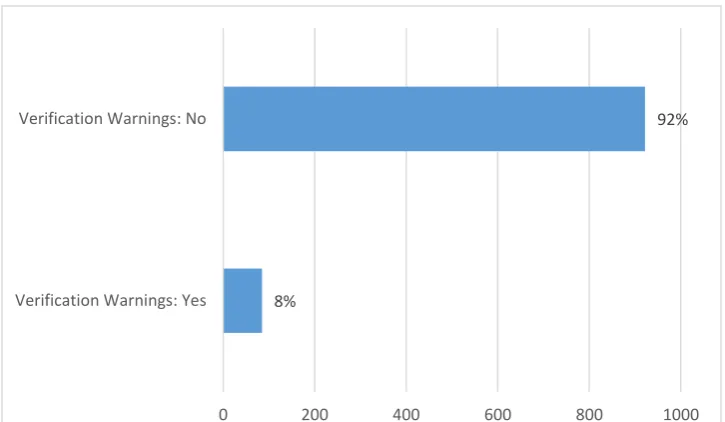
(Figure 4.3: percentage of UGC clips used in BBC News TV reports about Syria) 122
(Figure 4.4: Screengrab from Jupiter of news package which aired on 21 December 2013) 123
(Figure 4.5: Screengrab of Jupiter showing news report using footage with Shahba Press logo) 124
(Figure 4.6: Proportion of UGC clips included BBC News TV reports on Syria conflict which aired on
BBC World News TV between March 2011 and March 2014)
125
(Figure 4.7: Format in which audience were given source detail of UGC clip) 126
(Figure 4.8: BBC news package footage with Douma City watermarked logo) 130
(Figure 4.9. Islamic State logo watermarked on BBC package footage was categorised as 'Rebel') 130
(Figure 4.10: Douma Media Centre logo watermarked on BBC footage was categorised as 'Media') 131
(Figure 4.11: Shahba Press logo watermarked on BBC footage was categorised as 'Rebel') 132
(Figure 4.12: The watermarked logo on BBC TV footage was identified as being from Islamic rebel group Ahrār ash-Shām, and was categorised as 'Rebel' in the codebook field)
132
(Figure 4.13: Breakdown of source of UGC, where BBC obtained footage from for use in reports relating to the Syria conflict broadcast March 2011-2014)
134
(Figure 4.14: Screengrab of Aleppo Media Centre (AMC) footage identified by watermarked logo) 135
(Figure 4.15: Screengrab of footage from package from August 21 2013) 136
(Figure 4.17: Excerpt from Key UGC files, 27 April 2011) 138
(Figure 4.18: Screengrab of YouTube video uploaded 26 April 2011) 140
(Figure 4.19: Screengrab of YouTube video uploaded 26 April 2011) 141
(Figure 4.20: One of the video URLs logged in Key UGC files is no longer active) 149
(Figure 5.1: Screengrab of correspondent Lina Sinjab appearing on BBC World News TV) 154 (Figure 5.2: Screengrab of Bridget Kendall's report about the Ghouta attacks in August 2013) 164
(Figure 5.3: Screengrab of activist Abu Rami on World News TV throughout June 2012) 175
7
Table of tables
(Table 3.1: Full list of fields in content analysis codebook) ……….. ... 106
(Table 3.2: Results of intercoder reliability for content analysis of BBC TV news packages) ...….110
(Table 4.1: Breakdown of news packages analysed as part of content analysis) ... 117
(Table 4.2: Shotlist from SYRIA/HAWLEY/1800/31/7 package exported from Jupiter into Excel) ... .128
City, University of London Northampton Square London EC1V 0HB United Kingdom
T +44 (0)20 7040 5060
www.city.ac.uk Academic excellence for business and the professions
THE FOLLOWING PARTS OF THIS THESIS HAVE BEEN REDACTED
FOR COPYRIGHT REASONS:
8
Acknowledgements
Many people have helped with this research, here are some highlights. Firstly, I must thank my supervisors, Professor Suzanne Franks and Dr Neil Thurman, for their patience and guidance throughout my PhD study and writing up. Taking a journalist and adapting their style to one suitable for academia is no easy feat! I hope by now my paragraphs are long enough.
I would also like to thank my other colleagues at City University for their input and support: Melanie Bunce who very much informed my methodology chapter, Glenda Cooper, Richard Evans, James Rodgers and Barbara Schofield: you have all been so helpful throughout the past three years, I cannot fully express it. To my fellow PhD students, Aljosha Karim Schapals and Aga Morriss, thank you for your suggestions and feedback and being there when things were difficult.
I must also thank my wonderful and supportive colleagues at the BBC, in particular Andrew Roy and Chris Hamilton for allowing me to carry out this research, which I believe will help us work better with UGC and social news in the future. Balancing study and my BBC work would not have been possible were it not for the ongoing support of World News scheduler Maurice Hartnett who has accommodated my teaching and research commitments. Also thanks to BBC Arabic’s Mohammed Abdul Qader for permitting me to observe his teams, Soumer Daghastani for identifying armed groups, Julien Cousins, Zoe Porter, Tim Awford, Anna Williams, Alice Cairns, James Stringer (for the tea), Tom Butler, Reged Ahmed, Philippa Thomas, Richard Murrell, the fantastic Alex Murray, and many other great colleagues at BBC News. To all those staff from World News, BBC Arabic, social news and the UGC Hub who took part in interviews and allowed me to observe them, this was an insightful and valuable experience, thank you for your time and your co-operation.
My friends and family have been a huge source of support throughout the whole PhD process, particularly the Castaway Crew (Kathryn Al-Shemmeri, Nicola Shaw, Louise Hosie and Stacey Murray), Lucy Christie, Leo Andrews, Nic Hyslop, Sarah Stone and Ailsa Docherty, who recommended my brilliant proof reader, Laura Heron. I also owe a huge debt to the wonderful Kerry Alexandra who patiently read every chapter, provided suggestions and many corrections. There is a bottle of gin on its way.
My mother, Fiona Johnston, and brother, Derrick Johnston, were rocks during stressful times and always had positive words for me. In particular, Derrick helped me adapt my writing style, for which I am very grateful. I must also mention my late father Michael Johnston, who helped me put together my research proposal but sadly is not here to see it bear fruit. I hope I have made you proud.
I must thank Dr Eamonn O’Neill of Strathclyde University and Claire Dean from Glasgow Caledonian University, who both gave glowing references, without which this study would never have been possible. Also many people from across academia: Einar Thorsen Axel Bruns, Alfred Hermida, Brian McNair, Leslie Viney, Zoetanya Sujon, Elif Toker-Turnalar and Raul Ferrer; my summer school counterparts, in particular Irene Serrano, Anne Mollen and Sanne De Fine Raith. And also friends in industry, Claire Wardle, Inky Thordar and Malachy Brown. I owe you all a drink or two.
9
Abstract
10
Introduction
Nearly five years ago, Syrian schoolchildren in Der’aa in the south-west of Syria were arrested for painting graffiti on to a wall. It was thought they had been inspired by scenes of protests and uprisings they had seen in the media, from Bahrain to Tunisia. Who would have thought that the subsequent protests in relation to the arrests would be followed by major demonstrations across the country, orchestrated activism, civil unrest, violence and, ultimately, the fleeing of more than half of Syria’s population from the places they called home? At least 250,000 people have been killed since that day in March 2011. Yet many of the events of the past five years have happened behind closed doors, with major restrictions in place for journalists trying to portray what is happening in Syria. This means that, at times, news organisations have had to turn to those witnessing events inside the country’s borders, using content they have captured and posted onto social media platforms, to tell the story of the uprising and conflict.
This research examines journalistic practices related to newsgathering carried out by BBC News staff covering the conflict in Syria. Using a mixed methods approach - which includes in-depth interviews, newsroom ethnography and a content analysis of BBC World News Television reports - it aims to identify how user-generated content (UGC) has been used by the BBC to depict events happening in Syria since the uprisings began in 2011. Drawing on the data gathered, the research also aims to outline the ways in which the role of the journalist has changed during the research period in order to process and use this content. The two overarching research questions being asked in this research are:
Q1. How have BBC News journalists used UGC to cover the Syria
conflict?
Q2: In what ways has the role of the BBC journalist changed to utilise
11
Thesis structure
The thesis has been divided into seven chapters, over and above this Introduction. Chapter 1 outlines the key literature related to the research. Chapter 2 outlines the theoretical framework in which the research is situated, drawing on literature to explain the theories of gatekeeping and gatewatching as outlined by Lewin (1947) and Bruns (2003, 2005, 2011). The Methodology chapter (Chapter 3) provides details of the main methods of data collection: qualitative and quantitative content analysis, in-depth interviews and a newsroom ethnography. Results from the content analysis of news reports which were broadcast on BBC World News Television are provided in Chapter 4. This chapter is divided into two parts, with the findings from the quantitative content analysis forming the first part. The second part is an in-depth document content analysis, which draws on information from documents found on the BBC’s internal database system (ENPS). ENPS is a database used by BBC News which stores information about news programmes, contributors, UGC clips and the verification process undertaken by journalists checking content. The system is also used by different outlets across BBC journalism to develop ‘running orders’, from which live programmes go to air.
Findings from the qualitative interviews and newsroom observations which took place at the UGC Hub, where UGC is checked and processed, and BBC Arabic, which was at the forefront of newsgathering throughout the Arab uprisings, are laid out in Chapter 5. These observations took place during 2013 and 2014. The Discussion chapter (Chapter 6) critically analyses and discusses the main findings from this research and sets them within the context of other field studies, as well as providing some key recommendations for BBC News and the wider industry. The Conclusions chapter (Chapter 7) provides a closing summary of the main findings, as well as discussing the implications of these findings for the research field and recommendations for further study.
12
of and need for this research. Therefore, part of this Introduction provides both historical and contemporary accounts, which aim to add context to the evolving conflict in Syria, in terms of access, the media landscape and humanitarian matters.
In addition, this chapter will also depict structural details relevant to BBC News. An explanation of the way the world’s biggest broadcaster is organised and run - and a ‘potted history’ of developments within the News division - will hopefully help aid understanding of the research which seeks, among other things, to examine the BBC’s handling of UGC related to the conflict in Syria at what is a time of change within the journalistic landscape.
Contextualising the research
The events that led to the wave of uprisings across parts of the Middle East, known as the Arab Spring, have been well documented. What began with the immolation of Mohamed Bouazizi in Tunisia in December 2010, spread across the region and led to revolts and the fall of the Tunisian, Egyptian and Libyan Governments, as well as demonstrations in Bahrain and Yemen. While the background to each uprising, and subsequent downfall of the respective regimes, played out differently in each country, what they do have in common is that the initial events lasted a relatively short period of time. In Egypt the main activity which toppled President Mubarak lasted 18 days, in Tunisia the initial period of unrest went on for around a month.
13
radicalised Islamist organisations and jihadists from Islamic State (IS), who have gained control of large areas across both Syria and Iraq. A full timeline of events in Syria since 2011 appears in Appendix 1.
The timescales and series of events are very different to those in Cairo’s Tahrir Square and Libya’s Green Square, but Syria is also different from a journalistic perspective. For a large part of the conflict there have been attempts to impose a long term media blackout, with most foreign journalists banned from entering the country. The timing of the beginning of the Syria conflict, in March 2011, also meant that many organisations were initially stretched with regards to deployment to the country, as they were covering the Arab uprisings in other parts of the Middle East. Arguably, this may have hampered initial coverage (BBC Trust 2012). Since then, some foreign press - including staff from the BBC - have been allowed visas, but they have been strictly controlled in terms of what they can film and how they move around the country. Other journalists have smuggled themselves into the country in a bid to report events. Often this means their safety is compromised and time reporting in the region is limited, as is what they can show. The high profile death of Sunday Times journalist Marie Colvin in February 2012, in Homs, highlights the dangers that professional correspondents, as well as the ‘man on the street’ citizen journalists, face in trying to get information about events happening in Syria. Paul Conroy, the photographer working with Colvin at the time of her death, described what he saw as “the next Rwanda, the next Srebrenica” (BBC 2012).
Sadly, journalists and those who help facilitate their movements in Syria remain at risk while trying to report in the country. There have been a number of high profile beheadings of western journalists such as James Foley, Steven Sotloff and others, by groups affiliated with Islamic State. Syrian journalists have also been captured or killed, allegedly by Syrian government forces and those working with ‘the regime’, as well as militant groups. These developments suggest that, until the regime falls, there will be major restrictions on the movements of journalists in and out of Syria, and those who try to disseminate news of unrest from within the country to the rest of the world will be risking their own lives in the course of doing so.
14
BBC Arabic journalist based in Damascus, but her movements and reporting were seriously restricted. International correspondent Lyse Doucet was the first BBC journalist to be given a visa to enter Syria. Since then, the few reporters officially reporting have had restrictions imposed on them. More details of the situation are detailed in the Literature Review. Lack of reporter presence in the country means that events, including widespread violence, have been challenging to report accurately – that is with objectively verifiable ‘facts’. For this reason, news organisations have had to rely heavily on content generated inside the country and forwarded on by citizens on the ground to find out what is going on inside Syria. This includes accessing content from their own audiences. In this respect, some consumers have become producers or, as Bruns refers to them, ‘produsers’, both users and producers (Bruns 2003).
In other breaking news situations where media outlets have had to rely on so called citizen journalism initially, it has been in tandem with scrambling crews and reporters to the location, e.g. the Boxing Day tsunami in South East Asia in 2004 and July 7 bombings in London in 2007 (Allan and Thorsen 2009). Syria is different in that, for the majority of the time, media organisations are relying on eyewitnesses as the newsgatherers and are reporting on a country where they have no official presence. In this respect, I believe the Syria situation is unique and is a research topic worthy of further analysis and investigation.
Situating the research
15
Russia, with foreign powers also carrying out airstrikes in Syria and arming rebel groups. Keeping abreast of these developments is certainly challenging from both a journalistic perspective and that of a researcher.
Researching this thesis meant trying to chart what is an ongoing conflict both in the Middle East and on the global stage, alongside the associated journalistic developments, and this has also been demanding. As with many wars, there have been varying developments on the ground, but the media’s responses to these events have also changed throughout the lifetime of the conflict. Aspects of reporting about Syria which were hugely important four years ago may seem less relevant when compared to events happening at the time of writing.
For example, the long term use of UGC, arguably seen as a game changer in international newsrooms in 2011, has now in many respects been accepted as a source of content to illustrate events in hard to reach places, with certain caveats. The findings illustrated here are based on a content analysis from 2011 to 2014 and changes in journalistic practices which are documented up to 2015. The thesis also depicts changes in the offerings made available by the BBC during this time period – with a greater focus on mobile, social and digital platforms and content than there had been in the past. With the crisis ongoing, there will undoubtedly be other diplomatic developments and military responses and, in turn, journalistic practices will most likely continue to evolve. This thesis picks out the most relevant findings from what has been a period of great unrest for the people of Syria, as well as those covering events happening in the country. However, as this remains a conflict in motion, it is impossible to say that there will not be further changes to the media landscape and that these are concrete findings for the future. That is not to say that the research topic has not yielded important conclusions, which will continue to be relevant to both academics and media practitioners alike beyond the research period.
Socio-political history of Syria
16
of control over ownership and regulation (Salama 2012). Emergency laws which control published content, from surveys to books and advertising, had been in place for the best part of 50 years. President Assad did initially come across as being in favour of modernisation when he sanctioned the release of hundreds of political prisoners and allowed dissidents to speak openly, as well as easing media restrictions. As a former member of organisations such as the Syria Computer Society, President Assad initially seemed keen to bring the country into the modern age. The internet was introduced in Syria in 2000 and, though mainly used by young people for gaming and web surfing, political discussion by political groups were generally tolerated, as were gatherings which saw these group meetings in person.
However, within the first year of Assad being in power, this initial progress - referred to now as the ‘Damascus Spring’ - had stopped. It is argued that the government chose the position of ‘liberalised authoritarianism’, giving the impression of freedom while retaining overall control (BBC 2015g). The Press Law, introduced in 2001, was aimed at printed media such as newspapers, magazines and other periodicals. It banned writing on a wide variety of topics, including reports that touch on what authorities consider to be “national security” or “national unity” (Freedom House 2007, 2012).
17
and broadband users during the conflict. In fact, Facebook and other social media sites were blocked for several years in Syria and only made ‘legal’ in early 2011, though people did use proxy servers to get around this problem (Starr 2012).
Response to the protests
Following a month of protests triggered by the Der’aa killings, President Assad announced in April 2011 that he was lifting the 1963 Emergency Law; he declared that there would be new legislation to dilute the monopoly of the Baath party in the political system, a new modern press and media law, and a law which would regulate demonstrations, whereby protesters would be protected by police. Outside observers have described these as conciliatory measures (Salama 2012). In August 2011, a new law was approved which aimed to stop ‘any monopoly in the media sector’ and urged responsible freedom of expression, yet failed to further clarify what was ‘reasonable’. The new legislation stated that an attack on a journalist would be treated as an attack on a Syrian government official, yet citizen journalists and foreign media have died during the uprising, reportedly at the hands of the regime, making this law “ridiculous and schizophrenic...borders on the absurd” (Reporters without Borders 2011).
18
dangerous places in the world to be a journalist (Committee to Protect Journalists 2015).
Media in Syria in context
Though Syria still has one of the most regulated internet and telecoms sectors in the Middle East, demonstrators could take shaky footage on camera phones, once an expensive gimmick but now cheap and ubiquitous, and upload it for free onto video sharing sites. (Noueihed and Warren 2012:45)
While the Syrian government said that it wanted to have a free and independent media in 2006, contracts to operate newspapers were awarded to companies run by those connected to the regime. For example, Baladna Arabic and Baladna English editions were owned by the United Group, run by Majed Souliman, whose father was Syria’s Head of Internal Security in the early 2000s (Starr 2012). Syrian state television is considered to be the mouthpiece of the government and the Arabic newspaper Tishreen is also state-run. Following the uprisings in 2011, many legacy news publications closed. Some were axed due to lack of revenue; others came under pressure to report certain angles and were seen as either too soft or ‘part of the opposition’, such as Forward magazine. (Starr 2012).
In 2015 there are a variety of different outlets, from the state owned newspapers and broadcasters to the private sector - which is generally pro government - as well as a new media environment, which sees rebel-run FM radio stations, weekly newspapers and websites used to disseminate information. Television remains the most popular medium in Syria, with more than 20 Syrian TV channels in the country and abroad, and some of these are now private channels with an opposition voice, such as Orient News, Suriya ah-Ghad TV and Dayr-al-Zur TV (BBC Monitoring 2014). Much opposition content is also broadcast by radio – there are at least 12 stations broadcasting in areas considered to be ‘rebel-held’. These stations are available via the FM frequency and via mobile apps, while some are broadcast from abroad, allowing opposition groups to disseminate information and present their interpretation of events outside of the conflict zone.
Al-19
Ba’ath, which is the Ba’ath party publication, Al’Thawarah, a government paper which translates as ‘The Revolution’, and the aforementioned Tishreen. In addition, there are now a number of websites and weekly handouts created by those in opposition, but the risks to journalists in distributing or writing such material is considered high, therefore there are few solid circulation figures. BBC Monitoring outlines, however, that Tilina Alhurriya is printed once a fortnight and has a print run of several thousand. The outlet is affiliated to the ‘Local Co-ordinating Committees’ (LCCs), media action teams that are run in each major town and city in Syria, with the aim planning and organising events on the ground within their own communities.
In 2015 there were 14 LCC’s across the country. In addition, Syria Hurriayt -which was Syria’s first opposition paper - had a website with an English section until it ceased publication in May 2013, and Inab Biladi (www.enab-baladi.org) is a weekly Sunday newspaper published since 2011 from Darayya town, south of Damascus, by local activists (BBC Monitoring 2014).
While publicising content opposing the Syrian government can carry great risk, the crackdown on journalists is not a new phenomenon. Eight journalists and ‘cyber-dissidents’ were imprisoned in 2006 and dozens of people who had spoken out or were suspected of opposition to the government were detained. This shows that legislative crackdowns are not simply the result of the recent protests in the country. However, the rise of violence in the country has led to a further tightening of laws and scores more journalists have been captured and held. Therefore - based on reports from BBC Monitoring and the Committee to Protect Journalists, which rates Syria as the number three on its Global Impunity Index - it seems that, despite announcements of changes in the law to make the media more accessible, the reality is that the Syrian government has not changed its approach. Testimonies suggest that the government still wishes to control media coverage, both from its own media and from non-state media, citizen and foreign journalists, with many being arrested should they speak out (Committee to Protect Journalists 2015).
20
Monitoring’s 2014 guide speaks of a new “virtual ownership” of the media, thanks to Syrians’ access to these platforms (2014:6). Some of the most widely distributed content is seen online, despite internet penetration in Syria being just 22.5% of the population in June 2012 (BBC Monitoring 2014:30). Opposition outlets such as Shaam News Network, Ugarit and the Shabha news agency run YouTube accounts, their own websites and usually Facebook pages, ensuring that all their moderated content can be seen on any platform.
There continues to be much debate about whether there has been a ‘Twitter Revolution’. Sullivan (2009) argues that the moment came in Iran in 2009, following the elections; Morozov (2012) strongly disputes this, putting forward that we are blinded by ‘cyber utopianism’, and that the crackdown by various regimes and monitoring of activists suggests that the usage of the internet does not always bring freedom. While this discussion is ongoing, what is clear is that protest movements seen elsewhere in the Middle East quickly took hold in Syria, not long after the initial ‘Arab Spring’ and, while the internet didn’t necessarily create the uprisings, it was certainly a way of articulating what was happening.
2011 onwards: humanitarian cost
As the situation has continued to degenerate, increasing numbers have also been killed by anti-government armed groups, and there has been a proliferation of serious crimes including war crimes, and – most probably – crimes against humanity, by both sides. Cities, towns and villages have been, and are continuing to be, devastated by aerial attacks, shelling, tank fire, bomb attacks and street-to-street fighting
(UNHCR 2013:online)
21
Bowen he would not be drawn on claims he has used barrel bombs as well as other tactics to kill his own people (Bowen 2015).
Bloody violence in the country from both sides has led to more than 250,000 deaths and over a million people injured (OCHA 2015), with Syria engaged in a civil war. More than 11 million of the Syrian population have been forced from their homes. The uprising and subsequent war have also had a major impact on Syria’s neighbours, where tensions are growing. Turkey, Lebanon and Jordan are now hosting refugee camps. 4.1 million Syrians had fled abroad as of September 2015, according to the United Nations Office for the Coordination of Humanitarian Affairs (OCHA 2015). Within Lebanon alone, the Office of the United Nations High Commissioner for Refugees (UNHCR) estimates there will be at least 1.8 million registered Syrian refugees by December 2015 (UNHCR 2015). The UNHCR has now called for a display of international solidarity and support for Lebanon, which has received more Syrian refugees than any other country in the world. Within Syria itself, more than 7.6 million people are displaced, risking torture or death at the hands of government forces or jihadists; some communities have been specifically targeted because of their religion, sect or background (Human Rights Council 2015). There are 12.2 million people inside the country in need of humanitarian assistance as the conflict continues into a fifth year, yet these harrowing numbers do not take into consideration the number of Syrians risking their lives trying to get to Europe, nor those who are not registered as refugees and lack documentation (UNHCR 2015).
With no end in sight, the Syrian conflict has continued to intensify. Civilians, Syrians of all backgrounds, have been the subject of crimes against humanity and war crimes, as well as other serious violations of international humanitarian law and gross violations of their human rights. These transgressions are massive in extent and scope…Civilians are suffering the unimaginable, as the world stands witness.
(Human Rights Council 2015:1)
22
Rise of Islamic State
There are thought to be more than 1,000 different armed opposition groups operating across Syria (BBC 2013b) and some of these groups have formed alliances. For example, more than 30 groups - including the Free Syrian Army (FSA) - now operate under the Supreme Military Council, while the Syrian Islamic Liberation Front (SILF) is a loose alliance which was formed in September 2012 between around 20 rebel groups (BBC 2013b). Other groups have become fragmented and broken off from their original organisations. For example, Liwa Haqq, Ansar al-Sham and the Kurdish Islamic Front have come together under the umbrella of Islamic Front. This particular group does not include the likes of the Al-Nusra Front of Islamic State, which was established as part of the Islamic State of Iraq (ISI), a militant umbrella group that includes al-Qaeda in Iraq (AQI) (BBC 2013b). However, they are all jihadist groups and have close links and common origins.
Violence and fighting which began in Syria is now spilling over the border into Iraq in the form of bomb attacks, killings and torture by jihadists from Islamic State, which now claims a caliphate across a wider region of both countries. Although it was established in the early 2000s, the group in its current form first came to light in April 2013, when the head of the ISI, Abu Bakr al-Baghdadi, announced that his group and Al-Nusra would merge, creating the Islamic State of Iraq and the Levant (ISIS), also known as Islamic State (IS). This move, however, was rejected by Al-Nusra's leader, Abu Mohammed al-Julani, who promised allegiance to al-Qaeda's overall leader, Ayman al-Zawahiri (BBC 2015b). Since then, Al-Nusra and IS have operated as separate entities but both are considered to be foreign terrorist organisations (US Department of State 2015).
23
Noueihed and Warren (2012) suggested the evolving and escalating situation with opposition groups as one reason why - other than sending observers in, as it did in 2012 and 2013 after the alleged chemical attacks in Ghouta - the UN may have been keen to avoid intervention in the country, “particularly given what had happened in Iraq and Lebanon” (Noueihed and Warren 2012:235).
The Kurdish and Syrian forces, once fighting the FSA and opposition groups, are now fighting Islamic State. Islamic State is a terrorist organisation which - unlike other rebel groups, including jihadist affiliations - is well organised and well-funded. It has a slick social media strategy, using techniques from gaming, Hollywood films and mainstream news channels to illustrate their videos, with the aim of attracting young radicalised people from the western world to join them (see Veilleux-Lepage 2014, Rose 2014). Among its digital tactics, Islamic State uses quick updates on Twitter, offering posts and imagery well as targeted hashtags, aiming to radicalize and spread its message. Berger (2014) outlines that Islamic State’s approach to social media is sophisticated and differs greatly from the previous digital endeavors used by radical groups. Islamic State has also developed an Arabic language app called ‘Dawn of Glad Tidings’, which subscribers register with in order to get updates about advances made by the group. The app is based on having active users in its audience rather than passive consumers (Ryan 2014), and posting activity tends to increase during offensives, such as the 2014 battle for Baghdad.
Video footage by Islamic State itself is now being used by media outlets, whether it be to depict the violence they spread or to showcase their control in particular areas of Syria (see Sommerville 2015). While this thesis does not seek to explore the specific use of extremist footage in news reporting, an understanding of the socio-political situation and the presence of such an organisation within Syria and Iraq is important, given the risks journalists are taking in reporting their content and Islamic State’s own way of using social media as a place to publicise its activities.
As well as violence involving fragmented groups within Syria, the diplomatic situation and military offensive from outside sources remain a concern. In September
24
Given the current situation, it is also evident that until the regime falls, or there is a course of action from the international community in tackling Islamic State, there will be major restrictions on the movements of journalists in and out of Syria. In turn, those who try to disseminate news of unrest from within the country to the rest of the world will be risking the lives while doing so. Certainly, the humanitarian cost of this conflict is far greater than anything else the Middle East has seen in recent times. There has also been a cost to journalism, in terms of many missing and dead journalists. Therefore, other than international journalists taking major risks to get into Syria, the only way for news organisations to understand what is happening in the country is to rely on what social media and citizen journalists on the ground tell them. This also poses editorial risks, as some content may be fed by those wishing to publicise a certain angle or agenda in relation to the conflict. This raises issues of balance, which will be discussed. Those who engage in eyewitness reporting, including activists, operate under constant threat and fear for their safety (Human Rights Council 2015).
Understanding UGC at the BBC
One of the first instances in which the BBC was forced to rely on UGC or content which was the product of ‘citizen journalism’ (Allan and Thorsen 2009, 2014) was on Boxing Day December 2004, when a tsunami hit many countries in South East Asia. Correspondents were unable to get to the site and instead mainly used eyewitness testimony to cover the event. This, in some cases, included footage captured by holidaymakers on their cameras and mobile phones as the tsunami took hold. As Allan and Thorsen (2009) outline, this scenario saw journalists travelling to airports, not to go out and engage in parachute journalism, but to collect eyewitness footage from holidaymakers who had been caught up in the disaster and were flying home.
25
Facebook and Twitter were yet to be launched to the public, so at the Hub the focus was on getting content from audiences rather than looking to third party providers, as well as moderating comments placed on online news stories. In terms of using third party providers as a PR tool, at this stage BBC content was usually only published on the BBC news website rather than being placed anywhere else. Fast forward to 2015 and the BBC has a major social media presence across Twitter, Facebook, Instagram and the video sharing website YouTube. These sites are used as places to disseminate news content in tandem with making it available on TV, radio, online and via the BBC News app, which provides news alerts on smartphones. A more detailed outline of the development and remit of the UGC Hub and the processes involved in checking the accuracy of UGC will follow in the Literature Review (Chapter 1) and the results chapters, (Chapters 4 and 5), but this brief overview seeks to give a sense of the speed at which the environment in which journalists using UGC and social media has evolved.
Justification for this research
The conflict in Syria has resulted in media organisations such as the BBC relying on the eyewitnesses as the news-gatherers while reporting on a country where they have had no official presence since 2011. I believe the situation in Syria in 2015 remains unique and is a warranted research topic. My own experience as a media practitioner working within BBC World News also suggests that, throughout the research period, there was an increased reliance on social media content and UGC from activists and eyewitnesses as a source of information and footage related to events in Syria. A study of how content made available by those previously considered as passive consumers of media content is also a useful measure of the dramatic changes and challenges in the ever evolving world of journalism.
26
Hänska-Ahy and Shapour acknowledged there was “somewhat of an empirical and theoretical blindspot” (2012:3). Claire Wardle, who has authored a number of reports about the BBC’s use of UGC herself, acknowledges the limitations of her initial research, stating that by the time the 2008 study was published the findings were, to a certain extent, already outdated (Wardle and Williams 2008).
Wardle’s newer pieces of collaborative research (Wardle et al 2014) are based on content analyses, but unlike this research do they not have the benefit of the insider perspective and access to internal documents - fuller details of which are explained within the Methodology chapter. This examination of the importance of UGC for TV news and UGC’s impact on journalistic practice uses mixed methods, with good access to BBC archives, and shines a light on how newsgathering is undertaken in the 21st century at the world’s biggest newsgathering organisation. An assessment of how journalistic practices and coping strategies have evolved could have implications for how broadcast news and UGC are approached by media outlets in the future. On an organisational level, the findings could help inform the development of policies on the use of social media and UGC in the news at the BBC in the future.
27
28
Chapter 1: Literature Review
This chapter outlines some of the main literature linking this thesis to the wider world of academic research. It aims to give the reader an overview of the research field as it relates to this study, taking in key works from journalism, sociology and media and communications studies. While there will be additional literature published about the research topics of UGC, production studies and journalism routines which have not been included here, this chapter looks to give an insight into what is already known about the topics and, moreover, how this thesis fills any current literature gaps.
The first section outlines key literature relating to the BBC and other media outlets, expanding on what has been detailed in the Introduction in relation to the use of social media and UGC at the BBC, together with developments since the UGC Hub was first formally established in 2005. It considers literature pertaining to journalism roles and routines and the challenges faced by news production staff as they undertake their work. The second section explores literature relating to the broadcasting of the events which took place across the Middle East in 2011. This thesis refers to these events as ‘Arab uprisings’, though they are also commonly known as ‘the Arab Spring’. This section considers the ongoing conflict in Syria in particular. It also looks at important works relating to the BBC and the Arab uprisings, drawing on content analyses as well as qualitative studies.
The final section discusses the concepts and terminologies used in studies relevant to this thesis, analysing what is written about the concepts of citizen journalism, UGC and networked journalism, among others, before outlining which terms have been used in this research and the justification for this.
Section 1: Life at the BBC
29
online and processes text, videos and photographs submitted to the BBC from audience members. The staff also have a role in moderating comments on BBC stories posted online, and finding voices to go ‘on air’ relating to specific news stories, which are selected on a daily basis. As was detailed in the Introduction, this division of the newsroom was initially set up as a pilot project after the Boxing Day tsunami in 2004, as part of the Interactive division (see Belair-Gagnon 2015). The Hub arguably had its watershed moment in 2005 when the 7/7 bombings took place in London. Media correspondent Torin Douglas proposed this moment marked the “first time such material had been deemed more newsworthy than the professionals” (Douglas 2006:online). While the point about content being “more newsworthy” may be debatable, the 2005 attacks were different from previous events in a number of ways. While there have been many occasions when eyewitness footage has been used as part of news reporting, frequently this has been in tandem with professional newsgathering. Due to the physical constraints of actually getting to the bomb sites across London, filming by BBC crews was severely restricted and, by contrast, the volume of UGC coming into the BBC was immense. Within six hours of the attack the BBC had received more than 1,000 photographs, 20 videos, 4,000 SMS and 20,000 e-mails (Sambrook 2005). The following night a package featuring only audience material was aired on the BBC’s evening news bulletin, marking the start of a collaboration with the audience. There has been an increased interest in researching content from non-traditional sources since then, echoing Gillmor’s prediction that journalists’ relationships with the audience would evolve to become more like a conversation (Gillmor 2006).
As the UK’s national broadcaster, and with a global presence across all platforms, it is not surprising that the BBC has been the subject of much scholarly research. A great deal has been written about the BBC’s use of UGC, but this has often related to its online platform and blogs (Barkho 2011, 2007, Fornaciari 2012, Hermida and Thurman 2008). Considerably less study has been carried out in relation to how UGC is used by television news.
30
to moderate online content, the scope of the Hub’s remit has also changed and the Hub itself has become further integrated into the newsgathering process (Harrison 2010). New BBC guidelines introduced in 2011 included advice on working with UGC and social media platforms for the first time, suggesting the BBC understands that the media ecology it is operating in is evolving and that it must adapt to succeed (Bakhurst 2011). This next section outlines what research has been undertaken in relation to the BBC and UGC, taking into consideration how this content is processed and perceived.
UGC at the BBC
Arguably the most comprehensive study of UGC in relation to the BBC is Wardle and Williams’ 2008 work, ‘ugc@thebbc’. The research used mixed methods including 115 BBC staff interviews, participant observation and content analyses across radio, TV and online platforms, as well as audience studies to understand how UGC was used by the BBC and their journalists and how audiences perceived it (Wardle and Williams 2008). The study covered all elements of UGC, and the authors broke these down into different types of ‘Audience Material’, highlighting that “the complexities are sometimes lost because of the reliance of the catch-all term ‘UGC” (2008:10). They categorised the material using the following typology: The category of Audience Content incorporated the sub-categories of Audience Footage, Audience Experiences and Audience Stories (Wardle and Williams 2008:11). Audience Footage referred to photographs and videos which were relevant to breaking news, Audience Experiences included case studies and contributions in relation to news stories, and Audience Stories included information or ‘tip offs’ about certain stories that either the BBC was not aware of, or were not previously on the news agenda. The category of Audience Content and the associated sub-categories are of particular interest as these are elements which will be measured in this research project using content analysis.
31
radio or on TV. Other categories included those that involved a greater level of interaction with the public, such as Collaborative Content. The Video Nations project, which saw BBC journalists provide training to the audience who then produced an end product, would be an example of this. ‘Networked Journalism’ was classified as another type of material, and related to collaboration with the audience to improve programmes. However, Wardle and Williams said this category was included mainly because it was “used by senior executives to describe initiatives at the BBC which explicitly attempt to tap into expert communities within the audience” (2008:11). Network journalism as a concept itself, arguably coined by Jeff Jarvis (2006), will be discussed later. The final category was Non-News content, which included a whole range of non-journalistic content. This ranged from the ‘snow pictures’ which were sent in by the audience and uploaded as a gallery on BBC online, to recommendations for a particular town’s facilities which would feature on a local BBC website.
Wardle followed up the 2008 research in 2014 with an industry-wide project looking at how UGC was used by global news organisations. The aim of the project was to “provide the first comprehensive report about the use of user-generated content (UGC) among broadcast news channels…to understand how much UGC is used on air and online by those channels” (Wardle et al 2014:1). This study into broadcasters’ use of UGC spanned eight 24-hour news channels and looked at TV and online coverage. The first stage of the work, a content analysis, highlighted red flags in terms of the absence of credited UGC; only 16 percent of UGC included in the study had actively been given a credit by the newsrooms. The researchers found this was an industry-wide issue, though some broadcasters could be considered worse offenders than others: “Fifty-three percent of the content broadcast by CNN International was credited, compared with 15 percent by euronews, and 1 percent of Al Jazeera English’s content” (Wardle et al 2014:80). The results showed BBC World only credited 9% of UGC used in its TV broadcasts – compared to 49% used online. The authors called for an improvement in crediting practices, warning “it will not be long before an uploader takes a news organisation to court for using content without permission or for failing to attribute due credit” (Wardle et al 2014:3).
32
otherwise be told. That said, UGC was usually only used when other images were not available; for example, in the initial period after a breaking news event, or when access was restricted to the area where events were happening, as continues to be the case in Syria. The research also found failings across the board in terms of telling the audience when UGC was included in broadcasts and methods of labelling varied. This finding was separate to that of crediting those who had captured the footage. The authors called for an improvement in both these practices (Wardle et al 2014).
Journalistic roles
Measuring how journalistic roles have changed as UGC has been incorporated into newsroom work, and newsroom attitudes to this content, are explored by a number of studies (Belair-Gagnon 2015, Wardle and Williams 2008, Williams 2010, Harrison 2010). While it is clear new technology has affected the pace and ease of accessing news material, leading to a vast increase in the amount of content submitted to the BBC, the general consensus was that UGC itself had not “changed the reliance on traditional journalism practices” (Wardle 2008:22). In fact, most journalists involved in Wardle and William’s research considered UGC as “no more than grist to the editorial mill, another source of raw material among many to be processed by them into journalistic news output” (2008:42).
33
on the findings of Belair-Gagnon’s work, though Belair-Gagnon herself notes that the Syria conflict is of as much interest now as it was during her fieldwork in 2011.
Working with UGC is not without its pitfalls, not least because of the large volume of content which comes in to the BBC every day which members of the UGC Hub then have to check and moderate. Indeed, former Global News director Peter Horrocks admitted that while there was a lot of ‘chaff’ for the staff to wade through, it was often worth it to get the few ‘gold nuggets’ of information that could lead BBC journalists to cover a new story, or investigate a new slant on an existing one (Horrocks 2008). For some staff, however, there were concerns that they were moderating content and little else, and senior BBC managers also warned of the risk of treating content, particularly audience comment, as representative of the whole audience. By contrast, Harrison’s participant observations found that UGC was “being absorbed into established newsroom routines” (2010: 244), and this happened without it having an impact on news selection by BBC journalists.
In terms of journalistic practice, Belair Gagnon’s research also looked at the structures and staffing within BBC News, and highlighted the benefits gained from the “centralisation of social media in the UGC Hub” (2015:91). The research also looked at the ways in which day-to-day journalistic roles had changed and found that in terms of checking and using social media, “sets of questions asked in lateral and technical checks are specific to social media uses…these practices are not new, what is new is the combination of those practices in social media contexts” (2015:40). Overall Belair-Gagnon concluded that BBC journalists used social media in two ways: firstly, as a newsgathering tool, and then also as a means for audiences to participate in news production.
34
important, in terms of news production “journalists have remained journalists and audiences are still audiences” (Williams 2010:96). Drawing on the literature outlined here, final decisions still appear to be made by the editor in a 21st century newsroom. However, the literature also suggests that certain ways of working with outside content are likely to change, and indeed have done since 2005. The research being undertaken as part of this thesis starts from the position that journalists’ goalposts have moved, and “the journalist’s role as gatekeeper will be eroded by some forms of audience material” (Wardle and Williams 2008:43). Harrison also came to a similar conclusion after her 2010 research findings suggested that gatekeeping barriers within the BBC had evolved, allowing UGC to spark new stories. Harrison was cautious not to overstate UGC’s impact on gatekeeping practices, however, as this content was usually very heavily moderated to stay in line with the BBC values of trust, accuracy and impartiality (Harrison 2010). Similarly, at times in her research, Belair-Gagnon pointed to “increasing ‘collaboration’ between journalists and ‘ordinary’ citizen witnessing in news production” (2015:46.) However, in her concluding remarks about media logic in the period after the 7/7 attacks in London, she acknowledged that journalists remained gatekeepers, although, as Harrison highlighted, there has to be more transparency in terms of accuracy and impartiality. A fuller discussion and reference to literature related to the theory of gatekeeping follows in the Theory chapter (Chapter 2).
Having consulted representative literature on the subject, it is clear that there is not a ‘one size fits all’ approach to UGC. This is further demonstrated in the different ways this content has been categorised by those studying it and how it is used by the BBC. Harrison devised four categories of UGC, taking into consideration how news producers related to the audience:
1. UGC as a form of unsolicited news story
2. UGC as a form of solicited content for specific extant news stories 3. UGC as a form of expeditious content for specific items and features 4. UGC as a form of audience watchdog content
35
Harrison decided on these classifications of UGC but also related them back to her newsroom observations, stating that BBC staff defined UGC as “where the audience does it for the BBC”, while citizen journalism was defined as “where the audience does it for themselves” (2010:255). Of these ‘types’, UGC as a form of unsolicited news story is perhaps the most relevant to this research. Harrison believed it encompassed visual material and eyewitness accounts which would be submitted to the BBC in a breaking news scenario, “where the audience is pro-active and participatory and the BBC and news journalists are reactive” (2010:245). However, it could also be argued that Harrison’s second category is relevant as, when a story breaks, there are frequently calls to action from BBC journalists and requests for content to be sent in. Indeed, over the lifetime of the Arab uprisings, this research proposes that the type of content being ‘sent in’ has become less accidental and more organised. Also, journalists are more likely to be soliciting and harvesting content from online sites than relying on their audience to come to them. Harrison also acknowledged other classifications, such as Wardle and Williams’ five different types of audience material, which were explored earlier. This variety only adds to the debate about whether there is a need to establish a clearer definition of what audience content actually is. The issues surrounding this type of content and how it is understood will be discussed later in relation to terminologies used in this research.
Do Assad’s troops wear trainers?
As content is increasingly posted to social media sites rather than submitted to the BBC directly, it has become even more challenging for journalists to contact the content creators and comb through UGC footage to ensure the content is accurate and real. The reality is that, unlike traditional content which is generated by BBC staff or received via wire services, journalists cannot always be certain of the origin of UGC, and verification is now a major issue for all news outlets, not just broadcasters.
36
2011a). However, the events of 2011 referred to as the Arab uprisings were unprecedented in terms of the volume and type of content they produced, particularly in Syria, where there was no journalistic presence for a considerable period. In this respect UGC Hub staff experienced a steep learning curve during the Arab uprisings in 2011 and beyond. Alex Murray, a broadcast journalist at the BBC, has documented the processes journalists go through in a bid to find out of content is what it claims to be (Murray 2011). Searching for the original source of the upload is crucial, but Murray and his colleagues working within the UGC Hub readily acknowledged that drawing on the expertise within the building, specifically colleagues in BBC Arabic and BBC Monitoring, to analyse accents and language played a massive part in verifying UGC for BBC use. Now anything from the clothes people are wearing, to significant buildings, the weather and flowers on the landscape are used to deduce whether content is a truthful portrayal of events (see Murray 2011, Barot 2014, Browne 2014). One instance which former UGC Hub editor Trushar Barot used to highlight this expertise was a video of a man allegedly being buried alive (Belam 2013, Turner 2012). This incident was also brought up during data collection in this research as an example of where the verification process worked effectively. The video allegedly showed Assad’s troops shovelling dirt over a man with only his head visible poking out of the ground. The clip stopped abruptly after the man’s face was covered. The ‘soldiers’ were wearing trainers, which sparked questions about military footwear and whether this was an indication the video was not authentic (Turner 2012). In fact, soldiers in the Syrian army often wear trainers as army issued boots are notoriously uncomfortable, something a non-Syrian would not necessarily know. What made the BBC exercise caution were the audio levels on the video, which seemed to be the same for the solider as the man being buried under dirt in the ground, whereas journalists expected the victim’s audio levels to be lower and less clear. Therefore, the BBC did not use the footage (Browne 2012).
37
key landmarks (Hänska-Ahy and Shapour 2012). These changes in practice were thought to be an attempt to make the content easier to verify. While this could be an example of content creators on the ground becoming more sophisticated and recognising the needs of mainstream media outlets, it could also be an indication of them trying to push a certain narrative.
While the BBC has developed a verification process to deal with UGC, there is no guarantee that all content will go through the UGC Hub. In fact, certain outlets, such as the BBC World News ‘World Have Your Say’ television programme, actively sought out contributors and video content which other programmes had not used. This can have an impact on what checks and balances are done, and the Arab uprisings - as previously mentioned - were considered unprecedented in terms of the content coming in versus journalists on the ground who could supply footage. When examining BBC Arabic’s and BBC Persian’s approaches to UGC, Hänska-Ahy and Shapour found that early in 2009, “nascent verification and processing practices were only partially integrated into established routines” (2012:10). In contrast, by 2011, staff attitudes towards UGC in these departments had improved. This finding echoes those of earlier studies on journalistic roles at the BBC in relation to UGC and the verification process (Wardle and Williams 2008, Williams 2010, Harrison 2010). As the role of the UGC Hub has altered from monitoring incoming content to harvesting footage posted on social media, becoming “semi-conventional newsgathering with a Web 2.0 twist” (Turner 2012:10), the risks associated with using this content have increased. Mistakes regarding verification have happened, highlighting the difficulties for journalists working in a digital age, who are often covering events in places they only access through the virtual sphere (see Buttry 2014, Browne 2014).
38
(Figure 1.1: Screenshot of BBC News online as featured in Silverman 2012)
The shot was taken by professional photographer Marco Di Lauro, who got in touch with the BBC. Following the incident, the BBC’s Social Media editor Chris Hamilton admitted, “the extent of the checks and the consideration of whether to publish should have been better. It was a mistake - rectified by the removal of the image as soon as it was spotted - and we apologise for it” (Hamilton 2012:online). The BBC also resolved to tighten its verification process. This incident further highlights the risks associated with using the content and the need to be cautious.
39
was in fact Tim McMaster, a 40-year-old American studying at Edinburgh University. The fact that this blog was cited globally and used across all platforms could be considered a failure by media outlets in terms of their verification processes, but it is also a good illustration of the problems journalists dealing with content of this nature encounter every day. Undoubtedly a reporter on the ground would be preferable to dealing with contacts you cannot meet face-to-face, but the ‘Gay Girl’ hoax is “emblematic of the more fundamental challenges facing journalists reporting the Arab Spring” (Bennett 2011:193). Bennett also suggested that journalists would have to use a networked approach in the future when working with such content. Here he echoes the discourse of Shirky, proposing that “this is what the future of investigation looks like in an age when people publish and share first, then gather, filter and verify” (Bennett 2011:192). The literature and these examples only serve to highlight the pressure that is on journalists in breaking news environments, where there is demand for instant updates and in some cases an approach which is ‘tweet first, verify later’ (see Bruno 2011).
Another illustration of the risks and dangers associated with using such content is the high profile case of the Syria Hero Boy video (McPherson 2014). In this situation, a viral video showing a young boy rescuing a girl as they came under fire in a Syrian town was posted to YouTube. It was used by many news outlets, but it later transpired that the video was the work of a Scandinavian film maker creating a fictional portrayal of life in Syria. On this occasion the BBC did not use the content (see Hamilton 2014).