Rochester Institute of Technology
RIT Scholar Works
Theses
Thesis/Dissertation Collections
2012
Deep learning using genetic algorithms
Joshua Lamos-Sweeney
Follow this and additional works at:
http://scholarworks.rit.edu/theses
Recommended Citation
Deep Learning Using Genetic Algorithms
Joshua D. Lamos-Sweeney
May 17, 2012
A Thesis Submitted in Partial Fulfillment of the Requirements for the Degree of Master of Computer Science
Department of Computer Science
B. Thomas Golisano College of Computing and Information Sciences Rochester Institute of Technology
Advisor
Dr. Roger Gaborski
Reader
Dr. Peter Anderson
Contents
1 Introduction 1
1.1 Deep Learning . . . 2
1.2 Genetic Algorithms . . . 4
2 Uses of a Trained Network 5 2.1 Classification . . . 5
2.2 Search . . . 6
2.3 Data Reduction . . . 7
2.4 Data Mining . . . 8
3 Network Implementation 9 3.1 Basic Network Design . . . 9
3.2 Genetics and Network Design . . . 11
3.3 Sparse Network Design . . . 13
4 Results 16 4.1 Parameters . . . 16
4.1.1 Mutation . . . 16
4.1.2 Elitism . . . 16
4.1.3 Enforced Sparseness . . . 17
4.1.4 Multithreading . . . 17
4.1.5 Selection Method . . . 17
4.1.6 Layers . . . 19
4.2 Handwriting . . . 19
4.3 Face Images . . . 19
4.4 Cat Images . . . 21
4.5 Large Faces . . . 23
4.6 Missing Data Tests . . . 23
5 Entropy 25
Abstract
Deep Learning networks are a new type of neural network that dis-covers important object features. These networks determine features without supervision, and are adept at learning high level abstractions about their data sets.
These networks are useful for a variety of tasks, but are difficult to train. This difficulty is compounded when multiple networks are trained in a layered fashion, which results in increased solution com-plexity as well as increased training time.
This paper examines the use of Genetic Algorithms as a training mechanism for Deep Learning networks, with emphasis on training networks with a large number of layers, each of which is trained inde-pendently to reduce the computational burden and increase the overall flexibility of the algorithm.
This paper covers the implementation of a multilayer deep learn-ing network uslearn-ing a genetic algorithm, includlearn-ing tunlearn-ing the genetic algorithm, as well as results of experiments involving data compres-sion and object classification. This paper aims to show that a genetic algorithm can be used to train a non trivial deep learning network in place of existing methodologies for network training, and that the fea-tures extracted can be used for a variety of real world computational problems.
1
Introduction
The creation and training of deep learning networks requires significant com-putation. This effectively limits the complexity of the networks to be trained.
Current solutions for training deep networks are time intensive and limited
in the supported neural network architectures[3]. By utilizing a different training method, this paper proposes that more complicated network
de-signs can be attained.
Machine learning is an important field of computing dealing with the acquisition of knowledge. In basic terms, learning is the process of
infer-ring structure in data. Learning is a complex task, which involves making
inferences based on a set of data. One major area of research into machine learning involves the creation of feed forward neural networks. Neural
net-works are conglomerations of small logic units, each of which replicates a
of layers, where all neurons in a layer only output to the next layer. This allows all the data to have a specific, non-infinite chain from input to
out-put. Various methods exist to train these networks to produce a specific
output for any specific input. One of the common training methods, known as error propagation, relies on adjusting the network based on how much
each neuron contributed to an error, with each neuron passing a part of its
error to each neuron which gave it input. By training these networks on a set of data for which the correct output is known, the network will return
the appropriate results for similar data.
The first downside of these networks is that they need explicit output design for each category of object to be studied. They also need large
data sets to work with, to classify all the differences that can occur. These
networks are limited by the simplicity of their network design. Each layer can only perform a simple subset of all possible classifiers, relying on the
number of layers to increase the complexity of their classification functions.
However, adding layers scales the training time using conventional training algorithms super-linearly. Thus, large, multilayer neural networks cannot
be trained in reasonable time. Once trained, the networks are relatively
rigid, being able to be applied only to the exact problem domain they are trained against. A network designed to identify three different species of cat
in images, for instance, could not be used to find if an image did not contain a cat. A new network, trained on images with and without cats, would have
to be constructed.
1.1 Deep Learning
In the simple networks described above, the important information to be learned about the image was given ahead of time. The notations of how
each instance of an idea was to be classified was encoded as a set of
ex-pected outputs. Labelling the importance of these outputs, and choosing meaningful differences to look for requires human intervention. Features
also build on each other. For example, the presence of eyes in an image is
of deep learning networks is the discovery of features by the algorithm[5]. By discovering relationships in the data set, features can be found more
ac-curately, and by increasing the complexity of the network by adding layers,
higher level features, or features concerned less with the structure, and more with the content of the data, can be extracted from the data.
Deep Learning networks extract features by finding common elements
in data. By grouping these elements together, a relationship between the elements becomes known. This, in turn, can be connected to another higher
level feature. For example, two pixels may always be of similar intensity.
These pixels are put together into a feature. As a group of these pixels can share most of their data, one variable can represent the approximate
intensity of the group of pixels. If those images were of a face, these pixels
might be an eyelid being open or closed. Because of this grouping of low level features, the intensity of the low level pixels, a higher level feature,
eyes opened, has been discovered.
Deep Learning networks are currently trained by an algorithm known as Contrastive Divergence. Contrastive Divergence works under the basic
principles of conforming the outputs of the network to mimic the training
data. By estimating the distance between the current network and an opti-mum training set, successively closer approximations of a trained algorithm
emerge[9]. However, estimating this function requires taking an estimate of the total state of the network. As the network grows more complex, not only
does it take longer to train, but each training step increases in computation,
limiting the complexity of the networks.
As there is no specified output states, these networks can develop their
own rules, requiring less supervision during the learning process than feed
forward neural networks. And once trained, these networks can be used more organically, being able to be used on many sub-areas of a problem,
1.2 Genetic Algorithms
Genetic Algorithms are a type of heuristic search algorithm, based on the
concepts of natural selection. The basic operation of a genetic algorithm is simple. A population is created, usually through a random process. The
algorithm then runs in a series of steps, known as epochs. Each epoch,
new individuals are added to the population, and the worst members of the population are removed. These cycles of survival mimic natural evolution.
There are many variations on Genetic Algorithms, and each one has its
own particular lexicon of terms and procedures[4]. This particular algorithm utilizes a constant population, and iterates over a series of generations.
In-dividuals are created using mutation, where a single existing member of the
population is subtly changed, and crossover, where two individuals are com-bined together to create a new individual. Individuals are removed through
a selection process, based on the correctness of their solution, known as their fitness.
As a search technique, Genetic Algorithms are heuristics[10]. Heuristics
are optimization techniques which are not guaranteed to produce better re-sults than the search methodology they rely on, in this case an exhaustive
search, but commonly outperform naive search methods. Heuristics employ
assumptions on the structure of the underlying data to attempt to short cut the underlying search methods they are based on. Genetic Algorithms
pos-tulate that the search space contains gradients between poor solutions and
good solutions. Using this preconception, a Genetic Algorithm can search through the data space focusing on better solutions. If the data followed
an ever decreasing error toward a single solution, it would be easy enough
to just follow the slope of the decrease towards the optimal value, but even without discontinuities, or locations where the fitness follows unexpected
patterns, a simple algorithm can be fooled by local minima.
Because of this, Genetic Algorithms work best on solutions with few discontinuities, but can deal with local minima and other difficulties seen
in sub-optimal search problems. The movement of a Genetic Algorithm
explo-ration and exploitation. Exploexplo-ration covers the search space evenly, reducing the chances that the algorithm will stay at a local minima, while
exploita-tion moves the algorithm towards better soluexploita-tions. With well chosen
explo-ration, the algorithm can be shown to eventually try all possibilities, while well chosen exploitation increases the speed in which the algorithm finds a
good solution.
Comparing Genetic Algorithms to the other ways to generate network topologies, there are many advantages to be had[4, 7]. Genetic Algorithms
can be trained continuously until a certain condition is made, giving closer
approximations to a correct solution. As a search heuristic, a GA will eventu-ally try all combinations. Genetic Algorithms are a good fit for the problem
at hand, as there are no discontinuities, but many different good solutions.
Genetically created Deep learning networks can be easily layered, with each layer working on the output of the previous layer, reducing the number
of features stored in an image. These networks can be trained sequentially;
each network is considered fixed by all networks after it. Using this learning strategy, multi layer networks can scale linearly, as each network can be
trained independently.
2
Uses of a Trained Network
2.1 Classification
Once a network is trained against a subset of valid objects, one of the tasks
that the network can be used for is classification. In the simplest form, a classification problem can be stated as such: given an object and a set, is
this object in the set. One of the underlying principles of the deep learning
architecture is the reconstruction of valid objects into their original pattern. Of course, if a random image is sent into such a network, it will not resemble
itself very well. However, if the object is a close relation to the objects
trained, it should be reconstructed with a high fidelity. Using this, a simple threshold can be established, and if the reconstruction is in error beyond
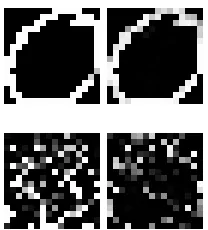
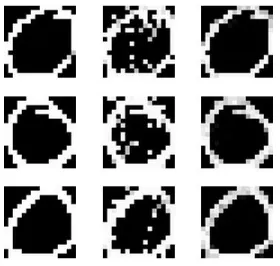
Figure 1: Reconstruction of a digit and random data.
An example of classification using handwritten data. Two images, one
a handwritten zero and the other noise, are compressed and decompressed. The similarity between the input and the output will determine if the image
is in the class of handwritten zeroes See Figure 2.1.
2.2 Search
Using conventional networks, search is difficult. Finding an instance of an
object in an image is an extremely difficult problem. Many things have to
be considered about the object in question, as it may appear significantly different from the training data. Translation, rotation, color aberrations
and occlusion are some of the more common problems which stop successful
recognition. Also the facing of the object may significantly alter its proper-ties. This requires a significant amount of flexibility in the definition of the
object, which is unable to be obtained in simple, single layer feed forward
neural networks. This kind of problem requires a large number of layers, to store all the information about the object. Multilayer deep learning
net-works can be used here to represent objects in the image.
Once a suitable network has been trained on the data, using the network to determine the location of the object or objects is relatively simple. By
taking patches of the image, the network can be run on each patch. Patches
containing predominantly the object in question will be reconstructed with a high fidelity, in pixels where the object is present. By thresholding areas
object can be created. The intersection of these patches, naturally, contains the object to be found.
This algorithm is written for image based search, as this paper is focused
on image manipulation; However there is no reason for similar techniques cannot be used on other types of data.
2.3 Data Reduction
Deep Learning networks can recreate close approximations of their original
objects from a compressed form. Ignoring the cost of the network itself, which is a substantial single cost, this algorithm will perform compression
on any object given to it.
If one assumes a perfectly trained matrix, such that each output is
recre-ated as perfectly as possible, it is easy to derive that the algorithm should
perform nearly to the optimal level of entropy, as stated in Shannon’s The-orem. If there is only one object, it will be perfectly recreated using no
data, as the algorithm can simply record all of the data in the bias term.
If there are two objects, the two algorithm needs two non-zero rows, which requires one bit of data to store. It can, if perfectly trained, save a 0 in
the case for the first object, and a 1 in the case of the second. The bias
row contains the first object, while the one reverse row contains the second object minus the first object. Thus reconstruction is perfect. Pushing the
limits past Shannon’s theorem in this thought experiment cleanly goes to a
lossy approximation, where the optimal result is the median point between the two objects, thus both objects have lost half their data. If each training
exemplar is given equal weight during training, and all the data to be stored
is perfectly trained in the algorithm, the result must be that each is given an equal percentage of the entropy needed to create a perfect reconstruction.
Whether this training set can be achieved can be tested while training the
network. Choosing a minimal value, v, where v is the ceiling of the entropy of the testing set, as the number of values in the intermediate state given
a perfectly trained matrix, will result in the recreation of all testing data
theoretical minimum amount of data which needs to be stored.
Choosing a minimal value,η, whereη is the ceiling of the entropy of the
testing set of sizeθ, as the number of values, or in this case, as the value is a
double precision value capped at−1 to 1. Given a perfectly trained matrix of size κ, the size of the data in the testing set, by η, it can restore each
input from a storage size ofη with no loss of precision, with a total storage
cost of (κ×η) + (η×θ). Thus, given a properly trained network, a deep learning network can become a near perfect algorithm for lossless file size
reduction, having onlyκ×η overhead over the theoretical minimum storage
requirement.
2.4 Data Mining
A deep learning network is designed to create a feature subset of the original
object. As training a deep learning network relies on keeping the maximal amount of information about the differences in the patterns of objects in
these categories, it can be assumed that the internal representation of the
objects keeps as much of the variance between the objects as possible. Thus, this form contains all the variance needed to perform tasks related to the
sorting of these objects, such as primary component analysis, and data
min-ing techniques. These patterns have significantly less dimensionality than the input images, allowing for faster, more accurate partitioning of the data
space.
Modern Data Mining algorithms use simple dimensionality reduction tools to reduce the size of the data space to be searched while maximizing
the distance between points. By reducing the amount of data to compare,
these algorithms reduce the run time of comparisons, and reduce confusion, leading to better solutions. By automatically extracting features which are
important to recreating the image, a Deep Learning network can perform
3
Network Implementation
The deep learning networks created to test these theories can be represented as matrices. Each matrix contains one row for each input, plus a bias row,
and one column for each output, plus a bias column. Encoding of data is
performed by a simple matrix multiplication, while decoding the data back into the reconstructed input is performed by multiplying the output of the
first transformation by the matrix transpose of the input matrix. Both these
operations are scaled such that the resulting matrices are in the range of zero to one, though no such limitation is applied to the transformation matrix.
3.1 Basic Network Design
The basic architecture of the networks is a Restricted Boltzmann Machine. An RBM is a network where every neuron in a layer is connected to every
neuron in the next successive layer. No other connections are allowed. A
neural network in this configuration can be easily represented as a matrix, where rows are the input neurons, and columns are the output neurons.
Values in this representation are the weights assigned to the connections.
By themselves, layers in an RBM are not very powerful. However, by increasing the number of layers, complex logic can be represented by the
series of operations[3]. Training all the layers simultaneously is infeasible,
but if these layers are frozen once computed, the computation time required to compute each layer becomes linear with respect to the number of layers.
If each layer is treated as the final layer, reducing the input into a smaller
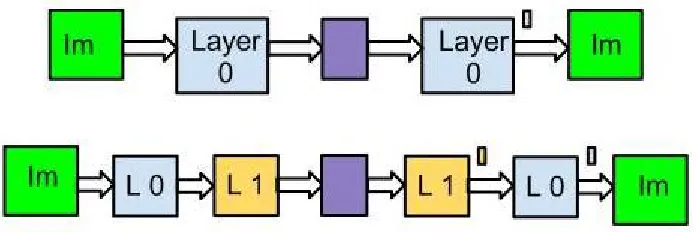
number of features, it can be trained directly on the input. Once it has frozen, its output can be considered the input for the next layer. Once these
nested layers have been trained, calculating the final feature set, as well as the reconstructed input, requires applying each matrix in turn, as can be
Figure 2: An flow chart explaining the order of operations reconstructing an input using a multi-layer network.
Neuron 1 2 3
1 1.0 0.0 0.2
2 -0.5 1.0 -1.0
3.2 Genetics and Network Design
The heart of a Genetic Algorithm is the fitness function, the function which
determines how close an individual is to the goal. In this case, the primary driver is the error in the reconstruction of the input. What is important is
the noticeable total error, with small errors across the image more acceptable
than sections being far off. From this, the choice of mean square error between the input and the reconstruction was obvious, giving the fitness
algorithm described in Algorithm 1.
Given a population of matrices, mutation and crossover can be performed as relatively simple operations. Mutation is performed by selecting a single
element from the list and replacing it with a new element(Algorithm 4).
Crossover was performed as two point crossover. Conceptually, the matrix was linearised, and two points were chosen randomly in the matrix. Two
children were created, with all values outside the two points taken from one parent, and all values between the two points taken from the other
parent(Algorithm 3).
Algorithm 2 Fitness
Individualindividual Set images
∀ image∈images
reconstructed← individual(image) fitness←0
for∀ x,ydo
meanSquareError = (individual(x,y)−reconstructed(x,y))2
fitness = fitness + meanSquareError
Algorithm 3 Crossover
Individualparent1, parent2
Require: both parents are matrices of sizem byn
child ← ∅
i←randomrange1..(m×n)
j←randomrange1..(m×n)
for∀ parent(x,y) do
if (x×m) +y > iand(x×m) +y < j then child(x,y)← parent1(x,y)
elsechild(x,y) ←parent2(x,y)
end if end for return child
Algorithm 4 Mutation
Individualparent
Require: parent is a matrix of sizem by n
child ←parent
i←randomrange1..(m)
j←randomrange1..(n)
k←randomgaussian
child(i,j)←k
3.3 Sparse Network Design
Once testing had begun, a pattern in the successful children emerged. Most
of the values in the matrices were very close to zero. This becomes apparent looking at the degenerate case where the difference in size between the input
and the output matrix is 0. The optimal matrix in this case is the identity
matrix, which contains only one non-zero entry per row.
Using this assumption, the genetic sequence of an individual can be
reworked. Instead of generating and keeping an entire matrix, a list of
non-zero elements can be kept and computed. This saves both space, in reducing the amount of data needed to store the matrix, and the time complexity of
computing the matrix multiplication.
In the new model, each non-zero element is a gene. Instead of a fixed size genotype, a variable sized genotype, made up of the non-zero elements
in the matrix, is used. Each gene contains a row and column index as to where it would be in the matrix, and a magnitude. The initial population
is composed of individuals with one randomly chosen gene. Crossover can
increase the length of the genotype, while mutation does not change the genotype length. A penalty has to be added to the fitness to discourage
trivial additions to the genotype. This penalty must remain relatively small
to not discourage creation of more correct networks, but large enough to remove extraneous elements. The updated fitness calculation can be seen in
Algorithm 5.
Though this makes computation faster, it complicates mutation and crossover. The first important change is in the varying of the size of the
matrices. Adding a new element during mutation would be a relatively
large change, changing both the number of non-zero elements and adding a new element chosen at random. Because of this, altering the size of the gene
list falls to the crossover operator. Meanwhile the mutation operator needs
to mutate more intelligently.
Mutation using the sparse network is a two step process. The child is
created first by removing a gene from the parent, and then adding a new
be seen in Algorithm 7.
Crossover needs to be able to create both larger and smaller children,
but without biasing the solutions towards larger or smaller solutions. This
problem is solved by giving each gene a 50% chance of being passed on to the child. On average, the child will have the average number of genes of the
parents, but can in rare cases have as many genes as both parents combined.
If both parents attempt to give a gene in the same location to a child, a coin toss is held to determine which copy of the gene is given to the child. By
adding half the genes of each parent, the child, statistically, should maintain
approximately the size of the parent, while allowing significant variation in length. The pseudocode for the variation can be seen in Algorithm 8.
Algorithm 6 Sparse Fitness
Individualindividual Set imagesNumbersparseness limit
∀ image∈images
reconstructed← individual(image) fitness←0
for∀ x,ydo
meanSquareError = (individual(x,y)−reconstructed(x,y))2
fitness = fitness + meanSquareError
end forsparsenessRate = element count / sparseness sparsenessPenalty = 2sparsenessRate
fitness = fitness× sparsenessPenalty
return fitness
Algorithm 7 Sparse Mutation
Individualparent child ←parent
select randomx∈ child
create gene ξ←random
replace childx withξ
Algorithm 8 Sparse Crossover
Individualparent1, parent2 child ← ∅
∀ parent1x
ξ ←random
if ξ < parent1prob then childx← parent1x
end if
∀ parent2x
ξ ←random
if ξ < parent2prob then
if parent1x∈/ childthen childx← parent2x
elseξ←random
if ξ >0.5then childx← parent2x
4
Results
The algorithm was trained and tested on greyscale image data, with each value being normalized in the floating point range 0.0 to 1.0. This data, as
a set of vectors, was used as the input to the algorithm. The reconstruction
of the algorithm was used to determine the fitness of the individuals. See Section 3.2 and Algorithm 1 for a discussion of the use and calculation of
fitness.
4.1 Parameters
During testing of the data, many ideas were used to attempt to minimise
the time used by the algorithm.
4.1.1 Mutation
An early attempt to increase the convergence rate of the algorithm was to increase the number of genes mutated with each mutation. This was
successful in the short term, giving faster reduction in the first few moments.
However, these gains were not sustainable, and the algorithm quickly slowed, ending with a significantly worse reproduction of the image in any non-trivial
test. The early gains suggest that a heuristic approach, e.g. Simulated
Annealing, to varying mutation rates may increase performance.
4.1.2 Elitism
When using a Genetic Algorithm, ensuring high fitness values among the
population is important. However, if a large group of individuals become
very similar. As these similar individuals replace members of the population, the diversity of the population decreases. This can be mitigated by removing
old members of the population. Removing elitism, the ability of very old
individuals to compete with a new generation, can work to reduce the delay of local minima, however testing in this problem space did not show any
4.1.3 Enforced Sparseness
As this algorithm has a variable length genetic code, and the length of a
member of the population changes the computational complexity of the fit-ness calculation, it is reasonable to conclude that a barrier on the complexity
of the length of the genotype would increase the accuracy of the solution,
to a point. However, simply adding a maximum percentage non-sparseness limits solutions which may be better using more than the maximum number
of non-zero elements.
A compromise, where the individual was penalized for using non-zero elements was tested, where each gene gave an ever increasing penalty to
the fitness of the solution. This penalty was multiplied by the error in
the solution, thus making even small improvements capable of reducing the overall fitness value, even in individuals with large numbers of genes.
When the penalty value was scaled well, this resulted in solutions which converged in approximately the same number of generations, but
signifi-cantly faster in total computation time.
Results dropped off somewhat when the penalty was very small, but kept a noticeable improvement in the overall computation speed. However, if the
penalty was large, the computation would fail to find a good solution.
4.1.4 Multithreading
The bulk of the application’s running time was spent in the generation of fitness values. Placing each fitness calculation into a thread, and calculating
the values simultaneously, resulted in a significant increase in the speed of
calculations on multi-threaded systems, with only a minor change to the underlying code. On smaller examples, this speed-up was nearly linear, but
as the size of the inputs and resulting matrices increased, the bottleneck
moved to memory on the test machines.
4.1.5 Selection Method
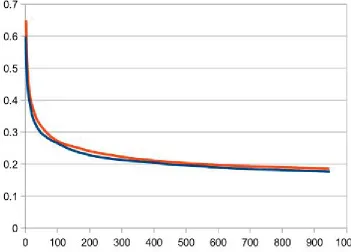
Figure 3: Comparison of Selection Criterion, based on time and reconstruc-tion error.
selecting the most fit elements in each generation, can fall victim to losing variation in the population, leading to slow computation. As mentioned in
section 1.2, a loss of variation in the population can reduce the effectiveness
of the algorithm at escaping local minima. Tests done on the face images, however, did not show any indication of lack of variation, and outperformed
their counterparts using tournament and proportional selection strategies,
4.1.6 Layers
Each level of data reduction can be calculated assuming the previous layer
is fixed. However the benefit of calculating intermediate steps to the final calculation time and accuracy was unknown. Looking at the accumulated
data, as can be seen in Figure 12, the total reconstruction error stays low for
multilayer tests. As the mappings in each layer are more straightforward, the GA gains a significant time and accuracy boost by repeatedly taking small,
incremental decreases in the compression of the data. Using small steps,
the algorithm can compute each layer quickly, while keeping reconstruction fidelity higher than if it had attempted to get to that number of features
using less layers. Also, layers can be calculated until the point is reached
where important data is being lost, which can be inferred from a sudden increase in error rate, or a decrease in the speed of calculating a layer to an
error rate e. This effect is quite noticeable, as can be seen in Figure 4.
4.2 Handwriting
The first item used for training with this algorithm was handwritten
nu-meral characters, using Professor Peter Anderson’s digit data. The basic
handwriting samples contained digits in a black and white format. Each digit was encoded on a 16x16 black and white image, giving 256 individual
pixels for the algorithm.
Previous attempts have been made to determine the efficiency of neural networks, genetic algorithms, and feature selection using this data set[1,
2]. The results of training a matrix to determine the numeral zero were
promising. The algorithm reconstructed numbers not in the training set with a high efficiency from a subset of 100 features, as can be seen in Figure
5.
4.3 Face Images
The face images were the next step in complexity. These images contained
Figure 4: Error in reconstruction from the previous layer, from annfeature matrix.
[image:24.612.236.376.493.626.2]Figure 6: A set of reconstructed faces from a training image. From left to right, top to bottom the images are the original at 625 elements, followed by 400, 200, 50, 10,and 1element.
images were greyscale, and contained significant amounts of features. An
example of a reconstructed face image can be seen in Figure 6.
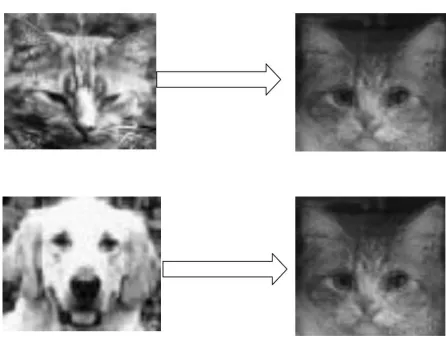
4.4 Cat Images
Another test set examined for determining the attributes of this algorithm
was a series of felines. These images were two orders of magnitude larger
than the previous images, and contained more background than the previous figures. The complete training set can be seen in Figure 10.
Though the algorithm performed well classifying the part of the set
re-served for testing, correctly identifying six of the seven test images, the lack of size of the training set led to difficulty keeping features, reducing the
re-sulting matrix to a combination of the input images, as can be seen in figure
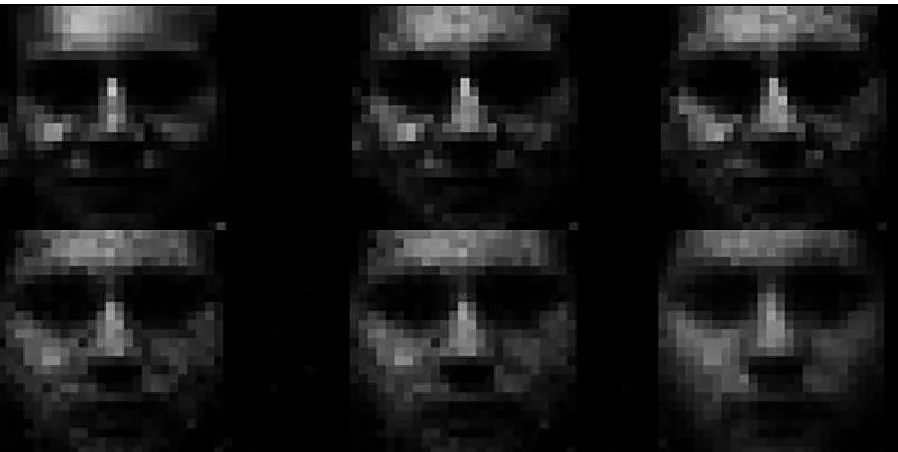
Figure 7: Faces reconstructed from 90 elements. Left is from training set, Right is from testing set.
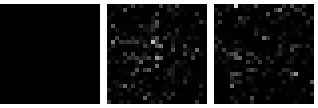
Figure 8: Reconstruction of 90elements composed of zeros, random noises, and ones, respectively.
[image:26.612.126.337.461.616.2]Figure 10: Five cat images used as the training set.
4.5 Large Faces
The final set of images used for testing were a large face database[11]. This
database contained significantly more images to train against, and increased
in size to 112 by 92, giving the algorithm an input vector over 10,000 entries long. Given 10 different face images, the expected bitwise entropy is 3504
bits, over the total image.
Reducing the feature set quickly introduced noise into the testing set, and though the overall error remained small, the images took on a very
grainy appearance when reduced below 7500 elements, as can be seen in
Figure 11.
4.6 Missing Data Tests
A simple, visual representation of the effectiveness of the algorithm is to
look at how it deals with changing features. Changing blocks of features, if the algorithm is looking at high level features in its reconstruction, should
drastically change the output image. These features, when altered, should
remove the individuality of objects from the bulk of the learned class. Figure 8 shows that simple changes to the entire feature matrix change the outcome
of the reconstruction drastically. At 90 features, the data of the face has
been reduced to less than 15% of its original total, yet the images generated with non-zero weights do not look very human. Taking away 1/9th of the
values (Figure 9) shows interesting results. Even missing over 10% of the
data, the resulting images still look similar. However, when noise is added to the feature set in those 10 places, the left cheek and hairline become very
traits, while in the latter, the noise follows unexpected patterns, reducing the quality of the image. This shows the features extracted by the algorithm
are not simply copying blocks of data, but generating underlying connections
in the data.
5
Entropy
The results of running this algorithm have shown the theoretical limits of
reconstruct-ability. This algorithm, as stated earlier, approaches the limits of compression via information theory. Looking at each variable in the
input set as an independent variable x, the amount of data required to reconstruct each x can be found by looking at the probability of a particular
value being correct. If there is only one training image, the total cost of
this reconstruction is zero. This is obvious, as a training set of one needs no data to reconstruct it perfectly.
If the resulting size of the Deep Learning network is insufficient to contain
the data represented in the testing set, training error increases drastically. See Figure 12, an example of a network being trained past the point where
the sum of the data could be stored in the compressed form. Once this
state is reached, the algorithm quickly loses definition, as can be seen in Figure 2. From this point onwards, the image loses features from least
to most important for the overall reconstruction of the image, seamlessly
moving from an attempt at lossless to lossy compression (See Section 2.3 for a discussion of compression through feature extraction).
6
Future Work
Due to the unlabelled nature of the deep learning networks, there is no reason
that they cannot be created and differentiated automatically. A system
which, when given an input image, classifies it against the known categories, and once it has been classified as such, recomputes the network using the
new image as training may be able to create object categories on the fly.
Figure 12: Error rates by layer on a 20 layer run, where each layer reduced the amount of data by approximately 20%. As the amount of data stored drops below a threshold, the reconstruction error per layer increases drasti-cally.
[image:30.612.125.348.440.609.2]can be created when the classification falls above a certain threshold, thus creating an adaptive network of object classifications, independent of user
input. This can allow an algorithm to create and classify new object types
on the fly, with the fluidity of more robust data mining applications, while maintaining the speed and flexibility of computation of the deep learning
network.
As stated earlier, this algorithm does not take any specific optimizations for the domain of imaging, and can work without change with any domain
based on fixed length sets of floating point data. With domain specific
optimizations, it may perform significantly better within its domain.
References
[1] Anderson, P., Gaborski, R., Tilley, D., & Asbury, C.(1993). ”Genetic Algorithm Selection of Features for Handwritten Character Identifica-tion.” Artificial Neural Nets and Genetic Algorithms. Proceedings of the International Conference.
[2] Anderson, P. , & Gaborski, R. (1993). The polynomial method aug-mented by supervised training for hand-printed character recognition. Artificial Neural Nets and Genetic Algorithms. Proceedings of the In-ternational Conference, 101-106.
[3] Arel, I. , Rose, D. , & Karnowski, T. (2010). Deep machine learning-a new frontier in learning-artificilearning-al intelligence reselearning-arch. Ieee Computlearning-ationlearning-al Intelligence Magazine, 5(4), 13-18.
[4] Baeck, T. , Hammel, U. , & Schwefel, H. (1997). Evolutionary compu-tation: Comments on the history and current state. IEEE Transactions on Evolutionary Computation, 1(1), 3-17.
[5] Bengio, Y. (2009). Learning Deep Architectures for AI (Vol. 2, pp. 127). Foundations and Trends in Machine Learning.
[6] Deep Learning. (2006). Retrieved April 15th, 2012, from http://deeplearning.net/
[8] Hinton, G. (2010). A Practical Guide to Training Restricted Boltzmann Machines (Version 1 ed.). University of Toronto: Department of Com-puter Science.
[9] Hinton, G. , Osindero, S. , & Teh, Y. (2006). A fast learning algorithm for deep belief nets. Neural Computation, 18(7), 1527-1554
[10] Srinivas, M. , & Patnaik, L. (1994). Genetic algorithms: A survey. Computer, 27(6), 17-26.
[11] The Database of Faces. AT&T Laboratories
Cambridge. Retrieved 4/20/2012, 2012, from

![Figure 11: Large face images after reduction to 6500 features. Images cour-tesy of AT&T Labratories Cambridge[11].Top two images are from thetraining set.](https://thumb-us.123doks.com/thumbv2/123dok_us/48241.4406/28.612.126.314.139.591/figure-large-reduction-features-images-labratories-cambridge-thetraining.webp)