0
Lowering CO
2emissions: A framework for overcoming institutional
pressures and diffusing low carbon strategy throughout the
construction supply chain
By
Emily Kathleen Jervis
Thesis submitted in accordance with the requirements of the
University of Liverpool for the degree of Doctor in Philosophy
1
Abstract
Lowering CO2 emissions: A framework for overcoming institutional pressures and diffusing
low carbon strategy throughout the construction supply chain Emily K. Jervis
The construction industry is responsible for approximately 50 per cent of global greenhouse gas emissions (Ramesh et al., 2010). With an increase in anthropogenic emissions linked to the rise in global temperatures and climate change, many of the most highly emitting industries have been coerced in to looking for ways to measure their emissions outputs in line with potential emissions legislation (Wang, Chang and Nunn, 2010; Ortiz et al., 2009). The response to the perceived pressure has been an industry movement towards the use of technological measurement systems. In recent times there has been an abundance of life cycle analysis (LCA) technology available, however, thus far none have achieved widespread uptake in the construction industry (Strategic Forum for Construction, 2010). The technological understanding of emissions measurement is apparent yet the industry has failed to implement it. The lack of uptake has led to a perception that the problem faced may not be entrenched in the technology but may be due to behavioural characteristics of the construction industry itself.
The motivation for this research was the sponsoring company’s drive to redevelop LCA by understanding the associated behavioural barriers to its development and implementation. The purpose of this research was firstly to analyse the failures of technological life cycle analysis methods, with the prospect of formulating a novel supply chain perspective to LCA, capable of understanding behavioural barriers to sustainable construction. By addressing construction supply chain structures and institutional barriers to the diffusion of innovative strategy, an evaluation of the impact that institutional isomorphic pressure has on the diffusion of low carbon innovation was facilitated. Understanding the construction industry as an institution enables an understanding of how behavioural implications impact the introduction of novel practices.
Due to the quantitative focus of previous research, empirical data was collected using qualitative methods consisting of a focus group and a series of expert interviews with construction industry professionals. The qualitative approach addressed the need for research which moves beyond the generalisation of quantitative findings in prior emissions studies. The results show that the most important factors in the construction industry which impact on the diffusion of low carbon strategy are centred on the supply chain, client power, collaboration, risk and cost. The noted themes were found to link to institutional pressures which inhibit the diffusion of low carbon innovation. The result of the data collection was the development of a networked supply chain model which could theoretically help the industry to transcend institutional pressure barriers though collaborative approaches to LCA.
2
Acknowledgements
Undertaking this Ph.D has been one of my most enjoyable and challenging life experiences to date and I could not have done it without the help and support of so many people.
I would firstly like to say a very big thank you my supervisors Dr Jo Meehan and Dr Claire Moxham for all of their guidance and support in completing this Ph.D. The time they have given me and their patience with the development of this research was absolutely outstanding and I feel privileged to have had them as my supervisors.
I gratefully acknowledge Phlorum ltd. and the Centre for Global Eco-Innovation for funding this research and enabling it take place. In particular I would like to thank Dr Paul Beckett and Mr Richard Schofield for giving me the opportunity to undertake this research for their company in a subject which I am passionate about.
Thanks also to all of the participants who gave up their valuable time to take part in interviews and focus groups. Without their input the research would not have been possible and I am most grateful to them.
To my parents -
3
List of tables and figures
List of figures Page
Figure 1.1 - Thesis Structure 19
Figure 2.1 - Literature review structure 20 Figure 2.2 - Supply chain process 22
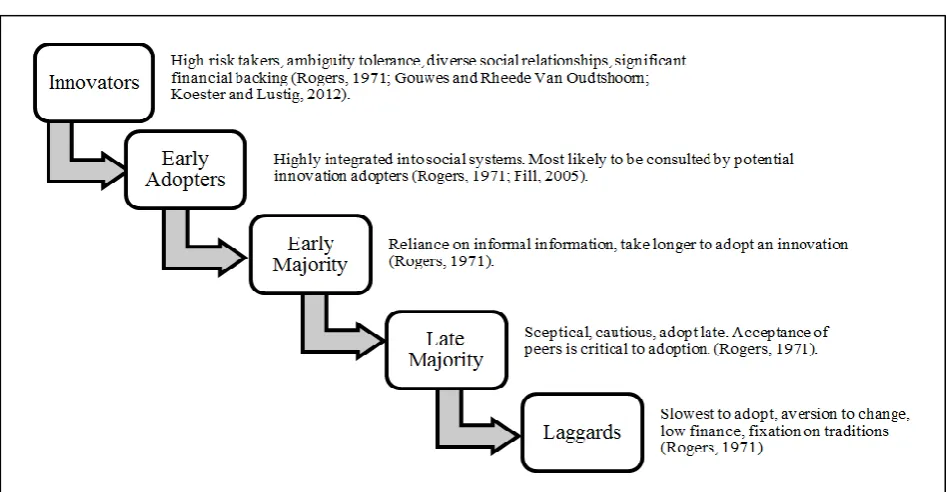
Figure 2.3 - A typical construction supply chain 22 Figure 2.4 - Linear and network supply chain models 23 Figure 2.5 - Rework in a supply chain 24 Figure 2.6 - Customer- supplier interface in the supply chain 26 Figure 2.7 – Rogers (1971) diffusion theory foundation 64 Figure 2.8 - Roger’s (1971) diffusion of innovations curve 65
Figure 2.9 - Adopter categories explained 66
Figure 3.1 - The abductive reasoning approach 89 Figure3.2 - Inductive reasoning approach 89 Figure 3.3 - Deductive reasoning approach 90
Figure 3.4 - Interview stages 105
Figure 3.5 - Typical construction supply chain used as a visual aid in interviews 110
Figure 3.6 - Typical LCA process used as visual aid in interviews 110
Figure 3.7 - Main characteristics of thematic content analysis 118
Figure 3.8 - Key data analysis stages 120
Figure 4.1 - Key focus group themes 129
Figure 4.2 - Theme frequencies – focus group 130
Figure 4.3 - Content analysis: Interview data 135
Figure 4.4 - Interview data: Theme frequency 135
Figure 4.5 - Design team supply chain reconfiguration 151
Figure 4.6 - Management team supply chain reconfiguration 152
Figure 4.7 - Sub-contractor supply chain reconfiguration 153
Figure 4.8 - The client supply chain reconfiguration 154
Figure 5.1 - Institutional Diffusion Wheel 163
4
List of Tables
Page
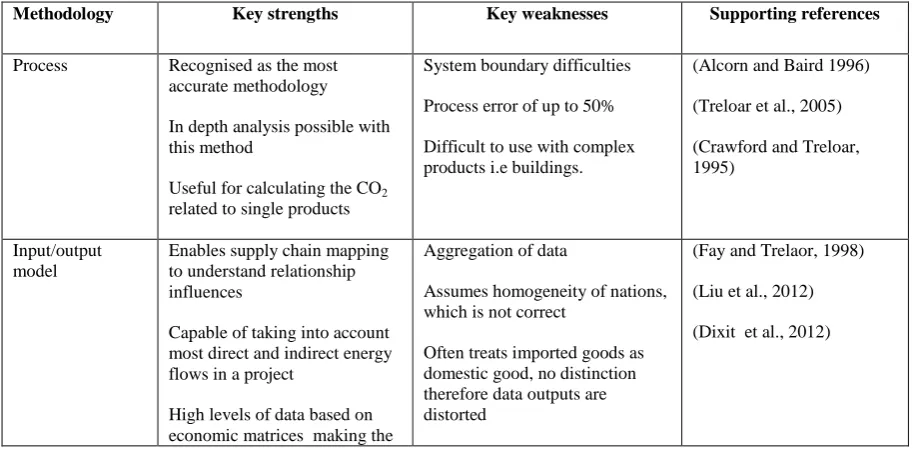
Table 2.1 - Strengths and weaknesses of CO2 LCA calculation methodologies 40
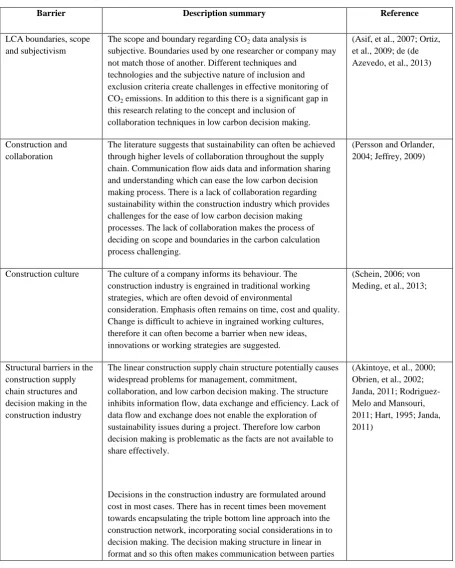
Table 2.2 - Summary of sustainable construction barriers 51
Table 2.3 - Summary of sustainability enablers in the construction industry 57
Table 2.4 - Types of isomorphic pressure 69
Table 2.5 - Reasons for imitation 74
Table 2.6 - Theory use explanation 77
Table 2.7 - Development of research questions 78
Table 3.1 - The ontology of being and the ontology of becoming 82
Table 3.2 - The three primary epistemological positions 83 Table 3.3 - Ontological and epistemological theories and methodologies 84
Table 3.4 - Qualitative study bias 91
Table 3.5 - Ethical considerations 94
Table 3.6 - Non probability sampling overview 96 Table 3.7 - Thematic concept summary example 98
Table 3.8 - Breakdown of study participants 101
Table 3.9 - Themes and questions presented in the focus group 101
Table 3.10 - Main interview types 106
Table 3.11- Interview themes and questions 108
Table 3.12 - Breakdown of interview participants 112
Table 3.13 - Focus group and interview coding matrix (example) 121
Table 3.14 - Focus group data presentation (example) 121
Table 3.15 - Institutional pressure coding matrix for interviews (example) 121
Table 3.16 - Expert interviews - final data presentation example 122
Table 4.1 - Summary of key literature themes 125
Table 4.2 - Thematic coding matrix for focus group 126
Table 4.3 - New questions based on focus group findings 132
Table 4.4 - Interconnection of focus group themes 133
Table 4.5 - Supply chain integration 137
Table 4.6 - Cost 139
Table 4.7 - Client power 140
5
Table 4.9 - Client influence 144
Table 4.10 - Collaboration 145
Table 4.11 - Behavioural change 147
Table 4.12 - Risk 148
Table 4.13 - Institutional pressure summary 149
Table 4.14 - Breakdown of experts in supply chain sections 150
Table 4.15 - Reconfigured supply chain key 151
Table 5.1 - Institutional theory: Isomorphic pressures 161
Table 5.2 - Diffusion theory key components 162
6
Acronyms and abbreviations
LCA Life cycle analysis
CO2 Carbon Dioxide
TQM Total quality management
QFD Quality function deployment
CMM Capability maturity model
PM2 Process maturity model
E I-O Economic input output
EPD Environmental product declaration
BIM Building Information Modelling
IFC Industry foundation classes
SCP Supply chain position
TBL Triple bottom line
ROA Return on Asset
RQ Research question
N Normative
M Mimetic
7
Contents
Page
Abstract 1
Acknowledgements 2
List of tables and Figures 3
Acronyms and abbreviations 6
Chapter 1.0 Introduction 1.1Chapter Overview 12
1.2Background: Rising CO2 emissions in the construction industry 12 1.3Research overview 13
1.4The failures of Current LCA systems 13 1.5Research Motivation 15
1.6The problem 15
1.7Purpose and Significance of study 16 1.8Research design 17
1.9The research questions 17
1.10 Structure and research scope 18
1.11 Chapter summary 19
Chapter 2.0 Literature review 2.1 Introduction 20
2.2 Study context 21
2.3 The construction supply chain 21
2.3.1 Seamless supply chain management model 25
2.3.2 E-business model for supply chains 28
2.3.3 Construction supply chain maturity model 29
2.3.4 Green/sustainable supply chains 31
2.4 CO2 life cycle analysis (LCA) – measurement tools and methodologies 32
8
2.4.2 Calculation methodologies 35
2.4.3 The process based model 36
2.4.4 The economic input output model (I-O) 37
2.4.5 The hybrid model 38
2.4.6 The economic input/output (E I-O) hybrid model 39
2.4.7 Building Information Modelling (BIM) 41
2.5 Barriers to sustainable construction 43
2.5.1 LCA boundaries, scope and subjectivism 43
2.5.2 Construction and collaboration 45
2.5.3 Construction culture 46
2.5.4 The nature of construction projects 46
2.5.5 Structural barriers in the construction supply chain 47
2.5.6 Decision making in the construction industry 49
2.5.7 Low carbon innovation: Barriers to diffusion 49
2.6 Sustainability enablers in the construction industry 52
2.6.1 Innovation in the construction industry 52
2.6.2 Facilitators of innovation 53
2.6.3 Influential relationships 54
2.6.4 Increasing collaborative communication 56
2.7 Overcoming barriers: Lifecycle thinking – a holistic approach to LCA 58
2.8 Examining the phenomenon of LCA in the construction industry through a
theoretical lens 60
2.8.1 The diffusion of innovations 60
2.8.2 Roger’s (1971 and brown’s (1981) core diffusion theories 61
2.8.3 The diffusion process 63
2.9 DiMaggio and Powell’s (1983) institutional theory: Coercive, normative and
mimetic isomorphic pressure 67
2.9.1 Legitimacy in the construction industry 69
2.9.2 Coercive pressure 70
2.9.3 Normative pressure 71
2.9.4 Mimetic pressure 74
2.10 Combining theories: Diffusion and institutional theory 76
2.11 Development of research questions 78
9
Chapter 3.0
Methodology
3.1 Chapter overview 80
3.2 The research questions 80
3.3 Research paradigms 81
3.4 Epistemology and ontology 82
3.5 Positivism 84
3.6 Interpretivism and phenomenological studies 85
3.6.1 Phenomenological study 86
3.6.2 Qualitative and quantitative methods 90
3.6.2.1 Problems faced in qualitative research 91
3.6.2.2 Bias 91
3.6.2.3 How bias has been overcome in this research 92
3.6.2.4 Reliability and validity of qualitative research 92
3.6.2.5 Ethical considerations 93
3.7 Research method and design 95
3.7.1 Sampling procedures 95
3.8 Research design: Phase one and two 98
3.9 Data collection phase 1: Focus group 99
3.9.1 Focus group 99
3.9.2 Development of the study sample 100
3.9.3 Focus group: research design 100
3.9.4 Focus group ethical approval 103
3.10 The use of interviews 103
3.11 Data collection: phase 2 – expert interviews 104
3.11.1 Interview questions 107
3.11.2 The participants 111
3.11.3 Ensuring interview success 113
3.11.4 Addressing interview problems 115
3.11.4.1 Idealised and impressionistic interviewing 115
3.11.4.2 Researcher assumptions 115
10
3.12 Data analysis 116
3.13 The analysis process 119
3.14 Chapter summary 123
Chapter 4.0 Findings 4.1 Introduction 124
4.2 The research questions 124
4.3 Phase one – focus group findings 125 4.4 Phase two – expert interviews 133
4.5 Content analysis of interview data 134 4.6 Thematic analysis 136
4.6.1 Supply chain integration 136 4.6.2 Cost 139
4.6.3 Client power 140
4.6.4 Building Information Modelling (BIM) 142 4.6.5 Client influence 143
4.6.6 Collaboration 144
4.6.7 Behavioural change and risk 146
4.7 The construction supply chain 149
4.8 Chapter summary 155
Chapter 5.0 Discussion 5.1 Introduction 156
5.2Trends in low carbon construction 157
5.3 Isomorphic pressures and the diffusion of innovation 161
5.4 Institutional isomorphic pressures 166 5.4.1 Normative pressures 166
5.4.2 Coercive pressures 167
5.4.3 Mimetic pressures 167
5.5 Institutional pressure impacts on the diffusion of innovation 167
11 5.5.2 Supply chain structure: collaborative relationships 169
5.5.3 The construction supply chain: Encouraging behavioural change 172
5.5.4 The construction supply chain: Existing coercive pressures 174
5.5.5 Supply chain structure: The impact of mimetic pressure 175 5.6 Collaboration 176
5.6.1 Changing behaviour through collaborative approaches 180
5.6.2 Collaboration: Coercive pressures 182
5.7 Client power 185
5.7.1 Hierarchical supply chains: Client power and influence 185 5.7.2 Influencing the client 188
5.7.3 Influential relationships between the client and the supply chain 189
5.8 Risk 195
5.9 Cost 199
5.10 Technology 203
5.11 The effect of institutional pressure on the diffusion of innovation 209
5.12 Proposed network supply chain model 211
5.13 Summary 215
Chapter 6.0 Conclusion 6.1 Introduction 216
6.2 Study context 216
6.3 The research questions 218
6.4 Contribution to knowledge 224
6.5 Practical contribution 226
6.6 Research limitations 227
6.7 Recommendations for future research 228
6.8 final comments 229
12
Chapter 1.0 – Introduction
1.1 Chapter overview
The first chapter of this thesis introduces the research into overcoming institutional pressures which inhibit the diffusion of low carbon strategy in the construction industry. It provides a research background, addresses how the research will be carried out and outlines current failures in life cycle analysis (LCA) systems. It also presents the motivation for the research, the key problem, purpose and significance of the study, alongside the research design, research questions, structure and scope of the analysis.
1.2 Background: Rising CO2 emissions in the construction industry
The construction industry is arguably one of the most vibrant, challenging and high risk industries on earth (Vrijhoef and Koleska, 2000). It is worth in excess of £100bn to the UK economy alone, equating to nearly 10% of GDP (Strategic Forum for Construction, 2010). Globally and without exception, the industry is seen as a token of economic status, vital for socio-economic development (Asif et al., 2007). The importance of construction economically is manifest; however an underlying concern within the industry over the last 30 years has been the overwhelming contribution it makes to environmental degradation (Ofori, 2000a). A large contributing factor to the industry’s global environmental impact is its high
production of carbon dioxide (CO2) (Minx et al., 2011). Responsible for approximately 50 %
of global greenhouse gas emissions (Ramesh et al., 2010), the focus has moved towards the construction industry to lower CO2 outputs in the wake of the concerning climatic effects of
increasing anthropogenic emissions (Wang and Chen, 2013). With the threat of a rise in global temperatures in sight, governments have been forced to recognise the most highly emitting industries, of which construction is one (Wang, Chang and Nunn, 2010; Ortiz et al., 2009). In view of this the industry has made steps towards implementing measurement systems for CO2 life cycle analysis in line with potential future emissions legislation (Asif at
13
1.3 Research overview
The research presented in this thesis examines the prospect of using collaborative supply chain networks to overcome institutional barriers and aid the diffusion of low carbon decision making strategies in the construction industry. It aims to understand the technological, scientific and behavioural challenges of CO2 life cycle analysis. By addressing the key
failings in the current low carbon construction process, it seeks to understand how managing life cycle data collaboratively, using a supply chain perspective, could address some of the key issues in the development of low carbon construction.
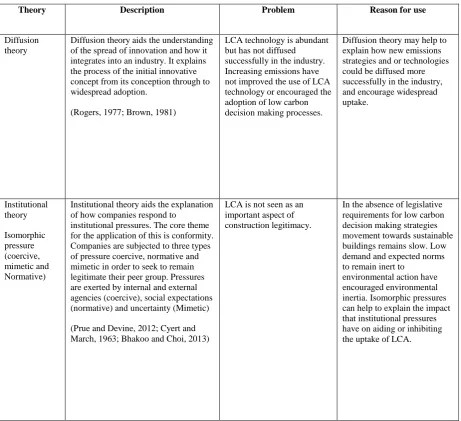
The phenomenon of how the failings of LCA could be overcome is examined through the use of two theoretical lenses; DiMaggio and Powell’s (1983) institutional theory and Rogers (1971) diffusion theory. Institutional theory is used to explain how institutional isomorphic pressures impact on the implementation of low carbon practices, whilst diffusion theory is used to understand how low carbon innovation could spread throughout the industry. Used together the two theories provide insights into how institutional pressures exerted on the construction industry can aid or inhibit the diffusion of low carbon innovation. It is also able to provide understanding of how these institutional pressure barriers may be overcome. Empirical data has been collected using a qualitative approach to garner industry perspectives on key sustainability issues, thus addressing the need for research which moves beyond the generalisation of quantitative findings in emissions studies. The aim is to move towards a holistic supply chain approach which is thought to be missing from current analyses (Koh et al., 2013). Finally the research will present a conceptual analysis of the noted problems by outlining a collaborative and integrative supply chain method to carbon calculation, expanding the focus of LCA beyond the construction site throughout project supply chains.
1.4 The failures of current LCA systems
14 of software available for calculating CO2 emissions in building design and construction.
Tools including IMPACT, ELODIE, GaBi, BEES, SimaPro, Life Cycle Explorer and the Athena Impact Estimator, have all been implemented with the aim of measuring emissions (Chevalier et al., 2009; Singh et al., 2011; Pieragostini et al., 2012; Norris and Yost, 2001; Hischier, 2011). These software tools have had limited success, arguably due to lack of client interest, focus on cost, a lack of enforced legislative and regulatory requirement and a saturated product market whereby the implementation of LCA tools is considered high risk. The element of the ‘unknown’ with CO2 LCA in a high risk industry which focuses on the
use of tested methods, means that implementation of novel LCA technology is not a preferred option for construction companies (Abderisak and Lindahl, 2015; Heijungs et al., 2009; Blayse and Manley, 2004). These factors have led to widespread indecision with regard to emissions analysis and low carbon decision making strategies (Yang and Chen, 2015; Toole, 1998). Despite the lack of uptake of measurement tools, the market saturation of calculation products has continued to occur with new products such as IMPACT and Wood for Good (BRE, 2014; Wood for Good, 2015). More importantly, CO2 has continued to increase in
construction on an annual basis even with an abundance of technology (Strategic Forum for Construction, 2010).
One of the most apparent shortcomings of current LCA technology is its firm-centric focus which disregards supply chain inputs (Koh et al. 2013). It is argued that one reason for this may be the parochial view adopted by construction projects, whereby on-site project management control the emissions calculations and low carbon decision making (Vrijhoef and Koskela, 2000). There is a possibility that that the expansion of the carbon calculation process across the supply chain, rather than concentrating solely on the firm carrying out the assessment, could have significantly positive implications for carbon calculation. A strategy such as this could reap the benefits of collaboration between supply chain actors for calculating CO2. The subsequent research assesses the potential for collaborative low carbon
15
1.5 Research Motivation
The research was funded by the Centre for Global Eco Innovation and Phlorum Ltd: an environmental consultancy SME who sponsored the project. Their aim was to improve previous LCA software developed by the company in order to position it appropriately into current markets. The motivation for this research came from Phlorum’s drive for redeveloping LCA; encapsulating not only the scientific aspects of emissions calculation but also addressing the behaviour of construction companies, and how this impacts on low carbon construction. Prior research into LCA technology products by Phlorum led to the development of a mathematical calculation tool which was proving difficult to position in the market; most likely due to the saturation of measurement products. In view of this, the preliminary indication was that a new product or strategy must provide a novel solution to the emissions problem in order for diffusion of that product or strategy to occur (Gatignon and Robertson, 1985; Hill, 1970). In order to assess the potential for low carbon innovations to diffuse, an understanding of the way institutional pressures impact on the diffusion process was also an important area of analysis. An institutional pressure analysis was important due to the traditional and institutionalised nature of the construction industry which often acts as a barrier to change (Orstavik, 2014; Forster et al., 2015).
The review of the extant LCA literature revealed a gap in knowledge regarding behavioural and decision making procedures when implementing low carbon strategies. With the literature outlining a heavily technological focus, this research aims to provide a social understanding of CO2 life cycle analysis. The concept of a supply chain approach to LCA
forms the basis of this Ph.D research. Despite the encouraging developments in LCA technology since its conception, the essence of failure appears to be human centric involving issues such as collaboration and supply chain integration.
1.6 The problem
There are vast amounts of technology currently on the market for CO2 life cycle analysis
16 analysis, disregarding the benefits of collaboration (Koh et al., 2013; Abanda et al., 2013; Poudelet et al., 2012).
Despite the increasing numbers of LCA technologies available, emissions are continuing to increase in the construction industry and demand for calculation remains low (Strategic Forum for Construction, 2010). Low demand for carbon assessment technologies alongside increasing emissions has led scholars to question whether the solution to the emissions problem is in fact behavioural rather than technological. There is currently little understanding of how LCA technologies could be implemented as a standard part of construction practice. A need to address the barriers to low carbon construction and how these barriers can be overcome to diffuse low carbon strategy has emerged in the wake of potential future legislation (Department for Energy and Climate Change, 2008).
1.7 Purpose and significance of study
17 addressing and overcoming sustainable construction barriers, whilst simultaneously providing a practical output for carbon calculation based on collaborative supply chain models.
1.8 Research design
The technological focus of previous literature (i.e. Chevalier et al., 2009; Hischier, 2011 Frischknecht and Rebitzer, 2005) had provided weight to the argument for a qualitative and inductive methodology. The qualitative methodology has the sole purpose of moving away from the previous focus on quantitative approaches to emissions analysis research. Qualitative methods provide potential for acquiring rich data sets to enable in depth analyses. It was thought that this method would ensure an understanding of problems facing the industry regarding increasing emissions and LCA failures through a natural communicative process (Mack et al., 2005). A series of themes were extracted from the literature and used as prompts for a discursive data collection method. Additionally, the literature was also used to generate three research questions which were used to understand how barriers to sustainability could be overcome to aid the diffusion of low carbon strategy.
The initial data collection was a focus group study. The focus group tested the themes and questions constructed from literature findings. Questions and themes were reformulated from this focus group data to ensure the expert interviews were targeted at the appropriate range of people and the most useful questions were being asked. In order to analyse the data, a content analysis was carried out for both the focus group and the expert interviews. The interviews were then subject to further analysis via the application of institutional theory and diffusion theory. The coding practices used were initially formulated from the key themes extracted from the literature review and furthered during the focus group study, guided by both theories.
1.9 The research questions
18 Powell’s (1983) institutional theory and Rogers’ (1971) diffusion theory as theoretical lenses could address the research gaps highlighted in the literature. The three questions can be found below.
RQ1. How can low carbon decision making strategies diffuse throughout the construction supply chain?
RQ2. How can low carbon decision making strategies improve a firm’s legitimacy in the
construction industry?
RQ3. What provides the impetus for construction companies to take on low carbon decision making innovations?
1.10 Structure and research scope
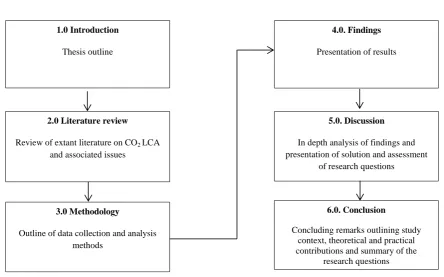
The thesis moves through a series of six chapters addressing each aspect of the research. In chapter 2.0 an assessment of the current literature surrounding supply chain impacts, collaboration and CO2 life cycle analysis in the construction industry is carried out. Chapter
19
Figure 1.1 Thesis structure
1.11 Chapter summary
Chapter 1.0 has provided an introduction to the research. It has outlined the background of the study, the research motivation, purpose, significance and the main problem addressed. The design of the research is also outlined and the research questions are proposed in order to provide a contextual setting for the continuation of the research.
1.0 Introduction
Thesis outline
2.0 Literature review
Review of extant literature on CO2 LCA
and associated issues
3.0 Methodology
Outline of data collection and analysis methods
4.0. Findings
Presentation of results
5.0. Discussion
In depth analysis of findings and presentation of solution and assessment
of research questions
6.0. Conclusion
Concluding remarks outlining study context, theoretical and practical contributions and summary of the
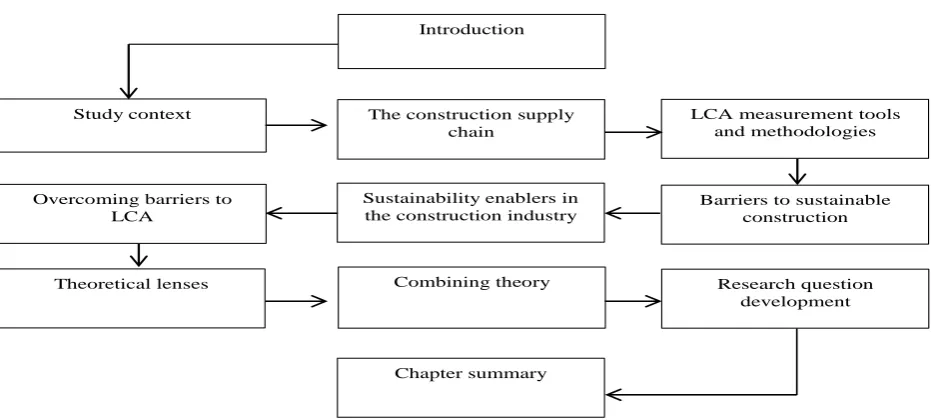
20 Introduction
Research question development
Study context The construction supply
chain
LCA measurement tools and methodologies
Overcoming barriers to LCA
Theoretical lenses Combining theory
Barriers to sustainable construction Sustainability enablers in
the construction industry
Chapter summary
Chapter 2.0 - Literature review
2.1 Introduction
One of the most problematic issues for the construction industry and its sustainable practices is the increase in CO2 outputs (Abanda et al., 2013). Second only to the energy generation
industry in terms of emissions, the construction industry consumes approximately 40% of all materials entering the economy, equivalent to 50% of global greenhouse gas emissions (Ramesh at el., 2010). With the threat of increasing global temperatures and rising sea levels, it is becoming increasingly important to monitor and measure emissions in order to understand the anthropogenic impact of CO2 on the natural world (Parmesan and Yohe, 2003;
Jevrejeva et al., 2010). Measurement systems for CO2 emissions outputs enable decision
makers to gain an understanding of which products and/or processes associated with their activity have the greatest impact on the environment. Perhaps the most significant problem for assessing emissions in the construction industry is that despite the vast array of technology available for calculation, emissions are continuing to rise and life cycle technologies are not widely used (Giesekam, et al., 2014; Miozzo and Dewick, 2002; Strategic Forum for Construction, 2010). The purpose of this study is to understand the potential reasons for the seemingly stagnant approach to CO2 calculation in the industry,
[image:21.595.73.539.571.781.2]which will be achieved by assessing current technologies and methodologies, alongside behavioural impacts. An investigation will be conducted in this research to establish the key sustainability barriers and enablers in the industry. The review of the literature will be assessed by using the following structure shown in Figure 2.1
21
2.2 Study Context
The context of this literature review is based on understanding why emissions are increasing and understanding ways in which emissions could be lowered by assessing the general trends, methodologies, conflicts and gaps in the current life cycle analysis (LCA) literature. The scope of this literature review encompasses both management and building science. The literature covered reviews scientific methodologies for carbon calculation, alongside management and supply chain theories in order to provide an understanding of whether the problem is technology based or rooted in behaviour. The behavioural concept is dealt with by assessing supply chains. Through an understanding of the construction supply chain it is easier to recognise the key relationships which occur throughout a construction project, thus highlighting the areas in which information regarding CO2 outputs can be shared. The
theories used to understand sustainable construction are Roger’s (1971) diffusion theory and institutional theory, more specifically DiMaggio and Powell’s (1983) concept of institutional theory covering mimetic, coercive and normative isomorphic pressure. These theories provide an understanding of how innovations or new working processes are taken up (diffusion) and how they are affected by institutional pressures (institutional theory).
2.3 The construction supply chain
The lack of specific literature on supply chain relationships which directly affect CO2
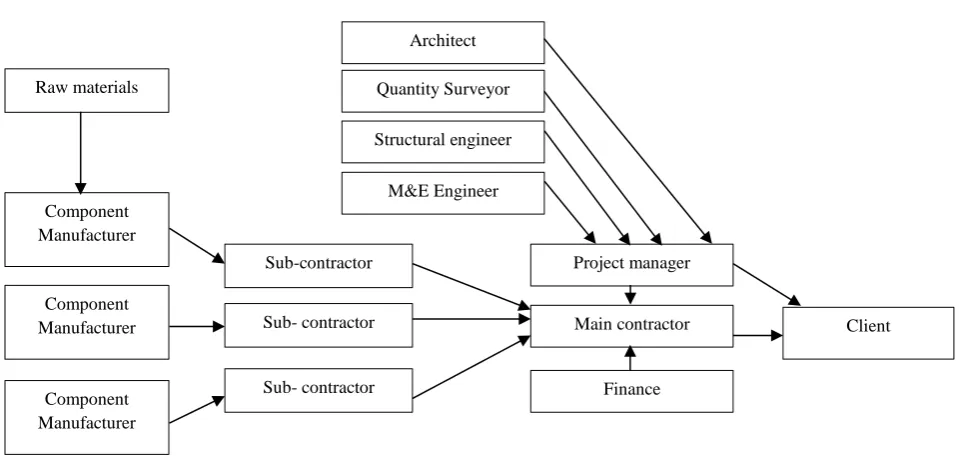
22 supply chain (Cartlidge, 2009). It simplifies the construction process and enables the reader to understand the key roles within a construction project.
Figure 2.2 Supply chain process
[image:23.595.72.552.461.692.2](Source: Beamon, 1998)
Figure 2.3 A typical construction supply chain
(Source: Cartlidge, 2009) Suppliers
Manufacturing facility Storage facility Transport vehicle Retailer Distribution centre
Production & planning Distribution & logistics
Raw materials
Component Manufacturer
Component Manufacturer
Component Manufacturer
Sub-contractor
Sub- contractor
Sub- contractor
Architect
M&E Engineer Quantity Surveyor
Structural engineer
Main contractor Project manager
Finance
Client
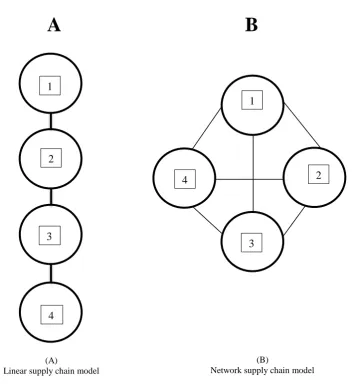
23 Despite being widely used, the typical construction supply chain shown in Figure 2.3 is considered out of date for current construction projects as it inhibits collaborative processes (Cheng et al., 2001; Kornelius and Wamelink, 1998; Stock et al., 2000). The arrangement suggests that each organisation in the supply chain is ‘individual’ and solely responsible for their own duties. In consequence, there is little or no stimulation for improving the relationships between the supply chain actors (Cheng et al., 2001; Kornelius and Wamelink, 1998). Figure 2.4 adapted from Cheng et al. (2001) contrasts the linear processes of supply chains against a ‘network structured’ supply chain which may encourage greater communication between all actors.
Figure 2.4 Linear and network supply chain models
(Source: Cheng et al. 2001)
A
B
3 2 1
4
3
4 2
1
(A)
Linear supply chain model
(B)
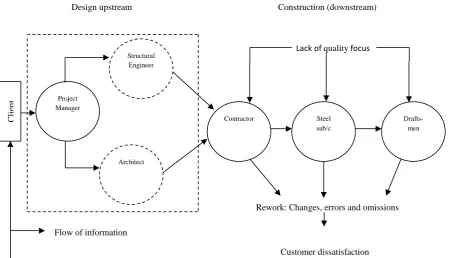
24 The tasks within a linear supply chain are generally divided up into specific disciplines (Korneleus and Wamelink, 1998). These disciplines have personal objectives which do not take into account potential impacts that may resonate throughout the supply chain by making particular decisions.Furthermore, in the linear model, the decision making process is said to be fragmented and adversarial with a distinct lack of coordination and communication between participants (Cheng et al., 2001). Lack of coordination often leads to the need for re-work further down the line (Love et al., 1999), reminiscent of the environmental assessment process which is usually retrospective in nature (Poudelet et al., 2010). Figure 2.5 highlights how a lack of coordination and communication affects this process, creating more work.
Figure 2.5 Rework in a supply chain
(Source: Love, et al. 1999)
In construction supply chains information gathering and sharing can be extremely problematic and uncoordinated (Madenas et al., 2014; Love et al, 1996; Kazi and Charoenngam, 1996), resulting in dysfunctional supply chains making information dissemination difficult, increasing costs, errors and wasting time (Love et al., 1999; Cheng et al., 2001; Love et al., 2004).
Cli
en
t Project
Manager
Architect
Contractor Steel
sub/c
Drafts-men Structural
Engineer
Construction (downstream)
Lack of quality focus
Customer recognition Customer recognition
Rework: Changes, errors and omissions
Customer dissatisfaction
Conflict, time waste, loss of income, increased costs and de-motivation Cost & time overrun
25 To resolve dysfunctional and uncoordinated supply chains, network structures in supply chains through partnering have been suggested (Crowley and Karim, 1995). The outlined structure eliminates the core competitive driver and enables a greater sense of communication where key partnerships can be formed. The network based supply chain approach embraces the concepts of cohesiveness, flexibility, collaboration and integration; notions which would be essential for data sharing which could aid low carbon decision making (Lin et al., 2002; Cheng et al., 2001; Love et al., 2004). With the current industry values based on singular achievements and solitary working which is arguably due to the linear and hierarchical supply chain (Korneleus and Wamelink, 1998; Cheng, et al. 2001; Dirix et al., 2013), collaboration has been difficult to implement, suggesting that a reconfigured supply chain could be most beneficial for furthering integrated working approaches.
In view of the problems associated with supply chain functionality in the construction industry, it is imperative to understand and explain a series of supply chain models in order to understand why changes are required. Sections 2.3.1 -2.3.5 discusses a series of supply chain models. These models were chosen based on their multidisciplinary working patterns which are essential in construction. They focus on collaboration skills, shared responsibility, integration and teamwork – seemingly lacking components of low carbon decision making in construction.
2.3.1 Seamless supply chain management model
26 approaches have been the motivation behind studies into redeveloping construction supply chains (see Grove, 1998; Tang, 2001; Egan, 1998), and all are critical of the construction industry’s approach to collaborative working. Love et al., (2004) explains the application of a seamless model through the application of Total Quality Management (TQM) as illustrated in Figure 2.6.
Figure 2.6 Customer-supplier interface in the Supply chain
(Source: Love et al., 2004)
Figure 2.6 illustrates how the concept of TQM could be used in the construction supply chain. Rungtusanatham et al. (2015) explain TQM as a method for defining criteria for a range of supply chain processes such as leadership, customer/supplier interface, information exchange, process management and leadership strategy. Merging the concept of partnering whilst simultaneously adopting a TQM strategy could have positive implications for the overcoming supply chain problems (Wong and Kanji, 1998).
27 highlighted, the responsibility for the outcomes is shared (Love et al., 2004). In seamless supply chains the project facilitator is able to develop inter-organisational communication between project parties (Ofori, 2000b).
In the seamless model the project team is not selected based on price, but by weighted pre-qualification criteria such as experience, pre-qualifications of personnel, quality of service provided, quality of management, current workload, strategic alliances, past performance and negotiation (Wong et al, 2001; Li et al, 2001). Price-driven choice can lead to restriction of flexibility of the contractors when it comes to innovative approaches or methods which are considered to provide the ‘best’ rather than the least expensive (Holt et al., 2000; Walker et al., 2002).
The seamless method of organisation values the use of quality function deployment (QFD) as well as information and communication technologies (ICTs) to eliminate barriers between disciplines, whether they are cultural, behavioural or organisational (Love et al., 2004). QFD provides a structured approach to meeting customer requirements and formulating plans to meet those needs (Chen and Chen, 2014). Members have to focus on customers and QFD is a tool that provides an understanding of the customer`s requirements. Additionally, this can lead to higher levels of commitment and motivation. Teamwork is stressed as indispensable for application to the supply chain as the team is required to understand each other’s goals in order to become more customer focussed (Kamara et al., 2000; Love et al., 2004). The notion of teamwork could be highly relevant to the development of the construction supply chain which currently works in individual silos with a lack of collaboration. It is thought that collaborative working strategies are held back by hierarchical supply chains (Rosinski et al., 2014).
28
2.3.2 E-business model for supply chains
E-business has been defined as the exchange of goods, services or communications via electronic channels for the purposes of conducting business (Costello and Tuchen, 1998). IT is used to pass information between organisations within a supply chain involving numerous supply chain actors in the construction industry (Cheng et al., 2001). The e-business model has a virtual network structure used to improve communication, coordination and encourage mutual sharing of inter-organisational resources and competencies. E-business supply chain models are built around planning and execution of the front and back end operations in a supply chain using the internet (Lee and Wang, 2001). Technology requires adaptations and changes not only in processes, but in the whole organisation. The notion of using technology as a means of understanding the supply chain correlates with the construction industry’s thirst for technological advancement, particularly in the area of CO2 data collection as evidenced
by the focus on technology in academia (Adelberth, 1997; Adelberth, 1999; Abanda et al., 2013; Alyami et al, 2013; Baek et al., 2013). One of the key challenges with this model is that extra capital is required as the software needs to be purchased and staff need to be trained (Clarke and Wall, 1998; Cheng at al., 2001; McCreadie and Rice, 1999). A barrier to the implementation of CO2 lifecycle data products is the education and training required to use
them (Janda, 2011). Although this model undoubtedly shows promise, the fact that the construction industry is generally conservative, focusing on tested methods (Blayse and Manley, 2004) may prove to be problematic for its implementation.
The e-business supply chain model is useful for increasing collaborative processes as its core values lie within networked supply chains, collaboration, change management and adaptation (Lee and Whang, 2001). Information sharing is vital to ensure that the supply chain is driven by the consumer`s demand. It is also a way of avoiding the bullwhip effect which occurs when demand information is distorted (Forrester, 1961). The bullwhip effect usually occurs when local information is used to make demand forecasts and then passed to upstream partners who then disseminate the information to other levels. The distortions are amplified from one level to another in a supply chain and are recognised as one of the main reasons for inefficiencies in supply chains (Lee and Whang, 2001).
29 environment is something which could be useful for communication regarding CO2 reduction
as supply chain actors can readily access the information required to make low carbon decisions more easily. To achieve improvement in project performance, the traditional structure has to be changed. If this occurs, collaboration and inter-organisational teamwork can be integrated into the system which is key to project success (Albanese, 1994). It is argued that the adoption of this method can result in efficiency improvement and enhanced customer responsiveness (Lee and Whang, 2001). As technology is important in the e-business model it is vital that the employees accept and understand the tools chosen (Mukherji and Mkherji, 1998). Thus, the importance of the value of the technology used must be exposed to everyone and changes in organisation are imperative for improvement (Cheng, et al., 2001; Lee and Whang 2001). However management and employees have to actively work on the implementation of such an approach.It is suggested that change must occur from the top management to the other employees, using a top-down supply chain method (Rosinski et al., 2014; Dirix et al., 2013).
2.3.3 Construction supply chain maturity model
A further supply chain model which has been assessed is the maturity model. Processes have maturity life cycles and there is a correlation between improving process maturity and business performance (Vaidyanathan and Howell, 2007). Processes have life cycles or developmental stages that can be clearly defined, managed, measured and controlled throughout time improving performance (Lockamy and McCormack, 2004).The maturation of processes appeases institutionalisation, consistency of outputs, reduction of conflicts and encouragement of cooperative behaviour (McCormack and Johnson, 2001; Vaidyanathan and Howell, 2007). The following are two examples of maturity model use:
i. Capability Maturity Model (CMM): from Carnegie Mellon University, it is one of the most widely used models, originally developed for engineering software (Paulk, 1995). It has specific benchmarking tests to determine the current level of maturity for a company. The actions to improve the maturity are also specified. Its certification is similar to an ISO-90011, and is a way of having expectations of a software development organisation (Nightingale and Mize, 2002). The first attempt at applying the CMM maturity model to the construction industry occurred during the SPICE project, a university funded research
1
30 programme which assessed the success of CMM and evaluated whether this can be applied to the construction industry (Sarshar et al., 1999). Surveys, case studies and questionnaire data were gathered in order to understand the potential for maturity application. The conclusion of this particular research was that the CMM model could not be directly applied to the construction industry. It was thought that this was the case because CMM is applicable only to single organisations and did not capture the multi-organisational nature of the construction supply chain (Vaidyanathan and Howell, 2007).
ii. Project Management Process Maturity Model (PM2) is a concept that adopts the process and functional model developed to benchmark various actors who do project based business (Kwak and Ibbs, 2002). The model recognises that as companies mature in their project management techniques, they move away from fixating on single functions to manage solitary projects towards the management of numerous projects on an integrated level (Vaidyanathan and Howell, 2007). Maturity models all have the same principles but when they are applied to a particular industry, the characteristics of the industry are encapsulated, which provides more information for an oriented roadmap that ultimately helps participants to achieve process maturity (Vaidyanathan and Howell, 2007). Aspects of this model have potential application to the construction industry which currently work individually on set tasks (Abbott, 1988). Such a model could provide an indication of how collective working may be applied in construction supply chains.
31
2.3.4 Green and sustainable supply chains
Increasing concern surrounding environmental issues has encouraged academia and industry to address green and sustainable supply chain models in the wake of growing energy costs and consumer awareness of social, environmental and economic business impacts (Sarkis et al., 2011; Carter and Rogers, 2008). Sustainable supply chain management can be defined as the management of information, finance and communication between companies within the supply chain, whilst taking into account economic, environmental and social outputs of business activities i.e. the triple bottom line (TBL) (Seuring and Müller, 2008; Sajjad et al., 2015; Elkington, 1997). Green supply chain management goes slightly further; it combines environmental practices with traditional supply chain concepts (Kumar et al., 2014), considering both upstream and downstream operational processes (Carter and Ellram, 1998; Kumar et al.. 2014). The notion is to encompass guidelines and practices adopted by businesses to reduce their negative impacts on the environment (Zhu et al., 2008). The adoption of a green supply chain model is often a fundamental element of an organisation’s strategy to move towards an environmentally sustainable business model (Zhu et al., 2005). The implementation of such supply chains has been mixed in terms of acceptance and success. Some have viewed the implementation of green supply chains to be beneficial to business, decreasing costs, improving overall performance and even improving a firm’s reputation (Carter et al., 2000; Hervani and Helms, 2005; Wycherley, 1999). Others view the implementation as a reactive public relations exercise to governmental pressure increasing ‘greenwash’ rather than truly sustainable practices (Porter and Van de Linde, 1995; Greer and Bruno, 1996; Walker et al., 2008). Green and sustainable models do not solely focus on the economics of business but seek to encompass industrial development issues such as waste disposal and recycling. In this system the life cycle of products is integrated in to a more wide-ranging supply chain procedure (Sheu et al., 2005).
32 as governmental policies and customer behaviour will also affect green supply chain performance (Walker et al., 2008; Srivastava, 2007; Zhu et al., 2008). The nature of green and sustainable supply chains is complex and the implementation of a framework which could accommodate many different factors such as logistical flows, customer behaviour, product lifecycles and governmental policy is difficult (Sheu et al., 2005). Additionally, it often requires a form of LCA technology to complete all aspects of environmental assessment (Zhu et al., 2008) which is notoriously difficult to implement.
A multiple attribute utility theory approach to lean and green supply chain management was found in Kainuma and Tawara (2006). The paper proposes a new approach to supply chain scope in order to include re-use and recycling throughout the life cycle of products and services. In this model, new metrics have been proposed by using a multi-attribute framework. Traditionally return on asset (ROA) has been used; however in this case the new metric is LCA, measuring both environmental and social supply chain effects (Kainuma and Tawara, 2006). The implementation of this new metric provokes a movement away from the sole focus of monetary gain towards a greater focus on environmental and social protection, a similar prospect addressed by the triple bottom line approach (Elkington, 1997); a concept gaining favour in construction.
2.4 CO2 life cycle analysis (LCA) - measurement tools and methodologies
In order to understand the implementation of life cycle analysis (LCA) products and processes, it is essential to understand how they operate and what is currently available in the industry. Understanding the methodologies will enable a clear assessment of how data for calculation is gathered, shared and how these methods are applied in currently available calculation tools. Addressing how the tools function could further an understanding of the problems faced with implementing such technology in the industry, and whether the core problem with low carbon innovation was in fact the result of a technological or behavioural issue.
33 back as the 1980s (Bekker, 1982). LCA had been in existence since the 1960s in a much simpler form (Guinée et al., 2010; Buyle et al., 2013) however it had not been applied in the construction industry prior to 1982. Bekker’s (1982) study was not well received as it was argued at the time that the LCA approach lacked sufficient scientific grounding that prevented the life cycle tool from being accepted in the industry (Guinée et al., 1993; Buyle et al., 2013). Consequently, LCA and the environmentally responsive construction approach is still struggling to gain momentum in the industry (Pulaski et al., 2006; Lin et al., 2012). Supported by the vast amounts of new technology that have emerged LCA has improved scientifically over the last 30 years and is able to achieve more through process analyses, economic input-output and hybridised methods of mathematical calculation (Joshi, 1999; Poudelet et al., 2012; Crawford, 2008). Tools such as IMPACT, ELODIE, GaBi, BEES, SimaPro, Life Cycle Explorer and the Athena Impact Estimator are the product of increased interest in emissions calculation tools. Despite methodological improvements no significant product uptake rates have been achieved suggesting that the software may not have improved (Chevalier et al., 2009; Singh et al., 2011; Pieragostini et al., 2012; Norris and Yost, 2001; Hischier, 2011). All technology created for the purpose of measuring CO2 emissions has the
capacity to aid low carbon decision making by providing mathematical calculations for CO2
outputs of buildings and or building products. Despite the existence of such technology CO2
levels are continuing to rise in the construction sector (Strategic Forum for Construction, 2010) signifying perhaps that technology itself is not the only barrier to lowering CO2
emissions in the industry.
It is claimed that one reason for increasing emissions despite technology availability may be the myopic view adopted during construction projects. Only those directly involved in the on-site project have any control over emissions calculations and decision making. Therefore supply chain impacts will often be disregarded as the focus remains on site activities and rough estimates of highly impactful processes (Koh et al., 2013; Vrijhoef and Koskela, 2000). Construction projects often have complex supply chains which involve many actors and so therefore to have a true understanding of building emissions, it is important to involve all key supply chain inputs in low carbon decision making which could be achieved via collaborative supply chain working (Benjaafar et al., 2013).
34 throughout a project’s lifecycle (Kurul et al., 2012). Using a supply chain approach to carbon calculation would require greater integration of supply chains and collaborative decision making processes (Benjaafar et al., 2013; Koh et al., 2013). One of the most visible issues with existing technology and software is that the majority of carbon calculation tools are solely focussed on the firm using it (Koh et al., 2013). With the exclusion of broader supply chain inputs in favour of the user (the firm), the benefits of collaboration between key supply chain actors has been missed (Koh et al., 2013). Consequently a focus on the supply chain could present benefits to carbon calculation through data sharing processes. The identification of this shortcoming addressed by Koh et al. (2013) has provided the impetus to look towards the potential benefits of a more holistic approach to LCA, which provides grounding for this research.
2.4.1 Significant scientific developments in CO2 LCA
The most noted technological development in the industry which has occurred through the use of LCA has been improved building performance (Li et al., 2013a). Technological advancement in low energy building products has increased significantly in the last decade due to the introduction of technologies such as solar panels, ground source heat pumps and biomass boilers amongst others. Interest in operational efficiency and low carbon technology has led to a growing body of research in zero energy buildings (Torcellini et al., 2006; Marszal et al., 2011) and low energy buildings which rely heavily on renewable energy sources (Dawood et al., 2013). It is due to the use of such technologies that the operating energy of a building has decreased starkly in recent times (Crowther, 1999; Sartori and Hestnes, 2007: Ding, 2008; Dixit et al., 2010; Ramesh et al., 2010). Increases in the use of energy efficient technologies has increased the embodied CO2 in buildings due to the high
energy manufacturing processes of complex materials such as silicon wafers in solar panels (Sherwani and Usmani, 2010). The consequential increase in embodied CO2 outputs in
building construction has encouraged embodied CO2 studies (Thormark, 2006; Dixit et al.,
35 research to use a supply chain approach for understanding associated carbon emissions in buildings.
General trends in construction LCA literature have been predominantly focussed on CO2
calculation methodologies with little or no regard for collaborative decision making inputs (Erlandsson and Borg, 2003; Ding, 2008; Haapio and Viitaniemi, 2008). Acknowledgement of the lack of research in this area has moved some scholars towards the analysis of behavioural elements of CO2 calculation. Kyrö et al. (2012), for example assessed
management styles in housing companies which affect CO2 outputs. Research on the
management of carbon data, calculation and the way in which the collaboration process throughout the supply chain affects CO2 emissions is lacking in construction. Supply chain
integration and stakeholder collaboration has been explored (Dainty et al., 2001; Briscoe and Dainty, 2005; Orlander, 2007; Bal et al., 2013) its application to CO2 emissions remains
elusive in the literature. The balance between theory and technology is notoriously difficult however an analysis of existing methodologies is timely.
2.4.2 Calculation methodologies
The abundance of existing LCA products and lack of uptake does not mean that there is no potential for further development of technology. The total life cycle analysis software market appears to be underdeveloped in comparison to the single phase product market2 (Khasreen et al., 2009; Dixit et al., 2013) . Most software has the ability to cover single products however, there is a lack of software which can cover the entire building lifecycle (Erlandsson and Borg, 2003). There appears to be a lack of client demand for such products in the construction industry that is highly focussed on cost rather than environmental concern (Yang and Chen, 2015; Wigglesworth, 2012). Level one models are product based, whereas level two models theoretically have the capacity to measure total life cycle CO2. All currently available
software is based on one of three embodied CO2 analysis models (below) which are discussed
in detail in sections 2.4.3 – 2.4.5.
Process based analysis. The process based LCA method calculates emissions by assessing energy requirements, and the subsequent emissions from the main processes of product creation using inventory data. The system boundary i.e. what is included and excluded in the process is decided by the analyst (Lenzen and Treloar, 2002)
2
36
Economic input output analysis (EI-O). Economic input-output analysis is a method of carbon calculation which uses economic input-output tables with environmental data. It describes the interdependencies within industries to trace carbon outputs at a sectoral level. The system boundary is the economy (Lenzen and Treloar, 2002.)
Hybrid analysis (Bullard et al., 1978). A hybrid analysis incorporates both process and economic input output methods. For example, the process method may be used to calculate all direct emissions from the construction of a building (i.e. the construction phase) and the E-IO method could be used to calculate indirect emissions (i.e. the manufacturing phase) or vice versa.
Assessments of all three models exclude a wider understanding of the importance of communication between supply chain inputs (Thormark, 2000; Menzies et al., 2007; Khasreen et al., 2009; Buyle et al. 2013). The issue is not simply the number of assessment methods but the lack of agreement on which model should be used on a project. If discussions take place from the conception of the project, decisions regarding standard methodologies can be made. There is also inconsistency as differing methodologies of embodied calculation appear incomplete or simply inaccurate (Dixit et al., 2012). Essentially the same building can produce three different embodied readings by using the three different assessment methods. All models focus on mathematical formulae (Trealoar et al., 2001). Models lack an understanding of the decision making process, which could be aided by understanding the supply chain. It is argued that the supply chain is the route to understanding carbon inputs (Benjaafar et al., 2013). Moving towards a behavioural low carbon decision making approach by using the supply chain could aid the understanding of construction project relationships which directly impact on carbon outputs.
2.4.3 The process based model
The process-based model is considered to be one of the most widely used methods of CO2
37 an error of as much as 50 per cent (Dixit et al., 2010; Crawford and Treloar, 2003), meaning half of all of the data could potentially be incorrect. Errors of this scale are problematic when process analysis data is used in accessible databases such as EcoInvent. The EcoInvent database is an international life cycle inventory system outlining common CO2 material
outputs. It is utilised by researchers and industrial companies and also used in conjunction with calculation tools such as Simapro. Work conducted by those who LCA software in industry or academia suffer from the same error which is repeated (Treloar et al., 2001; Crawford and Treloar, 2003; and Ding, 2005).
Despite its flaws, process analysis can be relatively successful as single product evaluation method when used in conjunction with strict guidelines such as PAS -20503 (Crishna et al., 2011). Research by Crishna et al. (2011) is a good example of how process analysis can be used successfully for a product; in this case dimension stone. Their study uses strict regulations combined with clearly formed system boundaries, providing a positive contribution to process analysis research. No other model is capable of providing such an in depth analysis, although it is difficult to achieve, the possibilities with this model and its ability to trace back to the roots of CO2 is unique (Crishna et al., 2011). A process enabling
such in depth analysis requires significant data from all construction stakeholders which is often difficult to obtain, primarily because analyses are often carried out retrospectively (Poudelet et al., 2012). The use of retrospective analysis could be in part due the fact that most collaboration during any construction project occurs during the design process. Design occurs at a very early stage in construction and gaining information after this point can be problematic (Basbagill et al., 2013).
2.4.4 The economic input output model (I-O)
The economic input output model is a CO2 calculation methodology that requires an
understanding of the power influences in a project. The economic input output model is applicable to communication and data sharing systems as it uses economic information to map influential supply chain relationships (Chang et al., 2012). The method addresses some of the problems associated with the process model as it able to use the economy as a system boundary (Chang et al., 2012). It can take into account most direct and indirect energy paths in a project, which is achieved through the use of economic data flows (Fay and Treloar,
3
38 1998; Dixit et al., 2010). The model is based on the economic input output matrix (Leontief 1966; Chapman, 1974; Wright, 1974). Each sector produces input/output tables which are made available to national governments. Most national statistics offices within government departments have collected this data for over 40 years; therefore the information is readily available (Liu et al., 2012). The economic flows of each industry are transcribed into energy flows (Alcorn and Baird, 1996; Pullen, 1996; Fay and Treloar, 1998; and Ding, 2005).
The I-O model has major advantages over the process based model as it can accommodate the whole economy as a system boundary, thus incorporating with ease a much larger number of processes than the process model alone (Chang et al., 2012). Studies using this method rely on the economic relationship of each sector being facilitated by supply chain mapping particular products. Difficulties arise when applying this to buildings due to material complexities. Studies such as Hendrickson et al. (2006) have argued that this method makes it feasible to account for total energy consumption which allows for the analysis of each lifecycle phase. Others such as Pullen, (1996); Fay and Treloar, (1998); Pullen, (2000); Treloar et al. (2001); Crawford and Treloar (2003); and Dixit et al. (2010) have disagreed with this due to the aggregation of sectors and the homogeneity of nations which create boundless assumptions and unreliable data. Not every economy works in the same way and project influences will change.
2.4.5 The hybrid model
In order to eliminate inaccuracies in LCA, attempts have been made at the successful integration of both process and I-O models in a hybrid methodology. The aim of this method is to eliminate the errors found in both process analysis and Economic I-O analysis by combining the best features of both (Alcorn and Baird, 1996; Suh and Huppes, 2005). It is thought that this model has the most complete system and its popularity has soared in recent times (Li et al., 2013b; Suh and Huppes, 2005; Crawford, 2008; Strømman et al., 2009). The hybrid method is relatively flexible as it allows the analysis to combine both process and economic I-O methods in different ways. Any hybrid analysis will either have a process or Economic I-O base depending on the requirements of the assessment (Treloar, 1998; Dixit et al., 2010).