White Rose Research Online URL for this paper:
http://eprints.whiterose.ac.uk/149336/
Version: Published Version
Article:
Abdi, S., Spann, A., Borilovic, J. et al. (2 more authors) (2019) Understanding the care and
support needs of older people : a scoping review and categorisation using the WHO
international classification of functioning, disability and health framework (ICF). BMC
Geriatrics, 19 (1). 195. ISSN 1471-2318
https://doi.org/10.1186/s12877-019-1189-9
[email protected] https://eprints.whiterose.ac.uk/
Reuse
This article is distributed under the terms of the Creative Commons Attribution (CC BY) licence. This licence allows you to distribute, remix, tweak, and build upon the work, even commercially, as long as you credit the authors for the original work. More information and the full terms of the licence here:
https://creativecommons.org/licenses/
Takedown
If you consider content in White Rose Research Online to be in breach of UK law, please notify us by
R E S E A R C H A R T I C L E
Open Access
Understanding the care and support needs
of older people: a scoping review and
categorisation using the WHO international
classification of functioning, disability and
health framework (ICF)
Sarah Abdi
1, Alice Spann
1, Jacinta Borilovic
2, Luc de Witte
1and Mark Hawley
1*Abstract
Background:The number of older people with unmet care and support needs is increasing substantially due to the challenges facing the formal and informal care system in the United Kingdom. Addressing these unmet needs is becoming one of the urgent public health priorities. In order to develop effective solutions to address some of these needs, it is important first to understand the care and support needs of older people.
Methods:A scoping review was conducted, using the Arksey and O’Malley original and enhanced framework, to understand the care and support needs of older people, focusing on those living at home with chronic conditions in the UK. The search was conducted using five electronic data bases, grey literature and reference list checks. The WHO International Classification of Functioning, Disability and Health (ICF) framework was used to analyse and categorise the literature findings.
Results:Forty studies were included in the final analysis- 32 from academic literature and 8 from grey literature. The review highlighted that older adults faced a range of physical, social and psychological challenges due to living with chronic conditions and required care and support in three main areas: 1) social activities and relationships; 2) psychological health; and 3) activities related to mobility, self-care and domestic life. The review also highlighted that many older people demonstrated a desire to cope with their illness and maintain independence, however, environmental factors interfered with these efforts including: 1) lack of professional advice on self-care strategies; 2) poor communication and coordination of services; and 3) lack of information on services such as care pathways. A gap in the knowledge was also identified about the care and support needs of two groups within the older population: 1) older workers; and 2) older carers.
Conclusions:The review highlighted that older people living with chronic conditions have unmet care needs related to their physical and psychological health, social life, as well as the environment in which they live and interact. Findings of this review also emphasized the importance of developing care models and support services based around the needs of older people.
Keywords:Older people, Care and support, Needs, ICF, Scoping review
© The Author(s). 2019Open AccessThis article is distributed under the terms of the Creative Commons Attribution 4.0 International License (http://creativecommons.org/licenses/by/4.0/), which permits unrestricted use, distribution, and reproduction in any medium, provided you give appropriate credit to the original author(s) and the source, provide a link to the Creative Commons license, and indicate if changes were made. The Creative Commons Public Domain Dedication waiver (http://creativecommons.org/publicdomain/zero/1.0/) applies to the data made available in this article, unless otherwise stated. * Correspondence:[email protected]
1Centre for Assistive Technology and Connected Healthcare, School of
Health and Related Research, The Innovation Centre, The University of Sheffield, 217 Portobello, Sheffield S1 4DP, UK
Background
Recent statistics estimated that people aged 65 and over in the United Kingdom are expected to live almost 50% of their remaining lives with a limiting long-term phys-ical or mental health condition [1], thus increasing their need for care and support. Indeed, around 20% of men and 30% of women in this age group currently need help with at least one Activity of Daily Living (ADL) [2]. These numbers are likely to increase in the future; current predictions suggest that by the year 2035, the absolute number of older adults with low or high de-pendency will increase by almost a third [3], raising a significant challenge to meet their needs for care and support.
It is now well acknowledged that the health and social care system in the UK is struggling, and to a certain ex-tent failing, to meet the care and support needs of older adults [4–7]. A recent analysis of data from wave 7 of the English Longitudinal Study of Ageing (ELSA) re-vealed that 50% of older people who have difficulty with an ADL received no formal or informal support [8]. There is also a growing concern about the ‘unnecessary’ time spent by older adults in hospitals due to delayed discharges [6, 9], which can lead to worsening their health outcomes and complicating their care and sup-port needs. These situations are likely to be exacerbated in the future, given the increasing funding pressure and the steep decrease in the health and social care work-force [10]. Additionally, and due to the challenges in the formal care system, the number of unpaid carers has been growing fast contributing to almost two third of the provided care [4, 5]. Although the role played by carers is integral to older adults and the care system, the significant impact caring has on their physical and men-tal health as well as on their finances raises questions about the long-term sustainability of unpaid care [11]. Collectively, it is evident that there is a clear challenge to meet the care and support needs of an ageing popula-tion both now and in the future.
Addressing the unmet care and support needs of an ageing population, and designing services and solutions centred around what older people need or want, is be-coming an urgent public health priority [6, 8]. In order to address those needs effectively, it is important first to identify and understand the care and support needs from the perspective of older people as well as understand the wider context in which they live and interact. To date there is limited recent evidence synthesis regarding the care and support needs of older people living with chronic conditions in the UK. In a systematic review in-vestigating the impact of multimorbidity on older people, Marengoni and colleagues [12] reported that functional decline, poor quality of life and high health-care costs are amongst the major consequences of living
with multi-morbid conditions. However, limited infor-mation was provided in the review on the type of sup-port required by older people to cope with these challenges. Similarly, Young and Tinker [13] investigated recently the future needs and preferences of older adults in the UK, however, the review didn’t report needs within the area of care and support and was focused on a particular group within older people (1960 baby boomers). In a more recent review, McGilton and col-leagues [14] reported several areas of needs for older people with multiple conditions, highlighting poor co-ordination of services and lack of information as areas of prominent needs. Nevertheless, a large proportion of the studies in this review were based in North America, with some evidence coming from the UK. Arguably, although there are some similarities between the UK and other western countries in the health and social care chal-lenges faced, there is still a need to provide a more in-depth analysis of the care and support needs of older people in the UK. This owes to the fact that the care and support required by older people depends largely on the services and support available or provided to them, which are influenced in many cases by country-specific challenges. Therefore, a scoping review was conducted to identify and understand the care and support needs of older people in the United Kingdom, focusing on those living at home with chronic conditions.
Methods
A scoping review was conducted to systematically scope and synthesise the evidence on the care and support needs of older people living at home in the United King-dom. A scoping review design was deemed appropriate as this approach allows to systematically examine the lit-erature and summarise the findings in a particular area of study, identify gaps in the existing knowledge, as well as refine the search strategy when new information emerges and a deeper knowledge of the literature and the key concepts are gained [15–17]. The scoping review design was developed based on the Arksey and O’Malley original and enhanced framework for conducting a scop-ing review [15, 16]. This framework recommends six steps in conducting a scoping review: 1) identifying the research question; 2) identifying relevant studies; 3) selecting the studies; 4) charting the data; 5) organising, summarizing and reporting the findings; and 6) stake-holder consultation (optional). The following sub-sections report the methods used to conduct step one to five.
Identifying the research question
at home with chronic conditions in the United King-dom?”. The focus of this review was chosen as older adults living with chronic conditions, since the care and support needs arise largely from disabilities, physical or mental impairment or illness [18]. Also, this review aimed to focus on older adults living at home, given that the majority of older adults in the UK live in their own homes [2], with many preferring to remain and continue living in their homes as long as possible [19, 20]. Sup-porting older adults to continue living in their own homes is also a priority to many local authorities in the UK [5].
Identifying relevant studies
A scoping search was first conducted in MEDLINE via Ovid and Applied Social Sciences Index and Abstracts (ASSIA) to gain familiarity with the topic and the vol-ume of the literature. The initial search terms for the scoping search were developed to reflect the key concept areas addressed by the research question. These areas were: ‘needs for care and support’, ‘older adults’ and
‘chronic conditions’. The search terms were revised based on the search results to ensure that key terms were included in the final search. Advice was also sought from a social care expert, two librarians and an informa-tion specialist to ensure that the search strategy was in line with the research question. The final search strategy was first piloted on Medline via Ovid and then trans-lated to the remaining databases which included: Psy-chInfo via Ovid, Cumulative Index to Nursing and Allied Health Literature (CINAHL), Applied Social Sci-ences Index and Abstracts (ASSIA) and Google Scholar. Additionally, Social Care Online (from the Social Care Institute for Excellence) was used to identify articles for this review. Table 1 outlines the final strategy on Med-line via Ovid.
Additionally, the reference lists of the articles included in the final analysis were checked to identify additional relevant references and ensure that no key articles were missed. Grey literature was also examined via searching the websites of key national health and social care organisations. These included: Age UK, Centre for Age-ing Better, KAge-ing’s Funds, Nuffield Trust, 102 NHS,
Department of Health and Social Care and Public Health England.
Selecting the studies
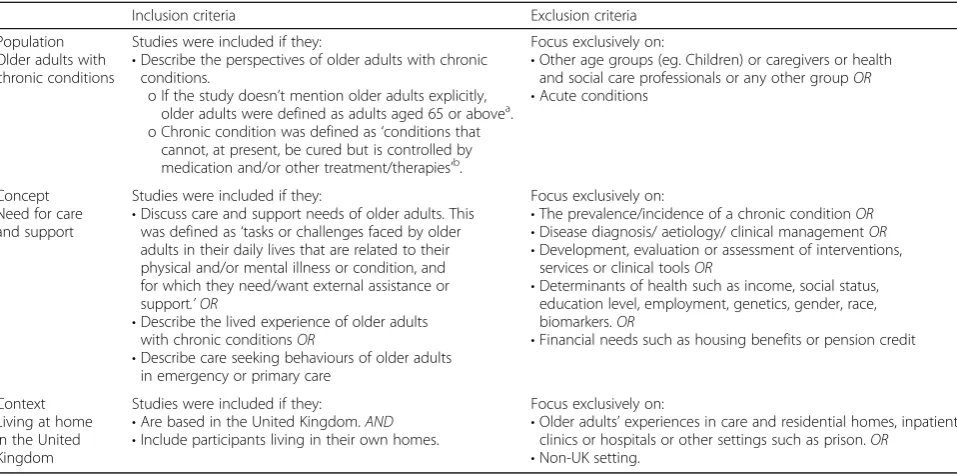
This stage involved selecting the articles in three steps: 1) title screening; 2) abstract screening; and 3) full-article screening. Studies were selected as per inclusion and exclusion criteria that were developed based on the Population, Concept and Context (PCC) framework [17]. In brief, studies were selected if they: 1) included older adults with chronic conditions (population); 2) de-scribed their care and support needs (concept); and 3) included older adults living at home in the United King-dom (context). In the title scoring phase, the aim was to obtain an overview of the extent of research in the area of care and support and older adults, hence a broader scope was taken where no limitation was applied to the context (the country and the home setting criteria). These two criteria were added at the abstract stage where articles not focusing on older adults living at home in the UK were excluded from the subsequent screening. Articles were also excluded if they were not in English or full text was not available. The publication date was limited to articles from January 2008 to May 2018 to ensure that findings reflect current and potential future needs of older adults living at home in the UK. Grey literature resources were also screened based on these criteria. Table2provides further details on the in-clusion and exin-clusion criteria used in this review.
[image:4.595.56.541.630.723.2]The title and the abstract screening were conducted by two independent reviewers (SA and AS). A scoring system was also developed to approach the screening of articles systematically, where an article was given a score of two if it met the inclusion criteria fully, one if the re-viewer was not sure about its eligibility, and zero if it failed to meet the inclusion criteria. The scores of both reviewers were then summed and titles with a score of two points or more were screened in the abstract screening phase. The same process was repeated in the abstract screening phase, and articles with a score of two points and more were included in the full article screen-ing phase. Significant disagreements between the 1st and 2nd reviewer, where one of the reviewers scored an
Table 1Final search strategy on Medline via Ovid
Key concepts Search terms
Needs for care and support OR “care and support”.ti,ab.,“care need*”.ti,ab.,“health need*”.ti,ab.,“social need*”.ti,ab.,
“patient* need*”.ti,ab.,“unmet need*”.ti,ab.,“lived experience*”.ti,ab,“health priorit*”.ti,ab.,
“care preference”.ti,ab.,“activit* of daily living”.ti,ab., Health Service Needs/, Patient Preference/ AND Older adults OR “older adult*”.ti,ab.,“older people”.ti,ab, elderly.ti,ab., elders.ti,ab.,“ageing population*”.ti,ab.
AND Chronic conditions OR “chronic disease*”.ab,ti,sh.,“chronic condition*”.ab,ti,sh.,“long-term illness*”.ti,ab,sh.,“long-term condition*”.ti,ab,sh.,“long-term disease*”.ti,ab,sh., disabilit*.ab,ti,sh., multimorbid*.ab,ti,sh.,“multiple chronic”.ti,ab,sh.,“multiple morbid”.ti,ab,sh.,Chronic, Illness/, Comorbidity/, Long Term Care/
article as 2 and the other reviewer scored it as 0, was re-solved by discussion and seeking opinion from a third reviewer. Full articles and grey literature resources were screened by SA and an opinion from a second reviewer was sought in case of uncertainty. Cohen’s Kappa was calculated to determine inter-rater reliability [24,25].
Charting the data
Data from articles and grey literature resources judged to have met all inclusion criteria was charted using a data charting form on Microsoft Excel. The form was developed by the primary author (SA) to capture infor-mation relevant to the research question. The form was then piloted by two reviewers (SA, and JB) using five ar-ticles. The final form included the following information: Author(s), year of publication, study objective(s), study location, study design, the chronic condition(s) under in-vestigation, sample size, methods of recruitment and data collection, inclusion and exclusion criteria, partici-pants’ characteristics, main results related to the care and support needs of older adults. Additional informa-tion was charted for the grey literature and it included: the name of the issuing organisation and the type of document.
Organising, summarizing and reporting the findings
The charted data from published articles and grey literature were analysed using two main strategies: 1) a descriptive numerical summary highlighting the main characteristics of
[image:5.595.59.538.98.336.2]the studies and 2) a qualitative thematic synthesis. The methods used to analyse findings thematically was guided by Thomas and Harden [26] approach that describes three stages of conducting qualitative thematic synthesis (coding text, developing descriptive themes and developing analyt-ical themes), and was mainly conducted deductively using the WHO International Classification of Functioning, Dis-ability and Health (ICF) framework [27]. The ICF is an international framework used to describe and classify infor-mation related to health, disability and functioning and is underpinned by the concept that someone’s level of func-tioning and disability is a result of interactions between their health condition, environmental factors and personal factors [27]. Using the ICF for data analysis was reported to facilitate the comparison of data on functional status across diseases and between countries, as well as help in providing a detailed analysis of people’s experiences from their own perspective [28]. Using this framework was also useful in creating the analytical themes, a process described by Thomas and Harden [26] as controversial and often difficult to describe. Many studies that used ICF for data analysis followed an in-ductive approach and then linked the themes to the ICF component [28]. This approach was found appro-priate for this review, since using an inductive ap-proach prior to the use of ICF framework might have overcome some of the limitations associated with using standard frameworks for qualitative synthesis. The process of analysis is described in the following steps:
Table 2Inclusion and exclusion criteria based on the Population, Concept and Context (PCC) framework
Inclusion criteria Exclusion criteria
Population Older adults with chronic conditions
Studies were included if they:
•Describe the perspectives of older adults with chronic conditions.
οIf the study doesn’t mention older adults explicitly, older adults were defined as adults aged 65 or abovea.
οChronic condition was defined as‘conditions that cannot, at present, be cured but is controlled by medication and/or other treatment/therapies’b.
Focus exclusively on:
•Other age groups (eg. Children) or caregivers or health and social care professionals or any other groupOR •Acute conditions
Concept Need for care and support
Studies were included if they:
•Discuss care and support needs of older adults. This was defined as‘tasks or challenges faced by older adults in their daily lives that are related to their physical and/or mental illness or condition, and for which they need/want external assistance or support.’OR
•Describe the lived experience of older adults with chronic conditionsOR
•Describe care seeking behaviours of older adults in emergency or primary care
Focus exclusively on:
•The prevalence/incidence of a chronic conditionOR •Disease diagnosis/ aetiology/ clinical managementOR •Development, evaluation or assessment of interventions,
services or clinical toolsOR
•Determinants of health such as income, social status, education level, employment, genetics, gender, race, biomarkers.OR
•Financial needs such as housing benefits or pension credit
Context Living at home in the United Kingdom
Studies were included if they:
•Are based in the United Kingdom.AND •Include participants living in their own homes.
Focus exclusively on:
•Older adults’experiences in care and residential homes, inpatient clinics or hospitals or other settings such as prison.OR
•Non-UK setting. aBased on NICE definition of older adults:
“people aged 65 or older”. [21]
bLong term conditions can include:“physical and mental health conditions, complex symptoms like pain or frailty, sensory impairment such as hearing or sight
1) At the start of the analysis, papers were read multiple times to get familiar with the data and plan the coding phase. All papers were then imported into NVivo software (QSR International, 2018) to facilitate coding of the data.
2) The findings sections of the included studies were then coded line-by-line, labelling text with codes that thought to describe the content and the meaning of the text. The findings section was taken to be the text under the‘results’or‘findings’section as well as quotations from participants. In articles that included older people as part of the sample, the care needs of older adults were identified mainly from quotations from older participants, as well as from texts indicating that findings are from older people. The coded text varied from short phrases to large amount of text.
3) The initial codes developed were then transferred to subsequent studies, creating new ones when necessary. After completing this step of analysis, all codes and attached text were revised to ensure consistency of interpretation and to check whether additional coding was required.
4) The codes were then reviewed for similarities, differences and relationships, and were sorted into preliminary themes. This step also involved
collating relevant coded data extracts within each of the preliminary themes. The initial codes and preliminary themes were developed iteratively by the first author (SA) and were discussed within the research team to ensure they reflected the analysed data.
5) After the initial themes were identified, the analysis was conducted deductively, in which the themes were compared and matched with the International Classification of Functioning, Disability and Health (ICF) framework. Thus, some of the themes were joined or divided in order to align them with the ICF classifications.
6) The themes and sub-themes were then named and defined based on the ICF definitions.
7) A summary of each theme was written and checked against coded data extracts and full articles to ensure accuracy.
Results
Summary of the literature search
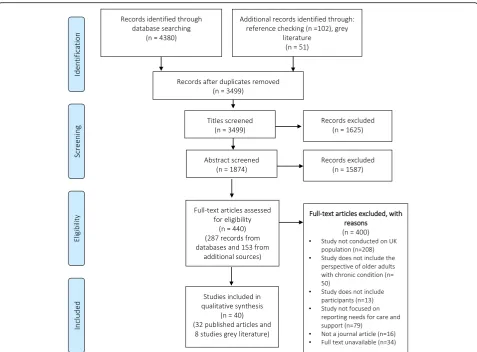
The electronic searches of databases resulted in 4380 re-cords. After removing duplicates, 3499 titles were screened for eligibility. The scoring and selection of titles resulted in 1874 records that met the inclusion and ex-clusion criteria. The abstracts of these records were then screened, resulting in 287 records for full-text assess-ment. Additionally, 153 texts were identified from other
sources and were screened for eligibility (102 through reference checking, and 51 from grey literature re-sources). Following the exclusion of studies that did not meet the inclusion criteria, a total of 40 studies were in-cluded in the final qualitative analysis (see Fig. 1. PRISMA flowchart). The Cohen Kappa for agreement between the two reviewers was 0.56 in the title scoring stage and 0.57 in the abstract scoring phase, which is considered moderate agreement.
Characteristics of studies
Study objectives and designs
40 studies were included in the final analysis, of which 32 were published articles [29–60] and 8 were studies identified from grey literature [61–68]. Of the 32 pub-lished articles, 13 aimed at exploring participants’ gen-eral needs for care and support and/or reported their experience of living with chronic conditions [29–41,52], while the remaining articles focused either on certain as-pects of participants’ living experience [42–51] such as management of the condition [42–46] or on a specific period of participants’ lives [53–60] such as end of life [53–57]. Three of the grey literature studies aimed at ex-ploring the lived experience of older adults [61, 62, 67], while the remaining studies [63–66,68] focused on older adults’views of specific services such as home care [63], transport services [65], and home adaptations [66]. The total number of participants in the published articles was 7871 ranging from 7 [32] to 4886 [50] and distrib-uted across 25 qualitative studies (n= 820) [30–35, 37– 45, 47, 48, 51, 52, 54–56, 58–60], 6 quantitative cross-sectional or survey studies (n= 7051) [29,36,49,50,53,57], and 1 mixed methods study (n= 18) [46]. Of the eight grey literature studies identified, four used qualitative methods [61,62,64,66] and included a total of 133 participants, two were of mixed methods design and included a total of 2455 participants [67,68], whereas the remaining two were sum-mary reports based on data from surveys, focus groups and case studies [63,65].
Participants’characteristics
Two of the grey literature studies focused exclusively on older adults with frailty [61, 62], whereas the remaining studies included older adults with a range of chronic conditions [63–68]. Three studies only investigated the im-pact of multi-morbidities on participants’lives [34,38,48], with two of these studies reporting the experience of participants with dementia and a concurrent condi-tion such as visual impairment [34, 48]. In terms of ethnicity, White British comprised 78% [57] to 94% [51] of the total sample in published articles and 80% [61, 62] to 93% [66] in grey literature resources. 22 published studies focused exclusively on participants living in their own homes [29, 31, 33, 34, 37–41, 44, 45, 47–50, 52, 54–58, 60], while the remaining studies included samples from mixed living arrangements. The percentage of participants living alone in their own homes ranged from 16% [44] to 87.5% [60] in published articles and from 20% [61] to 78% [64] in grey literature resources. The majority of published studies (n= 25) were conducted in England, with only
four studies conducted in Scotland [35, 46, 55, 60], 1 in Wales [26] and 2 studies were based on national samples [29, 50]. Four of the grey literature studies were conducted in England [61, 62, 67, 68], whereas the setting was not clear in the remaining resources [63–66]. A summary of the characteristics of the studies can be found in an additional file [See Additional file 1].
Main findings
Three main themes were identified based on the ICF classification system: 1) Body functions; 2) Activities and participation; and 3) Environmental factors. A detailed description of the findings of each of the themes is pro-vided in the following subsections. A list of the studies that discussed each theme grouped by conditions can be found in an additional file [See Additional file2]. A sum-mary of the findings of each theme can be found in an additional file [See Additional file3].
[image:7.595.59.537.86.438.2]Body functions
This theme describes the physiological problems faced by participants in the analysed studies which include mental and physical functions.
Mental functions
Various experiences triggered a range of negative emotions in participants in the analysed studies. Diag-nostic tests and the diagnosis process were described by many participants as stressful time due to the un-certainties associated with it [40, 43, 46]. Participants in three studies also felt that their emotional needs were not catered for by health professionals and were left to face their diagnosis alone [43, 46, 47]. Some symptoms, such as visual hallucinations [30] and breathlessness [39, 56], also left participants with negative feelings such as anxiety, worry, frustration and fear. Participants in several studies expressed fears and worries of losing independence and being burden on others, with feelings such as depression, loss of pride and emotional pain used by some partic-ipants to describe their physical losses [33, 40, 46, 59]. Uncertainty about the future, particularly in con-ditions with poor prognosis (heart failure, dementia, cancer, advanced COPD) also triggered negative emo-tions such as loss of confidence in one’s abilities, des-pair, anxiety and fear [37, 39, 44, 54, 56]. However, participants in some of these studies seem to attribute their poor prognosis to advancing in age rather than their conditions and only a few of them discussed their concerns with health professionals [54–56].
Physical functions
Several physical impairments were reported in the ana-lysed studies. These included pain [31,36,37,39,40,52, 53,56,57,61,63, 65, 66, 68], breathlessness [39, 40, 52, 57, 61], visual and hearing impairments [30, 34, 46–48, 58,65], fatigability [31,37,40,52,57,61], urinary incon-tinence [36,58,63,66] and impaired functions related to the digestive system [36, 53, 57]. Many studies investi-gated the emotional, physical and social impact of visual impairment and breathlessness on participants’daily ac-tivities [30,34,39,40,46–48]. For instance, the presence of visual impairment, was reported to exacerbate exist-ing difficulties in managexist-ing dementia and placed signifi-cant constraints on participants’ social lives. On the other hand, a few studies only discussed the impact of pain on participants’ daily lives. Further details on the physical and social limitations faced by participants are discussed in the following themes.
Activities and participation
This theme describes the difficulties faced by participants in performing activities related to self-care, domestic life,
mobility as well as problems they encountered in involve-ment in social and community life. Self-care describes tasks about caring for oneself such as washing, dressing and maintaining one’s health, whereas domestic life describes domestic tasks such as household cleaning and shopping. This theme also discusses strategies used by participants to manage their own physical and mental health.
Self-care and domestic life
Participants in several studies reported having difficulties in carrying out self-care and domestic life tasks [29, 31, 36–40, 43–45, 47, 49, 52, 53, 58, 59, 61, 63, 66]. How-ever, only some of these studies provided details on the tasks that were affected. Washing, dressing and toileting were the main tasks that participants reported having problems with in the studies that discussed the affected self-care tasks [29, 37–39, 49, 59, 63, 66]. Participants with breathlessness, for instance, reported having prob-lems with bathing due to steam, or difficulty standing [39]. Similarly, participants with dementia were reported to have problems with dressing, bathing and continence from the early stages of the disease onwards [49]. In stud-ies that reported domestic life activitstud-ies, difficultstud-ies with looking after the home was commonly mentioned [37,39, 48,50, 52,53], followed by shopping [37, 47,53,63] and preparing meals [47, 53, 61]. For instance, participants with age related macular degeneration, reported how their cooking skills were affected by their sight loss due to diffi-culties with simple tasks such as chopping food [47]. However, and in spite of the difficulties associated with performing domestic and self-care tasks, some participants continued to do them to maintain a sense of independence and identity, and to feel a sense of pur-pose [39,52,60–62,66]. Providing care to others, for in-stance, was an activity that gave some participants a sense of purpose despite being challenging [5].
Mobility
Interpersonal interactions and relationships, community and social life
Social isolation and feeling of loneliness were reported by participants in several studies [30, 31, 33, 34, 37, 39, 40,47,48,52,61,62,67,68]. Some participants reported that physical impairments such as physical frailty, lack of independence, or ill-health reduced their ability to sustain relationships and hence contributed to their social isola-tion [33, 48,67]. Others were unable to recognise people and/or engage in social interactions, particularly in group interactions, due to sight loss [30,46] or hearing loss [34]. These impairments also limited participants’ abilities to enjoy hobbies and leisure activities [30,34]. Some partici-pants, thus, became dependent on their close relatives for daily stimulation and social interactions, increasing their feelings of boredom and social isolation in the absence of these close interactions [34,48]. Indeed, losses of close rel-atives or friends were reported by many participants to contribute to their feelings of loneliness and social isola-tion [33,52,61,62]. Some participants, in one grey litera-ture report, also valued the opportunity that work had provided them in the past for social interactions as well as other benefits such as financial security, with some of them reporting going back to work after a period of retire-ment [67]. Indeed, the ability to still be able to work and contribute usefully was valued by some of the younger participants in studies that included adults aged 50 and above [32, 45, 67, 68]. However, ill-health, the stress of managing chronic conditions at work, and the lack of sup-port in the work environment was resup-ported, mainly in grey literature reports, to force some of them to leave their job [40,67].
Managing own physical and mental health
In spite of the psychological, physical and social difficul-ties faced by participants, many of them used strategies to self-manage their conditions and cope with these lim-itations. Some of the physical adaptation strategies in-cluded pacing oneself and changing the body movement to a comfortable position to reduce knee pain or cope with frailty [31, 45, 61], attending pulmonary classes to learn how to manage breathlessness [40], using alterna-tive therapy for hand osteoarthritis [42] and keeping physically active and watching diet [67]. Another strat-egy that some participants found useful was establishing a daily routine [31, 33, 37, 44, 66], although in some cases their ability to maintain this was compromised by unpredictable home care visits [33, 61]. In many cases, these strategies were developed by participants them-selves through personal experimenting and without pro-fessional advice. Many participants also developed psychological strategies to overcome difficulties. These included accepting limitations caused by their conditions
[30,37,39,44,47,53,55,60], changing attitude towards life and being positive [44,47,57,60], mental distraction and occupying time with activities [35,39,45], spiritual-ity [40, 47, 61] and humour [39, 61]. Some participants, however, used strategies that might not necessarily be positive, such as denial [40,47].
Environmental factors
This theme discusses the social and physical factors that participants interact with, which may act as facilitators or barriers to their lives. It includes ‘support, relation-ships and attitude’,‘services’and ‘products and technol-ogy’. ‘Support and relationships’ describe the support provided to participants by their close relatives, friends, peers, professionals, community and their attitude. The
‘Services’subtheme describes the health, social and other services that are designed to meet the needs of partici-pants. ‘Products and technology’ describe general and specifically designed products, equipment and technol-ogy that participants used in daily living.
Support, relationships and attitude
Family, friends, peers, community and their attitude
The importance of the support provided by family and friends was demonstrated in several studies [29, 30, 33, 36, 37, 44, 45, 47, 48, 51–53, 57–59, 61, 62, 65–67]. Family carers offered support to participants by finding information and coordinating services for them [48,51], assisting them with daily activities [29, 33, 58, 59, 61], and offering them company [30,58,61, 67]. Participants also reported feelings of happiness, joy and pleasure when interacting with family and friends [32,47], valued peer support as an important source of information and companionship [44,62], and identified relationships with family and friends as the most important thing in their lives [52]. In spite of these positive contributions to their lives, some participants reported feelings of being patronised [30, 44, 48], stigmatized [40, 44], not under-stood by family and friends [48] and were perceived dif-ferently after a period of increased vulnerability [31]. Frequent unmet needs were also reported in areas where informal carers were the main source of support [58], with participants in one study describing care provided by family as inadequate and unreliable [61]. Concerns were also raised regarding participants who live alone who might not have access to an informal social support system [33, 58, 67]. Geographical spread of family and friends also made it difficult for some participants to keep in contact with them [33,52].
Care professionals and their attitude
identified by many participants as a primary and trusted source of information [38,51,54,55,64]. Interactions with health and social care professionals was also reported to provide a source of comfort and reassurance to some par-ticipants [31, 52, 60]. However, insufficient professional support was reported in several areas [31,33–35,38,40,42, 48,54,56,57,60,61,63]. Many participants reported lack of information and advice by health professionals in areas such as diagnostic procedures [35], care after hospital dis-charge [64], management of conditions [40,42,48,57] and existing co-morbidities [38,48,61]. For example, some par-ticipants with repeated hospital admission reported that poor quality discharge and lack of clarity on after care con-tributed to their hospital readmission [64]. Another area where participants reported lack of advice was on the prognosis of diseases, however, there was a preference from some participants not to seek information from health professionals about this topic [55, 56]. Consistency in having the same care professional was seen as helpful [34, 35, 63], particularly in the case of participants with dementia [34, 35], however, this was not possible in many cases due to the high turnover of staff [34, 35].
Services
Participants’ experiences and use of services were dis-cussed in some studies, focusing mainly on the interac-tions with health and social care services [29,30,35,37, 40, 44, 47,48, 51,53, 55, 58, 59, 61,63–66]. Some par-ticipants expressed their satisfaction with the specialist services provided to them which included intermediate care services [37], social services [47] and unspecified specialist services [44, 61]. A few participants also re-ported having a positive experience of care during hos-pital readmission and felt that hoshos-pitals were the best place to deal with their problems [64]. However, partici-pants’dissatisfaction with health and social care services was reported in several instances [30, 35, 40,44, 51, 53, 55]. For example, poor coordination and integration of services was seen as challenging by many participants [35,40, 44, 48, 64], leading to delays in service delivery [35] and compromising the management of pre-existing conditions [48]. Participants in some studies also expressed concerns with lack of information available to them on care services and pathways [35,44,51,63,65,66]. For instance, some participants mentioned that chance conversations with people with similar needs, and previous links to health and social care services, were their source of information about services [51], raising concerns about people without these links. The need to increase access to services such as day centres, transport and home care was also reported by some participants [35,44,53,61,63,65]. For example, poor access to accessible, comfortable and reliable transport ser-vices as well as lack of information on these serser-vices was
reported to complicate some participants’journeys to hos-pitals, leading to missed appointments and negative conse-quences on participants’health [65].
Products and technology
Some participants reported using equipment and tech-nology to cope with physical difficulties [34, 37, 41, 42, 44,45,47,52,59–61, 66]. The use of mobility aids such as wheelchairs, walking sticks and walking frames was reported by some participants with history of falls and fractures [37, 59, 60], dementia and visual impairment [34], breathlessness [39], and frailty [61]. However, the use of these aids was not always perceived positively, with some participants refusing to use them due to see-ing it as markers of loss of independence [31, 60, 61]. Visual aids were used by some participants with visual impairment, however, they reported some difficulties with their use such as being bulky, expensive and in some instances not usable due to the presence of an-other impairment like memory loss [34, 44, 47]. Other devices reported in the analysed studies included pen-dant alarms to increase participants’ safety at home [52, 61], assistive devices for hand osteoarthritis [42], and prostheses for participants with breast cancer [38]. Some of the barriers to the use of these devices included being uncomfortable [38], lack of informa-tion [41, 42], and their interference with daily lives [52]. Adapting the home environment was reported as one of the strategies used by some participants to in-crease indoor mobility, facilitate the use of assistive devices and to increase or sustain familiarity within home [33, 34, 41, 59, 66]. However, the cost associ-ated with some of these adaptations, the lack of infor-mation and advice, the unattractive design of equipment and the poorly fitted equipment [41, 66] might act as potential barriers to home adaptations.
Discussion
The aim of this review was to identify the care and sup-port needs of older adults, focusing on those living at home with chronic conditions in the UK. Three main areas emerged from the analysis that older adults faced some difficulties with and required external support. These areas were social life, activities related to self-care, domestic life and mobility, and psychological health.
Social life
increasing the need for supporting older adults in this area. This review highlighted that for many older adults, family and close friends provided companionship and fa-cilitated social and pleasurable activities. However, un-met social needs were reported by some older adults with good social contacts in this review, highlighting the fact that having a social network doesn’t necessarily combat loneliness or translate into better social connect-ivity. Indeed, high prevalence of loneliness was reported recently in older people living with others as well as in those living alone [71], suggesting the need to increase older adults’access to‘meaningful’relationships and not only increase their social contacts. The need to distin-guish between social isolation, loneliness and living alone, has been under debate recently [72,73], identify-ing it as an important issue when tacklidentify-ing this problem in the older population.
Supporting older adults in improving their social con-nectivity and reducing loneliness has also been targeted by many initiatives recently [74–77]. However, and apart from few examples of the use of day services and peer support groups, there was limited evidence from the reviewed literature on older adults’access to such sup-port. Knowledge about the views and experiences of older adults of these support services is still evolving [71], with most recent studies focusing on the quantita-tive evaluation of these interventions only [76, 78–80]. Some of the barriers identified in recent qualitative work [71] included older adults feeling stigmatised by services targeting‘lonely’older adults, with most expressing pref-erences to engage in activities with a purpose [71]. How-ever, these views came largely from an active and mobile group and might not necessarily be representative of older people who have difficulties leaving the house, as with many participants in this review.
Older adults can also develop their own strategies to cope with loneliness such as acceptance of low levels of social contacts and keeping busy with solitary activities [70]. Nevertheless, this review highlighted limited evi-dence on such strategies attributed perhaps to lack of older adults’ awareness or lack of professional advice on social coping strategies [81]. Collectively, it is clear from the evidence reviewed that there is a need to in-crease older adults’ access to support in this area and understand barriers and facilitators to access support services. There is also a need to further understand strategies used by older people to cope with social difficulties.
Self-care, domestic life and mobility
This review highlighted that many older adults living with chronic conditions experienced difficulties with tasks related to mobility, self-care and domestic life, and were in many cases dependent on family carers and
home care services to provide support. The significant role family carers have in supporting older adults to meet their needs in this area is well-recognised in the lit-erature [4,6]. However, concerns were also raised about the long-term sustainability of family care due to the im-pact caring has on carers’physical and mental health, as well as on their finances [12]. Home care services was another source of support highlighted in this review, however, the use of these services was associated with some issues such as lack of continuity of care, inad-equate understanding of the needs of older adults, as well as lack of information on services, particularly for those without links to people with similar needs or health and social care services. Some of these issues were recognised as areas of improvement in the delivery of home care to older adults by the Care Quality Com-mission in the UK [82].
meet older adults’ needs in this area, as well as support them with evidence-based self-care strategies to main-tain their independence as long as possible. This is of particular importance, given the challenges facing the in-formal and in-formal care system that are leaving many older adults with unmet needs in the of areas of self-care, domestic life and mobility [9].
Psychological health
Many older adults in this review experienced a range of emotional difficulties related to living with chronic con-ditions. The need to increase older adults’ access to mental health support is well acknowledged in recent re-ports [93–96], particularly in the case of older adults with chronic conditions [94]. However, efforts to achieve this might be hindered by poor detection of mental health problems in this population [93, 94, 96], attrib-uted in some cases to the presence of symptoms com-mon to both physical and mental health problems such as fatigue [97], as well as lack of awareness of mental health problems amongst health professionals and older adults themselves [93, 94, 96]. In this review, mental health problems were reported or measured in a few studies only, in spite of the range of negative emotions mentioned by many participants. Further, and aside from support provided by social networks, there was a clear lack of information on formal support provided to older adults to cope with difficulties faced. Many also devel-oped their own strategies to cope with their emotional difficulties, with limited details provided on how these strategies were developed and whether formal guidance was received. Collectively, this would suggest the need to increase older adults’access to psychological support to cope with emotional and psychological difficulties caused or exacerbated by chronic conditions, while ac-knowledging that this problem might be undetected in this population.
Other supports needed
It is also important to acknowledge that this review highlighted other areas that older adults might require support with.
Work-This review highlighted the value of work to
some older adults. The benefits of work to older adults and society as well as the importance of sup-porting work in later life have been acknowledged in several recent reports [98–101]. However, this review highlighted that many older adults are still leaving work due to ill-health and lack of support from em-ployers. This finding is in line with recent output from the Department of Work and Pensions [101] reporting that despite most employers acknowledging the importance of older workers, few took practical
steps to support them. It is noteworthy that findings in this area came from grey literature and younger participants, highlighting a gap in published literature about the experiences of older participants. Under-standing the support required by this population might be of particular importance, given the fact that many older adults with chronic conditions stop work-ing years before pension age (65-years old), in spite of their preference to work beyond that [101].
Caring-This review also highlighted that despite the
increasing number of older carers in the UK [2], there is still limited insight about the experiences of this group. Caring responsibilities can be associated with physical, mental and social challenges [2] that can complicate existing difficulties related to chronic conditions, highlighting the need to further understand the support required by this population.
This review resulted in some implications for future research and work around the care and support needs of older people. It highlighted the importance of taking into consideration the needs of older people when designing services or solutions targeting them, as many available support services do not cater to their needs such as care services and technology products. It also highlighted gaps in the knowledge that future research needs to con-sider: 1) understand the strategies used by older people to cope with social difficulties; 2) understand the support required by older people to manage various clusters of multiple morbidities; 3) understand how to better detect the psychological needs in the older population; and 4) understand the care and support needs of older carers and older workers. Findings of this review will also be shared with older adults to validate the experiences and views that were expressed in this review, as well as to identify priority areas for care and support.
Strengths and limitations
standard language understood nationally and inter-nationally [27, 28]. The use of ICF also facilitated the categorisation of the environmental factors, which other-wise would have been challenging.
There are also some limitations that need to be ac-knowledged. Grey literature was an important additional source to this review, however, given the nature of search in the grey literature, there is a possibility that a key reference or article was missed. Another limitation is that the screening of full articles and grey literature, as well as the data synthesis and interpretation were con-ducted by the primary author (SA). There is a possibility that the screening process, the analysis and interpret-ation of the themes was influenced by the author’s own perceptions or understanding of the topic. However, an opinion from a second reviewer was sought during the process of grey literature and full articles screening in case of uncertainty, and also the themes synthesis and interpretation were discussed regularly with the research team to reduce potential bias. Also, no restriction was made on the study design or quality, since the scoping review is meant to scope evidence in the area under in-vestigation. However, there is a chance that the varia-tions in the study designs and quality affected the final synthesis.
Conclusions
In summary, this review provided an overview of the areas that older adults living at home with chronic con-ditions in the UK might need care and support with. It was clear from the evidence reviewed that older adults living with chronic conditions are faced with some chal-lenges in their social lives, psychological health, and ac-tivities related to self-care, domestic lives and mobility. It was also clear that despite these challenges older adults valued independence and demonstrated a desire to cope with their illness. However, lack of professional support and barriers associated with some services inter-fered with these efforts, highlighting the fact that many services and care delivery models are still not based on the needs of older adult. Thus, these findings reinforced the importance of tailoring interventions and support services that take into consideration the needs of older adults.
Additional files
Additional file 1:Summary of the characteristics of the studies included in the final analysis. 40 articles were examined in full. The following table summarises the characteristics of these articles which include the study objective, its location, methods used and participants’characteristics. (DOCX 39 kb)
Additional file 2:Themes and sub-themes identified in studies grouped
by conditions. The following table list the studies that reported or dis-cussed each theme and sub-theme grouped by conditions. (DOCX 21 kb)
Additional file 3:Summary of the findings of each of the themes based
on the ICF framework. The following table summarises the findings of each of the themes based on the ICF framework and coding system- a) body functions, b) activities and participation, c) environmental factors. (DOCX 30 kb)
Abbreviations
ADL:Activities of Daily Living; DM: Dementia; HF: Heart failure; ICF: International Classification of Functioning, Disability and Health; PCC framework: Population, Concept and Context framework; UI: Urinary Incontinence; UK: United Kingdom; WHO: World Health Organisation; Disability and Health
Acknowledgements
N/A
Authors’contributions
SA took the lead in developing the review protocol. MH and LdW reviewed and approved the protocol. SA and AS screened and selected the relevant articles and resolved disagreements by discussion and seeking opinion from JB, MH and LdW. SA and JB extracted the data. SA drafted the manuscript and MH and LdW contributed significantly to the subsequent drafts and the final manuscript. All authors reviewed and approved the final manuscript.
Funding
The lead author (SA) is a PhD researcher at the Centre for Assistive Technology and Connected Health Care at the School of Health and Related Research in the University of Sheffield. The PhD is funded by the University of Sheffield. This work has been conducted as part of the PhD programme. The funding body had no active role in the design of the study, data collection, data analysis, interpretation of data and in writing the manuscript.
Availability of data and materials
The datasets used and/or analysed during the current study are available from the corresponding author upon request.
Ethics approval and consent to participate
N/A
Consent for publication
N/A
Competing interests
The authors declare that they have no competing interests.
Author details
1Centre for Assistive Technology and Connected Healthcare, School of
Health and Related Research, The Innovation Centre, The University of Sheffield, 217 Portobello, Sheffield S1 4DP, UK.2Aging and Health Research
Unit, Faculty of Health sciences, the University of Sydney, 75 East Street, J block, Lidcombe, NSW 2141, Australia.
Received: 19 February 2019 Accepted: 12 June 2019
References
1. Office for National Statistic: health state life expectancies. UK; 2014 to 2016. 2017. London. [https://www.ons.gov.uk/peoplepopulationandcommunity/ healthandsocialcare/healthandlifeexpectancies/bulletins/
healthstatelifeexpectanciesuk/2014to2016] Accessed on 16 January 2019. 2. Age UK: Later life in the United Kingdom. London. [https://www.ageuk.org.
uk/globalassets/age-uk/documents/reports-and-publications/later_life_uk_ factsheet.pdf] Accessed on 16 January 2019.
3. Kingston A, Comas-Herrera A, Jagger C. Forecasting the care needs of the older population in England over the next 20 years: estimates from the population ageing and care simulation (PACSim) modelling study. Lancet Public Health. 2018;3(9):e447–55.
5. King’s Fund: Social care for older people: home truths. 2016. London. [https://www.kingsfund.org.uk/sites/default/files/field/field_publication_file/ Social_care_older_people_Kings_Fund_Sep_2016.pdf] Accessed on 16 January 2019.
6. The House of Lords: The Long-term Sustainability of the NHS and Adult Social Care, Committee on the Long-term Sustainability of the NHS Report of Session 2016–2017. 2016. London. [https://publications.parliament.uk/pa/ ld201617/ldselect/ldnhssus/151/151.pdf] Accessed on 16 January 2019. 7. Age UK: New analysis shows number of older people with unmet care soars
to record high. 2018. [https://www.ageuk.org.uk/latest-press/articles/2018/ july-2018/new-analysis-shows-number-of-older-people-with-unmet-care-needs-soars-to-record-high/] Accessed on 1 February 2019.
8. Vlachantoni A. Unmet need for social care among older people. Ageing & Society. 2017:1–28.
9. National Audit Office: Discharge older people from hospital. 2016. London. [ https://www.nao.org.uk/wp-content/uploads/2015/12/Discharging-older-patients-from-hospital.pdf] Accessed on 16 January 2019.
10. Imison C. (2012). Overview: Future Trends [online] London: King’s Fund [Viewed 30 October 2018] Available from:https://www.kingsfund.org.uk/sites/ default/files/field/field_publication_summary/future-trends-overview.pdf. 11. Carer UK. State of Caring 2017. 2017. London. [
https://www.carersuk.org/for-professionals/policy/policy-library/state-of-caring-report-2017] Accessed on 16 January 2019.
12. Marengoni A, Angleman S, Melis R, Mangialasche F, Karp A, Garmen A, et al. Aging with multimorbidity: a systematic review of the literature. Ageing Res Rev. 2011;10:430–9.
13. Young A, Tinker A. The 1960s baby boomers: future needs and preferences. Working with Older People. 2017;21(4):215–23https://doi.org/10.1108/ WWOP-07-2017-0017.
14. McGilton, et al. Identifying and understanding the health and social care needs of older adults with multiple chronic conditions and their caregivers: a scoping review. BMC Geriatr. 2018;18:231.
15. Arksey H, O’Malley L. Scoping studies: towards a methodological framework. Int J Soc Res Methodol. 2005;8(1):19–32.
16. Levac D, Colquhoun H, O’Brien KK. Scoping studies: advancing the methodology. Implement Sci. 2010;5(1):69.
17. The Joanna Briggs Institute: The Joanna Briggs Institute reviewer's manual 2015, methodology for JBI scoping reviews. 2015. Adelaide [http:// joannabriggs.org/assets/docs/sumari/Reviewers-Manual_Methodology-for-JBI-Scoping-Reviews_2015_v2.pdf] Accessed on 16 January 2019. 18. Department of Health and Social Care: National Framework for NHS
Continuing Healthcare and NHS-funded Nursing Care. 2014. London. [https://www.gov.uk/government/publications/care-act-statutory-guidance/ care-and-support-statutory-guidance] Accessed on 16 January 2019. 19. Centre for Ageing Better: Later Life in 2015. An analysis of the views and
experiences of people aged 50 and over. 2015. London. [http://laterlife. ageing-better.org.uk/resources/cfab_lli_2015_methodology.pdf] Accessed on 16 January 2019.
20. House of Commons Communities and Local Government Committee: Housing for older people. Second Report of Session 2017–2019 Report. 2018. London. [https://publications.parliament.uk/pa/cm201719/cmselect/ cmcomloc/370/370.pdf] Accessed on 16 January 2019.
21. National Institute for Health and Care Excellence: Older people:
Independence and mental wellbeing. 2015. London. [https://www.nice.org. uk/guidance/ng32/resources/older-people-independence-and-mental-wellbeing-pdf-1837389003973] Accessed on 16 January 2019. 22. National Institute for Health and Care Excellence. Multimorbidity. 2017.
London. [https://www.nice.org.uk/guidance/qs153/resources/ multimorbidity-pdf-75545538295237] Accessed on 16 January 2019. 23. Public Health England: Falls and fracture consensus statement: supporting
commissioning for prevention. 2017. London. [https://www.england.nhs.uk/ south/wp-content/uploads/sites/6/2017/03/falls-fracture.pdf] Accessed on 16 January 2019.
24. Cohen J. A coefficient of agreement for nominal scales. Educ Psychol Meas. 1960;20:37–46.
25. Landis JR, Koch GG. The measurement of observer agreement for categorical data. Biometrics. 1977:159–74.
26. Thomas J, Harden A. Methods for the thematic synthesis of qualitative research in systematic reviews. BMC Med Res Methodol. 2008;8(1):45. 27. World Health Organization. (2001). International classification of functioning,
disability and health: ICF. Geneva: World Health Organization.
28. Alford VM, et al. The use of the international classification of functioning, disability and health to understand the health and functioning experiences of people with chronic conditions from the person perspective: a systematic review. Disabil Rehabil. 2015;37(8):655–66.
29. Sørbye LW, et al. Urinary incontinence and use of pads–clinical features and need for help in home care at 11 sites in Europe. Scand J Caring Sci. 2009; 23(1):33–44.
30. Lawrence V, Murray J, Banerjee S.“Out of sight, out of mind”: a qualitative study of visual impairment and dementia from three perspectives. Int Psychogeriatr. 2009;21(3):511–8.
31. Nicholson C, et al. The experience of living at home with frailty in old age: a psychosocial qualitative study. Int J Nurs Stud. 2013;50(9):1172–9. 32. Newberry G, Martin C, Robbins L. How do people with learning disabilities
experience and make sense of the ageing process? Br J Learn Disabil. 2015; 43(4):285–92.
33. Nicholson C, et al. Living on the margin: understanding the experience of living and dying with frailty in old age. Soc Sci Med. 2012;75(8):1426–32. 34. Nyman SR, Innes A, Heward M. Social care and support needs of
community-dwelling people with dementia and concurrent visual impairment. Aging Ment Health. 2017;21(9):961–7.
35. Górska S, et al. Service-related needs of older people with dementia: perspectives of service users and their unpaid carers. Int Psychogeriatr. 2013;25(7):1107–14. 36. Ream E, et al. Supportive care needs of men living with prostate cancer in
England: a survey. Br J Cancer. 2008;98(12):1903.
37. Godfrey M, Townsend J. Older people in transition from illness to health: trajectories of recovery. Qual Health Res. 2008;18(7):939–51.
38. Fenlon D, et al. Living into old age with the consequences of breast cancer. Eur J Oncol Nurs. 2013;17(3):311–6.
39. Walthall H, Jenkinson C, Boulton M. Living with breathlessness in chronic heart failure: a qualitative study. J Clin Nurs. 2017;26(13–14):2036–44. 40. Gysels MH, Higginson IJ. The lived experience of breathlessness and its
implications for care: a qualitative comparison in cancer, COPD, heart failure and MND. BMC palliative care. 2011;10(1):15.
41. Rabiee P. Exploring the relationships between choice and independence: experiences of disabled and older people. Br J Soc Work. 2012;43(5):872–88. 42. Hill S, Dziedzic KS, Nio Ong B. Patients’perceptions of the treatment and
management of hand osteoarthritis: a focus group enquiry. Disabil Rehabil. 2011;33(19–20):1866–72.
43. Martin F, et al. Perceived barriers to self-management for people with dementia in the early stages. Dementia. 2013;12(4):481–93.
44. Toms GR, et al. Help yourself: perspectives on self-management from people with dementia and their caregivers. Qual Health Res. 2015;25(1):87–98. 45. Nio Ong B, Jinks C, Morden A. The hard work of self-management: living
with chronic knee pain. Int J Qual Stud Health Well Being. 2011;6(3):7035. 46. Thurston M, Thurston A, McLeod J. Socio-emotional effects of the transition
from sight to blindness. Br J Vis Impair. 2010;28(2):90–112. 47. Stanford P, et al. Psychosocial adjustment in age related macular
degeneration. Br J Vis Impair. 2009;27(2):129–46.
48. Bunn F, et al. Healthcare organisation and delivery for people with dementia and comorbidity: a qualitative study exploring the views of patients, carers and professionals. BMJ Open. 2017;7(1):e013067. 49. Giebel CM, Sutcliffe C, Challis D. Activities of daily living and quality of life
across different stages of dementia: a UK study. Aging Ment Health. 2015; 19(1):63–71.
50. Seidel D, et al. Design for independent living: activity demands and capabilities of older people. Ageing & Society. 2010;30(7):1239–55. 51. Baxter K, Glendinning C. Making choices about support services: disabled
adults’and older people’s use of information. Health & social care in the community. 2011;19(3):272–9.
52. Greenhalgh T, et al. What matters to older people with assisted living needs? A phenomenological analysis of the use and non-use of telehealth and telecare. Soc Sci Med. 2013;93:86–94.
53. Burt J, et al. The experiences of older adults in the community dying from cancer and non-cancer causes: a national survey of bereaved relatives. Age Ageing. 2009;39(1):86–91.
54. Gardiner C, et al. Living with advanced chronic obstructive pulmonary disease: patients concerns regarding death and dying. Palliat Med. 2009; 23(8):691–7.
56. Gott M, et al. Older people’s views of a good death in heart failure: implications for palliative care provision. Soc Sci Med. 2008;67(7):1113–21. 57. Saleem TZ, et al. Symptom prevalence, severity and palliative care needs
assessment using the palliative outcome scale: a cross-sectional study of patients with Parkinson’s disease and related neurological conditions. Palliat Med. 2013;27(8):722–31.
58. Miranda-Castillo C, Woods B, Orrell M. People with dementia living alone: what are their needs and what kind of support are they receiving? Int Psychogeriatr. 2010;22(4):607–17.
59. Griffiths F, et al. Evaluating recovery following hip fracture: a qualitative interview study of what is important to patients. BMJ Open. 2015;5(1): e005406.
60. Stewart J, McVittie C. Living with falls: house-bound older people’s experiences of health and community care. Eur J Ageing. 2011;8(4):271–9. 61. Age UK. Understanding the lives of older people living with frailty- a
qualitative investigation. 2014. London. [https://www.ipsos.com/sites/ default/files/publication/1970-01/sri-ipsos-mori-age-uk-living-with-frailty-2014.pdf] Accessed on 16 January 2019.
62. Age UK, National Voices and UCL partners: I am still me–a narrative for coordinate support for older people. 2014. London. [https://www. nationalvoices.org.uk/sites/default/files/public/publications/im_still_me.pdf] Accessed on 16 January 2019.
63. Age UK. Behind the headlines: the battle to get care at home. 2014. London. [ https://www.ageuk.org.uk/globalassets/age-uk/documents/reports-and-publications/reports-and-briefings/care%2D%2Dsupport/rb_jun18_-the_ struggle_to_get_care_at_home.pdf] Accessed on 16 January 2019. 64. Age UK. Older people’s experience of emergency hospital readmission.
2012. London. [ https://www.ageuk.org.uk/documents/EN-GB/For-professionals/Research/Emergency_readmission_older_peoples_experiences. pdf?dtrk=true] Accessed on 16 January 2019.
65. Age UK: Painful journeys- why getting to hospital appointments is a major issue for older people. 2018. London. [https://www.ageuk.org.uk/ globalassets/age-uk/documents/reports-and-publications/reports-and-briefings/active-communities/rb_dec17_painful_journeys_indepth_report. pdf] Accessed on 16 January 2019.
66. Centre for Ageing Better: Primary research with practitioners and people with lived experience–to understand the role of home adaptations in improving later life. 2018. London. [https://www.ageing-better.org.uk/sites/ default/files/2018-07/Primary-research-with-practitioners.pdf] Accessed on 16 January 2019.
67. Centre for Ageing Better: Later life in 2015: an analysis of the views and experiences of people aged 50 and over. 2015. London. [http://laterlife. ageing-better.org.uk/resources/cfab_lli_2015_ipsos_mori_report.pdf] Accessed on 16 January 2019.
68. Centre for Ageing Better. Health warning for employers supporting older workers with health conditions. 2018. London. [https://www.ageing-better. org.uk/sites/default/files/2018-04/Health-warning-for-employers.pdf] Accessed on 16 January 2019.
69. Office for National Statistics: Measuring National Well-being - Older people and loneliness. 2013. [https://www.churchillretirement.co.uk/assets/Research-Publications/older-people-and-loneliness-2013-3.pdf] Accessed on 16 January 2019.
70. Goll JC, et al. Barriers to social participation among lonely older adults: the influence of social fears and identity. PLoS One. 2015;10(2):e0116664. 71. Kharicha K, et al. What do older people experiencing loneliness think about
primary care or community based interventions to reduce loneliness? A qualitative study in England. Health & social care in the community. 2017; 25(6):1733–42.
72. Age UK: Loneliness and isolation-understanding the difference and why it matters. 2018. London [ https://www.ageuk.org.uk/our-impact/policy-
research/loneliness-research-and-resources/loneliness-isolation-understanding-the-difference-why-it-matters/] Accessed on 16 January 2019. 73. Smith,K.J. and Victor, C. Typologies of loneliness, living alone and social
isolation, and their associations with physical and mental health. Ageing Soc 2018; doi:https://doi.org/10.1017/S0144686X18000132.
74. Age UK: Evidence review: Loneliness in later life. 2015. Londonhttps://www. ageuk.org.uk/globalassets/age-uk/documents/reports-and-publications/ reports-and-briefings/health%2D%2Dwellbeing/rb_june15_lonelines_in_ later_life_evidence_review.pdfAccessed on 16 January 2019.
75. Public Health England: Local action on health inequalities: reducing social isolation across the life course. 2015. London. [https://assets.publishing.
service.gov.uk/government/uploads/system/uploads/attachment_data/file/ 461120/3a_Social_isolation-Full-revised.pdf] Accessed on 16 January 2019. 76. MacLeod S, et al. Examining approaches to address loneliness and social
isolation among older adults. Journal of Aging and Geriatric Medicine. 2018; 2:1.
77. Gardiner C, Geldenhuys G, Gott M. Interventions to reduce social isolation and loneliness among older people: an integrative review. Health & social care in the community. 2018;26(2):147–57.
78. Dickens AP, et al. Interventions targeting social isolation in older people: a systematic review. BMC Public Health. 2011;11(1):647.
79. Masi CM, et al. A meta-analysis of interventions to reduce loneliness. Personal Soc Psychol Rev. 2011;15(3):219–66.
80. Hagan R, et al. Reducing loneliness amongst older people: a systematic search and narrative review. Aging Ment Health. 2014;18(6):683–93. 81. Franklin M, et al. Patients’and healthcare professionals’perceptions of
self-management support interactions: systematic review and qualitative synthesis. Chronic illness. 2017;14(2):79–103.
82. Care Commissioning Quality: Not just a number, home care inspection programme, National Overview. 2013. London.https://www.cqc.org.uk/sites/ default/files/documents/9331-cqc-home_care_report-web_0.pdfAccessed on 16 January 2019.
83. World Health Organisation: Global Health and Ageing. 2011. Geneva. [http:// www.who.int/ageing/publications/global_health.pdf] Accessed on 16 January 2019.
84. National Institute for Health and Care Excellence: Older people with social care needs and multiple long-term conditions. 2015. London. [https://www. nice.org.uk/guidance/ng22/resources/older-people-with-social-care-needs-and-multiple-longterm-conditions-pdf-1837328537797] Accessed on 16 January 2019.
85. Bedaf S, et al. Which activities threaten independent living of elderly when becoming problematic: inspiration for meaningful service robot functionality. Disability and Rehabilitation Assistive Technology. 2014;9:445– 52.
86. IPSOS Mori. Unmet needs for care. 2017. London. [https://www.ipsos.com/ sites/default/files/2017-07/unmet-need-for-care-full-report.pdf] Accessed on 16 January 2019.
87. Tkatch, R. et al. (2017). A qualitative study to examine older adults’ perceptions of health: keys to aging successfully. Geriatric Nursing. 2017;38 (6), pp.485–490.
88. Strout K, et al. What are older adults wellness priorities? A qualitative analysis of priorities within multiple domains of wellness. Healthy Aging Research. 2018;7(2):e21.
89. Provencher V, et al. Optimizing social participation in community-dwelling older adults through the use of behavioral coping strategies. Disabil Rehabil. 2016;38(10):972–8.
90. Peek ST, et al. Factors influencing acceptance of technology for aging in place: a systematic review. Int J Med Inform. 2014;83(4):235–48. 91. Yusif S, Soar J, Hafeez-Baig A. Older people, assistive technologies, and the
barriers to adoption: a systematic review. Int J Med Inform. 2016;94:112–6. 92. Vaportzis E, Giatsi Clausen M, Gow AJ. Older adults perceptions of
technology and barriers to interacting with tablet computers: a focus group study. Frontiers in psychology, vol. 8; 2017. p. 1687.
93. Royal College of General Practitioners and Royal College of Psychiatrists: Management of Depression in Older People: Why This is Important in Primary Care. 2014. [http://www.psige.org/public/files/NMH_10095_ OPMH%20%26%20depression_5.pdf] Accessed on 16 January 2019. 94. Age UK: Hidden in plain sight: the unmet mental health needs of older
adults. 2016. London. [https://www.ageuk.org.uk/brandpartnerglobal/ wiganboroughvpp/hidden_in_plain_sight_older_peoples_mental_health. pdf] Accessed on 16 January 2019.
95. NHS: Mental Health in Older people- A practice primer. NHS and NHS improvement. 2017. [https://www.england.nhs.uk/wp-content/uploads/ 2017/09/practice-primer.pdf] Accessed on 16 January 2019.
96. Royal College of psychiatrists Centre for Quality Improvement: Survey of Depression Reporting in Older Adults Admitted to Acute Hospitals. 2018. London. [https://www.rcpsych.ac.uk/docs/default-source/improving-care/ ccqi/ccqi-research-and-evaluation/depression-survey-report-older-adults-2018.pdf?sfvrsn=3ed9de11_2] Accessed on 16 January 2019.