12
Sustainable Development and Mitigation
Coordinating Lead Authors: Jayant Sathaye (USA), Adil Najam (Pakistan) Lead Authors:
Christopher Cocklin (New Zealand), Thomas Heller (USA), Franck Lecocq (France), Juan Llanes-Regueiro (Cuba), Jiahua Pan (China), Gerhard Petschel-Held † (Germany), Steve Rayner (USA), John Robinson (Canada), Roberto Schaeffer (Brazil), Youba Sokona (Mali), Rob Swart (The Netherlands), Harald Winkler (South Africa)
Contributing Authors:
Sarah Burch (Canada), Jan Corfee Morlot (USA/France), Rutu Dave (The Netherlands), László Pinter (Canada), Andrew Wyatt (Australia)
Review Editors:
Mohan Munasinghe (Sri Lanka), Hans Opschoor (The Netherlands)
This chapter should be cited as:
Table of Contents
Executive Summary ... 693
12.1 Introduction ... 695
12.1.1 The two-way relationship between sustainable development and climate change ... 695
12.1.2 Evolution and articulation of the concept of sustainable development ... 696
12.1.3 Measurement of progress towards sustainable development ... 698
12.2 Implications of development choices for climate change mitigation ... 699
12.2.1 Multiplicity of plausible development pathways ahead, with different economic, social and environmental content ... 700
12.2.2 Lower emissions pathways are not necessarily associated with lower economic growth ... 707
12.2.3 Changing development pathway requires working with multiple actors, at multiple scales ... 708
12.2.4 Opportunities at the sectoral level to change development pathways towards lower emissions through development policies ... 717
12.3 Implications of mitigation choices for sustainable development goals ... 726
12.3.1 Energy supply and use ... 729
12.3.2 Forestry sector ... 731
12.3.3 Agriculture sector ... 731
12.3.4 Waste and wastewater management sector .... 732
12.3.5 Implications of climate policies for sustainable development ... 733
12.4 Gaps in knowledge and future research needs ... 733
EXECUTIVE SUMMARY
The concept of sustainable development was adopted by the World Commission on Environment and Development, and there is agreement that sustainable development involves a comprehensive and integrated approach to economic, social, and environmental processes. Discourses on sustainable development, however, have focused primarily on the environmental and economic dimensions. The importance of social, political, and cultural factors is only now getting more recognition. Integration is essential in order to articulate development trajectories that are sustainable, including addressing the climate change problem.
There is growing emphasis in the literature on the two-way relationship between climate change mitigation and sustainable development. The relationship may not always be mutually beneficial. In most instances, mitigation can have ancillary benefits or co-benefits that contribute to other sustainable development goals (climate first). Development that is sustainable in many other respects can create conditions in which mitigation can be effectively pursued (development first) (high agreement, much evidence).
Although still in early stages, there is growing use of indicators to manage and measure the sustainability of development at the macro and sectoral levels. This is driven in part by the increasing emphasis on accountability in the context of governance and strategy initiatives. At the sectoral level, progress towards sustainable development is beginning to be measured and reported by industry and governments using, for instance, green certification, monitoring tools, and emissions registries. Review of the indicators illustrates, however, that few macro-indicators include measures of progress with respect to climate change (high agreement, much evidence).
Climate change is influenced not only by the climate-specific policies but also by the mix of development choices and the resulting development trajectories - a point reinforced by global scenario analyses published since the Third Assessment Report (TAR). Making development more sustainable by changing development paths can thus make a significant contribution to climate goals. But changing development pathways is not about choosing a mapped-out path, but rather about navigating through an uncharted and evolving landscape (high agreement, much evidence).
Making decisions about sustainable development and climate change mitigation is no longer the sole purview of governments. There is increasing recognition in the literature of a shift to a more inclusive concept of governance, which includes the contributions of various levels of government, private sector, non-governmental actors, and civil society. The more climate change issues are mainstreamed as part of the planning perspective at the appropriate level of implementation, and the more all relevant parties are involved in the
decision-making process in a meaningful way, the more likely they are to achieve the desired goals (high agreement, medium evidence).
Regarding governments, a substantial body of political theory identifies and explains the existence of national policy styles or political cultures. The underlying assumption of this work is that individual countries tend to process problems in a specific manner, regardless of the distinctiveness or specific features of any problem; a national ‘way of doing things’. Furthermore, the choice of policy instruments is affected by the institutional capacity of governments to implement the instrument. This implies that the preferred mix of policy decisions and their effectiveness in terms of sustainable development and climate change mitigation strongly depend on national characteristics (high agreement, much evidence).
The private sector is a central player in ecological and sustainability stewardship. Over the past 25 years, there has been a progressive increase in the number of companies taking steps to address sustainability issues at either the company or industry level. Although there has been progress, the private sector has the capacity to play a much greater role in making development more sustainable in the future, because such a shift is likely to benefit its performance (medium agreement, medium evidence).
Citizen groups have been major demanders of sustainable development and are critical actors in implementing sustainable development policy. Apart from implementing sustainable development projects themselves, they can push policy reform through awareness-raising, advocacy, and agitation. They can also pull policy action by filling the gaps and providing policy services, including in the areas of policy innovation, monitoring, and research. Interactions can take the form of partnerships or stakeholder dialogues that can provide citizens’ groups with a lever for increasing pressure on both governments and industry (high agreement, medium evidence).
Deliberative public-private partnerships work most effectively when investors, local governments and citizen groups are willing to work together to implement new technologies, and produce arenas to discuss these technologies that are locally inclusive (high agreement, medium evidence).
Some general conclusions emerging from the case studies of how changes in development pathways at the sectoral level have or could lower emissions are reviewed in this chapter (high agreement, medium evidence):
• Greenhouse gas (GHG) emissions are influenced by but not rigidly linked to economic growth: policy choices make a difference.
• Sectors where effective production is far below the maximum feasible with the same amount of inputs - sectors far from their production frontier - have opportunities to adopt ‘win-win-win’ policies. These policies free up resources and bolster growth, meet other sustainable development goals, and also reduce GHG emissions relative to baseline.
• Sectors where production is close to optimal given available inputs – sectors that are closer to the production frontier - also have opportunities to reduce emissions by meeting other sustainable development goals. However, the closer to the production frontier, the more trade-offs are likely to appear.
• To truly have an effect, what matters is that not only a ‘good’ choice is made at a certain point, but also that the initial policy is sustained for a long period - sometimes several decades.
• It is often not one policy decision, but an array of decisions that are necessary to influence emissions. This raises the issue of coordination between policies in several sectors, and at various scales.
Mainstreaming requires that non-climate policies, programmes, and/or individual actions take climate change mitigation into consideration, in both developing and developed countries. However, merely piggybacking climate change onto an existing political agenda is unlikely to succeed. The ease or difficulty with which mainstreaming is accomplished will depend on both mitigation technologies or practices, and the underlying development path. Weighing other development benefits against climate benefits will be a key basis for choosing development sectors for mainstreaming. Decisions about fiscal policy, multilateral development bank lending, insurance practices, electricity markets, petroleum imports security, forest conservation, for example, which may seem unrelated to climate policy, can have profound impacts on emissions,
the extent of mitigation required, and the resulting costs and benefits. However, in some cases, such as a shift from biomass cooking to LPG in rural areas of developing countries, it may be rational to disregard climate change considerations because of the small increase in emissions compared with its development benefits (high agreement, medium evidence).
There is a growing understanding of the possibilities to choose mitigation options and their implementation such that there is no conflict with other dimensions of sustainable development; or, where trade-offs are inevitable, to allow a rational choice to be made. The sustainable development benefits of mitigation options vary within a sector and over regions (high agreement, much evidence):
• Generally, mitigation options that improve productivity of resource use, whether energy, water, or land, yield positive benefits across all three dimensions of sustainable development. Other categories of mitigation options have a more uncertain impact and depend on the wider socioeconomic context within which the option is implemented.
• Climate-related policies, such as energy efficiency, are often economically beneficial, improve energy security, and reduce local pollutant emissions. Many energy supply mitigation options can also be designed to achieve other sustainable development benefits, such as avoided displacement of local populations, job creation, and rationalized human settlements design.
• Reducing deforestation can have significant biodiversity, soil, and water conservation benefits, but may result in loss of economic welfare for some stakeholders. Appropriately designed forestation and bioenergy plantations can lead to reclamation of degraded land, manage water runoff, retain soil carbon and benefit rural economies, but could compete with land for agriculture and may be negative for biodiversity.
12.1 Introduction
The concept of sustainable development had its roots in the idea of a sustainable society (Brown, 1981) and in the management of renewable and non-renewable resources. The concept was introduced in the World Conservation Strategy by the International Union for the Conservation of Nature (IUCN, 1980). The World Commission on Environment and Development adopted the concept and launched sustainability into political, public and academic discourses. The concept was defined as “development that meets the needs of the present without compromising the ability of future generations to meet their own needs” (WCED, 1987; Bojo et al., 1992). While this definition is commonly cited, there are divergent views in academic and policy circles on the concept and how to apply it in practice (Banuri et al., 2001; Cocklin, 1995; Pezzoli, 1997; Robinson and Herbert, 2001).
The discussion on sustainable development in the IPCC process has evolved since the First Assessment Report which focused on the technology and cost-effectiveness of mitigation activities. This focus was broadened in the Second Assessment Report (SAR) to include issues related to equity, both procedural and consequential, and across countries and generations, and to environmental (Hourcade et al., 2001) and social considerations (IPCC, 1996). The Third Assessment Report (TAR) further broadened the treatment of sustainable development by addressing issues related to global sustainability (IPCC, 2001b, Chapter 1). The report noted three broad classes of analyses or perspectives: efficiency and cost-effectiveness; equity and sustainable development; and global sustainability and societal learning. The preparation of TAR was supported by IPCC Expert Group Meetings specially targeted at sustainable development and social dimensions of climate change. These groups noted the various ways that the TAR treatment of sustainable development could be improved (Munasinghe and Swart, 2000; Jochem et al., 2001).
In light of this evolution, each chapter of this Fourth Assessment Report focuses to some extent on the links to sustainable development practices. Chapter 1 introduces the concept, Chapter 2 provides a framework for understanding the economic, environmental, and social dimensions, and Chapter 3 addresses the issue of development choices for climate change mitigation in a modelling context. The sector Chapters 4 to 10 and the cross-sectoral Chapter 11 examine the impacts of mitigation options on sustainable development goals; and Chapter 13 describes the extent to which sustainable development is addressed in international policies. Further, IPCC (2007) devotes two chapters that are linked to the mitigation discussion in this report. Chapter 17 in IPCC (2007) considers adaptation practices, options, constraints and capacity, while Chapter 18 examines the inter-relationships between adaptation and mitigation. Finally, Chapter 20 contains discussions of adaptation and sustainable development.
As in the aforementioned chapters, climate change policies can be considered in their own right (‘climate first’). Most policy literature about climate change mitigation, and necessarily most of this assessment, focuses on government-driven, climate-specific measures that, through different mechanisms, directly constrain GHG emissions. Such measures will compose an essential element for managing the risks of climate change.
Nevertheless, the greater emphasis in Section 12.2 is on other approaches that may be necessary to go beyond the scope of climate specific actions. Climate change mitigation is treated as an integral element of sustainable development policies (‘development first’). Decisions that may seem unrelated to climate policy can have profound impacts on emissions. This analysis does not suggest or imply that non-climate actions can displace climate-specific measures. It emphasizes what more developed and developing countries can do to alter emissions paths in the absence of direct constraints on emissions. Such indirect approaches to climate mitigation are especially relevant in developing countries where mandatory, climate-specific measures are controversial and, at best, prospective.
The relationship between economic development and climate change is of particular importance to developing countries because of where they are in their development process and also because of the particular climate challenges that many of them face. This chapter, therefore, gives particular emphasis to the notion of “making development more sustainable”. Making development more sustainable recognizes that there are many ways in which societies balance the economic, social, and environmental, including climate change, dimensions of sustainable development. It also admits the possibility of conflict and trade-offs between measures that advance one aspect of sustainable development while harming another (Munasinghe, 2000).
This chapter (1) describes the evolution of the concept of sustainable development with emphasis on its two-way linkage to climate change mitigation (Section 12.1); (2) explores ways to make development more sustainable, - the role of development paths, how these can be changed, and the role that state, market, and civil society could play in mainstreaming climate change mitigation into development choices (Section 12.2); and (3) summarizes the impacts of climate mitigation on attributes of sustainable development (Section 12.3).
12.1.1 The two-way relationship between
sustainable development and climate change
al., 2003; Wilbanks, 2003). The notion is that policies pursuing sustainable development and climate change mitigation can be mutually reinforcing. Much of this literature, as elaborated upon in Chapters 4 to 11, emphasizes the degree to which climate change mitigation can have effects. Sometimes called ancillary benefits or co-benefits, these effects will contribute to the sustainable development goals of the jurisdiction in question. This amounts to viewing sustainable development through a climate change lens. It leads to a strong focus on integrating sustainable development goals and consequences into the climate mitigation policy framework, and on assessing the scope for such ancillary benefits. For instance, reductions in GHG emissions might reduce the incidence of death and illness due to air pollution and benefit ecosystem integrity, both elements of sustainable development (Beg et al., 2002). The challenge then becomes ensuring that actions taken to address global environmental problems help to address regional and local development (Beg et al., 2002). Section 12.3 summarizes the impacts of climate mitigation actions on economic, social and environmental aspects of sustainable development noted in Chapters 3 to 11, and 13.
A key finding of the Third Assessment Report (TAR; IPCC, 2001b) is that through climate mitigation alone, it will be extremely difficult and expensive to achieve low stabilization targets (450 ppmv CO2) from baseline scenarios that embody high emission development paths (also see Chapter 3). Low emission baseline scenarios, however, may go a long way toward achieving low stabilization levels even before climate policy is included in the scenario (Morita et al., 2001) See Section 3.1.2 for a discussion of the distinction between a baseline and stabilization or mitigation scenario. Achieving low emission baseline scenarios consistent with other principles of sustainable development, that is viewing climate change through a sustainable development lens, would illustrate the significant contribution sustainable development can make to stabilization (Metz et al., 2002; Winkler et al., 2002a; Davidson et al., 2003; Heller and Shukla, 2003; Shukla et al., 2003; Swart et al., 2003; Robinson and Bradley, 2006). Section 12.2 focuses on this critical question of the link between sustainable development and ways to mainstream climate change mitigation into sustainable development actions. This is a central element since this topic is not addressed elsewhere in the Fourth Assessment Reportin a similarly comprehensive manner that is accessible to a non-climate readership.
By framing the debate as a sustainable development problem rather than only as climate mitigation, the priority goals of all countries and particularly developing countries are
better addressed, while acknowledging that the driving forces for emissions are linked to the underlying development path (IPCC, 2007, Chapter 17 and 18; Yohe, 2001; Metz et al., 2002; Winkler et al., 2002a).
Development paths underpin the baseline and stabilization emissions scenarios discussed in Chapter 3 and are used to estimate emissions, climate change and associated climate change impacts1. For a development path2 to be sustainable
over a long period, wealth, resources, and opportunity must be shared so that all citizens have access to minimum standards of security, human rights, and social benefits, such as food, health, education, shelter, and opportunity for self-development (Reed, 1996). This was also emphasized by the World Summit on Sustainable Development (WSSD) in Johannesburg in 2002 which introduced the Water, Energy, Health, Agriculture, and Biodiversity (WEHAB) framework.
Several strategies and measures that would advance sustainable development would also enhance adaptive and mitigative capacities. Winkler et al. (2006) have suggested that mitigative capacity be defined as “a country’s ability to reduce anthropogenic greenhouse gases or enhance natural sinks.” There is a close connection between mitigative and adaptive capacities and the underlying socio-economic and technological development paths that give rise to those capacities. In important respects, the determinants of these capacities are critical characteristics of such development paths. For instance, mitigative and adaptive capacities arise out of the more general pool of resources called response capacity, which is strongly affected by the nature of the development path in which it exists.
Prior to exploring these issues further, the evolution of the sustainable development concept is discussed in Section 12.1.2, and the growing use of indicators to measure sustainable development progress at the macro and sectoral levels is described in Section 12.1.3. This review concludes that while the use of quantitative indicators is helping to better define sustainable development, few macro sustainable development indicators explicitly take GHG emissions and climate change impacts into consideration.
12.1.2 Evolution and articulation of the concept of sustainable development
Since the 1992 Earth Summit in Rio de Janeiro, there is general agreement that sustainable development requires the adoption of a comprehensive and integrated approach to economic, social and
1 The climate change and climate change impact scenarios assessed in the Fourth Assessment Report are primarily based on the SRES family of emission scenarios. These define a spectrum of development paths, each with associated socio-economic and technological conditions and driving forces. Each family of emission scenarios will, there-fore, give rise to a different set of response capacities.
Finally, the most serious concern about sustainable development is that it is inherently delusory. Some critics have argued that because biophysical limits constrain the amount of future development that is sustainable, the term ‘sustainable development’ is itself an oxymoron (Dovers and Handmer, 1993; Mebratu, 1998; Sachs, 1999). This leads some to argue for a ‘strong sustainability’ approach in which natural capital must be preserved since it cannot be substituted by any other form of capital (Pearce et al., 1989; Cabeza Gutes, 1996). Others point out that the concept of sustainable development is anthropocentric, thereby avoiding reformulation of values that may be required to pursue true sustainability (Suzuki and McConnell, 1997). While very different in approach and focus, both these criticisms raise fundamental value questions that go to the heart of present debates about environmental and social issues.
Despite these criticisms, basic principles are emerging from the international sustainability discourse, which could help to establish commonly held principles of sustainable development. These include, for instance, the welfare of future generations, the maintenance of essential biophysical life support systems, ecosystem wellbeing, more universal participation in development processes and decision-making, and the achievement of an acceptable standard of human well-being (WCED, 1987; Meadowcroft, 1997; Swart et al., 2003; MA, 2005).
The principles of sustainable development have progressively been internalized in various national and international legal instruments (Boyle and Freestone, 1999; Decleris, 2000). Law contributes to the process of defining the concept of sustainable development through both international (treaty) law and national law. At a national level, principles of sustainable development are being implemented in various regions and countries, including New Zealand and the European Union. For example, New Zealand’s Resource Management Act 1991 requires all decisions under the Act to consider and provide for sustainable management of natural and physical resources (Furuseth and Cocklin, 1995). South Africa’s National Environmental Management Act provides for the development of assessment procedures that aim to ensure that environmental consequences of policies, plans and programmes are considered (RSA, 1998). India’s Planning Commission makes sustainability part of the approach to providing ‘Clean Water for All’, noting that this requires a shift from groundwater to surface water where possible, or groundwater recharge (Government of India, 2006). Similarly, the 2000 EC Water Framework Directive is seeking to operationalize principles of sustainable use in the management of EU waters (Rieu-Clarke, 2004).
International environmental treaties generally cite sustainable development as a fundamental principle by which they must be interpreted, but rarely provide any further specification of content. The UN Framework Convention on Climate Change, for example, includes in its principles environmental processes (Munasinghe, 1992; Banuri et al., 1994;
Najam et al., 2003). The environment-poverty nexus is now well recognized and the linkage between sustainable development and achievement of the Millennium Development Goals (MDGs) has been clearly articulated (Jahan and Umana, 2003). While the challenge of sustainable development is a common one, countries have to adopt different strategies to advance sustainable development goals – especially in the context of achieving the MDGs (Dalal-Clayton, 2003). The paths they adopt will have important implications for the mitigation of climate change (for a more extensive discussion of MDGs, see Section 2.1.6). As noted in Section 4.5.4.4 and Section 6.6, consideration of clean energy services, even though not explicitly mentioned in the MDGs, will be a vital factor in achieving both sustainable development and climate mitigation goals.
However, discourses of sustainable development have historically focused primarily on the environmental and economic dimensions (Barnett, 2001), while overlooking the need for social, political and/or cultural change (Barnett, 2001; Lehtonen, 2004; Robinson, 2004). As Lehtonen (2004) explains, however, most models of sustainable development conceive of social, environmental (and economic) issues as ‘independent elements that can be treated, at least analytically, as separate from each-other’ (p. 201). The importance of social, political and cultural factors, for example, poverty, social equity, governance, is only now getting more recognition. In particular, there is a growing recognition of the importance of the institutional and governance dimensions (Banuri and Najam, 2002). From a climate change perspective, this integration is essential in order to define sustainable development paths. Moreover, as discussed in this chapter, understanding the institutional context in which policies are made and implemented is critical.
As noted in Chapter 2, the term ‘sustainable development,’ has given rise to considerable debate and concerns (Robinson, 2004). First, the variety of definitions of sustainable development (Meadowcroft, 1997; Pezzoli, 1997; Mebratu, 1998) has raised concerns about definitional ambiguity or vagueness. In response, it has been argued that this vagueness may constitute a form of constructive ambiguity that allows different interests to engage in the debate, and the concept to be further refined through implementation (Banuri and Najam, 2002; Robinson, 2004). The concept of sustainable development is not unique in this respect, since its conceptual vagueness bears similarities to other norm-based meta-objectives such as ‘democracy,’ ‘freedom,’ and ‘justice’ (Lafferty, 1996; Meadowcroft, 2000).
the right to promote sustainable development, but does not elaborate modalities for doing so. In response to the necessity to build a framework of equitable, strong, and effective laws needed to manage humanity’s interaction with the Earth and build a fair and sustainable society (Zaelke et al., 2005), the International Network for Environmental Compliance and Enforcement (INECE) launched an initiative at the 2002 WSSD aimed at making a law work for environmental compliance and sustainable development.
Since the 1980s, sustainable development has moved from being an interesting but sometimes contested ideal, to now being the acknowledged goal of much of international policy, including climate change policy. It is no longer a question of whether climate change policy should be understood in the context of sustainable development goals; it is a question of how.
12.1.3 Measurement of progress towards sustainable development
As what is managed needs to be measured, managing the sustainable development process requires a much strengthened evidence base and the development and systematic use of robust sets of indicators and new ways of measuring progress. Measurement not only gauges but also spurs the implementation of sustainable development and can have a pervasive effect on decision-making (Meadows, 1998; Bossel, 1999). In the climate change context, measurement plays an essential role in setting and monitoring progress towards specific climate change related commitments both in the mitigation and adaptation context (CIESIN, 1996-2001).
Agenda 21 (Chapter 40) explicitly recognizes the need for quantitative indicators at various levels (local, provincial, national and international) of the status and trends of the planet’s ecosystems, economic activities and social wellbeing (United Nations, 1993). The need for further work on indicators at national and other levels was confirmed by the Johannesburg Plan of Implementation (UNEP, 2002).
As pointed out by Meadows (1998), indicators are ubiquitous, but when poorly chosen create serious malfunctions in socio-economic and ecological systems. Recognizing the shortcomings of mainstream measures, such as GDP, in managing the sustainable development process, alternative indicator systems have been developed and used by an increasing number of entities in various spatial, thematic and organizational contexts (Moldan et al., 1997; IISD, 2006).
Indicator development is also driven by the increasing emphasis on accountability in the context of sustainable development governance and strategy initiatives. In their compilation and analysis of national sustainable development strategies, Swanson et al. (2004) emphasize that indicators need to be tied to expected outcomes, policy priorities and
implementation mechanisms. As such, the development of indicators may best be integrated with a process for setting sustainable development objectives and targets, but have an important role in all stages of the strategic policy cycle. Once priority issues are identified, SMART indicators need to be developed - indicators that are Specific, Measurable, Achievable, Relevant/Realistic and Time-bound.
Boulanger (2004) observes that indicators can be classified according to four main approaches: (1) the socio-natural sectors (or systems) approach, which focuses on sustainability as an equilibrium between the three pillars of sustainable development but which overlooks development aspects: (2) the resources approach, which concentrates on sustainable use of natural resources and ignores development issues: (3) a human approach based on human wellbeing, basic needs; and (4) the norms approach, which foresees sustainable development in normative terms. Each approach has its own merits and weaknesses. Despite these efforts at measuring sustainability, few offer an integrated approach to measuring environmental, economic and social parameters (Corson, 1996; Farsari and Prastacos, 2002; Swanson et al., 2004). This review of indicators illustrates a significant gap in macro-indicators in that few include measures of progress with respect to climate change.
Indicator system development typically builds on a conceptual framework serving as a link between relevant world views, sustainability issues and specific indicators. Some of the more common ones include the pressure-state-impact framework and capital-based frameworks covering social, environmental and economic domains. Given the ambiguity of the concept of sustainable development and differences in socio-economic and ecological context, even the use of comparable indicator frameworks usually results in non-identical indicator sets (Parris and Kates, 2003; Pintér et al., 2005).
In trying to avoid shortcomings from the concept of carrying capacity applied to human societies the formula I = PAT, where I is the human impact on the environment, P the human population, A the affluence (presumably per capita income), and T the effect of technology on the environment, has been commonly used in decomposing the impact of population, economic activity, and fuel use on the environment in general and on historical and future carbon emissions in particular (IEA, 2004c; Kaya, 1990; Schipper et al., 1997; Schumacher and Sathaye, 2000). Other approaches include the development of a ‘global entropy model’ that inspects the conditions for sustainability (Ruebbelke, 1998). This is done by employing available entropy data to demonstrate the extent to which improvements in entropy efficiency should be accomplished to compensate the effects of increasing economic activity and population growth. Other sets of metrics have less precise ambitions but aim to explain to the larger public the risks of environmental change, such as the notion ‘ecological footprint’ [see above] used by some NGOs. In this, the aggregate indicators are noted as the number of planets Earth needed to sustain the present way of living of some regions of the World.
As Bartelmus (2001) observes, many of the aggregate indices are yet to be accepted in decision-making due, among others, to measurement, weighting and indicator selection challenges. However, besides efforts to develop aggregate indices either on a monetary or physical basis, many efforts are aimed at developing heterogeneous indicator sets. One of the commonly accepted frameworks uses a classification scheme that groups sustainability issues and indicators according to social, ecological, economic, and in some cases, also institutional categories. Several indicator systems developed at international and national level have adopted a capital-based framework following the above categories. They link indicators more closely to the System of Integrated Environmental and Economic Accounts System of National Accounts (SNA), including its environmental component, (Pintér et al., 2005). At the United Nations, the Division for Sustainable Development led the work on developing a menu and methodology sheets for sustainability indicators that integrate several relevant for climate change from the mitigation and adaptation point of view (UNDSD, 2006). Also, the UNECE/Eurostat/OECD Working Group on Statistics for Sustainable Development is developing a conceptual framework for measuring sustainable development and recommendations for indicator sets. A set of climate change mitigation input and outcome indicators should be included.
While not necessarily focused on climate change per se, many of these indicator efforts include climate change as one of the key issues, on the mitigation or adaptation side. Keeping a broader perspective is essential, as climate change, including its drivers, impacts and related responses, transcend many sectors and issue categories. Indicators are needed in all in order to identify and analyze systemic risks and opportunities. In the mitigation context, quantifying emissions and their underlying driving forces is an essential component of management and
accountability mechanisms. GHG emissions accounting is a major new field and is guided by increasingly detailed methodology standards and protocols in both the public and private sector (WBCSD, 2004).
Whether part of integrated indicator systems or developed separately, climate change indicators on the mitigation side may focus on absolute or efficiency measures (Herzog and Baumert, 2006). Absolute measures help track aggregate emissions, thus quantify the direct pressure of human activities on the climate system. Efficiency measures indicate the amount of energy or materials used or GHG emitted in order to produce a unit of economic output, or more generally, to achieve a degree of change in human wellbeing. Depending on the policy context, both absolute measures and efficiency measures may be useful. But from the climate system perspective, it is ultimately indicators of absolute emission levels that matter.
At the sectoral level, several initiatives are being implemented to measure and monitor progress towards sustainable development, including the reduction of greenhouse gas emissions. In the buildings sector, for instance, the US Green Buildings Council, has established Leadership in Energy and Environmental Design (LEED) that sets a voluntary, consensus-based national standard for developing high-performance, sustainable buildings. About 2000 large buildings have received certificates. The Global Reporting Initiative (GRI) is a multi-stakeholder process whose mission is to develop and disseminate globally applicable Sustainability Reporting Guidelines. These Guidelines are for voluntary use by organizations for reporting on the economic, environmental, and social dimensions of their activities, products, and services. Over 700 large industrial corporations are annually reporting their sustainable development progress using these guidelines. Industry sectors, such as cement and aluminium, which are among the most intensive energy users, have their own initiatives to track progress (For more information on sectoral indicators, see Section 12.3.1).
In essence, while tools for measuring progress towards sustainable development are still far from perfect, considerable progress in the development of such tools and considerable uptake in their use has occurred. The trend is clearly towards more refinement in the tools and an increase in their use by governments, business and civil society.
12.2 Implications of development choices
for climate change mitigation
markets, and civil society. Decisions about the development of the most significant sectors that shape emission profiles - energy, industry, transportation and land use - are made by ministries and companies that do not regularly attend to climate risks. The same is true for even more indirect influences on these sectoral pathways, including financial, macro-economic, and trade practices and policies. The focus on development paths places new emphasis on development’s impact on climate and on indirect rather than direct actions that affect climate mitigation. Section 12.2.1 reviews scenario and other literature indicating that in different nations and regions, contingent development paths are plausible and can be associated with widely disparate economic, environmental and social consequences. Section 12.2.2 provides historical evidence that lower emissions pathways are not necessarily associated with lower economic growth.
The second segment of the road map suggests the importance of better understanding in climate policy of how nations organize sectoral and other emissions-determining policies and behaviour. Section 12.2.3 assesses literature that analyze: (1) the particular institutions, organizations, and political cultures that form the installed systems of decision-making and priority-setting from which decisions about key sectors or contexts emerge; and (2) the broader trans-national trends that are reshaping established governance processes. The description of these installed systems and the ways in which they are changing is drawn from an assessment of the social science literature on relationships between states, markets and civil society. Thus, Section 12.2.3 broadens the discourse beyond the economics and technological literature now familiar in climate analysis by incorporating history, political economy, and organization theory. The emphasis moves from government to governance. Rather than focusing on action by governments or states alone, the social science literature suggests more attention on decisions by multiple actors (Rayner and Malone, 1998; Jochem et al., 2001). In some systems, change occurs primarily through actions initiated by either central governments or more federalized local jurisdictions. In others, it proceeds more through initiatives by private organizations that are then complemented by supportive governmental policies.
The final segment of road map relates in Section 12.2.4 to strategies and actions for changing development paths. It builds from the insight that changes in development paths emerge from the interactions of varied, centralized and decentralized public and private decision processes, many of which are not traditionally considered as ‘climate policy’. It emphasizes that national circumstances, including endowments in primary energy resources, and the strengths of institutions matter in determining how development policies ultimately
impact GHG emissions. Ensuring that key sectors evolve in a more sustainable manner depends on capability to coordinate decentralized choices and decision processes. The literature emphasizes the importance of partnerships between public, private and civil society in actions that contribute to shifts in the direction of development. However, it does not assume that the lead coordinating agency will always be the state. In different societies with different cultures of social change, the lead agent with a strong motivation, whether political or commercial, to bear the costs of organizing change may emerge from states, markets or civil societies.
In sum, Section 12.2 shows that to expand the focus of effective climate action to include development activities involves less emphasis on the search for ideal and general instruments, and involves much more attention on local and fragmented processes for more marginal changes in key sectoral decisions. When added up over time, these decisions could lead to more sustainable development paths and lower emissions.
Clearly, the reformed focus of a broadened scope for climate action raises many questions that have not been highlighted in the research agenda. These are reflected in the agenda for future research in Section 12.4.
12.2.1 Multiplicity of plausible development pathways ahead, with different economic, social and environmental content
Climate policy alone will not solve the climate problem. Making development more sustainable by changing development paths can make a major contribution to climate goals. One of the major findings of TAR in terms of sustainable development was that development choices matter (Banuri et al., 2001). The literature on long-term climate scenarios (Metz
et al., 2002; Nakicenovic et al., 2000; Swart et al., 2003), and especially the SRES Report (Morita et al., 2000), points to the same conclusion. Climate outcomes are influenced not only by climate specific policies but also by the mix of development choices made and the development paths that these policies lead to. There are always going to be a variety of development pathways3 that could possibly be followed and they might lead to
future outcomes at global, national, and local levels. The choice of development policies can, therefore, be as consequential to future climate stabilization as the choice of climate-specific policies.
Development pathways can be useful ways to think about possible, even plausible, future states of the world. Over the last century, for example, human health has been improved significantly in most of the world under very different
economic pathways and health care systems (e.g., see CGD, 2004; OECD, 2005). Countries have made different decisions with respect to health care, leading to a wide variety of different systems, with still a large divide between industrialized and developing countries (Redclift and Benton, 2006). But in general, the chosen strategies have in common that they have contributed to marked health improvements in almost all regions. Advances have been uneven and improvements are under constant pressure from new developments (e.g., AIDS, new infectious diseases). In general, the health example suggests that human choice can make a positive contribution towards reaching a common goal (Frenk et al., 1993; Smith, 1997). The same could be true for sustainable development in general, and reduced GHG emissions in particular. But changing a development pathway is not about choosing a mapped out path, but rather about navigating through an uncharted and evolving landscape.
Developing scenarios depicting possible development pathways can falsely suggest that these are in some sense latent pathways or routes through the future that have been uncovered through insight or research. In reality, well-defined development pathways are not waiting to be selected. Even understanding the much smaller set of current development paths can be difficult. These are not simply the result of previous policies or decisions of governments, although these certainly affect the outcomes. As Shove et al. (1998) argue with respect to energy usage, the present is the result of myriad small activities and practices adopted or developed in the course of everyday life.
In reviewing the literature on development pathways, and in respecting the caveats described above, three key lessons emerge:
• Development paths as well as climate policy determine GHG emissions;
• New global scenario analyses confirm the importance of development pathways for climate change mitigation;
• Development paths can vary by regions and countries because of different priorities and conditions.
These three findings are discussed in the following section.
12.2.1.1 Development paths as well as climate policies determine GHG emissions
For much of the last century, the dominant path to industrialization was characterized by high concurrent GHG emissions. The IPCC Third Assessment Report concluded that committing to alternative development paths can result in very different future GHG emissions. Development paths leading to lower emissions will require major policy changes in areas other than climate change. The development pathway pursued is an important determinant of mitigation costs and can be as important as the emissions target in determining overall costs (Hourcade et al., 2001) These findings were based on an extensive analysis of model-based emissions scenarios (Morita
and Lee, 1998), a survey of more qualitative studies (Robinson and Herbert, 2001), and a comparison of stabilization scenarios (Morita et al., 2000) based on the IPCC SRES scenarios (Nakicenovic et al., 2000).
Developing countries do not have to follow the example of developed countries in terms of energy use (UNCSD, 2006), since the early stages of infrastructure development offer opportunities to satisfy their populations’ needs in different ways. Many factors that determine a country’s or region’s development pathway, and, closely related, its energy and GHG emissions are subject to human intervention. Such factors include economic structure, technology, geographical distribution of activities, consumption patterns, urban design and transport infrastructure, demography, institutional arrangements and trade patterns. The later choices with respect to these factors are made, the fewer opportunities there will be to change development paths, because of lock-in effects (e.g., Arthur, 1989). For detailed discussion, see Section 2.7.1 and Section 3.1.3. An assessment of mitigation options should not be limited to technology, although this is certainly a key factor, but should also cover the broader policy agenda. Climate change mitigation can be pursued by specific policies, by coordinating such policies with other policies and integrating them into these other policies. Also, climate mitigation objectives can be mainstreamed into general development choices, by taking climate mitigation objectives routinely into consideration in the pursuance of particular development pathways.
Development policies not explicitly targeting GHG emissions can influence these emissions in a major way. For example, six developing countries (Brazil, China, India, Mexico, South Africa, and Turkey) have avoided through development policy decisions approximately 300 million tons a year of carbon emissions over the past three decades. Many of these efforts were motivated by common drivers, such as economic development and poverty alleviation, energy security, and local environmental protection (Chandler et al., 2002).The current state of knowledge does not allow easy quantitative attribution to specific policies with accuracy, given that other factors (as in any country) also influence these emissions. For example, autonomous technological modernization certainly has played a role. Chandler et al. (2002), however, also clearly identify policies that have made a definite contribution. In Brazil, these included production and use of ethanol and sugarcane bagasse, development of the natural gas industrial market, use of alternative energy sources for power generation and a set of demand-side programmes promoting conservation and efficiency in the electricity and transportation sectors (See also Box 12.1).
factors in GHG emission reductions have been economic restructuring, local environmental protection, and technological change, mediated through economic reform, enforcement of clean air laws by the nation’s highest court, renewable energy incentives and development programmes funded by the national government and foreign donors. In Mexico, expanding use of natural gas in place of more carbon-intensive fuels, promoting energy efficiency and fuel substitution by means that included energy pricing mechanisms, and abating some deforestation have played a major role. The policies in South Africa that contribute to lower growth in GHG emissions include restructuring the energy sector, stimulating economic development, increasing access to affordable energy services, managing energy-related environmental impacts, and securing energy supply through diversification. Finally, in Turkey, economic restructuring and price reform resulting from government moves to more market-oriented policies and the expectation of European integration, fuel switching, and energy efficiency measures have contributed to avoided GHG emissions (Chandler et al., 2002).
There are multiple drivers for actions that reduce emissions, and they can produce multiple benefits. The most promising policy approaches are those that capitalize on natural synergies between climate protection and development priorities to simultaneously advance both objectives. Many of these synergies are in energy demand (e.g., efficiency and conservation, education and awareness) and some in energy supply (e.g., renewable options).
Capturing these potential benefits is not always easy, since there are many conflicts and trade-offs. From the perspective of energy security, for example, it can be politically and/or economically attractive to give priority to domestic coal and oil resources over more environmentally friendly imported gas (e.g., SSEB 2006). The adverse economic impact of higher oil prices on oil-importing developing countries is generally
more severe than for OECD countries. This is because their economies are more dependent on imported oil and more energy-intensive, and because energy is used less efficiently. On average, oil-importing developing countries use more than twice as much oil to produce a unit of economic output as do OECD countries. Developing countries are also less able to weather the financial turmoil wrought by higher oil-import costs (IEA, 2004a). For a discussion of the role of energy security for development paths, see Section 3.3.6. Some studies have shown that, depending on how priorities are set, some conflict between local atmospheric pollution problems and global climate change issues may arise. This is because some of the most cost-effective, environmentally-friendly power generation technologies for the global environment available in developing countries, such as biomass-fired or even some hydroelectric power plants, may not be sound for the local environment (due to NOx and particulate emissions in the former case, and flooding in the latter). Conversely, abating local air pollution generally is beneficial from a global perspective. Still, there are a few exceptions. Decreasing sulphur and aerosol emissions (with the exception of black carbon) to address local air pollution problems can increase overall radiative forcing, because these aerosols have a negative radiative forcing. Thus, exploring development paths requires careful assessment of both local environmental priorities and global environmental concerns (Schaeffer and Szklo, 2001).
In developed countries too, development choices made today can lead to very different energy futures. In the TAR, Banuri et al, ( 2001) distinguished between strategies decoupling growth from resource flows (e.g., resource light infrastructure, eco-intelligent production systems, ‘appropriate’ technologies and full-cost pricing), and strategies decoupling wellbeing from production (intermediate performance levels, regionalization avoiding long-distance transport, low-resource lifestyles). Technological mitigation options at the sectoral level are mainly
Box 12.1: Greenhouse gas emissions avoided by non-climate drivers: a Brazilian example
discussed in Chapter 4 to 11 which also cover to some extent non-technological options that relate to different development priorities, as far as the literature allows.
The connections between development pathways and international trade are often left unexplored. International trade allows a country to partially ‘de-link’ its domestic economic systems from its domestic ecological systems, as some goods can be produced by other economic systems. In such cases, the impacts of producing goods impact the ecological systems of the exporting country (where production takes place) rather than the ecological system of the importing country (where consumption occurs). One popular way of showing that the impacts of economic activities in many nations affect an area much larger than within their national boundaries is the ecological footprint (see Section 12.1.3). For example, the environmental effects of soya and hardwood production for export as fodder and construction material, respectively, are well-known examples. As a consequence, in discussing the implications of development choices for climate change mitigation, it is not enough to discuss development pathways for individual countries. To fully address global emission reductions, an integrated multi-country perspective is needed (Machado et al., 2001).
12.2.1.2 New global scenario analyses confirm the importance of development paths for mitigation
Section 3.1.5 discusses some factors that determine development paths, such as structural changes in production systems, technological patterns in sectors, such as energy, transportation, building, agriculture and forestry, geographical distribution of activities, consumption patterns and trade patterns. After publication of IPCC TAR, several new scenarios relating to climate change or global sustainability were published, making different assumptions for these factors. Most of them confirm the main findings of SRES (see also Chapter 3). It is important, however, to translate the lessons derived from scenarios (which are often global in scale) to national and even local level policy choices that can lead to the desired outcomes.
For the Millennium Ecosystems Assessment (MEA), four scenarios explored implications of development pathways for global and regional ecosystem services, loosely based on the SRES but developed and enriched further (Alcamo et al., 2005; Carpenter and Pingali, 2005; Cork et al., 2005). For the next 50 years, all scenarios find that pressures on ecosystem services increase with the extent of the pressure being determined by the particular development path. The MEA scenarios identify climate change next to land-use change as a major driver of biodiversity loss in the coming century. Quality of the services differs strongly by scenario - with the most positive scenarios finding a clear improvement in some services and the most negative scenario, finding a general decrease. The MEA scenario analysis, thus, emphasizes that development
of ecosystem services, biodiversity, human wellbeing and the capacity of the population to deal with these developments is largely determined by the choice of development pathway.
The United Nations Environment Programme (UNEP, 2002), used SRES scenarios as well as the scenarios of the World Water Vision (Gallopin and Rijsberman, 2000) and the Global Scenario Group (Raskin et al., 1998) as inspiration for the development of four development pathways for the third Global Environmental Outlook (UNEP/RIVM, 2004): Markets First, Security First, Policy First and Sustainability First. Again, the different development pathways reflected by these scenarios are associated with a wide range of GHG emissions similar to the range captured by the SRES scenarios.
Shell’s Low Trust Globalization, Open Doors and Flags scenarios explore how different future development pathways could affect the company’s business environment. In the Open Doors scenario, CO2 emissions increase most rapidly as a result of higher economic growth and the absence of security-driven investment in indigenous renewable energy sources, even if people may be more concerned about climate change than in other scenarios. The Low Trust Globalization scenario is characterized by larger barriers to international trade and cooperation. Paradoxically, there could be faster progress towards carbon efficiency as a result of a different set of policies aimed at energy efficiency, conservation and development of renewables, notably wind and, possibly, nuclear power. Finally, the Flags scenario with a patchwork of national approaches could show positive responses to climate change because of factors such as the pursuit of self-reliance (Shell, 2005).
Case studies in Tanzania (Agrawala et al., 2003a), Fiji (Agrawala et al., 2003c), Bangladesh (Agrawala et al., 2003b), Nepal (Agrawala et al., 2003a), Egypt (Agrawala et al., 2004b) and Uruguay (Agrawala et al., 2004a) show how climate-change adaptation can be integrated with national and local development policies, often as a no-regrets strategy. Implementation of no-regrets strategies is, however, not without challenges. A study of the Baltic region explores a sustainable development pathway addressing broad environmental, economic and social development goals, including low GHG emissions. It points out that a majority of the population could favour - or at least tolerate - a set of measures that change individual and corporate behaviour to align with local and global sustainability (Raskin et al., 1998). Kaivo-oja et al. (2004) conclude that climate change as such may not be a major direct threat to Finland. However, the effects of climate change on the world’s socio-economic system and the related consequences for the Finnish system may be considerable. The Finnish scenario analysis, which is based on intensive expert and stakeholder involvement, suggests that such indirect consequences have to be taken into account in developing strategic views of possible future development paths for administrative and business sectors.
Netherlands Environmental Assessment Agency (MNP, 2005) has developed the four IPCC SRES scenarios for a sustainability outlook for the Netherlands. The four scenarios represent four world perspectives with four different views on future priorities for action to make development more sustainable. This outlook points at several dilemmas. Surveys showed that 90% of the Dutch population prefer a future which would be different from the globalizing, market-oriented A1 scenario. Yet, A1 appears to be the future they are heading for. A majority of the population also thinks that something has to be done about unsustainable production and consumption patterns, and suggest that the government should do more. The study suggests that the regional (European) level may be the most appropriate level to address sustainability issues. Global political, economic and cultural differences make effective global policy difficult, while many sustainability issues go beyond local or national capacity to develop and implement effective policies.
Scenarios describe different states of the world that could come about by different developments in the driving forces that are often of a geopolitical nature and are largely unaffected by national or local policy-making. These scenarios studies reveal that different pathways are possible, but also that pursuing them involves many complex challenges. Such challenges include consideration of indirect effects, and difficulties in translating the often positive attitude of the population towards sustainable futures into concrete changes. Decision-makers have to consider the robustness of alternative development pathways they pursue through their policy choices, in the face of global developments they will be confronted with.
12.2.1.3 Development paths can vary by regions and countries because of different priorities and conditions
An understanding of different regional conditions and priorities is essential for mainstreaming climate change policies into sustainable development strategies (See Section 12.2.3). Since regions and countries differ in many dimensions, it is impossible to group them in a way consistent across all dimensions. There is a diversity of regional groupings in the literature using many criteria that are specific to their purpose within the underlying context. (For regional groupings, see Section 2.8).
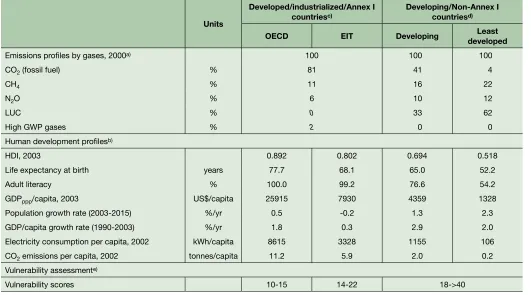
As noted in Section 12.1.1, the mitigative capacity of a nation is closely related to its underlying development path, which depends on the general pool of resources that may be referred to as response capacity. The response capacity including mitigative capacity of countries varies, amongst other factors, with their ability to pay for abatement costs. Winkler et al. ( 2007) analysed the mitigative capacity of different countries as shaped by two economic factors: namely average abatement cost (or mitigation potential; high cost means low potential); and ability to pay, as approximated by GDP per capita. Ability to pay, measured by GDP per capita, is an important factor in mitigative capacity, since more wealth gives countries greater capacity to reduce emissions. The cost of abatement can act as a barrier in turning mitigative capacity into actual mitigation. Examining these factors together, Winkler et al. (2007) found that the abatement costs are not linearly correlated with level of income. Some countries have high mitigative capacity (income) and are also able to translate this into actual mitigation due to low costs. For others, mitigative capacity is clearly low. Relatively high average abatement costs mean that this capacity can be turned into even less actual mitigation. Interestingly, there are some poorer countries with low abatement costs. Conversely, there are also countries with high mitigative capacity, as approximated by income, but high average abatement costs. However, this group of countries still has higher mitigative capacity, simply by virtue of their higher ability to pay. Low-income countries do not spend on mitigation even if they have low-cost mitigation opportunities, simply because the opportunity cost in terms of basic development needs is too high.
to other groups of countries (Adger et al., 2004), with vulnerability scores lower than 15, close to the lower end of the spectrum (Table 12.1). In general, mitigative capacity in these economies is high but cost can be high. As well as marginal cost of mitigation increases with the rate of energy efficiency. Nevertheless, there are large mitigation potentials in these countries. For example, passenger vehicle economy in North America and Australia is well below that in EU and Japan, even lower than some developing countries such as China (An and Sauer, 2004). Barring a few newly industrialized countries, most are highly industrialized with limited scope or need for large-scale expansion of the physical infrastructure, such as public utilities, physical transport infrastructure, and buildings (Pan, 2003).
Notwithstanding this limited scope or need for infrastructure expansion and economic growth figures often much lower than in many developing countries, the future will look different
from today and low-carbon development pathways are possible. Improving energy efficiency, modernizing production and changing consumption patterns would have a large impact on future GHG emissions (Kotov, 2002). Developed countries possess comparative advantages in technological and financial capabilities in mitigation of climate change. Priority mitigation areas for countries in this group may lie in improving energy efficiency, building new and renewable energy, and carbon capture and storage facilities, and fostering a mutually remunerative low-emissions global development path through technological and financial transfer of resources to the developing world.
In many industrialized countries (e.g., Japan and in Europe), implications of energy systems with very low carbon emissions have been explored, often jointly by governments, energy specialists and stakeholders (e.g., Kok et al., 2000). However, a fundamental and broad discussion in society on the implications
Table 12.1: Profiles of emissions and human development at different levels of development
Units
Developed/industrialized/Annex I countriesc)
Developing/Non-Annex I countriesd)
OECD EIT Developing developedLeast
Emissions profiles by gases, 2000a) 100 100 100
CO2 (fossil fuel) % 81 41 4
CH4 % 11 16 22
N2O % 6 10 12
LUC % 0 33 62
High GWP gases % 2 0 0
Human development profilesb)
HDI, 2003 0.892 0.802 0.694 0.518
Life expectancy at birth years 77.7 68.1 65.0 52.2
Adult literacy % 100.0 99.2 76.6 54.2
GDPppp/capita, 2003 US$/capita 25915 7930 4359 1328
Population growth rate (2003-2015) %/yr 0.5 -0.2 1.3 2.3
GDP/capita growth rate (1990-2003) %/yr 1.8 0.3 2.9 2.0
Electricity consumption per capita, 2002 kWh/capita 8615 3328 1155 106
CO2 emissions per capita, 2002 tonnes/capita 11.2 5.9 2.0 0.2
Vulnerability assessmente)
Vulnerability scores 10-15 14-22 18->40
Notes:
a) Source: Baumert et .al., 2004, p. 6. FF: fossil fuel combustion; High GWP (global warming potential) gases: sulphur hexafluoride (SF6), perfluorocarbons (PFCs), and hydrofluorocartbons (HFCs).
b) Source: UNDP, 2005. HDI range: 0.00<HDI<1.00; PPP: purchasing power parity. PPP normally deflates the income level of the developed nations while inflating those in the developing world as one dollar would have larger purchasing power that it has in the developed world.
c) Annex I countries include both developed OECD and EIT countries. However, a few newly admitted OECD countries are not in Annex I list, including South Korea, Singapore, and Mexico. The group of economies in transition (EIT) countries contains several sub-groups: those that are part of the enlarged EU, central Asian Republics, and other members of the CIS. In UNDP (2005) categorization, the coverage is larger, including Central and Eastern Europe and the Commonwealth of Independent Sates (CIS).
d) In emissions profiles, these two subgroups were counted separately while in the UNDP human development profiles, least developed is a subgroup of the developing world.
[image:15.612.53.584.78.373.2]