Southern Region Engineering Conference 11-12 November 2010, Toowoomba, Australia SREC2010-F3-1
A review of Common and Alternative Methods for
Disinfection of Microorganisms in Water
R. Al-Juboori, V. Aravinthan & T.Yusaf
Faculty of Engineering and Surveying University of Southern Queensland Toowoomba, 4350 QLD Australia.
Abstract - Disinfection is the most essential and final treatment given to drinking water to render the water free from harmful pathogens. The most conventional and common form of disinfection involves the use of strong oxidants that have the potential to produce undesirable disinfection by-products (DBP). Therefore, many researchers have been trying to find alternative disinfection methods to reduce the adverse effects of conventional techniques. Hence, in this paper, these methods will be critically reviewed along with their advantages, disadvantages, and potential applications in specific circumstances. The most common methods that will be discussed in this paper are (i) chemical, (ii) thermal (iii) electrical and (iv) non-conventional technologies. The second part of this paper will focus on using ultrasound technology as a practical application of non-conventional technologies for disruption of the cell of microorganisms in water. The main objective of this paper is to illustrate the current non-conventional methods for water disinfection that captured the interest of research field.
Keywords- Disinfectio; Disinfection by-product; non-conventional technologies; Ultrasound
I. INTRODUCTION
Disinfection is considered to be the most crucial step in water treatment for public usage purposes. After Pasteur and Koch presented the germ theory of diseases, Koch found out the bactericidal properties of chlorination in 1881 [1]. With this invention, the use of chemical disinfection started in developed nations in the early 1900s [2]. However chlorination used for disinfection was found to produce undesirable Disinfection by-Products (DBPs) such as Trihalomethanes (THMs) which have unintended health hazards. In 1976, a study was conducted by the US National Cancer Institute showed that the chloroform in water can cause cancer in laboratory animals[2]. This finding motivated the researchers to find out alternative methods for water treatment, who then used ozone, chlorine dioxide and chloramines as a disinfectant. Despite the potency of these techniques in cutting down the formation of DPBs, the use of combination of ozone with chloramines was observed to produce bromate, which showed carcinogenic effects in laboratory animals[2].
Traditional thermal treatment for disinfection is considered to be one of the oldest techniques used to inactivate the pathogens in water. However, this method requires huge
amount of energy, which makes it an uneconomical option. Recently, this technique has been modified by utilizing the potency of solar energy as an active disinfectant. This method has been implemented in some of the developing countries [3] but the applicability of this method is restricted since it depends on climatic conditions and suits small-scale treatment.
Accordingly, several non-conventional methods such as electrical, mechanical and non-conventional technologies have been invented to integrate disinfection in water treatment process. This paper will critically review the mechanisms by which microorganisms are inactivated using these techniques, along with advantages, disadvantages and potential applications in specific circumstances. In addition, ultrasound technique will be investigated in depth as a potential treatment for disinfection with gaps identified for further research possibilities.
II. CONVENTIONAL METHODS A. Chemical methods
Chemical methods involve adding various strong chemical oxidants to water.
Chlorination process constitutes of adding chlorine gas (Cl2) or sodium hypochlorite (NaOCl) as a chlorine precursor at the end of treatment process [4]. When chlorine is injected to the water, it immediately hydrolyses forming HOCl and Hydrochloric acids as shown in equations 1 and 2. The first one is not stable, therefore in decomposes into OCl- and H+.
Cl2 + H2O HOCl + HCl (1)
HOCl H+ + OCl- (2)
deactivating protozoa and endospores has efficacy range between poor to fair, its effectiveness in inactivation bacteria and viruses is excellent.
Chlorine in some instances is replaced by chloramines in order to reduce the formation of DBPs in treated water. Chloramines are less reactive and thus more stable than free chlorine especially at high pH (i.e. pH more than 8.5) [7]. Chloramines are produced due to the reaction of aqueous ammonia with free chlorine as follows:
HOCl + NH3 NH2Cl + H2O (3)
2HOCl + NH3 NHCl2 + 2H2O (4)
3HOCl + NH3 NCl3 + 3H2O (5)
Monochloramine (NH2Cl) is more commonly used than di- and tri- chloramines because of its stability. However, this compound needs to be maintained at high pH otherwise it converts to dichloramine and trichloramine. Chlorine and monochlorine have the advantage of leaving residuals that prevent re-growth of microorganisms in the distribution system[8]. Despite the good efficiency of this compound in deactivating bacteria, it is inefficient in killing viruses, protozoa and endospores. Furthermore, the effect of monochloamine in damaging the membrane of RO was also observed [5, 9].
Another oxidative agent that has been used broadly for disinfection purposes is chlorine dioxide. This compound has captured the attention because of its mild corrosion effects as well as it produces less DBPs than the aforementioned oxidative compounds. In addition, it is efficient in deactivating bacteria, viruses and protozoa but its’ potency less with endospores. Chlorine dioxide has lower limit of residuals compared to chlorine and monochlorine about 0.8mg/L[8]. Chlorine dioxide can be produced due to the reaction between sodium chlorite NaClO2 and chlorine Cl2 or hydrochloric acid HCl as described in equations 6 and 7[10].
2NaClO2 + Cl2 2ClO2 + 2NaCl (6)
5NaClO2 + 4HCl 4ClO2+5NaCl +2H2O (7)
Although chlorine dioxide is known to be producing less DPBs, it has toxicity effects [11]. Because of the possible adverse effects of chlorine compounds, chlorination has to be substituted by other techniques.
The use of ozone as an alternative disinfectant has received acceptance because of its powerful oxidation effects. Ozone is effective in deactivating bacteria, viruses, protozoa and endospores. Unlike chlorination, the use of ozone in water disinfection does not leave any residuals in finished water.
Ozone decomposes spontaneously during water treatment forming hydroxyl free radicals OH- [12]. Hydroxyl free radical is considered to be one of the most effective oxidizing agents in water that can destroy the cell of microorganisms[13]. As hydroxyl can deteriorate the cell wall or recombine producing hydrogen peroxide (H2O2) which is a strong oxidant itself [14]. They can attack and penetrate cell wall of microorganisms causing disorder in the cell physiology and thus resulting in cell death. However, ozonation has disadvantages such as the
instability of ozone that therefore it must be produce on-site. Moreover, ozone can form mutagenic and carcinogenic agents such as bromide in the treated water [2].
From the above-mentioned information, it can be deduced that in spite of strong bactericidal effects of chemical methods, they may have adverse effects on public health. Therefore, it is desirable to find other techniques in disinfection processes with fewer hazards on public health.
B. Thermal methods
Traditional thermal treatment for water is an uneconomic choice because it consumes large amount of energy to heat the water up to the required temperature. Accordingly, these methods need reliable, low cost, inexpensive to construct and readily repairable techniques for wide use[15]. Solar energy was chosen as most compatible method that could meet the aforementioned conditions.
There are two main destructive effects of solar energy on the cell of microorganisms, thermal effects and the effects of ultraviolet radiation present in the sunlight. Heating the cell of microorganisms to certain temperatures leads to losing the essential contents of microorganisms’ membrane. Heating the gram-negative microorganisms even under lethal temperature can remove part of the lipopolysaccharide (LPS) layer [16]. This layer constitutes essential components of the cell wall, which has a vital role in electrostatic stability of the cell; therefore, missing part of it may make the cell prey for the strong ions. The other effect is represented by the potency of UV-A (315 nm-400nm), as this wave can attack the Deoxyribonucleic acid (DNA) of microorganisms and hence cause serious damage to the cell [17]. This effect, which is termed as photochemical reaction, can be enhanced by the addition of photocatalysts such as (TiO2).
Many researchers have examined this method. A solar disinfection system was constructed in small village in Kenya that accommodates 500 people who depend on collecting water in rainy seasons to fulfill their requirements [3]. The upstream water from the dam having a coliform bacterial concentration of 102 CFU/100ml (colony forming unit/100ml) was treated in the solar disinfection system with treating water having almost 0 CFU/100ml. The efficiency of solar energy depends on many parameters such as latitude, altitude, the intensity of radiation and the proportion of UV to the visible light[15]. Therefore, this technique is feasible for certain locations in specific conditions.
C. Electrical methods
The general mechanisms of using electrical method for water disinfection is by passing electrical current through the contaminated water and consequently create physical and chemical changes in the physiological structure of the cell of microorganisms. This technique has been used for wide range of applications and it depends on the potential of the voltages and the current intensity such as high-voltage pulsed electric field, high electric field and low-intensity electric field with long duration pulses or as so-called pulsed electric field [18].
that, the electrical field causes the polarization of the cell, which in turn generates a compression of the plasma membrane[20]. Consequently, this can result in enlargement of the pores of the membrane at certain points and subsequent reduction of the thickness of the membrane. Similarly, some literature correlated the effectiveness of these events to several factors such as cell size, conductivity of the medium and the field specifications. Further, it was proved that subjecting liquid to electrical field does not cause a significant rise in the mean temperature of the medium and consequently thermal effects were ruled out [21]. On the other hand, some researchers supported the thermal consequences of electrical technique as the main cause for microorganisms’ inactivation. Those researches ascribed the thermal effects of electrical techniques to the temperature-related phase transition of phospholipids in the cell membrane [23]. The increase in the temperature could lead to change in the fluidity of the phospholipids layer resulting in the deterioration in the mechanical resistance of the cell. The change in the thickness of the cell wall would impact the permeability of the membrane which causes the losses of the cell contents [22]. Exposing the cell of Saccharomyces cerevisiae to heat shock at 50 ̊C for 2 minutes causes a significant loss of ions such as Na+, K+ and Ca2+ [23]. Although this method was believed to be producing mutagenic and bactericidal components in the treated water [24], this method has captured the attention of many researchers to use it as alternative method to the conventional methods. It has been used recently to deactivate Pseudomonas putida in the hospital wastewater with an inactivation rate about 3.5± 0.8 log of CFU by supplying 10 pulses along 30 cycles with 100 kV/cm and 600 ns pulse duration[25]. Additionally, they pointed in their study to the possibility of reproducing new generation of bacteria, which can survive under the effects of electrical techniques in the treated wastewater.
In summary, it was suggested that the electromechanical phenomena associated with thermal effects causes the permeabilization of the cell membrane and subsequent leakage of cytoplasm’s ions which in turn lead to the cell disintegration[19].
III. NON-CONVENTIONAL TECHNOLOGIES
The distinctive name of these technologies gives an obvious impression about the close relationship between these methods and the environment. The priority of these techniques is to avoid the generation of DBPs because of their serious hazards on the environment and human health. Therefore, non-conventional technologies such as mechanical, UV light and ultrasound waves have been discovered as alternative solutions to address disinfection problems.
A. Mechanical methods
The use of mechanical techniques to inactivate microorganisms in water can be represented clearly in the use of hydrodynamic cavitation in destroying the cell of microorganisms. The essence of hydrodynamic cavitation lies in generating, growing and collapse of bubbles resulting from the pressure fall of the liquid under the saturated vapor pressure at certain temperature. As the velocity of the liquid increases in the discharge side of the cavitation chamber, the pressure decreases.
However, there are three main key parameters which govern this process including, cavitation chamber design, inlet pressure and the flow-rate [26]. They divided the time that the
bubbles undergo during the whole process of hydrodynamic cavitation into three sub-intervals, time of the pressure decrease, time of rarefaction and the time of pressure recovery. The last two periods were considered to be of utmost important periods in the lifetime of the bubbles. Adding to the aforementioned factors and the time scales, the theoretical basis of Hydrodynamic Cavitation (HC) constitutes of three main equations that describe the physical and mechanical activities of this process that need to be taken into account to achieve better understanding of HC. These equations are Rayleigh-Plesset equation, the energy equation and state equation of the gases inside the bubble.
HC has chemical and mechanical effects, chemical effects are represented by liberating of OH˙, which is an unstable radical, and this radical can react with its counterparts producing H2O2, which is a strong oxidant. This can happen when the rarefaction period is short, which can be obtained by equipping orifice design. The oxidation potential of the free radicals can be observed strongly with hydrophobic contaminants.
Since the effectiveness of bubbles’ collides is associated with specific operating conditions of cavitation chamber that can be achieved through certain features of design, Table 1 summarizes the key parameters of HC are influenced by specific designs [26].
The mechanical effects of the hydrodynamic cavitation that causes the deactivation of microorganisms are summarized by colliding of microorganisms on the solid surfaces, turbulences produced by high-velocity liquid jets, shear rates generated in the adjacent area to the jets and shock waves generated by bubbles explosion [27]. The latter one was considered as a dominant effect among the aforementioned effects of HC. The use of hydrodynamic cavitation was tested as a disinfection technique to deactivate zooplankton in seawater [27]. The configuration of the cavitation chamber that was used for this purpose was an orifice design, as they noticed that the opened area of the valve could affect the log reduction of microorganisms.
They achieved killing percentage around 80% of the zooplankton by utilizing orifice configuration with 25% of opened area of the valve. The potential of HC to disintegrate the cell of E coli in waste water was examined by using suspension of E coli with concentration around 1x 10⁴ CFU/ml[1]. They used two types of cavitation chamber designs (orifice and venturi) with three different configuration of each design, where they used orifice with various number of holes: one hole with diameter of 5mm, six holes with diameter of 2mm and 25 holes with diameter of 1mm. On the other hand, the used venturi was in three different configurations depending on the cross-sectional area of the flow and the divergence angle: 4x10⁻⁵ m2, 2x10⁻⁵ m2 and 1x10⁻⁵ m2 with
divergence angle 10 ̊. They found that the latter configuration
of venturi attained highest inactivation rate of E coli per unit time (min) which was about 0.016 (CFU/min.ml).
TABLE I. KEY PARAMETERS THAT AFFECT THE EFFICIENCY OF HYDRODYNAMIC CAVITATION VERSUS THE DESIGNS OF CAVITATION CHAMBER [26]
Rarefaction period Compression period Discharge pressure
Long short Long Short large small
Positive effects Large bubbles, lower cavitation
threshold
Avoids excessive bubble cloud
density
None More violent collapse, higher diffusion of
OH_ radicals
Avoids excessive bubble growth, more
violent collapses
More energy efficient
Negative effects Excessive bubble cloud density
Higher cavitation threshold, smaller
bubbles
Less violent collapse, lower diffusion of
OH_ radicals
None Energy un efficient, if excessive it might
prevent bubble growth
Excessive bubble cloud density
Possible designs Venturi with long throat
Orifice and multi-orifice plates
Single orifice plate or Venturi tube
Stagnation plates and/ or multi-orifice
plates
Stagnation plates or throttling device
Atmospheric or depressurized tank
These results match nicely with the outcomes of the previous literatures and Table 1, as the most recommended design for cavitation chamber is the venturi design with small cross sectional area of flow which produces long rarefaction period that in turn generate large bubbles and eventually violent collapse.
B. Ultraviolet light (UV)
UV disinfection process has attracted the interests of the researchers since 1990s when this process showed impressive result in deactivating Cryptosporidium even in low dosage of UV [28]. The spectrum of UV light consists of four regions with different wavelength: vacuum UV (100~200nm) (VUV), UV-C (200~280nm), UV-B (280~315nm) and UV-A (315~400nm).
The bactericidal activity of UV results from the destructive effects of UV-B and UV-C on the microorganisms. The hydroxyl radicals OH- are photolyzed from the hydrogen peroxide H2O2 in the range of UV-C wavelength spectrum and the resultant hydroxyl radical was attributed to destroy the cell of microorganisms [29]. This was also confirmed as causing the destructing to the cell of E coli [30]. However, the effectiveness of VUV in deactivating microorganisms is restricted in water due to the prompt dissipation of this part of UV spectrum through the water in very short distances [28].
It was elucidated that employing UV light in water disinfection process can be utilized in two ways: subjecting the water to monochromatic low pressure UV (LPUV) or polychromatic medium pressure UV (MPUV)[28]. These two systems of UV light are different in their emissions where the first one emits single wavelength at 254nm and the second one emits broad band of wavelength involving UV-A, B, C and visible light. This variety in the wavelengths of both systems makes them applicable in terms of disinfecting different types of microorganisms.
The mystery of bactericidal effects of UV techniques is that the detrimental impacts of UV light on the DNA of the microorganisms. The damage can be caused by the UV on the thymine in the strand of DNA and subsequent generation of spore photo-product which has a lethal consequences on the spore [31]. Similarly, OH- can attack the polyunsaturated phospholipids components of the membranes’ lipid causing disorder in the membrane integrity and hence destroying the cell of microorganisms [32]. Microorganisms, which are being
in cluster form, can protect the cells in the inner side of the agglomeration from the above-mentioned effects. It was confirmed that the endospores of B. Subtilise are 50 times more resistant to UV effects than the vegetative cell [33]. This study attributed the resistance of B. Subtilise to UV effects to the presence of α/β-type small acid-soluble proteins that saturate the DNA of the spore.
However, the performance of UV as a disinfectant is affected by many parameters, wavelength, UV dose, time of exposure and the way in which UV light is distributed in the medium. Increasing the time of exposure to UV and the doses can lead to the rise in the reduction log of microorganisms [31, 32]. Adding to these factors the efficacy of UV light in the contaminated water is susceptible to the presence of turbidity, ferric ions and humic acid where the germicidal activity of UV technique inversely proportional with increase the concentration of the aforementioned contaminants in water[34].
causing mutagenic activity [36]. Furthermore, the potency of UV in deactivating protozoa is excellent but it is less efficient in inactivating bacteria, viruses and endospores. Therefore, there is a need for alternative disinfection method.
C. Ultrasound
The term ultrasound waves implies the application of sound waves with a frequency higher than the upper limit of human hearing 20 kHz [37]. The potential of ultrasound as an effective tool to deactivating microorganisms was observed in 1960s, after discovering the lethal impacts of sound waves used in anti-submarine warfare on fish [38]. Since then ultrasound has been exploited to replace the conventional pasteurization and sterilization techniques that are used in food industries. As the use of these techniques causes loss in the nutrition values of the food, research work concentrated on examining ultrasound as an alternative method for microbe disinfection.
Ultrasound waves can be used solely or associated with temperature (thermosonication) (TS), pressure (monosonication) (MS) and/or pressure and temperature (monothermosonication) (MTS). The combination of synergistic techniques with ultrasound has been innovated to enhance the effectiveness of microbe inactivation processes [39]. The propagation of ultrasound waves in water causes acoustic phenomena categorized as acoustic streaming, standing waves and cavitation [40]. Acoustic streaming means the motion of liquid due to the action of ultrasound wave [41]. The existence of pressure nodes (materials with density lower than that of the liquid) and antinodes (materials with higher density than the liquid) can be clearly observed in standing wave. Because of the standing wave, bubbles and cells will be located in different layers of liquid and thus there will be no interaction. Therefore, the deactivation in the acoustic streaming happens more effectively than that in the standing wave. As it was found that the decimal reduction time in acoustic streaming is much shorter than its value in standing wave [40]. Decimal reduction time can be defined as is the required time to inactivate 90% of the cultured Bacteria by using ultrasound and it is denoted by D value [42]. This value can be determined through two formulas as the D value of monosonication was calculated in equations 1 and 2[42].
(1)
Where, is a decimal reduction time of monosonication treatment at amplitude 62 and A is supplied amplitude
(2)
Where, P is a relative static pressure.
On the other hand, D-value for monothermosonication D MTS and thermosonication D TS can be presented by the following equations
(3)
(4)
The last mechanism of the acoustic phenomenon is acavitation, this in turn divided into two types, transient and stable cavitations, this phenomenon generates spots of high pressure and temperature up to 50,000kPa and 5500 ̊C [43]. Therefore, the inactivation of microorganisms in suspended liquid was attributed to the potential of cavitation [42].In addition to the effects of the aforementioned phenomena, MS, TS and MTS involve supplying external pressure often using nitrogen gas in case of MS, adding heat in case of TS or the combination of both in MTS. However, a cavitation formation mechanism is different in the case of sonication from in case of monosonication. Sonication bases on dragging the hydrostatic pressure under the value of saturated vapour pressure of the liquid whereas monosonication depends on raising the hydrostatic pressure above the saturated vapour pressure to generate cavitation.
The mechanism of ultrasound in disintegrating the cell of microorganisms results from the combination of instantaneous effects; (i) mechanical effects results from the severe collapse of the micro bubbles, (ii) chemical effects caused by the generation of free radicals in the medium and (iii) heat effects as a result of the rapid explosion of the bubbles [44]. It was observed that the mechanical effects play the main role in destroying the cell of microorganisms while chemical and heat effects have supporting role [45]. In comparison the mechanism of TS includes the above-mentioned effects with emphasis on the last one. The role of the heat in TS is to weaken the cell wall of the microorganisms causing disturbances in the content of the cell wall. Helander, von Wright and Mattila-Sandholm stated in their study that the cell wall of gram-negative pathogens comprised of lipopolysaccharide (LPS) as an outer shell and phospholipids as inner shell and LPS [46]. These important contents of the cell wall can be removed due to the effect of the heat and thus leave the cell fragile and liable to disintegration [47]. Similarly, the potential of monosonication in disintegrating the cell of microorganisms depends upon the produced shock waves from the collapse of the bubbles. As the rising of hydrostatic pressure causes decrease in the vapor pressure inside the bubbles and hence more violent collapse occurs. However, MS has an upper limit of pressure after which the ultrasonic pressure amplitude could not get over the hydrostatic pressure and the adhesion of the liquid molecules. As a result, the number of collapsing bubbles will decrease leading to the decrease in the activity of the process [16]. When they tested three different pressure such as (300, 400 and 500kPa), the upper limit among them was found to be 300kPa, as there was no significant difference in log reduction of microorganisms in the samples that were treated by the three different values of the pressure. On the other hand, MTS has all the aforementioned mechanisms in deactivating microorganisms and the synergistic effects that result from the combination of sonication, pressure and temperature.
(STCC 410), L. Monocytogenes (STCC 4031), Senteritidis (STCC 4300) and A. Hydrophila (STCC 839)) decreased six fold when the amplitude was increased from 62 to 150 and fivefold when the relative pressure (the applied pressure) was raised from 0 to 400 kPa. Similarly, when destructive effects of temperature were investigated on E coli cell, it was found that it weakens the physiology structure of the cell wall and thus increase in the rate of inactivation [16]. In addition, the effect of power, time of treatment, volume of treated samples, initial concentrations of the microorganisms and the flow rate on the performance of ultrasound as an inactivation technique was studied in pilot study [44]. Results of this study showed that the reduction percentage of microorganisms is inversely proportional with the volume of the treated water and initial concentrations of microorganism. Alternatively, the inactivation rate of microorganism is proportional with power intensity of ultrasound and time of treatment. The effect of flow rate on the efficiency of ultrasonic disinfection is interesting, as the higher flow rate achieved higher percentage of bacterial reduction than lower flow rate. Attaining high percentage of dead microorganisms with higher flow rate was attributed to more frequent water passes through the ultrasonic reactor. Otherwise low flow rate results in higher bacterial disinfection in single pass experiment. Accordingly, the recommendation of this study was to take into account the number of circulation to improve the efficacy of ultrasonic disinfection in continuous system. Furthermore, the high frequencies lead to less cavitation events per cycle, smaller and less potential bubbles and hence causing less inactivation rate from mechanical effects that are considered as a dominant effects among cavitation effects[1]. Alternatively, the chemical effects in this case would be very efficient.
These parameters need to be measured and controlled accurately to achieve high performance of disinfection using ultrasound waves. Temperature and pressure can be monitored by using thermometer and manometer, amplitude and frequency can be controlled through the regulator in the generator. Power or energy released from the probe of ultrasound device is the most crucial parameter as it influences the cost of the process noticeably. Therefore, there are several methods, which are used to observe the distribution of sound waves energy in aqueous medium was demonstrated in [48]. Previous researchers have already used some of these methods and these methods are as follows:
• Calorimetry method: this method is used to measure effective input energy into sonoreactor and compare it with the consumed electrical energy that can be taken from reading of transducer controller.
• Chemiluminescence method: Through this method, sonochemical reaction could be visualized and the cavitation active zone could be recognized in the sonoreactor.
• Probe-mapping method: this method is used to analyse the distribution of the produced energy from sound waves in selected points in the medium.
• Using Electrochemical probe
• Using Hydrophones: Hydrophones are used for measuring the acoustic pressure in certain points in the medium.
• Using Optical fiber tips
They recommended that the most reliable one among these methods is probe-mapping method.
In summary, the use of ultrasound whether alone or combined with other synergistic effects i.e. temperature, pressure and both is a promising technique for water disinfection. Although, this technique has shown noteworthy results in terms of deactivating of microorganisms, most of these results were obtained in laboratory scale. Furthermore, the mechanism by which acoustic cavitation causes the disintegration of microorganisms’ cell has not been established explicitly. As a result, this method needs extensive research work on the fundamental physics of cavitation to relate it to the mechanical characteristics of the microorganisms. This can lead to establishment of the relationship that can estimate the required power to deactivate a certain concentration of microorganisms.
1) Acoustic cavitation in water
Cavitation in general can be defined as the formation of cavities or voids in the body of the liquid [49]. The emerging of cavities in the liquid can occur in two ways: by superheating the liquid above its boiling temperature (boiling), or by stretching it below its saturated vapour pressure (cavitation). In either case, it will finally return to equilibrium by nucleation of vapour bubbles [50]. There are two types of cavitations depending on the path in which the bubble is created, homogenous and heterogeneous cavitations. Homogenous cavitation means the generation of the bubbles due to the interaction of liquid/vapor phase. The theory of the homogenous cavitation date back to the pioneering work by Volmer and Weber (1926) [51]. The mechanisms of creating bubbles in homogenous state can be pronounced when the hydrostatic pressure (the pressure of the medium before supplying external pressure) dropped or raised by the action of external pressure under or above the saturation vapor pressure of the liquid that can generate tension (Pv -P) or (P-Pv). This tension will increase until it reaches certain level in which the generated tension can overcome the surface tension of the liquid and subsequent new phase (vapor bubble) occurs. The term surface tension in pure liquid implies that the intermolecular force that tends to hold the molecules of the liquid together and prevent the formation of voids.
In contrast, heterogeneous cavitation can be defined as the interaction between three phases, solid, liquid and vapor simultaneously. As it is revealed in Figure 1, the formation of bubbles is affected by the contact angle between the bubble and the solid surface and the characteristic of the surface whether it is hydrophobic or hydrophilic. It can be deduced that the water exhibits high contact angle with hydrophobic surface and thus gives less chance for bubble formation. The size of formed bubbles with hydrophilic surfaces is comparable to that of homogenous cavitation [51].
It was observed that there are two kinds of cavitation, with gentle consequences (stable cavitation) and with violent consequences (transient cavitation) [52]. The latter one exists normally for one cycle of the sound pressure in which bubbles can expand for at least double their size and collapse severely often disintegrating into small bubbles.
the mass transfer. This was attributed to the short time that does not allow the gas to transfer from or into the bubbles. In either case, homogeneous and heterogeneous cavitations, no acoustical cavitation happens until the acoustical pressure exceeds the cavitation threshold. There are four different types of cavitation thresholds were categorized in Table 2, depending on various perspectives that relied upon [52]. Cavitation threshold is proportional to the frequency of ultrasound, hydrostatic pressure and the viscosity of the liquid whereas it is inversely proportional to the gas content and the temperature of the liquid [53].
Figure 1. Formation of bubbles in heterogeneous cavitation ( reproduced from the literature[51])
[image:7.595.348.516.283.539.2]Consequently, these parameters influence the efficacy of cavitations’ potency in deactivating microorganisms, as high frequencies, high hydrostatic pressure and viscous liquid require higher power. Supplying high power of ultrasound may cause erosion and particles shedding problems in the delivery tip of ultrasound device and eventually requires replacing that part [54].
TABLE II. DIFFERENT DEFINITIONS FOR CAVITATION THRESHOLD
Thresholds
Occurrence = initial radius = resonant radius = inertial radius
Blake nucleation threshold < (pressure function dominant) Transient threshold > (inertial force dominant)
Apfel threshold < (correctly determine Transient threshold)
Rectified diffusion threshold Lower than Blake threshold (it happens due to mass transfer the liquid/vapor interface
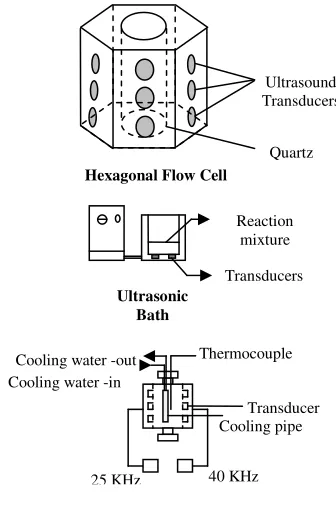
Therefore, it is important to choose the optimum operation conditions for the process by taking in to account the aforementioned factors besides selecting the design of cavitation reactor that is compatible with the purpose of the process. Some designs for the cavitation rectors that are commonly used in laboratory and industrial scale are demonstrated in Figure 2 [55-57].
The design of cavitation reactor plays an important role in the distribution of sound wave throughout the liquid layers and
hence the potential of the cavitation consequences. Gogate mentioned that the cavitational intensity decreases drastically when the waves move away from the source and vanishes at a distance 2-5 cm depending on the supplied power and frequency [55]. Therefore, using ultrasound horns is not recommended for the large scale since they cannot transmit energy for long distance in large volume besides suffering from erosion in the sonotrodes. Instead, the use of multiple transducers is more preferable for the large-scale processes since they can fill the inadequacy in the performance of horn transducer as using multiple transducers results in low power intensity and thus reducing the erosion of delivery surface.
To sum up, homogenous and heterogeneous cavitation may appear simultaneously time, transient and stable cavitations occur in either type of above-mentioned cavitation. However, transient cavitation is of utmost important phenomenon and it need to be understand properly to get the maximum potential. This can be achieved by considering the parameters that affect the cavitation and put them in a feasible frame.
Figure 2. Three designs of cavitation reactors that are broadly used (reproduced from the literature [58])
IV. IDENTIFYING GAPS IN USING ULTRASOUND FOR FURTHER RESEARCH
As a result of above critical review, ultrasound and mechanical methods are found to be promising non-conventional techniques for disinfection purposes with minimal adverse health effects. However, the mechanisms of both techniques in inactivating microorganisms are still obscure and thus their use is still limited to small scale. This is attributed to many reasons. There is no clear mathematical model developed to find out the required power to generate cavitation yet. Furthermore, a model that describes the correlation between the supplied power and the log reduction of microorganisms has not been established theoretically. This model needs to take the mechanical properties of microorganisms into account. If the detailed mathematical model of deactivating
Reaction mixture
Transducers Ultrasonic
Bath
Transducer Cooling pipe
Rectangular Flow Cell Cooling water -out
Cooling water -in
Thermocouple
25 KHz 40 KHz
Ultrasound Transducers
Quartz Hexagonal Flow Cell
Case (A) Flat hydrophobic
surface Bubble
Case (C) conical cavity Bubble
Bubble
Case (B) Flat hydrophilic surface
microorganisms is developed in way that can support the experimental observations, it will be possible to expand the application of this technique from laboratory to industrial scale. Therefore, this paper aims to investigate in-depth the deactivation of microorganisms using the ultrasound disinfection method and development of models that explain the observed phenomenon with the aim of application of this method on a large scale.
V. CONCLUSIONS
In this paper, we critically reviewed the conventional and non-conventional water disinfection methods. Since the use of thermal techniques has restricted feasibility and the use of chemical methods produces undesirable by products that have serious effects on the public health in water disinfection, non-conventional methods are becoming popular. In this review, we further discussed the availability of various non-conventional methods, mechanisms by which they achieve deactivation of microorganisms and their applications. Finally we focused our review on ultrasound as a disinfection tool and identified the gaps present in the research for further investigation. This is because the theoretical approaches that explain the mechanisms of these methods in deactivating microorganisms have not been conclusively established.
REFERENCES
[1] Arrojo, S., Y. Benito, and A. Martínez Tarifa, A parametrical study of disinfection with hydrodynamic cavitation. Ultrasonics Sonochemistry, 2008. 15(5): p. 903-908.
[2] Richardson, S.D., Disinfection by-products and other emerging contaminants in drinking water. TrAC Trends in Analytical Chemistry, 2003. 22(10): p. 666-684.
[3] Gill, L.W. and C. Price, Preliminary observations of a continuous flow solar disinfection system for a rural community in Kenya. Energy, 2010. In Press, Corrected Proof.
[4] Kim, D., et al., Biocide application for controlling biofouling of SWRO membranes -- an overview. Desalination, 2009. 238(1-3): p. 43-52. [5] Kang, G.-D., et al., Study on hypochlorite degradation of aromatic
polyamide reverse osmosis membrane. Journal of Membrane Science, 2007. 300(1-2): p. 165-171.
[6] Yang, X., C. Shang, and P. Westerhoff, Factors affecting formation of haloacetonitriles, haloketones, chloropicrin and cyanogen halides during chloramination. Water Research, 2007. 41(6): p. 1193-1200.
[7] Applegate, L.E., C.W. Erkenbrecher Jr, and H. Winters, New chloroamine process to control aftergrowth and biofouling in permasepR B-10 RO surface seawater plants. Desalination, 1989. 74: p. 51-67. [8] Hand, D.W., J.R. Mihelcic, and Q. Zhang, Water treatment, in
Environmental engineering: fundamentals, sustainability, design, H.D. W. and Z.J. B., Editors. 2010, John Wiley & Sons, Inc.: United States of America.
[9] Sorlini, S. and C. Collivignarelli, Trihalomethane formation during chemical oxidation with chlorine, chlorine dioxide and ozone of ten Italian natural waters. Desalination, 2005. 176(1-3): p. 103-111. [10] Simonet, J. and C. Gantzer, Degradation of the Poliovirus 1 genome by
chlorine dioxide. Journal of Applied Microbiology, 2006. 100(4): p. 862-870.
[11] Svecevičius, G., et al., Acute and chronic toxicity of chlorine dioxide (ClO2) and chlorite (ClO2¯) to rainbow trout (Oncorhynchus mykiss) (4 pp). Environmental Science and Pollution Research 2005. 12(5): p. 302-305.
[12] Hoigné, J. and H. Bader, Rate constants of reactions of ozone with organic and inorganic compounds in water--I: Non-dissociating organic compounds. Water Research, 1983. 17(2): p. 173-183.
[13] Kim, B., et al., Bactericidal effect of TiO2 photocatalyst on selected food-borne pathogenic bacteria. Chemosphere, 2003. 52(1): p. 277-281. [14] Al Bsoul, A., et al., Effectiveness of ultrasound for the destruction of
Mycobacterium sp. strain (6PY1). Ultrasonics Sonochemistry, 2010. 17(1): p. 106-110.
[15] Davies, C.M., et al., Solar radiation disinfection of drinking water at temperate latitudes: Inactivation rates for an optimised reactor configuration. Water Research, 2009. 43(3): p. 643-652.
[16] Lee, H., et al., Inactivation of Escherichia coli cells with sonication, manosonication, thermosonication, and manothermosonication: Microbial responses and kinetics modeling. Journal of Food Engineering, 2009. 93(3): p. 354-364.
[17] Nicholson, W.L., B. Setlow, and P. Setlow, Binding of DNA in vitro by a small, acid-soluble spore protein from Bacillus subtilis and the effect of this binding on DNA topology. J. Bacteriol., 1990. 172(12): p. 6900-6906.
[18] Feng, C., et al., Water disinfection by electrochemical treatment. Bioresource Technology, 2004. 94(1): p. 21-25.
[19] Guyot, S., et al., Yeast cell inactivation related to local heating induced by low-intensity electric fields with long-duration pulses. International Journal of Food Microbiology, 2007. 113(2): p. 180-188.
[20] Bryant, G. and J. Wolfe, Electromechanical stresses produced in the plasma membranes of suspended cells by applied electric fields. Journal of Membrane Biology, 1987. 96(2): p. 129-139.
[21] Harrison, S.L., G.V. Barbosa-Cánovas, and B.G. Swanson, Saccharomyces cerevisiaeStructural Changes Induced by Pulsed Electric Field Treatment. Lebensmittel-Wissenschaft und-Technologie, 1997. 30(3): p. 236-240.
[22] Beney, L. and P. Gervais, Influence of the fluidity of the membrane on the response of microorganisms to environmental stresses. Applied Microbiology and Biotechnology, 2001. 57(1): p. 34-42.
[23] Marañón, I.M.d., et al., Slow heat rate increases yeast thermotolerance by maintaining plasma membrane integrity. Biotechnology and Bioengineering, 1999. 65(2): p. 176-181.
[24] Reyns, K.M.F.A., A.M.J. Diels, and C.W. Michiels, Generation of bactericidal and mutagenic components by pulsed electric field treatment. International Journal of Food Microbiology, 2004. 93(2): p. 165-173.
[25] Gusbeth, C., et al., Pulsed electric field treatment for bacteria reduction and its impact on hospital wastewater. Chemosphere, 2009. 75(2): p. 228-233.
[26] Arrojo, S. and Y. Benito, A theoretical study of hydrodynamic cavitation. Ultrasonics Sonochemistry, 2008. 15(3): p. 203-211. [27] Sawant, S.S., et al., Effect of hydrodynamic cavitation on zooplankton:
A tool for disinfection. Biochemical Engineering Journal, 2008. 42(3): p. 320-328.
[28] Choi, Y. and Y.-j. Choi, The effects of UV disinfection on drinking water quality in distribution systems. Water Research, 2010. 44(1): p. 115-122.
[29] Parsons, S., Advanced oxidation processes for water and wastewater treatment. 2004, Cornwall, UK: IWA Publishing.
[30] Cho, M., et al., Linear correlation between inactivation of E. coli and OH radical concentration in TiO2 photocatalytic disinfection. Water Research, 2004. 38(4): p. 1069-1077.
[31] Armstrong, G.N., I.A. Watson, and D.E. Stewart-Tull, Inactivation of B. cereus spores on agar, stainless steel or in water with a combination of Nd:YAG laser and UV irradiation. Innovative Food Science & Emerging Technologies, 2006. 7(1-2): p. 94-99.
[32] Paleologou, A., et al., Disinfection of water and wastewater by TiO2 photocatalysis, sonolysis and UV-C irradiation. Catalysis Today, 2007. 129(1-2): p. 136-142.
[33] Setlow, P., I will survive: protecting and repairing spore DNA. Journal Of Bacteriology, 1992. 174(9): p. 2737-2741.
[34] Lu, G., et al., A novel fiber optical device for ultraviolet disinfection of water. Journal of Photochemistry and Photobiology B: Biology, 2008. 92(1): p. 42-46.
[35] Rincón, A.G. and C. Pulgarin, Photocatalytical inactivation of E. coli: effect of (continuous-intermittent) light intensity and of (suspended-fixed) TiO2 concentration. Applied Catalysis B: Environmental, 2003. 44(3): p. 263-284.
[36] Gómez, M., et al., Urban wastewater disinfection by filtration technologies. Desalination, 2006. 190(1-3): p. 16-28.
[37] Butz, P. and B. Tauscher, Emerging technologies: chemical aspects. Food Research International, 2002. 35(2-3): p. 279-284.
[39] McClements, D.J., Advances in the application of ultrasound in food analysis and processing. Trends in Food Science & Technology, 1995. 6(9): p. 293-299.
[40] Lo''rincz, A., Ultrasonic Cellular Disruption of Yeast in Water-based Suspensions. Biosystems Engineering, 2004. 89(3): p. 297-308. [41] Mitome, H., The mechanism of generation of acoustic streaming.
Electronics and Communications in Japan (Part III: Fundamental Electronic Science), 1998. 81(10): p. 1-8.
[42] Pagan, R., et al., Bacterial Resistance to Ultrasonic Waves under Pressure at Nonlethal (Manosonication) and Lethal (Manothermosonication) Temperatures. Appl. Environ. Microbiol., 1999. 65(1): p. 297-300.
[43] Piyasena, P., E. Mohareb, and R.C. McKellar, Inactivation of microbes using ultrasound: a review. International Journal of Food Microbiology, 2003. 87(3): p. 207-216.
[44] Hulsmans, A., et al., Evaluation of process parameters of ultrasonic treatment of bacterial suspensions in a pilot scale water disinfection system. Ultrasonics Sonochemistry, 2009. In Press, Corrected Proof. [45] Mason, T.J., et al., Potential uses of ultrasound in the biological
decontamination of water. Ultrasonics Sonochemistry, 2003. 10(6): p. 319-323.
[46] Helander, I.M., A. von Wright, and T.M. Mattila-Sandholm, Potential of lactic acid bacteria and novel antimicrobials against Gram-negative bacteria. Trends in Food Science & Technology, 1997. 8(5): p. 146-150. [47] Hurst, A., Reversible heat damage, in Repairable lesions in
microorganisms, A. Hurst and A. Nasim, Editors. 1984, Academic Press: London, United Kingdom. p. 303–318.
[48] Son, Y., M. Lim, and J. Khim, Investigation of acoustic cavitation energy in a large-scale sonoreactor. Ultrasonics Sonochemistry, 2009. 16(4): p. 552-556.
[49] Lorincz, A., Ultrasonic cellular disruption of yeast in water-based suspensions. Biosystems Engineering, 2004. 89(3): p. 297-308. [50] Caupin, F. and E. Herbert, Cavitation in water: a review. Comptes
Rendus Physique, 2006. 7(9-10): p. 1000-1017.
[51] Brennen, C.E., Cavitation and bubble dynamics 1995, Oxford University Press.
[52] Young, F.R., Cavitation. 1999, London: Imperial College Press. [53] terHaar, G.R., biological effects of ultrasound in clinical applications, in
Ultrasound, its chemical, physical and biological effects, S.K. Suslick, Editor. 1988, VCH Verlagsgesellschaft mbH: Weinheim. p. 305-319. [54] Gogate, P.R., A.M. Wilhelm, and A.B. Pandit, Some aspects of the
design of sonochemical reactors. Ultrasonics Sonochemistry, 2003. 10(6): p. 325-330.
[55] Gogate, P.R., et al., Mapping of sonochemical reactors: Review, analysis, and experimental verification. Aiche Journal, 2002. 48(7): p. 1542-1560.
[56] Kumar, A., P.R. Gogate, and A.B. Pandit, Mapping the efficacy of new designs for large scale sonochemical reactors. Ultrasonics Sonochemistry, 2007. 14(5): p. 538-544.
[57] Ruecroft, G., et al., Sonocrystallization: The Use of Ultrasound for Improved Industrial Crystallization. Organic Process Research & Development, 2005. 9(6): p. 923-932.
![TABLE I. KEY PARAMETERS THAT AFFECT THE EFFICIENCY OF HYDRODYNAMIC CAVITATION VERSUS THE DESIGNS OF CAVITATION CHAMBER [26]](https://thumb-us.123doks.com/thumbv2/123dok_us/178364.50299/4.595.35.560.91.254/parameters-affect-efficiency-hydrodynamic-cavitation-designs-cavitation-chamber.webp)