Rochester Institute of Technology
RIT Scholar Works
Theses Thesis/Dissertation Collections
2013
Contemplative reflections
Amy Vena
Follow this and additional works at:http://scholarworks.rit.edu/theses
This Thesis is brought to you for free and open access by the Thesis/Dissertation Collections at RIT Scholar Works. It has been accepted for inclusion in Theses by an authorized administrator of RIT Scholar Works. For more information, please [email protected].
Recommended Citation
I
Rochester Institute of Technology
R.I.T
Contemplative
Reflections
In Candidacy for the Degree of
Master of Fine Art
Amy C. Vena
The College of Imaging Arts and Sciences
School of Art
II
Contemplative Reflections
THESIS APPROVAL FORM
By Amy C. Vena
Chief Advisor: Dr. Thomas Lightfoot Signature:
Date:
Associate Advisor: Zerbe Sodervick Signature:
Date:
Associate Advisor: Alan Singer Signature:
Date:
Department Chairperson: Carole Woodlock Signature:
III Copyright © by Amy C. Vena
IV
ABSTRACT:
The collection of artworks encapsulated in the series of paintings, Contemplative Reflections, was completed for the M.F.A. thesis in the Fine Arts Studio program at the
Rochester Institute of Technology. The artworks were influenced by similar concerns voiced by
many of the romantic thinkers. Two essential components of this document are an investigation
of theoretical consciousness, and the application of contemporary visual expression.
Derived from romantic ideologies, the Hudson River school and the tonalist movement
are often referred to in this document. Artists like Asher B. Durand, Thomas Cole and Ralph
Albert Blakelock are acknowledged for their representation and admiration of nature. Impasto
and applied variations of depth and texture enhance the romanticism and tonalist warmth of each
image.
Contemporary artists Hamilton Aguiar and Luisa Mesa are also referenced for their
techniques, specifically layering and resin application. Each painting from the thesis collection
was glazed with a variant layer of two-part epoxy resin, which heightened each painting’s
complexity.
The resin’s sheen magnified the visual reference to streambeds and water. The vague
transition between abstract areas and representational imagery invites the viewer to consider the
texture and multiple layers. It is my hope that when combined they would reveal a unified image.
On the Thomas Merton Institute website, a Franciscan wrote, “Contemplative living: living in
1
2 TO THE MOUNTAIN AND TO THE HILL,
TO WHERE THE PURE WATER FLOWS,
AND FURTHER, DEEP INTO THE THICKET….
3
CONTENTS:
LIST OF ILLUSTRATIONS 4 AND 5
ACKNOWLEDGEMENTS 6
INTRODUCTION 7
SECTION I: DISTANT REFLECTION 8
SECTION II: EVOLUTION AND DEVELOPMENT 10
SECTION III: THE BODY OF WORK 15
A. INSPIRATIONS AND THEORY 15
B. VISUAL MANIFESTATION 18
CONCLUSION: OPENING AND CRITIQUE 25
BIBLIOGRAPHY 31
4
ILLUSTRATIONS:
Figure 1. Vena, Vic. "Resting at Jake’s Rocks." Photograph. 1997. Private Collection.
Figure 2. Kahlo, Frida. “Self-Portrait with Cropped Hair.” 15 ¾ X 11. Oil on Canvas. 1940. The Museum of Modern Art. Gift of Edgar Kaufmann, Jr.
Figure 3. Ruysch, Rachel. “Fruit and Insects.” 17x24. Oil on Panel. 1711. Galleria Delgli Uffizi. Scala, Florence/Art Resource, N.Y.
Figure 4. Vena, Amy. “Adriatic Sea.” Digital Image. 2010.
Figure 5. Vena, Amy. “Little Alaina.” 18x24. Mixed Media. 2010. Private Collection.
Figure 6. Vena, Amy. “Forest Line at Mount Irenaeus.” Digital Image. 2011.
Figure 7. Enneking, John Joseph. “Eventide.” 12x18. Oil on Canvas. 1877. The Cornell Fine Arts Museum at Rollins College, Winter Park, Florida.
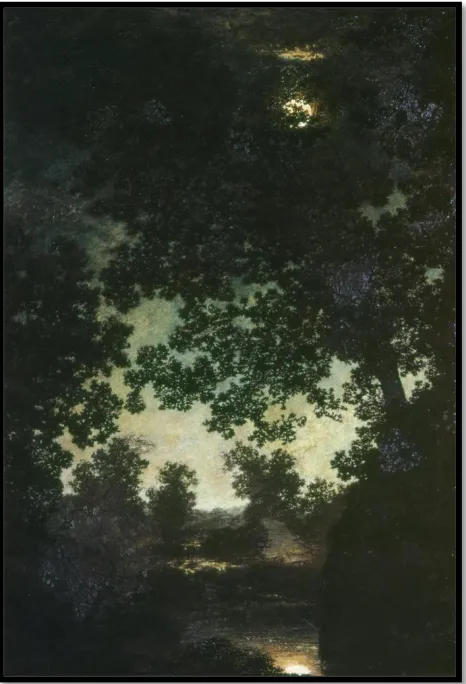
Figure 8. Blakelock, Ralph Albert. “Brook by Moonlight.” 72x48. Oil on Canvas. 1891. Toledo Museum of Art. Artstor.
Figure 9. Vena, Amy. “Benthic Study.” Digital Image. 2010.
Figure 10. Vena, Amy. “Abstract Contemplation.” 7x24. Mixed Media. 2010. Private Collection.
Figure 11. Aguiar, Hamilton. “Uno” (Black). 60x48. Oil Painting on a Wood Panel. Nan Miller Gallery. Rochester, N.Y.
Figure 12. Vena, Amy. “Sequence of Conscious.” 18x24. Mixed Media. 2011. Private Collection.
Figure 13. Vena, Amy. Example of an unfinished painting before resin application. Mixed Media. 2011.
Figure 14. Vena, Amy. “Photo Of Detritus.” Digital Image. 2011.
Figure 15. Vena, Amy. Mixing and Application of Epoxy Resin. 2011.
Figure 16. Vena, Amy. “Equinox.” 24x36. Mixed Media. 2011.
5
Figure 18. A. Vena, Amy. “Rock Bottom.” 18x24. Mixed Media. 2010. Private Collection. B. Vena, Amy. “Benthic Peace.” 18x24. Mixed Media. 2010.
C. Vena, Amy. “Settling on Silt.” 18x24. Mixed Media. 2010.
Figure 19. Vena, Amy. “Ocean Peace.” 24x36. Mixed Media. 2011. Private Collection.
Figure 20. Vena, Amy. “Reflection on the Nature of Existence.” 36x60. Mixed Media. 2011.
Figure 21. Vena, Amy. “Drifting Thoughts.” 18x24. Mixed Media. 2011. The Wallace Library at the Rochester Institute of Technology.
Figure 22. Vena, Amy. “Subtle Reflection.” 16x 20. Mixed Media. 2011.
Figure 23. Vena, Amy. Photo collage created from the exhibition opening. 2012.
Figure 24. Vena, Amy. Photograph of “Contemplative Reflections,” the thesis exhibition. 2011.
6
ACKNOWLEDGEMENTS
A special thanks to my grandparents, father, mother, family, and friends; the Franciscans
who have assisted in my living relationship with nature; my professors and teachers, who kindled
7
INTRODUCTION:
The purpose of this thesis is to visually express my reflections on life through the creative
process and contemplative thought. Growing up close to the Appalachian wilderness, I have
developed an intimate bond with nature allowing me freedom to contemplate humanism and the
natural space to heal. Repeatedly watching and interacting with water, I began to contemplate its
relationship to the flow of human existence. Are we on a constant gradient to an eternal
destination?
What is society’s relationship to nature? Franciscan philosophies and contemplative
theology inspire my thoughts about human relationships with nature. Thomas Merton and Gerald
May, both inspired by the historical teachings of St. Francis, have greatly influenced me. I
attempt to incorporate a similar sense of admiration for the mysteries of metaphysical life in my
paintings.
Unlike the Hudson River school of art, which was influenced by the “Grandeur of
Nature,” I attempt to create paintings that contain an amorphous feeling of private reflection (Hampson, 2012). Similar to the tonalist painters of the early 20th
century, I strive to express my
position on nature through contemporary processes. Through manipulation of mood and tone, I
selectively create a palette of dark base colors and nostalgic compositions that are influenced by
the tonalist era of quietism.
Diverging from the tonalist’s stagnant compositions, it was my intention to maintain an
active, painterly style in my thesis compositions. Mixed media, collage, spatial illusion, and
texture are just a few of the elements that separate these paintings from early American naturalist
artists like painter Ralph Albert Blakelock. Multiple modern and contemporary artists, like Helen
Frankenthaler, Cai Guo-Qiang, and Hamilton Aguiar, inspired my expressionistic approach to
painting. Using resin as an additional layer causes the paintings to become both luminous and
pensive.
Although the surface is a representational suggestion of moving masses, the bottom layer
represents the fundamental foundations of existence. Philosophically, the top layer serves as a
reflective guard flowing past the inner protected convictions. An awareness of our biological
8
SECTION I: DISTANT REFLECTION
As a child, my three siblings and I were encouraged to play outside. We experienced
nature and the simplicity of childhood existence. We would wander, visit with neighbors, play
games with friends, and imagine all the possibilities of our human potential. The yard was our
playroom. Protected and cared for by many people on our small town street, we had a blissful
upbringing. My father, an independent business owner and involved community man, worked
many hours. My mother was very busy with the house and taking care of us, a few dogs, and
various other “rescued” creatures. Holidays and my father’s days off were the adventure days:
fishing trips, hiking adventures…the best days.
From my perspective, my father was an ideal
sportsman. “A true sportsman is always an avid
conservationist, constantly committed to the vanishing
species of the world” (Schmitt, 1984, 4). My admiration for
the outdoors grew, as our family attended annual fly-fishing
trips, Ducks and Trout Unlimited meetings and other sporting
events. A majority of the people there (my father included)
embraced the idea of proper sportsmanship etiquette. They
were conscientious about respecting the beauty and
abundance of earth. Now, as an adult, I understand and
attempt to embrace these reverential concepts.
When I was eleven my father purchased a cabin thirty
miles away from town, in the woods. My father quickly settled into “Ralph’s Lodge” and there
were many happy times associated with this place. Endless summers were spent fishing,
swimming, and hiking. Nature was definitely present throughout adolescence, but much less
prominent as art. Art became the most advantageous area of focus and high school art class was a
release from the anxieties related to attending school.
In high school, drawing sessions would occasionally be held in the breezeway between
our school and the middle school. At that location you could draw the entire valley of Olean.
[image:13.612.75.226.262.481.2]Autumn was the ideal season to capture the vibrancy of nature. I wanted to submerge myself in
Figure 1. Vic Vena, Resting at Jake’s
9
the visual world rather than feeling stuck in small town
high school. I focused on art as an escape.
In college I identified with the radical emotionalism
of Frida Kahlo. She seemed untamed, strong, and
unstoppable. Somewhere my soul related to the imbalance
and spontaneity of this expressionist artist. Her use of
emotion coupled with the controlled flow of compositional
symbols made each painting a visual entry into the mind of
Frida Kahlo. I was infatuated by her honesty, darkness, and
surrealistic exaggeration of real situations.
Selecting an expressionistic mode of representation,
I primarily focused upon illustrations and self-portraits. I
studied still lifes, traditional landscapes, the human form
and biological illustrations. Rachel Ruysch, a Dutch painter from the 17th
century, had great
influence on my undergraduate works. Her art,
like many female painters at the time,
conveyed a subliminal message to the viewers.
Her rebellion against realism can be analyzed
in the juxtaposition of insects, flora, and
landscapes. Her father was a scientist and
many of the animals she painted were from his
collection. With an educational background in
science, Ruysch knowingly grouped flowers
and insects in an unnatural interaction. This
was as surreal a statement as Goya, Dali or
Bacon painted, considering the social
constraints that limited her available modes of
visual expression. Her subliminal message
[image:14.612.373.532.72.291.2]was heard, and I was inspired by it.
Figure 2. Frida Kahlo, Self-Portrait With
Cropped Hair, 1940, Oil on Canvas, 15 3/4 x 11, The Museum of Modern Art.
Figure 3. Rachel Ruysch, Fruit and Insects, 1711, Oil on
[image:14.612.75.298.372.671.2]10
SECTION II: EVOLUTION AND DEVELOPMENT
The first year of graduate school was about experimentation and concept development.
Experimenting with techniques resulted in a vast array of disconnected imagery. I investigated
almost everything inspirational: social identity, family relations, personal interactions, and
theological illustrations. I knew I wanted to combine theology, humanism, and my appreciation
for existence, but I wasn’t sure conceptually how to bridge these considerations.
The materials implemented to express these concepts were just as diverse. Multiple
experimentations were done with cosmetics on canvas. The attempts were to visually illustrate
the volatile compounds many women use every day. The thought was to visually express my
discontent with consumer chemicals, and women’s risks associated with using them. Why
attempt to shield our individuality or, the contrary, create a new identity? Although this research
and expression was fascinating, it wasn’t a direction to pursue further.
Aerosols and polyurethane were products examined as painting materials. Using
polyurethane as a veneer was investigated while an undergraduate. It was not until the first year
of graduate school that polyurethane was used as a barrier between compositional planes.
Because of the pleasing results, and being introduced to contemporary artists working with a
similar technique, a higher viscosity two-part epoxy resin was investigated.
Aerosol paint was also a material used as a medium. Its strength, as a medium, was that it
could blur the lines of realism and increase the nostalgic ambiguity of a piece. The chroma was
always beautiful and pure. A light application could provide maximum coverage quickly. Using
aerosol paint to lightly dust the canvas created a romantic atmosphere.
Mixing commercial materials with traditional painting methods became a fascination.
Materials and their use became an important concept. It was important to experiment to see how
certain chemicals (paints) would react. The most valuable decision was selecting the type of
paint: water-soluble or oil-based. The second valuable consideration was choosing the material
to use as substrate. Craftsmanship and the conservation of paintings became another important
consideration, all while considering a track for professional development.
Throughout the experimental processes, directional confusion still existed. At the end of
11
College of Management and Technology in Dubrovnik, Croatia. I hoped going abroad would
ignite the concepts for a body of work that would revolutionize my aesthetic boundaries. There,
like in America, contemplative comfort was found in nature. Often I went to the water alone to
watch the fish and seek a better sense of self-identity.
While repeatedly watching and interacting with water, I began to compare water’s
relationship to the flow of human existence. I was particularly drawn to the movement of water
and how it would surge and recede. The Adriatic was a living example of the movement of
energies, similar to the transfer of energy in human relationships. Individual waves reminded me
of individuals in a society. As they tensely merged together, they made a stronger surge.
Human consciousness
and perspective make an
individual unique, like
fractioned ripples make a wave
unique. The realization was
that we are each a wave in a
vast sea. This concept helped
acknowledge the awareness
that we can blend our passions
to be stronger, yet remain
stable as our own irreplaceable
self.
Resting, developing
theory, and moving in passion
are core beliefs to my aesthetic. Meditating to the movement of water helped to determine
possible resolution to situations, and a higher sense of peace. Thomas Merton believed:
“Man was made for the highest activity which is, in fact, his rest. That activity,
which is contemplation, is imminent and it transcends the level of sense and discourse.
Man’s guilty sense of his incapacity for this one deep activity which is the reason for his
very existence, is precisely what drives him to seek oblivion in exterior motion and
desire. Incapable of the divine activity which alone can satisfy his soul, fallen man flings
[image:16.612.76.368.262.487.2]himself upon exterior things not so much for their own sake as for the sake of agitation
12
which keeps his spirit pleasantly numb. He has but to remain busy with trifles; his
preoccupation will serve as a dope. It will not deaden all the pain of thinking; but it will
at least do something to blur his sense of who he is and of his utter insufficiency.”
(Merton, 1962, 418).
I returned to America with fervor and a passion to figure out how to visually express
these contemplative thoughts. Inspired by the experience abroad, tone, abstraction and
perspective became considerations.1
Nostalgia, depth, and solitude were all feelings that needed
to be incorporated into these new paintings.
To add depth and solitude to my images I needed to separate the background composition
completely from the foreground. Alternative materials, such
as ceiling spackle and resin, were added to the background
imagery. An organic image or portrait was then painted on a
top layer.
Two paintings emerged and directed a new realm of
visual expression. Space and the separation of the foreground
from the background ultimately became an aesthetic
consideration to incorporate into my thesis. However my
literal, representational images felt vacant of self-expression
and theory. There was an obvious intentional disconnect
between the foreground and the background. The images had
sense of displacement rather than welcomed solitude (see
Figure 5). There was mystery, but not enough information
was given to the viewer to find an answer. The mystery of material in the texture was attractive,
yet had no evident reasoning.
The portraits displaced the focus. They became overbearing to the pleasant mystery of the
abstract background. These illustrative works did not support the theoretical complexity of
human purpose and contemplation that they intended to convey. I longed for a deeper expression
of feeling beyond the representational form. I wanted to express the mystery that is within us and
in the environment around us. The idea of individual conscious existence relative to the life that
is taking place all around us was in my head, but I had not found a way to visually express these
[image:17.612.380.534.272.474.2]concepts in two-dimensional form.
Figure 5. Amy Vena, Little Alaina, 2010,
13
Following frustration, failure, and a lack of centralization, I left school on a quest to find
further inspiration for my thesis and a heightened sense of self. Driving through the Appalachian
Mountains, a sense of calm enveloped me. Gerald May also referred to his experience of driving
through the Appalachian Mountains:
“I’m driving through the hilly green countryside feeling very much alive. I
noticed my mind shifting from thoughts about things undone to excitement and wonder
about what I am getting into. …Something relaxing is happening and I love it, every bit
of the feeling of it inside me. I feel love, almost romantic love for the smell of my old
pup tent, love for the air messing up my hair. Love for being here, and then I see the
mountains. The Allegany foothills always surprise me. I’ve traveled this interstate many
times…and it’s always the same: I’m driving along and the hills are not there, then
suddenly, even when I know where to expect them they appear as if they just decided to
show up. A surprise of beauty. As I see them now, though, I sense more than their
[image:18.612.138.468.391.623.2]beauty; it’s a deep homecoming, welcoming feeling.” (May, 2006, 2).
14
I share May’s experience. To come home to the mountains is a calming, yet exhilarating
event . As I reached my destination, I realized this was the healing, beautiful experience that
needed to be expressed visually. Something about the mysterious mountains, which darken the
forest, heightened my sense of existence. Others may shy away from such a confrontation, but
my imagination sought the abyss. Confronting the mystery is to see what is beyond the dark
forest line.
In the Appalachian foothills, the darkness invites calm, silence, meditation, and thought.
It’s an opportunity to escape, to be free from the societal bondage and the anxieties that can
block intuitive reason. To visit these foothills is to re-center and reclaim the childhood thrill that
existed so many years before. I will always come back to these mountains, and the distance
between us creates a longing for my passionate return. The mysteries of nature continue to be an
anchor for my creative process, and personal growth.
“Wilderness is not just a place, it is also a state of being. If happiness means being
happy and sadness means being sad, then wilderness means being wilder. Look it up and
you will find that the primary meaning of wild is ‘natural.’ In turn natural comes from the
Latin term nasci, meaning to be born. Words like natal, nativity, and native come from the same root referring to birth. Wilderness, then, is not only the nature you find
outdoors. It can also refer to your true nature- the you that is closest to your birth. This
15
SECTION III: THE BODY OF WORK
A. INSPIRATIONS AND THEORY
Like traveling down a trickling spring to the mouth of a river, influential images,
writings, and statements fed my potential for creating art that questioned our human compliance
to live an unnatural existence. Extensive research on environmental artists, theologians, and
philosophers guided the visual considerations related to the development of the thesis artworks.
The American painters collectively known as the Hudson River school were a group of
American artists who based their works on the splendor of the American landscape. Influenced
by the romantic landscape painters of Europe, the Hudson River school painters strove to create
aesthetically inspiring imagery that celebrated their natural resources. Some of their greatest
European inspirations were the works of John Constable and J.M.W. Turner, whom I also find
inspirational. The beauty and grand portrayal of nature in their paintings was captivating.
The Hudson River school artists included Thomas Cole, Asher B. Durand, Frederic
Edwin Church, and many others. They painted the wild landscape to captivate the humble man
and ignite the imagination of the optimistic businessman. Their landscapes often involved a
dialog between American settlement and wilderness.
Similar to the Hudson
River school, the lesser-known
tonalist group produced
inspiring natural imagery.
However, the tonalists focused
on luminosity rather than
accurate details. The tonalists,
who included James McNeill
whistler, generated
atmospheres in their paintings
that were pensive and
emotional. Nocturne motifs
were a popular choice among
Figure 7. John Joseph Enneking, Eventide, 1877, Oil on Canvas, 12 x 18,
[image:20.612.236.536.468.669.2]16
the tonalists. Their quiet paintings seemed poetic, meditative, and contemplative. Tonalist
imagery often portrayed an individual in quiet contemplation, commonly placed amidst nature.
“Tonalist painters were drawn to
both natural and spiritual realms.
They sought to awaken the viewer’s
consciousness by shrouding the
subject in a misty indistinct veil of
emotionalism. The palette is
minimal, characterized by warm
hues of brown, soft greens, gauzy
yellows and muted grays. Preferred
themes were evocative moonlit
nights and poetic, vaporous
landscapes.” (History of Painters,
2003).
The concern with tone and luminosity
made tonalist painter John Joseph Enneking’s
Eventide, poetic (see Figure 7). The dark colors had tranquility about them. Other
tonalist pieces, like the painting, Brook by Moonlight, by Ralph Albert Blakelock had a special atmosphere that is calm and
mesmerizing (see Figure 8). The pensive
atmosphere was worth attempting to incorporate into my aesthetic.
My paintings had to contain an essence of these earlier artists without being too
illustrative or depictive. The work needed to maintain distance, illusion, peace and an
uncertainty. Each painting had to contain a similar appreciation for nature, but focus more on
[image:21.612.70.303.140.482.2]existence.
Figure 8. Ralph Albert Blakelock, Brook by Moonlight, 1891,
17
This is where bodies of water came to mind again. Just like individuals, no two bodies of
water are exactly the same. When you examine a population within an environment it is evident
that everything has an individual identity. The delicate nature and individuality of headwater
streams enthralled my vision.
As I returned again to the Appalachian
Mountains my theoretical concepts only
expanded. The multitude and angles of
contemplation in relation to water were
evident. Water is a universal element needed
for maintaining life. Everyone has a
relationship to water; we are made partially of
water. As a conservationist, I believe this is the
most abused resource we have.
My artwork is about the juxtaposition of humans and nature. In contemporary society we
are too often separated from nature. We forget we are organic beings. Many people vacation in
nature. The longing to escape to nature is not a new concept. Throughout history man has built
vacation homes, cabins, retreats, educational facilities, and resorts amid nature. Spas and holistic
centers focus on nature for healing. Part of the reasoning for this body of work is the hope that
viewers will have that moment, to escape and to refuel their spirit by viewing my art.
Each painting serves as a reminder that we are involved in an inseparable relationship
with nature. Even if we try to escape nature, we cannot forget we are biological beings.
Embracing our biological limitations and gifts can heighten our awareness of the beauty and
grandeur that exists all around us and most importantly within us. “The contemplative leader
seeks to revitalize human potential and improve the human condition.”2
I evaluate the
effectiveness of my work in relation to contemplative leadership in the following ways:
• My art is beneficial if it can offer one a moment to reflect and contemplate individual
existence.
• It is effective if the collective illusion incorporates the viewer; their image is literally
[image:22.612.313.537.140.288.2]reflected, and they become another component or part of the communal image.
18 • It is successful if through contemplation, dissection, and reflection the viewer heightens
their sense of conscious existence through his or her relationship with oneself, society
and nature, free of separateness.
Thomas Merton, who spent much of his life in Appalachian country,
also conversed about contemplation and nature in his writing:
"Contemplation is the highest expression of man's intellectual
and spiritual life. It is that life itself, fully awake, fully active, fully
aware that it is alive. It is spiritual wonder. It is spontaneous awe at the
sacredness of life, of being. It is gratitude for life, for awareness, and for
being. It is a vivid realization of the fact that life and being in us
proceeded from an invisible, transcendent and infinitely abundant
Source. Contemplation is, above all, an awareness of the reality of that
Source." (Merton, 2012).
B. VISUAL MANIFESTATION
After concretely developing theory, the visual manifestation of
the thesis collection flowed like a gushing stream. The paintings had to
remain abstract but also subtly suggestive of a stream. The loose
boundaries between abstraction and representational imagery gave the
paintings movement and energy.
For the thesis collection, I attempted to approach the canvas like
other abstract painters. I found Helen Frankenthaler, the leading lady of the modern abstract
movement, very influential. Seeing one of her paintings in 2010 changed my perspective on art
creation. Her process of staining canvas was beautiful and carried a conceptual suggestion.
Instead of working on top of the canvas she used the canvas as the art, staining it with oil paint. I
envy the idea, the physical effort, and the execution risk put into the creation of her abstract
works. Her acknowledgement of material as composition was inspirational.
Louise Bourgeois, another favorite modernist, created from her soul. Like Frida Kahlo,
art was also very therapeutic for her. The ideas that went into her work were very powerful and
often autobiographical. In a documentary called Louise Bourgeois: The Spider, the Mistress and the Tangerine, she stated, “Art is a guarantee of sanity. That is the most important thing I have
Figure 10, Amy Vena,
19
said" (Cajori, 2008). She used her artwork to transform hate to love. The process of healing
through creation was very inspiring to me. The transfer of emotion into object, the healing that
went into her work, was inspiring to my aspirations.
There are also the influential artists who create abstract beauty from heightened execution
risks. Cai Guo-Qiang is a fantastic thinker and contemporary artist. One of his recent series in art
creation made two-dimensional artworks with gunpowder, or as the Chinese have historically
referred to it as “medicine of fire.” His theoretical ideas behind the pieces originate from the
exploration of life, social issues and humanity. He explores the flow of existence and investigates
the balance between chaos and control. The gunpowder is methodically placed, but the results
are always unknown. In this series process was a vital component equal in importance to the end
result. I think it is the balance between extreme risk and controlled process that I find so pleasing
in his contemporary abstract art.
The creative process for my thesis exhibition was infused with the influences of
philosophers, many past artists and several contemporary artists. Two other contemporary artists
who influenced my experimental
techniques are Hamilton Aguiar
and Luisa Mesa. Their application
of a two-part epoxy resin added a
high gloss varnish, exposing the
rich qualities of their layered
applications. As a viewer and
admirer, the use of resin stimulated
my contemplative reaction. There
was something mesmerizing about
the sheen, which was smooth,
luminous and romantic. I knew
from the moment I saw Hamilton
Aguiar’s work that the technique
[image:24.612.256.534.364.662.2]was worth exploring.
Figure 11. Hamilton Aguiar. Uno. Oil painting on a wood panel, gilt
20
Each of my paintings had to convey tone, capture
love, evoke mystery and entice examination. In the
exploratory phase of my thesis each work of art had a
successful component. They all contained luminous layers.
One specific piece that was successful but not selected for
my thesis exhibition was Sequence of Conscious (Figure 12). This piece was actually two paintings, one on panel
and one on Plexiglas bolted together to make a unified
image. The iridescent acrylic used on the Plexiglas created
a beautiful barrier. The contemporary feeling associated
with this piece was marvelous, however, too much of a
mechanical structure for the natural essence I was
attempting to achieve.
Like Sequence of Conscious, some of the works did not embody the overall qualities and communal identity necessary for the thesis exhibition. The artworks that were not selected for
installation were still important because they were doorways into successful revisions and
considerations for future explorations. Each completed work helped validate the thought process
used in the creation of my mixed media art.
As previously mentioned, my process in creation became very important. The pieces that
were selected for the exhibition, Contemplative Reflections, all followed this same process of development.
The support (canvas or panel) was sealed with an acrylic gesso, always sanded between
layers. The third layer was an application of flexible or regular modeling paste. Flexible
modeling paste was used on the canvas pieces and regular modeling paste was reserved for the
paintings on wooden panels. Regular modeling paste may crack when applied to a flexible
surface. Immediately after application the modeling paste was dabbed with a cloth or plastic bag.
This created an irregular foundation and added overall texture to the painting. Botanic skeletons
were pressed into the modeling paste, or added at the end, to intensify the biological impression.
[image:25.612.370.534.73.285.2]The first wash, when not using black gesso, was a dark tone.
Figure 12. Amy Vena, Sequence of
21
After that layer dried, the composition was sketched.
Selecting an aerial perspective for all of the work helped
create an intentional ambiguity. Orientation in the paintings
was important because it reinforced the idea that man should
not place himself over nature, but rather in nature. If the
paintings were placed on the floor and you looked down into
them, this idea may be reinforced. However the paintings
were created to hang on the wall, imposing a peaceful unity
between human, the art and its natural suggestion.
The composition for the paintings always began as a
loose geometric sketch of a streambed. Often photographs,
from an Appalachian Mountain stream known as Bell Run,
were used loosely as reference. Bell Run is a small stream full
of limestone and interesting rocks. It dissects my parents’ property and is a wonderful presence
on the land. It appears from the thicket then passes under an old bridge, meandering down past
our two barns and out through the dark forest line. In the forest it meets other headwater streams
before continuing off their land. All of the photographic references were taken in the quiet
coniferous forest. They were taken when I was alone, able to walk along the water, with only my
dog disturbing the stream.
After adding the loose composition, mounds of acrylic color were directly applied to the
canvas. Working the entire surface, the art
remained fluid, open and united. Acrylics
were selected because of their dry time and
solubility in water. Light color, detail and
depth were added next to enhance the rhythm
and light source for the image. After the
details were complete and dry, some detailed
areas were obscured with an aerosol spray
paint. This added illusion to the image,
keeping it from being too representational.
[image:26.612.71.232.88.287.2]Often a stencil was used to create the
Figure 14. Amy Vena, Photograph of Detritus, 2010,
[image:26.612.304.529.500.670.2]Photograph. Figure 13. Example of an unfinished
22
silhouette of branches or small ferns. These additions represented the shadows of branches, or
leaves that may have fallen into the stream. Finally, particular curves were emphasized to add
balance, line and direction.
Using Aguiar’s and Mesa’s works as examples, I began to infuse resin into my natural
paintings. The tactile undertones created a dialogue with the smooth, resolute finish. With each
application of gooey resin, the technical execution of the works became more proficient. Once
the under painting was completely dry, a coat of clear epoxy resin was applied.
The application of the epoxy resin was always used under proper precautions and with
preventive barriers. Epoxy resin yields wonderful results, however, it is mildly hazardous to the
skin and respiratory tract.
Before starting this process, plastic
drop cloths were placed under and around the
work. Next, my body was covered with
protective clothing, shoes and gloves. A
respirator was always worn and proper
ventilation for the workspace was established.
This reduced possible accidental interaction
with the chemicals. Once all of the
preparations and precautionary measures were
taken, it was safe to open and mix the resin.
After the initial mixing phase several
options were used. A majority of the time resin was directly applied to the surface of the dry
painting. In some of the pieces the resin was pre-tinted with a dark oil paint to further develop
overall depth and tone. Usually the color oil paint selected was a small amount of transparent
burnt umber. This darkened all the tones of the paintings. The dark resin represented a stream
[image:27.612.310.530.292.463.2]pool so packed with particulates it was hard to see the bottom.
23
Another interesting technique was to
apply the transparent resin, and then apply
areas of premixed iridescent resin. The
iridescent resin was made using interference
colors. Interference acrylics are made from
titanium coated mica flakes rather than
traditional pigments. After the premixed
iridescent resin was applied, the striations and
drips were manipulated with a paintbrush to
further suggest the movement of water. The
results of this experimental technique were
surprising and repeated in several pieces.
After completing each resin pour the
paintings cured for seventy-two hours. Once
dried, and the paintings no longer off-gassed,
the work was safe and stable to handle.
The theoretical quest, though daunting
and exhausting, produced an artistic
breakthrough for me as well as providing
greater insight as to who I am as a person. The influences from modern and contemporary artists
greatly assisted in how the paintings were approached and executed. The shift from attempting
illustrative depictions to establishing an artistic method that emphasized process was a marvelous
awakening. John Dewey, a favored philosopher, would probably define this moment as an
experience toward the fulfillment of self.
As he mentions in Art as Experience, “…we have an experience when the material experience runs its course to fulfillment. Then and then only is it integrated within and
demarcated in the general stream of experience from other experiences…Such an experience is a
whole and carries with it its own individualizing quality and self-sufficiency. It is an
[image:28.612.309.533.74.408.2]experience.” (Dewey, 1934, 37).
Figure 16. Amy Vena, Equinox, 2011, Mixed Media,
24
25
CONCLUSION: OPENING AND CRITIQUE
The thesis exhibition presented multiple opportunities to streamline my branding
identification as a professional artist. Black frames and borders were selected for the paintings to
provide a quiet ambiance for the subject matter. Business cards
and organic remnants, like small rocks, were placed in a black
antique jewelry box atop a pedestal. Bookmarks, designed with an
artist statement and process description were also placed in the
box. I feel the antique box containing organic matter and personal
information added a sense of humility to the aesthetic of the
exhibition. Antique items and jewelry boxes often remind us of
intimate treasured memories. In addition a small tan notebook for
guests to sign was placed in front of the jewelry box.
During the installation some of the artworks were removed
from the show. Ocean Peace (2011) was one piece that was beautiful and very successful, but didn’t fit within the parameters
[image:30.612.84.538.135.333.2]of my thesis because an Appalachian stream did not influence it
Figure 18. (From Left to Right) A.) Amy Vena, Rock Bottom, 2010, Mixed Media, 18x24, Private Collection. B.) Amy
Vena, Benthic Peace, 2010, Mixed Media, 18 x 24. C.) Amy Vena, Settling on Silt, 2010, Mixed Media, 18 x 24.
Figure 19. Amy Vena, Ocean Peace,
[image:30.612.399.538.444.651.2]26
(see Figure 19).
By including the paintings that most strategically reflected my thesis proposal’s
intentions, the final art installation produced a strong, representative body of work. The works
were complex and involved many alternative mediums, yet they all followed the previously
mentioned process of creation. They
pushed the boundaries of
conventional mediums used in fine
art production.
Jackson Pollock’s action
paintings were treasured because of
the artist’s unique application style.
It was my goal at the thesis opening
to present to our community
modern nature paintings, which
embodied a unique, contemporary
essence. The works are modern
because they express traditional,
reflective ideas in an abstract
manner, using contemporary
mediums. The perspective,
dimension and complexity of
components ask the viewers to
contemplate the theoretical message
and also question the process of
creation.
The centerpiece was the last
piece created for the exhibition.
Subtly different from the smooth
resin pieces, this piece is tactile and
[image:31.612.75.348.174.628.2]offers a hint towards future acrylic,
Figure 20. Amy Vena, Reflection on the Nature of Existence, 2011, Mixed
27
gel medium, investigations (Figure 20).
The thesis exhibition Contemplative Reflections was on display in the Bevier Gallery from April 17, 2011, to
May 7, 2011. The opening reception was on April 22, 2011,
which was coincidentally Good Friday and Earth Day. The
reception was held from 5-7 p.m. and was well attended.
Drifting Thoughts (2011), the painting located to the right, received the Wallace Library’s Purchase Prize Award
and included in the collection as a part of a large catalog of
art created at R.I.T.
“The library has awarded purchase prizes to
graduate students of the School of Art and Design
and the School for American Crafts annually since
1972. Works are selected from the MFA Thesis
Exhibitions by a jury of three: two faculty members from the School of Art and Design
and the School for American Crafts and the Art and Photography Librarian.” (Horowicz,
2012).
The painting now resides in the Wallace Library’s permanent collection at the Rochester
Institute of Technology.
Graduate school at the Rochester Institute of Technology surpassed my expectations,
providing a rich environment that encouraged and supported my growth as an artist. The search
for self through action, experimentation, and frustration resulted in my acquiring a profound
interest for contemplation and constructive activity. This is another favorite quote by Gerald May
that reinforced my visual mission:
“We all need to allow ourselves to be led into our own wilderness, there to be taught what
we most need to know and to be healed where we need it most… All my life I had longed
for such a palpable and immediate encounter with a divine guiding Presence, a feeling of
unity with the World. This lifelong prayer was answered during those years in the
outdoors, and as I now look back, this may have been the greatest gift to me.” (May
[image:32.612.374.532.95.300.2]XXIII).
Figure 21. Amy Vena, Drifting Thoughts,
28
As I reflect on the entire process of graduate school, I see a great shift in my art and sense
of identity. Readings and nature were of great assistance and remain a core influence to the
creation of my art. The acknowledgement of consciousness keeps me yearning for more
adventures and life experiences. As I continue to paint, my expressive goal remains the same. It
is an attempt to seek peace through the rhythm of creating process-focused art that has a sense of
conscious infusion from nature’s presence around and within me.
[image:33.612.163.448.217.568.2]
30
[image:35.612.113.500.65.638.2]
31
BIBLIOGRAPHY
Alcantara, Isabel and Egnolff, Sarah. Frida Kahlo and Diego Rivera. NewYork: Pegasus Library, 1999.
Cajori, Marion and Wallach, Amei. Louise Bourgeois: The Spider, the Mistress and the
Tangerine. High Definition Film. June 25, 2008. New York City: Zeitgeist Films, 2008. Dewey, John. Art as Experience. New York: Penguin Group, 1934.
Green, Julien. God’s Fool. The Life and Time of St. Francis of Assisi. San Francisco: HarperSanFrancisco, 1987.
Hampson, Thomas. “Hudson River School.” I Hear America Singing, Profiles: Artists, Movements, and Ideas. http://www.pbs.org/wnet/ihas/icon/hudson.html
HistoryofPainters.com. “Tonalism.” HistoryofPainters.com: http://www.historyofpainters.com/tonalism.htm. 2003.
Horowicz, Kari. “History and Description of Art Collection.” Wallace Library Art Collection. http://library.rit.edu/depts/ref/speccoll/art_col.html.
Langer, Susanne K. Philosophical Sketches. New York: Barnes & Noble Inc., 2009.
May, Gerald. The Wisdom of Wilderness: Experiencing the Healing Power of Nature. San
Francisco: HarperSanFrancisco, 2006.
McDonnell, Thomas P., ed. A Thomas Merton Reader. New York: Harcourt, Brace & World, Inc. 1962.
Merton, Thomas. New Seeds of Contemplation. The Merton Institute for Contemplative Living. http://www.mertoninstitute.org/contemplativeliving/tabid/56/Default.aspx
Schmitt, Victoria Sandwick. Four Centuries of Sporting Art: Selections from the John Wehle Collection. New York: Genesee Country Museum, 1984.
ENDNOTES
1 The disconnection and language barriers forced another perspective to see beyond the illusion
of simplistic narrative, to the core. The external, representational, and exterior layer, of a human or beast, is not all encompassing; in fact it serves as an organic barrier to the conscious soul.
2 On The Merton Institute for Contemplative Living website you will find the guidelines for
contemplative living and how to be a contemplative leader.