Copyrightq1996, American Society for Microbiology
Persistent Activation of NF-
k
B/Rel by Human T-Cell Leukemia
Virus Type 1 Tax Involves Degradation of I
k
B
b
LIFENG GOOD
ANDSHAO-CONG SUN*
Department of Microbiology and Immunology, Pennsylvania State University College of Medicine,
Hershey Medical Center, Hershey, Pennsylvania 17033
Received 20 September 1995/Accepted 20 January 1996
Activation of the eukaryotic NF-
k
B/Rel transcription factors by various cytokines and mitogens is a transient
event, reflecting the fact that these inducers trigger the degradation and resynthesis of the dynamic NF-
k
B/Rel
inhibitor I
k
B
a
. However, the
tax
gene product of the human T-cell leukemia virus type 1 (HTLV-1) is known
to induce the persistent nuclear expression of various NF-
k
B/Rel factors, especially the c-Rel
proto-oncopro-tein, although the underlying mechanism remains unclear. In the present study, we demonstrate that Tax
induces the degradation of I
k
B
b
, another NF-
k
B/Rel cytoplasmic inhibitor that differs from I
k
B
a
in signal
responses. Unlike that observed with I
k
B
a
, the degradation of I
k
B
b
is not associated with its rapid
resyn-thesis, apparently because of the failure of Tax to stimulate I
k
B
b
gene transcription. Thus, expression of Tax
in Jurkat T cells leads to the gradual depletion of I
k
B
b
, which is correlated with the induction of
c-Rel-containing
k
B binding complexes. Remarkably, in the three HTLV-1-infected T-cell lines investigated, little or
no detectable amount of I
k
B
b
was found. We further demonstrate that Tax is able to override the cytoplasmic
retention of c-Rel by I
k
B
b
in transiently transfected cells. Together, these studies suggest that Tax-mediated
inactivation of I
k
B
b
may play a role in the persistent nuclear expression of c-Rel induced by HTLV-1 infection.
The human T-cell leukemia virus type 1 (HTLV-1) is the
etiologic agent of adult T-cell leukemia, an acute and often
fatal T-cell malignancy (41, 61). Emerging evidence suggests
the critical involvement of the virally encoded Tax protein in
the initiation of the HTLV-1-induced T-cell malignancy (17,
21, 40, 42, 51, 57). Tax transactivates a large variety of cellular
genes involved in T-cell activation and growth, such as those
encoding interleukin-2 (IL-2) (34, 49) and the alpha chain of
IL-2 receptor (IL-2R
a
) (13, 25, 49). Lacking DNA binding
activity, Tax appears to induce the target genes indirectly
through cellular pathways (18, 50), including activation of the
NF-
k
B/Rel family of host transcription factors (5, 12, 45).
The NF-
k
B/Rel factors participate in the transcriptional
ac-tivation of multiple growth-related genes, including those for
both IL-2 and IL-2R
a
, that harbor the
k
B enhancer element
(3, 31, 48). The NF-
k
B/Rel family contains various dimeric
complexes composed of a set of structurally related
polypep-tides, including p50 (NF-
k
B1), p52 (NF-
k
B2), RelA
(previous-ly named p65), RelB, and the proto-oncoprotein c-Rel
(re-viewed in references 16 and 48). In resting T cells, these
NF-k
B/Rel complexes are sequestered in the cytoplasm as latent
precursors by physical association with a family of ankyrin
motif-rich inhibitory proteins (6) including I
k
B
a
(2, 19), I
k
B
b
(58), p105 (precursor of p50 [35, 39, 44]), and p100 (precursor
of p52 [35, 38, 54]). I
k
B
a
appears to play a major role in the
regulation of the transient nuclear expression of the RelA/p50
NF-
k
B heterodimer that accompanies cellular activation by
various stimuli, including mitogens like phorbol esters and
cytokines such as tumor necrosis factor alpha. Such cellular
activation triggers the phosphorylation and subsequent
degra-dation of I
k
B
a
and the concomitant nuclear translocation of
the NF-
k
B heterodimer (7, 10, 11, 20, 43, 53). However, since
the nuclear NF-
k
B activates the expression of the I
k
B
a
gene,
the depleted I
k
B
a
pool can be rapidly replenished through the
enhanced de novo synthesis of I
k
B
a
protein. This
autoregula-tory mechanism ensures that the biological function of NF-
k
B
is transient. In contrast to that of I
k
B
a
, I
k
B
b
degradation
occurs only in cells stimulated with certain inducers, such as
the bacterial lipopolysaccharide and IL-1 (58). Moreover, since
the expression of the I
k
B
b
gene appears not to be induced by
NF-
k
B, the degraded I
k
B
b
protein cannot be rapidly
replen-ished through de novo protein synthesis. Thus, degradation of
I
k
B
b
is associated with persistent nuclear expression of
NF-k
B/Rel (58). Up to now, it is not known what type of cell
activation agents induce the degradation of I
k
B
b
in human T
cells. Similarly, neither p105 nor p100 appears to undergo
rapid inducible degradation following T-cell activation (48,
54).
HTLV-1 Tax has been shown to induce the nuclear
expres-sion of a number of NF-
k
B/Rel species (50), although the
underlying mechanism is not yet clear. Recent studies have
demonstrated that Tax induces the phosphorylation and
deg-radation of I
k
B
a
(9, 26, 27, 29, 33, 52), which may contribute
to the early-phase induction of the p50/RelA heterodimer by
this viral protein (26). However, since one of the characteristics
of Tax-mediated activation of NF-
k
B/Rel is the persistent
high-level nuclear expression of c-Rel-containing complexes
(28, 30), additional mechanisms may exist. In this regard,
re-cent studies have shown that Tax is able to physically associate
with several NF-
k
B/Rel and I
k
B family members, which
ap-pears to correlate with the activation of NF-
k
B/Rel (8, 22, 23,
36, 55, 56, 59).
We demonstrate here that Tax activation of NF-
k
B/Rel in
both HTLV-1-infected and Tax-transfected T cells is
corre-lated with the degradation or down-regucorre-lated expression of
I
k
B
b
. We also show that Tax is able to override the
cytoplas-mic retention of c-Rel by I
k
B
b
.
MATERIALS AND METHODS
Cell lines and treatments.The HTLV-1-infected T-cell lines C8166, HUT102, and K3T as well as noninfected Jurkat leukemic T-cells were maintained in * Corresponding author. Mailing address: Department of
Microbi-ology and ImmunMicrobi-ology, Pennsylvania State University College of Med-icine, Hershey Medical Center, P.O. Box 850, Hershey, PA 17033. Phone: (717) 531-4164. Fax: (717) 531-6522.
2730
on November 9, 2019 by guest
http://jvi.asm.org/
RPMI 1640 medium supplemented with 10% fetal bovine serum, 2 mM L-glutamine, and antibiotics. JPX-9 cells (37) were maintained in the same complete medium supplemented with 400mg of G418 antibiotic per ml to select for expression of the neomycin resistance gene. To induce the expression of Tax, the cells were treated with 20 mM CdCl2. Monkey kidney COS7 cells were cultured in Iscove’s medium supplemented with 10% fetal bovine serum, 2 mM L-glutamine, and antibiotics.
Immunoblotting and EMSA.The HTLV-1-infected T cells and noninfected parental Jurkat or JPX-9 cells were collected by centrifugation at 8003g for 5
min. Subcellular protein extracts were prepared as previously described (47). For preparation of whole-cell extracts, the cells were lysed in ELB buffer (50 mM
N-2-hydroxyethylpiperazine-N9-2-ethanesulfonic acid [HEPES] [pH 7.0], 250 mM NaCl, 0.1% Nonidet P-40, 5 mM EDTA, 0.5 mM dithiothreitol, 1.0 mM phenylmethylsulfonyl fluoride) and then vortexed for 5 min at 48C. For immu-noblotting analyses, protein samples were fractionated by sodium dodecyl sul-fate-polyacrylamide gel electrophoresis (SDS-PAGE), electrophoretically trans-ferred to nitrocellulose membranes, and then analyzed for immunoreactivity with various antipeptide antisera with an enhanced chemiluminescence detection system (ECL; DuPont, NEN). Electrophoretic mobility shift assays (EMSA) were performed by incubating the nuclear extracts (;8mg) with a32
P-radiola-beled high-affinity palindromickB probe,kB-pd (coding strand sequence was 59-CAACGGCAGGGGAATTCCCCTCTCCTT-39), and then resolving the DNA-protein complexes on native 5% polyacrylamide gels (4). For antibody supershift assays, 1ml of the indicated antipeptide antisera was added to the EMSA reaction mixture 10 min prior to electrophoresis.
cDNA expression vectors and COS7 cell transfection.pCMV4HA-IkBbwas constructed by inserting three copies of the influenza virus hemagglutinin epitope tag (YPYDVPDYA) upstream of the translational initiation codon of the mouse IkBbcDNA (58) cloned in the pCMV4 expression vector (1). Plasmid DNA was transfected into COS7 cells by the DEAE-dextran method as previ-ously described (15).
Indirect immunofluorescence.COS7 cells were seeded on four-well chamber slides (Nunc, Naperville, Ill.) and transfected with DEAE-dextran (24). Indirect immunofluorescence assays were performed with an anti-c-Rel-specific antibody as previously described (15).
Northern (RNA) blot analysis.Total cytoplasmic RNA was isolated with an extraction reagent (TRI REAGENT; Molecular Research Center, Inc., Cincin-nati, Ohio) according to the manufacturer’s instructions. About 20mg of RNA was fractionated on a 1% formaldehyde-agarose gel and then transferred onto a piece of nylon membrane. The membrane was hybridized at 428C for 24 h with 32P-labeled cDNA of human IkBa(19) or murine IkBb(58) in a hybridization buffer (53Denhardt’s–53SSC [13SSC is 0.15 M NaCl plus 0.015 M sodium citrate]–0.5% SDS–200mg of denatured salmon sperm DNA per ml) supple-mented with either 50% (for IkBa) or 43% (for IkBb) formamide. The mem-branes were washed at 658C in 0.23SSC–0.1% SDS (for IkBa) or at 508C in 23
SSC–0.1% SDS (for IkBb) for 15 to 30 min and then subjected to autoradiog-raphy.
RESULTS
The steady level of I
k
B
b
is strikingly low in
HTLV-1-in-fected cells.
Previous studies have demonstrated that I
k
B
a
undergoes degradation and resynthesis in HTLV-1-infected T
cells (29, 52). This dynamic change of I
k
B
a
may contribute to
the constitutive nuclear expression of NF-
k
B/Rel. However,
the nuclear NF-
k
B/Rel in both the HTLV-1-infected and
Tax-expressing T cells has been shown to be composed of primarily
c-Rel-containing complexes but only residual amounts of RelA
(30), a known physiological target of I
k
B
a
. It is thus suggested
that other mechanisms may also be involved in the activation
of NF-
k
B/Rel by Tax. To explore this possibility, the
expres-sion patterns of various other NF-
k
B/Rel inhibitors, including
I
k
B
b
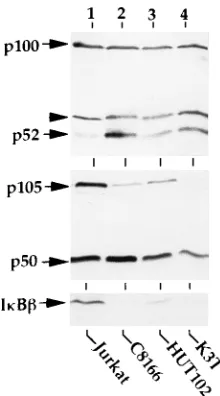
, p105, and p100, were analyzed by immunoblotting with
three HTLV-1-infected T-cell lines (C8166, HUT102, and
K3T) and the noninfected Jurkat cell line. As previously
ob-served (30), the whole-cell expression level of p100 as well as
that of p52 in the HTLV-1-infected T cells was slightly higher
than that in the noninfected Jurkat cells (Fig. 1, upper panel).
In contrast, p105 appeared to be underexpressed in these
vi-rally infected cells, although the steady level of its processing
product p50 was similar to that detected in Jurkat cells (Fig. 1,
middle panel). Immunoblotting analysis of Jurkat cell extracts
with a human I
k
B
b
-specific antibody (I
k
B
b
C20; Santa Cruz
Biotechnology, Inc.) readily detected the 45-kDa I
k
B
b
protein
(Fig. 1, lower panel, lane 1), which did not react with either
nonrelated immune or preimmune sera (data not shown). A
similar I
k
B
b
protein species had also been detected in a
pre-vious study (58). More importantly, the I
k
B
b
protein was
hardly detectable in the HTLV-1-infected T cells (Fig. 1, lower
panel, lanes 2 to 4). Although Jurkat cells are not the most
appropriate control for the HTLV-1-infected cells, the
strik-ingly low-level expression of I
k
B
b
in all three
HTLV-1-in-fected T-cell lines investigated indeed suggests the possibility
that HTLV-1 infection may induce the degradation of I
k
B
b
.
Furthermore, since Tax is the only viral gene product
ex-pressed in C8166 cells (46), it is likely that this specific action
of HTLV-1 is mediated by the Tax protein.
Tax induces the degradation of I
k
B
b
.
To directly examine
[image:2.612.378.488.71.269.2]whether Tax induces the degradation of I
k
B
b
, Jurkat T cells
stably transfected with a metal-inducible tax cDNA construct
(JPX-9; see reference 37) were used. As shown in Fig. 2A,
incubation of the cells with CdCl
2induced the expression of
Tax (Fig. 2A, upper panel). Importantly, induction of Tax
expression in these cells led to the gradual disappearance of
I
k
B
b
(Fig. 2A, lower panel, lanes 1 to 4). Furthermore, the
disappearance of I
k
B
b
appeared to be the result of Tax
ex-pression, since the I
k
B
b
level was not significantly influenced
in the parental Jurkat cells treated with CdCl
2(Fig. 2A, lower
panel, lanes 5 to 8). Parallel Northern blot analysis revealed
that the I
k
B
b
mRNA expression level was not appreciably
affected by Tax (Fig. 2B, upper panel) although the I
k
B
a
messenger was markedly induced (lower panel). Thus, the
Tax-induced disappearance of I
k
B
b
most likely resulted from the
degradation of this inhibitory protein. EMSA of the nuclear
extracts isolated from these CdCl2-treated JPX-9 cells
demon-strated that induction of Tax expression led to the persistent
nuclear expression of
k
B DNA binding factors (Fig. 2C, lanes
1 to 4). Furthermore, the
k
B binding complexes induced
dur-ing the late period (48 h) of Tax induction contained not only
RelA but also large amounts of c-Rel, as determined by
anti-body supershift assay (lanes 5 to 7). Thus, sustained nuclear
FIG. 1. Expression of IkB-like proteins in HTLV-1-infected T cells and non-infected Jurkat cells. Whole-cell extracts were isolated from either Jurkat cells or the indicated HTLV-1-infected T cells. The extracts (;15mg) were subjected to immunoblotting analyses with peptide-specific antisera recognizing the N-termi-nal 21 amino acids of p100/p52 (upper panel) or p105/p50 (middle panel) or the C-terminal 20 amino acids of human IkBb(IkBbC-20; Santa Cruz Biotechnol-ogy, Inc.; lower panel). The arrowhead shown in the upper panel indicates a nonspecific protein band cross-reacting with anti-p100.on November 9, 2019 by guest
http://jvi.asm.org/
expression of c-Rel appears to be a unique feature of
Tax-mediated activation of NF-
k
B/Rel in both Tax-transfected and
HTLV-1-infected T cells. This feature is in contrast to the
transient nuclear expression of the RelA/p50 NF-
k
B
het-erodimer associated with the cytokine-induced degradation of
I
k
B
a
(7).
Immunoblotting analyses of other forms of NF-
k
B/Rel
in-hibitors revealed that along with the induction of Tax the
steady level of p105 was also decreased, although moderately
(Fig. 2D, upper panel). As previously observed (26), p100 was
even markedly induced by Tax (middle panel). However, the
I
k
B
a
expression level was not significantly influenced (lower
panel) even though Tax also induces the degradation of this
dynamic NF-
k
B inhibitor (9, 26, 33, 52). This was apparently
because Tax induced the expression of I
k
B
a
mRNA (Fig. 2B;
also see reference 26) and the rapid de novo synthesis of I
k
B
a
protein (52).
Together, these results suggest that Tax-induced persistent
nuclear expression of NF-
k
B/Rel, especially c-Rel, is
associ-ated with the persistent degradation of I
k
B
b
.
Tax overrides the cytoplasmic retention of c-Rel by I
k
B
b
.
To examine whether I
k
B
b
physically associated with c-Rel in
the cytoplasm of nontreated JPX-9 cells,
coimmunoprecipita-tion was performed with either a preimmune serum or the
I
k
B
b
-specific antiserum, and this was followed by analysis of
the immunoprecipitates by immunoblotting with anti-c-Rel. As
shown in Fig. 3, the 80-kDa c-Rel protein was coprecipitated
by the I
k
B
b
-specific antibody (lane 3) but not by the
preim-mune serum (lane 2). Since the I
k
B
b
-specific antibody had no
direct immunoreactivity with c-Rel, it thus suggested that c-Rel
was precipitated through its physical interaction with I
k
B
b
.
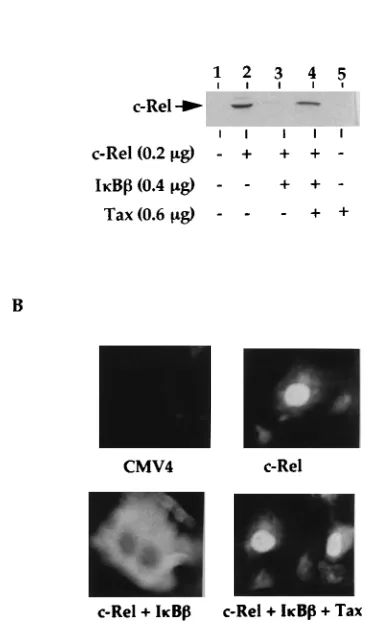
[image:3.612.127.481.72.357.2]Using a transient-transfection model, we next investigated
whether Tax was able to override the cytoplasmic retention of
c-Rel by I
k
B
b
. For these studies, COS cells were cotransfected
FIG. 2. Tax-induced degradation of IkBbis associated with the nuclear expression of c-Rel-containingkB binding complexes. JPX-9 or the parental Jurkat cells were incubated with CdCl2(20mM) for the indicated time periods and then collected for preparation of either whole-cell or nuclear extracts or total cellular RNA. (A) Whole-cell extracts isolated from either JPX-9 cells (lanes 1 to 4) or Jurkat cells (lane 5 to 8) were subjected to immunoblotting with peptide-specific antisera recognizing the C-terminal 15 amino acids of Tax (upper panel) or the C terminus of IkBb(lower panel). (B) Total cytoplasmic RNA isolated from either nontreated (lane 1) or CdCl2-treated (lane 2) JPX-9 cells was subjected to Northern blot analysis with32P-labeled cDNA of IkBb(upper panel) or IkBa(lower panel). (C) Nuclear extracts isolated from the JPX-9 cells, treated with CdCl2for the indicated time periods, were subjected to EMSA in the absence (lanes 1 to 4) or presence (lanes 5 to 7) of either a preimmune serum (PI) or the indicated immune sera. (D) Whole-cell extracts isolated from CdCl2-treated JPX-9 cells were subjected to immunoblotting with immune sera specific for p105 (upper panel), p100 (middle panel), or IkBa(lower panel).FIG. 3. Physical interaction of c-Rel with IkBbin JPX-9 cells. Cytoplasmic extract isolated from nontreated JPX-9 cells was subjected to immunoprecipita-tion with either a preimmune serum (lane 2) or a peptide-specific antiserum recognizing the C terminus of human IkBb(IkBbC-20; Santa Cruz Biotechnol-ogy, Inc.; lane 3). The immunoprecipitates (IP; lanes 2 and 3) were then sub-jected to SDS-PAGE and immunoblotting with a peptide-specific antiserum recognizing the C-terminal 15 amino acids of human c-Rel (14). In lane 1, the JPX-9 cell extract was directly analyzed by immunoblotting with anti-c-Rel.
on November 9, 2019 by guest
http://jvi.asm.org/
[image:3.612.374.503.562.658.2]with c-Rel and I
k
B
b
in the presence or absence of Tax, and
this was followed by immunoblotting analysis of the nuclear
extracts for the expression of c-Rel (Fig. 4A). As expected,
nuclear expression of c-Rel was readily detected in cells
trans-fected with the c-rel cDNA expression vector (lane 2) but not
in the mock-transfected cells (lane 1). Moreover,
cotransfec-tion of the cells with c-Rel and I
k
B
b
led to the complete
inhibition of the nuclear expression of c-Rel (lane 3). More
importantly, expression of the Tax protein in these cells
over-rode the inhibitory activity of I
k
B
b
, leading to the nuclear
translocation of the sequestered c-Rel (lane 4). Of note, Tax
did not induce the expression of endogenous c-Rel (lane 5) or
change the expression of the transfected c-Rel, at either the
RNA or the protein level (data not shown). To further confirm
that Tax was able to override the cytoplasmic retention of
c-Rel by I
k
B
b
, indirect immunofluorescence was performed to
examine the effect of Tax on the subcellular localization of
c-Rel (Fig. 4B). As expected, the overexpressed c-Rel was
primarily located in the nucleus (upper right-hand panel), and
when it was coexpressed with I
k
B
b
, this nuclear protein was
sequestered in the cytoplasmic compartment because of the
inhibitory action of I
k
B
b
(lower left-hand panel). However,
expression of Tax in these cells led to the relocalization of
c-Rel from the cytoplasm to the nucleus (lower right-hand
panel). Together, these results suggest that HTLV-1 Tax could
dissociate the c-Rel/I
k
B
b
cytoplasmic complex, leading to the
nuclear translocation of c-Rel.
DISCUSSION
NF-
k
B/Rel transcription factors participate in the
transcrip-tional regulation of many genes involved in cell activation and
growth. The biological activity of these factors is tightly
con-trolled by their cytoplasmic retention through physical
inter-action with multiple inhibitory proteins, including I
k
B
a
, I
k
B
b
,
and the NF-
k
B precursor proteins p105 and p100. Recent
studies have suggested that these inhibitory proteins may have
fundamental differences in their responses to immunological
stimuli (58). In human T cells, activation of NF-
k
B by most
inducers appears to be mediated through the degradation of
I
k
B
a
, while these agents have little or no effect on the other
NF-
k
B/Rel inhibitors (54, 58). Since the depleted I
k
B
a
can be
rapidly replenished through NF-
k
B-induced I
k
B
a
gene
expres-sion, activation of NF-
k
B/Rel is normally a transient event.
This autoregulatory mechanism could be important in
prevent-ing NF-
k
B/Rel overexpression, thus ensuring cell growth under
tight control.
HTLV-1 Tax protein has been shown to induce persistent
nuclear expression of a number of NF-
k
B/Rel species (50),
which is likely a mechanism by which HTLV-1 induces the
aberrant expression of various growth-related cellular genes (5,
12, 45). Kinetic studies demonstrate that Tax induces almost
exclusively the p50/RelA heterodimer at early phases but
in-duces predominantly the c-Rel-containing complexes (c-Rel/
p50 or c-Rel/p52 heterodimers) at late times (26). Consistent
with these studies, the c-Rel-containing complexes have also
been shown to be the major
k
B binding complexes in
HTLV-1-infected T cells that constitutively express high levels of Tax
(30). Tax-mediated phosphorylation and degradation of I
k
B
a
(9, 26, 29, 52) may contribute to the early-phase induction of
the RelA/p50 heterodimer, while the sustained nuclear
expres-sion of c-Rel heterodimers appears to be mediated by
addi-tional mechanisms.
In the present study, we have demonstrated that Tax induces
the degradation of I
k
B
b
, a potent cytoplasmic inhibitor of both
RelA and c-Rel (58). In contrast to that observed with I
k
B
a
(26, 52), degradation of I
k
B
b
is not associated with its rapid
resynthesis, probably because the gene encoding I
k
B
b
is not
upregulated by the nuclear NF-
k
B/Rel (58). Remarkably,
ex-pression of Tax in T cells leads to the persistent depletion of
I
k
B
b
. This action of Tax is well correlated with the late-phase
induction of c-Rel-containing
k
B binding complexes (Fig. 2A
and C; also reference 28). The role of I
k
B
b
degradation in the
activation of c-Rel is further supported by the finding that Tax
overrides the cytoplasmic sequestration of c-Rel by I
k
B
b
.
Fur-thermore, degradation of I
k
B
b
appears to be associated
phys-iologically with HTLV-1-induced T-cell abnormality. Indeed,
in all three of the HTLV-1-transformed T-cell lines examined,
only residual or no I
k
B
b
protein was detected. These findings
strongly suggest that degradation and down-regulated
expres-sion of I
k
B
b
may be an important mechanism for the sustained
induction of NF-
k
B/Rel nuclear expression by Tax.
[image:4.612.83.267.85.396.2]Previous studies have shown that Tax appears to override
the I
k
B-like activity of p105 and I
k
B
g
(22, 23, 36, 59) and
probably also of p100 (28, 36), although studies concerning
p100 have been controversial (8, 60). In the present study, we
observed that the p105 protein level is significantly low in all
FIG. 4. Tax is able to override the IkBb-mediated cytoplasmic retention ofc-Rel in transfected COS cells. (A) COS cells were transfected with the indicated amounts of cDNA expression vectors in various combinations. Total transfected DNA was normalized with the parental vector pCMV4 lacking a cDNA insert. At about 48 h posttransfection, nuclear extracts were prepared from the recipient cells and then subjected to immunoblotting with anti-c-Rel. (B) COS cells were transfected with either a parental pCMV4 vector lacking a cDNA insert (top left), 0.2mg of c-Rel (top right), 0.2mg of c-Rel and 0.4mg of IkBb(lower left), or 0.2mg of c-Rel, 0.4mg of IkBb, and 0.6mg of Tax (lower right). The amount of the transfected DNA was adjusted with pCMV4. The subcellular localization of the transfected c-Rel was analyzed by indirect immunofluorescence assay with the c-Rel-specific antiserum.
on November 9, 2019 by guest
http://jvi.asm.org/
the HTLV-1-infected cell lines analyzed, although these cells
do contain normal or even larger amounts of p50, compared
with the uninfected Jurkat cells. These findings could suggest
that Tax probably also induces the degradation or processing
of p105. Indeed, induction of Tax expression in JPX-9 cells led
to a moderate decrease in levels of p105 expression.
Another feature of Tax-expressing T cells is the
transcrip-tional induction of p100 and c-Rel (26, 30, 32, 52). We have
recently found that the expression of the genes encoding both
p100 and c-Rel can be potently induced by the RelA subunit of
NF-
k
B (52, 54). Thus, it is suggested that the overall high-level
expression of p100/p52 and c-Rel is likely mediated by the
nuclear expression of RelA-containing NF-
k
B complexes,
which, in turn, appears to be induced via the degradation of
I
k
B
a
(26). However, the persistent nuclear expression of the
active NF-
k
B/Rel components, especially c-Rel, may require
the degradation of the cytoplasmic inhibitor I
k
B
b
and
proba-bly also p105. Taken together, these findings suggest that
ac-tivation of NF-
k
B/Rel by HTLV-1 Tax may be mediated by a
complex mechanism involving the deregulation of various
cy-toplasmic inhibitors of NF-
k
B/Rel transcription factors.
ACKNOWLEDGMENTS
We acknowledge W. C. Greene and S. Ghosh for the cDNA expres-sion vectors and W. C. Greene and K. Sugamura for the cell lines.
This work was supported in part by Public Health Service grant 1 R01 CA68471-01 to S.-C.S. from the National Cancer Institute. S.-C.S. is a scholar of the American Foundation for AIDS Research.
REFERENCES
1. Andersson, S., D. Davis, H. Dahlback, H. Jornvall, and K. W. Russell. 1989. Cloning, structure, and expression of the mitochondrial cytochrome P-450 sterol 26-hydroxylase, a bile acid biosynthetic enzyme. J. Biol. Chem. 264: 8222–8229.
2. Baeuerle, P. A., and D. Baltimore. 1988. IkB: a specific inhibitor of the NF-kB transcription factor. Science 242:540–546.
3. Baeuerle, P. A., and D. Baltimore. 1990. The physiology of the NF-kB transcription factor, p. 409–432. In P. Cohen and J. G. Foulkes (ed.), Mo-lecular aspects of cellular regulation, hormonal control regulation of gene transcription. Elsevier/North-Holland Biomedical Press, Amsterdam. 4. Ballard, D. W., E. Bohnlein, J. Hoffman, H. Bogerd, E. P. Dixon, B. R.
Franza, and W. C. Greene.1989. Activation of the interleukin-2 receptora
gene: regulatory role for DNA-protein interactions flanking thekB en-hancer. New Biol. 1:83–92.
5. Ballard, D. W., E. Bo¨hnlein, J. W. Lowenthal, Y. Wano, B. R. Franza, and W. C. Greene.1988. HTLV-I Tax induces cellular proteins that activate the
kB element in the IL-2 receptoragene. Science 241:1652–1654. 6. Beg, A. A., and A. S. Baldwin, Jr. 1993. The IkB proteins: multifunctional
regulators of Rel/NF-kB transcription factors. Genes Dev. 7:2064–2070. 7. Beg, A. A., T. S. Finco, P. V. Nantermet, and A. S. Baldwin, Jr. 1993. Tumor
necrosis factor and interleukin-1 lead to phosphorylation and loss of IkBa: a mechanism for NF-kB activation. Mol. Cell. Biol. 13:3301–3310. 8. Be´raud, C., S.-C. Sun, P. A. Ganchi, D. W. Ballard, and W. C. Greene. 1994.
Human T-cell leukemia virus type I Tax associates with and is negatively regulated by the NF-kB2 p100 gene product: implications for viral latency. Mol. Cell. Biol. 14:1374–1382.
9. Brockman, J. A., D. C. Scherer, T. A. McKinsey, S. M. Hall, X. Qi, W. Y. Lee, and D. A. Ballard.1995. Coupling of a signal response domain in IkBato multiple pathways for NF-kB activation. Mol. Cell. Biol. 15:2809–2818. 10. Brown, K., S. Park, T. Kanno, G. Granzoso, and U. Siebenlist. 1993. Mutual
regulation of the transcriptional activator NF-kB and its inhibitor, IkB-a. Proc. Natl. Acad. Sci. USA 90:2532–2536.
11. Cordle, S. R., R. Donald, M. A. Read, and J. Hawiger. 1993. Lipopolysac-charide induces phosphorylation of MAD3 and activation of c-Rel and related NF-kB proteins in human monocytic THP-1 cells. J. Biol. Chem. 268:11803–11810.
12. Crenon, I., C. Beraud, P. Simard, J. Montafne, P. Veschambre, and P. Jalinot.1993. The transcriptionally active factors mediating the effect of the HTLV-1 Tax transactivator on the IL-2Ra kB enhancer include the product of the c-rel proto-oncogene. Oncogene 8:867–875.
13. Cross, S. L., M. B. Feinberg, J. B. Wolf, N. J. Holbrook, F. Wong-Staal, and W. J. Leonard.1987. Regulation of the human interleukin-2 receptor a chain promoter: activation of a non functional promoter by the transactivator gene of HTLV-1. Cell 49:47–56.
14. Doerre, S., P. Sista, S.-C. Sun, D. W. Ballard, and W. C. Greene. 1993. The
c-rel protooncogene product represses NF-kB p65-mediated transcriptional activation of the long terminal repeat of type 1 human immunodeficiency virus. Proc. Natl. Acad. Sci. USA 90:1023–1027.
15. Ganchi, P. A., S.-C. Sun, W. C. Greene, and D. W. Ballard. 1992. IkB/ MAD-3 masks the nuclear localization signal of NF-kB p65 and acts with the C-terminal activation domain to inhibit NF-kB p65 DNA binding. Mol. Biol. Cell 3:1339–1352.
16. Gilmore, T. D. 1990. NF-kB, KBF1, dorsal, and related matters. Cell 62:841– 843.
17. Grassmann, R., S. Berchtold, I. Radant, M. Alt, B. Fleckenstein, J. G. Sodroski, W. A. Haseltine, and U. Ramstedt.1992. Role of human T-cell leukemia virus type 1 X region proteins in immortalization of primary human lymphocytes in culture. J. Virol. 66:4570–4575.
18. Greene, W. C., E. Bohnlein, and D. W. Ballard. 1989. HIV-1, HTLV-1 and normal T-cell growth: transcriptional strategies and surprises. Immunol. Today 10:272–278.
19. Haskill, S., A. A. Beg, S. M. Tompkins, J. S. Morris, A. D. Yurochko, A. Sampson-Johannes, K. Mondal, P. Ralph, and A. S. Baldwin, Jr.1991. Characterization of an immediate-early gene induced in adherent monocytes that encodes IkB-like activity. Cell 65:1281–1289.
20. Henkel, T., T. Machleidt, I. Alkalay, M. Kro¨nke, Y. Ben-Neriah, and P. A. Baeuerle.1993. Rapid proteolysis of IkB-ais necessary for activation of transcription factor NF-kB. Nature (London) 365:182–185.
21. Hinrichs, S. H., M. Nerenberg, K. Reynolds, G. Khoury, and G. Jay. 1987. A transgenic mouse model for human neurofibromatosis. Science 237:1340– 1343.
22. Hirai, H., J. Fujisawa, T. Suzuki, K. Ueda, M. Muramatsu, A. Tsuboi, N. Arai, and M. Yoshida.1992. Transcriptional activator Tax of HTLV-I binds to the NF-kB precursor p105. Oncogene 7:1737–1742.
23. Hirai, H., T. Suzuki, J.-I. Fujisawa, J.-I. Inoue, and M. Yoshida. 1994. Tax protein of human T-cell leukemia virus type I binds to the ankyrin motifs of inhibitory factorkB and induces nuclear translocation of transcription factor NF-kB proteins for transcriptional activation. Proc. Natl. Acad. Sci. USA 91:3584–3588.
24. Holbrook, N., A. Gulino, and F. Ruscetti. 1987. Cis-acting transcriptional regulatory sequences in the gibbon ape leukemia virus (GALV) long termi-nal repeat. Virology 157:211–219.
25. Inoue, J., M. Seiki, T. Taniguchi, S. Tsuru, and M. Yoshida. 1986. Induction of interleukin-2 receptor gene expression by p40x encoded by human T-cell leukemia virus type I. EMBO J. 5:2883–2888.
26. Kanno, T., K. Brown, G. Franzoso, and U. Siebenlist. 1994. Kinetic analysis of human T-cell leukemia virus type I Tax-mediated activation of NF-kB. Mol. Cell. Biol. 14:6443–6451.
27. Kanno, T., K. Brown, and U. Siebenlist. 1995. Evidence in support of a role for human T-cell leukemia virus type I Tax in activating NF-kB via stimu-lation of signaling pathways. J. Biol. Chem. 270:11745–11748.
28. Kanno, T., G. Franzoso, and U. Siebenlist. 1994. Human T-cell leukemia type I Tax-protein-mediated activation of NF-kB from p100 (NF-k B2)-in-hibited cytoplasmic reservoirs. Proc. Natl. Acad. Sci. USA 91:12634–12638. 29. Lacoste, J., L. Petropoulos, N. Pe´pin, and J. Hiscott. 1995. Constitutive phosphorylation and turnover of IkBain human T-cell leukemia virus type I-infected and Tax-expressing T cells. J. Virol. 69:564–569.
30. Lanoix, J., J. Lacoste, N. Pepin, N. Rice, and J. Hiscott. 1994. Overproduction of NF-kB2 (lyt-10) and c-Rel: a mechanism for HTLV-I Tax-mediated trans-activation via the NF-kappa B signalling pathway. Oncogene 9:841–852.
31. Lenardo, M. J., and D. Baltimore. 1989. NF-kB: a pleiotropic mediator of inducible and tissue-specific gene control. Cell 58:227–229.
32. Li, C.-C. H., F. W. Ruscetti, N. R. Rice, E. Chen, N.-S. Yang, J. Mikovits, and D. L. Longo.1993. Differential expression of Rel family members in human T-cell leukemia virus type I-infected cells: transcriptional activation of c-rel by Tax protein. J. Virol. 67:4205–4213.
33. Maggirwar, S. B., E. Harhaj, and S.-C. Sun. 1995. Activation of NF-kB/Rel by Tax involves degradation of IkBaand is blocked by a proteasome inhib-itor. Oncogene 11:993–998.
34. Maruyama, M., H. Shibuya, H. Harada, M. Hatakeyama, M. Seiki, T. Fujita, J. I. Inoue, M. Yoshida, and T. Taniguchi.1987. Evidence for aberrant activation of the interleukin-2 autocrine loop by HTLV-1-encoded p40x and T3/Ti complex triggering. Cell 48:343–350.
35. Mercurio, F., J. A. DiDonato, C. Rosette, and M. Karin. 1993. p105 and p98 precursor proteins play an active role in NF-kB-mediated signal transduc-tion. Genes Dev. 7:705–718.
36. Mun˜oz, E., G. Courtois, P. Veschambre, P. Jalinot, and A. Israe¨l.1994. Tax induces nuclear translocation of NF-kB through dissociation of cytoplasmic complexes containing p105 or p100 but does not induce degradation of IkBa/MAD3. J. Virol. 68:8035–8044.
37. Nagata, K., K. Ohtani, M. Nakamura, and K. Sugamura. 1989. Activation of endogenous c-fos proto-oncogene expression by human T-cell leukemia virus type I-encoded p40taxprotein in the human T-cell line, Jurkat. J. Virol. 63:3220–3226.
38. Naumann, M., A. Nieters, E. N. Hatada, and C. Scheidereit. 1993. NF-kB precursor p100 inhibits nuclear translocation and DNA binding of NF-kB/ rel-factors. Oncogene 8:2275–2281.
on November 9, 2019 by guest
http://jvi.asm.org/
39. Naumann, M., F. G. Wulczyn, and C. Scheidereit. 1993. The NF-kB precur-sor p105 and the proto-oncogene product Bcl-3 are IkB molecules and control nuclear translocation of NF-kB. EMBO J. 12:213–222.
40. Nerenberg, M., S. H. Hinrichs, R. K. Reynolds, G. Khoury, and G. Jay. 1987. The tat gene of human T-lymphotropic virus type I induces mesenchymal tumors in transgenic mice. Science 237:1324–1329.
41. Poiesz, B. F., F. W. Ruscetti, A. F. Gazdar, P. A. Bunn, J. D. Minna, and R. C. Gallo.1980. Detection and isolation of type C retrovirus particles from fresh cultured lymphocytes of a patient with cutaneous T-cell lymphoma. Proc. Natl. Acad. Sci. USA 77:7415–7419.
42. Pozzatti, R., J. Vogel, and G. Jay. 1990. The human T-lymphotropic virus type I tax gene can cooperate with the ras oncogene to induce neoplastic transformation of cells. Mol. Cell. Biol. 10:413–417.
43. Rice, N. R., and M. K. Ernst. 1993. In vivo control of NF-kB activation by IkBa. EMBO J. 12:4685–4695.
44. Rice, N. R., M. L. MacKichan, and A. Israel. 1992. The precursor of NF-kB p50 has IkB-like functions. Cell 71:243–253.
45. Ruben, S., H. Poteat, T. H. Tan, K. Kawakami, R. Roeder, W. Haseltine, and C. A. Rosen.1988. Cellular transcription factors and regulation of the IL-2 receptor gene expression by HTLV-1 tax gene product. Science 241:89–91. 46. Salahuddin, S. Z., P. Markham, F. Wong-Staal, G. I. Franchini, V. S. Kalyanaraman, and R. C. Gallo.1983. Restricted expression of human T-cell leukemia-lymphoma virus (HTLV-1) in transformed human umbilical cord blood lymphocytes. Virology 129:51–64.
47. Schreiber, E., P. Matthias, M. M. Muller, and W. Schaffner. 1989. Rapid detection of octamer binding proteins with ‘mini-extracts’, prepared from a small number of cells. Nucleic Acids Res. 17:6419.
48. Siebenlist, U., G. Franzoso, and K. Brown. 1994. Structure, regulation and function of NF-kB. Annu. Rev. Cell Biol. 10:405–455.
49. Siekevitz, M., M. B. Feinberg, N. Holbrook, F. Wong-Staal, and W. C. Greene.1987. Activation of interleukin 2 and interleukin 2 receptor (Tac) promoter expression by the transactivator (tat) gene product of human T-cell leukemia virus type 1. Proc. Natl. Acad. Sci. USA 84:5389–5393. 50. Smith, M. R., and W. C. Greene. 1991. Molecular biology of type I human
T-cell leukemia virus (HTLV-I) and adult T-cell leukemia. J. Clin. Invest. 87:761–766.
51. Smith, M. R., and W. C. Greene. 1991. Type I human T-cell leukemia Tax
protein transforms rat fibroblasts through the cyclic adenosine monophos-phate response element binding protein/activating transcription factor path-way. J. Clin. Invest. 88:1038–1042.
52. Sun, S.-C., J. Elwood, C. Be´raud, and W. C. Greene. 1994. Human T-cell leukemia virus type I Tax activation of NF-kB/Rel involves phosphorylation and degradation of IkBaand Rel A (p65)-mediated induction of the c-rel gene. Mol. Cell. Biol. 14:7377–7384.
53. Sun, S.-C., P. A. Ganchi, D. W. Ballard, and W. C. Greene. 1993. NF-kB controls expression of inhibitor IkBa: evidence for an inducible autoregula-tory pathway. Science 259:1912–1915.
54. Sun, S.-C., P. A. Ganchi, C. Beraud, D. W. Ballard, and W. C. Greene. 1994. Autoregulation of the NF-kB transactivator Rel A (p65) by multiple cyto-plasmic inhibitors containing ankyrin motifs. Proc. Natl. Acad. Sci. USA 91:1346–1350.
55. Suzuki, T., H. Hirai, T. Murakami, and M. Yoshida. 1995. Tax protein of HTLV-I destabilizes the complexes of NF-kB and IkB-aand induces nuclear translocation of NF-kB for transcriptional activation. Oncogene 10:1199– 1207.
56. Suzuki, T., H. Hirai, and M. Yoshida. 1994. Tax protein of HTLV-I interacts with the Rel homology domain of NF-kB p65 and c-Rel proteins bound to the NF-kB binding site and activates transcription. Oncogene 9:3099–3105. 57. Tanaka, A., C. Takahashi, S. Yamaoka, T. Nosaka, M. Maki, and M. Ha-tanaka.1990. Oncogenic transformation by the tax gene of human T-cell leukemia virus type I in vitro. Proc. Natl. Acad. Sci. USA 87:1071–1075. 58. Thompson, J. E., R. J. Phillips, H. Erdjument-Bromage, P. Tempst, and S.
Ghosh.1995. IkB-bregulates the persistent response in a biphasic activation of NF-kB. Cell 80:573–582.
59. Watanabe, M., M.-A. Muramatsu, H. Hirai, T. Suzuki, J. Fujisawa, M. Yoshida, K.-I. Arai, and N. Arai.1993. HTLV-1 encoded Tax in association with NF-kB precursor p105 enhances nuclear localization of NF-kB p50 in transfected cells. Oncogene 8:2949–2958.
60. Watanabe, M., M.-A. Muramatsu, A. Tsuboi, and K.-I. Arai. 1994. Differ-ential response of NF-kB1 p105 and NF-kB2 p100 to HTLV-I encoded Tax. FEBS Lett. 342:115–118.
61. Yoshida, M., I. Miyoshi, and Y. Hinuma. 1982. Isolation and characterization of retrovirus from cell lines of human adult T-cell leukemia and its implica-tion in the disease. Proc. Natl. Acad. Sci. USA 79:2031–2035.