A STUDY ON
VARAL KARAPPAN
Dissertation submitted to
THE TAMILNADU DR. M.G.R MEDICAL UNIVERSITY
Chennai-32
For the partial fulfillment of the requirements to the Degree of
DOCTOR OF MEDICINE (SIDDHA)
(Branch IV - Kuzhanthai Maruthuvam)
Department of Kuzhanthai Maruthuvam
GOVERNMENT SIDDHA MEDICAL COLLEGE
ACKNOWLEDGEMENT
The author is extremely grateful to the Almighty for the successful
completion of the dissertation work.
The author expresses her gratitude to The Vice-Chancellor, The
TamilNadu Dr. M. G. R. Medical University, Chennai and
The Commissioner of Indian systems of Medicine and Homeopathy,
Chennai.
The author expresses her honourable gratitude to Dr. M. Dhinakaran
MD(s), Principal and Dr. R. Devarajan MD(s), Vice Principal, Govt.
Siddha Medical College, Palayamkottai for granting permission to undergo a
study in this dissertation topic and providing all the basic facilities in order
to carry out this work.
She is very much grateful to Dr. R. Patturayan MD(s), former Head
of the Department, for his valuable encouragement and suggestions in this
work.
She again expresses her sincere thanks to Dr. N. Chandra Mohan
Doss MD(s), Head of the Department and Dr. K. Shyamala MD(s), Asst.
Lecturer, Dept. of Kuzhandhai Maruthuvam for their valuable guidance in
this dissertation work.
The author expresses her thanks to Dr.P.Sivagami MD(s) Head of the
department, Sool and Magalir Maruthuvam GSMC Palayamkottai for her
Her sincere thanks goes to Dr.Kathir Subramanian MD,DCH, Prof
Head of the department and Dr. M. Mathivanan MD, DCH, Asst.
Professor, Dept. of Pediatrics, Tirunelveli Medical College, Palayamkottai,
for his valuable guidance in this study.
The author expresses her sincere thanks to Mr. Kalaivanan, M.Sc,
M.Phil, Lecturer, Dept. of Pharmacology and Mrs. N.Nagaprema, M.Sc,
Head of the Department, Dept. of Biochemistry, Govt. Siddha Medical
College, Palayamkottai and all the staffs of the above departments for their
valuable guidance and co-operation while doing this study.
The author expresses her gratitude to Dr. S. Bagirathi M.B.B.S,
Dept. of clinical pathology, and Dr. Padma M.B.B.S, DMRD, Dept. of
Radiology, Govt. Siddha Medical College, Palayamkottai and all the Lab
Technicians for their co-operation while doing their study.
The author expresses her sincere thanks to the Librarian Mrs.T.
Poonkodi M.A, B.L.Sc of Govt. Siddha Medical College, Palayamkottai,
for providing the necessary reference books.
The author also thanks the Microbiology division of Malar Diagnostic
Centre, Tirunelveli.
She is very much pleased to thank Broad Band Net Café, (BBNC)
INTRODUCTION
The Siddha System is a branch of Indian System of medicine, is
holistic in its approach. The word Siddha comes from the word “ Siddhi”
which means an object to be attained or perfection or heavenly bliss.
The World Health Organization (WHO) defines “HEALTH” is a
state of complete physical, mental and social well being and not merely
the absence of disease.
According to Siddha Medical Science, the Universe Originally
consists of atoms which contributed to the five basic elements viz., Earth,
water, Fire , Air and Ether which synchronize with five senses of the
human body, and they were the fundamentals of all the corporal things in
the world. A close relationship is found existing between the external
world and the internal system of human being. This is mentioned in
Siddha literature as,
‘mz;lj;jpy; cs;sNj gpz;lk;
gpz;lj;jpy; cs;sNj mz;lk;
mz;lKk; gpz;lKk; xd;Nw
mwpe;J jhd; ghh;f;Fk;NghNj”
Any change in the elementary condition of the external world has
its corresponding reflection in the human.
The treatment in Siddha System is based on Vatha, Pitha and
Kapha which are the three supports of the body as they are the three
fundamental principles in the composition of human body.
Siddha System of medicine not only deals with prevention and
treatment but also to prolong the longevity of human life and also quality
of life. Nowadays we says “ Today’s child is the Tomorrow’s King”. But
long long ago Siddhars had the same vision and gave more importance to
child’s health even from its embryo. Kuzhandhai Maruthuvam is a
specialized branch in Siddha medicine which deals with the treatment of
the disease of children upto 12 years.
The author has selected the clinical entity VARAL KARAPPAN
for the present study. Varal Karappan is one of the commonly occurring
dermatological disease. It is very common among the school children
and a seizable number of cases are always registered in the Pediatric
practice. Inspite of an increasing awareness of personal hygiene in recent
years the incidence of the disease has not declined, the reason is
In a country like India with exploding population growth, this may
cause a significant problem. This work attempts to find an effective and
economic drug therapy for the disease Varal Karappan through clinical
and pharmacological trials.
The author has selected the drugs,
1. KODIVELI CHOORANAM – INTERNAL MEDICINE
2. MARUTHAMPATTAI THYLAM - EXTERNAL MEDICINE
3. KUPPAIMENI PODI – DUSTING POWDER
The author has made an earnest effort to study the disease through
clinical trials and drug efficacy through pharmacological studies with
AIM AND OBJECTIVES
Varal Karappan is a skin problem among children. It affects
children in their active period of life and cause severe embarrassment
both physically and mentally.
Varal Karappan is highly adhered by polluted environmentals,
allergic food edibles and lack of personal hygiene which are the main
causative factors for developing this. So when the disease has once
occurred remission and relapse happens subsequently throughout the life
of the patient.
The frequency of relapse will be as per the individual immune
power and his following of instructions to prevent the disease. So the
author has selected this disease for the dissertation work and to evolve a
better treatment for getting rid of this disease for all.
¾ To study the clinical course of the disease Varal Karappan.
¾ To know the extent correlation of aetiology, signs and symptoms
of Varal Karappan in siddha aspect with Scabies of Modern
aspect.
¾ To find out remedy that could be given to patient with cheap
¾ To have an idea of the incidence of this disease in relation with
age, sex, Socio economic status, habits, occupation, family history
and paruvakalangal.
¾ To know how the disease alters Mukkutram and Udalthathukkal.
¾ To evaluate the Biochemical and Pharmacological reports on
dissertation medicines Kodiveli chooranam, Maruthampattai
Thylam and Kuppaimeni Podi.
¾ To observe the efficacy of Medicines clinically.
KODIVELI CHOORANAM : 250 mg – 1 gm. Thrice
daily with honey, after food.
MARUTHAMPATTAI THYLAM : For topical application
SIDDHA ASPECT
tus; fug;ghd;
VARAL KARAPPAN is one of the Eighteen types of Karappan
which affects the children.
,ay; : (Definition)
clypy; jpkph;> jpdT> nrhwp> Gz;>jbg;G>ntbg;G> ePh;frpjy; Mfpa
FwpFzq;fis cz;lhf;fp clk;gpd; ,aw;if epwj;ij NtWgLj;Jk;.
Neha; tUk; gUtk;:-
jhy gUtk; Kjy; tUif gUtk; tiuAs;s ehd;F gUtq;fspYk;
fug;ghd; Neha; Foe;ijfSf;F cz;lhff;$Lk;. (3 taJ Kjy; 7
taJ tiu)
‘jaq;F fze; Njhd;We; jhd; fug;ghd;- eak;glNt te;J}Wk; mf;fzj;jpy; thjf;fug;ghd;”.
- ghythflk; gf;fk; - 247
Neha;tUk;top:-(Etiology)
‘ngUFQ;Nrhs kpWq;Fk; ngUq;fk;G
tuF fhUld; thioapd; fhnahL ciunfhs; ghfw;nfspw;W kPd; cz;bby;
tphptjha; fug;ghD kpFe;jNj.”
- ghythflk; gf;fk; - 247
fbdg; nghUl;fshd Nrhsk;> fk;G>tuF> thiof;fha;> ghfw;fha;>
‘Fl;lkJtpl fug;ghd; tplePu; R+iy
RNuhzpjj;jhy; jhJnfl;Lj; jbg;Gz;lhFk; kl;lwNk fpUkp nrd;W kUTk; NghJ
tifaha;f; fpUkpAl tplePu; nrd;W Fl;lKld; Njfnky;yhk; gwf;Fk;NghJ
FopFopaha;f; fpUkpapdPh;f; nfhs;Sk;Gs;sp Jl;lwNt fpUkpAl ePuhy; te;j
rfyFl;lk; tplfug;ghd; rhw;wyhNk”
Neha;ehly; Neha;Kjy;ehly; ghfk; - I
gf;fk; - 333
tplfug;ghd;> tplePu; R+iy> Rf;fpy el;lk; ,tw;why; jhJf;fs;
nfl;L jbg;Gz;lhFk;. ,jpy; fpUkpAz;lha;> fpUkpAl tp\ePu;
Njfnky;yhk; gutp FopFopaha;g; Gs;sp Gs;spaha;f; fpUkpAl tplePuhy;
Fl;lk;> tplfug;ghd; cw;gj;jpahFk; vd;wwpayhk;.
It has been mentioned that the conditions of the father also affects
the child.
‘gpwe;jehs; gps;isf;Fj; jhNd jd;wha;
gpjhthNy gpzpAlypd; NkNy Njhd;Wk; rpwe;jgpzp fzkhe;jk; fug;ghd; Njhlk;
jPjhU kf;fuq;fs; fpue;jp Kd;dhk; mwe;jiof;F kUe;jwpiQ ahdhw; ePUk; mJtd;wp kUe;jwpiQ ahdw; jPUk;
jpwe;njwpe;J ghh;j;JtpL rpWgps;isf;Fr; rPuhf tU Neha;fs; nrg;gf;NfNs”.
Development of immunity of a child starts in the intrauterine life
itself. Therefore the drugs taken by the pregnant woman every month
have to be dealt with.
In Yugi Vaidhya chinthamani:-
‘Vohd fug;ghdpd; cw;gj;jpf; Nfsha; Vw;wkha; khkprq;fs; Grpf;ifahYk; $ohd fk;G jpid tuF rhikf;
nfhbjhd fpoq;F tifaUe;j yhYk;”
- A+fp itj;jparpe;jhkzp
In take of fish, mutton, rhizomes, tubers of some plants taken by
the Mother produces Karappan in the child due to breast feeding.
In Pararasa sekaram
‘Ntff; fhw;wj;jpdh; gidnty;yj;jhy; ghfkpf;fyhd; Nkjpg; ghntapyhy; jhfkhpd tUf;f jprhe;jyhy;
Nkhf thio tOjiy Ks;spf;fhs; fhAk; gy;yplj; jhw;Ruj; jhw;fspy;
vAk; tz;nlyp ahy; tUNk Jntsp Fb ey;ywpthd vUtpdhh;
ahdkhd fug;ghd; tiffNs”
. guuhrNrfuk;
• Excessive intake of jaggery, fish, mangoes.
• Airborn infection.
Neha; vz;
(classification)
In Balavagadam: Karappan is classified into 18types,
‘Kj;Njhl khpA+J #iy Kd;Dntb kz;il nghhprl;il
rw;NwhL fUiknahL nrk;ik jdp;f; nfhs;sp NjhlnkhL thiy Kw;nwhy; tul;rpnahL tPq;fy; %hptUk; gjpndl;L tifahk; nfhj;jhd fug;ghd;f nsd;W $wpdhh; gz;ilNah uhkhy;”
‘nrq;fug;ghd; mdy;fug;ghd; jhDk; gz;ilr; rpuq;F gz;Zk; mhpfug;ghd; nghhpfug;ghd; mq;fkjp nyO fug;ghd; jhDkpf;f
msuhk; cjp uf;fug;ghd; fl;bNahL nghq;fkha; tPq;fpfug;gh De;jhd;
Gfyhpa rl;il jbntbfug;ghd; rpq;fKf vhpfug;ghd; thj gpj;jr;
Nrj;Jkj;Njh Nlfug;ghd; gjpndl;lhNk vz;tiff; fug;ghd; ,ire;jplf; NfS”.
1. Vatha karappan ( thj fug;ghd;)
2. Pitha karappan (gpj;j fug;ghd;)
3. Sethuma karappan (Nrj;Jk fug;ghd;)
4. Ari karappan (mhp fug;ghd;)
5. Oothu karappan (CJ fug;ghd;)
6. Soolai karappan (#iy fug;ghd;)
9. Pori karupan (nghhpf; fug;ghd;)
10. Sattai karappan (rl;ilf; fug;ghd;)
11. Odu karappan (XL fug;ghd;)
12. karung karappan (fUq; fug;ghd;)
13. Senk karappan (nrq; fug;ghd;)
14. Kolli karappan (nfhs;spf; fug;ghd;)
15. Thoda karappan (Njhl fug;ghd;)
16. Valai karappan (thiy fug;ghd;)
17. Varal karappan (tus; fug;ghd;)
18. Veengu karappan (tPq;F fug;ghd;)
In Gurunaadi Sasthiram:
Karappan is classified into 85 types.
In Agasthiyar 2000:
Karappan is classified into 66 in numbers.
In Agasthiyar Rananool:
Karappan is classified into 80 types.
In Yugi Vaidyachintamani:
Karappan is classified into 7 types.
In Agasthiar 2000 part III
GENERAL SIGNS AND SYMPTOMS OF VARAL
KARAPPAN ACCORDING TO BALAVAGADAM
‘cr;rpKj Ys;sq;fh Yw;wstp nyt;tplKk;
er;Rr; rpWrpuq;F ez;zpNa - epr;ry;
ntbj;J ePh; NkT eik Nkth Jwf;fk;
fbe;j tul;rpf; fug;ghd; fhz;”
- ghythflk; gf;fk; 250
• Itching, Oozing, Papules in the body.
• Insomnia.
• Bullae present in the whole body.
ACCORDING TO AGASTHIYAR 2000 (Part – III)
‘fhy; jiyAlk;ngq;Fk; fdf;fNt rpWrpuq;fha;
NryJ fbJtj;jpj; jpdTld; nrhwptjhfp
rhyNt fhJ ehrp kplWjhd; jhjhjhfpy;
khy;jUk; kle;ijkhNj tul;rpNrh; fug;ghdhNk”
. mfj;jpau; 2000 gf;fk; 56
• Papules present in the head, lower limbs and all over the body.
DETAILS ABOUT THE OTHER TYPES OF KARAPPAN
thj fug;ghd;:
‘njwpf;Fk; tPq;FKl nyq;F Nkjpkph;f; fLg;gjhfpaOe;; NjfNkw; nghwpg;gwe;jnjd NtGz; zhfpajpNy ntbj;j jpf nghq;fkha; KWf;fp NaRuk jhfp ehtJ twz;L NehaJ Kjph;e;jpby;
ntwpf; fUq;Foyp khJ thjfug;ghnddg; Gfy;th; NktpNl”.
• Dryness of mouth,fever.
• Itching and pain all over the body.
• Vesicles, oozing, bullae, papules, Bleeding in the lesion.
mow;fug;ghd;:
‘nfhLikahd rpuNehapNdhL nrhwp$W Kl;bdKk; the;jpAk;
fLikahd Runka; rpte;jpLjy; fz; grj;J njhdp Ke;jpNa
jilfshfkyge;j khfp tpby; rhh;e;j gpj;j fug;ghndd;Nw
tplK Neu Kj KQ;rkhd tpop ntz;zifj;jpU kUe;jpNl”.
• Vomitting, headache, fever.
• Itching, oliguria.
Iaf;fug;ghd;:
‘,irA neQ;Rf silj;J Nstpuz khfpNajit typj;jpLk; mirAk; thajdpy; nte;JNk jpul;rpahfp NafL fLj;jpby; tpirAQ; Nrj;Jk fug;ghndd rpfpr;irNkT nrt;thp gue;J epd; tir nghUe;Jk; tpop fiyjpuz;lKf tdpijNaa Tljq;fNs”.
• Ulcers in the mouth.
• Chest pain.
• Ulcers in the trunk.
mhpfug;ghd;:
‘,ilrp Wj;Jtd fdpG iuj;j nkhop apdpa jhdtjuj;jpdha;
Jilap ilf;Fs; kpF tpuz khfpajpw; R+o;r yq;f fSkp Fe;JNeha;
GilA ePs; jir fiue;J ehl;gltp Ue;J G+jTly; thbdhy;
milT Nrhhp fug;g dhkpija wpe;J ed;kUe; jhw;wpNl”.
• Ulcers in the genital organs.
• Itching and oozing in the inner aspect of the thigh.
CJ fug;ghd;:
‘Nfsha; Fsph; fha;r;ry; Nflhq; fUq;foiy
%shtp jhd; Nghy; Kad;W epw;Fk; - ehs; NjhWk;
G+jk; Nghy; tPq;Ftpf;Fk; Gz;zhfp %f;fhpf;Fk;
CJ fug; ghd;Njhlk; cw;W”.
• Fever with rigor.
• Tumours in the body.
• Itching and ulcers in the nose.
• Generalised oedema.
R+iyf; fug;ghd;:
‘gps;is Kfk;thbg; Ngjntb Nkdpnay;yhk;
rs;is nghUe;jpj; jtpf;FNk - nks;sf;Nfs;
ts;sy; Koq; fhy;if kUtpAz;zf; $lhJ
js;Snkd;Nw R+iyaJ jhd;”.
• Ulcers and pain in the body.
• Difficulty in moving both knee and elbow joints .
ntbf;fug;ghd;:
‘mhpit NaAly;f nsq;Fk; tPq;Fkir fPypy; tPq;Fkjpy; Jz;lkha; tphpa tPq;fpajp Nyntbj;jpL kpFe;j ntg;gJT khfNt
jphpfp Najiy typj;J NkYk; ntF jpdT khfpaJ Nthbdhy; chpajhFk; ntb fug;g dhnkd Tfe;J gz;bj Kzh;j;jp;Nl”.
• Swelling in the body.
• Pain and swelling all over the joints.
• Itching, headache.
• Fever.
kz;ilf; fug;ghd;:
‘Xb kz;iljdp NyGz; zhfpAah; fhjpw; rPtope;jhwpNa ehb Najiyt ypj;J %f;fpdpy; eae;J epuJ gphpe;jpLk;
thb nka;aJk; ntg;gNkhL Fuy; tisap dpdwpdTkhfNt $by; kz;ilf; fug;ghnd dg;ghp fhu Nkypdpf; $Wthk;”.
• Itching in the scalp.
• Ear discharge.
• Headache, fever.
• Loss of weight.
nghhpfug;ghd;:
‘khW khnwd tbj;j thnad Tlw;FNs jbg;ghfpNa VW Nkrpte; NjhL Nafdj; njq;F Nky; ntbj;Js;SNk ePW Nghydy; Fsph;r;rp ahfp AodhT yh;e;J newp jho;j;jpby; Mwp lhg; nghwp fug;ghdhnkd twpe;J gz;bjw; njhFj;jpNl”.
• Papules in the body.
• Dryness of mouth.
• Altered sensorium.
rl;ilf; fug;ghd;:
‘kq;if fPypy; typfs;spg; G+ntdk yh;e;J thhpapL nka;apdpw; nghq;F ePh;g; gdpfs; Nghy;tp Ke;Jlyk; ntg;gkhfp kyQ; rpf;fpNa Jq;f khdrpu NehT khfptsh; J}atd;dkJ JNtlkhk;
jq;F rl;ilf; fug;ghNd dr;rpfpr;ir jhNd jw;F tphpj;NjhJtha;.”
• Pain in all the joints.
• Yellowish discolouration of the skin.
• Itching and oozing in the lesion.
• Constipation, headache.
XLfug;ghd;:
‘vz;Z fpd;wnjhU fPypNytypf NsfkhfpaJ fl;bNa tz;z nka;euk; ngq;F NkaprpT Fj;jyhfpkyge;jkha; ez;zp NajpdT kha;j;jbj;Jlyp dhb tPf;fK kpFe;jpbw; fz;zp XLfug;ghd; njd;wKiw fz;L nfhs;sb fUj;jpNy”.
• Pain and swelling in all the joints.
• Constipation.
• Itching, swelling in the body.
fUq;fug;ghd;:
‘mwpa Nfsha; fUq;fug;ghd; mONk Fotp cly;ntJk;Gk; nrwpA KiyAk; cz;zhJ NjfepwKk; ntt;Ntwha;f; fhpa Nkdp gReuk;G fjpj;Nj fhl;Lk; guguj;J
KWf;fp kpfTe; Js;sp tpOk; KfKk; gjq;fs; CjpLNk”.
• Discolouration of the skin.
• Crying, fever.
• Oedema in the face and lower limbs.
nrq;fug;ghd;:
‘fha;r;r NyhL fLg; ghfp A+jply; fd;wp nkj;jTk od;W Ngha; Nka;r;r yhdjpd thfp naq;fDk;tp ah;f;F UTfs; kpUe;J jhd; gha;r;r yhdKf Kq;fWj;Jly;; ghpe;J jhdJ rpte;jpby;
• Itching in the body.
• Macules and papules are present.
• Blackish discolouration of the face.
nfhs;spf; fug;ghd;:
‘nfhj;Jf; nfhs;sp apd;fug;ghd; Fzj;ijf; Nfsha; NfhfpyNk kw;Wk; tapWjhd; tPq;fp kyK kilf;Fk; ,isg;Gz;lhk;
fj;Jq; FuYk; miuAz;lhq; fdj;j tpf;fy; cz;lhdhy; gj;Jk; gjpAk; XJtNjd; ghyd; gpiog;g jhpjhNk”.
• Abdominal swelling.
• Dyspnoea, constipation.
• Hiccough.
Njhlf; fug;ghd;:
‘cs;S NkYesph; fha;r;ryhfpAlk; ngq;Fk; Gz;nzd tod;Wtha; fs;SehwpAly; jd;dpNy foiy fz;L G+jnk d tPq;fpNa
vs;spd; khkyiu nahf;F %f;fpdp yhpj;J epd;wOJ Nkq;fpdhy; js;S khd;fdpd; rhayha; nfhba Njhl khdfug; ghdpNj”.
• Fever with rigor.
• Papules and nodules in the body.
tPq;F fug;ghd;:
‘Kd;dNu aq;fq;F %hpf; fdKz;lha;g;
gpd;duit Gz;zha;g; ngUe;jPaha; - kd;dpnahpe; jg;gh Kj;jzpe;jt;ttw;wp dPh; nrhhpjy;
jg;ghtPq; Fq;fug;ghd; jhd;”.
• Swelling in various parts of the body.
• Burning sensation in the site of the lesion.
• Itching and oozing.
thiyf; fug;ghd;:
‘fhyJ fLf;FQ; re;J fz;lKk; ntbj;Jg; Gz;zha; VyNt fbtplk; Nghy; ,Ue;J gd;dPh;Nghy; gha;e;J Nfhykha; tw;wp ehWk; FotpA nkhLq;F khfpy; khyUq; Foyha; thy fug;ghd; nra;thW jhNd”.
• Pain in the lower extremities.
• Appearance of vesicles, oozing, bullae, papules.
• Foul smelling discharge in the ulcers.
Prognosis of Karappan (rhj;jpak; - mrhj;jpak;) nfhs;sp fug;ghd; - mrhj;jpak;
rhj;jpak; - kw;w 17 tiffs;.
THRIDHOSHA THEORY
In Siddha System, the manifestations of all diseases are the result
of derangement of three dhoshas i.e. VAATHA, PITHTHA and KABHA.
According to Noi Nadal and Noi Muthal Nadal Thirattu and Siddha
Maruthuvam texts, the prime factor, which involves in skin diseases is
vaatham.
‘thjkyhJ Nkdp nflhJ” - Njiuah;.
Vitiation of Vatha due to food and activities etc., leads to vitiation
of saaram, and senneer of udal kattugal. This initially affects the colour
of the skin.In due course, in addition of Vaatha, derangement of Piththa
and Kabha also occurs and the disease progresses. Finally the Kabha
predominantly increased.
According to the theory of siddhars, the human body is composed
of 96 THATHUS including Panchapoothams and Thridhosha. The siddha
system of medicine is based on the Thridhosha theory. This includes the
three humors, they are Vaatha, Piththa and Kabha. This three humors are
primarily and essential constitutional factors of the human body. These
factors exist in 1: 1/2 : 1/4 ratio respectively in the normal body. This
normal existence is responsible for the proper functioning of the body.
VAATHA: (VAYU)
Vayu is classified into ten types according to its origin and
function.
1. PRAANAN:
This is located in heart and lungs to nose. Its functions are controls
mind and five objects of sense, useful for breathing, expectoration,
coughing and sneezing.
2. ABAANAN:
It is located in lower abdomen and extremities. Its functions are
responsible for passing urine, stools, sperm, menstrual flow and fetus.
And also responsible for the proper mobilization of digestive extracts. In
Varal Karappan ,Abaanan is affected. Constipation present.
3. SAMAANAN:
It is located in the stomach. It is responsible for proper digestion,
and distributes the digestive extract to all parts of the body. In Varal
Karappan ,Samaanan is affected.
4. VIYAANAN:
It is located mainly in the heart. Its functions are responsible for
movements of all parts of the body. In Varal Karappan, Viyaanan is
affected. Papules present in all over the body. Itching and oozing also
5. UTHAANAN:
It is located in the chest. Its functions are responsible for speech
and also for complexion, mental strength and hard work.
6. NAAGAN:
It is located in the eyes. It is responsible for opening and closing
of the eyes.
7. KOORMAN:
It is located in heart and eyes. It is responsible for vision and
yawning and also for lacrimation.
8. KIRUKARAN:
It is located in the tongue. It is responsible for salivation, nasal
secretion, appetite and also for sneezing and cough. Kirukaran is affected
in Varal Karappan. Loss of appetite is present.
9. THEVATHATHAN:
It is located in rectum and genitalia. It is responsible for laziness,
sleep and anger.
10. THANANJEYAN:
It is located in nose. It is responsible for swelling of the body,
PITHTHA:
Piththa represents “Theyu”. It is classified into 5 types.
1. ANALAM:
This gives appetite and responsible for the change of liquid state
into solid state of food substances and for proper digestion.
2. RANJAGAM:
Converts the food extracts into blood and gives red colour to blood.
It is also stimulate the synthesis of blood.
3. SAATHAGAM:
It is situated in the heart and determines its work according to mind
knowledge and devotion.
4. AALOSAGAM:
This is responsible for vision and brightens the eyes.
5. PIRASAGAM:
Gives complexion and brightness to the skin. In Varal Karappan
Pirasagam is affected due to papules present in all over the body. Itching
and oozing also present.
KABHA:
Kabha is divided into 5 types.
1. AVALAMBAGAM:
2. KILETHAM:
It is located in the tongue and makes the food moist and soft.
3. POTHAGAM:
It is located in the tongue and responsible for the sensation of taste.
4. THARPAGAM:
Situated in the head and responsible for the coolness of eyes.
5. SANTHIGAM:
Situated in the joints and responsible for the lubrication and free
movements of the joints.
Combination of five elements in Thridhosha:
Vaatha - Vali + Vinn
Piththa - Thee + Thee
Kabha - Mann + Neer
TASTE
Taste involved in the development of disease, and also in
treatment.
The five elemental combinations of tastes:
Sweet - Mann + Neer
Sour - Mann + Thee
Salt - Neer + Thee
Bitter - Vali + Veli
UDAL KATTUGAL:
Our body consists of seven Udal Kattugal. They are,
1. SAARAM:
It is the final product of the digestive process, which strengthens
the body and mind and nourishes the blood.
2. SENNEER:
The saaram after absorption is converted into senneer. It is
responsible for knowledge, strength, boldness and healthy complexion.
Imparts colour to body and nourishes the muscles.
3. OON:
The musculature will give structure and shape of the body. The
well built or thin built is due to the muscle formations.
4. KOZHUPPU:
Lubricates the organs and thus facilitates their functions and
maintains oily matter of the body.
5. ENBU:
Forms the basic skeletal structure of the body. Responsible for
locomotion and protection of vital organs.
6. MOOLAI:
Present inside the bones which strengthens and maintain the
7. SUCKILAM (OR) SURONITHAM:
Responsible for the propagation of species.
PARUVAKAALAM (Season)
The whole year is constructed by 6 seasons as perumpozhuthu.
They are known as.
1. Karkaalam - Auvani and Purattasi - August and September.
2. Koothirkaalam - Iyppasi and Karthigai - October and November.
3. Munpanikaalam - Markazhi and Thai - December and January.
4. Pinpanikaalam - Masi and Panguni - February and March.
5. Elavenilkaalam - Chithirai and Vaigasi - April and May.
6. Mudhuvenil Kaalam - Aani and Aadi - June and July.
The Sirupozhuthu, the minor classifications of time of a day has
been divided into Vaikarai, Kalai, Munpagal, Pinpagal, Maalai, Iravu and
Yaamam.
The disease were triggered in a specific time period of a season and
of a day. The siddhars have been anticipated the seasonal changes and
advised certain measures in the name of “Kaala Ozhukam” to avoid the
PINIYARI MURAIMAI (OR) ENVAGAI THERVUGAL (Diagnosis)
Piniyari muraimai is the method of diagnosing the disease. It is
based upon the following principles. They are,
1. Poriyaalarithal.
2. Pulanalarithal.
3. Vinaadhal.
1. Poriyaalarithal:
Pori is the five organs of Perception. They are nose, tongue, eyes,
ears and skin. Poriyalarithal is examining the pori of the patient by the
Physician.
2. Pulanaalarithal:
Pulan is the five object of sense namely smell, taste, sight,
sensation and sound. Pulanarithal is the examination of the pulan of the
patient by the physician.
3. Vinaadhal:
By Interrogation the physician knows about the patients name, age
occupation, native place, socio-economic status, family history, diet
habits, prone for any allergens, period of illness, history of previous
episode, frequency of attacks by change of season, relevant history of
Envagai Thervugal (OR) Piniyari Muraimai.
Envagai Thervugal is the siddhars diagnostic methods. This is
described as,
‘ehbg;ghprk; ehepwk; nkhoptpop kyk; %j;jpukpit kUj;JtuhAjk;”
- Neha;ehly; Neha;Kjdhly; jpul;L - ghfk; I
‘juzpAs;s tpahjp jd;id al;lhq;fj;jhy; jhdwpa Ntz;LtJ NaNjh ntd;dpy; jpuzpaNjhh; ehb fz;fs; rj;jj;NjhL
Njfj;jpdJ ghprk; tUzk; ehf;F apuzky %j;jpukh kpitf nsl;Lk;
Ajk;glNt jhd; ghh;j;Jf; Fwpg;Gf;fz;L GudUshy; nghpNahh;fs; ghjk; Nghw;wpg;
gz;G jtwhky; gz;bjw; nra;tPNu”
- Fzthfl ehb
In Agasthiyar Vaidhya Vallathi – 600, Envagi Thervugal has been
mentioned as “Attavitha Paritchai”,
‘njhFf;fYw;w ml;ltpjg; ghPl;ir jd;id Jyf;fKWk; gz;bjNu njsptjhfg; gFf;fhpa ehbia eP gpbj;Jg;ghU
gfh;fpd;w thh;j;ijiag;ghh; ehitg;ghU tFf;Fhpa Njfnkdj; njhl;Lg;ghU>
tskhd rhPuj;jpd; epwj;ijg; ghU rfpf;fhpa kyj;ijg;ghU ryj;ijg; ghU
rhh;e;j tpop jidg; ghh;j;J njsptha;f; fhNz
Envagai thervugal are,
1. Naa
2. Niram
3. Mozhi
4. Vizhi
5. Sparisam
6. Malam
7. Moothiram
8. Naadi
1. Naa(Tongue)
The tongue is the organ of taste and speech. We perceive taste,
through the tongue when it is wet. Dry tongue cannot perceive taste.The
tongue is also the vital organ of speech, used to convery in words, the
thoughts, concepts, ideas and feelings. Examination of this important
organ reveals the totality of what is happening in the body.
Look the patients tongue, observe the size, shape, surface, margins
and colour.
2. Niram(Colour of the skin)
Colour indicating Vaatha, Piththa, Kabha and Tridhosas, yellow or
pallor or black or redness of the skin, any bluish discolouration of the
In Varal Karrappan blackish discolouration present in the affected
area.
3. Mozhi(Voice)
Clarity of speech (or) any disturbances, loud voice, slurring,
crying, talk induced by hallucination, breathlessness can be made out.
Different respiratory sound and abnormal sounds are also observed.
4. Vizhi(Eye)
Eyes that are small and blink frequently show a predominance of
Vaatha in the body. Excessive blink shows deep-seated nervousness and
anxiety or fear. A drooping upper eyelid indicates a deranged Vaatha.
Any abnormal change of colour, shape of eye, size of the pupil,
lacrimation, bleeding, eyelashes and eyebrows must be noted.
5. Sparisam
Dryness of the body, temperature state of the body, sweating,
oozing, enlargement of viscera, malnutrition, any palpable mass,
tenderness, touch sensation, fissured skin, thickening of hair, loss of hair,
chillness of palm, sole, nose, ear, abdomen, roughness of the skin,
thickening, patches, pigmentation, itch, vesicles, ulcer, emaciation and
oedema are noted.
6. Malam(Faeces)
Quantity, colour, odour, froth, consistency including indigestion,
blood stained, mucus content, frequency, constipation etc.
7. Moothiram
Quantity, colour, froth, frequency, retention, deposit, heaviness,
presence of abnormal constituents like albumin, sugar and deposits etc.
8. Naadi
The examination of Naadi is used in diagnosis and prognosis of the
disease. Any have in general, the changes in thridhosha is best diagnosed
by feeling the Naadi. The power of Naadi manifests in the body the three
vital forces namely Vaatha, Piththa and Kabha, these three
Uyirthathukkal which organise, regularise, and integrate the life activities
in each and every live being.
Kabha Naadi generally affected in skin diseases, including Varal
karappan.
This is quoted as follows,
‘jhdKs;s Nrj;Jke;jhdpsfpy; ntg;G rakPis ,Uky; ke;jhu fhrk; <dKWQ; rd;dp tplNjhlk; tpf;fy;
‘khdidaPh; R+iy jpus; tpahjp tPf;fk; tUQ; rj;jp Rthrk; neQ;rilg;G J}f;fk; VdKWq; fhkhiy ghz;L Nrhig
VORuq;fs; gy Jf;Fk; tplKz;lhNk”
. rjf ehb
It is also stated that if vitiated Vaatha is mixed with raised ushnam,
it indicates the skin disease, Varal karappan. This is known as,
“rpwg;ghd thjj;jp Yl;bdf; fhy;jhNd Nrh;e;jpLfp yjprhu Kisr;ry;
ciug;ghd nghUkNyhL mf;fpdp ke;jk; cz;lhFk; ePh;r; rptg;G gpuNkfq;fs; gpwg;NghL kjfhp ePh; fug;ghd; uj;jk;
gpuNkfk; ngUk;ghL GwePh;f; Nfhh;it mwg;ghd thA #iy Nrj;Jk Nuhfk;
Mdgy gpzpfSNk te;jlq;Fe;jhNd”
-rjfehb
NEERKURI AND NEIKURI
Based upon the clinical features of a disease and Naadi, the
diagnosis is further confirmed by the support of Neerkuri and Neikuri
‘mUe;Jkh wpujKk; mtpNuhjkjha;
m0fy; myh;jy; mfhyT+z; jtph;e;jow; Fw;wstUe;jp cwq;fp itfiw
Mbf;fyrj; jhtpNa fhJ nga; njhU K$h;j;jf; fiyf;Fl;gL ePhpd;
epwf;Fwp nea;f;Fwp epUkpj;jy; flNd”
The patient must take well-cooked food in the previous day. The
intake must be proportionate to the degree of his appetite. Food intake
should be taken, at appropriate time. He must have sound sleep on the
previous night. The urine is collected on the dawn of the next day in a
glass container and closed immediately to prevent from the contact of
external atmosphere. This specimen must be examined within 1 1/2
hours. This procedure should be followed strictly in order to get accurate
reading of Neerkuri and Neikuri.
NEIKURI:
The diagnosis and prognosis of dhosha, derangement of the
diseases are studied on the basis of the behaviour by drop of gingely oil
on the surface of the urine kept in a wide vessel in the sunlight.
Methods for the determination of three dhosha’s derangement by
adding a drop of oil in the urine as follows.
‘epwf;Fwpf; Fiuj;j epUkhz ePhpw;
rpwf;f ntz;nzNahh; rpWJsp eLtpLj; njd;Wwj; jpwe;jnjhyp Nafh jike;jjp
dpd;w jptiyNghk; newptpopawpTk; xd;wJ GfYQ; nra;jpia AzNu”.
The process of oil indication:
The urine specimen is collected and analysed as follows.
The specimen is kept in a glass dish, well exposed to sunlight. It
should not be disturbed by the wind. Then add one drop of gingely oil by
a glass rod. Observe keenly about the position and spreading of the oil
drop.
‘muntd ePz;bd0Nj thjk;”
‘MopNghw; gutpd; m0Nj gpj;jk;”
‘Kj;njhj;J epw;fpd; nkhoptnjd; fgNk”
If a drop of oil spreads like a snake it indicates the Vaatha disease,
it spreads like a ring it indicates Piththa disease, and it spreads like a pearl
it indicates Kabha disease.
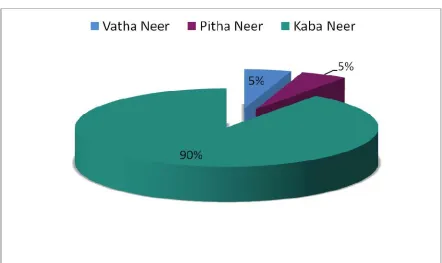
In Varal Karappan, the oil spreads like a pearl indicates Kabha
tsp ghjpf;fg;gl;L>gbg;gbahf tus;fug;ghd; cz;lhtij fhl;Lk;
tpsf;fg;glk;
thjk;
mghdd; cjhdd; tpahdd; rkhdd; fpUfud;
gpuhrfk; ,uQ;rfk;
mdpyk;
czT nrhpahik nre;ePh; ghjpg;G Njhypd; Xspghjpg;G
p
p
cztpd; rhuk; ghjpg;G
clw; fl;Lfs;
rhuk; nre;ePh;
ghjpg;G
rhuk; FiwFzk; nre;ePh; FiwFzk;
Njhy; RuRug;giljy;
cly; thl;lk; twl;rp> clypy; epwk; Fiwjy;
ehl;gl;l epiy
Cz; nfhOg;G
Fiw Fzk; Fiw Fzk; fgk;
fPy;fspy; Neha;> Nrhh;T>
cly; nkypjy; cly; ,isj;jy;
p vz;tifj; Njh;Tfs;
eh epwk; tpop kyk; %j;jpuk; ];ghprk;
fz;zpd;
fPopik
kio ePhpy;
Cwpa
ghjpg;G
ntSj;Jf;fhzy;
ehb
thjk; ghjpf;fg;gLtjhy; Nkdp NflilfpwJ. mjhtJ Njhy;
Nehahd tus;fug;ghdpy; czthjp nray; khWghl;lhy; tspf;Fw;wk;
KjyhtJ NflilfpwJ.
thjk; vd;w tspapd; 10tiffSs; mlq;fpa mghdd;> cjhdd;>
tpahdd;> rkhdd;> fpUfud; Mfpait ghjpf;fg;gLtjhy;> md;drhuk;
NruNtz;ba ,lq;fspy; Nrh;g;gpf;fg;glhky; ghjpf;fg;gLfpwJ.
rhuk; ghjpf;fg;gLtjhy;> ,uQ;rfk; nre;ePiu kpFjpg;gLj;j
Kbahky; nre;ePh; Fiw FzkhfpwJ.
gpuhrfk; ghjpf;fg;gl;L> Njhypd; xsp FiwfpwJ. mjhtJ
epwkhw;wk;> jpkph;> jpdT> jbg;G> ntbg;G> Gz>; ePh;f;frpjy; Nghd;w
tus;fug;ghdpd; FwpFzq;fs; cz;lhfpwJ.
mdpyk; ghjpf;fg;gLtjhy;> czT nrhpg;gpy; ghjpg;G Vw;gLfpwJ.
VO clw;fl;LfSs; mlq;fpa rhuk; ghjpf;fg;gLtjhy;> rhuk;
FiwFzk; Vw;gl;L> mjd; Fzq;fshfpa Njhy; RuRug;giljy;> cly;
thl;lk; cz;lhfpwJ.
nre;ePh; ghjpf;fg;gl;L> nre;ePh; FiwFzk; Vw;gl;L> mjd;
Fzq;fshfpa twl;rp> clypy; epwk; Fiwjy; cz;lhfpwJ.
Neha;f;F kUj;Jtk; Nkw;nfhs;shky; ehl;gl;l epiyahFk;
nghOJ> nfhOg;G kw;Wk; Cz; FiwFzKk; cz;lhfp> cly;
,isj;jy;> fPy;fspy;Neha;> Nrhh;T> td;ikFiwjy; Nghd;w
FwpFzq;fs; Vw;gLfpd;wd.
Nkw;fz;l khw;wq;fshy;> vz;tifj; Njh;tpd; NghJ> epwk; vd;w
eh vd;w fzpg;gpy;> nre;ePh; FiwFzk; fhuzkhf ehntSj;Jf;
fhzg;gl;lJ.
];ghprk; vd;w fzpg;gpy; jbg;G>ntbg;G> jpdT> nrhwp> Gz;> cly;
,isj;jy; fhzg;gl;lJ.
kyk; vd;w fzpg;gpy; tspkhWghl;lhy;> mghddpd; nray;
FiwFzk; fhuzkhf kyr;rpf;fy; fhzg;gLfpwJ.
%j;jpuk; vd;w fzpg;gpy;> tsp khWghl;lhy; rPuzf; FiwT
fhuzkhf> rPuz mgf;Ft ePh; epwkhd kio ePhpy; Cwpa itf;Nfhy;
epwk; fhzg;gLfpWJ.
ehb-fzpg;gpy; Nrj;Jkehb fhzg;glNtz;Lk;. Foe;ijfspy;
ehbeil rhpahff; fzpf;f KbahJ vdf; $wg;gl;Ls;sjhy;> njhe;j
ehbahf thj fgk; fhzg;gLfpwJ.
Nrj;Jkehbf;fhd fhuzk; Iak; thOkplq;fshff;
$wg;gl;Ls;s> FUjp> nfhOg;G> rkhdthA Nghd;wit
ghjpf;fg;gl;Ls;sNjahFk;.
Iak; thOkplq;fs; ghjpf;fg;gl;L> mjd; njhopy; khWgLtjhy;>
NOI KANIPPU VIVAATHAM (Differential diagnosis)
Varal Karrappan must be differentiated from Ari Karappan and
Vaalai Karappan.
ARI KARAPPAN:
This is described in “PATHINEN SIDDHAR BALA VAGADA
THIRATTU”. It also occurs in Children.
The initial lesions like Varal Karappan occur over the penis or the
vulva.
Ari Karappan then ulcerates further and eventually erodes the
adjoining tissues. This then becomes like a puttru. The whole body
becomes wasted out. These features totally absent in Varal Karappan. The
verses for Ari Karappam is as follows.
‘cw;w mhp fug;ghd; Xjf;Nfs; Xz;nlhbaPH
kw;w ypq;f Nahdpfspy; te;jpLk; Gw;Wlypy;
Mwhkw; Gz;zhpf;Fk; cUtopf;Fk;
khwhJ ,f;Fzj;jpd; thW.”
- ghythflk; gf;fk; 247
VAALAI KARAPPAN:
According to PATHINEN SIDDHAR BALAVAGADA
THIRATTU describes symptoms of Vaalai Karappan are that there is
from these lesions along with bleed, the body becomes emaciated and
tremors occur. There is no itching in Vaalai Karappan. The verses as
follows.
‘fhyJ fLf;Fe; re;J fz;lKk; ntbj;Jg; Gz;zha;
VyNt fbtplk; Nghy; ,Ue;J gd;dPH Nghy; gha;e;J
Nfhykha; tw;wp ehWk; FOtpA nkhLq;F khfpy;
khyUq; Foyha; thy fug;ghd; nra;thW jhNd.”
LINE OF TREATMENT
It Consists of
1. Administration of Internal Medicine
2. Application of External Medicine
3. Pathiyam or diet restriction to normalize the vitiated dhosas and
to maintain good drug action.
4. Advice personal hygiene.
Prior to the main treatment, the above principles will be followed
to regulate the affected kutram. In Varal Karappan ,Vatha affected mainly
then Piththa and Kabha.
‘thjkyhJ Nkdp nflhJ”
- Njuh;
‘tpNurdj;jhy; thjk; jhOk;”
‘Fl;lkJ tpl fug;ghd; tplePh;r;#iy…
………
jl;lwNt fpUkpAl ePuhy; te;j
rfyFl;lk; tplfug;ghd; rhw;wthNk.”
. Neha;ehly; Neha; Kjy; ehly; ghfk; 1
In this case, the Siddha text has specified an anthelmintic along
with laxative to be given before the starting of the main drug. Nilavakai
Administration of Internal Medicine:
All the 20 In-Patients & 55 out patients were given with Kodiveli Chooranam thrice a day with honey and the prognosis was noted.
Dose:
The dose of the medicine was adjusted according to the age and weight of the children and severity of the disease.
Age Dose
1 – 3 Years 250-300 mg
3 – 6 Years 300-500mg
6-12 Years 500-1gm
Anupanam in Siddha System:
‘mDghdj;jhNy atpo;jk; gypf;Fk;
,dpjhd Rf;F fd;dy; ,Q;rp - kpDKjfhy
NfhNkak; ghy; Kiyg;ghy; Nfhnea; Njd; ntw;wpiy ePH
Mkpij ahuha;e;J nra;ayhk;”
- NjiuaH ntz;gh.
Siddha system considers anupanum is an important adjuvant of the
drug than the medicine itself. In this work, author used honey as
Application of External medicine:
All the twenty inpatients were treated with Maruthampattai Thylam
externally and Kuppaimeni Podi is used as dusting powder. It was applied
twice a day.
Pathiyam:
Diet restrictions are important for good drug action and also to
normalize the vitiated dhosas. For Varal Karappan the patients were
strictly advised to avoid the following items.
Agathi Keerai - Leaves of sesbania grandiflora
Pagalkai - Bitter gourd
Poosanikai - Great Pumpkin
Perum Payara - Cow – Grain
Kaanam - Horse gram
Motchai - Flac bean
Palapazham - Jackfruit
Cholam - Maize
Kambu - Pear Millet
Gingely oil
Advising personal hygiene:
The following measures are strictly advised to follow for the early
cure and to avoid recurrences.
The patients were advised to avoid over crowding.
They were advised to take bath atleast once a day in luke warm
water.
They were advised to use nalungu maa, pasi payaru maa or kadalai
purappu maa instead of soap.
They were advised to avoid bathing in public tank.
They were advised to change clothes daily.
School going children were advised to take leave to prevent spread
of the disease to other children.
All the family members affected by this disease were advised to
take medicines at the same period.
All the patients were advised to have rich diet containing green
MODERN ASPECT
SKIN ANATOMY
Embryology:
Origin of the skin:
The skin arises by the just a position of two major embryological
elements. Epidermis which originate from a surface area of the early
gastrula and the prospective mesoderm which is brought in to contact
with the inner surface of the epidermis during gastrulation. The neural
crest also makes an important contribution to the skin, namely the
pigment cells
Epidermis begin to develop in the third week of foetal life.
sebaceous glands are at first solid, hemispherical protuberances on the
posterior surface of the hair pegs. Nails begin to develop in the third
month. Melanocytes begin to develop in the third month. Melanocytes
begin in before 4-6 months of gestation, from the neural crest.
The skin is composed of a superficial epithelial layer –Epidermis
and underlying connective tissue layer – Dermis (or) corium. Beneath the
corium is another connective tissue layer - Hypodermis (or) subcutaneous
EPIDERMIS:
The epidermis is formed by non- vascular stratified epithelium. It’s
usual thickness is between 0.07 mm and 0.12mm. The epidermis is
mainly two divisible, they are keratinizing (or) Malphigian system
(Keratinocytes) which forms the bulk and the pigmentry system
(Melanocytes) which produces the pigment.
Seven layers are present in the epidermis. They are,
1. Stratum Germinatum (or) Stratum Basale:
This is the deepest portion of the epidermis and is composed of
columnar cells placed perpendicular to the skin surface. The whole of the
epidermis germinates from the stratum, hence the name stratum
Germinatum.
2. Stratum Malpigtui (or) The prickle cell layer:
It is superficial to the basal cell layer, and is composed of several
layers of polyhedral cells connected to each other by intercellular bridges.
3. Stratum Granulosum:
It is composed of flat, fusiform cells which are one to three layers
thick. It is superficial to the stratum Malpigtui. These cells contain pores,
4. Stratum Lucidum:
It is pale and waxy looking layer, persent supeficial to the stratum
granulosum.
5. Stratum corneum:
This is most superficial layer, the outer surface which is exposed to
the atmosphere. It consists of many layers of non nucleated, flattened
cornfied cells.
6. Dentritic cells of Epidermis:
These are melanocytes, Langerhan’s cells and indeterminate cells.
The melanocytes are the pigment producing cells. The cells of langerhan
are found about the middle of epidermis.
7. Basal Lamina (Basement Membrane)
Dermal side of the basal lamina contains few scattered collagen
fibres.
DERMIS:
The dermis which is bounded distally by its junction with the
epidermis and proximally by the subcutaneous fat. The basis of the
dermis is a supporting matrix (or) ground substance which are
polysaccharides. The matrix contain two kinds of protein. They are,
a) Collagen - Which has great tensile strength
Hair follicles, various types of sebaceous and sweat glands, plain
muscle fibres like and adipose tissue are seen in the microscopic section
of the dermis.
The dermis contains few cells, which are fibroblasts or mast cells,
histocytes (or) macrophages, lymphocytes (or) other leucocytes and
melanocytes. In the deeper layer of dermis, then in arteriovenous
anastomosis surrounded by sphincter the group of smooth muscles under
autonomic control.
SEBACEOUS GLANDS:
They are situated in the upper half of corium. The sebaceous
glands are derived from the epithelial cells of the hair follicle and are
present every where in the skin except on the palms and soles.
They are multilobulated and covered by a connective tissue capsule
which is in a layer of small epithelial cells. As these cells mature towards
the centre of the lobules they enlarge, their cytoplasm becoming arranged
in a delicate network surrounding globular of fat (sebum). Towards the
duct the whole cell disintegrates, lobulating its fat, the glands therefore
being classified as a nolocrine glands.
SWEAT GLANDS:
These are found in all areas of the skin. The sweat glands originate
corium. The coil is the secretary segment and is lined by a single layer of
epithelial cells. The duct runs straight upwards from it to the epidermis,
which it transverses in a corkscrew manner to open on the surface at the
pore. The latter is converted by a loose meshwork of horn cells.
APOCRINE GLANDS:
They occur in the axillae, areola and nipples of breasts, umbilicus
around the anus and the genitalia. The myo-epithelial cells are highly
developed and more abundant in these glands. They are specified sweat
glands and their secretion is odoriferous with a secondary sexual
significance.
HAIR:
Hair is found on almost every part of the body surface except on
the palms and the soles, the dorsal surface of the terminal phalanges, the
inner surface of the labia, the inner surface of the prepuce and the glands
penis. Hair growth and development is under endocrine control.
NAILS:
These are semi transparent plate like structures, covering the dorsal
surfaces of the distal phalanges of the fingers and toes. The nails are
composed of many layers of flattened keratinized cells fused into a
homogenous mass. They arise from epidermis lining an invagination of
skin at the base of the nail. This specialised epidermis known as the nail
BLOOD VESSELS:
The blood supply of the skin orginates from a large number of
arteriess forming anastomosis in the deepest part of the cortex. From
here single vessels ran upwards and forming second network in the upper
cortex. Finally terminal arterioles ascend into the pupillae end in capillary
loops, which drain into connecting venules.
NERVE SUPPLY:
The nerve supply of the skin consists of a motor sympathetic
portion derived from the sympathetic ganglia and sensory spinal portion
arising from the dorsal root ganglia.
PHYSIOLOGY:
1. Protective function
2. Immunological function
3. Sensory functions
4. Secretion and excretion
5. Synthesis of vitamin ‘D’
6. Body heat Regulation
7. Endocrine functions
8. Storage function of skin
9. Absorption
SCABIES
The signs and symptoms of Varal Karappan may be correlated
with the clinical features of Scabies. The Modern aspect of Scabies is
discussed here.
Definition:
It is a form of itching dermatosis characterized by epidermal
burrows, pruritic inflammatory papules and nodules caused by female
sarcoptes scabiei or its products.
PARASITOLOGY:
Sarcoptes scabiei Var hominis has an oviod body, flattened
dorsoventrally. The adult female measures approximately 0.4mm long by
0.3mm broad, and the smaller male 0.2mm long by 0.15mm broad. The
body is creamy white and it is marked by transverse corrugations and on
its dorsal surface by bristles and spines (denticles). There are four pairs of
short legs the anterior two pairs end in elongated peduncles tipped with
small suckers. In the female the near two pairs of legs end in long bristles
(setae) where as in the male bristles are present on the third pair and
elongated peduncles on the fourth.
Copulation occurs in a small burrow excavated by the female.
After copulation, the fertilized female enlarges the burrow and lays eggs.
result of the production of a lytic secretion by the mite, which then
proples itself forward as the host tissue is dissolved. The burrow is
lengthened by approximately 2-3mm daily . Eggs and mite faeces are
deposited behind the female in the burrow. Six – legged larvae emerge
from the eggs after 3 days and escape from the burrow by cutting cay
through its roof. The larvae then dig short burrows (Moulding Pockets) in
which they transform into lymphs. After further moults adult males and
females develop.
The mites show a preference for certain sites in which to burrow,
and appear to avoid areas with a high density of pilosebaceous follicles.
The average number of adult female mites on an individual suffering
from the common form of scabies is about 12. Only in crusted
(Norwegian) Scabies are large numbers of mites are present.
INCIDENCE AND EPIDEMIOLOGY
Scabies affects all races and social classes world –wide. It is most
common in children and young adults, but may occur at any age. The
over all sex incidence is probably equal, where as all racial groups are
susceptible.
There are some differences in incidence. These are probably
related to customs and social factors rather than inherent susceptibility.
encourages the spread of scabies. Scabies is usually transmitted by close
physical contact, such as prolonged hand – holding or the sharing of a
bed. Indirect spread by clothing or even by sexual contact. Fertilized
female mites are responsible for transmission, although there is no firm
evidence, and it seems unlikely in view of their relatively small numbers
and inclination to remain within their burrows.
IMMUNOLOGY:
Allergic sensitivity to the mite or its products appears to play an
important role in determining the development of lesions other than
burrows and producing pruritis.
Evidence suggests that both immediate and delayed hyper
sensitivity involved some patients show high levels of IgE. Involvement
of delayed – type hypersensitivity in the production of inflammatory
papules and nodules is suggested by the histological changes and
predominance of T-Lymphocytes in the cutaneous infiltrate.
Other immunological findings include high serum IgG and IgM,
and low IgA with levels returning to normal after treatment. IgM and C3
deposits have been demonstrated at the dermoepidermal function in the
region of burrows and circulating immune complexes have been found in
PATHOGENESIS:
Scanning electron microscope reveals the keratinocytes around the
burrow to be compacted, indicating that the mite physically forces its way
in between the keratinocytes, rather than chewing a passage. The burrow
is essentially a tunnel within the stratum corneum, formed as the mite
burrows down to the live stratum granulosum for nourishment.
HISTO PATHOLOGY:
Histologic examination of a specimen containing a burrow reveals
that the burrow in almost its entire length is located within the horny
layer. Only the extreme blind end of the burrow, where the female mite
is situated, extends 400 µm in length.
Spongiosis is present in the stratum malphigtui near the mite to
such extent the formation of a vesicle is often the result. Even if no mite
is found in the sections the presence of eggs containing larvae, egg shells,
or fecal deposits within the horny layer is indicative of scabies. The
dermal infiltrate in sections containing mites shows varying numbers of
eosinophils. Papular lesions not containing mites show a non-specific
picture in which eosinophils generally are absent.
In persistent nodular scabies is a dense, chronic inflammatory
infiltrate in which eosinophils may be present. The blood vessels may
mononuclear cells may be found, and in some instances, the nodules
show. A histologic picture resembling lymphoma. Mites are hardly ever
found in the nodules.
CLINICAL FEATURES:
ITCHING:
Itching is usually the most obvious manifestation of scabies. It is
generally worse at night and when the patient is warm. The onset occurs
3-4 weeks after the infection is acquired, and coincides with a
widespread eruption of inflammatory papules. Re-infection of a
previously cured individual, however provokes immediate symptoms,
which suggests that the generalized eruption is a true sensitization
phenomenon.
BURROWS:
The pathognomonic lesions of scabies are burrows, which appear
as slightly raised, brownish, tortuous lesions. The point of entry of the
mite, the most superficial part of the burrow, has a slightly scaly
appearance, and at the distal end there may be tiny vesicle, adjacent to
which is the female mite. There may be few or many burrows and in
patients with high standards of hygiene they may be difficult to find.
They may occur on the wrists, the borders of hands, the sides of fingers,
children and may occur on the palms in women, though uncommonly in
men. Burrows on the trunk are uncommon in adults, but may be found in
the elderly and are not unusual in infants. They may be seen on the head
and neck in babies but not normally in adults. The scalp was however,
involved in an adult who was applying a topical steroid for seborrhoeic
dermatitis.
The reason for this pattern of distribution is not understood, but the
mites appear to prefer non-hairy skin and area of low sebum production.
PRURITIC PAPULES:
The pruritic papules which accompany the development of
hypersensitivity occur predominantly around the axillae, in the
peri-areolar regions, on the abdomen, particularly the periumbilical region,
and on the buttocks and thighs. Indurated, inflammatory nodules
sometimes occur, particularly on the axillae, groins, scrotum and penis.
They are intensely itchy, and often persist for weeks or months after the
scabies has been effectively treated.
INFLAMMATORY PAPULES OR NODULES:
Inflammatory papules or nodules, sometimes surrounded by
burrows, on the male genitalia are characteristic of scabies.
SCABIES IN INFANTS:
distribution of burrows mentioned above vesicular and vesiculo pustular
lesions on the hands and the feet are not uncommon and bullous lesions
have been described. Extensive eczematisation is frequently present, and
there may be multiple crusted nodules on the trunk and limbs.
DIAGNOSIS:
The typical history of pruritis with nocturnal exacerbations, and the
distribution of the eruption of inflammatory papules should suggest the
diagnosis.
The female mite can be brought out from the burrow and can be
seen with the help of hand lens.
Absolute confirmation can only be made by the discovery of
burrows and microscopical examination. A burrow is gently scraped off
the skin with a blunt scalpel, and the material placed in a drop of 10%
potassium hydroxide or mineral oil on a microscope slide. The presence
CRITERIA FOR DIAGNOSIS OF SCABIES:-
Major diagnostic Criteria (Presence of one criteria):-
- Identifiable typical burrow particularly associated with an
itching and rashes.
- Skin scrapping shows eggs or mites.
Minor Criteria ( two needed for a diagnosis)
- Typical rash that itches more at night.
- Sudden onset of an unexplainable itching and rash with
characteristic distribution.
- Contact with a Scabetic patient.
CRUSTED SCABIES: (NORWEGIAN SCABIES)
Crusted scabies is an infestation with sarcoptes scabiei var.
hominis in which the mite population is enormous, and may number
millions. The grossly thickened horny layer is honey combed with
cavities which contain large numbers of mites, and these are shed into the
environment of the patient. An undiagnosed case of crusted scabies may
cause large out-breaks of common scabies.
CLINICAL FEATURES:
Large warty crusts form on the hands and feet and the palms and
soles may be irregularly thickened and fissured. Masses of horny debris
extent of erythroderma and the warty plaques varies greatly, and either
may predominate. It has been suggested that staphylococcus aureus
colonizing burrows might play a part in initiating the erythroderma.
Itching is often absent or slight, but may occasionally be severe.
Generalized lymphadenopathy is present in some cases, and blood
eosinophilia is common.
Crusted scabies may masquerade as hyperkeratotic eczema,
psoriasis, Darier’s disease and contact dermatitis.
COMPLICATION:
1. Eczematization.
2. Impetiginization.
3. Acute glomerulonephritis.
1. Eczematization:
It is one of the rare complication of scabies. Scabetic areas may
get sensitized. This sensitization results in eczematization and well
defined circular or oval patch of eczema consisting of erythema, oozing
and crusting is formed. If there are severe patches the intervening skin is
completely clear.
2. Impetiginization :
It is a rare complication of scabies. This is usually due to
coloured crust. Crust is the most important feature of impetiginization.
The lesions are usually multiple, the intervening skin is completely
normal. Usually there is no pain or itch.
3. Acute glomerulonephritis:
Acute glomerulonephritis follows infection by streptococci on the
scabetic areas. The onset is usually rapid, with puffiness around the eyes
and edema over the feet. Urine colour is characteristically smoky brown,
because of formation of acid hematin. The degree of oliguria usually
correlates with the severity of the disease. Hypertension is usually
present. Atypical presentation may also be present which include,
convulsions due to hypertensive encephalopathy the urine may grossly
normal and edema absent. Left ventricular failure and pulmonary edema
due to very high blood pressure, hypovolemia and acute renal failure.
MATERIALS AND METHODS
The clinical study on Varal Karappan was done in the post
graduate department of Kuzhandhai Maruthuvam in Government Siddha
Medical College at Palayamkottai. Selection of cases for the clinical
study was on the basis of ,
1. Itching
2. Burrows
3. Inflammatory papules
4. Pruritic papules
5. Vesicles
6. Pustules
The patients were treated either in OP or IP according to the
severity. 20 cases were treated in IP and 55 cases were treated as OP
cases.
Complete history was taken for all cases. Details about the
precipitating factor, family history, socio economic pattern and
occupation were also obtained.
The diagnosis was made by poriyalarithal, pulanalarithal,
Drug Regimen
1.) Kodiveli Chooranam ( Internal Medicine)
Age Dose
1-3 Years 250-300mg Tds with honey
3-6 Years 300-500mg Tds with honey
6-12 Years 500-1gm Tds with honey
2.) Maruthampattai Thylam ( External Medicine)
3.) Kuppaimeni Podi (Dusting Powder)
In all cases, the following routine laboratory investigations
available at Government Siddha Medical College, palayamkottai were
carried out.
Investigations :
In Siddha aspect the diagnosis was made under the following
criteria.
¾ Mukkutra Nilai
¾ Envagai Thervu
¾ Udal Kattukal
¾ Kaalam
¾ Nilam
Blood
- Total WBC count
- Differential count
- Erythrocyte Sedimentation rate
Urine
- Albumin
- Sugar
- Deposit
Motion
. Ova
. Cyst
Skin Tests
. Skin Scrapping
. Skin Clipping
. Skin biopsy
Biochemical analysis of the test drug was carried out in the
Department of the Bio chemistry, Government Siddha Medical College,
Palayamkottai.
Pharmacological analysis of the test drug was carried out in the
Department of Pharmacology, Government Siddha Medical College,
PREPARATION AND PROPERTIES OF THE TRIAL
DRUGS
nfhbNtyp #uzk;
‘thW nfhbNtyp Fwp;Q;rh tf;fiz aWF $W fUNtk;G Flrg;ghiy - rPW rptdhh; ngUkUe;J nrq;fj;jhhp kpsF apitNa nfhs; gy; fug;ghNdFk;”.
-mfj;jpah; 3000 %d;whk; ghfk;
gf;fk; 428
NrUk; ruf;Ffs;
nfhbNtyp Nth; - 25 fpuhk;
kpsF - 25 fpuhk;
nrq;fj;jhhp Nth;g;gl;il - 25 fpuhk;
mUfk;Gy; - 25 fpuhk;
rptdhh;Ntk;G Nth; - 25 fpuhk;
<r;Ru%yp Nth; - 25 fpuhk;
rpWFwpQ;rhd; ,iy - 25 fpuhk;
Flrghiytpij - 25 fpuhk;
nra;Kiw
Rj;jp nra;j ruf;Ffis rkd; msT vLj;J nfhs;sTk;. gpd;
mtw;iw jdpj;jdpahf ,bj;J rypj;J mjd;gpd; t];jpufhak; nra;J
#uzj;ij vLj;Jf; nfhs;s Ntz;Lk;.
msT : 250 kpy;yp.fpuhk; - 1 fpuhk; tiu
(Njf td;ikNfw;g)> %d;W Ntis
cztpw;F gpd;.
mDghdk; : Njd;
jPUk;Neha; : tus;fug;ghd;
kUjk;gl;il ijyk;
‘jg;gh ijah juzpapy; khe;jh;f;F
xg;gh kUjk; gl;ilj; ijyq;Nfs;
nrg;gh %yp rpwe;j nghLjiy
mg;gh %d;W kiwag; ghz;lkpNl.
ghz;lj; jd;dpw; gjf;F rykpL
G+z;l f\hak; nghUe;j nra;jpL
Mz;L nkz;nza; awpar; rkdjha;
jPz;L Nkgje; njspaNt fha;r;rpNl
fha;r;Rk; thiy fUJk; kNdhd;kzp Mr;rpghj kbtzq;fpj; njhO %r;rp lhky; KiwAld; jhd;KO
Nghr;R Nkfk; Gfd;Nwhbg; NghNk. NghFk; ghz;L GfYq; fhkhiy Nghk;
VFk; Nuhkk; vOk;Gk; ngUQ;rpuq; fhFNk nrhwp fug;ghd; fUNkfe; jhd;Wk;
ghFjd; te;jphp ghbd Jz;ikNa.”
- Fzghlk;%ypif tFg;G gf;fk;: 735
- jd;te;jphp ijyk; 500
NrUk; ruf;Ffs;
kUjk;gl;il
trk;G
nra;Kiw
Rj;jp nra;j ruf;Ffis xd;wpuz;lhf ,bj;Jg; Nghl;L 8 gq;F
ePh; tpl;L 4 y; 1 gq;fhf tw;w itj;j FbePUld; ey;nyz;nza; Nrh;j;J
fha;r;rp gjj;jpy; tbj;J nfhs;s Ntz;Lk;.
gpuNahfk; : ntspgpuNahfk;
jPUk; Neha; : tus;fug;ghd;
MAl;fhyk; : 1 Mz;L
Fg;igNkdp nghb
NrUk; ruf;F : Fg;igNkdp ,iy
nra;Kiw:
Fg;igNkdp ,iyia cyh;j;jp cuypy; ,l;L ,bj;J rypj;J
vLj;Jf; nfhs;s Ntz;Lk;.
gpuNahfk; : ntsp gpuNahfk; (nte;ePhpy; fye;J
fOTtjw;F)
jPUk; Neha; : tus; fug;ghd;
MAl;fhyk; : 3 khjq;fs;
. Fzghlk; %ypif tFg;G
PROPERTIES OF TRIAL MEDICINE
kUJ
Botanical Name : Terminalia arjuna(Roxb)
Family : Combretaceae
NtWngah; : mUr;Rdd;> RFgk;> G+jtk;>
G+yj;jp>,e;jpud;ghh;.
tshpay;G : kuk;
gad;gLj;jpa cWg;G : gl;il
Rit : Jth;g;G
jd;ik : ntg;gk;
gphpT : fhh;g;G
nra;if:-
cukhf;fp Tonic
jkufntg;gKz;lhf;fp Cardiac Stimulant
Jth;g;gp Astringent
nghJFzk;:-
‘XjnkD ePhpopit Nahl;Lk; gpuNkfq;
fhjnkd Nthlf; flj;Jq;fhz; - Nghj
kaf;f nkhLjhf khwhr; Ruj;jpd;
Fl;lNuhf fq;fpUk; Nfhu tapw;Wtyp
Jl;l twl; #iy njhiyAq;fhz; - rpl;bg;
nghUjk;gh nkd;W tpopg; G+itaNu! ehS
kUjk;gh nud;wstpy; kha;e;J”
. Fzghlk; %ypif tFg;G
,J ePupopT>nts;is> kaf;fk;> ePh;Ntl;if, Ruj;jpYz;lhFk;
jaf;fk;> ngUNeha;> GONeha;> tapw;WNeha;>twl;#iy Nghk;. jkufj;ij
td;ikg;gLj;Jk;.
Constituents : The bark contains tannin. Arjunine and Arjunetin are
alkaloids.
nghLjiy
Botanical Name : Lippia nodiflora ( Linn)
Family : Verbinaceae
NtWngah; : G+w;rhjk;
tshpay;G : G+z;L
gad;gLj;jpa cWg;G : ,iy
Rit : ifg;G > Jth;g;G
jd;ik : ntg;gk;
nra;if :
cs;soyhw;wp Demulcent
tPf;fq;fiur;rp Deobstruent
rpWePh;ngUf;fp Diuretic
Jth;g;gp Astringent
Nfhioafw;wp Expectorant
cukhf;fp Tonic
trk;G
Botanical Name : Acorus Calamus(Linn)
Family : Araceae
NtWngah; : cf;fpuk;> trk;> tir> Ntzp> RLthd;>
ciug;ghd;> Ngh;nrhy;yhkUe;J> gps;iskUe;J
tshpay;G : G+z;L
gad;gLj;jpa cWg;G : Nth; (Rhizome)
nra;if :
ntg;gKz;lhf;fp Stimulant
grpj;jPJ}z;b Stomachic
Kiwntg;gfw;wp Antiperiodic
njhw;Wg;GOtfw;wp Disinfectant
El;GOf;nfhy;yp Germicide
Constituents:
A volatile oil, acorin and calamine. Acorin – a glucoside is a honey
like liquid very bitter and aromatic, soluble in alcohol chloroform and
ether.
Calamine is a crystalline alkaloid soluble in alcohol and
chloroform.
Fg;igNkdp
Botanical Name : Acalypha Indica
Family : Euphorbiaceae
NtWngah; : mhpkQ;rhp> G+idtzq;fp>Nkdp
tshpay;G : G+z;L
gad;gLj;jpa cWg;G : ,iy
Rit : ifg;G> fhh;;g;G
jd;ik : ntg;gk;
gphpT : fhh;g;G
nra;if :
rpWePh;ngUf;fp Diuretic
the;jpAz;lhf;fp Emetic
Nfhioafw;wp Expectorant
#jfKz;lhf;fp Emmenogogue
Constituents:
An Alkaloid, acalyphine.
nfhbNtyp
Botanical Name : Plumbago auriculata (Linn)
Family : Plumbaginaceae
NtWngah; : fWg;Grpj;jpu%yk;>fUq;nfhbNtyp
gad;gLj;jpa cWg;G : Nth;
Rit : fhh;g;G
jd;ik : ntg;gk;
gphpT : fhh;g;G
nra;if:
ntg;gKz;lhf;fp Stimulant
nghJFzk;:
‘fl;btpuzq; fpue;jp fhy;fs; miuahg;Gf;
fl;br;#iy tPf;fq; fho;%yk; - Kl;buj;jf;