Dissertation on
AGGRESSIVE VERSUS EXPECTANT
MANAGEMENT OF SEVERE PREECLAMPSIA
REMOTE FROM TERM (28 – 32 WEEKS)
Submitted in partial fulfillment for
M.D. DEGREE EXAMINATION
BRANCH - II
OBSTETRICS AND GYNAECOLOGY
MADRAS MEDICAL COLLEGE
CHENNAI – 600 003
THE TAMILNADU Dr.M.G.R. MEDICAL UNIVERSITY
CHENNAI – 600 032
TAMILNADU
CERTIFICATE
This is to certify that the dissertation titled “Aggressive versus
expectant management of severe preeclampsia remote from term
(28 – 32 weeks)” submitted by Dr. D. Anitha to the Faculty of
Obstetrics and Gynaecology, Madras Medical College, The Tamilnadu
Dr. M.G.R. Medical university, Chennai in partial fulfillment of the
requirement for the award of M.D. Degree (Obstetrics and
Gynaecology) is a bonafide research work carried out by her under our
direct supervision and guidance.
Dr. RADHA BHAI PRABU
M.D.,D.G.O.,M.N.A.M.S., Ph.D.,F.R.C.O.G. Director & Superintendent, Institute of Obstetrics & Gynaecology, Egmore, Chennai -8.
Dr. J. MOHANASUNDARAM,
M.D., Ph.D., DNB, Dean,
DECLARATION
I Dr. D. Anitha solemnly declare that the dissertation titled
““Aggressive versus expectant management of severe preeclampsia
remote from term (28 – 32 weeks)” has been prepared by me.
This is submitted to the Tamilnadu Dr. MGR Medical University,
Chennai in partial fulfillment of the rules and regulations for MD
Degree Examination in Obstetrics and Gynaecology. This has not been
previously submitted by me for the award of any degree or diploma
from any university.
Place : Chennai
Dr. D. Anitha
ACKNOWLEDGEMENT
I gratefully acknowledge and sincerely thank our beloved Dean,
Prof Dr. Mohana Sundaram MD Ph.D., DNB, Madras Medical College,
Chennai -3 for his patronage.
I am extremely grateful to our Director and Superintendint
Prof Dr. Radha Bhai Prabhu M.D., D.G.O., M.N.A.M.S. Ph.D., F.R.C.O.G.
Institute of Obstetrics and Gynaecology, Chennai for her guidance and
encouragement given in completing my work.
I wish to express my deep gratitude to Prof Dr. Baby Vasumathi MD
DGO for her valuable guidance, support and encouragement throughtout my
study.
I immensely thank Prof. Dr. Revathy Janakiram M.D, D.G.O.
MNAMS., for her great support in conducting the study.
I am extremely thankful to all my professors, Asst professors,
medical and paramedical staff of Institute of Obstetrics and
Gynaecology for their co-operation in conducting my study.
I will be ungrateful if I don’t thank my patients who have given
me excellent co-operation all through my study.
INDEX
SL. NO. TITLE PAGE .
NO.
1 INTRODUCTION 1
2 REVIEW OF LITERATURE 2
3 AIM 25
4 MATERIALS AND METHODS 26
5 RESULTS & ANALYSIS 34
6 DISCUSSION 57
7 SUMMARY 65
8 CONCLUSION 68
9 APPENDICES
i) BIBLIOGRAPHY
ii) PROFORMA
iii) ABBREVIATIONS
iv) MASTER CHART
INTRODUCTION
Preeclampsia complicating pregnancy is a common multisystem
disorder characterized by blood pressure ≥ 140/90 mmHg after 20 weeks
gestation with proteinuria ≥300mg/24 hours or ≥I +dipstick.
Preeclampsia forms one of the deadly triad along with haemorrhage and
infection that contributes greatly to maternal morbidity and mortality. It
complicates 5-8% of the pregnancy. (ACOG 2002)1
Management of mild preeclampsia remote from term, the
traditional approach adopted has been balancing the maternal and fetal
outcome. Conversely management of severe preeclampsia remote from
term has been delivering without delay regardless of fetal outcome.
With improved methods of monitoring and neonatal care
facilities, several investigators has began to challenge the traditional
view that women with severe preeclampsia need to be delivered
expectantly.
Recent trend advocates expectant management in a selected group
of women with preeclampsia remote from term with the aim of
improving fetal outcome without compromising maternal safety.
Gestational age at delivery, rather than the severity of maternal disease,
REVIEW OF LITERATURE
MINIMUM CRITERIA FOR DEFINING PREECLAMPSIA
(National high blood pressure education program 2000)24
1. New onset hypertension defined as blood pressure of 140/90
mmHg or higher after 20 weeks gestation.
2. New onset proteinuria defined as more than 300mg/24hrs or ≥1+
dipstick.
CLASSIFICATION OF PREECLAMPSIA
1. Mild preeclampsia
2. Severe preeclampsia
ACOG CRITERIA FOR DIAGNOSIS OF SEVERE
PREECLAMPSIA1
1. Systolic blood pressure of 160mmHg or higher or diastolic blood
pressure of 110mmHg or higher on 2 occasions at least 6 hours
apart while the patient is in bed rest after 20 weeks gestation.
2. Proteinuria of 5g or higher in a 24 hour urine sample or 3+ or
greater on random urine sample collected at least 4 hours apart.
3. Oliguria of less than 500ml in 24 hours.
4. Pulmonary oedema.
5. Impaired liver function.
6. Thrombocytopenia.
7. Fetal growth restriction.
8. Cerebral or visual disturbance.
BLOOD PRESSURE MEASUREMENT
Instrument
1. Conventional mercury sphygmomanometer:
- gold standard for blood pressure measurement.
2. Electronic blood pressure monitor:
- may under estimate the blood pressure.
Technique
• Women should be relaxed and resting for at least half an hour
before blood pressure measurement.
• Women should be seated or at 45° recline with the forearm
horizontal and well supported and the arm at the level of heart
with her feet supported or on the ground.
• Right arm should be used with a cuff of appropriate size.
• Korotkoff sound V should be used as a measure of diastolic blood
pressure.
• K5 is closer to the actual intra-arterial pressure, physiologically
accurate, more reliably detected and reproducible.
• K4 has limited reproducibility.
• K4 /K5 difference is smaller in hypertensive than in normotensive
THEORIES ABOUT ETIOPATHOGENESIS OF
PREECLAMPSIA
1. ABNORMAL PLACENTATION
Failure of secondary wave of trophoblastic invasion into
myometrial spiral arterioles results in reduced uteroplacental blood flow.
The ensuing ischemia and hypoxia leads to aberrant expression of genes
which encode for proinflammatory cytokines capable of eliciting
2. ENDOTHELIAL DYSFUNCTION
Endothelial dysfunction resulting in
a. Loss of vascular integrity is evidenced by elevated biomarkers of
endothelial dysfunction such as plasma fibronectin and
thrombomodulin12.
b. Increased vascular reactivity results in generalised and intense
vasospasm leads to reduced perfusion. This is due to increase in
vasoconstrictors thromboxane and endothelin and increased
sensitivity to angitensin II and decrease in vasodilators nitric
oxide and prostacyclin42.
c. Activation of coagulation cascade.
3. IMMUNOLOGICAL FACTOR
Immune maladaptation in preeclampsia.
a) Pathological lesions in placenta similar to acute graft rejection.
b) Lower level messenger RNA for HLA-G8.
c) Th1/Th2 response with Th2 dominance. Cytokines like tumour
necrosis factor-α, interleukin-2 and 6 mediate immune
maladaptation2.
d) Impaired production of blocking antibodies.
4. GENETIC PREDISPOSITION
Explained by both single gene model and polygenic inheritance.
a) Tendency for preeclampsia is inherited6.
b) Women heterozygous for the angiotensin gene variant T235 had a
higher incidence of preeclampsia43.
c) Association between HLA DR4 and preeclampsia17.
5. NUTRITIONAL FACTOR
Mac Gillivray viewed the evidence for the role of dietary
deficiency in the pathology of preeclampsia
a) Obesity: C reactive protein is increased associated in turn with
preeclampsia46.
b) Ascorbic acid: Incidence of preeclampsia was doubled in women
whose dietary intake of ascorbic acid was less than 85 mg48.
c) Calcium deficiency: When concentration of calcium is low in
extra cellular fluid amount of calcium entering the cell increases
making vascular smooth muscle more sensitive to excitation.
6. OXIDATIVE STRESS
a) Preeclampsia may have its origin in a disturbed oxidative
mechanism.
b) Abnormal levels of lipid peroxidise in preeclamptic women
inhibits prostaglandin synthetase.
c) Risk of preeclampsia increased in women with increased oxidised
PATHOPHYSIOLOGY OF PREECLAMPSIA
PRIMARY LEVEL
Changes that occur in placenta and placental vascular bed are
a) Relative lack of trophoblast infiltration into arterial wall during
placentation.
b) Endothelial damage, insudation of plasma constituents into vessel
wall, proliferation of myointimal cells and medial necrosis10.
c) Acute atherosis.
d) Obstruction of spiral arteriolar lumen by atherosis may impair
placental blood flow29.
e) Magnitude of defective trophoblast infiltration of spiral
SECONDARY LEVEL
I. Renal system
a) Renal Pathology - glomerular capillary endotheliosis38
b) Glomerular filtration rate and renal perfusion are decreased.
c) Hyperuricemia is due to reduced renal clearanceof uric acid7.
d) Proteinuria indicates advanced disease with poor prognosis.
e) Hypocalciuria is due to increased tubular resorptionof calcium39.
ii. Cardiovascular system
Cardiovascular dysfunction associated with preeclampsie are related to
b) Decreased cardiac preload by hemoconcentration.
c) Endothelial activation with extravasation into the extracellular
space.
1. Hemodynamic changes
a. Hyperdynamic circulation.
b. Increased peripheral resistance.
c. Decreased preload.
d. Decreased cardiac output.
e. Increased sensitivity to vasopressors.
2. Blood Volume Changes
a) Hypervolemia of pregnancy is severely curtailed.
b) Hemoconcentration due to generalised vasoconstriction and
endothelial dysfunction with increased vascular permeability37.
iii. Hematological changes
a) Microangiopathic hemolysis - caused by endothelial disruption
with platelet aggregation and fibrin deposition, diagnosed by
elevated levels of serum lactate dehydrogenase and peripheral
smear schizocytosis9.
c) Platelet activating factor increased.
d) Increased megakaryocytes and thrombopoetin.
e) Deficiency of any soluble coagulation factors very uncommon
unless another event coexist19.
f) Thrombophilia is associated with early onset preeclampsia.
g) Antithrombin III lowered.
iv. Hepatic changes
a) Elevation of liver enzymes in severe preeclampsia.
b) HELLP syndrome – hemolysis,elevated liver enzymes and low
platelets44.
c) Periportal hemorrhage in the periphery of liver.
d) Hepatic artery resistance increased evidenced by sonography27.
v. Endocrine changes
a) Renin, angiotensin II, aldosterone decrease to normal nonpregnant
range45.
b) Despite this women with preeclampsia avidly retain infused
sodium.
c) Vasopressin level increase despite decrease in plasma osmolarity.
d) ANP levels increase in preeclamptic women.
vi. Fluid and electrolyte changes
a) Extracellular fluid volume changes manifested as edema due to
endothelial injury.
b) Electrolyte concentration do not differ much.
vii. Uteroplacental perfusion
a) Compromised uteroplacental perfusion from vasospasm is almost
certainly a major culprit in the genesis of increased perinatal
morbidity and mortality.
b) Doppler velocimetry measured higher impedance in peripheral
Normal umbilical artery velocimetry
Absent diastolic umbilical artery velocimetry
TERTIARY LEVEL
Tertiary systemic effects of preeclampsia are secondary to
decompensation which can present as following
a. eclampsia g. HELLP syndrome
b. cerebral haemorrhage h. retinal detachment
c. pulmonary edema i. corneal edema
d. ARDS j. laryngeal edema
e. DIC k. hepatic rupture
f. renal cortical necrosis
CT Brain - Intracerebral hemorrhage
FETAL AND NEONATAL EFFECTS
Preeclampsia is associated with increased perinatal morbidity and
mortality.
a. Fetal growth restriction.
b. Intra uterine death.
c. Still birth.
d. Prematurity.
e. Respiratory distress syndrome.
f. Neonatal sepsis.
PREDISPOSING FACTORS OF PREECLAMPSIA
1. Age
a) Young primi < 20 years.
b) All patients > 30 years.
2. Parity and Paternity
a) Primi have higher incidence than multipara (11.9% vs 4.7%).
b) Protective effect of multipara is lost with change of partner31. c) Sperm exposure protects against preeclampsia. There is 2.4%
increased risk for preeclampsia in contraceptive users.
d) Incidence of preeclampsia in nullipara 3.2%, multipara with
changed paternity 3% compared with 1.9% multipara without
change in paternity40.
e) Donor insemination is associated with 2 fold risk for
preeclampsia.
f) Oocyte donation is associated with increased risk for
preeclampsia.
g) Men who fathered a preeclamptic women were nearly twice as
3. Race
a) Arab, Muslims, Jews show an increased risk for preeclampsia.
b) Africo American ethnicity have an increased incidence.
4. Social status
a) Low socio economic status are reported to have increased
incidence of preeclampsia.
b) Later studies showed that incidence was not different among, the
five socio economic status.
5. Previous history of preeclampsia and interpregnancy interval
a) The risk of preeclampsia in subsequent pregnancies is higher
when it is severe earlier.
b) Risk increases on increasing maternal age and interpregnancy
interval.
c) 13.1% risk of preeclampsia in second pregnancy, risk of
preeclampsia in second increases with maternal age 1.3 per 5 year
6. Family History
a) Severe preeclampsia and eclampsia have a familial tendency. 3
fold increase in preeclampsia and 4 fold increase of severe
preeclampsia.
b) 26% incidence of preeclampsia in daughters.
c) Odds ratio 2.23 in full sisters, 1.6 in maternal half sisters and 1.8
in paternal half sisters.
7. Pregnancy Associated
a) Twin gestation: 4 fold increased risk of preeclampsia due to
hyperplacentosis and relative placental ischaemia or
immunological reaction to large placental mass.
b) Molar pregnancy: Confined to large rapidly growing moles in
which the incidence of preeclampsia is 70%, with small slowly
growing moles there is no increased incidence of preeclampsia.
c) Hydrops foetalis: Increased incidence of preeclampsia due to
hyper placentosis.
d) Congenital malformation: In triploidy the risk of preeclampsia is
8. Urinary tract infection
This leads to increased production of inflammatory products,
cytokines, free radicals and proteolytic enzymes causing endothelial
dysfunction.
9. Obesity, insulin resistance, dyslipidemia
a) BMI is an independent risk factor for preeclampsia.
b) Adipocytes release tumour necrosis factor α aggravating cytokine
mediated oxidative stress.
c) Insulin resistance / hyperinsulinemia are associated with increased
sympathetic activity and increased tubular reabsorption of
sodium.
d) Overt diabetes milletus 30% risk of preeclampsia especially when
vascular changes are present. Odds risk increases by 20% per
nmol/l increase in plasma glucose level.
10. Exogenous factors
a) Smoking: decrease the incidence of preeclampsia due to direct
effect on placental function and reduction in HCG and estradiol18.
b) Psychosocial strain: working women had 2.3 times risk of
11. Underlying Disorders
a) Sickle cell trait women at significant risk of preeclampsia20.
b) Women with familial thrombophilia especially those with
combined defects and antithrombin deficiency have increased risk
not only of preeclampsia but also fetal loss.
MANAGEMENT OBJECTIVES IN SEVERE PREECLAMPSIA
There is no preventive therapy against preeclampsia at present.
Even though calcium, aspirin, magnesium, fish oil have been tried.
Severe preeclampsia is associated with maternal complication like
HELLP, eclampsia, pulmonary edema, abruption, fetal complication like
IUGR, IUD, preterm delivery .As termination of pregnancy remains the
only cure the primary objective in the management of severe
preeclampsia is to effect timely delivery in order to
• Prevent maternal morbidity and mortality.
• Improve the perinatal and neonatal outcome.
In all circumstance the wellbeing of mother is primary, in some
cases delay seriously jeopardize the wellbeing of mother, fetus or both.
Adopting expectant management in selected patients in a tertiary
institution will improve the perinatal outcome without compromising
maternal safety. Such an approach has been advocated by research
RANDOMISED CONTROLLED TRIAL AGGRESSIVE VERSUS
EXPECTANT MANAGEMENT OF SEVERE PREECLAMPSIA
REMOTE FROM TERM
Odendaal et al25 at 1990 conducted the trial which included 58
women with severe preeclampsia between 28-34 weeks randomised to
aggressive and expectant group. Results of the trial showed that in
expectant management mean prolongation was 7.1 days, lower
incidence of neonatal complications, less need for neonatal ventilation
and not associated with increased maternal complications.
Sibai et al36 at 1994 randomised 95 patients with severe
preeclampsia between 28-32 weeks to aggressive and expectant
management. Expectant group was managed with bed rest,
antihypertensive drugs and intense maternal and fetal monitoring. In
expectant group average latency period was 15.4 days, had higher birth
weight, higher gestational age at delivery, lower admission to NICU,
lower neonatal complications and similar incidence of abruption.
Visser et al41 at 1995 managed 254 patients with severe
preeclampsia between 20-32 weeks expectantly with the intention to
prolong gestation. Outcome of the study was median prolongation of 14
expectant management may delay delivery and enhance fetal maturity
and doesn’t appear to be associated with increased risk of maternal
mortality and morbidity.
Hall DR et al14at 2000 did a 5 year prospective study to evaluate
the perinatal outcome of early onset, severe preeclampsia in 340
patients. Clinical and biochemical monitoring of maternal status with
careful blood pressure control. Fetal surveillance included six hourly
heart rate monitoring, weekly Doppler and ultrasound evaluation of the
fetus every two weeks. Results of the study was mean prolongation of
11 days, neonatal survival rate of 94%, NICU care in 40.7% of cases,
median NICU stay was 6 days. 81.5% cases were delivered by caesarean
section, most common indication being fetal distress. There was no
maternal death. They concluded that expectant management of early
onset, severe preeclampsia led to high perinatal and neonatal survival
rates. However neonatal sepsis remains a cause for concern.
Shear RM et al34 at 2005 conducted a retrospective study at
Sainte-Justin hospital, Canada which included 155 women with severe
preeclampsia < 34 weeks managed expectantly. Outcome of the study
was mean latency period of 5.3 ± 5.2 days. Perinatal mortality rate of
Sibai BM et al35 at 2007 conducted a trial at university of
Cincinnati, USA. 1677 women of gestational age between 24 and 34
weeks underwent expectant management. Study showed that expectant
management in a suitable hospital is safe and it improves the neonatal
outcome.
Sarasam DS et al33 at 2008 evaluated expectant management in
35 women with early onset severe preeclampsia between 24-34 weeks.
The study results were mean prolongation of 9.2 days, higher Apgar
score at 1 minute, lower mean days of hospitalisation in the neonatal
intensive care unit, with a lower incidence of neonatal and maternal
complications. The study recommended expectant management in
patients with severe preeclampsia remote from term, after proper
selection of patients and careful monitoring.
Bombrys AE et al4 at 2009 did a retrospective analysis of
expectant management of severe preeclampsia in 66 patients at 27- 34
weeks gestation. All patients received corticosteroids. Median
prolongation was 5 days. Birth weight <10% for gestational age in 27%
neonates and < 5% gestational age in 8% neonates, supporting a role for
such management in early onset severe preeclampsia. There was no
AGGRESSIVE VS EXPECTANT MANAGEMENT OF SEVERE
PREECLAMPSIA REMOTE FROM TERM
(28 – 32 WEEKS)
AIM OF STUDY
• To compare merits and demerits of aggressive vs expectant
management of women with severe preeclampsia remote from
term (28-32 weeks)
• To determine which is more beneficial by comparing perinatal
MATERIALS AND METHOD
• Study Design : Prospective study
• Study period : 2009-2010
• Study Place : Institute of obstetrics and gynaecology,Chennai.
SAMPLE
Group I Patient of severe preeclampsia remote from term (28-34
weeks) managed aggressively that is glucocorticoid
treatment followed by delivery in 48 hours. All patients
who delivered within 96 hours of admission were noted.
Group II Patients of same group treated expectantly i.e.,
glucocorticoid treatment followed by intensive maternal
and fetal monitoring followed by delivery only for specific
maternal and fetal indication beyond 96 hours
SAMPLE SIZE
100 patients in group I who delivered after 48 hours of steroid
SELECTION CRITERIA
INCLUSION CRITERIA
1) Gestational age 28-32 weeks
2) Severe preeclampsia defined as
i. Blood pressure ≥ 160/110 mmHg with proteinuria ≥ 2+
ii. Blood pressure ≥ 150/100 mmHg with proteinuria ≥ 3+
iii. Blood pressure ≥ 140/90 mmHg with proteiniuria,
headache, oliguria.
EXCLUSION CRITERIA
1. Women with other medical complications
2. Rupture of membranes
3. Preterm labour
4. Multifetal gestation
5. Platelet count < 1,00,000 /mm3 or HELLP syndrome
6. Eclampsia
GUIDELINESS FOR EXPECTANT MANAGEMENT
1. All patients are observed in labour room for atleast 24 hours to
determine their eligibility for expectant management
2. Magnesium sulfate for seizure prophylaxis for selected features
3. Steroids are given to improve fetal outcome
4. Anti-hypertensives are given to control blood pressure
5. Complete blood count, liver and renal function test were done
MATERNAL MONITORING
• Blood pressure every 4-6 hours
• Daily urine albumin
• Daily weight, gravidogram, urine-albumin
• Platelet count everyday
• LFT alternate day
• Serum uric acid biweekly
• 24 hour urinary protein weekly
• Anti-hypertensive drugs to control blood pressure in the range of
systole : 130-150 mmHg, diastole : 80-100 mmHg,
• Retinal changes.
FETAL
• Daily Fetal Movement count
• NST daily
• USG – for fetal growth weekly
• Doppler USG twice weekly
Then,
• Headache in preeclamptic women are treated with analgesic and
bed rest.
• If headache persisted, blood pressure is uncontrolled, then
WHAT TO EXPECT OF EXPECTANT MANGEMENT
At any time during the concerned period of prolonging pregnancy
if contraindication to expectant management appears pregnancy is
terminated either vaginally or abdominaly
INDICATIONS FOR TERMINATION
MATERNAL INDICATION
• Uncontrolled blood pressure ≥ 160/110 mmHg despite maximum
dose of anti-hypertensives for 4 days
• Eclampsia
• Platelet count < 1,00,000 / mm3
• SGOT/SGPT more than 2 times the upper limit of normal with
epigastric pain/tenderness
• Pulmonary edema
• Compromised renal function
• Abruptio placenta
FETAL INDICATION
• Repetitive late/variable deceleration
• AFI ≤ 5
• USG : absent (or) reversal of diastolic flow in umblical artery,
EFW < 5th centile
MODE OF TERMINATION
• LABOUR INDUCTION
PGE2 gel instillation for induction of labour - followed by
oxytocin augmentation if needed.
• LSCS
GUIDELINES FOR AGGRESSIVE TREATMENT
• All patients are observed in labour room
• Mgso4 regime to selected patients for seizure prophylaxis
• Steroids to improve fetal outcome followed by delivery in 48
• Anti-hypertensive for blood pressure control, blood investigation
done as like that of expectant management
• USG for fetal well being – then labour is induced by PGE2gel
followed by oxytocin augmentation if needed.
INTRAPARTUM MANAGEMENT
Preeclamptic women are more prone to develop convulsion
during labour than normotensive – hence if not intiated earlier
Mgso4 initiated during labour in selected cases
Input/output monitoring
If it is unripe LSCS to be considered because of high incidence of
complications like abruption, fetal distress
• Epidural/general anaesthesia for LSCS
Once cervix favourable augmentation given
• Local infiltration for vaginal delivery
• Fluid < 150ml/hr (if oliguria <10ml/hr fluid and Mgso4 decreased
accordingly)
• Anti-hypertensive treatment
• Goal : systolic Blood pressure 140-150 mmHg, diastolic Blood
POSTPARTUM MANAGEMENT
• Intensive monitoring done for 2-4 days – vitals, reflex, input
output monitoring
• Blood Pressure control
• Prophylatic anticonvulsant not given
• Patients are seen at weekly interval until her Blood pressure is
normal without medication
• If this change does’t not occur by 6 weeks, workup for
hypertension made.
OUTCOME
• Prolongation of pregnancy
• Perinatal outcome
Incidence in the study period:
Total number of deliveries:24,700
Mild preeclampsia:12%
Severe preeclampsia:1.3%
[image:41.612.162.464.293.547.2]Eclampsia:0.4%
Table 1
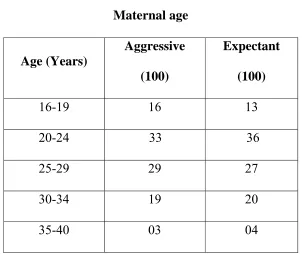
Maternal age
Age (Years)
Aggressive
(100)
Expectant
(100)
16-19 16 13
20-24 33 36
25-29 29 27
30-34 19 20
35-40 03 04
Both groups were similarly matched with respect to their age
group. 33% cases in aggressive group and 36% cases in expectant group
AGE DISTRIBUTION
0 5 10 15 20 25 30 35 40
16-19 20-24 25-29 30-34 35-40
Table 2
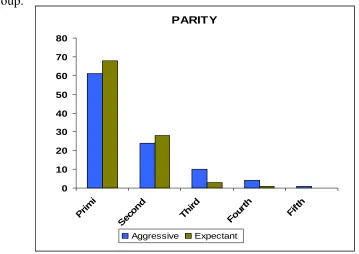
Parity
Parity Aggressive Expectant
Primi 61 68
Second 24 28
Third 10 03
Fourth 04 01
Fifth 01 -
Both groups were similarly matched with respect to parity.Primi
constituted 61% cases in aggressive group and 68% cases in expectant
group. PARITY 0 10 20 30 40 50 60 70 80 Primi Seco nd Th ird
Four th
Fifth
Table 3
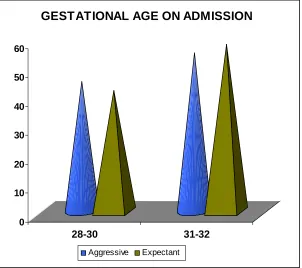
Gestational Age on admission
GA weeks Aggressive(100) Expectant(100)
28-30 45 42
31-32 55 58
Both groups were similarly matched with respect to gestational
age on admission. 55% cases in aggressive group and 58% cases in
expectant group constituted 31-32 weeks gestational age,
0 10 20 30 40 50 60
28-30 31-32
GESTATIONAL AGE ON ADMISSION
Table 4
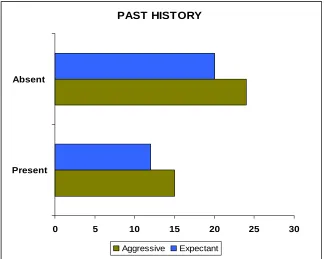
Analysis of past obstetric history
Past H/o Preeclampsia Aggressive (39) Expectant (32)
Present 15 12
Absent 24 20
38.4% cases in aggressive group and 37.5% cases in expectant
group had recurrent preeclampsia.
PAST HISTORY
0 5 10 15 20 25 30
Present Absent
Table 5
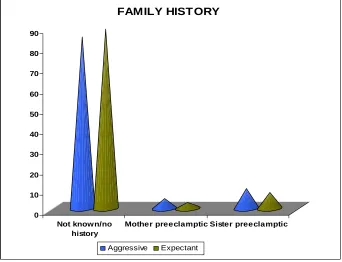
Analysis of Family History
Family H/o Aggressive (100) Expectant (100)
Not known/no history 85 89
Mother preeclamptic 05 03
Sister preeclamptic 10 08
Only 15% cases in aggressive group and 11% cases in expectant
group had family history of preeclampsia.
0 10 20 30 40 50 60 70 80 90
Not known/no history
Mother preeclamptic Sister preeclamptic FAMILY HISTORY
Table 6
Analysis of systolic blood pressure
Systolic BP on
admission(mmHg)
Aggressive(100) Expectant(100)
140-149 32 29
150-170 48 52
>170 20 19
Mean systolic blood pressure on admission was 157.42 mmHg in
aggressive group and 157.38 mmHg in expectant group.
P value: 0.98 Statistically insignificant.
0 10 20 30 40 50 60
140-149 150-170 >170 SYSTOLIC BLOOD PRESSURE ON ADMISSION
Table 7
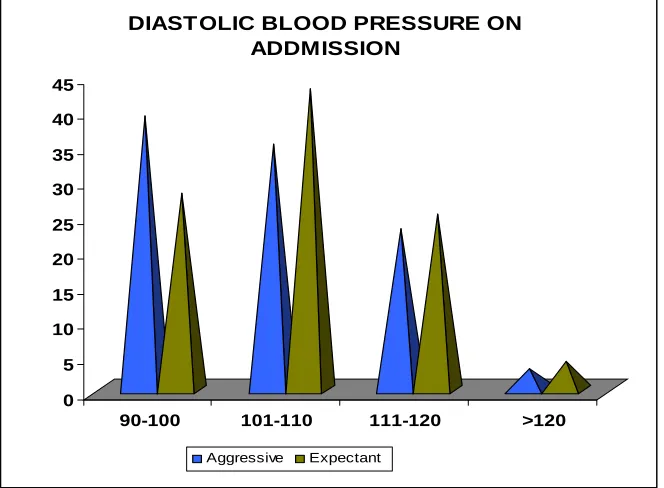
Analysis of Diastolic Blood Pressure
Diastolic BP on
admission(mmHg)
Aggressive
(100)
Expectant
(100)
90-100 39 28
101-110 35 43
111-120 23 25
>120 03 04
Mean diastolic blood pressure on admission was 104.67 mmHg in
aggressive group and 105.73 mmHg in expectant group.
P value: 0.43 Statistically insignificant.
0 5 10 15 20 25 30 35 40 45
90-100 101-110 111-120 >120
DIASTOLIC BLOOD PRESSURE ON ADDMISSION
Table 8
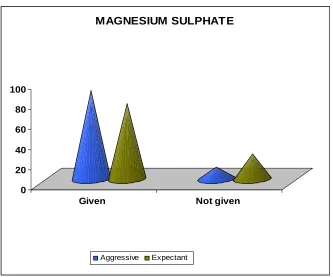
Initiation of magnesium sulphate
MgSO4 Aggressive (100) Expectant (100)
Given 88 75
Not given 12 25
88% cases in aggressive group and 75% cases in expectant group
were given magnesium sulphate.
0 20 40 60 80 100
Given Not given
MAGNESIUM SULPHATE
Table 9
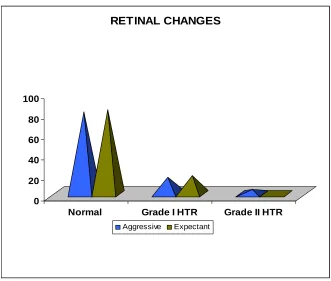
Retinal changes
Fundus Aggressive (100) Expectant (100)
Normal 80 82
Grade I HTR 16 18
Grade II HTR 04 -
20% cases in aggressive group and 18% cases in expectant group had
hypertensive retinopathy
0 20 40 60 80 100
Normal Grade I HTR Grade II HTR RETINAL CHANGES
Table 10
Maternal Outcome
Complications Aggressive Expectant
AP IP PP Total AP IP PP Total
Abruption 3 2 - 5 5 3 - 8
HELLP / DIC 2 - - 2 1 2 - 3
Eclampsia 1 - 2 3 1 - 1 2
Renal failure - - - - 1 - - 1
Pulmonary oedema - 1 - 1 1 - 1 2
Cerebral oedema - - - - - - 1 1
Maternal death - - - - - - - -
Total 6 3 2 11 9 5 3 17
AP-Antepartum, IP-Intrapartum, PP-Postpartum.
11% major complications occurred in aggressive group while 17%
complications in expectant group.
Though complications rate are slightly higher, they are well managed by
anaesthetist and ICU indicating institutional supervision of expectant
management.
It was found to be statistically insignificant.
Chi square value: 2.08
MATERNAL COMPLICATIONS
0 1 2 3 4 5 6 7 8 9
Abruption HELLP / DIC Eclampsia Renal failure
Pulmonary oedema
Cerebral oedema
Maternal death
Table 11
Indications for termination in expectant group
Indications Expectant (100)
Maternal 66
Fetal 34
66% were terminated for maternal indications.
34% were terminated for fetal indications.
INDICATIONS IN EXPECTANT GROUP
66 34
Table 12
Fetal indications for termination
Indication
Primi
(68)
Multi
(32)
Total
(100)
Perinatal
Loss
Severe oligohydraminos 08 03 11 05
Persistent late
deceleration
06 02 08 04
IUGR <5th percentile 11 04 15 10
Total 25 09 34 19
Most common fetal indication being IUGR<5th percentile followed by severe oligohydramnios .
55% perinatal loss in cases terminated for fetal indications.
FETAL INDICATIONS IN EXPECTANT GROUP
Severe oligohydraminos Persistent late deceleration
Table 13
Indications of termination in expectant group
Maternal indication
Indication
Primi
(68)
Multi
(32)
Total
(100)
PN
Loss
Imminent
symptoms
22 10 32 09
Abruption 05 03 08 02
Uncontrolled BP 17 06 23 05
Compromised
Renal function
- 01 01 -
Pulmonary edema - 01 01 -
Eclampsia 01 - 01 -
HELLP 01 - 01 01
Total 45 21 66 17
PN- Perinatal
Most common indication being imminent symptoms followed by
uncontrolled blood pressure.
M ATERNAL INDICATIONS IN EXPECTANT GROUP
Imminent symptoms Abruption Uncontrolled BP
Compromised Renal Function Pulmonary edema
Table 14 Labour induction Mode Aggressive Expectant Primi (61) Multi (39) Total (100) Primi (68) Multi (32) Total (100)
PG E2 gel 52 33 75 53 19 72
Not induced due to maternal / fetal causes
09 16 25 15 13 28
75% cases were induced in aggressive group.
72% cases were induced in expectant group.
0 10 20 30 40 50 60 70 80
Ce rviprim e Not induce d due to m ate rnal / fe tal caus e s
LABOUR INDUCTION
Table 15
Mode of delivery
Mode Aggressive Expectant Primi (61) Multi (38) Total (100) PN loss (63) Primi (68) Multi (32) Total (100) PNLoss (36)
Vaginal 48 31 79 51 42 20 62 27
LSCS 13 08 21 12 26 12 38 09
PN-Perinatal
• 21% LSCS in aggressive group whereas 38% LSCS in expectant
group.
• As salvagability and fetal weight were lower in aggressive group,
vaginal delivery preferred. Increased LSCS in expectant group
was due to increased post ceaserean pregnancy.
• Perinatal loss in LSCS was 57% in aggressive group and 23.6%
in expectant group.
• Chi square value : 1.41
0 10 20 30 40 50 60 70 80
Vaginal LSCS MODE OF DELIVERY
Aggressive
Table 16
Indication of LSCS in Aggressive group
Indication Primi Multi Total
Perinatal
Loss
Post LSCS - 04 04 02
Non reassuring
CTG 03 02 05 03
Malpresentation 01 - 01 01
Failure to progress unfavourable cervix
07 01 08 04
Abruption 02 01 03 02
Total 13 08 21 12
• Most common indication was Failure to progress/unfavourable
cervix.
• Among 50% multipara the indication was post cesarean
INDICATION OF LSCS IN AGGRESSIVE GROUP
0 1 2 3 4 5 6 7 8 9 Post LSCS
Non reassuring CTG Malpresentation Failure to progress unfavourable cervix
Abruption
Table 17
Indication of LSCS in Expectant group
Indication Primi Multi Total
Perinatal
Loss
Post LSCS _ 07 07 01
Non reassuring CTG 10 02 12 03
Malpresentation 03 _ 03 _
Failure to progress
unfavourable cervix 11 02 13 03
Abruption 02 01 03 03
Total 25 12 37 09
• Most common indication was failure to progress/unfavourable
cervix.
• Among 58.3% multipara the indication was post cesarean
INDICATION OF LSCS IN EXPECTANT GROUP
0 2 4 6 8 10 12 14
Post LSCS Non reassuring CTG Malpresentation unfavourable cervix Abruption
Table 18
Perinatal outcome in latency interval <96 hr
Latency interval
(hours)
Cases Perinatal Loss
< 24 31 23
24-48 27 19
49-72 53 34
73-96 47 27
• 58 patients who were delivered before 48 hours of steroid were not
compared.
• 100 patients who were terminated after 48 hours of steroid were
Table 19
Prolongation of pregnancy in Expectant Group
Latency interval
(Days)
Cases Perinatal Loss
<5 23 16
5-8 40 13
9-12 29 05
13-20 06 02
>20 02 -
Total 100 36
Maximum prolongation was 23 days.
Median prolongation was 7 days.
Mean prolongation was 7.54 days
P value<0.001 Statistically significant.
LATENCY INTERVAL IN EXPECTANT GROUP
0 5 10 15 20 25 30 35 40 45
Table 20
Fetal outcome
Fetal outcome
Aggressive Expectant
Primi Multi Total Primi Multi Total
Total Birth 61 39 100 68 32 100
Live Birth 45 31 76 60 27 87
Still Birth 16 8 24 10 3 13
Neonatal Death 28 11 39 17 6 23
Perinatal Death 44 19 63 27 9 36
Perinatal loss includes both still birth and early neonatal death.
Perinatal loss in aggressive group: 63%
Perinatal loss in expectant group: 36%
For live born
Chi square value: 4.01 Degree of freedom: 1
P value <0.05 Statistically significant.
For perinatal loss
Chi square value: 14.58 Degree of freedom: 1
FETAL OUTCOME
0 20 40 60 80 100 120
AGGRESSIVE EXPECTANT
STILL BIRTH NEONATAL DEATH ALIVE
Table 21
Birth weight specific death
Birth
weight (Kg)
Aggressive Expectant
Born Death Born Death
<1 12 12 06 06
1.00-1.25 36 28 16 12
1.26-1.50 28 15 16 08
1.51-1.75 16 06 34 08
1.76-2.00 06 02 16 02
2.01-2.25 02 _ 12 _
Total 100 63 100 36
Mean birth weight was 1.33 kg in aggressive group and 1.61 kg in
expectant group.
BIRTH WEIGHT SPECIFIC PERINATAL MORTALITY IN EXPECTANT GROUP
0 5 10 15 20 25 30 35 40
<1 1.00-1.25 1.26-1.50 1.51-1.75 1.76-2.00 2.01-2.25
Alive Death
BIRTH WEIGHT SPECIFIC PERINATAL MORTALITY IN AGGRESSIVE GROUP
0 5 10 15 20 25 30 35 40
<1 1.00-1.25 1.26-1.50 1.51-1.75 1.76-2.00 2.01-2.25
Table 22
Gestational Age specific perinatal mortality
Gestation
Age
(Weeks)
Aggressive Expectant
Born Death Born Death
28-30 39 32 22 14
31-32 58 31 32 18
33-34 03 _ 45 04
Total 100 63 100 36
Mean gestational age at delivery was 30.55 weeks in aggressive
group and 31.64 weeks in expectant group.
Chi square value: 8.94
P value< 0.01 Statistically significant.
0 10 20 30 40 50 60
28-30 31-32 33-34
GESTATIONAL AGE SPECIFIC PERINATAL MORTALITY IN AGGRESSIVE GROUP
Alive Death
0 5 10 15 20 25 30 35 40 45
28-30 31-32 33-34
GESTATION AGE SPECIFIC PERINATAL MORTALITY IN EXPECTANT GROUP
Alive Death
Table 23
Neonatal hospitalisation
Live Babies Aggressive (76) Expectant (87)
Admission to NICU 76 87
Neonatal Death 39 23
Survival hospital stay (Days)
< 5 03 20
5-10 10 21
11-15 09 14
> 15 15 09
Total survival 37 64
Survival rate 48.6% 73.5%
Mean hospital stay was 9.6 days in expectant group whereas in
aggressive group it was 13.4 days.
Total survival was 37 babies in aggressive group.
Total survival was 64 babies in expectant group.
Chi square value:14.58
0 5 10 15 20 25
< 5 days 5 - 10 days 11 - 15 days > 15 days
NICU STAY
DISCUSSION
• Incidence of preeclampsia is 5 – 8% according to ACOG 2002.
• Incidence of preeclampsia in IOG is 12%
• Incidence of severe preeclampsia in IOG is 1.3%
• There were 258 cases of severe preeclampsia remote from term
28 – 32 weeks in our study. 200 patients got full dose of steroids
and they were assigned as either aggressive or expectant group.
• 62.5% patients were in the age group 20- 29 years
• 64.5% of severe preeclamptic women were primi
• Recurrent preeclampsia in 37.9% patients
• 8% patients had mother with preeclampsia
• 18% patients had sister with preeclampsia
• Mean systolic blood pressure was 157.4 mmHg
• Mean diastolic blood pressure was 105.2 mmHg
Likelihood of developing preeclampsia is increased according to
BJOG Oct 2003
• Primi.
• Age >30.
• Family history.
Sibai et al showed risk of developing preeclampsia in next
pregnancy being 45.5% out of them 21% go for severe preeclampsia.
INDICATION FOR TERMINATION
Study maternal indication fetal indication
a. Blackwell SC3 & others ‘02 80.0% 30.0%
b. Hall DR, Odendaal HJ15 ‘00 55.0% 45.0%
c. Our study 66.0% 34.0%
Most common maternal indication being imminent
eclampsia. Our study values are in between the both studies
available.
MODE OF DELIVERY
Though mode of delivery had not shown to influence the fetal
outcome, LSCS rate was higher in expectant group.
Study Vaginal LSCS
a. Hall BR & Odendaal HJ15 2000 18.5% 81.5%
c. Murphy DJ, Stirrat M22 2000 20.0% 80.0%
d. Railton A & Allen DG28 1987 25.0% 75.0%
e. Our study 62.0% 38.0%
Our study is similar to Nasser study.
PROLONGATION OF PREGNANCY
Study Mean prolongation of pregnancy
a. Odendaal HJ et al25 1990 7.1 days
b. Sibai et al361994 15.4 days
c. Vissur&wallenberg41 1995 14 days
d. Yong, Li R47 11days (28-31weeks)
08days (32-33weeks)
e. Railton A, Allen DG28 1987 11.4 days
f. Olah KS Redman CW26 9.5 days
g. Murphy DJ&Stirrat GM222000 14 days
h. Our study 7.54days
MATERNAL OUTCOME
Comparison of major complications in both the group.
Study Complications
a. Odendaal et al25 1990 No increase in complication.
b. Sibai et al36 1994 No increase in complication.
c. Hall et al15 2000 No maternal death.
3 needed ICU.
1 needed dialysis.
d. Haddad B Deis S13 2004 No maternal death or eclampsia.
Morbidity similar in both groups.
e. Railton A, Allen DG28 1987 23.2% had increase in major
complications.
f. Our study 2010 11.0% in aggressive 18.0% in
expectant group. Statistically
MATERNAL COMPLICATIONS
Study Abruption
Pulmonary
edema
HELLP Eclampsia
renal
failure
Hall and
collegues15 2000
20% 2% 5% 1.2% 0.3%
Vissur&
Wallenberg411995
5% -- -- 1.9% --
Murphy
DJ&Stirrat GM22 2000
1.5% -- 21% 1.4% 1.3%
Olah KS Redman
CW geeth26 93
-- -- 14.2% -- .5%
Our study 8% 2% 3% 2% 1%
Our study showed relatively low incidence of abruption and
HELLP than Hall’s study. No maternal death in our study.
• Among 3 patients complicated by HELLP/DIC, 2 patients had
coagulopathy with prolonged clotting time bleeding from wound
Third patient who developed HELLP was terminated and treated
with 8 units platelets.
• 1 patient who had compromised renal function was treated
conservatively under nephrologist guidance
• 1patient developed postpartum eclampsia on 2nd post operative
day and was started on magnesium sulphate.
• 2 patients developed pulmonary edema and were treated
vigorously under anaesthetist supervision.
These situations explain the necessity of intensive care facilities
in the management severe preeclampsia.Hemodynamic monitoring plays
a major role in the treatment and trained persons and anaesthetist were
available all the time for central vein catheterisation and monitoring.
PERINATAL OUTCOME
i) Perinatal mortality
Study Perinatal loss
a. Railton A, Allen DG28 1987 24.5% b. Odendaal HJ25 2000 22.3%
d. Murphy DJ & Stirrat GM22 2000 30.0%
e. Haddad B, Dies S13 2004 10.7%
f. Our study 36.0%
Our study is similar to Murphy’s and is closer to 3 other studies.
ii. Birth Weight
Study Aggressive Expectant
a. Sibai et al36 1994 1.2kg 1.62kg
b. Our study 1.33 kg 1.61kg
Our study correlated with Sibai et al and all others studies,
showed higher birth weight by expectant management.
iii. Survival rate
Study Aggressive Expectant
a. Sibai et al36 94 24.0% 65.0%
b. Hall DR15 2000 70.0% 94.0%
Railton A, Allen DG 1987 showed 100% Survival rate of babies
born > 30 weeks in either group.
Our study showed higher Survival rate in babies of higher
gestational age and birth weight and it was between both studies.
iv. Neonatal complications
Study Hospital Stay(days)
Aggressive Expectant
a. Sibai et al36 94 30.6 20
b. Olah KS26 93 >15 7.4
c. Our study 13.4 9.6
Our study showed expectant management babies had highest
survival rate and lower neonatal complications. In this study admission
was higher than that of Sibai et al because of lower birth weight but
hospital stay as that of Olah due to advancement of neonatal care in the
SUMMARY
In our study 100 patients with severe preeclampsia 28-32 weeks
who were managed aggressively were compared with 100 patients with
severe preeclampsia 28-32 weeks who were managed expectantly and
following parameters were analysed.
¾ Majority of the patients around 62.5% belong to the age group
between 20-29 years.
¾ Almost two third (62.5%) patients were primi.
¾ Mean gestational age on admission was 31 weeks.
¾ 37.9% patients had recurrent preeclampsia.
¾ 26% patients had family history of preeclampsia.
¾ Mean systolic blood pressure was 157.4mmHg and mean diastolic
blood pressure was 105.2mmHg.
¾ Majority of the patients had normal fundus. Around one fifth
(19%) had hypertensive retinopathy.
¾ Though major maternal complications were higher in expectant
group it was proved to be statistically insignificant ( P =0.15).
¾ 8 patients had abruption, 3 patients had DIC, 2 patients had
eclampsia, 2 patients had pulmonary oedema and no maternal
death.
¾ 66% patients were terminated for maternal indications and 44%
patients were terminated for fetal indications.
¾ Though LSCS rate was higher in expectant group (38% vs 21%)
but this was attributed to increased fetal salvagability and post
caesarean pregnancy in expectant group.
¾ Mean prolongation of pregnancy was 7.54 days.
¾ Perinatal loss was significantly lower in expectant group 36% vs
63% proved to be statistically significant (P<0.001).
¾ Perinatal loss was not influenced by LSCS. Perinatal loss in LSCS
was 57.0% and 36.8% in aggressive and expectant group.
¾ Perinatal loss was higher in the patients delivered <48 hours of
steroid.
¾ Mean birth weight was higher in expectant group (1.33kg vs
¾ Mean gestational age at delivery was higher in expectant group
(31.64 vs 30.55 weeks). It was found to be statistically significant
(p<0.01) .
¾ Expectant group had lower mean stay of hospitalisation(9.6 vs
13.4 days).
¾ Babies in expectant group had higher survival rate(73.5% vs
CONCLUSION
The expectant approach for management of severe preeclampsia
remote from term results in better obstretic outcome in the form of
a. Lower perinatal mortality.
b. Higher perinatal & neonatal survival
c. Lower neonatal complications.
d. Higher birth weight.
e. Without increased maternal morbidity and mortality
The success rate of expectant management depends on both
gestational age and maternal and fetal condition at the time of
admission. Since maternal and perinatal complications are significantly
increased in these patients, expectant management should be done only
in well selected patients only at tertiary centres where adequate maternal
and neonatal intensive care facilities are available.
Expectant management delays delivery and enhance fetal maturity
and does not appear to be associated with increased risk of maternal
PROFORMA
Name : Obstetric score:
Age : LMP :
Address : EDD :
Ip. No : Blood group:
Occupation : Ht : Wt:
Booked/ not : HIVstatus:
Referred/not :
Complaints
Present h/o :
period of amenorrhea pain abdomen
edema feet vomiting
headache oliguria
bluring of vision palpitation
Present Pregnancy
I trimester
II trimester
Past obstetric history
Medical history
Family history
General Examination :
Temperature : CVS :
Pulse rate : RS :
Blood pressure : CNS :
Respiratory rate :
BMI :
Edema :
Anaemia :
Per abdomen :
Investigation
Urine - albumin: : Hb :
sugar : Pcv :
Platelet :
Blood - sugar : LFT :
urea :
creatinine :
uricacid :
electrolyte :
Ultra sound :
Anti-hypertensive : Drug : dose :
Gravidogram
Date U/A Wt Sfh AG BP Immiment symptom
Mgso4 :
Time Dose Temp RR I/O DTR PERL U/A
Maternal complications :
Mode of induction :
Indication for termination : Maternal / fetal
Latency interval:
Intra/ post partum complications
Baby : alive / still birth
gestational age
birth weight
apgar score
admitted / not
Follow up : NICU stay
BIBILOGRAPHY
1. American College of Obstreticians and Gynecologists: Diagnosis and management of preeclampsia and eclampsia. Practice Bulletin No.33 January 2002.
2. Bardequez AD, McNerncy R, Friere M, Verma VL, Tejani N.Cellular immunity in preeclampsia. Altration in T lymphocyte subpopulation during early pregnancy. Obstetrics and Gynecology TT 3859 1991.
3. Blackwell SC, Redman ME, Tom Linson M, Berry SM, Sorolin Y, Cotton DM. Severe preeclampsia remote from term expectant management .Journal of Maternal fetal Neonatal Medicine 2002 may;11(5):321-4
4. Bombrys AE, Barton JR, Habli M, Sibai BM: Expectant management of severe preeclampsia 27 to 33 weeks gestation :maternal and perinatal outcome according to gestational age by weeks at onset of expectant mmanagement. Am J perinatol 26:441,2009.
5. Cannagia I, Winter J, Lye SJ, Post M. Oxygen and placental development during the first trimester: implications for the pathophysiology of preeclampsia. Placenta 2000 Mar-Apr;21 Suppl
7. Chesley LC, William Lo: Renal glomerular and tubular function in relation to the hyperurecemia of preeclampsia and eclampsia. Am J Obstet Gynecol 1945; 50:367.
8. Colbern GT, Chiang MH, Main EK. Expression of the non-classical histocompatability antigen HLA-G by pre-eclamptic placenta. Am J Obstet Gynecol 1994; 170:1244.
9. Cunningham FG, Lowe T, Guss S, et al. Erythrocyte morphology in preeclampsia and elmpsia. Am J Obstet Gynecol 1985; 153:358.
10. De Wolf F, De Wolf Peeters, Brosens I, et al: Electron microscopic study of trophoblastic invasion of spiral arteries. Am J Obstet Gynecol 1980;137:58.
11. Grandone E, Margagolione M, Colaizzo D, et al. Factor v Leiden, C-to-T MTHFR polymorphism and genetic susceptibility to preeclampsia. Thromb Hemostas.1997;77:1052-54.
12. Granger JP, Alexander BT, Linlas MT, Bennett WA, Khalil RA. Pathophysiology of hypertension during preeclampsia linking placental ischemia with endothelial dysfunction. Hypertension 2001 Sep; 38(3 pt2):718-22.
13. Haddad B, Sibai BM. Expectant management of severe preeclampsia. Proper candidates and pregnancy outcome. Clin Obstet gynecol 2005 Jun 48(2);430-440-review.
outcome. British Journal of Obstetrics and Gynecology 2000 oct; 107(10):1258-64.
15. Hall DR, Odendaal HJ, Slyen DW, Grove D. Expectant management of early onset severe preeclampsia. Maternal outcome. British Journal of Obstetrics and Gynecology 2000 Oct; 107(10):1252-7.
16. Harlow FH, Brown MA, Brighton TA, et al: Platelet activation in the hypertensive disorders in pregnancy. Am J Obstet Gynecol 2002 ;187:688.
17. Kilpatrick DC, Liston WA, Gibson F et al: Association between susceptibility to preeclampsia within families and HLA-DR4. Lancet 1989; 2:1063.
18. Klonoff-Cohen H, Edelstein S, Savitz D. Cigarette smoking and preeclampsia. Obstet Gynecol 1993;81:541-544.
19. Leduc L, Wheeler JM, Krishnan B, Mitchell P, Cotton DB. Coagulation profile in severe preeclampsia. Obs Gyn 1992 79:14.
20. Lorrabee KD, Monga M, women with sickle cell trait are at increased risk for preeclampsia. Am J Obstet Gynecol 1997;177:425-428.
22. Murphy DJ, Stirrat GM, St Michealis hospital Briston. Mortality and Morbidity associated with early onset preeclampsia. Hypertensive pregnancy 200:19(2)221-223.
23. Nassar AH, Actra AM, Chakhtoura N, Beyoodoune. Severe preeclampsia remote from term. Labour induction or elective caesarean delivery. Am J Obs Gyn 1979:1210,1998.
24. National High blood pressure education programme: Working group on High Blood Pressure in Pregnancy (2000). Am J Obstel Gynecol 2000; 183:S1-22.
25. Odendaal HJ, Pattinson RC, Ban R, Grove D, Kotze TW: Aggressive or expectant management for patients with severe preeclampsia between 28 – 34 weeks gestation: A randomised controlled trail. Obstet Gynecol 1990; 76:1070 – 1075.
26. Olah KS, Redman CW, Geeth. Management of severe early preeclampsia: is conservative management justified. Eur J Obs Gyn Reprod Biol. 1993 Oct 29; 51(3):175-80.
27. Oosler hof H, Voorhoeve PG, Aarnoudre JG. Enhancement of hepatic artery resistance to blood flow in preeclampsia and HELLP. Am J Obs Gyn 1994; 171:526.
28. Railton A, Allen DG – Management and outcome of pregnancy complicated by severe preeclampsia. Afr Med J 1987 Nov 7:72(9): 608-10.
30. Roberts Jm: preeclampsia : what we know and what we don’t know Seminar Perinatoll 2000;24:24.
31. Robillard PY, Husley TC, Dekkar GA. Revisiting the epidemiological standard of preeclampsia: primi parity or primipaternity? Eur J Obstet Gynecol Reprod Biol.1999, in press.
32. Sanchenz SE, Willams MA, Muy-Rivera M, Qiu C, Vadachkoria S, Brazul V. A case-control study of oxidised low density lipoproteins and preeclampsia risk. Gynecol Endocrinol 2005 Oct;21(4):193-9.
33. Sarasam DS, Shamden M, AL Wazan R. Aggressive versus expectant management severe preeclampsia remote from term. Singapore Med J.2008 Sep;49(9):698-703.
34. Shear RM, Rinfret D, Leduc L. Should we offer expectant management in severe preterm preeclampsia with fetal growth restriction. Am J Obstet Gynecol 2005 Apr;192(4):1119-25.
35. Sibai BM, Barton J. Expectant management severe preeclampsia remote from term. Am JObstet Gynecol 2007Jun;196(6):514.el-9.
36. Sibai BM, Mercer BM, Schiff E, Friedman SA. Aggressive versus expectant management of severe preeclampsia at 28-32 weeks – a RCT Am J Obstet Gynecol 1994 sep; 171(3):818-22.
38. Spargo B, McCartney CP, Winemiller R: Gomerular capillary endotheliosis in toxaemia of pregnancy. Arch Pathol 1959; 68:593.
39. Taufield PA, Ales KL, Renisk LM, et al: Hypocalciuria in preeclampsia. N Engl J Med 1987;316:715.
40. Trupin LS, Simon LP, Eskenazi B. Change in paternity: a risk for preeclampsia in multiparous women. Am J Obstet Gynecol 1998:262:3143-7.
41. Visser W, Wallenberg HC. Maternal and perinatal outcome of temporising management In 254 consecutive patients with severe preeclampsia remote from term. Eur J Ob Gyn Reprod Biol. 1995 Dec; 63(2):147-54.
42. Wang Y, Walsh SW, Kay HH. Placental lipid peroxidation and thrombaxane are increased and prostacylin is decreased in women with preeclampsia. Am J Obstet Gynecol 1992;167:946.
43. Ward K, Hata A, Jeunemaitre X, et al: a molecular variant of angiotensinogen associated with preeclampsia. Nat Genet 1993 4:59.
44. Weinstein L. Preeclampsia – eclampsia with HELLP. Obs Gyn 1985;66:657.
46. Wolf M, Kettyle E, Sandler L, et al: Obesity and preeclampsia: The potenial role of inflammation. Obstet Gynecol 2001;98:757.
47. Yang Z, Li R, Shi LY, Wang LN, Ye RH, Wang R, Huang P. (Clinical delimitation and expectant management of early onset severe preeclampsia) Zhonghua Fu Chan Ke Za Zhi. 2005(may); 4015:302-5 Chinese.
ABBREVIATION
ACOG - American College of Obstetrics and
Gynecology
ANP - Atrial natriuretic peptide
ARDS - Acute respiratory syndrome
BJOG - British Journal Obstetrics andGynecology
CTG - Cardiotocography
DIC - Disseminated intravascular coagulation
HCG - Human chorionic gonodotropin
HLA - Histocompatability antigen
IUGR - Intra uterine growth restriction
LFT - Liver function test
LSCS - Lower segment caesarean section
NICU - Neonatal intensive care unit
NST - Nonstress test