EVALUATION OF THE UTILITY OF IMNCI ALGORITHM
IN PREDICTING ILLNESS, HOSPITALIZATION AND
MANAGEMENT OF CHILDREN AGED 2 MONTHS TO 5
YEARS IN A TERTIARY REFERRAL CENTRE
Dissertation submitted to
THE TAMIL NADU DR. M.G.R.MEDICAL UNIVERSITY
in partial fulfillment of the regulations
for the award of degree of
M.D DEGREE (PEDIATRICS) BRANCH VII
INSTITUTE OF CHILD HEALTH
AND
HOSPITAL FOR CHILDREN
MADRAS MEDICAL COLLEGE
CERTIFICATE
This is to certify that the dissertation titled “Evaluation of the
utility of IMNCI algorithm in predicting illness, hospitalization and
management of children aged 2 months to 5 years in a tertiary
referral centre” submitted by Dr. P. Venkatesh, to the Faculty of
Pediatrics, The Tamil Nadu Dr.M.G.R. Medical University, Chennai, in
partial fulfillment of the requirements for the award of M.D. Degree
(Pediatrics) is a bonafide research work carried out by him under our
direct supervision and guidance, during the academic year 2009-2011.
Prof. Dr.V.Kanagasabai, M.D.
Dean,
Madras Medical College, Chennai – 600003
Prof.Dr.P.Jeyachandran,M.D.,DCH
Director and Superintendent,
Institute of Child Health and Hospital for Children, Chennai – 600008
Prof. Dr. C. Subbulakshmi, M.D., DCH,
Professor of Pediatrics, Institute of Child Health and Hospital for Children,
DECLARATION
I, Dr.P.Venkatesh, solemnly declare that the dissertation titled
“Evaluation of the utility of IMNCI algorithm in predicting illness,
hospitalization and management of children aged 2 months to 5 years
in a tertiary referral centre” has been prepared by me.
This is submitted to the Tamil Nadu Dr. M.G.R. Medical University,
Chennai in partial fulfillment of the rules and regulations for the M.D.
Degree Examination in Pediatrics.
Place : Chennai
SPECIAL ACKNOWLEDGEMENT
My sincere thanks to Prof. Dr.V.Kanagasabai, M.D., Dean, Madras
Medical College, Chennai for permitting me to utilize the clinical
ACKNOWLEDGEMENT
I express my heartfelt gratitude to Prof. Dr. P.Jeyachandran, M.D.,
DCH., Director and Superintendent, Institute of Child health and Hospital
for children, Madras Medical College, Chennai for his guidance and
support in the execution of this study.
I am very grateful to my unit chief, Prof. Dr. C.Subbulakshmi, M.D.,
DCH., Professor of Pediatrics, for guiding my dissertation process and
providing departmental resources for the conductance of this study
I sincerely thank Dr.V.Seetha, M.D.,DCH, Professor of Pediatrics, and
my former unit chief, for her constant guidance and encouragement, that
made this study possible.
I express my gratitude to the Assistant Professors of my medical unit,
Dr.P.Ram Kumar M.D, Dr.Sridevi A Narayan, M.D, Dr.J Hemachitra, M.D for their invaluable help and support throughout the
study process.
I am extremely thankful to Dr. S Srinivasan, DCH., Medical Registrar,
for his valuable suggestions and guidance during this study.
I sincerely thank all the children and their parents who participated in this
CONTENTS
Sl.
No. Title Page No.
1 INTRODUCTION 1
2 REVIEW OF LITERATURE 7
3 OBJECTIVES OF THE STUDY 22
4 METHODS OF THE STUDY 23
5 RESULTS 28
6 DISCUSSION 56
7 CONCLUSION 70
8 BIBLIOGRAPHY
INTRODUCTION
Over 10 million children under five years of age die every year around the
world. 90% of these deaths occur in South Asia and Sub Saharan Africa.
India has around 240 million under five children and contributes close to 25%
of under-five mortality1. About 70% of such deaths are due to diarrhoea,
pneumonia, measles, malaria or malnutrition and often a combination of these
conditions1. These are also the diseases that are seen to afflict three out of
every four sick children seeking care at a health facility. Known and proven
cost-effective interventions that can prevent 90% of diarrhea deaths, 62% of
pneumonia deaths, 100% measles deaths 92% malaria deaths, 44%
HIV/AIDS deaths and 52% neonatal fatalities are available and close to one
million under five deaths in India can be prevented through scaling up of
such interventions at the primary health care facilities2.
Sick children seldom have a single illness and even when they
present with a single complaint, multiple problems can become evident to a
discerning health worker. Hence, a scheme of assessment that is based on
the sole presenting complaint is often inappropriate and may lead to failure
to diagnose potentially life-threatening problems, which could have been
controlled easily, had they been diagnosed when the child had sought care
initially4,5,6.Further, many of the childhood illnesses can present with
overlapping complaints. Therefore child health programmes should address
However, peripheral health workers in rural areas who constitute the
first point of contact of sick children with the public health care system in
India have been accustomed to delivering services under the ambit of vertical
health programmes, each of which was focused on one or few diseases,
until the recent past. One of the foremost challenges in
implementation of an integrated approach in the management of sick
children thus lies in the primary health care sector. This workforce needs
appropriate training to impart adequate knowledge and skills in the clinical
evaluation, appropriate treatment, recognition and referral of children with
serious illness and follow-up care in the community. Further, simplified
protocols for assessment and management of sick children using an
integrated approach and job-aids for use in the field are necessary.
WHO and UNICEF had developed an approach called “Integrated
Management of Childhood Illness” (IMCI) with the experience gained from
various disease specific control programmes in the early nineties. IMCI
adopts a holistic and integrated approach to child health and development.
IMCI has three main areas of focus: improving health worker skills,
improving health systems and improving family and community
practices 4. For successful implementation of IMCI strategy all the three
independent components should be addressed appropriately6. IMCI has
developed locally adaptable guidelines and algorithms to assist health
refined through research and field tests in various parts of the world by
W.H.O. and UNICEF4.
IMCI guidelines rely on case detection based on simple, easily
elicited clinical symptoms and signs that can be picked up by health
workers after appropriate training, without the need for laboratory tests.
Case management under IMCI is through action- oriented classification,
rather than exact diagnoses. This approach permits treatment of several
important diseases, and facilitates the treatment of children who present with
multiple clinical problems3. The core intervention of IMCI approach is
integrated case management of five major killer diseases of under five years
age namely acute respiratory infection (ARI), diarrhea, measles, malaria and
malnutrition and of common associated conditions. IMCI also emphasizes on
prevention of childhood diseases and promotion of child health and
development through preventive interventions such as immunization, Vitamin
A supplementation and nutritional counseling whenever necessary3,5, 8, 9.
According to the World Bank’s 1993 report on Investing in Health,
the integrated management of childhood illness is likely to have the greatest
impact in reducing the global burden of disease and ranks high among the
most cost-effective health interventions in both low and middle income
countries10. By 2010, IMCI had already been introduced in 75 countries,
with varying levels of integration in to country health systems. WHO
cost and effectiveness of the IMCI strategy in Brazil, Bangladesh, Peru,
Uganda and the United Republic of Tanzania. The results of the MCE
indicate that IMCI improves health worker performance and their quality of
care and can reduce under-five mortality and improve nutritional status, if
implemented well. It costs up to six times less per child correctly managed
than current care. However, it needs to be complemented by activities that
strengthen system support and a significant reduction in under-five
mortality will not be attained unless large-scale implementation in a
country is achieved11,12. Other studies have shown that after IMCI
introduction, 37 countries have revised and updated their child health
policies and 17 have stream lined their essential drugs list for children.
Improvements in the primary level health care facilities in countries like
Nepal and Uganda have been documented. Improvements in immunization
status, availability of weighing scales, ORS and vitamin A, increase in
exclusive breast feeding and weight gain among children due have also
been linked to adoption of IMCI approach5.
India has implemented an adaptation of the generic IMCI
algorithm to include assessment and management of neonates and
young infants called the Integrated Management of neonatal and
Childhood Illness (IMNCI), as part of the Reproductive and Child Health
Programme II and the National Rural Health Mission. The IMNCI package
Indian Academy of Pediatrics and National Neonatology Forum5,6.
Frontline health workers including auxiliary nurse midwives (ANMs),
staff nurses and medical officers are being trained in the
implementation of IMNCI across all Indian states. IMNCI has been
introduced in the undergraduate medical curriculum. However doubts
about the utility of the approach in the Indian setting have continued to
persist among the medical professionals, which is one of the factors that have
hindered smooth roll-out of the programme.
Previous research in India has verified the validity of the IMNCI
algorithms in detection of serious illness and initiation of appropriate
management in India13,25,26. These studies have also shown that the
IMNCI algorithm has a few shortcomings such as reliance on fast breathing
to classify pneumonia which leads to wrong labeling of cases of bronchial
asthma as pneumonia. The criteria used for diagnosis of malaria lead to
over or under- diagnosis of the condition and consequently, inappropriate
treatment. Scope exists for further refinements in the algorithm. No
evaluation of the IMNCI algorithm has been undertaken in South India
which differs from North India in terms of socioeconomic profile,
epidemiology and functioning of the health system. Any revision of
the IMNCI algorithms can be undertaken at the national level only when
reliable information is available from all parts of the country. Hence the
for Integrated Management of Childhood Illness (IMNCI) among children
REVIEW OF LITERATURE
Shah D., et al.13 conducted a prospective observational study
with 203 children between age of 2 months to 5 years in the outp atient
Department (n=101) and Emergency Room (n=102) of Maulana Azad
Medical College Hospital, New Delhi, from May 1996 to January 1997.
Every study child was assessed, classified and treatment steps identified as
per IMCI algorithm by a pediatric post graduate trainee. Then every study
child was subjected to protocols of the treating unit. Based on this final
diagnoses were made and therapies instituted, which were considered as
the “gold standard”. The data was computed and analysed for
diagnostic and therapeutic agreements between the “gold standard” and
the IMCI and vertical (split IMCI) algorithms. As per gold standard,
among 203 children evaluated 78 (38.4%) were hospitalized, 44 (21.7%)
were under observation for not more than 24 hours and the rest 81 (39.9%)
sent back after initial evaluation and two thirds of children 135 (69.%) had
two or more co-existing morbidities. The mean (SD) numbers of
morbidities as per “ gold standard”, IMCI low malaria risk category, and
IMCI high malaria risk category were 2.1 (1.10), 1.8 (1.0) and 2.2 (1.1)
respectively. Study children having any of referral criteria as per IMCI
algorithm had greater co-existence of illness (mean 2.5 ± 1.1Vs 1.6 ± 0.8, P
< 0.001). The referral criteria in IMCI algorithm proved useful in predicting
hospitalization and a combination of hospitalization and observation:
predictive value (NPV) and odds ratios with 95% confidence interval (95%
CI) were 81% and 69%; 74% and 85%; 66% and 88%;86% and 65% and
11.7 (5.6 – 24.1) and 12.7 (5.9 – 28.1) respectively. IMCI algorithm
covered 92% of the recorded illnesses. Total agreement of 129 (63.5%), 110
(54.2%) and 93 (45.8%) respectively were noted for IMCI malaria low
risk category, malaria high risk category and vertical (split IMCI)
algorithms. Diagnostic discordance of IMCI algorithm and gold standard
was primarily due to an under-diagnosis of bronchial asthma and
bronchiolitis and due to an over-diagnosis of pneumonia and malaria.
Diagnostic discordance of vertical algorithm was primarily due to
under-diagnosis. IMCI provided missed opportunity for immunization to be
16.3% of total subjects, whereas in vertical algorithm this provision was not
available.
Kalter HD., et al. carried out a prospective study with an objective to
validate and improve the content of IMCI referral guidelines at the out
patient department and emergency department of Dhaka Shishu Hospital in
Dhaka, Bangladesh between September 1994 to February 199514. The
patients enrolled were divided into two groups based on age, as 1 week to 2
months and 2 months to 5 years. All clinical data collection and evaluation
of enrolled patients including items in IMCI guidelines were done by
two experienced Bangladesh Pediatricians. Cases were enrolled
preferentially from Emergency room. Data were analysed by using Epi Info
admission as the standard, the sensitivity and specificity of the IMCI
guidelines for correctly referring patients to hospital were examined. The
IMCI’s sensitivity for a pediatrician’s assessment in favour of hospital
admission was 84% (95% Confidence Interval (95% CI) : 75 – 90) for age
group of 1 week to 2 months and 86% (95% CI : 81-90) for age group of
2 months to 5 years, and the specificity was respectively 54% (95% CI :
45-63) 64% (95% CI : 59-69). These results show the IMCI referral guidelines
have good sensitivity in a developing country setting with low prevalence of
malaria.
Simoes EAF., et al. evaluated the performance of six health workers
following a 9- day training course on Integrated Management of
Childhood Illness (IMCI) by an observational study of three weeks
duration in the month of August immediately following training in Gondar
District, Ethiopia15. During training period health workers were trained in
areas of assessment, classification and treatment of sick children (aged 2
months to 5 years) and on counseling of their mothers. Health worker’s
performance was evaluated in same areas by the pediatrician by direct
observation or independent assessment of child using IMCI algorithm. A
total of 449 sick children were evaluated during the study period, almost
half were at Gondar Polyclinic (224), rest at Teda. 87% complaints
volunteered by mothers were covered by IMCI guidelines. Health workers
assessments and classifications were compared with that of pediatricians.
identifiable signs (slow return after skin pinch, wasting, pedal oedema) was
good with sensitivities of 67-91%, whereas the assessment of
uncommonly seen signs (dry mouth, corneal clouding) or less easily
identifiable signs (Eyelid pallor, absence of tears) had a fair or poor
sensitivity of 20-45%. The classification of pneumonia, diarrhea with
signs of dehydration and malnutrition showed sensitivities of 88%, 76% and
85% and specificities of 87%, 98% and 96% respectively. Classification of
febrile illness had a sensitivity of 39%. Completeness of treatment
improved from 69% to 88% over the three weeks period. Health workers
usually counseled mothers appropriately.
Perkins BA., et al. compared the performance of a minimally trained
health worker using the draft IMCI algorithm with that of a fully trained
pediatrician at the out patient pediatric clinic of Siaya District Hospital in
Western Kenya over 14 months between June 1993 to September 199416.
This prospective study enrolled 1795 children aged between 2 months and
5 years. All the children in the study were evaluated using IMCI algorithm
by health workers who had completed this training. Then the child was
evaluated by physician without knowledge about health worker’s
assessment. Pediatrician observations were considered as gold standards
and comparison done with health worker’s observations. Among the
presenting complaints 86% were directly addressed by IMCI algorithm.
1210 (67%) children had Plasmodium falciparum infection and 1432 (80%)
sensitivities and specificities for classification of illness by the health
worker using IMCI algorithm compared to the diagnosis by physician
were: Pneumonia (97%, 49%); dehydration in children with diarrhea (51%,
98%); malaria (100%, 0%), ear problems (98%, 2%) and nutritional status
(96%, 66%) respectively. The sensitivity and specificity for IMCI referral
guidelines were 91% and 77% respectively.
Weber MW., et al. evaluated the prototype of sick child algorithm in
440 Gambian children aged between 2 months and 5 years, at the
outpatient department of Medical Research Council (MRC) Laboratories
in Fajara, Gambia, between May 1993 and April 199417. The children
were first assessed by a trained field worker using IMCI algorithm and then
by a Pediatrician whose clinical diagnoses was supported by appropriate
laboratory investigations and whose assessment was considered as gold
standard. In this study, treatment options of IMCI algorithm were not
evaluated, except for referral of children for hospital admissions. Compared
with pediatrician’s diagnosis, the sensitivity and specificity of IMCI
algorithm were 81% and 89% for the detection of pneumonia, 67% and 96%
for dehydration, 87% and 8% for malaria parasitemia, 100% and 9% for
malaria parasitemia above 5000 parasites/ul, 100% and 99% for measles,
31% and 97% for otitis media, 89% and 90% for malnutrition respectively.
The sensitivity and specificity of IMCI referral guidelines were 45% and
93% respectively. Majority of presenting complaints were addressed by
rashes (12%), mouth problems (8%), and eye problems (6%).
Kostad PR., et al. tested one component of IMCI algorithm
(assessment and classification) in the outpatient department of rural
district hospital, Kabalore District, in Western Uganda from 15 August
1994 to 27 January 199518. This was a prospective study which compared
the evaluation of a medical assistant using IMCI algorithm with the clinical
evaluation of the medical officer, who was supported by laboratory
investigations. 1226 children aged between 2 months and 5 years were
compared. Among this sample, 69% were classified into more than one
symptoms category. 6.5% had symptoms that did not belong to any of the
IMCI categories. The median number of reference standard diagnosis was
two. In 10% of all children, medical officer’s diagnosis was not in the
reference diagnoses established for the study. 16% were classified into
severe category, for which urgent hospital referral was needed. The
sensitivity and specificity for referral criteria was 41% and 91%
respectively.
Gove S., et al. have described the field test of the WHO/UNICEF
training course conducted by WHO Division of Child Health and
Development in Arusha, United Republic of Tanzania with an objective to
determine whether the training material were effective in preparing
participants to manage sick children correctly19. A total of 23 first level
medical aides and 7 MCH (maternal and child health) aides underwent
a 11-day training course on integrated management of childhood illness
(IMCI), and then were subjected to field test. All data of participants
performance were analysed. Over all, the rate of correct classification based
on main symptoms, nutritional status and feeling problems was 88% (77% -
100%). When the correct assessment was categorized by degree of severity,
correct assessment of signs and symptoms in severe group was only 81%
compared with 91% in other categories and the correct classification was
much lower in severe group (64%) than other groups (>90%). Overall
86% of cases were counseled correctly. In 77% of total cases treatment was
correctly identified.
Paxton LA., et al. evaluated the usefulness of 13 clinical indicators
suggesting severe pediatric illnesses in a rural district of Western Kenya
among children aged between 2 months and 5 years20. This was a
prospective study enrolling the subjects from both the out patient
department of Siya District Hospital from August to December 1993 and
inpatient services of Siya District Hospital from June to November 1993 in
Siya District, Western Kenya. Each child was initially evaluated by a
trained health worker. Then independent evaluation was carried out by
staff physician and the outcome was recorded. Data was computed and
analysed. Analysis showed 27% of children seen in outpatient clinics had
one or more of the signs of severity. Presentation with any of these signs
children had no such signs and 21% of children sent home from out-patient
clinic had at least one sign. Among inpatients, 58% of all children and 89%
of children who died had been admitted with at least one sign.
Abnormal mental status was the sign most highly associated with
death (OR = 59.6), followed by proof skin turgor (OR = 5.6). Overall, the
mortality risk associated with having at least one sign was 6.5 times higher
than that for children without any sign.
Kolstad PR., et al. compared the treatment prescribed by hospital
medical officers with the indicated treatment by IMCI disease
classifications. This was a prospective study done in the out patient
department of Kaborale district hospital in Western Uganda from 15th
August 1994 to 27 January 199521. The study population comprised 1226
children aged 2 months – 59 months. The average duration of
consultation was 7.2 minutes. Medical assistants misclassified 138 (13%)
children. As per IMCI algorithm 16.2% of children had referral to hospital
admission, compared with 22% referred by the medical officers. 56% of
children had an antibiotic recommended by the IMCI guidelines, while 77%
had an antibiotic prescribed by the medical officers. Recommendation of
injections was for 11% of children by IMCI and 28% by medical officers.
Use of IMCI could have reduced the cost of medication to US $ 0.17 per
child compared to the treatment cost of US $ 0.82 as prescribed by medical
officers. Medical officers prescribed both greater number and greater
Boulanger LL et al. compared the cost of drugs actually prescribed to a
sample of 747 sick children aged 2-59 months in all the rural health
facilities in Vihiga district and Bungoma district in Western Kenya with
the cost of drugs had the children been managed using IMCI guidelines22.
The study was conducted between 26 July and 5 August 1994. One of the
four survey teams visited each of 36 rural health facilities in the study area
on one randomly selected week-day during study period. All sick children
aged 2-59 months who were seen at health facility were eligible for
inclusion in survey. After consultation by health worker, information was
collected and the child was examined by clinical officer using IMCI
guidelines and treatments were identified. Data was analysed and
compared. As per health worker assessment average illness per child was
1.8 and 2.8 per child based on IMCI guidelines. The average cost of
drugs actually prescribed per child was US $ 0.44 (1996 US$). Antibiotics
accounted for 77% of total drug cost, with phenoxymethyl penicillin syrup
accounting for 59% of total drug cost. Of 295 prescriptions for
phenoxymethyl penicillin syrup, 223 (76%) were for treatment of colds or
cough.
The cost of drugs that would have been prescribed had the same
children been managed with the IMCI guidelines ranged from US $ 0.16
per patient (based on a formulary of larger dose tablets and home remedy
for cough) to US # 0.39 per patient (based on a formulary of syrups or
Factor SH., et al. evaluated the fever module in the WHO/UNICEF
guidelines for IMCI with an object to determine whether this module
identifies the children with bacterial infections in an area of low malaria
prevalence23. This was a prospective study done in out patient department
of Dhaka Sishu Hospital, Dhaka, Bangladesh. A systematic sample of 669
sick children aged 2-59 month was enrolled and 666 children were
assessed. Each study subject was evaluated initially with IMCI
guidelines for fever and then evaluated by pediatrician.
Data were analysed using SAS software. The sensitivity and
specificity of current IMCI guidelines for identifying children with
bacterial infections and treating them with antibiotics were 78% and 47%
respectively. Majority of children with meningitis (100%), pneumonia
(95%), otitis media (95%), urinary tract infection (83%), 50% or less of
children with bacteremia (50%), dysentery (48%), and skin infection
(30%) would have received antibiotics as per IMCI guidelines.
Kahigwa E., et al. assessed the inter-observer agreement in
identification of a range of 24 clinical signs associated with various disease
presentations in pediatric department of St.Francis Designated District
Hospital Ifakara, southern Tanzania between January and June 199924. The
study population comprised of 327 children aged between 4 months and 6
years, admitted to pediatric ward with diagnoses of malaria, pneumonia,
independently by 2 clinical officers within 1 hour of each other. Data were
recorded and analysed. The Kappa-statistic was used to assess inter-observer
agreement for each sign. Physical signs involving inspection were more
likely to be agreed upon by clinician than the signs involving auscultation.
The signs included in IMCI algorithm were found to be largely
appropriate (Kappa-scores > 0.41) although there was only a fair
agreement (Kappa-score: 0.21 – 0.40) in detection of neck stiffness and
chest in-drawing and slight agreement in the detection of dehydration
(Kappa- Score 0.199).
Jain et al. compared the physicians’ diagnosis with IMNCI
algorithm generated diagnosis in 222 hospitalized children aged 2 – 59
months in the Department of Pediatrics, Chattrapati Shahhuji Maharaj
Medical University, Lucknow, India, over a period of seven months, from
October 2003 to April 200425. All patients between the age of 2-59
months admitted with one or more IMNCI general danger sign were
included in the study. A single Pediatric resident examined the children for
the presence of general danger signs. Every child was classified
according to the WHO/UNICEF algorithms for IMNCI. These were
termed as “IMNCI diagnoses”. The hospital diagnoses at the time of
discharge were considered as the “Physician’s diagnoses”. The
diagnostic agreements between the Physician’s diagnosis and the IMNCI
diagnosis were computed. Complete agreement on all diagnoses in a single
disagreement in 49 (22%) patients.
Kundra et al. assessed the utility of the Indian adaptation of the
IMNCI algorithm among 309 children attending the OPD or emergency
services of the Department of Pediatrics, Christian Medical College,
Ludhiana26. The children were assessed and classified according to the
IMNCI algorithm and the final diagnosis made after detailed evaluation and
relevant investigations, served as the gold standard. The diagnostic
and therapeutic agreements between the gold standard, IMNCI and
vertical (on the basis of primary presenting complaint) algorithms were
computed. Coexistence of illness was observed in 75% of children as per
IMNCI algorithm. The referral criteria proved useful in predicting
hospitalisation with high sensitivity and specificity (99.3% & 97.3%).
IMNCI algorithm covered majority of recorded illnesses. A total agreement
with IMNCI was found in 88.4% cases, while total disagreement was seen
in 34.5% cases. Corresponding figures for vertical program were 88% and
18.6%. The difference was primarily due to under-diagnosis. The
diagnostic discordance of IMNCI and gold standard was evident for the
cough category due to under-diagnosis of bronchial asthma and
bronchiolitis and an over-diagnosis of pneumonia. Immunization
and nutritional counseling was done in 52% of total children compared to
27.5% and 15.5% respectively in gold standard.
Gupta R et al evaluated the utility of the WHO/UNICEF algorithm
the ages of 1 week to 2 months attending the Outpatient Department (n =
70) and Emergency Room (n = 59) at the Department of Pediatrics,
Maulana Azad Medical College, New Delhi between May 1997 to February
199827. All subjects aged between 1 week to 2 months, who presented
to the Outpatient Department or Emergency Room of the hospital for a fresh
episode of an illness, were eligible for enrollment in the study. Every study
infant was assessed and classified according to the IMNCI guidelines,
treatment steps identified and information was recorded in a proforma. A
pediatric post-graduate trainee (RG) performed this assessment during the
second year of the residency program. The study subjects were then
assessed, examined and managed according to the protocol of the treating
unit under the supervision of faculty and/or pediatric senior residents. All
relevant investigations (including blood counts, chest radiograph, stool
examination, blood cultures, lumbar puncture, etc.) were performed on the
basis of history and detailed clinical examination. Based on this detailed
clinical evaluation and relevant investigations, final diagnoses were
made and therapies instituted. These diagnoses and treatments were
considered as the ‘gold standard’. More than one illness was present in 97
(75.2%) of subjects. IMNCI algorithm covered majority (81-84%) of
the recorded diagnoses either partly (40-41%) or fully (40-44%). The
referral criteria proved quite sensitive (86-87%) in predicting hospitalization
but had a lower specificity (53-58%). A total agreement with IMNCI was
over-diagnosis (21-23%) rather than under-diagnosis (15-21%). The
sensitivity of the algorithm to identify serious bacterial infection was high
(96.1-96.5%) while the specificity was relatively low (51.8-59.7%). Two
important conditions identified for possible refinement in the algorithm were
URI and breast fed stools.
Kaur et al have assessed the valididty of the IMNCI algorithm for
young infants (0 - 2 months) attending the outpatient department and
emergency room of Department of Pediatrics, Lady Hardinge Medical
College hospital in New Delhi, India during the period April 2005 to
February 200628. 419 infants (176 between 0-7 days, 243 between 7 days– 2 months) underwent assessment, classification and identification of
treatment as per IMNCI algorithm. These babies were also evaluated
through a detailed diagnostic assessment and treatment as per the standard
protocol of treating unit. The efficacy of IMNCI algorithm to correctly
identify sick young infants requiring referral was evaluated in terms
of its sensitivity and specificity to identify cases who received in-patient treatment as per the gold standard. Further, broad diagnostic and therapeutic
agreements between the gold standard and IMNCI were also compared. The
IMNCI algorithm covered 80% of the diagnoses and could identify serious
bacterial infection with a sensitivity and specificity of 88.5% and 57.4%
respectively. It had sensitivity of 97%, 94% and 95%, and specificity of
seen in 50%; over-diagnosis and under diagnosis was seen in 13% and 19%, respectively.
Low birth weight and upper respiratory infection were the main
reasons for over-diagnosis whereas surgical conditions resulted in
OBJECTIVE OF THE STUDY
To evaluate the utility of the WHO / UNICEF guidelines for
“Integrated Management of Neonatal and Childhood Illness” among children
MATERIAL AND METHODS
Study Design : Prospective observational study
Study Place : The outpatient department and emergency room,
The Institute of Child Health and Hospital for
Children, Egmore, Chennai – 600 008.
Study Period : January 2010 to September 2011 (21 Months)
Study Population
Inclusion Criteria
Children attending the out patient department and emergency room
aged between 2 months and 5 years for the first time for a fresh complaint
due to any illness.
Exclusion Criteria
• Children, who already received treatment for the present illness
• Children with injuries and other external causes of morbidity such as
poisoning
Sample size: ‘300’
A sample size of ‘300’ was decided based on findings from a
previous study from Delhi8. For the reference study to detect a difference of
5% in diagnostic agreement from gold standard with 90% power and an
alpha error of 0.05, the required sample was 203. It is assumed that
recruiting 300 subjects can sufficiently power the study to detect even
Recruitment of subjects
Children who visited the OPD or emergency rooms during the
study period were randomly selected and screened for inclusion and
exclusion criteria by the pediatric post- graduate trainee conducting the
study. The parents / guardians of those children who met the inclusion
criteria were approached for explanation of the study protocol and
consenting.
Methods
Once parents or guardians accompanying the children selected for the
study provided verbal consent for participation, their identification details
and socio-demographic particulars were noted in a proforma developed for
the study. The children were evaluated using the WHO/ UNICEF
algorithm for Integrated Management of Childhood Illness. Each study
subject was assessed and classified according to IMNCI guidelines and the
treatment options were identified and recorded in a proforma (appendix).
Each child was evaluated using IMNCI algorithms for high malaria risk
areas and low malaria risk areas. The IMNCI algorithm was split in to
four modules dealing with specific complaints (cough/breathing difficulty,
diarrhea, fever, ear problems) and the classification and treatment options
arrived at for each child on applying the specific split algorithms guided by
the presenting complaints were also noted. Immunization status was
checked for each child according to the IMNCI guidelines and appropriate
was offered to parents of all children in the study. Appropriate
nutritional interventions were undertaken for the management of
malnourished subjects.
All children were assessed through detailed history
and thorough clinical examination. Management options were decided
under the supervision of faculty members (Assistant Professors). All
relevant investigations as dictated by the provisional diagnosis and treatment
options being considered were performed. These included complete blood
count, peripheral smear, urine routine examination, stool microscopy
examination, x-ray chest, ultrasonogram, computerized tomographic scan,
biochemical investigation, lumbar puncture, cultures etc were performed.
The opinion of specialists was sought whenever needed. The final
diagnoses and therapeutic procedures were noted from the patient records
on the same day while leaving the hospital for children advised home-based
care. For children advised admission or observation, the diagnoses and
treatment decisions were captured from the case- sheets at the time of their
discharge from the hospital. These final diagnoses and treatment decisions
were considered as the gold standard.
The treatment options according to the gold standard were
grouped into three categories namely hospitalization, observation for a
period not more than 24 hours and sent home after initial evaluation.
Hospitalized children were followed up till discharge or death. Children
time of observation were asked to come for routine follow-up after 2-5
days to determine the outcome.
For each child, information on diagnosis and treatment was thus
available from at least four evaluation streams; gold standard, IMNCI high
malaria risk algorithm IMNCI low malaria risk algorithm and one (or
more) split IMNCI algorithms. All diagnoses and treatment categories
were tabulated manually and the diagnostic and therapeutic agreements were
compared. Total disagreement was considered when none of the diagnoses
made using the IMNCI algorithms matched with the gold standard
diagnoses. When some but not all of the IMNCI diagnoses matched with the
gold standard diagnoses, it was considered as Partial agreement.
Statistical analysis
Measures of validity such as Sensitivity, Specificity, Positive
Predictive Value (PPV), Negative Predictive Value (NPV) and Odds Ratio
with 95% Confidence Interval (OR 95% CI) were computed for the
IMNCI algorithm. The proportion of diagnostic/therapeutic agreements
and disagreements were calculated for each IMNCI algorithm and split
algorithm. For assessing statistical significance, tests such as Chi-Square
test, Chi-Square test for linear trend, Paired and Unpaired Student-t test and
Kappa statistic were employed.
high malaria risk IMNCI, low malaria risk IMNCI and vertical (Split
IMNCI) algorithms was evaluated for statistical significance using Paired
student-t test. The mean number of morbidities between the study children
with and without referral criteria was also compared using the paired t test
(Table 5). Chi-Square test for trend was applied to assess the trend
between the number of General danger signs and the severity of illness.
Kappa statistic with 95% confidence intervals was calculated to
estimate nature of therapeutic agreement between gold standard and IMNCI
algorithms.
RESULTS
Three hundred children aged between 2 months and 5 years,
attending the Pediatrics OPD or emergency room at the Institute of
Child Health, between January 2010 and September 2011 were enrolled
in the study.
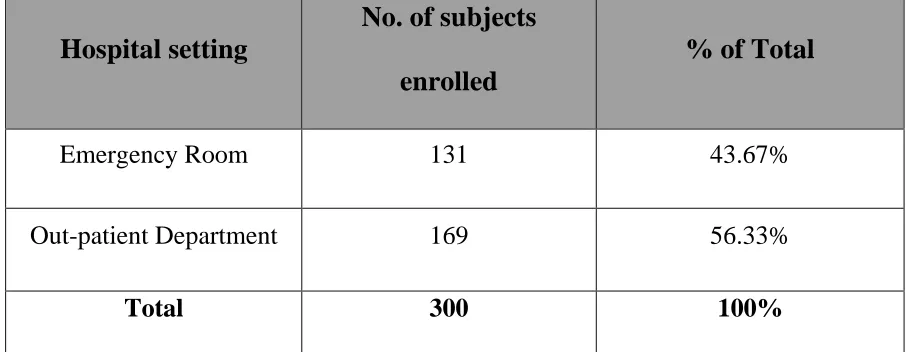
About 56.3% (169) were recruited from the out- patient department, and the
[image:36.595.96.549.487.663.2]rest from emergency room visits (Table 1)
Table – 1. Proportion of Cases from Out-patient Department (OPD)
and Emergency Room (ER) (n=300)
Hospital setting
No. of subjects
enrolled
% of Total
Emergency Room 131 43.67%
Out-patient Department 169 56.33%
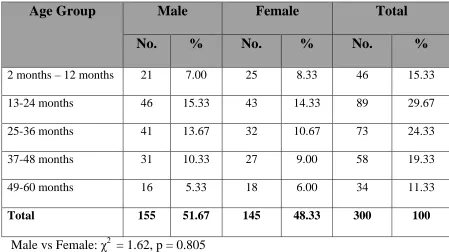
Table – 2. Age and Sex distribution of study population (n = 300)
Age Group Male Female Total
No. % No. % No. %
2 months – 12 months 21 7.00 25 8.33 46 15.33
13-24 months 46 15.33 43 14.33 89 29.67
25-36 months 41 13.67 32 10.67 73 24.33
37-48 months 31 10.33 27 9.00 58 19.33
49-60 months 16 5.33 18 6.00 34 11.33
Total 155 51.67 145 48.33 300 100
Male vs Female: χ2 = 1.62, p = 0.805
Table 2 presents the age and gender distribution of the study sample.
155 (51.7%) of children who participated in our study were males and 145
(48.3%) females. Children aged 2 months to 12 months constituted 15% of the
study participants. About 30% of participants were aged 13 to 24 months, while
another 24% belonged to the 25 to 36 months age group. Children aged four to
five years comprised only 11% of the study sample. No significant differences
517 complaints were reported by the parents/other caregivers
accompanying the children enrolled in the study; an average of 1.72 complaints
per child. Figure 1 depicts the frequency of these symptoms. Over 43% (227)
of such complaints comprised of respiratory problems such as cough or
difficulty in breathing. One fourth of all presenting complaints (125) were fever
and another 10% (56) consisted of loose or bloody/mucoid stools. Other
complaints frequently reported were convulsions (15, 2.9%), vomiting
everything (14, 2.7%), lethargy/unconsciousness (11, 2.1%), not being able to
drink/breast feed (11, 2.1%) and ear problems (9, 1.7%) (Figure1). These
aforementioned symptoms, which comprised 91% of reported symptoms, could
all be covered by the IMNCI algorithms. Some 9% (49) of complaints were not
addressed by the IMNCI algorithms (Figure 2). These consisted of: worms in
stools and perianal itching (12, 2.3%), skin lesions (9, 1.7%), crying during
micturition or difficulty in micturition or ballooning of prepuce (6, 1.2%),
jaundice (5, 0.9%), abdominal pain (4, 0.8%), pedal oedema (3, 0.6%),
abdominal distention (3, 0.6%), facial puffiness (3, 0.6%), not attained head
control (2, 0.4%), not passing stools 1 (0.2%) and abnormal movements (1,
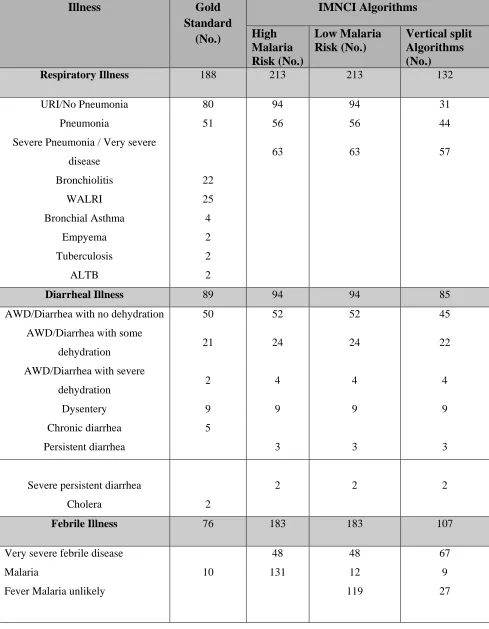
Table – 3. Comparison of morbidities for Gold standard and IMNCI diagnoses (n = 300)
Illness Gold
Standard (No.) IMNCI Algorithms High Malaria Risk (No.) Low Malaria Risk (No.) Vertical split Algorithms (No.)
Respiratory Illness 188 213 213 132
URI/No Pneumonia 80 94 94 31
Pneumonia 51 56 56 44
Severe Pneumonia / Very severe
disease 63 63 57
Bronchiolitis 22
WALRI 25
Bronchial Asthma 4
Empyema 2
Tuberculosis 2
ALTB 2
Diarrheal Illness 89 94 94 85
AWD/Diarrhea with no dehydration 50 52 52 45
AWD/Diarrhea with some
dehydration 21 24 24 22
AWD/Diarrhea with severe
dehydration 2 4 4 4
Dysentery 9 9 9 9
Chronic diarrhea 5
Persistent diarrhea 3 3 3
Severe persistent diarrhea 2 2 2
Cholera 2
Febrile Illness 76 183 183 107
Very severe febrile disease 48 48 67
Malaria 10 131 12 9
Illness Gold Standard (No.) IMNCI Algorithms High Malaria Risk (No.) Low Malaria Risk (No.) Vertical split Algorithms (No.)
Measles 4 4 4 4
Clinical Malaria 5
Meningitis 11
Meningoencephalitis 2
Enteric fever 9
Dengue 13
Urinary tract infection 15
Viral fver 5
Septicemia 2
Ear problems 19 19 19 8
Mastoiditis
Acute ear infection / ASOM 9 9 9 2
Chronic ear infection / CSOM 10 10 10 6
Others 63
Malnutrition 114 114 114 114
Severe malnutrition / Very low weight for age
32 41 41 41
Low weight for age / PEM 82 73 73 73
Anemia 162 172 172 172
Severe anemia 11 11 11
Anemia 162 161 161 161
Total (Excluding Malnutrition & Anemia)
435 509 400 332
*Other diseases that were diagnosed using the gold standard included:
worm infestations (16), febrile seizures (9), seizure disorder (7), pyoderma (4),
scabies (4), nephrotic syndrome (4), congenital heart diseases (3),
developmental delay (3), acute hepatitis (3), breath holding spell (3),
encephalopathy (2), mental retardation (2), shock (1), congenital adrenal
hyperplasia (1), congenital megacolon (1).
The gold standard diagnostic process yielded 711 illnesses in the study
children. Over one-fourth (26.4%) of these illnesses were of the respiratory
system, followed by diarrheal diseases (12.5%) and febrile illnesses (10.7%).
Ear infections (19, 2.7%) and other diseases (63, 8.9%) were also diagnosed.
114 children (38%) were diagnosed to be malnourished and 162 (54%) were
found to be anemic.
The most common respiratory illness diagnosed was upper respiratory
infection (42.6%), followed by pneumonia (27.1%). Bronchiolitis and WALRI
contributed about 3% each. Other respiratory diseases included bronchial
asthma, tuberculosis, empyema and acute laryngotracheobronchitis. More than
half the cases with diarrheal diseases had no symptoms of dehydration at
presentation. Severe dehydration was present only in 2 children. 9 cases of
dysentery and 5 cases of chronic diarrhea were also diagnosed. The febrile
illnesses included malaria, enteric fever, dengue, measles, meningitis,
septicemia. 32 children (10.67%) were found to be severely malnourished and
162 (54%) were anemic.
The pattern of illnesses diagnosed using the IMNCI algorithms was
broadly similar to that of the gold standard; however a few prominent
differences were observed. In the respiratory diseases category, 63 cases of
Severe Pneumonia/Very severe disease were diagnosed. Further, the number of
No Pneumonia diagnoses was slightly higher (n=94), than the gold standard
equivalent of URI (n=80). Due to inadequate information offered by the
parents, 2 cases of dysentery were not picked up in the IMNCI algorithms and
were classified under diarrhea with some dehydration. Another major
difference was noted in the fever module: the number of malaria cases picked
up by applying the IMNCI high malaria risk algorithm was about 10 times as
that diagnosed by gold standard (n= 131 vs 16); however the low malaria risk
algorithm yielded an under-estimate of malaria morbidity (n=8). Also, 48 cases
of very severe febrile disease which needed hospitalization were diagnosed
when these algorithms were used. Further, these algorithms resulted in
over-diagnosis of ‘very low weight for age’ (which is equivalent to severe
malnutrition) by over 25%. None of the diseases enumerated under ‘Others’
could be picked up by the use of these algorithms. Using the vertical (split
IMNCI) algorithms specific for the presenting symptom reported by the
parent/guardian resulted in lower number of diagnoses across all categories of
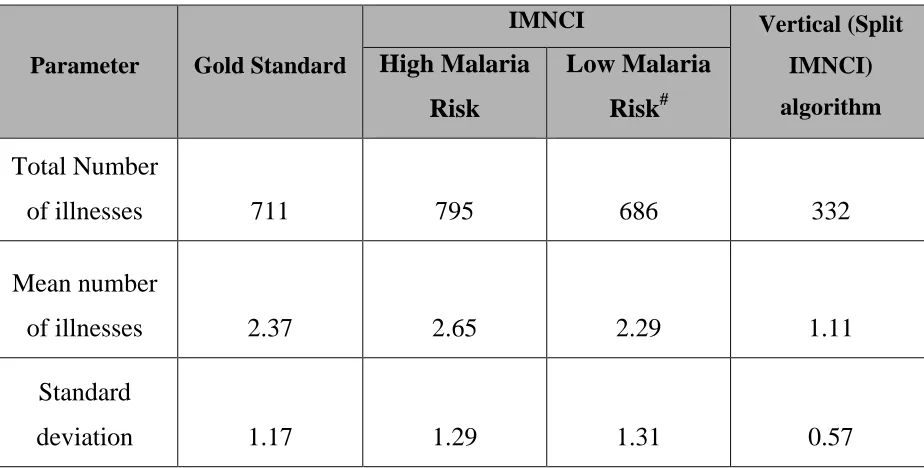
Table – 4. Mean frequency of morbidities in different Methods of evaluations (n = 300)
Parameter Gold Standard
IMNCI Vertical (Split
IMNCI)
algorithm
High Malaria
Risk
Low Malaria
Risk#
Total Number
of illnesses 711 795 686 332
Mean number
of illnesses 2.37 2.65 2.29 1.11
Standard
deviation 1.17 1.29 1.31 0.57
# Excluding the classification of “Fever – Malaria Unlikely”
• P < 0.005 ** P = 0.732, *** P<0.001) (using paired t test )
• Gold Standard VS * High malaria risk, ** Low Malaria risk, *** Vertical
(split IMNCI) algorithms
711 illnesses were diagnosed as per the ‘gold standard’, viz, standard
procedures of care followed in the hospital (Mean: 2.37, SD: 1.17). When the
IMNCI algorithms were used on these children, the high malaria risk algorithm
yielded 795 diagnoses and the low malaria risk algorithm yielded 686
diagnoses. However, only 332 diagnoses were made using the vertical (split
IMNCI) algorithm. The difference in the mean number of illnesses diagnosed
using the high malaria risk algorithm (Mean: 2.65, SD: 1.29) and the gold
difference between vertical algorithms (Mean: 1.11, SD: 0.57) (p<0.001) and
gold standard. The difference between low malaria risk algorithm (Mean: 2.29.
SD: 1.31) was however, not statistically significant (p=0.548). The number of
children who received more than one diagnosis as per gold standard evaluation
was 209 (69.7%). 246 (82%) children received multiple diagnoses using the
IMNCI high malaria risk algorithm whereas 193 received multiple diagnoses
(64.3%) using the IMNCI low malaria risk algorithm.
In contrast, only 32 (10.7%) children received more than diagnosis,
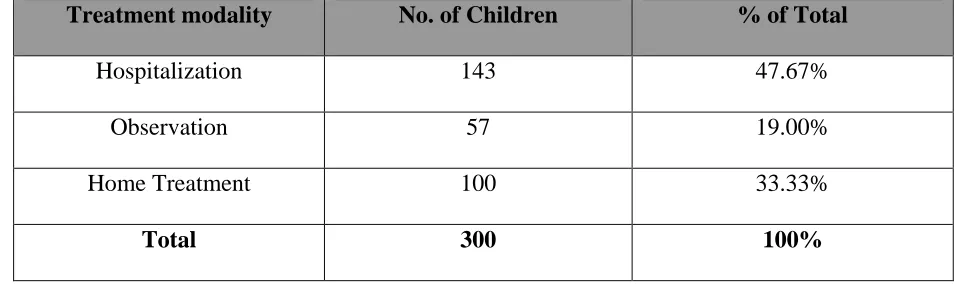
Table – 5. Treatment modalities of the children in study as per gold
standard (n = 300)
Treatment modality No. of Children % of Total
Hospitalization 143 47.67%
Observation 57 19.00%
Home Treatment 100 33.33%
Total 300 100%
Of the 300 children, 143 (47.7%) were admitted in the hospital
according to the standard treatment and care practices followed in the hospital.
57 (19.0%) were kept under observation in the hospital for a period less than 24
hours while 100 (33.3%) were treated on an outpatient basis, and sent back
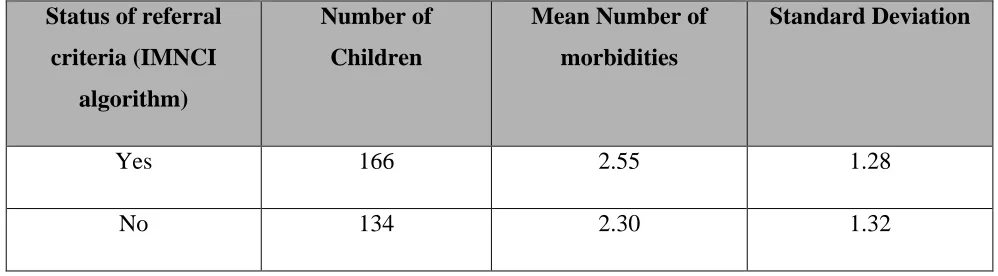
Table – 6. Comparison of referral criteria of IMNCI algorithm with
mean frequency of morbidities of study population (n = 300)
Status of referral
criteria (IMNCI
algorithm)
Number of
Children
Mean Number of
morbidities
Standard Deviation
Yes 166 2.55 1.28
No 134 2.30 1.32
p = 0.245 (unpaired t test)
On application of the IMNCI algorithms, 166 (55.3%) children met one
or more criteria for referral to a hospital. Such children had a greater number of
illnesses diagnosed by the gold standard (mean number of morbidities – 2.55
and standard deviation – 1.28), than children without referral criteria (mean
number of morbidities – 2.30 and standard deviation – 1.32), however the
difference was not statistically significant using paired t test (p = 0.245) (Table
Table – 7. Role of the referral criteria in predicting the treatment
modality (n = 300)
• *χ2 = 161.07, p < 0.001 (Vs children without any referral criteria)
• ** χ2 = 123.87, p < 0.001 (Vs children without any referral criteria)
Over three-fourths (n=126) of children with one or more referral criteria
(including the general danger signs) from the IMNCI algorithms were
eventually admitted in the hospital by the treating pediatricians. 34 children
(20.5%) were kept under observation in the hospital for not more than 24
hours, while 6 of them (3.6%) were advised home-based care after the initial
evaluation. When children who presented with general danger signs alone were
considered, the changes observed were minimal; the proportion advised
admission, observation and home-based care were 76.9%, 17.7% and 5.3%
Criteria Children
needed hospitalization
Children kept under observation for
not more than 24 hours Children sent home immediately after initial evaluation Total
No. % No. % No. % No. %
Children with out any referral criteria
17 12.68 23 17.16 94 70.15 134 100
Children with any one of the referral criteria
including General Danger signs
126 75.90 34 20.48 6 3.61 166 100
Children with General Danger signs
respectively. In line with these findings, it was noted that abut 70% of children
who did not meet any of the IMNCI referral criteria were sent home after the
initial evaluation. 17% of such children were placed under observation for a
period not exceeding 24 hours, while 12% required admission in the hospital
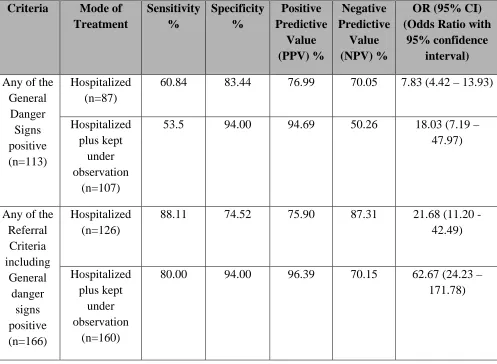
Table – 8. Validity of “General Danger Signs” and “Referral
Criteria” as a Predictor of hospital admissions / observations
Criteria Mode of
Treatment Sensitivity % Specificity % Positive Predictive Value (PPV) % Negative Predictive Value (NPV) %
OR (95% CI) (Odds Ratio with
95% confidence interval)
Any of the General Danger Signs positive (n=113) Hospitalized (n=87)
60.84 83.44 76.99 70.05 7.83 (4.42 – 13.93)
Hospitalized plus kept
under observation
(n=107)
53.5 94.00 94.69 50.26 18.03 (7.19 – 47.97)
Any of the Referral Criteria including General danger signs positive (n=166) Hospitalized (n=126)
88.11 74.52 75.90 87.31 21.68 (11.20 -42.49) Hospitalized plus kept under observation (n=160)
80.00 94.00 96.39 70.15 62.67 (24.23 – 171.78)
The validity of the IMNCI referral criteria in predicting treatment decisions by
a pediatrician following usual standards of care was analysed. The accuracy of
the four “General Danger Signs” (Convulsions, Lethargy or Unconsciousness,
not able to drink or breast-feed and vomits everything) and all ‘Referral
Criteria’ outlined in IMNCI algorithms in predicting hospitalization or
hospitalization/observation of the child as per gold standard is presented in
specificity of 83.4% in predicting hospitalization. The sensitivity increased to
88.1% when the four danger signs were considered along with other referral
criteria, though the specificity dropped to 74.5%. The sensitivity of the general
danger signs in predicting hospitalization/observation was lower at 53.5% and
increased to 80% when considered along with other referral criteria; however
the specificity remained unchanged at 94%. In general, the referral criteria had
better predictive accuracy for hospitalization/observation than hospitalization
alone; positive predictive values ranged from 75.9 to 76.99 for the latter and
94.69 to 96.39 for the former. The odds ratios of being hospitalized was greater
when all referral criteria were considered together (OR: 21.68, 95% Confidence
Interval: 11.20 - 42.49) than when the general danger signs were considered in
isolation (OR: 7.83, 95% Confidence Interval: 4.42 – 13.93). A similar
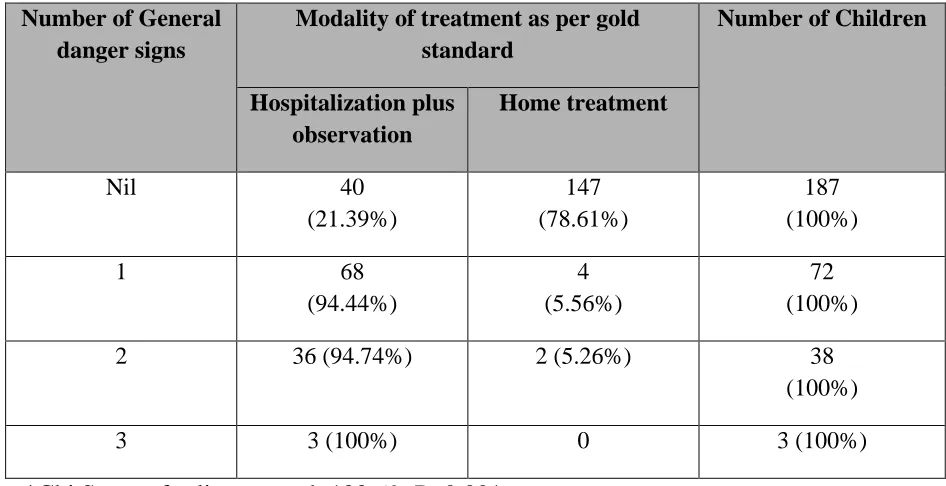
Table – 9. Effectiveness of ‘General danger signs’ in predicting severity of illness (n=300)
Number of General danger signs
Modality of treatment as per gold standard
Number of Children
Hospitalization plus observation
Home treatment
Nil 40
(21.39%)
147 (78.61%)
187 (100%)
1 68
(94.44%)
4 (5.56%)
72 (100%)
2 36 (94.74%) 2 (5.26%) 38
(100%)
3 3 (100%) 0 3 (100%)
*Chi Square for linear trend: 122.69; P<0.001
113 children enrolled in the study had presented with at least one of the
four general danger signs. Of the 72 children who had a single danger sign, 68
(94.4%) were hospitalized or kept under observation, as per gold standard. The
proportion of children with two danger signs who got admitted/ hospitalized
was only marginally higher (94.74%), but all 3 children who had three danger
signs were admitted in the hospital.
The proportion of children who were treated on an ambulatory basis
decreased as the number of danger signs increased. More than 78% of children
without any danger signs (n=147) were sent home after the initial evaluation,
while only about 5% of children with one or two danger signs each were
trend with treatment decisions by the pediatricians; the Chi-square test for
Table – 10. Therapeutic agreements between gold standard and
IMNCI high/low malaria risk algorithms
Match Admission alone
(n= 300)
Admission and observation (n = 300)
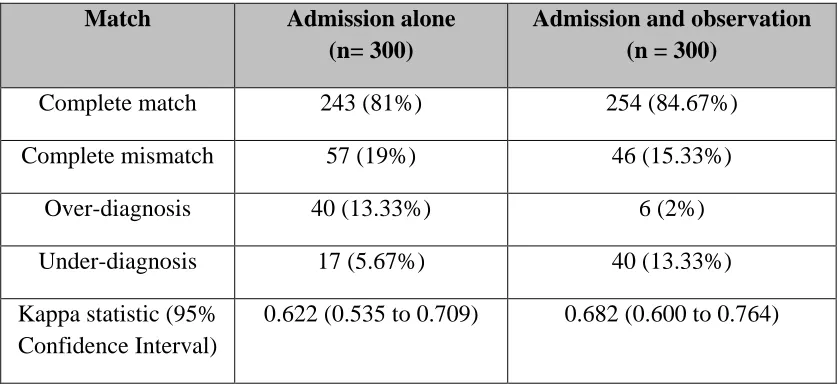
Complete match 243 (81%) 254 (84.67%) Complete mismatch 57 (19%) 46 (15.33%)
Over-diagnosis 40 (13.33%) 6 (2%)
Under-diagnosis 17 (5.67%) 40 (13.33%) Kappa statistic (95%
Confidence Interval)
0.622 (0.535 to 0.709) 0.682 (0.600 to 0.764)
The therapeutic agreement of the IMNCI algorithms (on basis of
meeting referral criteria) with the gold standard treatment modality is presented
in Table 10. Of the 300 children in the study, the IMNCI algorithm concurred
with the decision by pediatrician to hospitalize the child in 81% cases (n=243)
and completely differed in the remaining 57 children. Of these 57 children, 40
(13.3%) had at least one of the referral criteria positive, but were not
hospitalized (over-diagnosis) and 17 (5.7%) had no referral criteria but ended
up being hospitalized (under-diagnosis). When hospitalization was considered
along with observation not exceeding 24 hours as the therapeutic decision by
the pediatrician, concurrence increased to 84.7% and mismatch decreased to
15.3%; however most cases of mismatch comprised of children without any of
n= 40, 13.3%) than children with referral criteria who were sent home after
evaluation (over-diagnosis, n=6, 2%) (Table 10).
The Kappa statistic was also calculated to study agreement between
IMNCI algorithms and gold standard. Kappa value was 0.622 (95% Confidence
Interval: 0.535 to 0.709) for hospitalization and 0.682 (95% Confidence
Interval: 0.600 to 0.764) for hospitalization / observation. This indicates that
Table – 11. Analysis of diagnostic and therapeutic agreements
between ‘Gold Standard’ and IMNCI and Vertical (Split IMNCI)
algorithms (n = 300)
Parameter IMNCI Algorithm Vertical (Split
IMNCI) algorithm High Malaria
Risk No.(%)
Low Malaria
Risk No. (%)
Total Agreement 239 (79.67)
258 (86.0)
169 (56.33)
Partial Agreement 38 (12.67)
24 (8.0)
34 (11.33)
Total Disagreement 23 (7.67)
18 (6.0)
97 (32.33)
Over-diagnoses 117 (39.00)
45 (15.0)
17 (5.67)
Under-diagnoses 62 (20.67)
66 (22.0)
218 (72.67)
Upon assessing the therapeutic and diagnostic agreement of the IMNCI
algorithms with the gold standard, it was seen that total agreement was highest
for the IMNCI low malaria risk algorithm and lowest for the vertical (split
IMNCI) algorithmic approach. Total agreement was considered when the
child's classification as per the IMNCI referral criteria matched with the
when all diagnoses made using the IMNCI algorithms matched with the
corresponding gold standard diagnoses. Total agreement with gold standard
was seen in 258 children (86%) when the low malaria risk algorithm was used
and 239 children (79.7%) when the high malaria risk algorithm was used. Total
agreement was seen only in 169 children (56.3%) when the vertical (split)
algorithms were used.
Total disagreement was considered when none of the diagnoses made
using the IMNCI algorithms matched with the gold standard diagnoses. Total
disagreement was highest for vertical (split) approach (32.3%) and lowest for
low malaria risk algorithm (6%). Total disagreement was about 7.7% for the
high malaria risk algorithm.
When some but not all of the IMNCI diagnoses matched with the gold
standard diagnoses, it was considered as Partial agreement. Partial agreement
was lowest for the low malaria risk IMNCI algorithm at 8%. The high malaria
risk algorithm and vertical (split) approach yielded comparable estimates of
partial agreement at 12.7% and 11.3% respectively.
Compared to the gold standard, the vertical (split) algorithmic approach
made the least number of over-diagnoses (17, 5.7%). The largest extent of
over-diagnoses was seen with the high malaria risk algorithm, with 39% of
children (n=117) receiving more diagnoses than the gold standard. This was