Best Possible Start
Infant Mental Health and Workforce
Development
NHS Lanarkshire
2014
Final Report
Aline-Wendy Dunlop
Jean Carwood-Edwards
Jonathan Delafield-Butt
Karen M. Ludke
Contents
Contents ... 1
1. Executive Summary ... 3
2. Introduction ... 4
3. Approach to the Task ... 6
3.1 Overview of Literature ... 6
3.2 The National Policy Direction in Infant Mental Health ... 6
3.3 Survey ... 6
3.4 Focus Groups ... 7
3.5 Combining the Evidence into the IMH Workforce Training Framework ... 7
4. Principles of Infant Mental Health: Toward the Best Possible Start ... 8
4.1 Never Too Young for Mental Health – Infant Mental Health is Emotional and Social Health ... 9
4.2 Infant-Mother Psychological Attunement and Attachment ... 10
4.3 Parent-Infant Relations are Supported by Wider Social Relations, Including Professional Care ... 11
4.4 What is Needed for the Best Possible Infant Mental Health? ... 11
4.5 Conclusion: Supporting Infant Mental Health ... 12
5. Evidence for Effectiveness of Interventions ... 13
5.1 What is the Evidence for Effectiveness of IMH Intervention Approaches? ... 13
5.2 Adult Mental Health ... 13
5.3 Impact of Early Caregiving ... 14
5.4 Features of Successful Interventions ... 14
5.5 The Challenges of Workforce Development in Infant Mental Health ... 15
5.6 The Economic Case for Investment in Infant Mental Health Training and Provision ... 16
5.7 Linking the Scientific and Economic Evidence for Improved IMH Training and Provision ... 17
5.8 Summary ... 18
6. Scottish Policy Direction for Infant Mental Health ... 19
6.1 Introduction ... 19
6.2 Scottish Social Policy Pillars ... 19
6.3 Mental Health Guidelines ... 20
6.4 National Child Cohort Studies ... 21
6.5 Risk and Protective Factors ... 22
6.6 The National Parenting Strategy ... 23
6.7 Themes in Scottish Policy ... 24
7. Survey Outcomes and Recommendations ... 26
8. Insights from the Focus Groups and Recommendations ... 27
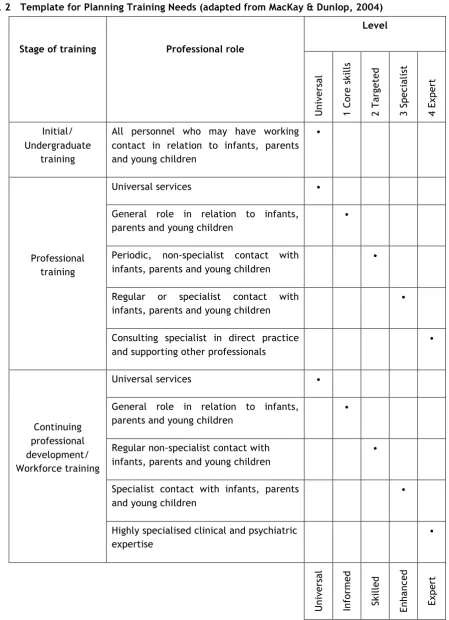
9. Training Needs Summary ... 28
10.What Kind of Training Framework is Needed? ... 29
11.A Training Framework Model ... 33
12.Training in Intervention Approaches ... 36
12.1 Solihull ... 36
12.2 Brazelton ... 36
12.3 Triple P ... 37
12.4 Infant Observation ... 37
12.5 Mellow Parenting ... 37
12.6 Family Nurse Partnership ... 37
12.7 Maternal Early Childhood Sustained Home Visiting Program (MECSH) ... 38
12.8 Infant Massage ... 39
12.9 Incredible Years ... 39
12.10 Summary ... 39
13.Recommendations ... 40
14.Conclusions ... 43
15.Infant Mental Health Training Framework ... 44
References ... 45
Appendix 1. The MECSH Approach: Programme Summary ... 55
1.
Executive Summary
The key aim of the work undertaken for NHS Lanarkshire’s BPS Universal Services was to inform a workforce development programme for Public Health Nurses, Neonatal Nurses and Midwives which prioritises positive promotion of parent-child attachment and seeks to uphold effective intervention strategies that promote positive infant mental health outcomes.
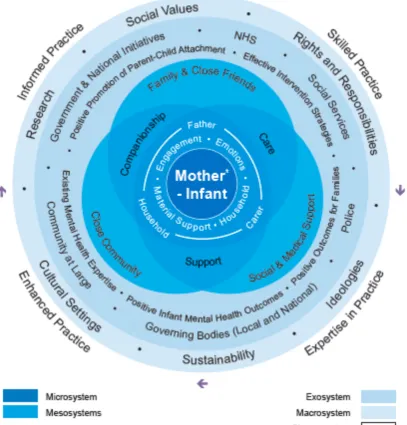
Scottish early years policy across health, social care and education emphasises the shift in the balance from intervention to prevention in order to promote positive infant mental health. Infant mental health is seen primarily as relational with the mother-infant dyad at the centre. Understandings of the role of the practitioner are derived from policy, research and practice. To be effective in fostering infant mental health it is necessary to adopt an holistic view and to recognise the many influences upon the mother and child. An ecological model is used to show this connection and to inform the training framework.
Interrogating systematic reviews of the infant mental health interventions literature showed the success of ‘model interventions’ and the challenges of implementation fidelity when interventions were scaled up. The reviews concluded that while effectiveness in the longer term is uncertain and more research is needed, the absence of conclusive evidence does not imply ineffectiveness. The importance of family and professional aspiration is emphasised.
Current knowledge, practices, issues, concerns and intervention strategies used to promote positive IMH in NHS Lanarkshire have been explored through survey and focus groups. The outcomes of this enquiry have informed the training framework which builds on existing strengths.
Ten recommendations are made for training, which translate to three main themes:
1. A Tiered Training System for NHSL PHN/HV, Midwives, and Neonatal Nurses, based on a universal approach leading to increasing specialism
2. Shared Understanding, Goals, and Language across Levels and Agencies and 3. Improved Accountability and Management
The recommended training framework for workforce development in infant mental health prioritises the achievement of the following outcomes:
− Improved mother-infant emotional and psychological attunement and attachment. − Improved maternal confidence, emotional well-being, and mental health
− Improved infant emotional well-being, social engagement, and learning.
The Report is presented in this Best Possible Start Final Report document is supported by four supplements: 1. Supplement 1 – Survey Report
2. Supplement 2 – Focus Group Report
3. Supplement 3 – Best Possible Start IMH Training Framework Supplement
2.
Introduction
Infant mental health is the study of mental health as it applies to infants and their families. The field investigates optimal social and emotional development of infants and their families in the first three years of life (Association for Infant Mental Health UK - AIMH UK).
Infant mental health is one of the most exciting and rapidly developing areas in the whole field of mental health. Research has shown that support for parents during their baby’s first year can significantly increase the proportion of babies who form secure relationships with their parents, and this has lasting benefits for their subsequent development. A good beginning for young families is a protective factor in coping with life’s inevitable stresses. Early intervention when there are difficulties can often prevent the development of mental health problems in later years (AIMH UK).
The key aim of the work undertaken for NHS Lanarkshire’s BPS Universal Services is to inform a workforce development programme for Public Health Nurses, Neonatal Nurses and Midwives which prioritises positive promotion of parent/child attachment and seeks to uphold effective intervention strategies that promote positive infant mental health outcomes.
The Scottish Child Health Programme places a high level of importance on the new 27-30 month review for all children and emphasises the role of the Public Health Nurses - Health Visitors (PHN-HVs) and their managers in particular in terms of appropriate approaches with families and the training needs of staff (Scottish Government, 2012). It is well understood that while universal child health reviews are a core element of the Child Health Programme, review at this time can be complicated due to the relatively high degree of variability in younger children’s development (Scottish Government, 2012).
The way in which people make the transition to parenthood can have a significant effect on their children’s experiences (Cowan & Cowan, 1992, 2002; Borkowski, Ramey, & Bristol-Powers, (Eds.), 2002). One in ten children aged 5-16 years has a clinically diagnosable mental health problem and, of adults with long-term mental health problems, half will have experienced their first symptoms before the age of 14 and three quarters before their mid-20s. Intervening early for children with mental health problems has been shown not only to reduce health costs but also to realise larger savings through, for example, improved educational outcomes and reduced unemployment and crime.
Consultation with the workforce has been achieved through a survey of health professionals which aimed to audit training histories, perceptions of the impact of previous training and to consider the content of a new CPD framework to support Infant Mental Health and the benefits it might bring. The audit aims to facilitate responsive planning to the strengths and felt needs of professionals working with expectant families, their newborns, infants and very young children, and will lead to greater clarity on how to develop this.
The Best Possible Start (BPS) initiative is about creating the necessary foundations to give children in Scotland the very best start in life (see http://www.shiftingthebalance.scot.nhs.uk/initiatives/scottish-initiatives/children-and-families/). An essential component within this policy focus is an awareness of the importance of infant mental health (IMH) practice and an understanding of the role of the practitioner in promoting IMH.
First, we show the approach to the task, then we examine some principles and features of IMH to better understand its nature and consider how best to position it within general health provision. An overview of IMH interventions identifies a number of key approaches and discusses their relevance to NHS Lanarkshire’s practitioner context.
3.
Approach to the Task
The planned approach to the task was in four parts (1-4 below), each contributing to the main outcome of a robust workforce development framework (5 below) leading to criteria and approaches to record keeping through which the effectiveness of approaches can be monitored and assessed.
1) An overview of the literature:
− What babies and parents need in order to develop a ‘well-connected’ child. − The existing evidence base informing infant mental health intervention.
2) A review and summary of the national policy direction in early intervention with a particular focus on infant mental health.
3) An online survey to identify training undertaken, the focus of training in relation to the pathway of care, uptake by differently qualified staff, support and training they feel they need to provide the best service.
4) A small number of focus groups were undertaken and a proforma on four levels of training circulated to the Expert Focus Group participants.
5) Combining evidence from the fours strands of the task to produce recommendations for IMH training for each specialist group (a number of selected approaches appropriate for each specialist group (midwives, neonatal nurses, PHNs).
6) An IMH Workforce Training Framework.
It is important when undertaking this type of research project to begin by evaluating the current literature and evidence base for using different approaches. In terms of data collection, combining focus groups with questionnaires can be a particularly effective research approach. Focus groups have the benefit of providing deeper, more thoughtful responses and allowing the researcher to follow up immediately on any interesting points raised. However, they also carry the risk of the participants being selected according more to availability and convenience than for their representativeness. They also, on their own, engage only small numbers (Wolff et al., 1993). Combining both questionnaires and focus groups minimises the potential limitations of each of the research methods, allowing for a more quantitative analysis of the questionnaire response and qualitative analysis of the interview transcripts. Together, these four approaches to the task, as briefly described below, led to a deeper understanding that enabled us to form stronger conclusions and recommendations.
3.1
Overview of Literature
The first strand in this project was to conduct a review of the literature in the area of infant mental health, including a review of the evidence for different intervention approaches and the evidence of their effectiveness.
3.2
The National Policy Direction in Infant Mental Health
The second strand of work was to review national policy and training initiatives and the research evidence for a range of recommended approaches relevant to Infant Mental Health.
3.3
Survey
training strengths and needs. The survey was offered online for ease of access and completion (Qualtrics). The total of 585 possible audit respondents included all practitioners working with mothers and infants ante-, peri- and post-natally in the NHS North Lanarkshire geographical area.
Lead managers of these services were asked to inform their teams of aims of the Workforce Development Project and to encourage staff participation. Initially the online survey was made available until the end of June 2013, then extended until September 2013 to optimise response. The survey questions can be found in Appendix 2 of Supplement 1. A report on the first tranche of responses in June informed the development of the focus group discussion topics. A total of 145 returns were logged by the September cut-off date – of these, 91 were complete and form the basis of the analysis presented in Supplement 1 and the summary of recommendations presented in this report (see part 7 on page 26).
3.4
Focus Groups
Practitioner focus group interviews were arranged within the local hospitals to suit the focus group
participants. The interviews were held at Coathill Hospital and Wishaw General Hospital on 3 July 2013 and Udston Hospital on 5 July 2013. The focus group questions were selected primarily to explore the practitioners’ understanding of infant mental health, how confident they felt in addressing their understanding of infant mental health, what level of training they had, and what training they felt would help them to perform their role more effectively (Appendix 1 of Supplement 2).
A second set of focus group interviews were conducted with those in management, team leader or other senior roles. These focus groups, which will be referred to as expert focus groups, were conducted at the University of the West of Scotland campus in Hamilton on 9 August 2013. The questions were designed to explore the expert groups’ understanding of infant mental health, what relationship this bears to maternal mental health, where professional responsibility for infant mental health rests, and whether the expert groups agreed with the proposed classification levels for IMH expertise. The recommendations presented in this report (see part 8 on page 27) come from the data analysed in more depth in Supplement 2.
3.5
Combining the Evidence into the IMH Workforce Training Framework
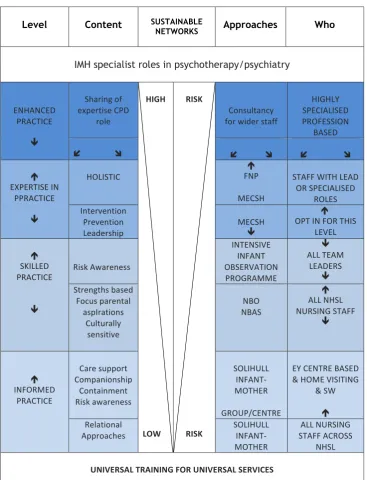
While every effort was made to increase the rate of return by extending the survey period, the BPS Coordinator seeking the support if clinical leads and flexibility of the research team in extending the run, the sample achieved was less than 20% of the workforce identified by NHSL. The focus groups were formed of invitees, but not all invited were able to attend and although overall the different practitioner roles were represented, a representative sample was not achieved. Although the focus groups and survey did not reach a representative sample they were nonetheless informative to the development of the framework. The evidence from the literature, policy interpretation, survey and focus groups responses were drawn together into a single model: their mutual influences are illustrated in an Infant Mental Health Ecological Framework to show the interrelated layers of experience and to assign level for training based firmly on the infant-mother dyadic child and attending to care, companionship and support.4.
Principles of Infant Mental Health: Toward the Best Possible
Start
Mental health is ‘a state of well-being in which every individual realises his or her own potential, can cope with the normal stresses of life, can work productively and fruitfully, and is able to make a contribution to her or his community’ (World Health Organisation, 2010).
Infant mental health refers to the developing capacity of the child from birth until three years old to manage and express his or her emotions, to form close and trusting relationships with others, and to explore and master his or her environment, including the world of both people, places, and objects. Infants and toddlers learn through safe, secure interpersonal relations with others, especially their parents and primary caregivers. Human infants are unique in the animal world for their prolonged dependence on parental- and allo-care, as well as the remarkable degree of learning achieved in these relations. It is this intense sociability most evident in early life that enables development of sophisticated cognitive and social skills that reflect and comprise human culture (Hrdy, 2009).
1. Emotional and Social Development is the Foundation for Infant Mental Health and Learning. The
first stage of an infant’s development and learning is emotional learning (Lazarus, 1991; Piaget, 1954). Infants and toddlers learn emotional regulation – the self-management of feelings – in the care of others. They ‘mirror’ the ways in which their caregivers express their own feelings and care for them (Gallese, 2004; Winnicott, 1960). In this way, infants see themselves reflected in the eyes of the other, and they learn these values (Bråten, 2009; Winnicott, 1971). Intimate interpersonal relationships establish an emotional foundation that will remain with the child for life, and on which advanced cognitive skills and future learning are based (Hobson, 2002). Thinking about infant development must always take account of the fact that infants vary considerably in temperament, and in their responses, in what they make of and what use they make of their experience of caregiver’ expressions of feelings. This means that what is ‘good enough’ and appropriate for one infant in a given relationship and set of circumstances may not be for another. This understanding is essential in order to avoid over-normative or ‘averaging’ judgments about an individual infant’s needs.
3. Professional Parental Support for Infant Mental Health Gives the Best Possible Start. The quality of infant caregiving relations must be professionally monitored and supported to achieve the best possible start for infants. Common infant regulatory problems can best be understood in a relational context (Skovgaard, 2010). Disturbances such as excessive crying, feeding, or sleeping problems are closely linked with the quality of the caregiver relationship (Papoušek & Von Hofacker, 1995) and are associated with adverse effects in later development (Degangi, Breinbauer, Roosevelt, Porges, & Greenspan, 2000). Yet, maternal mental health is challenged during the pre- and post-natal periods: post-natal depression is common, 10% of mothers are clinically depressed at 8 weeks (Evans, Heron, Francomb, Oke, & Golding, 2001) and this increases to 22% at their baby’s first birthday (Gavin et al., 2005); 15% of mothers experience anxiety disorders (Heron, O’Connor, Evans, Golding, & Glover, 2004); and 3% to 6% develop post-traumatic stress disorder during the first 6 post-natal weeks (Olde, Van Der Hart, Kleber, & Van Son, 2006). Further, mental health concerns lie on a spectrum of severity where sub-threshold expression may nevertheless impact on infant care. Altogether, these data suggest supporting maternal and infant mental health through better early intervention, including the monitoring of risk and identification of need as early as possible will help enable optimal social and emotional development of infants and toddlers within caring, secure, and stable relations with caregivers (Department for Children Schools and Families, 2007; Zeanah & Zeanah, 2001).
4.1
Never Too Young for Mental Health – Infant Mental Health is Emotional
and Social Health
4.2
Infant-Mother Psychological Attunement and Attachment
The tight psycho-physiological relationship between mother and infant couples infant mental health to parental mental health. And while each affects the other through reciprocal processes of regulation, it is the adult who requires providing a safe, containing relationship in which the infant can feel secure in expressing and learning to overcome feelings of anxiety and distress (Douglas, 2007). The adult must be psychologically and affectively ‘attuned’ to the infant, and similarly the infant must be receptive and ‘attuned’ to the adult for effective intersubjective connection and development (Stern, 1985). This reciprocal dance of subjective experiences, generating ‘inter-subjectivity’, is necessary for the emotional and vital health of both infant and mother (Trevarthen & Aitken, 2001). It allows developmental progress and learning for both participants (Brazelton, 1974; Brazelton & Nugent, 1995; Tronick, 2005). However, if pathology or trauma on either side prevents, for example, emotional functioning, then the ensuing distress is shared by both and the result is delayed or thwarted infant psychological development (Murray, Fiori-Cowley, Hooper, & Cooper, 1996; Murray & Trevarthen, 1985).
Infant-adult dyads communicate shared psychological and vital needs through psycho-motor/emotional movements with gestural form (Reddy, 2008) perceived in different sensory modalities, but with common temporal dynamics of rhythm, timing, and quality (Malloch, 1999; Malloch & Trevarthen, 2009). Stern et al. (1985) recognised their essential ‘affect attunement’ in the reciprocal dynamic of behaviour shared between infant and mother given by an ‘intermodal fluency’ of body and voice that forms the basis of social meaning (Delafield-Butt & Trevarthen, 2013; Trevarthen & Delafield-Butt, 2013).
The degree of attunement during infant-mother interactions has been shown to be a strong predictor of the quality of attachment that will develop in their relationship (Beebe, Jaffe, Lachman, Feldstein, Crown, & Jasnow, 2000; Beebe, Jaffe, Markese, Buck, Chen, Cohen, et al., 2010; Jaffe, Beebe, Feldstein, Crown, & Jasnow, 2001). A lack of attunement in the dyad suggests a general lack of sympathy, as with mothers in severe depression, suffering bipolar psychosis, or other problems that prevent the fluidity of inter-subjective relating, and developmental problems may ensue (Bettes, 1988; Murray, Fiori-Cowley, Hooper, & Cooper, 1996). Contingent, reciprocal developments of expressed movement between babies and their mothers gives vitality to health and learning, and failure of attachment is signalled by a loss of contingency (Stern, 1982, 2010; Trevarthen & Malloch 2002; Malloch and Trevarthen, 2009).
Reciprocal relations fundamental to the organisation of processes in biological systems may be los and co-dependent physiological regulation necessary for growth and development compromised (Trevarthen, Aitken, Vandekerckhove, Delafield-Butt & Nagy, 2006). Thus, the quality of the caregiver relationship is particularly important for generating a secure attachment pattern (Hughes, 2004), which serves as a foundation for subsequent affective, social, cognitive and behavioral development throughout the life cycle (Cassidy & Shaver, 1999). Insecure and disorganised attachment in infancy is associated with poor outcomes in emotional, social, and behavioural adaptation as well as later educational attainment and also in peer-rated social status (Berlin, Cassidy, Appleyard, & Shaver, 2008; Granot & Mayseless, 2001; Sroufe, 2005a, 2005b), and disorganised attachment is a predictor of significant later psychopathology (Green & Goldwyn, 2002).
4.3
Parent-Infant Relations are Supported by Wider Social Relations,
Including Professional Care
How do we best support these relationships in professional practice? Seminal Harvard paediatrician Berry T. Brazelton recognised that the mental health of the infant could be supported simply by helping enable the parent-infant relationship to develop through attention to their care for each other (Brazelton, 2006; Brazelton & Nugent, 1995). He employed a sensitive technique drawing the mother’s attention to the infant’s subjective experience and capacity for social engagement during a routine paediatric assessment. By including the mother or father in the assessment and drawing their attention to their unique infant-parent relationship, for example in the infant’s selective attention to the infant-parent’s voice, Brazelton helped to build affective attunement and emotional bonding between them. This, in turn, enabled more secure attachment and improved the likelihood for good infant mental health outcomes, a positive outcome shared by both parent and infant. Brazelton’s method holds an important secret for professional practice: it is not difficult to promote infant-caregiver bonding, but it takes sensitivity, awareness, skill and confidence in the action.
There is now increasing recognition that the best route to IMH is through supporting and encouraging the parent-infant relationship (Department for Children, Schools and Family, 2007; Barlow et al, 2010). This can be achieved a number of different ways in professional practice (e.g., see § Intervention Approaches), but all share the common goal of enabling parent-infant relations by supporting parent and infant psychologically and emotionally, as well as medically or through material social provision, to better enable positive affection, bonding, and care. Importantly and especially at the early infant age, psychological health and well-being are closely related to physiological health and well-being, and by three years of age will predict lifelong health and socio-economic success (Hertzman, 2000; Knudsen et al, 2006). Stresses from trauma, deprivation, health concerns, etc. in any one element necessarily affects the others. Concerns for infant mental health are closely related to concerns for maternal and familial health and well-being generally (Bronfenbrenner, 1994).
The quality of these early relations are largely affective and emotional in nature (Panksepp, 2005), and the close association of socioemotional development and developmental psychopathologies (Aksan, 2000) underpin the fact that mental health is closely related to socioemotional health.
4.4
What is Needed for the Best Possible Infant Mental Health?
Infant mental health is sensitive to attuned, responsive and reliable care from a trusted primary caregiver. Social mother-, parent-, and/or caregiver-infant relations form the core of mental health for both caregiver and infant, generating a strong attachment relationship and enabling the infant to engage with the world with a sense of security and confidence.
The mother or primary caregiver is situated within a society that can support her and that can also create stresses or strains within her. Therefore, our social provision of professional service, as well as our cultural values and expectations of men and women when they have children, and the resource (both emotional and psychological as well as material and monetary), are important determinants of their mental well-being and health, a state of health that efficiently and naturally becomes reflected in the mental health of their child.
the understanding that childbirth and parenting places great emotional, financial, and physical strain on the mother, father, and intimate caregivers that requires family and friends to assist. These strains can be accommodated by parents’ social support networks, both personal and professional, in order to allow the mother the time and resources she needs for her baby.
Of particular importance are emotional strains, because it is these that are readily reflected in the infant’s first experiences and that begin to establish learned patterns of self-regulation. For example, a mother who is anxious and under stress because of the emotional trauma of childbirth, the new demands of motherhood including loss of time with friends, loss of identity as an independent adult, loss of sexual intimacy, etc. and who also has additional emotional, physiological, and financial demands placed on her by her infant in providing care, food and shelter, may not be able to cope. Should other strains also be present, such as background mental health, financial, or safety concerns, the balance between health and pathology can be tipped. Such a trial of demands and resources places great strain on the mother and caregivers, and these are professionally recognised and attended to within Infant Mental Health care to give each child the Best Possible Start.
4.5
Conclusion: Supporting Infant Mental Health
‘I once said: ‘There is no such thing as an infant’, meaning, of course, that whenever one finds an infant one finds maternal care, and without maternal care there would be no infant.’ (Winnicott, 1960)
5.
Evidence for Effectiveness of Interventions
5.1
What is the Evidence for Effectiveness of IMH Intervention Approaches?
This section considers what is known about infant mental health interventions. This review draws on a search of reviews in the Cochrane Library of Systematic Reviews, Pub Med, Government commissioned reviews, selected reviews from USA, Canada and Australia. A search of the available peer-reviewed literature using the specific interventions employed to date in NHSL as key search terms resulted in sourcing reviews of interventions, infant mental health training, parenting and IMH, IMH screening and competences and evidence-based practice papers. A further journal based search with the key terms ‘infant mental health’ and ‘maternal mental health’ generated papers which were themed as follows: parental interventions, attachment, professional collaboration in intervention, primary care interventions, universal and targeted approaches, home visiting approaches, and papers which addressed discourses of risk and power. A further source drawn upon to provide context is that of policy papers – including government-generated, research centre and third sector reports.These varied sources demonstrate a high contemporary interest in shifting the balance from intervention to prevention in work with young children. The systematic reviews from different nations show that there is international interest and faith that appropriate relationally based intervention and prevention is the best chance of changing outcomes for children in high risk families and communities. The challenge is significant. The topics reviewed in the 10 Cochrane Systematic Reviews identified with the search term ‘infant mental health’ included: perinatal mental health; parent-infant psychotherapy for improving parent and infant mental health; group based programmes for improving psycho-social outcomes for teenage parents; group based programmes for improving emotional and behavioural adjustment; massage for promoting mental and physical health in babies of under 6 months; psychosocial and psychological interventions for treating antenatal depression; financial benefits for child health and well-being in low income or socially disadvantaged families in developed world countries; home-based child development interventions for preschool children from socially disadvantaged families; home visits during pregnancy and after birth for women with an alcohol or drug problem and schedules for home visits in the early postpartum period. (See the Supplement 3, Cochrane Review for more detail). In nearly all cases these reviews showed there was either insufficient research, that research was not of a high quality or that it was inconclusive.
This suggests that interventions into infant and maternal mental health should have a rigorous research approach built in from the start, if the efficacy of interventions is to be established both in the short and longer term.
None of these reviews prioritises one approach over another, but the evidence base is stronger for certain models of intervention and so these are often considered more promising. For investment to be justified in the longer term, such evidence needs to be generated more widely. Selected interventions are described in section 12 of this report and their key components drawn out in the Best Possible Start IMH Training Supplement.
5.2
Adult Mental Health
services with specific mental health services (NICE, 2007). Risk awareness is needed at all levels of service in order to meet the needs of mother, child and family and in recognition of the potential implications for infant mental health of maternal mental illness. It is not the function of this report to consider mental health per se, but rather to focus on infant mental health as a relational concept which of necessity demands a focus on infant-mother together because of their close inter-relation in very early life. Preventive treatment in known cases of maternal mental illness linked to a stepped-care intervention model may be appropriate to such cases, but will not be reviewed here.
5.3
Impact of Early Caregiving
Much is written about the impact of early caregiving experiences on children’s immediate experience and later development. This has generated a huge interest in interventions that support and influence the parent-infant relationship positively. Zeanah, Stafford and Zeanah (2005) found that a continuum of infant mental health services is needed. It is known that there is great variability in delivery of interventions in terms of site, provider and the degree of challenge. It is possible to identify clear purposes to interventions into IMH which focus on:
1) the ability of caregivers to nurture young children more effectively;
2) the ability of non-family caregivers to identify, address, and prevent social-emotional problems in early childhood;
3) the capacity to minimise harm and ensure that families in need of more intensive services can obtain them.
While the main focus in IMH interventions is the caregiver-infant relationship, this makes it challenging to evaluate effectiveness: evidence-based approaches are still in development and so the evidence for improved parent-infant relationships and how these are sustained over time is difficult to establish. The success with which practitioners may combine preventive work with focused intervention for higher risk groups may be dependent on the training and support they themselves can access.
5.4
Features of Successful Interventions
The significant features of successful interventions, based on evidence-based reviews and the wider literature include: attachment and positive parenting starting in pregnancy and continuing through the first years of life; recognition of the profound influence of both the mother’s and father’s contribution to the child’s development (Jameson, 2012); and that the professional/parent partnership may be identified as being the single most important factor in delivering effective programmes (Barlow et al., 2007). Barlow concludes that although effect sizes are modest, a variety of programmes have been shown to be effective. She makes a strong case for ‘the preferential provision of early preventive programmes’. Day-to-day intervention approaches need to be considered with this information in mind.
While evaluations of intervention approaches are growing in number there is not yet a substantive evidence base that informs choice of any particular intervention approach being able to guarantee change. It is therefore helpful to identify the ingredients of an effective programme and to be able to use this ‘menu’ of interventions as a pathway (NICE, 2013) or framework to guide appropriate approaches. Both risk and protective factors are important in preventive work and anticipatory approaches are advocated.
developmental delay. Further they add family history of child protection involvement, lack of parent self-sufficiency, low maternal education, maternal or child health concerns and teenage parenting as additional risk factors. Other studies emphasise the association of these factors (not exclusively) with economic and social disadvantage. Many families do not present such severe risk factors but benefit from support to maintain their profile of protective factors, particularly if they fall into a pattern of what has been described as ‘just coping’.
Group-based child development and parenting programmes have the potential to reduce parental anxiety, stress and depression (Furlong, McGilloway, Bywater et al, 2012) so building the confidence and aspirations of parents and enhancing parent-child relations. The costs of such programmes are modest when compared to the costs over time of health, social, educational and legal costs associated with poor mental health and conduct problems.
5.5
The Challenges of Workforce Development in Infant Mental Health
The challenges of workforce development are defined by Zeanah, Stafford, Nagle & Rice (2005) who suggest this lies in adequate knowledge or the skills of practitioners to perform developmentally appropriate, relationship-based assessment and treatment for young children or their caregivers. They suggest that workforce development needs to address staff in paediatric, child care, and family support settings, with more focus on child development, a broader understanding of anticipatory guidance topics, awareness of validated and reliable screening tools, and available resources for referral.
Workforce development may also need to focus on not only the parent-child dyad but also on group interactions, and on multi-informant, multi-site assessment aimed at gaining a good understanding of the reciprocal parent-child behaviours and how the caregiver feels about their child’s personality and relationship with the caregiver.
Workforce development needs also to address the values base of the practitioner and to provide supervision opportunities. Staff will also need guidance in appropriate training and expectations, supports, relationship building and resources.
Effective programmes for Infant Mental Health are likely, according to Zeanah et al. (2005) to: a) Integrate Infant Mental Health into all child and family service systems.
b) Assure that mental health disorders in young children and their families are identified early. c) Expand system capacity through workforce development.
d) Assure that young children of highest risk receive comprehensive health and mental health services. e) Provide access to mental health consultation and support to early childhood education providers. f) Raise public and professional awareness about the importance of early social and emotional
development.
5.6
The Economic Case for Investment in Infant Mental Health Training and
Provision
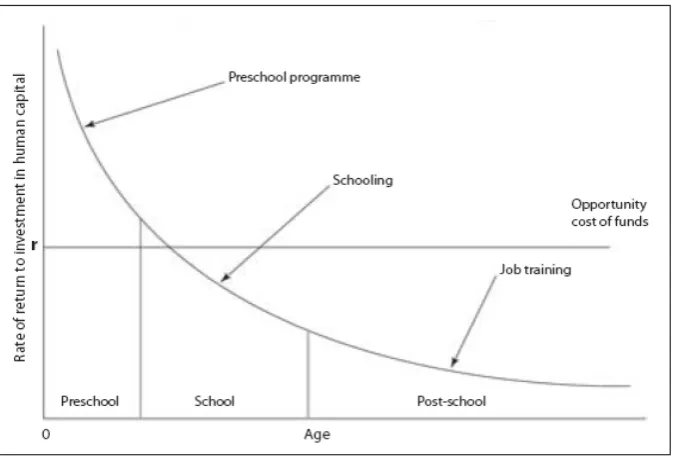
The connection between infant mental health, physiological health, and lifelong developmental outcome is clear, and the efficacy of early intervention practices is well established (Campbell et al., 2014). Further, new economic modelling confirms that the best rate of return on investment into children’s programmes, including education, is in the earliest, pre-school phase of life (Knudsen et al, 2006; Cuhn, 2006). This work, spearheaded by Nobel Prize winning economist James Heckman, is at the foundation of new early years policy developments initiated by the Scottish Parliament’s Preventative Spend Enquiry held in the autumn of 2011, and it has received wide political recognition as an essential principle for restructuring budgetary priority toward investment in the early years (Fig. 1).
Recent reviews of cost-benefit analyses based on Randomised Controlled Trials of early intervention programmes demonstrate overwhelming support for early intervention based approaches (Wave Trust, 2013). For example, within a large collection of Randomised Control Trials from the United States that measured health impact of early years’ programmes and their cost-benefit “suggested returns on investment on well-designed early years’ interventions significantly exceed both their costs and stock market returns. The rates of return ranged between $1.26 and $17.00 for every $1 invested in the RAND studies; between $4.05 and $17.92 for every $1 invested in the Reynolds Chicago studies; and between $1.75 and $10.32 for the Washington State Institute for Public Policy studies.” (ibid, p. 38).
Further, analyses of studies of conducted in the UK demonstrate a similar pattern of result, “cost-benefit, predictive, and case study approaches showed clear indications of economic payback… nine Social Return on Investment studies showed returns of between £1.37 and £9.20 for every £1 invested… two cost-benefit studies (Croydon Total Place and an LSE study of parenting programmes for conduct disorder) predicted and produced returns of £10 and £8 per £1 invested respectively.” (ibid, p. 38). While these studies were on early intervention programmes, rather than infant mental health programmes per se, they follow the same principle of early intervention to improve parent-child relations. According to Heckman’s predication, rates of return on infant mental health programmes, due to their earlier intervention window when parental style and infant neurobiological development are both more plastic and amenable to positive change, ought to produce greater health benefit and therefore greater rates of return.
Within the logic of ‘earliest is best’ that recognises developmental change is most effective when neurobehavioural plasticity is greatest in the earliest phases of infancy (Scottish Government, 2008e), infant mental health training presents an obvious, compelling investment strategy. Infant mental health practice requires only improved practitioner knowledge and does not require addition capital expenditure, for example for equipment, drugs, or infrastructure.
Fig. 1. Rates of return on investment initially setting investment to be equal across all ages. The greatest rate of return is in the early pre-school years, with estimated returns at the age of 21 from £3 to £7 for each £1 invested, with benefits throughout life providing yet higher yield. From Knudsen et al (2006) and Cuhn et al (2006).
5.7
Linking the Scientific and Economic Evidence for Improved IMH Training
and Provision
Infant mental health practice of working with the social, emotional, and cognitive domains of infant psychological development is developed from scientific study of human development. In recognition that the social and emotional life of an infant is important for developmental outcome, infant mental health practice attends to the baby, the parent, and the early developing parent-child relationship through provision of assistance, emotional support, and developmental guidance (Zeanah, 2009).
[image:18.595.131.472.190.422.2]1985; Perry, 2001; Perry & Azad, 1999; Perry & Szalavitz, 2010; Rutter, 2002; Stern, 1971, 1977; Stern, Hofer, Haft, & Dore, 1985; Trevarthen, 1995, 1998; Trevarthen, Aitken, Nagy, Delafield-Butt, & Vandekerckhove, 2006; Tronick & Beeghly, 2011; Tronick, 1977; Tronick, 2005; Tronick & Weinberg, 1997; Zeedyk & Heimann, 2006).
Altogether, the scientific, economic, and medical efficacy data support recent Government initiatives to improve early years care for later developmental health and socioeconomic outcomes, and infant mental health practice in particular lies at the heart of these efforts. Our youngest children and their parents are at their most sensitive and vulnerable in early parenthood and infancy, and therefore are at their most receptive good quality, informed care.
5.8
Summary
6.
Scottish Policy Direction for Infant Mental Health
6.1
Introduction
There is an increasingly strong voice in public policy in Scotland that the balance needs to shift from early intervention to prevention and personalised service delivery with a clear focus on the delivery of outcomes (Christie Commission Report, Policy Memorandum, 2013; Putting the Baby IN the Bath Water Coalition, 2014; the Children and Young People (Scotland) Bill, 2014). This policy drive is supported by research evidence.
A cycle of deprivation and low aspiration has been allowed to persist because preventative measures have not been prioritised. It is estimated that as much as 40 per cent of all spending on public services is accounted for by interventions that could have been avoided by prioritising a preventative approach.
Christie Report- Key Messages, page viii
In this section we present some key messages from Scottish policy and their relationship to the Best Possible Start Infant Mental Health initiative. The review is not exhaustive but aims to highlight the policy context and the scope for taking action in the arena of Infant Mental Health and to set this in a national and international context.
6.2
Scottish Social Policy Pillars
In 2008 Scottish Government placed a huge importance on the early years of life when it published its flagship Early Years and Early Intervention Framework (Scottish Government 2008a), quickly following this with two other significant pillars of policy: Achieving our Potential (Scottish Government 2008b) and Equally Well (Scottish Government 2008c). A policy based functional analysis of the children’s workforce (Dunlop et al, 2011) analysed more than 56 Scottish policy documents affecting children and their families and found the strong policy message that in tackling inequalities the quality of family relationships matter: this is interpreted in two aspirational ways:
1. that children live in families that are providing a strong nurturing environment, and 2. that service providers have quality relationships with families.
GIRFEC (2008d) was one of the policy approaches analysed in this study: it was the most comprehensive piece of work to date in that it engaged with the child’s world, with what professionals need to know and with a strong values base of inclusive action: GIRFEC has an implicit commitment to person-centred practice and is targeted at all professions. However an understanding of what person centred encompasses is usefully summarised in the learning resource provided through Developing a Health Inequalities
Imagination (NES-NHS, 2008), which focuses on the theme of equality: the ability to engage with young
that practitioners continue to build relationships with families in ways that take infant mental health approaches forward.
All practitioners need to be aware of the way the working context is shaped by policy in Scotland and to understand the opportunities created by what has become a national movement to change early experiences in Scotland for the better. Equally Well drew together the health priorities for Scotland and was reviewed in 2010 (Scottish Government, 2010a) when an emphasis was placed on collaboration across professions and services with a focus on early intervention and prevention. Equally Well has been followed by ‘Towards a Mentally Flourishing Scotland’ (2009), National Guidance for Child Protection in Scotland (2010), the Child Poverty Strategy (2011a) the Hall4 update (2011c), The National Parenting Strategy (2012), Guidance on the 27-30 month review (2012) which reinstates regular health practitioner contact at an early stage, and most recently the Child and Young People (Scotland) Bill which was passed by Scottish Parliament in February 2014. A single strong thread sustains through all of this documentation: that children’s experiences matter and shape their futures, and that this process starts from conception, is affected by life circumstances and most fundamentally by the inter-relationship of ‘mother-infant’ and how together as a dyad and as individuals they are supported by family, friends, community and society.
6.3
Mental Health Guidelines
Internationally, the World Health Organisation’s recently published Mental Health Action Plan (2013) asserts six cross-cutting principles, including universal health coverage, human rights, a multisectoral approach and empowerment through mental health advocacy: the two other principles strongly relevant to Best Possible Start are the importance of evidence-based practice and a life-course approach:
− Evidence-based practice: Mental health strategies and interventions for treatment, prevention and
promotion need to be based on scientific evidence and/or best practice, taking cultural considerations into account.
− Life course approach: Policies, plans and services for mental health need to take account of health
and social needs at all stages of the life course, including infancy, childhood, adolescence,
adulthood and older age.
The World Health Organisation acknowledges a broad definition of mental health and makes it clear that consequently it is important to understand that many, apart from mental health specialists, contribute to enhanced mental health. They do however define the role of the mental health specialist to identify and point out areas where mental health is not optimal; to help develop measures of mental health to monitor the situation; to help (if asked) to devise interventions; to help with the training of those intervening; and to help monitor the effectiveness of interventions (World Health Organisation, 2005, page 59). All these roles are essential to the Best Possible Start Infant Mental Health priority.
community, even if ultimately the goal of the practitioner might be to encourage change.’ (World Health Organisation, 2005, page 61).
The NICE Guidelines on Antenatal and Postnatal Mental Health (2007) draw attention to women with existing mental health conditions and stress the importance during pregnancy and in the post-natal period of healthcare professionals assessing the welfare of the infant and other family members and if need be acting upon that information. Generalised anxiety disorder is also recognised as causing distress to babies in utero and subsequently. The guidelines recommend the need for prompt treatment because of the potential impact of an untreated mental disorder on the foetus or infant. They recommend, because of the impact of sub-threshold symptoms of depression and anxiety on day-to-day life post-natally, that an RCT (randomised controlled trial) should be undertaken into the possible effectiveness of interventions. The potential impact of a maternal mental disorder upon the infant is well-evidenced: here the communication skills of the healthcare professional contribute enormously to their capacity to recognise emotional distress. Given the frequency of contact with healthcare professionals ante-, peri- and post-natally, their heightened awareness of mental health issues creates an important opportunity for preventative approaches and intervention.
Within these groups the evidence is unclear on the benefits of particular interventions (see following section). Understanding of risk factors is clearer for post-natal depression whereas understanding about risk factors for other mental-health conditions and supporting and sustaining well-being is much weaker. Parkinson’s report on the development of mental health indicators for children and young people in Scotland emphasizes the challenge of creating a summary profile of children and young people’s mental health, but contributes to our understanding of the causes and consequences of mental health and its impact (Parkinson, 2012). Together these initiatives underline the importance of considering health foundations guidance in parallel with policy development.
6.4
National Child Cohort Studies
Evidence from national child cohort studies has also fed into/informed policy development– for example Growing Up in Scotland and the Millennium Cohort Study.
The Growing up in Scotland report, The Circumstances of Persistently Poor Children (Scottish Government, 2010b), drew out implications for policy and while recognizing the value of steady paid work for families, highlighted that ‘policy must recognise that work is not always possible for all parents at all times, particularly during periods of ill health and concentrated times of caring for young children. This implies that other types of support may be required. And given this research has shown links between persistent poverty and maternal health, low education and family composition, it may be that targeted and tailored support for families and mothers with specific circumstances may be appropriate’. (page viii).
Their Report on Maternal Mental Health (Scottish Government, 2010c) revealed that:
• Almost a third of all of the GUS mothers interviewed experienced poor mental health at some point in the four years after the survey baby’s birth
• At any one sweep, between 12 and 16% of the mothers was experiencing mental health difficulties • One in 6 mothers had poor mental health recorded at one sweep only and 1 in 7 had poor mental
well-being recorded on at least two occasions
1 went on to have mental health problems at subsequent sweeps
• Mental health difficulties were associated with a mother’s social circumstances: those who experienced poverty and those living in an area of deprivation were more likely to experience brief and repeated mental health problems
• Repeated mental health problems were additionally associated with reported relationship difficulties and with poor social support from friends, family or within the local community
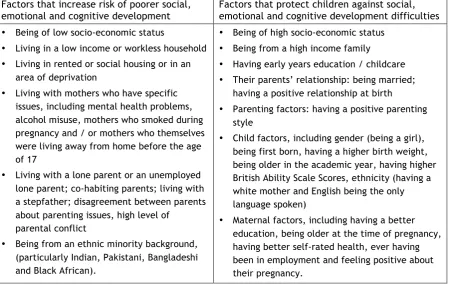
(Growing up in Scotland Report, 2010c, page vi) Drawing on analysis of the Millennium Cohort Study, Scott & Woodman (2012) reported risk and protective factors as mirror images of each other (as shown in Table 1). They found that ‘The most prevalent risk
factors for children under the age of 5 in the UK are that of low income along with lone parent status and
living in social housing’ (page 5, Executive Summary).
6.5
Risk and Protective Factors
[image:23.595.76.532.405.690.2]A further challenge for universal services is therefore to understand the impact of child poverty on health, well-being and positive development (see Table 1).
Table 1 Risk and Protective Factors for Social, Emotional and Cognitive Development1
Factors that increase risk of poorer social, emotional and cognitive development
Factors that protect children against social, emotional and cognitive development difficulties • Being of low socio-economic status
• Living in a low income or workless household • Living in rented or social housing or in an
area of deprivation
• Living with mothers who have specific issues, including mental health problems, alcohol misuse, mothers who smoked during pregnancy and / or mothers who themselves were living away from home before the age of 17
• Living with a lone parent or an unemployed lone parent; co-habiting parents; living with a stepfather; disagreement between parents about parenting issues, high level of
parental conflict
• Being from an ethnic minority background, (particularly Indian, Pakistani, Bangladeshi and Black African).
• Being of high socio-economic status • Being from a high income family
• Having early years education / childcare • Their parents’ relationship: being married;
having a positive relationship at birth • Parenting factors: having a positive parenting
style
• Child factors, including gender (being a girl), being first born, having a higher birth weight, being older in the academic year, having higher British Ability Scale Scores, ethnicity (having a white mother and English being the only language spoken)
• Maternal factors, including having a better education, being older at the time of pregnancy, having better self-rated health, ever having been in employment and feeling positive about their pregnancy.
In this context practitioner knowledge and skills to identify mental health risks are essential. Further, interventions into infant and maternal mental health may be enhanced by the capacity of practitioners to establish and sustain continuity of relationships with women who are identified as vulnerable in pregnancy: it is a major challenge to sustain the engagement of such women in the universal services that begin in pregnancy in Scotland. Where this is achieved there is a chance of being able to assess risk and provide enhanced support where needed, though evidence of the capacity of enhanced ante-natal to promote specific outcomes for women vulnerable in pregnancy remains unclear (Early Years Task Force, 2012).
6.6
The National Parenting Strategy
As policy has continued to develop more is acknowledged and understood about the vital role that parents play in forming their children’s future. The National Parenting Strategy (Scottish Government, 2012) states that “Valuing and supporting Scotland’s parents is one of the single biggest ways of giving the nation’s children the best start in life.” To that end the National Parenting Strategy responds to the key issues facing families in Scotland today by committing to and financing the need to:
• Ensure all parents have easy access to clear, concise information on everything from pregnancy to the teenage years and beyond
• Offer informed, coordinated support to enable parents to develop their parenting skills, whatever their need, wherever they live, whether they live together or apart
• Take steps to improve the availability of – and access to – early learning, childcare and out-of-school care, taking into account parents in rural areas and those who work irregular hours • Provide targeted support to families facing additional pressures that impact on day-to-day
parenting
• Acknowledge and address the wider issues that can affect parents’ abilities to provide a nurturing environment and care for their child.
(National Parenting Strategy, page 7)
The National Parenting Strategy also focuses on the role of public health nurses as part of Government commitment to parents: at the time of writing this report some of these changes are already underway.
• Public health nurses (health visitors) will undertake notification visits within10 to 14 days after birth, offering a programme of screening, surveillance and health promotion checks while also ensuring that all children have a health plan indicator by the age of six months
• NHS Boards and public health nurses (health visitors) as Named Persons will work in partnership with midwives and maternity care staff to ensure pregnant women, children and parents who require additional support are quickly identified and the appropriate referrals, interventions and care plans are put in place
• By April 2013 we will introduce a 24-30 month review covering issues such as child development and physical health, parenting capacity and family matters including domestic abuse and parent-child relationships, along with wider parental health such as smoking, alcohol or drug abuse, and mental and physical health. We will also promote the role of fathers in their child’s health and
development
• As part of our Modernising Nursing in the Community programme, we will work with NHS Boards to set out plans for improving public health nursing services (health visitors and school nurses), including their contribution to the delivery of the parenting strategy.
(National Parenting Strategy, page 30)
This policy focus on providing parental education and professional training in positive parenting provides important context for NHS Lanarkshire’s Best Possible Start approach to Infant Mental Health and the development of an Infant Mental Health Training Framework.
Importantly through the Children and Young People Bill (passed by Scottish Parliament in February 2014), Government intends to introduce a duty on services provided to adults – including drug, alcohol, mental health and justice– to notify the child’s named person if there are concerns that a parent or carer’s situation might get in the way of a child’s well-being.
6.7
Themes in Scottish Policy
A recurrent thread in current Scottish health policy is the value placed on early recognition of common mental health problems: ‘A mental health strategy for Scotland’ states that over the period of 2012 - 2015, NHS Health Scotland will work with the NHS, local authorities and the voluntary sector to ensure staff are confident to use Steps for Stress as an early intervention approach to address common mental health problems [http://www.wellscotland.info/priorities/addressing-common-mental-health-problems].
At the same time as considering generic mental health issues in recent years a greater understanding is emerging about giving children the best possible start in life. It is now well-rehearsed in Scottish policy that children’s mental well-being is about healthy development in nurturing environments starting in utero, and that central to the capacity to make emotional attachments and form relationships is a safe, strong and nurturing bond from infancy with primary caregivers.
knowledge and skills. The understanding that the long-term impact of life-circumstances is not inevitable (Geddes, Haw & Frank, 2010) calls for a greater knowledge of the balance between risk and protective factors over time and how these come together in those who ‘succeed against the odds’.
With particularly vulnerable groups, such as those identified above, an ecological approach encourages a view of the child and family in context, an understanding the resource challenges that the family/lone parent/young mother may be faced with and the way in which lack of resource adds to family stress, and is helpful towards collaborative approaches across agencies.
Health for all Children (Hall 4) is a surveillance, assessment and need identification programme which provides NHS Boards with the foundation for working with young children, and the means of access to more intensive support for those with greater needs. This guidance was supplemented in 2011 with the publication of ‘A New Look at Hall4’ which was aimed at front-line practitioners, clinical leaders and others involved in the planning and delivery of health services to children and their families. Although written principally for the NHS, it states the need for inter-professional and multi-agency working, if the best quality of care and support is to be achieved.
New work is emerging all the time that informs us better about the significance of various harms for the healthy development of the child. This helps to avoid known risks to health and well-being when prevention is both possible and proportionate. Higher implementation proficiency is more beneficial to families (Executive Summary Guidance on Interventions, Scott & Woodman, p14).
Skills in communicating knowledge about attachment may support new understanding that helps parents to relate to their child in ways that foster secure attachment. Group and on to one approaches have the potential to increase caregiver sensitivity to the child. As will be seen in the section on evidence of the effectiveness of interventions, we still need further evidence: we know there are “model” interventions that work; what we need is a roll out of such programmes that faithfully gather evidence so we know their effectiveness when they are more widely applied.
6.8
Summary
At no previous time has there been such a Scottish policy focus on meeting the challenge of child poverty, health inequalities, social inequalities, mental health and parental stress and their consequent impact on education, work and later life outcomes. The significant role played by secure nurturing environments and healthy attachment relations is understood much better. Understandings of the role of parenting and the difference that may be made through work with parents and families to reduce harms and respond positively to their children is now widely accepted.
7.
Survey Outcomes and Recommendations
This online questionnaire aimed to gain a better understanding of parental and infant mental health within the NHS Lanarkshire workforce. The questions requested information about respondents’ job roles with respect to ante-natal, peri-natal and post-natal care, with a particular focus on knowledge related to infant mental health, including training undertaken and required. The open-ended questions enabled the respondents to share, in their own words, their understanding of and responsibility for infant mental health within their job role. The initial responses to this survey in late June 2013 – particularly the answers to the open-ended questions – led to the development of topics and questions for the follow-up focus group sessions held with NHS Lanarkshire staff. The full online survey results are available in Supplement 1. The breadth and depth of the respondents’ experience was evident in their answers. The majority of respondents worked full-time and were in the older age brackets (41-65 years of age), and as one public health nurse put it, there is an ‘(…) ageing workforce...old and wise but also worn out...need enthusiasm of youthful workers’. A recurring theme in the responses was the wish for more time and staffing so they could fulfil their duties to the desired standard and eventually take time out to undertake training. The caseloads tended to be large, and many respondents mentioned that the growing amount of paperwork and computer-based documentation takes up valuable time that could otherwise be spent building relationships with patients. Several comments also mentioned the need for flexibility in follow-up, such as creating more locally based resources available and making home visits to vulnerable mothers or families for whom travel is a challenge, so that they receive the support they need, when they need it.
This theme relates to two key ante-natal challenges: a lack of continuity of care with patients, which makes it more difficult to notice a change in an expectant mother’s mood, and a lack of time to build the trust and rapport required for them to disclose a sensitive issue. Another challenge was that many expectant mothers who work will continue working until their due date, which often means they do not engage as fully in the ante-natal or post-natal support available.
Many respondents felt that better communication and integration within and between different services and agencies was needed, and this was felt to be challenging at times, such as when different computer systems are used (e.g. in social work). Many respondents mentioned that it was important to take holistic approaches to care, considering the broader context or situation a mother or family is in, since this can lead to more timely referrals and follow-up by mental health specialists as appropriate.
Overall the respondents were aware of the importance of parental and infant mental health and of referring to specialists when needed, although some (39 of 91 total responses) did not wish to undertake specific IMH training – perhaps fitting in with the perception that sometimes people associate a negative stigma with the term mental health. A few respondents commented that they had previously received training that they were unable to use, due to time pressures and staffing shortages. Regret was expressed about specific programmes such as Baby Massage that was not seen as a practice priority – the systematic review on this topic highlights that further knowledge is needed about the benefits of infant massage for higher risk groups, duration and differences for babies according to whether a parent or professional is offering the massage (Bennett, Underdown & Barlow, 2013).