79:5 (2017) 57–62 | www.jurnalteknologi.utm.my | eISSN 2180–3722 |
Jurnal
Teknologi
Full Paper
E
THANOL
S
EPARATION
USING
S
EPABEADS
207
A
DSORBENT
Mazin Abdulhusein Beden
a,b, Muhammad Abbas Ahmad Zaini
b*,
Tuan Amran Tuan Abdullah
ca
Ministry of Higher Education and Scientific Research, Baghdad,
Republic of Iraq
b
Centre of Lipids Engineering & Applied Research (CLEAR),
Ibnu-Sina Institute for Scientific & Industrial Research (ISI-SIR), Universiti
Teknologi Malaysia, 81310 UTM Johor Bahru, Johor, Malaysia
c
Centre of Hydrogen Economy, Institute of Future Energy, Universiti
Teknologi Malaysia, 81310 UTM Johor Bahru, Johor, Malaysia
Article history
Received
31 October 2016
Received in revised form
16 May 2017
Accepted
31 May 2017
*Corresponding author
[email protected]
Graphical abstract
Abstract
This work was aimed at evaluating the ethanol separation using Sepabeads207 adsorbent. A 10 wt% of ethanol solution was used as a model fermentation broth. The separation of ethanol from the solution was performed in a tube containing Sepabeads207 at different operating conditions: temperatures, 20 to 40oC; solution pH, 4 to 7; and contact times, 5 to 25 minutes. Recovery of ethanol via stripping was studied between 15 and 35 minutes, and at different air temperatures of 80 to 95oC. The concentration of liquid ethanol was measured using gas chromatography and refractometer. A higher ethanol concentration by Sepabeads207 adsorption was obtained at 20oC and solution pH 4 for 5 minutes, while the recovery was performed better at 80oC for 15 minutes. By applying these conditions, 10 wt% of ethanol in the solution was concentrated to 46 wt%. The ethanol adsorption data are: i). capacity of 0.22 g ethanol/g adsorbent, ii). selectivity of 7.75 (g ethanol/g water (adsorbed)) / (g ethanol/g water (original solution)), and iii). efficiency of 100%. Sepabeads207 is a promising adsorbent for ethanol separation from the dilute ethanol solution.
Keywords: Adsorption, ethanol, fermentation broth, Sepabeads207,stripping
Abstrak
Kajian ini bertujuan menilai pemisahan etanol menggunakan penjerap Sepabeads207. Larutan etanol berkepekatan 10 wt% digunakan sebagai model larutan penapaian. Pemisahan etanol daripada larutan dijalankan dalam tiub mengandungi Sepabeads207 pada keadaan operasi berbeza: suhu, 20 hingga 40°C; pH larutan, 4 hingga 7; dan masa sentuhan, 5 hingga 25 minit. Perolehan semula etanol melalui pelucutan dikaji antara 15 dan 35 minit, dan pada suhu udara berbeza 80 hingga 95°C. Kepekatan cecair etanol diukur menggunakan kromatografi gas dan refraktometer. Kepekatan etanol lebih tinggi dengan penjerapan Sepabeads207 diperolehi pada 20°C dan pH larutan 4 selama 5 minit, sementara perolehan semula dilakukan dengan baik pada 80°C selama 15 minit. Dengan menggunakan keadaan tersebut, larutan etanol 10 wt% telah dipekatkan ke 46 wt%. Data penjerapan etanol adalah: i). kapasiti 0.22 g etanol / g penjerap, ii). kepilihan 7.75 (g etanol/g air (terjerap)) / (g etanol/g air (larutan asal)), dan iii). kecekapan 100%. Sepabeads207 berpotensi sebagai penjerap dalam pemisahan etanol daripada larutan etanol cair.
Kata kunci: Penjerapan, etanol, larutan penapaian, Sepabeads207,pelucutan
© 2017 Penerbit UTM Press. All rights reserved 0
5 10 15 20 25
3 5 7 9
A
dso
rbe
d
e
tha
no
l,
w
t%
1.0 INTRODUCTION
Bio-ethanol production has gained interest globally because of its use as alternative fuel and fuel oxygenate [1]. Ethanol is a high octane fuel and has replaced lead as an octane enhancer in petrol [2]. The production of bio-ethanol as an alternative fuel is due to the limitation of fossil fuel (crude oil) as the trend now is moving towards different sources of renewable energy [1]. Ethanol is among the promising fuels, and most importantly it is harmless to the environment compared to gasoline. Bio-ethanol or ethyl alcohol (C2H5OH) is a clear and colourless
liquid, low in toxicity, biodegradable, and produces little pollution to the environment [3]. Complete burning of ethanol releases only water and carbon dioxide. Using ethanol as a fuel blend decreases the consumption of fossil fuel and so reduces the volatile components compared to that of pure gasoline, leading to the decrease in toxic emissions.
Fermentation process is the main route to produce bio-ethanol from sugar. The main sources of sugar include corn, maize and wheat crops [4,5]. The production of bio-ethanol involves the pre-treatment with acid or base solution, hydrolysis with sulphuric acid, and fermentation with yeast broth [4]. There are also attempts to produce bio-ethanol from lignocellulosic biomass materials such as palm biomass, woods and plant waste [5]. The end stream of the fermentation process normally contains dilute ethanol solution and impurities, hence needs to be purified.
The separation and purification techniques to concentrate ethanol from ethanol/water mixture include distillation [6], extractive distillation with salts [7, 8], pervaporation [9, 10] and adsorption [11, 12]. It is therefore crucial to search for suitable method that requires less energy, simple, efficient and low cost to purify and increase the concentration of ethanol from the fermentation broth.
The classical distillation technology is an energy-intensive process, thus is not an economical choice to concentrate ethanol from the fermentation mixture (4 to 10 wt%) because the broth initially contains more than 90 wt% water than ethanol [4]. On the other hand, adsorption is an attractive technique in ethanol purification because of the difference in molecular size and dipole moment between ethanol and water [11-13]. Adsorption is a process that occurs at least partly as a result of forces active within the phase or surface of boundaries [14]. To date, water-selective adsorbents have been used to concentrate ethanol after excess water is removed through distillation. For example, hydrophilic zeolite 3A was employed to further concentrate ethanol in a solution already rich in ethanol of 92 to 95 wt% [11]. Other water-selective adsorbents such as starch and cellulosic materials have also been proposed for ethanol dehydration [14]. Nevertheless, this approach is a hybrid of distillation-adsorption that utilizes energy-intensive
distillation prior to adsorption to further increase the ethanol concentration.
Because the fermentation broth is a dilute ethanol mixture, it is therefore imperative to employ ethanol-selective adsorbent instead of water-selective adsorbent in the purification process. Yet, there is still less knowledge on this respect in much of published literature. Hence, this work was embarked to evaluate the removal of ethanol from a model fermentation broth using Sepabeads207 adsorbent. The effects of operating conditions, namely adsorption or stripping time, temperature and acidity of the feed were investigated and discussed. Normal adsorption procedures to attain equilibrium capacity by isotherm analysis and breakthrough curve were not performed in this work as a matter of fact that Sepabeads207 adsorbed both water and ethanol, thus complicates the equilibrium analysis due to significant change in solution volume. In the discussion part, the adsorption capacity, selectivity and efficiency were computed to shed some light on the possible use of this adsorbent in the separation of ethanol from the dilute ethanol-water mixture.
2.0 METHODOLOGY
2.1 Materials
Pure ethanol (99 wt%) and hydrochloric acid (0.1 M) were purchased from R&M Chemicals, UK. Sodium hydroxide (0.1 M) was obtained from QReC. Simulated fermentation broth was prepared by diluting pure ethanol with distilled water to a concentration of 10 wt%. Polymer Sepabeads207 (particle size = 3.5 × 10⁻⁴ m, specific surface area =
600 m2/g) was supplied by TAY Scientific Instruments.
2.2 Procedures
The adsorbent was oven-dried overnight at 100°C to remove moisture prior to be loaded into a tube. The sorbent mass was fixed at 14 g. The tube was placed high enough to ensure no interference due to eddy current, to render uniform contact between liquid and adsorbent. Chillier and heater with water circulator were used to control the temperature during adsorption and stripping.
Adsorption configuration. Hot air at 92oC was
passed through Sepabeads207 adsorbent to remove physisorbed moisture before adsorption. The column was equipped with cooling jacket to control the temperature during adsorption, and pump was used to deliver the ethanol-water mixture through the adsorbent bed at constant flow rate. The feed entered from the bottom of the tube to ensure the liquid homogeneously passes through the adsorbent, and then returned back to the feed tank. The process continued by circulating the solution.
ethanol recovery. The condensed ethanol was collected for concentration measurement using gas chromatography (Agilent Technologies-5975 with inert mass selective detector) and refractometer (model RX-5000α, ATAGO). Both measurement methods agreed well for ethanol concentrations up to 60 wt%. All experiments were done in duplicate and average values were reported.
Ethanol purification by adsorption was evaluated at different operating conditions: temperatures, 20 to 40oC; solution pH, 4 to 7; and contact times, 5 to
25 minutes. The solution pH was adjusted using 0.1 M HCl or 0.1 M NaOH, and was measured using pH meter (model HI 8424, Hanna). For stripping process, the variables studied are temperatures, 80 to 95oC;
and contact times, 15 to 35 minutes. The performance of Sepabeads207 adsorbent was determined according to the adsorption capacity, selectivity and efficiency. The adsorption capacity, q
is given as,
a e
m
m
q
(1)where, me (g) is the mass of adsorbed ethanol and
ma (g) is the mass of adsorbent. The selectivity, S is
given as the mass percent of desired ethanol per undesired water over the same ratio in the original solution,
o w o e
w e
m
m
m
m
S
, ,
(2)where, me (g) and me,o (g) are the mass of adsorbed
ethanol and initial mass of ethanol in the original solution, respectively. Symbols, mw (g) and mw,o (g)
represent the mass of adsorbed water and initial mass of water in the original solution. The efficiency, γ was calculated as,
f e
r e
m
m
, ,
(3)where, me,r (g) is the mass of adsorbed ethanol by
the reused adsorbent (after stripping) and me,f (g) is
the mass of adsorbed ethanol by fresh adsorbent.
3.0 RESULTS AND DISCUSSION
3.1 Adsorption of ethanol
Figure 1 shows the effect of temperature on ethanol separation by Sepabeads207 adsorbent. The concentration of the adsorbed ethanol decreased with increasing temperature probably because of partial vaporization of ethanol in feed, hence decreasing the available ethanol that can be captured. In addition, the rise in temperature also increases the kinetics energy of ethanol molecules, making them more mobile, and hence difficult to be settled onto the adsorbent surface. Over the
temperature range studied, 18 wt% of ethanol (equivalent to 3 mL of pure ethanol) was obtained at 20°C, while 12 wt% of ethanol (equivalent to 2 mL of pure ethanol) was recorded at a higher temperature of 35°C.
Ethanol is generally made through the
Figure 1 Effect of temperature on ethanol separation by Sepabeads207 (adsorption: pH = 5, t = 25 min; stripping: T = 92°C, t = 25 min)
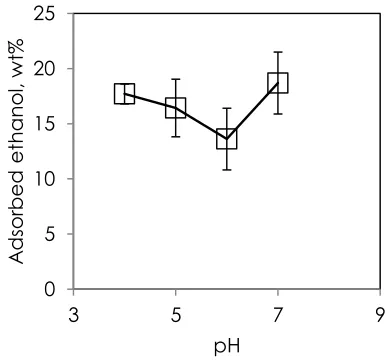
Figure 2 displays the relationship between solution pH and ethanol removal by Sepabeads207.
Figure 2 Effect of solution pH on ethanol separation by Sepabeads207 (adsorption: T = 20°C, t = 25 min; stripping: T = 92°C, t = 25 min)
The ethanol concentration on the adsorbent decreased from pH 4 to 6, while a slight increased in concentration was observed from pH 6 to 7. The fermentation broth is acidic at pH 4 [4]. At low pH, protons (H+) surrounded the water and ethanol
molecules because of the presence of the partial negatively charged —OH groups. Consequently, these electronegative molecules formed ‘bridges’
0 5 10 15 20 25
15 25 35 45
A
dso
rb
ed
et
h
a
n
o
l, w
t%
Temperature, °C
0 5 10 15 20 25
3 5 7 9
A
dso
rb
ed
et
h
a
n
o
l, w
t%
with protons instead of among themselves, hence weakening the strength of hydrogen bonds with their neighbouring molecules [15]. As a result, the separation of ethanol from water is easier at low pH. The same mechanism could also be used to explain the increase of ethanol concentration at pH 7 (unadjusted pH = 6.1) due to the charge neutralization. The mechanism can be visualized in Figure 3.
Figure 3 Protons formed ‘bridges’ with —OH groups, (a) unadjusted pH, (b) at low pH (adjusted using HCl)
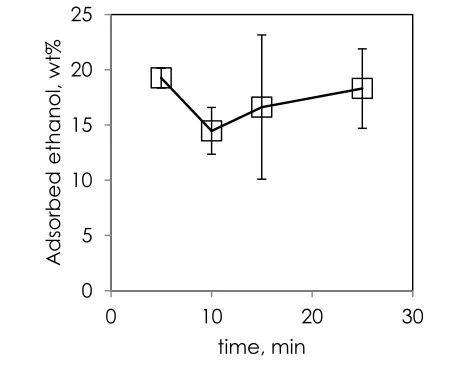
Figure 4 shows the effect of contact time on ethanol separation using Sepabeads207. The ethanol concentration increased between 15 and 20 wt% as the contact time approaching 25 minutes.
Figure 4 Effect of contact time on ethanol separation by Sepabeads207 (adsorption: T = 20°C, pH = 5; stripping: T = 92°C, t = 25 min)
A non-clear behaviour as depicted in Figure 4 could be resulted from the swapping between ethanol and water molecules because of the affinity of Sepabeads207 adsorbent towards —OH groups. Nevertheless, a 20 wt% of ethanol (equivalent to 3.5
mL of pure ethanol) was obtained as early as 5 minutes upon contact with the adsorbent. It is suggested that a minimum contact time may be sufficient to rise the concentration of fermentation broth through adsorption using Sepabeads207 at the stated conditions.
3.2 Stripping of Ethanol
Prior to stripping, the sorbent bed was initially brought into contact and circulated with a 10 wt% of ethanol (solution pH 5) at 20°C for 20 minutes. Then, the recovery of ethanol from Sepabeads207 was carried out by passing a stream of hot air (92°C) through the column bed at a flowrate of 2 L/min. Figure 5 shows the effect of stripping time on the ethanol recovery from Sepabeads207 adsorbent. There is a decrease in ethanol concentration from 24 to about 14 wt% when the stripping time increased from 15 to 25 minutes. Prolonging the stripping time from 25 to 35 minutes did not affect much on the concentration of desorbed ethanol. It also signifies that ethanol is more dominant than water in vapour for the first 15 minutes of stripping because of high relative volatility of ethanol (boiling point = 78.4°C) compared to that of water (boiling point = 100°C)
Figure 5 Effect of stripping time on ethanol recovery from Sepabeads207 (adsorption: T = 20°C, t = 20 min, pH = 5; stripping: T = 92°C)
However, more volume of water is evaporated as stripping time increases, thus decreasing the liquid ethanol concentration in the recovery. So, a shorter stripping time would be preferred in consideration of the economics of the fuel.
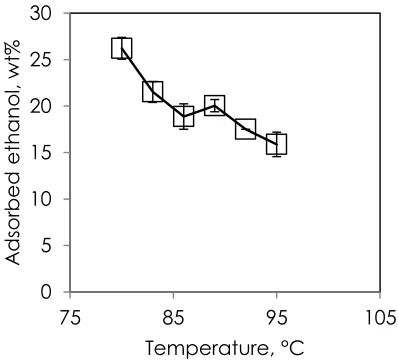
Figure 6 shows the relationship between the concentration of desorbed ethanol and stripping temperature. The ethanol concentration decreased from 26 to 18 wt% when stripping temperature increased from 80 to 86°C. A slight increase of 20 wt% of ethanol was recorded at 89°C. Increasing the stripping temperature to 95°C has resulted in further
(a)
(b)
0 5 10 15 20 25
0 10 20 30
A
d
so
rb
e
d
e
th
a
n
ol,
w
t%
time, min
0 5 10 15 20 25 30 35
10 20 30 40
A
dso
rb
ed
et
h
a
n
o
l, w
t%
drop of ethanol concentration to about 15 wt%. At a temperature well above the ethanol boiling point, a higher amount of ethanol and less amount of water evaporated. However, increasing the temperature above this point may increase the volume of evaporated water and so decreasing the concentration of desorbed ethanol. Therefore, the
ethanol recovery from Sepabeads207 is
recommended at 80°C for a better purity of ethanol.
Figure 6 Effect of stripping temperature on ethanol recovery from Sepabeads207 (adsorption: T = 20°C, t = 20 min, pH = 5; stripping: t = 25 min)
3.3 Sepabeads207 performance
The best conditions of adsorption and stripping were estimated for better purity of ethanol by Sepabeads207 adsorbent. From the parametric evaluation, the following conditions were selected and applied, adsorption: t = 5 min, T = 20°C, pH = 4; stripping: t = 15 min, T = 80°C. Attempts have been made to perform adsorption and stripping using spent (heat-treated) Sepabeads207, and adsorption of ethanol under static (batch) mode. For static setting, the same amount of 14 g of Sepabeads207 was added into 500 mL of 10 wt% of ethanol solution. The uptake of ethanol for static setting was determined through mass balance between the initial concentration and the equilibrium concentration. Table 1 summarizes the performance of Sepabeads207 and the adsorption capacities of ethanol at the optimum conditions and static mode.
The capacity of ethanol at optimum conditions is 0.22 g of ethanol/g of adsorbent. The value is reasonable for low concentration of ethanol as in the fermentation broth especially when the integrated fermentation-adsorption process is to be considered, in which the adsorbent is in contact with the solution broth during fermentation. This is supported by the performance of adsorbent in the static mode that is better than in the continuous setting, suggesting a hybrid static-continuous ethanol
separation in the fermentation process. Such process integration would likely to improve the ethanol uptake as the ethanol will be adsorbed almost instantly and directly when it is produced even in small quantity in the fermentation broth.
Table 1 Performance of Sepabeads207
Fresh Sepabeads207 Ethanol
concentration 48.8 wt% ethanol, 3.85 mL pure ethanol (7 mL solution) Capacity, q 0.22 g ethanol/g adsorbent
Selectivity, S 7.75 (g ethanol/g water (adsorbed))/(g ethanol/g water (original solution))
Spent Sepabeads207 Ethanol
concentration 46.3 wt% ethanol, 3.94 mL pure ethanol (7.5 mL solution)
Efficiency, γ 100%
Static setting Ethanol
concentration 8.12 wt% ethanol remain in solution, 12.9 mL pure ethanol Capacity (static) 0.72 g ethanol/g adsorbent
Selectivity is the likeliness of the adsorbent material to capture desired component over the other components. Sepabeads207 exhibits a selectivity of 7.75 (g ethanol/g water (adsorbed))/(g ethanol/g water (original solution)). It indicates a promising selectivity of the adsorbent towards ethanol which can improve the purity of ethanol from 10 to 46 wt%. This performance could be associated to multi aromatic rings substituted with Br in the structure of Sepabeads207 resin. Also, Sepabeads207 demonstrates an efficiency of 100%, whereby a similar ethanol capacity was achieved using the regenerated spent adsorbent (upon stripping). It implies that the material can be regenerated by simple thermal treatment or stripping for subsequent cycles due to its good thermal stability and resistance against harsh solution conditions. Generally, it implies the potential use of Sepabeads207 in the separation of ethanol from fermentation broth.
4.0 CONCLUSION
Sepabeads207 was used as an adsorbent in the separation of ethanol from a model fermentation broth. The optimum conditions were evaluated, and yield a recovery of 46 wt% of ethanol using fresh and spent adsorbents. Sepabeads207 displays a capacity of 0.22 g ethanol/g adsorbent, that is more selective towards ethanol compared to water, and shows a reusability for subsequent adsorption-stripping cycles. A greater capacity in static mode signifies a potential of static and continuous ethanol recovery in an integrated fermentation-adsorption process for the effective ethanol removal with low energy consumption and reasonable fuel purity.
0 5 10 15 20 25 30
75 85 95 105
A
dso
rb
ed
et
h
a
n
o
l, w
t%
Sepabeads207 is a promising adsorbent in the purification of ethanol from fermentation broth.
Acknowledgement
M.A. Beden wishes to thank Iraq Ministry of Higher Education and Scientific Research for the award of Establishment of Martyrs Scholarship for this study. Authors acknowledged the financial support by Malaysia Ministry of Higher Education and UTM Johor Bahru for the Tier 1 – 14H19 Research University Fund.
References
[1] Ziolkowska, J. R. 2014. Prospective Technologies,
Feedstocks and Market Innovations for Ethanol and
Biodiesel Production in the US. Biotechnology Reports. 4:
94-98.
[2] Ahmed, H., Rask, N. and Baldwin, E. D. 1989. Ethanol Fuel
as an Octane Enhancer in the US Fuel Market. Biomass.
19(3): 215-232.
[3] Huang, H-J., Ramaswamy, S., Tschirner, U. W. and
Ramarao, B. V. 2008. A Review of Separation Technologies
in Current and Future Biorefineries. Separation and
Purification Technology. 62(1): 1-21.
[4] Banduru, V. V. R., Somalanka, S. R., Mendu, D. R.,
Madicherla, N. R. and Chityala, A. 2006. Optimization of Fermentation Conditions for the Production of Ethanol from Sago Starch by Co-immobilized Amyloglucosidase
and Cells of Zymomonas mobilis using Response Surface
Methodology. Enzyme and Microbial Technology. 38(1-2):
209-214.
[5] Wiselogel, A., Tyson, S. and Johnson, D. 1996. Biomass
Feedstock Resources and Composition. In Wyman, C. E.
(Ed.). Handbook on Bioethanol: Production and Utilization.
London: CRC Press.
[6] Ibrahim, N. A. and Zaini, M. A. A. 2016. Parametric
Investigation of Fixed-Tray, Semi-continuous Distillation
Column for Ethanol Separation From Water. Jurnal
Teknologi (Science & Engineering). In press.
[7] Lee, L-S. and Huang, M-Y. 2000. The Vapour-liquid
Equilibrium of Ethanol-water Mixture in the Presence of Benzyltriethylammonium Chloride Salt at Atmospheric
Pressure. Chemical Engineering Communication. 180(1):
19-38.
[8] Gil, I. D., Uyazan, A. M., Aguilar, J. L., Rodriguez, G. and
Caicedo, L. A. 2008. Separation of Ethanol and Water by Extractive Distillation with Salt and Solvent as Entrainer:
Process Simulation. Brazilian Journal of Chemical
Engineering. 25(1): 207-215.
[9] Verhoef, A., Figoli, A., Leen, B., Bettens, B., Drioli, E. and der
Bruggen, B. V. 2008. Performance of a Nanofiltration Membrane for Removal of Ethanol from Aqueous Solutions
by Pervaporation. Separation and Purification
Technology. 60(1): 54-63.
[10] O’Brien, D. J. and Craig Jr., J. C. 1996. Ethanol Production
in a Continuous Fermentation/Membrane Pervaporation
System. Applied Microbiology and Biotechnology. 44(6):
699-704.
[11] Delgado, J. A., Uguina, M. A., Sotelo, J. L., Agueda, V. I,
Gracia, A. and Roldan, A. 2012. Separation of
Ethanol-water Liquid Mixtures by Adsorption on Silicalite. Chemical
Engineering Journal. 180: 137-144.
[12] Malik, R. K, Ghosh, P. and Ghose, T. K. 1983. Ethanol
Separation by Adsorption-desorption.Biotechnology and
Bioengineering. 25(9): 2277-2282.
[13] Ramachandran, C. E., Chempath, S., Broadbelt, L. J. and
Snurr, R. Q. 2006. Water Adsorption in Hydrophobic Nanopores: Monte Carlo Simulations of Water iIn Silicalite.
Microporous and Mesoporous Materials. 90(1-3): 293-298.
[14] Wang, K. S., Liao, C. C., Chu, R. Q. and Chung, T. W. 2010.
Equilibrium Isotherms of Water and Ethanol Vapors on
Starch Sorbents and Zeolite 3A. Journal of Chemical and
Engineering Data. 55(9): 3334-3337.
[15] Ophardt, P. 2003. Chemistry of Hydrogen Bond. Journal of