ABSTRACT
HAGGERTY, JULIA ALLISON. Comparison of two CIDR based Estrous Synchronization Programs in Beef Heifers. (Under the direction of Dr. C. S. Whisnant).
Artificial Insemination (AI) and estrous synchronization reproductive management techniques have been developed for use in beef heifers and cows and have allowed for beef producers to enhance the efficiency of their cow herd. Despite these attributes, beef
producers have been reluctant to adopt thesis management tools due to time and labor costs. For this reason, research has focused on developing estrous synchronization protocols that facilitate fixed-time AI (FTAI). Fixed time AI protocols have worked well with beef cows and they have reduced the time and labor required for heat checks. These protocols have not been as successful in beef heifers. Additionally, no published research has compared the effectiveness of these two protocols in beef heifers. For this study, two fixed time artificial insemination protocols known as 5 day CO-Synch + CIDR and 14 day CIDR Select were compared for effectiveness in beef heifers. The second objective of this study was to determine if the reproductive condition of beef heifers described in terms of reproductive tract scoring and pubertal status influences the success rate of these two fixed time AI protocols.
Comparison of two CIDR based Estrous Synchronization Programs in Beef Heifers
by
Julia Allison Haggerty
A thesis submitted to the Graduate Faculty of North Carolina State University
in partial fulfillment of the requirements for the degree of
Master of Science
Animal Science
Raleigh, North Carolina 2012
APPROVED BY:
____________________________ ______________________________ Dr. C. Scott Whisnant Dr. Gary Hansen
Committee Chair
DEDICATION
This thesis is dedicated to my parents, Libby and Gavin Smith and Steve and Karen Haggerty, who instilled in me the values of hard-work and responsibility, and encouraged me to pursue my dreams; and to my siblings Katie and Jack for their
BIOGRAPHY
Julia Allison Haggerty was born June 2, 1988 to Elizabeth Smith and Steve Haggerty. She was raised most of her life is Raleigh, North Carolina. Her interest in agriculture and passion for showing horses formed a desire to pursue a career in the animal agriculture industry.
After graduating from William B. Enloe High School she knew the only college that would further develop her interest and opportunities in agriculture would be the College of Agriculture and Life Sciences at North Carolina State University. As an undergraduate, Julia continued to follow her passion of raising and showing horses on a State and National level and participated in classes and clubs that furthered her education in agriculture.
ACKNOWLEDGMENTS
Over the past several years there have been many people that have played and
important role in helping me reach this point in life. While it is impossible to thank everyone individually, I would like to express my appreciation to several people for their assistance and guidance. I would like to thank my advisor, Dr Scott Whisnant for the opportunities he has provided for me over the past two years. He provided me with an outstanding graduate experience. I would like to thank everyone at the research stations for their help, without their hard work this project could not have been completed. I would like to thank Dr Mike Whitacre for encouraging me to pursue my Master’s degree. I owe a special ‘Thank You’ to Dr Mitch Hockett, who first sparked my interest in the area of reproductive physiology as an undergraduate and for his ‘hands on’ approach to teaching and enthusiasm. The work
TABLE OF CONTENTS
DEDICATION………ii
BIOGRAPHY……….iii
ACKNOWLEDGEMENTS...iv
LIST OF FIGURES...v
REVIEW OF LITERATURE……….…………..1
Reproductive Physiology of Beef Heifers……...………..……….….….1
Puberty in Beef Heifers….………...………1
Endocrinology of the Estrous Cycle in Cattle………....….….4
Progesterone………..…...5
Role of Progesterone in the Female Reproductive Tract……….…..….…..5
Fixed Time Artificial Insemination………..……….…...…....6
CIDR in Cattle………..………..……….…….…7
Reproductive Tract Scoring in Beef Heifers……….………...….…9
Exogenous Progesterone and Puberty……….…10
5 day CO-Synch + CIDR……….11
14 day CIDR Select………...………..14
MGA Estrous Synchronization in Beef Heifers ……….……….15
COMPARISON OF TWO CIDR BASED ESTROUS SYNCHRONIZATION PROGRAMS IN BEEF HEIFERS………..……….……..18
INTRODUCTION……….……..19
Animals………..……..21
Treatment Groups………..……..21
Sample Collection………...……….………22
Progesterone Analysis……….……….22
Statistical Analysis………..……….23
RESULTS………..………..24
DISCUSSION………..………25
LIST OF FIGURES
Figure 1: Treatment: 5 day CIDR………27
Figure 2: Treatment: 14 CIDR Select………..28
Figure 3: 14-day CIDR Select vs. 5-day CIDR in Beef Heifers………..29
Figure 4: Pregnancy Rates by Treatment and RTS………..……30
Figure 5: Pregnancy Rates by Inseminator and Location…………...………..31
Figure 6: Reproductive Tract Scores..………..32
CHAPTER 1
REVIEW OF LITERATURE
As research on the endocrinology of the estrous cycle in beef cattle has progressed, several estrous synchronization programs have been developed for use in beef heifers and cows. Fixed time artificial insemination (AI) protocols facilitate the mass breeding of all animals at a predetermined time rather than after the time of heat detection. Fixed-time AI protocols have reduced the time and labor required for heat checks in beef herds. These protocols have been less successful in beef heifers. For this study, two fixed time artificial insemination protocols known as 5 day CIDR and 14 day CIDR Select were compared for effectiveness in beef heifers. The second objective of this study was to determine if the reproductive condition of beef heifers described in terms of reproductive tract scoring and pubertal status influences the success rate of these two fixed time AI protocols. To
understand research previously assembled in the field of study of these experiments this review of literature was conducted.
Reproductive Physiology of Beef Heifers
reproductive system of the heifer and stimulate the follicular development of the ovaries. As the ovaries develop, they produce and secrete estrogen and house the developing ovum. Before the heifers reach puberty these follicles that are being produced in response to LH and FSH concentrations grow and regress without ovulating an oocyte.
Puberty is not achieved in a heifer until she responds to the estrogen produced by the follicle. This response made by the heifer to the increasing estrogen is expressed as estrus and the production of a surge of LH leading to ovulation and the first ovulation is generally considered as time of puberty (Williams and Amstalden, 2010). For fertility to be increased the heifer should exhibit two to three estrous cycles prior to breeding. The bovine estrous cycle is typically 19-23 days in mature cows and 19-22 days in heifers (Nellor and Cole, 1956). When compared to heifers bred on their first (pubertal) estrus, heifers bred on their third cycle had a 20% higher conception rate (Byerley et al. 1987).
Puberty in Beef Heifers
The timing in which replacement beef heifers reach puberty in relation to the breeding season is imperative to the success of a cow-calf operation. The goal is to have replacement heifers cycling at the same time as the cows in the herd. Research has found that fertility in heifers increases by 21% if bred on their third estrus compared to their first
period of significant increase have been identified. The first increase occurs between days -18 and -11 and the second occurs between -9 and 0, on which ovulation occurs (Berardinelli et al., 1979). The source of the two increases in the concentrations of the plasma
progesterone in heifers prior to puberty has been found to be the product of ovaries
(Berardinelli et al., 1979). It has been suggested by Gonzalez-Padilla et al, 1975, that the role of progesterone is to sensitize the ovaries to LH. The presence of estradiol causes the
secretion of LH in prepubertal heifers but without exposure to progesterone, ovulation does not occur (Gonzalez et al., 1975). Anderson et al. (1991) suggested that progesterone could also increase hypothalamic sensitivity to get more LH. Progesterone exposure is needed for estrous behavior.
The endocrine events involving gonadotropins that lead to the establishment of puberty in heifers have been studied to determine the role of the relationship between the hormones of the hypothalamus and the pituitary and its effect on the onset of puberty in heifers. As heifers reach puberty, the negative feedback relationship of estradiol on
gonadotropin secretion by the pituitary declines as the hypothalamus becomes desensitized to estradiol (Schillo et al., 1982). The exact mechanism responsible for the decreased feedback action of estradiol on LH secretion in developing heifers is unknown. Day et al. (1987) evaluated the number of estradiol receptors present of the hypothalamus and the pituitary in prepubertal heifers during the time in which the negative feedback between estradiol and LH secretion declines.
heifers three times per week. The concentration of progesterone present in the heifers was used to determine the day puberty was achieved. Blood samples were analyzed from serum concentrations of LH using radioimmunoassay.
Luteinizing hormone serum concentrations increased in a linear fashion during the period leading up to puberty. The amplitude of the LH pulses declined as puberty
approached. The concentration of estradiol receptors located in the hypothalamus and the anterior pituitary decreased as the heifers reached puberty. The concentration of LHRH receptors located on the anterior pituitary showed no change as the animals approached puberty. Day et al. (1987) found that the increases in the frequency of the pulses of LH, 50 days prior to the onset of puberty accompanied the decline in the amplitude of the LH pulses they noted in their study. The increase in the frequency of the LH pulses is the result of the decrease in the sensitivity of the estradiol negative feedback system.
Endocrinology of Estrous Cycle in Cattle
Several hormones work to regulate the bovine estrous cycle. Changes in the concentrations of these different hormones control the recruitment and growth of the follicular waves, timing of ovulation, and the length of the estrous cycle. Estrous
hormone, and prostaglandin can synchronize the estrous cycle to time insemination, shorten the calving season, and increase calf uniformity.
Progesterone
Progesterone (P4) is a hormone vital for the regulation of the function of the female reproductive system. It is secreted by the corpus luteum (CL) and is the major hormone in the progestogen class of hormones. Progesterone is synthesized and produced in the CL by conversion of pregnenolone. WM Allen and Corner identified one of the functions of this product of the CL as preparation of the uterus for reception of the embryos (Allen, 1928). Later, four independent laboratories claimed to have isolated the crystalline product of the corpus luteum and named it progesterone in 1934 (Butenandt, 1934; Hartmen, 1934; Slotta, 1934; Wintersteiner, 1935). In that same year Butenandt was able to determine the chemical structure of progesterone. Like all steroid hormones, progesterone is derived from cholesterol (Ruzicka, 1936).
Role of Progesterone in the Female Reproductive Tract
placenta takes over the production of progesterone seen in other mammalian species. In the cow, the adrenals appear to be able to support gestation through secretion of progesterone after 200 days of gestation (Wendorff et al., 1983). If no mating occurs or conception is simply not achieved, the CL will remain and P4 will be high until prostaglandin F2alpha causes it to regress. When the CL has regressed and progesterone levels are low, there is a rise in estradiol and GnRH secretion. This causes the release of LH in a surge to a level high enough that ovulation occurs and the cycle is completed (Hansel et al., 1973).
Progesterone also plays a key role in the development and onset of puberty. A major increase in the plasma concentration of progesterone occurs preceding the start of puberty in heifers (Donaldson et al., 1970). The diameter of a corpus luteum present on the ovary has a positive correlation to the concentration of serum progesterone between ovulations (Perry et al., 1991). When the corpus luteum is present and producing progesterone ovulation does not occur (Inskeep and Dailey, 2005).
Fixed Time Artificial Insemination
resulting in the presence of a dominant follicle at the time of the second GnRH
administration (Twagiramungu et al., 1995). Prostaglandin F2alpha is given to regress the CL and decrease the circulating progesterone concentrations. Once the CL regresses the second GnRH administration is conducted to induce ovulation. Only 45-60 percent of heifers ovulate after injection of GnRH at random stages of the estrous cycle (MacMillan and Thatcher, 1991). Human chorionic gonadotropin (hCG) is a hormone secreted by human trophoblast cells starting at the 7 days stage of embryo development that when administered to beef heifers instead of GnRH can increase the proportion of heifers that ovulate (Dahlen et al. 2011). Human chorionic gonadotropin mimics LH and when administered to cows can increase ovulation. Estradiol is also effective in synchronization of follicular waves but is not licensed for use in many countries (Martinez et al., 2011).
Controlled Intravaginal Drug Releasing Device (CIDR) in Cattle
Intravaginal Device (DIB) and Medroxiprogestrone (MAP) –impregnating sponges, in the concentration of progesterone they posses. Bovine Intravaginal Device contains 1 g of progesterone and MAP has a progesterone content of 350 mg. CIDR used in New Zealand and other countries aside from the US contain 1.9 g of progesterone.
There are several protocols for CIDR use in beef and dairy cattle breeding programs. In general, the CIDR is inserted into the reproductive tract and remains for 7 to 8 days later when it is removed and an injection of PGF2alpha is administered to initiate the regression of any CL that may be present on the ovaries. Some CIDR protocols utilize either GnRH or estradiol benzoate (EB) administered prior to the CIDR insertion to initiate follicular growth. CIDR administration increases the size of the dominant follicle at the time of ovulation (Martinez et al., 2011). Previous studies have found that an increase in the diameter of the pre-ovulatory dominant follicle is linked to increased fertility (Vasconcelos et al., 1999; Lamb et al., 2001; Peters and Pursley, 2003; Perry et al., 2007; and Busch et al., 2008). A diameter of 12.8 mm was found to be an ideal size of the preovulatory follicle to result in optimal fertility and any < 12 mm in diameter resulted in decreased fertility (Perry et al., 2007). When progesterone is added to a synchronization protocol, it can increase the
supplementation in heifers with a progesterone releasing intravaginal device (PRID) for 12 days, that had delayed onset of puberty resulted in 93.9% of the heifers being cyclic (P4 ≥ 1 ng/ml) within 72 hours of the removal of the device. Artificial insemination at 48 and 72 hours after removing the PRID produced a pregnancy rate of 54.6% at 60 days post-insemination.
Reproductive Tract Scoring in Beef Heifers
Reproductive tract scoring (RTS) is a 5-point scale that identifies the pubertal status of beef heifers. The reproductive tract scoring system was developed by Anderson et al. (1991) to indentify the pubertal status of beef heifers to estimate the breeding potential of the heifers. Anderson et al. (1991) determined the following reproductive tract scoring scale detailed below. Heifers with a RTS of 1 have immature tracts that have no uterine tone and have no ovarian structures. A RTS of 2 has a no uterine tone and a uterine horn diameter of 20-25 mm with follicles present on the ovaries that are less than 8 mm in diameter. A RTS score of 3 shows some uterine tone and follicles 8-10 mm in size present on the ovaries. A 4 has a toned uterus with a horn diameter of 30 mm and follicles greater than 10 mm. A heifer with a score of 5 has a palpable corpus luteum present. Heifers with a score of 1, 2, or 3 are identified as prepubertal and heifers with a score of 4 or 5 are considered pubertal
(Rosenkrans and Hardin, 2002).
in indentifing the size and location of ovarian structures including follicles and corpus lutea. Heifers with follicles greater than 10 mm in diameter or heifers with corpus lutea present are classified as pubertal (Rosenkrans and Hardin, 2002). Serum progesterone is tested on the day of the rectal exam and 10 days later. Serum progesterone can be determined by
radioimmunoassay. Heifers are classified as prepubertal if their serum progesterone level is less than 1 ng/ml in both samples acquired and classified as pubertal if their progesterone level is greater than 1 ng/ml in at least one of the samples collected (Rosenkrans and Hardin, 2002).
Exogenous Progesterone and Puberty
frequency of LH pulses increased with the addition of progesterone up to a limit after which LH secretion was suppressed. Thus, the addition of progesterone could be useful in a
program for synchronization of heifers.
5 Day CO-Synch+ CIDR Program
CO- Synch is a commonly used fixed time artificial insemination protocol for beef cattle (Geary, 1998). The CO-Synch program uses both GnRH and PGF2alpha to control the follicular function of the ovary and the interval between the onset of luteolysis and the LH surge induced by the GnRH. The first GnRH injection is given to reset follicular growth so that at the time of the second GnRH administration ovulation can be induced. The interval between GnRH and PGF2apha administration is necessary for a new follicular wave to occur and the selection and development of a dominant follicle to occur for a successful ovulation to follow (Thatcher et al., 1989). The success of the CO-Synch programs was only marginal in synchronizing estrus because only 5-15% of cycling cows expressed estrus before the PGF was administered (Twagiramungu et al., 1995). The addition of fixed time artificial
insemination with the use of CIDR to the CO-Synch program causes the cow to not go into estrus prior to the time of the prostaglandin F2alpha injection and thus enhances fertility (Lamb et al., 2006). The interval between GnRH and prostaglandin F2alpha administrations was reduced from a 7 day to 5 day CO Synch + CIDR protocol when it was hypothesized that shortening the duration of CIDR treatment with the removal coinciding with optimal follicular development would cause greater fertility rates after fixed time artificial
The timing of fixed time artificial insemination following the prostaglandin F2alpha injections differ between the 7 day and 5 day CIDR protocols. Fixed time artificial
insemination occurring 72 hours after prostaglandin GF2alpha administration in the 5 day CO Synch CIDR protocol increased pregnancy rates by 10.5% over the rates seen in 7 day CO Synch protocols with fixed time artificial insemination occurring 60 hours after the prostaglandin F2 alpha injections (Bridges et al. 2008). No difference in pregnancy rates were seen between the 5 and 7 day protocols in cows artificially inseminated 66 hours after one injection of PGF2alpha in the 7 day protocol (Wilson et al., 2010). Busch et al. (2008) compared 66 hour and 54 hour protocols for fixed time artificial insemination in the 7 day protocol and found 66 hours to cause increased pregnancy rates and to be the near optimal time of insemination for 7 day CO Synch CIDR programs.
F2alpha at the time of CIDR removal and others to receive a first dose of alpha F2alpha at CIDR removal and a second 6 hours later. All of the heifers were inseminated 72 hours following CIDR removal.
Cows were checked for pregnancy 50-70 days following AI through rectal palpation and ultrasonography to determine the time of conception. In this study Kasimanickam et al. (2008) saw a higher fixed time artificial insemination pregnancy rate in the heifers receiving 2 doses of prostaglandin F2alpha than those that receive a single dose of prostaglandin F2alpha at CIDR removal on day 5. The 5-day protocol requires two injections of prostaglandin F2alpha to effectively regress the CL (Kasimanickam et al., 2008).
14 Day CIDR Select Program
It has been postulated that heifers would benefit from longer exposure to the
cycle were allocated to receive either a CIDR insert from Day 0 to day 14 or the 7-day CO-synch CIDR protocol (Busch et al., 2007). The 108 heifers in the 14-day CIDR Select group had a CIDR inserted on Day 0 and removed on Day 14 followed by an injection of GnRH on Day 23, nine days after the CIDR was removed and a prostaglandin injection 7 days after the GnRH, Day 30. Fixed-time artificial insemination occurred 72 hours after the prostaglandin administration along with a second injection of GnRH.
The findings indicated a difference in pregnancy rates between the two protocols. It was concluded that heifers that receive the 14-day CIDR Select protocol are 1.86 times more likely to conceive during fixed-time artificial insemination than those that receive the 7-day CO-Synch + CIDR protocol (Busch et al., 2007). The pregnancy rate of the heifers that received the 14-day CIDR Select protocol was 63% compared to the 43% pregnancy rate seen in the 7-day CO-Synch + CIDR protocol heifers. One of the drawbacks to the CIDR Select protocol compared to that of the 7-day CO-Synch program is that the heifers have to be run through the chute five times in order to perform all the steps whereas the shorter practices only require three times to complete. This increases the time and work required to complete the process and increases the stress to the animal.
MGA Estrous Synchronization in Beef Heifers
improve AI rates can cost about $0.02 per heifer per day to feed. Melengesterol acetate works to suppress heat and prevent ovulation. MGA can also be used to trigger the onset of puberty in heifers in the herd members that have not started cycling. A disadvantage of MGA protocols is the lengthy time of the program, at least one month in duration, and the specific feed requirements that can be hard to manage in large herds.
Melengesterol Acetate is fed for 14 days at a rate of 0.5 mg/heifer/day. Heifers that respond best to this protocol are at least 65% of their mature body weight and have a reproductive score of at least a three or higher. Melengesterol acetate paired with
Prostaglandin requires the administration of prostaglandin F2alpha 19 days following the last day of feeding the MGA. The interval between the last MGA dose and the PGF
administration was increased from 17 days to 19 days with increased efficacy (Lamb et al., 2000). The 14-day treatment with MGA brings all the heifers into the late luteal stage of their cycle so that when the prostaglandin is administered it can shorten the synchronization period to maximize the conception rate. If any non-cycling heifers experience a false heat after the MGA feeding it does require a second prostaglandin injection. The heifers are then bred 1-7 days following the prostaglandin F2alpha injection.
in concurrence with time artificial insemination can further increase conception rates in heifers (Burke et al., 1996).
After reviewing the literature on estrous synchronization management techniques and fixed timed AI in beef heifers and the 5 day CIDR protocol it was found that no direct
COMPARISON OF TWO CIDR BASED ESTROUS
Introduction
Estrous synchronization and artificial insemination enables beef producers to maximize the reproductive potential of their herd by shortening the calving season, increasing calf uniformity and the ability to incorporate superior genetics into their herd. Beef producers are reluctant to incorporate these management techniques because of the time and labor intensive aspect of some protocols. Therefore, the development of estrous
synchronization protocols that decrease the demands of time and labor may increase the use of these new technologies.
The addition of CIDRs into estrous synchronization management techniques has successfully been used to facilitate fixed-time artificial insemination (FTAI) in beef heifers (Busch et al., 2007). The CIDR Select protocol has been studied in comparison to the shorter 7-day CO-Synch + CIDR protocol and was found to yield significantly higher pregnancy rates. Drawbacks to the CIDR Select are the lengthy time requirement of 33 days to
implement this protocol and the number of times the heifers need to be handled. The 7-day CO-Synch + CIDR has also been compared to the abbreviated 5-day CO-Synch + CIDR and shown to have a 10.5% increase in pregnancy rate when shortened to the 5-day protocol. To date, no comprehensive studies have been conducted in beef heifers comparing the 14-day CIDR Select and the 5-day CO-Synch + CIDR and their potential for facilitating the
the time of FTAI. The objective of this study was to compare these two estrous
Materials and Methods
The North Carolina State University Institutional Animal Care and Use Committee approved all of the procedures described in the following experiments.
Animals
Treatment Groups
Heifers were randomly assigned to receive one of two timed AI synchronization protocols. One group was given a new Eazi-Breed CIDR™ (Pfizer, New York) for 14 days (n = 82) (CIDR Select). Nine days after removal of the CIDR heifers were given 100 ug Cystorelin® (Merial, Duluth, GA) im. Seven days after the injection of Cystorelin® heifers were injected im with 25 mg of Lutalyse® (Pfizer, New York). Seventy-two hours after the injection of Lutalyse® heifers were inseminated and given an injection of Cystorelin® im. The other group received a new Eazi-Breed CIDR™ and was injected with 100 ug
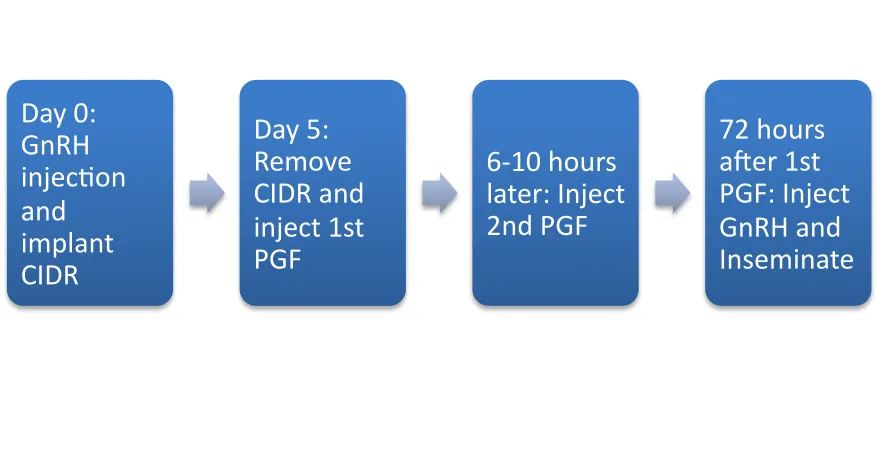
Cystorelin® on day one of their treatment (n = 80; 5 day Co-Synch CIDR, figure 1). Five days later the the Eazi-Breed CIDR™ was removed and the heifers were injected with 25 mg of Lutalyse® at the time of CIDR removal and again 8 hours later. Heifers were injected with 100 ug Cystorelin® and inseminated at 72 hours after the first injection of Lutalyse®. The timing of the treatments was set up so that all heifers in both groups would be inseminated on the same day at that location. At one location all inseminations were performed by one inseminator. At the other locations two inseminators performed AI and heifers were randomly allotted to each inseminator (figure 5).
Pregnancy Diagnosis
determination. Calving dates were used to help distinguish between the first and second AI for heifers that delivered a live calf.
Sample Collection
Blood samples were taken by venipuncture from the tail vein and collected into Vacutainer (Becton, Dickinson, and Company) tubes and blood was stored at 4°C overnight before centrifugation at 2500 rpm. Serum was stored at -20°C until assayed for progesterone concentrations. Blood samples were collected seven days before and on the day of CIDR insertion.
Progesterone Analysis
Serum progesterone concentrations were determined using a commercial
radioimmunoassay kit (Coat-A-Count, Siemens Medical. Los Angeles, CA) validated for use with bovine serum in our laboratory (Whisnant and Burns, 2002). Intra and inter-assay coefficients of variation were 4.8% and 6.9%, respectively. Serum progesterone concentrations of ≥ 1ng/ml were used as the indication that heifers were pubertal.
Statistical Analysis
Results
The pregnancy rates were higher (P<0.05) for the heifers in the 5-day CIDR group than in the 14-day CIDR Select group (figure 3). Across the research locations, the average pregnancy rate of heifers in the 5-day CIDR treatment group was 66.9 ± 2.1% and in the 14-day CIDR Select treatment group was 55.7 ± 1.8%. This is a difference of (P<0.05) by Chi Square. There was no location effect on pregnancy or location by treatment interaction as tested by PROC MIXED of SAS. The P4 status rates at the Tidewater location for low P4 was 66 ± 1.4% and for the high P4 was 68.5 ±2.1%. The P4 status rate for the Riedsville location was 66 ± 1.3% and was 69 ± 2.7% for high P4. There were no differences between groups in number of heifers with serum P4 concentrations > 1ng/ml.
Discussion
Estrous synchronization management techniques and artificial insemination practices have been available to beef producers for three decades and despite the many benefits, producers have been reluctant to implement these programs on their farms. The benefits of increased calf uniformity and shortened calving seasons afforded by these management techniques are often overlooked for the increased labor and cost. The development of economical protocols to synchronize estrus and ovulation are the focus of the research that looks to facilitate FTAI and thus eliminate the time and cost of labor associated with estrus detection.
Integration of controlled internal drug releasing devices (CIDR) containing
progesterone into fixed time artificial insemination protocols for efficacy in heifers had not been directly compared for two recently developed protocols (Five day CO-Synch- CIDR and 14 day CIDR-Select). The objective of this study was to compare the effectiveness of these two protocols for use in beef heifers and to determine if reproductive condition
described by reproductive tract scoring and pubertal status had any influences on the success of these two protocols.
supported by the data collected in this study. In contrast, the shorter progesterone treated program of the 5-day Co-Synch CIDR had a greater overall effectiveness in achieving higher pregnancy rates in heifers and although the differences were not significant the numerical trends if anything indicated that the heifers with RTS of had higher pregnancy rates on the 5 day CIDR protocol.
Wood-Follis et al. (2004) suggested that pubertal status of heifers prior to the initiation of estrous synchronization treatments might influence the degree of synchrony achieved. Reproductive tract scoring is an attempt to evaluate the degree of puberty and estrous cycling a heifer has achieved prior to breeding in order to increase the efficacy of estrous synchronization. Therefore, the effectiveness of an estrous synchronization protocol should be based on the ability to induce estrus in a mixed population of heifers that are both cycling and prepubertal. The inclusion of progesterone into an estrous synchronization program is successful at inducing estrous cyclicity and ovulation in prepubertal heifers (Patterson et al., 2000).
found that one dose had a pregnancy rate of 15-17% less than that of the 2 prostaglandin F2alpha dose pregnancy rate of 69% (Kasimanickam et al., 2008). Our comparison of the 14-day CIDR Select and the 5-14-day CO Synch + CIDR yielded a pregnancy rate of heifers in the 5-day CIDR treatment group was 66.9% and in the 14-day CIDR Select treatment group was 55.7%. The 5-day CO-Synch + CIDR protocol improved the synchrony of estrus and
Treatment: 5-day CIDR
Figure 1: 5-day CIDR estrous synchronization protocol. CIDR was inserted vaginally on Day 0 and GnRH injection administered. CIDR was removed on day 5 and two injections of PGF were administered 6-10 hours apart. The heifers were inseminated 72 hours after the first PGF administration and given a second GnRH injection.
Day 0:
GnRH
injec/on
and
implant
CIDR
Day 5:
Remove
CIDR and
inject 1st
PGF
6-‐10 hours
later: Inject
2nd PGF
Treatment: 14-day CIDR Select
Figure 2: 14-day CIDR Select estrous synchronization protocol. CIDR was inserted vaginally on Day 0. CIDR was removed 14 days later. On Day 30 an injection of PGF was administered. 70–74 hours after PGF injection, GnRH was administered and inseminate occurred at this same time. We also injected GnRH 7 days before PGF in this study. This is a variation on the CIDR-Select that is often used.
14-day CIDR Select vs. 5-day CIDR in Beef Heifers Day 0
• Implant CIDR
Day 14
• Remove CIDR
Day 23
• Inject GnRH
Day 30
• Inject PGF
70-‐74 hours aEer PGF
Figure 3: Comparison of pregnancy rates in beef heifers between the 14-day CIDR Select protocol and the 5-day CIDR show a greater effectiveness with the 5-day
CIDR treatment in heifers.
Pregnancy Rates by Treatment and RTS
0 20 40 60 80
5-‐day CIDR 14-‐day CIDR Select
Pregnancy Rate (%)
Figure 4: Comparison of pregnancy rates in heifers by reproductive tract scores and by the treatment. For the 14-day CIDR Select program the heifers with a RTS of 2 had a pregnancy rate of 50% and the heifers with RTS of 3 had a rate of 66%. For the 5-day CIDR group the heifers with a RTS of 2 had a pregnancy rate of 75% and those with an RTS of 3 had a rate of 58%.
Pregnancy Rates by Inseminator and Location
0
10
20
30
40
50
60
70
80
14 day CIDR Select 5 day CIDR
50
75 66
58
Treatment
Pregnancy Rates (%) by Treatment and RTS
RTS 2
Figure 5: Comparison of pregnancy rates by location and inseminator. There was one inseminator at the Tidewater location with a rate of 62%. At the Reidsville location, there were two inseminators, inseminator A had a rate of 68% and inseminator B had a rate of 63% which are not statistically different. At Butner there were two inseminators, inseminator A had a rate of 58.1% and inseminator B had a rate of 60.3%.
Reproductive Tract Scores
50 55 60 65 70
Butner Reidsville Tidewater 58.1
68
62 60.3
63
Location
Pregnancy Rates (%) by Inseminator and Location
Inseminator A
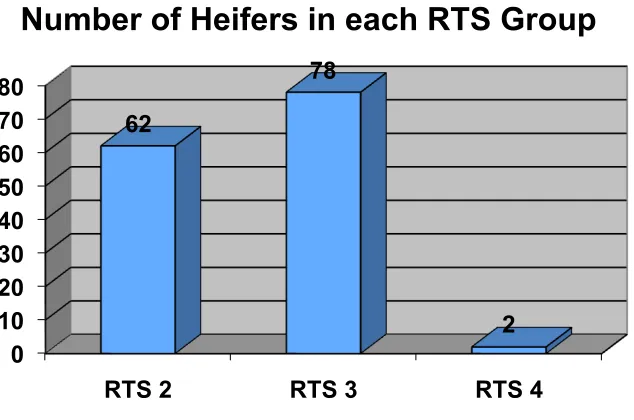
Figure 6: In this study the RTS of the heifers ranged from 2-4. There were 62 heifers with an RTS of 2, 78 heifers with an RTS of 3, and two heifers with and RTS of 4.
Serum Progesterone of Heifers 0
10 20 30 40 50 60 70 80
RTS 2 RTS 3 RTS 4
62
78
2
Figure 7: The pregnancy rate of the heifers with a P4 of greater than 1 ng/ml was 64.2% and the pregnancy rate of the heifers with a P4 of less than 1 ng/ml was 59.5%.
56 58 60 62 64 66
P4> 1 ng/ml P4< 1 ng/ml
Serum Progesterone of Heifers
REFERENCES
Allen, W. M. 1935. The isolation of crystalline progestin. Science 82(2118):89-93.
Anderson, K. J., D.G. Lefever, J.S. Brinks, K.G. Odde. 1991. The use of reproductive tract scoring in beef heifers. AgriPractice 12: 19-26.
Anderson, L.H., C.M. McDowell, and M.L. Day. 1996. Progestin-induced puberty and secretion of luteinizing hormone in heifers. Biol. Reprod. 54:1025-1031.
Berardinelli, J. G., R. A. Dailey, R. L. Butcher, E. K. Inskeep. 1979. Source of progesterone piror to puberty in beef heifers. J. Anim. Sci. 49:1276-1280.
Bridges, G. A., L. A., Helser, D. E. Grum, M. L. Mussard, C. L. Gasser, and M. L. Day. 2008. Decreasing the interval between GnRH and PGF2alpha from 7 to 5 days and lengthening proestrus increases timed- AI pregnancy rates in beef cows. Theriogenology 69:843-851.
Busch, D.C., D.J. Wilson, D.J. Schafer, N.R. Leitman, J.K. Haden, M.R. Ellersieck, M.F. Smith, and D.J. Patterson. 2007. Comparison of progestin-based estrus synchronization protocols before fixed-time artificial insemination on pregnancy rate in beef heifers. J. Anim. Sci. 85:1933-1939.
Busch, D. C., D. J. Schafer, D. J. Wilson, D. A. Mallory, N. R. Leitman, J. K. Haden, M.R. Ellersieck, M.F. Smith, D. J. Patterson. 2008. Timing of artificial insemination in post partum beef cows following the administration of CO-Synch + controlled intravaginal drug-release protocol J. Anim. Sci. 86:1519-1525
Busch, D. C., J.A. Atkins, J.F. Bader, D.J. Patterson, D.J. Schafer, T.W. Geary, M.F. Smith. 2008. Effect of ovulatory follicle size and expression of estrus on progesterone secretion in beef cows. J. Anim. Sci. 86:553-563.
Butenandt, A., U. Westphal. 1934. Zur Isolierung und charakterisierung des Corpusluteum-hormons. Berichte Duetsche chemische Gesellschaft. 67:1440-1442.
Byerley, D.J., R.B. Staigmiller, J.G. Berardinelli, and R.E. Short. Pregnancy rates of beef heifers bred either on pubertal or third estrus. J. Anim. Sci. 1987 65:645-650.
Dahlen, C.R., G.C. Lamb, C.M. Zehnder, L.R. Miller, and A. DiCostanzo. 2003. Fixed- time insemination in peripubertal, light-weight replacement beef heifers synchronized with PGF2alpha and GnRH. Theriogenology 59:1827-1837.
Dahlen, C. R., G. H. L. Marquezini, J. E. Larson, G. C. Lamb. 2011. Fixed-time artificial insemination in replacement beef heifers after estrus synchronization with human chorionic gonadotropin or gonadotropin-releasing hormone. J. Anim. Sci. 89: 2750-2758.
Day M. L., K. Imakawa, P.L. Wolfe, R.J. Kittok, J.E. Kinder. 1987. Endocrine mechanisms of puberty in heifers. Role of hypothalamo-pituitary estradiol receptors in the negative feedback of estradiol on luteinizing hormone secretion. Biol Reprod. 37:1054-65.
Geary, T.W., Whittier, J.C. 1998. Effects of timed insemination following synchronization of ovulation using the Ovsynch or CO-Synch protocol in beef cows Prof Animal Sci. 14: 217-220.
Gonzalez-Padilla, E., J.N. Wiltbank, and G. D. Niswender. 1975. Puberty in beef heifers I. The interrelationship between pituitary, hypothalamic, and ovarian hormones. J. Anim. Sci. 40: 1091.
Gonzalez-Padilla, E. G. D. Niswender, and J. N. Wiltbank. 1975. Puberty in beef heifers . II. Effect of injections of progesterone and estradiol-17beta on serum LH, FSH, and ovarian activity. J. Anim. Sci. 40:1105.
Gonzalez- Padilla, E., R. Ruiz, D. LeFever, A. Denham and J. N. Wiltbank. 1975. Puberty in beef Heifs III. Introduction of fertile estrus. J. Anim. Sci. 40: 1110.
Hansel, W., E.M. Convey. 1983. Physiology of the Estrous Cycle. J. Amin. Sci. 57:404-424. Johnson, S. K., M. L. Day. 2004. Methods to reduce or eliminate detection of estrus in a melengestrol acetate-PGF2(alpha) protocol for synchronization of estrus in beef heifers. J Anim. Sci. 82:3071-3076.
Kasimanickams, R., M. L. Day, J. S. Rudolph, J. B. Hall, and W. D. Whittier. 2008.
Comparison of one versus two does of prostaglandin F2apha in a 5-day, progesterone-based synchronization protocol in Angus –cross beef cows. Theriogenology 70:585-585.
Lamb, G. C., J. S., Stevenson, D. J. Kesler, H. A. Garverick, D.R. Brown, and B. E. Salfen. 2001. Inclusion of an intravaginal progesterone insert plus GnRH and prostaglandin F2apha for ovulation control in postpartum suckled beef cows. J. Anim. Sci. 79:2253-2259.
and artificial insemination in replacement beef heifers using gonadotropin-releasing hormone, prostaglandin F2alpha, and progesterone. J. Anim. Sci. 84: 3000-3009. Lammoglia, M.A., R.A. Bellows, E.E. Grings, J.W. Bergman, S.E. Bellows, R.E. Short, D.M. Hallford, and R.D. Randall. 2000. Effects of dietary fat and sire breed on puberty, weight, and reproductive traits of F1 beef heifers. J. Anim. Sci. 78:2244- 2252.
Laster, D. B., H.A. Glimp, K.E. Gregory. 1972. Age and weight at puberty and conception in different breeds and Breed-crosses of beef heifers. J. Anim. Sci. 34:1031-1036.
MacMillan, K. L., and W. W. Thatcher. 1991. Effects of an agonist of gonadotropin-releasing hormone on ovarian follicles in cattle. Biol. Reprod. 45:883-889.
Martinez, M.F., J.P. Kastelic, G.P. Adams, B. Cook, W.O. Olson, and R.J. Mapletoft. 2002. The use of progestins in regimens for fixed-time artificial insemination in beef cattle. Theriogenology 57:1049-1059.
Nellor, J.E., H.H. Cole. 1956. The Hormonal Control of Estrus and Ovulation in Beef Heifer. J. Anim. Sci. 15:650-661
Polat, B., A. Colak, M. Kaya, O. Ucar. 2009. Stimulation of delayed pubery in heifers by using a PRID regime. Ataturk University Faculty of Veterinary Medicine Department of Obstetrics and Gynaecology.
Ruzicka, L. (01/01/1936) “ Relationships in the Sex Hormone Groups”. Nature (London) (0028-0836), 137 (3459) p. 260.
Schillo, K.K., D.J. Dierschke, and E.R. Hauser. 1982. Regulation of luteinizing hormone secretion in prepubertal heifers: Increased threshold to negative feedback of estradiol. J. Anim. Sci. 54:325-336.
Slotta K. H., H. Ruschig, E. Fels (1934). REindarstellung der Hormone aus dem Corpusluteum. Berichte Deutsche chemische Gesellschaft 67:1270-1273.
Thatcher, W. W., K. L. McMillian , P. J. Hansen, and M. Drost. 1989. Concepts and regulation of corpus luteum function by the conceptus and ovarian follicles to improve fertility. Theriogenology 31: 141-164.
Wendorff, GL, MS Lawyer, NL First. 1983. Role of the adrenals in the maintenance of pregnancy in cow. Journal of Reproduction and Fertility 68:281-287.
Whisnant, C.S., P. Burns. 2002. Evaluation of steroid microspheres for control of estrus in cows and induction of puberty in heifers. Theriogenology. 58:1229-1235.
Wilson, D. J., D. A. Mallory, D. C. Busch, N.R. Leitman, J. K. Haden, D. J. Schafer, M. R. Ellersieck, M.F. Smith, D. J. Patterson. 2010. Comparison of short-term progestin-based protocols to synchronize estrus and ovulation in postpartum beef cows. J. Anim. Sci. 88:2045-2054.