A C O M P O S I T I O N A L A P P R O A C H TO T H E T R A N S L A T I O N O F T E M P O R A L E X P R E S S I O N S IN THE R O S R T T A S Y S T E M
L i s e t t e hppelo
Philips Research L a b o r a t o r i e s Eindhoven, The Netherlands
A b s t r a c t
This paper discusses the translation of temporal expressions, in the framework of the m a c h i n e transla- tion system Rosetta. The translation method of Rosetta, the "isomorphic grammar method', is based on M o n t a g u e ' s Compositionality Principle. It is shown that a compositional approach leads to a transparent account of the complex aspects of time in natural language and can be used for the translation of temporal expressions.
O . I n t r o d u c t l o n
It is a well~known fact that the translation of temporal expressions in natural languages is not a simple mapping of verbal tenses. In (I) the Dutch Simple Present Tense is used while in (2) a Present Perfect Progressive Tense is the most appropriate
tense to represent the time m e a n i n ~ of (i) in
English. A more literal translation of the Dutch Simple Present is sometimes considered to be ill- formed, as Illustrated by (3). But in other cases that translation yields a perfect result, as shown by the pair (4)/(5).
(i) Jan woont hier al 20 Jaar
(Dutch: J o h n - l i v e s - h e r e - a l r e a d y - 2 O - y e a r s ) (2) John has been living here for 20 years (3) * John is living here for 20 years
(4) J a n woont hier (John-lives-here)
(5) J o h n is living here
In this paper I will deal with this kind of problem from the perspective of m a c h i n e translation. More specifically, I will sketch a solution within the framework of the Rosetta machine translation project. In this project translation systems are developed b e t w e e n Dutch, English and Spanish, using the "iso- m o r p h i c grammar" method. According to this method, the gr~mnmars of the languages are attuned to each other in such a way that a sentence s is a transla- tion equivalent of a sentence s" if s and s" have slmJlar der~vational histories (el. L a n d s b e r g e n (1984)).
In section I I will give a short exposition of the
isomorphic grammar method. Section 2 presents a
theory of time in the Rosette framework. In section 3 I will sketch isomorphic grammars for temporal ex-
pressions and illustrate them by some examples.
Possible extensions will be discussed in s e c t i o n 4.
1 . The I s o n o r p h i c G r a m m a r M e t h o d 1 . 2 . H - G r a m m a r s
M - g r a m m a r s can be seen as a computationally viable and syntactically powerful variant of Montague Gram- mar. An M-grammar consists of three components: I) a syntactic component, 2) a morphological component and 3) a semantic component.
I) The syntactic component
The syntactic component defines a set of S-trees
(surface trees) whose leaves correspond to words, in surface order. An S-tree is an ordered tree with nodes w h i c h are labelled with syntactic categories and attribute-value pairs. The branches are labelled with syntactic relations, e.g. subject, object, etc. In the rest of this paper I will abbreviate them by specifying the top n o d e and a c h a r a c t e r i z a t i o n of the rest of the tree, as:
CAT{attribute: value,...} (string)
The syntactic component: defines S-trees by spec-
ifying:
(i) a set of basic S-trees
(also called basic expressions) (ii) a set of syntactic rules.
Starting from basic expressions larger expressions are formed by applying syntactic rules.
A simplistic example is shown in the left part of figure I. The S-tree for the sentence the woman is singing is derived from the basic expressions woman and sing by applying rules R I and R .
The process of making an expression can be repre- sented by a syntactic d e r i v a t i o n tree (D-tree) with the (names of the) basic expressions at the terminal nodes and the names of the rules that are applicable at the nonterminal nodes.
2) The m o r p h o l o g i c a l component
The m o r p h o l o g i c a l component relates lexical S-trees (the leaves of the s u r f a c e trees) to strings. So the syntactic and morphological components together de- fine sentences.
I will ignore this component in this paper. 3) The semantic component
M - g r a m m a r s obey the Compositionality Principle, which
states that the meaning of an expression is a
function of the m e a n i n g of the parts of that ex- pression. The basic S-trees and all other S-trees can
be g i v e n a m o d e l theoretical interpretation: the
basic expressions correspond to semantic values in a semantic domain and the rules to semantic operations. We can represent this in a semantic derivation tree that corresponds to the syntactic D-tree and that is labelled with the names of the meanings of the basic expressions at: the terminal nodes and the names of the semantic operations at the nonterminal nodes. (cf. figure i)
M - g r a m m a r s must satisfy certain conditions to allow for effective analysis next to generation. For more details the reader is referred to L a n d s b e r g e n (1982, 19~4).
1.2. T r a n s l a t i n g w i t h :Lsomorphle M - g r a m m a r s The translation relation between two (or more) lan- guages is defined by attuning their grammars as follows:
(i) For each basic expression of a grammar there is at least one corresponding basic e x p r e s s i o n of the other grammar with the same meaning.
(ii) For each syntactic rule of a grammar there is at least one corresponding syntactic rule of the other grammar, with the same meaning.
The correspondence b e t w e e n rules is only required for "meaningful" rules. Syntactic transformations can he added for each language separately and do not occur in the derivation trees.
In terms of d e r i v a t i o n trees: for each syntactic
d e r i v a t i o n tree of a grammar there is at least one syntactic derivation tree of the other grammar with the same g e o m e t r y and labelled with corresponding basic expressions and syntactic rules. These syn- tactic d e r i v a t i o n trees correspond to the same seman- tic derivation tree and are called isomorphic deriva- tion trees.
Two sentences are defined as translations of each other if they have the same semantic derivation tree and therefore corresponding derivation trees. (Note that the d e f i n i t i o n is given for isolated sentences on the basis of linguistic knowledge only: in fact a "possible translation" relation is defined, possible in some context.)
Grammars that are attuned in this way are called isomorphic M-grammars if the corresponding sets of rules satisfy certain applicability conditions, such that for each well-formed syntactic derivation tree
in a grammar there is at least one well-formed
syntactic derivation tree in other grammars. (A
derivation tree is well-formed if it defines a
sentence, i.e. if the rules are applicable.) figure I
English 17~ Dutch
---RI b2- ~ i B2 [ ~
sing
zi[ngen
~ - - b l BI "I
I
!~ S n ~ICOUW
synt. D-tree s6m. ])-tree synt. D-tree
In figure 1 a simple unambiguous - example of
isomorphic grammars for E n g l i s h and D u t c h is given. The R o s e t t a translation systems are based on iso- m o r p h i c grammars. The semantic derivation trees func- tion as an intermediate language (IL). Generative and analytical components can be derived from the gram- mars: the analytical component maps a sentence of the source language into one or more semantic D-trees; the g e n e r a t i v e component maps a semantic D-tree into one or more sentences of the target language.
In this paper the translation relation is discussed from a purely generative point of view. The semantics
will be treated rather informally and I will es-
pecially discuss the correspondence of the syntactic rules and show the development of parallel deriva- tions of sentences.
2. A T i m e t h e o r y f o r R o s e t t a
A linguistic analysis of temporal expressions, in particular an MT approach that presumes an inter-
lingua, requires some level of representation that is
neutral with respect to the morpho/syntactic means for expressing time in natural language. As I prefer to adhere tc the current notions developed in the literature, I will discuss the relevant data in the perspective of the m o d e l - t h e o r e t i c a l analyses put forward is e.g. Reichenbach (1947), Comrie (1976), Van Eynde e.ao (1985), Oversteegen and Verkuyl (1985), Bruce (1972), De Vuyst (1983).
2.1. T e m p o r a l e x p r e s s i o n s Temporal expressions consist of:
tense, a linguistic category which consists of m o r p h o l o g i c a l forms of the verb (e.g. worked, works)
or of auxiliary v e r b forms in combination with
certain morphological fomns of the verb which I call "periphrastic tenses" (e.g. has worked, is working; Spanish: e_st~ trabajando).
time adverbials, liugnistie categories consisting of time adverbs, prepositional phrases or time con- junction phrases.
2 . 2 . T h e t i m e m o d e l
I will assume that all temporal expressions have a
function in relating the event described by a sen-
tence or a clause to a time model. Vor present
purposes a simplified specification of the features of the mode] I assume suffices. (For definitions see e.g. Bruce (1972))
This time model T is a partially ordered set of which the elements are called time points. The ordering relation is "<", meaning "earlier than". For this model we define a notion interval. Intervals are subsets of T without any gaps or branches.
One of those points is called S, the moment of speech or narration.
The "objects" to be located in T will be called events. An event is something that can be located in time, dependent on the temporal ingredients of the sentence that refers to the event. For example in order to establish the truth value of John has been living here for 20 years, we need to locate the event "John's living here" in T.
An event is assumed to correspond to an interval E of T. We will say that the event is located in T W h e n the relation between E and S can be established. This relation can be complex in the sense that more intervals than E and S can be involved. Such inter- vals are called reference intervals.
Intervals can be characterized by properties indica- ting e.g. the "length" or "duration" of an interval, a particular relation to S or a part of the calendar.
These properties are expressed by adverbials or
special (auxiliary) verbs.
The event which corresponds to the interval E has temporal properties which are often called
"Aktionsart" in the literature. Both the main verb and its arguments of the clause which expresses the event may play a role in the determination of the Aktionsart (cf. Verkuyl (1972)).
U s u a l l y four types of Aktionsart are be distinguished (ef. e.g. De Vuyst (1983)) as is illustrated in the following examples:
(6) This book belongs to me (stative) (7) John is working (activity)
(8) John wrote a letter (accomplishment)
(9) H e reached the end of the street (achievement)
a r b i t r a r i l y long interval. In (7) the event is durative, but it cannot be claimed to take place only at a time point (i.e. a minimal interval) in the model; it :Is dynamic which implies some progress or change. The event in (8) is terminative, because the result or end is indicated; it can be looked at from the "outside" as a unit, but it cannot be claimed to take place at a time point in the model; it is dynamic when looked at from the "inside" (activity). In (9) the event is terminative, because the end or result is indicated but Jt is also claimed to take place at a time point in the model and therefore also called momentary°
There are two important types of relations between intervals:
I) the deictic relation: relation between a reference interval and S
2) the aspectual relation: relation between E and a reference interval
These relations are expressed by m o r p h o l o g i c a l and periphrastic tense.
2 . 3 . T i m e i n R o s e t t a
For definin~ the translation of temporal expressions in the Rosette framework, we have to write isomorphic compositional grammars for them, which boils down to: a) specifying for each language:
(i) temporal expressions (time adverbials etc.) ex- pressing properties of time intervals,
(ii) syntactic rules (e.g. tense rules) that indicate how temporal expressions must and can be combined, expressing relations between those intervals,
b) attuning these expressions and rules of the
languages involved to each other ~n the way described in section ].
Before specifying these grammars in section 3 I will briefly discuss the motives for the strategy followed in these grammars and for the particular choice of reference intervals.
I. Tenses and adverbials cannot be translated inde- pendently:
- Sometimes the translation of a tense is only correct if it occurs with a certain time adverbial. Consider for example the pair (i0)/(ii):
(i0) Jan werkt bier al 3 jaar (Pres. Tense) (11) John has been w o r k i n g here for 3 years
(Pres. Perf. Prog. Tense) The corresponding tense of the Dutch Present Tense in the context of the time adverbial al 3 jaar in (i0), is in English a Present Perfect Progressive Tense as in (Ii). But without that time adverbial the trans- lation is different as is sho~1 in the examples (12) - (14):
(12) Jan werkt (Pres. Tense)
(13) John i s w o r k l n g (Pres. Prog. Tense)
(14) *John has been w o r k i n g (Pres. Perf. Prog. Tense)
- Adverbla]s are not always translated into adverb-
ials. Consider for example the pair (15)/(16): (15) English: He has just arrived.
(16) Spanish: E1 acaba de llegar.
In (15) the adverb Just expresses the "near past", but in (16) a special verb acabar de which could be considered as a part of some perifrastic tense is used.
Those examples are an indication that the grammars
for temporal expresions should take Into accoun[ tenses and time adverbials together.
2. Van Eynde et al. (1985) give a specification of time meaning representation for m a c h i n e translation, based on a time model with three intervals, E, R and S, w h i c h results in time meaning r e p r e s e n t a t i o n s that do take into account time adverbials.
In their time model, however, the set of aspectual relations, relations between E and R, contains next
to tile retrospective relation (E before R) the
imperfective relation (E contains R). This seems
inadequate in view of sentences that can have both an imperfective and a retrospective aspectual relation as in e.g. (10) and (ll).
The complexit:y of the aspectnal relation is also recognized in Maegaard (1982) where a special value CONTINUOUS for the attribute RETROSPECTVE was intro- duced for the translation of verbal tenses.
K r a u w e r and Des Tombe (1985) make similar observa- tions.
I propose therefore that in the R o s e t t a framework I) a time meaning representation obligatorily will contain an aspeetual relation, i.e. a relation be- tween E and a reference interval R~, which will be
called perfective if E is a subset ~ R E and
imperfee--t~ve~f~R~ is a subset of E , and
~) t ~ a t .it can t"bptionally contain a retrospective
relation between R E and a time p~int RS, which is
sone "local l×}Int of evaluation" , meaning that ~( lasts until R S.
This R_ is an arbitrary point of some reference Interval. Consider for example-
(17) Y e s t e r d a y John had been living there for 3 years
The 3 years (RE) last until some point during
y e s t e r d a y
(Rs).
If there is no retrospective relation, R S will he an
arbitrary point of R F.
Between R S and S th~ d~-~ctic r e l a t i o n is specified:
Past (R e 'is before S), Present ( R S is simultaneous
W ~
s ) % r ~:,~F~r~
~H
s is ~ t ~ T s).
So a time m e a n i n g representation of an event in R o s e t t a will eonsist of:
- properties of E and R E
an aspectual relation"between E and R E
o p t i o n a l l y a retrospective relation between R E and R S
- a' deictic relation between R S and S
In the next section grammars for temporal expressions will be discussed which start with a clause and apply rules that will first specify the properties for E, then the aspectual relation and the properties for
R E, then optionally the retrospective relation and
finally the deictic relation.
3. Isounorphle. g r a m m a r s f o r t e m p o r a l e x p r e s s i o n s 3 . 1 . C o r r e s p . n d i n g r u l e s for t e m p o r a l e x p r e s s i o n s
To achieve i,~omorphy of grammars for temporal ex- pressions, corresponding rules for the languages of the system have to be written as was explained in section I. These rules are applied to a clause which consists of a verb, its arguments and an attribute Aktionsart, the value of which has been specified during the composition of the clause. The result of
the application of the rules is a clause with
time intervals and the event are specified. The rules have one argument~ a clause, or two arguments, a clause and an adverbial or an auxiliary verb that we wish to introduce categorematically.
I will d i s t i n g u i s h five classes of rules. The rules are either obligatory (OB)~ meaning that exactly one of this class of rules is applied, or optional (OP). The rules will be applied in the following order (from a generative, compositional point of view). I. Aktionsart rules (OP): the application of these rules results in a new clause with a different Aktionsart value caused by some (auxiliary) verb or
adverbial
that
is inserted into the clause.If. duration rules (OP): These rules insert a dur- ation adverbial into the clause.
III. aspect rules (OB): These rules insert a refer- ence adverbial and specify the aspectual tense forms (perfective or imperfectlve) of the verbs.
IV. retrospective rules (OP): These rules are applied to a clause that contains some r e t r o s p e c t i v e refer- ence adverbial. It inserts another, n o n - r e t r o s p e c t l v e reference adverbial and adds, if necessary, auxiliary verbs and/or adverbials.
V. deictic rules (OB): These rules determine the deictic tense form of the verbs in the clause. In 3.3. the rules will be discussed in more detail.
3.2. T h e S - t r e e s
A clause is represented as an S-tree with a top node CL that has the following temporal attributes and corresponding value sets in all languages:
Aktionsart:
{stative,
activity,accomplishment, achievement} aspect: {imperfective, perfective, unmarked} deixis: {present, past, future, unmarked} retrospeetivity: {-retro, q-retro~
(the underlfned value is tile initial value).
A clause contains a VERB node with attribute-value pairs concerning the verb form, w h i c h may differ over languages.
A clause represents an event with time interval E. "lq~e other temporal expressions may be of various
categories: e.g. ADVP, PP, NP or CONJP (a time
conjunction and a clause).
They are marked at the topnode for temporal prop- erties by the following attributes:
class: {duration, reference}
deixis: {present, past, future~ unmarked} aspect: {perfective, imperfective} retrospectivity: {+retro, -retro}
- Adverbials of the duration class will always have the value unmarked for their deixis and -retro for
their r e t r o s p e c t i v i t y attribute. They indicate a
property of the i n t e r v a l E. Perfective duration
adverbials specify the duration of the event, imper- fective the duration of an interval during which the event takes place. For example:
PP{class: duration, aspect: imperfective, deixis: unmarked, retrospectivity: -retro} (in three hours)
- Reference adverbials indicate properties of inter- vals R. If their deixis attribute has the value unmarked, they are called absolute, indicating that there are no restrictions on the relations of the interval with S, otherwise they are called deictic, indicating that the interval has a certain relation with S. If their retrospective attribute has the value +retro, they are called retrospective, indi- cating that the interval has the relation until to the reference point R S. For example:
ADVP{class: reference, aspect: imperfective, deixis: past, retrospeetivity: -retro} (yesterday)
Absence of adverbials
Clauses do not always contain explicit adverbials: a) In case of isolated clauses without reference adverbials we will assume an abstract deictic refer- ence adverbial w h i c h indicates the moment of speech S:
REF{class: reference; deixis: present;
aspect: perfective; retrospectivity: -retro}() In general, clauses or sentences occur in texts and reference adverbials can have scope over subsequent clauses. For those latter clauses we will assume that they have abstract anaphoric reference adverbials with the properties of their antecedents.
b) In case a reference interval is indicated that has the property that it ranges over the whole time axis until some reference point RS, we assume an abstract adverbial:
PAST {class: reference; deixis: unmarked; aspect: imperfective;
retrospectivity: +retro} ()
3.3. T h e r u l e s
I will now give an informal description of each type
of rule containing an account of syntactic and
semantic aspects and the differences between Dutch, English and Spanish.
I. Aktionsart rules (OP). ~ley change the Aktionsart
and insert (complex) auxilisry verbs or adverbs,
and/or determine the form of the verb. Semantically, a new event is derived from the original event. For exmnple, an accomplishment event can be trans- formed into a non-terminatlve event. Compare:
Eng: (18) CL (John write a letter) --> CL (,John be writing a letter)
Du: (19) CL (Jan een brief schrijven) -->
CL (Jan een brief aan het schrijven zijn) This is sometimes called the "locative tense"; the rules insert:
in Dutch: aan het VERB{fonn: Infinitief}zijn in Spanish: estar VERB{form: gerundio} in English: be VERB f[~rm: ingform}
They change the Aktionsart value to stative (due to the auxiliary).
II. duration rules (OP). These rules are applied to an S-tree with a certain Aktionsart value and a duration adverbial with a certain aspect value that is inserted in the clause. The aspect value of the clause will now be perfective.
This rule applies the property denoted by the adverb- ial, to the interval E0
For example:
(20) CL (John write for three hours)
ary be. Spanish has clear imperfective and perfective past tense forms. In Dutch the verb fo~1 does not seem to distinguish between imperfective and perfec- tive.
The aspect value of the clause unmarked has to be changed into perfective or imPerfective. The refer- ence adverbial is inserted into the S-tree.
Semantically, the property denoted by the adverbial
is applied to the interval R ~ and the relation
between the intervals E and R E i ~ expressed.
Example:
(21) CL (Ayer Juan ley6 un libro.) (perfective) (Yesterday-John-read-a-book)
(22) CL (Ayer Juan lela un llbro.) (imperfeetive) (Yesterday-John-was-reading-a-book)
IV. retrospeetivity rules (OP). Rules that have two arguments: 1) a clause with a certain aspect and a
reference adverbial that has the retrospectivlty
value +retrn (this may be PAST), and 2) a (possibly anaphoric) reference adverbial that has the retro- spectivity w11ue -retro. They insert auxiliary verbs
such as have ( h e b b ~ j n (Dutch), haber (Spanish)),
if necessary. In English have must always be in-
serted. In Dutch and Spanisll it is obligatory if the aspect value is perfective. So these languages have two rules: one for perfective and one for imperfee- tive clauses. The reference adverbial is inserted in the S-tree.
The rules that insert have just (English) zojuist hebben/zijn (Dutch) and acabar de (Spanish), under the condition that the clause contains the abstract adverbial PAST and the aspect value perfective, to express near-retrospectivity, be]ong to this class. Semantically, these rules apply t h e property denoted
by the adverbial to R S and express the relation until
or "near~until" of RE,' (indicated by the r e t r o s p e c ~ adverbial) to R .
S Ex am pl e :
(23) CL (REF John have just read this book.) (24) CL (REF Juan acabar de leer este libro.) (25) CL (REF Jan dit boek zojnist gelezeu hebben)
V. deietic rules (OB). These rules are applied to a
clause with a reference a d v e r b i a l . ( t h a t can be
anaphorie), [nserted by rules of type IIl or IV. They
determine present, past and future forms of the
verbs, sometimes with insertion of an auxiliary verb form, for example will for future in English, after checking if the deictic ~alue of the reference adverbial is compatible.
Semantically, the relation between Ro (a subset of the interval indicated by the reference adverbial in the clause) and S is expressed. The deietic relations are: present (R~ is simultaneous with S), past (R S is
b e f o r ~ d f~ture (R~ is after S). In these rHles
the abstract adverbi-~als'~will be deleted. Example:
(26) John read a book yesterday (27) *John has read a book yesterday (28) John had read a book yesterday
3.4. Examples
I will now give some examples of parallel derivations
of sentences with temporal expressions that are
translation equivalents. I will leave out irrelevant specification of nodes.
Example: (29) John has been writing for 2 hours Example application of syntactic rules for English RI: (imperfective aspect rule)
CL{Aktionsart: activity, aspect:unmarked, deixis: unmarked, retrospectivity: -retro} (John write)
+ PP{deixis: unmarked, aspect: perfective, retrospectivity: +retro~ class: reference} for 2 hours)
--> CL ..., aspect: perfective,...} (John be writing for 2 hours) R2: (retrospective rule)
CL{..., retrospectivity: -retro} (John be writing for 2 hours)
+ REF{deixis: present, aspect: perfective,
retrospectivity: -retro, class: reference}()
--> CL{..., retrospectivity: +retro}
(John have been writing for 2 hours REF) R3: (present deictic rule for finite clause)
~ { d e i x i s : unmarked,...}
(John have been writing for 2 hours) --> CL{deixis: present,...}
(John has been writing for 2 hours) figt~e 2
synt. D - t r e e s~t. D-tree
PP (], ADVP CL
John write Jan schrijven
Figure 2 contains the isomorphic syntactic D-trees for the English sentence (29) and its Dutch transla- tion equivalent :
(30) Jan schr~jft al 2 uur
(Dutch: John=writ es-already-2-hour s)
The Dutch rules differ from the English ones in that R "1 does not insert an auxiliary for the imperfective
fo~m as in English. It results in: Jan a l 2 uur
schrijven. R', differs from R also with respect to
~ e introoduct~on of the auxiliary verb. lu Dutch it
is not necessary to insert hebben/zijn if the clause has imperfective aspect. R" 2 results in: Jan REF al 2 uur sebrijven. R" 3 is l i k e R3, but in f i ~ t e ~ c l a u s e s
the las-t~ ve--rh is placed in second position in Dutch:
Jan schrijft al 2 uur. flgure 3
i~3 ~'3
R" 2
pp._ l \
/ \R
John w r i t e Jan sehrijven
(30) is only one of the possible translations of
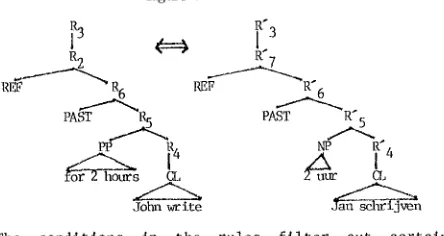
[image:5.612.305.528.121.425.2](31) Jan is al 2 uur aan het schriJven (John-is-already-2-hour s-on~the-wr it ing)
The isomorphic D-trees for (29) and (31) are shown in figure 3.
But for 2 hours is m, biguous too and can also be a
perfective duration adverbial corresponding to the
Dutch 2 uur. The duration rules (R~ and R'5) insert them. ~ h e ~ l a u s e will now have perf~ectlve aspect and the retrospective adverbial PAST will be introduced by the perfective aspect rule (R~ and R'6). In Dutch the retrospective rule R" 7 (different f?om R" 2 but also corresponding to the English R2) is now applied:
the one for a clause with perfective aspect that
inserts the auxiliary hebben/zijn. The resulting
Dutch translation equivalent of (29) is:
[image:6.612.81.303.295.413.2](32) Jan is 2 uur aan bet schrijven geweest (Dutch : John~has-2-hour s-on-the-wr it ing-been) The isomorphic derivation trees are shown in figure 4.
fig~e 4
R 2 "
'~R 4 N P ~ R " 4
John write
The conditions in the rules
unacceptable combinations, e.g.: (33) *John died for a while
filter out certain
(34) *John was working in three hours
(33) is ruled out because for a while is a perfective duration adverbial that cannot combine with achieve- ments or accomplishments and (34) because in three
hours is an imperfective duration adverbial that
cannot combine with activities and statives.
4. Concluding remarks
It is not possible to treat all temporal expressions and all translation problems with respect to time in this paper, but I have sketched a solution as to how to treat them in the Rosetta framework. I expect that other "aspectual forms" such as inchoative, termina- tive etc. can be added at the "Aktionsart level" or "aspect level" and that the current approach, which
allows for translation of adverbs into auxiliary
verbs or combinations of them (and vice versa) will
be sufficient to cope with them. The time theory
presented here should of course he embedded in a
discourse theory about time. The anaphoric properties should be seen as a start. Moreover, the informal specification of the time model should be given a
more formal account. Other topics that should be
elaborated are quantificational, scope, frequency and
habitual aspects, interaction of modality in the
future time expressions and the time relations be-
tween m a t r i x clauses and (intensional) complement
clauses or relative clauses.
Acknowledgements
The author would like to thank all members of the
Rosetta team, particularly Jan Landsbergen and
Franciska de Jong, for their helpful comments on
earlier versions of this paper.
This work was supported in part by a grant from the
Nederlandse HerstructureringsmaatschappiJ (NRHEM).
Notes
I) I use the definition of "aspect" of Comrie (1976), but I will take his term "situation" as referring to the interval E in relation to the reference interval R E and consider only two possibilities: "perfective"
and "imperfective" aspect. The notion "perfect aspect" which I call 'retrospective aspect" should be accounted for by other relations. Probably~ by rela- ting R E to R S with the relation "until".
2) This point resembles the point S" in Oversteegen and Verkuyl (1985).
3) It is possible that some languages have complex deictic rules that indicate for example a "past event with present relevance". This is similar to a "pre- sent with retrospective PAST", but differs In that
the interval R E is not until, but before R e. At the
moment I will I g n o r e the e~-xtra meaning" ~nd treat
them with a deictic past rule, because this phenom- enon seems to ]lave to do with more pragmatic factors such as "distance with respect to the event from the speaker's viewpoint" or knowledge of the world like the present existence of persons or objects.
R e f e r e n c e s
Bruce, B., (1972): "A model for temporal references and its application in a question answering program'. In: Artificial Intelligence 3, ] -25.
Comrie, B., (1976): Aspect: an Introduction to the Study of Verbal Aspect and Rela--~d P r o b l e m s . ~ a m -
nlvers ty r e s s , - ~ r ~ - ~ g ~ .
Dowty, D.R., (1979): Word Meaning and Montague
Grammar. Reidel Vol. 7q--. ~ ~ .
Krauwer, S. and L. des Tombe, (1985): "Composi-
tionality'. In: Dehaan, G. and W. Zonneveld (eds.): Formal Parameters of Generative Grammar. I. Yearbook
Landsbergen, J., (1982): "Machine Translation based
on Logically Isomorphic Montague Grammars'. In: J.
Horecky (ed.), COLING 82 North Holland, p. 175-182.
Landsbergen, J., (1984): "Isomorphic Grammars and
their use in the Rosetta Translation system'. Paper presented at the Tutorial on Machine Translation, Lugano. Philips Research M.S. 12.950, to appear in: King, M. (ed.), Machine Translation: The State of the Art, Edinburgh Un-ivTr-s~[Ty Press.
Maegaard, B., (1982): "The Transfer of Finite Forms
in a Machine Translation System'. In: Abstracts
COLING 82, p. 190-194.
Oversteegen, L. and H.J. Verkuyl, (1985): De
temporele zinsstructuur van bet Nederlands: twee
tijdsbanden'. In GLOT.
Reichenbach, H., (1947): Elements of Symbolic Logic. University of California Press,
Van Eynde, F., L. des Tombe and F. Maes (1985):
"Specification of time meaning for machine transla- tion'. Proceedings ACL conference, Geneva.
Verkuyl, H.J., (1972): On the Compositional Nature of the Aspects. Dordrecht.
Vuyst, J. de, (1983): "A Semantic Analysis of Tem-
poral Elements in Dutch and English'. Diss. RUG,
Groningen.