S T U D Y P R O T O C O L
Open Access
Assessment of DHA on reducing early
preterm birth: the ADORE randomized
controlled trial protocol
Susan E. Carlson
1*, Byron J. Gajewski
2, Christina J. Valentine
3, Lynette K. Rogers
4, Carl P. Weiner
5,6,
Emily A. DeFranco
3and Catalin S. Buhimschi
7Abstract
Background:Preterm birth contributes to 0.5 million deliveries in the United States (one of eight pregnancies) and poses a huge burden on public health with costs in the billions. Of particular concern is that the rate of earliest preterm birth (<34 weeks) (ePTB), which has decreased little since 1990 and has the greatest impact on the overall infant mortality, resulting in the greatest cost to society. Docosahexaenoic acid (DHA) supplementation provides a potential high yield, low risk strategy to reduce early preterm delivery in the US by up to 75%. We propose a Phase III Clinical Trial (randomized to low or high dose DHA, double-blinded) to examine the efficacy and safety of high dose DHA supplementation to reduce ePTB. We also plan for a secondary pregnancy efficacy analysis to determine if there is a subset of pregnancies most likely to benefit from DHA supplementation.
Methods:Between 900 and 1200 pregnant women who are≥18 years old and between 12 and 20 weeks gestation will be recruited from three trial experienced academic medical institutions. Participants will be randomly assigned to two daily capsules of algal oil (totaling 800 mg DHA) or soybean and corn oil (0 mg DHA). Both groups will receive a commercially available prenatal supplement containing 200 mg DHA. Therefore, the experimental group will receive 1000 mg DHA/d and the control group 200 mg DHA/d. We will then employ a novel Bayesian response adaptive
randomization design that assigns more subjects to the“winning”group and potentially allows for substantially smaller
sample size while providing a stronger conclusion regarding the most effective group. The study has an overall Type I error rate of 5% and a power of 90%. Participants are followed throughout pregnancy and delivery for safety and delivery outcomes.
Discussion:We hypothesize that DHA will decrease the frequency of ePTB <34 weeks. Reducing ePTB is clinically important as these earliest preterm deliveries carry the highest risk of neonatal morbidity, as well as contribute significant stress for families and post a large societal burden.
Trial registration:This trial was registered with ClinicalTrials.gov (identifier: NCT02626299) on December 8, 2015. Additional summary details may be found in Table 1.
Keywords:Docosahexaenoic acid, Preterm birth, Pregnancy
* Correspondence:[email protected]
1Department of Dietetics and Nutrition, MS 4013, University of Kansas
Medical Center, 3901 Rainbow Blvd., Kansas City, KS 66160, USA Full list of author information is available at the end of the article
Background
DHA intake and status of US women during pregnancy and physiological importance
Docosahexaenoic acid (DHA) is a long-chain polyunsatur-ated fatty acid member of the n-3 (or omega-3) fatty acid family. DHA is found in animal foods with the richest sources being varieties of ocean fish [1]. On average, US women consume ~60 mg DHA/day [2] but synthesize lit-tle DHA from the α–linolenic acid (18:3n-3) they con-sume in other foods [3, 4]. DHA intake among US women is lower than other Western populations [2]. Two com-monly used indicators of DHA status: 1) red blood cell phospholipid (RBC-PL) DHA as a percent of total membrane fatty acids [5, 6] and 2) human milk DHA as a percent of total fatty acids [7] are lower in US women than in other developed countries. For example, base-line RBC-PL-DHA means ranged from 4.3 to 5.0% in our last three Kansas City pregnant cohorts [5, 8, 9] compared to greater than 6% RBC-PL-DHA reported by others [10–12]. The US rate of preterm birth (PTB) (<37 weeks) is also higher than other developed coun-tries [13]. The NICHD Maternal Fetal Network multi-center trial notes the highest rate of PTB for women in the lowest quartile for RBC-PL-DHA (OR 1.45) [14]. Worldwide, 24% of all PTBs occur in India, where vegetable-based diets low in DHA are common [13].
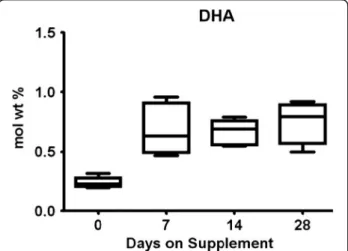
US studies typically report a mean of 0.15–0.2% DHA in human milk [7, 15, 16] in contrast to countries and groups where ocean fish are routinely consumed (0.5 to 2.7%) [17, 18]. Our pilot feasibility trial found extremely low milk DHA in women consuming a placebo, but milk DHA increased to 0.5–0.7% in the group assigned to re-ceive a dietary supplement of 1000 mg of DHA/day [16] (Fig. 1). Pregnant women consuming more DHA also provide more DHA to their fetus and after delivery, have higher milk DHA during lactation. It is well established
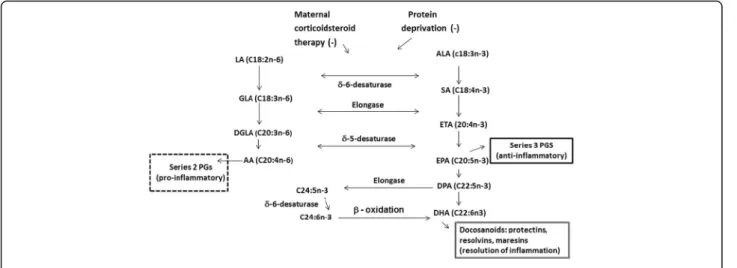
that the biosynthesis of DHA from α-linolenic acid is very limited [3, 4], especially under several conditions including caloric deprivation, protein inadequacy, and corticosteroids, which inhibit the δ6-desaturase and, therefore, DHA synthesis [19] (Fig. 2). In fact, there have been many attempts to increase DHA status and milk DHA by feedingα–linolenic acid without success.
Preformed dietary DHA found in marine life, algal sources, or eggs can produce immediate biologic effects. Dietary DHA also increases DHA in membranes of cells from all organs that have been studied. Higher DHA status is linked to a number of positive health outcomes in-cluding protection against cardiovascular disease [20, 21], breast cancer [22–24], and Alzheimer’s disease [25–28] and more recently to resolution of inflammation [29–31] and neuroprotection [32, 33]. Higher DHA status during development is linked to higher cognitive performance [34–37], lower allergy [38–41], and lower adiposity [42]. In summary, DHA is found in some foods but little is synthe-sized fromα-linolenic acid. DHA intake and status of US women are among the lowest in the world.
Effects of DHA and EPA supplementation on gestation duration, preterm birth, ePTB and VLBW
DHA status in pregnancy was first linked to longer gesta-tion, higher birth weight, and less PTB by early studies of Olsen and collaborators [43, 44] after they observed longer gestation among the Faroe Islanders who consumed higher DHA and EPA compared to the Danes [43]. Three recent systematic reviews address the question of pregnancy out-comes in randomized trials of total omega-3 long chain polyunsaturated fatty acid (LCPUFA) supplementation [45–47]. A 2006 Cochrane review that included six trials with 2755 women [45] found a 2.6-day increase in gesta-tion duragesta-tion favoring supplementagesta-tion (P= 0.0009). Only one review found a significant reduction in overall PTB (<37 weeks) (P values = 0.03–0.29) [45–47], but all re-ported a reduction in early preterm birth (ePTB) (<34 weeks) with odds ratios favoring supplementation of 0.42 to 0.74. However, the ePTB findings are based on only three studies that provided DHA in amounts of 800– 2000 mg/d. While two trials conducted in Australia and Europe found a reduction in ePTB [48, 49], the US trial conducted by the NICHD Maternal Fetal Network trial ob-served no decrease in ePTB despite supplementation with 800 mg DHA/d. The absence of an effect in this trial may be linked to the fact the trial included only women with a prior preterm birth and all received weekly injections of progesterone [50]. In contrast, only 4.9% of women in our Kansas City KUDOS study had a prior PTB and only 2.3% (n= 7) a prior ePTB (one had a repeat ePTB in our study). None received progesterone for short cervix. The potential of DHA to reduce ePTB is plausibly linked to its role in re-ducing inflammation, a final pathway for spontaneous
ePTB. After the first two systematic reviews were pub-lished, our US trial was pubpub-lished, reporting significantly less ePTB (4.8 vs 0.6%, P= 0.025), fewer very low birth weight (VLBW) births (3.4 vs 0%,P= 0.026) and fewer days in hospital for infants born preterm (40.8 vs 8.9 day,
P= 0.026) in the group supplemented with 600 mg/d DHA compared to placebo [5]. We conclude from studies conducted around the world that a high dose of DHA supplementation can reduce ePTB. No study has evaluated high dose DHA supplementation as a primary outcome to reduce ePTB, which we propose to do in a US population known to have poor DHA status before and during pregnancy.
Importance of reducing ePTB and what the evidence suggests may be happening with high dose DHA supplementation
Overall ePTB rate in the US for 2012 was 3.4% [51]; however, the ePTB rate for non-Hispanic blacks (7.0%) was higher than for non-Hispanic whites (3.3%). ePTB compared to late PTB (≥34 weeks–37 weeks) carries a much greater risk of infant morbidity and mortality and costs society billions of dollars. Three systematic re-views [45–47], one conducted after publication of our trial [5] find a significant reduction in ePTB with high dose DHA supplementation. Biomarkers assessed prior to 20 week gestation suggest that the risk of spontan-eous preterm labor has an early etiology from stressors linked to inflammation particularly PTB due to pro-longed rupture of membranes and chorioamnionitis [52–55]. We hypothesize that DHA will prolong gesta-tion duragesta-tion for a period of time that will be sufficient for the fetus to require less medical intervention; i.e., that DHA will both reduce ePTB and improve neonatal outcome.
Mechanisms by which DHA might reduce ePTB
DHA unlike other omega-3 fatty acids (α–linolenic acid and eicosapentaenoic acid (EPA)) uniquely modulates cell surface ligands to attenuate inflammation, demon-strated in both humans and animal models [56–60]. While the mechanism of preterm parturition remains elusive and complex [61], DHA has plausible cellular ef-fects that could modify the onset or change the timing of inflammation [62, 63] and promote the activation of SIRT1 expression directly impacting endothelial relax-ation [64], or altering membrane fluidity [64, 65] and cell signaling [66, 67]. It is now recognized that DHA re-leased from phospholipids in cell membranes serves as a precursor for docosanoids (22 carbon mediators such as resolvins, protectins, and maresins) that are anti-inflammatory, resolve inflammation, and protect against inflammation [31, 68–72] (Fig. 2). While it is generally believed that fish oil (a source of both DHA and EPA) increases gestation duration because EPA competes with arachidonic acid (ARA), the source of the 2-series pros-taglandins E2 and F2α required for labor and delivery
[73, 74], we provided only DHA in our previous trial. Moreover, the effect of DHA supplementation in our trial and the Australian trial was significant for early births only; i.e., we find no evidence DHA increases gestation in general or in any other select group of pregnancies.
A recent pilot study observed a lower preterm, prema-ture rupprema-ture of the membranes (PPROM) in frequent fish eaters randomly supplemented with only 100 mg DHA/d [75] further linking DHA intake to reduced in-flammation. We speculate that pregnancies at risk for ePTB include a disproportionate number with inflamma-tion. sRAGE is positively linked to chorioamnionitis and preterm labor [58] and LPS-induced inflammation in a murine model [76]. In the latter example, the increase in sRAGE was attenuated by DHA supplementation.
sRAGE is negatively associated with IL-6, sepsis and FIO2 requirements in PT cohorts [53, 58, 77], however, sRAGE has not been compared in term and preterm pregnancy. We propose to determine if the higher DHA supplementation influences either maternal or cord blood sRAGE as a possible mechanism of DHA PTB preventive activity.
Rationale for DHA doses
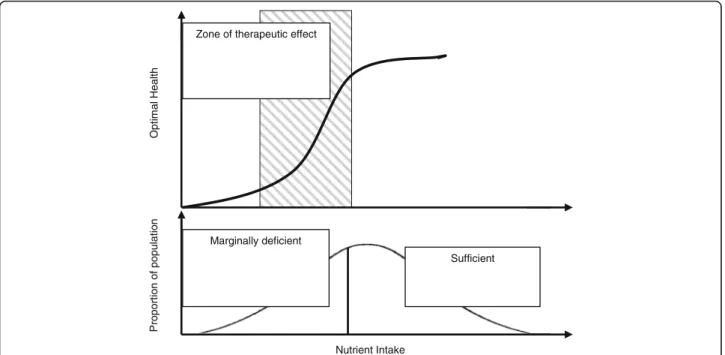
The Institute of Medicine does not set a Dietary Reference Intake (DRI) for DHA in pregnancy; however, the FAO/ WHO and expert groups suggest an intake of 200 mg of DHA per day for pregnancy and lactation [78–80]. Many US prenatal vitamins now contain 200 mg of DHA, and 15% of women in our trial took a DHA supplement. We propose to compare this low, recommended dose of DHA (control group) to a high dose of DHA supplement (ex-perimental group). We chose 1000 mg as a high dose be-cause doses up to 2000 mg/d of DHA have reduced ePTB in populations that consume more DHA than in the US [47–49]. More DHA may be helpful in the US where in-take and status at baseline are low. Trials providing less than 600 mg DHA have not found a reduction in ePTB [81, 82]. DHA is a nutrient and intake and status are inherently variable. Women with low DHA status may require more DHA to reach an intake to reduce ePTB. All nutrients have an intake that is optimal for a given out-come and the ability to improve that outout-come with sup-plementation is based on an individual’s status at baseline (Fig. 3). Overall, subjects in our previous trial had a very low DHA status (mean RBC-PL-DHA = 4.3%) consistent
with DHA deficiency [83]. We identified three clusters in the DHA supplemented group of KUDOS (Fig. 4). Cluster 1 includes the majority of the DHA group and was exceed-ingly deficient with a mean baseline RBC-PL-DHA = 3.5%.
Nutritional approach to reduce ePTB and VLBW
There is currently no accepted method for predicting preg-nancies that will end in spontaneous ePTB and no known treatment to prevent the occurrence of spontaneous ePTB with the possible exception of progesterone therapy for women with cervical lengths of≤20 mm [84, 85]. In con-trast, to our US trial, the larger DOMInO trial conducted in Australia excluded pregnant women with serious mater-nal illness and found a significant reduction in ePTB with 600 mg/d DHA (n= 301, 0.6% vs. 4.8% of births) and 800 mg/d DHA (n= 2399, 1.1% vs 2.2% of births), respect-ively. As mentioned above, the presumed effect of DHA is reduction/resolution of inflammation, a joint mechanism for both cervical ripening and spontaneous ePTB. Even in the NICHD trial, women with the lowest DHA blood concentrations were more likely to have a recurrent spontaneous PTB [86]. In both our trial and DOMInO, the incidence of ePTB in the placebo group was similar to the incidence within the country. These trials and two system-atic reviews suggest that a high dose supplement of DHA could effectively reduce ePTB. We feel such an approach could be particularly useful in pregnant US women whose DHA status is among the lowest of any population in the world. It is well known that 500–1000 mg DHA/d in adults improves clinical biomarkers of inflammation, systemic vascular changes, and endothelial cell function while low
Nutrient Intake
O
p
ti
m
a
l H
e
a
lth
P
roport
ion of
populat
ion
Marginally deficient
Sufficient Zone of therapeutic effect
DHA intake shifts immune homeostasis towards a more pro-inflammatory response. We propose to com-pare 1000 mg DHA to 200 mg DHA/d. The lower amount of DHA is found in many currently available prenatal supplements, while the studies that have found an effect of DHA on ePTB have provided between 600 and 900 mg/d [5, 48, 49].
Research objectives
The primary purpose of this multicenter, randomized, double-blind, controlled Phase III clinical trial is to determine if DHA supplements totaling 1000 mg/d compared to 200 mg/d during the last two trimesters of pregnancy can reduce spontaneous ePTB (<34 weeks gestation) (Specific Aim 1) and to conduct a secondary pregnancy efficacy analysis to determine if there is a subset of pregnancies most likely to benefit from DHA supplementation (Specific Aim 2). To ob-tain information about the effects of DHA on inflam-mation, we will measure sRAGE, which is plausibly influenced by DHA supplementation based on a mur-ine model of LPS-induced inflammation and bank plasma samples to determine the impact of DHA on the transcriptome which broadly reflects a range of physiologic processes (Specific Aim 3). We will per-form a prospective randomized comparative effective-ness adaptive design study with pregnant women to enhance efficiency of the trial and expedite results to the research community and to guide clinical practice. First analysis will be by intent-to-treat. Safety data will be collected as required for Phase III RCTs (Specific Aim 4). We will bank umbilical cord blood at delivery to be available for future evaluations. A trial summary and registration details can be found in Table 1.
Table 1Trial registration data
Data category Information
Primary registration and trial identification number
ClinicalTrials.gov NCT02626299
Date of registration December 8, 2015
Secondary identifying numbers
R01 HD083292; IND 129482; IRB STUDY00003455
Source of monetary or material support
National Institute of Child Health and Human Development
Primary sponsor University of Kansas Medical Center
Secondary sponsor/ Collaborators
University of Cincinnati
Ohio State University
Nationwide Children’s Hospital
Contact for public queries Beth Kerling, MS RD ([email protected])
Contact for scientific queries
Susan Carlson, PhD ([email protected])
Public title Assessment of DHA On Reducing Early preterm Birth (ADORE) Trial
Scientific title Docosahexaenoic Acid Supplementation in Pregnancy to Reduce Early Preterm Birth
Countries of recruitment United States
Health conditions or problem studied
Preterm birth
Interventions Active treatment: 1,000 mg DHA per day
Standard of care: 200 mg DHA per day
Key inclusion and exclusion criteria
Ages eligible for study:≥18 years
Genders eligible for study: female
Accepts healthy volunteers: yes
Inclusion criteria: pregnant female≥18 years; 12–20 weeks of gestation, agree to consume study capsules; available by telephone
Exclusion criteria: multiple gestation, unwilling to discontinue use of another prenatal supplement with DHA, allergy to any component of DHA product (including algae), soybean oil or corn oil
Study type Interventional
Allocation: randomized
Endpoint classification: safety/efficacy study
Intervention Model: parallel assignment
Masking: double blind
Primary purpose: prevention
Phase III
Date of first enrollment June 8, 2016
Recruitment status Active recruitment
Primary outcome Occurrence of early preterm birth
Key secondary outcomes Efficacy analysis for subset populations
Effect of DHA on inflammation
Safety evaluation
Methods/Design
The Standard Protocol Items: Recommendations for Interventional Trials (SPIRIT) guidelines [87] are followed for design and conduct of this trial.
Participants and eligibility criteria
Women who are 18 years and older and are in their 12th to 20th week of gestation based on ACOG guidelines [88] will be eligible for enrollment. Pregnant women who receive prenatal care in obstetrics clinics of all 3 participating centers (University of Kansas Medical Center University of Cincinnati, and The Ohio State University) receive an ultrasound assessment at ap-proximately 12 weeks gestation. The estimated date of delivery (EDD) determined by ACOG guidelines at this assessment will be fixed as the EDD for assessment of gestation duration in the study. Women must be able to read or orally understand the study in English or Spanish. They must agree at enrollment to consume the capsules assigned to them from enrollment through delivery.
Women with a multiple gestation will be excluded, as the background rate of PTB and low birthweight are higher likely for reasons other than hypothesized with DHA. The availability of a telephone is necessary for optimal coordination of both phases of the study. We routinely obtain additional phone numbers of friends and family who have a stable address. The complete inclusion and exclusion criteria are illustrated in Table 2.
Recruitment and enrollment
Potential participants will be approached by trial re-cruiters in the ambulatory units of each study site if a preliminary evaluation suggests they meet the inclusion
and exclusion criteria. The goal is approximately equal enrollment at the 3 centers with up to 400 subjects en-rolled per center (depending upon the dictates of the Bayesian response adaptive randomization). We expect to enroll 2–3 subjects per week at each of the three centers (6–9 subjects/week total) and anticipate 11% will be lost over the course of the study.
Subjects who consent will be asked to provide blood on the day they are enrolled for fatty acid analysis of RBC-PL fatty acids, sRAGE and to bank plasma, serum and white cells for future nutrient and marker analysis. A urine sam-ple will be collected for measurement of endocrine disrupt-ing chemicals. Participants will complete the National Cancer Institute Diet History Questionnaire (NCI DHQ-II) to obtain information regarding maternal dietary intake, and additional questions will be asked regarding nutritional supplement intake prior to and during pregnancy. Medical and social histories will also be obtained and tracked throughout pregnancy and delivery. A complete schedule of participant events is illustrated in Table 3.
Randomization and implementation
A maximum number of pregnant women nmax= 1200
(we plan for 1355 enrollments due to expected dropout) will be randomized to one of two arms, either algal oil as a source of DHA (800 mg DHA in two capsules) or placebo oil (two capsules of half soybean oil and half corn oil, without DHA). In addition, all participants will receive a prenatal supplement with 200 mg DHA and required not to use another prenatal with DHA.
Each study site location will have a separate ran-domization code. Using a Bayesian Adaptive Design, a de-cision will be made at each interim analysis. The randomization structure will be updated depending upon the birth outcomes. The primary endpoint, the percentage of spontaneous ePTB, will drive the adaptive ran-domization. The data will be analyzed after 150 partic-pants are enrolled in each group and the randomization schedule updated. The arm that looks to be the best will get more pregnant women allocated to it in this subse-quent randomization. A new adaptive randomization schedule will be generated every 13 weeks using up to date outcome data until the trial is stopped. Both the initial and subsequent updated tables will be attached to our eResearch tool [89]. Steps for randomization in eResearch include:
❖Subject demographics are entered
❖Subject is attached to study (at this point patient
status could be screening or pre-screening)
❖Verification of inclusion and exclusion criteria and
documentation of the informed consent are entered into the patient randomization form triggering automatic assignment of a patient study ID and
Table 2Inclusion and exclusion criteria
Inclusion criteria
1. Pregnant females 18.0 years and older 12 to 20 weeks of gestation at study entry
2. Agree to consume study capsules and a typical prenatal supplement of 200 mg DHA
3. Available by telephone
4. English or Spanish speaking
Exclusion criteria
1. Less than 18 years of age
2. Expecting multiple infants
3. Gestational age at baseline <12 weeks or >20 weeks
4. Unable or unwilling to agree to consume capsules until delivery
5. Unwilling to discontinue use of another prenatal supplement with DHA
randomization to the next particular arm from the allocation table
We will test if the randomization is effective by ensur-ing the groups are similar at baseline (pre-randomization variables) for all such predictor variable and will be presented in a table per CONSORT guidelines [90].
Placebo and DHA supplementation
A marine algae oil source of DHA (DSM, Columbia, MD) will be provided in capsules. Specific capsules to be used are equivalent to Spring Valley Algal-900 DHA Dietary Supplement Softgels, 450/mg per capsule. The algal oil capsules in this study provides 800 mg DHA in two (2) 1-g capsules and the higher DHA group of sub-jects will be asked to consume two capsules per day. The placebo control group will receive two (2) 1-g capsules containing half soybean oil and half corn oil. The soybean and corn oil combination does not contain DHA. Two capsules provide 80 mg of α-linolenic acid, a precursor of DHA. On average, US adults con-sume ~1000 mg/d ofα-linolenic acid but can make only about ~40 mg DHA/day. Both capsules will be prepared and provided with orange flavor to mask the taste if there is eructation. The placebo and masked DHA capsules will be provided in bottles of 100 capsules (a supply for 50 days). DSM (Columbia, MD) will donate the capsules and the 200 mg DHA capsules to both groups for daily use. The latter are available commercially as a prenatal supplement marketed under several product names. The 200 mg capsules will be provided in bottles of 135 cap-sules (135-day supply) and will be marked with an expir-ation date. Other fatty acids found in the capsules do not contribute significantly to the amounts in the diets of US women. DHA is the only fatty acid expected to change in the RBC-phospholipids (PL) of the supplemented group. Patient compliance will be monitored and encouraged; in our previous trial, on average 74% of capsules were consumed.
Capsule records and accountability
The Investigational Pharmacy at The University of Cincinnati will mail capsules to each enrolled participant on a regular schedule until delivery when the bottles and any remaining capsules are to be returned by mail to the Investigational Pharmacy in a self-addressed envelope provided with capsule delivery. The remaining capsules will be counted, the number recorded and the capsules destroyed. Records of capsules mailed to and received back from subjects will be entered into the study data-base with a flag to investigators at the subject’s study site. Investigators at each site will review the database and contact participants who do not return their capsule bottle. Study personnel will contact the participant by
telephone early within the first month and monthly thereafter to determine if there are any problems and encourage compliance. The study investigator, study site staff and participants will not know which study arm capsules are being consumed by any patient. The Investigational Pharmacy at the University of Cincinnati will receive all bottles of capsules directly from DSM and will maintain packing receipts for study products.
Blood collection
Maternal blood samples will be collected at enrollment and the morning following delivery by venipuncture. At enrollment and delivery, two 4-ml potassium–EDTA tubes will be obtained (BD Vacutainer, Franklin Lakes, NJ), placed on ice immediately and processed within 24 hours. Plasma, buffy coat and anticoagulated RBCs will be separated by centrifugation (3000×g, 10 min, 4 °C). At the University of Kansas Medical Center, an additional one 7-ml potassium-EDTA tube and one 5-ml serum tube will be collected at enrollment and delivery for the cell free plasma RNA analysis. Two (2) 4-ml potassium-EDTA tube of umbilical cord blood will be obtained at delivery and processed similar to maternal samples. All samples will be stored snap frozen in nitrogen and stored at−80 °C for the planned or future studies.
Fatty acid analysis
Fatty acid content in red blood cells (RBC) will be ana-lyzed by gas chromatography. Briefly, an aliquot of packed RBCs is extracted with organic solvents and the dried under a nitrogen stream before transmethyation with boron trifluoride-methanol [5]. The fatty acid methyl esters are extracted into organic solvent, dried under a nitrogen stream and reconstituted in dicho-loromethane for analysis on a gas chromatograph with flame-ionization detection equipped with an autosam-pler using a fused silica capillary column (SP2560, 100 m × 0.25 mm id × 0.25um film thickness). Helium is used as the carrier gas. Fatty acid analyses will be completed at the University of Kansas Medical Center. RBC-DHA and other fatty acids are reported as weight percent of total fatty acids. RBC-DHA can also be used to evaluate compliance.
sRAGE analysis
sRAGE will be determined at Nationwide Children’s Hospital in Columbus, OH on batched samples using ELISA-based format (MesoScale Discovery, Rockville MD) according to the protocols of the manufacturer.
Cell free plasma RNAs
subject at enrollment and delivery at KUMC to first de-termine their a priori risk of experiencing spontaneous preterm birth by measuring a panel of cell free RNAs, and secondly to determine the impact of DHA of the cell free plasma transcriptome. The four markers used in this panel appear in in vitro studies to alter myometrial quiescence. In validation studies of maternal samples from pregnant women at gestational ages similar to the current study, the spontaneous preterm labor panel has a sensitivity of 100%, specificity of 95%, positive and negative predictive values of 95 and 100% respectively for spontaneous PTB less than 32 weeks of gestation (unpublished, CP Weiner). Should the administration of DHA alter the predicted spontaneous PTB rate in partic-ipants with an abnormal panel, it would provide insight as to the mechanisms by which DHA might work.
Dietary and nutrient intake
The National Cancer Institute Diet History Questionnaire (DHQ-II) is the current version of a food frequency and portion questionnaire. The database associated with the DHQ-II is based on the National Health and Nutrition Examination Surveys (NHANES) data collection from 2001 to 2006. Participants will complete the DHQ-II at enrollment using electronic/tablet entry. Paper copies will be available for Spanish speaking participants and English speaking participants that reject electronic entry. The study teams at each site will provide instruction as to how to complete the questionnaire and review DHQ-II results for completeness. Additional study staff may follow up with the study participant by telephone after enrollment if there are concerns regarding missing data, inconsistences, etc.
The project is registered at the NCI website and all electronic data will be stored securely under the PI user name and password until study end. Data will be analyzed using the Diet-Calc software. The DHQ-II provides data for 176 nutrients, dietary constituents and food groups.
In addition to the DHQ-II, the DHA Food Frequency Questionnaire will be administered. This questionnaire includes targeted questions to assess the intake of omega-3 fatty acids accurately [91]. Results of the ques-tionnaire will be entered into the CRIS database.
Urine collection
One non-sterile urine sample (minimum collection of 8 mL) in a 4 oz. specimen collection container will be obtained between 12 and 20 weeks of gestation ideally at the time of enrollment and again during the 3rd trimes-ter. The sample will be divided into four 2.0 mL cryo-vials using a disposable transfer pipette. Cryocryo-vials will be labeled and frozen at−80 °C until analysis. The levels of endocrine disrupting chemicals (EDC) will be quantified
and any differences in maternal urine levels between groups determined.
Data collection and integrity
Phase III Clinical Trials have a formal system for data collection and scrutiny in accordance with Good Clinical Practices (GCP) and conform with the regulatory requirement(s) [92]. Data collection and entry for all aspects of the study will be performed by persons at each site. Study staff will adhere to trial-specific Stand Operating Procedures (SOPs) approved by trial PIs. Clinical teams at each site will maintain essential source documents including clinical and hospital reports.
The data generated by this project will be entered at the individual site into a CRF Part 11 compliant, secure data system developed and managed by Dr. Gajewski’s team in Biostatistics. The data will be fully accessible to the other PIs at all times. An electronic case report form that includes historical information obtained from sub-jects not in the hospital or from their clinical record (e.g., detailed smoking history, alcohol use – number and type of alcoholic beverages before and during preg-nancy using the Nutrition Educators of Health Profes-sionals tool and DHQ-II obtained at study entry) http:// www.ich.org/fileadmin/Public_Web_Site/ICH_Products/ Guidelines/Efficacy/E6/E6_R1_Guideline.pdf will be main-tained as the primary source document for this informa-tion. Whenever possible, site staff will use a two-pass approach to confirm accuracy of social/historical informa-tion not in the hospital or clinical record (i.e., staff will re-view data entry with subjects in person or by phone interview). One hundred percent of data for the primary outcome and safety (mother and newborn) and a portion of other data collected will be double-checked by the clin-ical teams after the data are entered into the eResearch by reviewing source documentation. The proportion of sec-ondary outcome data will be determined by the PIs based on the actual incidence of errors observed in data entry. These master files will be established for each subject and maintained for the duration of the trial and retained ac-cording to the appropriate regulations.
Accuracy, completeness, legibility of work documents and timeliness of the data reported in the patient’s elec-tronic case report form will be assured by the PI. Source documentation supporting the case report form data will document the dates and details of study procedures, ad-verse events and patient status. Any discrepancies will be explained by a note to the individual file and changes or corrections to the electronic case report form dated, initialed and explained (if necessary). Original data will not be obscured.
team. Once all database queries have been resolved by the clinical teams, the trial analyst will create the data sets for analyses (interim and final). In collaboration with Director of Research Information Technology, the analyst will finalize the study binder, which will contain copies of the annotated project case report forms, the final data diction-ary, and copies of the electronic data files.
Primary Efficacy Outcomes
❖Early preterm delivery (ePTB, <34 weeks gestation)
based on ACOG guidelines
Secondary Efficacy Outcomes
❖VLBW (<1500 g) and low birth weight (<2500 g) as
recorded in hospital record
❖Participant DHA status (RBC-PL-DHA) at enrollment
and birth; fetal DHA status at birth from cord blood
❖Gestational age (days) at delivery based on EDD in
clinic record recorded following ultrasound on or before ~14 weeks gestation
❖Birth weight (g), length (cm) and head
circumference (cm) at delivery as recorded in hospital record
❖Preterm birth (<37 weeks) based on ACOG
guidelines
❖Extreme preterm birth (<33 weeks)
❖Pregnancy outcomes: gestational diabetes,
pre-eclampsia, C-section, spontaneous or induced labor, occurrence and reason for non-routine hospitalization
Attrition
If a patient withdraws from the study prematurely, the assessments described at delivery that apply will be ob-tained if available and the participant has not requested her data not be obtained. This, and the requirement to obtain medical records for adverse events during preg-nancy and following birth of the infant, will be explicit in the consent form. If the participant is withdrawn due to an adverse event(s), the patient will be monitored until the adverse event has resolved or until the event is determined to be due to a stable or chronic condition. The reason for patient discontinuation will be docu-mented. If a patient withdraws from the study, the pa-tient’s study number will not be reassigned.
Study termination
The study will be stopped when there is a Pr > 0.995 that the groups are different or terminate when 1355 women have been randomized (nmax =1200 completers after
expected dropout). The data safety monitoring board (DSMB) may terminate the study if in the opinion of the
safety monitor there is a determination of unexpected, significant, or unacceptable risk to the patient, however, this is not anticipated given that safety concerns have not arisen in other clinical trials in pregnant women that provided large amounts of DHA. Any action taken to suspend or terminate the project by the DSMB will be reported to the central Institutional Review Board and the NIH Office of Sponsored Projects and the program director at NIH.
Statistical issues
Bayesian adaptive design
We chose this design with efficiency in mind. There is broad acceptance that Bayesian Adaptive Designs save time and money and lead to more ethical studies [93]. The time is right for the use of Bayesian Adaptive Designs in comparative effectiveness clinical trials. Both the Patient Centered Outcomes Research Institute (PCORI), a leader in comparative effectiveness research, and the FDA have adopted policies/guidelines en-couraging their use [94]. Using adaptive randomization (being able to change how we assign patients to the drugs during the study based on information gained dur-ing the study) allows for substantially smaller sample sizes and provides better conclusions about what group is the most effective, because it allows changes to our approach or to stop the study early if strong results are found before the scheduled end of the study [93]. We conducted extensive trial simulations comparing differ-ent designs measuring the resources (time and number of patients required) and the ability to draw important conclusions about relative efficacy of the two groups and selected the proposed design as the most effective and efficient. The following sections focus on different issues and detail how we determined power, sample size, and duration of this trial.
Summary of the Bayesian adaptive design
We will begin interim analysis once 150 subjects have been enrolled in each group. Thereafter, interim analyses will occur every 13 weeks with data used on all births (intent-to-treat). There are many parameters that go into a Bayesian Adaptive Design but highlights include after 800 subjects have been enrolled, at each interim the stop for success is if probability (group j is best) > 0.995 for either group and the updated allocation probabilities are based on information weighing.
Statistical model
conditional on the number of births, nj, as a binomial
distribution Yj~ Binom(nj,θj). θj is the rate of early
pre-term births (ePTB) of which we provide“weakly inform-ative” priors, logit(θj) ~ N(−3.5,1.52). This prior not only
provides a design Type I error rate of 5% (see below), it is also very diffuse since the point estimate of θj is 2.9%
ePTB and 95% interval 0.16–36%. This is very, very spread out. Using the data and the prior probabilities, we then use Markov Chain Monte Carlo computations to obtain the Bayesian posterior distributions ofθjrespectively for each
group as well as calculating probability (groupjis best).
Response adaptive randomization
After 150 subjects are enrolled in each group the next round of subjects is randomized using a formula that takes advantage of the information gained from our analyses up to that point. Next subjects are randomly allocated to be enrolled in thejthgroup proportional toVj= [prob(group j is best)xVar(θj)/(nj+ 1)]1/4. This formula assigns more pa-tients to the most promising group. The study remains blinded throughout. In response to reviewer concern that adjustment after 150 enrollments in each group would be too soon, PIs explored an alternative adaptive design be-ginning after 300 enrollments in each group. The sample size changed from 938 with 60% in the winning group to 940 with 56% in the winning groups. The average recruit-ment length changed from 184 to 183 weeks. We chose to stay with adjustment after 150 enrollments in each group because it resulted in more subjects on the better dose than the later adjustment.
Power, sample size, trial duration, and allocation
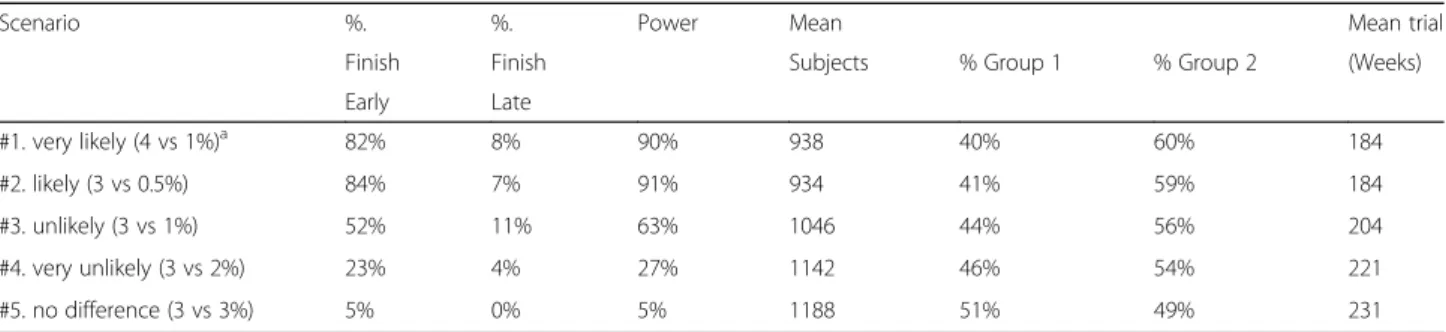
For the purposes of this investigation we looked at several virtual (or“pretend”) responses to determine the power, sample size, time (duration), and subject alloca-tion needed for our study. We created several scenarios for ePTB rates. We performed five sets of trial simula-tions based on the various combinasimula-tions of response. Each set involved 100 trial simulations. We highlight two scenarios here. The first uses a slightly more conser-vative result than the KUDOS trial to predict what we believe is the most likely response (scenario #1 in
Tables 3 and 4). If there is a best group in terms of ePTB rate, we estimated (identified) that 82% of the simulated trials had early success and 8% had late success. This trial scenario had 90% power and the sample size of this trial scenario was on average 938 (60% of these in the winning group). The average length of this trial scenario was 184 weeks. While a conventional equal random-ization trial would have 90% power, it would be larger (1200 subjects), slower (230 weeks), and have a lower rate of subjects on the winning group (50%). The second is the scenario that serves as our null hypothesis (scenario #5). In this scenario there is no difference in ePTB between the groups. Therefore, the extent to which this scenario is “successful” actually reflects our Type I error rate. For this scenario, we estimated (identified) that 5% of the simulated trials had early suc-cess, 0% late success. Thus, this trial scenario produced an appropriate expected Type I error (α= 5%). The sam-ple size of this scenario on average was 1188 subjects (equally allocated across groups). The average length of the trials under this scenario was 231 weeks.
Primary and secondary pregnancy efficacy analysis (specific Aim 1)
The pregnancy analysis has two overall phases. The first phase of analysis (primary) investigates, using Bayesian posterior probability (group jis best, whether there is a simple difference between groups (no adjustment of pre-dictor variables). A similar continuous Bayesian model will test sRAGE differences between groups. The second phase of analysis (secondary) uses Bayesian multiple logistic and continuous regression for detailed investiga-tion as to why there are differences between groups.
All analyses will be conducted under intent-to-treat principles. Subjects will remain in the group for which they are randomized regardless of compliance. The consent form will state that medical records may be obtained from the clinic and hospital (for mother and baby) unless a specific request in writing disallowing us to obtain records is received. Nevertheless, we do antici-pate some missing data. To handle missing data, logistic regression will evaluate missing data patterns as a
Table 4Simulated trial operating characteristics
Scenario %. %. Power Mean Mean trial
Finish Finish Subjects % Group 1 % Group 2 (Weeks)
Early Late
#1. very likely (4 vs 1%)a 82% 8% 90% 938 40% 60% 184
#2. likely (3 vs 0.5%) 84% 7% 91% 934 41% 59% 184
#3. unlikely (3 vs 1%) 52% 11% 63% 1046 44% 56% 204
#4. very unlikely (3 vs 2%) 23% 4% 27% 1142 46% 54% 221
#5. no difference (3 vs 3%) 5% 0% 5% 1188 51% 49% 231
a
function of subject demographics. The two categories will be“drop-out” and “did not drop out.” This analysis will help us understand the missing data pattern (miss-ing at random, miss(miss-ing completely at random).
Pregnancy efficacy analysis according to intent-to-treat principles
In the first phase of analysis, we test the differences between groups for the primary efficacy outcome (ePTB) and its subgoup (sPTB). The approach is repeated for secondary outcomes using Bayesian logistic and con-tinuous regression (VLBW (<1.5 kg), maternal RBC PL DHA) with no covariates.
Pregnancy efficacy analysis controlled for potential predictor variables
The goal here is to find out how well DHA supplemen-tation predicts our primary and secondary efficacy out-comes after controlling for potential predictor variables. In the second phase of analysis, using multiple linear re-gression (logistic and continuous), we explore the rela-tionships among predictor variables for regression and all primary and secondary pregnancy outcomes. The predictor variables represent five general classes: overall DHA intake, diet (intake of nutrients and foods analyzed by principal component analysis), environment, subject demographics, and maternal medical history. For ex-ploratory purposes, the most important relationship is between the DHA dose and pregnancy outcomes. Notice that instead of a grouping variable representing groups, we utilize DHA in the form of several predictor vari-ables, depending on their source.
❖A final exploratory analysis investigates the impact
of capsule intake on outcome as mediated by maternal RBC-PL DHA. Using a reasonable set of predictor variables from the regressions above, we will run two sets of regressions for each outcome variable. This will allow maternal RBC DHA to be a mediator. First we regress the RBC-PL DHA level on all appropriate predictor variables (as above). Then we will run a regression of outcome variables on RBC-PL DHA level and all other appropriate predictor variables (as above but with RBC DHA added). In this way, we are running a path analytic model where we can obtain direct effects of variables and indirect effects of variables through mediator plasma level.
❖We will investigate local model adequacy in all
regression analyses by exploring standardized
residuals and leverage points via Cook’s distance.
Possible co-linearity among predictor variables will
be examined with Pearson’s correlation coefficient
and variance inflation factors (VIF). Scatter plots
and histograms will also be used to investigate the adequacy of the model assumptions.
❖Of substantive interest in the regression analysis is
that race is one of the predictor variables. Since we anticipate 22.5% of the subjects to be Black American of African descent, we can test whether efficacy of pregnancy outcomes are different for Black American women of African descent relative to other races.
❖For regression analysis purposes, the pregnancy
outcomes are separated into two classes of variables, either continuous or dichotomous. For the continuous variables, Bayesian regression based on the normal distribution will be utilized. For the dichotomous variables, logistic regression will be utilized.
❖For all outcomes, we set the DHA dose as a
predictor variable and then fit all possible subsets of the other predictor variables to explore, for the particular pregnancy outcome, which model is the best. We will utilize a global fit index called Deviance Information Criteria (DIC) to determine which variables to keep in the final model. The DIC is very general and can be used for normal and logistic regression analyses.
Potential predictor variables for regression analysis
Class 1: Overall DHA intake
❖DHA dose (capsules taken multiplied by the DHA
in the type of capsule consumed)
❖maternal RBC-PL DHA level at enrollment and
delivery (g DHA per 100 g total fatty acids) by chromatographic analysis
❖umbilical cord RBC DHA by chromatographic
analysis
❖estimated DHA intake at enrollment from DHQ-II
and frequency/amount of consumption of food and supplement sources containing DHA
Class 2: Diet
❖estimated DHA intake at enrollment from DHQ-II
and frequency/amount of consumption of food and supplement sources containing DHA
❖intake of other nutrients or foods, e.g.,
macronutrient quantity or quality, micronutrient quantity at enrollment
Class 3: Exposure to environment
❖tobacco exposure prior to and during pregnancy by
subject report
❖alcohol intake prior to and during pregnancy by
(Nutrition Educators of Health Professionals Teaching Tool)
❖measurement of endocrine disrupting chemicals (EDCs)
in urine at 12–20 weeks and 33–36 weeks of gestation
❖potential exposure to EDCs in environmental by
questionnaire at 12–20 weeks and 22–26 weeks of
gestation
Class 4: Subject demographics
❖marital/relationship status, by subject report
❖household income by subject report
❖insurance type (private, public, uninsured) by review
of clinic/hospital record
❖maternal and paternal education by subject report
❖maternal age at enrollment (years) from DOB listed
in clinic/hospital record
❖maternal and paternal race/ethnicity from clinic
record or subject report
❖fetal sex
Class 5: Maternal medical history
❖BMI calculated from the measured prenatal clinic
weight record and measured height during the first prenatal visit, or if missing, the self-reported pre-pregnancy weight
❖gestational weight gain (last clinic visit in pounds
minus 1st measured weight or pre-pregnancy weight)
❖gestational age at enrollment (days) calculated from
EDD (based on ACOG guidelines)
❖reproductive history
❖characteristics of previous pregnancies (early
preterm birth, pre-eclampsia, gestational diabetes) blood pressure throughout pregnancy
❖iron status/hemoglobin at enrollment and
mid-pregnancy
❖cervical length between 18 and 22 weeks of
gestation if reported
❖estimated blood loss at delivery by estimate of the
deliverer
❖infant APGAR scores
❖meconium in amniotic fluid
❖evidence of illicit drug use from clinic/hospital
record
Safety monitoring
A DSMB composed of two neonatologists, one pediatric pharmacologist and one pediatric epidemiologist will meet yearly and generate a report to the PIs and IRB. The medical monitor will chair DSMB discussions. They will receive all reportable adverse events (i.e., events that are unexpected and related or probably related) within five working days after the investigators learn of the
event. They will also be provided a complete list of all AEs by the trial analyst prior to each DSMB meeting. The medical monitor may request the actual product assigned to an individual if needed. After all data for the study have been monitored, entered, cleaned and locked, a safety report will be generated by the study analyst with input from the medical monitor to generate the safety report for publication.
Responsibilities and management plan
The submission of this proposal with Drs. Susan E. Carlson, Christina Valentine and Byron Gajewski as prin-cipal investigators represents a unique collaboration of three scientists with a strong interest in the nutrient DHA but representing different key disciplines and ex-periences to work together to conduct a clinical trial that requires several clinical sites to meet the planned re-cruitment goal needed to test the hypothesis that DHA can reduce early preterm birth (ePTB). Dr. Carlson and Dr. Byron Gajewski have collaborated on an NIH funded trial (R01 DHA and Pregnancy Outcome) since 2005. The two are also working in collaboration with the PIs from the DOMInO trial in Australia to determine women who most benefited from DHA supplementation to reduced ePTB in that trial; and have generated pre-liminary data shared in this proposal. Dr. Valentine is a neonatologist who initially trained as a dietitian who has conducted two trials in maternal dietary DHA and hu-man milk composition that have an FDA IND. She has worked in the field of neonatology as a physician since 2002 and has a goal of improving perinatal nutrition. She is a co-investigator on an NIH funded R01 trial from the Office of Dietary Supplementation to examine the inflammatory homeostasis of preterm infants after maternal DHA supplementation. She was previously at Nationwide Children’s Hospital and The Ohio State for 9 years and maintains a strong collaboration with her previous mentor Dr. Lynette Rogers who is site PI at Nationwide Children’s Hospital.
Pharmacy at the University of Cincinnati to allocate the supplement to subjects at all three sites. He will be responsible for the randomization, setting up a common secure data entry system for the three proposed study sites (University of Cincinnati, Ohio State University, and the University of Kansas Medical Center) and for managing the adaptive design. With his Co-PIs, Carlson and Valentine, he will be primarily responsible for the statis-tical analysis for the study.
Dr. Carlson will interface with a study coordinator at KUMC and Dr/Valentine with the study coordinators re-sponsible for managing both the Cincinnati and Columbus, OH sites. Monthly teleconference will be used to discuss any issues of recruitment and retention at any site. The teleconference will include the PIs (Valentine, Gajewski, Carlson) and the key personnel at UC, OSU and Nationwide (DeFranco, Buhimschi, Rogers) the trial ad-ministrator (Kerling) and study coordinators at each site (Thodosoff, Smith, Caldwell). Because we have already conducted a nearly identical intervention at Kansas City, we do not anticipate a lot of new issues. We have developed a system and understand the work-load engendered by the proposed study and so could be helpful in advising Dr. Valentine what will be needed for the two Ohio sites. The teleconferences will be used to review and provide updates on enrollment, testing, and data collection over the previous month provided by the leaders of each of the teams. Carlson, Valentine and Gajewski will communicate at least weekly through email or telephone conversation. Kansas City and Cincinnati are only ~90 min apart by air. The PIs will meet face-to-face 6 months into the recruitment and yearly or as needed after that. The PIs have already developed open channels of dialogue that are exercised frequently in the writing of this proposal. Bridge lines, video conferencing, e-mail and shared digital access systems are available as needed.
Data access, dissemination, and authorship
Typically, with longitudinal projects like this one, deci-sions as to how and when to publish empirical reports is a difficult one. To resolve this issue, the PIs will map out a preliminary dissemination plan that is principled yet flex-ible enough to allow for the clearest manner of presenting the results, and to determine the extent of authorship.
Abbreviations
ACOG:American College of Obstetrics and Gynecology; DHA: Docosahexaenoic acid; DSMB: Data safety monitoring board; eCRF: Electronic case report form; EDD: Estimated due date; ePTB: Early preterm birth; LCPUFA: Long chain polyunsaturated fatty acid; PROM: Premature rupture of membrane; PTB: Preterm birth; RBC-PL: Red blood cell phospholipid; VLBW: Very low birth weight
Acknowledgements
None.
Funding
Funding for this trial is supported by NICHD R01 HD083292. The funding body has no role in the design of the study and collection, analysis and interpretation of data.
Availability of data and materials
Regarding sharing materials and managing of intellectual property, we will adhere to the NIH Grant Policy on Sharing of Unique Research Resources including the Sharing of Biomedical Research Resources Principles and Guidelines for Recipients of the NIH Grants and Contracts. Sharing of data generated by this project is also an essential part of our proposed activities. We wish to make our results available to the community of scientists interested in this study.
Authors’contributions
SEC, BJG and CJV were primarily responsible for writing the protocol and obtaining the NIH funding with support and input from coinvestigators CSB, EAD, CPW and LKR. CSB, EAD, and CPW are participants in the conduct of the trial including support for recruiting subjects. LKR is responsible for the sRAGE analysis. All authors read and approved the final manuscript.
Competing interests
The authors declare that they have no competing interest. Christina Valentine is currently the North America Medical Director at Mead Johnson Nutrition. Mead Johnson Nutrition does not have any financial interest in this trial.
Consent for publication
Not applicable.
Ethics approval and consent to participate
This trial is conducted in accordance with ethical principles founded in the Declaration of Helsinki and is in compliance with ICH E6 Good Clinical Practices. The University of Kansas Medical Center Institutional Review Board (IRB) is the designated centralized IRB (HSC: STUDY00003455), and as such has reviewed and approved all trial documentation in order to safeguard the rights, safety and will-being of all trial participants, including those at the University of Cincinnati and Ohio State University. Changes to the protocol and new information will be communicated to the centralized IRB in a timely manner. Trained staff will ask all participants to voluntarily sign consent, and each participant is free to withdrawal at any time without change in access to medical care.
Author details
1Department of Dietetics and Nutrition, MS 4013, University of Kansas
Medical Center, 3901 Rainbow Blvd., Kansas City, KS 66160, USA. 2Department of Biostatistics, MS 1026, University of Kansas Medical Center,
3901 Rainbow Blvd., Kansas City, KS 66160, USA.3Department of Obstetrics and Gynecology, University of Cincinnati, 231 Albert Sabin Way, PO Box 670526, Cincinnati, OH 45267, USA.4The Research Institute at Nationwide Children’s Hospital, Center for Perinatal Research, 700 Children’s Drive, Columbus, OH 43205, USA.5Department of Obstetrics and Gynecology, MS 2028, University of Kansas Medical Center, 3901 Rainbow Blvd., Kansas City, KS 66160, USA.6Division Maternal Fetal Medicine, Center for the Developmental Origins of Adult Health and Disease, 3901 Rainbow Blvd., Kansas City, KS 66160, USA.7Department of Obstetrics and Gynecology, Ohio State University, 370 W. 13th Ave., Rm 588, Columbus, OH 43210, USA.
Received: 21 May 2016 Accepted: 3 February 2017
References
1. Nesheim M, Yaktine AL. Seafood Chioces Balancing Benefits and Risks. Washington: The National Academies of Press; 2007.
2. Brenna JT, Lapillonne A. Background paper on fat and fatty acid requirements during pregnancy and lactation. Ann Nutr Metab. 2009;55(1–3):97–122. 3. Emken EA, Adlof RO, Gulley RM. Dietary linoleic acid influences desaturation
and acylation of deuterium-labeled linoleic and linolenic acids in young adult males. Biochim Biophys Acta. 1994;1213(3):277–88.
5. Carlson SE, Colombo J, Gajewski BJ, et al. DHA supplementation and pregnancy outcomes. Am J Clin Nutr. 2013;97(4):808–15.
6. Parra MS, Schnaas L, Meydani M, Perroni E, Martinez S, Romieu I. Erythrocyte cell membrane phospholipid levels compared against reported dietary intakes of polyunsaturated fatty acids in pregnant Mexican women. Public Health Nutr. 2002;5(6a):931–7.
7. Yuhas R, Pramuk K, Lien EL. Human milk fatty acid composition from nine countries varies most in DHA. Lipids. 2006;41(9):851–8.
8. Gustafson KM, Carlson SE, Colombo J, et al. Effects of docosahexaenoic acid supplementation during pregnancy on fetal heart rate and variability: a randomized clinical trial. Prostaglandins Leukot Essent Fat Acids. 2013;88(5):331–8.
9. Smuts CM, Huang M, Mundy D, Plasse T, Major S, Carlson SE. A randomized trial of docosahexaenoic acid supplementation during the third trimester of pregnancy. Obstet Gynecol. 2003;101(3):469–79.
10. Lakin V, Haggarty P, Abramovich DR, et al. Dietary intake and tissue concentration of fatty acids in omnivore, vegetarian and diabetic pregnancy. Prostaglandins Leukot Essent Fat Acids. 1998;59(3):209–20. 11. Otto SJ, van Houwelingen AC, Badart-Smook A, Hornstra G. Changes in the
maternal essential fatty acid profile during early pregnancy and the relation of the profile to diet. Am J Clin Nutr. 2001;73(2):302–7.
12. Kuipers RS, Luxwolda MF, Sango WS, Kwesigabo G, Dijck-Brouwer DA, Muskiet FA. Postdelivery changes in maternal and infant erythrocyte fatty acids in 3 populations differing in fresh water fish intakes. Prostaglandins Leukot Essent Fat Acids. 2011;85(6):387–97.
13. March of Dimes PMNCH. Save the Children, WHO. In: Howson CP, Kinney MV, Lawn JE, editors. Born Too Soon: The Global Action Report on Preterm Birth. Geneva: World Health Organization; 2012.
14. Harper M. 454: Low maternal omega-3 levels prior to 22 weeks’gestation are associated with preterm delivery and low fish intake. Am J Obstet Gynecol. 2009;201(6, Supplement):S172.
15. Valentine CJ, Morrow G, Fernandez S, et al. Docosahexaenoic Acid and Amino Acid Contents in Pasteurized Donor Milk are Low for Preterm Infants. J Pediatr. 2010;157(6):906–10.
16. Valentine CJ, Morrow G, Pennell M, et al. Randomized controlled trial of docosahexaenoic acid supplementation in midwestern U.S. human milk donors. Breastfeed Med. 2013;8(1):86–91.
17. Helland IB, Saarem K, Saugstad OD, Drevon CA. Fatty acid composition in maternal milk and plasma during supplementation with cod liver oil. Eur J Clin Nutr. 1998;52(11):839–45.
18. Connor C, McGinness M, Mammen J, et al. Axillary reverse mapping: a prospective study in women with clinically node negative and node positive breast cancer. Ann Surg Oncol. 2013;20(10):3303–7. 19. Valentine CJ. Maternal dietary DHA supplementation to improve
inflammatory outcomes in the preterm infant. Adv Nutr. 2012;3(3):370–6. 20. Kromhout D, de Goede J. Update on cardiometabolic health effects of
omega-3 fatty acids. Curr Opin Lipidol. 2014;25(1):85–90.
21. Harris WS, Dayspring TD, Moran TJ. Omega-3 fatty acids and cardiovascular disease: new developments and applications. Postgrad Med. 2013;125(6):100–13. 22. Jiang W, Zhu Z, McGinley JN, El Bayoumy K, Manni A, Thompson HJ.
Identification of a molecular signature underlying inhibition of mammary carcinoma growth by dietary N-3 fatty acids. Cancer Res. 2012;72(15):3795–806. 23. MacLennan MB, Clarke SE, Perez K, et al. Mammary tumor development is
directly inhibited by lifelong n-3 polyunsaturated fatty acids. J Nutr Biochem. 2013;24(1):388–95.
24. Bougnoux P, Hajjaji N, Maheo K, Couet C, Chevalier S. Fatty acids and breast cancer: sensitization to treatments and prevention of metastatic re-growth. Prog Lipid Res. 2010;49(1):76–86.
25. Lopez LB, Kritz-Silverstein D, Barrett CE. High dietary and plasma levels of the omega-3 fatty acid docosahexaenoic acid are associated with decreased dementia risk: the Rancho Bernardo study. J Nutr Health Aging. 2011;15(1):25–31.
26. Zhao Y, Calon F, Julien C, et al. Docosahexaenoic acid-derived neuroprotectin D1 induces neuronal survival via secretase- and PPARgamma-mediated mechanisms in Alzheimer’s disease models. PLoS One. 2011;6(1):e15816. 27. Yurko-Mauro K, McCarthy D, Rom D, et al. Beneficial effects of
docosahexaenoic acid on cognition in age-related cognitive decline. Alzheimers Dement. 2010;6(6):456–64.
28. Hjorth E, Zhu M, Toro VC, et al. Omega-3 fatty acids enhance phagocytosis of Alzheimer’s disease-related amyloid-beta42 by human microglia and decrease inflammatory markers. J Alzheimers Dis. 2013;35(4):697–713.
29. Calder PC. n-3 fatty acids, inflammation and immunity: new mechanisms to explain old actions. Proc Nutr Soc. 2013;72(3):326–36.
30. Mas E, Croft KD, Zahra P, Barden A, Mori TA. Resolvins D1, D2, and other mediators of self-limited resolution of inflammation in human blood following n-3 fatty acid supplementation. Clin Chem. 2012;58(10):1476–84. 31. Ji RR, Xu ZZ, Strichartz G, Serhan CN. Emerging roles of resolvins in
the resolution of inflammation and pain. Trends Neurosci. 2011;34(11):599–609.
32. Hong SH, Belayev L, Khoutorova L, Obenaus A, Bazan NG. Docosahexaenoic acid confers enduring neuroprotection in experimental stroke. J Neurol Sci. 2014;338(1–2):135–41.
33. Borre YE, Panagaki T, Koelink PJ, et al. Neuroprotective and cognitive enhancing effects of a multi-targeted food intervention in an animal model of neurodegeneration and depression. Neuropharmacology. 2014;79:738–49.
34. Colombo J, Carlson SE, Cheatham CL, et al. Long-term effects of LCPUFA supplementation on childhood cognitive outcomes. Am J Clin Nutr. 2013;98(2):403–12.
35. Willatts P, Forsyth S, Agostoni C, Casaer P, Riva E, Boehm G. Effects of long-chain PUFA supplementation in infant formula on cognitive function in later childhood. Am J Clin Nutr. 2013;98(2):536s–42.
36. Jacobson JL, Jacobson SW, Muckle G, Kaplan-Estrin M, Ayotte P, Dewailly E. Beneficial effects of a polyunsaturated fatty acid on infant development: evidence from the inuit of arctic Quebec. J Pediatr. 2008;152(3):356–64. 37. Helland IB, Smith L, Saarem K, Saugstad OD, Drevon CA. Maternal
supplementation with very-long-chain n-3 fatty acids during pregnancy and lactation augments children’s IQ at 4 years of age. Pediatrics. 2003;111(1):e39–44.
38. Birch EE, Khoury JC, Berseth CL, et al. The impact of early nutrition on incidence of allergic manifestations and common respiratory illnesses in children. J Pediatr. 2010;156(6):902–6. 906.e901.
39. Miyake Y, Tanaka K, Okubo H, Sasaki S, Arakawa M. Maternal fat intake during pregnancy and wheeze and eczema in Japanese infants: the Kyushu Okinawa Maternal and Child Health Study. Ann Epidemiol. 2013;23(11):674–80. 40. Montes R, Chisaguano AM, Castellote AI, Morales E, Sunyer J, Lopez-Sabater MC.
Fatty-acid composition of maternal and umbilical cord plasma and early childhood atopic eczema in a Spanish cohort. Eur J Clin Nutr. 2013;67(6):658–63. 41. Pike KC, Calder PC, Inskip HM, et al. Maternal plasma phosphatidylcholine
fatty acids and atopy and wheeze in the offspring at age of 6 years. Clin Dev Immunol. 2012;2012:474613.
42. Moon RJ, Harvey NC, Robinson SM, et al. Maternal plasma polyunsaturated fatty acid status in late pregnancy is associated with offspring body composition in childhood. J Clin Endocrinol Metab. 2013;98(1):299–307. 43. Olsen SF, Hansen HS, Jensen B, Sorensen TI. Pregnancy duration and the
ratio of long-chain n-3 fatty acids to arachidonic acid in erythrocytes from Faroese women. J Intern Med Suppl. 1989;731:185–9.
44. Olsen SF, Sorensen JD, Secher NJ, et al. Randomised controlled trial of effect of fish-oil supplementation on pregnancy duration. Lancet. 1992;339(8800):1003–7.
45. Makrides M, Duley L, Olsen SF. Marine oil, and other prostaglandin precursor, supplementation for pregnancy uncomplicated by pre-eclampsia or intrauterine growth restriction. Cochrane Database Syst Rev.2006;(3):Cd003402.
46. Imhoff-Kunsch B, Briggs V, Goldenberg T, Ramakrishnan U. Effect of n-3 long-chain polyunsaturated fatty acid intake during pregnancy on maternal, infant, and child health outcomes: a systematic review. Paediatr Perinat Epidemiol. 2012;26 Suppl 1:91–107.
47. Kar S, Wong M, Rogozinska E, Thangaratinam S. Effects of omega-3 fatty acids in prevention of early preterm delivery: a systematic review and meta-analysis of randomized studies. Eur J Obstet Gynecol Reprod Biol. 2016;198:40–6.
48. Makrides M, Gibson RA, McPhee AJ, Yelland L, Quinlivan J, Ryan P. Effect of DHA supplementation during pregnancy on maternal depression and neurodevelopment of young children: a randomized controlled trial. JAMA. 2010;304(15):1675–83.
49. Olsen SF, Secher NJ, Tabor A, Weber T, Walker JJ, Gluud C. Randomised clinical trials of fish oil supplementation in high risk pregnancies. Fish Oil Trials In Pregnancy (FOTIP) Team. BJOG. 2000;107(3):382–95.