Algorithms for Hardware-Based Pattern Recognition
Volker Lohweg
Koenig & Bauer AG (KBA), Bielefeld, Westring 31, 33818 Leopoldsh¨ohe, Germany Email:[email protected]
Carsten Diederichs
Koenig & Bauer AG (KBA), Bielefeld, Westring 31, 33818 Leopoldsh¨ohe, Germany Email:[email protected]
Dietmar M ¨uller
Circuit and System Design Group, Technical University of Chemnitz, 09107 Chemnitz, Germany Email:[email protected]
Received 27 August 2003; Revised 31 March 2004
Nonlinear spatial transforms and fuzzy pattern classification with unimodal potential functions are established in signal pro-cessing. They have proved to be excellent tools in feature extraction and classification. In this paper, we will present a hardware-accelerated image processing and classification system which is implemented on one field-programmable gate array (FPGA). Non-linear discrete circular transforms generate a feature vector. The features are analyzed by a fuzzy classifier. This principle can be used for feature extraction, pattern recognition, and classification tasks. Implementation in radix-2 structures is possible, allowing fast calculations with a computational complexity ofO(N) up toO(N·ld(N)). Furthermore, the pattern separability properties of these transforms are better than those achieved with the well-known method based on the power spectrum of the Fourier Trans-form, or on several other transforms. Using different signal flow structures, the transforms can be adapted to different image and signal processing applications.
Keywords and phrases:image processing, nonlinear circular transforms, feature extraction, fuzzy pattern recognition.
1. INTRODUCTION
Image retrieval, texture analysis and optical character recog-nition, and general inspection tasks are of main interest in the field of image processing and pattern recognition. Meth-ods which operate automatically are of interest in the above-mentioned areas. Automation is important if the amount of data is too large to be handled manually or if the speed of the image presentation is too fast for the human inspec-tor. Reitboeck and Brody [1] were among the first who used translation-invariant transforms for character recognition. Wagh and Kanetkar [2] presented a general class of nonlinear translation-invariant transforms, which were called circular transforms (CTs). Burkhardt et al. [3] proposed a recursive definition of the class CT, which can be used for a simple mathematical description of the transform. The well-known R(apid) and B(inary) transforms are members of the above-mentioned class of transforms. The separability properties of nonlinear transforms are generally speaking incomplete. Therefore, it is obvious to use group-theory-based methods to improve the separability properties [3,4,5].
others applied and modified the classification concept for various pattern recognition and classification systems. One advantage of the concept is the fact that a learning proce-dure is inherently given by the parametric model. Therefore, a new simplified classifier model will be presented in this pa-per which is well suited for industrial applications.
In this paper, we propose a combined method for pat-tern recognition and classification relying on a class of dis-crete nonlinear translation-invariant CTs [6,10,11,12] and a modified FPC scheme which is based on Bocklisch and Priber [8] as well as on Eichhorn [9]. The algorithms are imple-mented in one field programmable gate array (FPGA), which operates at 40 MHz.
The organization of the rest of this paper is as follows. InSection 2, the properties of nonlinear CTs including a new concept on fast transforms are described, along with a mod-ified fuzzy pattern classifier (MFPC). Section 3 provides a short survey on the features of the used FPGA, the imple-mentation concept, and timing properties of the algorithms. Section 4 describes various experimental results regarding the separability properties of different CTs in the case of bi-nary patterns.Section 5discusses two possible applications, and the conclusion is presented inSection 6.
2. PROPERTIES OF NONLINEAR CIRCULAR TRANSFORMS
We now describe some properties of one-(1D) and two-dimensional (2D) discrete nonlinear CTs and FPC. In the re-mainder of the paper, the transforms are systematically as-sumed to be discrete so that their discrete nature will not be explicitly mentioned anymore.
2.1. Generalized nonlinear circular transform
Generalized nonlinear circular transforms (GNCTs) have some properties which are useful for the analysis of transient andperiodic signals. The basic row vectors of the transform matrix are periodic and can have local support. This prop-erty indicates that on one hand, the basic row vectors behave like wavelets. On the other hand, the periodic row vectors structure is well suited for the periodic signal analysis. This leads to the fact that wavelet and periodic transform con-cepts have to be taken into account. It is well known that generally speaking, wavelets are translation variant if they are not redundant, but most of the power spectra of periodic transforms are translationinvariant. Therefore, the concept of frames and biorthogonal vector bases have to be used for the CTs.
In this section, we sum up the major properties of the generalized circular transforms (GCTs). For details regard-ing thegeneralized characteristicandgeneralized circular ma-trices, we refer to other publications by the authors [6,10,11, 12]. Different transforms can be designed from a generalized version [12]. All transforms have in common that they use an amplitude spectrumGwith ld(N) + 1 coefficients in the 1D case and (ld(N) + 1)2coefficients in the 2D case. The
co-efficients are ordered in period groups similar to the power spectrum of Walsh Hadamard transform (WHT) [13,14].
Instead of the power spectrum of the WHT, we use an ab-solute value determination to obtain a translation-invariant spectrum. This spectrum is much easier to implement in FP-GAs than power spectra based on quadratic functions. An interesting fact is that other transforms offer this property as well [14,15], but this fact was to our knowledge not yet ex-plicitly referred to in the literature.
LetxT = (x matrix of two submatrices:
X=AN·x, x=
form matrices can be expressed and evaluated recursively as
AN=diag
The generalized characteristic matrices fTN/
2 andrTN/2 are
defined for the dimension (N/2×N/2). Using different trans-form kernels fT
N/2 andrTN/2, it is possible to assign
vari-ous properties to the transforms. The spectral coefficients of all transformsAN andBN are grouped in the same way: the firstN/2 spectral coefficients featuring a periodN, followed byN/4 coefficients with periodN/2. The last two coefficient vectors are the vectors with the shortest possible period 2 and the vector with the period 0.
2.1.1. Generalized characteristic matricesT
The coefficients of the matrix AN (orBN) are determined in such a way that the absolute value spectrum Gremains unchanged when the input vectorxundergoes a translation [12]. The transform matrix coefficientsβiare defined as real numbers. It has to be pointed out that complex numbers can be applied as well, but in this paper, only real numbers will be used. The definition of the generalized characteristic matrix is as follows:
The last two matrices represent the rationalized form of the modified Walsh Hadamard transform (MWHT), which was first introduced by Ahmed et al. [13,14].
Equation (4) shows that it is possible to characterize the CTs with only onecharacteristic coefficient vector:
cβ
=βN/2−1,βN/2−2,. . .,β0,β3N/4−1,. . .,βN/2,. . .,βN−2,βN−1
T
.
(5)
The following example shows the transform matrix forN=
8:
2.1.2. Commutative circular matrices
A subspace of all CTs (fast discrete CT) is defined by all trans-forms which can be generated in a radix-2 structure. We now present a strategy for the GCT sparse matrix decomposition with the help ofnegacyclic circulant matrices. This procedure leads to an approach which is much easier to calculate than the approach in [10,12]. The computational complexity is O(N) up to O(N·ld(N)). The matrix topology is as fol-lows: the coefficients in the main diagonal and in the codi-agonals of each sparse matrix are expressed as a function of so-calledγ-coefficients andλ-coefficients, respectively [12]. The codiagonals are equipped with the λ-coefficients. The coefficients βi are monoms in γ and λ. The monoms of
fT
N/2 are defined asβN/2−1 = γ0·γ1· · · · ·γld(N/2)−1 down
toβN/2−1 =λ0·λ1· · · · ·λld(N/2)−1. The generalized circular
matricesf(l)gC
mare used to generate the generalized charac-teristic matrices in radix-2 structure. Thegeneralized circular matrixis defined as follows:
f(l)gC
m=γld(m)−1−l·Im+λld(m)−1−l·ηmf(l), 0≤l≤ld(m)−1,γ(·)∈R,λ(·)∈R,
(7)
Imis an (m×m) unity matrix, andηN denotes anegacyclic commutative unity matrix of the size (N×N). Details re-garding this type of matrix can be found elsewhere [16].
ηN=
The function f(l) defines the multiplicative structure of
the characteristic matrix (cf. (9)). In general, f(l) is set to
f(l) = l or f(l) = 2l, but also other settings are possi-ble, depending on the above-mentioned monom equations. Solutions can be found by solving the appropriate non-linear system of monom equations. The solutions are not unique, but this property provides an opportunity to select the coefficients for optimal hardware implementation. With the above-mentioned equation (7), the characteristic matrix
fT
N/2can be expressed as follows:
fT
The characteristic matricesfT
N/4,fTN/8, and so on are
calcu-lated accordingly. The matrices f(l)gC
N/kare obviously com-mutative. This property leads to signal flow graphs which can easily be implemented in hardware.
2.1.3. Absolute value spectrumG
We have used the well-known concept of a transform shift matrixsS
N =1/N·AN·sIN·BNT,−(N−1)≤s≤(N−1). De-tails can be found elsewhere [14].AN andBN are the trans-form matrices, whereassI
N is the permutation unity matrix for cyclic shiftss. The spectrumsX
Nof a shifted input vector sxis determined as follows:
sX
N=AN ·sx=sSN·AN·x=sSN·XN. (10)
The symbol G denotes the translation-invariant absolute value spectrum. It is defined by the above-mentioned period groups. The matrixsI
Ncan be written as follows:
sI
The shift matrixsS
Nis now determined as a diagonal matrix:
sS
The product fT
N/2·sηN/2 is negacyclic and therefore
com-mutative [16]. It follows that
fT
N/2·sηN/2·rTTN/2≡sηN/2·fTN/2·rTTN/2,
fT
N/2·rTTN/2= N2 ·IN/2.
x7
The shift matrix is determined by
sS
The shift matrix has a block diagonal structure which cor-relates with the above-mentioned period groups. Therefore, it is sufficient to analyze the negacyclic unity matrix for one period group. A property of negacyclic unity matrices is that they remain negacyclic when they are raised to a power [16]. Consequently, the columns of the resulting matrix will per-mute, and the sign of its components will change. It follows that the columns will permute and the signs of the matrix components will change but the sums of the spectrum’s ab-solute values will not change. This leads to a translation-invariant spectrumG. For example,Gkis determined as fol-lows: determined accordingly (cf. Figure 1). This spectrum con-tains ld(N)+1 coefficients in the 1D case and [ld(N)+1]2
co-efficients in the 2D case. The spectrumGcan be interpreted as a feature vector [9,14].
2.1.4. Mapping strategies for two-dimensional processing
The well-known radix-2 decomposition approach is used for the 2D transform. In general, a 2D transformYof an (N×N)
imageX is determined viaY = AN ·X·ATN, whereAN is the 1D transform coefficient matrix. Implementation strate-gies for the above-mentioned 2D transform includes matrix multiplication as well as matrix transposition which is time and area consuming. However, images captured by cameras are usually processed row-wise. Accordingly, we decompose a 2D transform into a 1D transform with a data length ofN2
with the help of Roth’s vec-operation [17], which is expressed as follows:
vec(Y)=AN⊗AN·vec(X. (17)
The vec-operation is defined as a row- or column-wise or-ganized concatenation of a matrix. Equation (17) shows that the 2D transform is calculated, operating on a 1D data stream of pixels line-wise. Furthermore, the Kronecker ma-trix (AN ⊗AN) is decomposed into a number of 2·ld(N) radix-2 sparse matricesA[N·]. The Kronecker product can be expressed as follows:
The 2D spectrum G2Dis calculated as follows: the absolute
value vector vec(Y) is generated by means of the absolute value components|Yi|. It is defined asvec(Y) = vec(|Yi|). The spectrum is determined by
vecG2D the second row, and so on. The Kronecker product will also be decomposed into 2·ld(N) 2 matrices. Each radix-2 matrix (IN ⊗A[Ni]) and (A[Ni]⊗IN), as well as the radix-2 matrices of the spectrumG2Dare mapped into linear systolic
arrays (LSAs).
2.2. Fuzzy pattern classifier
Df
Dr
A
Bf
Br
µ(m)
m0−Cr m0 m0+Cf
m
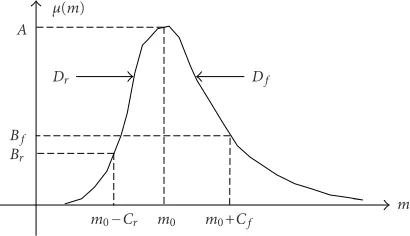
Figure2: Prototype of a unimodal potential function.
A feature vectormis generated by a preprocessing unit, which in our case computes a nonlinear CT, the transla-tion invariant spectrumvec(G2D) derived thereof being
in-terpreted as a feature vectorm. For each feature, a member-ship function is determined. The membermember-ship function can be described with 8 parameters which will be defined below. The parameters are determined in a learning phase, or by an expert, mixed strategies being also possible, finally result-ing in a time-invariant classifier. Also a time-variant classifier can be constructed [8]. In theworking phase, a level of affi n-ity is calculated for every incoming set of data and used for the classification. The prototype of a 1D potential function
µ(m;p) can be expressed as follows (Figure 2):
µ(m;p)=A·1 +d(m;p)]−1, (21)
with the difference measure
d(m;p)=
1
Br − 1
· m−m0 Cr
Dr
∀m < m0,
1
Bf −1
· m−m0
Cf
Df
∀m≥m0.
(22)
This difference can be interpreted as a generalized Minkowski distance. The potential function gets comprehensively de-termined by the parameter vector p = (m0,Br,Bf,Cr,Cf,
Dr,Df)T. Referring to Figure 2, the elementary parameters belonging to the vectorpare defined as follows.
The parameterm0corresponds to the average value of a
1D signal or feature, or the center of gravity in case of an
M-dimensional feature space. The valueAdenotes the maxi-mum value of the function. In the hardware design described in this paper,A=1. The elementsm0andAare interrelated
by the formulaA=µ(m0;p).
The parametersBr andBf determine in turn the value of the membership function on the boundariesm0−Crand
m0+Cf. The membership values for the rising and falling edges are given by the expressionsµ(m0−Cr;p) =Br and
µ(m0+Cf;p) = Bf. The parametersCr andCf define the maximum distance from the center of gravity. This value is calculated from the maximum and minimum of the signal amplitude of each feature.
The parameters Dr andDf are determined from each feature’s amplitude distribution. They model the decrease in membership with the increase of the distance from the center of gravity. A detailed description of the parameters and their calculations can be found in [8].
In an M-dimensional feature space, the membership functions (equation (21)) are connected together in a con-junctive way. All feature representatives mk,k ∈ {0, 1,. . .,
M −1}, exhibit their specific parameters kp = (m
0k,Brk,
Bfk,Crk,Cfk,Drk,Dfk)T. The scalar function µ(m;kp) forM features is described as follows:
µm;kp=A·
1 + M−1
i=0
dmi;ip
−1
. (23)
All distance measures are summed up. The result is one membership function for one class. Membership functions forKclasses are also constructed in the same way. The clas-sification is generated with a disjunction/conjunction net-work and argmin(·) and argmax(·) operations. The poten-tial function is again mapped into an LSA. Furthermore, the above-mentioned definition of a membership function is not the only possible one. Different potential functions can be defined [9]. The membership function which is used for the hardware implementation is determined as follows:
µm;kp=2−iM=−01d(mi;ip), B
fk=Brk= 1
2. (24)
This concept has some advantages in implementation. The membership function is calculated with logical shifts and one multiplication is saved without loss of classification ac-curacy, considering that (cf. (22), (24)) (1/Br−1)=1 and (1/Bf −1)=1.
Basically translation-invariant output spectra are suffi -cient in order to describe image contents. In real-image scenes and applications however, a simple comparison of in-variant spectra is not easy to achieve. In practice, situations can occur which prevent the performing of simple compar-isons due to, for example, object shifts under the camera sys-tem, noncyclic shifts, aliasing effects during the digitization and further effects induced by different backgrounds, and so forth [7]. Therefore, nonlinear CTs should be used in con-junction with postprocessing units such as FPC.
In our approach, the MFPC performs this task. In the learning phase, a certain number of image samples is used to create a minimum and maximum master spectrum. The minimum and maximum of each feature are determined for the creation of the distanceCkmeasured along the dimen-sionk:
Ck= 1 2·
maxmk
−minmk
. (25)
(8×8) image window
Membership function
for each feature 2D CT
Nonlinear
G-spectrum (features)
Aggregation Decision
Image
Figure3: Signal flow.
a thresholdµtto produce the decisioncdefined as follows:
c=
1, µm;kp≥µ t, 0, µm;kp< µ
t,
(26)
with acceptance valuec=1. The threshold is adjusted man-ually by an operator at system installation and exploitation time.
3. IMPLEMENTATION ON FPGA
The 2D CT and the FPC are implemented on a single FPGA [18].Figure 3shows the signal flow of the processing unit. The signal flow indicates how a complete image is analyzed by the system. The data input and output accesses are de-signed for monochrome images of a size of (2048×2048) pix-els. The features are calculated and classified within (N×N) windows of the typical size of (8×8) pixels whereas other window sizes can be used as well.
We use an Altera Apex EP20K600E FPGA device [18], counting 24 320 logic elements (LEs). The decision for se-lecting the above-mentioned FPGA was motivated by the in-ternal structure of the FPGA. In this paper, we propose a con-cept to circumvent the drawbacks affecting the clock skew in application specific integrated circuits in the case of systolic array implementation.
The main unit is the LE. One LE consists mainly of a register, a 4-input lookup table, preset and reset logic, and a clock distribution unit. Indeed, 10 LEs get grouped to com-pose so-called logic array blocks (LABs) benefiting from lo-cal interconnections. Furthermore, LABs are in turn grouped by a number of 16 to form so-called MegaLABs. Accordingly, the latter operates with up to 160 LEs interconnected by short data and clock signals.
One general challenge we have to cope with is the clock distribution scheme. It is a known fact that the design of clock trees in application specific integrated circuits is not an easy task [18]. One main problem is the fact that clock lines have different lengths and therefore the clock signals will be
differently delayed. This effect is called clock skew. Insertion of a so-called balanced clock tree has to take account of layout so that the tree is balanced not only in terms of the number of flip-flops attached, but also of clock drivers fan-out and especially of the wire lengths. The clock delay and clock skew parameters account for a significant portion of the total setup time and clock-to-output delay in larger devices.
As clock skew depends heavily on the placement of the macrofunctions in gate arrays, special care has to be taken in the placement of these elements. Therefore, macros, such as local systolic arrays, have to be placed on the chip while making sure that the clock distribution is perfectly designed. In general, using phase-locked loops (PLLs) during the clock synthesis helps improve the clock jitter and clock phase per-formance [18]. Indeed, PLLs can be tuned to produce out-put clock signals performing at different low jitter levels and predefined phase. The PLLs are able to perform different low jitter and defined phase clock output. Assuming the use of some PLLs for different macrofunctions, which are con-trolled for proper clock skew, opens one opportunity to in-crease the system performance. One drawback of gate array design is that a major part (up to 50%) of the development time has to be reserved for the clock tree and PLL design.
Systolic arrays are usually stretched over several thousand LEs, so clock skew can become a major issue. Taking into ac-count the clock scheme principles, it is obvious that the im-plementation of systolic arrays on application specific inte-grated circuits is not easy to achieve.
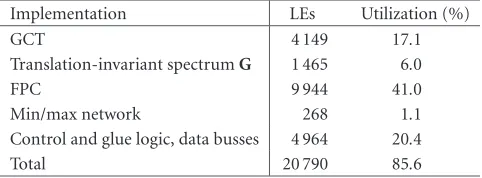
Table1: Number of FPGA-LEs used for the implementation of the functional blocks. All local interconnections related to the systolic arrays are included in the listed number of LEs. External input and output data busses are counted separately.
Implementation LEs Utilization (%)
GCT 4 149 17.1
Translation-invariant spectrumG 1 465 6.0
FPC 9 944 41.0
Min/max network 268 1.1
Control and glue logic, data busses 4 964 20.4
Total 20 790 85.6
Referring to the above-mentioned remarks, a positive co-incidence appears when implementing the systolic arrays in FPGAs with the above-mentioned clock network properties. Each PLL is used for one of the systolic arrays (cf.Table 1) and adjusted for minimum clock skew. An increase of per-formance in maximum clock frequency is achievable. Mini-mizing the clock skew with 4 PLLs, the clock frequency per-formance increases from approximately 34 MHz to 40 MHz (>17%). The phase shift is implemented within a step reso-lution lower than 1 nanosecond.
The transform and the invariant spectrumG2Das well as
the FPC and the min/max determination are based on LSAs. Most of the processing elements are designed as 16 bit inner product step processors, which correspond to a multiplier and accumulator cell (MAC). In general, one cell is designed with one MegaLAB structure. Of course, the divider and po-tential networks, which were both designed for 32 bit data, operates with up to 6 MegaLAB structures but in a straight-forwarddesign. Therefore, it is possible to operate each sys-tolic array with a serial clock distribution scheme. Care has to be taken at the interconnections between the arrays. It is ab-solutely necessary to synchronize the data flow and the clock with a set of registers. A proper cut-set retiming was used to achieve the processing times which are mentioned in the fol-lowing section.
Approximately 20% of all LEs are foreseen for the control and glue logic as well as for the input and output data busses. The control unit is equipped with RAM controllers and a VMEbus interface.Table 1shows the percentage of utilized LEs for the 2D transform, the translation-invariant spectrum G2D, the FPC, the min/max unit, and the RAM controllers,
glue logic, and timing control. It has to be pointed out that all necessary local connections within the units areincluded in the LE count.
Table 1 shows a total amount of 20 790 LEs, which is equivalent to a factor of approximately 85.6% chip utiliza-tion. The overall latency time (defined as the time interval between the application of specific input data and delivery of corresponding results at the output) per block is calculated with 249 clock cycles before the first result leaves the classi-fier. The FPGA operates with a maximum clock frequency of 40 MHz. Therefore, a processing time of 6.23 microseconds per block is achieved, if an (8×8) window is used.Table 2
Table2: Latency times.
SpectrumG2D Fuzzy pattern classifier
Clock cycles 132 117
Time (µs) 3.3 2.93
presents an overview of different latency times of the com-ponents.
4. EXPERIMENTAL RESULTS
In this section, we present some experimental results using the transforms for pattern separability tests. The results were previously published in [12]. However, applying the new monoms resolution strategy based on (9), it is possible to find fast transforms for all mentioned CTs. We used binary test patterns as input vectors. Binary numbers can be inter-preted as patterns under cyclic permutation. Thus, if a left (or right) shift is used with a particular number, a new number in the class will be generated. We compared our results with the results given by the well-known Fourier transform power spectrum and the rapid transform spectrum. Three CTs were defined (example forN=16):
(1) CT1:cβ1=(27, 26,. . ., 20, 23, 22,. . ., 20, 0,−1,−1,−1)T.
This CT has a computational complexity ofN·ld(N). All computations can be processed with integers; (2) CT2: cβ2 = −k · cos(π · (i + 1/2)/N) with i =
1, 2,. . .,N−1. A radix-2 structure with real numbers is possible. The factorkis chosen such that the last spec-tral coefficient represents the average value of the input vector;
(3) CT3:cβ3=(r0,r1,. . .,rN−1)T. The CT3 coefficients are
defined as a Gaussian noise signal with varianceσ=1 and average=0. Calculations in radix-2 structure are also possible with a proper radix-2 decomposition.
Table 3 shows the results of the separability test. It is obvi-ous that the proposed CTs are superior in comparison to the Fourier power spectrum and the rapid transform forN >4.
5. APPLICATIONS
Table3: Separability properties of binary pattern. The amount of separable patterns is processed by Polya’s counting theory (cf. [3]). The number in column 3 indicates the maximum translation-invariant patterns which is achievable for binary patterns. All data in the columns 4 to 10 indicate the number of separable patterns under different transforms.
N 2N Amount of separable patterns Rapid transform Fourier power spectrum CT1 CT2 CT3 RMWHT [6] SWT [15]
2 4 3 3 3 3 3 3 3 3
4 16 6 6 6 6 6 6 6 6
8 256 36 21 31 31 31 33 21 29
16 65536 4116 225 1876 3245 3496 3527 208 668
(a) (b)
Figure4: (a) Cutout of a reference image. (b) Cutout of an error image; the errors are marked with circles.
Figure5: Zoomed error cutouts.
image has to be triggered for a stable image representation. Under practical considerations, slight object movements will always occur, which causes slight changes in the image rep-resentation. These changes are detectable as amplitude noise in the spectral amplitude of each coefficient. The spectrum G2Dhas to be characterized as translationtolerant. Therefore,
the FPC has to cope with these spectral dynamics. Further-more, a dichotomic decision such as “good/bad” and so forth is in most cases sufficient. A further advantage is that the sys-tem operates in real time because of the above-mentioned latency times. As an illustrative example, we present an anal-ysis of test prints with typical printing flaws.Figure 4shows a (740×780)-pixel cutout of a (2048×1536)-pixel image as a reference and an error image. Approximately 100 reference sheets are used for the classifier training. Following, diff er-ent sheets, which were not trained, were inspected. Typical errors which were detected are shown inFigure 5. The first error consists of two missing dots above the letter “¨u” and the second error of a missing letter “C”.
The approach can be used for image retrieval as well. It has to be pointed out that the window size depends on the application. In the case of image retrieval, the windows
are placed over the image in form of a grid pattern. Within each window, the calculated spectral coefficients can be con-sidered as local. Different CTs and potential functions were examined. Transforms with good separation characteristics work favorably with (16×16) windows. For (8×8) windows, too many details were mapped. For (8×8) windows, trans-forms with low separation characteristics are optimal (e.g., RMWHT [6], SWT [15]).
5.2. Character recognition
The algorithms can also be used in the area of handwriting or printed character recognition. The procedure is sketched as follows: on the basis of scanned characters (A, B,. . ., Z), which are stored for example as (8×8)-or (16×16)-pixel data fields, prototypes of handwritten characters are trained. A parameter field, consisting of M·pitems, is then deter-mined for each character. This data matrix represents the trained parameters. In the test phase, a learned CT feature matrix of a test character is compared with the trained data set in the classifier system. For each character, a membership value is generated regarding the test character. This means that a membership value vectorZ=(µA,µB,. . .,µZ)Tcan be checked for the value with the maximum membership am-plitude (max of height). The position of the maximum value is defined as a certain characterc=arg max(Zi).
6. CONCLUSION
We have presented algorithms and a corresponding FPGA implementation, which are suitable for image processing ap-plications based on an FPGA Altera Apex EP20K600E. The FPGA operates with a clock frequency of 40 MHz. Different nonlinear CTs and an FPC are implemented as feature gen-erators and classifier, respectively. The combination of both modules leads to a flexible pattern recognition approach, which is adaptable to the application tasks. Typical applica-tions are image retrieval, texture and image analysis, similar-ity detection, and character recognition.
REFERENCES
[1] H. Reitboeck and T. P. Brody, “A transformation with in-variance under cyclic permutation for applications in pattern recognition,”Information and Control, vol. 15, no. 2, pp. 130– 154, 1969.
[3] H. Burkhardt, A. Fenske, and H. Schulz-Mirbach, “Invariants for the recognition of planar contour and gray-scale images,”
Technisches Messen tm, vol. 59, no. 10, pp. 398–407, 1992. [4] M. Fang and G. H¨ausler, “Modified rapid transform,”Applied
Optics, vol. 28, no. 6, pp. 1257–1262, 1989.
[5] J. Turan and K. Alth¨ofer, “A novel system for 3D acoustic object recognition based on the modified rapid transform,”
Journal of Electrical Engineering, vol. 46, no. 8, pp. 265–269, 1995.
[6] V. Lohweg and D. M¨uller, “Anwendung schneller diskreter Spektraltransformationen zur translationsinvarianten Merk-malgewinnung [Application of fast discrete spectral trans-forms for translation invariant feature extraction],” in Muster-erkennung 1999, 21. DAGM-Symposium, Informatik Aktuell, pp. 266–275, Springer, Bonn, Germany, September 1999. [7] S. Siggelkow and H. Burkhardt, “Image retrieval based on
local invariant features,” inProc. IASTED International Con-ference on Signal and Image Processing, pp. 369–373, Las Vegas, Nev, USA, October 1998.
[8] S. F. Bocklisch and U. Priber, “A parametric fuzzy classifica-tion concept,” inProc. International Workshop on Fuzzy Sets Applications, pp. 147–156, Akademie-Verlag, Eisenach, Ger-many, March 1986.
[9] K. Eichhorn, Entwurf und Anwendung von ASICs f¨ur muster-basierte Fuzzy-Klassifikationsverfahren, Ph.D. thesis, Circuit and System Design, Technical University of Chemnitz, Chem-nitz, Germany, 2000.
[10] V. Lohweg and D. M¨uller, “Ein generalisiertes Verfahren zur Berechnung von translationsinvarianten Zirkulartrans-formationen f¨ur die Anwendung in der Signal- und Bildverar-beitung [A generalized method for circular transforms trans-lation invariance determination with applications in signal and image processing],” inMustererkennung 2000, 22. DAGM-Symposium, Informatik Aktuell, pp. 213–220, Springer, Kiel, Germany, September 2000.
[11] V. Lohweg and D. M¨uller, “A complete set of translation in-variants based on the cyclic correlation property of the gen-eralized circular transforms,” inProc. 6th Digital Image Com-puting Techniques and Applications (DICTA ’02), pp. 134–138, Australian Pattern Recognition Society, Melbourne, Australia, January 2002.
[12] V. Lohweg and D. M¨uller, “Nonlinear generalized circular transforms for signal processing and pattern recognition,” in
IEEE-EURASIP Workshop on Nonlinear Signal and Image Pro-cessing (NSIP ’01), Baltimore, Md, USA, June 2001.
[13] N. Ahmed, K. R. Rao, and A. Abdussattar, “BIFORE or Hadamard transform,” IEEE Transactions on Audio and Elec-troacoustics, vol. 19, no. 3, pp. 225–234, 1971.
[14] N. Ahmed and K. R. Rao, Orthogonal Transforms for Digital Signal Processing, Springer, New York, NY, USA, 1975. [15] D. Covey and J. Pender, “New square wave transform for
dig-ital signal processing,” IEEE Trans. Signal Processing, vol. 40, no. 8, pp. 2095–2097, 1992.
[16] P. J. Davis,Circulant Matrices, John Wiley & Sons, New York, NY, USA, 1979.
[17] R. A. Horn and C. R. Johnson,Topics in Matrix Analysis, Cam-bridge University Press, CamCam-bridge, UK, 1994.
[18] Altera,Digital Library of FPGAs, San Jose, Calif, USA, March 2002,http://www.altera.com.
Volker Lohwegis Head of Koenig & Bauer AG, Bielefeld branch (optical systems). His research interests include image processing and pattern recognition for banknote print-ing, as well as VLSI design. Volker Lohweg has a Ph.D. degree in electrical engineering from Chemnitz University of Technology. He is appointed Professor of digital systems at Lippe and Hoexter University of Applied Science. Volker Lohweg is a Member of the
German Association for Pattern Recognition (DAGM) and the In-stitute of Electrical and Electronic Engineers (IEEE).
Carsten Diederichs is the Head of the Hardware Design Group at Koenig & Bauer AG, Bielefeld branch. His interests include field-programmable logic design and efficient hardware implementation of computer arithmetic algorithms. Carsten Diederichs has a Dipl.-Ing. (FH) degree in electrical engineering from the Lippe and Hoexter University of Applied Science.
Dietmar M¨ulleris a Professor of electrical engineering and Head of the Circuit and System Design Group at Chemnitz Univer-sity of Technology. His research interests in-clude VLSI design and field-programmable logic. Dietmar M¨uller has a Ph.D. degree in electrical engineering from both the Univer-sity of Dresden and Chemnitz UniverUniver-sity of Technology. He is a Member of the Associa-tion for Electrical, Electronic, and