Determining an e-learning Model for Students with Learning Disabilities: An Analysis of Web-based Technologies and Curriculum
Anastasios (Tas) Adam
BSc (Hons) BEd MSc (Comp)
School of Management & Information Systems Faculty of Business and Law
A thesis submitted in fulfilment of the requirements for the degree of
Doctor of Philosophy
Victoria University
MELBOURNE, VICTORIA, AUSTRALIA
ABSTRACT
This thesis investigates the impact of ICT on the learning outcomes for Learning
Disabilities (LD) or special needs students, in a special school setting. The literature
reported a significant prevalence of LD universally, ranging from physical and mild to
extreme disabilities. It highlighted that there are a significant number of students with
learning disabilities who require assistance and support in their learning. Assistive
technology plays a significant role for educators and students with learning disabilities
in facilitating the learning outcomes. The Internet and Information and Communication
Technologies (ICT) play a major part in shaping the knowledge and skills of LD
students. Assistive technology has introduced awareness for both educators and
students and, for the past decade, there has been a growing effort in designing and
developing ICT based platforms to enhance the learning outcomes of these students.
With the emergence of new technologies like Web 2.0, the need to design appropriate
tools and provide an environment that is conducive to successful learning is stronger.
This thesis examines the various teaching methodologies and ICT innovation in a
holistic way. The literature shows that although there are some studies that investigate
the impact of technology on the learning for special needs students, most of the data are
second source. This study presents results from participant observations in two outer
suburban special schools with students aged between 14-18 years, and in addition,
examines the role and impact of Education Department policies on the schools‘ ICT
environment. These observations are compared with a study based on an individual
case of a student from Prep to Year 12 and TAFE. This study identified different
categories of special needs students who were catered for in these special schools.
These ranged from students with physical or cognitive disabilities, to mainstream
students placed temporarily in a hospital. The latter group received ICT support to
continue their studies which is now facilitated through a virtual classroom environment.
Data analysis reveals that a significant role is played by the actors. An e-learning model
appropriate to this study was adopted and applied to gather data from the first school
during the early phase, namely, Macedon Ranges. The model was later refined to
facilitate further in-depth observations whilst the study was shifted to the second school,
Concord. At Concord, a specific project, called 121 ICT, provided data over a lengthy
time period of three years. The study identified key actors, their influence on the
leadership and e-learning plans for special needs schools in the State of Victoria,
Australia. The data showed that a strong focus on the use of technology in teaching and
the curriculum can lead to stronger engagement by students and teachers. The strong
belief in school policy by the key actors raised the status and standard of the learning
outcomes. Participation in the pioneering project provided a comprehensive way of
observing the integration of ICT into the curriculum; and how this approach extended
the skills and knowledge of the students in the special schools. Moreover, the study
provided evidence on how the students worked at the school, and later, how they sought
pathways into life and work. The ICT programs and environment were reflected in the
attitude, motivation and communication skills of the actors. Although in some cases,
the students faced difficulty with motor skills1, it was observed over a significant time period that these handicaps were overcome with the use of ICT. For senior students in
the school, the curriculum offered alternative studies such as the Victorian Certificate
for Applied Learning (VCAL). ICT was clearly seen as a driver or force for students
with special needs in this research field. It should be noted that the concept of the 121
ICT Project was also independently implemented by the Queensland Department of
Education. The 121 ICT Project provides evidence that scaffolding with a direct
teaching approach enhances the learning outcomes of LD students. In addition, the
study further demonstrates that infrastructure is a significant factor in the successful
adoption of ICT in these schools.
The thesis examined studies from a global perspective; for example, the OECD, UK,
Asia, USA, and Africa. E-learning models from the literature were used in the study to
gather data and the results were applied to formulate the design of an e-learning model
for LD students. The thesis confirms and extends previous findings regarding the
impact of ICT on the learning outcomes of LD students. The present findings strongly
support that ICT increases the motivation, independence, self-esteem and
communication skills of LD students. Moreover, the study provides evidence that a
significant attainment in skills and academic knowledge is facilitated by the adoption of
ICT.
1
DECLARATION
Degree Title: Doctor of Philosophy
I, Anastasios (Tas) Adam, declare that the PhD thesis entitled ―Determining an
e-Learning Model for Students with e-Learning Disabilities: An analysis of Web-based
Technologies and Curriculum‖ is no more than 100,000 words in length, exclusive of
tables, figures, appendices, references and footnotes. This thesis contains no material
that has been submitted previously, in whole or in part, for the award of any other
academic degree or diploma. Except where otherwise indicated, this thesis is my own
work.
--- ---
ACKNOWLEDGEMENTS
This study would not have been possible without the support and advice of my wife in
guidance of our son who was diagnosed with developmental delay in his preschool
years. The objective and main drive was to explore learning models and tools to assist
him with his early and latter schooling years- leading to the transition to work. The
views of many researchers like Bloom, Piaget, Gardner, and more recently
socio-technical thinkers who developed ANT like Callon, Latour and Law, have influenced
the thinking and research approach in this work.
This was an anthropological research study and, as such, it needed participant
observations to gather first hand data. I am most grateful to the Principals of the two
schools: Mr Peter Redenbach, Principal of Sunbury and Macedon Ranges Special
School; and Mr Colin Schot, Principal of Concord School Bundoora. In addition, I
would like to express my gratitude to various staff members who worked closely with
me and allowed me to participate in their classroom activities.
I wish to express my gratitude to VU and DEET for the ethics approvals that were
required to conduct research in the above mentioned schools.
Of course the thesis could not have been completed in its current format and standard
without the support and assistance from the following persons: my wife for editorial
assistance, HOS Con Nikakis, for his level of enthusiasm and support, Associate
Professor Dr Geoff Sandy for his advice and support from the early candidature period.
In particular, for his research supervision and guidance, Associate Professor Dr Arthur
Tatnall who guided and supported me in every way possible with this challenging task.
He provided the mental and intellectual stimulus and made the task possible in the end.
He was certainly a main post in this huge project and I am indebted to him for his
support and collegiality.
Thanks to the University for granting me SSP leave to work on the research. To the
colleagues who provided support and inspiration in dealing with this study and last, but
not least, my former HOSs Angela Scollary (retired) and Julie Fisher (now at Monash
I have reserved the final tribute for a previous colleague- Professor Glenn Lowry.
Glenn, if it wasn‘t for you running the research induction seminars back in 1999, I
don‘t think I would ever have pursued this work. Your effort and interest in my work at
the time has culminated in this final dissertation.
In closing, I wish to acknowledge my mentor in life and the person responsible for
providing me with the mental courage, support and challenge to overcome difficulties -
my father.
PUBLICATIONS ARISING FROM THIS THESIS
Adam, T. and Tatnall, A. (2002). ―Developing e-learning Models for students with
learning disabilities in regional areas‖, Proceedings of ITIRA2002,
Rockhampton, Qlnd, Vol 1, page 198.
Adam, T. and Tatnall, A. (2003). ―Using Information and Communication Technologies
to Enhance the Learning Outcomes of a Virtual Community of Students with
Learning Disabilities‖, ACIS2003.
Adam, T. and Tatnall, A. (2005). ―The use of Portals in Australian special schools‖,
ITIRA2005.
Adam, T., Rigoni, A. and Tatnall, A. (2005). ―The Application of ICT in the
Development of a Thinking Curriculum: a Pilot Project for Students with
Special Needs‖, Victoria Business Research Conference, Melbourne.
Adam, T. (2005)." Development of a Thinking Curriculum: a Pilot Project for Students
with Special Needs‖, Journal of Business Systems, Governance and Ethics,
VU, Melbourne .
Adam, T., Rigoni, A. and Tatnall, A. (2006). 'Designing and Implementing Curriculum
for Students with Special Needs: A Case Study of a Thinking Curriculum'
Journal: Journal of Business Systems, Governance and Ethics. Vol: 1 Pages:
49-63.
Adam, T. and Rigoni, A. (2006). ―The 121 Pilot ICT Project‖, AFSEA06, 29 March
2006, Melbourne.
Adam, T. and Tatnall, A. (2006) ―Virtual Communities and the Education of Children
with Special Needs‖, Journal of Encyclopedia of Networked and Virtual
Organizations
Adam, T. and Tatnall, A. (2007). 'Building a Virtual Knowledge Community of Schools
for Children with Special Needs' in Information Technologies for Education
and Training. Pages: 185-193.
Adam, T. and Tatnall, A. (2007). 'A Gateway Model for Education: Specifying a Portal
for the Virtual Community of Educators of Special Needs Students' in 8th
International We-B Conference. Pages: 1-7.
Adam, T., Tatnall, A. and Olsen, R. (2007). 'Catching Students and Teachers in the
Adam, T. and Tatnall, A. (2008). 'Children with Special Needs as a Virtual Community'
in Encyclopaedia of Networked and Virtual Organizations, Volume 1. Pages:
187-192.
Adam, T. and Tatnall, A. (2008). 'Using ICT to Improve the Education of Students with
Learning Disabilities' in Learning to Live in the Knowledge Society. Pages:
63-70.
Adam, T. and Tatnall, A. (2008). 'ICT and Inclusion: Students with Special Needs' in
The New 21st Century Workplace. Pages: 75-85.
Adam, T. and Tatnall, A. (2010). ‗Use of ICT to Assist Students with Learning
Difficulties: An Actor-Network Analysis‘, WCC2010 Conference, September
STYLE OF THESIS
A Note on Style
Personal history is shown as journal in 2 columns in several parts of the thesis.
Research Field: The research schools or fields will be referred to also as the research environment throughout the thesis.
Tools used in the thesis: I have applied Mind Manager where possible to model the infrastructure and other relevant aspects of the research.
Main Models
Actor network model Schunck e-Learning model
ICT learning model E-learning Model
Research plan Brain model
Research Timeline Learner interface model
Research design Petri Net model for e-Learning
A note on LD: LD is a universal term that refers to students with learning disabilities.
Education Department: this is used in place of DEST (Federal), DEET (State) and DEECD (State) throughout the thesis
Research Project Funding: The research on Infrastructure was funded by the former School of Information Systems in 2005. The research was further supported by a grant
from the Special Studies Program (SSP) of the University in 2007.
Table of Contents
Abstract ...ii
Declaration ... iv
Acknowledgements ... v
Publications Arising From this Thesis ... vii
Style of Thesis ... ix
List of Trademarks ... xviii
List Of Figures ... xix
List of Tables ... xxiii
Glossary ... xxv
Main Actors ... xxx
1 INTRODUCTION ... 1
1.1 The Long Journey Home ... 1
1.2 Summary of Significance ... 5
1.3 Contribution to Knowledge ... 6
1.4 Aims ... 8
1.4.1 Major Research Question ... 8
1.4.2 Sub-questions ... 8
1.5 Evolution of the Research Questions ... 10
1.6 Mild Learning Disabilities (LD) & Mild Mental Retardation (MMR) ... 11
1.7 A Brief Note on the Special Schools in this Study ... 12
1.8 Overview of the Thesis ... 13
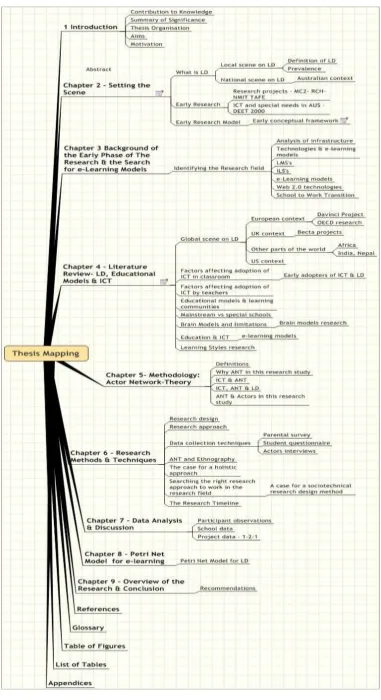
1.9 Thesis Organisation ... 15
1.10 Motivation ... 20
2 SETTING THE SCENE- PERCEPTIONS & CONNECTIONS: ...22
A CASE FOR ICT ADOPTION IN LD EDUCATION ...22
2.2 History & Definition of LD ... 23
2.3 How big is it? ... 27
2.3.1 Range of Special Needs... 30
2.4 Mainstream Teachers & Special Needs Teachers: Comparison of Qualifications and Attributes ... 32
2.4.1 Teacher Adaptations for Students with Disabilities ... 35
2.4.2 OECD Projects ... 38
2.4.3 Teacher’s Beliefs and Instructional Practice ... 40
2.5 Barriers and Enablers to Effective use of ICT in Schools ... 41
2.6 Comparison of Mainstream & Special Needs Teachers Qualifications and Attributes (OECD 2001) ... 45
2.7 ICT Policy Developments in Victoria ... 46
2.8 Other Studies on the Impact of ICT and Innovation ... 50
2.9 Conclusion ... 52
3 BACKGROUND OF THE EARLY PHASE OF THE RESEARCH & THE SEARCH FOR E-LEARNING ...53
3.1 Chapter Synopsis ... 53
3.2 The Research Field ... 53
3.2.1 Background and Purpose - Macedon Ranges ... 54
3.2.2 Background and Purpose - Concord ... 59
3.3 Background and Purpose - Field Z (Individual Student)... 64
3.3.1 Research Field Z... 64
3.3.2 Individual Study (Z) ... 65
3.3.3 Actors (Non-human) Software Programs ... 66
3.4 The Research Roadmap- Searching for Sites & Actors ... 67
3.5 Research Timeline & its Evolution ... 68
3.6 Modelling Learning With ICT ... 70
3.6.1 From Traditional Teaching and Learning Models to E-Learning ... 71
3.6.2 Adopting the Schunck & Nielsson e-learning Model for LD Students ... 72
3.7 A Preliminary Comparison of the two Schools ... 73
3.7.1 A Brief Word on Actors ... 74
3.9 A Note on the Victorian Government’s Innovation Project for ICT- The Ultranet ... 78
3.10 Other Related Projects – the Exploration of A Virtual Community of Special Schools & 121 ICT Project ... 81
3.10.1 Background to the Project ... 81
3.11 A Brief Word on Methodology and Data Collection ... 84
3.12 The ‘Thinking Curriculum’ – Another Teaching Paradigm? ... 85
3.13 Linking with Other Research Activities - Multimedia Victoria Project with RCH’s Special Education Unit and NMIT TAFE ... 85
3.14 Early Research on Infrastructure ... 89
3.14.1 Infrastructure ... 89
3.15 Learning Objects & ICT ... 92
3.16 HISTORICAL DEVELOPMENT OF LMS Analysis and ICT Infrastructure ... 93
3.16.1 Evolution of Technologies to Support Teaching and Learning ... 93
3.16.2 General Views on Benefits & Problems of ILSs ... 94
3.16.3 Implications for Teachers Using ILSs... 95
3.17 introduction to E-Learning Models ... 96
3.17.1 What is E-Learning? ... 96
3.17.2 E-Learning Systems ... 96
3.17.3 Technology Infrastructure ... 99
3.17.4 Virtual Classroom & Collaboration Tools ... 99
3.17.5 E-Learning Action Plans ... 100
3.18 Web 2.0 Technologies ... 109
3.18.1 What is Web 2.0? ... 109
3.18.2 Barriers and Issues of Web 2.0 and Beyond ... 110
3.19 E-learning & Transition from School to Work ... 111
3.20 E-Learning Model Examined Early in this Study ... 113
3.21 Summary ... 113
4 LITERATURE REVIEW – LD, LEARNING MODELS & ICT ... 116
4.1 Introduction ... 116
4.2 Education of Children with LD ... 117
4.2.1 IQ, LD & Learning ... 118
4.2.3 Mild Learning Disability ... 120
4.3 Learning, ICT & LD... 121
4.4 The Biological Basis of Learning & LD... 125
4.4.1 Introduction ... 125
4.4.2 Brain Theory – What does it mean? What do we do? ... 125
4.4.3 Hebbian Learning in Neurons ... 127
4.4.4 Recent Research ... 128
4.4.5 Main Concepts for Learning and Memory ... 128
4.4.6 Biological Stages of Thinking and Learning... 130
4.4.7 The Genetic Basis of Cognition ... 130
4.4.8 A Biological Generative Learning Model ... 131
4.4.9 Timeline for Brain Models and Relevant Technologies ... 136
4.4.10 The Brain: Foundation for Learning ... 138
4.5 Key Questions Arising From Brain Models Theory ... 143
4.6 Learning Styles Theories ... 144
4.6.1 Introduction to Learning Styles Theories ... 144
4.6.2 David Kolb's Learning Styles Model and Experiential Learning Theory (ELT) ... 144
4.6.3 Kolb's Experiential Learning Theory (Learning Styles) Model ... 146
4.7 Brief Discussion on Learning Styles ... 148
4.8 Howard Gardner’s Multiple Intelligences Theory ... 149
4.9 Other Learning Styles ... 150
4.9.1 Visual-Auditory-Kinesthetic Learning Styles (VAK) ... 150
4.10 Honey and Mumford's Variation on the Kolb Model ... 151
4.11 Brief Discussion on Cognitive Load Theory ... 152
4.12 Significance of Brain Models to Case Studies in the Present Study ... 154
4.13 Other Related Research ... 154
4.14 Overview of Other Relevant Important Concepts in this Chapter & Study ... 158
4.15 The ICT Impact Report – European Schoolnet ... 158
4.15.1 Research on Impact of ICT to Learning Outcomes ... 159
4.15.2 The Impact of ICT on Teachers and Teaching ... 161
4.15.3 Teachers’ Competencies and General use of ICT ... 162
4.15.4 Summary of Literature Findings on Impact of ICT from the UK & Europe ... 163
4.17 ICT & LD – OTHER CONSIDERATIONS ... 166
4.17.1 Factors that Affect the Adoption of ICT in Education ... 166
4.17.2 Other Factors: Technological, Cultural & Social Factors ... 168
4.17.3 Factors Affecting Teachers’ use of ICT ... 169
4.18 Adoption & Innovation of ICT for LD Students ... 171
4.19 Educational Models used in ICT & LD ... 172
4.20 Teaching/Learning Paradigms ... 177
4.21 Limitations of the Literature ... 179
4.22 Summary ... 180
5 METHODOLOGY - ACTOR-NETWORK CONCEPTS ... 181
5.1 Special Schools & ICT Innovation - Overview ... 181
5.2 Overview of Actor-Network Theory Concepts ... 181
5.2.1 Actor-Network Theory ... 183
5.2.2 Features of ANT ... 184
5.2.3 Other Attributes of Actor-Networks ... 184
5.2.4 ANT & Sociology of Translations ... 188
5.3 ANT, LD & ICT Innovation ... 188
5.3.1 Actor-Network Theory and Innovation Translation ... 188
5.3.2 Introduction to Formal Concepts of Innovation Translation ... 190
5.4 Actors, Networks, Black-Boxes and Translations ... 191
5.4.1 How Actor-Network Theory Handles Complexity ... 192
5.5 Uses of ANT and Innovation Translation Theory ... 194
5.5.1 Criticisms of Actor-Network Theory ... 197
5.6 ANT for this Research Study ... 199
5.6.1 The Search of Actors ... 201
5.6.2 The Students Network ... 201
5.7 A Note on Methodology... 202
5.8 A Note on Identifications of Actors ... 203
5.9 Limitations ... 203
5.10 Why ANT in this Study?... 204
6 METHODS AND TECHNIQUES... 206
6.1 Synopsis of Methods and Research Design ... 206
6.2 Rationale of Method ... 207
6.3 My Overall Research Framework ... 208
6.4 Data Collection ... 209
6.4.1 Data Collection Methods ... 209
6.5 The Research Approach ... 210
6.5.1 Research Approach in the Field of Study... 210
6.5.2 The Role of the Researcher ... 212
6.5.3 Ethnography ... 213
6.5.4 Case Study Methodology ... 215
6.6 Research Design ... 217
6.6.1 Aims ... 217
6.6.2 Major Research Question ... 218
6.6.3 Sub-questions ... 218
6.7 Analysis of ICT Skills Using the Skills Matrix ... 219
6.7.1 The Research Process ... 222
6.7.2 Time Phase for the Research Process ... 222
6.8 The Approach to my Research ... 223
6.8.1 ANT Analytical Framework and other Research Tools ... 223
7 DATA ANALYSIS & DISCUSSION ... 225
7.1 Introduction ... 225
7.2 Early Observations - Macedon Ranges ... 225
7.2.1 Early Observations at Macedon Ranges ... 225
7.2.2 Other Data from Student Questionnaires ... 229
7.2.3 Later Observations ... 231
7.3 Previous Research Study at Concord ... 232
7.4 Transformation of Concord School’s VCAL Program via Implementation of 121 ICT233 7.4.1 Concord School, Transition Centre... 233
7.4.2 The One-to-One ICT Initiative ... 234
7.4.3 Charter Priorities and the 121 Initiative ... 235
7.4.4 Inclusion of Key Stakeholder Groups ... 236
7.5 A Change of the Research Field- the Commencement of the 121 Project at Concord240
7.5.1 Data Collection in 121 ICT Project ... 241
7.6 Summary of Prime Activities and Actors in the two Special Schools ... 242
7.7 Data for Individual Study - Summary of Events & Actors ... 245
7.7.1 Portfolio Data ... 246
7.8 Other Data for this Research ... 248
7.8.1 Surveys from Concord ... 248
7.8.2 Results from Student Survey... 252
7.8.3 Results from Parent Surveys ... 254
7.8.4 Responses to Open-Ended Questions from the Parents’ Survey ... 259
7.8.5 Data from Questionnaire of Main Actors ... 261
7.8.6 Summary of Leading Actors ... 262
7.9 School Data ... 262
7.9.1 VCAL Data ... 262
7.9.2 Transition Program ... 263
7.9.3 Year 12 Completion Rates ... 264
7.9.4 Progress Outcomes in Curriculum Domains ... 265
7.9.5 Information and Communications Technology (ICT) ... 267
7.10 Recent ICT Developments at Concord - Web 2.0 Technologies... 272
7.10.1 The School’s Overall School Philosophy and Aims ... 272
7.10.2 Constraints that Inhibit Full Application of the Web Learning Platform ... 273
7.10.3 Resources Required to Implement Strategies for the Adoption of Web 2.0... 273
7.10.4 Social Software and Collaborative Learning at Concord School ... 274
7.11 Actor-Network Theory: Results from 121 ICT Project ... 276
7.11.1 Summary of Programs Used by Prime Actor ... 279
7.12 Data Collected From Field Z... 280
7.12.1 Portfolio Data- Evidence from Studies for Actor in Z ... 281
7.13 Discussion of Results ... 285
7.13.1 Results from Parents ... 286
7.14 Analysis of Data Using ANT Framework ... 289
7.14.1 Brief Word on Data Analysis Using ANT Framework ... 290
7.14.2 Macedon Ranges ... 290
7.14.3 Concord ... 294
8 PETRI NET MODEL FOR E-LEARNING & LD ... 309
8.1.1 Brief Introduction to Petri Nets ... 309
8.1.2 Petri Net Structure ... 312
8.2 Petri Net for e-Learning ... 312
8.2.1 Rationale for E-Learning Petri Net Model ... 313
8.2.2 Learning Process Net ... 314
8.2.3 Web Services Net ... 315
8.3 Petri Net Model Design for e-Learning & LD... 319
8.3.1 Petri Net vs ANT Networks ... 322
8.3.2 Analysis of Petri Net for e-Learning Model in this Study ... 322
8.4 Reflections Before the Final Chapter ... 325
9 OVERVIEW OF THE RESEARCH & CONCLUSION ... 326
9.1 Overview of Findings ... 326
9.2 Discussion of Research Questions in the Thesis ... 328
9.3 Key Questions from Brain Models Theory ... 334
9.4 How can ICT Facilitate the Road and Transition from School to Work for LD Students? ... 335
9.5 Summary of Data Analysis and Recent Observations ... 337
9.5.1 Key Researchers in this Research Study ... 340
9.6 Future Directions ... 341
9.7 Recommendations for Further Work ... 342
9.8 Limitations on this Research Project ... 344
9.9 Conclusion ... 345
EPILOGUE ... 347
REFERENCES... 349
LIST OF TRADEMARKS
Microsoft Spectronics
Dragon Naturally Speaking- Nuance AutoDesk
Adobe
LIST OF FIGURES
Figure 1-1: The Research Journey ... 4
Figure 1-2: Evolution of Research Questions ... 10
Figure 1-3: Thesis Mapping ... 19
Figure 2-1: Learning difficulties-factors (Source: Elkins 1997... 28
Figure 2-2: Prevalence data (Source: Rivalland 2000) ... 28
Figure 2-3: Venn diagram for learning difficulties ... 30
Figure 2-4: The Aims of the Leonardo Da Vinci Program, source: (Source: http://eacea.ec.europa.eu/llp/index_en.php) ... 39
Figure 2-5: Actors and Skills in Technology & Learning ... 47
Figure 2-6: Learning with ICT- Using Mind Manager to assist the research study. ... 48
Figure 3-1: The Key Learning Areas of Curriculum (Courtesy: Macedon Ranges Special School) ... 55
Figure 3-2 Macedon Ranges Website, 2010 (Source: Internet & Courtesy Macedon Ranges) ... 56
Figure 3-3: Setting up videoconferencing at Macedon Ranges ... 58
Figure 3-4 Concord School Website (Source: Internet and courtesy of Concord School) ... 60
Figure 3-5: Time Line for Actor Z ... 65
Figure 3-6: Additional actors (non-human) (compare with other students of fields M and C) ... 66
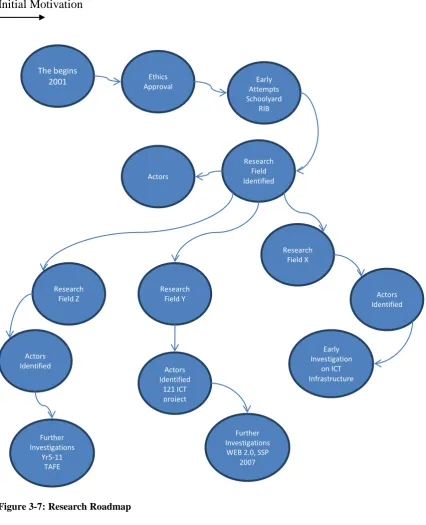
Figure 3-7: Research Roadmap ... 67
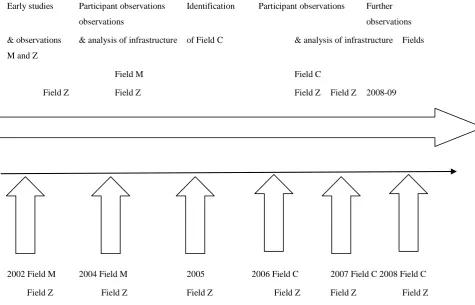
Figure 3-8: Research Timeline ... 68
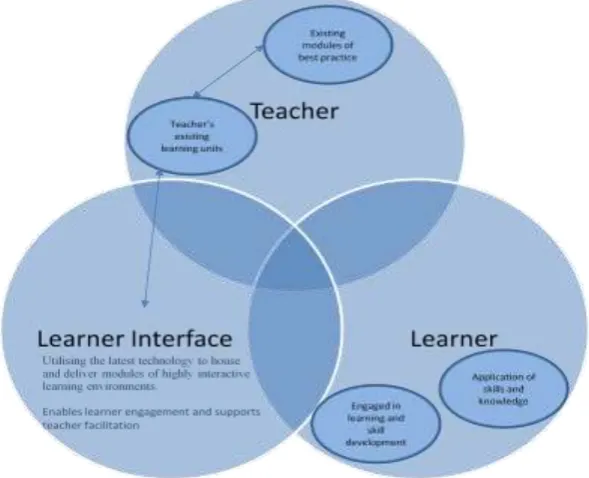
Figure 3-9: Learner Interface Framework - Adapted from Brusilovsky & Papert (Source: IEFTS 2001) ... 70
Figure 3-10: Paradigm of yesterday (Source: Schunck et al. (2001)) ... 71
Figure 3-11: Paradigm of today (Source: Schunck et al. (2001)) ... 72
Figure 3-12: The Paradigm of tomorrow -The e-learning Paradigm (Source: Schunck & Nielsson 2001). ... 73
Figure 3-14: Ultranet (Source: ultranet.vic.edu.au) ... 79
Figure 3-15: Teaching, Learning, Skills & Technology ... 83
Figure 3-16: Royal Children's Hospital Special Education Unit Support Model ... 87
Figure 3-17: DEET & RCH Education Institute Links ... 88
Figure 3-18: Survey of LMSs ... 98
Figure 3-19: The World of Work Equity Main Entry (Courtesy: NMIT) ... 98
Figure 3-20: The World of Work Main Activities Menu ... 98
Figure 3-21: e-Learning Framework (Eduworks Corporation 2002) ... 99
Figure 3-22: Teaching and Learning Framework for Victorian Schools (Source: DEET 2001) ... 101
Figure 3-23: E-learning Initiative (Source: European Commission, DG Education & Culture 2007) ... 103
Figure 3-24: DELOS 10 key policy questions (Source: European Commission, DG Education & Culture 2007)... 104
Figure 3-25: e-TTNEt eLearning competency framework for teachers and trainers (Source: European Commission, DG & Culture 2007) ... 105
Figure 3-26: ePotential Skills Matrix (Source http://epotential.education.vic.gov.au/continuum.php) ... 106
Figure 3-27: Framework for e-Learning Evolution ... 108
Figure 3-28: Summary of Components of the Research Field ... 114
Figure 4-1: Venn diagram - Research domains and their intersections (Constructed from literature) ... 117
Figure 4-2: Distribution of intelligence in the population (Source: R Kendall & A Zeally 2007) ... 120
Figure 4-3: Technology Bridge for LD (Source: Blamires 1999) ... 123
Figure 4-4: Components of a neuron (Source: Stergiou & Siganos 1996) ... 126
Figure 4-5: The Synapse (Source: Stergiou & Siganos 1996)... 127
Figure 4-6: Biological stages of thinking and learning (Source : Lowery 2000) ... 130
Figure 4-7: The Generative Learning Model (Source: Osborne & Wittrock 1983) ... 132
Figure 4-8: Neuron structure model ... 134
Figure 4-10: The learning activities for Stage 7 (Source: Lowery 2000) ... 135
Figure 4-11: Contributors of brain model theories (Constructed from literature) ... 137
Figure 4-12: Overview of Brain models (Constructed from literature) ... 138
Figure 4-13: A taxonomy of mammalian long-term memory systems (Source: Squire 2004) ... 141
Figure 4-14: Brain Model and Language (Source: Stevens 2008) ... 142
Figure 4-15: Cognitive style and learning style model (Source: Desmedt et al. 2002) 146 Figure 4-16: Kolb's Learning Styles Model (Source: Kolb 1984) ... 147
Figure 4-17: Processing & Perception Continuums (Source: Kolb 1984) ... 149
Figure 4-18: Venn diagram – Intersection of ICT, Learning, and LD ... 155
Figure 4-19: AUS & NZ Survey of Learning Objects in Schools (Source: Freebody et al. 2008) ... 164
Figure 4-20: Means of the four groups of educators for their judgements of the factors affecting adoption of ICT in mainstream classrooms on 14 separate variables (7-point scale) (Source: Freebody et al. 2008). ... 165
Figure 4-21: e-Potential skills matrix results (Source: http://epotential.education.vic.gov.au/continuum.php) ... 167
Figure 4-22: Model for the relationship of LD, EM, ICT & BM (Constructed from the literature) ... 180
Figure 6-1: Research framework ... 208
Figure 6-2: Qualitative research areas for ethnography (Source: Tesch 1990). ... 215
Figure 6-3: Early Conceptual Framework - Actors and interactions ... 220
Figure 6-4: The Early Research Plan ... 221
Figure 6-5: The research process (Adapted from Tatnall (1999)) ... 222
Figure 7-1: Early Observations at Macedon ... 226
Figure 7-2: Logical signs for communication ... 227
Figure 7-3: Results from the early survey at Macedon Ranges ... 228
Figure 7-4: Examples Students‘ ICT Skills ... 230
Figure 7-5: ICT Curriculum at Concord (Courtesy of Concord School) ... 238
Figure 7-6: Templates for journal entries ... 240
Figure 7-8: Results from Student Survey Based on the ICT Skills Matrix ... 252
Figure 7-9: Results from Student Survey Based on Knowledge of Hardware ... 252
Figure 7-10: Results from Student Survey Based on Knowledge of Software
Terminology ... 253
Figure 7-11: Results from Student Survey Based on Knowledge Hardware and Software
... 253
Figure 7-12: Results from Student Survey Based on Troubleshooting ... 254
Figure 7-13: Results from Student Survey Based on Other ICT Skills ... 254
Figure 7-14: Results from parent survey ... 258
Figure 7-15: Percentage of students who completed the V.C.A.L Modules ... 263
Figure 7-16: Transition Data - Modules Achievement ... 264
Figure 7-17: Percentage of students who completed year 12 ... 265
Figure 7-18: Progress in Domains ... 266
Figure 7-19: Information and Communications Technology Indicators and Standards
Achieved. ... 267
Figure 7-20: List of ICT skills and indicators from CELS at field Y (Source: Concord
School) ... 271
Figure 7-21: Learning & skills for actor in Z ... 280
Figure 7-22: Sample Results from Assessment Tasks for actor Z ... 283
Figure 7-23: Following the Actors ... 285
Figure 8-1: Basic elements of a Petri Net (Source : Petersen 1981) ... 310
Figure 8-2: Petri Net Model of Simple Flow Control Protocol ... 311
Figure 8-3: Modelling the Learning process with a Hierarchical Petri net (Source : He
and Le (2007)) ... 314
Figure 8-4: Petri Net model for Web Service and sequence, switch, flow and while
activity (Source: He & Le 2007)) ... 316
Figure 8-5: Example of Learning Process model by a Hierarchical Petri net (Source He
& Le 2007)) ... 317
Figure 8-6: Cooperative Learning as Petri Net ... 318
Figure 8-7: Petri Net model for e-Learning and LD ... 321
LIST OF TABLES
Table 0-1: Main Actors at Macedon Ranges ... xxx
Table 0-2 : Main Actors at Concord ... xxx
Table 0-3: Main Actors for the Individual study (Z) ... xxxi
Table 0-4: Main Non-Human Actors in the Research Study... xxxi
Table 2-1: Summary of special needs categories (Source: Australian Schools Directory
2009) ... 22
Table 2-2: Reference to learning difficulties (Source: Rivalland 2000) ... 29
Table 2-3: Personal attributes of primary teachers- Singapore (Source: Teo et al. 2003)
... 33
Table 2-4: Summary of Research on Teacher‘ Attitudes Toward Inclusion (Rizzo &
Vispoel 1992) cited in Elliott (2008) ... 37
Table 2-5: Structural Barriers for ICT Adoption (Source: Elliot 2005) ... 42
Table 2-6: Process Barriers for ICT Adoption (Source: Elliott 2005) ... 42
Table 4-1: Categories of genetic disorders associated with cognitive impairment
(Source: Flint 1999) ... 131
Table 4-2: Gardner's Multiple Intelligences (Source: Gardner 1983) ... 149
Table 4-3 : Overview of the main impact areas by study (Source: Becta 2006) ... 163
Table 4-4 Summary of teaching and learning paradigms (Constructed from the
literature) ... 177
Table 4-5: Overview of Theoretical Models of LD ... 178
Table 5-1: Summary of ANT terminology (Source: Latour 1993, Callon 1986, Law
1997, Walsham et al. 1999) ... 187
Table 6-1: Data collection activities (Source: Creswell 1994) ... 209
Table 7-1 Early survey of ICT skills at Macedon Ranges ... 228
Table 7-2: Main activities and actors at Macedon Ranges & Concord ... 243
Table 7-3: Comparison of Fields- Macedon Ranges & Concord ... 244
Table 7-4: Summary of events and actors for Field Z ... 245
Table 7-5: Summary of ICT skills for Z ... 246
Table 7-7: Summary of Prime Actors and their impact on ICT in the School ... 261
Table 7-8: Summary of Leading Actors at Concord ... 262
Table 7-9: Transition Data ... 263
Table 7-10: Y12 Completion Rates ... 264
Table 7-11: Assessment of VELS ... 265
Table 7-12: ICT Activities at the school sections (Source : Concord School) ... 275
Table 7-13: Results from activities of the main actors in the 121 ICT Project ... 276
Table 7-14: Miscellaneous programs used in ICT VCAL classroom ... 277
Table 7-15: Activities and software programs used in ICT VCAL class by main actor
... 279
Table 7-16: Actors in TAFE for individual study (Z) ... 281
GLOSSARY
ABS: Australian Bureau of Statistics.
ACER: Australian Council for Educational Research.
ACLD: American Council for Learning Disabilities.
Actor: Human or Non-Human Entity Object.
AdaptiveLearning: Learning where the content presented to the learner, and the order that content is presented, varies depending on the results of pre- and post-assessment of
the learner‘s mastery of the content knowledge.
AERA: American Educational Resources Association.
ANT: Actor Network Theory.
AREA: Australian Resource Educator‘s Association.
Assessment: A tool used to evaluate a learner‘s skill or knowledge level in a particular subject area.
Assessment item: A question or measurable activity used to determine if the learner has mastered a learning objective.
Assistive Technology: Technology that is used to support special needs students.
Asynchronous collaboration: Interaction with learners and instructors that is not in real time, such as e-mail conversations or posting comments to a discussion.
Asynchronous learning: A learning event where the interaction is delayed over time, such as a correspondence course. Also sometimes used to describe a learning event that
is delivered after the original live event (usually as a recorded version of the event, with
associated materials).
Asynchronous learning delivery system: A learning delivery environment that can combine a number of asynchronous collaboration components.
Authoring tool: Software application used to produce electronic learning content
Becta: British Educational Communications and Technology Agency.
Brain Models: Models which explain the function and behaviour of the brain and provide models for learning and memory (Kolb and Hebb).
Broadband: Term for sufficient bandwidth to receive streaming video and sound. Usually refers to bandwidth equal to or greater than Asynchronous Digital Subscriber
Line (ADSL) or Cable Modem speed.
CAI: Computer Assisted Instruction.
CERI: Centre for Educational Research and Innovation
Cognitive Generative Model: Model by Osborne and Wittrock for conceptual understanding in familiar concepts.
Computer-based training (CBT): Any instructional event that can be accessed via a standalone computer.
Constructive Learning Model: Learning Model that is used for students on an individual basis (Constructivism) proposed by Mercer 1981.
Content item: A small piece of information that is stored in a database and is used to communicate skills or knowledge. It can be in any media format including text,
graphics, animation, video, audio, and HTML plug-in.
Content Management System: An environment where learning developers can create, store, reuse, manage, and deliver digital content from a central object repository.
CTE: Career and Technical Education.
Da Vinci Project: European Secondary Schools Program
DEETYA: Department of Education Employment Training and Youth Affairs (Also known as the Education Department).
Delivery Management System: A range of technologies that support the delivery of learning content to a learner in self-paced, collaborative, real time, and asynchronous
modes.
DEST: Department of Education Students and Training (Federal Education
Department).
Digital Portfolio: A method of file and presentation management for digital media
Distance learning: Any learning event where the learner is not required to travel to a specific location.
DSP: Disadvantaged Schools Program (Federal Government Funded Project for
Schools in the 80s).
Dyslexia: Learning Difficulty in reading and writing.
Edna: Education Network Australia (edna.edu.au) provides resources identified and contributed by Australian educators and networks the bodies responsible for education.
Effect size: This is a statistical metric that is calculated by the difference of the mean of comparisons and experimental mean and weighted by the standard deviation of the
E-Learning Model: A model that is based on a range of technologies (such as Internet, TV, video, intelligent tutoring systems and computer-based training) to facilitate
teaching and learning. It is an integral part of a complete learning environment.
Ethnography: A research method that is based on people joining the research group and taking part in the activities under investigation.
Experiential Learning Model: A learning approach based on students gaining experience through participation and engagement.
Gap analysis: Assessing the gap between existing versus desired skill levels, competencies, and certifications. A term typically used in the corporate as opposed to
14the education environment.
Human Capital Development: A term used to describe extensions to Learning Management Systems (LMS) vendors product offerings that are intended to help clients
link learning more directly to the improvement in the productivity and value of their
human capital i.e., their employees and partners.
ICT: Information Communication Technologies.
IDEA: Individuals with Disabilities Education Act (1990)
IEEELTSC: IEEE Learning Technology Standards Committee. This group approves internationally recognized standards for e-learning interoperability
ILS: Integrated Learning System.
IMSGlobal Learning Consortium: IMS is an important player in the development of e-learning interoperability standards.
Inclusive Schools: Schools which accommodate all children regardless of their physical, intellectual, social, emotional, linguistic or other condition. This should
include disabled and gifted children and other special needs students in the curriculum.
Informal/formal learning: Formal learning is a class, a seminar, a self-study course everyone recognises it as learning. Informal learning is over the water cooler, asking a
co-worker in the next cubicle to help out, collaborative problem solving, or watching an
expert.
Instructor-led training (ILT): A scheduled event conducted by an instructor, either in a classroom or through network delivery.
IQ: Intelligence Quotient.
JNCLD: Joined National Council of Learning Disabilities.
Learner: A more general term than student, learner refers to any person receiving training or education in a formal or informal environment.
LCMS: Learning Content Management System is a content management system specifically intended for learning objects.
Learner Interface Framework: Interface that links learners, teachers and the delivery methods of instruction by Papert and Brusilovsky.
Learning Styles: These relate to Models of experiential learning based on Kolb and they try to explain individual differences in learning.
LMS: Learning Management System.
Learning object: From an operational perspective, learning objects are chunks of data that are used by e-learning systems they are authored, stored, catalogued, assembled,
delivered, and reported on. A more down-to-earth approach is to think of a learning
object as a digital part of a course ranging in size and complexity from a single graphic
to an entire course itself.
MCEETYA: Ministerial Council on Education Employment Training and Youth Affairs
Metadata: Information about learning objects that allows them to be stored in and retrieved from a database in a meaningful way. Metadata describes what is inside a
chunk of learning.
Mild LD: Mild Learning Disability/Difficulty.
NCLD: National Committee of Learning Disabilities (USA).
OECD: Organisation for Economic Cooperation and Development.
Offering: Any learning event or service that is offered to learners.
PISA: Program for International Student Assessment (EUROPE).
Portal: A specific view into a set of applications that matches a person‘s role and requirements to the available services and learning offerings.
RCH: Royal Children‘s Hospital (Melbourne).
RSS: Really Simple Syndication is a family of web feed formats used to publish frequently updated works, such as blog entries.
SCORM: An acronym for Sharable Content Object Reference Model. The US Federal Government‘s reference model for the use of learning content standards and
specifications. It is built on the work of AICC, IMS and IEEE.
SNE: Special Needs Education (UK).
Special Needs: Needs for students with learning difficulties or disabilities arising from a vast range of cognitive and physical impairments.
Special Schools: Schools that cater for special needs students.
SPELD: Specific Learning Difficulties Association.
Subject Matter Expert (SME): An individual who is recognized as having proficient knowledge about a subject area. Usually considered as a source of content in the
e-learning context.
Synapse: Part of a neuron that receives and transmits electrical and chemical energy to other neurons.
Synchronous learning: Learning event delivered in real time to the learner that can include immediate, two-way communication between participants.
TAFE: Technical and Further Education.
VCAL: Victorian Certificate for Applied Learning.
Virtual classroom: Delivery of a scheduled offering to multiple locations (either desktop or classroom) via a networked solution.
Ultranet: A network that provides Schools, students and parents an interface to work with Web 2.0 tools and social networking in Victorian Schools.
Virtual Community: A group of people who share a common interest or goal and communicate principally through the internet.
MAIN ACTORS
Coding of Actors (Human) - Conversion Table for Case studies
Actor Role Field Alias
AM Principal 1 Macedon Peter
GM Teacher 4 Macedon Carole
HM Teacher 5 Macedon Helen
JM Teacher 6 Macedon Joanne
IM IT Support Macedon Jenny
PM A Principal Macedon Philip
EM IT Coord1 Macedon Eleonora
NM IT Support Macedon Renee
MM ICT Coord2 Macedon Con
MC School Council Macedon Parents
BM Teacher7 Exchange Barbara
RM IT Support Exchange Ron
PR ETH1 Author Tas
DD DEET 2 DEPT Dept
NH ED1 RCH Tony
OH ED2 RCH Peter
VS Supervisor VU Arthur
Table 0-1: Main Actors at Macedon Ranges
Actor Role Field Alias
BC Principal Concord Collin
CC IT Manager Concord Andrew
DC Teacher 1 Concord Anna
EC Teacher 2 Concord Ann
FC Teacher 3 Concord Rhonda
WC Teacher4 Concord Warren
KC A Principal Concord Jason
QC ICT Coord3 Concord Richard
SC School Council Concord Parents
PR ETH1 Author Tas
DD DEET 2 DEPT ETHICS
NH ED1 RCH Tony
OH ED2 RCH Peter
VS Supervisor VU Arthur
Actor Role Field Alias
AI Doctor Z GP
BI Psychologist 1 Z Maria
CI Speech Path RCH Tanya
DI School X School Yard Beatrice
EI School XX Alphington Bill
FI School XXX Omiros College Tassos
GI Psychologist 2 PEGS Carole
HI School support 1 PEGS (Prep –Y8) Debra
II School support 2 PEGS (Y9-10) Lorraine
JI School support 3 PEGS (Y11) Russell
KI School support 4 TAFE Rob
LI Teacher TAFE Rupert
MI Jobs support Jobs West Raelene
NI Psychologist 3 Z Alfie
Table 0-3: Main Actors for the Individual study (Z)
Actor Actor Actor Actor
Teachers Teaching Assistants Policy Procedures Protocols
Curriculum Assessment Software Programs Lab Computers
School Buildings Network Internet Beliefs
Attitudes, Interests & Motivation
Interests & Agendas Networks & Stability Alignment
Translation of Interests
Inscriptions & Precedence
Irreversibility Black Boxes
Laptops Mobile Phone iPod Email
Mouse Games Software Timetable Office
CHAPTER 1
1
INTRODUCTION
―The beginning of knowledge is the discovery of something
we do not understand.‖
Frank Herbert (1920 - 1986)
1.1 THE LONG JOURNEY HOME
This research study arose from two specific points of interest:
1. The PhD induction in the School of Information Systems at Victoria University,
in late 1990s, by Professor Glenn Lowry and
2. Motivation to find ways and means that could assist children with learning
difficulties.
The first provided the impetus to launch myself into research and research
methodologies whereas the second provided the scope for the unit or field of discourse.
The PhD induction course was a fast track course which involved a substantial number
of colleagues, many of whom have now completed their own PhD study. Although the
task appeared easy at first, it proved to be difficult at the beginning of the study. As is
the case for most researchers, the most difficult and challenging task was the
identification and the contact with a relevant organisation that was willing to allow me
to conduct the research study.
Various organizations were approached, including the Royal Institute for the Blind, but
I was unsuccessful in gaining access to their learning environments. It was by accident
that I was introduced to the first special school through one of the campus managers
who was attending a particular university committee meeting. He asked ―How is your
research going?‖ and after explaining my dilemma, he contemplated for a moment and
then made a suggestion that I should approach the special school at Sunbury2. His
suggestion was followed and the road opened for me to begin investigating and making
arrangements towards the first special school.
2
I began my visits and observations in order to gauge an understanding of this learning
environment. My observations included a range of age groups, junior to secondary and a
variety of learning areas, ranging from Technology to English and Personal
Development. Although at this stage limited data was gathered, the early obstacles that
were faced were soon overcome and I was ready and willing to commence the task.
However, it must be noted that I was completely unaware of the time commitment that
would be demanded. I was faced with the challenge of coming to terms with students of
varying learning difficulties and special needs as well as familiarising myself with the
teaching and learning environment in order to make my observations.
I met with many staff members (Actors) in addition to the significant actors. For
example the School Principal pledged his full support for my research program and
assisted me in all the necessary procedures to gain ethics approval from the university
and the Education Department of Victoria.
His unreserved support gave me absolute confidence to observe various classes and
learn about the special needs environment, teaching methods, curricular and in
particular the educational technology plan. He was the gate keeper for this study.
Furthermore, I became familiar with people in respective areas of the Department and
had meetings with them to gain more information and the level of support for
videoconferencing between schools and other projects on the Internet.
As luck would have it, I was invited by the School Principal to accompany him on a
visit to another school. I had no idea at this stage that this was going to provide the bulk
of my research data with a specific project and regular observations through a Special
Studies Program of the University (SSP).
Due to some staffing issues beyond my control, my research plan was not progressing
as well as I had expected and subsequently I followed my earlier link (actor) to make
contact with a second school. The principal was very happy to support my research and
he invited me (and my supervisor) to a School Council meeting to make a brief
presentation about the aims of the research project. Subsequently, I learned from the
principal about a special project that some of the staff members were thinking of
commenced meetings with the leading project teacher, the ICT co-coordinator and
Principal.
In a few months, the conceptual phase of the project was reached and after several more
months the project implementation started. The necessary infrastructure and hardware
was put in place and each individual student in the project was provided with a laptop to
use in class.
The road from there on was very clear and once again I was back on track working,
observing and collecting data. My participant observations allowed me to work with
students and teachers in various classes as well as the Special Project class. This was a
senior class of students with mild learning difficulties who were referred to as the
Transition Group. The school provided an ICT centre with ―state of the art‖ equipment
and a robust data communications network, which was administered by a dedicated IT
manager for the school. This was in addition to any other support available from the
Education Department.
I think that it is worthy to mention here that although there may have been other
research studies conducted in this area, this study is unique in that the data collected
was ―first-hand‖ and the research method was applied in a holistic manner. Actor
Network Theory (ANT) was a suitable analytical tool as it allowed me to follow the
actors and gain an insight about the teaching and learning models in the two schools.
The expressions ‗Learning Disabilities3‘ and ‗special needs‘ are used in the dissertation
to refer to conditions that are basically the same; these expressions are used
interchangeably. I hope that the thesis will make the reader aware of this incredible
journey; a journey that was full of aspirations, frustrations and finally through
persistence over several years, I was finally able to deliver the final product or
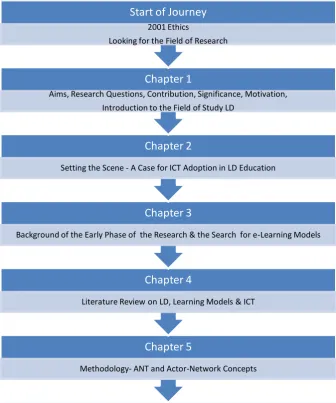
achievement. Figure 1-1on page 4 illustrates my research journey described above over
a significant time period of approximately 10 years.
3
Figure 1-1: The Research Journey
Chapter 9
Overview of the Research & Conclusion
Chapter 8
Petri Net Model for e-Learning and LD
Chapter 7
Data Analysis & Discussion
Chapter 6
Research Methods & Techniques (Ethnography, Surveys, Interviews, Research Design)
Chapter 5
Methodology- ANT and Actor-Network Concepts
Chapter 4
Literature Review on LD, Learning Models & ICT
Chapter 3
Background of the Early Phase of the Research & the Search for e-Learning Models
Chapter 2
Setting the Scene - A Case for ICT Adoption in LD Education
Chapter 1
Aims, Research Questions, Contribution, Significance, Motivation, Introduction to the Field of Study LD
Start of Journey
2001 Ethics
1.2 SUMMARY OF SIGNIFICANCE
A review of the available literature indicated crucial limitations on the understanding
and use of ICT as a tool for teaching and learning for LD students. This research was
significant because its findings have identified significant learning models with ICT and
pathways for further study, training or work placement for LD students.
There was very little research that provided information about the impact of technology
in teaching and learning for students in special schools in Victoria. Although DEET4
and ABS5
studies had included students with LD in normal schools, very little work was
carried out that incorporated the aspects or role of technology in these schools. The
present study has provided information that will be of benefit to these school
communities. ANT embraced the differences in educational, technological and
sociological aspects in a non-deterministic manner.
In order to overcome the boundaries of several school disciplines the study needed to
take a holistic approach which observed and analysed the way teachers and students
changed their practice when using Web-based and Information and Communications
Technologies to assist them with teaching and learning.
Further, the study was significant because it shed some light on curriculum that is aided
by technology. In addition, the analysis of various support structures could provide
future institutions with a better approach to curriculum and instruction design. The
Australian Bureau of Statistics (ABS 2006) (Australian Social Trends 2000, 2006)
estimates that 8% of all children aged 5-17, have a disability involving a specific
restriction capable of impacting on their schooling, and MCEETYA (1997) indicated
that the prevalence of LD is approximately 10-15% at the primary levels and is still
significant at the secondary level at 5-10%. The figures for Australia followed similar
trends to those from the USA and other countries; and this was supported by the
National Committee for Learning Disabilities (NJCLD 1994). Research from
MCEETYA (1999) reported that there was inconclusive evidence of the impact of
4
DEET – Refers to Department of Education at the State level in Victoria, Australia. 5
technology in many special schools that catered for students with LD. The need for
further research in this field is further highlighted in White (2005), Liu et al. (2007) and
Warnock (2005) on special educational needs in the UK.
No holistic6 research was found that had explored how technology influenced LD
students‘ learning outcomes. The present study was based on a holistic approach to
research in an institutionalised setting. While the study was located within special
schools, its findings provide information about the adoption of Web-based (ICT)
technologies in teaching and learning, as well as learning for the workplace for students
with learning disabilities.
The thesis also provides a significant e-learning model and ICT application that could
impact future funding implications for the identification and analysis of at-risk factors
and an analysis of the impact of educational paradigms for students with learning
disabilities.
The financial implications should be prioritised as the results from this study have
identified the views of the various stakeholders of the learning community. The thesis
provides discussion and analysis of these views with the objective of proposing and
designing a suitable model for learning with technology as its strong focus (ABS 1997;
DEETYA 1996-1999; Higgins 2003; Calnin 2006; DETYA 2001a; MCEETYA 2008;
ACER 2005; Shaddock 2007 and DEETYA 2003).
1.3 CONTRIBUTION TO KNOWLEDGE
As the reader will discover, this thesis contributes to the body of knowledge by having
extended the application of ANT to technology and people with learning disabilities.
The research provides (1) a basis for developing a constructive model7
to assist in
designing and delivering technological curriculum for online learning and teaching
instruction for students in special schools or learning communities8; and (2) a
6
Holistic – the term holistic here is used to refer to many interrelating factors. 7
―Social constructivist model‖. Teachers and students exchange ideas to generate new knowledge, share the role of learner and focus on social inter-subjective nature of knowledge.
8
description and analysis of learning communities and the impact of technology on
teaching/learning for LD students. It has identified a set of processes for setting up a
suitable e-learning model that may be implemented in this environment and beyond.
Given the increasing use of teaching with Web-based flexible delivery tools at these
schools over the next few years, it is anticipated that strong emphasis on the technology
will lead to significant learning outcomes for the students of the schools.
The work of the thesis further provides an analysis of the mechanism of how
organisations and educational institutions could design and deliver their curriculum. It
will also be of value to training institutions as it could provide information for the
workplace training and learning for using ICT in the workforce.
A recent publication by Abbott (2007) highlights the need to conduct research in this
field by applying actor-network theory. This thesis has successfully applied this
methodology and established significant results and observations regarding trends in the
learning models with ICT for LD students.
The observations and data collected recently (in 2007 & 2008) have shed some light on
how Web 2.0 technologies can be used to assist students with learning difficulties and
foster their learning outcomes, for example to prepare them for life-long learning. This
area was identified in the Becta (2008) report which stated that this area needed studies
to establish evidence of the impact and effect of Web 2.0 on the learning outcomes for
students in general. The thesis reports on findings of the impact of Web 2.0 on students
with special needs and it discusses the present Victorian government policy regarding
e-learning and access to resources via the Ultranet.
Finally, the thesis makes a contribution by modelling the e-learning platform for LD
1.4 AIMS
The aim of the study was to examine the place of ICT and e-learning models in an
environment involving learning disabled students. This study was concerned with how
computer (including Web and Internet) based technologies are used in a specific
learning community. Consequently I9
aimed to develop an understanding of the Web
based technology and ICT that is employed for a particular group of teachers and
learners in this setting. In addition, I explored the use of Actor-Network Theory as a
holistic way of analysis in practices in an educational setting. In order to achieve these
general aims, the following main research question was pursued.
1.4.1 Major Research Question
The major research question in the thesis was:
―How do e-learning models form and stabilise when Web-based technologies are
introduced to support learning communities involving students with learning
disabilities?‖
1.4.2 Sub-questions
Although relating more generally to all schools (not just for special schools), the
following sub-questions for the study were also framed in an ANT approach:
1. How do teachers and students negotiate (Callon 1986b) with innovations such
as Web-based technologies in order to achieve particular learning outcomes?
2. How do the human and non-human (Latour 1986) aspects of the socio-technical
network that staff and students construct involving these Web-based
technologies, lead to positive outcomes?
3. How is the technology integrated into the teaching and learning curricula?
(Lave & Wenger 1991)
4. What are the implications for the transition into further education, work
placement or training for students with LD?
9
In particular, I have also explored the following complementary questions arising from
the literature in relation to LD students:
Does ICT help students with special needs in teaching and learning, and if so,
how?
What are the factors that enable the students to facilitate their learning and
improve the academic outcomes?
What teaching and learning models and policy (metrics) would provide better
outcomes? For example the literature identified the following metrics:
self-esteem, motivation, communication skills, independence and participation level
ACER (2005), Becta (2003), OECD (2001, 2004, and 2005).
How can ICT be used as an enabler for good pedagogy for this learning
community? (MCEETYA 2005)
How can brain model theories be applied to explain the learning outcomes with
respect to a specific area like graphics or multimedia?
How does ICT assist in the acquisition of skills and application of various
software packages such as Photoshop, 3D studio Max, Adobe Premier, Sound and
Video production?
After considerable research and analysis of the research questions, I determined that the
most useful way to illustrate the thought processes is to present the reader with the
evolution of the research questions over the duration of the research project. Figure 1-2
shows the range of pertinent questions that were considered before the study and the