A model for the implementation of ERP
systems in midsize businesses
Fahd Alizai
BCom, MIT, MBus(InfoSys) (VU)
A dissertation submitted in fulfilment of the requirements for the award of
Doctor of Philosophy
Management Information Systems
College of Business
Victoria University
STATEMENT OF ORIGINALITY
I, Fahd Alizai, declare that this PhD thesis entitled “A model for the implementation of ERP in the midsize businesses” is no more than 100,000 words in length including quotes and excluding tables, figures, appendices, bibliography, references and footnotes. This PhD thesis contains no material that has been submitted previously, in whole or in part, for the award of any other academic degree. I declare that this is my own work, except where otherwise indicated.
Signature: Dated:
Abstract
This study proposes an Enterprise Resource Planning (ERP) implementation model for midsize businesses. The proposed model uses a strategic approach containing; ERP implementation processes, stages, factors & issues associate with ERP adoption in midsize businesses. This model can be used as part of ERP implementation strategy for midsize businesses, enabling business managers/owner to have better understanding of their implementation process. The model comprises ERP implementation stages and related factors categorised in the Technology, Organisation and People domains.
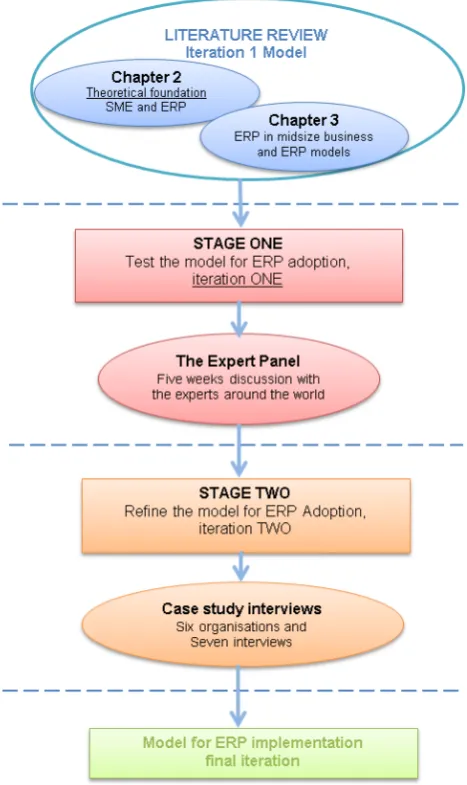
This study adopts a qualitative research approach and employs an online expert panel along with case study interviews. The first data collection is comprised of an online expert panel, consisting of the experts from different disciplines including ERP academic experts, ERP professionals, midsize business academic and ERP in midsize professionals. The participants were selected from around the world based on their recognised expertise in the relevant areas. The result of the expert panel discussion was used to test and modify the ERP implementation model.
The second data collection process comprised a case study analysis of six organisations. The interviews were conducted amongst small, midsize and a large size business along with one ERP implementer with significant experience in ERP implementation in midsize businesses. The case study results were used to refine the ERP implementation model. The final model makes a theoretical contribution as it links ERP implementation stages and ERP factors for the first time in the context of midsize businesses. The practical contribution includes the use of the model by midsize business owners and managers while performing their ERP implementations.
Acknowledgements
My PhD has been an exceptional journey that required dedication and consistency whilst I was exploring the horizons of my professional excellence. I would like to extend my heartfelt deepest gratitude to my supervisor, Associate Professor Stephen Burgess for his exceptional advice and companionship over the last nine years. Dr Burgess inspired me with the selection of an appropriate topic for the research and assisted me with the development, refinement and improvement of my model. I can claim with utmost certainty that without Dr Burgess, I would not have been able to complete this thesis successfully. I would also like to thank my co-supervisor Associate Professor Paul Hawking, who provided ERP professional knowledge and advice and also assisted me to find suitable subject matter experts for the data collection phases. I would also like to thank Dr Carmine Sellitto, who in the capacity of my acting supervisor helped me with the PhD candidature application in the early stages of my study.
I would also like to thank my father who inspired and encouraged me to consider academic research for the prestigious honour of completing a PhD, as he accomplished in 1985. I also thank my mother for her prayers; my wife Fareesa for her moral support, our daughter Inaya and our baby Eyad for their patience; enabling me to accomplish this major milestone of my life.
Finally, I must thank all of the participants who contributed to this research for their time and energies toward successful completion of two data collection stages.
Table of Contents
Chapter One ... 16
1. Introduction ... 16
1.1 Introduction ... 17
1.2 Research problem and context ... 17
1.3 The research study ... 18
1.4 The significance of the study ... 19
1.5 Structure of thesis ... 19
Chapter Two ... 23
2 Literature Review: Theoretical Foundations ... 23
2.1 Introduction ... 24
2.2 Definitions ... 24
2.2.1 Defining SME by number of employees ... 24
2.2.2 Defining SME by economy ... 26
2.2.3 Difference between SME and LE ... 28
2.2.4 Redefining SME ... 29
2.3 Characteristics of small and medium enterprises ... 29
2.3.1 Contemporary challenges for SMEs ... 31
2.3.2 Strategies for success - SMEs ... 32
2.3.3 Section summary ... 35
2.4 ICT in SMEs ... 36
2.4.1 Benefits deriving from ICT solutions ... 36
2.4.2 Barriers to implementing ICT solutions ... 37
2.4.3 ICT adoption ... 39
2.4.5 Section summary ... 43
2.5 Enterprise Resource Planning ... 45
2.5.1 Definitions of ERP ... 45
2.6 Significance of ERP ... 47
2.6.1 The History of ERP ... 47
2.6.2 ERP vendors and ERP solutions ... 49
2.6.3 Features and attributes of ERP ... 50
2.6.4 Summary ... 53
2.7 Benefits and challenges of ERP ... 53
2.7.1 Benefits derived from ERP applications ... 53
2.7.2 Barriers to implementing ERP ... 56
2.7.3 Requirements of ERP ... 57
2.7.4 ERP adoption ... 58
2.7.5 Summary ... 60
2.8 ERP implementation ... 61
2.8.1 Strategizing and planning for ERP implementation ... 64
2.8.2 Selection criteria for ERP implementation ... 66
2.8.3 Critical success factors for ERP implementation ... 68
2.8.4 ERP project management ... 69
2.8.5 Section summary ... 73
2.9 Chapter summary ... 74
Chapter Three ... 76
3 A model for ERP implementation in midsize businesses ... 76
3.1 Introduction ... 77
3.2 Definition of midsize business ... 77
3.3.1 ERP vendors and midsize businesses ... 81
3.3.2 Limitations of midsize businesses ... 83
3.3.3 Contemporary challenges ... 84
3.3.4 ERP adoption by midsize businesses ... 87
3.3.5 Implementing ERP in midsize businesses ... 90
3.3.6 Literature gap – ERP in midsize businesses ... 93
3.4 Section summary ... 94
3.5 Models for ERP Implementation ... 95
3.5.1 Bancroft model ... 95
3.5.2 Ross model ... 96
3.5.3 ERP life-cycle model ... 96
3.5.4 Markus and Tanis process model ... 97
3.5.5 Parr et al’s project phase model ... 98
3.5.6 Summary ... 99
3.6 Solutions and Recommendations ... 102
3.6.1 The proposed model ... 103
3.6.2 The ERP adoption model ... 107
3.7 Chapter summary ... 110
Chapter Four ... 111
4 Research methodology ... 111
4.1 Introduction ... 112
4.2 The problem and its context ... 112
4.3 Research approaches & theoretical perspectives ... 113
4.3.1 Interpretive approach ... 113
4.3.2 Positivism and post-positivism ... 114
4.4 Research methods ... 115
4.4.1 Phase one: A modified delphi approach ... 115
4.4.2 Phase two: Case study research analysis ... 116
4.4.3 Scope of the Study ... 117
4.5 Data collection techniques ... 120
4.5.1 Qualitative versus quantitative research ... 120
4.5.2 Phase one: The expert panel ... 122
4.5.3 Phase two: Case study interviews ... 124
4.6 Analysing the data ... 129
4.6.1 Content analysis of the data ... 129
4.6.2 Interpreting data ... 130
4.7 Summary of the research approach ... 131
4.8 Validity and generalisability ... 132
4.8.1 Validity ... 132
4.8.2 Generalisability ... 133
4.9 Chapter summary ... 134
Chapter Five ... 135
5 Expert Panel ... 135
5.1 Introduction ... 136
5.2 Section one: Expert panel development ... 136
5.2.1 Selection of experts ... 136
5.2.2 The online interface ... 142
5.2.3 Technical issues... 142
5.3 Section two: Discussion construct ... 143
5.3.1 The initial model ... 143
5.4 The expert panel discussion ... 148
5.4.1 Week One: Model overview ... 148
5.4.2 Week one discussion ... 151
5.4.3 Week one analysis ... 154
5.4.4 Week one summary ... 159
5.4.5 Week two: ERP implementation activities... 162
5.4.6 Week two discussion ... 163
5.4.7 Week two analysis ... 168
5.4.8 Week two summary ... 174
5.4.9 Week three: Midsize business factors ... 179
5.4.10 Week three discussion ... 180
5.4.11 Week three analysis ... 182
5.4.12 Week three summary ... 185
5.4.13 Week four: Technical factors ... 188
5.4.14 Week four discussion ... 189
5.4.15 Week four analysis ... 191
5.4.16 Week four summary ... 194
5.4.17 Week five: Organisational and people factors ... 195
5.4.18 Week five discussion ... 196
5.4.19 Week five analysis ... 198
5.4.20 Week Five summary... 202
5.5 Summary and model changes ... 206
5.5.1 Chapter summary ... 206
5.5.2 Model content changes ... 207
5.5.3 Model revision for further testing ... 210
6 Phase two: Case study results and discussion (part one) ... 215
6.1 Case study results ... 216
6.2 Overview of cases... 216
6.2.1 Case study - Selection of cases ... 217
6.2.2 Ethical issues ... 218
6.2.3 Case study – Presentation of cases ... 218
6.3 Background of cases ... 219
6.3.1 The interview process ... 219
6.3.2 Case one – Dual sector University in Australia (LE) ... 220
6.3.3 Case two - Value added reseller IT hardware (MID-1) ... 222
6.3.4 Case three - Car park management services provider (MID-2) ... 223
6.3.5 Case four - Voice and data services provider (SME) ... 224
6.3.6 Case five - Automobile resale, distribution & services (MID-3) ... 225
6.3.7 Case six - ERP implementation services provider (SME implementer) ... 227
6.4 The Case Study – Results, Analysis and Model modification ... 229
6.4.1 Pre-planning stage ... 230
6.4.2 Summary of Pre-planning discussion ... 245
6.4.3 Planning stage ... 247
6.4.4 Summary of Planning discussion ... 268
Chapter Seven ... 270
7 Phase two: Case study results and discussion (part two) ... 270
7.1 Case study results (part two) ... 271
7.2 Case study - results, analysis and modification ... 271
7.2.1 Build stage ... 273
7.2.2 Summary of Build discussion (Blue Print/Detail Design stage) ... 293
7.2.4 Summary of Construction discussion ... 316
7.2.5 Go Live stage ... 320
7.2.6 Summary of Go Live discussion (Sign off) ... 332
7.3 Revised ERP implementation model ... 335
7.2.1 Pre-Planning stage ... 335
7.2.2 Planning stage ... 336
7.2.3 Detail Design stage (Set-up, Re-engineer, Design) ... 337
7.2.4 Delivery stage (Configure & Test) ... 338
7.2.5 Go Live stage (Sign off)... 338
Chapter Eight ... 343
8 Conclusion ... 343
8.1 Introduction ... 344
8.2 Research questions ... 344
8.2.1 Question one ... 344
8.2.2 Question two ... 346
8.2.3 Question three ... 347
8.3 Theoretical contribution ... 348
8.4 Practical contribution ... 349
8.5 Generalizability ... 350
8.6 Research limitations ... 351
8.7 Future research ... 352
9 References ... 353
Appendixes One ... 369
10 Publications ... 369
10.1 Book Chapter ... 370
Appendixes Two ... 371
11 The Expert Panel ... 371
11.1 Appendix 5-A ... 372
11.2 Appendix 5-B ... 375
11.3 Appendix 5-C ... 380
11.4 Consent Form ... 382
Appendixes Three ... 383
12 Case study interviews ... 383
12.1 Appendix 6-A ... 384
12.2 Appendix 6-B ... 385
12.3 Appendix 7-A ... 387
12.4 Appendix 7-B ... 389
12.5 Appendix 7-C ... 391
List of Figures
Figure 3.1: Definitions of businesses according to employee numbers (EFT) ... 79
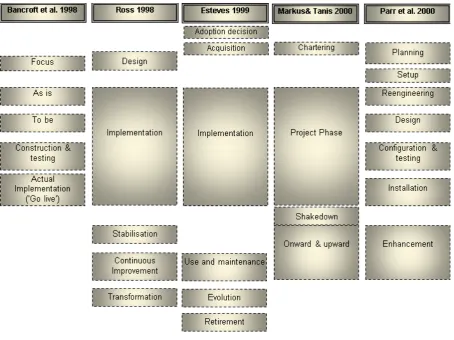
Figure 3.2: Sequence of events outlined as stages ... 100
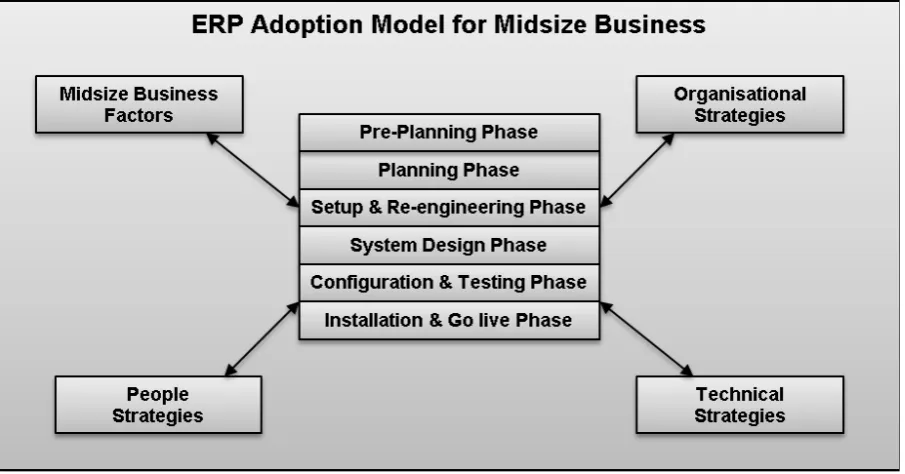
Figure 3.3: ERP Adoption model for midsize businesses ... 104
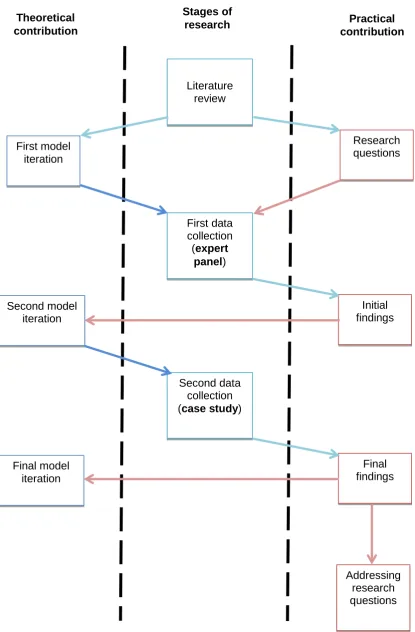
Figure 4.1: Graphical representation of research method ... 119
Figure 4.2: Research approach towards model development ... 132
Figure 5.1: A screenshot of the introduction page of the online discussion forum ... 142
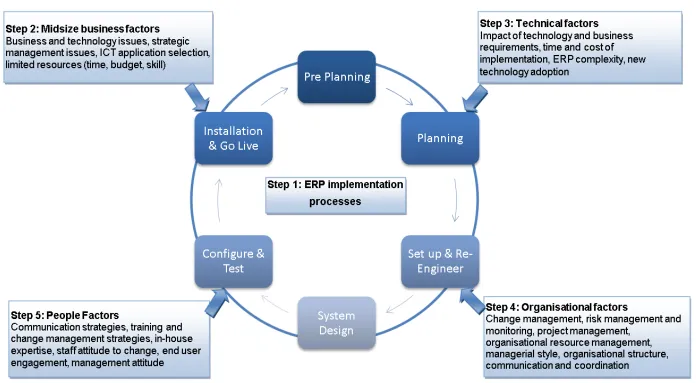
Figure 5.2: An initial model based on factors impacting on midsize business ... 144
Figure 5.3: An abstract of material presented in the first week – view one ... 149
Figure 5.4: An abstract of the material presented in the first week – view two ... 150
Figure 5.5: An abstract of the material presented in the first week– view three ... 151
Figure 5.6: An abstract of material presented to experts during second week ... 162
Figure 5.7: An abstract of the material presented in third week ... 179
Figure 5.8: An abstract of the material presented in the fourth week ... 188
Figure 5.9: An abstract of the material presented in the fifth week ... 195
Figure 6.1: Scale of case businesses ... 219
Figure 6.2: Scale of case businesses ... 229
Figure 7.1: Scale of case businesses ... 272
List of Tables
Table 2.1: SME with reference to economies APEC (2003) ... 27
Table 3.1: ERP adoption models for midsize businesses ... 106
Table 5.1: A summary of experts’ selection details for this study ... 140
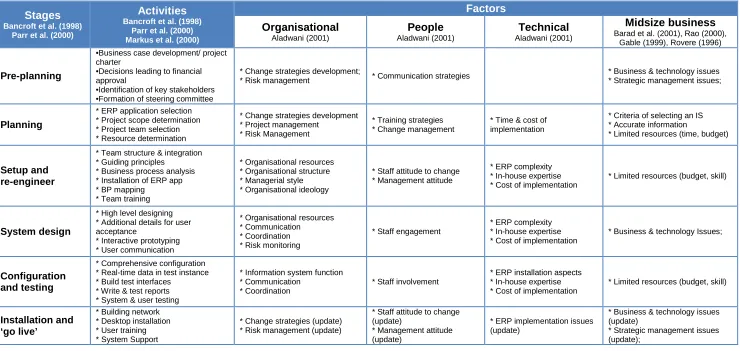
Table 5.2: Content of literature based ERP adoption model for midsize business ... 145
Table 5.3: Discussion structure and expert participation patter ... 147
Table 5.4: The number of responses received from each expert across the five weeks. ... 148
Table 5.5: Updated version of the ERP adoption model after week one Expert Panel ... 161
Table 5.6: Updated ERP implementation stages and activities ... 177
Table 5.7: Updated midsize business factors ... 186
Table 5.8: Updated technical factors ... 194
Table 5.9: Updated organisational factors ... 203
Table 5.10: Updated people factors ... 205
Table 5.11: Revised ERP adoption model based on Expert Panel ... 208
Table 5.12: ERP adoption model [revised for case study analysis]... 213
Table 6.1: Details of case businesses ... 218
Table 6.2: Preplanning stage factors before case study analysis ... 230
Table 6.3: Pre-Planning stage amended after case study analysis... 246
Table 6.4: Planning stage factors before case study analysis ... 247
Table 6.5: Planning stage amended after case study analysis ... 268
Table 7.2: Build stage factors after Case study discussion ... 295
Table 7.3: Construction stage factors before case study analysis ... 297
Table 7.4: Construction stage factors after Case study discussion ... 318
Table 7.5: Go Live stage factors before case study analysis ... 320
Table 7.6: Go live stage factors after Case study discussion ... 334
Table 7.7: Refined ERP implementation model after Case Study findings ... 340
Table 8.1: Summary of factors relevant to ERP in midsize ... 347
Chapter One
1.
Introduction
1.1 Introduction
Midsize businesses play a vital role in the economic development of a nation. They create jobs, boost an economic activity, expedite the economic recovery and are vital for wealth creation (Coyte et al., 2012; Pramukti, 2003) despite their business size (Rovere & Lebre, 1996). Midsize businesses have special significance for developing nations due to their role in economic activity acceleration and the employment opportunities they offer. To increase the production capabilities and business expansion initiatives, midsize businesses need to adopt new technologies that enable innovation and bring efficiencies to their business models.
ERP systems have historically been associated with the large size business implementations. However, there has been a growing trend over the years of midsize businesses considering ERP solutions as a strategic alternative for their technology needs. The adoption of ERP applications has been described as one of the most innovative developments (Al-Mashari 2002) that requires not only the replacement of a legacy system with an enterprise application but also has significant business process change implications (Al-Shamlan et al., 2011). ERP applications integrate major business functions (Koch, 2003) to optimise business process functionality with integrated reporting. With demand saturation of ERP applications in the large size business sector, ERP vendors have changed focus to offer suitable solutions for midsize businesses. Globalisation and new international partnerships are acting as a catalyst for midsize businesses to consider ERP applications. This research investigates the constraints and factors relating to ERP adoption by midsize business for the purpose of developing a practical and viable ERP adoption model that would eventually be of use to midsize business managers considering ERP implementation.
In this chapter, the research problem and its context will be discussed, followed by information on the data collection processes used for this study. The significance of this study along with the structure of the thesis will also be outlined.
1.2 Research problem and context
about ERP implementation failures, business process standardisation expectations (with likely change management implications) and the fear of unknown with limited skills and knowledge to rationally analyse the suitability of ERP application(s). .
ERP systems have an ability to integrate business functions and could bring process efficiencies. Accurate and timely information about customers and suppliers could be readily available using ERP application reporting tools. Additionally, some multinational companies have forced their midsize counterparts to have compatible ERP applications implemented.
It is important as well as difficult for midsize business leaders to take the measures required to have successful ERP applications implementation. The limited knowledge and lack of information on suitable ERP solutions for midsize business requires a comprehensive selection criteria for the applications. In addition, other parameters including affordability, the industry knowledge of the supplier, domestic support availability, technical upgradeability and so forth could be some of the parameters used while selecting a suitable ERP application. Subsequently, an understanding of ERP adoption factors and implementation stages, as well as the relationship amongst the stages and the factors would enhance the understanding of midsize business managers. Hence, a proposed ERP adoption model is developed that enables midsize business leaders to remain in control of their ERP implementation and adoption processes.
1.3 The research study
This study involves two qualitative data collections stages, namely, an expert panel and case study interviews. Each of the stages is discussed below:
Phase One: The Expert Panel
In the first data collection stage, an online expert panel was established, consisting of experts with a wide range of experience in ERP and midsize profession and academia. The feedback received from the expert panel was used to test the proposed model. The experts were selected from different geographic locations: Australia, the United States, Europe, the Middle East and India. The experts were selected based on their practical or academic contribution in the subject field of research. A revised iteration of the model was developed at the end of this data collection stage.
Phase Two: The case study interviews
The purpose of this data collection stage was to further refine ERP implementation model findings by critically analysing the ERP adoption factors based on the experiences of case study organisations that had been involved with at least one ERP implementation. In this stage of the data collection, a total of six case study organisations were interviewed: three midsize businesses, one small size business, one large size along with one implementation services providers. All interviews were conducted in Victoria, Australia.
The revised model from the first data collection stage was presented to the participants for discussion and the comments were recorded based on participant’s practical experience. The data was later used to refine the model and resultantly, a final iteration of the model was produced.
1.4 The significance of the study
Generally, ERP Implementation research has been about adoption factors or implementation processes. In this research an attempt was made to combine both streams of research in an innovative manner. The findings of this research are useful for midsize business managers/owners/decision makers intending to implement ERP applications as this group typically have limited knowledge and skills to understand the complexities involved. This research identifies the ERP adoptions factors with reference to their sequence of occurrence in different stages of ERP implementation.
1.5 Structure of thesis
The thesis is structured in eight chapters and three appendixes. The first chapter describes the background information of the study along with overview of research methodology and significance of the research. The second and third chapters consist of a general literature review and the development of the initial version of the ERP adoption model. Chapter four outlines the research methodology applied, followed by Chapter five providing detailed insight on first qualitative data collection; the expert panel. The sixth and seventh chapters contain information on the case study data results, analysis and discussion, followed by the Conclusion chapter. In the appendix section, the first appendix provides information on research publications from this study, followed by material used to contact experts for the expert panel and finally an encapsulated view of the case study material used.
The structure of the thesis is elaborated below:
Chapter One – Introduction
In this chapter, an overview of the research study is provided, along with the research background, context and problem along with the methodologies used for the research. The significance of the study is also presented in this chapter.
Chapter Two – Literature Review Theoretical Foundations
This chapter outlines a theoretical foundation to illustrate key components of the study. The second chapter has two sections. The first section contains definitions of small and medium enterprises (SME), including a distinction made on the different sizes of businesses. It also highlights the significance of SMEs and their operational requirements along with issues they face. The section also highlights the significance of information and communication technologies (ICT) for SMEs and challenges faced by SMEs in relation to ICT adoption.
The latter part of the chapter focuses on Enterprise Resource Planning (ERP) systems. After defining ERP systems, their purpose and benefits are discussed. This is followed by a discussion on ERP selection criteria, adoption and implementation details including ERP project management and risk management. The discussion concludes with an understanding of SME, ERP and ERP adoption requirements in general.
Chapter Three – A model for ERP implementation in midsize
This chapter outlines the fundamentals of the topic being studied, that is, ERP in midsize business. At the start of the chapter, midsize business is defined for the purposes of this research. Later, ERP in midsize businesses is discussed, including the significance of ERP, the barriers of implementing ERP and strategies to overcome those barriers. Furthermore, ERP adoption in midsize businesses along with ERP implementation aspects was examined. Finally, models for ERP implementation were listed and stages of implementation were compared across these models. This discussion led to the development of an initial ERP adoption model for midsize businesses. The discussion concluded with a detailed presentation of the model.
Chapter Four – Research methodology
This chapter outlines the research design and methodology used for this study. It provides details on the research method applied for data collection and the tool and techniques used to evaluate the data. The study involved two data collection stages, an online expert panel, followed by case study interviews. In the online expert panel, a broad range of domestic and international academics and professionals from the ERP and midsize arenas were invited to participate. In the case study analysis, six cases were analysed. Out of six organisations, three were midsize businesses, one was a small business, one was a large business and one was an SME implementer with significant ERP implementation experience. Both data collection stages were used to improve and refine the proposed model content and presentation.
Chapter Five – Expert Panel
This chapter explains the first data collection stage and provides information on the development and execution of the online expert panel. At the start of the chapter the approach used to select and engage with the experts is explained. Then, the structure of discussion is elaborated along with a discussion on the key points discussed. An analysis of the results gathered from the results is provided along with a discussion on the changes in the model as a result of the expert panel findings. The chapter concluded with a revised ERP adoption model.
Chapter Six–Case Study Results and Discussion (Part One)
This chapter provides details of the second stage of data collection. In this chapter, detail of the selection process for case study organisations along with an overview of selected six case organisations is provided. This includes the background of the cases. The outcome of the discussion based on the following ERP implementation stages is then discussed: pre-planning; pre-planning; build; construction; and go live stages. This chapter includes a discussion and analysis for the pre-planning and planning stages of ERP implementation.
Chapter Seven–Case Study Results and Discussion (Part Two)
This chapter is a continuation of the case study data reporting, analysis and discussion. The chapter comprises data reporting, discussion and analysis of the remaining ERP implementation stages: build (set-up, reengineer and system design), construction
(configuration, development and testing) and go live. The data obtained from the six case study organisations was reported and analysed in this stage, along with a presentation of the final ERP implementation model for midsize businesses.
Chapter Eight – Conclusion
In the final chapter of the thesis, an overview of the research and findings is provided. The chapter discusses the theoretical and practical contribution of the study and the research questions, with reference to study findings. The chapter then presents a statement on generalisability, research limitations and suggestions for future research.
Appendix One – Publications
This appendix lists the published research work associated with this study.
Appendix Two - The Expert Panel
This appendix presents relevant templates used to set up the expert panel.
Appendix Three - Case study interviews
This appendix provides the data presentation from transcripts recorded in the Case study interviews.
Chapter Two
2
Literature Review: Theoretical Foundations
2.1 Introduction
This chapter has two major sections. The first section contains definitions of small and medium enterprise (SME), including the distinction between business sizes. It also provides the operational requirements and issues faced by SMEs when striving to operate in the current diverse socio-economic business environment. It is important to clearly understand the differences between different business types based on their sizes, as literature found to be confusing to categorise businesses between small, medium, midsize and large sizes enterprise. To serve the needs of this research, it was important to identify boundaries within different types of businesses and classify how these businesses would be referred to in the discussion, in accordance with their definitions. The chapter also provides an insight on Information Communication Technologies (ICT) adoption and implementation in SMEs. The purpose of having ICT discussion is to outline benefits of ICT for SMEs and potential barriers to have solutions implemented. In this thesis, ICT and IT (information technology) both terms will be used interchangeably.
The later part of this chapter focuses on Enterprise Resource Planning (ERP) systems, their definition and related content. As the ERP market has evolved and matured, so too has the related hardware and infrastructure technology (Aberdeen 2006). According to Klaus et al. (2000), ERP applications were primarily developed to integrate different department functions and business processes to form a collaborative view of business operations in a single IT architecture. In the early 1990s, ERP systems became the de-facto standard for replacing legacy systems/applications in LEs (Large Enterprises), specifically in multinational companies (Shanks, 2000). Modern day ERP applications are business process centric, evolved to address diverse aspects of corporate business requirements.
2.2 Definitions
2.2.1 Defining SME by number of employees
10-99 employees is considered to be a small” while, “a company having 100 to 499 employees is considered to be a medium size enterprise”.
Duxbury et al. (2002) indicated that the literature has been divided on how to define small and medium size business. They defined small business as, “any firm with fewer than 100 full time paid employees” and divided it into three sub-groups:
• Micro businesses: 2 - 9 employees
• Mid-sized businesses: 10 - 49 employees
• Larger small businesses: 50 – 99 employees.
According to Coyte et al. (2012), SMEs are businesses with less than 200 employees, defined within the following categories:
• 1-4 employees can be considered “micro”
• 5-20 employees can be considered “small”
• 20-199 employees can be considered “medium”
However, Coyte et al. (2012) also argued that in North America and Europe, categories are perceived slightly differently, as follows:
• 1-19 employees as “micro”
• 20-49 employees as “small”
• 50-249 employees as “medium”
• Over 250 employees as “large”
Duxbury et al. (2002) stressed a need for comparison between SME and Large Enterprise (LE), defining SME as any business with 100-500 full time employees and an LE organisation with more than 500 employees.
According to the European Commission [EC] (1996), “a business must have less than 250 salaried workers to be considered as SME or an organisation that has 49 to 250 paid
employees can be considered as Medium sized organisation. If a business is operating with
less than ten employees it will be considered as a very small enterprise”.
The Asia-Pacific Economic Cooperation (APEC) (2003) provided a single standardised definition that could be used across all economies. According to APEC (2003), “SMEs employ less than 100 people whereas, medium sized SME employs between 20 and 99 people and a
small firm employs between 5 and 19 and micro firm employs less than 5 people and includes
self-employed managers”. APEC (2003) further defined SME as an organisation with less than 100 employees but there have been certain exceptions, for instance, there should not be a hard and fast rule that distinguishes a micro firm from a small and medium sized organisation, but in general a micro firm should have less than five employees.
2.2.2 Defining SME by economy
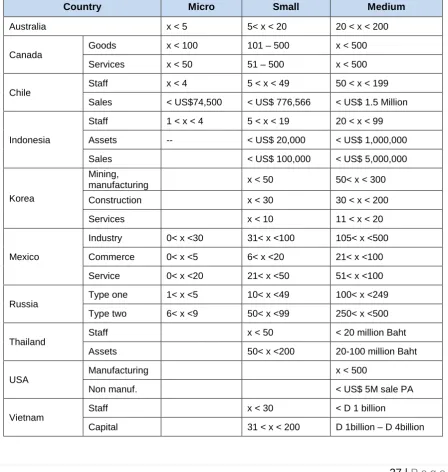
APEC (2003) has extracted data from different sources to explore the perceptions regarding SME in different economies. According to APEC (2003), the definitions of SME change extensively. These definitions could be used mainly for two distinct purposes: statistical and policy or program purposes. The definitions could vary by industry based on their purpose and the common principle of number of employees. Various economies also use capitalisation, assets, sales or turnover and production capacity to define SME.
The EC (1996) also defined SME with reference to the annual turnover of a company. In addition, the EC (1996) stressed consideration of the total of balance sheets and levels of independence of every firm when seeking definitions. It argued:
The final basic criteria for determining whether an organisation is small or medium
size depends upon its independence that means a company cannot have 25
percent or more of its control in hands of a large enterprise or jointly held by several
large enterprises. (EC, 1996)
Senik et al. (2011) defined SMEs in the Malaysian environment as “a firm with annual sales turnover not exceeding RM25 million (AU$8 million) and/or full time employees not exceeding 150.”
There is a considerable diversity in defining SME. In general, SME is defined as an organisation with less than 100 employees but in some cases (especially in terms of larger economies) the number of employees rises dramatically i.e. from 300 to 500 employees. The data provided by APEC (2003) is presented below in Table 2.1, where x is the number of employees in an organisation.
small if it has 101-500 employees and a business offering services would be seen as a small business if the number of employees is 51-500). Similarly in Chile, the total annual revenue or yearly sales is considered important when defining SME. In Indonesia, assets and annual sales are considered along with the number of employees. In Vietnam, the number of staff along with the capital of an organisation is considered important. In Korea, the type of business (i.e. mining manufacturing, construction and services) is considered important, with the index for the number of employees changing for each business type. Similarly, in Mexico, Russia, Thailand and the USA, the nature of business and the associated number of staff are used to define SME.
Table 2.1: SME with reference to economies APEC (2003)
Country Micro Small Medium
Australia x < 5 5< x < 20 20 < x < 200
Canada
Goods x < 100 101 – 500 x < 500
Services x < 50 51 – 500 x < 500
Chile
Staff x < 4 5 < x < 49 50 < x < 199
Sales < US$74,500 < US$ 776,566 < US$ 1.5 Million
Indonesia
Staff 1 < x < 4 5 < x < 19 20 < x < 99
Assets -- < US$ 20,000 < US$ 1,000,000
Sales < US$ 100,000 < US$ 5,000,000
Korea
Mining,
manufacturing x < 50 50< x < 300
Construction x < 30 30 < x < 200
Services x < 10 11 < x < 20
Mexico
Industry 0< x <30 31< x <100 105< x <500
Commerce 0< x <5 6< x <20 21< x <100
Service 0< x <20 21< x <50 51< x <100
Russia
Type one 1< x <5 10< x <49 100< x <249
Type two 6< x <9 50< x <99 250< x <500
Thailand
Staff x < 50 < 20 million Baht
Assets 50< x <200 20-100 million Baht
USA
Manufacturing x < 500
Non manuf. < US$ 5M sale PA
Vietnam
Staff x < 30 < D 1 billion
Capital 31 < x < 200 D 1billion – D 4billion
From the above discussion, it is concluded that there are a number of ways to define SMEs; depending upon the region and the researcher’s perspective. It is also understood that the definition of SME could change depending upon the perceptions, empowered by other influential factors. These factors could include macroeconomics, government business policy, financial and economic constraints, geographic location and so forth. It may not be appropriate to ignore such critical factors while defining a business entity as small, medium or mid-size.
2.2.3 Difference between SME and LE
SMEs are different from their large counterparts (Coyte et al., 2012). Poddar (2010) argued that SMEs have certain advantages over LEs. These include flexibility in operations, an ability to make rapid decisions and the proximity of their customers. SMEs, by benefiting from these advantages, could provide “positive externalities” (Poddar 2010) to national or domestic economies and could add to the business of large size partners. Similarly, Hudson et al. (2001) illustrated some key characteristics that make SME different from LE, such as:
• SMEs may have personalised management with limited devolution of authority
• SMEs may have resource limitations including at management level, human resources and financial sources
• SMEs are prone to rely on a small number of customers and operate in a limited market
• SMEs generally have flat, flexible structures
• SMEs have high innovatory potential
• SMEs generally have a reactive and ‘fire-fighting’ mentality
• SMEs generally have informal dynamic strategies to operate with. (Coyte et al., 2012)
SME and Midsize
From the literature, it was noted that many researchers use SME as the core terminology however; midsize business gets used a lot by ERP vendors and ERP researchers. Given the fact that the term “SME” has a broader meaning, based on the geographic location, size and number of employees (refer table 2.1); it was important to initiate the discussion with SME related literature before establishing an understanding of midsize businesses in relation to ERP systems.
2.2.4 Redefining SME
For the purpose of this thesis, I will adopt the following definitions:
A small business is defined as:
A business with limited operations consisting of 1-25 full time paid
employees and business operations at a small scale with little
contribution to the economy.
This definition above is modified in accordance with the geographic location, macroeconomic standing of the country and the annual organisational turnover, in other words:
Small Business = No. of staff + annual turnover + geographic location
A medium sized business is defined as:
A business consisting of 26-50 full time paid staff members,
operating in a competitive market with potential to expand.
The above definition is viewed in accordance with the geographical location, macroeconomics and annual turnover of the company, presented as:
Medium Business = No. of staff + annual turnover + geographic
location
Based on the literature review and definition(s) of Small and Medium Enterprise (SME), it is understood that the acronym SME has several different meanings based on different parameters including the number of FTE (Full time equivalent) staff, the firm’s geographic location and its annual turnover. Therefore, for the purpose of this thesis, the definitions for SME and midsize businesses are clearly illustrated to eradicate any confusion by standardising the unit of analysis (i.e. midsize business) for the study.
2.3 Characteristics of small and medium enterprises
2003). There are significant numbers of SMEs around the world playing a vital role in the economic development of their countries. Wielicki (2010) emphasised that, regardless of the size of an SME, it remains a major generator in terms of economic value. Such businesses have special significance in the third world or developing countries due to their advantages to the economy including, creation of opportunities to accelerate economic activity, generating employment opportunities and supporting industry to boost business (Pramukti, 2003). According to Islam (2011), this vital role that SMEs around the world have been playing in third world economic development has been phenomenal. For example, with reference to a private sector industry survey on Bangladesh SMEs, Islam (2011) argued that the SMEs in the country were contributing 25% towards the Gross Domestic Product (GDP). Developing countries encourage SMEs to enter into global markets by establishing international partnerships and networking with domestic LEs. According to Senik et al. (2011), for example, the Malaysian government helps SMEs to network with local government owned LEs and foreign businesses for the purpose of increasing economic activity, exports and expediting the economic growth of the country. However, Camisón (2010) argued that the disadvantages relating to international business enhancement may outweigh the advantages; therefore, SMEs should be careful while making investment decisions.
Poddar (2010) also argued that SMEs are major contributors to the economic progress and GDP of a nation, offering export and employment opportunities to the country. Many of these businesses could either be family owned enterprises or operate in partnerships. It is also argued, however, that these businesses often lack professional knowledge and experience to run their affairs, resulting in business process inefficiencies and ad-hoc financial practices that cause them to heavily rely on banks for support (Poddar, 2010). Wielicki (2010) argued that the limited productivity of SMEs has been the centre of attention for a number of business researchers.
The technological capabilities of SMEs, including information communication technologies (ICT), relate specifically to growth in terms of production, further investment and innovation. For example, in a third world country like Pakistan, around 85% of the manufacturing concerns are small and medium size, requiring an ongoing technological transition to adopt the latest solutions in order to meet rapidly changing growth expectations (Rauof, 1998).
According to the European Union (EU) (2006), SMEs are considered to be the powerhouses of European economies, constituting 99.8% of the total number of companies in the EU, contributing to employment numbers by two-thirds and around 60% of value adds to the
economy. Additionally, while the significance of SMEs in the economic development of a country is undeniable, these businesses deserve more attention as they create job opportunities and promote economic competitiveness (Rovere et al., 1996).
Coyte et al. (2012) suggested that the past literature on SMEs emphasised their economic significance and how they differ from their larger counterparts. For example, they noted that SMEs gain competitive advantage over their large counterparts by effectively realising and integrating specialised knowledge from external resources (Coyte et al., 2012). Cravo et al. (2012) further added that due to the correlation between economic growth and SME progress, researchers and policy makers have paid special attention to the topic of significance of SMEs within the economy.
2.3.1 Contemporary challenges for SMEs
As indicated earlier, SMEs play a vital role in the economic growth of a country. According to Islam et al. (2011), SMEs operate within different industries, including textiles and apparel, food and beverages, metal products and so forth.
While in developing countries governments tend to assist SMEs, these businesses face several challenges. These challenges can hinder the competitiveness and resilience of organisations. Islam et al. (2011) described these challenges as:
• Difficulties in obtaining funds from financial institutions and/or governments. Generally, a higher rate of interest is charged to SMEs and that could have financial implications for business operability.
• Lack of human capital or required professional human resources. Generally SMEs cannot afford to hire highly professional and competent staff.
• A higher level of bureaucracy in government departments could be considered as another challenge for SMEs operating in developing world.
• Lack of available funds for innovative research and development.
• Significant leaning toward the domestic market and inability to broaden the business view towards the international arena.
Without appropriate risk mitigation and analytical skills, SMEs are more prone to exposure to unanticipated negative events. Consequently, the risks that SMEs carry have significant implications (Sarbutts, 2003).
Cravo et al. (2012) discussed the challenges faced by Brazilian SMEs and suggested that an SME’s ability to perform optimally in a competitive economic environment may not be the result of simply improving staff capabilities and hiring new professionals. For productivity and growth in SMEs, Cravo et al. (2012) argued that the level of institutional quality is also important; therefore, quality standards should be enhanced.
Islam et al. (2011) explained success as the achievements of objectives and stated that success is a critical part of a business life, although it is not always explicitly discussed. Success and failure could be interpreted as outcomes of good or bad management. Furthermore, strategies such as internal cooperation, coordination, consultation, flexibility and performance measures could play a vital role in the success of business operations. Inter-firm cooperation could enable small companies to improve their strategic positioning while focusing on their core business operations and expanding into the international arena. This could be achieved by reducing transactional costs, improving skills and bringing rapid technological change to the organisation (Islam et al., 2011). Poddar (2010) discussed the commonwealth business council (CBC) framework that provides means for effective corporate governance for SMEs. This comprised of policies and practice for SMEs; leadership and structure; strategic planning and monitoring; risk management; people strategies, including the use of external providers for specific skills; controlled environments and processes; and transparency and disclosure. It was argued by Poddar (2010) that the proposed CBC framework is essential to understand and standardise the operations of SMEs, enabling SMEs to operate effectively in a competitive environment.
2.3.2 Strategies for success - SMEs
It has been reported that most of the time; SMEs have high growth rates regardless of their size (Acs, 1990). Due to the changing pattern in capitalisation in the Western nations; competition has further increased the significance of SMEs. Furthermore, organisations these days are knowledge-driven and their success and survival depends upon their sense of discovery, creativity, innovation and inventiveness. Consequently, to survive in the competitive environment, it is crucial for businesses to orchestrate and lead innovative change (Poddar 2010).
To operate in a market space successfully, Rovere et al. (1996) argued that SMEs must adopt a number of operational features. These are:
• The business must target a niche market to increase competition.
• Owner/ Manager of the company must be vigilant and flexible while managing the business affairs to mitigate the probability of risk involved.
• There must be a greater number of innovative efforts resulting from the diverse activities and technical capabilities of the company.
• To increase the decision making process there must be a “hands on” management approach.
• There must be ease of management and utilisation with fewer formalities with internal and external information systems.
• The communication and information flow must be timely and effective.
• The workers must be motivated to work.
Similarly, Hirsch (1994) specified some attributes of SMEs that could make them successful:
• Leadership in product variety; the product line and length of the company must be better than their competitors.
• Process innovation; that is, there should be a change in the ways the processes are executed in the company.
• Customisation/ incremental innovation; there should be continuous product development and innovation.
• Low prices and fast delivery; the company can entertain a lot of benefits by lowering the price and making fast delivery of the product.
Sarbutts (2003) further explained that SME management should follow a positive approach towards the operational requirements of their organisation. They should optimally plan, forecast future requirements, and avail themselves of opportunities and improve overall organisational efficiency. In addition, the organisation should consider rewarding executives for their analytical skills rather than just their achievements. SMEs could also consider cloud computing services (Alshamaila, 2013) that would enable SMEs to outsource sophisticated ICT management to an external services provider and obtain hosting services at a fixed or variable annual cost. It was argued that this strategy might maximise the return on investment for SMEs and deliver a competitive advantage in a dynamically expanding business environment (Alshamaila, 2013).
To meet a desired level of productivity, Kuratko et al. (2001) argued that an SME should ensure the quality delivery of its products by adopting process efficiencies in their work practice. Productivity was defined by Kuratko et al. as the ratio of outputs to inputs; when there is higher level of quality, this leads to lesser inputs and reduces the probability of failures. Similarly, a higher level of output is associated with increased demand and improved market standing. Furthermore, Kuratko et al. (2001) presented a framework consisting of seven categories containing quality strategies:
• Leadership means guidance that a medium business receives from its management. It could consist of setup or establishment of a system by management to maintain the high expectations and performance, personal development, planning, learning and innovation.
• Strategic planning consists of organisational planning and includes the ways a company sets and develops its strategic direction. It also includes development of an operational system that enables business to meet its business and performance requirements.
• Customer and market focus starts from building knowledge about the customer, and focusing on complaint resolution to examine a company’s performance. It also includes measures to understand the customer and market by evaluating the customer satisfaction data.
• Information and analysis monitors the central communication network of a firm. Information is crucial to set the strategic objectives of a company and effective use of information results in a positive impact on its overall performance. The firm needs to collect and evaluate the data containing cost, sales, net income and market share to analyse its performance.
• Human resource focus means developing employees in a high performance workplace that enables change. There should be integration between human resource management (HRM) and company operations; it is also important that HRM is associated with the strategic objectives of a company. Smaller firms face more challenges because they often cannot afford to hire professionals to execute their HRM operations.
• Process management is another important component that covers process efficiency and effectiveness and it includes task integration from product design to customer services.
require the information infrastructure or level of sophistication that large firms need, so it is important for small companies to gather the data and develop employees in a way that they will be provided with feedback and become part of the decision making process.
From the above discussion it can be concluded that leadership in SMEs is crucial to ensure effective decision making and to mitigate risks. Leadership comes from the top and establishes performance expectations for teams, including their learning and the development of innovative work practices. The management of a company should provide strategic direction; defining ways the company develops in terms of its capacity and capability to expand its performance and business operations. Furthermore, to effectively compete in the market, it is important to incorporate process efficiencies in service delivery, including task integration and business process innovation. Companies should bring change with the improved incremental innovations along with product development and enhancement. The enhancement could be in the product line and length, delivering quality produce at cheaper prices. It was also suggested to target niche markets for better competition.
Moreover, building knowledge about the market and maintaining a focus on customers and their expectations is important, including introducing ways to record customer satisfaction to ensure retention. To analyse and retain critical information, businesses need systems to record, coordinate and communicate with customers and suppliers. Data analysis and accurate timely information availability is critical for SMEs in their cost, sales, net income and market performance. The SME may not need a sophisticated solution to manage their business data but should have an intelligent business application that would help them gather and present information in a comprehensive and timely fashion.
Human resource development was also indicated as a key component for success. The work force should be motivated and high performing to adopt change. It was also indicated that due to the size of operations of SMEs, it would be difficult for such companies to hire professionals to run their human resource operations.
2.3.3 Section summary
discussion. This research will focus on businesses containing 50-250 full time paid employees with annual turnover of AUS$1-10 million. This definition will be revisited in the next chapter to further align it with the research scope. Both small and medium businesses are considered important for the economic growth of a nation. SMEs play vital role toward productivity and generate employment opportunities. Literature suggests that modern SMEs face range of challenges relating to their leadership, market competition, performance capacity and capabilities, effective knowledge management, process automation and management, human resource or staffing, information availability and analysis, strategic vision and planning for the business. By establishing effective strategies to cater for these challenges, SMEs would be able to overcome their weaknesses and establish strategies for success.
2.4 ICT in SMEs
ICT comprises computer software programs, applications, hardware and other tools enabling organisations or individuals to connect and/or exchange information effectively (Keller, 2013; Heeks, 2010). Use of ICT may result in an increase of innovative activities in SMEs (Nguyen, 2009). ICT could assist SMEs to increase their ability to produce new products and services. There have been positive impacts of ICT usage in these organisations, resulting in the modification of management structures and increases in efficiency (Nguyen, 2009; Correa, 1994). Companies that use ICT applications, it is argued, are likely to have advantages over their competitors.
2.4.1 Benefits deriving from ICT solutions
In typical SME sectors, organisations were unaware of the potential benefits of ICT. But, as indicated, the introduction of ICT in SMEs brings operational benefits by enhancing functionality through efficiencies. The latest technological innovations help SMEs improve their business processes, bringing innovative change, expanding operations and adding value (Nguyen, 2009).
to SMEs. The use of advanced ICT setups, such as infrastructure networks, enables SMEs to connect efficiently with their clients, suppliers, banks and other consulting firms. This further stimulates the process of innovation by understanding the true needs and demand of the market. ICT can reduce the dependency of the SME on local markets, by extended sourcing; this may consequently have a positive impact on regional development (Bianchi 1995).
For efficiency and gaining a competitive advantage, Kee (2013) suggested that SMEs should leverage their advancements by using latest ICT innovations and develop their resources by using online applications. Caillaud (2001) argued that SMEs must utilise their resources and conduct data exchange both internally and externally. Management business information is critical and provides an opportunity for strategic clarification, supervision of constraints, such as legal and political, performance evaluation, knowledge capitalisation, production process updates and optimised information exchange.
Caillaud (2001) provided solutions to SME manufacturing concerns regarding their production management through the introduction of intranet and extranet systems. These technologies would enable a continuous flow of information inside and outside the organisation, enabling the SME to have better overall control of their operational management. According to Caillaud (2001), this approach has four main objectives: organisational, industrial, economical and informational. It provides benefits to the organisation, including: a continuous flow of information, providing the positive exchange of internal and external data; easy access of information to partners; improved quality for customers by developing information networks with company partners; and economies of scale to have relevant management indicators.
2.4.2 Barriers to implementing ICT solutions
its implementation in SMEs. According to Nguyen et al. (2013) it is unclear whether SMEs consider ICT adoption to be opportunity or a threat. Evidence does suggest that the adoption rate of ICT has been low and the failure of an implementation has been high.
Poddar (2010) stated that, despite the economic significance of SMEs, they face challenges that prevent them from achieving their full potential. One of the major obstacles, according to Poddar (2010), is the inability of SMEs to access adequate funding and the time to implement ICT applications. Similarly, Wielicki (2010) stated that the research literature highlights the many barriers SMEs face in accessing ICT, which can categorised as follows:
• Lack of digital experience due to lack of interest, or anxiety and lack of attraction towards new technologies.
• Lack of computer infrastructure and network connections.
• Lack of skill in digital technologies due to insufficient user friendly environments and limited education causing knowledge gaps within internal teams.
• Lack of opportunities to use new IT systems.
A typical ICT environment is complex to manage. It includes the management of software applications, the handling of sophisticated hardware, software and networking infrastructure aspects and requires specialised staff for implementation and management. SMEs often lack resources and, due to their size, tend to avoid ICT infrastructure complexities towards their implementation and effective management (Alshamaila, 2013). Wielicki (2010) provided a list of ICT implementation barriers based on the consulting experiences and literature review analysis. A study was conducted in which participants were asked to assess the degree to which each of the barriers impacted their implementation. The list of barriers is as follows (Wielicki, 2010):
• Lack of funding for ICT;
• Lack of knowledge necessary for implementation;
• Lack of business process understanding;
• Lack of skilled employees;
• Lack of standard operating procedures (SOP);
• Lack of strategic direction for longer term objectives;
• Lack of suitable software that would align with business requirements;
• Lack of planning for information systems in the organisation.
Quayle (2005) conducted an empirical study of 750 SME organisations and suggested that the major barrier in the implementation of ICT in SMEs related to issues of leadership and in appropriate management. It was further concluded that another major barrier for IT adoption/implementation was resistance to change within the organisation. Kee (2013) argued that the inability of SMEs (particularly focussed on small audit firms) to compete with their larger counterparts in relation to their IT investment created potential barriers as well as ineffectiveness and inefficiencies. It was suggested by Kee (2013) that when technical compatibilities and cost-related barriers are addressed appropriately, SMEs could develop the adequate infrastructure for technology adoption.
ICT adoption in SMEs is often executed with minimal and/or improper planning. This results in low implementation success rates. The key reason for failures is the difference between vision and execution strategies. SMEs are prone to have limited knowledge or research about their implementation requirements when planning for the new technologies. This results in an unclear list of expectations that does not align with actual requirements. Some organisations may not have sufficient leverage to expand their resources and implement technology due to a lack of strategic IT vision. Other SMEs may have limited access to capital (finance) or information about IT or technical skills to make informed decisions. Some firms may lack senior management support or competence in project management. They may have insufficient technical or functional skills to complete an IT project. In addition, some highly influential customers might demand certain technical changes resulting in a company rushing into IT implementation without considering the consequences (Nguyen et al., 2013).
2.4.3 ICT adoption
For the purpose of this thesis, adoption means a process by which
technology is used to deliver change. Adoption includes the period
commencing at the point of a decision being made to adopt, through the
implementation phases, until the change is accepted by the business
stakeholders.
Many researchers have focused on ICT adoption by SMEs (Kee, 2013). What follows is a discussion on the key factors and strategies relating to ICT adoption that have been developed by different researchers.
activities, such as decision making by managerial and professional/technical staff, considering internal and external environments and analysing the existing state of the organisation before adopting a certain technology (Nguyen et al. (2013).
In 1990, a multi-perspective framework using organisational level theory was developed by DePietro et al. (1990) called TOE (representing Technology, Organisational and Environmental factors). The crux of the TOE framework was that technology innovation and adoption could be influenced by three aspects (Alshamaila, 2013). These are:
• Technology context (or factors): comprised of internal and external technologies relating to the organisation, including those technologies already being used by a firm or others available in the market place.
• Organisational context (or factors): related to the resources and business characteristics including the size and managerial structure of an organisation.
• Environmental context (or factors): referred to an environment in which a company conducts its business operations. These related to elements such as industry, competitors and technology services providers.
According to Islam (2011), small firms must improve their strategic positioning by focusing on core business, reducing transaction costs, learning new skills and by adopting the latest technological innovations. This means that SMEs should identify their ICT requirements and acquire advanced technologies relevant to improve their production capabilities. Kee (2013) argued that due to advancements in ICT and infrastructure innovations, there has been a substantial growth in SME international business initiatives in the past decade.
Other factors affect decision making and the intention to adopt ICT within SMEs. These include: cost benefit analysis; the innovativeness of management; the knowledge, skill, ability, perception and attitude of employees; general acceptance of change; ICT knowledge management; and ICT infrastructure. Nguyen et al. (2013) stated that a decision to adopt ICT applications could also be influenced by external factors, such as external contractors, consultants, partners, suppliers and customers of the business. The most common reason for ICT adoption has been for survival and further growth requirements, or for maintaining competitiveness and enhancing the innovative capacity of the business (Nguyen et al. 2013). Nguyen et al. (2013) presented the following factors to assist businesses in adopting ICT solutions:
• Organisational – including management, staff, culture and knowledge of the organisation.
• Network orientation – including networking with the suppliers, partners and customers.
• External ICT resources – including experts or consultants.
• Internal ICT resources – including ICT capable, competent staff with capacity to optimally perform.
These factors may assist in predicting the success of ICT adoption in SMEs. Alshamaila (2013) argued that if scalable technologies are adopted by SMEs, those businesses would be able to offer products and service that their large counterparts have been delivering over the years and become more competitive. While adopting ICT solutions, SMEs would require special attention as they are different from LEs. The argument was supported by stating that the size of a business could be one factor for adopting enterprise applications while in LEs their formal systems play a vital role in structuring and implementing organisational strategy. In SMEs, the coordination and control takes place in informal but frequent interactions (Coyte et al., 2012).
Quayle (2005) argued that based on the strategy and goals of an organisation, it might be important for a firm to consider other attributes. These included: implementation speed; cost management (price and payment) structure; external outsourcing of hardware (external hosting including cloud-based solutions); an ability to integrate with the latest technologies; further development plans for enhancement; existing infrastructure installed; and the financial viability of the firm. It was noted that it is important to test any new IT application thoroughly by initiating pilot programs with real suppliers and non-essential goods (Quayle, 2005).
Kee (2013) suggested a number of relevant factors for ICT adoption, with some considered more important than others. The factors considered most critical include: online communication; international exposure and experience; competitive pressures; and the size of firm. Likewise, Nguyen et al. (2013) analysed factors that drive IT adoption along with those factors that lead to successful implementation of IT solutions in small businesses. It was argued that customers could be a major driving force for IT adoption in SMEs. It was also noted that the research indicates that SMEs could be considered risk adverse and that IT adoption should happen for a reason and not merely because of a desire for change (Nguyen, 2009).
2.4.4 ICT implementation
For the purpose of this study, implementation means a step-by-step
process to acquire a new technology solution, starting from project
inception (start-up) through to delivery (‘go live’).
Barad et al. (2001) highlighted the significance of advanced technologies for SMEs by illustrating the benefits of technology for production capabilities and the development of quality products at a lower cost due to efficient customer delivery services. Furthermore, Barad et al. (2001) proposed a series of steps for SMEs to follow (listed below) in order to achieve a level of productivity competence. These steps would depend upon design; manufacturing and administration based decisions and should consider issues around improvement in quality of products, process efficiency, having better control over operations, logistics, and better communications. Barad et al. further argued that the SMEs may not be able to afford a comprehensive departmental setup with educated staff or trained professionals and might not be able to bear large investment costs to improve their current business structures. They might also be reluctant to invest in the latest technologies and would require support to define specific technological requirements to target a right solution as per their needs (Barad et al., 2001). Barad claimed that below steps could help lead SMEs towards successful IT implementation;
• Strategic priorities to be defined that could provide competitive advantages to
medium businesses, including: product pricing, efficient delivery procedures, standards for high quality (designs and product) and staff involvement in all processes and so forth. There is a greater probability of effective efforts made by staff when the workforce is highly committed and dedicated to the company.
• Regarding concernsto improve the systems that have unsatisfactory needs, were
further sub-divided into the following:
o Strategic and operational concernsand strategic priorities are all different
from each other except they are all relate to same performance level such as, cost, time, quality and human performance.
• Improvement needs of the existing system could depend on the strategic priorities of
the organisation. It is perceived that higher the level of strategic priority, greater the improvement needs will be.