ISSN:2574 -1241
The Most Cited Articles in Anatomy: An Update Study
Emine Petekkaya*
Department of Anatomy, The Faculty of Medicine, Campus of Büyükçekmece, Turkey
*Corresponding author: Emine Petekkaya, Department of Anatomy, The Faculty of Medicine, University of Beykent, Campus of Büyükçekmece, 34520, Büyükçekmece -Istanbul, Turkey
DOI: 10.26717/BJSTR.2019.22.003717
Introduction
Science has reached its modern level with the developments it
has shown in the history process. Each scientific progress is based
on observations and ideas developed by previous researchers.
Anatomy has maintained its importance throughout history as the
most fundamental and essential component of medical science.
Centuries ago, Hippocrates emphasized this importance with his that quote: “The nature of the body is the beginning of the medical science” [1]. Although the first written evidence of the history of ancient medicine was found in the process from Egyptian Papyrus
(3000-2500 BCE) up to Andreas Vesalius of Brussels (1514-1564), founder of the modern human Anatomy; a lot more written sources on Anatomy have been provided in the process from Vesalius up to the present and thus massive information was obtained [2,3]. The
press of sheets introduced by Vesalius in 1538 on loose leaves was considered as a direct descendant of the ancient manuscript [4]. The manuscripts of Leonardo da Vinci (1452-1519), as one of the earliest
contributors to the history of anatomy and, accordingly, medical
studies, were published in the form of facsimile edition between 1898-1916 and later for conservation purposes, in the early 1970s,
all of his drawings were edited together with relevant notes and published in 1979 [5]. Information obtained through dissections
of cadaver has been the most important and fundamental source for the publication of written sources. In addition to dissection
studies that still continue to be relevant, clarification of researches by developing of radiological methods over time and increase of rat and laboratory experiments provided more information in the field of anatomy and thus directing the clinic.
Received: October 11, 2019
Published: October 21, 2019
Citation: Emine Petekkaya. The Most Cit-ed Articles in Anatomy: An Update Study. Biomed J Sci & Tech Res 22(2)-2019. BJSTR. MS.ID.003717.
Keywords: Anatomy; Top-Cited; Biblio-metric Analysis; Trend Topic
Abbreviations: ACI: Adjusted Citation Index; IF: Impact Factor; WoS: Web of Science; SD: Standard Deviation
ARTICLE INFO Abstract
Purpose: In this bibliometric study, it has been aimed to conduct multi-dimensional
citation analysis of the top100 cited articles in anatomy field and to create an easy access for researchers in this dynamic field.
Methods: The word “anatomy, which is used as a search term was written and queried into Thomson Reuter’s 2019 Web of Science database to list all relevant articles
in this field. The top 100 cited articles were analyzed by topic, journal, author, year,
institution, level of evidence, adjusted citation index and also impact factor.
Results: 135.275 eligible articles were found, and we had chosen the top 100 cited, in the anatomy field, of these articles by a bibliometric criterion. The mean citation number for the highly cited articles was 4.471 (range:295-4471). The most cited article
on anatomy was “The brain’s default network: Anatomy, function, and relevance to disease” (4471 citations) conducted by Buckner RL et al. ‘’Ann N Y Acad Sci’’ journal
made the biggest contribution to the top 100 list with 10 articles whereas the most cited article originated from the Neuroimage. The country and year with most publications were the USA and 2003 respectively. University of London (n=13) and University College London (n=10) were the most prolific institutions. Conclusion: Although anatomic-based studies are increasingly evolving towards neuroanatomy and neuroscience, anatomical morphology studies still important. However, it has been understood that more research
is needed to determine the forces that affect the direction of neuroanatomical research
Bibliometric study is the quantitative analysis of the publica-tions in the literature via statistical methods [6]. Bibliometric stud-ies are carried out in order to determine which topics the current
research focuses on. This adventure, which began with the first bib
-liometric analysis study published in 1987 by Garfield E. in JAMA [7], continued with bibliometric studies in different fields of med
-icine in the following years. In the current literature, the presence
of bibliometric studies conducted mainly in clinical areas in recent years has attracted attention. Bibliometric studies on neuroana-tomic structures of the insula were able to be found with a study
conducted in the field of radiological anatomy that draws attention to the current trend with a specific perspective in the field of anato
-my, one of the basic medical fields. After recognizing the deficiency in this field, in terms of showing trend topics in the field of Anatomy or determining trends in the field, the top 100 cited articles in anat
-omy were analyzed systematically and with a versatile perspective through data obtained from Web of Science (WoS) and PubMed. In this study, the number of citations in the ranking; number of
citations; adjusted citation index (ACI); citations of publications by years; journals and institutes in which publications were
pub-lished; country origins of publications; the most common subject of
top cited articles; authors of articles; correlation between citation
and adjusted citation index (ACI); impact factor (IF); general trends in the field of Anatomy were determined.
Methods
Data Collection and Inclusion Criteria
The data used in bibliometric citation analysis in this study were obtained from Thomson Reuters’ WoS Core Collection database (Philadelphia, Pennsylvania, USA) and PubMed (US
National Library of Medicine-National Institutes of Health). The
WoS database was accessed for the period between 1975 and 2019
by using “Anatomy” keyword (data accessed May 23, 2019). As
a result, 135,275 articles were acquired in total and the top 100
cited articles were analyzed. Articles that are accessed when the
term of “Anatomy” is written and cover the anatomy word which is also used to examine the main structure of an institution, event
or phenomenon in the meaning of the word only, were excluded from the study. In determining out-of-the field studies, some terms
which take place in the form of functional neuroanatomy studies
but are found to be specifically used in physiology-weighted
studies when the terms they contain are examined, were included
in exclusion criteria. After examining the terms of Pubmed MESH and perusing the abstracts of the articles, these terms were determined as “default, network, semantic processing, spatial processing, perception, memory, working memory, and circuitry”. In this context, original research articles, editorial articles, expert
opinion and responsible studies, review articles and case studies were included in the study.
In addition, PubMed was used to obtain additional data about the study. For the purpose of abbreviation, most of the tables
showing the obtained data were limited to quantitative values as “2 or more and 3 or more”. In addition, due to long period in which
the articles published in earlier years may be cited, in order to
minimize time-based bias that may arise, “Adjusted Citation Index” (ACI), which was also used in the previous bibliometric analyzes
[8], is shown in Appendix 1. Number of citations/ (2019-year of publication) formula was used to calculate ACI. The evidence
levels of the topic trend articles were made by using the SIGN 50 (Scottish Intercollegiate Guideline Network). Accordingly, the level
of evidence of the top 100 cited articles was detected in accordance
with SIGN criteria. Accordingly, Group A evidence (levels 1a and 1b) comprised randomized clinical trials (RCT) or meta-analysis of RCT.
Group B evidence (levels 2a, 2b, and 3) comprised cohort studies,
case–control studies, and comparison of two or more groups where
data were collected retrospectively, as well as semi-experimental studies. Group C evidence (level 4) comprised case series and
expert opinions or expert committee reports (excluding levels 1
and 3 evidence). Group D evidence (level 5) comprised case reports.
Statistical Analysis
In this study, mainly descriptive statistical methods were used.
All the data obtained are defined as percentage, number, bar chart
or mean ± Standard Deviation (SD) in the tables.
Ethics Statement
As the correspondant author, it is committed that this research is conducted in accordance with the corporate principles. As the principal author, it is committed that this research is conducted in accordance with the principles of World Medical Association
Declaration of Helsinki “Ethical Principles for Medical Research involving Human Subjects”. In this study, since bibliometric analysis
and citation analysis of current published classical studies are performed, no ethics committee approval was received.
Results
The Top100 Time cited mean of 135.275 article published
in the field of Anatomy between the years of 1975 and 2019 was found to be 634.83±669.99 (range: 295-4471/n= 100), the mean ACI was 35.38±44.97 (range: 8.9-372.58/n= 100). All articles were published in English. Top100 articles in the field of Anatomy
and ACI were listed in Appendix 1 and sorted in decreasing order according to the number of citations (Appendix 1). It was
determined that the name of the top cited article in the field of
Anatomy was “The brain’s default network: Anatomy, function, and relevance to disease” 2008; 1124:1-38, which was published by
Buckner RL et al. in the field of neuroscience in the journal of “Ann
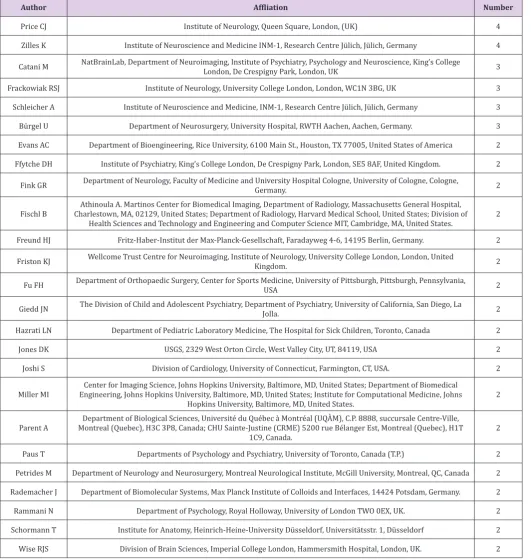
N Y Acad Sci”. In addition, it was found that 9 articles were cited
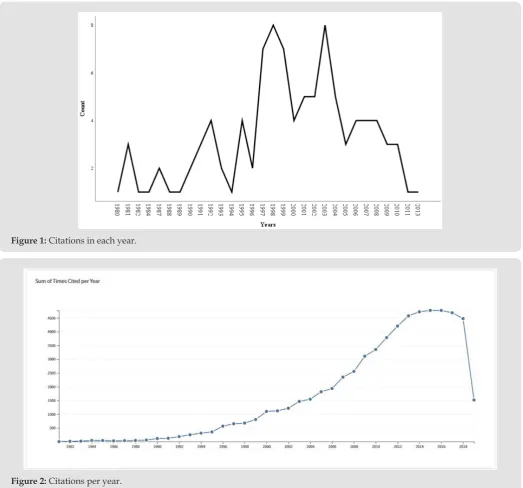
in T100 articles with their four articles each (Table 1). When the number of classic articles published by years is examined, it was found that it showed a Poisson distribution between the years of
1993-2013. The highest point of this distribution was found to correspond to 2003 (Figure 1). It was seen that in the distribution
by years, on the other hand, there was an increase in the number
of publications especially between the years of 1997-2010 (Figure
2). It was thought that it was the period when trend in anatomy
(neuroscience-neuroanatomy) was in the term of transition and peak. It was observed that 51 of the T100 studies were published
in 2000 and later. It was determined that the oldest trial among the
Top100 articles was carried out by Van den Pol AN and published in J Comp Neurol. In 1980, the newest trial, on the other hand, was published in J Anat. In 2013 by [8].
Table 1: The most common authors with two and more in the top 100 cited articles.
Author Affliation Number
Price CJ Institute of Neurology, Queen Square, London, (UK) 4
Zilles K Institute of Neuroscience and Medicine INM-1, Research Centre Jülich, Jülich, Germany 4
Catani M NatBrainLab, Department of Neuroimaging, Institute of Psychiatry, Psychology and Neuroscience, King’s College London, De Crespigny Park, London, UK 3
Frackowiak RSJ Institute of Neurology, University College London, London, WC1N 3BG, UK 3 Schleicher A Institute of Neuroscience and Medicine, INM-1, Research Centre Jülich, Jülich, Germany 3
Bürgel U Department of Neurosurgery, University Hospital, RWTH Aachen, Aachen, Germany. 3 Evans AC Department of Bioengineering, Rice University, 6100 Main St., Houston, TX 77005, United States of America 2
Ffytche DH Institute of Psychiatry, King’s College London, De Crespigny Park, London, SE5 8AF, United Kingdom. 2
Fink GR Department of Neurology, Faculty of Medicine and University Hospital Cologne, University of Cologne, Cologne, Germany. 2
Fischl B Charlestown, MA, 02129, United States; Department of Radiology, Harvard Medical School, United States; Division of Athinoula A. Martinos Center for Biomedical Imaging, Department of Radiology, Massachusetts General Hospital, Health Sciences and Technology and Engineering and Computer Science MIT, Cambridge, MA, United States. 2 Freund HJ Fritz-Haber-Institut der Max-Planck-Gesellschaft, Faradayweg 4-6, 14195 Berlin, Germany. 2
Friston KJ Wellcome Trust Centre for Neuroimaging, Institute of Neurology, University College London, London, United Kingdom. 2
Fu FH Department of Orthopaedic Surgery, Center for Sports Medicine, University of Pittsburgh, Pittsburgh, Pennsylvania, USA 2
Giedd JN The Division of Child and Adolescent Psychiatry, Department of Psychiatry, University of California, San Diego, La Jolla. 2
Hazrati LN Department of Pediatric Laboratory Medicine, The Hospital for Sick Children, Toronto, Canada 2
Jones DK USGS, 2329 West Orton Circle, West Valley City, UT, 84119, USA 2
Joshi S Division of Cardiology, University of Connecticut, Farmington, CT, USA. 2
Miller MI Engineering, Johns Hopkins University, Baltimore, MD, United States; Institute for Computational Medicine, Johns Center for Imaging Science, Johns Hopkins University, Baltimore, MD, United States; Department of Biomedical
Hopkins University, Baltimore, MD, United States. 2
Parent A Montreal (Quebec), H3C 3P8, Canada; CHU Sainte-Justine (CRME) 5200 rue Bélanger Est, Montreal (Quebec), H1T Department of Biological Sciences, Université du Québec à Montréal (UQÀM), C.P. 8888, succursale Centre-Ville,
1C9, Canada. 2
Figure 1: Citations in each year.
Figure 2: Citations per year.
It was observed that, in the evaluation of the study subjects
among the Top 100 articles, basic field studies cover the first rank in the majority with a weight of 80%. It was determined
that interdisciplinary studies were at the second rank with the
percentage of 11% and clinical research was at the third rank with 9%. The fact that interdisciplinary studies took part in a higher ranking in comparison with clinical research was approached by the inclusion of a new field of study as a methodological method and
dissemination processes of methods increase the interdisciplinary
approaches. Neuroimaging trials based on radiological anatomy were thought to be the cause of this process, in particular. It was determined that among the basic field studies, 37 of the top cited
articles were experimental studies and 34 of them were review studies. The distribution of 11 interdisciplinary articles were found
as experimental study (4) and clinical study (3). It was observed
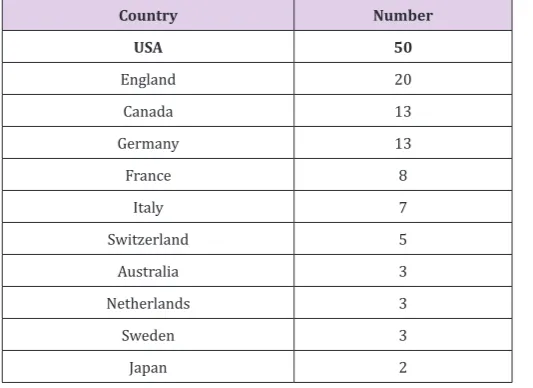
that the majority of the 9 clinical field studies were accumulated in randomized controlled experimental trial (RCT) (5) (Table 2). According to the geographic origin of the top 100 list given in Table
3, it was seen that contribution was made to Top 100 articles from
14 countries. The countries with the highest publication source number were USA (n=50), England (n=20), Canada (n=13), Germany
(n=13) and France (n=8) respectively. The institutes contributed to the publication most were found as University of London (n=15)
and University College London (n=10), Harvard University (n=7) and McGill University (n=7). Although most of the publications among the other T100 were published by the universities in USA, it was seen that England was at the forefront in T100 in the field of
Table 2: Study design and levels of evidence by SIGN* of the top 100 cited articles.
Study type and sub-type Level of evidence Group Number Basic science
Review 4 C 34
Experimental study 2 A 37
Experimental and
observational study 3 B 2
Meta-analysis of RCT 1 A 1
Randomized controlled trial
(RCT) 1 B 3
Expert opinion 4 C 1
Survey research 3 B 1
Letter to editör 4 C 1
Interdisciplinary study
Experimental study 2 A 4
Clinical study 2 A 3
Randomized controlled trial
(RCT) 1 B 1
Experimental and
observational study 3 B 1
Review 4 C 1
Case–control study 3 B 1
Clinical research
Randomized controlled trial
(RCT) 1 A 5
Quasi-experimental study 2 B 1
Case–control study 3 B 1
Experimental study 2 A 1
Clinical study 2 A 1
*SIGN: Scottish Intercollegiate Guidelines Network; SIGN 50 (in: A Guideline developer’s handbook Re, November 2011). Table 3: The most common listed countries in the top 100 cited articles.
Country Number
USA 50
England 20
Canada 13
Germany 13
France 8
Italy 7
Switzerland 5
Australia 3
Netherlands 3
Sweden 3
Japan 2
Wales 2
Belgium 1
South Africa 1
Table 4: Institutions of origin with three or more in the top 100 cited articles.
Institution Number
Universtiy of London (England) 15
University College London (England) 10
Harvard University (USA) 7
Mcgill University (Canada) 7
Heinrich Heine University Dusseldorf (Germany) 5
Helmholtz Association (Germany) 5
Imperial College London (England) 5 Institut National De La Sante Et De La Recherche Medicale
Inserm (France) 5
National Institutes of Health NIH USA (USA) 5 Research Center Julich (Germany) 5 University of California System (USA) 5
Kings College London (England) 4
Massachusetts Genaral Hospital (USA) 4
University of Oxford (England) 4
VA Boston Healthcare System (USA) 4
Assistance Publique Hopitaux Paris APHP (France) 3
Duke University (USA) 3
Hopital Universitaire Pitie Salpetriere APHP (France) 3
Laval University (Canada) 3
MRC Laboratory Molecular Biology (England) 3
NIH National Institute of Mental Health NIMH (USA) 3
Pennsylvania Commonwealth System of Higher Education
PCSHE (USA) 3
Sorbonne Universite (France) 3
University of Pittsburgh (USA) 3
Brown University (USA) 2
In the present study 91 of T100 were published in 25 journals that had an impact factor (IF) of 4.24 (Table-3). According to
Clarivate Analytics (2017) IF means of 17 journals was found as
4.92±4.78 (range:0-21.21/n= 25) and H index mean 264.8±228.32 (range:0-1096/n= 25). It was determined that 48% of T100 cited studies were published in the journals on neuroscience, neurology
and brain. It was found that most of the articles were published
in the journal of NeuroImage (n = 10), and respectively journal of
Brain in second place with 7 articles, Nature Reviews NeuroScience,
journal, which is in the first rank, was 3.35 and 320 respectively, in
the same way, IF value of Nature Reviews NeuroScience journal 21.2
and H index 375; furthermore, the highest H index (699) was found
of the journal at the fourth rank. It was observed that all of these
journals were in “Quartile Score” Q1 category with IF value over 2
(range 2.2-21.2) and H index over 170 (range 171-699) (Table 5).
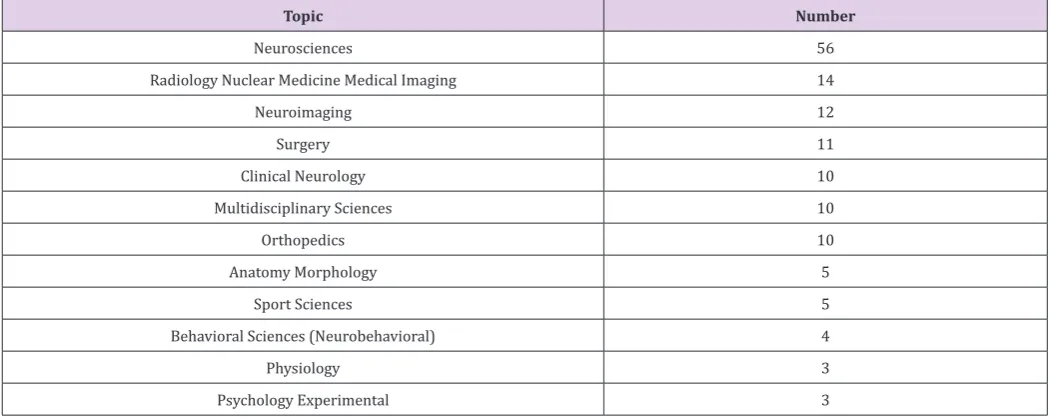
It was determined that the most repeated topics in this trend topic
anatomy were neuroscience, radiology nuclear medicine medical imaging, neuroimaging and behavioral science (Table 6).
Table 5: List of journals in which two and more published articles.
Journal Number of articles IF (2018)* Q&H Index(2018)**
NeuroImage 10 3.35 Q1 (320)
Brain 7 5.98 Q1(308)
Nature Reviews Neuroscience 5 21.21 Q1(375)
Proceedings of the National Academy of
Sciences of the United States of America 5 5.6 Q1(699)
Brain Research Reviews 4 0 -(184)
Cerebral Cortex 3 3.57 Q1(223)
Journal of Anatomy 3 1.2 Q1(103)
The Journal of Bone and Joint Surgery American Volume (JB&JS) 3 4.716 Q1(-)
Journal of Comparative Neurology 3 2.2 Q1(194)
Journal of Neuroscience 3 4.1 Q1(422)
Nature 3 16.35 Q1(1096)
American Journal of Sports Medicine 2 3.62 Q1(196)
Anatomical Sciences Education 2 0.96 Q1(38)
Annals of The New York Academy of Sciences 2 1.8 Q1 (225)
Human Brain Mapping 2 2.45 Q1 (171)
Neurology 2 3.5 Q1(331)
Plastic and Reconstructive Surgery 2 1.75 Q1(160)
Trends in Cognitive Sciences 2 7.7 Q1(276)
Trends in Neurosciences 2 6.32 Q1(269)
Note:*IF: Impact Factor (Available from SCR –Scimago 2018), **Q: Quartile Score (Available from SCR –Scimago 2018), **H: H-index (Available from SCR –Scimago 2018)
Table 6: The most common topics among the top 100 cited articles.
Topic Number
Neurosciences 56
Radiology Nuclear Medicine Medical Imaging 14
Neuroimaging 12
Surgery 11
Clinical Neurology 10
Multidisciplinary Sciences 10
Orthopedics 10
Anatomy Morphology 5
Sport Sciences 5
Behavioral Sciences (Neurobehavioral) 4
Physiology 3
Zoology 3
Cardiac Cardiovascular Systems 2
Computer Science Interdisciplinary Applications 2
Education Scientific Disciplines 2
Pediatrics 2
Psychology Developmental 2
Respiratory System 2
Urology Nephrology 2
Computer Science Cybernetics 1
Critical Care Medicine 1
Endocrinology Biomedical 1
Engineering Electrical Electronic 1
Discussion
Bibliometric studies provide information about the historical
development of the scientific field being studied. Smith Papyrus (1600 BCE), which provides an insight into the status of clinical information in ancient Egypt related to the basic field of anatomy and is regarded as the first recorded rational investigation paper, has maintained its historical position as the first written papyrus [9] to provide information on brain hieroglyphics. In this study, it was found that the most common topics among T100 in the bibliometric analysis of classical articles in the field of anatomy produced between certain years were carried out in the field of brain subjects such as neuroscience (included clinical neurology and neurobehavioral studies), and neuroradiology with nuclear medicine, medical imaging and neuroimaging. Modern brain researches, which were used for the first time in the 1960s and entered into scientific terminology as “neuroscience” and includes many multidiscipline, such as molecular biology, electrophysiology, and computational neuroscience, began to be mentioned in the
literature with this term. Thus, many neural connections in the
human brain have been revealed. Neuroscience, including anatomy-based various studies, has gained momentum in the last four decad by including neuroradiology/neuroimaging studies and has been the pioneer of many basic and clinical researches. Specifically, the use of radiological techniques to show cross-sectional and
three-dimensional anatomical structures has increased the relationship
between anatomy and clinical practice and social area [10]. Having stated that the relationship between anatomy and radiology disciplines continues to grow in an interactive relationship, [11] foretold that signals of the transition from general anatomy to functional anatomy were given. Continuous technical progress is changing the capability of medical imaging techniques almost every day, currently allowing for more and more accurate and comprehensive anatomical studies of living human beings [12,13]. Galen was modest about the potential of anatomy for understanding brain function and said that: “How the brain performs its functions in imagination, in reasoning, in thinking and in memory. I can form
no opinion whatsoever. Nor do I think that anything more will be
found out by anatomy” [14].
On the other hand, Jones (2002) emphasized that numerous
questions in the clinical neurosciences can be tackled by anatomical
research. However, we see that anatomy is still important understanding brain functions (as well as depicting the human
brain in activity with functional MRI). In fact, these developments
contribute to our access to the best knowledge on anatomy. It was found that three of among the most cited 100 publications were classified in the field of zoology. The reason for this was that the comparative anatomy studies encouraged references to brain functions among species known as system neuroscience, which could be considered about zoology. In this study, most of the studies in the field of neuroscience were experimental and
review studies. It was observed that review studies received more citations in the main study areas. The reason is that review studies have been prepared with comprehensive and holistic approach to review studies. As expected, the USA is ranked as the country
with the highest number of publications, in terms of the number
of publications per institute, while it was seen that the authors
working in the organizations of UK contributed the most. Although
the axis of the study topics focuses in the direction of neuroscience,
morphological anatomy still constitutes the basis of the studies. Jones et al. [15] argued that the shift to these changes was in fact caused by a less prestigious perception of general anatomical research. Nevertheless, in the main subject ranking of this T100
study, after neuroscience topics, the presence of many studies on
subjects such as general, structural, clinical, sports, surgery and systematic anatomy, has shown that general anatomy studies are still important in maintaining. Meanwhile, in this anatomic-based classical article, the use of technological innovations, such
as computer science-based interdisciplinary applications and cybernetics, which had never been encountered before, was
atlases. In addition, a new field such as Computational Anatomy, which shows a translational tendency to neuroradiologic imaging devices, can be suggested.
In this study, the number of articles published by years showed consistent with the Poisson distribution between the years of 1993 and 2013. Poisson distribution of articles by years can be explained
as follows: Increasing communication network with developing technology, facilitating access to current literature (Pubmed,
Science direct, Web of science, Index Medicus and etc.), and evolution of studies in functional direction by rapid advancement
of imaging technology can explain the increase in the number of
studies in these years. Multiple bibliometric indices can be used to
evaluate different aspects of the study. At the present time, although
the number of citations of the article and the impact factor (IF),
Q category and H index of the journal are very important in the evaluation of the quality of an article, having the highest impact factor and H index is not an indication of the preferableness of
that journal in that area in terms of the number of articles. IF is a
measure of how often an article in a journal is shown on average in a given year. It is used to measure the importance or ranking of the journal by calculating the citations of the articles. The calculation is based on a two-year period and involves dividing the number
of articles by the number of cited articles [16]. Citation is an
important indicator reflecting the interest shown by other authors to an article and the quality of the article in general. It is generally
accepted that the number of citations is related to the quality or usefulness of the research [17]. Year of publication and number of citations for an article is closely related and the number of citations
grows as the time passes.
It is well known that bibliometric studies based on citation
rates have some limitations. Although each citation shows that a scientific idea encourages another research in its own work, self-citation results in artificial inflation. In addition, there may be a high number of citations in research areas that are politically controversial or of current interest. However, there is a positive correlation between the high number of citations and the time after publication. This, on the other hand, reflects the time bias in evaluating the quality of the article. Therefore, to balance time bias
in bibliometric studies, the ACI assessment should also be included.
ACI can be considered as the average number of citations received each year since the publication of the manuscript. Looking at the
most cited articles, it was observed that most of these articles were related to neuroscience and the order of cite and ACI indexes were not compatible with the time cited order. For example, the
ACI index of the fifth article should actually be third. Therefore, in
this topic trend study, ACI values were also calculated to remove
time-based bias. It was thought that thus, a more objective article evaluation was provided. The number of citations may be high
in research areas that are politically controversial or of current interest. In contrast, low citations will be made in journals that feed small research areas. This can be explained, on the other hand, by
the choice of the publication of a specific article which determines
the preferableness of the journal, or the fact that it accepts a limited number of articles.
This can also be called author-based bias. In our study, it was
observed that the factor affecting the gradient of the highest-cited
article and the lowest-cited article is mainly related to neuroscience studies and the lowest cite articles were found to be more of a corner stone. The reason for the lack of structural anatomy research can be considered as the fact that the inclusion of functional and anatomy
studies in clinical field studies has narrowed the working area of
anatomy specialists. The fact that anatomy studies were included
in neuroscience and neuroimaging studies showed the ongoing
dynamic process of the examinations in terms of neuroanatomical
research. Anatomy studies, which are trapped in radiological and
clinical studies, may be a parameter that maintains the current
value of gross, physiological and pathological anatomy. Except
for the bibliometric study on insula and the anatomical research
using neuroimaging techniques as a local anatomical structure illustrating the intersections of other areas with anatomy, no other
anatomy bibliometric study was found in the literature. On the basis of all basic and clinical research, there is the fact to know all
aspects of the human body and to determine the most beneficial intervention without harming human beings before the transition to clinical applications. Therefore, although disciplines change, it is thought that anatomical structure researches will maintain the
necessity and importance of all medical information.
Limitations
In addition to time citation resistant limitations specific to bibliometric studies, limitations specific to anatomy were also determined. In this context, many neurophysiology studies encountered with the basic field of physiology have caused some limitations in anatomical classification. When the studies which are used specifically in physiology studies and include the terms in
the exclusion criteria are examined carefully, these were evaluated
as function studies on neuroanatomic structures. Although the
study named “The brain’s default network: anatomy, function, and
relevance to disease” which is in the first rank among Top 100 articles
includes the term “default”, it was included in the study because it included more of the emphasis on the “default system anatomy”. It was understood that the study was in fact a neuroanatomy-based
neuroscience study. This update study provides new insights
into the dynamic nature of anatomy research. The methods used were completely quantitative and therefore, these methods were objective, reliable and easily reproducible; this, on the other hand,
allowed the identification of subtle trends.
Conclusion
important. However, new technology-based studies have shown that more research is needed in neuroscience and neuroimaging studies that do not identify the forces affecting the direction of
neuroanatomical researches. The use of computer science-based
technologies has attracted attention to in the realm of anatomy. It is
clearly understood that anatomy studies are still seen as the main application area of all medical information.
Conflict of Interest
The author declares that there is no conflict of interest.
References
1. Anson B J (1945) The Initial Letters of 1555 Edition of Vesalius’s Fabrica.
Q Bull Northwest Univ Med Sch 19(4): 326-335.
2. Eggertson L (2010) Lancet retracts 12-year-old article linking autism to
MMR vaccines. CMAJ 182(4): E199-E200.
3. Garfield E (1987) 100 citation classics from the Journal of the American
Medical Association. JAMA 257: 52-9.
4. Garfield E (1999) Journal impact factor: A brief review. CMAJ 161(8):
979-980.
5. Grignon B (2012) Anatomy and medical imaging: A symbiotic relationship. Surg Radiol Anat 34(8): 673-674.
6. Gross CG (2009) History of Neuroscience: Early Neuroscience.
Encyclopedia of Neuroscience Academic Press: 1167-1171.
7. Jones DG, Dias GJ, Mercer S, Zhang M, Nicholson HD (2002) Clinical
anatomy research in a research-driven anatomy department. Clin Anat 15(3): 228-232.
8. Joyce CW, Joyce KM, Sugrue CM, Kelly JC, Carroll SM, et al. (2014) Plastic Surgery and the Breast: A Citation Analysis of the Literature. Plast Reconstr Surg Glob Open 2(11): e251.
9. Li Q, Jiang Y (2016) Top classic citations in pancreatic cancer research. World J Surg Oncol 14: 298.
10. Siddiquey AKS, Husain SMS, Laila SZH (2009) History of Anatomy Bangladesh J Anat 7(1): 1-3.
11. (2011) SIGN 50 Scottish Intercollegiate Guidelines Network; SIGN 50 (in: A Guideline developer’s handbook Re, November 2011), Healthcare Improvement Scotland. Healthcare Improvement Scotland.
12. Standring S (2016) A brief history of topographical anatomy. J Anat
229(1): 32-62.
13. Tubbs RI, Gonzales J, Iwanaga J, Loukas M, Oskouian RJ, et al. (2018) The influence of ancient Greek thought on fifteenth century anatomy: Galenic influence and Leonardo da Vinci. Childs Nerv Syst 34(6):
1095-1101.
14. Van Raan AFJ (2003) The use of bibliometric analysis in research
performance assessment and monitoring of interdisciplinary scientific developments. Technology assessment Theory and practice 12: 20-29.
15. Wilcox MA, Khan NR, McAbee JH, Boop FA, Klimo P Jr (2013) Highly cited publications in pediatric neurosurgery. Childs Nerv Syst 29(12):
2201-2213.
16. Wing L, TF Massoud (2015) Trends in Performance Indicators of Neuroimaging Anatomy Research Publications: A Bibliometric Study of Major Neuroradiology Journal Output Over Four Decades Based on Web
of Science Database. Clinical Anatomy 28(1): 16-26.
17. Yeung AWK (2018) The 100 Most Cited Papers Concerning the Insular Cortex of the Brain: A Bibliometric Analysis. Frontiers in Human
Neuroscience 12: (337).
Submission Link: https://biomedres.us/submit-manuscript.php
Assets of Publishing with us
• Global archiving of articles
• Immediate, unrestricted online access • Rigorous Peer Review Process
• Authors Retain Copyrights
• Unique DOI for all articles
https://biomedres.us/ This work is licensed under Creative
Commons Attribution 4.0 License