Transitions from Single- to Multi-locus Processes
during Speciation
Martin P. Schilling1,†*ID, Sean P. Mullen2, Marcus Kronforst3, Rebecca J. Safran1ID, Patrik Nosil4ID, Jeffrey L. Feder5ID, Zachariah Gompert4ID, and Samuel M. Flaxman1,† ID
1 Department of Ecology and Evolutionary Biology, University of Colorado, Boulder, CO 2 Department of Biology, Boston University, Boston, MA 02215
3 Department of Ecology & Evolution, University of Chicago, Chicago, IL
4 Department of Biology & Ecology Center, Utah State University, Logan, UT 84322 5 Department of Biological Sciences, University of Notre Dame, South Bend, IN 46556
* Correspondence: [email protected]
† Current address: Department of Ecology and Evolutionary Biology, N211 Ramaley Hall, Campus Box 334, University of Colorado, Boulder, CO 80309
Abstract:During speciation-with-gene-flow, a transition from single-locus to multi-locus processes can occur, as strong coupling of multiple loci creates a barrier to gene flow. Testing predictions about such transitions with empirical data requires building upon past theoretical work and the continued development of quantitative approaches. We simulated genomes under different evolutionary scenarios of gene flow and divergent selection, extending previous work with the additions of neutral sites and coupling statistics, allowing us to investigate if and how selected and neutral sites differ in the conditions they require for transitions during speciation. As the per-locus strength of selection grew and/or migration decreased, it became easier for selected sites to show divergence – and thus to rise in linkage disequilibrium (LD) with each other as a statistical consequence – farther in advance of the conditions under which neutral sites could diverge. Indeed, even very low rates of gene flow were sufficient to prevent differentiation at neutral sites. However, once strong enough, coupling among selected sites eventually reduced gene flow at neutral sites as well. To explore whether similar transitions might be detectable in empirical data, we used published genome resequencing data from three taxa ofHeliconiusbutterflies. We found that allele-frequency outliers andFSToutliers exhibited stronger patterns of LD than the genomic background, as expected. The statistical characteristics of LD – likely indicative of the strength of coupling of barrier loci – varied between chromosomes and taxonomic comparisons. Broad qualitative agreement between the patterns we observed in the empirical data and our simulations suggests that selection drives rapid genome-wide transitions to multi-locus coupling, illustrating how divergence and gene flow interact along the speciation continuum.
Keywords: gene flow; sympatry; parapatry; simulation model; population genomics; Heliconius; coupling; nonlinear transitions
1. Introduction
Understanding the genetic basis of speciation – long a central goal of evolutionary biology – has been greatly advanced by high-throughput sequencing (HTS) methods. High quality data sets from a wealth of empirical studies of speciation-in-action now abound, and we can now point to many excellent examples demonstrating that combinations of factors – selection, drift, ecology, geography, hybridization, recombination, and more – shape divergence and reproductive isolation [e.g. 1,2]. But the current abundance of data also underscores the vast gulf that still often exists between "having the data" and "having the answers." Signs of varied evolutionary processes can sometimes be unambiguously detected, but predicting and testing for the patterns of aggregate, genome-wide
processes along the speciation continuum (i.e, at varying points of divergence and differentiation) remains challenging. Therefore, additional work is needed to expand the scale of prediction and analysis from sets of "speciation genes" to genome-wide statistical patterns.
As Butlin and Smadja [3] recently highlighted, theory based upon coupling is a promising foundation for this work. In this context, "coupling" refers to any process that combines barrier effects from multiple loci, leading to strengthening of the overall barrier to gene flow. Coupling involves alleles at different loci becoming statistically non-independent with respect to their evolutionary dynamics. For example, two loci that are subject to divergent selection may together, when coupled, reach allele frequency differences between demes that are larger than either allele would reach at the corresponding uncoupled, single-locus migration-selection balance. In general, the potential for loci to be coupled is strongly dependent upon the relative strengths of selection and recombination [4, more on this below]. It is also important to note that the notion of coupling as defined here can include but is not limited to allele frequency clines becoming coincident in space.
Multi-locus processes involved in speciation have been studied by theoreticians for decades [1,5], providing an excellent foundation to understand the buildup and maintenance of differentiation under selection, gene flow, and genetic drift [3–10]. A number of theoretical studies have also cast light upon the roles of linkage and genomic architecture in speciation [11–17]. Much of this work has emphasized the parameter space – combinations of selection strength, migration rates, recombination rates, numbers of loci, etc. – in which loci would become coupled with one another [e.g.4,6,8,9,18].
Recent work has additionally emphasized the temporal properties of the emergence of coupling, and indicates that the buildup of divergence can be strongly nonlinear in time [12,17,19–22]. Specifically, these studies suggest that many alleles with individually small effects may rapidly (in evolutionary terms) transition from an uncoupled to a coupled state, a process in which highly divergently adapted multi-locus genotypes "congeal" out of what was previously a well-mixed gene pool [17]. However, the latter work did not incorporate neutral sites and thus was silent about their dynamics. Southcott and Kronforst [23] used forward-time simulations which included neutral sites in a large (100 kb) region of the genome containing a single site under selection. Their work suggested that the genomic patterns produced by neutral and non-neutral processes may not be easily distinguishable. This raises important questions: Are there ways to reliably distinguish barrier loci under selection from neutral genomic background? Can aggregate, genome-wide statistical patterns offer insights about neutral and non-neutral processes? What, if any, patterns produced by neutral versus non-neutral processes are robust and detectable?
Toward this end, we investigated the temporal dynamics of coupling in two-deme simulations under divergent selection and gene flow. We built on a previous model ["bu2s":17] that considered the de novo buildup of large numbers (100s) of sites under selection and extended that model to incorporate neutral sites. Following the results about the difficulty of using traditional summary statistics to distinguish non-neutral and neutral evolutionary processes [23], we used results from the model to compare the potential power of multiple population genetic statistics to differentiate between neutral and selected sites. We computed coupling statistics derived from multi-locus cline theory [4,8] to quantitatively describe transitions from single- to multi-locus processes during speciation with gene flow. Consistent with previous work, selected sites reached high coupling between loci, and we now provide quantitative predictions about the time and parameter lag between the transition seen for selected sites and the analogous transition for neutral sites.
in the empirical data. In addition, we predicted that evidence of coupling between recently derived Heliconiusspecies, that differ only in aspects of color pattern (due to selection on only a single or small number of loci; [39]), would be restricted to chromosomes housing color patterning genes, and then a rapid transition to genome-wide coupling as phylogenetic distance increased (reflecting reduced effective migration resulting from ongoing selection on color pattern and other forms of ecological divergence). In a purely allopatric scenario, neutral sites would readily diverge (between demes) along with the selected sites, due to the effects of hitchhiking and drift. However, with even small amounts of gene flow and recombination, neutral divergence would be delayed until after barrier loci had already become strongly coupled and diverged. Hence, we predicted that the genomic background would show little divergence in most of our comparisons of taxa and regions of the genome. However, for taxa showing the greatest divergence (i.e., those farthest along the speciation continuum), effects of coupling should be detectable even in the genomic background (i.e., the non-outlier sites).
2. Materials and Methods
2.1. Simulations
We performed forward-time, individual-based simulations withbu2sversion 3.6.1. The details of this software have been previously described [14,17]. Source code is freely available atGitHub[40]. Data sets used in this publication are archived at [insert link upon publication]. The main extension of the model not present in previous versions [17] is the addition of neutral sites. Since the rest of the workings of thebu2smodel have been described in multiple previous publications [14,17,22], we give only a brief overview ofbu2shere, focused on key elements and new features, and we refer the interested reader to those previous works for more details.
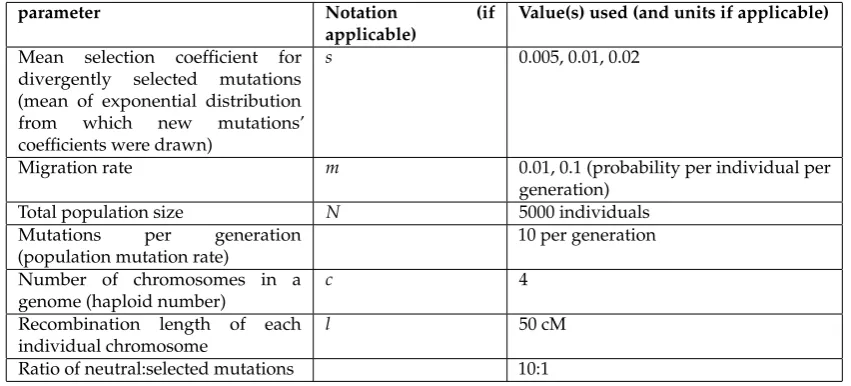
Table1gives a summary of key parameters and the value(s) of each for the results shown here. These were chosen to includes cases withs>m(per locus), in which divergence of individual loci is expected to be relatively smooth and linear in time, as well as cases withs<m, in which abrupt, nonlinear transitions in divergence and coupling are expected and individual mutations are often swamped by migration [17,22,41]. Altogether, we show results from a total of 300 simulation runs, with 50 runs each of 6 different parameter combinations (Table1).
Table 1.Parameter values used in simulations.
parameter Notation (if
applicable)
Value(s) used (and units if applicable)
Mean selection coefficient for divergently selected mutations (mean of exponential distribution from which new mutations’ coefficients were drawn)
s 0.005, 0.01, 0.02
Migration rate m 0.01, 0.1 (probability per individual per
generation)
Total population size N 5000 individuals
Mutations per generation (population mutation rate)
10 per generation
Number of chromosomes in a genome (haploid number)
c 4
Recombination length of each individual chromosome
l 50 cM
Ratio of neutral:selected mutations 10:1
2.1.1. Model overview and life cycle
two demes, and individuals are diploid, hermaphroditic, and obligate outcrossers. Evolution results from the combination of mutation, selection, migration, recombination, and drift. In this setup, new mutations can either be neutral or subject to divergent selection. A life cycle diagram of thebu2smodel is shown in Fig.1A.
Figure 1.Forward-time simulations with (A) life-cycle diagram for the simulation model used, (B) population differentiation (FST) over time for neutral (blue) and selected (red) sites, and (C) coupling measures for single simulation run. In (B) and (C),s=0.005 andm=0.01. See Methods for definitions of the coupling coefficient,θ, and the effective number of loci,Le.
2.1.2. Migration
In each generation, each individual can migrate to the other deme with probabilitym. 2.1.3. Selection, fitness, and reproduction
Following migration, reproduction occurs with theNkparents in demek(k= 1 or 2) giving rise to Nkoffspring in that deme (i.e., soft selection). Selection occurs during reproduction: an individual’s relative fitness is linearly proportional to the probability that it contributes a gamete to the formation of each offspring. Fitness is calculated multiplicatively across selected loci, with each locus’ contribution to fitness given by Table 2. Though fitness is multiplicative, there is no epistasis in the sense of incompatibilities. As the fitness scheme in Table2implies, this is a "two-allele" model of barrier loci [sensu42].
Table 2.Fitness scheme for loci under selection.
Genotype at locus i Fitness contribution of locus in Deme 1
Fitness contribution of locus in Deme 2
AiAi 1+si 1
AiBi 1+0.5si 1+0.5si
BiBi 1 1+si
In Table2, Ai is the ancestral allele at locusi,Bi is the derived allele at locusi(originated by mutation during the simulation), andsiis the selection coefficient associated with locusi. Note that a “locus” is synonymous with a “site” in this infinite sites model; any “locus” is a spot in the genome analogous to a single nucleotide polymorphism (SNP) in modern genomic sequencing data. The fitness of thejth individual,Wj, is calculated as:
Wj= L
∏
i=1
wherewij(gij)is the contribution of locusito individualj’s fitness, as a function of its genotype at that locus,gij(Table2),Lis the total number of selected loci with segregating variants, and the product is over all such loci (i.e., ignoring neutral sites).
2.1.4. Recombination
Recombination occurs during gamete formation (meiosis). Recombination locations are individually identically distributed along the length of the genome. In results shown here, there were four chromosomes of equal length, with each chromosome having an expected number of 0.5 recombination events per meiosis (i.e., each was 50 cM long). The total number of recombination events thus follows a Poisson distribution with mean equal to the length of the entire genome expressed in Morgans (= 2 for results shown here).
2.1.5. Mutation
A fixed number of mutations are introduced to the population in each generation (10/generation in results shown here). Each mutation is introduced in a randomly chosen offspring at a uniformly randomly chosen location in the genome. In results shown here, neutral and divergently selected mutations were introduced in a 10:1 ratio (i.e., a new mutation could be neutral with probability∼0.909 or subject to divergent selection with probability∼0.0909). Given that neutral mutations are more likely to be lost by drift, this ratio was chosen to allow a large number of both types of variants to build up standing variation. Additionally, it is realistic to expect more mutations to be neutral than beneficial. Global positive selection and epistatic incompatibilities were not considered, in order to focus on the effects of genome-wide, divergent adaptation. Thus, this is a model in which reproductive isolation evolves by divergent adaptation only. Selection coefficients,si, are drawn from an exponential distribution with means[see14,17, for discussion]. All mutations arise de novo; there is no standing variation at the beginning of a simulation. In the course of a full-length simulation run with parameters used here (Table1),∼107neutral mutations and∼106selected mutations would be introduced, but, because of drift and migration, only a tiny fraction of these would establish.
2.1.6. Data derived from simulations and metrics computed from simulation data
Each simulation run outputs standard population genetic metrics as time series, including global and deme-specific allele frequencies,FST, allele frequency spectra, samples of individual fitness values, and more (see [17] for additional metrics). FST is calculated as FST = (HT−HS)/HT, where HT is the total observed heterozygosity at a given locus at a given time step and HS is the expected heterozygosity based upon each deme’s observed heterozygosity [43]. Reproductive isolation in this model is quantified by the expected effective backward migration rate [44],me, defined as the expected proportion of reproduction in a deme attributable to immigrants. This quantity shrinks as populations become increasingly isolated due to differential adaptation (i.e., as immigrants have lower and lower fitness relative to residents). For results shown here, simulations were run until 15,000,000 mutations had been introduced (a maximum feasible run time of about 168 hours of CPU time in some parameter combinations) or until effective migration dropped below an a priori threshold (whichever came first). We arbitrarily defined the latter threshold asNme<0.0001, i.e., a less than 1 in 10,000 chance of having a single immigrant successfully reproduce. We ran 300 simulations under different combinations ofs andm, (Table1), yielding 50 independent replicates of each specific parameter combination.
To connect our simulations to theoretical expectations about the fate of selected and neutral alleles derived from seminal work on hybrid zones, we calculated Barton’s coupling coefficient [4], defined as
θ=s/r. We note here that, unlike previous analytic work, in thebu2smodelris not a fixed parameter
but rather a dynamic variable that is a function of time, as is typical of forward-time simulations. For this reason,θchanges over time in our simulations. Additionally, whilesis a fixed parameter
a non-random set of these because those with large values ofsi will have a greater probability of establishment. Thus, the value of "s" used in our calculations ofθis an average from the segregating,
selected alleles present at a given time rather than the fixed value of the parametersper se. Henceforth, we denote the parameter (fixed value) ass, and we denote the mean of thesithat are actually present at a given time as ¯s; Additional explanations of these metrics and their calculation for thebu2smodel can be found in the online supplementary material associated with Nosil et al. 2017 [45].
The coefficientθis a quantitative description of thepotentialfor coupling in the system. The actual
amount of coupling at a given time can be measured by the effective number of loci,Le [4], which, in our discrete-space model, is the number of barrier loci that would have to be maximally coupled (i.e., in maximum linkage disequilibrium) to produce the observed between-deme difference in allele frequencies of barrier loci. If all barrier loci are evolving independently (i.e., completely uncoupled; zero linkage disequilibrium), we expect alleles at each locus to exhibit single-locus migration-selection balance, which would result inLe =1. As loci become coupled, their alleles aid each other in reaching higher frequencies in their favored deme, causing departures from single-locus migration-selection balance and increases inLe. Following [4], we compute the effective number of loci as
Le = s
∗
¯
s , (2)
wheres∗is the value of the selection coefficient for a single locus that would cause that locus to have the observed frequency at migration-selection balance. Note that when loci are not coupled at all, we should finds∗=s¯andLe=1. However, as loci become coupled, we expects∗>s¯and thusLe >1. For the fitness scheme used in thebu2smodel, and considering a single locus independently of all other loci, the equilibrium frequency of an allele under migration-selection balance in the favored deme is:
p= m
(0.5+0.75si)−0.125si−0.125qs2i −4ms2i +4m2(2+si)2 (−0.25+m)si
, (3)
[22, aMathematicanotebook with this solution and its derviation can be downloaded from [46]]. Let ¯p be the mean observed frequency of barrier alleles in their favored deme. Substituting ¯pforp, ands∗ forsiin equation 4, we can then rearrange that equation to solve fors∗, yielding:
s∗= m(p¯−0.5)
(0.25−0.25∗p¯)p¯+m(0.5+p¯(p¯−1.5)) , (4) which provides the numerator in equation 2 to calculateLe.
For comparisons between simulation results and empirical data, we focused on statistics that are indicative of coupling and its effects, namely, linkage disequilibrium (LD). For the simulation results, LD was calculated as the correlation of allelic states (a value between 0 and 1; empirical LD methods described below). This was done for two different sets of loci: (i) the average pairwise value of LD between selected sites across the genome, and (ii) the average pairwise value of LD between neutral sites across the genome. In both cases, LD is calculated over the whole population, i.e, across demes. We usedR[47] for the calculations ofθwith the additional packagerhdf5[48] for efficient parsing of
simulation runs [insert github repository before publication].
To quantify times and conditions at which transitions occurred in simulations, we fitted generalized logistic models to results on allele frequency differences (AFD) and LD. This choice of functional form (a logistic form) works well because AFD and LD are each bounded on the interval [0, 1]. Below we plot allele-frequency differences as a function ofθ, and the median of LD across runs
as a function of time. For the former, we fit the data using
y(x) = 1
whereyis AFD, andxis log10(θ). For LD as a function of time, we added one parameter to the logistic
function, namely the asymptote (z), yielding
y(x) = z
(1+e−a(x−b)) , (6)
whereyis LD andxis time. For bothθversus AFD and LD versus time, the coefficientbprovides an
estimate of the value ofθor time at which the change in AFD or LD is most rapid (the inflection point
of the logistic curve). The coefficientais a shape parameter, with larger magnitudes ofaindicating a steeper slope at the inflection point. Comparing values ofabetween selected and neutral sites gives a measure of how quickly each type of site undergoes a transition (once it has already begun). The value ofbgives a measure of how long it takes transitions to begin, and comparing values ofbgives an estimate of the difference or lag between transition points for the types of sites. Model fitting was performed with thenlsfunction inRversion 3.4.3 [47].
2.2. Empirical data and analyses
2.2.1. Genotyping and descriptive population genetic statistics
Figure 2.A) Phylogenetic tree forHeliconiustaxa and B) geographic distribution in Costa Rica, withH. melpomene rosinaandH. cydno galanthusoccurring in sympatry on the Caribbean coastal drainage, and H. pachinusandH. melpomene rosinaco-occurring on the Pacific coastal drainage.
Reads ofH. melpomene,H. c. galanthusandH. pachinus(n = 10 individuals/species) were aligned to theH. melpomene melpomenereference assembly version 2.5 [49] withbwa memversion 1.15.0 [50,51]. We usedGATK[52] version 3.8 to call variants, with heterozygosity for prior likelihood calculation per locus of 0.001, and we ignored sequences with mapping quality<20. The minimum phred-scaled confidence threshold for variants to be called was set to 50. After genotype calling, we further filtered the data (see respectivepythonscript name in [53] in parentheses) to only contain variants with a distance of>3 bp between neighbouring variants (dropCloseVars.py), and with depth of coverage ≤mean + 3*sd (dropHighCovVars.py). Further, we kept variants with a minimum absolute value of −8 in base quality rank sum tests, minimum absolute value of the mapping quality rank sum test of −12.5, minimum absolute value of the read position rank sum test of−8, minimum ratio of variant confidence to non-reference read depth of 2, and finally, maximum phred-scaled p-value (using Fisher’s Exact Test to detect strand bias) of 60 (vcfFilter.py). Even with these steps of filtering, the number of sites retained was too large for exhaustive analysis. Hence, given the computational limitations and practical limitations of manuscript length, we focused on comparisons involving 5 chromosomes, which included two autosomes (2, 7) not implicated in color patterning, two autosomes containing extensively studied color patterning loci (10, 18), and the Z chromosome (21).
For each taxon and chromosome, we calculated nucleotide diversity (π) and Tajima’s D using
vcftools[54] version 0.1.15. Additionally, for each of the three taxon pairs (H. c. galanthus&H. m. rosina;H. pachinus&H. m. rosina; andH. c. galanthus&H. pachinus), we obtained estimates of absolute divergence (dxy) and population differentiation (FST) [55] withvcftoolsfor non-overlapping windows of 10kbp size per chromosome. We extracted genotype likelihoods (vcf2gl.py) for all included variable sites and further obtained the Bayesian posterior probability distribution for genotypes using EM estimates of population allele frequencies following [56] to empirically define Hardy-Weinberg priors. We then took the mean of the posterior for each locus (and individual) as a point estimate of the genotype, which is not constrained to be an integer, ranging from zero to two. From here on, we will refer to these as genotype estimates.
2.2.2. LD betweenHeliconiusloci
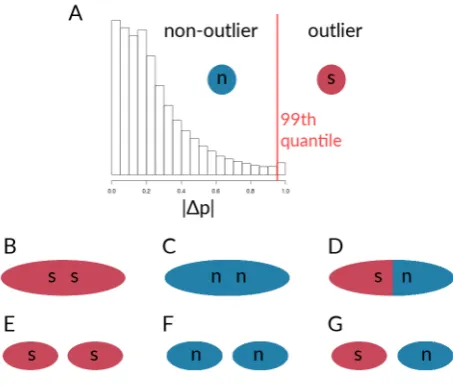
for the calculation of pairwise correlations between said loci. In the results section, we will focus on allele frequency differences, since the procedure forFSTand AFDs is the same and the results for the FSTcalculations were very similar to those seen for AFDs (results based onFSTcan be found in the supplementary material). Loci were designated as outliers if the absolute AFD between two taxa lay above the 99th quantile for each chromosome. We expected outlier sites to be enriched for potential barrier loci, whereas non-outlier sites may represent putatively neutral sites but probably also contain weakly differentiated barrier alleles.
The resulting outliers are based on individual SNPs, and not on windows containing multiple SNPs. We did this for two reasons: (i) We wanted to present a general approach that can be used in most systems, regardless of the quality of the genome assembly used to obtain SNPs, and (ii) due to the practicality of using single SNPs for the calculation of LD, without having to account for whether or not SNPs come in blocks of elevated differentiation. It will be interesting, however, to see whether the patterns of LD for individual loci found here are similar for blocks of loci with increased differentiation. After determining outliers for the absolute AFDs, we obtained estimates of LD among different pairwise sets of loci (outliers and non-outliers), to find potential signatures of coupling for putatively neutral and selected sites. Within each of the five chromosomes, as well as between chromosomes, we looked at simple measures of statistical non-independence. For outliers and non-outliers of both the single locusFSTvalues as well as the absolute allele frequency differences, we calculated Pearson’s correlation coefficients (r2) of genotype estimates for six different groups of sites. Note that the outlier designation is made from the comparison of two taxa; the values, however, then come from correlations calculated within each taxon. Here, we will use allele frequency differences to illustrate the procedure (see also Fig. 3). Of the six groups of sites considered here (Fig. 3), three involved sites from the same chromosome, i.e. (1) correlations among outliers on the same chromosome (Fig.3B), (2) among non-outliers on the same chromosome (Fig.3C), and (3) between outliers and non-outliers on the same chromosome (Fig.3D). Additionally, we calculated pairwiser2values between (4) outliers on the
Figure 3.Schematic of comparisons for the calculation of correlation coefficients between sets of loci within species. A) designation of outlier loci based on absolute allele frequency differences, which were used for the calculation ofr2for B) outlier loci within the given chromosome, C) non-outlier loci within the given chromosome, D) outlier loci with non-outlier loci within the given chromosome. Further,r2were calculated for sets of loci on the given chromosome with respective sets sampled from all other chromosomes, with E) outlier loci vs. outliers from other chromosomes, F) non-outlier loci vs. non-outliers from other chromosomes, and G) outlier loci vs. non-outliers from other chromosomes.
3. Results
3.1. Investigating coupling and its effects on selected versus neutral sites using simulations
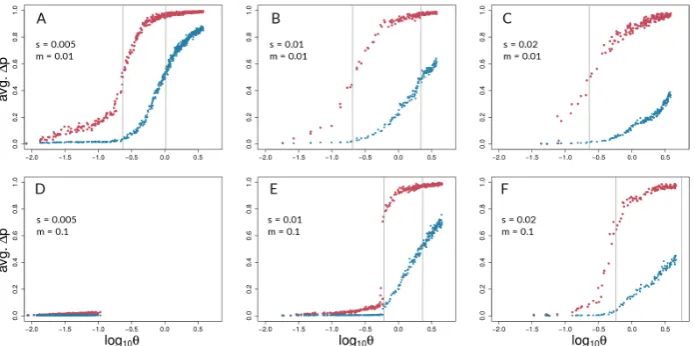
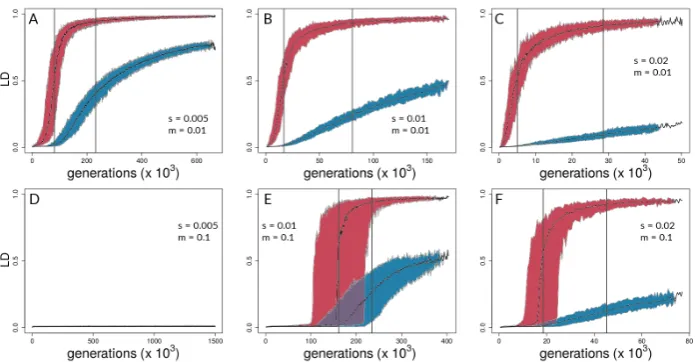
Of the 300 simulation runs with 6 different parameter sets (with 50 runs each), only the 50 runs withs= 0.005 and m= 0.1 (i.e. runs with the highest ratio ofm/s) did not reach the reproductive isolation threshold (which therefore ran for 1.5 million generations with 15 million mutations introduced); indeed, divergence never gained any traction in this parameter combination and there were no hints of coupling (Fig.4D, 5D). Aggregate summary statistics for all 300 simulations are given in the supplementary material (Table S1).
Aggregating runs and looking across combinations of selection and migration (Figure4), selected sites can show strong coupling at values of the coupling coefficient,θ, for which neutral sites show
negligible differentiation. This can be seen in all panels of Figure 4except for Fig.4D and 4E by noting values ofθfor which neutral sites have allele frequency differences very close to zero but selected
sites have risen above zero. An exception is seen in Fig.4E, in which differentiation for selected and neutral sites takes off at about the same value ofθfor each. This is the set of conditions (among those
explored) in which differentiation was the most difficult but still possible (s=0.001<<m=0.1). Neutral sites began to show signs of differentiation forθ>10−0.5(=∼0.32), regardless of the
values ofsandm(note where blue points begin to rise from zero in all panels of Fig.4except4D). They reached their maximum rate of differentiation for values ofθ≥1 (note positions of right-most
vertical lines in Fig.4; there is no line shown for neutral sites in panel C because it was off the scale; see Table S2 for exact values). Intuitively, selected sites showed signs of differentiation for lower values of
θthan neutral sites (note red points above blue points in Fig.4). Strong acceleration of differentiation
indicates the occurrence of coupling among selected sites. The point of the maximum rate of change for selected sites as a function of theta depended strongly upon migration,m, and much less so upons. Whenm=0.01, this point occurred forθ∼10−0.65(= 0.22; see Table S2) regardless ofs(Fig.4A-C).
Whenmwas increased, this point increased as well, toθ∼10−0.23(=0.59), which again varied little
with a two-fold change ins(Fig.4E,F). To summarize, there was a general association between how difficult it is for selected sites to differentiate and how similar the dynamics are for selected versus neutral sites, but there was no singular value ofθfor which all scenarios showed transitions of either
selected or neutral sites.
Figure 5. LD time series for the same combinations ofsandm as in Fig.4. Each plot shows the median result across 50 independent simulation runs and 95% quantiles for selected (red) and neutral sites (blue). Grey lines indicate the point of highest slope by nonlinear least squares model fitting for medians across the 50 respective runs (Table S3 for details).
These differences between selected and neutral sites are borne out in time as well (Figure5). Once there is sufficient potential for coupling, LD between selected sites increases rapidly in all parameter combinations that lead to divergence. LD between neutral sites eventually shows increases in all these cases as well (Fig.5A, B, C, E, & F), but the divergence gap between the neutral and selected sites is pronounced for long periods of time. The size of the gap (vertical distance between data points for selected and neutral sites in Fig.5) is related intuitively to the strength of selection: larger values of slead to a greater gap in levels of divergence of selected versus neutral sites. This is seen by noting that the blue points reach lower levels as one moves from left to right across the panels within any one row of Figs.4and5. However, it is important to note here that these gaps are not measured at the same point in time across all conditions. Rather, what we are highlighting here is relative to the time at which strong multi-locus coupling causes a transition to a highly differentiated state among selected sites (note different time scales on panels of Fig.5). The lag between selected and neutral sites can be measured by the difference in inflection points of the fitted curves, i.e., where the rise in differentiation is predicted to be the steepest. This occurs forθvalues that are consistently at least half an order of
magnitude larger for neutral sites (compare x-axis distance between gray, vertical lines in Fig.4, and see Tables S2). In time (Fig.5), this translates to 10s or 100s of thousands of generations, depending upon parameter values (see Table S3).
Note that Figs.4D and5D underscore the existence of thresholds for transitions in divergence with gene flow: migration was so strong relative to selection (m=20s) in this scenario that sufficient standing variation in selected sites could never build up to raiseθhigh enough to cause coupling.
Instead, selected and neutral variation was consistently eliminated in this scenario by the combination of migration and drift, resulting in an undifferentiated pseudo-equilibrium state of mutation-drift balance (true over all of the 50 replicates).
3.2. Empirical data and analyses
3.2.1. Genotyping and descriptive population genetic statistics
Consistent with Kronforstet al.[24], we found that nucleotide diversity (π) was highest forH.
c. galanthus, intermediate forH. m. rosina, and the lowest levels of polymorphism were found inH. pachinus(see Table S5 for values per chromosome and species). In all three taxa,πwas consistently
lowest on the Z chromosome (21).H. c. galanthusandH. pachinusshowed lower levels of population differentiation from each other than from the more distantH. m. rosina, which can be seen from both levels of absolute divergence (dxy) as well asFST(see Table S6). Also consistent with Kronforstet al. [24], for both the comparisons involving the more distantH. m. rosina, values ofdxy andFSTare considerably higher on the Z chromosome, indicating higher species differentiation, when compared to the autosomes. For the remaining pair ofH. c. galanthuswithH. pachinus, however, we did not observe higher values of eitherdxyorFST(see Table S6).
3.2.2. LD betweenHeliconiusloci
For the three pairs of taxa (i.e.H. c. galanthus-H. m. rosina,H. pachinus-H. m. rosina, andH. c. galanthus-H. pachinus) across the five chromosomes, we designated a total of 32,621 outliers above the 99th quantile of AFDs andFST, respectively. Quantiles of AFDs across chromosomes showed average values of 0.97 (sd = 0.024) for thec. galanthus-m. rosinapair, 0.99 (sd = 0.013) forpachinusandm. rosina, and 0.433 (sd = 0.016) forc. galanthusandpachinus. Conversely, quantiles forFSTacross chromosomes showed average values of 0.961 (sd = 0.028) for thec. galanthus-m. rosinapair, 0.985 (sd = 0.016) for pachinusandm. rosina, and 0.419 (sd = 0.022) forc. galanthus-pachinus(see also Table S6 and Fig. S1). Both species pairs involvingH. m. rosinashare many outlier sites (18.1% on the Z chromosome, and 27.9, 33, 27.2 and 26.9% with AFDs for chromosomes 2, 7, 10, and 18, respectively). On the other hand, outlier sites betweenH. c. galanthusandH. pachinusare predominantly private, i.e. do not occur in either of the pairs involvingH. m. rosina(see also Figure S1).
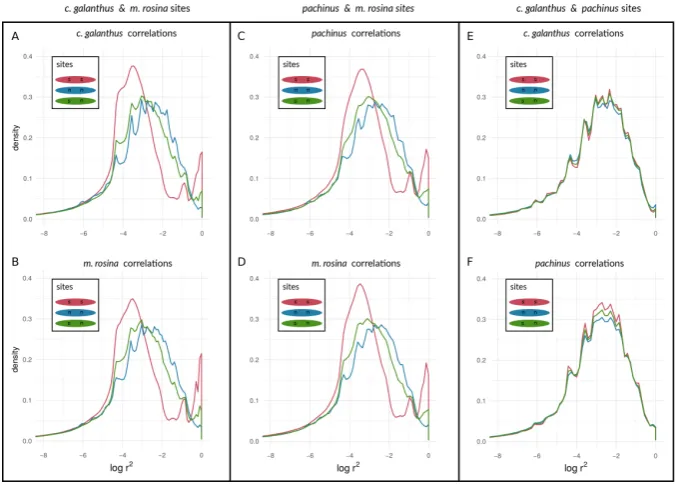
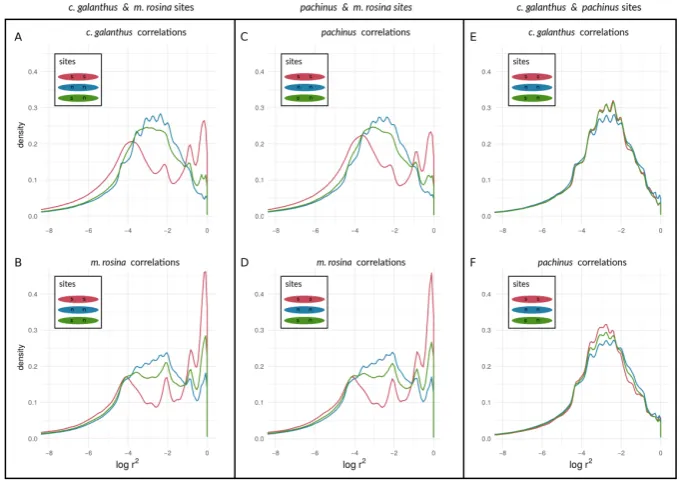
We found a unimodal distribution of log(r2)between loci for most non-outlier sites. For the two taxon-pairs of (1)H. c. galanthusandH. m. rosina, as well as for (2)H. pachinusandH. m. rosina, we found bimodal distributions of log(r2)between non-outlier loci on autosomes (Fig.6A - D for chromosome 2, and Figures S2 - S4) and the Z chromosome (21) (Fig.7A - D), which deviate from the distributions of log(r2)between either non-outlier sites as well as the correlations of outliers between non-outliers. Furthermore, log(r2)between loci on the Z chromosome appear to have shifted to higher
values, especially for correlations between outlier sites, but we could also see that the peak of neutral sites seems to have decreased in theH. m. rosinaoutliers for both pairs involvingH. m. rosina(Fig.6B & D), with what appears to be a slowly differentiating peak at higher log(r2)values. In the third pair, H. c. galanthuswithH. pachinus, we did not see a deviation of log(r2)between sites, neither for outliers
nor for non-outliers in any of the autosomes (Fig.6E & F, and Fig. S2 - S4) or the Z chromosome (Fig.7 E & F).
Figure 7.Density curves of linkage disequilibrium for loci at different types of sites on chromosome 21, determined by outliers of allele frequency differences. log(r2)values are shown between selected loci, between neutral loci, and between selected and neutral loci for species pairs ofH. cydno galanthusand H. melpomene rosina(A & B),H. pachinusandH. melpomene rosina(C & D), andH. cydno galanthusandH. pachinus(E & F).
comparison, and different taxonomic comparisons all show variation in the presence/absence and (if present) prominence of the upper mode of the distribution. This variation indicates how different taxa and different portions of the genome are at different points along the speciation continuum. We can hypothesize that these different points are proxies for changes in time, as Figure8attempts to illustrate. Moving from the curves in sequence from "1" to "4" in Figure8A, we see increasing levels of coupling among selected loci. Looking at the same comparisons for neutral sites in Figure8B, we see the lag of neutral sites behind selected sites, but that the neutral sites do eventually begin to show signs of being coupled as well. Results based onFSTquantiles were very similar to AFDs (see Figures S10 - S19 for all species pairs and respective chromosomes).
Figure 8.Density curves of linkage disequilibrium for (A) outliers and (B) non-outlier loci. Individual lines correspond to log(r2)values of 1)pachinuslocus pairs for the comparison ofc. galanthusand pachinuson chromosome 2, 2)m. rosinalocus pairs for the comparison ofpachinusandm. rosinaon chromosome 2, 3)pachinuslocus pairs for the comparison ofpachinusandm. rosinaon chromosome 21, 4)m. rosinalocus pairs for the comparison ofc. galanthusandm. rosinaon chromosome 21.
4. Discussion
to investigate how divergent selection directly and indirectly affects the transition from independently evolving loci, which theory predicts should predominate early during speciation, to more extensive statistical linkage among loci at genome-wide scales. Finally, to investigate the qualitative agreement between the results of our theoretical simulations with patterns of divergence and LD in empirical data, we calculated measures of LD for loci both within and between chromosomes for three species of hybridizingHeliconiusbutterflies representing both early and later stages of the speciation process. 4.1. Simulations
We first investigated how patterns of divergence change over generations and over parameter conditions in our forward-time simulations of two demes under different levels of divergent selection and migration between demes (Figs.1,4,5). In Felsenstein’s seminal paper [42], he argued that in two-allele models, as presented here, the build up of reproductive isolation should be constrained by migration because recombination is expected to break down associations among different selected loci. As seen here, however, if the repeated establishment of differentially adapted alleles is possible, a threshold can be reached at which strong divergence evolves and effective migration between demes is reduced, even at neutral sites [4,6,9,12,17,41] (Figs4&5). This transition is characterized by a shift from single loci acting independently, to a joint effect of loci on the increasingly diverging genome. Such transitions in speciation occur when divergent selection and linkage disequilibrium reach a critical threshold, triggering genome-wide differentiation [17,22], but previous work has not thoroughly explored how these dynamics impact neutral sites temporally.
The results of our simulations suggest that while both selected and neutral sites experience a similar build up of genome-wide differentiation, selected loci experience this transition at lower values ofθ(Fig.4) and earlier in time (Fig.5) than neutral sites. Even when transitions for selected and neutral
sites begin at nearly coincident points in time (e.g., Fig.5E) , the rates of increase in and magnitude of differentiation are quite different, as shown by the steepness and (for Fig.5) asymptotes of the fitted generalized logistic models (see Tables S2 & S3). These findings suggest that genome-wide statistical patterns may indeed offer substantial power to distinguish barrier from non-barrier loci, under a wide range of selection and migration conditions (e.g., across the panels of Figs.4&5), at least once there is a transition to a state of multi-locus divergence (i.e., not in conditions like Fig.4D,5D).
Although historically defined as the ratio of total selection and total recombination [4], the definition of coupling has recently been extended to include any process that leads to a coincidence of barrier effects and, hence, stronger barriers to gene flow due to the buildup of LD among loci [3]. The use of a coupling statistic inspired by previous theory [4],θ, allowed us to encapsulate the
potential for coupling in simulated systems. However, there was not a single approximate value of
θat which coupling of selected sites occurred. The sharp uptick in allele-frequency differences – a
dynamic change indicative of coupling – and the point of the maximum rate of change spanned a range ofθvalues (Fig.4). The uptick for differentiation at neutral sites was consistently at largerθ
values, intuitively, but varied as well. Comparing inflection points for neutral and selected sites as a function ofθ, we observed the greatest difference in simulations with higher selection coefficients
(s) and lower migration rates (m) (Figs.4C,5C; Table S2).That is, even with tiny rates of gene flow, differentiation at neutral sites is very difficult to achieve and coupling among selected sites must be very strong to cut down gene flow at neutral sites. However, assgrows and/ormshrinks, it becomes easier and easier for selected sites to show divergence – and thus to rise in LD with each other as a statistical consequence – far in advance of the conditions at which neutral sites can diverge. Note that these differences in thresholdθvalues do not translate into absolute differences in time; divergence for
both types of sites is faster in absolute terms of time assincreases (x-axis scales in Fig.5).
Interestingly, the value ofθat which selected sites showed strong coupling and the most rapid
butsis held constant (compare Fig.4B to E, or C to F), the value of theta at the inflection point increases. One way to interpret this is that increases inmincrease the effective amount of recombination between genotypes from different demes. As such, the potential for coupling, as encapsulated byθ, has to reach
greater levels before coupling can actually occur.
We note that these predictions focus on divergence with gene flow. Though we did not study strict allopatric scenarios here, prior work [14,17] indicates that, for selected sites, whens>>m(as is true in allopatry whenm = 0), divergence from de novo mutations is relatively linear in time: differentiation between demes at selected sites will accumulate at a more-or-less constant rate dictated by the mutation rate, drift, and the strength of selection. For neutral sites, however, zero migration is likely to be very different than even small amounts of migration because – as results above indicate – even very low rates of effective gene flow and recombination are sufficient to prevent differentiation at neutral sites (i.e., neutral divergence did not show strong upticks until multi-locus barriers were very strong and the coupling coefficient reached high values). In a strict allopatry scenario, there would be no such impediment to neutral differentiation, and thus neutral sites would accumulate differentiation at a rate determined by mutation and drift, starting as soon as allopatry began. Furthermore, in a strict allopatry scenario, all de novo mutations would be private alleles, and thus between-deme LD would be at its maximum among all mutations that established, selected and neutral. This would produce very different distributions and time series of LD compared to our scenarios with gene flow.
Understanding additional quantitative dynamics of the differences between selected and neutral sites, including scenarios of strict allopatry, will require additional future work, but our results generally suggest that differences may exist in the emergence of significant LD among sites for selected and neutral loci at different stages of the speciation process and that heterogeneity in patterns of LD, as measured by coupling, might reveal important details of where along the speciation continuum two hybridizing lineages currently reside.
4.2. Examining the speciation continuum in Heliconius by using LD as a proxy for coupling
To empirically investigate speciation transitions related to coupling, we also assessed LD among threeHeliconiusspecies pairs, spanning various stages of evolutionary divergence along the speciation continuum [24,28], which are known to hybridize. While LD is not required for coupling [3], it is expected when coupling occurs among loci that have "two-allele" effects [sensu42]. Specifically, we investigated patterns of LD between different categories of loci identified as outliers or non-outliers based on population allele frequencies. Our implicit assumption is that outliers should be enriched for loci that act as barriers, such as those under divergent selection. However, we do not explicitly argue that non-outlier sites are neutral. Instead, we argue that the comparison of outlier sites with the genomic background (non-outliers which might have experienced varying direct or indirect selective pressures) represents a reasonable approach to investigate empirical patterns of divergence and coupling. We purposely chose to examine LD among individual sites – rather than attempting to examine regions of differentiation (e.g. known color pattern loci inHeliconius) – to maximize the generalizability to other systems where knowledge about the specific targets of divergent natural selection leading to reproductive barriers may be unavailable.
two-species comparisons involvingH. m. rosina, there is variation in LD among different chromosomes, with the Z chromosome exhibiting the strongest signature of coupling (which is the most differentiated in bothc. galanthusandm. rosina, and has the lowest nucleotide diversity (see Tables S5 & S6 and [24]). The third pair of taxa (c. galanthusandpachinus) does not exhibit signs of elevated LD for the outliers. In other words, we found that the taxa which are more closely related to each other do not show LD, whereas taxa that have diverged further from each other, showed signatures of LD, both within chromosomes as well as between chromosomes. Further, we found variation in LD for different chromosomes, where the Z chromosome exhibits the strongest signal (coinciding with higher differentiation at the Z chromosome).
The different patterns of LD between different loci for the three pairwise species-comparisons could be seen as different stages along the speciation continuum and in the process of transitioning from uncoupled to coupled (Fig.8A), and this could be true for the genomic background as well (Fig.8 B). However, it is also possible that sites in the genomic background – non-outliers that are less likely to be barriers – may also be under selection, and coupled, but simply haven’t reached high enough allele frequencies in the respective taxa, to be identified as outliers.
One potential caveat to these results is that we estimated allele frequencies for each species using individual samples of each taxon rather than discrete populations. Thus, unsampled population structure could potentially confound our allele frequency estimates. However, Kronforst and Gilbert [28] previously investigated theseHeliconiusspecies for evidence of population stratification, and found extremely low pairwiseFSTbetween populations (H. cydno: 0.002-0.018;H. melpomene: 0.037-0.136;H. pachinus: 0-0.0016), corresponding with prior evidence of little population genetic structure based on allozyme data [62–65]. Another potential confounding factor to consider is the possibility that large structural variation (e.g., inversions; [19]) or other recombination modifiers [16,66–69] segregating between species might lead to higher LD estimates. Feder et al. (2014) predicted that such modifiers would have to be large to be fixed in a population (i.e. on the order of megabases) [19]. However, recent work by Davey et al. (2017) using fine scale recombination maps, found no evidence of large-scale inversions betweenH. melpomeneandH. cydno. Additionally, the occurrence of LD between sites on different chromosomes (e.g., Figs. S5-S9) would not be directly attributable to effects of structural variation (but is a good indicator of coupling across the entire genome).
5. Conclusions
Our simulations focused on the de novo build-up of divergent adaptation, neutral differentiation, and coupling in the face of gene flow. We note, however, that the question and our results are also germane to cases of understanding the dynamics of speciation following secondary contact. Our findings pertain to the potential breakdown or retention and build-up of coupled complexes of selected and neutral genes following contact of diverged populations, as well. Future theory will more explicitly explore the effects of varying periods of allopatry. Even so, making explicit quantitative comparisons between simulation results and empirical data is difficult, as we do not have temporal data from Heliconiusspecies spanning large numbers of generations. Future work will attempt to surmount this with a combination of forward-time simulations, coalescent simulations, and model-based parameter inference. Additionally, it would be particularly useful to broaden the scope to a wider range of Heliconiustaxa, as well as to other cases of adaptive radiations for comparative purposes. With data from multiple independent radiations, we could test the generality and scale(s) of repeatability of patterns of divergence.
so will enable refinement of the predictions we can make about the signatures of the multitude of processes shaping genome-wide variation in natural populations.
Supplementary Materials:The following are available online at www.mdpi.com/link, Table S1: Summary statistics for the 300 included simulation runs,
Table S2: Summary for nonlinear least squares fit of Barton’s coupling coefficient (θ) and average allele frequency differences between demes for selected and neutral loci,
Table S3: Summary for nonlinear least squares fit of average LD for selected and neutral loci, Table S4: Numbers of scffolds and variants for each invludedHeliconiuschromosome, Table S5: Population genetic statistics forHeliconiusspecies per chromosome,
Table S6: Population genetic statistics forHeliconiusspecies pairs per chromosome, Figure S1: Venn diagrams to illustrate the overlap for outliers of AFDs andFST,
Figure S2: Density curves of coupling coefficients for loci at different types of sites on chromosome 7, determined by outliers of AFDs,
Figure S3: Density curves of coupling coefficients for loci at different types of sites on chromosome 10, determined by outliers of AFDs,
Figure S4: Density curves of coupling coefficients for loci at different types of sites on chromosome 18, determined by outliers of AFDs,
Figure S5: Density curves of coupling coefficients for loci at different types of sites on chromosome 2 and respective sites on all other chromosomes,
Figure S6: Density curves of coupling coefficients for loci at different types of sites on chromosome 7 and respective sites on all other chromosomes,
Figure S7: Density curves of coupling coefficients for loci at different types of sites on chromosome 10 and respective sites on all other chromosomes,
Figure S8: Density curves of coupling coefficients for loci at different types of sites on chromosome 18 and respective sites on all other chromosomes,
Figure S9: Density curves of coupling coefficients for loci at different types of sites on chromosome 21 and respective sites on all other chromosomes,
Figure S10: Density curves of coupling coefficients for loci at different types of sites on chromosome 2, determined byFSToutliers,
Figure S11: Density curves of coupling coefficients for loci at different types of sites on chromosome 7, determined byFSToutliers,
Figure S12: Density curves of coupling coefficients for loci at different types of sites on chromosome 10, determined byFSToutliers,
Figure S13: Density curves of coupling coefficients for loci at different types of sites on chromosome 18, determined byFSToutliers,
Figure S14: Density curves of coupling coefficients for loci at different types of sites on chromosome 21, determined byFSToutliers,
Figure S15: Density curves of coupling coefficients for loci at different types of sites on chromosome 2 and respective sites on all other chromosomes, determined byFSToutliers,
Figure S16: Density curves of coupling coefficients for loci at different types of sites on chromosome 7 and respective sites on all other chromosomes, determined byFSToutliers,
Figure S17: Density curves of coupling coefficients for loci at different types of sites on chromosome 10 and respective sites on all other chromosomes, determined byFSToutliers,
Figure S18: Density curves of coupling coefficients for loci at different types of sites on chromosome 18 and respective sites on all other chromosomes, determined byFSToutliers,
Figure S19: Density curves of coupling coefficients for loci at different types of sites on chromosome 21 and respective sites on all other chromosomes, determined byFSToutliers. .
Acknowledgments:MPS and SMF were supported by NSF DEB award 1627483. JLF was supported by funding from NSF and USDA NIFA grants. This work utilized the Janus supercomputer, which was supported by the National Science Foundation (award number CNS-0821794) and the University of Colorado Boulder. The Janus supercomputer was a joint effort of the University of Colorado Boulder, the University of Colorado Denver and the National Center for Atmospheric Research. Further computation was done on the University of Colorado Biofrontiers Fiji cluster.
Author Contributions:MPS analyzed all the data, made most of the figures, contributed ideas for analysis and framing, and co-wrote the paper. SPM and MK helped with data from Heliconius, contributed ideas for analysis and framing, and co-wrote the paper. RJS, JLF, PN, and ZG contributed ideas for analysis and framing, and co-wrote the paper. SMF wrote the simulation source code, produced the data from it, contributed ideas for analysis and framing, and co-wrote the paper.
1. Seehausen, O.; Butlin, R.K.; Keller, I.; Wagner, C.E.; Boughman, J.W.; Hohenlohe, P.a.; Peichel, C.L.; Saetre, G.P.; Bank, C.; Brännström, A.; Brelsford, A.; Clarkson, C.S.; Eroukhmanoff, F.; Feder, J.L.; Fischer, M.C.; Foote, A.D.; Franchini, P.; Jiggins, C.D.; Jones, F.C.; Lindholm, A.K.; Lucek, K.; Maan, M.E.; Marques, D.a.; Martin, S.H.; Matthews, B.; Meier, J.I.; Möst, M.; Nachman, M.W.; Nonaka, E.; Rennison, D.J.; Schwarzer, J.; Watson, E.T.; Westram, A.M.; Widmer, A. Genomics and the origin of species. Nat Rev Genet2014, 15, 176–92.
2. Harrison, R.G.; Larson, E.L. Hybridization, introgression, and the nature of species boundaries. J Hered 2014,105, 795–809.
3. Butlin, R.K.; Smadja, C.M. Coupling, reinforcement, and speciation. Am Nat2018,191, 000–000. 4. Barton, N.H. Multilocus clines. Evolution1983,37, 454–471.
5. Abbott, R.; Albach, D.; Ansell, S.; Arntzen, J.W.; Baird, S.J.E.; Bierne, N.; Boughman, J.; Brelsford, A.; Buerkle, C.A.; Buggs, R.; Butlin, R.K.; Dieckmann, U.; Eroukhmanoff, F.; Grill, A.; Cahan, S.H.; Hermansen, J.S.; Hewitt, G.; Hudson, a.G.; Jiggins, C.; Jones, J.; Keller, B.; Marczewski, T.; Mallet, J.; Martinez-Rodriguez, P.; Möst, M.; Mullen, S.; Nichols, R.; Nolte, a.W.; Parisod, C.; Pfennig, K.; Rice, a.M.; Ritchie, M.G.; Seifert, B.; Smadja, C.M.; Stelkens, R.; Szymura, J.M.; Väinölä, R.; Wolf, J.B.W.; Zinner, D. Hybridization and speciation.J Evol Biol2013,26, 229–46.
6. Barton, N.H.; Bengtsson, B.O. The barrier to genetic exchange between hybridising populations. Heredity 1986,56, 357–376.
7. Baird, S.J.E. A simulation study of multilocus clines.Evolution1995,49, 1038–1045.
8. Kruuk, L.E.B.; Baird, S.J.E.; Gale, K.S.; Barton, N.H. A comparison of multilocus clines maintained by environmental adaptation or by selection against hybrids. Genetics1999,153.
9. Barton, N.H.; De Cara, M.A.R. The evolution of strong reproductive isolation.Evolution2009,63, 1171–1190. 10. Yeaman, S.; Otto, S.P. Establishment and maintenance of adaptive genetic divergence under migration,
selection, and drift. Evolution2011,65, 2123–2129.
11. Feder, J.L.; Nosil, P. The efficacy of divergence hitchhiking in generating genomic islands during ecological speciation.Evolution2010,64, 1729–1747.
12. Feder, J.L.; Gejji, R.; Yeaman, S.; Nosil, P. Establishment of new mutations under divergence and genome hitchhiking.Phil Trans R Soc Lond B Biol Sci2012,367, 461–474.
13. Via, S. Divergence hitchhiking and the spread of genomic isolation during ecological speciation-with-gene-flow. Phil Trans R Soc Lond B Biol Sci2012,367, 451–460.
14. Flaxman, S.M.; Feder, J.L.; Nosil, P. Genetic hitchhiking and the dynamic buildup of genomic divergence during speciation with gene flow. Evolution2013,67, 2577–2591.
15. Yeaman, S.; Whitlock, M.C. The genetic architecture of adaptation under migration–selection balance. Evolution2011,65, 1897–1911.
16. Yeaman, S. Genomic rearrangements and the evolution of clusters of locally adaptive loci. Proc Natl Ac Sci 2013.
17. Flaxman, S.M.; Wacholder, A.C.; Feder, J.L.; Nosil, P. Theoretical models of the influence of genomic architecture on the dynamics of speciation. Mol Ecol2014,23, 4074–4088.
18. Bierne, N.; Welch, J.; Loire, E.; Bonhomme, F.; David, P. The coupling hypothesis: why genome scans may fail to map local adaptation genes.Mol Ecol2011,20, 2044–2072.
19. Feder, J.L.; Nosil, P.; Wacholder, A.C.; Egan, S.P.; Berlocher, S.H.; Flaxman, S.M. Genome-wide congealing and rapid transitions across the speciation continuum during speciation with gene flow. J Hered2014, 105, 810–820.
20. Nosil, P.; Gompert, Z.; Farkas, T.E.; Comeault, a.a.; Feder, J.L.; Buerkle, C.a.; Parchman, T.L. Genomic consequences of multiple speciation processes in a stick insect.Proc R Soc Lond Biol2012,June, 5058–5065. 21. Nosil, P.; Feder, J.L. Genomic divergence during speciation: causes and consequences. Phil Trans R Soc
Lond B Biol Sci2012,367, 332–342.
22. Nosil, P.; Feder, J.L.; Flaxman, S.M.; Gompert, Z. Tipping points in the dynamics of speciation. Nat Ecol Evol2017,1, 0001.
24. Kronforst, M.R.; Hansen, M.E.B.; Crawford, N.G.; Gallant, J.R.; Zhang, W.; Kulathinal, R.J.; Kapan, D.D.; Mullen, S.P. Hybridization reveals the evolving genomic architecture of speciation. Cell Reports2013, 5, 666–677.
25. Beltrán, M.; Jiggins, C.D.; Bull, V.; Linares, M.; Mallet, J.; McMillan, W.O.; Bermingham, E. Phylogenetic discordance at the species boundary: comparative gene genealogies among rapidly radiatingHeliconius butterflies.Mol Biol Evol2000,19, 2176–2190.
26. Bull, V.; Beltrán, M.; Jiggins, C.D.; McMillan, W.O.; Bermingham, E.; Mallet, J. Polyphyly and gene flow between non-siblingHeliconiusspecies.BMC biol2006,4, 11.
27. Kronforst, M.R.; Young, L.G.; Blume, L.M.; Gilbert, L.E. Multilocus analyses of admixture and introgression among hybridizingHeliconiusbutterflies.Evolution2006,60, 1254–1268.
28. Kronforst, M.R.; Gilbert, L.E. The population genetics of mimetic diversity inHeliconiusbutterflies. Proc R Soc Lond Biol2008,275, 493–500.
29. Martin, S.H.; Dasmahapatra, K.K.; Nadeau, N.J.; Salazar, C.; Walters, J.R.; Simpson, F.; Blaxter, M.; Manica, A.; Mallet, J.; Jiggins, C.D. Genome-wide evidence for speciation with gene flow inHeliconiusbutterflies. Genome Res2013,23, 1817–1828.
30. Jiggins, C.D.; Naisbit, R.E.; Coe, R.L.; Mallet, J. Reproductive isolation caused by colour pattern mimicry. Nature2001,411, 302.
31. Jiggins, C.D.; Salazar, C.; Linares, M.; Mavarez, J. Hybrid trait speciation andHeliconiusbutterflies.Phil Trans R Soc Lond B Biol Sci2008,363, 3047–3054.
32. Kronforst, M.R.; Kapan, D.D.; Gilbert, L.E. Parallel genetic architecture of parallel adaptive radiations in mimeticHeliconiusbutterflies.Genetics2006,174, 535–539.
33. Chamberlain, N.L.; Hill, R.I.; Kapan, D.D.; Gilbert, L.E.; Kronforst, M.R. Polymorphic butterfly reveals the missing link in ecological speciation. Science2009,326, 847–850.
34. Benson, W.W. Resource partitioning in passion vine butterflies.Evolution1978,32, 493–518.
35. Estrada, C.; Jiggins, C.D. Patterns of pollen feeding and habitat preference amongHeliconiusspecies. Ecol Entomol2002,27, 448–456.
36. Mallet, J.; Gilbert Jr, L.E. Why are there so many mimicry rings? Correlations between habitat, behaviour and mimicry inHeliconiusbutterflies.Biol J Linnean Soc1995,55, 159–180.
37. Smiley, J. Plant chemistry and the evolution of host specificity: new evidence fromHeliconiusandPassiflora. Science1978,201, 745–747.
38. Merrill, R.M.; Wallbank, R.W.; Bull, V.; Salazar, P.C.; Mallet, J.; Stevens, M.; Jiggins, C.D. Disruptive ecological selection on a mating cue.Proc R Soc Lond Biol2012,279, 4907–4913.
39. Kronforst, M.R.; Papa, R. The functional basis of wing patterning inHeliconiusbutterflies: the molecules behind mimicry. Genetics2015,200, 1–19.
40. Flaxman, S.M.https://github.com/flaxmans/bu2s, 2014. [Online; accessed 14-February-2018]. 41. Barton, N. Does hybridization influence speciation? J Evol Biol2013,26, 267–269.
42. Felsenstein, J. Skepticism towards Santa Rosalia, or why are there so few kinds of animals?Evolution1981, 35, 124–138.
43. Nei, M. Analysis of gene diversity in subdivided populations. PNAS1973,70, 3321–3323.
44. Vuilleumier, S.; Goudet, J.; Perrin, N. Evolution in heterogeneous populations: From migration models to fixation probabilities. Theor Pop Biol2010,78, 250–258.
45. Nosil, P.; Feder, J.L.; Flaxman, S.M.; Gompert, Z. https://media.nature.com/original/nature-assets/natecolevol/2017/s41559-016-0001/extref/s41559-016-0001-s1.pdf, 2017. [Online; accessed 14-February-2018].
46. Nosil, P.; Feder, J.L.; Flaxman, S.M.; Gompert, Z. https://raw.githubusercontent.com/flaxmans/ NatureEE2017/master/figures-and-scripts/MigrationSelectionBalance.nb, 2017. [Online; accessed 14-February-2018].
47. Team, R.C. R: A language and environment for statistical computing2017.
48. Fischer, B.; Pau, G.; Smith, M.rhdf5: HDF5 interface to R, 2017. R package version 2.22.0.
49. http://download.lepbase.org/v4/sequence/Heliconius_melpomene_melpomene_Hmel2.5.scaffolds.fa. gz, 2017. [Online; accessed 14-February-2018].
51. Li, Y.; Vinckenbosch, N.; Tian, G.; Huerta-Sanchez, E.; Jiang, T.; Jiang, H.; Albrechtsen, A.; Andersen, G.; Cao, H.; Korneliussen, T.; Grarup, N.; Guo, Y.; Hellman, I.; Jin, X.; Li, Q.; Liu, J.; Liu, X.; Sparsø, T.; Tang, M.; Wu, H.; Wu, R.; Yu, C.; Zheng, H.; Astrup, A.; Bolund, L.; Holmkvist, J.; Jørgensen, T.; Kristiansen, K.; Schmitz, O.; Schwartz, T.W.; Zhang, X.; Li, R.; Yang, H.; Wang, J.; Hansen, T.; Pedersen, O.; Nielsen, R.; Wang, J. Resequencing of 200 human exomes identifies an excess of low-frequency non-synonymous coding variants.Nature Genet2010,42, 969–972.
52. McKenna, A.; Hanna, M.; Banks, E.; Sivachenko, A.; Cibulskis, K.; Kernytsky, A.; Garimella, K.; Altshuler, D.; Gabriel, S.; Daly, M.; DePristo, M.a. The Genome Analysis Toolkit: a MapReduce framework for analyzing next-generation DNA sequencing data.Genome Res2010,20, 1297–303.
53. Schilling, M.P.https://github.com/schimar/hts_tools, 2018. [Online; accessed 14-February-2018]. 54. Danecek, P.; Auton, A.; Abecasis, G.; Albers, C.A.; Banks, E.; DePristo, M.A.; Handsaker, R.E.; Lunter, G.;
Marth, G.T.; Sherry, S.T.; others. The variant call format and VCFtools. Bioinformatics2011,27, 2156–2158. 55. Weir, B.S.; Cockerham, C.C. Estimating F-Statistics for the analysis of population structure.Evolution1984,
38, 1358–1370.
56. Li, H. A statistical framework for SNP calling, mutation discovery, association mapping and population genetical parameter estimation from sequencing data. Bioinformatics2011,27, 2987–93.
57. Wright, S. Variability within and among natural populations. InEvolution and the Genetics of Populations; Univ. of Chicago Press: Chicago, 1978.
58. Wickham, H.ggplot2: Elegant graphics for data analysis; Springer-Verlag New York, 2009.
59. Feder, J.; Nosil, P.; Gompert, Z.; Flaxman, S.; Schilling, M. Barnacles, barrier loci and the systematic building of species. J Evol Biol2017,30, 1494–1497.
60. Jiggins, C.; Martin, S. Glittering gold and the quest for Isla de Muerta. J Evol Biol2017,30, 1509–1511. 61. Lindtke, D.; Yeaman, S. Identifying the loci of speciation: the challenge beyond genome scans. J Evol Biol
2017,30, 1478–1481.
62. Turner, J.; Johnson, M.S.; Eanes, W.F. Contrasted modes of evolution in the same genome: allozymes and adaptive change inHeliconius. PNAS1979,76, 1924–1928.
63. Jiggins, C.; McMillan, W.; King, P.; Mallet, J. The maintenance of species differences across aHeliconius hybrid zone. Heredity1997,79, 495.
64. Jiggins, C.D.; Davies, N. Genetic evidence for a sibling species ofHeliconius charithonia(Lepidoptera; Nymphalidae). Biol J Linnean Soc1998,64, 57–67.
65. Mallet, J.; McMillan, W.O.; Jiggins, C.D. Mimicry and warning color at the boundary between races and species.Endless forms: species and speciation1998, pp. 390–403.
66. Butlin, R.K. Recombination and speciation.Mol Ecol2005,14, 2621–2635.
67. Kirkpatrick, M.; Barton, N. Chromosome inversions, local adaptation and speciation. Genetics2006, 173, 419–434.
68. Feder, J.L.; Nosil, P. Chromosomal inversions and species differences: when are genes affecting adaptive divergence and reproductive isolation expected to reside within inversions?Evolution2009,63, 3061–3075. 69. Ortiz-Barrientos, D.; Engelstädter, J.; Rieseberg, L.H. Recombination rate evolution and the origin of