
Volume 8, No. 5, May-June 2017
International Journal of Advanced Research in Computer Science REVIEW ARTICLE
Available Online at www.ijarcs.info
ISSN No. 0976-5697
Evolution and Growth of Metaheuristics for Solving Variety of Problems
Gurdeep Kaur
Department of Computer Engineering andTechnology Guru Nanak Dev University
Amritsar, Punjab
Amit Chhabra
Department of Computer Engineering andTechnology Guru Nanak Dev University
Amritsar, Punjab
Abstract:In this paper we have discussed the growth and evolution of various metaheuristics used for solving variety of problems in this world. Additionally this paper also discusses few metaheuristics that are used for web service composition in Cloud. Comparison between various metaheuristics is done on the basis of main idea, advantages and disadvantages. At last, conclusion is drawn on the basis of information collected from the comparison of metaheuristic algorithms.
Keywords:Metaheuristics, scheduling, web service composition, Cloud computing.
1. INTRODUCTION
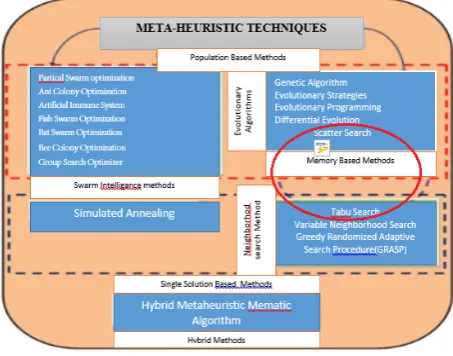
[image:1.595.45.272.351.529.2]The optimization problems of real world are very effortful to solve. Many metaheuristic algorithms(nature-inspired algorithms) or optimization tools are introduced to solve such type of problems in science and engineering[6].
Figure 1: Meta-Heuristic Techniques[3]
Ideas to developing such algorithms come from nature (biological, chemical and physical processes). In the past decades algorithms implementation is based on some methods like dynamic programming, greedy method, branch and bound, backtracking etc. But those methods are not suitable for the large scale combinational problems as well as there are not any optimization technique for some problems like NP-Hard. Such problems are solved by trial and errormethod [1]. Cloud Computing involves On-demand self-service, Broad Network Access, Resource Pooling, Rapid elasticity, Measured service, Performance, Reduced Costs, Outsource management, Reliability and Multi-tenancy. It offers high level of data availability to external customer(on behalf of pay per use) all the time. Resources provided by cloud are: software as a service (SaaS), infrastructure as a service (IaaS), and platform as a service (PaaS)[9]. However, this paper not only focus on cloud computing environment,it provides bridge between ancient planning with metaheuristic planning to supply a directions to researchers for that specialize
in ancient planning to use metaheuristic planning on cloud computing systems[6]. Section2 of this paper contains Meta-heuristic algorithms. Section 3 includes an overview of meta-heuristic methods for service composition and Section 4discusses theoretical results and comparison. Last section of the paper includes conclusion and future work.
2.META-HEURISTICALGORITHMS
Heuristic and Randomization tends to metaheuristic. Approximate algorithms don’t guarantee to find the optimal solution in bounded time. Meta-heuristic algorithms are used when problems have large size and the main goal is to find the near optimal solution quickly for problem. Main objective of metaheuristic is efficiently and effectively explore the search space [8]. In the remaining section we will discuss various metaheuristics with the help of their pseudo-code.
Table I: Meta-heuristic Algorithms from 1975 to 2015
Sr.No. YEAR ALGORITHM
1 1975
2 1977
3 1983
4 1986
5 1989
6 1992 Th
7 1995
8 2000
9 2001 Bootstrap Algorithm
10 2002
11 2005
12 2005
13 2006 Honey-bee mating optimization.
14 2007
15 2008
16 2008 Th
17 2009 Th
[image:1.595.314.560.505.779.2]18 2009
19 2009 Gravitational Search Algorithm
20 2009 Virus Optimization Algorithm by Josue Cuevas et al.
21 2010
22 2011 Galaxy-based Search Algorithm.
23 2011 Spiral optimization
24 2012 Differential Search Algorithm
25 2013 Artificial Cooperative Search Algorithm (ACS)
26 2015 Election Algorithm
2.1. Genetic Algorithm(1975)
Genetic algorithm invented by Holland is a meta-heuristic based on the concepts of natural selection and genetics widely used in different areas such as grid scheduling [1].Firstly we have a tendency to generate AN initial populationcomprises chromosomes (individual resolution to the problem), then choose parent from this population.Then apply crossover and mutation operators on the selective
parents to make new off-springs. A
[image:2.595.326.554.135.261.2]replacement generation is created selectively, in line with the fitness values, a number of the oldsters and offspring. At last, these off-springs replace the current individuals in the population and the process repeats again [2].
Figure 2: Basicsteps of genetic algorithm [12]
In this manner genetic algorithms try to mimic the human evolution to some extent.Genetic algorithmhasn’t guaranteed the optimum results but always give the solution that close to optimum or optimum solution. The time consumed by the optimization algorithm is also high since it involves so many parameters.
1. Initialize population; 2. Evaluate population; 3. While (!stopCondition) do
4. Select the best-fit individuals for reproduction; 5. Breed new individuals through crossover and
mutation operations;
6. Evaluate the individual fitness of new individuals; 7. Replace least-fit population with new individuals;
Figure 3: Generic pseudocode of GA procedure [19]
2.2 Scatter Search Global Optimization (1977)
Population-based Scatter Search Metaheuristic is presented by Fred Glover that makes solution by using diversification (variegation) and intensification methods (It combines others named as reference set in a set of solution) [21].
Figure 4: Working Steps of Scatter Search[22]
Figure 5: Pseudocode of Scatter Search Metaheuristic [21]
[image:2.595.78.243.386.561.2]2.3. Simulating Annealing (1992)
[image:2.595.323.551.510.772.2]Simulating Annealing which belongs to local search algorithms was proposed by Kirkpatrick to position a best approximation to the global optimum of large search space (in discrete search space) for any particular problem or we can say that for Global Optimization Problem [1].It is very popular with mathematicians.
2.4.
[image:3.595.318.570.59.282.2]Tabu search metaheuristic is design to solve optimization problems having finite solution set. It uses adaptive memory to store some of the attribute solution instead of whole solution, which makes it more flexible [23].
Figure 7: Pseudocode of
Forbidding (control what enters in the list), Freeing (control what and when exist from the list) and short-term (intermediate between forbidding and freeing to select trial solution) are three main strategies on which this algorithm works.
2.5.
[image:3.595.40.287.204.507.2] [image:3.595.318.567.417.605.2]It was introduced by Moscato. It is combination of Evolutionary Algorithms and local search .It is close to Genetic Algorithms by having capability of performing local refinements [24].
Figure 8: Pseudocode of Memetic Algorithm [23]
2.6. Ant Colony Optimization (1992)
Ant colony optimization is a metaheuristic proposed by Dorigo and Birattari (1992) for solving hard optimization problems. It is a probabilistic technique to find solutions of problems like good paths through graph. Firstly one ant find a shortest path from source (from its current position) to destination (food). When it move back to colony, it leaves markers (pheromones), these markers show that the path has food, so others ants follow that path and get food [4].
Figure 9: Behaviour of real ants [4]
2.7.Particle Swarm Optimization (1995)
[image:4.595.318.580.57.394.2]Particle swarm algorithm is an intelligent optimization algorithm invented by Kennedy, Eberhart and Shi. It mimics human or insects social behavior. PSO applied in many areas like Artificial Neural Network, Fuzzy System Control, Function Optimization and many other areas where Genetic-Algorithm can be applied [5]. PSO based upon communication, measurements and learning parameters. In PSO, for some problem and function, the particles are placed in the search space, and do evaluation. Its working is as the movement of organisms in a bird flocking. Initially system searches for optima from the population of random solutions. PSO has no crossover and mutation operators as GA. In particle swarm optimization, by following the current optimum solution particles fly through this solution. Moreover, PSO has been used for variety of applications [7].
Figure 11: Pseudocode of PSO[19]
2.8
[image:4.595.41.279.243.443.2]In 2000, it was firstly proposed by Geemto solve the improvement drawback (of water distribution networks). This metaheuristic belongs to the class of Computational Intelligence[25].
Figure 12: HA Method [25]
The adjustment of a pitch selected from the harmony memory is typically linear, for example for continuous function optimization:
Where vary could be a user parameter (pitch bandwidth) to manage the scale of the changes, and ∈ could be a uniformly random variety ∈ [-1, 1][23].
[image:4.595.99.491.537.716.2]Figure 13.2: Improvisation step Harmony Search[23]
2.9. Bootstrap Algorithm (2001)
[image:5.595.319.569.378.603.2]Bootstrapping introduced by Hanseth and Aanestad is based on statistical sampling, because it evaluates a statistic of the value of a parameter of a population. This evaluated statistic use to refine the solution of that population. This approach is used in computational intelligence [26].
Figure 14: Pseudocode of Bootstrap Algorithm [27]
2.10
It has enormous practical importance because al real world problems are suited to be simulated using multiple conflicting objectives. In any problem Multi-objective Optimization helps to optimize more than one functions simultaneously [28]. Deb et al. propose NSGA-II for multi-objective.
2.11
It is new intake in swarm intelligence proposed by Krishnanand and Ghose. ACO and PSO are previous swarm intelligence methods have been applied on many problems.
This is very simple model with fast overlapping rate and parameters (which are less adjustable), in routing, pattern recognition, combinatorial optimization and many more problems [29].
Figure 15: Pseudocode of [29]
2.12.
[image:5.595.40.290.402.578.2]Figure 16: Pseudocode of ABC [30]
2.13. Honey-bee mating optimization(2006)
[image:6.595.42.284.359.603.2]It is typical swarm based optimization technique introduced by Haddad et al. in which search algorithm is based on the behavior or process of mating inrealhoney-bees[30].
Figure 17: Pseudocode of Honey-bee mating[30]
2.14
This optimization algorithm introduced by Hamed Shah-Hosseini is inspired by the natural water drops and their actions and reactions that occur between water drops that flows [31].
Figure 18: Pseudocode of IWD [18]
2.15.
Figure 19: Pseudocode of Firefly Algorithm [30]
2.16. The
Proposed by Mucherino and Seref and this nature galvanized improvement algorithmic
[image:7.595.319.574.58.481.2]rule galvanized by the food finding behaviour of monkeys [32].
Figure 20: Pseudocode of Monkey Search [32]
2.17. Th
LCA Optimization rule was given by Ali
Figure 21: Pseudocode of LCA [33]
2.18
It was galvanized by obligate brood mutuality some cuckoo species by giving birth their eggs within the nests of alternative host birds (of alternative species).In nest, each egg represent as a solution and a cuckoo egg represent a new solution [34].
Figure 22: Pseudocode of Cuckoo Search [34]
[image:8.595.319.570.201.431.2]2.19. Gravitational Search Algorithm (2009)
Figure 23: Pseudocode of Gravitational Search Algorithm [35]
Rashedi planned the gravitative search algorithmic rule that relies on the law of gravity and mass interactions.
2.20. Virus Optimization Algorithm (2009)
This optimization algorithm introduced for the continuous optimizationproblems. It simulates the behavior of the viruses when they attack a host cell, so its name is virus Optimization Algorithm [37].
2.21. Bat Algorithm(2010)
[image:8.595.39.284.418.590.2]Bat algorithm was inspired and galvanized by the behaviour of crackers, results area unit higher than the Genetic algorithmic rule and PSO algorithmic rule[30].
Figure 24: Pseudocode of Bat Algorithm [36]
2.22. Galaxy Based Search Algorithm (GbSA) (2011)
[image:8.595.37.282.618.746.2]Figure 25: Pseudocode of GbSA [13]
2.23. Spiral Optimization(2011)
[image:9.595.70.249.59.238.2]Spiral optimisation could be a new metaheuristic projected by Tamura and Yasuda to Combined Economic and Emission Dispatch.
Figure 26: Pseudocode of Spiral Optimization [38]
2.24. Differential Search Algorithm(2012)
[image:9.595.42.281.312.646.2]This algorithm is based on stochastic searching to find the optimal solutions[39].
Figure 27: Pseudocode of Differential Search Algorithm [39]
2.25.Artificial Cooperative Search Algorithm (ACS) (2013)
As we know that there are three type of algorithms complete (exact), approximate (heuristic) and hybrid (combination of complete and approximate algorithms).Results found by hybrid are better than complete and approximate algorithms. When the size of problem becomes large we need a parallel computing and cooperative search is a category of parallel search [40].
2.26. Election Algorithm (2015)
There are various algorithms used in distributed systems. The role of each and every process in distributed system is same. Election algorithms are used to select the coordinator among various processes by using some methods.
Election may be needed at initialization or at the stage when selected coordinator may get crashed or finished. Every process have unique ID number, the selection of new coordinator is based on its highest ID number [14].
“The Bully algorithm” and “A Ring algorithm”, these are two traditional election algorithms.
Figure 28: Pseudocode of Election algorithm [20]
[image:9.595.316.553.506.739.2]Figure 29: Bully Algorithm
[image:10.595.85.282.357.472.2]b. A Ring algorithm [18]
Figure 30: Ring Algorithm
3. SOME EXISTING METAHEURISTICSFOR
SERVICE COMPOSIION IN CLOUD COMPUTING
Afterdiscussing evolution of various metaheuristics methods for service composition in cloud computing, we are now going to compare them on the basis of their main objective, advantages and disadvantages.
Figure 31:Service composition methods in cloud [10]
We start with genetic algorithm:
3.1. Genetic Algorithm
Web Service composition approach of genetic algorithm proposed by Wang. et al [1]. This composition is for the service providers and geo-distributed cloud. Process is based on the genetic algorithm; it is for those service providers who want minimized SLA violation.
Same as the basic working of GA, It generates initial population, then operators of GA (crossover and mutation) are applied on the current population and near optimum or optimum solution is generated. This work is done in many iterations depends on the results and population. On every iteration, fitness value of resulted solution is evaluated and then new population is generated on the behalf of choice,
crossover and mutation operations. The
whole method is continual once more and once more till we have a tendency to don’t get the specified optimum results.But this method is only for a single cloud environment not for the multiple cloud and increase the user’s experience as well [2].
3.2. Ant Colony Optimization
ACO-WSC (ACO for web service composition) proposed by Yu, et al., in multiple cloud environment [1]. To make cloud combinations, ants (artificial ants) travel on the logical graph G=(V,E), then those ants which are feasible to select cloud combinations use the minimum number of clouds. In graph G(V,E) each vertices represents a cloud server, which are connected by each other by edges E. According to the markers (pheromone) produced by ant, all other ants choose that optimum path. Disadvantage of this method is that load balancing among cloud servers is inefficient, but this method is good to find the optimal cloud composition in different cases [16].
3.3. PSO (Particle Swarm Optimization)
PSO that's with a combinatorial improvement projected by Ludwig is forthe single cloud, which is firstly appertained to the Hungarian algorithm, then referred to Munkres [1].After every PSO iteration, Munkres algorithm can be applied. We choose some percent of the particle on which we can apply Munkres Algorithm. After completing the process when we achieve result or any kind of improvement then those selected particles will be updated with optimized workflow, same for the next iteration and so on. Runtime of using Munkres algorithm in PSO is shorter as compare to PSO algorithm. Munkresundergoes from cubic time
complexity and PSO undergoes from premature
convergence [15].
3.4. Election Algorithm
It may help in resource scheduling in cloud environment. It may help to resolve the Load Balancing issue in cloud.
4. COMPARISON
Now we have a tendency to do comparison of existing meta-heuristic techniques for service composition in cloud computing.GA and PSO can find optimal cloud composition in single cloud environment whereas ACO is in all multiple cloud environment (𝑀𝑀𝐶𝐶𝐸𝐸).
[image:10.595.39.284.577.684.2]PSO and GA are common in some functions likeinitially, both are have set of population. Unlike GA, PSO has no evolution operators like mutation, crossover and selection and PSO use other algorithm after each iteration,so it is
[image:11.595.34.558.131.397.2]more efficient(less runtime, use less number of functions, having memory) than the GA.
Table II: Comparison of methods with advantages and disadvantage
NAME OF THE ARTICLE MAIN IDEA ADVANTAGES DISADVANTAGES
A genetic-based approach to web service composition in geo-distributed cloud environment [17]
Finds optimal or near optimal solution for cloud composition by generating initial population which is feasible to select a cloud combinations.
Minimizes the SLA violations. Reduces complexity. Maximizes user experience. Considers QOS of network.
Limits benefits received from other clouds.
Consumed time is high.
A survey on bio-inspired algorithms for web service
Composition [15] (PSO method)
PSO algorithm that combined with a Munkres algorithm that applied after every PSO iteration for fast execution and minimized a run time.
Performs very well inservice-oriented environments.
Considers several services simultaneously.
Considers scalability. Achieves reasonable runtime. Good balance between execution time and fitness value.
Limits benefits received from other clouds.
Cubic time complexity. Premature convergence.
QoS-based Dynamic Web Service Composition with Ant Colony Optimization [16] (ACO method)
Vertices are represented as cloud, connected with each other by edges E and ants satisfy user requirement in clouds.
In this, nodes are represented as cloud and ants satisfy user requirement in clouds.
Load balancing is inefficient. Start node is selected randomly.
Elections in a Distributed Computing System.
Used to select the coordinator among several processes in distributed systems.
As we know, this algorithm is for the distributed systems, so it may help to resolve the Load Balancing issue of cloud computing.
5. CONCLUSION
In this paper, we have discussed the growth and evolution of twenty six different metaheuristic algorithms which are used in various application areas such as scheduling, mathematical optimization, software engineering etc. Some of the metaheuristics for service composition in cloud computing along with their advantages and disadvantages of are also discussed and compared with each other in single and multi-cloud environment. Theoretical results and analysis showed that no single metaheuristics is efficient in all kinds of real life problems.
6. REFERENCES
[1] Review and Comparison of Meta-Heuristic Algorithms for Service Composition in Cloud Computing by Saied Asghari, NimaJafariNavimipour in Majlesi Journal of Multimedia Processing Vol. 4, No. 4, December 2015
[2] Genetic algorithm learning and the cobweb model by JasminaArifovic inJournal of Economic Dynamics and Control 18 (1994) 3-28. North-Holland
[3] A Review of Population-based Meta-Heuristic Algorithm by Zahra Beheshti, SitiMariyamHj. Shamsuddin in Int. J. Advance. Soft Comput. Appl., Vol. 5, No. 1, March 2013 ISSN 2074-8523; Copyright © ICSRS Publication, 2013 www.i-csrs.org
[4] Ant colony optimization: Introduction and recent trends By Christian Blum ALBCOM, LSI, UniversitatPolitècnica de Catalunya, JordiGirona 1-3, Campus Nord, 08034
Barcelona, Spain Accepted 11 October 2005 www.elsevier.com/locate/plrev
[5] Particle Swarm Optimization: Developments, Applications and Resources by Russell C. Eberhart in 0-7803-6657-3/01/$10.0©2001 IEEE
[6] Metaheuristic Scheduling for Cloud: A Survey by Chun-Wei Tsai and Joel J. P. C. in IEEE SYSTEMS JOURNAL, VOL. 8, NO. 1, MARCH 2014.
[7] Particle swarm optimization, an overview by Riccardo Poli · James Kennedy · Tim Blackwell in Received: 19 December 2006 / Accepted: 10 May 2007© Springer Science + Business Media, LLC 2007
[8] Handbook of Metaheuristic second edition, edited by Michel Gendreau, Jean-Yves Potvin, INTERNATIONAL SERIES IN OPERATIONS RESEARCH AND MANAGEMENT SCIENCE.
[9] Mastering Cloud Computing (Foundation and Application Programming by RajkumarBuyya, Christian Vecchiola and S.ThamaraiSelvi.
[10] Service composition mechanisms in the multi-cloud environments: a survey by Saied Asghari and NimaJafariNavimipour in International Journal of New Computer Architectures and Their Applications, vol. 6, no. 2, 2016, p. 40+. Academic OneFile, Accessed 23 Apr. 2017. [11] E.H.L. Aarts and J.K. Lenstra, “Local search in
combinatorial optimization,” in Discrete Mathematics and Optimization, Eds.Wiley, Chichester, UK, 1997.
[12] Fitting of dust spectra with genetic algorithms, Intersteller and circumstellar matter, Issue A&A Volume 516,June-July 2010, 24 june 2010.
[13] Principal components analysis by the galaxy-based search algorithm: a novel metaheuristic for continuous optimization by Hamed Shah-Hosseini in Int. J. Computational Science and Engineering, Vol. 6, Nos. 1/2, 2011
[15] A survey on bio-inspired algorithms for web service
Composition by Lijuan Wang, L., Shen, J. & Yong, J. in Proceeding of the 2012 IEEE 16th International Conference on Computer Supported Cooperative Work in Design (pp. 569-574). USA: IEEE,
[16] QoS-based Dynamic Web Service Composition with Ant Colony Optimization by Wei Zhang, Carl K. Chang in 2010 IEEE 34th Annual Computer Software and Applications Conference.
[17] A genetic-based approach to web service composition in geo-distributed cloud environment by April 2015, Pages 129–141
[18] Taking screenshot from ppts.
[19] Comparison among five evolutionary-based optimization algorithms by EmadElbeltagi, TarekHegazy, Donald Grierson, 19 January 2005 in Advanced Engineering Informatics 19 (2005) 43–53.
[20] Election algorithm: A new socio-politically inspired strategy by Emami, Hojjat, Derakhshan in Computer Engineering Department, Miandoab Branch, Islamic Azad University, Miandoab, Iran. Email:
[21] Parallelization of the scatter search for the p-median problem
by F_elixGarc_ıa-L_opez, Bel_enMeli_an-Batista, Jos_e A. Moreno-P_erez, J. Marcos Moreno-Vega, Received 7 June 2002; accepted 19 November 2002 in Parallel Computing29 (2003) 575–589.
[22] Scatter Search by AstriPuspitasari, LuthfanPramono in Media Digital and Game Technology, InstitutTeknologi Bandung, 2012.
[23] Book- Clever Algorithms: Nature-Inspired Programming Recipes by Jason Brownlee phD.
[24] Krasnogor, N. and Smith, J. (2005), A tutorial for competent memetic algorithms: Model, taxonomy and design issues. IEEE Transactions on Evolutionary Computation, 9 (5). pp. 474-488. ISSN 1089-778X Available from:
[25] The Author(s) 2015 X. Wang et al., An Introduction to Harmony Search Optimization Method, Springer Briefs in Computational Intelligence, DOI 10.1007/978-3-319-08356-8_2
[26] Bootstrap - Inspired Techniques in Computation Intelligence; Bootstrap - Inspired Techniques in Computation Intelligence by RobiPolikar, Rowan University,Article·August2007,DOI:10.1109/MSP.2007.428 6565;10.1109/MSP.2007.4286565 · Source: IEEE Xplore. [27]
Computing.
[28] Multidisciplinary System Multidisciplinary System Design Optimization (MSDO) Design Optimization (MSDO) by Dr.
Il Yong Kim in Massachusetts Institute of Technology - Prof. de Weck and Prof. Willcox Engineering Systems Division and Dept. of Aeronautics and Astronautics. [29]Full Glowworm Swarm Optimization Algorithm for Whole Set
Orders Scheduling in Single Machine by Volume 2013 (2013), Article ID 652061, 6 pages
[30] New inspirations in swarm intelligence: a survey by R.S. Parpinelli, H.S. Lopes in Int. J. Bio-Inspired Computation, Vol. 3, No. 1, 2011.
[31] The intelligent water drops algorithm: a nature-inspired swarm-based optimization algorithm by Hamed Shah-Hosseini in Int. J. Bio-Inspired Computation, Vol. 1, Nos. 1/2, 2009.
[32] MAKHA-A New hybrid Swarm Intelligence Global Optimization Algorithm by Ahned M. E. Khalil, Seif-Eddeen K Fateen in Algorithms 8(2):336-366. June 2015, DOI:10.3390/a8020336.
[33] League Championship Algorithm: A new algorithm for numerical function optimization by Ali HusseinzadehKashan in 2009 International Conference of Soft Computing and Pattern Recognition.
[34] PCB Drill Path Optimization by Combinatorial Cuckoo Search Algorithm by 2014.
[35] A Meta-Heuristic Solution for Automated Refutation of Complex Software Systems Specified through Graph Transformations By
in
[36] [37] Virus Optimization Algorithm (VOA): A Novel
Metaheuristic for Solving Continuous Optimization Problems by
in BMC
Bioinformatics · Article · Jan 2013 .
[39] Jan 2014.
![Figure 4: Working Steps of Scatter Search[22]](https://thumb-us.123doks.com/thumbv2/123dok_us/688212.1076228/2.595.326.554.135.261/figure-working-steps-scatter-search.webp)
![Figure 9: Behaviour of real ants [4]](https://thumb-us.123doks.com/thumbv2/123dok_us/688212.1076228/3.595.318.567.417.605/figure-behaviour-real-ants.webp)
![Figure 12: HA Method [25]](https://thumb-us.123doks.com/thumbv2/123dok_us/688212.1076228/4.595.99.491.537.716/figure-ha-method.webp)
![Figure 13.2: Improvisation step Harmony Search[23]](https://thumb-us.123doks.com/thumbv2/123dok_us/688212.1076228/5.595.319.569.378.603/figure-improvisation-step-harmony-search.webp)
![Figure 16: Pseudocode of ABC [30]](https://thumb-us.123doks.com/thumbv2/123dok_us/688212.1076228/6.595.115.484.67.283/figure-pseudocode-of-abc.webp)
![Figure 19: Pseudocode of Firefly Algorithm [30]](https://thumb-us.123doks.com/thumbv2/123dok_us/688212.1076228/7.595.39.277.58.481/figure-pseudocode-of-firefly-algorithm.webp)
![Figure 23: Pseudocode of Gravitational Search Algorithm [35]](https://thumb-us.123doks.com/thumbv2/123dok_us/688212.1076228/8.595.319.570.201.431/figure-pseudocode-gravitational-search-algorithm.webp)
![Figure 27: Pseudocode of Differential Search Algorithm [39]](https://thumb-us.123doks.com/thumbv2/123dok_us/688212.1076228/9.595.316.553.506.739/figure-pseudocode-differential-search-algorithm.webp)
![Figure 31:Service composition methods in cloud [10]](https://thumb-us.123doks.com/thumbv2/123dok_us/688212.1076228/10.595.49.275.103.233/figure-service-composition-methods-in-cloud.webp)