Volume 4, No. 9, July-August 2013
International Journal of Advanced Research in Computer Science
RESEARCH PAPER
Available Online at www.ijarcs.info
ISSN No. 0976-5697
An Optimization Approach to IT System Development and Change Control
Methodologies in Business Process Reengineering
Bechoo Lal Assistant Professor, Dept. of Information Technology,
Western College University of Mumbai India,
Dr. Chandrahauns R. Chavan
I/c Professor-cum-Director , Alkesh Dinesh Modi Institute for Finacial and Management Studies, University of Mumbai and
Associate Professor and former Director , Jamnalal Bajaj Institute of Mnagement Studies, University of Mumbai
Abstract: Abstract—In this paper the researchers are trying to optimize the information technology system development and change control methodologies in business process reengineering. The research study is based on collection of data and statistical analysis report which is collected from production and manufacturing organization in Mumbai. The researcher is also studied the information technology environment, change control methodologies concepts and its factors which are directed affected to organizational development. The main objective of this research study is to find out the IT system development factors and change control methodological concepts which are significant in business process reengineering.
Keywords: Keywords- IT, BPR, CAD, CAM, CAE
I. INTRODUCTION
Today, we find a great number of advances in the ITs being used in companies. In one way, remarkable advances in personal computers and communications allow employees to work outside the office while still being connected to the office. Employees may work from home or other locations. Multimedia communication systems, which send and receive audio and video data, help us in making decisions by using electronic mail, file transference, or video conference. Computer-aided design/manufacturing/engineering (CAD/ CAM/CAE) techniques allow for coordinating product design, manufacturing, and engineering activities. Using new IT allows companies to gain important advantages such as:
a. Cost savings and improving the accuracy of exchanging information;
b. Avoiding human mistakes inherent when complex and repetitive tasks are used;
c. Saving money because it reduces errors and the time it takes to accomplish tasks;
d. Integrating and coordinating several functions at once; and
e. Improving the organizational efficiency and effectiveness by eliminating delay,
f. Administrative intermediaries, and redundant processing steps and by providing better access to information.
Today's businesses operating in the dynamic global economy must constantly search for better ways of development. The challenge is to select and implement clever management concepts, which connect the tradition of the company with state enterprises, and with external factors arising from the system environment. Business Process Reengineering is one of the few concepts, which have saved many companies from bankruptcy. The aim of this article is to
present the importance of that concept, and to show how important it is for organizations to implement and modify selected processes with awareness. In addition, the article covers the benefits and points out problems and difficulties that may arise in the process of implementing, because BPR is a concept created only for organizations that have thoroughly analyzed the application of desired changes. Reengineering is undoubtedly a complex concept that requires humility and a critical look at the company, by classifying its flaws and imperfections. Only through the continued commitment of management it becomes possible to eliminate passivity, open to changes and create an atmosphere of mutual trust. Flattening of organizational structure, decentralization, the introduction of teamwork and giving individuals the right to make independent decisions affects the good communication with the crew of the company, which should always be informed about the origins, objectives and progress of the project. Business process reengineering is not just a different way of taking action, but also an entirely new direction of development based on the latest information technologies, which significantly contribute to the reduction of unnecessary work, reduce production time or effects in more efficient customer service.
II. RELATED WORKS
stratified random samplings proportionate to the numbers of the banks for sample selection. The findings showed that IT capability moderated the relationship between BPR factors such as change management, customer focus, management commitment and overall organizational performance of the bank. Furthermore, the result revealed that IT capability moderated the relationship between IT investment, management commitment and customer service management performance. The outcome of this study provides important insight to researchers for understanding on the effects of BPR factors and IT capability on organizational performance [1].
Business Process Reengineering (BPR) is fundamental changes in processes in order to achieve sudden improvements in quality and reduction in cost and time. One of the important and effective things in preparing the base of these changes is Organizational Culture. In fact, we can provide suitable conditions for BPR by defining the factors of Organizational Culture and their influences on organization capability for BPR and then creating necessary amendments in the organization culture. This paper is an attempt to study an organization condition for BPR and analyze the collected information properly by presenting a proper model of the relation between Organizational Culture and BPR. This model contains three parts. The first part is the influence of organizational factors on the efficiency of organization BPR [2].
Mayriam Parys, Nick THIJS (2003) stated that the business process re-engineering (BPR) emerged in America during the 1980s and early 1990s, first in the private and later in the public sector. The rise of BPR is often explained by the reality that organizations have to confront old ways of organizing -the division of labour doesn’t work anymore (Hammer & Champy, 1993: 17) [3].
Natasha La Rock (March, 2003), analyzed the re-optimization of organizational processes and structures after the implementation of new information technologies into an organization. There is some evidence that changes in the use of information technology (IT) in an organization may require major restructuring of the organization to take full advantage of the technologies. This paper will attempt to demystify the myths of BPR. It will examine the advantages and disadvantages of BPR in organizations. The paper will also explore the various phases of the BPR process and the relationship between BPR and Information Technology (IT). Information Technology should be viewed as more than an automating tool but rather a fundamental way to reshape the way business is done [4].
Sampler, Jeffrey L, Short, James E (1994) found that an explanatory framework is developed based on 2 constructs - expertise half-life and information half-life. It is proposed that under certain conditions high project failure rates are associated with weak coupling between reengineering project objectives and the firm's general business and information systems planning agenda. Under other conditions, this weak coupling is associated with successful projects. By conceptualizing information technology's (IT) capability to destroy both tangible and intangible organizational assets in the explanatory framework, 2 central observations regarding
IT's capability to destroy tangible as well as intangible assets suggests a far more dramatic and complex role for IT in the development of core competencies in the firm. 2. Reengineering efforts that do not acknowledge the important difference between restructuring physical assets and rethinking the flow or characteristics of intangible assets increasingly are incomplete [5].
Innocent Baguma and Joseph K. Ssewanyana, defined the BPR as the radical redesign of business processes enabled by information technology (IT) in order to achieve dramatic improvements in their performance (Hammer, 1990), has been described abundantly in managerial journals (Earl, 1994; Hall, 1993; Hammer, 1990, Davenport and Short, 1990). Several management concepts, principles, guidelines, checklists and step approaches have been proposed to demonstrate how to make BPR work. In spite of all these, many BPR projects have failed. Mistakes are realized after the redesigned processes are implemented, and it is too late, costly, and difficult to reverse the situation (Hlupic and Robinson, 1998)[6].
Peter O’Neill, Amrik S. Sohal(march, 1999) have presented a review of the literature on Business Process Reengineering. It first discussed the need for reengineering and then presented a critique of the literature on the definition of BPR, BPR tools and techniques, BPR and TQM co-existence, understanding organizational processes, the reengineering challenge and organizational design using BPR. Clearly there is confusion in the literature as to what constitutes BPR. Although it has some commonality with Total Quality Management, for example the concept of continuous improvements, BPR is a radical redesign of business processes to achieve dramatic improvement. A range of tools and techniques can be used for process improvement including process visualization and flowcharting, operational method studies, organizational change [7].
G.M. Giaglis, R.J. Paul, R.M. O'Keefe (1999) inherent the interrelationships between business processes (BP) and the underlying information technology (IT) infrastructure imply that the design of these two organizational facets should be performed in parallel, this does not seem to be the case in practice. For example, simulation is being extensively used in both the BP and IT domains, albeit in a disjointed fashion [8].
Namchul Shin (1999) analyzed the use of information technology (IT), organizations radically redesign their business processes and improve their business profitability and productivity. Previous information systems (IS) research has investigated whether or not IT improves business profitability and productivity. However, most of the previous studies failed to consider any contextual or moderating factors that might affect firm performance and productivity. Because it is intangible and intermediate benefits, e.g. better coordination, quality improvement, increased variety, and innovation, complicate the justification process for IT investments [9].
reengineering. Much has been written about reengineering and the methods by which companies can achieve success [10]
III. STATISTICAL ANALYSIS
Statement: Performance of IT system development and change control methodologies in Business Process Reengineering
Ho= There is no significant relationship between system development and change control methodologies.
Awareness of the Need to Change
Table 3.1: Awareness of the Need to Change
Frequenc
y Percent
Valid Percent
Cumulati ve Percent
Valid Poor 2 3.6 4.0 4.0
Below
Average 4 7.3 8.0 12.0
Average 10 18.2 20.0 32.0
Good 13 23.6 26.0 58.0
Excellent 21 38.2 42.0 100.0
Total 50 90.9 100.0
Missi ng
System
5 9.1
Total 55 100.0
Participate and Support to Change Table 3.2: Participate and Support to Change
Frequency Percent
Valid Percent
Cumulative Percent
Valid Poor 2 3.6 4.0 4.0
Below
Average 4 7.3 8.0 12.0
Average 6 10.9 12.0 24.0
Good 19 34.5 38.0 62.0
Excellent 19 34.5 38.0 100.0
Total 50 90.9 100.0
Missing System 5 9.1
Total 55 100.0
Knowledge on How to Change
Table 3.3: Knowledge on How to Change
Frequen
cy Percent
Valid Percent
Cumulativ e Percent
Valid Poor 1 1.8 2.0 2.0
Below
Average 6 10.9 12.0 14.0
Average 10 18.2 20.0 34.0
Good 15 27.3 30.0 64.0
Excellent 18 32.7 36.0 100.0
Total 50 90.9 100.0
Missing System 5 9.1
Total 55 100.0
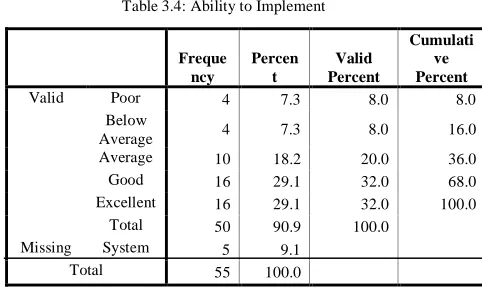
[image:3.612.338.579.73.219.2]Ability to Implement
Table 3.4: Ability to Implement
Freque ncy Percen t Valid Percent Cumulati ve Percent
Valid Poor 4 7.3 8.0 8.0
Below
Average 4 7.3 8.0 16.0
Average 10 18.2 20.0 36.0
Good 16 29.1 32.0 68.0
Excellent 16 29.1 32.0 100.0
Total 50 90.9 100.0
Missing System 5 9.1
Total 55 100.0
Reinforcement to Sustain the Change
Table 3.5: Reinforcement to Sustain the Change
Frequenc
y Percent
Valid Percent Cumulativ e Percent Va lid Poor
2 3.6 4.0 4.0
Below
Average 4 7.3 8.0 12.0
Average 4 7.3 8.0 20.0
Good 19 34.5 38.0 58.0
Excellent 21 38.2 42.0 100.0
Total 50 90.9 100.0
Mi ssi ng
System
5 9.1
Total 55 100.0
Test Statistics
Table3.6: Statistical Analysis
A Aware ness of the Need to Chang e Participat e and Support to Change Knowledge on How to Change Ability to Implem ent Reinforc ement to Sustain the Change Chi-Square(a )
23.000 27.800 18.600 14.400 33.800
df 4 4 4 4 4
Asymp.
Sig. .000 .000 .001 .006 .000
Statistica l
Analysis Rejecte
DESCRIPTIVE STATISTICS
Table3.7: Descriptive Statistics of Change Control
N
Minim um
Maxim
um Mean
Std. Deviation
Awareness of the
Need to Change 50 1.00 5.00 3.9400 1.15016
Participate and Support to
Change
50 1.00 5.00 3.9800 1.09712
Knowledge on
How to Change 50 1.00 5.00 3.8600 1.10675
Ability to
Implement 50 1.00 5.00 3.7200 1.22957
reinforcement to Sustain the
Change
50 1.00 5.00 4.0600 1.09563
Valid N (list
wise) 50
Note: a 0 cells (.0%) have expected frequencies less than 5. The minimum expected cell frequency is 10.0.
a. Statistical Analysis: The data are analyzed by using the chi-square test at 0.05 level of significant, the probability of statistics of chi-square test for system development change control methodologies in business process reengineering. The chi-square test for awareness of the need to change is 23.000 and its P-Value is 0.000, for participate and support to change is 27.800 and its P-Value is 0.000, for knowledge how to change is 18.600 and its P-Value is 0.001, for ability to implement is 14.400 and its P-Value is 0.006, and for reinforcement to sustain the change is 33.800 and its P-Value is 0.000 , the P-Value of variables are less than 0.05, so the null hypothesis for all variables are rejected and results are significant. The analysis of this statistics is concluded that the performance level of change control methodologies and system development are significantly related in production and manufacturing organization in Mumbai.
A. Data Analysis:
The above graph is the statistical report of system development and change control methodologies in production and manufacturing organization in Mumbai. It is analyzed by using chi-square test goodness of fit
In this research the control parameters of the organization awareness of the need to change is 20.15%, desire to participate and support to change is 20.35%, knowledge on how to change is 19.73%, ability to implement required skills and behaviors is 19.02%, and reinforce to sustain the change is 20.76%. This statistical analysis gives the significant relationship between the overall performance of change control methodologies and system development environment in production and manufacturing organization in Mumbai.
IV. CONCLUSION
In this research the researcher pointed out parameters of IT system development and change control methodologies, the variables awareness of the need to change, participate and support to change, knowledge on how to change, ability to implement to change, and reinforcement to sustain the change are the significant by the statistical analysis and essential for the IT system development and in business process reengineering.
V. REFERENCES
[1]. Ringim, Kabiru, Razalli, Mohd Hasnan(Aug,2012), Journal of Internet Banking & Commerce’, Aug2012, Vol. 17 Issue 2, Special section p1-21, 21 ISSN: 12045357
[2]. Ringim, Kabiru, Razalli, Mohd Hasnan(Aug,2012), ‘Journal of Internet Banking & Commerce’, Aug2012, Vol. 17 Issue 2, Special section p1-21, 21p , ISSN: 12045357 [3]. Neghab, Amir Esmael Pirayesh, Sardari, Narges,Imani,
Sareh,’ International Journal of Business Research’, 2009, Vol. 9 Issue 2, p87-93, 7p, 4 , ISSN :15551296
[4]. Mayriam Parys, Nick THIJS,’ Business Process Reengineering; or how to enable bottom up participationn in top down reform programme’, Oeiras ,3-6 Septerber’2003.
[5]. Natasha La Rock,’ Examining the Relationship between Business process reengineering and Information Technology’, March 2003.
[6]. Journal of Management Information Systems. Armonk: Fall 1994, Vol. 11, Iss. 2; pg. 59, 15 pgs, ISSN: 07421222. [7]. Innocent Baguma and Joseph K. Ssewanyana,’ Journal of
Computing and ICT Research’, Special Issue Vol. 1, No. 1, pp. 8.
[8]. Peter O’Neill, Amrik S. Sohal ,’ Business Process Reengineering: A review of recent literature ‘,Department of Management, Monash University, P.O. Box 197, Caulfield East, Vic. 3145, Australia , Received 2 January 1999; accepted 13 March 1999.
[9]. G.M. Giaglis, R.J. Paul, R.M. O'Keefe. Research note: integrating business and network simulation models for IT investment evaluation, Logistics Information Management. Bradford: 1999, Vol.12, Issue. 1/2; pg. 108 ISSN: 09576053.
Management Bradford: 1999, Vol. 12, Iss. 1/2; pg. 138 ISSN: 09576053.
[11]. Peng S. Chan and Carl Land, Implementing reengineering using information technology Business Process Management Journal. Bradford: 1999,Vol. 5, Iss. 4; pg. 311 ISSN: 14637154.
[12]. MARTA FOSSAS OLALLA,’ Information Technology in Business Process Reengineering’, Forty-Seventh International Atlantic Economic Conference in Vienna, Austria, March 16-23, 1999.