i
Effect of Conventional and Minimum Tillage, combine use of organic manure and synthetic based fertilizers with foliar spray of zinc sulphate for sustaining wheat productivity, quality and status of soil fertility
Manoj Kumar1*. Vikram Singh2. Km. Nikam Kumari3. Sagar Kumar4. Rajiv Nandan. Thomas Abraham5.
Abstract Intensive cultivation and excess chemical fertilizer continuous tillage activity have shown that environmental, soil & water degradation in South Asia has produced serious problems in soil health or agricultural development with a rise in population. The desire for renewable alternatives has therefore been underestimated. The effect on cropping efficiency, machine productivity and development economy of two tillage cum (Vermicompost and FYM manure, Urea, and DAP) or two facts regarding the application of foliar spray and without zinc fertilizers were evaluated. Conventional tillage (1 ploughing by tractor drawn disc plough + 2 harrowing + 1 fb cultivator with planking) increased grain yield (10.85 percent) and (7.21), both during the first and second years of experimental plots, over minimum tillage (1 ploughing by tractor drawn rotavator) (MT). The improved grain output of wheat was primarily due to increased tiller development in CT treatments during both the years. Similarly, maximum most of the growth attributes, productivity components and physical quality charcters were recorded in CT tillage practice. In the joint management of inorganic or organic nitrogen, significant and maximum grain (4.63 t/ha) and straw (8.97 t/ha) yield, weight of spike (2.68 g), length of grain (6.49 mm), breadth of grain (3.29 mm) and length: breadth ratio of grain (1.98) were recorded during 2015-16, However purely chemical fertilizer applied treatment recorded during first year significant and maximum number of tillers per hill (3.14), leaf area index (2.31), plant dry matter (13.09 g plant-1), grain yield (4.00 t ha-1), straw yield (7.87 t ha-1), number of grains per spike (42.42) and weight of spike (2.62 g), respectively.
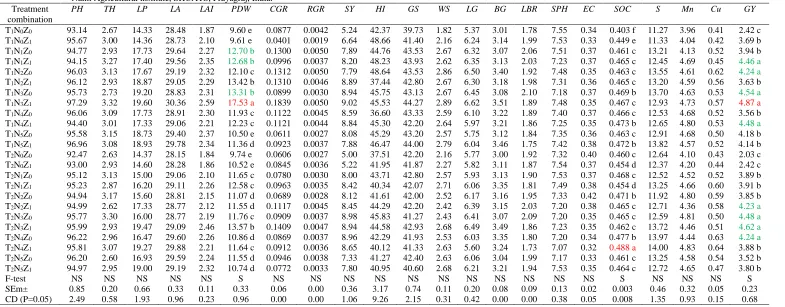
Soil cultivation by CT with fertilized fertilizer at the prescribed total dose of nitrogen 120 kg/ha, in which ½ nitrogen through organic (Vermicompost 3000 kg/ha) and ½ through inorganic (Urea, 117.69 kg/ha and (Diammonium phosphate (DAP) 32.60 kg/ha) during second year with foliar applications of zinc (2.50 kg/ha) were found to increase crop productivity and resilience in management.
Soil chemical quality status increased after second year of experiment in combined used of MT (1 ploughing by tractor drawn rotavator) and organic (Vermicompost 4500 kg/ha) and inorganic fertilization ½ through inorganic (Urea, 44.16 kg/ha and (Diammonium phosphate (DAP) 48.91kg/ha) with foliar applications of zinc (2.50 kg/ha).
Keywords: Productivity, Wheat, Organic, Inorganic, FYM and Vermicompost
1. Introduction
Wheat (Triticum aestivum L.) is an essential grain crop, the source of staple food or, hence, the main food safety crop. The main limiting factors of yield include delayed sowing, high weed contaminations, water scarcity at crucial stages of development, mismatch and the use of non-judicial fertilizers. I am growing crop yields, micronutrients are playing a significant role. The dry matter, cereal yield and stalk yield in wheat are highly impacted by micronutrients (Asad & Rafique, 2000). Several reports show a strong association between soil or foliar usage of micronutrients and weed yield (Wisal et al., 1990; Habib, 2009; Wroble, 2009). Different studies indicate that micronutrient spray and application of soil affect the yield of wheat.
Shaheen et al, (2007) suggested which increased wheat yields needed Zn to improve the quality of soils with Zn fertilization. Small tillage entails major surface disruption but much less than CT. The goal of reduced tillage is to reduce tillage required for a good seedbed, fast germination, an acceptable standing and desirable conditions of growth.
Research may be minimized in two respects:
1. omitting the process that offers no benefit in connection with prices. 2. combining field processes such as seeding and the application of fertilizers.
Increases environmental impact & expense of such fertilizers have enabled the application of synthetic fertilizers over the years. Farmers must grow sustainable cultivation crops that mitigate costs but rising environmental impacts. The added pressure generated by the processing of such synthetic fertilizers at the root of environmental contamination would be minimized by organic farming (Rathier & Frink, 1989). It is now well recognized which organic fertilizer requires proper seed production, enhances nutrient absorption, increases the assimilation capacities and promotes hormone development (Tomati et al., 1990; Grapelli et al., 1985). Vermicompost is beneficial as it improves the porosity of the dirt, aeration or water. Vermicompost increases the surface region, maintains high absorptiveness and nutrient conservation, but conserves more nutrients over a longer time. Soil modification utilizing vermicompost has been shown to provide a slightly higher amount of soil but the soil is not compacted (Lunt or Jacobson, 1994, Sadegh et al., 2015).
Earthworms digested the organic waste and convert to vermicompost with high porosity, water absorption and retention water that improved growth plants and increased crop yield (Arancon, 2004). Zinc is important for plant protein synthesis or gene expression (Zn) (Cakmak 2000; Broadley et al. 2007). Zn has been reported to allow about 10 percent of proteins in biological systems to be structurally or functionally important (Andreini et al. 2006). The cofactor was shown to be important in over 300 enzymes (Coleman, 1998). production, while germination, of reactive oxygen species (ROS), is essential for detoxification of plant cells by ROS (Cakmak et al. 1993; Bailly et al. 2002) or Qin or Liu 2010 (Zn) (Cakmak 2000; Broadley et al. 2007), respectively). Zn is a critical mineral nutrient for people and is required for plants.
The Zn deficit associated with inadequate dietary consumption is projected to be 1/3 of the global population. Zinc deficit is reported to have significant adverse effects, particularly in infants, like physical growth defects, immune system or cognitive capability, & possible harm to DNA and the production of cancer (Keen & Gershwin 1990; Ho et al., 2003; Black et al. 2008). A significant humanitarian problem, therefore, lies in rising Zn concentrations of safe food crops. Cereals are the world's largest source of Zn, especially for the poor in rural areas.
Preceding researched has revealed that the development of high-speed Zn crops led to increased soil viability, increased yield or lower sowing seed intensity, especially in potentially deficient Zn soil (Rengel or Graham 1995; Rengel 2002; Cakmak 2008). The results of the study were obtained from the preliminary research. Improved dry matter, plant yield, and plant concentrations in rice are added to Zn fertilizer in soil (Shehu or Jamala 2010; Fageria et al. 2011). Seeds of rice that have strong Zn content have been shown to achieve fast and improved germination and increase root duration and improved growth of the shoot (Slaton et al. 2001). (Slaton et al. 2001) Zn foliar spray is an efficient way to substantially increase Zn grain. Foliar use of Zn fertilizer increased the productivity of both wheat as a foliar spray or improved the Zn concentration in grain up to 3 or 4 times (Cakmak, 2008). In grains, Zn's foliar operation improved Zn aggregation in grain substantially (Yuan et al. 2013). Therefore, enriching Zn seeds profits both crop manufacture & customers' safety, particularly those whose Zn intakes are mainly derived from grains of cereal (Boonchuay et al., 2013)
2. Materials and methods
2.1. Climate, site & soil characteristics of experimental field
Weekly data were reported since Weather Observatory (WOW), School of Forestry or Environment (SHUATS, Prayagraj (U.P.) for the weather, average, minimum temperature, relative humidity, sunlight hour day-1 or rainfall during the experimental phase. In both years differences were very close in the average or minimal (36.31 and 7.64 0C) and (38.60 and 8.00 0C) levels. In fact, in the first year, relative humidity (93.14% or 31.14%) was higher than in the second year (95.29% and 43.14%). This could be because of the fair distribution or higher rainfall in the first year.
During the irrigation cycle for the 2014-2015 or 2015-2016 tests, average rainfall was 22,37 mm or 5,68 mm. In the first year, there was a relatively better distribution of precipitation (22.37 mm). Large daylight hours in the first year were 8.76% more than in the second year.
2.2. Experimental treatment and design details
The research was performed in split split plot design and it divided configuration of three replications appropriate for tillage practices, nitrogen management and zinc foliar spraying in the main case, in sub-plots or sub-sub-plot, respectively.
Table: 1 Detail description of tillage, nitrogen management, and zinc foliar spray treatments (Kumar et al., 2019a) and (Kumar et al., 2019b)
a) Tillage practices treatment description
Treatment notation Details of applied treatment description
CT Conventional tillage (1 ploughing by tractor-drawn disc plough + 2 harrowing +
1 fb cultivator with planking)
MT Minimum tillage (1 ploughing by tractor-drawn rotavator)
b) Nitrogen management manures and fertilizers applied description Treatment combination Farm yard
manure (FYM) (kg
ha-1)
Vermic ompost (VC) (kg ha-1)
Urea (U) (kg ha-1)
Diammonium phosphate (DAP) (kg ha
-1)
Muriate of potash (MOP). (kg ha-1)
Zinc Sulphate
(kg ha-1)
N0 : Control - - - - - -
N1: 50% RDN through (Urea + DAP
Fertilizer) + 50% RDN through FYM 12000 - 111.30 49.00 - -
N2 : 25% RDN through (Urea + DAP
Fertilizer) + 75% RDN through FYM 18000 - 52.47 32.60 - -
N3 :50% RDN through (Urea + DAP Fertilizer) + 50% RDN through Vermicompost
3000 117.69 32.60 16.60 -
N4 : 25% RDN through (Urea + DAP Fertilizer) + 75% RDN through Vermicompost
4500 44.16 48.91 -
N5 : 100% RDN through (Urea + DAP
Fertilizer) - - 209.84 130.43 66.66 -
c) Zinc foliar spray fertilizers applied description
Z0: Control - - - -
Z1: 0.5 % Zinc foliar spray ha-1 through
ZnSO4 - - - 2.50
2.3. Crop management
Sowing 120 kg ha-1, wheat seeds are at an interval of 22,50 cm rows to rows, planting of 5 cm and drilled seeds at a depth of 5 cm. The field was held in a moist state but tubewell used, respectively in the first year, 1st irrigation, 2nd irrigation, 3rd irrigation, 4th irrigation and 5th irrigation applied at 21, 45, 45, 65, 85 and 100 DAS. In case of second year is applied through tubewell water, 1st irrigation, 2nd irrigation, 3rd irrigation, & 4th irrigation at 21, 45, 65 & 85 DAS. Thining was at 20 DAS to ensure an acceptable field distance to the field and normal plant population and also to avoid competitiveness. At the field, wheat plants were held 5 cm apart from each other. Weedy plots have often been turfed by hand to protect the plots from weeds if necessary. During the growing season, Weedy plots stayed infested with invasive weeds. The weeding with help of khurpi was carried out during the 30-48 days after crop sowing. Application of Chloripyriphos EC 20 @ 1lit.ha-1 along with the fourth irrigation, as a protective step against termites. The planting was captured with a sickle as more than 90 percent of spike grains were completely matured and greenish. The boundary rows were decreased in the vicinity of each plot leaving only a net field, harvesting of each plot was performed separately as well as drying of the crop was carried out in the same plots for 4 to 5 days. The plants gathered were separately wrapped in bundles & then bundles were moved to the floor of trellis and stored to be dried for heat. The panics of each package were hand-picked and the grains stored in numerated pouches. Weighed and reported the grain yield of each plot. The straw crop per plot is calculated by extracting biological yields per plot after grain yield. Crop & straw yields were eventually translated to t ha-1.
2.4. Nitrogen management
Urea, DAP or MOP were used to handle nutrients to meet N2O, P2O5 or K2O (NPK) requirements. Applied respectively with the prescribed 120:60:40 kg NPK ha-1. As a side placement, fertilizers were added for 4-5 cm deep, hand-haired furrows end to end seed rows. Three divided doses of nitrogen were used: ½ nitrogen, whole phosphorus, and potash during seeding and the left halved dose of N was then equipped in 2 parts, one afterward then irrigation & second during second irrigation. Furrow of 10 cm size, organic manures (FYM and Vermicompost), dependent on N equivalence and N quality is added. This was eventually combined and filled by wooden sticks with around 5 cm of the soil before seeding.
2.5. Zinc management
2.6. Growth and yield observations
During 105 days, the height of 5 randomly chosen plants was determined from the base of plant to tip of the last leaven completely appeared. The overall value was calculated but represented in cm for each procedure. The number of tillers hill-1 at 105 DAS has been registered. The five marked hills were counted on every map. Plant was registered at 105 DAS for the no. of plants. The no. of leaves in each parcel was calculated & mean value determined from the 5 plants labeled. The periodic leaf area after sowing was reported for 75 days. The ground surface of plant leaves was restrained by using the area meter (Lr-Cor 3100). Five plants were chosen from the sampling region randomly, to quantify leaf serving, 3 leaves were cut off from the chosen plant and distributed solely into tray provide a sugar solution to avoid water stress in the leaves or their calculated portion of the field (cm2). The ratio of the region of the green sheets to a thickness of the exposed layer. The LAI was measured on a hill with a formula (Watson, 1947).
LAI = Leaf area (cm2)/ Land area (cm2)
Five plant dry weight measurements (g plant-1) were randomly extracted at 105 DAS of each plot's sampling field. The samples were dried in the air then deposited for 72 hours at 700 ° C, then measurement was carried out of dry weight per plant with an average represented in g-plant-1.
Crop Growth Rate (g m-2 day-1) represents dry weight gained by a unit area of crop in a unit time expressed as g m-2 day-1 (Brown, 1984). Plant dry weight values were used in measuring CGRs at intervals of 0-15, 15-30, 30-45, 45-60, 60-75, 75-90 or 90-105 DAS. The CGR value was given in g m-2 day-1.
Crop growth Rate: W2 - W1/t2 - t1
Where,W1: Initial dry weight of plant (g), W2:Final dry weight of plant (g), t1:Initial time period, t2: Final time period, Relative Growth Rate (g g-1 day-1) was described by (Redford, 1967) which indicates the increase in dry weight per unit dry matter over any specific time interval and it was calculated by the following equation:
Relative growth rate (RGR): Loge W2 – Loge W1/ t2 – t1
Where, Loge: Logarithm, W1: Initial dry weight of plant (g), W2: Final dry weight of plant (g) t1: Initial time period, t2: Final time period, It is also called efficiency index (y) and it may be expressed in g g-1 day-1.
This was determined based on knowledge provided by the dry weight of plants for period 90-105 DAS. When the growing plot was matured, the cumulative amount of grains per spike of main grains was taken. The individual spike was threshed by hand and also grains gathered and counted separately from each spike. For 5 randomly chosen plants, the weight of the single spike (g) was calculated for g and instead multiplied to produce one single spike per growing phenotype. To measure grain yield in tones hectare-1, Sun-dried or washed grains from harvest region (1.0 m2) or weighed separately as each plot.
Plots were washed, wrapped, marked, or weighed separately in the sun from the harvesting field (1,0 m2). The straw yield was determined using the biological yield to deduct seed yield but measured in kg ha-1. Harvest index was derived from the division of biological gain (grain + straw) into economic yield. This was measured in percentages for each of the plots. In 1962, Donald used the same formula).
Harvest index (%): Economic yield (t ha-1)/Biological yield (t ha-1) x 100
2.8. Crop physical quality characters measurement
For estimating the length of wheat, 10 unbroken wheat grains selected at random from the respectively model were restrained in millimeters by the help of graph paper and its length was observed. For estimation, breadth of wheat, 10 unbroken whet grains certain at random after every model are restrained in millimeters by the help of graph paper and its length was observed. The length/breadth ratio was worked out via subsequent formula (Gautam et al., 2008).
L/B ratio = [Mean length of grain (mm)/mean breadth of grain (mm)]
Table: 2 Chemical & Physico-chemical properties of soil at the pre-experimental stage (Kumar et al., 2019a) and (Kumar et al., 2019b)
Soil Properties Experimental year Method (references)
2014-15 2015-16 Average Chemical properties
Available nitrogen (kg ha-1) 243.39 244.85 244.12 Alkaline permanganate method (Subbiah & Asija, 1956)
Available phosphorus (kg ha-1) 22.19 24.30 23.25 Olsen’s colorimetric method (Olsen et al., 1954)
Available potassium (kg ha-1) 261.76 269.48 265.62 Flame Photometer method (Jackson, 1973)
Organic carbon (%) 0.39 0.40 0.40 Walkley & Black method (Jackson, 1973)
Available Zn (ppm) 0.74 0.75 0.75 DTPA extractable method (Lindsay & Norvell,1978) Available Boron (ppm) 0.55 0.58 0.57 ’’ ’’ ’’ ’’ ’’ ’’
Available copper (ppm) 0.44 0.46 0.45 ’’ ’’ ’’ ’’ ’’ ’’ Available iron (ppm) 8.35 8.47 8.41 ’’ ’’ ’’ ’’ ’’ ’’ Available manganese (ppm) 4.22 4.44 4.33 ’’ ’’ ’’ ’’ ’’ ’’
Available sulfur (ppm) 13.16 13.20 13.18 Turbidimetric method (Wolf, 1982)
Physico-chemical properties
Soil pH 7.52 7.42 7.47 Glass electrode pH meter (Jackson, 1973)
2.9. Crop and soil data statistical analysis
Results from inquiry have been evaluated according to the process of variance analysis by mathematical analysis (Fisher, 1950). With the aid of 'F' variance ratios study, the importance and lack of relevance of the treatment impact is measured. Comparison by 'F' table value at a 5% level of importance was rendered to measure 'F' (Variance ratio). The impact was deemed important when the amount measured reached the amount of chart. The disparity around treatment means was evaluated by a critical difference (CD) which has been calculated through the use of the excel sheet (Microsoft Excel 2010) to evaluate data where 'F' significance has proven important for treatment impact.
3. Results
3.1. Tillage on growth and growth attributes
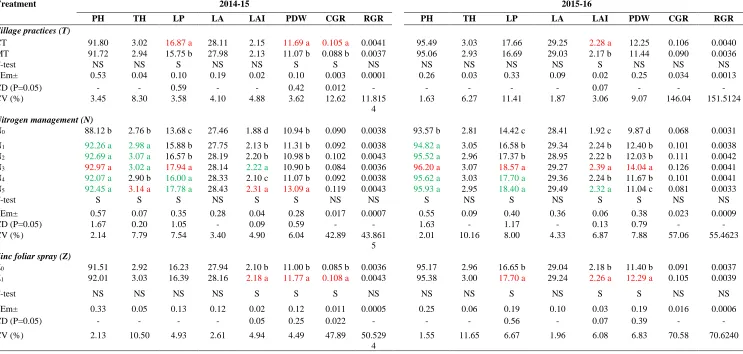
In Table 3, there is a significantly higher rise in leaves per plant (16,87), in plant dry matter (11.69 g plant-1), crop growth rate (0.105 g plant-1 at 90 - 105 DAS intervals) and leaf area index (2.28) during 2014-15 respectively, for CT compared to MT. However, non-significant and maximum growth attributes viz., plant height (cm), number of tillers per hill, number of leaves per plant, leaf area and relative growth rate were recorded in CT during 2014-15.
At 60 DAS, significant and highest number of tillers per hill (5.57) were recorded (Fig. 1) in the treatment CT during the second year 2015-16 of investigation, which was superior to MT.
Such rises are mainly due to optimal soil state of tillage with optimum bulk density, which has led to proper aeration and the absorption of nutrients and root production, leading ultimately to vigorous plant growth (Das and Verma 2003). The findings of the current study also relate to Leghari et al. (2015), who recorded a better no. of CT tilers. In plots tilled with more CT passes more tillers per hill can be induced by more pulsed soil providing an atmosphere beneficial to the root zone, resulting in more tillers than in therapy with apps of MT, where root zone soil might be less strong, hence can not create suitable conditions to generate more tillers per hill. The results align with those of (Khatri et al., 2002) & (Yadav et al., 2011).
Significantly the highest leaf area index (2.28), whereas MT recorded its lowest values registered in the second year of CT, while the lower values of MT were documented. The tillage practice showed a significant and maximal plant height (cm). The increase of the growth attribute could be owing to the favorable effect of a soil-physical environment, that enabled root growth to increase water uptake. The growth attribute could be due to a positive result of the ground physical climate. growth in the development of dry matter of plants may be owing to high plant growth in relations of height, thickness, amount or size of leaves, tillers, etc. due to positive impact of climate on physical soils which increased root growth to increase water or nutrient uptake (Yadav et al., 2011). This is aligned with the findings of Das or Verma, 2003 and Khatri et al., 2002.
3.2. Tillage on yield and yield attributes
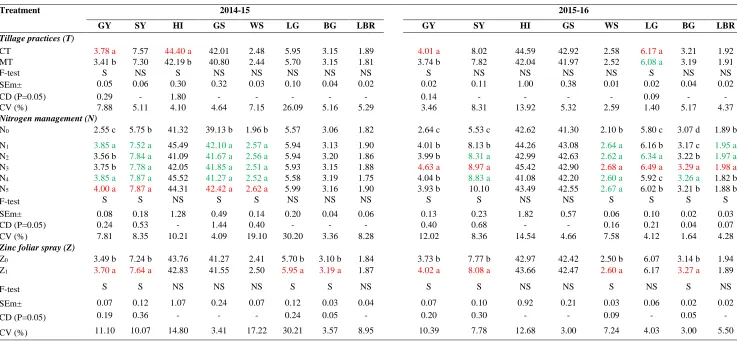
The positive effects of CT have contributed to an improvement in vigor and development resulting in a rise in wheat production from dry matter (Table 4). CT has a strong and significant reaction compared with MT. The first-year attributes of development, grain yield (3.78 t/ha) and the harvest index (44.40 percent) have been assessed as important or average attributes of development in the first year, but for both cares, CTs have risen in percent as compared as MT. Although, in 2014-2015, specific treatments were reported during the years 2014-2015: not significant and full return and return results, i.e., straw amount, harvest index (percent), no. of grains per spike or weight of spikes.
In addition to this, non-significative and maximum details for the yield and the crop attributions, i.e., straw production, harvest index (percentage), amount of grains per spike or spike weight were registered during the second year of treatment similarly. Different findings for the second year of tests were started in the highest values of grain yield performance (4.01 t/ha).
It can be inferred from tests of crops that rotavator leaves soil very well but to just a rare centimeter below a depth of activity, which adversely affects the development of crops. Perhaps since they have greater penetration and stronger soil quality for plant growth but eventually contribute to further production could have been superior to disk plough and flowering fb cultivators, on another hand (Ahmad et al. 2010).
Also, due to higher moisture availability, decomposing stubbles release of nitrogen, less weed strength, higher spinning or interaction with moisture under furrow provided by the CT inverted "T" style opener furrow (Singh et al., 2014). Subhan et al. (2016) stated which CT had increased root or root biomass production over minimum tillage.
It may also be explained that CT due to its component implemented during tillage practices the first ploughing is done by tractor-drawn disc plough working up to a depth of three hundred mm is especially used for the breakdown of hardpan, scoring, dry, trashy and stony or stumpy soil. The second aspect was disk harrow manipulation, where disks are flung into the ground and rear gang on front gang. So, there is no uncut soil by Offset Disk Harrow and hence clod breakage happens during primary research. For finer operations, including breaking clods, advanced secondary ploughing by cultivator (brushed or dental harrows), was employed to prepare seedlings and kill weeds germ followed ploughing. The fourth and final procedure which was conducted in conventional tillage was planking by tractor-drawn planter “Patella”. Planking provides leveled seedbed and complete seed envelope for better germination. This may also due to earlier emergence and favorable microclimatic for better agronomic performance.
compared to rotavator. Whereas, rotavator will not incorporate the crop residues effectively, and the weed infestation will be higher and it will be dependent on herbicides and slow warming of soil will arise due to poor drainage Subbulakshmi et al. (2009). Such results lead to Vencill and Banks's (1994)'s observations. Another explanation could well be that more nutrients are given by traditional lying, which contributes to further photosynthesis and therefore more plant yields due to increasing or improving leaf area (Khan et al. 2015). The results provided at Palled et al. 2000 & Bahadar et al., 2007, indicate which surface residues and humidity management activities include growing wheat production, are close to the findings of crop rotation practice.
The fewer days before emergence in CT planting may be attributed to finer tilths, decreased soil clods and adequate humidity to allow germination of the seeds. Further soil temperature germination and emergence should have increased. The resulting soil temperature was colder in the MT sown grain, which could slow down the germination of seeds. Therefore, soil compaction can delay the emergence of seeds in minimum labor.
3.3. Tillage on physical quality characters
Physical quality characters significantly the highest was evaluated (Table 4) in terms of length of grain (6.17 mm during 2015-16) in CT practices. However, non-significant values of breadth of grain (mm) and length: breadth ratio of grain (mm) during both the years except length of grain at 2015-16.
3.4. Tillage on physio-chemical properties, organic status, and micronutrients
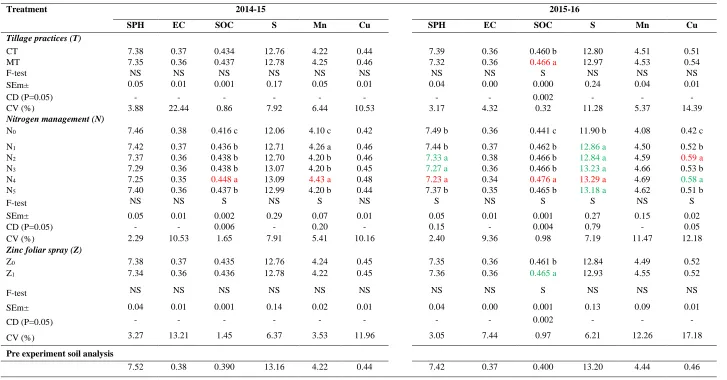
Both in the years and after the experiment, soil pH and electric conductivity value (table 4) during the experiment (7.52 or 7.42) and (0.38 and 0,37 dS / m) demonstrated which soil's pH & electric conductivity are reduced owing to various manure treatments in the first year of operation. In this respect treatment MT, decreased the pH and electrical conductivity content in the soil (7.35 and 0.36 dS/m during the year 2014-15 and 7.32 and 0.36 36 dS/m during 2015-16) from the initial status of pH and electrical conductivity content in the soil.
It can be credited to the soil chemical properties normally partially by a pH tillage method. Lal says (1997 b) the surface layer soil pH is typically higher under MT than under CT in soil. Soil pH is normally less costly. Annual research, which implies that the minimum job-load method is conducted annually for a long period, helps to preserve and develop the structure and chemical properties. Lower minimum pH was attributed to organic matter concentration in maximum centimeters and the dwellings of plants on the soil decrease the water evaporation rate under MT soil (Rhoton 2000), contributing to higher rates of electrolytes and lower pH rates (Rahman, etc. 2008). (Rahman et al., 2008). The study published identical findings (Rasmussen, 1999 or Rahman et al., 2008). Concentrate concentration of organic compounds at exterior was lower with reduced-tillage than CT, with resulting organic acids being then released into mineral soil (Subbuulakshmi et al. 2009). Such results are compatible with Blevins et al.'s (1977) results.
This transition would extract the soil mineral from the soil as extracted with higher soil moisture and production, soil surface and soil depletion with fewer soil ions because of the reduced soil profile deterioration of the previous soil roots. These outcomes are compatible with Subbulakshmi et al. 2009 outcomes.
Organic carbon content of the soil before the experiment (0.390 and 0.400%) during both the years and after the experiment revealed that there is significant improvement in organic carbon status of the soil due to different treatments of manurial application during the second year and also in pooled based analysis. In this respect treatment MT, enhanced the organic carbon in the soil by about (0.466 %) from the CT of organic carbon content in the soil in 2015-16.
Furthermore, the lowest soil organic matter values are assumed to occur in CT tillage and may be induced by reversal of topsoil during plugging, which, in addition to potential oxidation, brings less productive sub-soil to the surface (Ali et al.,2006). The findings are Busari et al. (2015) consistent. Likewise, in a soil with MT relative to tiled soil, Ismail, et al. (1994) and Lal (1997 b) have recorded significantly higher organic carbon. The decrease of organic carbon under tilled plots owing to the degradation of the earth structure after tillage may contribute to a higher mineralized or leaching rate. (Lal 1997b) notes that the soil chemical properties of the surface layer under MT are usually more favorable than under standard field tillage. Annual tillage, which means the annual operation of a MT method for a long time, is beneficial to conservation and development, particularly soil organic carbon quality, of soil structure or chemical properties. (Rasmussen, 1999) and (Dur et al., 2002) found that plant residues left on the surface of the soil, with annual minimum lying, raise the organic matter on top of the soil.
In order to find out the competitive ability of tillage practices the nutrients status of the soil were measured. The essential micro nutrients content in the soil were statistically analyzed during both the years. On an average, the sulphur, manganese and copper increased by (0.16, 0.71 and 4.55%) during 2014-15 and (1.33, 0.44 and 5.88%) during 2015-16 per cent in association with MT, respectively. In conventional tillage (Ali et al., 2006), the lowest soil micronutrient value was reported and it can be induced by retrofitting the top of the soil during plugging that, in addition to possible Busari et al. (2015) liquidation, transfers less productive soil to the surface. Such results are compatible with Ismail et al. (1994) or Rahman et al. (2008).
Associated with conventional tillage systems, the content of micronutrients was found to be higher below the min tillage system owing to higher adds of crop residues under the previous system which directly increases the level of these micronutrients. Due to a higher association of copper with organic matter, copper was contained in the MT scheme, and therefore a lower amount of organic matter. Kaushik et al. 2018 or Walters et al. 1997 have both reported similar findings.
3.5. Nitrogen management on growth and growth attributes
DAS in leaf area index, (19.65, 15.74, 19.22, 20.09, 18.25 and 00.00%) at 105 DAS in plant dry matter production, were higher in percent over N0, N1, N2, N3, N4, and N5, respectively.
Nitrogen management treatment N5 registered significant (Fig. 1) and maximum number of tillers per hill (2.75 and 2.63) at 30 DAS respectively, in both the years of investigation and (3.14) at 105 DAS, in the year 2014-15. Further, nitrogen management treatment N3 registered significantly higher number of tillers per hill (5.06 and 5.94) at 60 DAS respectively, in both the years of investigation and (3.91), (5.15), (3.20) at 45, 75 and 90 DAS respectively, in the year 2015-16, which was superior to other nitrogen management treatments.
The prescribed 100% nitrogen dose from urea or DAP fertilizers could have resulted in increased plant development, which would contribute to improved use of nutrients, energy, solar radiation or increased metabolism, contributing to increased output of dry matter (Kulkarni and coll., 2015) and (Kumar et al., 2009) and other development parameters. The same pattern was identified by Suryawanshi et al. (2016).
Nitrogen production may increase cell elongation, cell count & cell division and have a positive impact on growth parameters (Kalia and Mankotia, 2005). There could have been an improved tillering and plant height (Malik et al., 2012) as a consequence of the beneficial impact of nitrogen on cell division and growth. The observations of Singh et al. 2002 are confirmed by these tests. In turn, nitrogen fertilization enhances photosynthesis and, subsequently, plant dry matter is provided and development is improved (Lópeza Bellido, 1998 and Khan et al., 2014).
Nitrogen is essential for plants in the vegetative process, & quicker release of nutrients after inorganic fertilizers than it does from organic fertilizers provided this supply. To provide plants with timely supplies of nutrients, organic fertilizers are also required if the condition so needs. The usage of chemical fertilizer is of special significance instead of organic manure, as the former provides plants with nutrients that raise the attributes (Baghdadi et al., 2018). outcomes are confirmed in the Meng et al. (2005) & (Manna et al. 2005) study. Adequate volumes of nitrogen resources may have improved nitrogen exposure or absorption because of its accelerated release or mineralization that in effect strengthened the processes of growth and production. The results are corroborated by Choudhary et al.'s studies (2007).
The introduction of chemical fertilizers could also contribute to the very rapid recovery of soil fertility and plant obtaining of nutrients once fertilizers are dissolved in the field (Matsumoto & Yamano, 2009). Inorganic fertilizer also raises root residues that can increase organic content indirectly (Scholl or Nieuwenhuis, 2004 or Roba, 2018). Greater meristematic activity under the influence of inorganic fertilization might have promoted greater canopy development in terms of LAI. Thus, increased leaf area index as a result of inorganic fertilization seems to have led to better interruption, absorption & use of solar energy with greater carbon dioxide fixation & thereby increased the photosynthetic efficiency considerably (Narolia et al., 2016).
Further, among nitrogen management treatment second year the significant and maximum values registered under N3, and the percentage increase in the different parameters was to the tune of the percentage increase plant height of (2.81, 1.46, 0.71, 00.00, 0.61, and 0.28%), at 105 DAS, several leaves per (28.78, 12.00, 6.91, 00.00, 4.92 and 0.92%) at 105 DAS, leaf area index (24.48, 6.70, 7.66, 00.00, 6.70 and 3.02%) at 75 DAS and plant dry matter percent (42.25, 13.23, 16.71, 00.00, 20.31 and 27.17%) at 105 DAS over N0, N1, N2, N3, N4 & N5, respectively.
findings of this experiment verified that González et al 2001 stated that perhaps the best results were given for calculated parameters such as plant height by chemical fertilizer of organic manure, that are supplied as necessary feed at early creation point. A larger volume of nitrogen from both inorganic (urea and DAP) and organic (vermicompost) can be due to improved production during the growing season in reaction to the usage of hybrid type (Baghdadi et al., 2018).
Against this context, agronomic management utilizing organic sources may have improved goings-on of valuable microorganisms leading to an expanded organic reservoir in soil, which could have contributed to the production of growth-enhancing compounds and increased availability of nutrients for longer periods of crop growth and thus to a successful impact on crop growth (Yadav et al.2008).
The beneficial impact on growth attributes of vermicompost can be due to the readily accessible ammonium nitrogen of assimilable mucoprotein materials, excretion, vermicast and rapid mineralization of earthworm body rotisserie (Satchell, 1967). Vermicompost triggers phenolic acid synthesis that increases plant resistance. The development of plants was even higher than other therapies of vermicompost. (Kumar, 2015) also recorded enhanced vermicompost plant growth.
The supply of categorical nitrogen from vermicompost may have allowed more effective protein or carbohydrate assimilation. Such two compounds induce accelerated cell division and decreased cell expansion once induced in the meristemic region of plant, which eventually contributes to improved development. The production of crops, therefore, relies on the supply of soil nitrogen (Kumar, 2015). Balamurugan or Sudhakar (2012) are aware of the performance.
The enhancement of growth parameters and rise infertility may be induced by a faster conversion into a protein of the synthesized carbohydrates, which may have triggered a larger number of plant tillers, a higher plant height & an improved accumulation of dry matter (Singh & Agarwal, 2011).
3.6. Nitrogen management on yield & yield attributes of wheat
Significantly higher grain and straw yield was observed (Table 4) in treatment with application of N5 (4.00 and 7.87 t/ha), respectively during the year 2014-15. The higher wheat yield attributed to improved yield components such as number of grains per spike (8.41, 0.76, 1.80, 1.36, 2.79 and 00.00 %) and weight of spike (33.67, 1.95, 2.34, 4.38 , 3.97 and 00.00%) over N0, N1, N2, N3, N4 and N5, respectively. may have been due to the positive influence of nitrogen management.
of protein, resulting in a rapid division of cells as well as an extension of plants, which led eventually to robust plant growth (Layek, 2014).
Further, the maximal wheat yield was experiential in treatment by application of N3 (4.63-grain yield t/ha) & (8.97 straw yield t/ha) during the year 2015-16. higher wheat yield attributed to enhance yield components like the weight of spike (27.62, 1.52, 2.29, 0.00, 3.08, 0.37g) over N0, N1, N2, N3, N4, and N5, respectively, may be explained to be the favorable impact of nitrogen management.
The continued obtainability of nutrients throughout the growing season can be owing to this reality. If paired with organic manure such as vermicompost, the effectiveness of that fertilizer is important. Greater vegetative growth & C: N ratio may have enhanced carbohydrate synthesis, which gradually increased output. The existing yield development pattern conforms strongly to Satyajeet or Nanwal results (2007) and Parihar et al. (2010) Singh et al. (2013).
Perhaps the explanation for this rise may be the usage of vermicompost or nitrogen, which boosts the status of productivity, contributing to improved use of nutrients by wheat cropping, because of change in growth or yield attributing characteristics. the photosynthetic operation, while ancillary characters, may have been improved by a sufficient supply of nitrogen (Ram and Mir, 2006). The same findings are also recorded by Azad et al. (1998) or Sushila & Giri (2000).
Also, the rise in grain and biological yields may be attributed to the quality of the grain & biological yield of Gupta et al. (2011) in different essential crop stages in the best quantity. It is in line with the Kumar or Yadav reports of 2005.
Malik et al., 2009 have also reported significant degradation of vermicompost contributing to an increase in nutrient availability or absorption during essential physiological growth stages of plants or an improvement in crop growth or return attributes. Another potential explanation for enhanced production could be strengthened physicochemical properties of soil by organic manure (Pandey et al., 2009).
There is improved exposure to vital nutrients to the grain as a consequence of the combined impact of renewable nutrient sources on wheat crops (Sepat et al. 2010). The findings of this analysis are compatible with Ba Momen et al. (2007), Meena et al. (2011) or Meena et al. (2007).
3.7. Nitrogen management on physical quality characters
On an average, the length of grain (Table 4) (11.90, 5.36, 2.37, 0.00, 9.63 and 7.81%), breadth of grain (7.17, 3.79, 2.17, 0.00, 0.92 and 2.49%) and length: breadth ratio of grain (4.76, 1.54, 0.51, 0.00, 8.79 and 5.32%) over N0, N1, N2, N3, N4 and N5, respectively significantly higher were recorded in nitrogen management treatment N3 respectively.
3.8. Nitrogen management on physic-chemical properties soil, organic status, and micronutrients after harvest of wheat
Laboratory review of post-harvest soil samples shows that lowest or closest neutral pH in soil has been found (Table 5) (7.25)and minimum electrical conductivity content of the soil (0.35 dS/m) due to application of N4 during the both of the year, respectively, Ca ions are emitted to a hydrolyzed, Of the insoluble Al(OH)3 calcium-based hydroxide Ca(OH)2 can be due to the assumption that the soil solution produces soluble aluminum ions, organic manures mineralize them. Ca(OH)2 reacts to hydroxide ions with salt. The results of such reactions may be shared by the soil anion. Nevertheless, the high Ca content of Organic Manures, which is responsible for relatively optimum pH values, can also be related.
Treatments of 25% RDN by (Urea & DAP Fertilizer)+75% RDN by vermicompost have shown that the application of chemical fertilizer will increase the soil's physical properties and adversely affect microbial species within the soil, thus reducing the total soil productivity with high pH and electrical conductivity (Urea & DAP Fertilizer) Such observations are compatible with data obtained by Ferreras et al. (2006), Marinari et al. (2000), Lazcano et Dominguez (2011).
It may also have been attributed to a decrease in the soil pH and electrical conductivity composed of bio-manure, which created more humic and organic acids when decomposed during the analysis after the experiments had ended. (Yadav et al., 2013) Vermicompost's capacity to alter physical characteristics of land improves plant air or water quality, further enabling plant seedlings to emerge or root development (Lazcano et al., 2011). Based on the fact that a number of the previous experiments have shown major beneficial adjustments in the retaining ability of soil water or accessible plant water, improvements in physical assets of soil through the introduction of vermicompost may promote nutrient preservation in soils Broz et al. (2016).
The electrical conductivity of N4 can be poor due to the liberation over longer periods of various mineral ions including phosphate, ammonium, potassium, etc., which may increase the physical-chemical assets of soil & supply of nutrients with organic sources as well. outcomes of Atiyeh et al. 2002, Tharmaraj et al. 2011 & Sharma et al. 2005, Rawat or Pareek 2003 are compatible.
In this respect treatment nitrogen management N4 significantly higher organic carbon (7.69, 2.75, 2.28, 2.28, 0.00 and 2.52%) and manganese (8.05, 3.99, 5.48, 5.48, 0.00 and 5.48%), respectively in the 2014-15 and organic carbon (7.94, 3.03, 2.15, 2.15, 0.00 and 2.37%) and sulphur (11.68, 3.34, 3.50, 0.45, 0.00 and 0.83%) during the years 2015-16 of investigation.
the explanation may also be that organic matter is considered to function as a soil conditioner, fertilizer source, substrate for microbial operation, and also for the production of important vegetable nutrients. Plant roots also have more nuanced elements as teint protects them from immobilization in soil (Yadav & Kumar 2009), (Singh et al. 2013).
3.9. Zinc foliar spray on growth and growth attributes
On an average the number of tillers per hill (Table 3) (3.77%), number of leaves per plant, (0.99%), leaf area, (0.79%), leaf area index, (3.81%), plant dry matter, (7.00%), crop growth rate, (27.06%) and relative growth rate (19.44%) during the year 2014-15. Data during the year 2015-16 plant height (0.22), number of tillers per hill (1.35), number of leaves per plant (6.31), leaf area (0.69), Leaf area index (3.67), plant dry matter (7.81), crop growth rate (15.38) and relative growth rate (5.41%) were recorded foliar spray applied treatment.
Application of 0.5% Zinc foliar spray/ha through ZnSO4 recorded (Fig. 1) significant and highest number of tillers per hill (4.78 and 5.61) at 60 DAS respectively, in both the years of investigation and (5.03) at 75 DAS respectively, during the year 2015-16, which was superior to control.
Such an increase could be attributed to the increased micronutrient supply before later stages of development of the crops (Pavithra et al. 2015). Such a rise might be related. Zinc is a critical component in a sequence of enzymes involved in synthesis and degradation and plays a significant role in biomass processing (Cakmak 2008) of carbohydrates, lipids, proteins, or nucleic acid, & in the metabolism of certain micronutrients. Zinc produces modifications in biochemical processes of plants including cell division, photosynthesis, & protein synthesis (Marschner, 1995).
Zinc, synthesis of tryptophan, pre-current for indole acetic acid (IAA), has been stated by Marschner (1995). Consequently, the Zn application may increase IAA synthesis resulting in an increase in plant height by growing length of the internode.
Also, it might be due there was no possibility of soil fixation or immobilization of Zn in a foliar spray. Also, Zn was easily available to plants at the time of active tillering & grain-filling period since the foliar spray treatment was done at tillering and beginning of the reproductive stage of wheat.
The lowest volume of zinc required for wheat plants encourages the reduction of tillers primarily due to the thinning of the stem and lack of turgidity, which is considered to be the poor stem. Tillers are highly critical for their growth, sustainability or production (Davidson & Chevalier, 1990) or (Zoz et al., 2012).
3.10. Zinc foliar spray on yield & yield attributes
On an average, higher, no. of grains per spike (Table 4) (by 0.68%), the weight of spike (by 3.73%), grain yield (6.02%) and straw yield (5.52%) were recorded under treatment 0.5% Zinc foliar spray/ha through ZnSO4 during the year 2014-5than control. While during 2015-16 were found no. of grains per spike (by 0.12%), the weight of spike (by 4.00%), harvest index (1,61%), grain yield (7.77%) and straw yield (3.99%) were recorded under treatment 0.5% Zinc foliar spray/ha through ZnSO4.
Further, its function in specific enzyme reactions, growth cycles, hormone development or protein synthesis and the translocation of photosynthates to reproductive parts can be related to its beneficial effect on the grain yield (Mauriya et al. 2015). Also, it may be credited to the advantageous impact of zinc application on grain yield. The same outcomes are described by Singh or Singh (2007), Singh et al. (2011), & Chaudhary et al. (2014).
This can be because of the role in crop growth (Cakmak, 2008) with photosynthesized procedures, nitrogen assimilation, inhalation & start or thus their significance in the achievement of greater yield. It is worth noting that the zinc translocation added to leaves depends on the plant's nutritional status (Zoz et al., 2012).
The stimulating effect of zinc on the vegetative growth coupled with its probable influence on the reproductive parts may provide an explanation on its effect on the yield components and also zinc is known to decrease the carbohydrate content of leaves & stem during spike formation, which facilitates the flow of carbohydrates to reproductive organs and contributed to improved grain yield (Hemantaranjan and Garg, 1988).
The potential explanation may be attributed to further dry matter deposition in grains when the foliar spray is applied. Furthermore, throughout grain filling, foliar sprays could increase present photosynthesis, leading to grain improvement then spike weight (Salem et al. 2014). This result is based on Rogalski (1994), Mohammad et al. (2008), Yildirim or Bahar (2010) or even Salem or Al-Doss (2014) studies.
The increase in yield components reported by Hosseini et al. (2006) & Kenbaev and Sade (2002) due to zinc application. Zinc administration could boost photosynthesis because of increased enzyme activity (Martin-Ortiz et al., 2010) and could raise the weight by a thousand grains (Bhutto et al., 2016). Such results lead to Abbas et al.'s 2010 observations.
The findings also correlate by those of Arif et al. (2006), which proposed foliar fertilization of crops could complement or guarantee a higher yield usable nutrient in plants. Free use of micronutrients is advantageous as the intake of nitrogen, phosphorous or potassium is increased, micronutrients concentrate concentrated in plants is retained and crop production is improved. Greater crop yields can be obtained using micronutrients and macronutrient fertilizers approved for free (Baloch et al., 2014).
3.11. Zinc foliar spray physical quality characters
On an average, the length of the grain (Table 3) (4.39%) and breadth of grain (2.90%) by length: breadth ratio of grain (1.63%) percent in association with 0.5% Zinc foliar spray/ha through ZnSO4) during the year 2014-15, respectively.
In this respect of treatment (Table 5) nitrogen management 0.5% Zinc foliar spray/ha through ZnSO4 significantly higher organic carbon (0.23%), sulphur (0.16%) respectively in 1st year of investigation. During the year 2015-16, organic carbon (0.83%), sulphur (0.70%) and manganese (1.34%) were recorded fertilized plots by zinc.
The maximum but non-significant soil zinc concentration under treatment 0.5% Zinc foliar spray/ha through ZnSO4 was due to pre-harvest (0.74 and 0.75 ppm) quantity of zinc already available in the soil during both the year, respectively in which also supplied through a foliar spray of zinc resulted that maximum zinc concentration in the soil after the wheat harvest Kumar et al., 2018.
3.12. Pearson correlation matrix studies for different variables and grain yield
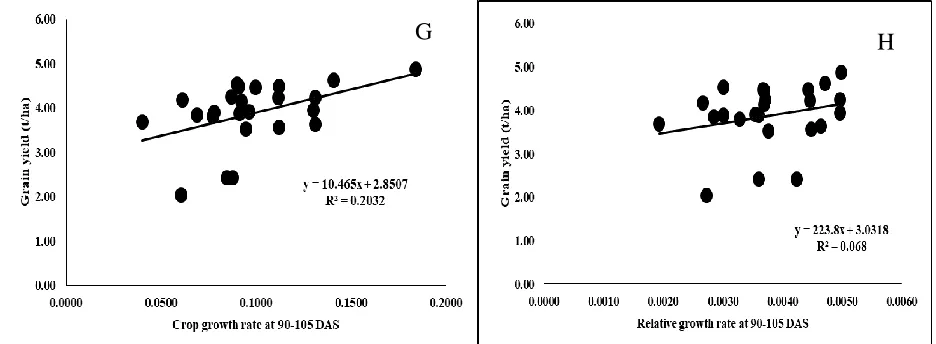
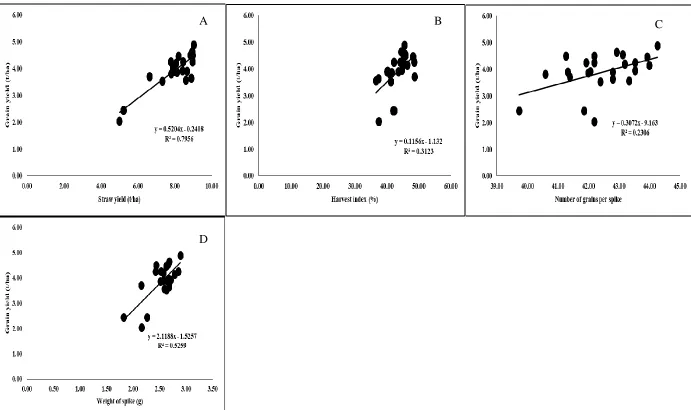
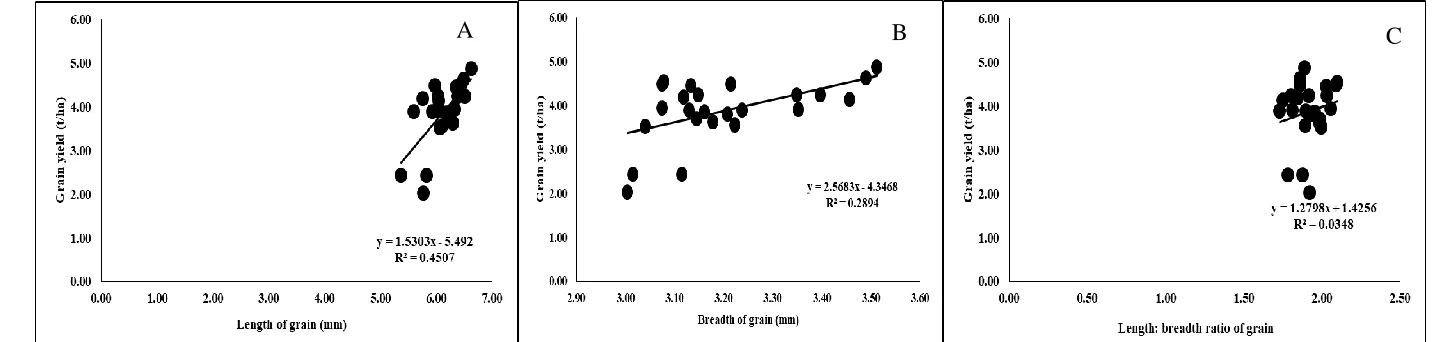
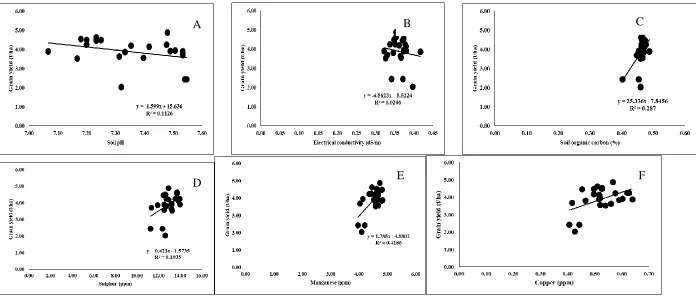
A strong positive correlation was noticed (Table 7) among LP with PH (0.641), LA with PH (0.694) and LP (0.665), LAI with PH (0.799), LP (0.841) and LA (0.772), PDW with PH (0.534), LP (0.627), LA (0.582) and LAI (0.736), CGR with LA (0.570), LAI (0.594) and PDW (0.863), RGR with PDW (0.586) and CGR (0.906), straw yield with PH(0.731), LP(0.690), LA(0.576), LAI(0.800) and PDW(0.628), GS with LAI(0.620) and PDW (0.616), WS with PH (0.691), LP(0.774), LA(0.714), LAI(0.714), PDW(0.692), CGR(0.568), SY(0.746) and GS (0.684), LG with LAI(0.634), PDW(0.647) and CGR(0.539), BG with PH(0.631), LP(0.521), LA(0.550), LAI(0.662), PDW(0.541) and CGR(0.560), LBR with CGR(0.032) and BG(0.032), SOC with SY(0.643), and WS(0.693), S with PH(0.530), LP(0.679),LA(0.548), LAI(0.538), SY(0.537), WS(0.707) and SOC(0.637), Mn with PH(0.524), TH(0.559), LP(0.565), LAI(0.620), SY(0.750), WS(0.713) and SOC(0.713) and Cu with PH(0.574), SY(0.662), WS (0.636), SOC(0.601), S(0.652) and Mn(0.566), respectively. A negative correlation was found between grain yield and soil pH and electrical conductivity (Figure 5 A & B). The higher response of MT, nitrogen and zinc might be associated with the higher conserved soil moisture, improvement in physical properties, and moisture dependent plant nutrient accessibility. Maximum wheat yield under MT, 50 % organic and 50 % inorganic with zinc applied treatment combination compared to others. This have also been reported in similar studies (Nandan et al., 2019).
3.12. Correlation and crop traits
Presence of positive correlation of grain yield with growth attributes (except RGR), yield attributes, physical quality characters (except LBR) and soil chemical properties (except SPH, EC and SOC) validate the above statement. Further, grain yield depends upon the dry matter production per unit area, therefore high production of total dry matter is the first prerequisite for higher grain yield which showed the progressive increase in total dry matter production as the crop attained maturity. It is also validated by positive correlation (r = 0.629) between grain yield and dry matter accumulation at harvest. These results corroborate the fndings of Ahmadi and David (2016) and (Arif et al., 2019).
4. Conclusions
The complete research paper concluded that conventional tillage has more yield after payment of soil fertility because soil decrease the essential plant nutrients compare to MT. Nitrogen management combination through organic and inorganic increased growth attributes and productivity during the second year without losing soil fertility. Further, the total recommended dose of nitrogen applied to inorganic fertilizers subsequently decreasing the yield in the second year due to losses of organic matter, micro & macronutrients from the soil. So combine the use of manure and fertilizers with MT practices and foliar spray of zinc better than other treatments.
References
Abbas, G., G. Hassan, M.A. Ali, M. Aslam, and Z. Abbas. 2010. The response of wheat to different doses of ZnSO under the desert environment. Pak. J. Bot,42(6): 4079- 4085.
Ahmad, M., Abdullah, H., Iqbal, M., Umair, M. and Ghani. M. U. 2010. Effect of deep tillage on soil properties and crop wheat (Triticum aestivum L.) yield. Soil & Environ. 29(2): 177-180.
Ahmadi S A and David A A. 2016. Effect of nitrogen and zinc on yield of wheat (Triticum aestivum L.). International Journal of Multidisciplinary Research and Development 3(5): 291–3.
Ali, Ayuba, S. A. and Ojeniyi, S. O. 2006. Effect of tillage and fertilizer on soil chemical properties, leaf nutrient content and yield of soyabean in the Guinea savanna zone of Nigeria. Nigerian Journal of Soil Science,16, 126 -130. Amin, M., M. J. Khan, M. T. Jan and J. A. Tariq. 2013. Response of wheat growth characteristics to various tillage practices
and sowing methods under semiarid environment. Sarhad J. Agric. 29(4):529-535.
Andreini C, Banci L, Rosato A 2006: Zinc through the three domains of life. J. Proteome Res., 5: 3173–3178.
Arancon, N., C. A. Edwards, P. Bierman, C. Welch and J. D. Metzger (2004). Influences of vermicomposts on field strawberries: 1. Effects on growth and yields. Bioresource Technol. 93: 145-153.
Arif, M., M.A. Khan, H. Akbar and S. Ali. 2006. Prospects of wheat as a dual purpose crop and its impact on weeds. Pak. J. Weed Sci. Res.,12 (1-2): 13-17.
Arif, Mohd., Dashora, L N., Choudhary, J., Kadam, S. S. and Mohsin, Mohammed. 2019. Effect of nitrogen and zinc management on growth, yield and economics of bread wheat (Triticum aestivum) varieties. ndian Journal of Agricultural Sciences 89 (10): 1664 - 8.
Atiyeh R, M, Lee Edwards C. A. Arancon N, Q, Metzger J. D. 2002. The influence of humic acids derived from earthworm processed organic wastes on plant growth. Bioresour. Technol.,84: 7-14.
Azad, B. S., Gupta, S. C. and Peer, A. C. 1998. Influence of organic and inorganic fertilizers in maximizing wheat yield at irrigated conditions. Environment and Ecology16(1): 71 - 73.
Ba Momen, A. M., Basbaa, A. K. and Hamid, A. E. 2007. Effect of biological, organic and mineral fertilization on the bread wheat (Triticum aestivum L.) University of Aden. Journal of Natural and Applied Sciences10(1): 1 - 8. Baghdadi, Ali., Halim, Ridzwan A., Ghasemzadeh, Ali., Ramlan, Mohd. Fauzi and Sakimin, Siti Zaharah.2018. Impact of
organic and inorganic fertilizers on the yield and quality of silage corn intercropped with soybean. Peer, J. 6:e5280; DOI 10.7717/peerj.5280.
Bahadar, K.M., M. Arif and M.A. Khan, 2007. Effect of tillage and Zinc application methods on weeds and yield of maize. Pak J. Bot.,39: 1583-1591.
Bailly C, Bogatek-Leszczynska R, Come D, Corbineau F 2002: Changes in activities of antioxidant enzymes and lipoxygenase during growth of sunflower seedlings from seeds of different vigour. Seed. Sci. Res.,12:47–55. Balamurugan, R and Sudhakar, P. 2012. Influence of planting methods and different vermicompost on the growth attributes,
yield and nutrient uptake in rice. International Journal of Current Agricultural Sciences, 2(6):20- 23
Baloch, Hafeez. Noor., Kandhro, Muhammad. Nawaz., Baloch, Sana. Ullah., Baloch, Shahbaz. Khan., yingying, Sun., Sabiel, Salih A. I., Badini, Shabeer. Ahmed and Baloch, Rameez. Ahmed. 2014. Comparative Efficiency of Soil and Foliar Applied Zinc in Improving Yield and Yield Components of Wheat (Triticum aestivum L.) Variety Kiran-95. Journal of Biology, Agriculture and Healthcare4: 23
Bargali, S. S., Shrivastava, S. K. 2002. Exploration of valuable medicinal vegetal wealth from tribal belt of Bastar district in Chhattisgarh. The Botanica52: 75-82.
Bargali, S. S., Shukla, K., Singh, L. and Ghosh, L 2015. Leaf litter decomposition and nutrient dynamics in four tree species of dry deciduous forest. Trop. Ecol.56(2):57-66.
Bellakki, M. A., Bahadur, V. P and Setty, R. A. 1998. Effect of long term integrated nutrient management on some important properties of a vertisol. Journal of Indian Society of Soil Sciences46: 176 - 180.
Bhutto, Mahpara., Shah, Ahmed. Naqi., Leghari, Umed. Ali., Jatoi, Ghulam. Hussain., Khaskheli, Maqsood. Ahmed and Khanzada, Anab.2016. Growth and yield response of wheat (Triticum Aestivum L.) as affected by foliar fertilization of zinc. Sci.Int.28(4): 4189-4192
Black, R., Lindsay, H., Bhutta, Z., Caulfield, L., De, Onnis. M. 2008. Maternal and child under- nutrition: Global and regional exposures and health consequences. Lancet,371: 243-260.
Blevins, R. L., Thomas, G. W. and Cornelius, P. L. 1977. Influence of notillage and nitrogen fertilization on certain soil properties after 5 years of continuous corn. Agron. J. 69: 383–386.
Boonchuay, Panomwan., Cakmak, Ismail., Rerkasem, Benjavan & Prom-U-Thai, Chanakan. 2013. Effect of different foliar zinc application at different growth stages on seed zinc concentration and its impact on seedling vigor in rice. Soil Science and Plant Nutrition 180- 188.
Broadley, M., White, P., Hammond, J., Zelko, I., Lux, A. 2007. Zinc in plants. New Phytol.,173: 677 - 702.
Brown, R. H., 1984. In: Teasar, M.B. (Eds). Growth of the green plant, Physiological basis of crop growth and development. ASA. CSSA. Madison, Wisconsin, USA. 153-173.
Broz, Adrian P., Verma, Priya O. and Appel, Chip. 2016. Nitrogen dynamics of vermicompost use in sustainable agriculture journal of soil science and environmental manage. Journal of Soil Science and Environmental Management 7(11): 173-183.
Busari, Mutiu. Abolanle., Kukal, Surinder, Singh., Kaur, Amanpreet., Bhatt, Rajan., Dulazi. Ashura. Ally. 2015. Conservation tillage impacts on soil, crop and the environment. International Soil and Water Conservation Research3: 119–129.
Cakmak, I. 2000. Role of zinc in protecting plant cells from reactive oxygen species. New Phytol 146: 185–205.
Cakmak, I., Strbac, D. and Marschner, H. 1993. Activities of hydrogen peroxide-scavenging enzymes in germinating wheat seeds. J. Exp. Bot 44: 127–132.
Cakmak, I.2008. Enrichment of cereal grains with zinc: agronomic or genetic biofortification? Plant and Soil 302: 1-2, 1-17. Chaudhary, S., Singh, H., Singh, S. and Singh, V. 2014. Zinc requirement of green gram (Vigna radiata L) - wheat (Triticum
aestivum) crop sequence in alluvial soil. Indian Journal of Agronomy59(1): 48–52.
Choudhary, R. S. and Gautam. R. C. 2007. Effect of nutrient management practices on growth and yield of pearlmillet (Pennisteum galucum L.). Indian Journal of Agronomy52 (1): 64-66.
Coleman, J. E. 1998. Zinc enzymes. Curr. Opin. Chem Biol., 2, 222–234.
Das, Rabirantna and Verma, S. C. 2003. Management of weed, nitrogen and tillage operations in wheat sown after puddle rice. Indian Journal of Agricultural Sciences 73(5): 286-288.
Davidson, D. J., Chevalier, P. M. 1990. Preanthesis tiller mortality in spring wheat. Crop Science30 (4): 832-836. Donald, C. M. 1962.In search of yield. Journal of Australian of Agriculture Science 28:171-178.
During, R. A., Thorsten, H., and Stefan, G. 2002. Depth distribution and bio availability of pollutants in long term differently tilled soils. Soil and Tillage Research66:183 - 195.
Fageria, N. K., Dos, Santos, A. B and Cobucci, T. 2011. Zinc nutrition of lowland rice. Soil Sci. Plant Anal42: 1719–1727. Ferreras, L., Gomez, E., Toresani, S., Firpo, I and Rotondo, R. 2006. Effect of organic amendments on some physical,
chemical and biological properties in a horticultural soil. Bioresour. Technol.97(4): 635 - 640.
Fisher, R.A. 1950. Contributions to Mathematical Statistics. New York: John Wiley Sons. Biometrika38(1-2): 257 - 259 Gautam, A. K., Kumar, D., Shivay, Y. S. and Mishra, B. N. 2008. Influence of nitrogen levels and plant spacing on growth,
Gonzalez, D., Alvarez, R. and Matheus, J. 2001. Comparison of three organic fertilizers for the production of sweetcorn (Zea mays saccharata). In: Proc. Inter-American Society for Tropical Horticulture45:106-109.
Grapelli, A., Tomati, U., Galli, E and Vergari, B. 1985. Earthworm casting in plant propagation. Hort Sc.20: 874 876. Gupta, Meenakshi., Bali, Amarjit. S., Kour, Sarabdeep., Bharat, Rajeev and Bazaya, B. R. 2011. Effect of tillage and nutrient
management on resource conservation and productivity of wheat (Triticum aestivum L.). Indian Journal of Agronomy 56(2): 116-120.
Habib, M. 2009. Effect of foliar application of Zn and Fe on wheat yield and quality. African J. Biotechnol.,8:6795-6798 Hemantaranjan, A. and Garg, O. K. 1988. Iron and zinc fertilization with reference to the grain quality of wheat (Triticum
aestivum L.). Journal of Plant Nutrition11: 1439 - 1450.
Ho, E., Courtemanche, C., Ames, B. N. 2003. Zinc deficiency induces oxidative DNA damage and increases P53 expression in human lung fibroblasts. J. Nutr.,133:2543 - 2548.
Hosseini, S.M. 2006. Zinc- Boron interaction effects on yield, yield components and chemical composition of wheat. The 18th World Congress of Soil Sci.
Ismail, L., Blevins, R. L. and Frye, W. W. 1994. Long term no tillage effects on soil properties and continuous corn yields. Soil Science Society of America Journal.58, 193 - 198.
Jackson, M.L. 1973. Soil Chemical Analysis. Prentice Hall of India Pvt. Ltd., New Delhi, pp. 452.
Kalia, Bindia, B. D. and Mankotia, B. S. 2005. Effect of integrated nutrient management on growth and productivity of wheat crop. Agric. Sci. Digest5(4): 235-239
Keen, C. L. and Gershwin, M. E. 1990. Zinc deficiency and immune function. Ann. Rev. Nutr., 10:415–431.
Kenbaev, B and B. Sade. 2002. Response of field-grown barley cultivars growing on zinc-deficient soils to zinc application. Commun.Soil Sci. Plant Anal., 33(3&4): 533-544.
Khan, Mushtaq Ahmad., Basir, Abdul., Adnan, Muhammad., Saleem, Nouman., Khan, Abid., Shah, Syed. Rizwan. Ali., Jawad, Ali, Shah., Ali, Khalid. 2015. Effect of tillage, organic and inorganic nitrogen on maize yield. American-Eurasian J. Agric. & Environ. Sci.15 (12): 2489 - 2494.
Khan, Sajjad and Khalil, Shad Khan. 2014. Integrated use of organic and inorganic fertilizers in wheat (Triticum aestivum L.) and their residual effect on subsequent mung bean. International Journal of Farming and Allied Sciences3(8): 835 - 844.
Khatri, R. S., Goil, A. C. and Malik, R. K. 2002. Comparative wheat crop performances in bed planting and conventional flat sowing in rice - wheat system under different irrigation levels. Haryana Agric. Univ. J. Res.,32: 11 - 18. Kulkarni, M. V., Patel, A. M. and Pawar, Y. 2015. Influence of INM on soil physical parameters and yield of transplanted
and drilled rice. The Ecoscan. 9(1&2): 377-379.
Kumar Manoj, Abraham Thomas, Kumari Km Nikam, Hekmat Abdul Wahab (2019b) Response of tillage practices, different organic and inorganic nitrogen management and foliar spray of zinc on yield and yield components of wheat (Triticum aestivum L.). Green Farming (Int. J. of Applied Agri. & Horti. Sci.) 10(4), 395-400.
Kumar Manoj, Abraham Thomas, Kumari Nikam, Dawson Joy, Patel JJ (2019a) Effect of tillage, nitrogen and zinc management on yield and yield components of wheat (Triticum aestivum) in North Eastern Plains Zone of India. Indian Journal of Agronomy 64 (1), 67 - 74.
Kumar, Arun G. K., Chandrika, V. and Reddy, P.M. 2009. Influence of integrated nitrogen management on yield, nitrogen uptake, soil fertility status and economics of Baby Corn. Indian J. Agric. Res.,43 (3): 227-229.
Kumar, Ashok and Dhar, Shiva. 2010. Evaluation of organic and inorganic sources of nutrients in maize (Zea mays L.) and their residual effect on wheat (Triticum aestivum L.) under different fertility levels. Indian Journal of Agricultural Sciences80 (5): 364 - 71.
Kumar, Bipin., Dhar, Shiva., Vyas, A. K. and Paramesh, V. 2015. Impact of irrigation schedules and nutrient management on growth, yield and root traits of wheat (Triticum aestivum L.) varieties. Indian Journal of Agronomy 60(1): 87 - 91.
Kumar, R. and Yadav, D. S. 2005. Effect of zero and minimum tillage in conjunction with nitrogen management in wheat after rice. Indian Journal of Agronomy50(1): 54 - 57.
Kumar, Rajeew., Pandey, D. S., Singh, V. P., Singh, I. P. and Pandey, Dheeraj. 2013 a. Growth, yield and quality of wheat (Triticum aestivum L.) as influenced by organic sources of nitrogen nutrition. Indian Journal of Agronomy 58(3): 334 - 339.
Kumar, S. and Dhar, S. 2006. Influence of organic and inorganic sources of nutrients on forage productivity and economics of oat (Avena sativa L.). Ann. Agric. Res. New Series27(3): 205-209.
La1, R. 1997. Long-term tillage and maize monoculture effects on a tropical Alfisol in western Nigeria. II. Soil chemical properties. Soil and Tillage Research,42: 161–174.
Layek, Arup. 2014. Effect of nitrogen and zinc fertilization on yield and zinc content in wheat (Triticum aestivum L.) MSc. Thesis, Banaras Hindu. Univ, Varanasi, India.
Lazcano, C. and Dominguez, J. 2011. The use of vermicompost in sustainable agriculture: Impact of plant growth and soil fertility. In Soil Nutrients. 23 - 35.
Leghari, N., M. S. Mirjat, A. Q. Mughal, I. Rajpar and H. Magsi. 2015. Effect of different tillage methods on the growth, development, yield and yield components of bread wheat. Int J. Agron. Agric. Res. 6: 36 - 46
Lindsay, W. L. and Norvell, W. A. 1978. Development of DTPA soil test for zinc, iron, manganese and copper Soil Science Society of America Journal 42: 421- 428.
Lopez-Bellido, L., M. Fuentes, J. E. Castillo, and F. J. Lopez-Garrido. 1998. Effects of tillage, crop rotation and nitrogen fertilization on wheat-grain quality grown under rainfed Mediterranean conditions. Field Crops Research 57: 265 - 276.