Electronic Thesis and Dissertation Repository
12-11-2013 12:00 AM
Selected Cases on the Continuum of First Nations Learning
Selected Cases on the Continuum of First Nations Learning
Julie Peters
The University of Western Ontario
Supervisor Dr. Jerry White
The University of Western Ontario Graduate Program in Sociology
A thesis submitted in partial fulfillment of the requirements for the degree in Doctor of Philosophy
© Julie Peters 2013
Follow this and additional works at: https://ir.lib.uwo.ca/etd
Part of the Educational Sociology Commons
Recommended Citation Recommended Citation
Peters, Julie, "Selected Cases on the Continuum of First Nations Learning" (2013). Electronic Thesis and Dissertation Repository. 1739.
https://ir.lib.uwo.ca/etd/1739
This Dissertation/Thesis is brought to you for free and open access by Scholarship@Western. It has been accepted for inclusion in Electronic Thesis and Dissertation Repository by an authorized administrator of
(Thesis format: Integrated Article)
by
Julie Peters
Graduate Program in Sociology
A thesis submitted in partial fulfillment of the requirements for the degree of
Doctor of Philosophy
The School of Graduate and Postdoctoral Studies The University of Western Ontario
London, Ontario, Canada
ii
Abstract
Each of the articles in this dissertation addresses a policy or theoretical issue at a different
point on the learning continuum. Chapter 2, First Nations Early Learning and Child Care
in Canada, examines federal policy specific to First Nations early learning and child care
(ELCC). This article contributes to our understanding of ELCC by examining the
historical role and relationship of the federal government in the financing and delivery of
ELCC, outlining the current state of federal early learning policy related to First Nations,
and presenting national data on First Nations ELCC to assess how it can inform policy
and data needs.
The third chapter, Standardized Testing and First Nations Schools: A Case Study
examines the impact of the use of provincial standardized testing in an on-reserve
elementary school in Ontario. Using a case study approach, the perspectives of the school
administration and teachers are explored. The research questions include: 1) Why might a
First Nations school choose to implement a regional standardized assessment? 2) How
does this impact the schools’ ability to provide a culturally based education? 3) What
challenges does a First Nations school face in implementing a standardized assessment?
Chapter 4, Educational Expectations of First Nations Applicants to Postsecondary
Education, utilizes data from a large-scale Canadian survey to look at the relationship
between personal, family, community, and academic factors and the educational
expectations of First Nations learners. Expectations are a fundamental part of the
attainment process, and have been shown to be a key predictor of eventual educational
attainment. Most theories of educational expectations, however, have been developed
based on the experiences of non-Indigenous youth. The concluding chapter discusses
policy implications and future research.
Keywords
Indigenous, First Nations, Aboriginal, education, standardized testing, aspirations, early
iii
Co-Authorship Statement
Parts of Chapters 1 were published in a book chapter with Jerry White as co-author and
parts of Chapter 2 were published in a book chapter with Jerry White and Dan Beavon as
co-authors. All research, analysis and writing of the parts included in this dissertation
iv
Acknowledgments
I would like to thank Dr. Jerry White for being an outstanding supervisor. Jerry truly cares for his students, and would always go out of his way to ensure I had everything I needed. Thank you for providing me with meaningful learning opportunities. Jerry also has an excellent ability to see the big picture and help piece together the research puzzle. I am lucky to have had the opportunity to work with him.
Thank you to my examining committee, Dr. Tracey Adams, Dr. Ahnungoonhs / Brent Debassige, Dr. Eric Guimond, and Dr. Wolfgang Lehmann, for their careful read of my dissertation and thought-provoking questions.
I would like to say miigwetch to the First Nations Information Governance Centre for the opportunity to write a chapter for the Regional Health Survey Report, and miigwetch to the community, school, and teachers who participated in the standardized testing
research. Thank you to Academica Group for allowing me to use the University College Applicant Study data for the expectations research.
To my partner Drew, thank you for believing in me and encouraging me to finish this dissertation. The warm dinners in those last few days of writing were much appreciated. I look forward to having more free time in the evenings to spend with you.
To my Dad, thank you for being my biggest supporter, encourager, and cheerleader throughout this journey, often giving me that push I needed to keep working and “get it done already.” To my mom, thank you for showing me the meaning of strength and hard work. I often wonder what you would have thought of all of this, especially given your desire for all of us to go to college and “do something practical.” I hope you would have been proud of me in the end, and I feel your spirit around me always.
v
Table of Contents
Abstract ... ii
Co-Authorship Statement... iii
Acknowledgments... iv
Table of Contents ... v
List of Tables ... ix
List of Figures ... xi
Chapter 1 ... 1
1 Introduction ... 1
1.1 Acknowledgment of Traditional Territory... 1
1.2 Introduction to Study ... 1
1.3 Personal Location... 4
1.4 A Brief History of First Nations Education ... 6
1.4.1 European Contact ... 7
1.4.2 Pre-Confederation in British North America ... 10
1.4.3 Confederation to World War II ... 12
1.4.4 1940s to 1960s ... 16
1.4.5 Education in the North ... 18
1.4.6 Indian Control of Indian Education ... 20
1.4.7 1996 to Present ... 26
1.4.8 The Legacy... 32
1.5 Current Demographic and Educational Picture ... 32
1.6 Overview of Dissertation ... 36
vi
Chapter 2 ... 47
2 First Nations Early Learning and Child Care in Canada... 47
2.1 Introduction ... 47
2.2 Early Learning and Child Care Policy in Canada ... 51
2.2.1 1960s: Child Care without the Early Learning - Care as a Welfare Measure ... 52
2.2.2 1970s to 1980s: Competing Paradigms and the Emergence of First Nations Child Care Research ... 53
2.2.3 Early 1990s: The Beginning of Federal First Nations Child Care Programming... 57
2.2.4 Mid to Late 1990s: From the Needs of Parents to the Needs of the Child ... 63
2.2.5 2000 to 2006: Bringing Care and Education Together ... 67
2.2.6 2006 to Present: The Steady Erosion of ELCC ... 72
2.2.7 Federal Policy Summary ... 75
2.3 First Nations Regional Health Survey Results... 76
2.3.1 Language and Culture ... 78
2.3.2 Child Care and School Experiences ... 84
2.4 Discussion ... 88
2.5 References ... 94
Chapter 3 ... 103
3 Standardized Testing and First Nations Schools: A Case Study... 103
3.1 Introduction ... 103
3.2 To Test or Not to Test: Criticisms and Defences of Standardized Testing ... 105
3.2.1 Criticisms of Standardized Testing ... 106
vii
3.3 Standardized Testing and Indigenous Schools: The United States Experience .. 118
3.4 Methodology ... 122
3.4.1 The Setting ... 123
3.4.2 Participants ... 123
3.4.3 Methods... 124
3.5 Findings... 125
3.5.1 Assessing Common Criticisms of Standardized Testing ... 125
3.5.2 Benefits of Testing ... 129
3.5.3 Challenges for First Nations Schools ... 133
3.5.4 Teachers’ Suggestions ... 137
3.6 Discussion ... 140
3.7 References ... 145
Chapter 4 ... 153
4 Educational Expectations of First Nations Applicants to Postsecondary Education . 153 4.1 Literature Review... 154
4.1.1 Distinguishing Expectations and Aspirations ... 154
4.1.2 Theoretical Approaches ... 155
4.1.3 First Nations Learners’ Educational Expectations ... 159
4.2 Method ... 160
4.2.1 Data ... 160
4.2.2 Dependent Variable ... 163
4.2.3 Independent Variables ... 163
4.2.4 Analysis... 165
4.3 Results ... 167
viii
4.3.2 Profile of Educational Expectations ... 169
4.3.3 Multivariate Results ... 173
4.4 Discussion/Conclusions ... 178
4.4.1 Limitations ... 183
4.4.2 Policy Implications ... 184
4.4.3 Future Research ... 187
4.5 References ... 190
Chapter 5 ... 199
5 Conclusion ... 199
5.1 Policy Implications ... 200
5.2 Future Research ... 203
5.3 Final Thoughts ... 204
5.4 References ... 206
ix
List of Tables
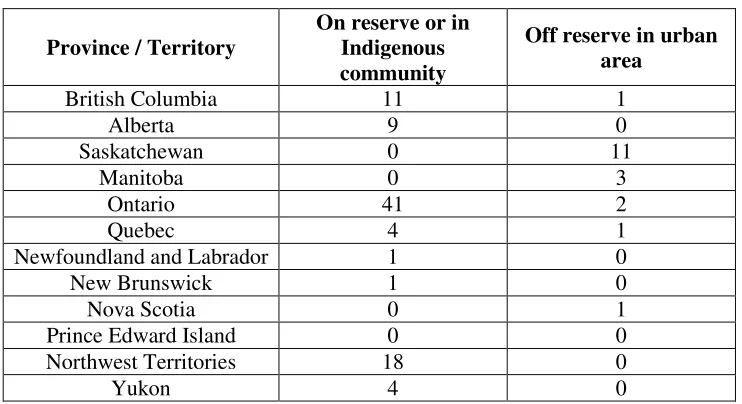
Table 1 Regulated Indigenous Child Care Services, 1993 ... 61
Table 2 Ability to Speak or Understand a First Nations Language by Community Type and Parents’ Highest Education Level ... 79
Table 3 Importance of Learning a First Nations Language by Community Type ... 79
Table 4 Importance of Traditional Cultural Events ... 80
Table 5 Participation in Traditional Singing, Drumming, or Dancing Groups or Lessons, Outside of School Hours ... 80
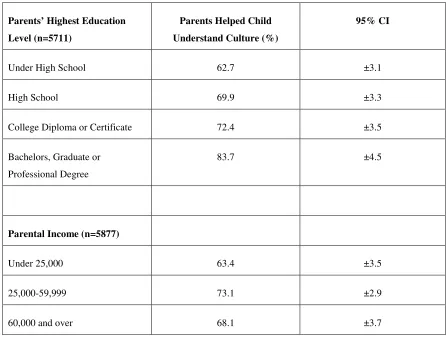
Table 6 Parental Involvement in Helping Child Understand Culture by Parental Education and Income... 83
Table 7 Ability to Speak or Understand a First Nations Language by Participation in Traditional Singing, Drumming or Dancing ... 83
Table 8 Type of Child Care Arrangements ... 84
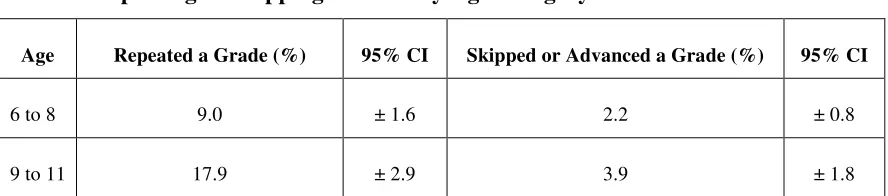
Table 9 Repeating or Skipping a Grade by Age Category ... 86
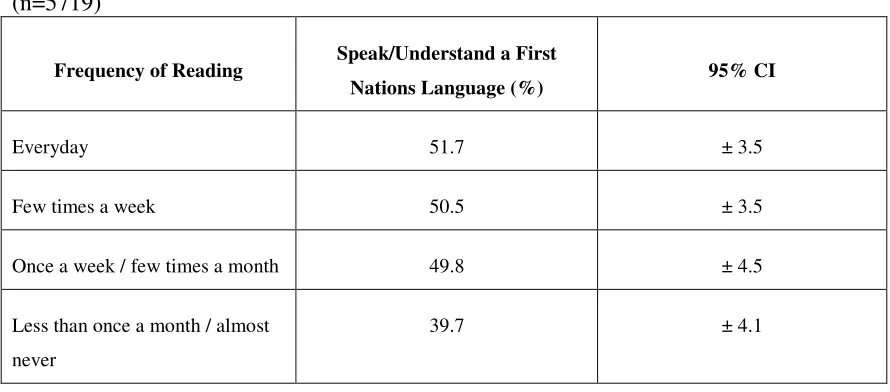
Table 10 Reading or Being Read to for Fun by Ability to Speak or Understand a First Nations language ... 88
Table 11 Missing Data ... 162
Table 12 Descriptive Results ... 168
Table 13 Bivariate Relationships (Categorical Variables), First Nations ... 171
Table 14 Bivariate Relationships (Continuous Variables), First Nations ... 171
x
Table 16 Bivariate Relationships (Continuous Variables), Non-Aboriginal ... 172
Table 17 Regression Estimates of Expected Years of Education, First Nations ... 175
xi
List of Figures
Figure 1 People Involved in Helping Child Understand their Culture ... 81
Figure 2 Community Members’ Involvement in Helping Child Understand their Culture
by Age of Child ... 82
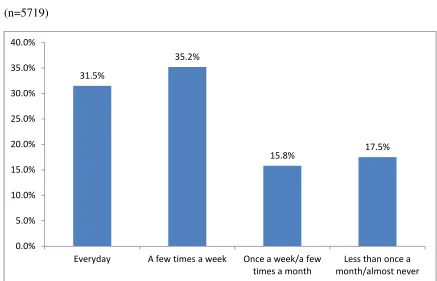
Figure 3 Reading or Being Read to for Fun ... 87
Chapter 1
“Knowledge is not a commodity that can be possessed or controlled by educational institutions, but is a living process to be absorbed and understood” (Battiste, 2002: 15).
1
Introduction
1.1 Acknowledgment of Traditional Territory
This dissertation begins by respectfully acknowledging the nations on whose land this
dissertation was researched and written: the Attawandaron, Anishinaabe, Haudenosaunee
and Leni-Lenape.
1.2 Introduction to Study
First Nations peoples in Canada have a fundamental right to education. This is both an
inherent human right and a right that is guaranteed in treaties. The education provided to
First Nations by the Canadian state, however, has historically been a source of lasting
harm (RCAP, 1996). Still today, First Nations education is under-funded and
communities struggle to regain full control of their education systems. The Canadian
government has recently admitted to and apologized for past wrong doing, yet social
justice in education has not yet materialized for First Nations. Nevertheless, Indigenous
scholars and political leaders maintain that education is a key means of enabling a good
life, and is central to self-determination (AFN, 2005; Battiste, 2005; Battiste and
McLean, 2005; Castellano, Davis, and Lahache, 2000; National Indian Brotherhood,
1972; Stonechild, 2006).
Despite the large historical and cultural diversity among First Nations, most share a
common understanding of education and learning as a holistic, lifelong process (Battiste,
2005).1 Learning, from a First Nations perspective, involves both formal and informal
1
opportunities and is fundamentally connected to land, language, spirit, and culture.
Battiste (2002:14-15) has stated:
Learning is viewed as a life-long responsibility that people assume to understand
the world around them and to animate their personal abilities. Knowledge teaches
people how to be responsible for their own lives, develops their sense of
relationship to others, and helps them model competent and respectful behaviour.
Traditions, ceremonies, and daily observations are all integral parts of the
learning process. They are spirit-connecting processes that enable the gifts,
visions, and spirits to emerge in each person.
As this quote from Battiste illustrates, at its core learning is a process of coming to know
how to live in the world through participation and relationships; relationships not only
with other people and communities, but with all of nature (Cajete, 1994). All things, both
animate and inanimate, are respected and understood as having teachings to share.
First-hand experience, including observing, listening, and acting within the natural
environment, is highly valued as a mode of learning (Ireland, 2009).
Individuals are all said to have a “learning spirit”, which is conceptualized as “an entity
that emerges from the complex interrelationships between the learner and his or her
learning journey” (CCL, 2007: 7). This spirit is continually shifting and changing,
evolving as the learner comes to know their gifts and capacities. It is said that when this
spirit is missing, learning can be difficult and unfulfilling (CCL, 2007).
As a holistic process, learning is also intricately intertwined with well-being, which is
understood to mean the total health of the total person within the total environment
(Dumont, 2005). These linkages have been well-documented in the literature. For
example, it has been shown that learning traditional language and culture contributes to
well-being by promoting a positive self-identity and by enabling greater access to
traditional healing ceremonies (McIvor et al, 2009), and that cultural continuity, a
measure of the intergenerational transmission of culture, acts as a protective factor
against suicide for youth (Chandler and Lalonde, 1998). With regard to formal education,
better access to healthy environments, more social supports, higher income, and are better
able to decipher and utilize health information, all contributing to higher well-being
(Cummins et al, 1999; Reading and Wien, 2009; Richmond et al, 2007).
Much previous research on First Nations learning and education, however, has focused
narrowly on formal educational attainment and has too often been conducted from a
deficit perspective. Existing studies have tended to utilize Eurocentric theories of
education, focusing on comparisons between First Nations peoples and the general
Canadian population. For example, a prominent framework used in the 1960s and 1970s
to explain relatively low educational attainment among Indigenous, ethnic minority, and
poor children was cultural deprivation theory (Das, 1971; Lipton, 1962). According to
Das (1971), cultural deprivation refers to “a complex set of conditions which favours
intellectual subnormality in a child” (Das, 1971: 82). These “conditions” were generally
the quality of the home environment, or, more specifically, the cultural values and
knowledge that are transmitted (and not transmitted) to children in ethnic minority or
poor families. Thus, blame was placed squarely on Indigenous families for having
cultural values and practices that predisposed them to educational failure, and the
solution advocated was for compensatory education designed to infuse Indigenous
children with the dominant culture (Gray and Beresford, 2008). Studies such as these
neglected First Nations’ beliefs about education and learning, overlooked the strengths of
First Nations peoples and knowledges, and ignored the varied sources and kinds of
learning that are important to First Nations. Research studies focused on First Nations
education also often failed to address the historical, political, and social contexts that
impact the learning experiences of First Nations peoples.
Fortunately, a great deal of work has been done by First Nations and allied scholars and
community members to reframe the conversation around First Nations education and
learning (Battiste, 2002; Castellano, Davis, and Lahache, 2000; CCL, 2007; CCL, 2009;
Debassige, 2012; Ireland, 2009; Stonechild, 2006). Notably, the Canadian Council on
focus away from learning deficits and refocused attention on the learning spirit (CCL,
2009).
Before proceeding further with this dissertation, it is customary to introduce myself
personally and situate myself within the research. This is followed by a brief policy
history of First Nations education, which is vital to setting the context for this study; as
Hampton (1995) has stated, Indigenous education “cannot be understood apart from a
historical analysis” (p. 15). Recent demographic and learning data are then presented,
before an outline of the dissertation is provided along with the key research questions that
this work sought to address.
1.3 Personal Location
Locating oneself has been shown to be an important element of Indigenous research
(Absolon and Willett, 2005; Steinhauer, 2001). Absolon and Willet (2005) state that
“identifying, at the outset, the location from which the voice of the research emanates is
an Aboriginal way of ensuring that those who study, write and participate in knowledge
creation are accountable for their own positionality” (p. 97). It also allows the reader to
better understand and assess the research (Absolon and Willett, 2005).
My name is Julie Peters. I am a White woman of European heritage who was raised by
Ken and Linda Peters on a farm in a rural area of what is now known as Southwestern
Ontario. My grandparents all arrived in Canada shortly after World War II from the
Netherlands; we are settlers in Canada. After hearing of my Dutch roots, First Nations
colleagues have joked that this explains my relationships with First Nations, referring to
the Kaswentha (Two Row Wampum Treaty) that was formed by the Haudenosaunee and
the Dutch in 1613. The Kaswentha belt has two parallel rows of purple beads that are said
to symbolize the two nations of people travelling down a river in separate vessels, side by
side but not interfering with the other. Between the two purple rows are three rows of
white beads, said to symbolize peace, friendship, and respect (King, 2007; McGregor,
2008; Two Row Wampum, 1995). As explained in the publication Akwesasne Notes
dignity and integrity of the other culture and stresses the importance of non-interference
of one nation in the business of the other, unless invited.” Even in its 400th year
anniversary, the Kaswentha remains relevant to settler/Indigenous relations, and to my
own approach to research and community work.
While I grew up just twenty minutes from Ipperwash Provincial Park and witnessed
many instances of racism in my small town high school, I did not become politicized to
First Nations rights until university. In the last year of my undergraduate education I was
talking with my faculty supervisor about potential topics for my honours thesis. I had a
notion of wanting to research and write about feminist theory, but was having difficulty
formulating a research question. At some point during our meeting, my supervisor
showed me two news articles that had been published in a Canadian newspaper. The first
headline mentioned a young mother who had been found murdered in a hotel room while
the second, which had been published a few days later after the identity of the woman
had been released, had a headline bluntly stating that a “Native prostitute” was found
dead. The difference in tone between the two articles was astounding. It was clear that in
the eyes of the media, the life lost clearly held more value before the woman’s ethnic
identity and line of work were revealed. This encounter provided the impetus for my
undergraduate thesis on missing and murdered Indigenous women in Canada.
As the thesis was nearing completion, I was invited to present my research at a
conference being organized by the Four Directions Aboriginal Student Centre on campus.
I was extremely nervous at the prospect of sharing my work as this was to be my first
conference presentation, and also because I would be speaking to a primarily Indigenous
audience. I felt my outsider status acutely and worried that I would be perceived to be
contributing to the problem of Indigenous communities being “researched to death”
(Castellano, 2004).
Thankfully, the conference environment was welcoming and inspiring. After the session
ended a woman approached to tell me the story of her sister who had gone missing, and
the experience her family had with the police and trying to draw attention to the case. Her
knowledge and understanding among much of the Canadian population, and it entrenched
my desire to do something. This led to volunteering in various capacities in the
Indigenous community in London. The insight and knowledge gained in these contexts
was and is important to my learning journey and I am thankful for all the people I have
encountered along the way. The desire to “do something” also involved continuing to
focus on First Nations contexts within my research.
Nonetheless, the nervousness and self-doubt I felt before attending that conference have
never fully gone away. It has ebbed and flowed, but is always present. I continue to
struggle with whether or not I should be conducting this research. As a woman of
European heritage who experiences privilege daily, I have not had the lived experience to
ground this work. Part of this experience for me, as a non-Indigenous person doing
Indigenous research, has been about how to act as an ally, to situate my research as
furthering respect and understanding, and finding the pieces that felt possible/suitable.
There are also a few quotes that I have found encouraging: Latin American Jewish
feminist Judit Moschkovich (1981: 79) wrote “it is not the duty of the oppressed to
educate the oppressor”; Plains Cree Métis scholar Emma LaRocque (1993: 76) has
written, “The onus for change cannot rest solely on Aboriginal shoulders. White people
in positions of power must share the burdens of finding answers, as they have been part
of the problem”; and from Mohawk scholar Marlene Brant Castellano (2000: 23),
For non-Aboriginal people the challenge is to open up space for Aboriginal
initiatives in schools and colleges, work sites, and organizations so that
Indigenous ways of knowing can flourish and intercultural sharing can be
practiced in a spirit of coexistence and mutual respect.
Thankfully, the times of greatest insecurity have also been followed by experiences,
conversations, or readings that reignited my passion.
1.4 A Brief History of First Nations Education
First Nations have long had their own modes of education. These have not been static,
methods, common practices across nations have included ceremonies, oral histories,
teaching stories, learning games, apprenticeships, formal instruction, and tag-along
teaching (Buffalohead, 1976 as cited in Hampton, 1995). Traditionally, the teachers were
the community members, and each adult had a responsibility to each child to ensure they
knew how to live a good life. It was a process that “provided the young with the specific
skills, attitudes, and knowledge they needed to function in everyday life within the
context of a spiritual worldview” (Kirkness and Selkirk Bowman, 1992: 7). Indigenous
modes of education were disrupted by the arrival of Europeans, as will be shown over the
following pages, but it is important to remember that Indigenous knowledge and methods
of teaching and learning have continued and are being revitalized. The purpose of this
history is not to privilege Eurocentric education, but to provide the historical context for
the current state of First Nations education.
1.4.1
European Contact
The first known European educational institutions for Indigenous youth were established
near Quebec by the Recollets in 1620. The French policy on Indigenous education at the
time has been referred to as ‘[f]rancization’, which was based on the Recollets’ belief that
Indigenous peoples needed to be turned into ‘Frenchmen’ before they could be converted
to Christianity (Jaenen, 1986). A thoroughly French education was thus required. To this
end, the Recollets would single out Indigenous boys for schooling, educating them at the
seminary or sending them to France where they could be fully immersed in French
culture and language. It was assumed that these students would then return to their
communities and form an Indigenous elite that could assist in Christianizing the rest of
the population (Jaenen, 1986). However, the Recollets were largely unsuccessful. They
were never able to attract large numbers of students to their seminary or to France, due
largely to parents being unwilling to part with their children for extended periods of time.
In 1629 the English captured Quebec, and the Recollets along with the Jesuits, who had
arrived in New France by this time, were forced to leave the colony. When Quebec was
returned to France in 1632, it was the Jesuits who were given a monopoly over
The Jesuits initially adopted quite a different approach to the education of Indigenous
peoples than that taken by the Recollets. Rather than instructing only a few students in
separate, thoroughly French educational institutions, the Jesuits focused on delivering
education within Indigenous villages and in Indigenous languages. The focus of
instruction was on Christian doctrine rather than on French language and customs.
However, by mid-1630 the missionaries began to feel that the greatest impediment to the
Christianization of the Indigenous peoples was the nomadic lifestyle of the nations they
were attempting to Christianize. Thus, the Jesuits concluded that rendering the
Indigenous peoples sedentary was an important step in conversion to Christianity. A plan
was devised that involved establishing permanent settlements for the Indigenous nations
near French settlements, where the missionaries could be in constant contact with the
tribes and the Indigenous peoples could become accustomed with the French language
and way of life. The first reserve, the Sillery habitation, was established in 1637 near
Quebec (Magnuson, 1992). While these early “reserves” did not have formal schools,
missionaries would conduct instruction in various places around the settlements. In
addition to Christian training, education was largely of a practical nature, focusing on
teaching the Indigenous peoples agricultural practices with the goal of transforming them
into self-sufficient farmers.
While the attached settlements were somewhat successful in winning Christian converts,
they experienced less success in encouraging Indigenous people to take on a French way
of life. The reserves were also plagued by disease and social and economic problems.
Thus, despite initial success, most of the reserves experienced sharp population decline
leading many, like the Sillery reserve, to fade into non-existence (Magnuson, 1992). By
this time, the Jesuits had already begun to shift their emphasis, focusing on residential or
boarding schools in French towns as the primary means of delivering education to the
Indigenous population (Jaenen, 1986).
Residential schools were seen by the French as an attractive option for educating
Indigenous youth, as the children could be removed from the influence of their parents
attend residential institutions, however, proved to be a difficult task. Parents were often
apprehensive about allowing their children to live among the French, and children who
were sent to attend residential institutions would often run away. The schools were also
expensive to run, as the communities and parents who offered their children to the Jesuits
for instruction expected gifts and continued material assistance for doing so, and the
children attending the institutions needed to be housed and fed (Jaenen, 1986). For these
reasons, day schools were also in operation, with the day school pupils always
outnumbering those in residential institutions.
French teaching and instruction styles, which involved treating the students like adults,
using strict discipline, fostering competitiveness, and emphasizing recitations and
examinations, were largely incompatible with the traditional education of Indigenous
students. Students resisted and refused to cooperate, and the French found that those who
were successfully educated and Christianized were ineffective at preaching the word to
their people (Miller, 1996). One Ursuline sister, Mother Marie de l’Incarnation
commented that “out of a hundred that have passed through our hands scarcely have we
civilized one” (as quoted in Jaenen, 1986: 58).
Around 1668, after the elevation of New France to a Royal Colony, there was renewed
pressure from the French government to use boarding institutions to educate and
ultimately assimilate Indigenous youth. The French administration saw the conversion of
Indigenous peoples into Frenchmen as a means of securing and populating their colony in
the New World without depopulating Old France. Seen to be failing in this regard, the
Jesuits were accused by the Crown of not working effectively towards teaching French
customs and language. However, what the French administration did not realize was that
the Jesuits had attempted to convert the Indigenous peoples to French ways, but had
found this approach wanting. The Ursulines, brought to New France to educate
Indigenous girls, supported the Jesuits stating that acculturation had not been successful
due to the ‘tenacity of the Indigenous culture’ (Magnuson, 1992: 61). In addition to the
difficulty of ‘Frenchifying’ the Indigenous peoples, it began to be clear that assimilation
be essential to the fur trade and strong military allies just as they were. Thus, in 1685 the
governor of New France stated that the policy of Frenchification was not working and
called on the Crown to alter their policy. By the end of the century, assimilative
residential schools for educating Indigenous youth had been largely abandoned by the
French and few Indigenous children were attending French schools (Miller, 1996).
1.4.2
Pre-Confederation in British North America
Prior to the War of 1812, the British were not concerned with assimilating Indigenous
peoples as their knowledge and skills were useful to the British in their roles as military
allies and as essential partners in the fur trade. Maintaining these partnerships was of the
utmost concern. After the War of 1812, however, with hostilities subsiding and the fur
trade on the decline, the Indigenous population began to be seen as an impediment to
European settlement. It was at this time that there began to be a shift in focus from
maintaining Indigenous peoples as allies, to, in the words of a former secretary of state
for the colonies, “reclaiming the Indians from a state of barbarism and introducing
amongst them the industrious and peaceful habits of civilized life” (as quoted in Wilson,
1986: 66).
Reflecting this shift in thinking, responsibility for Indigenous peoples was formally
transferred from military to civilian authorities in 1830. Civilian authorities quickly
adopted a new policy that was based on ‘civilizing’ the Indigenous peoples through
education. While there had been educational institutions established in British North
America prior to this change in policy, these institutions were run entirely by church
organizations without assistance from the Crown (Chalmers, 1972). After 1830, however,
the colonial government began to take an express interest in the establishment and
operation of schools for Indigenous peoples and numerous new schools were opened. The
operation of the schools was largely left in the hands of missionary organizations, and the
costs for building and running schools was shared between the colonial government,
As part of the new policy of civilizing and assimilating the Indigenous population, efforts
were first made to establish reserve lands on which the Indigenous peoples could settle.
Similar to earlier attempts by the French, the hope was that the Indigenous peoples would
abandon nomadic lifestyles and become sedentary farmers, adopting a European way of
life. Schools were established on the reserves to provide rudimentary education and
Christian teachings. The reserves proved to be a failure, however, after a number of the
first experiments were unable to retain a sizable Indigenous population (Miller, 1996).
By the mid-1840’s, realizing that the traditional livelihood of Indigenous peoples had
been eroded due to the rapid expansion of British settlement, the government shifted its
focus to manual labour schools, as recommended by the Bagot Commission in 1844. In
addition to Christian training, these schools were to teach Indigenous peoples practical
skills that could help them to survive in the White man’s world while promoting
assimilation. According to Captain Anderson, a superintendent of Indian Affairs, by
attending manual labour schools Indigenous children were to “forget their Indian habits,
and be instructed in all the necessary arts of civilized life, and become one with [their]
White brethren” (as quoted in Wilson, 1986: 72). Boys would be taught trades such as
carpentry, shoemaking and blacksmithing, while the girls would learn domestic skills
such as sewing and knitting. That the proposed industrial schools were to be large and
centrally located was seen to have the added advantage of removing students from the
influence of their families.
In 1846 the colonial administration met with various chiefs in Orillia to persuade them to
accept the government’s plans to establish manual labour schools for the education of
Indigenous children and to settle larger, permanent areas around the schools. The
Indigenous bands were to put one fourth of the annuities they received from the
government towards supporting the educational institutions. Despite some objections to
their relocation into concentrated settlements and to the Christian nature of the schools,
the assembled chiefs ultimately gave their support to the proposed plan. Many of the
supporters, however, hoped that the schools would eventually be run by their own people
While numerous manual labour schools were opened in the decades following the
commission, they quickly lost the support of the Indigenous peoples. An 1856 Special
Commissioner’s report on Indian Affairs found that authorities were having difficulty
persuading Ojibwe parents to send their children to manual labour schools on the Sarnia
reserve, and less than half of the potential school population was attending school on the
Six Nations reserve on the Grand River. The report came to the conclusion that “this
benevolent experiment has been to a great extent a failure”, and the focus began to shift
to day schools (as quoted in Miller, 1996).
1.4.3
Confederation to World War II
Under the British North American Act of 1867, all aspects of Indigenous affairs became
the responsibility of the Canadian federal government. This included education, which
had been promised in the various treaties signed between Indigenous nations and the
Crown. While the treaties generally promised day schools on reserves, problems with
attendance and the perception that day schools were ineffective in assimilating
Indigenous peoples led to a search for alternatives (Miller, 1996). After the establishment
of the Indian Act in 1876, MP Nicholas Flood Davin was assigned the task of
investigating the United States’ use of residential schools for educating American Indians
to see whether this would be a suitable model for Canada. In his 1879 report, Davin
recommended that similar institutions be established in Western Canada (Haig-Brown,
1988). Although the federal government was responsible for Indigenous education, the
administration of the schools was to be delegated to the various church missions that
were already engaged in the venture. Thus, unlike provincial schools at the time, schools
for Indigenous children were to be denominational and wherever possible existing
mission schools were to be used. While Davin also recommended that the schools both
employ and teach Métis peoples, who he saw as the “natural mediator between the
Government and the red man”, the government insisted that it would only provide funds
for the education of Status Indians and there are no records of attempts to recruit Métis
Similar to the earlier experiences with manual labour schools and with boarding
institutions in New France, recruitment and retention of Indigenous children at the
residential schools became a key issue. In 1893 the government, looking to cut costs,
instituted a per capita school funding system that shifted more of the financial burden for
schooling onto missionary organizations and students. Maintaining maximum enrollment
became of utmost concern for missionary groups, while at the same time inadequate
financial resources led to poorer school conditions which made the residential institutions
less attractive to Indigenous families. In order to counter declining enrolments and ensure
steadier funding, missionary groups pressured the government to make school attendance
mandatory. Heeding their concerns, the Indian Act was amended in 1894 to make school
attendance at a day, boarding, or industrial school compulsory for ten months of the year
for all Indigenous children over age six (Grant, 1996).
By the turn of the century, serious concerns were being raised about the health and safety
of students attending the schools. Diseases such as tuberculosis ran rampant and mortality
rates were alarmingly high. A 1907 report from the department’s chief medical officer
stated that the death rate due to tuberculosis among Indigenous students in the West was
24% and Duncan Campbell Scott, the deputy superintendent general of Indian Affairs,
conceded that about half of the children who attended boarding institutions did not live to
benefit from the education they received (Miller, 1996: 133). For those students who did
survive their years in boarding establishments, the education they received was minimal
at best. The schooling often focused more on religious indoctrination and manual labour
than on academic knowledge. When students left the schools they were ill-equipped to
compete for jobs in the ‘White man’s world’, and were alienated from their own
communities (Chalmers, 1972).
In 1910, concerned with the high costs associated with educating Indigenous youth and
the failure of educational institutions to transform students into successful members of
the dominant society, the government again shifted its educational policy. Abandoning
the prior focus on preparing Indigenous students for life in White society, the new
integration to segregation (Miller, 1996). The curriculum, already far less advanced than
that of provincial schools, was simplified further and any new facilities built were to be
basic day schools which could offer education to Indigenous youth at a far lower cost to
the government (Barman et al, 1986). In the 1920s, the Industrial school model was
completely abandoned and all former industrial and boarding establishments came to be
known as residential schools (Miller, 1996).
The education received in both residential and day schools in the early- to mid- twentieth
century was minimal and basic. The teachers usually did not hold a teaching certificate
and the principals were normally clergymen who had little experience with developing
instructional programs (Chalmers, 1972). With regard to residential schools specifically,
a half-day system was typically followed in which students were to receive classroom
instruction for half of the day and learn practical skills, usually agricultural, for the
remainder of the day. In addition to ensuring that Indigenous pupils received only a very
basic scholastic education, this system allowed the administration to extract free labour
from students by having them perform chores around the schools as part of their
‘practical instruction’. In fact, officials at the time had expressed hope that residential
schools might become financially independent through the manual labour of their
students (Miller, 1996: 157). Needless to say, few students progressed past the primary
grades regardless of how many years were spent in school. In 1930 only 3% of
Indigenous students had progressed past grade 6 and three-quarters of all those in school
were in grades 1 to 3. In comparison, about one third of students were beyond grade 6 in
the provincial school system at the time (Barman et al, 1986).
Aware of the dismal academic results, various Indigenous individuals, leaders and groups
brought their concerns to the government. For example, a parent of a student at Battleford
residential school refused to send his child back, telling the Indian agent that his son
could not read, speak or write English after five years of attendance, his time having been
spent performing farm labour rather than learning (Miller, 1996). In 1911, a delegation
from Saskatchewan to the Superintendent of Indian Affairs requested that less emphasis
the League of Indians of Western Canada passed a resolution asking that the Department
of Indian Affairs develop local day schools on reserve since students in residential
schools were progressing so slowly (Sluman and Goodwill, 1982). The next year the
League pushed the department to require that teachers have proper certification and that
students in residential schools spend more time in the classroom (Barman et al, 1986).
Little was done to respond to these requests.
As would later become more widely known, not only did little academic learning occur in
residential schools, for many First Nations students residential schools were places of
emotional, physical, and sexual abuse. Children were taken, often forcefully, from their
homes, had their hair cut, were clothed in European style of dress, and were placed in
unsanitary living conditions. Students were taught to be ashamed of their culture and to
see themselves and their people as inferior and immoral, often facing punishment if they
spoke their native language (Miller, 1996). Physical abuse was also common place in
residential schools, and it is clear from government documents from the time that church
and department officials were aware of the abuse and chose not to put a stop to it. For
example, in the early 1900s, an inspector of Indian Agencies named W. Graham brought
numerous cases of abuse to the attention of the Department of Indian Affairs. One such
case involved a principal at Crowstand School who had tied ropes to the arms of a
number of boys who had attempted to run away, making them run behind the buggy for
eight miles. In another case, a boy from the Anglican Old Sun’s School who had run
away was shackled to a bed, stripped and beaten mercilessly. In all of the cases brought
forward by Graham, the Department refused to heed Graham’s requests to have the
offenders removed from the schools, siding instead with the churches which defended the
actions of their employees (Milloy, 1999). Despite numerous suggestions that regulations
on the acceptable use and limits of punishment should be sent to school principals, no
such regulations were ever issued. Principals and school staff thus disciplined children as
they saw fit, with records showing that students experienced a litany of abuses including
chaining and shackling, being locked in small, dark spaces, having their heads shaved,
While almost entirely absent from government documents of the time, reflecting the
general lack of discussion of sexual matters in that period more generally, it is now
widely known that sexual abuse was also pervasive. According to the Aboriginal Healing
Foundation, while residential school students had long spoken about their negative
experiences, it was a B.C. social worker working with clients from the Nl’akapxm First
Nation in 1987 that acted as a catalyst in bringing to light the full extent of the abuses
endured by former students. Examining the personal disclosures of Nl’akapxm clients,
she discovered that most of the Nl’akapxm who had attended St. George’s Residential
School had been sexually abused during their time there. A criminal investigation
followed and a former dormitory supervisor was convicted of sexual assault, drawing
media attention to the issue and setting the stage for other former students to bring
charges forward (Aboriginal Healing Foundation, 2005). Former students of St. George’s
Residential School also brought a lawsuit against the Anglican Church and the Canadian
Government, becoming the first such civil case to come to trial in Canada. By 1999, 2500
lawsuits had been launched over abuse at residential schools (Miller, 2000). While it is
not known exactly how many students experienced sexual abuse, one study estimated that
48% to 70% of residential school students in one First Nations community were sexually
abused (Chrisjohn and Belleau, 1991).2
1.4.4
1940s to 1960s
It was not until the 1940s and 1950s that the government began to once again rethink its
education policy. Funding cutbacks during the First World War, the Depression, and the
Second World War had left federal schools severely under-resourced. At the same time,
the atrocities of the Second World War brought an increased awareness of
institutionalized racism and human rights issues to the general public, drawing attention
to the treatment of Indigenous peoples. Impetus for change was also provided by the
2
large number of Indigenous men returning from war who were increasingly unwilling to
accept inferior treatment after fighting for their country (Miller, 2000).
In 1946 a Special Joint Commission of the Senate and House of Commons was formed to
examine and formulate suggestions for how to improve the Indian Act. With regard to
education, the committee noted that residential schools were failing to both educate and
assimilate Aboriginal children and should thus be abandoned. It was proposed that where
possible, Indigenous students should be integrated into provincial schools (Bear Nicholas,
2001). Based on these suggestions, the revised Indian Act of 1951 included provisions for
the federal government to strike tuition agreements with provincial and territorial
authorities for Aboriginal students to be educated in provincial schools. By the year 1960,
about one quarter of Aboriginal students were attending provincial institutions (Barman
et al, 1986). Among the first generation of students to attend public schools, however,
dropout rates were alarmingly high with approximately 94% of Aboriginal students
leaving school before graduating grade 12, compared to 12% of non-Aboriginal students
(Canada Indian Affairs Branch, 1967).
Despite the Commission’s clear proposal to abandon residential schools in 1946, strong
resistance from the churches, and in some cases from Aboriginal communities
themselves, lengthened the process of winding down the school system. By 1960, over 60
residential schools remained in operation (Aboriginal Healing Foundation, 2007). Over
the next decade, however, a number of factors combined to produce more rapid change.
For one, the government formally ended its partnership with the churches in 1969,
effectively secularizing Aboriginal education and stifling a key source of opposition
(RCAP, 1996). In terms of public attitudes, the civil rights movement in the United States
and decolonization struggles in Asia and Africa were bringing attention to equal rights
for minority groups and made addressing the issue of Aboriginal well-being a moral
imperative (Miller, 1996). Further, various government reports were commissioned
during this time to investigate the needs of the Aboriginal population, with two such
reports explicitly condemning residential schools. Both released in 1967, Caldwell’s
Canada, commonly known as the Hawthorn Report, provided strong criticisms of the
residential school system and supported the government’s policy of integrating students
into provincial schools. Both recommended that the government cease to operate
residential schools and Hawthorn suggested that the former residential establishments be
converted to hostels where children could board to attend regular schools. Rather than
disputing the criticisms of the federal school system, the government endorsed the reports
and used them to support their position on integration (Milloy, 1999).
1.4.5
Education in the North
The development of European-style education in the North3 occurred at a different pace and time than elsewhere in Canada, but followed largely the same overall pattern. From
1670 to 1870, the Hudson’s Bay Company (HBC) controlled large swaths of land in the
North and West due to a royal charter granted to the company by King Charles II.
Interested solely in trade, HBC initially discouraged missionary activity on its land and
had no desire to educate or assimilate the Indigenous population (Carney, 1995). After
these lands, known as the North-Western Territory and Rupert’s Land, were ceded to the
newly formed Dominion of Canada in 1870, missionaries began to have a larger presence
in the North and expanded on the few mission schools that had been opened in the 1860’s
(Macpherson, 1991b). However, like the Hudson’s Bay Company, the Canadian
government had little interest in educating the Northern Indigenous population, as it was
assumed that having a formal education was futile for peoples living in such isolated
regions. The Canadian government also hoped that Northern Indigenous peoples would
maintain their traditional lifestyles and thus not rely on the government for assistance
(Milloy, 1999).
With little involvement from the Canadian government, education was left in the hands of
the religious groups that operated missions in the North, primarily the Anglican and
Catholic Churches. A number of day and residential facilities were slowly established
3
and, after repeated appeals to the federal government for assistance, limited funding
began to be provided in the 1890s (Coates, 1991; Macpherson, 1991b). The government
was not convinced, however, that education in the North was necessary or desirable and
remained generally disinterested in Northern educational activities (Bonesteel, 2006).
Unwilling to establish a territory-wide education system, new schools were opened only
when missionaries pressured the government to provide funds, and, even then, funding
was provided reluctantly (Coates, 1991). Reflecting the government’s sentiment, Frank
Oliver, Minister of the Interior, granted the capital and operating costs for a new boarding
school in the Yukon in 1909 but stated, “I will not undertake in a general way to educate
the Indians of the Yukon. In my judgment they can, if left as Indians, earn a better living”
(as quoted in Coates, 1991: p. 138). Due to the lack of government support and the
meager funds available, the schools that were established were marked by inadequate
facilities, unqualified teachers, a lack of supplies and curriculum, and they operated
intermittently, closing and opening based on the availability of teachers and funds and on
the migratory patterns of the Indigenous populations (Coates, 1986; Macpherson, 1991b).
It was not until after World War II that the federal government began to become truly
involved in the education of Northern Aboriginal peoples. In the post-war period, a
renewed interest in issues of social justice and the well-being of disadvantaged
Canadians, as well as a concern for Arctic sovereignty, brought a flurry of new programs
to the North designed to improve everything from health, to housing, to employment
(Bonesteel, 2006). Education also became a concern, and a number of reports were
commissioned to investigate the current state of affairs and what should be done. In 1955
it was arranged that the Department of Northern Affairs and National Resources would
take on responsibility for educating children in the Northwest Territories, and in 1956 all
mission school teachers were made federal employees. In 1955 an aggressive school
construction program was also announced to expand the meager education system. Many
of the new schools were accompanied by hostels to house students from outlying areas
and, in line with the federal government’s wider push towards integrated schooling, the
schools were to educate both Indigenous and non-Indigenous students (Macpherson,
Affairs in the 1950’s, the number of schools in the Northwest Territories grew rapidly
from only 18 in the entire territory in 1953 to 30 schools in the Mackenzie Educational
District and 25 in the Arctic Educational District in 1962 (Macpherson, 1991b).
The move towards federal control also brought a dramatic shift in the curriculum being
offered in Northern schools. Under federal authority, school programming began to more
closely resemble the curriculum in southern schools and English or French were the only
languages of instruction (Coates, 1991; Milloy, 1999). While the Department of Northern
Affairs, professing to have learned from the mistakes of the southern school system,
stated that their educational policy was to ‘maintain the native way of life’ and ‘preserve
the pride of the race’, critics asserted that inside the classroom assimilation remained the
primary goal (Milloy, 1999).
By the late 1960’s, jurisdiction over Northern education was once again changing hands.
The creation of a new government in the Northwest Territories with Yellowknife as its
capital led to the devolution of a number of federal powers in 1967. Education was
devolved soon after, and by 1970 the Northwest Territories government had full
jurisdiction over education (Macpherson, 1991b). In the Yukon, virtually all of the
schools were under the authority of the Yukon territorial government by the late 1960s
(Coates, 1991). Arctic Quebec followed a similar pattern, with provincial schools being
established in most communities in the 1960s. The Quebec government, seeking to assert
control over Inuit affairs, offered an alternative education system to the pre-existing
federal system but both federal and provincial schools continued to operate
(Vick-Westgate, 2002).
1.4.6
Indian Control of Indian Education
A watershed moment in Indigenous education across the country occurred in 1969 with
the release of the ‘White Paper’ and the subsequent Indigenous response. Produced by
Trudeau’s Liberal government, the White Paper argued that in order for the conditions of
Indigenous peoples to be improved they needed to be made full and equal citizens in
Department of Indian Affairs eliminated, and all special legal status for Indigenous
peoples was to be removed. Indigenous peoples were to become just one more element in
a multicultural society.
First Nations reacted swiftly to the proposed policy, condemning the paper as an attempt
by the government to shirk its responsibility to First Nations. Soon after, various
Indigenous organizations began producing position papers voicing their intense
opposition to the terms of the White paper, with education becoming a key concern. One
of the most significant of these position papers was the National Indian Brotherhood’s
1972 paper titled Indian Control of Indian Education. At this time, the government had
already abandoned the White Paper due to the strong and united Aboriginal opposition
and had promised to consult with First Nations groups in the formulation of a new policy.
The National Indian Brotherhood’s paper was a comprehensive statement of the need for
local control of Aboriginal education, inspired in part by events such as the 1970 Blue
Quills Residential School sit-in, in which the community successfully resisted the
school’s closure, demanding it remain open under community control. The government,
already committed to phasing out the failed and costly residential schools and finding that
integration was not more academically or socially successful, acquiesced and accepted
the Brotherhood’s position paper in principle (Longboat, 1986).
After accepting Indian Control of Indian Education as the national policy statement on
Aboriginal education, the government began to devolve some administrative control of
schools to First Nations communities. In most cases, the devolution of responsibility to
First Nations communities resulted in very little actual control over the content and
delivery of education. More comprehensive change came about in Northern Quebec due
to the James Bay and Northern Quebec Agreement (1975), which was the first major land
claim settlement in Canada. The agreement contained detailed provisions on education,
including the creation of a Cree and an Inuit school board. The two school boards were
given the power to develop and deliver culturally-appropriate curriculum and to use Cree
Overall, however, there were many misunderstandings and struggles over the meaning
and implementation of Indian control. Frustrated with the pace and direction of change,
the Assembly of First Nations (AFN) produced Tradition and Education: Towards a
Vision of the Future in 1988, which was a rearticulation of the ideas in Indian Control of
Indian Education. However, more than just updating and revising the original policy
statement, Tradition and Education reflected a clear shift in thinking among First Nations
leaders about the meaning of Indian control. While Indian Control of Indian Education
spoke about control in terms of devolving responsibility for education to bands that
would have authority over education similar to that of provincial school boards, Tradition
and Education emphasized Aboriginal peoples’ inherent right to self-government as the
basis for control over education (Abele et al, 2000). It was argued that a Constitutional
amendment was needed to formally recognize and affirm this inherent right, or, at the
very least, federal legislation that would ensure future dealings between First Nations and
the federal government were on a government-to-government basis.
To aid in the transition process, Tradition and Education demanded that the government
provide the funding necessary to create a new administrative structure, establish national
and regional educational institutions, formulate long-term education plans, research First
Nations learning styles and to develop new curriculum. Monetary issues were central to
the report, as it was argued that funding was a key barrier to First Nations jurisdiction
over education. For First Nations to truly take control of their education systems funding
would need to be adequate and sustainable and First Nations would need to have full and
complete control over the allocation and management of resources (AFN, 1988).
The government responded to Tradition and Education by commissioning James
MacPherson to review the document. His findings were published in the MacPherson
Report on Tradition and Education: Towards a Vision of Our Future in 1991.
MacPherson reported that the federal government’s Aboriginal education policy was
extremely skeletal and unclear. Echoing the AFN proposal, it was recommended that a
constitutional amendment be made to provide a strong foundation for First Nations
implement a National Indian Education Law that would specify the role of First Nations
in developing education policy, affirming their jurisdiction and control. The law would
also include provisions for the establishment of a national advisory committee and a
national Indian education institute that would aid in the transition to First Nations control
and contribute to the development of national education policies (MacPherson, 1991a).
While MacPherson generally supported the AFN proposals, Abele, Dittburner and
Graham (2000) noted that the two documents differed in their understanding of the
meaning of self-government. Seeking to assure the federal government and the public
that self-government was not a ‘scary concept’, MacPherson stated in the report that it
should not be thought of in terms of self-determination:
We should not allow our pre-occupation with the place of Quebec in Canada or
our political and legal thinking rooted in the concept and definition of federalism,
to lead us to the facile, but wrong, conclusion that self-government means
independence or self-determination (MacPherson, 1991a: 42).
This could be understood as in contrast to the AFN assertion in Tradition and Education
that self-determination is central to their call for jurisdiction over education:
The recognition and reflection of the inherent right to be and to remain distinct
First Nations and to exercise local self-determination over local education
programs through self-government is at the heart of this Declaration of First
Nations Jurisdiction over Education (AFN, 1988: 38).
Further, MacPherson did not use the term ‘inherent right’ at all in his report.
Nevertheless, Tradition and Education and the subsequent MacPherson Report brought
First Nations education back to the national arena.
It could be argued that the federal government attempted to respond to the
recommendations of MacPherson and the AFN by including a constitutional amendment
recognizing First Nations’ “inherent right of self-government within Canada” in the 1992
re-opening constitutional debates, the federal government in 1995 introduced a new policy
known as the Aboriginal Self-Government Policy, which officially recognized Aboriginal
peoples’ inherent right of self-government under section 35 of the Constitution Act, 1982
and established the willingness of the federal government to enter into self-government
negotiations with First Nations.4 This policy statement did not attempt to delineate uniform terms for Aboriginal self-government, but rather proposed that self-government
agreements be negotiated that are tailored to the needs of each First Nation. The broad
guidelines structuring these agreements were that Aboriginal jurisdiction could apply to
matters that are internal to their communities, integral to their distinct identities, and
essential to their operation as a government. Education is explicitly listed as an area for
negotiation.
While self-government agreements with education provisions had been created prior to
the 1995 Aboriginal Self-Government Policy, for example the aforementioned James Bay
and Northern Quebec agreement, this policy was important because it established a new
willingness on the part of the federal government to constitutionally protect the rights
negotiated in self-government agreements. Rights set out in agreements that are protected
by the constitution are thus considered to be treaty rights, making them much more
difficult to violate, restrict or rescind than those established in previous agreements.
Since 1995, there have been a number of self-government agreements and agreements in
principle signed that explicitly address jurisdiction over education. Examples of these are
the Nisga’a Final Agreement (1998), the Anishinaabe Government
Agreement-in-Principle (1998) and the Westbank First Nation Self Government Agreement (2003).
These agreements generally contain provisions stating that the First Nation(s) will have
jurisdiction over pre-school, elementary and secondary education, including the power to
make laws with regards to education. However, as many commentators have noted, these
agreements also all include at least one clause stating that the education provided by the
First Nation must be comparable to that provided in the provincial system, in effect
4
constraining the participating community’s ability to truly exercise jurisdiction and
control over education (McCue, 1999; Morgan, 1998).
British Columbia recently began a new approach to negotiating jurisdiction over
education with First Nations in the province. Rather than negotiating jurisdictional issues
with each First Nation through the self-government agreement process, a framework
agreement between the province, the federal government and First Nations in B.C. was
signed in 2006 that outlined a process for transferring responsibility for elementary and
secondary on-reserve education to First Nations in B.C. that decided to opt-in to the
agreement. As part of the agreement, a B.C. First Nations Education Authority composed
of all participating First Nations acts as a regulatory body for teacher certification, school
certification and the development of curriculum standards for core courses. Supported by
the passage of both federal and provincial legislation5, participating First Nations were able to make laws with regard to education and design and deliver education programs. In
2010 a new “comparable education” approach was announced by the federal government
in which First Nations students in B.C. would be able to transfer without academic
penalty to provincial schools. To access the new approach First Nations were required to
either sign an education self-government agreement or sign on to a new Tripartite
Education Framework Agreement. The Tripartite Education Framework Agreement was
signed between the government of Canada, B.C., and the First Nations Education
Steering Committee, with almost all First Nations opting in to the agreement (AANDC,
2012).
In terms of off-reserve education, a number of provinces have produced policy
frameworks and initiatives designed to improve the quality of education provided to First
Nations, Inuit and Métis students in their schools. For example, Manitoba created the
Aboriginal Education Action Plan, 2004-2007 (2004), Saskatchewan has an Indian and
Métis Education Policy from Kindergarten to Grade 12 (1995),British Columbia
5