Glaucoma Analysis via Cloud Assisted System
Jayashree Agarkhed, Nabila Anam
Professor, Dept. of Computer Science and Engineering, P.D.A College of Engineering, Gulbarga, Karnataka, India
PG Scholar, Dept. of Computer Science and Engineering, P.D.A College of Engineering, Gulbarga, Karnataka, India
ABSTRACT: There has been increasing interest in the utilization of automatic computer assisted methods for the diagnosis of many eye diseases which mainly include diabetic retinopathy, cataract, and glaucoma and so on. However, these methods are standalone software’s with limited and generally basic functionality restricting its usage by common people. Glaucoma screening method via the cloud platform is presented which utilizes an automated system for consultation. All the information including the user’s health state, patient’s fundus image and the generated screening report are collected and distributed via the cloud platform. Since the vision loss in glaucoma patient is permanent and irreversible, a feasible and practical means for glaucoma diagnosis is presented, with everywhere access nature of the screening system via cloud allowing the disease to be detected earlier for effective management of the glaucoma disease and allowing the screening to be conducted in huge scale.
KEYWORDS: Glaucoma, Screening, Cloud Platform, Fundus Image.
I. INTRODUCTION
Healthcare has always a big concern, since it involves the status of life a given individual can have. It is always better to prevent an illness than to heal it, so patient monitoring is essential as a periodic activity. In contrast to traditional method, using a cloud based solution, the patient need not visit hospitals rather access the health services via the cloud which helps him/her in saving time and money.
Glaucoma is a chronic and irreversible neuro-degenerative disease in which the neuro-retinal nerve that connects the eye to the brain (optic nerve) is progressively damaged and patients suffer from vision loss and blindness [1]. The timely detection and treatment of glaucoma is very crucial to save patient’s vision. Computer aided diagnostic systems are used for automated detection of glaucoma that calculate cup to disc ratio from colored retinal images.Glaucoma leads to damage to the optic nerve head with progressive loss of retinal ganglion cells and their axons. This leads to a progressive loss of visual field. Around the world, Glaucoma is the second driving base of visual deficiency, influencing 60 million individuals by 2010, and accountable of roughly 5.2 million instances of visual impairment [2]. The end stage of glaucoma is referred to as absolute glaucoma. There is no working vision, the pupillary reflex is vanished and the eye has a stony like appearance. The condition is very painful and is treated by destructive processes. There has been increasing curiosity, for diagnosis of eye related problems, utilizing the computerized frameworks. However, these frameworks are typically independent programming with essential capacities just, restricting their use in a huge scale.
There are various methods used to detect Glaucoma such as raised Intraocular Pressure (IOP) measurement, assessment of abnormal visual field and damaged optic nerve head assessment [3]. Out of which assessment of damaged optic nerve is most important clinical measurement used by doctors for glaucoma screening.
The proposed system for dealing with the problem of eye disease diagnosis makes use of automated computer system for glaucoma detection. In order to satisfy the requirements of widespread population, the proposed system takes advantage of the rapid growing cloud resources. The system offers the cloud concept as Knowledge as a service and combines with other features such as medical report generation and record keeping.
II. RELATED WORK
Extensive Literature survey has been carried out on automatic analysis and diagnosis of several diseases and issues addressed with the help of expert system and on data storage security in cloud computing, as well as summarizes some of the fuzzy logic, rule based and artificial neural network based medical diagnostic systems. Deep research is carried out on different methods for detecting Glaucoma disease.
Author in [4] presented programmed glaucoma screening calculation in view of retinal fundus picture. This calculation utilizes anatomical attributes, for example, the position of the vessels and the container inside the optic nerve. Utilizing a few shading spaces and the Stochastic Watershed change, diverse attributes of the optic nerve were broke down to recognize an ordinary and a glaucomatous fundus. The calculation was assessed on 53 pictures (24 ordinary and 29 glaucomatous pictures). The specificity and affectability acquired by the proposed calculation are 0.81 and 0.87 utilizing Luv shading space, which implies extensive execution in determination frameworks.
In [5], the author presents the algorithm for recognition of glaucoma utilizing Optic Cup to Disk Ratio. A 2D middle channel and Multi-edge technique were utilized on high determination shaded retinal assets pictures, which are uninhibitedly accessible. Extraction of the optic container and optic plate is finished. And after that figured its CDR. On the initial 100 ordinary pictures from RIM-ONE database, the outcome was 100% Normal and 0% Glaucomatous result. They accomplished 67% Glaucomatous and 33% Normal pictures exactness on 100 glaucoma and glaucoma suspicious pictures from a similar database.
Author in [6] proposed a computerized picture preparing approach for discovery of glaucoma which might be an analytic apparatus to help ophthalmologist in mass screening of glaucoma suspects. The proposed approach depends on the division of optic circle and the optic glass and processing the container to-plate proportion. For a division of optic container and optic plate, a twofold limit strategy is utilized, one for evacuating veins and foundation and the second edge for sectioning the super force pixels contained by the optic circle and optic glass. Assist, Hough Transform is utilized to figure the sweep of the optic plate and optic container. The vertical glass to plate proportion is utilized as a parameter for recognizable proof of glaucoma side effects in the fundus picture. The aftereffects of the proposed strategy show that the approach is viable in glaucoma location with better exactness over existing strategies.
A procedure for early identification and acknowledgment of Glaucoma in visual thermographs was proposed in [7]. Visual thermography is an effective apparatus to catch temperatures of the corneal surface, as well as to recognize and envision any progressions on the Ocular surface temperature. The proposed strategy utilizes a straight change for pre-handling. A calculated Regression based classifier with the components gathered from GLCM is utilized to group the given visual IR warm picture into Glaucoma from the ordinary eye. The viability of the proposed strategy is demonstrated by various visual warm picture tests.
Author in [8] proposed plan for the fluffy master framework which analyses whether a newborn child is experiencing the lack of healthy sustenance or not, and in the event that he/she is in the trap of ailing health, then what is the degree or seriousness of the same. The nearness of unhealthiness and its seriousness are analysed, keeping the accompanying classifications in view-extreme under sustenance, direct under sustenance, gentle under nourishment, typically supported, mellow over nourishment and direct over nourishment. At this very point, it merits focusing on the way that ailing health is not only a marker of under sustenance. Over nourishment is also a type of lack of healthy sustenance. The outlined master framework utilizes Mamdani deduction technique. With this framework, one can without much of a stretch analyse the level of support in a newborn child by simply giving suitable estimations of the sources of info.
Medicinal master framework for determination of diabetes is proposed in [9]. The diabetes philosophy is created utilizing the OWL arrange with 9 sub-classes. The interim outcomes with the weighted OWA comparability calculation are communicated for simple understanding by clients. The master framework is created as an electronic application with web benefit engineering. A general consistency rate of 90.7% was accomplished with test information from 65 patients. The got comes about appropriately demonstrate that the framework can analyse diabetes from the get-go and fill in as a guide for individuals with diabetes to screen the infection.
medicinal books and meetings with the specialists or doctors to amass 5 unique factors that we use as information. The factors are anamnesis, multiplying time, the level of the smokers, age and execution status. The aftereffect of master framework's judgments deliver three suspicions, (i) no tumour is shown, (ii) tumour is demonstrated however favourableand (iii) threatening tumours are demonstrated. The outlines of this framework are required to help specialists and doctors to help them in making a finding of lung growth.
CMED (Cloud based MEDical framework), is a setup comprising of both healthcare focus and a versatile medicinal services benefit with a Community Health Worker(CHW), which will sort the patients into three distinct classes—solid, disturbing and crisis [11]. After neglecting to analyse an extraordinary issue, it will propose and contact an expert specialist and give recommendations. The protection and classification of patient's wellbeing data will be secured by Identity-Based Encryption. A structure has been displayed for keen and secure medicinal services checking framework for provincial under special individuals in creating nations.
Mobile wellbeing (m-Health) conveys medicinal services administrations, beating land, worldly, and even hierarchical boundaries [12]. M-Health arrangements address developing issues on wellbeing administrations, including, the expanding number of perpetual sicknesses identified with way of life, high expenses of existing national wellbeing administrations, the need to enable patients and families to self-care and handle their own particular social insurance, and the need to give guide access to wellbeing administrations, paying little mind to time and place.
The issue with current techniques, operated for glaucoma diagnosis/screening is that they tend to under-estimate very large optic cups and over-evaluate small cups. Even though many automatic glaucoma detection techniques are validated and well tested, it is still difficult to perform an effective and efficient way of scrutinizing the population due to the confined nature of these software systems. Just a limited people have access to the systems as they are located in their relevant laboratories.
III.SYSTEM DESIGN AND ARCHITECTURE
Glaucoma screening/scanning is challenging to conduct in the widespread population mainly because of the reason of lack of simple and cost effective screening methods. The issue with the present manual process of Glaucoma screening is that it requires many doctors and trained graders making it very labor exhaustive.
The proposed glaucoma diagnosis/screening assistance model connects patients, doctors and the automated system as depicted in Fig. 1. The turnaround time can be diminished significantly using the proposed framework. And also, making the framework to work 24 hours daily, growing the throughput noticeably. Moreover, the proposed system can minimize the requirement of manpower significantly, which offers cost effective means. Overall, the proposed system makes it practicable to conduct glaucoma screening at a substantial scale.
Fig1: The proposed cloud-based glaucoma analysis model.
Following are the key components of the proposed system.
A. User
User is a patient who is suffering from an eye problem and uses the proposed framework for consultation for detection of eye disease.
B. Glaucoma Assessment System
Glaucoma detection is performed in MATLAB Software. Frist the optic disc size is estimated then the localization is performed and later the optic disc is segmentation is done and also the optic cup is segmented. Finally the cup-to-disc ratio is calculated. This module also contains an expert system for consultation, where it is a piece of computer software to offer decision or give advice to the patients.
C. Ophthalmologist or Doctor
Doctor is an ophthalmologist who is a specialist in eye. In traditional healthcare systems, an ill person is generally required to meet any expert other than that of the primary care physician (PCP).
D. Screening Report
The proposed framework generates the screening report which contain the advice or treatment for the patient. The results and experimental analysis of the proposed framework are discussed in the following section.
IV.RESULTS AND DISCUSSION
Fig 2: Snapshot of Home Page.
Fig 2 shows the home page of the presented system website. When the user enters the website URL:
shown in the figure. It also includes a pdf which has full information about the glaucoma disease like its symptoms, causes, risk factors and types of glaucoma.
Fig 3: Snapshot of continued Home Page.
The continued part of home page is shown in fig 3, it contains a consult expert system which on clicking redirects to the consultation page. On clicking medical clinic in the area it displays all the medical clinic address and contact number. And on clicking specialist doctors it displays all the specialist doctors list in the area.
Fig 4 shows the snapshot of login page. The user needs to login with email Id and password in order to access the website.
Fig 5: Snapshot of Processing of Fundus Image in MATLAB.
Fig 5 shows the processing of fundus image performed in MATLAB to Extract the Opric Disc and Opric Cup to find the Cup-to-Disc ratio to detect the glaucoma disease.
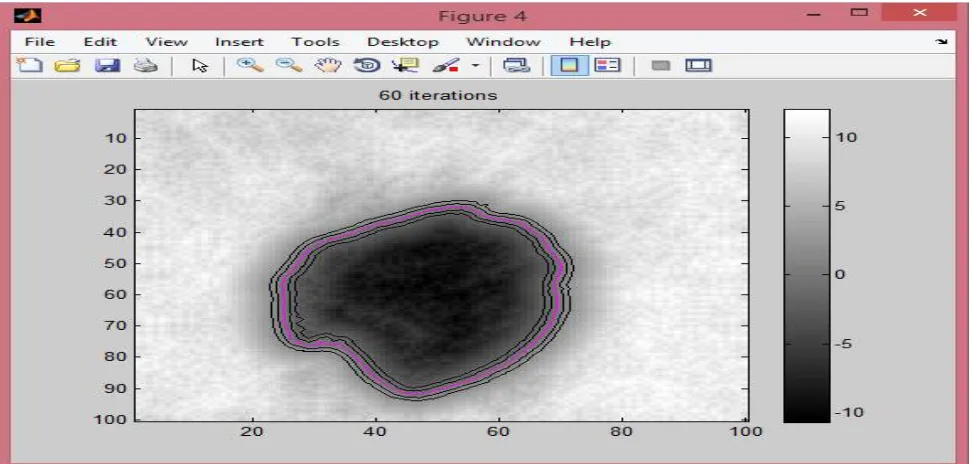
Fig 6 shows the number of iterations performed for the smoothening of boundary of optic disc(OD).
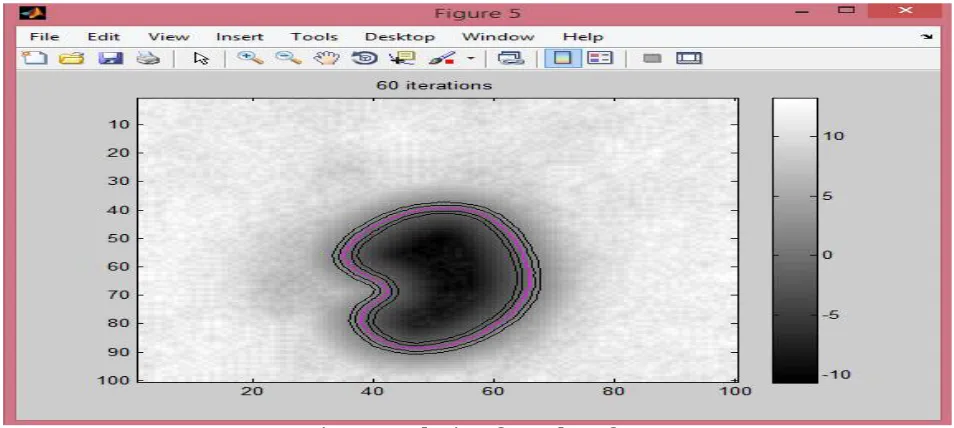
Fig 7 : Smoothening of Boundary of OC.
Fig 7 the number of iterations performed for the smoothening of boundary of optic cup (OC).
The AUC values of the proposed method for glaucoma detection on dataset is 0.9461. However, the corresponding sensitivity values is only 95% on dataset, at an observation specificity of 94.28%.
V. CONCLUSION AND FUTURE WORK
India is the second most populated nation in the worldand the effect of visual inability and visual deficiency from glaucoma will no doubt be outrageous. Glaucoma is chronic eye disease in which the optic nerve is severely damaged because of the death of ganglion nerves.
Current systems utilized for glaucoma screening are neither sufficient nor effective methods. The proposed framework is a definitive answer for the above issue. Making the knowledge and expertise of human specialists accessible to common users through cloud platform is a step in transforming the healthcare system. Utilizing proposed system will stretch outpatient care and expertise to remote territories. A cloud based system can offer new possibilities, such as easy and ubiquitous access to medical data, and opportunities to utilize the services of medical experts which are otherwise unavailable in rural areas. However, using a cloud based system will raise issues like security and privacy.
REFERENCES
1. M. Usman Akram, Anam Tariq, Shehzad Khalid, Sarmad Abbas, M. YounusJaved, Ubaid ullahYasin, “Glaucoma Detection using Novel Optic Disc Localization, Hybrid Feature Set and Classification Techniques”, Au stralasian Physical and Engineering Sciences in Medicine, OCT 2015. DOI: 10.1007/s13246-015-0377-y
2. H. A. Quigley and A. T. Broman, “The number of people with glaucoma worldwide in 2010 and 2020,” Br. J. Ophthalmol., vol. 90(3), pp. 262–267, 2006.
3. Y. Xu, S. Lin, D.W.K. Wong, J. Liu, D. Xu, "Efficient Reconstruction-Based Optic Cup Localization for Glaucoma Screening", in
Medical Image Computing and Computer-Assisted Intervention – MICCAI 2013, vol. 8151, pp. 445-452.
5. D. D. Patil and R. R. Manza, "Design new algorithm for early detection of primary open angle glaucoma using retinal Optic Cup to Disc Ratio," 2016 International Conference on Electrical, Electronics, and Optimization Techniques (ICEEOT), Chennai, 2016, pp. 148-151. doi: 10.1109/ICEEOT.2016.7754905.
6. M. K. Dutta, A. K. Mourya, A. Singh, M. Parthasarathi, R. Burget and K. Riha, "Glaucoma detection by segmenting the super pixels from fundus colour retinal images," 2014 International Conference on Medical Imaging, m-Health and Emerging Communication Systems (MedCom), Greater Noida, 2014, pp. 86-90. doi: 10.1109/MedCom.2014.7005981.
7. Harshvardhan G, Venkateswaran N and Padmapriya N, "Assessment of Glaucoma with ocular thermal images using GLCM techniques and Logistic Regression classifier," 2016 International Conference on Wireless Communications, Signal Processing and Networking (WiSPNET), Chennai, 2016, pp. 1534-1537. doi: 10.1109/WiSPNET.2016.7566393.
8. A. Thapar and M. Goyal, "A fuzzy expert system for diagnosis of malnutrition in children," 2016 IEEE Region 10 Humanitarian Technology Conference (R10-HTC), Agra, India, 2016, pp. 1-6. doi: 10.1109/R10-HTC.2016.7906819.
9. S. Mekruksavanich, "Medical expert system based ontology for diabetes disease diagnosis," 2016 7th IEEE International Conference on Software Engineering and Service Science (ICSESS), Beijing, 2016, pp. 383-389. doi: 10.1109/ICSESS.2016.7883091.
10. Rodiah, Fitrianingsih, H. Susanto and E. Haryatmi, "Web based fuzzy expert system for lung cancer diagnosis," 2016 2nd International
Conference on Science in Information Technology (ICSITech), Balikpapan, 2016, pp. 142-146. doi: 10.1109/ICSITech.2016.7852623.
11. KashfiaSailunaz, MusaedAlhussein, Md. Shahiduzzaman, FarzanaAnowar, Khondaker Abdullah Al Mamun“ CMED: Cloud based medical system framework for rural health monitoring in developing countries” Computers and Electrical Engineering 53 (2016) 469– 481.