ABSTRACT
STAM, CHRISTINA NICOLE. Development of Novel Biological Indicators to Evaluate the Efficacy of Microwave Processing. (Under the direction of Dr. Lee-Ann Jaykus).
Biological validation of traditional and alternative food processing technologies which result in commercially sterile products remains challenging. This is particularly true for multiphase food products, largely because of difficulties in proving that the fastest moving particles have been exposed to a sufficiently lethal treatment to inactivate the pathogen of concern, Clostridium botulinum. The purpose of this research was to investigate alternative approaches for application to biovalidation of commercial sterilization. In the first phase of the research, the spores of bacteria commonly used as surrogates in thermal inactivation studies, were immobilized in sodium alginate and the performance of the surrogates validated. The second study focused on developing a molecular-based method to rapidly quantify viable spores surviving thermal processing.
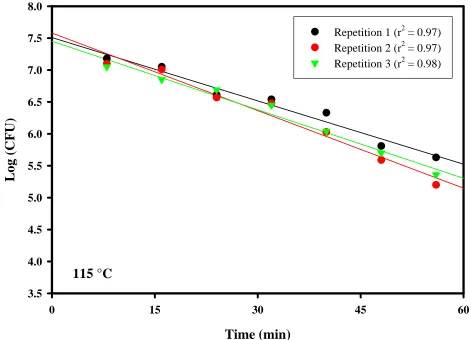
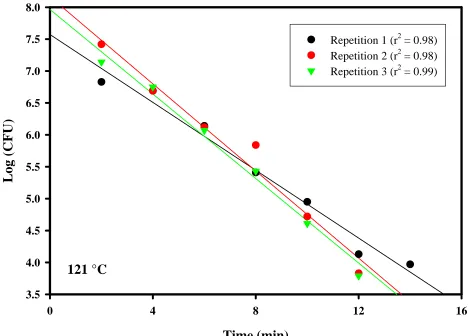
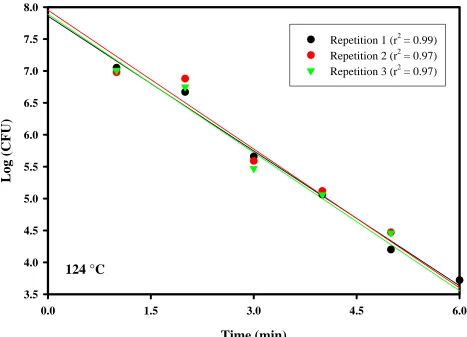
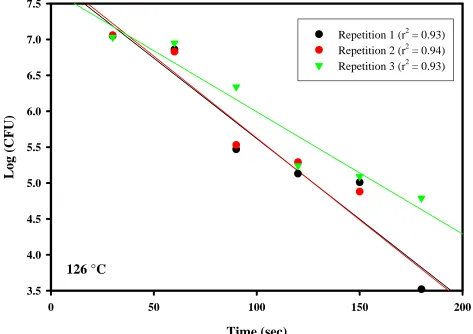
In the first study, spore crops for Geobacillus stearothermophilus and Bacillus subtilis were produced, suspended in a variety of media (water, alginate and salsa con queso), and their thermal inactivation kinetics determined. The D-values for G. stearothermophilus and B. subtilis at 121 °C were above the target D-value of 0.20 min for Clostridium botulinum; in most
instances, suspension media did not affect D-values or resulting zD values in a statistically significant manner. The spores were immobilized in a 3% sodium alginate suspension which was used to produce “beads” of approximately 30 µL in volume. These beads could be easily manipulated, colored with dyes, and had consistently high concentrations of spores whose thermal inactivation kinetics did not differ from spore stock suspension. Although efforts were made to track and recover the beads in a model aseptic continuous microwave process,
determine process lethality. However, the alginate-encapsulated spores maintained their physical integrity even after exposure to rigorous time and temperature combinations.
In the second study, a molecular method was developed for the detection and
discrimination of viable and non-viable spores of Clostridium sporogenes. In the first phases of the research, a method to extract spore-associated DNA was developed, which included the combined steps of decoating and lysozyme digestion. The process resulted in recovery of high yields of quality DNA. A Sybr green-based quantitative real-time (qPCR) assay targeting the GerAB gene was also designed. When combined with the DNA extraction steps, the assay was log linear over a range of from 102-109 spores/mL, with a lower limit of detection of
approximately 102 spores/mL. It was confirmed that exposure of spores to 121oC for as little as 2 min resulted in near complete degradation of the DNA and loss of PCR amplifiability,
suggesting that under stringent heat treatment, the PCR-based method would be able to distinguish viable spores from those which had been killed. Under less stringent processing conditions, the DNA from non-viable spores remained detectable. In this case, the decoated spores were treated a 12.5 µg/ml concentration of propidium monoazide (PMA), a DNA intercalating agent, which selectively enters inactivated bacterial cells, binds to the DNA and makes it unavailable for amplification. Unfortunately, the PMA was not able to selectively inhibit the amplification of DNA derived from dead spores. This was evidenced by the fact that CT values obtained for live and thermally treated spores were nearly identical, regardless of PMA treatment status. Further options for the selective detection of DNA derived from viable spores are under investigation.
foods. Clearly, alginate-immobilization of spores is an effective method to produce large amounts of stable product for use in biovalidation. PCR-based detection methods to rapidly quantify process lethality have promise, especially when applied to stringent processes; application to less stringent processes requires further refinement. With additional research, it should be possible to move biovalidation forward to include emerging molecular-based
Development of Novel Biological Indicators to Evaluate the Efficacy of Microwave Processing
by
Christina Nicole Stam
A dissertation submitted to the Graduate Faculty of North Carolina State University
in partial fulfillment of the requirements for the Degree of
Doctor of Philosophy
Food Science
Raleigh, North Carolina 2008
APPROVED BY:
Dr. K.P. Sandeep Dr. Den Truong
ii BIOGRAPHY
iii ACKNOWLEDGEMENTS
First and foremost I would like to thank my advisor Dr. Jaykus for allowing me the opportunity to continue furthering my academic studies. I am grateful for all her guidance over the past several years that it took to complete the research and dissertation. In addition, I wish to thank all the members of my committee, Dr. Simunovic, Dr. Truong, Dr. Sandeep, Dr.
Amezquita, and Dr. Swartzel for all their guidance and advice.
I would also like to thank Dr. Smiley for all his expert guidance and support (let’s be real, after 10 years of research experience he should be proficient). I have worked with him for the past eleven months, I have no complaints. I enjoyed our morning Starbuck’s (his favorite drink is a grande skinny caramel latte), bookworm adventures (ask him how to pronounce defer), circle game (what about this?), scientific discussions (76 million has been his favorite number since 1999), and getting 250 in a month. Mostly, I wish to thank you for making science and research fun.
I would also like to thank the members of the Jaykus lab, along with Prahbat Kumar, Tiffany Brinley and Robin Siletkzy for all their help.
iv TABLE OF CONTENTS
List of Tables ... vi
List of Figures ... vii
Chapter 1 Review of literature ...1
Introduction ...1
Biological indicators ...5
Intrinsic and extrinsic factors on sporulation, germination and thermal resistance ...8
Using spores in thermal inactivation studies ...15
Aseptic processing/ multiphase foods ...17
References ...28
Chapter 2 Development of molecular methods to discriminate between viable and non-viable endospores of Clostridium sporogenes, a thermo-bacteriological surrogate ...35
Abstract ...35
Introduction ...37
Materials and methods ...40
Results ...44
Discussion ...48
References ...58
Chapter 3 Immobilized Bacillus spores for use as biological indicators in validating aseptic processing of a multiphase food product ...60
Abstract ...60
Introduction ...62
v Results ...71 Discussion ...75 References ...86
Appendix A
Spore Protocols...89
Appendix B
D-values raw data ...99
Appendix C
Feasibility of utilizing bio-indicators for testing microbial inactivation in sweetpotato
vi LIST OF TABLES
CHAPTER 1.
Table 1. Reported outbreaks of C. botulinum ...23 Table 2. C. botulinum toxin types ...24 Table 3. D-values of biological indicators for heat inactivation ...25
CHAPTER 3.
vii LIST OF FIGURES
CHAPTER 1.
Figure 1. Sporulation Steps ...26
Figure 2. Spore Structure ...27
CHAPTER 2. Figure 3. Lysozyme digestion of C. sporogenes ...52
Figure 4. C. sporogenes standard curves ...53
Figure 5. C. sporogenes DNA ...54
Figure 6. PMA Stained C. sporogenes ...55
Figure 7. Heat treated C. sporogenes with PMA ...56
Figure 8. Lysozyme treated C. sporogenes with PMA ...57
CHAPTER 3. Figure 9. D-values ...80
1 CHAPTER 1
Literature Review 1. Introduction
Bacterial spores are known to be more resistant than their vegetative counterparts.
Treatments such as heat, irradiation, chemicals and desiccation that inactivate vegetative cells
will not completely inactivate spores (Sugiyama, 1951; Clouston and Wills, 1970; Yudkin, 1993;
Stephens, 1998; Brown, 2000; Ricca and Cutting, 2003; Turnbough, 2003). Sporulation is the
result of nutrient starvation creating metabolic inactivity, and providing stability for long periods
of time (Stephens, 1998; Driks, 2002; Turnbough, 2003). When nutrients become limited,
growth slows, and in the case of Bacillus, flagellar motility becomes activated as the organism seeks new food sources (Stephens, 1998). If no alternative food sources are found, the cell
becomes metabolically inactive and spore formation can be completed (Stephens, 1998).
When nutrients are added to the environment the spore will usually germinate, converting
back to the vegetative state (Driks, 2002). A germinant is required for this process. Germinants
may include sugars, amino acids, nucleosides and can also be a mixture such as asparaginine,
glucose, fructose and potassium (for B. subtilis) (Setlow, 2003). Spores can be triggered to germinate within several seconds of introducing the nutrients; germination can continue even if
the nutrients are removed (Setlow, 2003).
From a food safety perspective, Clostridium botulium is the most serious sporeformer of concern (Brown, 2000). C. botulinum is a bacterium that causes foodborne intoxication. The neurotoxin is produced during growth of the bacteria, and if the C. botulinum strain is
proteolytic, the neurotoxin becomes active during bacterial lysis. If it is a nonproteolytic C.
2 healthcare, botulism was almost universally fatal. Today, it is fatal in 5-10% of cases (CDC,
1998; Shapiro et al., 1998; Brown, 2000; Zubay, 2005). Patients need mechanical ventilation
and antitoxin, making botulism a public health emergency that requires rapid recognition. The
toxin is one of the most lethal known to man with an LD50 of 20-50 ng (Peck, 1997; Shapiro et
al., 1998). In recent history, about 9 foodborne outbreaks occur annually with a median of 24
cases for all types of outbreaks (Arnon et al., 2001). Of these outbreaks, the mean size has been
consistently 2.5 cases per outbreak (Angulo et al., 1998; Arnon et al., 2001). Although C.
botulinum has caused outbreaks in the past (Table 1), it is more commonly a sporadic disease. In the United States, the Botulism Surveillance System was established because rapid diagnosis and
treatment is the most important step in reducing death rates (Shapiro et al., 1998). For these
reasons one case of C. botulinum is considered an outbreak and must be reported to the CDC (Shapiro et al., 1998).
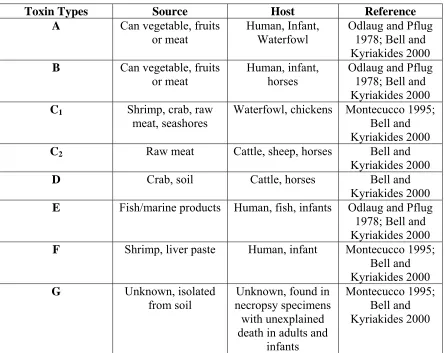
There are seven different types of botulinum toxin, but types A, B and E are most often
associated with human disease (Table 2) (Shapiro et al., 1998). The occurrence of different toxin
types is in part regional, as in the US, type A is found west of the Mississippi River, type B east
of the Mississippi River, and type E is found in Alaska and Arctic regions (Eisenberg and
Bender, 1976; Horwitz et al., 1977; Shapiro et al., 1998). The majority of type E outbreaks occur
in native Eskimo or Indian foods of Alaska which include raw, dried or fermented sea mammals
and salmon (Eisenberg and Bender, 1976; Wainwright et al., 1988). More than half of all
reported outbreaks have occurred in the western states of California, Washington, Oregon,
Colorado and Alaska (Arnon et al., 2001). Of the botulism cases, there are 4 clinical
presentations: foodborne, wound, infant and the extremely rare adult infectious botulism
3 involving 2320 cases and 1036 deaths (FDA-BAM, 2001). The yearly reports to CDC for
botulism cases since 1973 include a median of 24 foodborne, 3 wound, and 71 infant botulism
cases (Shapiro et al., 1998). Half of all foodborne cases are caused by toxin type A, with E and
B equally accounting for the other 50% (Shapiro et al., 1998). Higher severity and fatality rates
are associated with the type A toxin (Shapiro et al., 1998). In the United States the fatality rate
from botulism was 25% in 1950-1959 and has decreased to 6% during 1990-1996 (Arnon et al.,
2001).
The onset of botulism typically falls within 18-36 hours (Shapiro et al., 1998) of
consumption of contaminated food. Initial symptoms include diarrhea, vomiting and nausea
(Shapiro et al., 1998). Neurological symptoms follow and include dry mouth, blurred vision and
diplopia (Shapiro et al., 1998). This is followed by dysphonia, dysarthria, dysphagia and
peripheral muscle weakness that leads to decending paralysis (Shapiro et al., 1998). Muscular
function returns after ventilatory support, which is usually needed for 2-8 weeks and sometimes
up to 7 months (Shapiro et al., 1998). Recovery can take weeks to months following treatment
(Shapiro et al., 1998).
Products that have been associated with botulism include meat, fish, vegetables, dairy,
honey products, homemade salsa, baked potatoes, cheese sauce, sautéed onions with butter,
garlic in oil, potato salad and home canned foods (Odlaug and Pflug, 1977; Shapiro et al., 1998;
Brown, 2000). Of these food products, there is greatest concern for refrigerated and processed
foods, especially the cook-chill and sous-vide foods (Evans et al., 1997). According to a review
article by Brown (2000), most of the products implicated in C. botulinum outbreaks have a pH above 4.5, with few recorded outbreaks associated with products of pH lower than 4.5; the
4 attributable to home-canned pears (Odlaug and Pflug, 1978). In this outbreak, Lactobacillus, yeast and C. botulinum spores (5 x 10⁸ cfu/g) were found in the product (Odlaug and Pflug, 1978). In experiments with the organisms isolated from the outbreak, toxin production was
present in test tubes inoculated with both yeast and C. botulinum at pH ranging from 3.33-4.22 (Odlaug and Pflug, 1978). Other studies have shown that C. botulinum can produce toxin in food products with a pH below 4.5 if spoilage organisms such as fungi are present. It appears
that these fungi can create a microenvironment with non-homogeneous pH which can exceed 4.6
(Odlaug and Pflug, 1978; Raatjes and Smelt, 1979; Brown, 2000). In a study by Raatjes and
Smelt (1979), the investigators reported that C. botulinum could grow and produce toxin at a pH of 4.0 in the presence of Bacillus spp. because the Bacillus removed residual oxygen and
lowered the redox potential.
Mathematically, bacterial inactivation is characterized by D and Z values (Bellara et al.,
1999). The D-value is defined as the time necessary at a given temperature to produce a one log
or 90% reduction in the target bacterial population, and hence refers to the thermal resistance of
the organism at a specific temperature (Bigelow and Esty, 1920; Montville and Matthews, 2005;
Bellara et al., 1999; Singh and Heldman, 2001). The Z-value is derived from multiple D-values
and refers to the influence of temperature on the D-value, defined as the temperature change
needed to change the D-value by 90% (Bellara et al., 1999; Montville and Matthews, 2005).
Commercial sterilization of thermally processed food is defined by the 21 CFR 113.3 as follows:
5 reproducing in the food under normal nonrefrigerated conditions of storage and distribution. Commercial sterilization is based on a 12D approach to inactivate spores of C. botulinum (Collado et al., 2003). The 12D approach is used if the pH of the food product is above 4.5
(defined as low acid foods), which is based on the assumption that C. botulinum cannot grow below pH 4.5 (Hersom and Hulland, 1980). If other microorganisms in the product increase a
normally lower pH to above 4.5 due to excessive growth, C. botulinum spores can subsequently germinate and grow (Kaplan and Williams, 1941). Thermal processing of high acid foods (foods
with pH < 4.5) does not require the stringent heat treatments applied to low acid foods because
C. botulinum growth is inhibited by the reduced pH and most spoilage organisms of acidic products (i.e., yeasts and molds) are inactivated readily at temperatures below 100ºC (Hersom
and Hulland, 1980)
2. Biological Indicators
In food processing, there are three commonly used means by which to evaluate
processing efficacy; these include the use of thermocouples, chemical indicators and biological
indicators (Serp et al., 2002). Thermocouples are designed to measure the heat-penetration rates
at a selected point in a product container (Hersom and Hulland, 1980; Holdsworth, 1997).
Depending on the type of thermocouples that are used, they can be attached to a computer to give
heat penetration parameters and Fo-values (Holdsworth, 1997). Chemical indicators use
enzymes, sugar inversion, or color changes as a time-temperature indicator and provide
information complementary to traditional thermocouple results (Holdsworth, 1997). An example
of one such chemical indicator, which has been applied to microwave processing are the proteins
M-1 [2,3-dihydro-3,5-dihydroxy-6-methyl-4(H)-pyran-4-one] and M-2 [
6 proteins, whereas M-2 is formed in meats with the reaction of ribose and proteins and has a
detectable UV absorption maximum of 298 nm (Prakash et al., 1997). Anthocyanins have been
used as an indicator of sterilization efficacy because their color is degraded at high temperatures
(Holdsworth, 1997).
A biological indicator is a surrogate organism that has similar thermal inactivation
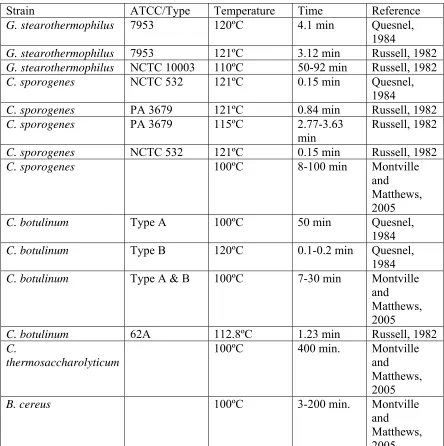
properties to a pathogen of concern in the food product (Table 3) (FDA, 2000). For example,
both Geobacillus stearothermophilus and Clostridium sporogenes have been used as surrogates for Clostridium botulinum (Quesnel, 1984; FDA, 2000). To date biological verification or the use of a biological indicator that is processed through the entire processing system, retrieved and
then enumerated to determine lethality of the sterilization process has been the best approach to
determine the efficacy of multiphase food product processing (commercial sterilization). The
organisms can be incorporated into the product and treated in the same way as the natural
product contaminants (Shintani and Akers, 2000; Serp et al., 2002; Marcy, 1997).
Selecting a biological indicator is dependent on the target microorganism and the
epidemiological relevance of the organism to the product (NACMCF, 2004). From a public
health perspective, in food processing we seek to inactivate the most resistant microorganism of
public health significance. The identification of that (those) microorganism(s) is based on
inherent microbial resistance to the process, initial load and the ability to grow in the food; that
organism may not necessarily be the one present in the highest numbers (NACMCF, 2004). A
surrogate organism is helpful for use during development and validation of a process and should
contain several characteristics (although no biological surrogate contains them all): (i)
non-pathogenic; (ii) thermal inactivation characteristics that can predict the target organism; (iii)
7 stability; (v) thermal and growth stability; and (vi) maintenance at a constant and high population
density (Quesnel, 1984; FDA, 2000). Lastly, for a biological surrogate to be reliably used, all
other pathogenic microorganisms should be inactivated at a less stringent treatment when
compared to the biological indicator (Quesnel, 1984).
Parameters for performance, and application of biological indicators need to be
established due to lot-to-lot variations, differences in specifications and performance, and
differences between biological indicators used and/or produced by different manufacturers
(Smith et al., 1982; Shintani and Akers, 2000). Several parameters that should be monitored
include D-value, the phase of growth in which organisms are harvested, the substrate in which
the culture is grown, sample size and packaging conditions (NACMCF, 2004).
Clostridium sporogenes, which has similar thermal response characteristics and cultural, physiological and genetic similarity to C. botulinum, is a commonly used surrogate for validation of commercial sterilization(Chen and Hotchkiss, 1993; Welt et al., 1994). C. sporogenes has been frequently used in inoculated pack studies for low acid foods (Grischy et al., 1983; Brown,
2000), even though it can be as much as five times more resistant to thermal processing than C.
botulinum. For example, it has been demonstrated that a 5-D reduction in C. sporogenes may be equivalent to a 12-D reduction for C. botulinum (Grischy et al., 1983). The zD-values of C.
sporogenes however are similar to those of C. botulinum (Grischy et al., 1983). The F-value, or the time it takes to completely inactivate an organism at 121.1ºC, ranges from 15seconds to over
8 in processed, packaged product can be used in place of enumerative assays for validation of
thermal processing (Roberts and Zottola, 1993).
Geobacillus stearothermophilus has also been used as a surrogate for C. botulinum. Recently this organisms’ genus was changed from Bacillus to Geobacillus because of phenotypic and phylogenetic similarity among group 5 isolates of thermophilic bacteria of the Bacillus genus (Nazina et al., 2001). This organism has D-values that are even higher than C. sporogenes (Gould, 2001). Of the spore-forming microorganisms examined to date, G. stearothermophilus is the most resistant, although that resistance occurs upon exposure to moist heat; the organism is
considerably less resistant to dry heat (Bruch, 1964). Upon exposure to moist heat, survival of
G. stearothermophilus would be considered a worst case scenario and, indeed, it would be impractical to process a product long enough to obtain even a one-log inactivation of G.
stearothermophilus, as it has D-values ranging from 16-936 minutes at 121ºC (Allison, 1999; Brown, 2000). One limitation in working with this organism has been variability in growth, as
changes in growth conditions and environment do not produce consistent sporulation (Allison,
1999).
3. Effect of Intrinsic and Extrinsic Factors on Sporulation, Germination and Thermal Resistance of Spores
A. Sporulation
Bacterial sporulation is caused by depletion of nutrients which alters the rod-shape of the
bacteria to an oval dormant cell (Driks, 2002). As nutrients become limited, vegetative bacteria
adapt. Specifically, they employ mechanisms such as chemotaxis to search for alternative food
sources, production of antibiotics to kill competitive microflora, secretion of hydrolytic enzymes
9 (Stephens, 1998). For those bacteria capable of forming spores, which includes only some Gram
positive bacteria, sporulation is the last response to starvation (Hardwick and Foster, 1952;
Foster, 1994; Stephens, 1998; Turnbough, 2003). Once sporulation occurs, the expression of a
variety of genes is stimulated by the production of sigma factors stimulating RNA polymerase
and DNA binding proteins (Doyle et al., 2001). However, the intracellular trigger to stimulate
sporulation is currently unknown (Doyle et al., 2001).
The first step of sporulation is initiation, which occurs as a consequence of the depletion
of nutrients, and/or induction of starvation (Yudkin, 1993; Serp et al., 2002). The second stage is
chromosome segregation followed by sporulation-specific cell division, differential gene
expression and specific signal transduction (Barak et al., 2005). Once sporulation starts, it takes
approximately 8 hours to complete (Doyle et al., 2001; Driks, 2002). Upon completion of
sporulation there will be no detectable metabolism (Setlow, 1992). Ultimately, the return
pathway is germination followed by outgrowth (Barak et al., 2005).
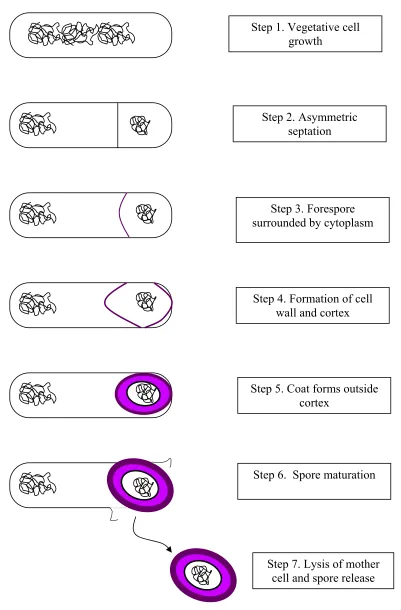
The process of sporulation itself occurs in seven steps as follow (Figure 1):
• Vegetative growth of the bacterial cell
• Asymmetric septation, which is a visible line that can be seen microscopically on
the mother cell, forming the forespore. In this case, both the forespore and the
mother cell have identical chromosomes, although the forespore has a more
condensed chromosome, the significance of which is currently unknown.
• The forespore becomes surrounded by the mother cell cytoplasm, enclosed in two
membranes (inner and outer forespore membranes).
• Cell wall and cortex form between the two membranes. Synthesis of glucose
10 forespore UV resistance and chemical resistance. Then dehydration of the
forespore begins and continues until spore maturation.
• The coat, comprised of protein, forms outside the cortex covering the forespore.
The expansion and contraction of the flexible coat is necessary for dehydration
and rehydration of the spore. Dipicholinic acid (DPA) synthesized in the mother
cell is then accumulated in the core and the final process of dehydration is
completed.
• Spore maturation, during which the spore coat becomes more dense and heat
resistance develops.
• Lysis of the mother cell, releasing the spore (Yudkin, 1993; Foster, 1994; Doyle
et al., 2001; Driks, 2002; Ricca and Cutting, 2003).
Spore populations are heterogeneous because lag phases of germination and outgrowth
between individual spores are independent (Barker et al., 2005). Mature spores are 0.8-1.2 μm in
length (Ricca and Cutting, 2003). Once sporulation has occurred it has been shown that spores
can survive for years in the dessicated state (Ricca and Cutting, 2003; Barak et al., 2005).
Several reasons exist for spore resistance, including genetic predisposition, sporulation
conditions, spore coats, core permeability, core water content and mineral content (Setlow, 1992;
Nicholson, 2000).
B. Germination
Spores survive well in harsh conditions until a stimulus, such as the addition of nutrients
to the environment, cause activation, at which point the spores germinate and return to the
vegetative state (Driks, 2002; Turnbough, 2003). Germination and growth is preceeded by the
11 four different conditions that can be categorized as follows: (1) nutritive, i.e., exposure to amino
acids and/or sugars; (2) non-nutritive, such as exposure to metal ions and bicarbonate; (3)
enzymatic initiation, usually with lysozyme; and (4) physical exposures such as heat and
hydrostatic pressure (Russell, 1982; Johnson and Busta, 1984; Rodriguez et al., 1998; Collado et
al., 2003). Of the different means by which to activate spores, heat is the most effective (Collado
et al., 2003). For example, when suspended in water, spores can overcome dormancy through
heat shock (Beaman et al., 1988). In the case of G. stearothermophilus,10% of spores will germinate without heat shock and 50% form colonies after heat shock (Beaman et al., 1988).
Germination of spores is an irreversible process (Russell, 1982). During the process of
germination, the spore structure changes, causing the cell to hydrate or swell; the cortex will then
degrade and DPA is excreted (Russell, 1982). Outgrowth occurs when the swollen spores shed
their coats, releasing the vegetative cell which subsequently divide (Russell, 1982).
C. Spore Structure
In the spore form, the bacterium is metabolically inactive and stable to extremes in
environment including thermal processing and commercial disinfection (Sagripanti and
Bonifacino, 1999; Driks, 2002). The spore structure consists of 5 layers, with the cortex and
coats being most important in determination of heat resistance (Figure 2) (Russell, 1982; Driks,
2002). The core is the center of the spore and contains the DNA, RNA and DPA. Surrounding
the core is the inner forespore membrane and germ cell wall. The germ cell wall is identical to
the vegetative cell wall (Montville and Matthews, 2005). This is surrounded by the cortex which
is comprised of peptidoglycan. Peptidoglycan is a peptide-polysaccharide layer that makes up
the bacterial cell wall (Garrett and Grisham, 1999). A Gram-positive bacterial cell wall consists
12 1999). The cortex peptidoglycan is somewhat different from a typical Gram-positive cell wall.
Specifically, the spore peptidoglycan contains dipicholinic acid (DPA), and muramic acid
residues are present as muramic acid lactam which are not in a typical cell wall (Doyle et al.,
2001). The cortex is more or less a very thick cell wall but always contains DPA (Montville and
Matthews, 2005; Russell, 1982). The cortex is responsible for spore resistance because it can
dehydrate the core but the mechanisms involved in this process are currently unknown
(Montville and Matthews, 2005). During germination and outgrowth the cortex is responsible
for lysis (Russell, 1982). The spore coats are made of highly crosslinked peptides and comprise
more than 50% of the spore (Driks, 2002). The coat is what protects the spore from chloroform
or lytic enzymes, but also allows for the spore to respond to the presence of nutrients in the
environment (Montville and Matthews, 2005; Driks, 2002). The coats are surrounded by the
exosporium which is derived from the outer membrane layer and varies in size (Russell, 1982).
D. Environmental Effects on Spore Resistance
As previously stated, the critical pH level for commercial sterilization of foods is 4.5
because C. botulinum cannot grow and produce toxin below this pH. In many cases, the pH of a food may be adjusted to below 4.5 to inhibit C. botulinum outgrowth, allowing the processor to use reduced processing time, hence producing a more organoleptically acceptable product
(Cameron et al., 1980). In general, for both Clostridium and Bacillus spp., the more acidic the pH, the less heat resistant are the spores (Cameron et al., 1980; Silla Santos et al., 1992). Even
reduction of pH just slightly above 4.5 can reduce spore heat resistance (Cameron et al., 1980;
Tejedor et al., 2001). Any drop in pH of the sporulation media can also cause a decrease in the
thermal resistance of the propagated spores (Quesnel, 1984). In general heat resistance of spores
13 1978). Specifically, production of spores at higher incubation temperature causes a decrease in
the water content in the core, imparting a higher degree of heat resistance (Quesnel, 1984;
Montville and Matthews, 2005; Nicholson, 2000).
G. stearothermophilus spore viability has been shown to decline over time, with spores having better survival when stored under frozen conditions compared to refrigerator storage
(Reich et al., 1979). Evans and Curran (1960) found that C. botulinum 62A and C. sporogenes 3679 maintained viability after 3 years of storage at 30ºC when pH values ranged from 5-8.
However, in the same study G. stearothermophilus had lost its ability to germinate at pH values less than 8.
E. Methods for Spore Propogation
Preparing vegetative bacteria for sporulation begins with the initiation phase, which
involves propagating the bacterial culture to high density until nutrients are depleted. In the case
of Bacillus,exhaustion of the carbon source will result in the initiation of sporulation (Nicholson, 2002). Little is known about the sporulation of bacteria in the natural environment and it is
believed to occur very differently from the more artificial methods used for spore production in
the laboratory (Nicholson, 2000).
Depending on the bacteria, either liquid or solid media can be used to induce sporulation.
For example, both C. sporogenes and G. stearothermophilus can be sporulated in both liquid media or on petri dishes (Stewart et. al., 2000; Uehara et al., 1965; Serp et al., 2002). For C.
14 To monitor the process of sporulation, phase-contrast microscopy is used (Evans et al.
1997; Raso et al., 1998; Serp et al., 2002). Under ideal conditions, sporulation efficiency, as
evaluated microscopically, usually ranges from 80-100% (Clouston and Wills, 1969; Raso et al.,
1998; Serp et al., 2002). Once optimal sporulation has been achieved, the spores are further
purified to provide a high density spore crop that is stable to long-term storage (Uehara et al.,
1965). Specifically, preparation of the spore crop requires harvesting of the spores in sterile
distilled water or a specific buffer such as one containing potassium phosphate (Uehara et al.,
1965; Futter and Richardson, 1970; Welt et al., 1994; Serp et al., 2002). Once in the buffer, the
spores are washed 5-10 times by alternating steps of centrifugation and resuspension in fresh
buffer, usually using sequentially high centrifugation speeds (Uehara et al., 1965; Welt et al.,
1994; Serp et al., 2002). Sometimes the spores are heat shocked in a water bath before the wash
steps, usually at 80o C for 15 minutes, to inactivate residual vegetative cells (Uehara et al., 1965;
Serp et al., 2002). Additional steps may also be applied for purification. For example, Uehara et
al., (1965) were able to remove non-spore material and cell clumps of C. sporogenes by
preliminary filtration with Whatman no. 4 paper and a Millipore apparatus. The volume of the
sterile water or buffer used to resuspend the purified spore crops can be adjusted during the
washing steps; after the final wash is completed, volume is frequently adjusted to obtain the
desired spore crop density (cfu/ml) (Uehara et al., 1965; Serp et al., 2002). Once purified, the
spore suspensions are then stored at refrigeration or frozen temperatures until use (Welt et al.,
15 4. Using Spores in Thermal Inactivation Studies
Inoculated Pack Studies
For evaluation of the efficacy of heat to achieve commercial sterilization, the inoculated
pack study design has been used for decades (Holdsworth, 1997). In the inoculated pack study,
the food is inoculated with high levels of spores per container and subjected to the normal heat
process (Hersom and Hulland, 1980). Spores used in the study must be appropriate in terms of
heat resistance, capablilty to germinate and grow in the food (Hersom and Hulland, 1980). The
inoculated pack is considered the simplest method, and the packs can be treated using several
different process times and temperatures in an effort to identify proper processing conditions
(Holdsworth, 1997). In the case of gas producing bacteria, sterility can easily be determined by
swollen or blown cans and typically C. sporogenes 3679 is used in these types of studies
(Hersom and Hulland, 1980; Holdsworth, 1997). For example, in a study by Guan et al. (2003),
macaroni and cheese packs where inoculated with a concentration of 1.1 x 10⁶C. sporogenes 3679 spores/pack and then subjected to a microwave heat treatment. Control packs, which were
not heat treated, displayed swelling associated with C. sporogenes growth and gas production within 2 weeks. Underprocessed packs all had gas production and those packs that were
processed at or above target conditions showed no signs of gas production. This type of
end-point approach to inoculated pack studies can be used along with enumerative cultural methods
to provide complementary data.
Immobilization
Biological indicators such as Bacillus spores have been immobilized in or on solid
matrices for use in inactivation studies. Specifically, they have been immobilized on paper strips
16 containing G. stearothermophilus spores are routinely used for autoclave sterilization validation and B. subtilis subsp. niger spores immobilized on paper have been used for validation of ethylene oxide sterilization (Smith et al., 1982). In a study by Reich et al (1979), investigators
reported that commercially available G. stearothermophilus spore strips demonstrated decreased resistance with prolonged refrigerated storage, and more stable heat resistance profiles were
obtained if the spores were stored in a frozen state. However, immobilizing microorganisms in a
hermetic envelope, while convenient, does not allow for direct contact between the spores and
the environment, and this may prevent the transfer of heat to the microorganisms, resulting in the
bacterial survival (Serp et al., 2002).
Perhaps more relevant, spore crops can be immobilized in a sodium alginate solution to
simulate food particles (Gaze, 2005). In this case, a 3-4% sodium alginate solution is made
using sterile distilled water, to which the spore crops are added in approximately equal volume.
The alginate-spore mixture can be dropped into a 100mM calcium chloride solution,
instantaneously forming gels entrapping bacterial spores in the 3-dimensional lattice of
cross-linked alginate (Smidsrod and Skjak-Braek, 1990). The alginate immobilized spores are viable
for long periods of time and they have excellent mechanical and chemical stability (Smidsrod
and Skjak-Braek, 1990). In a study by Marcy et al. (1997), the investigators demonstrated that
alginate cubes could pass through mixing tanks, pumps, holding tubes and scraped surface heat
exchangers at temperatures between 240-280ºF without damage. Furthermore, the alginate cubes
were easily removed from the process. Marcy et al. (1997) also tested the storage stability of the
alginate cubes for 6 months at 4ºC and found that the encapsulated spores were stable.
Determination of immobilized bacterial populations both before and after thermal (or
17 alginate can be dissolved in a 50mM solution of sodium citrate or phosphate buffer at pH 7.0.
Dissolving of the alginate can take from 30 minutes to several hours depending on the M-G ratio
(β-D-mannuronic acid to α-L-guluronic acid ratio) of the sodium alginate used (Smidsrod and
Skjak-Braek, 1990). Once the alginate is dissolved the bacteria is no longer immobilized and
can be easily cultured. Neither immobilization nor dissolution of the alginate appear to impact
spore viability (Smidsrod and Skjak-Braek, 1990)
Immobilization of microorganisms in alginate beads may be preferred to other
immobilization approaches because of good product consistency, long term storage stability, and
product resistance to impact and abrasion (Serp et al., 2002). In fact, data indicates that the
thermoresistance of a microorganism does not change with such immobilization. For example,
the D-values of G. stearothermophilus were the same for both the freely suspended and alginate immobilized spores (Serp et al., 2002). In addition, there is evidence that alginate beads
maintain the same temperature on the inside as in the suspending environment (Serp et al., 2002).
Leaching of materials has been found to be negligible, with model studies showing that <1% of
yeast leaching due to abrasion, destabilization of alginate and/or the presence of nutrients (Serp
et al., 2002).
5. Aseptic Processing/ Multiphase Foods
Aseptic processing is defined as sterilization of product and packaging material, whereby
the product sterility is maintained during filling and sealing of the package (Hersom, 1985;
Morris-Lee, 2004). Aseptic processing usually utilizes high temperature short time (HTST)
treatment and results in higher quality products (Hersom, 1985) because the high temperature
destroys target microorganisms while the short time allows for the retention of nutrients and
18 processing include reduced energy consumption and adaptability to automated control (Lee and
Singh, 1990).
Products that have been suitable for aseptic processing are fluids of high viscosity, which
are continuously pumped through a heat exchanger, held at target temperature for a designated
time, and finally cooled to a temperature of 35ºC prior to aseptic fill (Hersom and Hulland,
1980). According to the Aseptic Packaging Council (2006), there have been over 30 different
types of food products approved for aseptic processing in the United States and these include
liquid eggs, tomato sauce, milk, wine, juices, tea/coffee beverages, tofu and syrups, to name few.
Development of an aseptic process for multiphase foods or foods containing particles has been
complicated, largely because of difficulties in proving that the fastest moving particle has been
exposed to a sufficiently lethal treatment (Larkin, 1997; Morris-Lee, 2004). Validation of such a
process for particulate foods remains challenging because it is not possible to measure the
temperature of a food particle as it flows through the system (Digeronimo et al., 1997). Even
though particle residence time has been used to determine process lethality, measuring the time
and temperature of the fastest moving particle through a process is impossible using currently
available technologies (Digeronimo et al., 1997). Consequently, there has been no reliable way
to verify to the federal regulatory authorities such as the U.S. Food and Drug Administration
(FDA) that there is a cost efficient way to assure the safety of multiphase aseptically processed
products (Morris-Lee, 2004).
Requirements that need to be addressed in order to develop a multiphase aseptic process
include the following: (i) identification and selection of an appropriate sterilization Fo value; (ii)
development of a model to predict the sterilization of the slowest heating particle; (iii) microbial
19 process (Larkin, 1997; Marcy, 1997). The results from inoculated pack studies applied to
multiphase food products are difficult to replicate because each particle of the food receives a
different thermal process. It is not possible to identify the particle that receives the least thermal
processing, therefore it would be advantageous to use a biological indicator that travels through
the entire process, coming out intact and capable of microbiological analysis (Marcy, 1997). The
indicator should simulate both the trajectory of the slowest heating particle and the fasting
moving particle through the process (Gaze, 2005; Marcy, 1997). To validate the process in a
statistically reliable manner, at least 299 particles should be recovered and enumerated,
achieving a 95% confidence of collecting 1% of the fastest moving particles (Digeronimo, et al.,
1997; Larkin, 1997).
NCSU has developed a particle flow monitoring system for foods with large particles so
that process validation can be done. The system addresses four significant and critical design
components: (i) use of simulated particles that are comparable to actual food particles with
respect to both flow and thermal properties; (ii) measurement of particle behavior through the
use of implants, sensors and data acquisition; (iii) measurement of time-temperature by
thermosensitive and thermomagnetic implants; and (iv) bio-validation through inclusion of
biological indicators and evaluation of spore viability both pre- and post-processing (Morris-Lee,
2004).
Microwave Processing
Microwave processing has been defined by the FDA as the use of electromagnetic waves
of certain frequencies to generate heat in a material (FDA, 2000). Two frequencies have been
approved for use in foods and these consist of (i) the Industrial and Scientific Medical (ISM)
20 treatment which is the frequency used in home microwaves but which may also be used
industrially (Chipley, 1980; Welt et al., 1994; Ohlsson and Bengtsson, 2001; FDA, 2000).
Heating of foods by microwave energy arises as the product of both dielectric and ionic
mechanisms (FDA, 2000). Dielectric heating is caused by the oscillation of water molecules that
produce heat by rapidly changing direction to align themselves with the changing electric field
that is associated with electromagnetic radiation (Ohlsson and Bengtsson, 2001; FDA, 2000).
Because these oscillating molecules cannot keep up with the changing electric field, heat is
generated (Sumnu, 2001). Ionic heating is caused by the migration of ions that will randomly
transfer energy to water molecules by accelerating rapidly and colliding with other ions (Ohlsson
and Bengtsson, 2001; FDA, 2000; Singh and Heldman, 2001). Adsorption of radiation generates
heat, and water molecules are the most important component in creating this rise in temperature
(Richards and Al-Shawa, 1981).
A microwave is made up of five major components which include (i) a power supply that
converts an electric supply to high voltages; (ii) a magnetron that converts the power to
microwave energy; (iii) a wave guide which transfers energy from the magnetron to the oven
cavity; (iv) a stirrer or fan that scatters energy in the oven; and (v) the oven itself, which encloses
the food within metallic walls (Singh and Heldman, 2001). When designing an effective
microwave process, one needs to consider: (i) the type of food and its characteristics; (ii) the
properties of the process; (iii) the equipment properties; (iv) the packaging material; (v) the need
for achievement of lethal temperature in all parts of the product (i.e., absence of hot spots, or
adequate consideration thereof); and (vi) the necessity of monitoring temperature reliability
(NACMCF, 2004). Indeed, discontinuous dielectric properties between foods and air create
21 spots (Prakash et al., 1997). Cold spots are the critical process factor because as food absorbs
microwave energy, the cold spots change (NACMCF, 2004). Nonetheless, there are several
advantages to microwave processing, including the fact that microwaves can be turned on or off
instantaneously, that processing can be done in the package, and that microwaves are more
energy efficient due to the speed of heating which is proportional to the power of the microwave
(FDA, 2000; Singh and Heldman, 2001).
The efficiency of microwave heating is based on electromagnetic field strength and
exposure time (Jeng et al., 1987). Heat generated by microwave occurs because of increasing
molecular vibration which happens without breaking chemical bonds (Chipley, 1980; Wang et
al., 2003). Therefore, microwave heating is a good alternative for processing of products that are
not particularly heat stable, largely because of the shortened heating time (Sasaki et al., 1997).
In fact, pasteurization of food has been done by microwave, resulting in shorter process times
than used in conventional heating (Celandroni et al., 2004). For example, S. enterica serovar Typhimuriumand E. coli were killed by microwave (915MHz) at lower temperatures and shorter times when compared to conventional heating (Chipley, 1980). However, for commercial
sterilization applications, microwaves have only been successfully applied to liquid products
(Wang et al., 2003).
Because microwaving is essentially a thermal process, microbial inactivation as a
consequence of microwave treatment is thermally-based (Chipley, 1980; NACMCF, 2004).
Numerous bacteria have been found to be inactivated by microwave; parasites have shown some
resistance and at this time, virus susceptibility is unknown (NACMCF, 2004). Microwave
heating has been found to be more effective in inactivating spores, including those of G.
22 that bacterial spores are killed by the heat generated from surrounding water molecules which
absorb the microwave energy, since spores contain very little water themselves and do not
readily absorb the microwave energy (Sasaki et al., 1997). In addition, dried spores and
lyopohilized cultures seem to be unaffected by microwave processing, suggesting that the
presence of water is critical to microwave effectiveness (Chipley, 1980).
Even though microwave processes may use somewhat lower temperatures and shorter
times than conventional thermally-based processes, no known pathogenic or non-pathogenic
microorganisms have been found to be particularly resistant to microwave heating.
Consequently, the same surrogate microorganisms that are used in thermal process validation
should be applicable for use as biological indicators in microwave processing (FDA, 2000).
23 Table 1. Reported outbreaks of Clostridium botulinum
C. botulinum strain/ toxin Food Product No. of Persons Country/State and City Year Reference B Garlic
Butter 30 Quebec/Montreal 1985 St. Louis et al, 1988
A Potato and
Eggplant Dip
30 Texas/El Paso 1994 Angulo et al, 1998
A Chopped Garlic in
Oil
3 New
York/Kingston 1989 Bell Kyriakides, and 2000
A Baked Potato
34 New
Mexico/Clovis
1978 Bell and
Kyriakides, 2000 A Canned
Cheese Sauce
8 Georgia 1993 Bell and
Kyriakides, 2000
E Beaver 3 Alaska 2001 Anonymous,
2001 E Beached
Beluga Whale (muktuk)
8 Alaska 2002 Anonymous,
2003 B Home-canned pickled eggs (pH pickling juice 3.5)
1 Illinois 1997 Anonymous,
2000
A Stew 1 Oklahoma 1994 Anonymous,
1995 B Palani
(surgeon fish)
3 Hawaii 1990 Anonymous,
24 Table 2. Clostridium botulinum toxin types
Toxin Types Source Host Reference
A Can vegetable, fruits or meat
Human, Infant, Waterfowl
Odlaug and Pflug 1978; Bell and Kyriakides 2000 B Can vegetable, fruits
or meat
Human, infant, horses
Odlaug and Pflug 1978; Bell and Kyriakides 2000 C1 Shrimp, crab, raw
meat, seashores Waterfowl, chickens Montecucco 1995; Bell and Kyriakides 2000 C2 Raw meat Cattle, sheep, horses Bell and
Kyriakides 2000
D Crab, soil Cattle, horses Bell and
Kyriakides 2000 E Fish/marine products Human, fish, infants Odlaug and Pflug
1978; Bell and Kyriakides 2000 F Shrimp, liver paste Human, infant Montecucco 1995;
Bell and Kyriakides 2000 G Unknown, isolated
from soil necropsy specimens Unknown, found in with unexplained death in adults and
infants
25 Table 3. D-values of biological indicators for thermal heat inactivation
Strain ATCC/Type Temperature Time Reference
G. stearothermophilus 7953 120ºC 4.1 min Quesnel,
1984
G. stearothermophilus 7953 121ºC 3.12 min Russell, 1982
G. stearothermophilus NCTC 10003 110ºC 50-92 min Russell, 1982
C. sporogenes NCTC 532 121ºC 0.15 min Quesnel,
1984
C. sporogenes PA 3679 121ºC 0.84 min Russell, 1982
C. sporogenes PA 3679 115ºC 2.77-3.63
min
Russell, 1982
C. sporogenes NCTC 532 121ºC 0.15 min Russell, 1982
C. sporogenes 100ºC 8-100 min Montville
and Matthews, 2005
C. botulinum Type A 100ºC 50 min Quesnel,
1984
C. botulinum Type B 120ºC 0.1-0.2 min Quesnel,
1984
C. botulinum Type A & B 100ºC 7-30 min Montville
and Matthews, 2005
C. botulinum 62A 112.8ºC 1.23 min Russell, 1982
C.
thermosaccharolyticum
100ºC 400 min. Montville
and Matthews, 2005
B. cereus 100ºC 3-200 min. Montville
26 Step 1. Vegetative cell
growth
Step 2. Asymmetric septation
Step 3. Forespore surrounded by cytoplasm
Step 4. Formation of cell wall and cortex
Step 5. Coat forms outside cortex
Step 6. Spore maturation
Step 7. Lysis of mother cell and spore release
27 Figure 2. Spore Structure
Inner Membrane
Cortex
Outer Membrane Core
Coats
Germ Cell Wall
28 References
Allison, D. G. 1999. A review: taking the sterile out of sterility. J. Appl. Microbiol. 87: 789-793.
Angulo, F. J., J. Getz, J. P. Taylor, K. A. Hendricks, C. L. Hatheway, S. S. Barth, H. M. Solomon, A. E. Larson, E. A. Johnson, L. N. Nickey, A. A. Ries. 1998. A large outbreak of botulism: the hazardous baked potato. J. Infect. Dis. 178:172-177.
Anonymous. 1991. MMWR. 40: 412-414.
Anonymous. 1995. MMWR. 44: 200-202.
Anonymous. 2000. MMWR. 49: 778-780.
Anonymous. 2001. MMWR. 50: 680-682.
Anonymous. 2003. MMWR. 52: 24-26.
Arnon, S. S., R. Schechter, T. V. Inglesby, D. A. Henderson, J. G. Bartlett, M. S. Ascher, E. Eitzen, A. D. Fine, J. Hauer, M. Layton, S. Lillibridge, M. T. Osterholm, T. O’Toole, G. Parker, T. M. Perl, P. K. Russell, D. L. Swerdlow, K. Tonat. 2001. Botulism toxin as a biological weapon: medical and public health management. JAMA. 285: 1059-1070.
Barak, I., E. Ricca, S. M. Cutting. 2005. From fundamental studies of sporulation to applied spore research. Mol. Microbiol. 55: 330-338.
Barker, G. C., P. K. Malakar, M. W. Peck. 2005. Germination and growth from spores:
variability and uncertainty in the assessment of foodborne hazards. Int. J. Food Microbiol. 100: 67-76.
Beaman, T. C., H. S. Pankratz, P. Gerhardt. 1988. Heat shock affects permeability and resistance of Bacillus sterothermophilus spores. Appl. Environ. Microbiol. 54: 2515-2520. Bell, C. and A. Kyriakides. 2000. Clostridium botulinum: a practical approach to the organism and its control in foods. Blackwell Science, Massachusetts.
Bellara, S. R., P. J. Fryer, C. M. McFarlane, C.R. Thomas, P. M. Hocking, B. M. Mackey. 1999. Visualization and modelling of the thermal inactivation of bacteria in a model food. Appl.
Environ. Microbiol. 65: 3092-3099.
Bigelow, W. D., J. R. Esty. 1920. Thermal death point in relation to time of typical thermophilic organisms. J. Infect. Dis. 27: 602-617.
29 Bruch, C. W. 1964. Some biological and physical factors in dry heat sterilization: a general review. Life Sci. Space Res. 2: 357-371.
Cameron, M. S., S. J. Leonard, E. L. Barrett. 1980. Effect of moderately acidic pH on heat resistance of Clostridium sporogenes spores in phosphate buffer and in buffered pea puree. Appl. Environ. Microbiol. 39: 943-949.
CDC. 1998. Botulism in the United States, 1899-1996. Handbook for epidemiologists, clinicians, and laboratory workers. Atlanta, GA. 1-42.
Celandroni, F., I. Longo, N. Tosoratti, F. Giannessi, E. Ghelardi, S. Salvetti, A. Baggiani, S. Senesi. 2004. Effect of microwave radiation on Bacillus subtilis spores. J. Appl. Microbiol. 97: 1220-1227.
Chen, J. H. and J. H. Hotchkiss. 1993. Growth of Listeria monocytogenes and Clostridium sporogenes in cottage cheese in modified atmosphere packaging. J. Dairy Sci. 76: 972-977. Chipley, J. R. 1980. Effects of microwave irradiation on microorganisms. Adv. Appl. Microbiol. 26: 129-145.
Clifford, W. J. and A. Anellis. 1971. Clostridium perfringens I. Sporulation in a biphasic glucose-ion-exchange resin medium. Appl. Microbiol. 2: 856-861.
Clouston, J. G. and P. A. Wills. 1969. Initiation of germination and inactivation of Bacillus pumilus spores by hydrostatic pressure. J. Bacteriol. 97: 684-690.
Clouston, J. G. and P. A. Wills. 1970. Kinetics of initiation of germination of Bacillus pumilus spores by hydrostatic pressure. J. Bacteriol. 103: 140-143.
Collado, J., A. Fernandez, M. Rodrigo, J. Camats, A. M. Lopez. 2003. Kinetics of deactivation of Bacillus cereus spores. Food Microbiol. 20: 545-548.
De Jong, A. E., R. R. Beumer, F. M. Rombouts. 2002. Optimizing sporulation of Clostridium perfringens. J. Food Prot. 65: 1457-1462.
Digeronimo, M., W. Garthright, J. W. Larkin. 1997. Statistical design and analysis: Workshop targets continuous multiphase aseptic processing of foods. Food Technol. 51: 52-56.
Doyle, M. P., L. R. Beuchat, T. J. Montville. 2001. Food Microbiology Fundamentals and Frontiers, 2nd ed. ASM Press, Washington, DC.
30 Eisenberg, M. S. and T. R. Bender. 1976. Botulism in Alaska, 1947 through 1974. Early
detection of cases and investigation of outbreaks as a means of reducing mortality. JAMA. 235: 35-38.
Evans, F. R. and H. R. Curran. 1960. Influence of preheating, pH, and holding temperature upon viability of bacterial spores stores for long periods in buffer substrates. J. Bacteriol. 79: 361-368.
Evans, R. I., N. J. Russell, G. W. Gould, P. J. McClure. 1997. The germinability of spores of a psychrotolerant, non-proteolytic strain of Clostridium botulinum is influenced by their formation and storage temperature. J. Appl. Microbiol. 83: 273-280.
FDA. U.S. Food and Drug Administration. 2000. Kinetics of microbial inactivation. Center for Food Safety and Applied Nutrition. Available from: http://vm.cfsan.fda.giv/~comm/ift-toc.html. Accessed July 19, 2005.
FDA. U.S. Food and Drug Administration. 2001. Bacteriological Analytical Manual. Available from: http://www.foodinfonet.com/publication/fdaBAM.htm. Accessed July 19, 2005.
Foster, S. J. 1994. The role and regulation of cell wall structural dynamics during differentiation of endospore-forming bacterial. Soc. Appl. Bacteriol. Symp. Ser. 23: 25S-39S.
Garrett, R. H. and C. M. Grisham. 1999. Biochemistry. Saunders College Publishing, New York.
Gaze, J. 2005. Microbiological aspects of thermally processed foods. J. Appl. Microbiol. 98: 1381-1386.
Gould, G. W. 2001. New processing technologies: an overview. Proc. Nutrit. Soc. 60: 463-474.
Grischy, R. O., R. V. Speck, D. M. Adams. 1983. New media for the enumeration and detection of Clostridium sporogenes (PA3679) spores. J. Food Sci. 48: 1466-1469.
Guan, D., P. Gray, D. –H. Kang, J. Tang, B. Shafer, K. Ito, F. Younce, T. C. S. Yang. 2003. Microbiological validation of microwave-circulated water combination heating technology by inoculated pack studies. J. Food Sci. 68: 1428-1432.
Hardwick, W. A. and J. W. Foster. 1952. On the nature of sporogenesis in some aerobic bacteria. J. Gen. Physiol. 35: 907-927.
Hersom, A. C. and E. D. Hulland. 1980. Canned foods thermal processing and microbiology. Chemical Publishing Company, Inc., New York.
31 Horwitz, M. A., J. M. Hughes, M. H. Merson, E. J. Gangarosa. 1977. Food-borne botulism in the United States 1970-1975. J. Infect. Dis. 136: 153-159.
Jeng, D. K., K. A. Kaczmarek, A. G. Woodworth, G. Balasky. 1987. Mechanism of microwave sterilization in the dry state. Appl. Environ. Microbiol. 53: 2133-2137.
Johnson, K. M. and F. F. Busta. 1984. Detection and enumeration of injured bacterial spores in processed foods. Soc. Appl. Bacteriol. Symp. Ser. 12: 241-256.
Kaplan, I. and J. W. Williams. 1941. Spore formation among the anaerobic bacteria: I. the formation of spores by Clostridium sporogenes in nutrient agar media. J. Bacteriol. 42: 265-282.
Larkin, J. W. 1997. Continuous multiphase aseptic processing of foods. Food Techol. 51: 43-44.
Lee, J. H. and K. Singh. 1990. Determination of lethality and processing time in a continuous sterilization system containing particulates. J. Food Engineer. 11: 67-92.
Marcy, JE. 1997. Biological Validation: Workshop targets continuous multiphase processing of foods. Food Technol. 41: 48-53.
Montecucco, C. 1995. Clostridial neurotoxins: the molecular pathogenesis of tetanus and botulism. Springer, New York.
Montville, T. J. and K. R. Matthews. 2005. Food Microbiology an introduction. ASM Press, Washington, DC.
Morris-Lee, J. 2004. CAPPS develops validation technologies for multiphase aseptic processing. Aseptic Process Packag. 1: 5, 14-21.
NACMCF, 2004. Requisite scientific parameters for establishing the equivalence of alternative methods of pasteurization. J. Food Protect. 69: 1190-1216.
32 Nicholson, W. L. 2002. Roles of Bacillus endospores in the environment. Cell Mol. Life Sci. 59: 410-416.
Odlaug, T. E. and I. J. Pflug. 1977. Thermal destruction of Clostidium botulinum spores
suspended in tomato juice in aluminum thermal death time tubes. Appl. Environ. Microbiol. 34: 23-29.
Odlaug, T. E. and I. J. Pflug. 1978. Clostridium botulinum and acid foods. J. Food Prot. 41: 566-573.
Ohlsson, T. and N. Bengtsson. 2001. Microwave technology and foods. Adv. Food Nutr. Res. 43: 65-140.
Peck, M. W. 1997. Clostridium botulinum and the safety of refrigerated processed foods of extended durability. Trends Food Sci. Technol. 8: 186-192.
Prakash, A., H. J. Kim, I. A. Taub. 1997. Assessment of microwave sterilization of foods using intrinsic chemical markers. J. Microw. Power Electromagn. Energy. 32: 50-57.
Quesnel, L. B. 1984. Biological indicators and sterilization processes. Soc. Appl. Bacteriol. Symp. Ser. 12: 257-291.
Raatjes, G. J. and J. P. Smelt. 1979. Clostridium botulinum can grow and form toxin at pH values lower than 4.6. Nature. 281: 398-399.
Raso, J., G. Barbosa-Canovas, B. G. Swanson. 1998. Sporulation temperature affects initiation of germination and inactivation by high hydrostatic pressure of Bacillus cereus. J. Appl.
Microbiol. 85: 17-24.
Reich, R. R., J. E. Whitbourne, A. W. McDaniel. 1979. Effect of storage conditions on the performance of Bacillus stearothermophilus biological indicators. J. Parent. Drug Assoc. 33: 228-234.
Ricca, E. and S. M. Cutting. 2003. Emerging applications of bacterial spores in nanobiotechnology. J. Nanobiotechnol. 1:6.
Richards, R. M. E. and R. Al-Shawa. 1981. Microwave inactivation of Bacillus subtilis spores. Microbios Lett. 17: 159-168.
Roberts, R. F. and E. A. Zottola. 1993. Shelf-life of pasteurized process cheese spreads made from cheddar cheese manufactured with a nisin-producing starter culture. J. Dairy Sci. 76: 1829-1836.
33 Russell, A. D. 1982. The destruction of bacterial spores. Academic Press, New York.
Sagripanti, J. L. and A. Bonifacino. 1999. Bacterial spores survive treatment with commercial sterilants and disinfectants. Appl. Environ. Microbiol. 65: 4255-4260.
Sasaki, K, Y. Mori, W. Honda, Y. Miyake. 1997. Selection of biological indicator for validating microwave heating sterilization. PDA J. Pharm. Sci. Technol. 52: 60-65.
Serp, D., U. von Stockar, I.W. Marison. 2002. Immobilized bacterial spores for use as
bioindicators in the validation of thermal sterilization processes. J. Food Prot. 65: 1134-1141.
Setlow, P. 1992. I will survive: protecting and repairing spore DNA. J. Bacteriol. 174: 2737-2741.
Setlow, P. 2003. Spore germination. Curr. Opin. Microbiol. 6: 550-556.
Shapiro, R. L., C. Hatheway, D. L. Swerdlow. 1998. Botulism in the United States: a clinical and epidemiologic review. Ann. Intern. Med. 129: 221-228.
Shintani, H. and J. E. Akers. 2000. On the cause of performance variation of biological indicator used for sterility assurance. PDA J. Pharm. Sci. Technol. 54: 332-342.
Silla Santos, M. H., K. H. Nunez, A. C. Goti, M. R. Enguidanos. 1992. The effect of pH on the termal resistance of Clostridium sporogenes (PA3679) in asparagus puree acidified with citric acid and glucono-delta-lactone. Int. J. Food Microbiol. 16: 275-281.
Singh, R. P. and D.R. Heldman. 2001. Introduction to Food Engineering, 3rd ed. Academic Press, London.
Smidsrod, O. and G. Skjak-Braek. 1990. Alginate as immobilization matrix for cells. Trends Biotechnol. 8: 71-78.
Smith, G. M., M. Kopelman, A. Jones, I. J. Pflug. 1982. Effect of environmental conditions during heating on commercial spore strip performance. Appl. Environ. Microbiol. 44: 12-18.
Stephens, C. 1998. Bacterial sporulation: a question of commitment? Curr. Biol. 8: R45-R48.
Stewart, C. M., C. P. Dunne, A. Sikes, D. G. Hoover. 2000. Sensitivity of spores of Bacillus subtilis and Clostridium sporogenes PA 3679 to combinations of high hydrostatic pressure and other processing parameters. Innov. Food Sci. Emerg. Technol. 1: 49-56.
34 Sugiyama, H. 1951. Studies on factors affecting the heat resistance of spores of Clostridium botulinum. J. Bacteriol. 62: 81-96.
Sumnu, G. 2001. A review on microwave baking of foods. Int. J. Food Sci. Technol. 36: 117-127.
Tejedor, W., M. Rodrigo, A. Martinez. 2001. Modeling the combined effect of pH and temperatura on the heat resistance of Bacillus stearothermophilus spores heated in a multicomponent food extract. J. Food Prot. 64: 1631-1635.
Turnbough, C. L. Jr. 2003. Discovery of phage display peptide ligands for species-specfic detection of Bacillus spores. J. Microbiol. Methods. 53: 263-271.
Uehara, M., R. S. Fujioka, H. A. Frank. 1965. Method for obtaining cleaned putrefactive anaerobe 3679 spores. J. Bacteriol. 89: 929-930.
Wainwright, R. B., W. L. Heyward, J. P. Middaugh, C. L. Hatheway, A. P. Harpster, T. R. Bender. 1988. Food-borne botulism in Alaska, 1947-1985: epidemiology and clinical findings. J. Infect. Dis. 157: 1158-1162.
Wang, J. C., S. H. Hu, C. Y. Lin. 2003. Lethal effect of microwaves on spores of Bacillus spp. J. Food Prot. 66: 604-609.
Warth, A. D. 1978. Relationship between the heat resistance of spores and the optimum and maximum growth temperatures of Bacillus species. J. Bacteriol. 134: 699-705.
Welt, B. A., C. H. Tong, J. L. Rossen, D. B. Lund. 1994. Effect of microwave radiation on inactivation of Clostridium sporogenes (PA 3679) spores. Appl. Environ. Microbiol. 60: 482-488.
Yudkin, M. 1993. Spore formation in Bacillus subtilis. Sci. Prog. 77: 113-130.
Zhang, H., A. K. Datta, I. A. Taub, C. Doona. 2001. Electromagnetics, heat transfer, and thermokinetics in microwave sterilization. AIChE J. 47:1957-1968.
35 CHAPTER 2
Development of molecular methods to discriminate between viable and non-viable endospores of Clostridium sporogenes, a thermo-bacteriological surrogate Abstract
DNA can persist in the environment long after cell death, making it difficult to accurately
quantify bacterial cell populations using quantitative real-time PCR (qPCR). Recently ethidium
monoazide (EMA) and propidium monoazide (PMA) have been used to selectively distinguish
between viable and dead bacterial cells, but these agents have not yet been used to determine
spore viability. EMA and PMA selectively permeate the membranes of dead bacterial cells and
intercalate the DNA, making it unavailable for PCR amplification. In this project, we attempted
to develop a PMA-based molecular method to quantify viable spores of Clostridium sporogenes, a commonly used C. botulinum surrogate, after thermal processing. Untreated and thermally inactivated spore suspensions were treated with a urea-based extraction buffer for spore coat
removal. PMA was then added at a concentration of 12.5 µg/ml followed by crosslinking (to
promote DNA intercalation) by exposure to a 500 watt light. This was followed by a lysozyme
digestion and extraction of the total DNA. DNA and associated spore loads were quantified
using a SYBR green-based quantitative real-time (qPCR) assay targeting the GerAB gene. The
DNA extraction approach was efficient and the qPCR method was log linear over a range of
from 102-109 spores/mL, with a lower limit of detection of approximately 102 spores/mL. Spore
viability was not affected by removal of spore coats, as verified by direct plating and correlation
with qPCR results. Despite these pre-treatments, PMA was not able to selectively inhibit the
amplification of DNA derived from dead spores. This was evidenced by the fact that CT values
36 status. Studies suggest that, even in the absence of the outer spore coat, the inner cortex layer
still posed a considerable hurdle to complete incorporation of PMA to the interior of inactivated
spores. Alternative approaches to facilitate molecular-based enumeration of surviving C.