
Methods: A random sample of 1000 current Victoria University student clinic patient
52
0
0
Full text
(2) ANALYSIS OF CO-PATHOLOGIES IN 1000 PATIENTS ATTENDING AN OSTEOPATHIC TEACHING CLINIC Jelena Blajer (BSc). ty. Dr.Jim Kiatos MB. BS. Vi. ct. ( or c) ia 20 U 04 ni ve rs i. Victoria University City Campus, PO Box 14428, MGMC Melbourne, Victoria Australia, 8001 [email protected] (03) 9248 1191. 2.
(3) ABSTRACT Background: Osteopaths primarily treat musculoskeletal disorders, but as primary health care providers, also need to diagnose and recognise co-pathologies, and understand the implications any past conditions may have on a patient’s present complaint. These conditions may affect the patients’ presenting complaint, and consequently influence the type and effectiveness of osteopathic treatment given, but may also have important safety implications of their own.. ty. Objectives: The current study aims to investigate the types and frequency of co-. ( or c) ia 20 U 04 ni ve rs i. pathologies and signs and symptoms of possible co-pathologies seen by students in a teaching clinic, and to relate those to known national averages. Thus initiate a process of exploration that will ultimately help students and educators gain a broader understanding of patient demographics and the most common co-pathologies seen by student. ct. osteopaths.. Vi. Methods: A random sample of 1000 current Victoria University student clinic patient files was taken and data was collected retrospectively. The data recorded from the patient files included; age, sex, presenting complaint and diagnosed co-pathologies. Data on previously occurring conditions was obtained from the past history section of the case history forms. Of particular interest was the frequency with which conditions were displayed in the data, and the nature of those conditions, especially those that may have had a bearing on the patient’s current condition or the possible safety of treatment.. 3.
(4) Results: The most common co-pathologies identified were myopia (17.7%), and asthma (13.9%), while the most common undiagnosed signs and symptoms were stress (27.3%), and dizziness (9.2%). The frequency of degenerative changes, such as the arthritides (1.35%) found was poorly represented.. Conclusions: Osteopaths predominantly treat patients with musculoskeletal problems, however most patients we see will also have at least one co-pathology present in their medical history, demonstrating the need for an increased public awareness of the. ty. potential for Osteopaths to play a part in patients’ general healthcare. The patterns. ( or c) ia 20 U 04 ni ve rs i. identified generally corresponded with the trends identified in the known national averages. Students need to have greater exposure to the conditions that were not commonly identified in the current study but common in the wider community, such as arthritides. Co-pathologies can influence a patient’s musculoskeletal complaint, as well as the type and efficacy of osteopathic treatment. Therefore it is important that students and. ct. educators alike are aware of the prevalent co-pathologies so that the curriculum is. private practice.. Vi. tailored to include these conditions, so that graduates are better prepared for life in. Key indexing terms: Osteopathy, co-pathology, signs and symptoms, teaching clinic. 4.
(5) Key terms: Co-pathology: A second diagnosable or pre-diagnosed condition existing at the same time, or independent to, the main presenting complaint. The patient may have recovered from this, or it may also exist at the time of osteopathic treatment.. ty. Signs and symptoms: For the purposes of this study, signs and symptoms described by. ( or c) ia 20 U 04 ni ve rs i. the patient which had not been investigated or diagnosed were taken as possible. Vi. confirmed.. ct. indicators of co-pathologies, though obviously the nature of these could not be. 5.
(6) INTRODUCTION. The main emphasis of osteopathy is on the diagnosis and treatment of structural and functional problems of the body via the musculo-skeletal system. Osteopathy is often used as a substitute or adjunct to the general medical treatment of musculoskeletal disorders.1 However, as legally recognized primary health care providers, osteopaths must also be trained to diagnose, treat (if possible), and to refer or follow-up specific health problems.2 Therefore, osteopaths do not just treat musculoskeletal disorders but. ty. also need to be able to understand the implications of their treatment on any diagnosed. ( or c) ia 20 U 04 ni ve rs i. co-pathologies, signs and symptoms that may indicate or lead to co-pathologies. For example, a patient with a long history of smoking presenting to an Osteopath with thoracic pain, a cough, wheezing, haemoptysis and dyspnoea may indicate the presence of lung cancer.3. ct. Osteopaths also need to be able to understand the implications of any previously. Vi. occurring conditions may have in relation to a patient’s present complaint. For example, a patient with a previous medical history of left-sided breast cancer presenting for treatment of left-sided shoulder pain. The patient may be presenting with symptoms of extension of the tumour into the brachial plexus or upper ribs (Pancoast’s syndrome) or bone or neurological metastasis that have developed and thus brought the patient in to see the Osteopath.3 Also, the possibility of the recurrence of conditions which may potentially affect the safety of osteopathic treatment and contraindicate the use of certain. 6.
(7) treatment techniques, such as high velocity low amplitude (HVLA) technique on the upper cervical segments of a patient with severe rheumatoid arthritis. 4. Osteopaths are exposed to patients with a variety of problems and conditions; therefore it is imperative that they have good diagnostic skills to identify any undiagnosed conditions not only as a duty of care but also because most diseases afford a better prognosis if diagnosed earlier.5 Good diagnostic skills develop from sound clinical and theoretical training. However no information currently exists regarding the type and frequency of co-. ty. pathologies presenting to osteopathic students. Therefore, educators require this. ( or c) ia 20 U 04 ni ve rs i. information to form a more clinically relevant curriculum which includes the main copathologies seen by students in the teaching clinic.. The use of demographic and epidemiological information on the developing practice of osteopathy is important for both students and educators. Such information allows students. ct. to evaluate whether their theoretical training is reflective of the types of patients they will. Vi. encounter in the teaching clinic.6 Educators also gain from such information as it aids curriculum development and helps ensure that the theoretical and practical information taught is reflective of what students will be exposed to whilst treating patients in the teaching clinic.. Clinical education is an integral component of undergraduate osteopathic education. As students enter their final years of study, their clinical exposure is increased accordingly, allowing them to put the theoretical framework of their curriculum into a practical. 7.
(8) context. Osteopathic teaching clinics provide an important learning environment for students, provided they accurately reflect practice experiences. By investigating whether the range of co-pathologies seen in the teaching clinic is representative of the conditions found in the general population, educators will have a more accurate reflection of the copathologies that need to be taught within the curriculum.. The key form of clinical exposure that the teaching clinic provides is for the diagnosis and treatment of ‘osteopathic’ (i.e. mostly musculoskeletal) conditions.7 Consequently,. ty. osteopathic courses have a solid curricular emphasis on musculoskeletal conditions. 7-9. ( or c) ia 20 U 04 ni ve rs i. An important consideration is that many patients also have co-pathologies which may either related to or independent of their presenting complaint (i.e. the problem they are seeking treatment for). These diseases, their complications, and treatment (such as medication), may affect or interact with the patients’ presenting complaint and consequently may influence the type and effectiveness of osteopathic treatment. By. ct. studying the type and frequency of co-pathologies that occur in patients is important. Vi. information to document as these co-pathologies can potentially influence the patient’s current health and therefore their presenting complaint.. Students require appropriate theoretical and clinical knowledge so that the appropriate management of their patient can occur. However, no studies have ever considered what co-pathologies patients presenting to osteopaths have in addition to their presenting complaint. Consequently, it is unknown whether osteopathic students have had the. 8.
(9) theoretical and clinical preparation that will enable them to effectively manage patients with various co-pathologies they will encounter.. Robertson et al10 argued that all educational initiatives must be constantly reviewed, refined and improved on the basis of ongoing curriculum evaluation. Therefore, information regarding the type and frequency of co-pathologies present will be a useful tool to inform curriculum development and possible future postgraduate courses to help. ty. increase knowledge in areas that may be lacking in the current curriculum.. ( or c) ia 20 U 04 ni ve rs i. A study by Hunt et al11 looked at university education and the physiotherapy profession and found that there is an increasing expectation of the community that physiotherapy graduates are highly competent practitioners and primary health care providers. This expectation may be extended to osteopaths, who are also legally classed as primary health care providers and treat similar conditions to physiotherapists. The growth and. ct. development of osteopathy as a profession may be influenced by the professional abilities. Vi. and potential of its new graduates. It is expected they have comprehensive skills to understand the human body, disease processes that may affect it, differential diagnosis, treatment and management of a variety of diseases and conditions.11 Thus, as musculoskeletal therapists, it is expected that osteopaths are competent to diagnose, and / or treat people with a wide range of complaints.. There are studies of numerous private and teaching osteopathic clinics from around the world that have documented and analysed their patients’ demographics and presenting. 9.
(10) complaints. 1, 12-15 The information provided by these studies includes age, sex, occupation, height and weight of patients, site of complaint, presenting complaints/symptoms, techniques used to treat, and method of referral. None of these studies have considered the co-pathologies seen by osteopaths, either in private practice or teaching clinics, so it is difficult to see whether the current curricula provide students with the appropriate skills and knowledge that they require.. The orthodox medical profession is changing its view of alternative medicine and see it. ty. as possibly being complementary to orthodox care. 16 North et al14 report that general. ( or c) ia 20 U 04 ni ve rs i. practitioners (GPs) are increasingly prepared to refer patients with certain medical conditions to allied health professionals such as osteopaths. This suggests that increased referrals from general practitioners means increased likelihood of patients presenting to osteopaths with co-pathologies. Further, in May 2004 the Australian Government introduced ‘Medicare Plus,’ and included osteopaths in the list of allied health. ct. professionals that general practitioners (GP’s) could refer to for the care of patients with. Vi. complex problems.17 This is a clear indication that osteopaths are becoming accepted into mainstream health care and are moving from a marginal alternative form of healing to more conventional medicine.. Recent developments such as the inclusion of osteopaths into Medicare Plus, imply that osteopaths will possibly see an increasing number of patients with pre-diagnosed or undiagnosed pathologies. In turn, this further strengthens the need for information. 10.
(11) regarding the type and frequency of co-pathologies occurring in osteopathic patients to ensure the curriculum is preparing osteopathic graduates adequately.. The current study sought to record the type and frequency with which patients attending the Victoria University Osteopathic Medicine Clinic reported diagnosed co-pathologies, and signs and symptoms that may indicate the presence of co-pathologies. Further, to investigate whether the range of co-pathologies seen in the teaching clinic is representative of the conditions found in the general population. It also aimed to initiate a. ty. process of exploration that will ultimately assist students and educators to gain a broader. ct Vi. student osteopaths.. ( or c) ia 20 U 04 ni ve rs i. understanding of patient demographics and the most common co-pathologies seen by. 11.
(12) METHOD AND MATERIALS Data Collection This study was carried out at the Victoria University Osteopathic Medicine Clinic, Melbourne, Australia, which is the osteopathic teaching clinic for students enrolled in the osteopathy course (Bachelor Clinical Science, Master of Health Sciences in Osteopathy) at Victoria University. It was recognised prior to commencement that there would be a selection bias in the age range the sample would contain, given that the clinic recruits a large number of patients from within the university community, leading to a greater. ty. preponderance of younger patients than might be expected in a non teaching clinic.. ( or c) ia 20 U 04 ni ve rs i. However, the teaching clinic is the only place where osteopathy students can gain clinical experience prior to entering the workforce, thus making it an important sample to be investigated.. A random sample of 1000 current student clinic patient files was taken and data was. Vi. ct. collected retrospectively. Only files that were active in the previous 12 months (20032004) were used. The data recorded from the patient files included; age, sex, presenting complaint (according to the site the patient reported as the reason for their consultation), diagnosed co-pathologies as recorded in the “systems review” section of the new patient history form e.g. cardiovascular; respiratory; gastrointestinal; reproductive; endocrine; optical/hearing/dental, etc. Data of particular interest was the frequency with which conditions were displayed in the data, and the nature of those conditions, especially those that may have had a bearing on the patient’s current condition or the possible safety of treatment. Signs and symptoms relating to the various systems that patients complained. 12.
(13) of were also included in the data recorded as often the histories did not actually record a specific pre-diagnosed disease but instead described symptoms and signs that the patients reported. It was assumed that these signs and symptoms might represent indications of possible undiagnosed co-pathologies.. The data was then recorded directly from the patient files onto the computer using Microsoft Excel 98. No patient identifiers were recorded, thus all data obtained remained completely anonymous. The Victoria University Human Research Ethics Committee. Data Classification. ( or c) ia 20 U 04 ni ve rs i. ty. approved procedures followed.. The co-pathologies were pre-diagnosed conditions the patients were suffering from and were therefore not determined by the student treating them. The signs and symptoms were recorded from the systemic enquiry section of the history forms, and were classified. ct. according to the primary organ/system affected. Signs and symptoms taken as potentially. Vi. significant were those listed on the case history form as being significant for each system. These were in turn derived from Murtagh’s “General Practice.” 18 Data Analysis The data was documented and compared using tables and graphs via simple descriptive statistics, including means, medians and percentages, using Microsoft Excel. Data analysis was based on a comparison of the proportions of age, gender, presenting complaint, co-pathologies according to specific organ system and signs/symptoms according to specific organ system. 13.
(14) RESULTS Age The mean age of patients in this study was 36 years (+/- 1.5 years), the median was 32 years and the mode was 23 years. The gender distribution of the patients was 55% female and 45% male.. Presenting Complaint. ( or c) ia 20 U 04 ni ve rs i. ty. The presenting complaints were divided into spinal, upper and lower extremity and visceral problems. Spinal problems were defined as those with pain in the cervical, thoracic or lumbar regions, and also included the thoracolumbar (TL) junction and sacroiliac joint (SIJ)/pelvis. As shown Table 1, low back pain (LBP) was the most common complaint, accounting for 25.3% of the presenting complaints. Cervical/neck pain. ct. (22.7%) was the second most common complaint. The least common presenting. Vi. complaints applied to viscera (4%). Lower limb complaints (including hip, knee, foot/ankle) were slightly higher at 14% than upper limb complaints (including shoulder, elbow, wrist/hand), which accounted for 13%. Shoulder problems (9.2%) were the most common extremity complaint.. 14.
(15) Table 1: Presenting Complaint Frequency. Complaint. (N = 1000). LBP. 253. Cervical. 227. Thoracic. 109. Shoulder. 92. HA. 71. Knee. 71. Hip. 37. TL junction. 23. SIJ/pelvis. 19. Ankle. 18. Wrist. 17. Elbow. 16. Rib. 16. Foot. 7. ( or c) ia 20 U 04 ni ve rs i ct. Vi. Thigh. ty. Presenting. 7. TMJ. 7. Hand. 6. Visceral. 4. 1. Abbreviations used in Table 1. 1. LBP – Low back pain HA – Headache TL junction – Thoracolumbar junction SIJ/pelvis – Sacroiliac joint/pelvis TMJ – Temporomandibular joint. 15.
(16) Prevalence of co-pathologies. 978 of the 1000 patient files analysed included report of at least one co-pathology in the patient’s current or previous medical history. Table 2 shows that there was a range from “no co-pathology” to “15 separate co-pathologies” in an individual patient (Note: This does not mean that they had all of these present at the one time, but was inclusive of the presence of diseases in their previous medical history). The majority (17.9%) of patients. Vi. ct. ( or c) ia 20 U 04 ni ve rs i. ty. had 3 co-pathologies, while only 1.5% of patients had 14 co-pathologies.. 16.
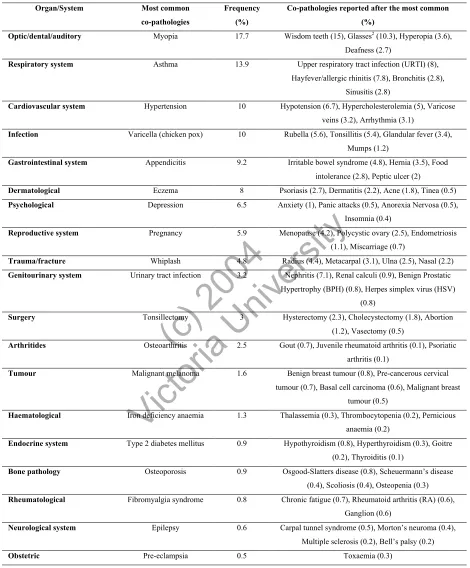
(17) Table 2: Individual patients’ total number of co-pathologies. Number of. 0. 1. 2. 3. 4. 5. 6. 7. 8. 9. 10. 11. 12. 13. 14. 15. 22. 172. 166. 179. 25. 89. 36. 43. 50. 18. 45. 38. 33. 28. 15. 41. co-pathologies. Frequency. Vi. ct. ( or c) ia 20 U 04 ni ve rs i. ty. (N = 1000). 17.
(18) Co-pathologies according to organ. Table 3 demonstrates a summary of the main co-pathologies identified according to the classification system utilised. The main co-pathologies related to optical/dental/auditory diseases (17.94%), respiratory (13.36%), cardiovascular (12.14%), fracture/trauma (10.65%), infection (9.93%), gastrointestinal (9.80%). The least common groups identified related to obstetric (0.26%), rheumatologic (0.69%) and hereditary (0.03%). Vi. ct. ( or c) ia 20 U 04 ni ve rs i. ty. conditions.. 18.
(19) Table 3: Patient co-pathology summary Frequency of co17.94. Respiratory system. 13.36. Cardiovascular system. 12.14. Trauma/fracture. 10.65. Infection. 9.93. Gastrointestinal system. 9.80. Dermatological. 5.87. Reproductive system. 5.21. Psychological. 3.43. Arthritides Bone pathology Endocrine system Neurological system Rheumatologic Obstetric Hereditary. 2.41 1.35 1.25 0.97. ct. Tumour. 3.30. Vi. Genitourinary system. ( or c) ia 20 U 04 ni ve rs i. Optic/dental/auditory. ty. pathology (%). 0.76 0.69 0.26 0.03. 19.
(20) Frequency of co-pathologies Table 4 shows the percentage of the most common co-pathologies seen according to each category. Myopia (17.7%) accounted for the most common optic/dental/auditory copathologies, while the most common cardiovascular conditions identified were hypertension (10%), hypotension (6.7%) and hypercholesterolemia (5%). Asthma (13.9%) and upper respiratory tract infections (URTI, 8%) and hayfever/allergic rhinitis (7.8) were the predominant respiratory conditions. Varicella (10%), rubella (5.6%) and tonsillitis (5.4%) were the most common infections, while appendicitis (9.2%), irritable. ( or c) ia 20 U 04 ni ve rs i. ty. bowel syndrome (4.8%), were the most common gastrointestinal problems.. 6.5% of patients identified depression as the most common psychological disorder they suffered from. Fibromyalgia syndrome (0.8%), chronic fatigue syndrome (0.7%) and rheumatoid arthritis (0.6%) were the most common rheumatologic disorders, while epilepsy (0.6%) and carpal tunnel syndrome (0.5%) were the most common neurological. ct. conditions. Osteoarthritis (2.5%) and gout (0.7%) were the most common arthritides. Vi. found. The most frequently reported tumours were malignant melanoma (1.6%) and benign breast tumours (0.8%).. 20.
(21) Table 4: Most common co-pathologies according to specific organ/system Organ/System Optic/dental/auditory. Most common. Frequency. Co-pathologies reported after the most common. co-pathologies. (%). (%). Myopia. 17.7. Wisdom teeth (15), Glasses2 (10.3), Hyperopia (3.6), Deafness (2.7). Respiratory system. Asthma. 13.9. Upper respiratory tract infection (URTI) (8), Hayfever/allergic rhinitis (7.8), Bronchitis (2.8), Sinusitis (2.8). Cardiovascular system. Hypertension. 10. Hypotension (6.7), Hypercholesterolemia (5), Varicose. Varicella (chicken pox). 10. Rubella (5.6), Tonsillitis (5.4), Glandular fever (3.4),. Appendicitis. 9.2. Irritable bowel syndrome (4.8), Hernia (3.5), Food. Eczema. 8. Psoriasis (2.7), Dermatitis (2.2), Acne (1.8), Tinea (0.5). Depression. 6.5. Anxiety (1), Panic attacks (0.5), Anorexia Nervosa (0.5),. veins (3.2), Arrhythmia (3.1) Infection. Mumps (1.2) Gastrointestinal system. intolerance (2.8), Peptic ulcer (2) Dermatological Psychological. Trauma/fracture Genitourinary system. Pregnancy. 5.9. Menopause (4.2), Polycystic ovary (2.5), Endometriosis. ( or c) ia 20 U 04 ni ve rs i. Reproductive system. ty. Insomnia (0.4) (1.1), Miscarriage (0.7). Whiplash. 4.8. Radius (4.4), Metacarpal (3.1), Ulna (2.5), Nasal (2.2). Urinary tract infection. 3.2. Nephritis (7.1), Renal calculi (0.9), Benign Prostatic. Hypertrophy (BPH) (0.8), Herpes simplex virus (HSV). Surgery Arthritides. Osteoarthritis. Malignant melanoma. 3. 2.5 1.6. Endocrine system. Vi. Haematological. Hysterectomy (2.3), Cholecystectomy (1.8), Abortion (1.2), Vasectomy (0.5). Gout (0.7), Juvenile rheumatoid arthritis (0.1), Psoriatic arthritis (0.1). Benign breast tumour (0.8), Pre-cancerous cervical. tumour (0.7), Basal cell carcinoma (0.6), Malignant breast. ct. Tumour. Tonsillectomy. (0.8). tumour (0.5). Iron deficiency anaemia. 1.3. Thalassemia (0.3), Thrombocytopenia (0.2), Pernicious. Type 2 diabetes mellitus. 0.9. Hypothyroidism (0.8), Hyperthyroidism (0.3), Goitre. Osteoporosis. 0.9. Osgood-Slatters disease (0.8), Scheuermann’s disease. anaemia (0.2) (0.2), Thyroiditis (0.1). Bone pathology. (0.4), Scoliosis (0.4), Osteopenia (0.3) Rheumatological. Fibromyalgia syndrome. 0.8. Chronic fatigue (0.7), Rheumatoid arthritis (RA) (0.6), Ganglion (0.6). Neurological system. Epilepsy. 0.6. Carpal tunnel syndrome (0.5), Morton’s neuroma (0.4), Multiple sclerosis (0.2), Bell’s palsy (0.2). Obstetric. 2. Pre-eclampsia. 0.5. Toxaemia (0.3). ‘Glasses’ was recorded as details of why glasses were worn was omitted from patient history files. 21.
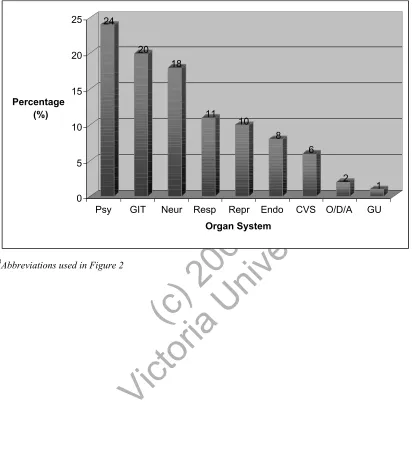
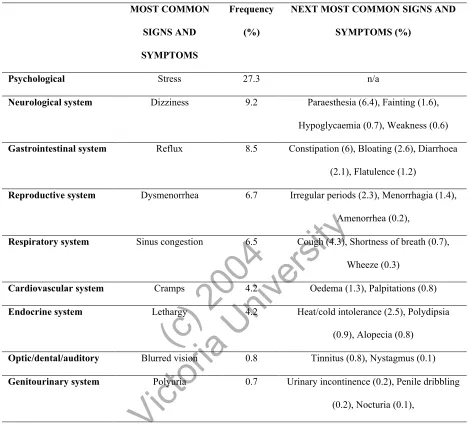
(22) Frequency of reported undiagnosed signs and symptoms As seen in Figure 1 the most common undiagnosed co-pathology signs and symptoms by system were psychological (24%), gastrointestinal (20%) and neurological (18%). Respiratory (11%), reproductive (10%) endocrine (8%) and cardiovascular (6%) accounted for the other signs and symptoms patients complained of. Interestingly, genitourinary (1%) and optical/dental/auditory (2%) were the least common signs and symptoms found.. Table 5 demonstrates the most common individual signs/symptoms according to each. ( or c) ia 20 U 04 ni ve rs i. ty. category. While stress was the most common (27.3%) over all categories, for the neurological system, dizziness (9.2%), and paraesthesia (6.4%) were most frequent. Reflux (7.1%) and constipation (6%) were commonest for gastrointestinal, while for reproductive it was dysmenorrhea (6.7%). Blurred vision (0.8%) and tinnitus (0.8%) were. Vi. ct. the most predominant signs/symptoms for the optic/dental/auditory category.. 22.
(23) Figure 1: Frequency of reported undiagnosed signs and symptoms. 25. 24 20. 20. Percentage (%). 18. 15 11 10. 10 8 6. 5 0 Psy. GIT. Neur. Resp. Repr. Endo. 3. O/D/A. GU. Vi. ct. Abbreviations used in Figure 2. CVS. 1. ( or c) ia 20 U 04 ni ve rs i. Organ System. ty. 2. 3. O/D/A – optical/dental/auditory Psy – Psychological CVS – Cardiovascular system Resp – Respiratory system GIT – Gastrointestinal system GU – Genitourinary System Repr – Reproductive system Neur - Neurological. 23.
(24) Table 5: Most common undiagnosed signs and symptoms reported MOST COMMON. Frequency. NEXT MOST COMMON SIGNS AND. SIGNS AND. (%). SYMPTOMS (%). Stress. 27.3. n/a. Dizziness. 9.2. Paraesthesia (6.4), Fainting (1.6),. SYMPTOMS Psychological Neurological system. Hypoglycaemia (0.7), Weakness (0.6) Gastrointestinal system. Reflux. 8.5. Constipation (6), Bloating (2.6), Diarrhoea (2.1), Flatulence (1.2). Reproductive system. Dysmenorrhea. 6.7. Irregular periods (2.3), Menorrhagia (1.4),. Optic/dental/auditory Genitourinary system. Cough (4.3), Shortness of breath (0.7),. ( or c) ia 20 U 04 ni ve rs i. Endocrine system. 6.5. Wheeze (0.3). Cramps. 4.2. Oedema (1.3), Palpitations (0.8). Lethargy. 4.2. Heat/cold intolerance (2.5), Polydipsia (0.9), Alopecia (0.8). Blurred vision. 0.8. Tinnitus (0.8), Nystagmus (0.1). Polyuria. 0.7. Urinary incontinence (0.2), Penile dribbling. ct. Cardiovascular system. Sinus congestion. Vi. Respiratory system. ty. Amenorrhea (0.2),. (0.2), Nocturia (0.1),. 24.
(25) DISCUSSION Patient profiles The mean age of patients was 36 (+/- 1.5) years of age, and of these patients, 55% were female and 45% male, which concurs with the ratios of female and male patients attending for health care services generally. 19 As expected, the mean age was relatively young, reflecting the fact that the clinic is a student clinic. This may have meant a lower proportion of age-related co-pathologies and previous conditions being found than may be the case in the general population, as according to the ABS19 the incidence of many. Presenting complaint. ( or c) ia 20 U 04 ni ve rs i. ty. diseases increases proportionately with age.. The most common presenting complaints found in the current study were low back pain (LBP) (25.3%) and cervical/neck pain (22.7%), after which the number of cases for other presenting complaints dropped greatly to 12% for both upper and lower limb complaints.. ct. These findings are consistent with those from previous studies that documented. Vi. presenting complaints in osteopathic clinics, 1, 14, 15which shows that the patient profiles in the teaching clinic are consistent with the general osteopathic population.. Frequency of co-pathologies Due to the absence of studies regarding co-pathologies in osteopathic patient populations, a comparison was made with the Australian Bureau of Statistics Health Census19 documentation of the frequency of medical conditions in the general population. The findings of this study are generally consistent with the ABS19 findings, and show that the. 25.
(26) osteopathic teaching clinic sample is mostly reflective of the general Australian population. However, there were some discrepancies found.. The main co-pathologies found in the current study was myopia/shortsightedness, with a frequency of 17.7%. This concurs with the ABS19 findings of the most commonly reported condition was problems with eyesight, including myopia/short sightedness (21%). However, in 10.3% of the osteopathic patients’ records all that was recorded was ‘glasses’, but the reason for their use was not documented, so potentially the figure for. ( or c) ia 20 U 04 ni ve rs i. ty. myopia (and hyperopia) may be higher than was stated.. The second most frequent co-pathology identified was asthma (13.9%), which was slightly higher than the ABS19 findings for asthma (12%). This discrepancy may be related to the average age of the sample taken from the teaching clinic being 36 years and according to the ABS, 19 14% of people between 0-19 years of age suffer from asthma.. ct. Therefore, it is expected that the figure for asthma would be higher, given the average. Vi. age of patients attending the teaching clinic.. According to the ABS19 14% of the Australian population reported having arthritis (inclusive of osteoarthritis and rheumatoid arthritis), whereas the current study found a much lower frequency of arthritis of 1.35%. According to the ABS19 the incidence of these diseases increases proportionately with age, and the incidence of arthritis increases with age from one in three of those aged 55-64 years to just over half (52%) of those aged 75 years and over. As the average age of the patients in the current study was only 36, it. 26.
(27) is to be expected that some of the most common ageing diseases in Australia were not commonly occurring in this study. However, the current osteopathic curriculum does include study of the common age-related conditions noted in the ABS19 survey, so could not be said to be deficient in this respect. It was recognised prior to commencement that there would be a selection bias in the age range the sample would contain, given that the clinic recruits a large number of patients from within the university community, leading to a greater preponderance of younger patients than might be expected in a non teaching. ty. clinic.. ( or c) ia 20 U 04 ni ve rs i. The findings of the type and frequency of co-pathologies identified in this study are consistent with the ABS.19 Therefore, these findings may be used by educators and/or students to evaluate whether their theoretical and clinical training provides them with a detailed overview and clinical exposure to the most commonly occurring diseases in Australia. Even though Osteopaths do not treat most of these diseases directly, having an. ct. awareness and understanding of them is important, especially if they contraindicate. Vi. treatment or change the management of the patient.. Frequency of reported signs/symptoms While it was not possible to diagnose conditions on the basis of the undiagnosed signs and symptoms reported in this study, almost all of these signs and symptoms affected systems for which those pathologies listed as common in the ABS19 figures are covered in the educational curriculum. The high levels of stress reported are of note, but are in line with the findings of other general population studies.19. 27.
(28) Implications of findings on curriculum development. One of the outcomes of the current study was to assist educators in gaining a wider understanding of the patient demographics and most commonly occurring co-pathologies seen in the teaching clinic, which may be independent or related to the patients’ presenting complaints. The current Victoria University osteopathic curriculum was influenced by the curriculum taught within the earlier established osteopathy course at RMIT and also by international osteopathic courses.7 However, when the course was. ty. devised it was unknown whether the curriculum in relation to clinical diagnosis was an. ( or c) ia 20 U 04 ni ve rs i. accurate reflection of co-pathologies prevalent in the Osteopathic patient population. Therefore, a future study could examine the findings from the current study of the frequency and incidence of co-pathologies and compare them with the Victoria University osteopathic curriculum and see if they are consistent. A further study could use the current study’s findings about co-pathologies and compare them across the three. ct. Australian osteopathic courses to see if the curriculum taught is consistent with the co-. Vi. pathologies seen by students in teaching clinics, as there may be differences in patient populations and specific conditions covered in each osteopathic course.. The current study is the only one that has examined the frequency of co-pathologies and because it was undertaken in a student teaching clinic, it is difficult to know whether the patient profiles are similar to those of patients seeking treatment in private practice. Certainly the average age of patients in this study was low, and this was reflected in the low prevalence of age-related conditions. Therefore, future studies could replicate the. 28.
(29) current study and compare the type and frequency of the main co-pathologies seen by osteopaths in private practice with those identified in a teaching clinic. This would further aid in clarification of the co-pathologies issue and the repercussions it may have on developing the appropriate osteopathic curriculum. If there are co-pathologies that are common in private practice but poorly represented in the student clinic, they could then be actively compensated for within the teaching program.. The average age of patients attending the teaching clinic was below 40 years of age, mainly. ty. due to the majority of patients being students themselves. Therefore, the results of the current. ( or c) ia 20 U 04 ni ve rs i. study indicate the need for a greater variety of patients to expand the students’ clinical exposure and ensure that they see more cases of age-related disease in their training.. In particular, there is a need to increase clinical exposure to patients with arthritides, as their incidence was found to be low in the teaching clinic compared with their incidence in the. ct. general population. This is necessary because students are not having adequate exposure to. Vi. patient’s with arthritides and as a result possibly not as experienced in treating and managing patients with arthritides as they should be. Increasing clinical exposure may be achieved by external placement of students in nursing homes or private hospitals where the average age is higher. Also, promotion of the teaching clinic could be improved to social groups or clubs, such as older persons’ sporting teams, where participants are over 60 years of age, and thus more likely to suffer from arthritis. Further, the use of advertising in local newspapers, or by writing articles that focuses on Osteopathic treatment of specific conditions, may also be useful.. 29.
(30) Perceptions of Osteopaths Furnham et al16 found that complementary medical patients (of whom some were osteopathy patients) saw complementary practitioners as having more time, being more sensitive to emotional issues, and even offering better explanations of illness. Therefore, osteopaths as ‘holistic’ practitioners are playing a greater role in their patient’s health care than many have suspected. Based on the findings of this study, it is evident that most patients (97.8%) that attended the clinic for Osteopathic treatment had at least one co-. ty. pathology. Therefore, the current study shows the potential for Osteopaths not only to. ( or c) ia 20 U 04 ni ve rs i. play a large role in treatment of their patient’s presenting complaint but also in the care and advice they can provide their patients about their previous and co-existing conditions.. Jamison20 was disappointed to find that chiropractors seldom came to mind when participants (i.e. chiropractic patients) were asked to spontaneously respond to the term. ct. health information. As there is an overlap between the conditions chiropractors and. Vi. osteopaths treat, it is likely that osteopathic patients also have this perception. Given the number of patients presenting with co-pathologies, this study demonstrates the need for an increased public awareness of the potential for Osteopaths to play in their patients’ health. As primary health care practitioners, osteopaths have the clinical and theoretical training to diagnose, treat and manage many types of conditions, therefore it is important that our patients are aware of the extent of our training, and this study will help to contribute to this pool of information.. 30.
(31) Additional Information Interestingly, visceral conditions (4%) were the least common presenting complaints for which patients attended the clinic for treatment. However, some of the most common copathologies recorded were common visceral conditions that Osteopaths consider themselves able to treat. One such condition is irritable bowel syndrome (IBS), which accounted for 4.8% of all gastrointestinal conditions. Even though this figure was lower than the ABS National Health Survey19 findings of one in seven Australians, perhaps a lack of awareness by the community is present regarding the scope of what osteopathic. ( or c) ia 20 U 04 ni ve rs i. ty. students can treat.. A solution to increase public awareness may be to educate health professionals such as general practitioners (GPs) to the variety of conditions that Osteopaths are able to treat. Formal courses designed to inform GPs and other medical practitioners in general about osteopathy should be instigated as part of credits towards Continuing Professional. Limitations. Vi. ct. Development (CPD) for osteopaths.. One of the greatest difficulties encountered in this study was the inconsistent extent of detail recorded by the students in patient case history notes. For example, in some cases only a drug history was recorded, indicating that either the patient could not give a detailed account of their co-pathologies or that the student osteopath failed to take a comprehensive enough history. For example, a number of patients were listed in their histories as taking medications that are usually prescribed for cardiovascular conditions,. 31.
(32) but no diagnosed cardiovascular condition was recorded in the systemic enquiry or past medical history. This may have skewed the results, as some co-pathologies may have existed without being adequately recorded.. Some reasons for discrepancies in history taking may be due to the large number of treating students and the fact these students are at different levels of their education (3rd, 4th and 5th year students) and those in the junior year groups may not yet appreciate the value of why they need such information about a patient’s medical history. Perhaps. ty. students may have asked the specific questions about diseases but did not actually record. ( or c) ia 20 U 04 ni ve rs i. their findings or due to time constraints omitted certain organ systems from their history taking, therefore missing some information about co-pathologies and/or their signs and symptoms.. A potential weakness of the current study is the failure to clearly separate figures between. ct. previously occurring conditions patients suffered in the past and those co-pathologies. Vi. they were actually suffering from at the time of the consultation. Based on the way information was recorded by students in the patient histories, this was not possible in many cases. Hence, future studies could make the distinction between previous illnesses and those the patient is currently suffering from, as this could potentially provide a more accurate representation of the frequency of current patient conditions. However, the information regarding past illnesses is still of great importance due the potential of these to have an impact on the patient’s current health.. 32.
(33) Further studies could examine, as suggested, osteopathic private practice clinics to see whether they more accurately reflect the prevalence of age-related diseases. A study of the chiropractic curriculum by Kleynhans21 suggested the inclusion of a pathology subject into an undergraduate curriculum that incorporates ‘pathology which modifies chiropractic (osteopathic) management; the relevance of mechanical pathologies, pathomorphology and contraindications to patient management.’ Curriculum developers could examine Kleyhans21 suggestion in the future and determine whether it could be an effective subject inclusion into the osteopathy course to help. Vi. ct. ( or c) ia 20 U 04 ni ve rs i. treatment and/or management of their patients.. ty. students understand the importance of various diseases and their impact on osteopathic. 33.
(34) CONCLUSION The findings of the type and frequency of co-pathologies identified in this study are generally consistent with the ABS national trends.19 Therefore, these findings may be used by educators and/or students to evaluate whether their theoretical and clinical training in the curriculum provides them with a detailed overview and clinical exposure to the most commonly occurring diseases in Australia.. Although as Osteopaths we predominantly treat patients with musculoskeletal problems,. ty. most patients we see will also have at least one co-pathology present in their medical. ( or c) ia 20 U 04 ni ve rs i. history. Given the number of patients presenting with co-pathologies, this study demonstrates the need for an increased public awareness of the potential for Osteopaths to play a part in patients’ general healthcare.. Students need to have greater exposure to the conditions that were not commonly. ct. identified in the current study but common in the wider community, such as arthritides.. Vi. This may be achieved by external clinical placement in settings where these conditions are more frequently occurring.. Co-pathologies can influence a patient’s musculoskeletal complaint, as well as the type and efficacy of osteopathic treatment. Therefore it is important that students and educators alike are aware of the prevalent co-pathologies so that the curriculum is tailored to include these conditions, so that graduates are better prepared for life in private practice.. 34.
(35) REFERENCES 1. Pringle M, Tyreman S, Study of 500 patients attending an osteopathic practice, British Journal of General Practice, 1993; January:15-8.. 2. Bullock M, Pheley A, Kiresul T, Lenz S, Culliton P, Characteristics of patients seeking therapy at a hospital-based alternative medicine clinic, The Journal of Alternative and Complementary Medicine, 1997;31-37.. ( or c) ia 20 U 04 ni ve rs i. approach. USA: McGraw-Hill; 1999: 84-97.. ty. 3. Meadows JTS, Orthopaedic differential diagnosis in physical therapy: The study. 4. Gibbons P, Tehan P, Manipulation of the spine, thorax and pelvis; An Osteopathic perspective, London: Churchill Livingstone; 2000: 24-5.. ct. 5. McCance K, Hueter S, Pathophysiology: The biologic basis for disease in adults and. Vi. children, USA, Mosby, USA, 2002: 334-8.. 6. MacDonald C, Cox P, Bartlett D, Productivity and client satisfaction: A comparison between physical therapists and student-therapist pairs, Physiotherapy, 2002: 92-101.. 7. Victoria University 2004 Handbook OnLine, Faculty of Human Development: www.vu.edu.au, viewed: 12/11/04. 35.
(36) 8. Royal Melbourne Institute of Technology 2004 Handbook OnLine, Faculty of Human Development: www.rmit.edu.au, viewed: 17/11/04. 9. University of Western Sydney, 2004 Handbook OnLine, Health Sciences and Nursing: www.uws.edu.au, viewed: 17/11/04. 10. Robertson A, Gibbons P, Carter A, Student and patient perspectives on the interaction. ty. between supervisors, students and patients during clinical teaching experience at a. 2002; 5(1):8-15.. ( or c) ia 20 U 04 ni ve rs i. university outpatient clinic: a descriptive pilot study, Journal of Osteopathic Medicine,. 11. Hunt A, Higgs J, Adamson B, Harris L, University education and the physiotherapy. ct. professional, Physiotherapy, 1998: 84(6): 264-273.. Vi. 12. Carruthers R, Blenheim MNZRO, A Demographic study of an osteopathic patient population, The Journal of New Zealand Register of Osteopaths, 1991;20-3.. 13. Walsh M, A study of patients and patient complaints at chiropractic teaching clinics, Chiropractic Journal of Australia, 1992; 22(2):61-64.. 36.
(37) 14. North NH, Madas E, Leggs SJ, Goddard RW, Carruthers R, Cartmell L, Gollan C, Variation in clinical practice of osteopathy in the central region of New Zealand, Journal of Osteopathic Education and Clinical Practice, 1998; March:19-26.. 15. McIlwraith B, A survey of 1200 osteopathic patients in the United Kingdom, Journal of Osteopathic Medicine. 2003;6(1); 13-18.. 16. Furnham A, Vincent C, Wood R, The health beliefs of three groups of. ty. complementary medicine and a general practice group of patients, The Journal of. ( or c) ia 20 U 04 ni ve rs i. Alternative and Complementary Medicine, 1995;Vol 1: 347-59.. 17. Medicare Benefits Schedule: Allied Health and Dental Services, Medicare benefits for allied health and dental care services provided to people with chronic conditions and complex care needs, 2004, Australian Government Department of Health and Ageing,. Vi. ct. Canberra: 10-7.. 18. Murtagh J, General Practice, NSW: McGraw-Hill; 1998.. 19. Australian Bureau of Statistics 2001, National Health Survey: Summary of Results, Australia, cat. no. 4364.0, ABS, Canberra, 2001.. 20. Jamison J, Perceptions: A case study of chiropractic patients in eastern Australia, Chiropractic Journal of Australia, 2000;Vol 30; March:2-4.. 37.
(38) 21. Kleynhans A, Towards an integrative chiropractic curriculum design, Chiropractic. Vi. ct. ( or c) ia 20 U 04 ni ve rs i. ty. Journal of Australia, 1997; 27(2): 79-85.. 38.
(39) ty. ( or c) ia 20 U 04 ni ve rs i. ct. Vi APPENDIX 1: Raw Data. 39.
(40) a) Cardiovascular Pathology (%) 10 6.7 5 3.2 3.1 2.9 0.9 0.9 0.8 0.4 0.3 0.3. ct. 0.1 0.1 0.1. ( or c) ia 20 U 04 ni ve rs i. 0.2 0.2 0.1 0.1 0.1 0.1 0.1 0.1 0.1. ty. 0.3 0.3 0.3. Vi. Hypertension Hypotension Hypercholesterolaemia Varicose veins Arrhythmia Migraine Acute myocardial infarction (AMI) Haemorrhoids Chill-blains Raynaud's phenomenon Atheroma Angina Deep vein thrombosis (DVT)/thrombosis Cerebral haemorrhage Subdural haematoma Abdominal aortic aneurism Postural hypotension Lymphoedema Breast haematoma Vasculitis Absent jugular vein valve Atrial Fibrillation Collapsed mitral valve Enlarged heart Transient ischaemic attacks (TIA) Stroke Congenital Heart Disease. b) Cardiovascular Signs and Symptoms (%) Cramps Oedema Palpitations. 4.2 1.3 0.8. c) Haematology (%) Iron deficient anaemia Thalassemia Thrombocytopenia Pernicious anaemia. 1.3 0.3 0.2 0.2. 40.
(41) d) Respiratory Pathology (%) Asthma Upper Respiratory Tract Infection (URTI) Allergic rhinitis (hayfever) Bronchitis Sinusitis Pneumonia Pleurisy Pneumothorax Whooping cough Lower respiratory tract infection Sleep apnoea Tonsillitis Croup Nasal polyps Bronchiectasis Influenza. 13.9. 8 7.8 2.8 2.8 1.4 0.8 0.6 0.6. ( or c) ia 20 U 04 ni ve rs i. ty. 0.5 0.4 0.3 0.3 0.1 0.1 0.1. e) Respiratory Signs and Symptoms (%) 6.5 4.3 0.7 0.3 0.2. Vi. ct. Sinus congestion Cough Shortness of breath (SOB) Wheeze Haemoptysis. f) Gastrointestinal Pathology (%) Appendicitis Irritable bowel syndrome (IBS) Hernia (umbilical, inguinal, hiatus) Intolerance (gluten, dairy, wheat, etc) Peptic ulcer Cholelithiasis (gall stones) Hepatitis (A, B, C) Giardia Coeliac disease Duodenal ulcer Gastroenteritis. 9.2 4.8 3.5 2.8 2 1.5 1.1 0.6 0.6 0.5 0.5. 41.
(42) Diverticulitis Anal fissure Mouth ulcers Bowel polyps Oesophagitis Oesophageal ulcer Ulcerative colitis Crohn's disease Bowel tear Peritonitis Stomach polyps Bowel abscess Prolapsed colon Bowel resection Blue-green algae poisoning. 0.4 0.4 0.3 0.2 0.2 0.2 0.1 0.1 0.1 0.1 0.1 0.1 0.1 0.1. 8.4 6 2.6 2.1 1.2 1 0.6 0.5 0.2. ct. 0.1. Vi. Reflux Constipation Bloating Diarrhoea Flatulence Nausea Vomiting Bloody stool Jaundice Faecal incontinence. ( or c) ia 20 U 04 ni ve rs i. g) Gastrointestinal Signs and Symptoms. ty. 0.1. h) Genitourinary Pathology (%) Urinary tract infection (UTI) Nephritis Renal calculi Benign prostatic hypertrophy (BPH) Herpes simplex virus (HSV) Cystitis Candida Chlamydia Hydrocele Varicocele Renal infection Proteinuria. 3.2 1.3 0.9 0.8 0.8 0.7 0.6 0.4 0.2 0.2 0.2 0.1. 42.
(43) Glomerulonephritis Urethritis Kinked urethra Pyelonephritis Nephropathy Human Papilloma Virus (HPV). 0.1 0.1 0.1 0.1 0.1 0.1. i) Genitourinary Signs and Symptoms (%) Polyuria Urinary incontinence Penile dribbling Nocturia Hematuria Stress incontinence. 0.7 0.2 0.2 0.1 0.1 0.1. ( or c) ia 20 U 04 ni ve rs i ct. 5.9 4.2 2.5 1.1 0.7 0.6 0.1 0.1 0.1 0.1 0.1 0.1 0.1 0.1. Vi. Pregnancy Menopause Polycystic ovary Endometriosis Miscarriage Fibroids Labial dermatitis Labial cyst Uterine cyst Stillborn Prolapsed uterus Undescended testes Premature birth Prolapsed vagina. ty. j) Reproductive Pathology (%). k) Obstetric Pathology (%) Pre-eclampsia Toxaemia. 0.5 0.3. l) Reproductive Signs and Symptoms (%) Dysmenorrhea Irregular periods Menorrhagia Amenorrhea. 6.7 2.3 1.4 0.2. 43.
(44) m) Neurological Pathology (%) 0.6 0.5 0.4 0.2 0.2 0.1 0.1 0.1 0.1. 0.1. ct. 9.2 6.4 1.6 0.7 0.6 0.6 0.5 0.4 0.1 0.1 0.1 0.1. Vi. Dizziness Paraesthesia Fainting Hypoglycaemia Weakness Tremor Gait disturbances Vertigo Memory loss Muscle wasting Fitting Hyporeflexia Loss of consciousness (LOC). ( or c) ia 20 U 04 ni ve rs i. n) Neurological Signs and Symptoms (%). ty. Epilepsy Carpal Tunnel Syndrome Morton's neuroma Multiple sclerosis (MS) Bell's Palsy Parkinson's disease Myasthenia Gravis Arachnoid cyst Optic neuritis. o) Endocrine Pathology (%) Non-insulin dependant diabetes mellitus (NIDDM) Hypothyroidism Hyperthyroidism Diabetic neuropathy Goitre Thyroid agenesis Glycogen storage disease Thyroiditis Acromegaly. 0.9 0.8 0.3 0.3 0.2 0.1 0.1 0.1 0.1. 44.
(45) p) Endocrine Signs and Symptoms (%) Lethargy Heat/cold intolerance Polydipsia Allopecia. 4.2 2.5 0.9 0.8. q) Rheumatological Pathology (%). ( or c) ia 20 U 04 ni ve rs i. r) Optical/Dental/Auditory Pathology (%). ty. Fibromyalgia syndrome 0.8 Chronic fatigue 0.7 Ganglion 0.6. Vi. ct. Myopia 17.7 Wisdom teeth 15 Glasses* 10.3 Hyperopia 3.6 Deafness 2.7 Astigmatism 2.2 Cataracts 0.7 Braces 0.5 Perforated ear drum 0.4 Labyrinthitis 0.2 Bruxism 0.2 Glaucoma 0.2 Conjunctivitis 0.1 Rosacea 0.1 Colour blindness 0.1 Otosclerosis 0.1 Chronic otitis externa 0.1 Uveitis 0.1 Blindness 0.1 NB. ‘glasses’ was all the information noted. s) Optical/Dental/Auditory Signs and Symptoms (%) Blurred vision Tinnitus Nystagmus. 0.8 0.8 0.1. 45.
(46) t) Dermatological Pathology (%) 8 2.7 2.2 1.8 1.7 0.8 0.2 0.1 0.1. u) Infections (%) 10 5.6 5.4 3.8 1.2 0.6 0.5 0.4 0.4 0.4 0.3. Vi. Chicken pox Rubella Tonsillitis Glandular fever Mumps Viral meningitis Glandular fever Adenoiditis Scarlet fever Herpes Zoster Malaria Human Immunodeficiency Virus (HIV) Rheumatic fever Cerebrospinal meningitis Pharyngitis Pilonidal cystitis Typhoid (Golden) staphylococcus aureus Staphylococcus Hook worm Sacral abscess Nocardia Dengue fever Septicaemia. ( or c) ia 20 U 04 ni ve rs i. ty. 0.1 0.1. ct. Eczema Psoriasis Dermatitis Acne Tinea Subcutaneous cyst Keratosis Senile warts Pruritus Sweet syndrome Ringworm. 0.2 0.2 0.1 0.1 0.1 0.1 0.1 0.1 0.1 0.1 0.1 0.1 0.1. 46.
(47) v) Psychological Disorders (%) Depression Anxiety Panic attacks Anorexia nervosa Insomnia Schizophrenia Nervous breakdown Bulemia Bipolar disorder Drug addiction Obsessive Compulsive Disorder (OCD) Intellectually disabled Post-traumatic stress disorder (PTSD) Dyslexia. 6.5 1 0.5 0.5 0.4 0.2 0.2 0.2 0.2 0.2. 0.1 0.1. ( or c) ia 20 U 04 ni ve rs i. 0.1. ty. 0.2. Stress. 27.3. x) Tumour (%) 1.6 0.8. Vi. Malignant melanoma Benign breast tumour Pre-cancerous cervical tumour Basal cell carcinoma (BCC) Malignant breast tumour Benign skin tumour Malignant cervical tumour Hodgkin's lymphoma Squamous cell carcinoma (SCC) Leukaemia Malignant bowel tumour Benign thyroid adenoma. ct. w) Psychological Signs and Symptoms (%). 0.7 0.6 0.5 0.5 0.3 0.2 0.2 0.2 0.2 0.2. 47.
(48) 0.1 0.1 0.1 0.1 0.1 0.1 0.1 0.1 0.1 0.1 0.1 0.1 0.1. ty. Ewing's sarcoma Benign liver tumour Malignant parotid gland tumour Benign brain tumour Malignant oesophagus tumour Malignant ovarian tumour Malignant brain tumour Malignant salivary gland tumour Lymphoma Benign bowel tumour Nasopharyngeal fibroma Lymphadenopathy Lipoma. Osteoporosis Osgood-Schlatter Scheuermann’s disease Scoliosis Osteopenia Spina bifida occulta Pilonidal sinus Kleinfelter's syndrome Osteogenesis imperfecta Calvé-Legg-Perthes disease Congenital Hip Dysplasia (CHD) Sever's disease Osteochondritis dessicans. 0.1 0.1 0.1. 0.9 0.8 0.4 0.4 0.3 0.2 0.2 0.1 0.1. Vi. z) Bone Pathology (%). 2.5 0.7 0.6. ct. Osteoarthritis (OA) Gout Rheumatoid arthritis (RA) Juvenile rheumatoid arthritis Psoriatic arthritis Polymyalgia rheumatica (PMR). ( or c) ia 20 U 04 ni ve rs i. y) Arthritidis (%). 0.1 0.1 0.1 0.1. 48.
(49) ab) Surgery (%) Tonsillectomy Hysterectomy Cholecystectomy Abortion Vasectomy Oophorectomy Bladder lift Splenectomy Thyroidectomy. ( or c) ia 20 U 04 ni ve rs i ct. 4.8 4.4 3.1 2.5 2.2 1.8 1.6 1.6 1.4 1.2 1.1 1 0.8 0.7 0.6 0.6 0.4 0.4 0.4 0.3 0.3 0.2 0.2 0.2 0.1 0.1 0.1 0.1 0.1. Vi. Whiplash Radius Metacarpal Ulna Nasal Metatarsal Concussion Clavicle Tibia Fibula Ribs Humerus Calcaneus Femur Scaphoid Radio-ulna joint Patella Skull Coccyx Mandible Talocrural joint Sternum Acetabulum Cuboid Thoracic spine Lumbar spine Sacrum Cuneiform Maxilla. ty. aa) Trauma/Fracture (%). 3 2.3 1.8 1.2 0.7 0.3 0.3 0.2 0.1. 49.
(50) ac) Hereditary Conditions (%). ct. ( or c) ia 20 U 04 ni ve rs i. ty. 0.1. Vi. Ozler Weber Rendu syndrome. 50.
(51) ty ( or c) ia 20 U 04 ni ve rs i. Vi. ct. APPENDIX 2: PATIENT INFORMED CONSENT. 51.
(52) New Patient Information Sheet In order to create a patient account record for you on our computer system, we ask you to fill in the details below before your treatment starts, and hand the form back to the receptionist. After your details have been entered, the form will be destroyed. All patient data held on computer is stored in accordance with the Victorian Health Records Act, but as this is a teaching institution, some patient data is sometimes accessed for teaching and/or research purposes. In such cases, no data which would identify individual patients is ever used.. ( or c) ia 20 U 04 ni ve rs i. ty. Title (please circle) Mr. Mrs. Ms Miss Dr. Fr. Rev. Other………………….. Surname……………………………………………………………………………….. Given name(s)…………………………………………………………………………. Preferred name………………………………………………………………………... Telephone (home)………………………(work)……………………………………… Mobile…………………………………...(email)…………………………………….... Vi. ct. Address………………………………………………………………………………… …………………………………………………………Postcode……………………... Date of birth…………………………………………………………………………… Marital status (please circle) single married de facto divorced separated widowed Occupation……………………………………………………………………………. Are you a student or concession card holder?. Yes. No. Please note that in order to claim student or concession rates you must produce a valid student or concession card.. 52.
(53)
Figure


+2
Related documents
Im Rahmen dieser Arbeit konnte gezeigt werden, dass Mba1 unabhängig von Oxa1 mit mitochondrialen Translationsprodukten interagiert und auch nicht notwendig ist, damit diese mit Oxa1
In Southern Zone, Pudukkottai, Virudhunagar and Sivagangai districts were selected purposively to represent the National Agricultural Insurance Scheme (NAIS), Weather Based
A couple of ways in which the process could be improved that would also promote earlier public disclosure would be: (1) to disclose complaints as soon as the Preliminary
Naročnik si pridržuje pravico, da lahko kadarkoli pred odpiranjem ponudb ustavi postopek javnega naročanja ter v vseh fazah postopka po poteku roka za odpiranje ponudb zavrne
These studies revealed that mepolizumab treat- ment not only reduced eosinophil numbers in the blood and sputum but also significantly reduced asthma exacerbations together with
Finally, in the present study, the antioxidant properties of oral ALA intake at a daily dose of 1200mg were not strong enough to inhibit NF-κβ which could lead to
Abbreviations: ST, strength training; PKT, physiotherapy; mFC, modified fitness counts exercise program; PREP, progressive resistance exercise program; BAL, balance training;
Hemodynamic response function (HRF) variability confounds resting-state fMRI functional connectivity
F I G U R E 3 Simulation results for empirical assessment of percentage change in functional connectivity ( D FC) between neural and BOLD time series caused by difference in
