Networks. (Under the direction of Brad Mehlenbacher, Phd.).
Formal training is often presented as a straw man in support of informal learning as an idealized form of organizational learning. This research examines the connection between co-participation in a formal training program and the informal learning networks within an organization. This study provides evidence, through an examination of social identity theory and the inherently social nature of informal learning, that there is a lingering sense of cohort from participating in a training program together. This study used a social network analysis to examine the effect that training co-participation had on informal information seeking and three antecedent variables found by Borgatti and Cross (2003)–knowledge, value and accessibility. A network of 27 professionals in a marketing firm participated in an online survey asking about their information seeking behaviors and assessments of one another’s
expertise. A multiple regression quadratic assignment procedure showed that
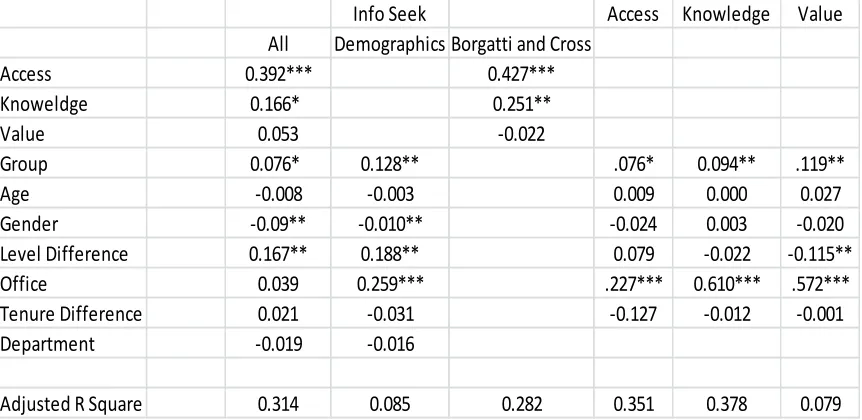
co-participation had a statistically significant influence on information seeking, knowledge of expertise, valuing expertise, and assessment of accessibility. While the results were small, training co-participation was the only variable other than proximity that had an influence on information seeking and its antecedents. The results suggest that outside of imparting knowledge, skills and attitudes, formal training also serves a role in the social learning that happens every day within organizations.
The Influence of Formal Training on Informal Learning Networks
by Joseph Houde
A dissertation submitted to the Graduate Faculty of North Carolina State University
in partial fulfillment of the requirements for the degree of
Doctor of Education
Adult and Community College Education Raleigh, North Carolina
2013
APPROVED BY:
_______________________________ ______________________________ Brad Mehlenbacher, Ph.D. Duane Akroyd, Ph.D.
Committee Chair
________________________________ ________________________________
DEDICATION
BIOGRAPHY
Joe Houde is an educator, designer and consultant specializing in innovative
educational design and corporate education. He has over a decade of experience in corporate education and is currently founder and president of Brass Ring Training.
Joe's expertise lies in connecting content, design and participants. He applies this expertise primarily to programs focusing on strategy, organizational culture, and leadership development. Joe has lead the design of several Duke Corporate Education Metaphoric Experiences which use novel contexts to teach business lessons. These include Make the
Play, which is based upon Duke basketball and highlighted in Newsweek magazine, and On Trial!, an activity that uses a simulated courtroom to encourage robust dialogue. He has designed and delivered traditional programs, simulation-based programs, Metaphoric Experiences experiential learning programs, action learning programs and online
e-learning for both international and US based programs. His clients, among others, include: Deutsche Bank, PricewaterhouseCoopers, IBM, Glaxo Smith-Klein, Microsoft, Eli Lilly, Duke University, Suncor and Siemens.
Prior to founding Brass Ring, Joe worked for Duke Corporate Education as a facilitator and facilitator relationship manager His role was to develop a network of
Corporate Strategy class for the Duke MBA-Global Executive program. Joe currently has a course in Game Design and Learning which he co-teaches at North Carolina State
University. Beyond working with clients, Joe works to progress the field of corporate education and has made presentations on design, leadership and education at world-class institutions such as the Center for Creative Leadership in Greensboro, NC and IMD, in Lausanne, Switzerland. For a brief time, Joe worked in the entertainment department on a cruise ship.
Joe has worked with clients from diverse industries including manufacturing, accounting, consulting, financial services, banking, energy, petroleum, transportation, automotive, consumer electronics, entertainment, software, medical, higher education,
publishing, pharmaceuticals and not-for-profit. He has facilitated and taught in programs in a dozen countries around the world, including South America, Asia and extensive work in Europe.
Joe received a Masters in Training and Development from North Carolina State University and was a Drew Scholar at Drew University, where he earned a Bachelor’s degree in Psychology with a minor in Asian Studies.. Joe's research focuses on non-traditional education and learning methods: game-based learning, apprenticeship in professional
services, informal learning networks, and online learning. His master’s thesis was published in the Academy of Management Learning and Education Journal in 2007.
ACKNOWLEDGMENTS
The first person I must thank is my wife Leah, who tried to talk me out of this 13 years ago before I even started. Despite her admonishment, I went forward and she supported me fully. Except in her constant reminders that it took me longer than it took her.
Thank you to Brad Mehlenbacher for being my committee chair and helping me work through writing and the red tape.
Thank you to the research site and its CEO – a good friend who must stay anonymous but who knows how much his help means to me. Thanks to my committee for all of their input and advice.
Thanks to various members of the academy who helped me when they had no responsibility to do so, especially Rob Cross who coached my on methodology and Mark Wilson who walked through my results with me.
Thanks to Pete, who helped me even though he is an economist.
TABLE OF CONTENTS
LIST OF TABLES ... x
LIST OF FIGURES ... xi
Chapter 1 ... 1
Problem Statement ... 2
Purpose ... 5
Hypotheses ... 9
Chapter 2 ... 12
Literature Review... 12
Sharing a Cohort and Social Identity ... 12
Social Identity Theory History... 14
Minimal Cue Paradigm ... 18
Consequences of shared identities. ... 19
Relational View of Information Seeking ... 23
Social identity and Relational Information seeking ... 28
Information seeking as Informal Learning ... 29
Chapter 3 ... 45
Research Design... 45
Sample... 46
Training course description... 46
Data Collection ... 48
Instrumentation ... 48
Validity ... 54
Analysis... 54
Chapter 4 ... 57
Results ... 57
Demographics ... 57
Quadratic Assignment Procedure ... 59
Multiple Regression QAP ... 62
Chapter 5 ... 66
Discussion ... 66
Implications for practice ... 71
Limitations ... 73
Future Research ... 76
Conclusion ... 80
APPENDICES ... 93
Appendix A: Survey ... 94
Appendix B: Recruitment Email ... 97
Appendix C: Reminder Email ... 99
Appendix D: Reminder for survey II ... 100
Appendix E: Analysis without Knowledge Variable ... 101
Appendix F: Analysis without Value Variable ... 103
LIST OF TABLES
Table 1. Summary of results from Borgatti and Cross (2003) ... 28
Table 2. Sources of Individual Learning in the organization (Tannenbaum 1997) ... 33
Table 3. Typology of informal learning ... 40
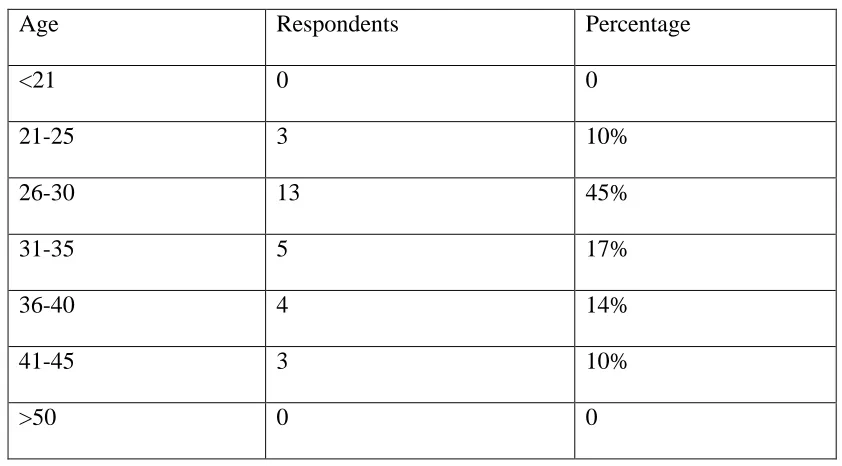
Table 4. Age range ... 58
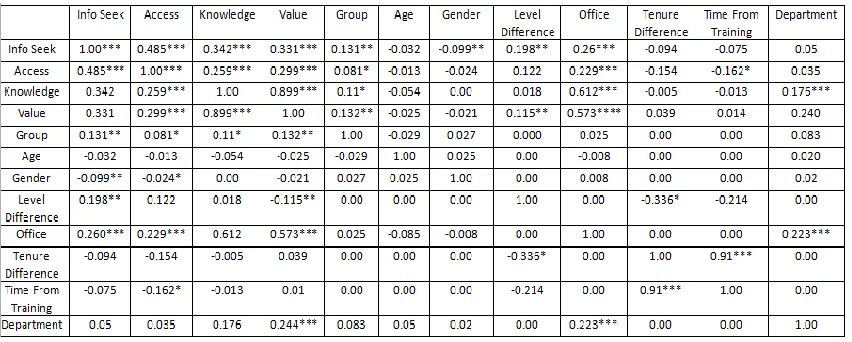
Table 5. Correlation of Controls, Group, Borgatti and Cross variables and Information Seeking ... 62
LIST OF FIGURES
Chapter 1
Informal learning is difficult to define. Because informal learning is ubiquitous and hard to quantify, research on the topic is diverse and sometimes contentious. Researchers cover topics as varied as to how work can be shaped to improve learning (Skule, 2004), how learning occurs within organizations (Eraut, 2003), and how informal learning and training interact (Enos, Kehrehan, & Bell, 2003). Not only do the topics covered by informal learning research vary widely, but the challenges of globalization, technology and demographic shifts have increased interest in informal learning as a potential solution.
As the interest in informal learning has grown in both volume and diversity, it has coincided with an increase in critiques of formal training. These critiques center on how formal training removes learners from the situated context of learning, is too costly compared to alternatives, and is less efficient than alternative technological options that allow for ‘just-in-time’ learning. However, many of these critiques erroneously hold to the same
assumption that Paulo Friere (1970) attributes to traditional education—a fascination with content transfer at the expense of the context of learning. Friere called this the ‘banking education’, where the purpose of education is to make ‘knowledge deposits’ in a way that
own sense of event and community. I n other words, formal training has a context of its own, and that context has potential consequences for informal learning.
Even as e-learning and just-in-time learning gain in popularity, formal training with primarily a classroom component brings people together for the purpose of learning. n the discussion of organizational learning, bringing a group together for training is often ignored, or even criticized for its cost. However, research about groups suggests that being together and sharing tasks and experiences creates a shared and enduring sense of identity (Sherif, et al., 1954). This shared sense of identity is an important consequence of training when comparing it to informal learning. That is because a shared sense of identity has effects on social interactions, and informal learning behaviors are at their root social interactions. This shared sense of identity is often overlooked by researchers interested in training
effectiveness, likely due to the paradigm of effectiveness being measured as knowledge, skills, attitude (Baldwin & Ford, 1988). Shared identity does not fall easily into any of these categories, and consequently is overlooked.
Problem Statement
According to Marsick and Watkins (1997), Informal learning is "a process of learning that takes place in everyday experience" (p. 218). Because of its mundane nature, researchers have tended to consider informal learning a form of situated learning, framed as a natural aspect of participation in work activities (Lave & Wenger, 1991). Situated learning is
have focused on this interpersonal context. To increase learning, qualitative changes in work activities have been suggested, such as increased access to challenging work, access to different workers, and more regular feedback (Skule, 2004). The proposed solution to increasing informal learning is consequently centered on aspects of the work environment.
Eraut (2004) suggests some specific social activities that are part of the context of informal learning. In a study of hospital staff, Eraut found that informal learning typically occurred in active social contexts where the key driver of learning is the interaction between co-workers. Informal learning fell into four broad categories: participation in group
activities, working alongside others, tackling challenging tasks, and working with clients. Group activities include working to a special purpose in a group formed specifically for that task. Working alongside others encourages learning through modeling and observation. Challenging tasks require learning to achieve success. Working with clients results in learning about the clients, their problems, and the learners’ own organization. Group activities, working alongside others and working with clients are all explicitly social. Challenging task are also social in Eraut’s (2004) taxonomy since, when they are successful,
such tasks tend to be well-supported by coaching.
method provides a better way to analyze informal learning within the organization as a whole and the sub-groups of the organization. This method is social network analysis. Social network analysis gathers data on the relationships between all the members of the
organization, enabling a portrait of groups and sub-groups to be created both visually and analytically. In social network analysis the relationship, not the individual, is the unit of analysis. As such, groups are represented by the qualities of the connections between people. This allows researchers to examine ‘purchasing relationships’, ‘trust relationships’, or
‘learning groups’.
Borgatti and Cross (2003) have studied information seeking behavior using social network analysis focusing on ad hoc information exchange within organizations. This study involves looking at questions of why people seek information from other people. It examines the traits of the seeker, information source, and the organizational characteristics that promote or detract from information seeking. Borgatti and Cross (2003) suggests that three
characteristics of the relationship between information seekers and person they ask for information influence the likelihood of asking for help: knowing a person’s expertise, valuing the person’s expertise, and accessibility of the person. Borgatti and Cross (2003),
they propose at the end of their 2003 article shows a recursive loop between successfully seeking information and the relational factors that increase the likelihood of a certain person being asked for information.
Informal learning is an important part of a training departmetn’s strategy . In arguing for the potential of informal learning, advocates dismiss formal training. This dismissal is unfortunate without any empirical support for a lack of connection between formal training and informal learning. Because formal training and informal learning are set up as an artificial dichotomy, the potential connections between them are regularly overlooked. So far, no work has been done to examine these potential connections. Social network analysis provides a method of examining the influence of formal training on informal learning in organizations.
Purpose
The purpose of this study is to examine the effect of formal training on social factors significant to informal learning. The specific factors examined are the relationships that form a ‘hidden’ informal network within the greater organizational learning network as well as an
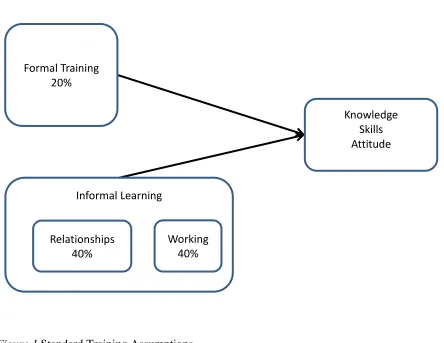
Figure 1 Standard Training Assumptions
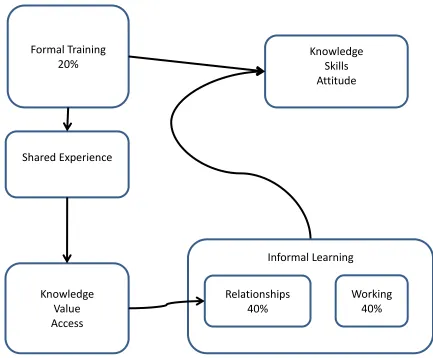
Figure 2 shows my proposed relationship between formal training and informal learning. Formal training influences the relationships that are such a substantial part of informal learning. Figure 2 also introduces several new variables in the training effect process. In addition to the traditional effect of training individual learning, this model proposes that training will create an increase in the sense of knowing, valuing and attributions of accessibility in the training cohort. This will increase the likelihood of informal knowledge seeking within the cohort and, consequently, increase an individual’s learning after the program.
Formal Training 20%
Informal Learning
Knowledge Skills Attitude
Relationships 40%
Figure 2 Proposed Relationship Between Formal Training and Informal Learning
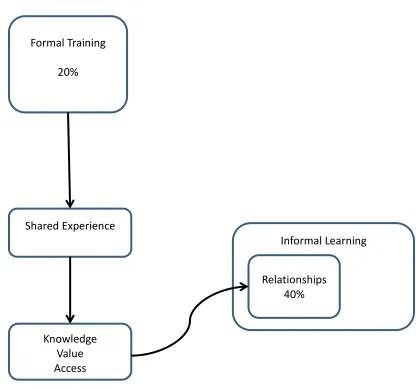
Figure 3 illustrates the focus of this study. Due to the complexity of evaluating learning after a training(cf., Kirkpatrick and Kirkatrick, 2006), the question of effect of formal training and informal learning on individual learning is not a part of this research. The process of evaluating the effect of training on learning is very involved and has been
Knowledge Skills Attitude
Knowledge Value Access Shared Experience
Formal Training 20%
Informal Learning
Relationships 40%
pursued extensively by other researchers (cf., Tharenoe, Saks, & Moore, 2007; Baldwin & Ford, 1988). The questions of interest in this study center around the effect that formal training has on informal learning and some of its antecedents.
Figure 3 Focus of current Study Knowledge
Value Access Shared Experience
Formal Training
20%
Informal Learning
This study is an extension of the work in Borgatti and Cross (2003). They propose that social network analysis is a viable tool for examining organizational learning. In their study, they looked for antecedents to information seeking at work as a way to understand the relational aspects of organizational learning. Relational information seeking is an aspect of informal learning (Eraut, 2004) in organizations and has been traditionally difficult to examine because of nature of informal learning: ad hoc, embedded in work contexts, and spontaneously motivated. Borgatti and Cross (2003) avoid this issue by asking for
information seeking behavior, a practice that is easier to recall and less likely to be limited by mental models of traditional, classroom-based learning. Questions explicitly about ‘learning’ are limited because of the likelihood that participants would tend to focus on classroom experiences instead of organic informal experiences. Eraut (2004) notes the problem with asking about learning, saying that “most respondents still equate learning with formal
education and training, and assume that working and learning are two quite separate activities that never overlap.” (p.249) As such, a network analysis of information seeking may provide
greater insight into learning than an explicit examination of learning. Hypotheses
H1: The extent to which actor i seeks information from actor j is a positive function of actor i and actor j participating in a training program together.
Borgatti and Cross (2003) describe three antecedents to informal knowledge seeking in organizations. These three variables are: knowledge of a person’s expertise (knowledge); value of a person’s expertise (value); and attribution of accessibility (access). Social identity
theory suggests that two of these antecedents should be increased due to co-participation in training.
Ingroup effects on attribution should influence value and access. Value and access are evaluative variables, which make them susceptible to ingroup biases. Research in ingroup bias for valuing input (Mackie, Worth, & Asuncion, 1990) suggests that training cohorts will value each other’s input more. Accessibility is partially a measure of
willingness to help, and helping behaviors are also subject to ingroup effects (Dovidio, et al., 1997). These factors lead to the next two hypotheses:
H2: The extent to which actor I values the expertise of actor j is a positive function of actor I and actor j participating in a training program together.
While social identity theory does not necessarily suggest that sharing time together will increase knowledge of expertise, an intuitive understanding of cohorts does. Increased exposure to others should provide an opportunity to know their area of expertise. Hypothesis four follows from this.
Chapter 2 Literature Review
The main argument behind the hypotheses for this study is that sharing a class together increases the likelihood of sharing information back in the workplace. Imagine a group of mid-level executives, spread across an organization. They all participate in a training program intended to make them better leaders or understand implementing the corporate strategy or being better negotiators. This cohort spends a day or two together learning the new behaviors and knowledge in the program and then each member goes back to their work. Often, a stated benefit from a program like this is ‘networking’. How does this work? The argument I make in this dissertation is that it works this way: being together creates a shared sense of identity. This shared sense of identity increases the informal learning through information seeking from peers, creating a learning network that helps the cohort members. This argument breaks down into three main parts which will be the structure of this literature review: sharing a training course together and its effect on assumptions; information seeking and the antecedents found by Borgatti and Cross, and information seeking as an informal learning behavior.
Sharing a Cohort and Social Identity
Research into cohort effects in learning have focused on the extended cohort in graduate programs (e.g., Reynolds & Sitharaman, 2000; Lawrence, 2002; Imel, 2002) rather than corporate training programs. This research has found that cohorts find benefits
development of critical thinking skills (Chairs et al., 2002), and increased motivation to learn (Brooks, 1998).
Unfortunately for this dissertation, these previous research studies define cohorts in a way that does not correspond to the realities of corporate training. The researchers define cohort based on a lengthy time together and a lockstep progression through multiple courses (Reynolds & Sitharaman, 2000), a small group completing a degree as a unit (Lawrence, 2002) or a group that enrolls at the same time (Imel, 2002). All of these definitions are anchored in a process that keeps participants together over an extended period of time. This arrangement is far less common in organizational settings. In this research, cohort will be defined in accord with a more inclusive definition as any well-defined group (Merriam-Webster, 2011). As such, any training program has a cohort of participants.
This definition of training cohort leaves a problem of defining training itself. Training programs are often referred to but rarely defined in the literature. While program planning is a thorough area of research in adult learning, the program itself is left as an assumed quantity – some time spent in a classroom, with an instructor and a group of learners. . For the sake of this research, I will adopt Marsick and Watkins description of formal learning as a working definition of program. Marsick and Watkins described formal learning as “institutionally sponsored, classroom-based, and highly structured.”(1990, p. 12)
In the corporate realm, this includes those learning activities that involve taking time away from work and joining others in a separate space in order to participate in a pre-designed course.
training programs last a day or two at most, and the outcomes tend to be focused on
individual achievement and goals, rather than an over-arching group achievement. However, research in social identity makes an argument for the training program’s effect on the social interactions of participants. Specifically, social identity theory shows that sharing
experiences as well as minimum social cues can create beneficial biases in regard to availability, persuasiveness, and openness. Each of these is an antecedent to knowledge seeking in the organization.
Social Identity Theory History. Social Identity Theory (SIT), developed by Tajfel and Turner (1985; Tajfel 1978, 1981; Turner 1978, 1982, 1991), argues that people tend to classify themselves and others according to various categories - gender, nationality,
organizational membership, etc. This theory addresses how people develop social identity, the consequences of social identity in society and social identity in the organizational context. In this review, I will examine social identity theory in general and focus on the specific aspects of the theory that suggest it as a mechanism for the impact of formal training on informal learning networks.
SIT asserts that individuals compose a self-concept from a combination of personal identity and a social identity (Tajfel & Turner, 1986). The personal identity is all of the idiosyncratic features of the person, while the social identity includes salient group classifications.
Ashforth and Meal describe social identification as “the perception of oneness with or belongingness to some human aggregate.”(1999, p. 21) Tajfel and Turner (1986) posit that
others into categories that are defined by the prototypical characteristics of the members of a group (Turner, 1978). This categorization helps to segment the social landscape as well as enable an individual to locate himself within the landscape.
Early research in group formation and shared identity showed how sharing tasks and time spent together has an effect on social identity. One of the first and most memorable experiments in social identity was the Robber's Cave experiment. Sherif, et al.’s (1954)
experiment in Robber's Cave State Park in Oklahoma involved 22 boys taken into the park for a 3 week experiment that would develop ingroup and outgroup categories, explore the consequences, and then work to dissolve those categories.
The experiment began with a one-week period where two groups of 11 boys each camped within Robber's Cave unaware of each other's activity, but aware of the existence of the other group within the park. Each group was accompanied by observers who acted as camp staff. Each group stayed in a cabin and worked through the mechanics of camping: cooking, cleaning, building fires, finding and securing a swimming hole. The groups developed a sense of shared identity through this work, to the extent that the groups named themselves the Rattlers and the Eagles and each decorated clothing with their team names.
Sherif, et al. (1954) were interested in more than social identity and spent much time observing the internal hierarchy develop as well as the actual achievements of the two groups. For the purposes of social identity research, it is only useful to note that both groups had similar levels of success in specific tasks (starting fires, canoeing, sports) and that internal hierarchies established during the first week.
Eagles and Rattlers. It began when the counselors made the groups aware that another group was in the park with them. From this point, the boys from both groups asked for a
competition with the other group. The Rattlers found that the Eagles use of shared resources such as the baseball field felt like an intrusion, despite the fact that they had yet to actually interact with the Eagles. Their knowledge of the Eagles use of the field was from hearing them play at a distance. The experimenters developed a tournament of activities including head to head activities and hidden activities that allowed them to manipulate the competition and keep it close throughout the week. During the week of events, both groups took meals together where they were informed of the current score in the competitions.
During the competition, the interaction of the two groups was acrimonious. The first encounter included insults being thrown from the beginning and escalating as the baseball game they were engaged in progressed. A degrading of interactions hallmarked the entire week. Sportsmanship started out at a respectable level, but diminished to the point that losing teams would not shake hands and at one point each team burned the team flag of the other. Other interactions included raids by each group on the other's cabin and an eventual naming of one another as "The Enemy."
The final stage of the experiment involved creating events to diffuse the intergroup conflict. The method that the researchers chose first was to increase interaction without any explicit competition. Sherif, et al. hypothesized that this would not change the group
sabotaged water pipe. Later, they needed to cooperate in order to have a successful overnight trip to another camp ground where meal preparation, tent pitching and jump starting the truck that brought them on the trip. Through these interdependent goals, the two groups began to merge. The original identities of Rattler and Eagle did not disappear entirely, but hostility was eliminated to the extent where one group offered prize money from a camp contest to purchase malts for the other group.
Sherif, et al. (1954) were primarily interested in intergroup conflict, but the research fed much of the following work on social identity, including the paradigm of shared goals and shared practice being the key drivers of social identity. The research has moved beyond this idea, to examine how even a limited relationship creates social identity. The current model of social identity theory posits that individuals feel a connection to a group without regard to shared goals or shared fate. An example of this is a sports fan using the phrase “We won” to describe the outcome of a game she watches. (Ashforth & Mael, 1999) Another
Minimal Cue Paradigm
Although Sharif, et al. (1954) suggest that the shared time and goals formed the group identities in their study, Tajfel, et al. (1971) showed how small a cue was needed to form ingroup preference. In two separate studies, they had participants grouped at random but with a stated association due to either art preference or accuracy of dot counting. These groups were put on a task of distributing a small cash prize to others, with no individual capable of giving themselves a benefit.
In both experiments, the participants gave members of their own group preferential treatment to members of the other group, even though it was arbitrarily designated. When the data were analyzed for possible strategies, the likelihood of maximum ingroup benefit was less than the likelihood of maximum difference in group treatment. In other words, the participants were more likely to make their group better off than the other group rather than make sure there group had the highest possible gain.
This study shows two main points. First of all, how small a cue is necessary to create a sense of ingroupness. In this case, the differences were based upon assumed similarity in artistic taste or an arbitrary skill. The results of this test were replicated in later studies using other groupings including preference for online doodles (Amichai-Hamburger, 2005),
Consequences of shared identities.
SIT shows that group identity forms with little commonality needed and specifically without a need for shared goals and fates. While this quick group identity was originally measured by preferential treatment with economic benefits (e.g. Tajfel, et al. 1971), other effects of social identity have been found as well. Three of these effects have direct relevance to the examination of social identity’s effect knowledge sharing.
Rabbie and Horowitz (1969) examined the effect on social identity of winning or losing a prize and discovered that regardless of loss or win, ingroup preference created an assumption of openness and responsibility. They ran an experiment where groups of teenage participants were divided arbitrarily and asked to evaluate one another after the experimental condition was presented. In the control, nothing was done between the preliminary stage and the evaluation. Three experimental conditions varied the cause of differing experiences and rewards between the groups. In the first condition, a prize was awarded to one team by the toss of a coin. In the second, it was awarded by experimenter fiat. Finally, the third
condition was awarded based on a quicker response by one team. In fact, the third condition was also arbitrary.
In the experiment, the participants were divided into two groups, each with a color code. Both groups were given color coded name badges, pens to write with, and were
removed and the participants were asked to introduce themselves by reading the survey information. Following the introduction, participants were asked to rate one another individually and as groups.
This experiment resulted in a clear difference between the control group and all of the experimental conditions. In each experimental condition, Rabbie and Horowitz (1969) noted that participants viewed their own group as more desirable to belong to, less likely to be hostile and more familiar. Notably the experiment involved no real interaction within or between groups. Participant teams were placed on either side of partition until mutual evaluation and the task involved no ingroup interaction.
Besides group evaluations, Rabbie and Horowitz had participants document
interpersonal evaluations of other participants. In these evaluations, participants were more likely to find that ingroup members were more open and responsible. These evaluations are also attributed to the shared identity from the color coding, as there was no real interaction intragroup or intergroup.
conditions. They attributed this to a drive to find a substantive connection for the arbitrary grouping. The participants were trying to make a reason for being a group by finding
commonalities other than seating or labels. With helping behavior, the researchers found that interpersonal factors did not have any significant impact on helping behavior, while ingroup status did. This result points towards help based upon ingroup status.
Researchers have extensively examined the effect of shared social identity on valuing information (Festinger, 1950; Kelman, 1961; Turner, 1982). Mackie, et al. (1990) explored this phenomenon by examining the interaction of ingroup preference, strength of argument and relevance of argument. They ran an experiment evaluating the impact of arguments for certain causes such as offshore drilling. The experimental condition was where the
information came from – in one condition the information came from students at the same university as the participants, and in the other condition the information came from students at a different, distant university. The arguments from the ingroup (same university) were evaluated on persuasiveness based upon their relative merits – strong arguments were very effective, while weak arguments were only partially effective. However, all of the arguments from the outgroup (different university) were evaluated as unpersuasive, whether they were strong or weak. These effects were replicated, and further refined. In a second experiment, the persuasiveness of an argument was not only based upon the ingroup status, but the direct relevance of the issue to the definition of the ingroup status. In this case, the subjects were exposed to environmental arguments that were local in nature (drilling offshore) or specific to a distant locale (acid rain on the Canadian border). When the local situation was
their merit. With the distant situation, ingroup arguments were persuasive regardless of quality and outgroup messages were again universally unpersuasive. These results lead Mackie, et al. to conclude that ingroup bias increases the relevance of an argument, whether the argument is a good one or not, and when arguments are relevant (e.g. local issue), ingroup bias increases the persuasiveness of the arguments.
Pettigrew (1979) proposes an ‘ultimate attribution error’ which he describes as “a systematic patterning of intergroup misattributions shaped in part by prejudice” (p. 464). This
universal in the 19 studies, while outgroup attributions were inconsistent across the studies. Finally, ingroup and outgroup attributions were more evident when group boundaries are made salient in the experimental design.
These examples show how social identity effects the evaluation of others in many ways, almost all beneficial for ingroup members. Group members favor their ingroup in resource allocation (Tajfel, et al., 1971). Ingroup effects make group members more likely to have a favorable assessment of fellow group members, even with limited information
(Rabbie & Horowitz, 1969). Ingroup effects result in more favorable assessment of persuasiveness of arguments from ingroup members (Mackie, et al., 1990) and a higher likelihood to reveal personal information (Dovidio, et al. 1997). Ingroup biases are complex in effect and still unclear in process. These biases are extant in organizations (Ashforth & Meal, 1989) as well as society at large, and the effect they have on complex dynamics such as learning warrant exploration.
Relational View of Information Seeking
In order to examine the effect of shared social identity on informal learning, I first need to explain the model I have chosen for measuring informal learning. This model examines information seeking behavior, which will be shown to be a key art of informal learning. Borgatti and Cross researched the antecedents to information seeking in
all but one of the conclusions in the qualitative research.
Presented at an academic conference in 2000 and published in 2004, Cross and Borgatti use qualitative research methods to examine the relational characteristics that influence who seeks information from whom. They argue that there are three main ways to examine information seeking in dyads: as a factor of the attributes of the seeker, the attributes of the source, and the attributes of the relationship. The nature of the information seeker has been examined in research that looked at gender and information seeking (Ibarra, 1993) and motivation of information seekers (Lee, 1997). Examples of the nature of the information source being examined include the differences in accessing a human or archival source (O’Rielly, 1982) and performance feedback (Ashford, 1993). The only research on
relationships that they uncovered focused on the strength of ties (Granovetter, 1973) and not the characteristics.
Cross and Borgatti (2004) examined the relational characteristics that influence information seeking through a series of interviews with employees in the consulting branch of a national accounting firm. The researchers collected data in an iterative process that allowed for integration of previous results into subsequent interviews. Participants were asked to reflect on significant projects in the previous six months and write down the names of people they turned to for information during the project. The researchers then focused the interview on the three most important people that the participant chose from this list. Cross and Borgatti interviewed 40 managers, resulting in 120 relationships explored (3 for each manager).
characteristics that contributed to the likelihood of looking for information from someone: knowing that the informer has the information needed; being able to access the informer; valuing the informer’s input; and a relationship that felt safe to the information seeker. These
results were translated into the variables of knowing, access, value and cost in the quantitative research of Borgotti and Cross (2003).
Borgotti and Cross (2003) examined the social networks of two groups in different global pharmaceutical firms. Both groups were scientists doing research. One group did research on new pharmaceutical applications and the other did supporting research that enabled drug development. Both groups were geographically disperse and demographically diverse along gender and racial categories.
Each member of both groups was asked the same network questions about the other members within their networks. These questions come from the the conclusions of Cross and Borgatti (2004) and are labeled as information seeking, knowing, value, access and cost. Knowledge seeking is the dependent variable in the study, and was measured by asking both how often a respondent sought information from actor b and how often actor b sought information from the respondent. This double measure – from the seeker and the informer – results in a more accurate variable for information seeking (Borgatti, et al., 1999) than simply asking one party.
focuses on the distributed knowledge within a group and how it is accessed. Knowledge of others’ expertise is a standard variable of analysis in transactive memory (Weick & Roberts,
1993).
Besides a perception of knowing the level of expertise the potential informer possesses, Borgatti and Cross hypothesized that the information seeker must value the expertise of the informer. This is a measure of the perceived quality of the information that the informer may have. Borgatti and Cross (2003) note that “this variable has not been previously identified in the transactive memory literature” (p. 434) and attribute this to the
laboratory-controlled nature of most transactive memory research. They note that the decision process is different when considering impersonal or personal information sources. People chose personal sources based significantly upon the perceived quality of the source where impersonal sources such as databases and websites are chosen because of convenience (O’Rielly, 1982).
Along with knowing and valuing someone’s expertise, an assessment of accessibility influences the decision to seek information from them. Accessibility is a factor of the
relationship and a factor of timeliness. The information seeker must be able to contact and communicate with the informer within a timeframe that allows her to use the information in the relevant problem. Borgatti and Cross (2003) argue that the technological barriers to accessibility that were predominant in the past – distance and signal loss – are not as relevant with the advent of modern communication technology. Access in modern organizations, they argue, is “increasingly likely to be a product of the relational energy one has to expend” (p.
Cost is the final relational characteristic that Borgatti and Cross address in their study. The cost involved in information sharing is perceived as a sense of obligation and
interpersonal risk. Obligations based on reciprocity norms may appear as a cost. Requests that are seen as impositions may place the information seeker in debt to the informer (Blau, 1986). The risk is the risk of admitting ignorance in an area of importance, or a loss of prestige from not resolving an issue on one’s own.
Borgatti and Cross surveyed both research groups, using a complete network analysis strategy. The complete network analysis attempts to survey all the relationships within a network in order to describe details of the entire network (Wasserman & Faust, 1994). This is in contrast to an egocentric network analysis that measures networks from given individual perspectives.
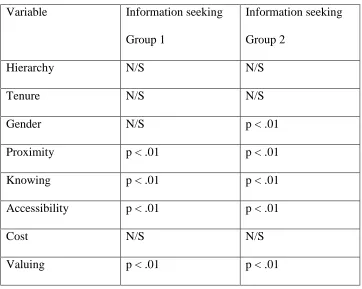
Table 1
Summary of results from Borgatti and Cross (2003) Variable Information seeking
Group 1
Information seeking Group 2
Hierarchy N/S N/S
Tenure N/S N/S
Gender N/S p < .01
Proximity p < .01 p < .01
Knowing p < .01 p < .01
Accessibility p < .01 p < .01
Cost N/S N/S
Valuing p < .01 p < .01
Social identity and Relational Information seeking
Since the benefits from shared social identity effects evaluations of people, they can affect the antecedents of informal information seeking. Several of the results of the social identity studies are directly relevant to Borgatti and Cross’s variables of accessibility,
valuing, and knowing.
Dovidio, et al.’s (1997) research found that sharing personal information and helping
conditions. Sharing of personal information can be seen as increasing the knowing variable. This link is not likely to be precise, as personal information may or may not correlate with knowledge that is relevant in a work context.
Accessibility is more about the evaluation of the individual and relationship than knowing. The estimation of accessibility is based upon how likely a person is to take time for the requestor. This, in essence, is an estimation of how much someone will help. Rabbie and Horowitz’s (1969) study suggests that assessments of accessibility would be improved
by ingroup biases. Ingroup bias increased assessment of openness and responsibility, both of which can contribute to an assessment of accessibility.
Borgatti and Cross (2003) define valuing as the amount that an information seeker positively evaluates the knowledge and skills of a potential informer. While many factors will certainly go into the evaluation of knowledge and skills, ingroup biases can influence that evaluation. Mackie, et al.’s(1990) research shows that ingroup arguments are more
persuasive. By extension, ingroup members can be seen as having better grasp of topics than outgroup members. This preference for ingroup information will shape the evaluation of knowledge when deciding where to look for information and learning informally in the organization.
Information seeking as Informal Learning
research comes from many different practical and theoretical backgrounds, creating a diverse literature. Research foci include topics on the improvement of informal learning in an
organization (Cross, 2006) the power dynamics of informal learning (Garrick 1998), the individual’s traits in the expereince of informal learning (Tough, 2002), and the social
context formulating the learning for individuals (Wenger, 1999). This diversity serves to create a wide range of definitions for informal learning, which in turns makes showing that information seeking is informal learning a small challenge. In order to achieve this, I will discuss informal learning as an interpersonal activity that is ubiquitous and relational, often as simple as a quick exchange of information. First, I will examine the informal learning literature focusing on the relational aspects of informal learning. Then I will look at the ubiquitous nature of informal learning and how Borgatti and Cross’s conceptualization of information seeking fits into concept of informal learning.
Informal learning as relational. Tannenbaum (1997) studied the factors that go into continuous learning within organizations. His research has two foci. The first is the
organizational context and the second how people learn within organizations. Tannenbaum surveyed seven organizations to understand the key features of their learning environments. Informed by previous literature, he examined the occurrence of 10 learning conditions and consequent outcomes.
Tannenbaum asserts that positive learning environment occurs when individuals are aware of the ‘big picture’; individuals are assigned to tasks where they can apply previous
valued and encouraged; supervisors and coworkers provide support; and policies support effective use of training. These represent the independent variables his survey of seven organizations. The dependent variables that Tannenbaum measured were individuals’
perceived competence, satisfaction with development and a positive view of training within the organization.
One of the main points that Tannenbaum set out to examine was the difference in learning environment based on the difference in organizations. The seven organizations he examined were very different in nature: a military reserve unit, an insurance company, a bank branch, a manufacturer, a brokerage division an HMO and a government contractor. He did discover that all but one of his, situational constraints, varied by organization.
Another question driving this research was the relationship between the learning conditions and the outcomes of perceived competence, personal satisfaction and positive view of training. Tannenbaum performed a hierarchical regression analysis, controlling for education level, tenure, years of work experience, and age. He found that the people who reported having a greater awareness of the big picture also felt a higher level of competence. Satisfaction in development was related to the following independent variables: providing greater opportunities to learn; supportive training policies and practices; and open to new ideas and change. Positive view of training within the organization was related to:
supportive training policies, openness to new ideas, high performance expectation, and strong managerial support contributed positively to employee perception of training.
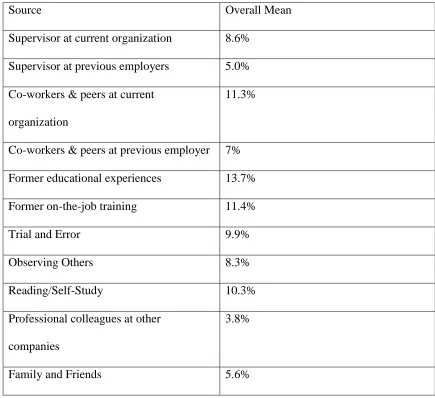
Tannenbaum’s research focuses on the sources of learning. He developed a list of 12
Table 2
Sources of Individual Learning in the organization (Tannenbaum 1997)
Source Overall Mean
Supervisor at current organization 8.6% Supervisor at previous employers 5.0%
Co-workers & peers at current organization
11.3%
Co-workers & peers at previous employer 7% Former educational experiences 13.7%
Former on-the-job training 11.4%
Trial and Error 9.9%
Observing Others 8.3%
Reading/Self-Study 10.3%
Professional colleagues at other companies
3.8%
Family and Friends 5.6%
Of interest in this dissertation is the amount of learning attributed directly to people. Supervisors past and present, colleagues past, present and at other organizations, and family and friends account for nearly 40% of the learning sources.
environment. He found that eight of the 12 sources were significantly different between organizations. This difference could be large at times; for example, “current peers” varies from 5% to 18% between organizations. The sources without significant differences were reading/self-study, family and friends, supervisors from previous employers and formal training. He attributed the lack of difference in the first three as an issue of those being individually controlled rather than organizationally controlled sources. Training’s lack of variety was left unexplained, except to say “It appears that formal training accounts for a small but consistent amount of development.”(p. 445)
Tannenbaum found that individuals that attributed a greater percentage of learning to current supervisors reported higher levels on all three outcomes he measured:
self-competence, satisfaction with development and a positive view of training. Individuals who reported greater reliance on professional colleagues outside the organization reported lower self-competence and less satisfaction with development. Finally, a more positive view of training in the organization followed from a greater share of learning attributed to previous education, formal training and on-the-job training.
In the process of developing a new model for enhancing informal learning, Marsick and Watkins (2001) present a review of literature on the phenomenon. They examine multiple qualitative studies and conclude that the contextual factors create opportunities for informal learning. Context shapes the definition that they propose, on that varies only slightly from their original collaboration in 1990: “not typically classroom-based or highly structured, and [where] control of the learning rests primarily in the hands of the learner.”(p. 12)
byproduct of something such as task accomplishment, social interaction or just navigating an organizational culture. These definitions are congruent with the idea of informal being interpersonal and ubiquitous; informal being a combination of “not-classroom” and
learner-lead, and incidental being simply learner-lead but not deliberate.
Marsick and Watkins go on to highlight research done by graduate students in order to update their model for how informal learning occurs. They discuss research by two of their students who examined informal learning in small private companies in Romania and a publicly funded incubator in the United Sates. In Romania, the researchers found that
learning was stimulated by the post-Soviet context (Cseh, 1999) and in the United States, the researchers found that incidental learning occurred from being co-located with other
companies dealing with similar issues (Callahan, 1999). They finally note research that suggests that unplanned events are often the trigger of informal learning (Carter, 1995).
Marsick and Watkins (2001) research focuses on what causes informal learning, more than its nature. Their analysis of the nature of informal learning includes a mistake that is built into the perspectives of many others: assuming the classroom is the central aspect of learning and that learning outside of the classroom requires a special event to inspire it. However, their understanding of the learning that occurs within the pursuit of other goals reveals a connection to the ubiquitous nature of informal learning.
least half motivated by a desire to gain a skill or make some other change in him or herself. Tough used an extensive interview process for his research, and besides discovering the frequency of directed learning, Tough also discovered a common process among self-directed learners. Tough interviewed 66 people from various socio-economic backgrounds: blue collar workers; men and women in low-paying white collar jobs; elementary school teachers; municipal politicians; university faculty; upper-class women with pre-school children. From his interviews, he articulated a thirteen step process for self-planned learning projects.
1. Deciding what detailed knowledge and skill to learn;
2. Deciding the specific activities, methods, resources or equipment for learning; 3. Deciding where to learn;
4. Setting specific deadlines or intermediate targets; 5. Deciding when to begin a learning episode;
6. Deciding the pace at which to proceed during a learning episode;
7. Estimating the current level of his knowledge and skill or his progress in gaining the desired knowledge and skill;
8. Detecting any factor that has been hindering learning or discovering inefficient aspects of the current procedures;
9. Obtaining the desired resources or equipment or reaching the desired place or resource; 10. Preparing or adapting a room for learning or arranging certain other physical conditions in preparation for learning;
resources;
12. Finding time for the learning; and
13. Taking steps to increase the motivation for certain learning episodes. (Tough, 1967)
Tough’s 13 steps can be seen as planning process for self-teaching, rather than an
informal learning process that happens organically. Tough notes that this learning tends to occur outside of formal institutions, however. Over several decades of study, he found that the majority of the learning observed did not involve hiring an instructor or engaging a learning institution (Tough, 1999). The 13 steps persist as the core of Tough’s idea of self-directed learning, but he has come to see how context frequently contributes to an ad hoc way of execution.
Although Tough’s work is infrequently cited in the informal learning literature, and in
fact occasionally critiqued for being linear and mechanistic (Merriam & Caffrella, 1999), he originates two ideas that frame much of the current discourse on informal learning. Through his interviews, Tough found that self-directed learning, both informal and formally assisted, is a very social activity. With some irony, he states “there may actually be more social interaction in informal learning than there is in classroom learning, which again shatters one of our stereotypes” (1999, p. 5). The social nature of informal learning trends through
current research that focuses on context and organizational setting of informal learning. Tough’s research also provides evidence for the idea of the invisible nature of informal learning. Tough notes that “people just don’t seem to be aware of their own learning.”
self-directed learning and not even acknowledging it as learning. Tough goes on to say “informal
learning just seems to be a very normal, very natural human activity, and that’s why I think… [it] is so invisible” (p.2)
Informal learning as ubiquitous. Informal learning has no set location. Many theorists define it by its lack of classroom, but a positive way to express this is that informal learning is everywhere. Eraut’s (2004) research reveals many ways informal learning is ubiquitous. His qualitative research in a hospital ward develops a typology of informal learning. Because of an expected bias towards atypical events, he avoided the critical incident format (Flannagan, 1954) and looked to discuss the typical and mundane aspects of work. Through these interviews, he draws a picture of the learning process on the job for hospital workers. He found that the respondents tended to not focus on learning experiences in their descriptions of day-to-day activities. From the evidence, Eraut concludes that informal learning is invisible, with the resulting knowledge generally being tacit. Moreover, the “discourse about learning is dominated by codified, propositional knowledge, so
respondents often find it difficult to describe more complex aspects of their work” (Eraut, p.
249).
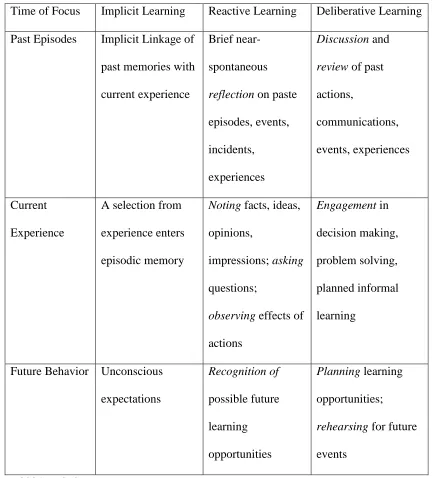
Despite the fact that most respondents still equated learning with formal education, Eraut found enough data to formulate a typology of informal learning. This typology places informal learning on a continuum with formal learning rather than as a dichotomy with it. His typology is based on three levels of intention and three time frames. The levels of
learn and consequently the learner may not be directly aware of the new knowledge. An example of this is the knowledge gained about computer file systems due to regular
interaction with a PC. The reactive level has a higher level of intention, but still unplanned. Eraut (2004) describes reactive learning as “intentional,… [but] in the middle of the action, with little time to think.”(p. 250). Finally, deliberative learning includes both deliberate
learning (Tough, 1971) with explicit curricula and deliberative activities in work such as strategy planning and problem solving. Eraut’s typology relies on an increase in intention,
Table 3
Typology of informal learning
Time of Focus Implicit Learning Reactive Learning Deliberative Learning Past Episodes Implicit Linkage of
past memories with current experience
Brief near-spontaneous reflection on paste episodes, events, incidents,
experiences
Discussion and review of past actions,
communications, events, experiences
Current Experience
A selection from experience enters episodic memory
Noting facts, ideas, opinions,
impressions; asking questions;
observing effects of actions
Engagement in decision making, problem solving, planned informal learning
Future Behavior Unconscious expectations
Recognition of possible future learning opportunities
Planning learning opportunities;
rehearsing for future events
Eraut found that participants learned during work primarily from four key events. None of these events were in training and, in fact, none of the events were explicitly designed to produce learning. In Marsick and Watkin’s (1990) terms, they would all be incidental
learning moments. These four events are participation in group activities, working alongside others, tackling challenging tasks, and working with clients. These four events each
challenged the participants to articulate meaning in a way that others can understand, and typically do it in a context that involved complexity through challenge or interpersonal relationships.
In 2004, Skule researched informal learning from a new angle. Where other
researchers had focused on the individual or the organization, Skule researched the learning intensity of specific jobs. He interviewed Norwegian business people from 11 different organizations and different sectors to develop a survey that measures the learning intensity of work. His survey was based upon a combination of subjective judgments of how learning intensive a job is, the educational requirements that the job requires, and the durability of the acquired skills. This construct became the dependent variable and was analyzed against three independent variables: personal characteristics, company and external environments, and characteristics of the job. They found that seven factors are distinctive in the jobs that are reported as the most learning intensive. These factors were high degree of exposure to changes, high degree of exposure to demands, managerial responsibilities, extensive
production – clients, colleagues, managers. Managerial responsibilities are those tasks that involve directing the work of others and coordinating people to achieve goals. Extensive professional contacts are due to opportunities to participate in trade groups and networking across the industry. Superior feedback is more accurately the ability to see consequences of work, rather than personal feedback. Management support for learning allows for time and resources to step away from work in order to learn specific skills. Finally, rewarding proficiency is an organizational context that encourages development through some sort of merit pay.
Generally speaking, a learning-intensive organizational context requires employees to react to demands from both internal and external sources. Skule posits that this is due to a post-Taylorist philosophy in organizations that enables people to interact with a wider variety of people. Further, a learning-intensive job should offer opportunities to access learning resources needed to cope with these demands. These resources may include, according to Skule (2004), “advice and guidance from colleagues and external vocational networks, direct
contact with customers and suppliers, access to databases, literature and other relevant sources of learning, plus the time to utilize [sic] such learning resources.” (p. 14-15)
Support for a ubiquitous and relational nature of informal learning is evident from the examination of Knowles’s (1950) Tough’s (2002) Marsick and Watkin’s (1999), Eraut’s (2004) and Skule’s (2004) models. While each model does not support both criteria, all of
them support one or the other.
possibility of learning through linking past memories, problem solving and other activities that occur throughout any given work day. The method of Skule’s work is to examine the
key features of the jobs, not the individuals. In order for his work to be relevant, these features must be ubiquitous. Especially significant is the commonality of demands and change in Skule’s model.
The social nature of learning is asserted by Tough as well. He notes “Informal learning is a very social phenomenon” (Tough, 1999, p. 4) and adds that “there may actually
be more social interaction in informal learning than there is in classroom learning” (Tough, 1999, p. 5). Tough makes the assertion because of the impersonal infrastructure in formal education – books, Websites, presentations – and the fact that individuals regularly start their informal learning process by asking people they think may know the answer. Eraut’s four
key learning events (2004) are all decidedly social: participation in group activities, working alongside others, and working with clients, with the notable exception of tackling challenging tasks. Skule finds that being able to participate in professional groups is a sign of a high-learning job.
Research in informal learning supports the idea that informal learning is ubiquitous to the point of being inspired by the mundane aspects of work. Research also supports the social nature of informal learning, pointing to the role interaction with colleagues plays in informal learning. With this in mind, I consider informal learning the behaviors that people engage in to increase their knowledge or skills or develop new attitudes. This includes things as well-defined as self-education and things as simple as water-cooler conversation. In
Borgatti and Cross Borgatti and Cross (2003) look directly at information seeking in the process of work. The question they ask in their quantitative study is “Please indicate how
Chapter 3 Methods Research Design
The design for this study is a social network analysis (SNA). SNA examines relational ties between actors within a network and the actors’ understandings of those relationships (Wasserman & Faust, 1994). The network aspect of SNA suggests that actors have ties to some individuals, and each of those individuals are tied to another set of
individuals, with the potential of some, no, or complete overlap in connections. For example, Alex says he is friends with Bob and Candice. Bob says he is friends with Alex and Dee. Candice says she is friends with Dee. Finally, Dee says she is friends with Alex and Candice. This would represent a network with variable relations. Friendship is presented as the
framing question for the relationship in this case, but SNA can be used to examine relationships defined by many different characteristics. Examples include social support (Gottlieb, 1981), exchange and power (Cook and Emerson, 1978), and social perception (Krackhardt, 1987). Because of this relational aspect, Hatala (2006) suggests that social network analysis (SNA) is an appropriate method to increase the rigor for examining questions such as informal learning in the workplace.
Sample
The sample for this study is a small professional services firm based outside of Boston. At the beginning of research, the firm has 150 employees. The organization was chosen through a convenience sample, as the researcher knows the chief executives of the organization. The Chief Operating Officer provided key information for the study and consulted on customizing questions to reflect the companies specific context. This study will survey approximately 60 employees hired in the past two years. Each employee will have been through a training program with a cohort including, on average, 10 other employees. All participants will have been in one of the training programs. A total of 6 cohorts have gone through this program ranging from 16 months before the survey to two weeks before the survey.
Training course description
The training course is a one-day course that is occurs in the Massachusetts office once a quarter. The day runs from 8:30 am to 7:00 pm and includes three meals together. The training involves lectures on the corporate culture and history from the executive team as well as two experiential sessions: one that focuses on improvisation and another that involves creating a cultural artifact for the training. The desired outcomes for the training are:
The day concludes with a social hour that gives the participants an opportunity to mingle with the executives, each other and employees from the Massachusetts office. A copy of the schedule was made available to the researcher under the request that it not be reprinted.
This sample potentially poses an issue of boundary selection. Laumann, Marsden & Prensky (1992) discuss the challenges that boundary selection causes for social network analyses, noting that boundary selection is an inherent part of network analysis. A researcher needs to choose who is in a study and who is not, or else any study of relationships will grow too large to be functional. A classic example is Roethlisberger and Dickson who studied a bank-wiring room in 1939. Their study deliberately limited the sample to the men who shared the workspace on a switchboard. Laumann, et al. call this the realist approach. The realist approach is based on the assumed self-definition of the actors. The men in the bank-wiring room saw themselves as a group. This method for selecting boundaries is common when considering organizations, events and other well-structured groupings.
The other method that Laumann, et al. consider is the nominalist perspective. This perspective is based on the researcher’s own theories about a group and may or may not have
any correlation with a self-defined group. The nominalist perspective is sometimes used to uncover ‘hidden networks’ that actors are a part of but unaware of.
program. Luamann et al. argue that this method for bounding a network is as valid as the realist approach, noting “there is no sense in which social networks must naturally
correspond to social systems” (p.78). Data Collection
Participants were sent an email with a link to a web-based survey. The survey is based on Borgatti and Cross’s (2003) analysis of the relational factors in social learning and demographic data. In addition to the survey, the Chief Operating Officer provided archival data consisting of training program rosters and employee starting dates.. The survey was open for 2 weeks. A reminder email was sent 5 days and 10 days after the first email. The recruitment and reminder emails are found in Appendices B, C, and D.
Instrumentation
This study is an expansion of Borgatti and Cross’s (2003) work and consequently the variables in the survey are directly borrowed from their work. Borgotti and Cross asked demographic questions, information seeking question and three assessments about the relationship with the individuals in question.
interaction or biases towards long-run frequencies (Freeman et al. 1987). The questions for this variable are:
Please indicate how often you have turned to this person for information or knowledge on work-related topics.
Please indicate how often this person has turned to you for information or knowledge on work-related topics.
The scale for these two questions is: 1 Never
2 Less Than once a month 3 Once month
4 2-3 times a month 5 Once a week 6 2-3 times a week 7 Daily
Borgatti and Cross examined three variables and their influence on information seeking behavior. The variables were developed based on qualitative study done by Cross and Borgatti (2000). The three variables that they developed are knowing an actor’s expertise, valuing an actor’s expertise and belief that an actor is accessible in a timely fashion.