University of Windsor University of Windsor
Scholarship at UWindsor
Scholarship at UWindsor
Electronic Theses and Dissertations Theses, Dissertations, and Major Papers
2009
Aspect-Oriented Programming for Test Control
Aspect-Oriented Programming for Test Control
Siyuan Liu
University of Windsor
Follow this and additional works at: https://scholar.uwindsor.ca/etd
Recommended Citation Recommended Citation
Liu, Siyuan, "Aspect-Oriented Programming for Test Control" (2009). Electronic Theses and Dissertations. 327.
https://scholar.uwindsor.ca/etd/327
This online database contains the full-text of PhD dissertations and Masters’ theses of University of Windsor students from 1954 forward. These documents are made available for personal study and research purposes only, in accordance with the Canadian Copyright Act and the Creative Commons license—CC BY-NC-ND (Attribution, Non-Commercial, No Derivative Works). Under this license, works must always be attributed to the copyright holder (original author), cannot be used for any commercial purposes, and may not be altered. Any other use would require the permission of the copyright holder. Students may inquire about withdrawing their dissertation and/or thesis from this database. For additional inquiries, please contact the repository administrator via email
Aspect-Oriented Programming for Test Control
by
Siyuan Liu
A Thesis
Submitted to the Faculty of Graduate Studies through Computer Science
in Partial Fulfillment of the Requirements for the Degree of Master of Science at the
University of Windsor
Windsor, Ontario, Canada 2009
Aspect-Oriented Programming for Test Control
by
Siyuan Liu
APPROVED BY:
Dr. Chunhong Chen, External Reader
Department of Electrical and Computer Engineering
Dr. Jianguo Lu, Internal Reader School of Computer Science
Dr. Jessica Chen, Advisor School of Computer Science
Dr. Alioune Ngom, Chair School of Computer Science
III
Declaration of Co-Authorship
I hereby declare that this thesis incorporates material that is result of joint research, as
follows:
This thesis also incorporates the outcome of a joint research under the supervision of
professor Dr. Jessica Chen. The collaboration is covered in Chapter 2, Chapter 5
and Chapter 6 of the thesis. In all cases, the key ideas, primary contributions,
experimental designs, data analysis and interpretation, were performed by the author,
and the contribution of co-authors was primarily through the provision of some key
ideas and constructive criticism.
I am aware of the University of Windsor Senate Policy on Authorship and I
certify that I have properly acknowledged the contribution of other researchers to my
thesis, and have obtained written permission from each of the co-author(s) to include
the above material(s) in my thesis.
I certify that, with the above qualification, this thesis, and the research to which it
IV
Abstract
Distributed and multithreaded systems are usually much more complex to analyze or
test due to the nondeterminism involved. A possible approach to testing
nondeterministic systems is to direct the execution of the program under test to take a
certain path for each test, so that a unique output (or output sequence) can be observed.
Considering specification-based testing, we assume that a test case is given together
with a test constraint for directing the internal nondeterministic choices. To instruct
the program under test to execute according to a given test constraint, the program
under test needs to communicate with the tester. In this thesis, we propose to use the
features in Aspect-Oriented Programs to realize such communication. This solution
does not require the availability of the source code of the program under test.
Assuming that the program under test consists of a set of Java multithreaded
processes communicating with each other using sockets, we provide an automated
translation from a test constraint to a set of aspects using AspectJ.
V
Acknowledgements
This thesis work could not have been possible without the help of many people. First
and most important, I would like to take this opportunity to express my appreciation
to my supervisor, Dr. Jessica Chen. I am very thankful for her advice, patience and
encouragement. And thanks to her pleasantry while solving my questions which keeps
my interests through learning.
I would also like to thank my committee members, Dr. Jianguo Lu, Dr. Chunhong
Chen and Dr. Alioune Ngom for spending their precious time to read my thesis and
their comments, suggestions on this work.
Thanks also to my peers Yan Wang and Lihua Duan for their valuable advices and
VI
Table of Contents
Declaration of Co-Authorship... III Abstract ... IV Acknowledgements ... V List of Figures ... VIII
1. Introduction ... 1
1.1 Reproducible Testing... 1
1.2 Major Issues... 1
1.3 Objective ... 3
1.4 Thesis Structure ... 4
2. Reproducible Testing with Distributed Bakery Algorithm... 5
2.1 Introduction to Software Testing and Testing Non-deterministic Systems ... 5
2.2 Distributed Bakery Algorithm ... 8
2.3 Reproducible Testing with Distributed Bakery Algorithm ... 12
3. Aspect Oriented Programming ... 17
3.1 Characteristic of AOP ... 17
3.2 A Simple Example of Using AspectJ ... 18
4. Related Work ... 21
4.1 AOP Used in Distributed Program Testing ... 21
4.2 Different Ways to Realize Reproducible Testing ... 22
4.2.1 Execution Replay of Nondeterministic Programs... 22
4.2.2 Specification-based Test Control over Events in Nondeterministic Programs... 23
4.3 Proposed Approach ... 25
5. Testing Architecture... 26
6. Test Specification ... 28
6.1 Test Case Specification... 28
6.2 Test Constraints ... 31
6.2.1 The Checkpoints of Interest ... 32
6.2.2 Event Description and Test Constraint ... 33
7. Generating AspectJ Code from Test Constraints... 37
8. Design and Implementation of Test Guide ... 41
VII
8.2 Data Structure of the Test Guide... 43
8.3 Algorithm of the Test Guide... 45
9. Conclusions and Future Work ... 49
Bibliography ... 50
Appendix A... 53
Appendix B ... 56
Appendix C ... 58
VIII
List of Figures
Figure 1: Code structure of the example: part 1………10
Figure 2: Code structure of the example: part 2………11
Figure 3: Two possible scenarios………...….13
Figure 4: Testing Architecture………27
Figure 5: Scenarios with Test Guide………..…………29
Figure 6: Scenarios with Test Guide………..………29
Figure 7: A Test Constraint file………..……35
Figure 8: Generated AspectJ code for type 1 event………38
Figure 9: Generated AspectJ code for type 3 event………39
Figure 10: Example of generated AspectJ code………..……40
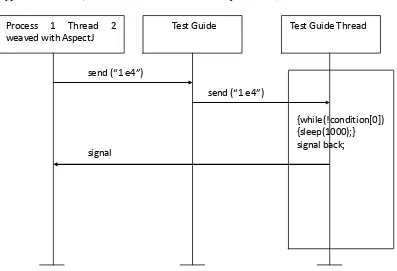
Figure 11: sequential chart of e4……….…42
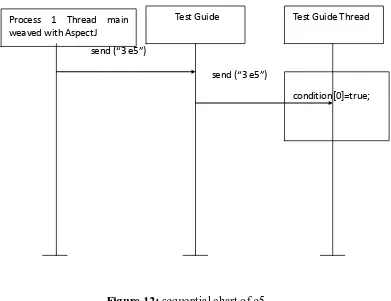
Figure 12: sequential chart of e5……….…43
Figure 13: Handling type 1 event named eName………53
Figure 14: Handling type 3 event named eName………46
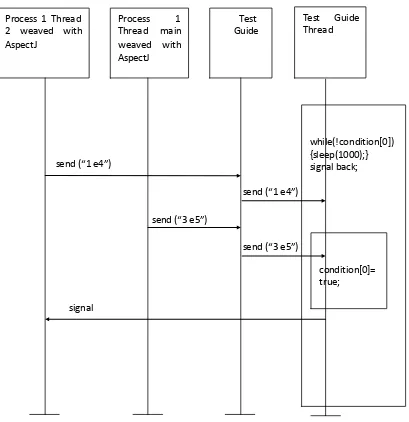
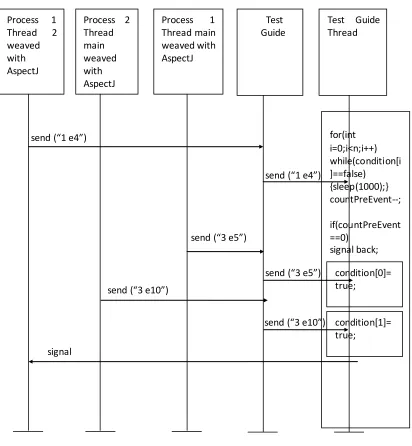
Figure 15: sequential chart of {e5→e4}……….….……47
1
1. Introduction
1.1 Reproducible Testing
With the advances of modern computers and computer networks, distributed and/or
multithreaded software systems are becoming more and more popular. Improving
qualities of these systems is an important task we are facing. However, distributed and
multithreaded systems are very often much more complex to analyze or test due to the
nondeterminism involved. Unlike traditional sequential systems, an input sequence
given to the system may have several different execution paths depending on the
interactions among different threads in each process and/or different processes
possibly running on different machines across networks. Reproducible testing [5] is
one of the possible approaches to performing testing in such an environment. With
this approach, a test scenario consists of an external sequence of events (i.e. test case)
and some additional information. The test case describes the external input and the
observations, while the additional information, called test constraint, describes some
constraints on the execution paths, such as partial or total order of the execution of
some statements in the program. We introduce an additional process called test guide
into the testing procedure so that given a test scenario, the system under test (i.e. the
set of processes instantiated from the program under test) can be guided to take a
certain execution path based on the given input sequence and the test constraint. Then
the external observations can be compared with the desired ones.
1.2 Major Issues
2 study on software testing: how to define test constraints, how to obtain test constraints,
how to realize guided testing.
To define a test constraint, we can use a partial order among the internal events
which are defined on the checkpoints (i.e. program statements) of each process (see
[7]). Clearly, each test constraint determines a set of execution paths satisfying this
constraint. A test constraint may not be feasible. That is, the set of execution paths
satisfying a certain test constraint can be empty. How to determine that a given test
constraint is feasible is discussed in [8, 37] and how to select feasible test constraints
remains an interesting problem beyond the scope of the present work. Even though a
test constraint is feasible, it may not be proper, in the sense that there are at least two
execution paths that satisfy the constraint but lead to different outputs. How to
determine that a test constraint is proper and how to select proper test constraints so
that unique output can be guaranteed for reproducible testing are interesting issues
beyond the scope of the present work. In the following, we will only consider test
constraints that are feasible and proper.
To obtain a test constraint, there are two typical ways: one is to run the system
and record the total order of the checkpoints so that we can re-run the system with the
same order. This so-called replay control technique is especially useful for regression
testing. Another way is through the analysis of the requirement documents or design
documents. From these documents, we may derive some particular execution paths
that we are interested in. Very often, these are typical/representative scenarios in
which possible errors or bugs may reside. In the following, we assume that test
constraints are given.
To realize guided testing, we have two tasks to accomplish: one is to provide the
3 the processes in the system under test, so that each process/thread can communicate
with the test guide at the desired checkpoints. With this added communication, the test
guide will be able to decide, according to the test constraint, whether a thread should
proceed, wait for other threads, or resume from waiting state, based on the overall test
constraint and the current status information of other threads either in this process or
in other processes. In this way, the execution is guided to take a desired path.
1.3 Objective
The test guide can be a generic tool that is developed once for all as long as its
communication protocol with any system under test is predefined. Such a tool was
developed using Java Remote Method Invocation (RMI) and reported in [4].
To establish the communication between the test guide and the processes in the
system under test, there are various ways: We can automatically insert auxiliary code
into the program under test, or alter the execution environment (such as Java Virtual
Machine for program under test writing in Java). In [4], it has been discussed a
method and related tool support for automatically inserting additional code into the
source code of any given Java program with Remote Method Invocation (RMI). I n [9,
10], further discussions are given on how to introduce interceptors into different
middleware layers of Java RMI to realize the communication between the test guide
and the processes in the system under test. In this thesis, we present another solution
to realize such communication by making use of the features in Aspect-Oriented
Programs. We provide an automated translation from a test constraint to a set of
aspects using AspectJ. The translated AspectJ program is then woven into the program
under test. This solution does not require the availability of the source code of the
4 implementation of Java runtime environment as in [4].
For most of the network applications, a distributed multithreaded system can be
considered as a set of processes executed simultaneously, with each process possibly
having several threads running concurrently. Different processes may run on the same
machine or on different machines. The communication among the processes can be
realized via CORBA, DCOM, RMI, stream sockets, (virtual) distributed shared
memory etc. In our present work, a system under test consists of a set of processes,
each running a Java program possibly with multithreading, communicating with each
other using stream socket.
1.4 Thesis Structure
The rest of the thesis is organized as follows. We first introduce in Chapter 2 the
distributed bakery algorithm whose implementation is used as a program under test.
Chapter 3 reviews some previous work in AOP for testing and automated reproducible
testing. In Chapter 4 we explain the mechanism and test architecture o f our guided
testing. Chapter 5 gives the testing specification. We introduce our test case and
describe test checkpoints as events generated from test constraints. In Chapter 6, we
give a brief introduction to AspectJ, and then describe the translation from test
constraints to AspectJ code. Chapter 7 shows how test guide works to realize guided
5
2. Reproducible Testing with Distributed
Bakery Algorithm
2.1 Introduction to Software Testing and Testing
Non-deterministic Systems
With respect to the context in which software testing intends to operate, to provide
stakeholders with information about the quality of the product or service becomes an
empirical investigation conducted by software testing. To let people understand the
risks of using the software product, software testing also provides an objective,
independent view to it. Software testing is the process of executing a program or
system with the intent of finding errors. Software testing can also be viewed as the
process of validating and verifying a software application, which verifies whether the
program meets the business and technical requirements.
Software testing can be carried out at any time in the software development
process depending on the testing method employed, while most of the test effort is
made when the requirements have already been defined or the coding process has
been finished.
Though testing cannot identify all the defects of software applications completely,
it compares the state and behavior of the application with the design oracles or
mechanisms so that it is easy to recognize a problem. These oracles may include
specifications, comparable products, inferences about intended or expected purpose,
6 One major purpose for software testing is to detect software failures so that errors
may be uncovered and corrected. This is a non-trivial pursuit. Testing cannot show
whether a product works properly in all conditions but can only show the product’s
improper behavior under specific conditions. The scope of software te sting often
includes examining the code as well as executing the code in various environments. It
exams whether the code does what it is supposed to do and does it properly.
Information derived from software testing can also be used to correct the defects of
the process by which software is developed.
Software testing methods are traditionally divided into black box testing and
white box testing. These are the two approaches to describe the point of view of a
designer when designing test cases.
Black box testing treats the software as a "black box"—without knowing any
internal implementation. There is no knowledge provided to the users about the
internal structure of the test object. Black box testing takes an external perspective of
the test object to derive test cases. These tests can be functional or non- functional, but
usually functional. The test designer selects from different inputs including both valid
ones and invalid ones to test the program and determines the correct output. Black
box testing methods include: equivalence partitioning, boundary value analysis,
all-pairs testing, fuzz testing, model-based testing, traceability matrix, exploratory
testing and specification-based testing.
Black box testing is applicable to all levels of software testing: unit testing,
integration testing, functional testing, system testing and acceptance testing. The
higher the level of testing we consider, the more complex the black box may become.
Advantages of black box testing include that it is efficient when used on large
7 functional knowledge of system. Disadvantages of black box testing include that test
cases are tough and challenging to design when there is no clear functional
specifications, and that it is very time consuming to identify all necessary inputs:
There are chances of missing important paths during testing.
Specification-based testing is a special case of black box testing. It is introduced
to test the functionality of software based on the applicable requirements. Thus, the
tester inputs data into the test object, and only sees the output from it. This level of
testing usually requires the tester to have the whole test cases. The tester then can
simply verify the output value for a given input, and judge whether it is the same
output as the expected value specified in the test case.
White box testing is possible when the tester has access to the internal data
structures including the code of the program under test.
Types of white box testing include (i) API (application programming interface)
testing which is the testing of the application using public and private APIs; (ii) Code
coverage which creates tests to satisfy some criteria of code coverage (e.g., to create
tests to make sure all statements in the program are executed at least once); (iii) fault
injection methods; (iv) mutation testing methods; and (v) static testing.
Testing Non-deterministic Systems
Distributed systems’ usages are more and more popular due to the well developed
networking and web support, from web banking system and transportation system to
large industrial system. The complexity of distributed and concurrent systems is
growing as well, from the heterogeneity in terms of the adopted hardware to the
nondeterminism which poses a great deal of difficulty in system analysis.
Concurrent programs and sequential programs behave differently. Executing a
8 sequences of synchronization events and produce different results. This is because a
distributed and concurrent system usually has many different execution paths because
of the interactions among different processes with various kinds of process
cooperation and their different running speed, which finally leads to different
interleavings of the execution paths. As a result, testing turns out to be non-repeatable.
This nondeterministic behavior makes testing concurrent programs notoriously
difficult.
One approach to dealing with such difficulty is non-deterministic testing, which
run a program with a fixed sequence of inputs many times in hope that faults will be
exposed in one of these executions. This technique is called test replay.
Nondeterministic testing is the most widely used approach in practice due to its
simplicity. However, it is conducted in an ad hoc manner. To avoid this time
consuming and inefficient test, some research has focused on how to efficiently insert
noise makers (e.g. random delays) into selected locations of programs so that different
synchronization events are likely to be executed by repeated executions and thus
increase the chance of finding faults.
Another approach is to introduce a test guide and a series of test constraints. The
latter is used to define points of interests in a program to be tested. Extra codes are
inserted to the original program at these points to communicate with the test guide.
The test guide gets instruction from test constraints and automatically guides the test
via the communication with the processes.
2.2 Distributed Bakery Algorithm
Suppose that there are n distributed processes sharing a same resource e.g. a printer.
9 should communicate among themselves so that no two processes enter their critical
sections simultaneously. Lamport's Distributed Bakery algorithm provides a general
solution to this problem where n processes communicate in a peer-to-peer manner. It
works in this way: Each process is given an integer id. Each process maintains a
current number which is initially set to zero.
When a process wishes to enter its critical sectio n, it increases its current number
by one, and assigns its ticket number to be this current number, just like people take a
ticket number at a bakery store. Then it sends a request with its ticket number to all
other processes.
When a process receives a request from another process with a ticket number k, it
updates its current number to be k if k is bigger than its current number. Thus, the
current number a process maintains is what it knows so far the biggest ticket number
among all ticket numbers maintained by various processes. Note that it is possible that
two processes have different current numbers, e.g. a process A has increased its
current number to 4 but this number 4 has not yet arrived at process B so B's current
number is still 3. It is also possible that several processes (locally) pick up the same
ticket number.
A process A will send a reply to process B if one of the following three
conditions holds (i) A does not need to access its critical section now
(myTicketNum=0); (ii) B's ticket number is smaller than A's current number; (iii) B's
ticket number is equal to A's current number and B has smaller process id. A process
will enter its critical section only after it has received replies from all other processes,
i.e. it has the smallest ticket number and among all processes having the smallest
ticket number, it has the smallest process id. This guarantees the distributed mutual
10
class DBakery {
private int myTicketNum = 0; private int currentNum = 0; private int replyCount = 0; public void DBakery() {
accept requests for so cket connection from all processes with bigger id; send requests for so cket connection to all processes with smaller id; for each so cket of the connection with process pid
create a thread w ith name pid of class SocketThread and execute its r un() method; }
public void dBakeryAlgorithm() { pickNum();
send requests with myTicketNum to all other processes to enter critical section; replyCount = 0;
wait until replies from all other processes are received; doCS();
myTicketNum = 0;
check req. queue: send replies to all processes whose requests have been deferred; }
public void synchronized pickNum() { currentNum++;
myTicketNum = currentNum; }
public synchronized getCurrentNum() { return currentNum;
}
public synchronized setCurrentNum(int i) { currentNum = i;
}
public synchronized void addReply() { replyCount++;
if (replyCount = MyProc.totalProcessNum -1) notify that all replies are received
} ... }
Figure 1: Code structure of the example: part 1
public class MyProg {
public static int processId, totalProcessNum; public static void main(String[ ] args) {
change args[0] into an integer and assign it to MyProg.processI d;
change args[1] into an integer and assign it to MyProg.totalProcessNum; DBakery d = new DBaker y();
while (true) do {
receive a user’s command; d.dBaker yAlgor ithm(); }
} }
class SocketThread extends Thread {
11
public void SocketThread(String s, DBakery d) { super(s);
this.d = d; }
public void run() { while (true) do {
receive a message from its so cket named s; convert s into integer and assign it to pid;
if it is a request message, call handleRequest(receivedNumber, pid); if it is a reply message, call d.addReply();
} }
public void synchronized handleRequest(int n, int id) { int highNum = max(d.getCurrentNum(), n); d.setCurrentNum(highNum);
if (d.getTicketNum()=0) or
(highNum > n) or (highNum = n and MyProg.processId > id) send reply;
else
add this request to the request queue w ith (so cketName, id) }
}
Figure 2: Code structure of the example: part 2
Figure 1 and 2 show the draft of a sample Java code for the distributed bakery
algorithm using sockets. Each process executing this piece of code is started
providing two arguments: the id of the current process processId, and the total number
of processes totalProcessNum. Suppose that there are two processes in the system
under test executing the program in Figure 1 and 2. The first process is started with
>java MyProg 1 2
showing that there are 2 processes in total and the current process id is 1. Similarly,
the second process is started with
>java MyProg 2 2
Each process executing MyProg has totalProcessNum number of threads: the
main thread, which is the initial thread created when MyProg is started, and
totalProcessNum -1 number of threads to handle the messages received from each of
the other processes.
12 time the user gives an input command, e.g. to print a document, which is executed in a
critical section expressed by method doCS(). Before calling doCS(), this process first
picks up a ticket number by calling method pickNum() and waits until it has received
replies from all other process. After calling doCS(), it needs to send out the deferred
replies if there are any.
There are totalProcessNum -1 sockets for each process, one for each of the other
processes. For the socket of the connection with process pid, we use the string of pid
as the name of the socket as well as the name of the thread created for this socket.
Thus, thread named pid is dedicated to handle the messages received from process pid
using socket pid. There are two kinds of messages received: (i) requests from process
pid to enter its critical section; and (ii) replies from process pid to the previous
requests of the present process.
2.3 Reproducible Testing with Distributed Bakery
Algorithm
In the following part, we show the nondeterministic behavior of distributed bakery
algorithm. Suppose there are two processes with id 1 and 2 competing for the critical
section. Process 1 will receive a message from its user and enter its critical section to
print out A. Process 2 will receive a message from its user and enter its critical section
to print out B. Suppose also that the input is to send a user's message to B followed by
a user's message to A. When the two processes access the shared printer almost at the
same time, the printing order varies due to their coming order which can be
influenced by the internal scheduling of the machines. In fact, with the same input
13 receive different output: AB or BA.
• Case 1: Process 1 enters critical section first.
• Case 2: Process 2 enters critical section first.
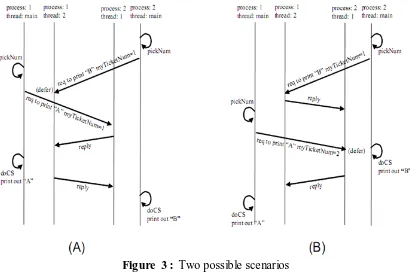
Figure 3 illustrates two scenarios with output AB and BA respectively. Initially,
currentNum in both process 1 and process 2 are 0. After receiving the user's input,
process 2 picks up number 1, and sends a request with number 1 to process 1. After
process 2 received user's input, process 1 also receives user's input.
In the first scenario (Figure 3(A)), process 1 picks up a number before the request
from process 2 arrives, and thus its ticket number is 1. When the request from
Figure 3 : Two possible scenarios
process 2 arrives, since the ticket number of process 1 and that of process 2 are both 1,
and process 1 has smaller id, the reply to process 2 is deferred until process 1 finished
its execution in its critical section. Thus, we have output A followed by B.
In the second scenario (Figure 3(B)), process 1 picks up a number after the
request from process 2 arrives, and thus its ticket number is 2. When the request from
14 critical section (myTicketNum=0), it sends out reply without delay. On the contrary,
the request from process 1 is deferred until process 2 finished its execution in its
critical section. Thus, we have output B followed by A.
Of course, there are also many other scenarios in which AB or BA are printed out.
There are three major scenarios for Case 1 and two major scenarios for Case 2.
Scenario 1:
• Process 1 and process 2 pick up a number simultaneously.
• Process 1 and process 2 send their number to each other.
• Process 1 and Process 2 wait until they receive a reply from the other.
• By comparison, both of the processes have the same number, but process 1 has a
smaller process ID which is 1, so process 2 is deferred.
• Process 2 replies to process 1.
• Process 1 receives the reply and then enters its critical section.
• Process 1 finishes critical section and replies to process 2.
• Process 2 receives the reply from process 1 and then enters its critical section.
Scenario 2:
• Process 1 picks a number first and sends it to process 2.
• Process 2 picks a number and sends it to process 1.
• Process 1 and Process 2 wait until they receive a reply from the other.
• By comparison, process 1 has a smaller ticket number, so process 2 is deferred.
• Process 2 replies to process 1.
• Process 1 receives the reply and enters its critical section.
• Process 1 finishes its critical section and replies to process 2.
• Process 2 receives the reply from process 1 and enters its critical section.
15 • Process 1 picks a number but not process 2.
• Process 1 sends the picked number to process 2.
• Process 1 wait until it receives a reply from process 2.
• Since Process 2 does not wish to enter critical section, it sends a reply back to
Process 1.
• Process 1 receives the reply and enters its critical section.
Case 2:
Scenario 1:
• Process 2 picks a number first then sends it to process 1.
• Process 1 picks a number then send it to process 2.
• Process 1 and Process 2 wait until they receive a reply the other one.
• By comparison, process 2 has a smaller ticket number, then process 1 is deferred.
• Process 1 replies process 2.
• Process 2 receives the reply then enters critical section.
• Process 2 finishes critical section then replies process 1.
• Process 1 receives the reply from process 2 then enters critical section.
Scenario 2:
• Process 2 picks a number but not process 1.
• Process 2 sends the picked number to process 1.
• Process 2 wait until it receives a reply from process 1.
• Since Process 1 does not wish to enter critical section, it sends a reply back to
Process 2.
• Process 2 receives the reply then enters critical section.
16 nondeterminism exists in lots of places during a distributed program execution which
leads to different execution paths.
While we may observe either AB or BA, the chance to observe output AB is very
low. We give more details about this in the next sections on how to carry out guided
17
3. Aspect Oriented Programming
3.1 Characteristic of AOP
AOP is a programming paradigm which is an extension to Object-Oriented
Programming (OOP). It has improved certain areas where OOP fails. Object-Oriented
(OO) had a dramatic effect on how to develop software when it entered the
mainstream of software development. Developers could visualize systems as groups
of objects and the interaction between those objects. This allows them to form more
complicated systems and to develop them in less time than ever before. The only
problem with OOP is that the essential static model makes changes in requirements a
profound impact on development timelines.
Aspect-Oriented Programming (AOP) complements OO programming by
allowing the static OO model to be modified dynamically for creating a system which
can grow to meet new requirements. An application can adopt new characteristics as it
develops just like the state changes of objects in the real world during their lifecycles.
AOP allows dynamic modification of our static model to include the code
required to fulfill the requirements without having to modify the original static model.
Better still, we can keep this additional code in a single location in the aspect rather
than scattering it all across the existing model, as we would have to if we were using
OOP on its own.
AOP aims to solve these OOP problems by allowing crosscutting concerns to be
cleanly captured in one self- contained unit of code. It increases modularity by
enabling improved separation of concerns. In order to do so, we need to break down a
18 abstract and compose these concerns, a ll programming paradigms support some level
of encapsulation of concerns into separate, independent entities. But some concerns
called crosscutting concerns define these forms of implementation because they "cut
across" multiple abstractions in a program.
Concerns are implemented in AOP by using blocks of code called aspects.
Aspects contain a part called advice which are used to implement the crosscutting
concerns. The places where the advice should be applied to the OOP codes are called
joinpoints. A weaver is used to weave the AOP code with OOP code so the
appropriate advices can be inserted at the places within the OOP code specified by the
joinpoints. Typical examples of such crosscutting concerns implemented using AOP
are: security, synchronization and tracing.
3.2 A Simple Example of Using AspectJ
AspectJ is a simple and practical aspect-oriented extension to Java. With just a few
new constructs, AspectJ provides support of a range of crosscutting concerns for
modular implementation.
It is possible to define additional implementation to run at certain well-defined
points in the execution of the program due to dynamic crosscutting in AspectJ. It is
based on a small but powerful set of constructs: join points are well-defined points in
the program flow; Pointcut is a language construct to identify certain join points and
certain values at those join points; advice are method- like constructs used to specify
extended additional code to be executed at certain join points; and aspects are units of
modular crosscutting implementation, composed of pointcuts, advice, and ordinary
Java member declarations. Aspect can alter the behaviour of the base code (the
19 quantification of join points (points in the structure or execution of a program).
AspectJ is powerful, practical, and simple to use. The programs written using it
are easy to understand. Here we give a simple AspectJ example.
In this java program, the main method will call the greeting method in class
Hello, and the print out is simply a string of ―Hello!‖. With the additional AspectJ
code woven into it, the output will print a string of ―AOP>>‖ before the original
string ―Hello!‖. The combined output is ―AOP>> Hello!‖. Here the AspectJ code
defines a pointcut which is the calling of greeting method in class Hello. The advise
specified before this pointcut expresses that the output stream should print ―AOP>>‖
first. As a consequence, what the aspect does here is to print ―AOP>>‖ before the
calling of greeting method in class Hello.
public class Hello { void greeting(){
System.out.println("Hello!"); }
public static void main( String[] args ){ new Hello().greeting();
} }
public aspect With {
before() : call( void Hello.greeting() ) { System.out.print(“AOP>> "); }
}
>ajc Hello.java With.aj >java Hello
AOP>> Hello!
20
• Join points are well-defined points in the program flow and it is a place where
the aspect can join the executions.
• Pointcut is a language construct to identify certain join points
– e.g., call( void Hello.greeting() )
• Advice is the code to be executed at certain join points
– e.g., before() : call( void Hello.greeting() ) {
System.out.print(―AOP>> "); }
• Aspect is a module containing pointcuts, advice, etc.
– e.g., public aspect With {
before(): call( void Hello.greeting() )
{ System.out.print(―AOP>> "); } }
If there is any arguments in a method e.g. greeting(int i), the pointcut in the
corresponding aspect should be written with the arguments, e.g. call ( void
21
4. Related Work
4.1 AOP Used in Distributed Program Testing
Hughes et al. addressed the problem regarding the difficulty and expense of testing.
Testing is a vital stage in the development cycle of any application but people often
neglect to perform it successfully [22]. Due to the co-ordination required, it is
especially serious for us to successfully test several distributed components
simultaneously in distributed applications. Thus a framework implemented using
Aspect-Oriented Programming and Reflection is proposed. It aims to ease the testing
of distributed systems and other varieties of systems which encounter similar
problems. The authors introduced the technique of automating the insertion/removal
of monitoring code, from which the proposed Aspect Testing Framework simplifies
the problem of testing complex distributed systems such as AGnuS. Furthermore, the
ability of easily adding, modifying and removing communication code makes the
tailoring of the communication to fit any monitoring interface easier. Thus, the time
required to thoroughly test complex distributed systems is significantly reduced by
facilitating the re- use of interface code.
The user can simply create a template using the tag <METHODNAME> to
generalize a method name in the joinpoint and then apply the proposed framework.
The framework will use the reflection API to examine the classes and present to the
user all the potential joinpoints. The programmer can then select the class, methods,
fields etc. to substitute the content of joinpoints with. Our work in testing is similar at
this point.
22 into the system under test by using aspects to keep the original system design
oblivious to testing [28]. Aspects were intended to be used to carry out performance
profiling tasks, and control points for test execution, etc.Their purpose was to declare
system structures that could be used for injecting test code into the system by defining
testability pointcuts. Control points for test execution and monitoring were also
provided. Pointcuts can be structural, temporal, functional, or non-functional
implemented depending on the purpose of the test case. These pointcuts could be
derived from the client requirements, design constraints, and architectural
requirements.
Copty and Ur in 2003 examined the possibility of implementing the
instrumentation part of a multi- threaded testing tool using AOP [13]. They performed
a detailed examination of all the requirements we are interested in and checked their
satisfiability with AspectJ. However, as a drawback, how to define synchronization
blocks as places for instrumentation is not worked out with AspectJ.
4.2 Different Ways to Realize Reproducible Testing
4.2.1 Execution Replay of Nondeterministic P rograms
In 1990, Leu et al. presented a class "control driven" [27]. It realizes execution
replay on distributed memory architectures which is a complement to the first
technique "control driven execution replay" proposed by Leblanc in the context of
shared memory architectures. In contrary to all other proposed approaches, their
technique is adapted to non-blocking primitives, and is not dependent on any form of
message passing communication.
23 and testing to solving the problems caused by nondeterministic execution behavior [7].
They are the first people who introduced the idea of deterministic testing of
concurrent programs. They presented a language-based approach, and used examples
of semaphores and monitors to implement process synchronization in concurrent
programs to show their approach to developing synchronization-sequence replay tools
for concurrent programs. First, it collects the sequence of synchronization events of a
concurrent program by transforming it into a new program and executing the new one,
and then controls the execution of concurrent program by transforming it into
different programs that can replay the collected synchronization sequences.
Bates described a high- level debugging approach, Event-Based Behavioral
Abstraction (EBBA) [3]. His behavior-modeling algorithm is used to match actual
behavior to models of expected program behaviors and automates many behavior
analysis steps. In EBBA, the behavior is expressed as a sequence of events and the
relationship of different event types.
4.2.2 Specification-based Test Control over Events in
Nondeterministic P rograms
The major issue in guided testing is to establish communications between test guide
and program under test.
Sohn et al. proposed a dynamic state-based reproducible testing approach for
component software in which each component can change the system state
nondeterministically during the concurrent execution in a Common Object Request
Broker Architecture (CORBA) environment [33]. In this approach, by inserting the
communication primitives before and after the concurrent statement on the original
24 original one. A replay controller for a given state sequence from a statechart-like
model of each component is used, which is designed to force the order of the extended
program’s execution based on the given state sequence.
Cai and Chen presented their work in test control methods for distributed
concurrent systems, and the frame work of their automated test control toolkit which
can help users to realize some particular execution paths desired [4]. In this approach,
artificially controlling the partial order of synchronization events in distributed
multithreaded programs was proposed. This framework is implemented in java and
adopts CORBA as its underlying middleware for communication among processes.
The authors designed a parser to automatically insert code into the original PUT to let
it communicate with a test controller, which controls the order of remote calls
according to monitor constraints. The extended PUT should request for permission
from the controllers whenever it makes a remote method call, although a monitor
constraint does not contain any events regarding remote method calls. This work
realized guided testing through controlling of some important synchronization events
derived from the test documents.
In order to inject the interceptors into the underlying middleware system, Chen and
Wang modified existing Java library for the control of remote calls and provided a
solution to intercept Java remote method calls and responses [9]. They implemented a
distributed testing environment, with some of the components residing with each
process in the AUT. Local test drivers and local path controllers are included in the
local testing components. They also used a centralized communicator to coordinate
among testing components and adopted Java RMI for the communications between
testing components. With the help of the interception service implemented by Java
25 Furthermore, this work requires neither the availability of the program code nor the
test user’s knowledge to intrude into the underlying system as they discussed about
the AUT.
4.3 Proposed Approach
We gave the classification of reproducible testing approaches and Aspect-Oriented
Programming used in testing. Furthermore we will define the constraints manually
created to identify point of interests to be tested [3, 4, 7-9, 22, 27, 28, 33]. In this
work, we put the emphasis on approaches which make the test reproducible and
controllable. Our work does not require the availability of the program code, but it
needs user’s knowledge to fix feasible test constraints to avoid deadlock during the
control of the test. We provide an automated translation from a test constraint to a set
of aspects using AspectJ, The translated AspectJ program is then woven into the
program under test. The advantage of AspectJ is that it is simple and practical to use,
and it provides support of a range of crosscutting concerns for modular
implementation. Furthermore, AspectJ code can be written once for all, and
automatically woven into the code of any program under test.
To realize guided test, a test guide is also built to guide a PUT to take a certain
path. The execution of the PUT is augmented by weaving additional AspectJ code
26
5. Testing Architecture
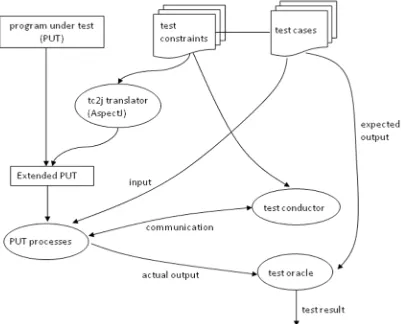
The structure of our testing method is shown in Figure 4. A test case is usually defined
as a sequence of input/output pairs. For simplicity, we consider here that each test
case is an input/output pair. An extension of the current work to handle sequences of
input/output pairs is straightforward. Each test case is associated with a test constraint
which describes a partial order among internal events, which refers to the execution of
a process at a checkpoint in the source code.
We assume that program under test, test case, and test constraints are given.
AspectJ code is automatically generated from the test constraint, and woven into the
given program under test, to form the extended program under test. The execution of
the extended program under test is augmented by the communication with the test
guide, which is written once for all. The test guide takes the test constraint as input to
make sure it is satisfied by properly delaying the communication with the processes in
the system under test. As we noted in the Introduction, we assume that the given test
constraint can uniquely determine one output, and this actual output is compared by a
27
28
6. Test Specification
6.1 Test Case Specification
In the distributed bakery examp le, we would like to make sure that output A comes
out before output B, and the test requirement we would like to satisfy can be
informally expressed as follows:
• (input) process 1 and 2 each requests once to enter its critical section;
• (test constraint)
– process 2 picks up a number before process 1 does;
– process 1 enters critical section before process 2 does.
• (expected output) the output is AB.
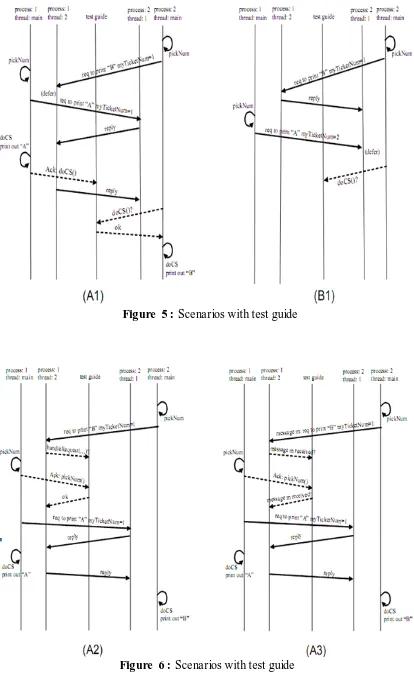
The most intuitive way to realize this test is to let process 2 ask the test guide for
permission to enter its critical section: the test guide will grant it permission if process
1 has already exited from its critical section. Figure 5(A1) shows such a scenario.
Note that the augmented communication between the test guide and the processes in
the system under test are given in dashed arrows. Here we have three augmented
messages added to scenario (A) (see Figure 3(A)):
• m1: after process 1 exited from its critical section, it sends a message to
acknowledge the test guide about it.
• m2: before process 2 enters its critical section, it sends a message to ask for
permission from the test guide.
• m3: the test guide sends a message to process 2 to grant it the permission.
29
Figure 5 : Scenarios with test guide
30 from process 1. In another word, the test guide will make sure that e1 → e3 where
―→‖ denotes the happen-before relation, and we use ei to denote the first occurrence
of the internal event of mi. More generally, a test guide will make sure that a given
test constraint is satisfied, where a test constraint is a partial order of the
happen-before relation among the internal events. Figure 5(A1) suggests that {e1 →
e3} might be used as a test constraint for the above test requirement for observing AB.
However, Figure 5(B1) shows another scenario when we cannot observe AB by
using {e1 → e3} as test constraint. This scenario is obtained by adding the three
messages to scenario (B) (see Figure 3(B)). Here, when process 2 asks for permission
to enter its critical section, the test guide has to delay its response until it has received
a message from process 1. Process 1, on the other hand, is waiting for the reply from
process 2 for its request to enter its critical section, which will not arrive until process
2 exits from its own critical section. Thus, we cannot observe output AB.
This example shows that not all test constraints are feasible. The fact that {e1 →
e3} is not a feasible solution suggests that process 2 should ask the test guide for
permission to proceed at an earlier checkpoint rather than right before entering its
critical section. Figure 6(A2) shows such a scenario which leads to a feasible test
constraint: {e5 → e6} where
• m4: before invoking method handleRequest(...), process 1 will send a message to the
test guide to ask for permission.
• m5: after process 1 completed method pickNum(), it sends a message to the test
guide to acknowledge about it.
• m6: the test guide sends a message to process 1 to grant it the permission to proceed
with handleRequest(...).
31 handleRequest(). As a consequence, myTicketNum of process 1 has value 1 (instead
of 2) when process 1 sends a request to process 2 to enter its critical section. This is
essential for process 1 to enter its critical section ahead of process 2, and thus
produces output AB.
Another possible scenario is shown in Figure 6(A3), which leads to an alternative
test constraint: {e8 → e9} where
• m7: when process 1 received message m to request to print B with myTicketNum=1,
it will send a message to the test guide to ask for permission to proceed with the
received message.
• m8: after process 1 completed method pickNum(), it sends a message to the test
guide to acknowledge about it.
• m9: the test guide sends a message to process 1 to process the received message.
Similar to {e5 → e6}, {e8 → e9} is a feasible test constraint. The only difference
is that the permission request is sent upon the receipt of a message instead of upon the
invocation of a method to process the message.
6.2 Test Constraints
To realize the communication between the test guide and the processes in the system
under test, we need to (i) determine the checkpoints, i.e. the places in the program
under test, where the additional messages are needed; (ii) determine the messages
between the test guide and the processes of the system under test. In this section, we
give detailed explanations of these two issues. The formal description of test
32
6.2.1 The Checkpoints of Interest
The checkpoints we are interested in are those that are essential to the
nondeterministic choices along an execution path that may cause different output.
Different outputs produced from a system with the same input is caused by the
different orders of accessing shared objects, which is in turn caused by different
execution speed among the threads and processes.
In addition to the order of accessing shared objects which is directly related to the
output, there are orders of the executions of some other statements, such as those for
process communication and thread cooperation, that are indirectly related to the
output.
Process communication can be either the lower-level send and receive operations
or the higher- level operations such as remote method invocations. When a remote
method is invoked at the caller’s side, there is a new thread implicitly used as a proxy
at the callee’s side to actually invoke the method. This implicitly used thread may also
access the shared objects. From the user ’s viewpoint, the remote method invocation
can also be a checkpoint of interest, either at the caller’s side or at the callee’s side.
Process communication with send/receive operations as considered in our setting is
not strongly related to the uniqueness of the output. Users may however find it
convenient to use the send and receive operations as checkpoints.
Thread cooperation refers to the coordination among multiple threads using
wait/notify mechanism provided by various programming languages. When the
wait/notify mechanism is used, there is usually a condition involved, upon the truth
value of which the waiting thread would be notified. This condition itself is a shared
33 object could be implicit.
In general, we allow users to use any checkpoint in the program under test as long
as it is a method invocation. Theoretically, this simplification does not reduce the
generality of the proposed method since all statements or blocks of statements can be
rewritten into a method. Practically however, we would like to release this restriction
to allow users to use any statement as a checkpoint. The extension of the present work
in this aspect is left for future work. In particular, with our current running prototype,
we exemplified how to use various methods provided by Java API (Abstract
Programming Interface) for thread synchronization, process communication, and
thread cooperation as checkpoints.
6.2.2 Event Description and Test Constraint
At the user-defined checkpoints, we would like to realize the desired communication
between the test guide and the processes in the system under test. There are three
typical kinds of messages we are interested in: (i) a permission request to the test
guide to invoke a method; (ii) a response from the test guide to a request; (iii) an
acknowledgement to the test guide for having completed a method invocation. The
last one is necessary to enable the test guide to send responses to other permission
requests.
An event is defined as an event name:event body pair. An event body is a tuple
<pid, tName, cName, mName, type, num> where:
• pid is the id of the current process. A same program can be executed by different
processes. We assume that when a process is started, a unique process id is given (e.g.
from the command line) and it is kept in a special static variable MyProg.processId
34 • tName is the name of the current thread. We assume that thread names are all
explicitly given in the source code, and can be obtained by invoking
Thread.currentThread().getName() (simply written as getThreadName() below).
• cName is the class name of the method being invoked.
• mName is the name of the method being called. Considering operator overloading, a
method should be distinguished jointly by the method name and the types of its
parameters. Here we simply use method name to distinguish a method. An extension
of the current work to handle more sophisticated message definition is
straightforward.
• type has values 1, 2, 3, representing the types of the messages: type=1 specifies the
message as a permission request to the test guide to invoke a method; type=2 specifies
the message as a response from the test guide to the previous request; type=3 specifies
the message as an acknowledgement to the test guide for having completed a method
invocation.
• num is the number of appearances of this mName being called by thread tName in
process pid.
Special symbol ―*‖ is used in the case we are not interested in specifying a
particular element. For instance, a ―*‖ as a class name indicates that we are interested
in the specified method defined in any class.
With the above formalization, the previous example messages can be expressed
as:
• e1: (1, main, DBakery, doCS, 3, 1)
• e2: (2, main, DBakery, doCS, 1, 1)
• e3: (2, main, DBakery, doCS, 2, 1)
35 • e5: (1, main, DBakery, pickNum, 3, 1)
• e6: (1, 2, SocketThread, handleRequest, 2, 1)
• e7: (1, 2, *, readLine, 1, 1)
• e8: (1, main, DBakery, pickNum, 3, 1)
• e9: (1, 2, *, readLine, 2, 1)
A test constraint is defined as a partial order of the happen-before relation among
a set of internal events. With the internal messages defined above, event e1 should
happen before event e2 can also be interpreted as e1 should be received before e2 is
sent, where e1 is the type 3 event sent to the test guide to acknowledge the completion
of e1, and e2 is the type 1 event sent to the test guide request to start e2. Thus, the
internal events can be defined as the sending/receiving of the corresponding internal
messages.
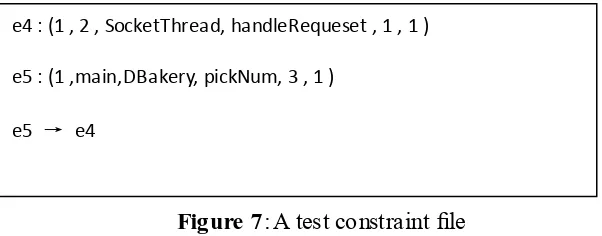
A test constraint file describes a partial order among a set of internal events. Both
the AspectJ generator and the test guide read this file to extract useful information. A
possible test constraint file for the distributed bakery example is given in Figure 7.
Figure 7: A test constraint file
Note that internal events of type 2 can be omitted from the specification since all
the related information is carried in the corresponding events of type 1 so that the test
guide can handle the response properly. In Figure 7, internal event e6 is omitted.
The AspectJ generator reads the first part of the test constraint file to get all the
event name and event body pairs. It does not read the second part of the file i.e. the
e4 : (1 , 2 , SocketThread, handleRequeset , 1 , 1 )
e5 : (1 ,main,DBakery, pickNum, 3 , 1 )
36 happen-before relation among internal events. For each internal event, the
AJGenerator extracts the pid, tName, cName, mName, type, num tuple.
The test guide reads the second part of the test constraint file to understand the
37
7. Generating AspectJ Code from Test
Constraints
For each internal event, the AJGenerator extracts the information of its event name,
process id, thread name, class name, method name, event type and num. The AspectJ
code is generated for the points of the execution where the specified method of the
specified class is invoked by the specified thread and process. Note that for the
communication with the test guide, only the event name is suffcient. For convenience,
the type of the event is sent together with the event name in our prototype
implementation.
For a type 1 event called eName with process id pid, thread name tName, class
name cName, method name mName, number of occurrences num, the generated
ApectJ code is shown in Figure 8. It automatically generates a unique joinpoint named
methodCall0 for any invocation of method mName which is defined in class cName.
An array named methodCalledTime[] is used to record the time of appearance of a
<pid, tid, cName, mName, type> tuple. According to this piece of code, during the
execution of the extended program under test, right before any invocation of method
mName in class cName, the current process and thread with a response
methodCalledTime[i] is checked. If the current process ID is pid, the current thread
name is tName, and the methodCalledTime[i] reaches num then event name eName,
together with the type 1 is sent to the test guide, and the execution is held, waiting for
response from the test guide. Here, in and out are the input and output stream
respectively for the socket connection with the test guide, which uses a predefined
38 Note that different processes and different threads will use different channels for
communication. Thus, the response from the test guide can be any message and it is
only read, not used.
For a type 3 event called eName with process id pid, thread name tName, class
name cName, method name mName, number of occurrences num, the generated
ApectJ code is shown in Figure 9. It is similar to the code for type 1 events except that
it sends out the acknowledgement message to the test guide without waiting for
response.
The code generated from the test co nstraint file in Figure 7 is given in Figure 10.
public pointcut methodCall0(): call(* *.mName(..)) && within(cName); before(): methodCall0() {
try {
if (MyProg.processId==pid &&
Thread.currentThread().getName().equals(tName)) {
methodCalledTime[0]++;
if(methodCalledTime[0]==num){
kkSocket*0+ = new Socket(“chenpc06”,4111);
out[0] = new PrintWriter(kkSocket[0].getOutputStream(),true);
in*0+ = new BufferedReader(new InputStreamReader(kkSocket[0].getInputStream())); out*0+.println(”1 eName”);
while ((in[0].readLine()) != null) { break;
} } } }
catch(Exception e) {} }
Figure 8: Generated AspectJ code for type 1 event
39
try {
if (MyProg.processId==pid &&
Thread.currentThread().getName().equals(tName)) {
methodCalledTime[0]++;
if(methodCalledTime[0]==num){
kkSocket*0+ = new Socket(“chenpc06”,4111);
out[0] = new PrintWriter(kkSocket[0].getOutputStream(),true); out*0+.println(”3 eName”);
} } }
catch(Exception e) {} }
Figure 9: Generated AspectJ code for type 3 event
import java. io.*; import java.net.*;
public aspect ControlSequ{
Socket[] kkSocket = new Socket[2]; PrintWriter[] out =new PrintWriter[2]; BufferedReader[] in =new BufferedReader[2]; int[] methodCalledT ime = new int[2];
public pointcut methodCall0(): call(* *.handleRequest(..))&& within(SocketThread); before(): methodCall0(){
try{
if(MyProg.processId==1){
if(Thread.currentThread().getName().equals("2")){ methodCalledTime[0]++;
if(methodCalledTime[0]==1){
kkSocket[0] = new Socket("chenpc06",4111);
out[0] = new PrintWriter(kkSocket[0].getOutputStream(),true);
in[0] = new BufferedReader(new InputStreamReader(kkSocket[0].getInputStream())); out[0].println("1 e4");
while ((in[0].readLine()) != null) {break;}
out[0].close();in[0].close();kkSocket[0].close();}} }}
40
public pointcut methodCall1(): execution(* *.pickNo(..))&& within(DBakery); after(): methodCall1(){
try{
if(MyProg.processId==1){
if(Thread.currentThread().getName().equals("main")){ methodCalledTime[1]++;
if(methodCalledTime[1]==1){
kkSocket[1] = new Socket("chenpc06",4111);
out[1] = new PrintWriter(kkSocket[1].getOutputStream(),true); out[1].println("3 e5");
out[1].close();kkSocket[1].close();} } } }
catch(Exception e){} } }