ABSTRACT
Ericksen, Danielle. AN INVESTIGATION INTO THE EFFECTIVENESS OF A TRAINING PROGRAM ON STUDENT SUPERVISOR’S SELF CONFIDENCE. (Under the direction of Dr. Larry Gustke)
The purpose of this study was to investigate whether a training program was
effective on a student supervisor’s self-confidence in necessary job related skills. The
student supervisors who participated in this study were employees at the NC State
University’s Carmichael Gym. The foci of the training program were emergency
procedures, conflict management and leadership skills.
It was hypothesized that the training program would have a positive effect, such
that the student supervisor’s self-confidence would increase. Data was collected through
a pre and post-test survey. The training program consisted of one-day leadership
training, conflict discussions, leadership surveys and discussions, and randomized
emergency procedure drills.
The data was analyzed with a student t test, Wilcoxin ranked sign test, and
through graphical analysis. The analysis showed a clear positive outcome in emergency
procedures. Conflict management and leadership skills showed a decrease in scores,
though not enough for it to be statistically significant. Future programs should focus on
AN INVESTIGATION INTO THE EFFECTIVENESS OF A TRAINING PROGRAM ON STUDENT SUPERVISOR’S SELF CONFIDENCE.
By
Danielle Jennifer Ericksen
A thesis submitted to the Graduate Faculty of North Carolina State University
in partial fulfillment of the requirements for the Degree of
Master of Science
Parks, Recreation and Tourism Management
Raleigh 2005
APPROVED BY:
____________________________ Chair of Advisory Committee
BIOGRAPHY
While pursuing a bachelor of science at the University of North Carolina at
Greensboro, Danielle Ericksen found her love for Campus Recreation. After a year of
outside work experience she decided to pursue a master of science to be able to continue
in the field of campus recreation. While working on her masters Danielle was lucky
enough to gain an assistantship with Carmichael Facilities and Operations. Through her
assistantship she learned many valuable lessons to take with her into the field of
recreational sports. She is currently planning a wedding and moving to Florida with the
ACKNOWLEDGEMENTS
Writing a thesis is a project that requires a great deal of help. It is now that I wish
to acknowledge all that have been involved in this project.
First I wish to thank Dr. Gustke for keeping me organized and for his consistent
encouragement. He has given me the skills needed to finish this project and the
knowledge to understand what I was writing. Most of all I thank you for being patient
with my writing. To Dr. Wade, a big thank you for getting me started on my research
and for being there for advice and encouragement. Dr. Peel, I thank you for being a part
of my committee and for being so excited about the research being done.
Dawn Sanner and Rich Bricker, the crew from Carmichael Gym, a huge thank
you for helping me develop the research idea and for pushing me on it even when I’d
rather be working. Thanks for all the support and help. To the rest of the Carmichael
crew, the student supervisors, I thank you for participating in the study. It was because of
them that the research was developed, and after learning the results I would do it again in
a heartbeat! You guys kept me on my toes and taught me many lessons.
To my parents, family and friends, this thesis could not have happened without
your support, thoughts, and prayers. Your consistent encouragement reminded me of why
I was doing this thesis.
Last but not least to my future husband, Eban Bean, I thank you the most. When
it became too much for me to handle, you were the one to set me straight and put me back
on track. I thank you for all your help and knowledge throughout this process. I’m so
TABLE OF CONTENTS
LIST OF FIGURES ...v
LIST OF TABLES ... vi
Chapter 1... 1
INTRODUCTION ...1
PURPOSE OF STUDY... 2
ORGANIZATION OF THESIS ... 3
DEFINITION OF TERMS ...4
Chapter 2... 5
INTRODUCTION TO LITERATURE ...5
Self Confidence ...5
Training Programs ... 9
SUMMARY ...10
Chapter 3 ...14
METHODS ...14
Subjects ...14
Testing... 14
Training Program ...15
Emergency Procedure Drills ...16
Leadership Skills and Conflict Management ...16
Results ...17
Chapter 4 ...18
RESULTS ...18
Graphical Analysis ...18
Wilcoxin Ranked Sign Test ...21
Student t Test ...21
Chapter 5 ...23
CONCLUSIONS ...23
RECOMMENDATIONS ...25
PRACTICAL SIGNIFICANCE ...26
REFERENCES ...28
APPENDICES 1: Survey ...29
2: Drill Schedule ...32
3: Conflict Management and Leadership Skills Survey ...35
TABLE OF FIGURES
Figure 1. Knowledge of Skills Pre vs. Post Test Scores ... 19
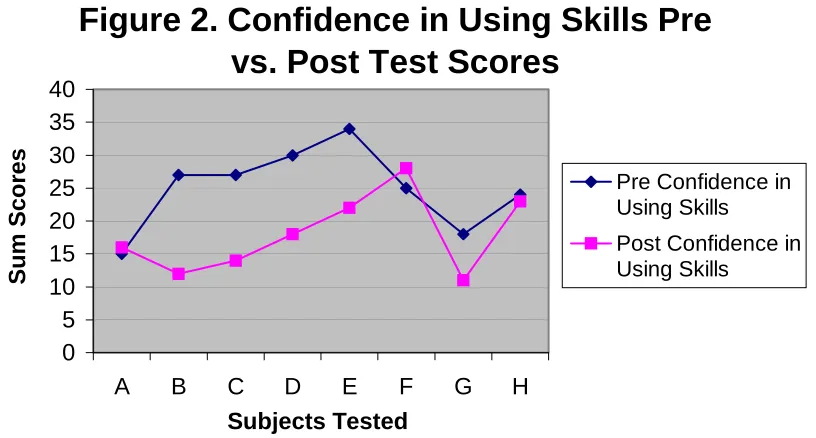
Figure 2. Confidence in Using Skills Pre vs. Post Test Scores ... 19
Figure 3. Conflict Management Skills Pre vs. Post Test Scores ... 20
TABLE OF TABLES
Chapter 1 Introduction
Health and fitness have become an integral part of the daily activities of college
students and university campuses. It is estimated that 11 million college students
participate in health and fitness activities across the United States and that there are 695
college and university recreation sports programs nationwide (NIRSA History,
www.nirsa.org/about/cd_history/history.htm). These programs and associated activities
provide students not only a means to exercise and socialize, but also a way to relieve
stress and gain self-esteem.
Recreational sports programs have grown because of students. As student
enrollment has grown from 13.8 million in 1990 to 15.3 million in 2000 nationwide,
campus recreation programs have grown to meet the increased demands for recreational
sports, health, and fitness activities (NCES Fast Facts,
Http://nces.ed.gov/fastfacts/dislay.asp?d=98). The demand for facilities and recreational
sports professionals to staff and manage programs has also increased. These campus
recreation professionals have expanded their ability to provide programs and activities by
hiring and training students to function as student supervisors, facility monitors, weight
room monitors, group fitness instructors, and intramural/club sports supervisors.
These student employees are “responsible for the direct supervision of
participants and activities in a recreation facility” (Cosky, 1994). They lead the student
staff, mediate any conflicts that may arise and are the first responders to any accidents or
injuries. Their diverse responsibilities require a knowledge and self-confidence in that
It is necessary for student supervisors to go through extensive training so that they
know how to deal with all situations that may arise. Typically, once a student supervisor
is trained in policies and facility usage and is certified in Standard First Aid with
Automated External Defibrillator (AED), they do not receive any other training for either
a full year or until the beginning of the next semester. There is typically a full or one-half
day of supervisor training at the beginning of each semester, which includes a review of
emergency procedures and leadership skills.
Due to a large amount of important information being presented during these
trainings, the review of emergency procedures may only take a small portion of the time
and the leadership skills could be just an icebreaker at the beginning of the day. It may be
difficult for the student supervisor to comprehend and feel confident with all of the
information. With a semester between each training session, a supervisor’s confidence in
the required duties, such as emergency procedures and conflict management, can decline.
It is the hope of campus recreation professionals that a semester long training program
will enhance student supervisor’s confidence.
Purpose of Study
The purpose of this study was to determine how effective a semester long
training program is to a student supervisor’s self-confidence in emergency procedures,
conflict management, and leadership skills. This is necessary because of the work and
responsibilities that student supervisors have. A campus recreation professional places a
great deal of trust in the student supervisors to run the daily activities in their absence.
The training program is designed to reinforce the correct behaviors that a director of
supervisor will learn and relearn how to handle any and all adverse situations.
Recreational sport professionals felt it was essential to the quality of the program at North
Carolina State University to ensure that the student supervisor staff was confident in
handling any situation that would arise.
The study objectives were to determine if training influences student supervisor
confidence in emergency procedures, conflict management, and leadership skills in a
recreation sport setting and whether such training should be implemented in orientation
and supervisor training. Results from this study are important to gain knowledge about
what makes a quality student supervisor and what professionals may gain from
implementing a similar supervisor training program for their student employees.
Specifically, the research problem investigated was to determine how effective a training
program is to a student supervisor’s self-confidence in emergency procedures, conflict
management, and leadership skills.
Organization of Thesis
This thesis is divided into five chapters. The first describes the importance of a
recreation program, how invaluable the student employees are to these programs and a
statement of the research problem. The second chapter reviews current and past literature
on self-confidence and training programs. The third chapter describes the methods of the
study, specifically how the data were collected. The fourth chapter reports the results of
the study. The last chapter draws conclusions from the study results and suggests
Definition of Terms
There are specialized terms used in this thesis. To facilitate reading and understanding
they are defined below.
Student Supervisor- A student employed with a university or college recreational sports program that is in charge of a facility and the other student employees in that facility.
This student also acts as a first responder to any injuries, reconciles any conflicts between
patrons, and manages other students on staff.
Recreational Sports Program- A program set up on university and college campuses to give the students, faculty and staff activities through sports and fitness. This is done by
Chapter 2
Introduction to Relevant Literature
The following chapter consists of a review of relevant literature related to
self-confidence and training programs.
Self Confidence
A student working in recreational sports programs must start out by being led by
others such as a student supervisor. For a student to qualify for a supervisor position,
they must possess quality leadership skills. In an article written by Barry Sheehy, he
addresses the qualities that make up a great leader and why those qualities are so
important (Sheehy, 1993). According to Sheehy, these qualities include: the ability to
make tough decisions, to stay calm in the midst of crisis, integrity, the ability to
communicate their message, poise, and confidence (Sheehy, 1993).
Sheehy further describes each of the above-mentioned qualities. Sheehy states
that being confident means that “there is no room for hesitancy or half measures”. This
confidence when paired with poise means that if a leader has any doubts they don’t show
it, and that they “act as if their strategy will succeed” (Sheehy, 1993).
In a thesis by Cook, resident advisors participated in a training program. Cook
divided resident advisors into a control group and an experimental group. The control
group participated in an “in house” training program that is conducted yearly during the
four days before students return for the fall semester (Cook, 1980). This consisted of
learning about the campus, the agencies on campus, the discipline system, and safety and
fire drills. The experimental group participated in a three-day outdoor adventure-training
(Cook, 1980). The experimental group spent the first of four days on campus as an
orientation day and the second day they went to Watts Lodge in the Tussey Mountain
Range, where the rest of their training took place. During their time at the retreat, the
experimental group was split into five groups and took part in activities. These activities
included setting up living conditions, preparing meals for the entire group, caving,
swimming activities, and restoring playing areas. Each activity was set up so that the
group was placed in a stressful situation, such as being dropped off at the foot of the
mountain and each group having to find a predetermined campsite. The training program
was designed to simulate an Outward Bound challenge. Outward Bound strives to “place
students in a variety of physically safe but stressful situations” (Cook, 1980). The desired
outcome of the program was for a student to “accomplish more than they believed
possible and, as a result, gain in self-confidence” (Cook, 1980).
Resident Advisors are similar to student supervisors, except they are directly
responsible for the students in resident halls rather than patrons in a facility. They have
responsibilities to many people, and as Cook describes, “a special kind of person is
needed who can successfully handle the variety of responsibilities, while maintaining a
personally successful and rewarding university program of study” (Cook, 1980). The
main purpose of Cook’s study was to determine if the three-day Outward Bound training
program had an effect on a resident advisor’s group-cohesiveness and self-confidence.
Cook found that self-confidence in a supervisory position is important to
understand. Self-confidence in a supervisory position can be defined as: “assurance, trust
or certainty in one’s self or in one’s own abilities in a variety of situations in which an
A scale, developed by Vegega, was used to measure supervisory self-confidence. A
second scale was used to determine group cohesiveness and to determine if the training
program affected the amount of cohesiveness.
During the orientation day both groups were given two surveys, a group
environment scale to measure group cohesiveness, and a supervisory self-confidence
scale. At the end of the four-day trainings both groups took a post-test, and after eleven
weeks they retook the post-test. Cook found that the experimental group had a
significant increase in group-cohesiveness when compared to the control group, but that
there was no significant difference in self- confidence between resident advisors who
participated in the Outward Bound type program and a control group who participated in
an ‘in house’ program.
Vegega’s scale, referred to above, determined an individual’s self-confidence in a
supervisory position. The scale was used to determine if an individual’s self-confidence
affected “one’s ability to perform the task at hand” (Vegega, 1980). In Vegega’s study, a
group of undergraduate students were separated into males and females and were
administered a series of tests. These tests included individual activities and activities in
which the students acted as a supervisor for a group of ten males. Vegega found that
there was a significant correlation between self-confidence and supervisory interaction.
Carley and LaVan also studied confidence and knowledge. In their study, 53
college students, enrolled in a one-quarter college-level seminar for personnel
administration, were given a pre and post seminar questionnaire (Carley and LaVan,
1984). The questionnaire measured the knowledge and confidence that the students had
administration, specifically topics or challenges that human resource managers would
face in real world situations. Carley and LaVan found that the course increased the
student’s confidence in knowledge, while only some of their knowledge scores increased
(Carley and LaVan, 1984). The authors found that experiential learning is one of the most
effective ways to learn. This is because a person can gain experience in using the
knowledge they already have, and thus has more confidence in using the knowledge in
real work experiences.
Self-efficacy, which is a concept similar to self-confidence, has been researched
relative to job performance. Self-efficacy “refers to individuals’ judgments of their
capabilities to execute action required to attain certain levels of performance. It is
concerned not with the skills one has but with the judgments of what one can do with
whatever skills one possesses” (Bandura, 1986). In a study conducted by Orpen, the
impact of self-efficacy was compared to the effectiveness of employee training. One
hundred and eighteen subjects were tested on a self-efficacy scale that “assessed the
extent of their generalized confidence in their own ability to do their job effectively”
(Orpen, 1999). Orpen found that among the subjects tested, those who held a position
where more self-efficacy was needed, there was an improved performance over those
who held a position where self-efficacy was not essential for effective performance
(Orpen, 1999).
According to Orpen, self-efficacy is important to study because it reflects
individual’s skills and whether or not the individual believes they can use the skills to
reach a goal. Orpen concludes that training programs should be mediated by
of the job (Orpen, 1999). From Orpen’s findings, a training program should be based on
the needs of the position, so if a position requires a high level of self-efficacy then the
training for that position should include projects to help the trainee develop more
self-efficacy.
Training Programs
A training program “can build a sense of community in the organization by
boosting self-confidence, self-esteem and a feeling of camaraderie” (Hall and Tall, 1998).
According to Hall and Tall a training program is a tool used by an organization to reach
and succeed its goals. The training program has to be effective for it to be worthwhile to
the organization.
One way for a training program to be effective for all staff members, according to
Hall and Tall is for it to engage all senses, otherwise known as experiential learning (Hall
and Tall, 1998). Experiential learning is effective because it uses real life approaches. In
order for the learning to be effective it “stimulates a particular process or activity in order
to reinforce new skills or knowledge by using them in a real life environment” (Hall and
Tall, 1998).
Another way for a training program to be effective is to develop training based on
the needs of those being trained. If everyone in a group knows everything about the
organization, then what is the need in having a training program? To answer this
question, Hazucha and Holt decided that the first step in planning a training program is to
gather data (Hazucha and Holt, 1991). The data should give the strengths and
weaknesses for all who are to be involved in the program (Hazucha and Holt, 1991). It
Holt, 1991). The data gathering can be done by a self-assessment or feedback from
co-workers.
In a study conducted by Matthias, a training program was set up to foster a
community spirit among resident advisors to improve the dormitory environment for
Rincon Hall. The program included seven-day in service training, which included a
three-day retreat. During the training the resident advisors met with representatives from
an economic opportunity program, financial aid, student activities, student health, college
deans and president (Matthias, 1974). During the year, the resident advisors were
required to read articles and books from a reading list and to review their resident advisor
manual. They also attended weekly meetings structured to enhance the group atmosphere
and then were given self-evaluations midway through the semester.
Summary-Relevant Literature and This Study
Self-confidence is the most important quality for each student supervisor to
possess. Student supervisors face many challenges associated with their responsibilities.
As Sheehy states “a great leader will act as if their strategy will succeed”, or to act as if
they know everything about what they are doing. A student supervisor may come across a
person who has broken an arm and even though the supervisor may not recall the proper
procedure in that situation, they must act confident to keep the victim calm. If a fire drill
occurs, the supervisor must know exactly what directions to give their staff to be
effective and efficient. Being calm and showing confidence is a quality that they must
possess.
Cook’s definition of self-confidence fits best in this study since is based on a
manage a facility and other team members during every shift. For a student to succeed at
this position they must be self confident in every aspect of the position. They must make
correct decisions, and must also trust their ability to respond to many diverse situations.
Following the direction set by the research cited previously, a survey instrument
and procedures were developed. While developing the survey for the student supervisors,
it was very important to realize that while the student supervisor may know which skills
they should use, they may not have confidence in using those skills. For the training
program to be effective it was based on what areas in which they need more confidence.
This ensured that they would have a higher level of confidence in their
self-acclaimed weaker areas after the program was over.
One of the most important procedures that this study included was emergency
procedures. The student supervisors are required to have CPR training yearly, as
certification only lasts one year. This training takes place in a three-hour class and
includes video and practical learning. Following the class they are expected to remember
how to perform each detail of every procedure for a full year. To be effective, the student
supervisor training program used real life situations to reinforce skills and knowledge,
just as Hall and Tall stated on effective training programs. Randomized drills were set up
with volunteer victims who acted out emergency scenarios.
Similar to Hazucha and Holt a self-assessment, or pre-test was administered. The
pre-test survey had three sections and asked the student supervisors to score themselves
based on declared self-confidence for each question in the section. The scores from the
pre-test provided baseline information on what needed to be covered in order for the
LaVan and Carley’s course allowed students to be able to repeat and use the
techniques taught them so they would know how to use them when at work. This is
similar to the study conducted at the Carmichael Complex on student supervisors, since
each student supervisor was drilled and critiqued on emergency procedures. This helped
the student supervisor to know the expectations of the professional staff for the handling
of each emergency and how they could improve their skills.
The training program conducted by Cook had resident advisors participate in an
‘in house’ fall training similar to training that the student supervisors went through before
work started in the fall. For the student supervisors at Carmichael Complex, a one-day
training course was provided for them to learn leadership skills and develop as a team.
The first part of the day consisted of the leadership skills while the second part consisted
of orientation and new procedures. Overall the day of training gave the student
supervisors a chance to come together as a team and learn how to work well with each
other.
Weekly meetings were conducted, similar to those used by Matthias, to gain a
sense of community among the supervisors. These meetings also provided an
opportunity to review each drill, discuss how the student supervisor handled the situation
and how to improve their performance. These meetings allowed a structured time for
each supervisor to relate any experiences and what could have been done differently in
these situations. They also gave an opportunity for each student supervisor to speak
freely to the group and thus reinforce the sense of community.
At Carmichael Complex a student supervisor is expected to be knowledgeable,
be successful in their position it was hypothesized that a training program would increase
their self-confidence in their knowledge of emergency procedures, conflict management
Chapter 3 Methods
The following chapter describes the 13-week training program that was designed
to increase a group of student supervisor’s self-confidence at North Carolina State
University.
Subjects
The subjects were all student employees of the Carmichael Complex Facilities
and Operations at North Carolina State University. These 10 student supervisors, 5 males
and 5 females, were between the ages of 19 and 22 and were full time students ranging
from juniors to seniors. They were employed an average of 10 hours per week and have
numerous supervisory responsibilities including: first responder to all injuries and
accidents; enforcement of all policies and regulations for employees and patrons; open
and close the facility 7 days per week; ensure that job performance is carried out and
discretely write violations of other employees; handle all complaints or conflicts from
patrons; lead by example for other employees.
Testing
The testing consisted of a pre-test and a test (Appendix 1). After the
post-test, a follow up interview was scheduled with each student to further assess his or her
change in confidence. A survey was designed to gather information on three separate
duties handled by the student supervisors. These duties included emergency procedures,
conflict management and leadership skills.
The emergency procedures section was divided into two parts. The first being
had the same eight skills and the student was asked to individually rate the skills on a
scale from 1-10, 1 being the best, 10 being the worst.
The conflict management skills section asked the students to individually rate,
from 1-10, eight skills used to handle conflicts. These skills included staying calm in
difficult situations, listening to patrons’ complaints, understanding where the problem is,
separating people from the problem, understanding the other side’s thinking,
communicating with irate patrons, preventing a situation from happening and being
objective during situations.
The leadership skills section included an assessment of 25 skills that tested their
confidence in their leadership skills. Each student was asked to rate each skill from 2-10
on a Likert type scale, 2 being strongly agree and 10 being strongly disagree.
The Training Program
The training program, which took place over the 13 weeks of the fall semester of
2004, consisted of a one-day team building training, weekly meetings, and random
emergency procedure drills.
The program started with a full day of leadership and team building exercises. At
the beginning of the day the student supervisors took a pre-test. A discussion followed on
what the details of the program for the rest of the semester. Then, they went into the
team building exercises lead by an instructor from the Physical Education Department at
NC State. The exercises that the instructor led them in were: Magic Carpet Ride, Tower
Building, Bullring, 2B Or Not 2B and The Maze. After each exercise the instructor gathered the group and had them discuss what they had learned from each exercise and
The remainder of the program consisted of randomized emergency drills, an
overview of leadership skills, and a review of conflict management.
Emergency Procedure Drills
A drill schedule was set up for the semester so that each student supervisor was
drilled once. Each drill consisted of a scenario, set up with a human or a dummy victim
(Appendix 2). The student supervisor was tested on their ability to perform the correct
emergency procedure in front of the Graduate Assistant of Facilities (GA). Specifically,
they went over their CPR/First Aid skills and proper protocol for calling EMS or Campus
Police. This protocol includes a description of the victim and how to direct other staff
members. The GA recorded specifics from the drill and areas of needed improvement.
During the weekly supervisor meetings, the GA reviewed each drill and noted how each
supervisor could have performed better.
Leadership Skills and Conflict Management
During the weekly supervisor meetings different surveys were used to stimulate
discussions. For the leadership skills, a survey taken from Managing Human Behavior in
Public and Nonprofit Organizations, was used to review leadership skills and conflict
management, (Denhardt, Denhardt, & Aristigueta, pg 184)(Appendix 3). This survey
asked the student to list ten qualities of a great leader. From the survey, the student
supervisors together created a master list from their lists of leadership qualities. This list
was narrowed down to the top five qualities of a great leader that were agreed upon by
everyone.
The survey used for conflict management was also from Managing Human
330-331) (Appendix 3). Each survey question was designed to lead a person to think
about his or her own behaviors. After the survey was completed, the supervisors
discussed how each supervisor could use different techniques to improve their
performance during a conflict situation.
Conflict management was also discussed through addressing conflicts that arose
during the previous week. Supervisors evaluated the conflict, how it was managed, and
how it could have been improved. There was a discussion on what the conflict was and
how the supervisor had handled it.
Results
The data were collected from each pre and post-test and were organized in an
MS Excel spreadsheet. The difference between the pre and post-test scores were
evaluated by inspection of plotted data, Wilcoxin difference of ranks test, and student t
Chapter 4 Results
The following chapter describes the results of measuring the impact of the
training program on student supervisors at NC State University’s Carmichael Complex.
Three techniques were used to analyze the data from the pre and post-test surveys. These
were a graphical analysis, a Wilcoxin ranked sign test, and a student t test.
Graphical Analysis
Scores on each section (knowledge of skills, confidence in skills, conflict
management, and leadership skills) of the survey were calculated by summing the scores
for all items in the section. The sum of each subject’s scores were calculated for each of
the four sections and were plotted. The plots showed changes in the emergency
procedures (Figures 1 and 2, respectively), both knowledge of skills and confidence in
skills, from pre to post-test. For the two other sections, conflict management and
leadership skills, the plots show a small increase.
The first section, Knowledge of Skills, had the largest differences in scores.
Figure 1 shows that six subjects had a considerable decrease between pre and post-test
scores. Four of the six subjects had at least an eight-point decrease in scores. Subject E
had the greatest change in scores, with a 34 on the pre-test and a 15 on the post-test, a 19
point difference. There were two subjects who had an increase in scores from pre to post
Figure 1. Knowledge of Skills Pre vs. Post
Test Scores
0 5 10 15 20 25 30 35 40A B C D E F G H
Subjects Tested Sum Scores Pre Knowledge of Skills Post Knowledge of Skills
In the next section, confidence in skills, results were similar to the knowledge of
skills section. Figure 2 shows the changes in confidence in skills. Similar to the previous
section six subjects had decreased scores from pre to post-test. Of these six subjects, four
had at least a 12-point change in scores. Subject B had the greatest change in scores,
from 27 on the pre-test to 12 on the post-test, a 15-point difference.
Figure 2. Confidence in Using Skills Pre
vs. Post Test Scores
0 5 10 15 20 25 30 35 40
A B C D E F G H
Subjects Tested
Sum Scores
Pre Confidence in Using Skills
Results from the conflict management skills section were different from those of
the two previous sections. Figure 3 shows scores from the conflict management pre and
post-tests. Five subjects had a decrease in scores, but of those five, only one had a
difference greater than five. It was hypothesized that all subjects would have decreased
scores from pre to post-test. These results do not reflect a trend of decreased scores for
all subjects.
Figure 3. Conflict Managment Skills Pre vs.
Post Test Scores
0 5 10 15 20 25 30 35
A B C D E F G H I J
Subjects Tested Sum Scores Pre Conflict Management Skills Post Conflict Management Skills
As with conflict management skills, leadership skills also varied greatly. As
figure 4 shows, seven subjects decreased from pre to post-test, however only one of these
subjects, E, had a considerable decrease (>25). Score reductions for the other six subjects
ranged from 2 to 20 points. Subject B had no change, while the remaining two, subjects
Figure 4. Leadership Skills Pre vs. Post
Test Scores
0 20 40 60 80 100 120 140A B C D E F G H I J
Subjects Tested
Sum Scores
Pre Leadership Skills
Post Leadership Skills
Wilcoxin Ranked Sign Test
The Wilcoxin ranked sign test was used as a test of the differences between pre
and post-test score populations. Table 1 lists resulting p-values from Wilcoxin tests
between pre and post-test scores for each section. Only Knowledge of Skills was found to
have a significant (p = 0.05) difference between pre and post-tests scores.
Table 1. Wilcoxin Ranked Sign Test P-values from Each Test Group Knowledge Confidence Conflict Management Leadership
p-values
N=10 0.023 0.055 0.734 0.359
Student t-Test
To further confirm the evidence of change between the pre and post-test scores,
the t-test did differentiate the pre and post-test scores. A t-test, calculated through
Microsoft Excel, was completed for each section of the survey.
Both emergency procedure sections, knowledge of skills and confidence in
skills, were significant (p<0.05). Conflict management and leadership skills were not
significant.
Table 2. Student t Test p values for test sections
Knowledge Confidence Conflict Management Leadership
P(T<=t) two-tail
Chapter 5 Conclusions
The following chapter provides conclusions and discussion of study results,
recommendations for futures studies, and the practical significance of the results.
From the statistical analysis conducted, it can be concluded that there were
changes from the pre to the post-test. More specifically, it can be concluded that from the
graphic representations there were differences for all sections of the pre and post-test.
The Wilcoxin ranked sign test showed a significant difference for only the knowledge of
skills section. The Student t-test showed a significant difference for both knowledge of
skills and confidence in skills.
While there is a clear and significant difference on the knowledge of skills and
confidence in skills sections, the last two sections, conflict management, and leadership
skills did not show significant results. The following are speculations or reasons as to
why there were no clear and definite conclusions for all sections.
First, the students may have perceived that the four sections of the survey were
lumped together into confidence of skills and knowledge of skills. Under this perception,
the student supervisors would have taken all the information given to them on conflict
management and leadership skills and applied it to the first two sections under emergency
procedures. They may have thought that by acquiring knowledge and confidence in the
leadership skills and conflict management, that when asked about confidence in skills and
knowledge of skills that the information, from the training program, applied to the first
The results may be a function of the survey used. The survey was created to
specifically address each focus of interest, emergency procedures, conflict management,
and leadership skills. There were no previous measures of reliability or validity
conducted because this survey was designed specifically for use of this study. Without
these measures, there is no way of knowing if the survey was a good measure of the
concepts it was purported to measure.
The bias is concerned with the students used in the study. It refers to the idea
that college students are survey “smart” and familiar with experiments and research. This
experience often influences them to try to figure out what the survey is asking or what the
experimenter is doing. As a result, they answer in a way they think the researcher wants
them to answer.
A second form of bias could be experimenter bias. This refers to the possibility
that actions or procedures designed by the researcher may have unknowingly influenced
how the students responded to the survey questions. In other words, the students
perceived that the experimenter wanted the training to be effective, therefore, they
responded in a way that supports the effectiveness of the training.
The last speculation about the results is that a critical incident that occurred
during the semester may have influenced the students. On November 9, 2004 a patron
experienced cardiac arrest while running around the track at Carmichael gym. The
student supervisor on duty reacted very quickly and directed the staff in an appropriate
matter. The quick response of the student supervisor resulted in the victim breathing on
This incident affected all the student supervisors in one way or another.
Because of the seriousness of the situation, each supervisor realized that this situation can
and does occur in a fitness facility. From interviews, conducted after the post-test survey,
it was discovered that six of the ten student supervisors felt their increase in confidence
was directly related to the incident. They stated that because they saw how the staff and
emergency services reacted, they felt more confident if put in a similar situation. Only
one student felt that because of the incident her confidence actually decreased. This
student reported being scared of being put in a similar situation. Another student
reported not being affected at all by the event and claimed that if put in a similar situation
he/she would be fine.
The weekly meetings held after the incident focused on a review of emergency
procedures and skills, and a debriefing session where the supervisors were encouraged to
talk and ask questions. This meeting was added to the training program because a few of
the supervisors specifically requested the review.
Recommendations for future study
Future studies of this type should change some of the following things to make
the results more significant. One necessary recommendation is to conduct reliability and
validity on the survey that is used. This would allow for more significant results to be
found. This was one limitation on the current study that was conducted.
The next recommendation would be for the study to focus on one or two specific
types of training. In the current study there were four training sections over a span of 13
time and to have it affect them. An example of how to conduct the training would be to
conduct the training for a fixed time period. This would allow the students to understand
what they are learning and how they should apply it.
In an ideal situation it would be best to use a multiple group design. With four
groups used you could have a control group who is certified in CPR and First Aid and
does not participate in the rest of the program. The other three groups would be split up
into the three sections, emergency procedures, conflict management and leadership skills.
For this design to work it would be best to have a large sample size for each group.
Another recommendation is to gain feedback from the staff that works for the
student supervisors. This feedback can allow recreational sports professionals to gain
insight into how well the supervisors supervise the staff and how well they learn their job
expectations from the supervisors.
Practical Significance
Although this study did not provide conclusive results, the findings can be
interpreted as meaningful. The knowledge that the student supervisors gained, through
randomized drills and review sessions, was somewhat effective. The results showed a
change in confidence, whether it was due to experience or directly from the training
program is unknown, but the true meaning of this program was for the student
supervisors to gain knowledge and confidence in all the skills they need to master to
function as effective student supervisors.
Campus Recreation professionals will be able to use the findings of this study
design more effective training programs and develop the potential of their student staffs,
REFERENCES
Bandura, A. (1986), Social Foundations of Thought and Action: A Social Congnitive Theory. Prentice-Hall, Englewood-Cliffs, NJ
Carley, C., & LaVan, H. (1984). Experimental Learning. Simulation & Games, 15, 2, 235-246.
Cook, K. (1980). The Effectiveness of an Outdoor Adventure Program as a Training Method for Resident Assistants. A Thesis in Recreation and Parks, Pennsylvania State University, 102
Cosky, A. (1994). Recruitment, Training and Retention of Recreation Supervisors.
NIRSA Journal, 20-28.
Gist, M., & Mitchell, T. (1992). Self Efficacy; A theoretical analysis of its determinants and malleability. Academy of Management Review, 17, 2, 183-212
Hall, L. & Tall, S. (1998). Effective Training: Today’s Competitive Weapon. Institute of Industrial Engineers, 30, 6, 27-32
Hazucha, J. & Holt, K. (1991). Starting Right (development of training programs).
American Society for Training & Development, 45, 1, 71-73.
Matthias, R. (1974). A Training Program for College Residence Hall Advisors: Rincon Hall, California State University, North Ridge. Counseling and Student Services, 36 National Intramural Recreation Sports Association (NIRSA) History, from
www.nirsa.org/about/cd_history/history.htm
Orpen, C. (1999). The impact of self-efficacy on the effectiveness of employee training.
Journal of Workplace Learning, 11, 4, 119-125
Sheehy, B. (1993). A point of view: quality leadership-What does it look like? National Productivity Review, 13,1, 1-6
US Department of Education, National Center for Education Statistics (2003). Digest of Education Statistics, retrieved from NCES Fast Facts
Http://nces.ed.gov/fastfacts/dislay.asp?id=98
APPENDIX 1
Supervisor Pre-assessment Survey
Name ______________________ Date __________
Emergency Procedure Skills
Please individually rate these skills from 1-10, 1 being best, 10 being worst.
Knowledge of Skills Confidence in
Using Skills
___ Chest Compressions ___ Chest Compressions
___ Resuscitation ___ Resuscitation
___ Abdominal Thrusts ___ Abdominal Thrusts
___ Unconscious Choking ___ Unconscious Choking
___ CPR ___ CPR
___ First Aid ___ First Aid
___ AED ___ AED
___ Rescue Breathing ___ Rescue
Breathing
Conflict Management Skills
Please individually rate the following from 1-10, 1 being the best, 10 being the worst.
How effectively can you:
Leadership Skills Pre-Assessment
Please place an X in the appropriate response for each question. Strongly Agree 2 Agree 4 Neutral 6 Disagree 8 Strongly Disagree 10 1. I feel comfortable facilitating a meeting or a small group.
2. I am comfortable working within a group or team.
3. I feel confident speaking in front of groups of people.
4. I am confident in my ability to communicate with others. 5. I am comfortable interviewing for leadership positions.
6. I am aware of my strengths and weaknesses as a leader. 7. I am confident in my skills as a leader.
8. I explain my thoughts and ideas in an organized fashion.
9. I have an understanding of effective conflict management.
10. I am able to resolve conflict among individuals or groups.
11. I create a balance between tasks at work, work activities and
emergencies during shifts.
12. I am an effective time manager. 13. I am skilled at juggling multiple tasks.
14. I set goals and work to achieve them.
15. I strive for constant self-improvement.
16. I believe that my actions reflect sound ethical decisions.
17. I know how to motivate others in a positive manner.
18. I respond to situations with professionalism.
19. I have thorough knowledge of my University community
20. I am comfortable with my computer skills.
21. I am comfortable with my writing skills. 22. I feel comfortable giving others task to complete
23. I am confident contacting new people and talking to them.
24. I am confident in my skills at listening to others.
25. I am confident in my ability to use other peoples ideas efficiently
APPENDIX 2
Drill Schedule For Training Program, Fall 2004
September 21st
Monday 11am (Seizure)
A participant begins seizing in the weight room… react
October 1st
Friday 10:15pm (Chest Pain)
An older participant approaches 103 and complains of chest pain...react
October 6th
Wednesday 9:45
(Unconscious, and Rescue Breathing) A participant is complaining of chest pain is on the racquetball courts and falls unconscious within seconds of your arrival.
October 11th
Monday 1:30pm (Severe Bleeding)
A participant goes up for a rebound, misses and lands face first on the floor. As he sits up he realizes bleeding from his mouth. Not too far from his accident he finds a tooth… react
October 21st Thursday 6:30pm (Cardiac Arrest, AED)
A patron is found unconscious on the track... react
October 19th Tuesday 12:15 (Heat Exhaustion)
A participant notifies 102 there is a student who has just finished run conditioning is on their way back to the facility from the track. In exhaustion the student collapses on the outdoor basketball courts and is losing consciousness.
October 22nd Friday 4:15
(Unconscious Choking)
A patron in the upper breezeway is found choking; by the time you get there they are unconscious…react.
October 27th Wednesday 1:15 (Concussion)
A participant playing racquetball is hit in the head by opponent’s
October 27th Wednesday 4:30 (Allergic Reaction)
A participant comes in to 103 after a run around lower Miller fields and is complaining about breathing
troubles…react
October 29th Friday 7pm
(Unconscious, Head injury)