University of Windsor University of Windsor
Scholarship at UWindsor
Scholarship at UWindsor
Electronic Theses and Dissertations Theses, Dissertations, and Major Papers
1-1-2019
Mapping Patterns of Restricted and Repetitive Behaviours and
Mapping Patterns of Restricted and Repetitive Behaviours and
Media Use in Youth Diagnosed with Autism Spectrum Disorder
Media Use in Youth Diagnosed with Autism Spectrum Disorder
and Typically Developing Youth
and Typically Developing Youth
Eric Gilliland
University of Windsor
Follow this and additional works at: https://scholar.uwindsor.ca/etd
Recommended Citation Recommended Citation
Gilliland, Eric, "Mapping Patterns of Restricted and Repetitive Behaviours and Media Use in Youth
Diagnosed with Autism Spectrum Disorder and Typically Developing Youth" (2019). Electronic Theses and Dissertations. 8165.
https://scholar.uwindsor.ca/etd/8165
This online database contains the full-text of PhD dissertations and Masters’ theses of University of Windsor students from 1954 forward. These documents are made available for personal study and research purposes only, in accordance with the Canadian Copyright Act and the Creative Commons license—CC BY-NC-ND (Attribution, Non-Commercial, No Derivative Works). Under this license, works must always be attributed to the copyright holder (original author), cannot be used for any commercial purposes, and may not be altered. Any other use would require the permission of the copyright holder. Students may inquire about withdrawing their dissertation and/or thesis from this database. For additional inquiries, please contact the repository administrator via email
Mapping Patterns of Restricted and Repetitive Behaviours and Media Use in Youth Diagnosed with Autism Spectrum Disorder and Typically Developing Youth
By
Eric Gilliland
A Thesis
Submitted to the Faculty of Graduate Studies through the Department of Psychology in Partial Fulfillment of the Requirements for
the Degree of Master of Arts at the University of Windsor
Windsor, Ontario, Canada
2019
Mapping Patterns of Restricted and Repetitive Behaviours and Media Use in Youth Diagnosed with Autism Spectrum Disorder and Typically Developing Youth
by
Eric Gilliland
APPROVED BY:
______________________________________________ D. Hernandez Jozefowicz
School of Social Work
______________________________________________ R. Menna
Department of Psychology
______________________________________________ K. Babb, Advisor
Department of Psychology
iii
DECLARATION OF ORIGINALITY
I hereby certify that I am the sole author of this thesis and that no part of this thesis has
been published or submitted for publication.
I certify that, to the best of my knowledge, my thesis does not infringe upon anyone’s
copyright nor violate any proprietary rights and that any ideas, techniques, quotations, or any other
material from the work of other people included in my thesis, published or otherwise, are fully
acknowledged in accordance with the standard referencing practices. Furthermore, to the extent
that I have included copyrighted material that surpasses the bounds of fair dealing within the
meaning of the Canada Copyright Act, I certify that I have obtained a written permission from the
copyright owner(s) to include such material(s) in my thesis and have included copies of such
copyright clearances to my appendix.
I declare that this is a true copy of my thesis, including any final revisions, as approved by
my thesis committee and the Graduate Studies office, and that this thesis has not been submitted
iv ABSTRACT
In recent years, the potential influences of media use on youth mental health and
development have received increasing attention. Emerging research has suggested that youth
diagnosed with Autism Spectrum Disorder (ASD) use media in problematic ways. However, few
studies have investigated the possibility that the media use shown by these youths may be an
extension of the symptoms of ASD into the media context. The current study explored
similarities between classical restricted repetitive behaviours (RRBs) and proposed media RRBs
in children with ASD. A sample of 36 parents of 4- to 11-year-old children (ASD = 25;
non-ASD = 11) completed online surveys on RRBs, and media use. Classical RRBs were associated
with greater numbers of media RRBs in children with ASD, and media RRBs were also reported
in greater frequencies in these children compared with children without ASD. Children with
ASD also demonstrated greater frequency, intensity, and duration of distress in response to
interruption or prevented use of media than children without ASD. However, age and adaptive
functioning level did not exhibit statistically significant associations to media RRBs in either of
these group. Findings suggested that the ways children with ASD use media may reflect the
underlying symptoms of ASD. The types of media accessed, the time spent engaged in different
leisure activities, and number of digital literacy skills were also explored to find potential
similarities and differences in the media use characteristics of children both with and without a
diagnosis of ASD. Proposed media RRBs have implications for future research and clinical
application, considering the incorporation of technology-based behavioural addictions in the
current mental health diagnostic systems.
v
ACKNOWLEDGEMENTS
I write this section with the keen awareness that I am as a turtle atop a fence post in the
middle of a prairie – not having gotten where I am without help.
I would like to thank my supervisor, Dr. Kimberley Babb, for your commitment to
myself and my project, your guidance, and your patience with me as I navigated this process. I
would also like to thank my committee members, Dr. Rosanne Menna and Dr. Debra Hernandez
Jozefowicz, for your valuable insights and feedback, which helped strengthen this research
undertaking. I am also incredibly thankful for the support, flexibility, and patience shown by the
Dr. Gragg and the staff at the Summit Centre for Preschool Children with Autism as I balanced
my time between working on this research and working with them.
To my wonderful fiancé, I am forever grateful for the safe harbor you provided me in
times of stress and the gentle encouragement and compassion you gave me when I needed it
most. To my parents, I can never thank you enough for the love and support that you readily
vi
TABLE OF CONTENTS
DECLARATION OF ORIGINALITY ... iii
ABSTRACT ... iv
ACKNOWLEDGEMENTS ... v
LIST OF TABLES ... x
LIST OF FIGURES ... xi
LIST OF APPENDICES ... xii
CHAPTER 1: INTRODUCTION ... 1
CHAPTER 2: LITERATURE REVIEW ... 5
Autism Spectrum Disorder ... 5
Symptoms ... 6
Restricted repetitive behaviours ... 7
Media as restricted repetitive behaviour ... 9
Autism Spectrum Disorder and Media ... 10
Group comparisons of media variables ... 11
Media Psychopathology ... 13
Media-based behavioural addiction ... 13
Media-based ASD symptoms ... 16
Patterns of Media Activity ... 19
Media Use Correlates ... 22
Sleep. ... 22
Externalizing behaviours ... 22
vii
Theoretical Orientation ... 25
Media-related theory ... 26
Behavioural theory ... 30
Contributions of the Current Study ... 31
Hypotheses and Exploratory Research Question ... 34
Hypothesis 1: Media RRBs group differences... 35
Hypothesis 2: Connection between media RRBs and classical RRBs in ASD ... 35
Hypothesis 3: Media RRBs and age ... 35
Hypothesis 4: Media RRBs and adaptive function ... 36
Hypothesis 5: Levels of media RRB and adaptive function in ASD ... 37
Hypothesis 6: Parental mediation as a media moderator ... 37
CHAPTER 3: METHOD ... 40
Participants ... 40
Measures... 42
Child Autism Spectrum Test (CAST: Scott et al., 2002) ... 44
Demographics Questionnaire ... 45
Generalized Parental Mediation Questionnaire... 46
GO4KIDDS Adaptive Behavior Scale (Perry, Taheri, Ting, & Weiss, 2015). ... 48
Media Use Patterns Survey ... 49
Repetitive Behaviour Questionnaire-2 ... 53
Procedures ... 56
Incentive ... 57
viii
CHAPTER 4: RESULTS ... 59
Outline ... 59
Data Characteristics... 59
Missing Data ... 60
Addressing missingness ... 67
Multiple imputation ... 68
Imputation model. ... 69
Imputation phase... 71
Data Processing ... 72
Outliers ... 72
Assumptions. ... 73
Corrective procedures ... 76
Hypothesis Testing... 77
Hypothesis 1: Comparison of media RRB frequencies between ASD and non-ASD groups77 Hypothesis 2: RRB as a predictor of media RRB in the ASD sample ... 78
Hypothesis 3: Child Age as a predictor of media RRBs in the non-ASD sample ... 79
Hypothesis 4: Adaptive Function as a predictor of media RRBs and number of media devices in ASD and non-ASD groups ... 79
Hypothesis 5: Comparisons of sub-types of media RRBs in the ASD sample by lower and higher adaptive function scores ... 82
Exploratory Analyses ... 83
Activity description ... 84
ix
Media content frequencies. ... 87
Digital literacy. ... 88
Media behaviours ... 98
CHAPTER 5: DISCUSSION ... 103
Media Behaviours in Children Diagnosed with ASD: A Reflection of Classical RRBs ... 103
Application of theory ... 106
Media and Digital Skills ... 108
Clinical Implications ... 112
Limitations and Future Directions ... 114
Conclusion ... 119
REFERENCES ... 122
APPENDICES ... 155
Appendix A ... 155
Appendix B ... 161
VITA AUCTORIS ... 173
x
LIST OF TABLES
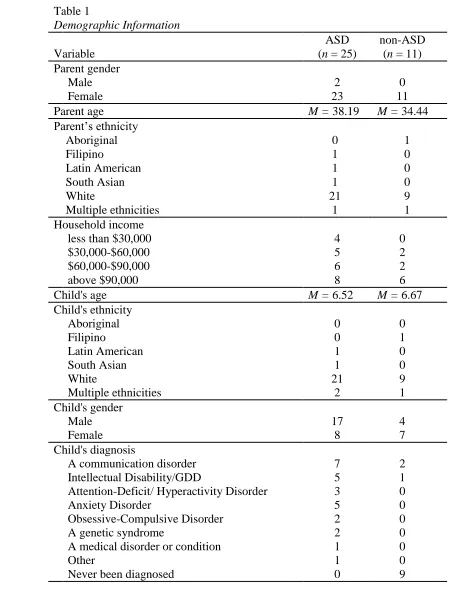
Table 1:Demographic Information………..43
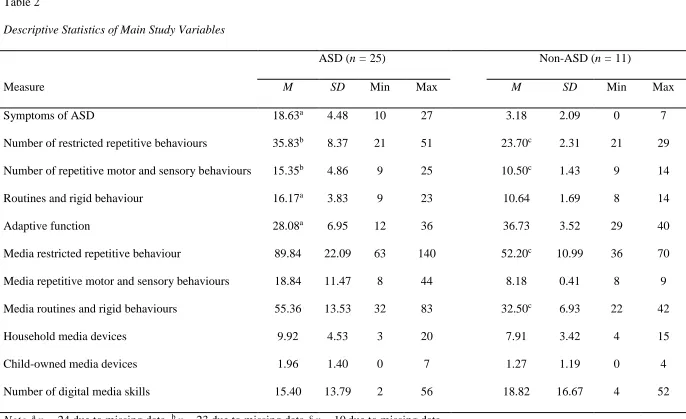
Table 2: Descriptive Statistics of Main Study Variables………...62
Table 3: Combined Pearson and Spearman Correlation Table of Primary and Auxiliary Variables
for the non-ASD Group………64
Table 4: Combined Pearson and Spearman Correlation Table of Primary and Auxiliary Variables
for the ASD Group………...65
Table 5: Welch's F-Test Statistics for Group Differences in Media-Related Distress…………...100
xi
LIST OF FIGURES
Table 1:Non-ASD Group Static Visual Media Content………..90
Table 2: Non-ASD Group TV and Movie Content………...91
Table 3: Non-ASD Group Video Content………92
Table 4: ASD Group Static Visual Media Content………...93
Table 5: ASD Group TV and Movie Content ………...94
Table 6:ASD Group Video Content………95
Table 7: Non-ASD Group Audio Media Content………....96
xii
LIST OF APPENDICES
Appendix A:Demographics Questionnaire………155
1 CHAPTER 1
INTRODUCTION
People in today’s society have unprecedented access to software, devices, and
the Internet. These technologies are in a state of near constant evolution and
advancement, and as this progress continues, these technologies become further
interwoven into the daily lives of people. Within the overall growth in access to and use
of media technologies, children and adolescents are groups that appear to have adopted
these technologies rapidly. To date, relatively little information exists about the
characteristics of media use at a national level for Canadian children; however, there
have been several large-scale surveys of children and adolescents from the United
States that can be used to illustrate this phenomenon. In one series of media use surveys
conducted by the Kaiser Foundation on youth, ages 8 to 18, it was found that their
media use has been steadily increasing across all platforms, with the exception of
movies and print, since 1999 (Roberts, Foehr, & Rideout, 2005; Rideout, Foehr, &
Roberts, 2010).
As media prevalence, access, and use has been increasing, so has the research
into the influence of media on human cognition and behaviour. To date, there has been
a proliferation of psychological research across various groups that has primarily
focused on potentially concerning connections between media use and variables such as
negative body image (e.g., Holland & Tiggemann, 2016), aggression (e.g., Slater, 2003;
Slater, Henry, Swaim, & Anderson, 2003), low mood (e.g., Dillman Carpentier et al.,
2008; Lin et al., 2016) and poor sleep (e.g., Cain & Gradisar, 2010; Garrison, Liekweg,
& Christakis, 2011). Indeed, the prominence of media in society has captured the
2
represent a form of psychopathology that may have a deleterious impact on individuals.
In fact, media as a distinct form of psychopathology was first suggested with the
development of Internet Addiction Disorder (IAD), defined as difficulties controlling
media use and behaviours associated with said use that cause impairment in an
individual’s daily life (Griffiths, 1999, 2000; Kuss, Griffiths, Karila, & Billieux, 2014;
Widyanto & Griffiths, 2006; Young, 1998, 2004). Since the proposal of IAD, other
similar disorders have been proposed and researched. Perhaps most notable are
disorders that focus on impairment attributed to playing video games. These are Internet
Gaming Disorder, which was included in the “Conditions for Further Research” section
of the most recent edition of the DSM (i.e., DSM-5: APA, 2013) and Gaming Disorder,
which was recently included in the DSM’s European counterpart, the Eleventh Revision
of the International Classification of Diseases (ICD-11: World Health Organization,
2018). The advancement of technology and its adoption by society shows no signs of
slowing. As such, the integration between the study of psychopathology and media must
continue, given the evolution of human-technology interactions that carry subsequent
implications for mental health.
The inclusion of technology-based mental health disorders is a relatively new
chapter for diagnostic science and, as such, there are many areas of the
human-technology interaction that still need to be investigated to provide data on the form and
function of these technology-based psychopathologies across clinical groups.
Individuals diagnosed with Autism Spectrum Disorder (ASD), a neurodevelopmental
disorder characterized by patterns of social and behavioural impairments, are one group
3
This perception is expressed in the rationales of many of the studies that have been
conducted on media use by individuals diagnosed with ASD. For instance, one study
reported their investigation was prompted by “anecdotal and clinical reports” suggesting
problematic media use by young people diagnosed with ASD (Mazurek, Shattuck,
Wagner, & Cooper, 2012 p.1757). However, there are competing perspectives relating
to the exact nature of the “problematic” media use by these individuals. On one hand,
certain researchers have investigated media use as a potential behavioural addiction
(e.g., Mazurek & Wenstrup, 2013). Indeed, a recent study from Japan indicated
clinicians involved in the research found evidence of cases matching proposed
diagnostic criteria for and preliminarily applied a comorbid diagnosis of “Internet
Addiction” to adolescents with ASD (So, Makino, Fujiwara, Hirota, Ohcho, & Ikeda,
2017). In contrast, there appears to be some consideration of media use as a restricted
repetitive behaviour and, thus, a symptom of ASD (e.g., Bodfish et al., 2000;
Chassiakos, Radesky, Christakis, Moreno, & Cross, 2016). This view is demonstrated in
the inclusion of ways of using media into questionnaires assessing specific symptoms
related to ASD. For example, the item “Likes the same CD, tape, record or piece of
music played continually; Likes same movie / video or part of movie / video” is
included in the questions assessing a variety of restricted repetitive behaviours
associated with ASD in the Restricted Behavior Scale-Revised (RBS-R; Bodfish et al.,
2000). There is little research evidence to provide clear support for one formulation
over another. In fact, no research currently exists on the relation among various aspects
of media use and specific ASD symptom presentations such as restrictive repetitive
4
Japanese study, as there is no way to state with any certainty whether the media use
seen in those diagnosed with ASD is a distinct psychopathology as in IAD or if it is
actually a symptom of ASD. The first step to addressing this major gap in the diagnostic
understanding is to research the potential relation of media use and ASD symptoms,
such as restricted repetitive behaviours, to determine if the media use patterns exhibited
by individuals diagnosed with ASD are actually unique reflections of this
neurodevelopmental disorder rather than the additional presence of a distinct
psychopathology (i.e., behavioural addiction). Thus, the goal of the present study is to
examine the relations among ASD symptoms and media use patterns of youth and to
further assess the extent to which certain symptoms of ASD may transfer to ways of
5 CHAPTER 2 LITERATURE REVIEW Autism Spectrum Disorder
Autism Spectrum Disorder (ASD) is a relatively new conceptualization of
Autism, a neurodevelopmental disorder first described by Leo Kanner (1943) and Hans
Asperger (1944, as cited in Wolff, 2004) in the 1940s, which is characterized by
difficulties with various aspects of social communication and restricted repetitive
behaviours. For example, an individual with ASD may have difficulty holding coherent
conversations with others (social communication difficulties) and demonstrate an
intense interest in a very particular subject (restricted repetitive behaviours). In North
America, the estimated rates of ASD in the United States have gone from 1 in every 110
children (Center for Disease Control [CDC], 2009) to 1 in every 66 (CDC, 2014). This
increasing trend has also been reflected in Canada (Ouellette-Kuntz et al., 2014), with
the most current national epidemiological report indicated the prevalence of ASD is
very similar to the US: roughly 1 in 66 children aged 5 to 17 (Government of Canada,
2018). In the past, Autism and other closely related neurodevelopmental disorders such
as Asperger’s Disorder, Autistic Disorder, and Pervasive Developmental Disorder Not
Otherwise Specified were considered distinct categories even though they shared
similar symptoms (American Psychiatric Association [APA], 2013; Volkmar &
McPartland, 2014; Volkmar, Reichow, & McPartland, 2012). In recent years, this
categorical approach has been challenged due to research indicating the lack of
distinction between these diagnostic groups. Based on these research findings, the
validity of having these four diagnoses was called into question. In response, these
separate neurodevelopmental disorders were collapsed into a singular spectrum format
6
(DSM-5: APA, 2013). In the present study, the ASD nomenclature will be used for the
remainder of the document, unless referring broadly to the pre-DSM-5
conceptualization of Autism.
Symptoms.An overview of ASD symptoms is necessary to provide context for
an attempt to determine the nature of the media use exhibited by youth diagnosed with
ASD. In the current DSM-5 conceptualization of ASD, there are two main symptom
constellations: (1) impairments in social and social communicative functions and (2) the
presence of restricted repetitive behaviours and interests (APA, 2013). The social and
social communicative functions that the DSM-5 attributes to ASD are deficits in
social-emotional reciprocity between the individual and others, typical nonverbal
communicative behaviors during social interactions (e.g., eye-contact), and developing,
maintaining, and understanding human relationships (APA, 2013). These symptoms are
often the focus of research relating to ASD, as these impairments are often associated
with the essence of the disorder. These deficits in social interaction and communication
present barriers to the social development of individuals diagnosed with ASD,
especially in relation to initiating and maintaining significant relationships such as
friendships (see Petrina, Carter, & Stevenson, 2014, for a review). For instance,
research has indicated that individuals diagnosed with ASD had smaller numbers of
friends, maintained these friendships for shorter periods of time, and spent less time
interacting with these friends than their typically developing peers (Petrina et al., 2014).
Furthermore, the more severe the symptoms, the more intractable the developmental
outcome tends to be for these individuals (Szatmari et al., 2015). In cases of individuals
7
tend to be placed in special education classrooms (White, Scahill, Klin, Koenig, &
Volkmar, 2006), live at home for longer (Howlin, 2005), and have difficulty finding
employment (e.g., Howlin, 2004; Taylor & Seltzer, 2010). The social and
communicative symptoms are important components in both the identification and
understanding of ASD; however, the current study will focus more on the second major
symptom constellation, composed of restricted repetitive behaviours, to investigate
media use.
Restricted repetitive behaviours. Restricted Repetitive Behaviours (RRBs) are
the second symptom set of ASD (APA, 2013). The DSM-5 identifies RRBs as
behaviours such as stereotyped speech and motor activity, insistence on sameness,
highly fixated restricted interests, and either hyper- or hypo-sensitivity to sensory
stimulation (APA, 2013). Studies show that RRBs are separate and distinct from social
communication symptoms (Frazier et al., 2012; Georgiades et al., 2007; Mandy,
Charman, & Skuse, 2012). Research on RRB symptoms in populations of children and
youth diagnosed with ASD suggest there are common themes among the RRBs. These
studies indicate there is a two-factor structure consisting of repetitive sensory motor
behaviours (RSMB) and insistence on sameness (IS; Bishop et al., 2013; Harrop et al.,
2014; Lidstone et al., 2014; Richler Bishop, Kleinke, & Lord, 2007; Richler, Huerta,
Bishop, & Lord, 2010). The RSMBs are composed of behaviours such as repetitive
hand and finger movements, repetitive use of objects, and atypical sensory-seeking
behaviours and are considered to be lower-order RRBs, as these are often associated
with lower functioning in the individual (Leekam, Prior, & Uljarevic, 2011; Turner,
8
such as restricted rituals and routines, intolerance towards change, and fixated interests,
which has led these to be considered higher-order RRBs. The IS factor is relatively
unique, as past research has shown it to be independent of other factors shown to
influence RRBs (Hus, Pickles, Cook, Risi, & Lord, 2007). Although many studies have
found this two-factor structure, there have been other studies based on the psychometric
examination of various established measures of RRBs that yield more factors with finer
descriptive differences (e.g., 6 factors: Bodfish et al., 2000; 5 factors: Lam & Aman,
2007; 4 factors: Leekam et al., 2007; 3 factors: Lam, Bodfish, & Piven, 2008). As the
2-factor model of RRBs has the most consistent empirical support, this model will be used
in the current study.
The presentation of RRBs in individuals diagnosed with ASD is complex, and
there are several factors that need to be considered when measuring them in research.
One main complication in the research of RRBs is that manifestation of RRBs in ASD
diagnostic cases are heterogeneous and not as well understood as the social and
communication symptom sets (Turner, 1999). In addition, RRBs are present across a
variety of different mental health diagnostic categories such as intellectual disability,
anxiety, and obsessive-compulsive disorder, as well as in typically-developing (TD)
children (Bodfish et al., 2000; Harrop et al., 2014; Leekam et al., 2011; Turner, 1999).
However, there are aspects of the RRB manifestation in ASD that indicate it is a
distinctive feature in this population. The main characteristics that seem to differentiate
ASD from the other groups are age at the time of assessment, frequency, and severity of
the RRBs. For age, TD children exhibit RRBs when in early childhood, but show a
9
diagnosed with ASD continue to present largely unabated through later childhood and
adolescence (e.g., Evans et al., 1997; Richler et al., 2010; Soke et al., 2011). There is
also an abundance of research to indicate that children and youth diagnosed with ASD
exhibit more RRB symptoms and higher degrees of severity compared to both TD and
other neurodevelopmental diagnostic groups (e.g., Bodfish et al., 2000).
Within the ASD diagnostic group, there are also studies that show differential
patterns of RRB presentation depending on age, gender, cognitive function, and
comorbid diagnoses. Younger ages, as well as lower cognitive function (typically
operationalized as IQ), have been linked to the presence of more RSMBs, whereas older
children with higher cognitive function tend exhibit Insistence on Sameness types of
symptoms (Turner, 1999; Leekam et al., 2011). In addition, the frequency and severity
of RRBs in girls are typically found to be lower than in boys (e.g., Hartley & Sikora,
2009; Frazier, Georgiades, Bishop, & Hardan, 2014; Szatmari et al., 2012). Therefore,
these variables should be included to provide contextual information when investigating
RRBs in children and youth diagnosed with ASD.
Media as restricted repetitive behaviour. There is a perception in the research
and among professionals that certain media use by individuals diagnosed with ASD
may be a reflection of RRB symptomology. Despite the lack of research directly linking
RRBs and media use activities, there are various examples of how they have been
construed as such. There are media use questions in RRB measures such as the RBS-R
(Bodfish et al., 2000), Repetive Behaviour Questionnaire (Turner, 1995), and Repetitive
Behaviour Questionnaire-2 (Leekam et al., 2007). In addition, members of Council of
10
have endorsed the idea that youth diagnosed with ASD engaging in certain types of
media use may be a reflection of symptoms relating to restricted interests (Chassiakos et
al., 2016). Although these are examples of the perception of media use as representative
of RRBs, the evidence supporting this perception is less clear. The rationale for
including items relating to media use in RRB questionnaires was not articulated in the
published studies describing the questionnaires’ creation. Furthermore, the AAP’s
endorsement was based on two studies (Mazurek et al., 2012; Mazurek & Wenstrup,
2013), which they claimed used media use as representing restricted interests. However,
one study actually conceptualized media as a behavioural addiction rather than an RRB
(Mazurek & Wenstrup, 2013) and the other, although proposing that media use may be
an RRB in their discussion, did not actually include specific ASD symptomology (either
social communication or RRBs) in their investigation (Mazurek et al., 2012). Thus, the
justification used by the AAP does not have an accurate basis. The unclear and,
potentially misinformed, acceptance of various media use activities as RRBs represents
a major gap in the current academic and clinical understanding of ASD. Therefore, the
current study will directly investigate the potential connection between the patterns of
media use activities and specific RRB symptoms.
Autism Spectrum Disorder and Media
Media is defined as “a channel or system of communication, information, or
entertainment” (Merriam-Webster, 2018) and is often considered in terms of mass
media, which specifies that media can be broadcasted to many people through a variety
of platforms (Merriam-Webster, 2018). Of the many forms of media, some common
11
refer to activities involving some form of media that encompass both active (e.g.,
playing video games, creating websites) and passive activities (e.g., watching TV,
listening to music). It is often operationalized in the research literature as the general
amount of time engaged in the various forms of media use (e.g., Hasebrink & Popp,
2006); however, this quantification neglects the many ways individuals use, access, and
interact with media. In order to provide a comprehensive account of the media use of
North American children and youth diagnosed with ASD, the following sections will
provide a review of the research on time spent using media, behaviours associated with
media use, and interactions with media.
Group comparisons of media variables. There are mixed reports regarding the
amount of screen time that is reported in populations of North American children and
youth diagnosed with ASD. The majority of published studies indicate that children and
youth diagnosed with ASD spend more time engaged in various forms of media use
than their typically developing peers (MacMullin, Lunsky, & Weiss, 2016; Mazurek &
Engelhardt, 2013a; Mazurek & Wenstrup, 2013; Must et al., 2014) and other children
and youth diagnosed with neurodevelopmental disorders (Mazurek et al, 2012). For
example, in Must and colleagues’ (2014) study, an American sample of parents of 3- to
11- year-old children that were either diagnosed with ASD (n = 53) or who were
typically developing (n = 58) was used to study sedentary behaviour and its relation to
weight. Among their findings, significant differences were found for the amount of
screen time (i.e., the amount of time spent on a media device with a screen). Namely,
children diagnosed with ASD were reported to engage in more screen time than the
12
In contrast, there are several studies that have indicated that children and youth
diagnosed with ASD do not exhibit significantly higher amounts of screen time
compared other groups of children and youth (Corvey, Menear, Preskitt, Goldfarb, &
Menachemi, 2016; McCoy, Jakicic, & Gibbs, 2016; McManus, Mandic, Carle, &
Roberts, 2012; Montes, 2016). For example, Montes’ (2016) research compared a large
nationally representative American sample of parents of children diagnosed with ASD
(n = 1393) and parents of children with no ASD diagnosis (n = 64,163) on their
children’s reported screen time. No statistical differences were found between the two
groups in relation to the number of hours of screen time they engaged in on a typical
day.
The primary difference between these two sets of research is that the studies
yielding significant differences between TD and ASD diagnostic groups consisted of
smaller sample sizes, and the studies finding no significant differences were comprised
of large, nationally representative samples. The one exception was the study conducted
by Mazurek and colleagues (2012) which utilized a large subsample from the National
Longitudinal Transitions Study, which found that children diagnosed with ASD were
reported to engage in significantly more media time than TD peers and peers diagnosed
with other neurodevelopmental disorders. The significance of this apparent disparity in
sample size is that small samples are more likely to either not include an adequate array
of or include skewed concentrations of characteristics which can mean significant
differences may be attributable to the sample collected but not the population (Schmidt
& Brown, 2009). Regardless of the mixed findings, the prevailing perception appears to
13
are at higher risks for addictive/overuse of these technologies (e.g., Montes, 2016;
MacMullin et al., 2016; Sidhu, 2016). Indeed, several studies on individuals diagnosed
with ASD have provided information to indicate deleterious relations among media use
and aspects of psychological and physical health. These will be described in detail in
the following section.
Media Psychopathology
Media-based behavioural addiction. One area of specific media
psychopathology research has been on compulsive or addictive videogame and Internet
use. The bulk of these findings indicate that children and youth diagnosed with ASD
tend to show more compulsive or addictive behaviours in their use and/or play through
these platforms. For example, MacMullin and colleagues (2016) conducted
cross-sectional research of 139 parents of children diagnosed with ASD and 172 parents of
typically developing children in Canada assessing various types of media use patterns
including “problematic” use of media. They employed a measure of Internet Addiction
based on the operational definition of behaviour addiction developed by Griffiths
(2000). In this case, addictive use was characterised by items attributed to behavioural
addictions, which included media use withdrawal, tolerance of media use, losing control
of media use, preoccupation with media, conflict with others (most likely parents in
youth samples) regarding media use, using media as a coping tool, and lying about the
use of media. Their results indicated that individuals diagnosed with ASD endorsed
more symptoms of addictive Internet use than the typically developing sample. In
addition, multiple studies conducted by the Mazurek and Engelhardt research group
14
reports for children and youth diagnosed with ASD and TD individuals. Namely,
parents in the ASD group reported significantly more elements of addictive video game
play for their child than did parents of TD children (Mazurek & Engelhardt, 2013a;
Mazurek & Wenstrup, 2013).
Unfortunately, many of these studies have not provided data on the types of
symptoms endorsed for either ASD or behavioural addiction in order to determine what
symptom presentations may be more prevalent than others. In this sense, the factors that
are driving the higher addiction scores on the measures used in these studies are largely
unknown. Only one study reported associations among specific addictive symptoms and
diagnostic group. Mazurek and Wenstrup (2013) conducted a cross-sectional research
study in the United States using parents of children and youth diagnosed with ASD and
parents of TD children. They measured and compared addictive videogame play in their
sample. In order to measure addictive video game play in children, they had to modify
an existing measure known as the Problematic Video Game Playing Test (PVGT: King,
Delfabbro, & Zajac, 2011) into a parent report format prior to their data collection. The
modified 19-item PVGT, similar to other measures of behavioural addiction, was based
on Griffith’s (2005) conceptualization in which symptom domains of activity salience,
preoccupation, tolerance, withdrawal, relapse, and conflict were included. Their general
findings corresponded to the common pattern (i.e., higher reported addictive symptoms
in the ASD versus TD diagnostic group) demonstrated in previous literature.
In addition, group comparisons between ASD and TD diagnostic groups showed
significant differences in the average frequency of the reported problematic behaviours
15
endorse higher instances of items such as “think about video games even when not
playing them” and “has a hard time stopping him/herself from playing video games”
than the parents of TD boys. In this case, parents of boys in the ASD diagnostic group
reported significantly higher scores on 11 out of the 19 addictive symptoms compared
to the parents of boys in the TD group meaning that these items were considered to
represent greater extents of the problem behaviours. The pattern of differences was
slightly less extensive for girls in the ASD and TD groups. Indeed, 9 out of 19
symptoms were significantly different when the two groups were compared.
Furthermore, there were different patterns of problem behaviour endorsements for the
girls compared to boys diagnosed with ASD. For instance, being upset at not being able
to play video games was reported to be more problematic for boys, but not for girls,
when compared to their respective TD counterparts. These gender differences in the
extent of problematic behaviours related to addiction should be accounted for in studies.
Notably, certain symptoms of behavioural addiction reported by Mazurek and
Wenstrup (2013) such as “loss of sleep,” “child feels upset when they are not able to
play video games,” and “yells or gets angry if they are interrupted when playing
videogames”are very similar to behaviours that have been reported in other studies that
do not employ a behavioural addiction framework regarding media use and behaviour in
children with ASD (e.g., Dixon, Verenikina, Costley, & Pryor, 2015; Engelhardt,
Mazurek, & Sohl, 2013; Nally, Houlton, & Ralph., 2000). As such, these behaviours
may be hallmarks of the way youth diagnosed with ASD use media, but they could be
equally attributable to factors other than behavioural addiction. Further investigation is
16
psychopathologies or if they may be common externalizing components. In addition,
the use of the PVGT as a parental report measure has not been psychometrically
validated outside of the brief pilot study conducted by Mazurek and Wenstrup (2013)
during the course of conducting their primary study. Therefore, using this measure may
have produced misleading data, as there are a variety of items asking the parent to rate
their child’s internal cognitive and affective states. These types of ratings have been
shown to be relatively inaccurate relating to youths’ actual internalizing symptoms (e.g.,
Achenbach, 2014; Achenbach, McConaughy, & Howell, 1987; Cantell, Lewinsohn,
Rohde, & Seeley, 1997; Salbach-Andrae, Klinkowski, Lenz, & Lehmkuhl, 2009).
Further studies need to investigate the use of PVGT as a parent-report measure and,
perhaps, operationalize addictive media use as an external behaviour to better assess
this particular behavioural addiction.
Media-based ASD symptoms. The burgeoning research into addictive
behaviours and media use suggests that there is indeed a connection between the two in
youth diagnosed with ASD. However, the research has neglected to determine if the
behavioural presentation is truly addictive or if it is due to the neurodevelopmental
mechanisms in ASD that drive repetitive behaviours and interests. In order to
accomplish this distinction, research examining the relation between symptoms of ASD
and media use need to be conducted. To date, few studies have examined the
associations between media use and ASD symptom presentation, as well as the potential
connection between specific RRB symptoms experienced by individuals diagnosed with
17
The extant research on the association among aspects of media use and ASD
symptoms has demonstrated mixed findings. One research study has suggested the
number of ASD symptoms reported is not connected to time spent engaged in media use
in clinical samples (Mazurek & Engelhardt, 2013a); however, the meaning of the lack
of significance is unclear, as the metric used is often an aggregated symptom score.
Another study found an association between the number of ASD symptoms endorsed
and the preference for News content (Kuo et al., 2014). Furthermore, MacMullin and
colleagues (2016) found that higher numbers of reported ASD symptoms were
associated with less knowledge of how to engage in different media use activities. For
now, it seems these studies suggest there is some connection between ASD symptoms
and media use, but the nature of this association may not be reflected well by an
aggregate metric such as total time spent engaged in media use. In addition, combining
social communication and RRBs into an aggregate measure may also obscure potential
significant findings relevant to media use in youth diagnosed with ASD as the
characteristics of these symptoms are fundamentally different (e.g., Frazier et al., 2012;
Georgiades et al., 2007; Mandy, Charman, & Skuse, 2012).
Further research has begun to provide examples of certain aspects of media use
that could be conceptualized as RRB symptoms. To illustrate, Shane and Albert (2008)
found a proportion of children diagnosed with ASD in their sample engaged in
repetitive viewing of videos and/or video segments, and there were relatively frequent
reports of children becoming fixated with certain content from media. Children’s
repetitive viewing of TV was also reported by parents in Nally and colleagues (2000) in
18
hours on end, he’d be rewinding to the same particular part . . . and he’d be giggling
away and he’d still be laughing an hour later at the same part” (Nally et al., 2000, p.
334). The repetitive viewing of audiovisual content reported in the research conducted
by Shane and Albert (2008) and Nally and colleagues (2000) can be interpreted as an
RRB that has manifested in media use activities.
Furthermore, several studies have reported distress exhibited by children
diagnosed with ASD when their media use activities are interrupted (Dixon et al., 2015;
Nally et al., 2000; Shane & Albert, 2008). To illustrate, “Parent 5: I have actually turned
the telly off and put my music on . . . Matthew comes down screaming and he’s in the
room to try to turn the music off and the telly’s gone back on” (Nally et al., 2000, p.
332), was one of several parent comments on the subject of their child’s experience of
distress related to media interruption. In populations of youth diagnosed with ASD,
distress is commonly reported for interruptions of a variety of activities, especially
when the activity is related to a highly fixated interest of the child or youth (Sevin,
Rieske, & Matson, 2015). Therefore, the distress purportedly experienced in relation to
media use interruption may be of a similar nature to the distress reported for
interruptions relating to highly fixated interests. In which case, the tantrum behaviour
upon media activity interruption is theorized to occur due to RRBs that are related to
insistence on sameness.
Other studies have examined psychopathology that is closely related to ASD,
such as language impairment and comorbid intellectual disability. These studies found
that language impairment related to aspects of media use. For example, in a sample of
19
greater likelihood of watching TV, compared to those with more severe verbal deficits
(Orsmond & Kuo, 2011). Similarly, adolescents diagnosed with ASD that had no
conversational ability exhibited a greater likelihood for using non-social media and
were less likely to use media platforms that required greater language ability such as
email and online chat sites (Mazurek et al., 2012). Therefore, language abilities may
determine these children and youths’ preference for and, potentially, their ability to
participation in various types of media activities. In addition, children diagnosed with
ASD and comorbid intellectual disability were found to be less likely to use a computer
than children without comorbid intellectual disability (Orsmond & Kuo, 2011). In
contrast, higher cognitive function was related to greater likelihood of Internet browsing
on the computer and video game play (Mazurek et al., 2012). Much like language
impairment, cognitive development may also influence preference for and ability to
participate in media activities.
Patterns of Media Activity
The patterns of media use among children and youth diagnosed with ASD have
not been investigated extensively; however, there have been a few studies to date that
have begun to describe the patterns of media use exhibited by these groups. In the
earliest study examining media use patterns in this population, Shane and Albert (2008)
found their American sample of 90 parents of youth under the age of 18 diagnosed with
ASD were reported to largely prefer media use activities, such as watching TV and
using the computer, compared to more traditional activities, such as playing outdoor or
reading. The higher relative frequency of media activities compared to other activities
20
with ASD (Kuo, Orsmond, Cohn, & Coster, 2011; Kuo et al., 2014; Mazurek et al.,
2012; Orsmond & Kuo; 2011). For example, the findings of another study by Orsmond
and Kuo (2011) on American adolescents diagnosed with ASD demonstrated that these
adolescents spent the majority of their days engaged in activities of their own choosing,
and the most popular of these activities were related to media. The top two most
frequently reported discretionary activities were TV and computer use. The frequency
of these discretionary activities were different on the weekends compared to the
weekdays. Specifically, TV, computer use, shopping, reading, and visiting friends and
relatives were more likely to occur on the weekends. Indeed, the overarching pattern
appeared to be that children and youth diagnosed with ASD devoted a greater
percentage of their overall time to media use activities. However, this is a fairly
common pattern of activity exhibited by children and youth across the board (e.g.,
Montes, 2016; Rideout et al., 2010). Thus, it is difficult to say if this is a pattern unique
to children and youth diagnosed with ASD.
Perhaps other patterns may be distinctive when examining youth diagnosed with
ASD. In addition to greater relative time spent engaged in media use activities,
compared to other types of activities, there appears to be patterns of preference for
different levels of social interaction relating to their media use. For example, Mazurek
and colleagues (2012) found that when compared to children and youth diagnosed with
other neurodevelopmental disorders (e.g., learning disabilities, intellectual disability),
children and youth diagnosed with ASD preferred participating in more non-social
types of media use such as watching TV and playing videogames, rather than engaging
21
rooms. This non-social trend was supported by the findings of Kuo and associates
(2014): non-social TV viewing, videogame play, and computer use were frequently
reported. However, their study suggested there remains instances of social media use
such as co-viewing of TV and peer-to-peer video game play, although scenarios were
endorsed at a much lower rate. In another study conducted by Kuo and associates
(2011), they found that videogame play and TV viewing were reported as the top social
activities chosen by youth diagnosed with ASD and their peers. Although social play
related to media has been evidenced in both ASD and TD diagnostic groups, the
primary difference appears to be the frequency with which youth engage in these
activities. That is, youth with ASD may still engage in social use of media with their
peers, but they may do so less frequently than a TD youth would.
Children and youth diagnosed with ASD also appear to gravitate towards certain
types of media content. Cartoons and animated content have been reported as the most
popular type of TV content in two studies (Kuo et al., 2014; Shane & Albert, 2008).
This preference for animated/cartoon content was also shown to extend to other media
platforms such as movies, educational software, and websites (Shane & Albert, 2008).
In addition to TV content, videogame content has also been examined in this
population. Kuo and colleagues (2014) found that action games accounted for almost
half of types of videogames played, followed by simulation and role-playing games.
Kuo and colleagues (2014) also reported that a majority of the websites accessed by
these adolescents were those accessed for research or information gathering purposes.
However, the content of these websites used for research frequently pertained to both
22
patterns of preferred media content that children and youth diagnosed with ASD access
across different platforms. However, the underlying reasons behind these preferences
were unclear and no further research has explored mechanisms related to content
preferences for youth diagnosed with ASD. Attempting to discern patterns of content
preference as it relates to certain symptoms of ASD may enable researchers to identify
their underpinnings.
Media Use Correlates
Sleep. There are several psychological and physiological factors that, although
not directly occurring during the media use, have been found to be related to media use
in samples of children and youth diagnosed with ASD. The first major correlate is
sleep; studies show time spent playing videogames and in-room access to media
(Engelhardt et al., 2013), as well as exposure to violent media content before bed and
media use during bedtime routines (Mazurek, Engelhardt, Hilgard, & Sohl, 2016), were
related to decreased hours spent sleeping. In addition, bedtime media use and exposure
to violent media content were associated with greater delays in sleep onset (Mazurek et
al., 2016).
Externalizing behaviours. Another variable that has been shown to be
connected to media use is externalizing behaviours. To date, two studies have
investigated these behaviours as part of their main analyses (Engelhardt & Mazurek,
2014; Kuo et al., 2015). In-room access to video game consoles by boys was found to
be related to higher amounts of oppositional behaviours (Engelhardt & Mazurek, 2014).
In addition, parental mediation strategies of media were related to the prevalence of
23
regarding media use was related to higher amounts of oppositional behaviours exhibited
by adolescents (Engelhardt & Mazurek, 2014). On the opposite end of the spectrum,
another study found that higher amounts of oppositional behaviours by boys were
related to greater reported use of restrictive rule setting for TV and videogame use by
parents (Kuo et al., 2015). The findings of these two studies relate to two extremes for
parental mediation: restrictiveness and permissiveness. Overall patterns of parental
indulgence, which would include lax or no rule setting, have been linked to greater
instances of problem behaviour in children (Lamborn, Mounts, Steinberg, &
Dornbusch, 1991), but research suggests the same is not true for overall parental
restrictiveness (for a review, see Rothbaum & Weisz, 1994). The potential incongruent
findings relating to restrictiveness in the case of media use may be related to the nature
of the antecedent behaviour (i.e., restrictive and inflexible), which could be leading to
more conflict interactions in the course of media restriction if the media activity is
indeed a form of RRB.
Parental mediation. Parental mediation, on its own, is another variable of
interest as it has consistently been found to be an influential factor relating to various
media use behaviours in a diverse array of child and youth populations (e.g., Nikken &
Jansz, 2006, 2014; Livingstone & Helsper, 2008). Parent mediation refers to parental
management behaviours that are intended to regulate their children’s use of media in
order to ensure the child is having positive experiences with media content and avoiding
perceived negative or harmful media content (e.g., Livingstone & Helsper, 2008).
Research has found three distinct types of parental mediation style (Nathanson, 1998 as
24
Marseille, 1999). Restrictive mediation style refers to patterns of rule-setting behaviours
intended to decrease time the child spends engaged with media and the imposition of
limits regarding the types of content the child can access. Active mediation (sometimes
referred to as instructional or evaluative mediation) style is characterized by
parent-child communication relating to media content for the purposes of contextualizing
portrayals of certain behaviours, facilitating the child’s understanding of the content,
and/or expressing their perceptions of the content. Finally, the Co-viewing/Co-playing
mediation style is characterized by the parent and child accessing the media content
together without discussions related to the content during the shared media experience.
Research has shown that parent mediation styles can moderate the associations
among various types of media content and negatively valenced psychological variables
(e.g., aggression). A comprehensive meta-analysis of parental mediation styles and
media access outcome for children provided several major findings that can be
characterized as examples of parental mediation style as a moderator variable (Collier et
al., 2016). For instance, the meta-analysis found that the commonly found positive
association between sexualized media content and subsequent sexual behaviours in
adolescent samples was different when including parental restrictive mediation as a
primary variable. Namely, the aggregated study data indicated that restrictive mediation
predicted later onset and less sexualized behaviour, which represents a decrease in the
positive association reported in other studies not accounting for parental mediation style
(e.g., Braun-Courville & Rojas, 2009). In addition, the aggregated studies demonstrated
a negative association between active mediation and aggression. This finding runs
25
and media use that do not account for parent mediation style (e.g., for a review, see
Anderson & Bushman, 2001; Bushman, Gollwitzer, & Cruz, 2015). These findings
demonstrate that parental mediation can influence the degree of association between
media and psychological variables. Several moderator mechanisms are discussed by
Collier and colleagues (2016): (a) The restriction of time spent accessing media content
as in restrictive mediation; (b) making and changing the meaning of media content to
change the child’s perception/interpretation of the content as in active mediation; and
(c) the subtle signalling of acceptable behaviour through a parent’s non-reaction to
potentially negative content as in co-viewing/co-play. Due to the potential for parental
mediation style to impact the associations between even the most well established links
(e.g., aggression and aggressive media) found in research, these styles need to be
considered in the proposed study.
In sum, sleep, externalizing behaviour, and parental mediation of media
activities have been shown to be related to media use activities in populations of youth
diagnosed with ASD. Sleep was found to be negatively impacted by media use before
bed, exposure to violent media content before bed, and bedroom media access. Greater
reported instances of externalizing behaviours were also related to in-room access of
video games (Engelhart & Mazurek, 2014). In addition, parental mediation relating to
either restrictive or permissive limit setting for the youths’ media use was associated
with greater oppositional behaviours (Engelhart & Mazurek, 2014; Kuo et al., 2015).
Finally, because parental mediation has shown to moderate potential media
relationships, it will need to be accounted for in the proposed study.
26
Media-related theory. To date, the research relating to media use activities in
samples of youth diagnosed with ASD have been descriptive and/or atheoretical (e.g.,
Mazurek & Wenstrup; Kuo et al., 2014; Shane & Albert, 2008). The lack of a
theoretically driven approach makes it difficult to make predictions about and interpret
the findings generated from research studies (Kazdin, 2017). Although the current study
has exploratory elements, it will still be useful to adopt a more focused approach
provided by theoretical guidance.
There are many different media theories that attempt to explain or describe the
selective media practices of the individual or audience. One of the most popular media
theories in the scientific literature is the Uses and Gratification Theory (UGT: Katz,
Blumler & Gurevitch, 1973). The UGT approach has been widely applied to the study
of media in the field of psychology (e.g., Gudelunas, 2012; Raacke & Bonds-Raacke,
2008; Sheldon & Bryant, 2016). Essentially, this theoretical approach posits that
individuals are motivated to access media through internal needs, and that by accessing
certain media they can satisfy these needs. As their needs are satisfied through the use
of media, these users gravitate towards whatever platform or content that satisfies those
needs. To illustrate, a user that has needs relating to social validation would be more
likely to seek out media platforms that would enable them to gain social validation.
Media platforms such as social networking sites (SNS; e.g., Facebook, Instagram, etc.)
would be likely to satiate these social needs; therefore, the user would seek these out
and engage in a pattern of behaviour that would be consistent with their needs. In line
with this example, there have been many research studies that have examined a wide
27
Chen, 2011; Raacke & Bonds-Raacke, 2008). However, the main limitation of UGT is
that the typical scope of research using this approach is restricted to investigating
behaviour occurring on one media platform or one type of platform (“single-media
bias”: Hasebrink & Domeyer, 2012, p. 758; Hasebrink & Popp, 2006). The assumption
that individuals prefer one media platform to the exclusion of others is highly unlikely
given the modern media landscape, which is composed of a diverse array of media
platforms that can be used to access a variable smorgasbord of content. That is, the lines
between different media are becoming blurred as the same content can be disseminated
and accessed through different media platforms in today’s age of technological
advancement. This phenomenon is known as media convergence. A salient example of
this convergence is the ability to access TV shows online through video game consoles,
computers, smartphones, and, of course, traditional TV broadcasting. Thus, much of the
information about media use is ignored by limiting research to one platform.
UGT is not the only media theory that adopts this single-media approach.
Theories such as Self-Presentation Theory (Goffman, 1956) and Cultivation Theory
(Gerbner, 1969) also appear in research studies that largely restrict focus to one
platform at a time. For example, self-presentation theory (or impression management
theory as it is sometimes referred to) has been used extensively to investigate the array
of behaviours found on SNSs (for a review, see Boyd & Ellison, 2007), but many of
these studies have focused on a single platform, like Facebook. As an example, the
study conducted by Rosenberg and Egbert (2010) focused on impression management
tactics on Facebook, personality traits, and goal-oriented thought processes. Here the
28
management in other modalities such as texting, site/content sharing, or even the use of
other SNS platforms, as these constitute different contexts with different
communication tools available to the individual. Therefore, the data generated from
single-platform studies do not provide a holistic understanding of the individual’s
thoughts, motivations, and behaviours in relation to their wider digital world consisting
of many different technologies.
As the modern media landscape is composed of many different media sources
and access to different platforms over the course of a given day is likely, a more
generalized theoretical approach is required to satisfactorily provide a comprehensive
account of an individual’s actual media use. A recently proposed theory may provide
the necessary generality. The Media Repertoires approach (Hasebrink & Domeyer,
2012; Hasebrink & Popp, 2006) outlines both a theoretical framework consisting of
relevant social and individual factors to consider during research, as well as an approach
for analyzing data. In their theory, Hasebrink and Popp (2006) propose an analysis of
wider patterns of media use that attempt to include all of the media use activities and
platforms of the users. Furthermore, they indicate these patterns will be determined by
three major societal and individual bases; structural factors, positional variables, and
individualized constructed meaning of the media use. The structural factors refer to
societal and technological processes that determine the nature of the media landscape
for a given person. For example, the crossover between media platforms, such as
watching TV on the Internet, shapes the types of media activities and content the
individual can engage in, and this would be considered a structural variable. Positional
29
group and how this position may relate to the patterns of media use exhibited by
particular audiences. As stated by Hasebrink and Popp (2006), examples of positional
variables are age, gender, educational status as these factors relate to how the individual
is viewed by society at large, which would then determine their position within that
society. Finally, the individualized constructed meaning of media use occurs at the
individual level and manifests in how individuals perceive, respond to, and use media in
their everyday life. The Media Repertoires approach does not create a hierarchy for
these three factors and posits that research of patterns at any level is important to
understanding media use as a whole (Hasebrink & Popp, 2006).
In the current study, both the diagnostic label and the presenting symptoms of
ASD may affect how the individual interacts with and functions in society. Therefore,
the diagnosis of ASD would be a positional variable that must be considered in order to
understand how these individuals may engage with the digital world. Their youth is also
a factor that determines how the individual is positioned in society; social norms and the
extent of autonomy are different for youth than for adults in wider society. Therefore,
age is another factor to be considered in relation to media use. Finally, gender is a factor
that influences an individual’s position within society, which can be reflected in both
the way ASD and media use may be perceived and encouraged/discouraged. The
primary advantage of the Media Repertoire approach is that it provides a framework
that accounts for biases inherent to studying one platform and may result in a more
accurate account of media use, given the technological convergence phenomenon.
30
framework that is conducive to conducting exploratory studies of media use by both
audiences and individuals.
Behavioural theory. Behavioural theories have been central to research and
clinical understanding of ASD. These theories have not been able to describe a clear
etiology of behavioural symptoms such as RRBs, but they do provide an explanatory
framework regarding the maintenance of behaviours like RRBs (Turner, 1999). The
behavioural understanding of RRBs is based on operant conditioning principles.
Operant conditioning refers to Skinner’s (1963) theory that the consequences of
behaviour serve to shape and maintain it depending on how it is experienced by the
individual. Behaviours that result in some form of rewarding experience become
reinforced. In ASD, stereotypies and motor behaviours have been conceptualized as
reinforcing some form of perceptual need (Lovaas, Newsom, & Hickman, 1987). These
repetitive behaviours occur outside of the individual’s conscious thought (i.e.,
automatically) and result in reinforcement; thereby serving to maintain the behaviour
without conscious control. The research literature on these lower-order behaviours
largely maintains that this automatic reinforcement process seems to drive these actions
(e.g., Rapp & Vollmer, 2005). In contrast, the behavioural “function” of higher-order
behaviours such as rigid routines, rituals, and/or interests is not well understood. Indeed,
the research lacks a clear consensus on the reinforcement mechanisms that contribute to
their maintenance. It has been proposed that these more complex behaviours may have a
variety and/or a combination of reinforcement such as automatic (e.g., object
characteristic; Rodriguez, Thompson, Schlichenmeyer, & Stocco, 2012), negative (e.g.,
31
attention; Rodriguez, Thompson, Stocco, & Schlichenmeyer, 2013).The primary
method of determining the nature of the reinforcement obtained by certain behaviours is
functional behavioural analysis, which is an in-depth systematic observational method
of determining antecedents and consequences of behaviours. Unfortunately, functional
analysis fell outside the scope of the current study; however, the principles of operant
conditioning may be used to assist in the interpretation of results rather than measure
the potential media RRBs.
Contributions of the Current Study
The proposed study will draw from and address gaps in the empirical research
conducted to date on media use by youth diagnosed with ASD. In line with past studies,
the current study will focus on children, but the age range (i.e., 4 to 11 years of age) will
represent an extension to a sample of younger children, as their media use has not been
studied previously.
To date there have been no studies that have looked at how specific symptoms
and how symptom sets related to the distinct structure of ASD may relate to overall
media use and media use activities. A few studies have used aggregate numbers of
symptoms endorsed to investigate potential relations of ASD to media use; however,
this does not provide much information about the nature of the associations. In order
accurately investigate media use in this population, the unique symptom structures (i.e.,
Social Communication and RRB) must be separated as they account for different
aspects of behaviour and impairment. Furthermore, there are different components
within symptom structures such as RRBs that, when viewed as distinct, could reveal
32
general, and ASD in relation to media use have operated under the assumption that the
way these individuals utilize media is a reflection of RRB symptoms; however, this has
not been explicitly studied. Thus, media use behaviours that may represent potential
RRBs must be identified and the extent these behaviours relate to corresponding ASD
symptoms must be determined. The current study will address this gap by translating
traditional RRB behaviours to parallel media use behaviours and, subsequently,
exploring their prevalence and association with traditional RRB symptoms. The
identification of relevant potential media RRBs was accomplished through an extensive
literature review and consultation with both clinical professionals specializing with
ASD populations (N. Koushik, 2018, personal communication; C. Phillips, 2018,
personal communication) and a parent advisor of a child diagnosed with ASD. This
more direct line of inquiry will begin to clarify the nature of the reported behaviours
from previous studies and may serve as a basis for attempting to distinguish between
addictive and ASD psychopathology.
In addition, there are some methodological issues that represent gaps in the
extant literature. Namely, all of the studies on ASD and media to date have been
constructed without theoretical frameworks (e.g., MacMullin et al., 2016; Mazurek et
al., 2012; Orsmond & Kuo, 2011). Although descriptive empirical studies were useful
to initiate the process of observing media use phenomena in ASD populations, a
theoretical framework can expand the understanding of the phenomena under study.
Theory can be used to identify factors that may influence the presentation of the
phenomena, identify mechanisms that may explain these presentations, and connect