Android Based Student- Faculty Document
Sharing System
N.Surya1, M.Soniya2, M.Sathya3, T.Mukesh4, G.Kavitha5
UG Scholar, Department of ECE, Jayalakshmi Institute of Technology, India1, 2, 3, 4
Assistant Professor, Department of ECE, Jayalakshmi Institute of Technology, India5
ABSTRACT: There is a tremendous increase in users with anAndroid-based phone, Smartphone and tablet
computers. This application provides a generalized solution to monitor the various works that are carried out by a Department of College for managing it. “Department App provides a simple interface for maintenance of student information. This app will be praxis by students, lecturers, HOD and parents. It can be used by educational institutes or colleges to maintain the records of students. DepartmentApp deals with all kind of student details, academic related reports, department details, curriculum, batch details, placement details and other resource related details too. This proposed project will be implemented in applications such as online study material, notices, results and attendance, timetable, and all department records using Android applications. Many techniques and languages are used for implementation such as Gson, access flags, Android, MySQL. This paper aims to develop a department application for student & staff information System.
KEYWORDS: Android Technology, Administration, Smartphone’s, Database, Internet
I. INTRODUCTION
II. METHODOLOY
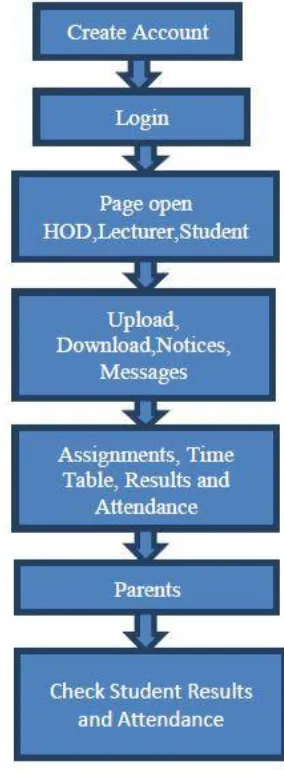
Following flow explains the methodology of proposed System:
Fig 1 Methodology
METHODS ARE USES:
1) Gson: Sending data to app to server. Gson file use to connection between the android and server for download.
2)OnClickListener: Click event for Button to jump or next Page. If user wants to jump one page to another then
they can use the OnClickListener Event.
4)Equals (object obj): Compares this method to the specific object.
5)Declaring class: Methods declaring class. It is used to show the different methods for declaring class.
6)Access flags: Using for bits encoding access. To encode the data using various bits encoding techniques.
7)Do get, do post: do get and do post method used to create a server in servlet.
III. SYSTEM DESIGNING
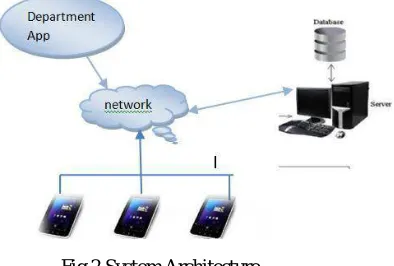
Department app using Android is an integrated System developed to assist department management groups by enabling Students, H.o.d and Lecturers to immediately send and receive any data or information. This will minimize the number of minutes as compare to using any website application.
Fig 2 System Architecture
IV. IMPLMENTATION AND RESULTS:
For implementation of the App, the Platform used is Android 4.2 and language used is Java and XML. MySQL is used at the backend. For setting environment of Android, there is a minimum requirement of JDK i.e.java must be installed on the system. JDK 8 software engineering development kit 7 is used for this purpose. Code is written by using an editor i.e. Eclipse which is an open source editor available After Eclipse (Juno, the default version) is installed, there is a need to connect Android SDK with Eclipse, and this is done by using ADT Plugin. By using ADT Plugin link, plugin developer tools can be downloaded and installed. MySQL is automatically embedded into the Android device.
A. User login module: In this module, user has to first register. User will be move to register activity after
clicking register button on Login screen. User has to fill details like Username, Email-id, Mobile number, Password and Confirm Password etc.
B. Admin module: Admin panel upload time tables, any notice related to College, Result and
Attendance.Admin has provided also authority for control on the System.
C. Lecturer Module: If the lecturer wants to upload assignments, Show Time Table to students the can easily
send this information using department app.
D. Student Module: If the user wants to download assignments, having seen any notification, they can check
easily after login successfully
V. RESULT
Fig 3 Create a cloud memory
Fig 6 Create android application. Fig 7 Android application mobile view
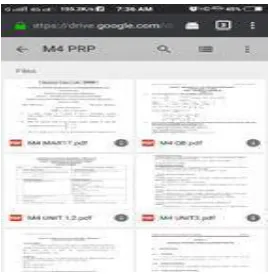
Fig 4 Upload the document in cloud memory
Fig 8 Mobile view of document Fig 9 Just click view the document
V.APPLICATIONS
This Application mostly useful Schools, Colleges, Universities and Training Institutions.
VI.ACKNOWLEDGMENT
We hereby thank the authors listed in the references for the valuable information and records statistics.
VII. CONCLUSION
"Android Based Department App Using Smartphone" is a Department system with Students feedback. This system is convenient, effective and easy thereby improving the performance of Department staff’s. It will also provide quality of service and students satisfaction. Overall conclusion is that, this is a Department app system for the department sector, made by combining the Android and Wireless technology.
In this, we compare the 3 major automaton tools in Department sector namely, the PDA based System, and Android based system. The user interface of Android based system is more attractive and informative than the PDA and Multi-touch systems. The processing speed of Android system and Multi-touch system is almost the same whereas the PDA based systems are slower than the other two systems. This system is convenient, effective and easy thereby improving the performance of Department staff. It will also provide quality of service and customer satisfaction.
REFERENCES
1. Lalit Mohan Joshi, “A Research Paper on College Management System”, International Journal of Computer Applications (0975–8887) Volume 122 – No.11, July 2015.
2. PurviSankhe, HardikPunamiya, Vatsal Prasad, Raj Shrivastav, “Android Application for College Management System”, International Journal for Scientific Research & Development| Vol. 2, Issue 02.
3. S.R. Bharamagoudar, Geeta R.B., S.G.Totad (2013 "Web Based Student Information Management System”, International Journal of Advanced Research in Computer and Communication Engineering Vol. 2, Issue 6, June 2013
4. GarimaPandey, DikshaDani Android Mobile Application Build on Eclipse" International Journal of Scientific and Research Publications, Volume 4, Issue 2, February 2014 1 ISSN 2250-3153.
5. ShiplaHamale,ThakurGaneshsingh,SyedArshadHussain “Android College Campus ”,International journal of ethics in Engineering & Management Education, ISSN: 2348-4748
6. Android.[Online].Available:http://www.android.com
8. NurulFarhanaJumaata, ZaidatunTasir, “Integrating Project Based Learning Environment into the Design and Development of MobileApps for Learning 2D-Animation” 1877-0428 2013Social and Behavioral Sciences 103(2013)
9. 526-533.
10. Christopher Dong, Xing Liu., “Development of Android application of Language studies” 2013 International conference on Electronic engineering and computer Science. 2212-6678 2013.
11. MHsuanChe Yang, Wen-YingWang. “Facilitating Academic Service-Learning with Android-based Application and Ubiquitous Computing Environment” 978-0-7695-4493-9/11 26.00 2011IEEEDOI10.1109U-MEDIA.2011.29.
12. K.w.T.G.T. Priyankara, D. c. Mahawaththa, D.P.Nawinna, J.M.A.Jayasundara, K.D.N. Tharuka, S.
13. K.Rajapaksh“Android Based e-Leaming Solution for Early Childhood Education in Sri Lanka”, International Conference on Computer Science and Education Colombo, SriLanka (ICCSE) April 978-1-4673-44632013
14. DjoniHaryadiSetiabudi, Lady Joanne Tatyana, Winsen. “MobileLearning Application Based on Hybrid Mobile Application Technology Running on Android Smartphone and Blackberry”IEEE International Conference, 1 - 5, 2013
15. AnkitaAgrawal and AshishBansal “Online Attendance Management System using RFID with Object Counter”, International Journal of Information and Computation Technology.ISSN 0974-2239Volume 3, Number 3 (2013), pp. 131-138
16. Ishal Bhalla, TapodhanSingla, AnkitGahlot and Vijay Gupta, “Bluetooth Based Attendance Management System”, International Journal of Innovations in Engineering and Technology (IJIET) Vol.3 Issue 1 October 2013, ISSN: 2319 1058.
17. Sarah Jane Aseniero, Arlene Buena, DannyCarreon, Joanna De Luna, Ma. ErlindaSimangan, Engr. Mary Regina B. Apsay. “ELearningLuna, Ma. ErlindaSimangan, Engr. Mary Regina B. Apsay., “ELearning for Programming Languages on Android Devices”, International journal of scientific and technology research volume2, issue 9, September2013 ISSN 2277-8616 cm,” not “0.1 0.2 cm2.” 18. AmitaDhale, MadhavMistry, TusharZore, “A Survey on “SMART CONNECT” an Android and Web Based Application for College Management System”, International Journal of Science, Engineering and Technology Research (IJSETR), Volume 3, Issue 11, November 2014.