The Economic Development Impacts of Streetcars: Measuring the Impact of Streetcar Projects and Identifying the Factors Necessary For Stimulating Development in
Streetcar Corridors.
By William T. King
A Master’s Project submitted to the faculty of the University of North Carolina at Chapel Hill in partial fulfillment of the requirements for the degree of Master of City and Regional
Planning in the Department of City and Regional Planning.
Chapel Hill 2014
Approved by:
___________________________________________________________________________________
Acknowledgments
I would like to acknowledge my adviser, Dr. Bill Lester, for his guidance and help in this project. Additionally, I would also like to thank Dr. Nichola Lowe and Dr. Meenu Tewari for their helpful comments and suggestions in the formation of this topic many months ago. I would also like to acknowledge Matt LaTour and Dave Wise of the U.S. Government
Accountability Office for encouraging me to pursue this topic and reminding me of its relevance.
I would also like to thank all of the people and agencies which provided the information to make this study possible, such as the Fulton County Tax Assessor’s Office, Pima County Tax Assessor’s Office, Jennifer Ball of Central Atlanta Progress, Sean Libberton of Parsons Brinkerhoff, Jay Tribbey of the City of Atlanta City Council, Shelly Ginn of the City of Tucson, and the City of Seattle Office of Economic Development.
Thank you to the John A. Parker Trust and the Department of City and Regional Planning for providing me the generous resources and opportunity to study at the University of North Carolina at Chapel Hill and all my wonderful colleagues at UNC, who created a supportive environment for learning and living.
Finally, I would like to thank my family, friends and Tom Waits for their love, support and wonderful music, all of which kept me going through the long hours of research and writing. After all, money is just something you throw off the back of a train.
Table of contents:
Executive Summary: 4
Introduction: 5
Chapter 1: Literature Review and Methodology. 15
Chapter 2: Economic development criteria and expectations for streetcars. 20
Chapter 3: Results of case studies in Tucson and Atlanta 26
Chapter 4: Other factors that may affect economic development in streetcar corridors. 35
Chapter 5: Lessons Learned and Conclusions. 42
Reference List. 44
Executive Summary:
In the past decade, streetcars dramatically increased in popularity with high expectations for stimulating economic development in the aftermath of the recent recession. Since 2009, 14 streetcar projects began construction in large and mid-‐sized cities and received over $500 million in federal funding. But the actual development impacts of these new streetcar projects are not well understood or studied. The academic literature on the impacts of streetcar systems is nearly non-‐ existent and most of the expectations for streetcars are based on the experiences of lines in Portland and Seattle. Given the substantial amount of investment from localities and the federal government, great expectations for new development, and wide array of cities attempting to construct streetcar systems, the economic development impact of streetcars is important to study and understand. This study found:
• Many cities base their economic development projections either on the experiences of transit-‐oriented development on other types of rail, like heavy rail, which may have different development potential or they are based on the experiences of Portland and Seattle, which may have different planning and development environments from other cities.
• Federal agencies award streetcar projects primarily on a qualitative analysis that contains very little quantitative rigor or analysis. Furthermore, federal officials do not distinguish between different transit modes when it comes to potential development impacts, despite research showing varying levels of development from different modes. The development impacts promised by these projects are left largely unchallenged and, instead, cities create narratives of the transformative effects streetcars may have for their communities.
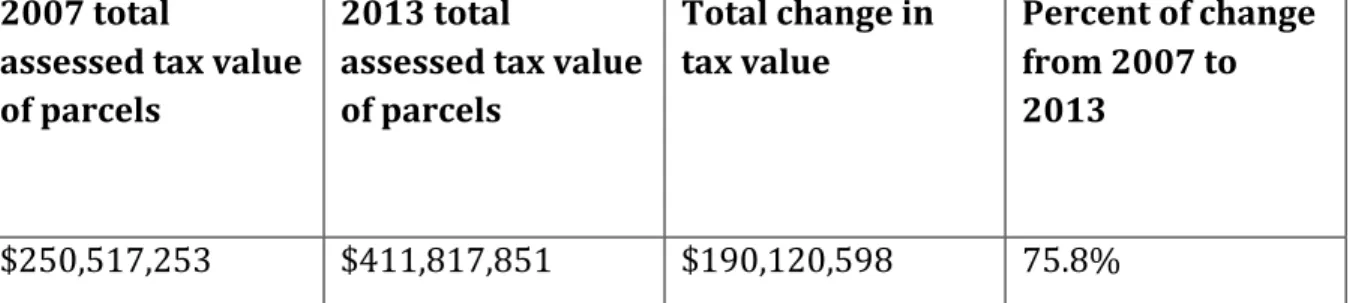
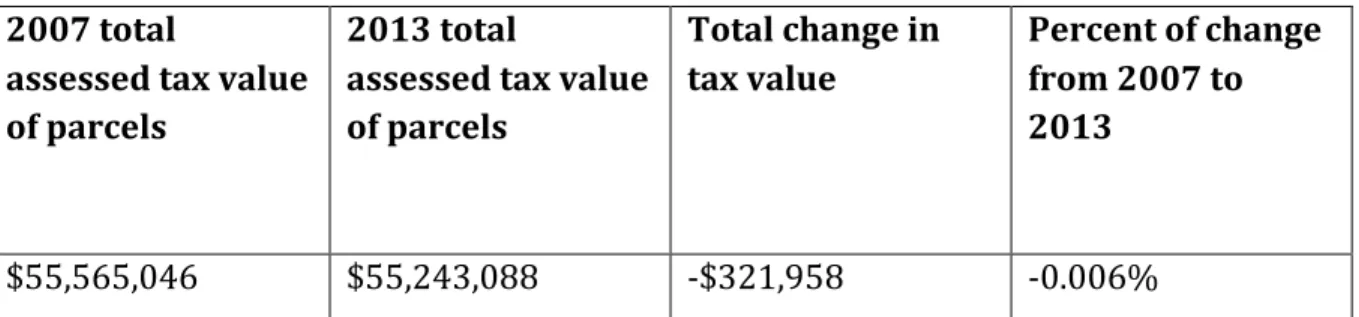
• Some streetcar corridors do see substantial growth in development, but not all. Using property values to demonstrate economic development progress, I measured development impacts for recent streetcar lines in Tucson and Atlanta. Tucson demonstrated the largest impact in property values with an over 75% increase in value from two years before the streetcar announcement to 2014. This increase is impressive compared to another corridor in downtown Tucson, which actually saw a slight decline in property values, overall. The Atlanta streetcar corridor, though, saw no increases in property values and saw a significant decline in value that corresponds to the same decline most of the city experienced during the recession. And compared to a comparable corridor in the city, the streetcar corridor did not demonstrate substantially fewer losses in property value. Atlanta illustrates that streetcar investments alone do not stimulate development.
• Using Tucson and Atlanta, along with Portland and Seattle, I found a number of other factors that may contribute to streetcar corridor development. Existing and growing real estate demand, large property owners, zoning, tax incentives, and other related investments in infrastructure are all necessary components of stimulating economic development in streetcar corridors. Additional data analysis in Tucson found that the streetcar corridor was already seeing large increases in property values prior to the construction of the streetcar.
• More robust metrics and analysis of streetcar corridors are necessary for communities and the federal government to better understand the potential development impacts of these projects and weigh their costs and benefits. Furthermore, communities should understand that streetcars likely will not stimulate development without the presence of other
Introduction:
Sometimes, what’s old becomes new again. Streetcars were the
dominant form of public
transportation for several decades in the late 19th-‐early 20th centuries with
dramatic growth all across the United States. After just as dramatic a decline in the mid-‐century, the past decade has seen a major revival of this form of transit. The first electric streetcar system opened in Richmond, VA in 1888 and within a year, 24 more cities
constructed systems, while many others joined over the following decade. Between 1890 and 1907, the number of miles of streetcars in the U.S. grew from 5,783 to 34,404, a nearly 600% increase in less than 20 years.i Unlike subways, the streetcar was not limited to a
handful of major cities with many cities around the country quickly building these systems. Instead, the streetcar is cited as helping create development through “streetcar suburbs,” which were located further from the central business district and let residents commute to their jobs, shopping and other trips via this new form of transit. ii In particular, residential
neighborhoods grew along streetcar lines and cities stretched further outside the central business district.iii
After the 1920’s with the advent of automobile, the Great Depression, and a collapse in the business model for many systems, streetcars became a thing of the past.iv Interstate
and highway systems brought growth and development to new areas. Economic
development patterns were altered, as cities expanded and larger regions and metropolitan areas formed. By the late 20th century, streetcars were mere relics and tourist attractions,
surpassed by greater transportation innovations.
Transportation and land use patterns in the United States, though, have slowly altered in recent years with a re-‐emphasis placed on transit-‐oriented development, particularly in major cities.v The advent of the automobile and interstate system not only
are not feasible to build for most localities nor do many cities in the U.S. have the density to support such systems. vi Federal support for transportation projects also cannot fund many
large-‐scale, public transportation expansions. Still, the demand for more new forms of public transit exists in numerous communities throughout the country.
Even greater than an appetite for new transit is the desire to create new jobs and economic development for communities, especially in the wake of the recession from which the U.S. is still recovering. In addition to substantial increases in unemployment and major losses in many sectors of the economy, the downturn of 2008 was tied closely to the real estate industry and stalled or prevented many developments throughout the country. Many development and construction firms struggled or closed, while banks tightened credit and private firms endured declining business and reduced employment. The
recession threatened the revitalization of central business districts and specific corridors in many communities. Policy makers also felt and still feel tremendous pressure to create jobs for their communities to help replace the 8.8 million jobs lost between 2008 and early 2010, when the economy stopped receding and returned to growth.vii
Figure 1: 14 federally funded streetcar projects between 2009-‐2013.
Source: Original map using information from Federal Transit Administration.
The combination of demand for new transit projects and the need to quickly inject local economies with new jobs and development led to the atmosphere that ushered in a new boom of streetcar projects in the U.S. At the dawn of the 21st century, only a handful of
streetcar lines existed in cities like New Orleans, San Francisco, Memphis, Dallas, and Philadelphia. And even in those cities, the streetcar systems were reduced greatly from their peaks in the early 20th century. The past decade, though, saw a renaissance in new
streetcar projects with Portland and Seattle leading the way in 2001 and 2006,
new streetcar projects began construction in the U.S. Furthermore, many mid-‐sized cities which do not have major public transit or rail projects such as Salt Lake City, Tucson, AZ, and Cincinnati, planned and began constructing streetcar lines. These 14 lines alone represent $1.2 billion in total investment in streetcar construction.
The federal government and relative speed of constructing streetcar projects compared to other transit projects helped fuel the boom of streetcar projects in recent years. With the advent of the Transportation Investment Generating Economic Recovery (TIGER) program as part of the American Recovery and Reinvestment Act of 2009 (known as the Recovery Act), streetcar projects started receiving substantial funding from the federal government. In some projects, such as in Portland and Atlanta, the federal government provided over 50% of the project costs with grants as large as $75 million. Between 2009 and 2013 alone, the federal government awarded $502.4 million to local streetcar projects through the Federal Transit Administration (FTA). As such, the federal government covered 41% of construction costs for these recent projects.
Table 1: Federally funded streetcar systems (2009-‐2013).
Project Federal grant from
FTA ($million)
Total project cost ($million)
Length of route
Atlanta Streetcar $47.7 $92.7 2.6 miles
Charlotte Starter Streetcar
$25.0 $37.0 1.4 miles
Cincinnati Streetcar
$40.9 $133.0 3.6 miles
Downtown Dallas-‐ Oak Cliff streetcar
$26.0 $55.5 1.6 miles
Dallas Olive/St. Paul Street Loop
$4.9 $9.9 0.65 miles
Detroit M-‐1 Rail $25.0 $136.9 3.3 miles
Ft. Lauderdale WAVE Streetcar
$18.0 $83.2 2.7 miles
Kansas City Streetcar
$20.0 $102.5 2 miles
Milwaukee Streetcar
$54.9 $64.6 2 miles
New Orleans Union Passenger
Terminal
$45.0 $52.7 0.8 miles
Portland Eastside Streetcar
$75.0 $128.3 3.3 miles
St. Louis Loop Trolley
$25.0 $41.4 2.2 miles
Salt Lake City Sugar House Streetcar
$26.0 $55.5 2 miles
Tucson Modern Streetcar
$69.0 $196.5 3.9 miles
One of the reasons cited for funding these projects was the relative speed with which these lines can be constructed, which was particularly important for quickly stimulating the economy during a recession. U.S. D.O.T. cites this as an area of priority in awarding TIGER funds. viii Compared to several years for heavy rail lines or even longer
light rail lines, streetcar projects can be built in approximately two years and at a lower cost than other fixed-‐route transit projects. These characteristics make streetcars appealing to lawmakers and local governments for funding and implementing.
Streetcars are different from other modes of transit, though, they are essentially a limited form of light rail. The American Public Transportation Association defines
streetcars as a type of passenger rail cars operating on fixed rails in right-‐of way that is not separated from other traffic and uses power from overhead electric lines.ix Another
definition distinguishes streetcars from other light rail by noting that streetcars operate in small areas, while light rail lines may extend 10-‐20 miles beyond a central business district. One set of criteria says modern streetcars stop every two-‐three blocks and move at 8-‐12 mph. Streetcars also usually do not have stations any more elaborate than bus stops.
This boom in streetcar construction, though, has little to do with congestion relief or mobility. The transportation benefits of streetcars are challenged in the literature, due to the limited range and capacity of streetcars, especially when compared with most other modes of transit. For example, the distance for streetcars funded in recent years ranges from 0.6-‐3.9 miles long for an average line of 2.3 miles per project. Furthermore, streetcars are not separated from traffic, which contributes to their lower costs of construction, but also their lower value in addressing congestion issues.
Many streetcar projects do not even market themselves as mobility or congestion relieving instruments and instead focus on their role as economic development-‐generating tools. From the Secretary of Transportation to every application for federal funds for these projects to numerous consulting reports on the potential impacts of streetcars, a constant refrain is that streetcars stimulate economic development. Furthermore, the projected development impact is often substantial, if not, transformative for these cities. For example, the Cincinnati streetcar feasibility study, commissioned by the city from consultants HDR, projects $1.5 billion in new economic development in the first 15 years of the proposed streetcar’s operation. x All other streetcar projects in the U.S. promise large development
benefits and opportunities to transform corridors into vibrant areas of these cities. Importantly, the federal government uses economic development impacts, such as the impact on employment, and increasing the economic productivity of land, capital or labor to justify funding these projects. xi Between federal funding criteria and local expectations,
Despite their popularity, the economic development impacts of streetcars are not well understood. The academic literature on the impacts of streetcar systems, specifically, is nearly non-‐existent, as the Transit Cooperative Research Program notes and this study’s literature review found.xii An analysis of several feasibility and impact studies
commissioned by cities on potential streetcar systems also found that many of the benefits promised were based either on the impacts of other types of fixed-‐guideway transportation systems, such as light rail or subway systems, or based on the experiences of first of the modern streetcar systems, Portland, OR. A frequently cited study of Portland found that $3.6 billion in new development occurred in within three blocks of the streetcar’s route after its announcement and implementation.xiii
The methodologies of these studies are problematic, though, for measuring the impact of streetcars. For one, many light rail lines run much longer (10-‐20 miles on average and up to 85 miles) than streetcar lines (0.65-‐3.9 miles) and can allow for commuters to get to various employment centers, which may stimulate more development along the line. Furthermore, the experiences from Portland may not be transferrable to other cities with different planning environments and downtown development markets. As such, the economic development benefits of streetcars are not always presented or calculated accurately. Because of this, cities and the federal government may have unrealistic expectations for streetcar projects or could be investing in more beneficial projects than streetcars, in terms of economic development.
Additionally, the mere measurement and categorization of economic development can be challenging when examining streetcar projects. What counts as economic
development and does that definition change from community to community? Given the substantial amount of investment from localities and the federal
government, high expectations for new development, and wide array of cities attempting to construct streetcar systems, the economic development impact of streetcars is important to study and better understand. Results from streetcar systems like Portland and several others have shown increases in new development for streetcar corridors. What is not clear is how much of that development is a result of the streetcar line or perhaps part of a larger revitalization momentum fueled by other policies and investments or even market forces. Without a better understanding of the other forces that may be involved in streetcar corridor success, many cities may find themselves making a poor investment in streetcar lines, relative to their expectations for those lines. Due to their relatively low cost per mile and short distances, many mid-‐sized and smaller cities such as New Haven, CT, Providence RI, Hampton Roads, VA and Winston-‐Salem, NC are studying or implementing new
and with many communities still seeking ways to create jobs and recover from the
recession, understanding the impacts and necessary complements to streetcar projects is critical.
This study attempts to address three areas of interest around streetcars and their economic development impact through the analysis of three streetcar systems.
• What economic development criteria are being used to evaluate streetcars
and what are the expectations for these streetcars?
• Do corridors with new streetcar lines show any economic development
benefits after the implementation of streetcar lines, compared to the criteria and expectations for these lines?
• If streetcars do stimulate economic development, are other conditions
necessary for stimulating that development and what are those conditions?
For the first question, my examination of grant applications and interviews with project and federal officials found that streetcar projects have a wide array of economic development expectations that are not easily or consistently measured. For many streetcar projects, the expected economic benefits are presented as the most significant and
important impact of the streetcar and the benefits promised are substantial. In grant applications, projects often cite several types of economic development benefits such as new construction, development of underutilized parcels, residential development and increased commercial activity. One of the most common expectations and metrics for development from streetcars is increased property value for land adjacent to the lines.
These expectations, though, often are based either on the experiences of other cities with very different planning climates or on the impacts of different modes of transit. The primary source of development projections are the results from the successful streetcar corridors in Portland, along with Seattle. Many of the feasibility and consulting reports use these two cities for projecting the potential development from new lines. But these two cities have many other factors involved in the success of their streetcar lines, which makes transferring those successes very difficult and potentially misleading.
Meanwhile, federal agencies award streetcar projects primarily on a qualitative analysis that contains very little quantitative rigor or analysis. The development impacts promised by these projects are left largely unchallenged and instead, cities create
came in the construction industry from the building of the initial streetcar lines and not in permanent jobs from nearby development. Furthermore, many cities have not yet
measured the actual job impacts from their streetcar projects. While property value and new construction on underutilized parcels can be measured relatively easily, several cities examined have yet to develop very robust metrics to track development in streetcar corridors. The federal government also has not thoroughly assessed the resulting development from streetcar projects it funded. As such, streetcar projects are not often fully measured for economic development potential or with regard to the expectations for these lines, which makes them difficult to assess as useful economic development
investments.
Finally, I found that the federal government does not evaluate the development effects of streetcar projects differently than other modes of transit. For example,
conversations with federal officials and review of applications found that federal officials weigh the potential development impacts of streetcars the same as other modes such as light rail or heavy rail. Literature and studies of light rail projects, though, challenge this notion. Heavy and light rail projects may provide broader benefits, especially in terms of mobility, and their larger networks could provide more development potential.xiv As such,
Federal officials may not be fully or properly evaluating the specific development effects of streetcar projects and, thus, funding these projects with unrealistic expectations.
For the second question, I examined property values around two new streetcar lines and compared them to other corridors in those cities to see if these streetcar corridors showed substantial difference in property value, which may indicate some economic development gain. Development is a difficult concept to measure, especially with new lines and limitations in public data and resources. Property value can offer some sense, though, if the real estate market is placing a higher value on land, which indicates demand for that land. I measured property values from both before the announcement of any streetcar lines and after their construction to examine any changes and followed this same method for non-‐streetcar corridors. Recent streetcar lines in Tucson and Atlanta served as the primary case studies, while I compared my results in those cities to previous studies with similar methodologies in Seattle and Portland in the subsequent chapter.
Based on the results of this research, streetcar corridors do appear to have some increases in economic development, though, the amount of development differs from city to city. Each of the cities studied saw increases in economic development activity,
slight decline in property values, overall. The Atlanta streetcar corridor, though, saw no increases in property values and in fact saw a significant decline in value that corresponds to the same decline most of the city
experienced during the recession. And compared to other corridors in the city that are also the focus of development efforts, the
streetcar corridor did not
demonstrate fewer losses in property value. In general, streetcar corridors do see some increases in property value and construction, relative to other corridors, but vary in their impact. Without more areas of data, though, the economic development impact of many streetcar projects is incomplete.
Using these case studies, as well as several other streetcar projects such as Portland and Seattle, I examined other factors that may contribute to or be necessary for successful, streetcar corridor economic development. In all of the cities which demonstrated some economic development benefit from streetcar lines, I found a number of other factors existed that may have contributed to this development. Some of these factors, such as existing and growing real estate demand or good economies, were outside the control of streetcar projects and planners. In some cases, a pattern of development was already occurring in these streetcar corridors. Other important factors were deliberate and tied to the streetcars, such as zoning and tax incentives to encourage development. Likewise, the lack of development results in Atlanta correlate to a lack of some of the factors present in the other case studies. In none of the cases I examined did streetcars come into formerly
-‐10.0% 0.0% 10.0% 20.0% 30.0% 40.0% 50.0% 60.0% 70.0% 80.0%
Tucson streetcar corridor Broadway corridor (no streetcar)
Tucson: Property vaue percentage increase between 2007-‐2013
moribund corridors or spur new development without the presence of many other development tools.
Overall, this research finds that streetcar corridors do see increases in some metrics of economic development, but the presence of other economic and real estate conditions, and many other economic development tools like zoning and incentives are likely
necessary for spurring this economic development. Furthermore, this study finds that far more robust metrics and tracking are necessary to really determine how well these
investments fare and this is often lacking in many cities. With a better understanding of the impacts of streetcars, perhaps more realistic expectations can be made for streetcar
systems, as well other investments needed to make streetcars successful in stimulating development.
This study does not seek to discredit or encourage streetcar efforts. Instead, this research is meant to examine whether or not a rapidly growing and significant tool for economic development is actually meeting development expectations and is a good investment for the many cities already or looking to build streetcar systems. Many communities have areas of underutilized land that are ripe for redevelopment. More importantly, many communities have residents still reeling from the recession who want jobs and better economies. In an era of increasing austerity, federal and local governments have devoted considerable resources to streetcars as a way of delivering new development and employment to communities. This research attempts to better understand if those investments are worthwhile and ensure that any development potential from streetcars is
Chapter 1:
Literature Review and Methodology
Literature Review:
This study is a response to a lack of literature and studies of the development impacts of streetcars. Very little academic literature or rigorous research exists that
examines the impacts of streetcars on economic development. In the midst of its increase in funding to streetcars, the federal government commissioned the Transit Cooperative
Research Program to conduct a study on this topic, titled “Relationships Between
Streetcars and the Built Environment” (2010). The paper noted, “Little in-‐depth work has evaluated this streetcar resurgence.” Furthermore, TCRP found that while a substantial amount of literature exists on the impacts of heavy and light rail systems on the built environment and development, this literature “does not describe these impacts with respect to a contemporary streetcar system and almost no analysis of the value premiums associated specifically with streetcars could be found in the literature.” Additionally, almost no studies exist that measure the impact of streetcar lines on economic activity, such as jobs created or increases in sales. One study by Crampton (2003) compares streetcar-‐like trams in Germany and France with those in Britain and the U.S., including San Diego, Miami, St. Louis and Sacramento. The report uses survey-‐data of communities to conclude that these U.S. cities saw some downtown development because of their trolleys, but did not see any revitalization in declining areas. The survey-‐methodology, though, does offer very substantial evidence of specific causation from the presence of a streetcar-‐like mode to economic development.
The only such study for quantitatively measuring the economic impact of a streetcar line in the U.S. is the Portland Streetcar Development Impacts study (2004) by Hovee and Jordan and commissioned by the Portland Streetcar Inc., operator of the Portland system. Due to its unique nature as the only study of its kind on impact of a streetcar line in the U.S., (and perhaps because of the large benefits reported) this study is widely cited in nearly every feasibility study used by other cities on their own potential streetcar lines and is perhaps the most influential document in fueling the proliferation of streetcar projects. This study examined, on a block-‐by-‐block basis, the amount of new development and density of development near the streetcar line before and after the construction of the line. The study found $3.5 billion in new investment within two blocks of the line, including 10,212 new housing units, and 5.4 million square feet of office, retail and hotel
development. The report credits 55% of all new development in Portland’s CBD as
parking. Implicit in the study are other amenities necessary to streetcar development, such as pedestrian amenities and a strong regulatory push for denser development. Despite its wide influence, the report must be caveated with the fact that Portland’s development environment is not the same as many other places.
A substantial literature exists, though, on measuring the impacts of transit projects on development and real estate values. Transit systems with fixed guideways have a
positive impact on nearby real estate values from 6.4%-‐40% (Cervero, 2004). Lewis (1999) uses a hedonic price model to measure the impact of proximity to rail stations and finds strong property value impacts near subway stations in San Francisco and New York City. Other studies focused on specific cities and systems like St. Louis, Chicago, Dallas and Sacramento found similar results with real estate values seeing a range of 6.2%-‐32% premium for land near heavy or light rail stations (Landis, 1995; Garrett, 2004; Gruen, 1997; Clower, 2007).
Much of the literature that shows real estate or development impacts from proximity to transit stations also cautions that other factors contribute to spurring
development in those areas. Cervero argues that other factors like traffic congestion, local economic conditions, and business cycles also contribute to development in corridors near transit. Crampton also caveats that any of his findings on the economic impact of trams relied on the presence of other factors like a strong local economy and a strategic development plan. Zoning and land use regulations are also important parts of helping stimulate development near streetcar lines (Hovee and Jordan, 2007; TCRP, 2010). For example, Portland instituted parking regulations and pedestrian amenities, as did Seattle. Based on literature, successful streetcar corridors likely require additional planning measures, as well as strong economies and interest in development in the area already.
Methodology:
For the first research question on the criteria used to evaluate streetcar projects and the expectations for these projects, I examined project funding applications and
evidence was used to support projected economic development benefits. These reports were often compiled by consultants or local agencies. All of this information helped form a clearer sense of how streetcars received federal and local approval and the source of projections for their economic development benefits.
The second research question measuring the impacts of streetcar lines focused on two original case studies and compared them to two other case studies on older streetcar lines performed in literature. I selected the two case studies, Tucson and Atlanta, based on several metrics. For one, both of these lines are among the most advanced of the new group of federally-‐funded projects, as they were awarded funds five years ago and both have or will open in 2014. Secondly, conversations with federal and local officials cited these as two projects that may be bellwethers for how successful streetcar projects are viewed by the federal government and others, which may affect the likelihood of new projects being funded in the future. The conversations with federal and local officials, along with research through news articles on many of the 14 streetcar projects underway, revealed that the Atlanta streetcar project, in particular, was of great national interest because anecdotal indications are that the line is not performing up to expectations, in terms of generating development. Additionally, neither project has undergone any kind of evaluation of
development impact, unlike Portland and Seattle, so an opportunity existed to measure the impact of previously unmeasured streetcar lines. Finally, both of these case studies offered the ability to obtain data from previous years, which made measurement of development prior to the streetcar line announcement or construction possible. In many cities, obtaining historic property data can be very expensive. These two case studies were compared to previous work done by the Brookings Institute in Seattle and other work in Portland, which are streetcar lines that date from 2006 and 2001, respectively. This study used a
methodology similar to the one outlined below for this research question and provide some interesting points of comparison for Tucson and Atlanta, which help create the findings for the third research question of this study.
part of measuring the economic development and progress of a corridor. Many of these metrics, though, are not easily tracked via publicly available data or are not tracked on a granular enough level to be measured in a single corridor. Some local governments also require substantial costs for obtaining historic (any year prior to the current) data that makes any multi-‐variable or multi year measurement challenging and expensive.
The design for measuring the economic development impact in streetcar corridors attempts to negotiate these challenges, while also providing at least some sense of
development progress in these case studies. Given local government data constraints, this study used property values as a proxy for economic development progress. Measuring property values provide a sense of demand for land, which can indicate if the real estate market is increasing or decreasing its interest in an area. Also, property values rise whenever improvements, such as new developments, are made to land. Additionally, as property tax collection is based on property values, increases or decreases in those values have revenue consequences for local governments. So, property values can help show if streetcars are a good investment, at least from the local perspective of recovering expenses through tax revenue. Many of the feasibility studies and applications for funding for these projects also used property value as the primary metric for development. For example, the Cincinnati feasibility study used property value and stated “real increases in prices for real estate can be seen as an increase in the market’s willingness to pay for a specific location due to the availability of more desirable amenities.”xv Other metrics, such as building
permits and new business permits, had data availability or consistency issues that made them difficult to use and compare across cities.
For Tucson and Atlanta, data for every parcel in each city was collected in both the present year and two years before the announcement of the streetcar lines. Two years was selected because it controlled for any rumors or pre-‐announcement planning of the
streetcar lines that could have led to early speculation and, thus, changes in property value. Additionally, this controlled for the likely drop in property values during the recession from 2008-‐2010 and potential recovery from those declines post-‐recession. The property values from before the streetcar lines, in 2007 for Tucson and 2008 in Atlanta, were adjusted for inflation so they could be accurately compared to 2013 values. Using GIS and parcel data, I drew boundaries around streetcar corridors and examined the property values for all parcels within one block of the entire lines. While transit-‐oriented
For comparison to the streetcar corridors, I also researched other corridors in each city that were the focus of development efforts, but lacked any rail or streetcar lines. For example, I used the Broadway corridor in Tucson, which is another downtown corridor that is the subject of street improvements and public investment to stimulate more
development. In Atlanta, I selected a downtown corridor originally thought to be a possible future streetcar corridor, but it never moved past very preliminary planning stages. I used the same method of mapping all parcels within one block of the corridor. I merged all of this data with property values from 2007 or 2008 to illustrate the change in property values from before and after the announcement and construction of streetcar lines. For every parcel, I calculated the change in value and determined an overall change in property value for each corridor.
This information allowed for a comparison between streetcar corridors and other corridors in cities to determine if streetcar corridors saw any increases in property value. With these comparisons, I could perform an initial analysis of development progress in streetcar corridors relative to similar corridors in their cities and start to examine if these streetcar investments correlated to any substantial increases in property value.
While the methodology for the second research question provides some sense of how streetcar corridors may perform relative to other corridors in their cities, the third research question attempts to uncover more about what else may be affecting development in these corridors. The third research question, concerning other conditions necessary for stimulating streetcar development, more closely examines the development environments in each case study and compares these corridors to determine if other conditions or
interventions may be contributing to development, or in the case of Atlanta, a lack of certain conditions may be hindering development. One of the great challenges of this question, and this study as a whole, is trying to untangle development spurred by
streetcars versus development that may occur regardless of streetcars. While causation, either from streetcars or other initiatives, cannot be proven, this research question uses interviews with local officials, research into other local actions such as zoning, and data on real estate conditions to try and determine if other factors may be involved in streetcar development. Ultimately, this third research question builds off the findings of the earlier questions to determine how to improve streetcar and economic development investments by better understanding the environments in which streetcar corridors may thrive or struggle.
Chapter 2:
What economic development criteria are being used to evaluate streetcars and what are the expectations for these streetcars?
This chapter examines the expectations for streetcars from both localities and federal agencies, along with the criteria used to fund and approve these projects. Through this
analysis, I determine a better sense of why these streetcar investments are made and how they should be measured to understand if they are successful or not.
What are local expectations for streetcar projects and why do localities support these projects?
An analysis of local streetcar planning documents in numerous cities including Tucson, Atlanta, Cincinnati, Los Angeles, Savannah, Milwaukee, Lincoln, Providence, Minneapolis, Detroit, and Kansas City found that the primary reason cited for streetcars was to stimulate economic development. Local governments initiate streetcar projects and perform the initial planning, analysis and funding for these projects. In most cities, either city agencies or consulting firms (or both) perform the initial studies to determine if streetcar systems would be viable and their projected cost, ridership and development impact. After examining these studies, the most commonly cited benefits and impacts of streetcars are:
• Stimulate economic development through investment, new office, retail and
residential development.xvi
• Increase property values. • Create new jobs
• Increase density in a corridor through transit-‐oriented development,
including encouraging pedestrian activity.
• Improve mobility for residents and reducing automobile congestion.xvii • Improved connectivity amongst major activity centers through public transit. • Environmentally sound by reducing driving and increasing density.
The transportation benefits of streetcars, though, are considered limited compared to other modes of transit. For example, prior to 2009, federal rules on cost-‐benefit analysis of projects in the FTA’s Small Starts program required projects to be compared on mode cost per hour of time saved for users.xviii On this metric, buses are always more cost
effective and as fast (if not faster) than more expensive streetcar projects. As such, FTA only funded one streetcar project through Small Starts prior to the Recovery Act and rewriting of rules in 2012. Streetcars are limited by not being separated from traffic and subject to traffic and congestion.xix Streetcars cannot be rerouted like buses and do not
heavy or light rail trains.xx Several of these cities, such as Atlanta and Minneapolis, argue
that streetcars could serve as feeders to the city’s larger transportation network through connections with heavy or light rail lines.xxi Additionally, some advocates point to
streetcars’ ability to attract “choice” riders who would not otherwise ride the bus and, thus, increasing the share of residents or visitors using public transit.xxii Given the debatable
transportation benefits of streetcars relative to other modes, most of the feasibility studies and applications for funding actually do not heavily emphasize transportation mobility.
Instead, the largest emphasis is placed on the economic development benefits of streetcars with studies touting considerable impacts for each city. Every feasibility study and application for funding places economic development at the top of the reasons for funding and pursuing streetcars. The benefits touted are also significant and varied with jobs, new construction, residences, retail and investment all cited as impacts. Among the development impacts projected for streetcar projects:
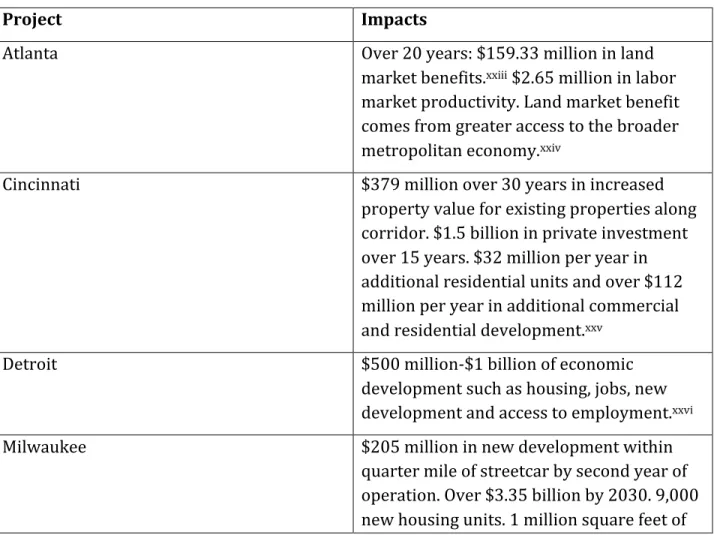
Table 2: Projected streetcar development impacts for federally funded projects (2009-‐2013)
Project Impacts
Atlanta Over 20 years: $159.33 million in land
market benefits.xxiii $2.65 million in labor
market productivity. Land market benefit comes from greater access to the broader metropolitan economy.xxiv
Cincinnati $379 million over 30 years in increased
property value for existing properties along corridor. $1.5 billion in private investment over 15 years. $32 million per year in additional residential units and over $112 million per year in additional commercial and residential development.xxv
Detroit $500 million-‐$1 billion of economic
development such as housing, jobs, new development and access to employment.xxvi
Milwaukee $205 million in new development within
new occupied retail space. 4 million square feet of new office space. 20,500 new jobs.xxvii
Tucson $35 million in property value increase by
2015.xxviii 341 new housing units. Estimate
of $230 million in new construction and over 1,480 long term jobs.xxix Estimate of
$800 million in new private investment already in the corridor with 58 new retail businesses.xxx
These projections are significant and could be transformative for cities. As such, projections of these kinds of jobs, development, and property value increases raise
expectations for these projects and justify their costs over less expensive transportation or economic development investments.
An analysis of the source of these projections, though, finds that most of them are based on the experiences of other cities and even other modes of transit. Portland and Seattle are the two most often cited streetcar projects in feasibility reports and websites promoting streetcars. Atlanta, Cincinnati, Milwaukee, Minneapolis, San Antonio, Tucson, Los Angeles, and Kansas City (and many other cities) all point to Portland and frequently Seattle as evidence of streetcar development success. In particular, the source of nearly all streetcar development impacts is a 2005 study by E.D. Hovee on the development impact of Portland’s streetcar. A former FTA official named this study as the most influential
document driving the streetcar boom of the past five years.xxxi Nearly every streetcar
project examined cited this study in feasibility studies or their website with the oft-‐cited figure of $3.5 billion in new development in Portland. This study provides a flurry of impressive development impacts from the line, including that the area within one block of the streetcar corridor went from capturing 19% of new development prior to the streetcar to 55% of all new development in downtown Portland.xxxii Additionally, the study found
that the development in the streetcar corridor was denser than development beyond three blocks from the corridor. For planners and officials looking to create jobs, improve density and create a corridor that resembles the kinds of urban environments attractive to younger residents, the Portland streetcar experience seems to offer a clear path for doing so.
the case studies underpinning their cost benefit analysis with the Portland experience providing the primary foundation for projecting development.xxxiii Minneapolis used four
case studies to illustrate the economic development benefits of streetcars with two of them being Portland and Seattle. The other two were
the (at the time) still under construction lines in Tucson and Atlanta and the report only
mentions the projections for development on these lines, as it was too early to measure development. Those projections, though, are
based on the experiences of Portland.xxxiv In another example, a recent study by consultants
AECOM for the Los Angeles streetcar had a literature review, but the academic literature included pieces like Robert Cervero’s “Transit’s Value-‐Added: Effects of Light and
Commuter Rail Services on Commercial Land Values” and “An Assessment of DART’s LRT on Property Valuations and Transit Oriented Development.” These articles use light or even heavy rail impacts, which due to their different service potential, may not be fully
replicable with streetcar lines. The additional studies used by the L.A. study were analyses of heavy and light rail projects in cities, but the only streetcar study cited was the 2005 study from Portland.
While the development experiences of Portland, Seattle and other cities are
instructive, care must be taken to consider the different economic, real estate, and planning environments of each city. For example, metropolitan Portland enforces an urban growth boundary that affects the value of land and the density of development within Portland.xxxv
Other cities like Seattle also may have mitigating circumstances that affect development and growth in certain corridors or may institute additional measures to stimulate growth. I explore these additional factors and measures that affect streetcar economic development impacts more in chapter 3 of this study.
What criteria are used by federal regulators to evaluate streetcar projects with regard to economic development?
While economic, environmental and placemaking motivations all contribute to the recent streetcar boom, one of the reasons often cited for the increase in interest in
streetcars among localities is the availability of funding from the federal government. As cited in the introduction of this study, the federal government awarded $502.4 million to local streetcar projects and covered 41% of construction costs. While cheaper than light and heavy rail systems, streetcar systems are more expensive than expanded bus service to construct. For example, in Winston-‐Salem, expanded bus service is expected to cost $34 million versus $108 million for a streetcar line.xxxvi With the federal government covering
substantial construction costs, over 50% in Atlanta, the gap between those two alternatives “This will become an economic
engine. This corridor.”