1 Development and Evaluation of an Online Gluten Free Meal Planning Tool
by Jenna Sedberry
Honors Thesis Department of Nutrition University of North Carolina
2016
Approved:
_________________________________ Advisor
2 Abstract
Background: Consumers who have to avoid gluten due to celiac disease (CD) need very specific
and detailed guidance. Most affected individuals (about 1% of all Americans) do not have access to extensive professional guidance, by a Registered Dietitian/Nutritionist (RDN) or other health care provider with credible nutrition training, who could give them the level of needed support. They have to contend instead with general instructions from their physician, hand-outs from their provider’s office staff, and with information they find on their own. The problem is further aggravated because avoidance of gluten often leads to otherwise imbalanced and nutritionally inadequate intake patterns.
The aim of this research is to develop an online dietary guidance tool that helps people to comply with a gluten-free diet. The application will help individuals with CD and their health care providers to support gluten-free dietary patterns with desirable culinary and nutritional characteristics.
Methods: A preexisting online meal planning tool was adapted to support the selection of
gluten-free meal plans. The nutrition information from all products labeled as gluten-free available at several regional grocery chains was collected. The items in the USDA National Nutrient Database (NDB) were classified as either reliably gluten-free or potentially gluten containing. Nutrient information of popular gluten-free items was collated using NDB values. All of these items were incorporated into the database for the online application.
3 the range of life stages during which the tool would be used. Meal plans were generated for each of the six personas in order to determine whether the program works as intended.
Results: The online application was able to generate numerous individualized gluten-free
menus. Multiple alternative meal plans were available for all test personas at two different energy intake levels. Meals could be modified with ease with several offered alternatives. Lag times for moving from one meal plan to the next and for getting lists of alternative items were so short that they were not perceptible.
Acceptance of this resource by gluten-sensitive individuals will be the ultimate measure of its value.
Conclusion: The Online Low Gluten Assistance tool (OLGA) successfully functions in
4 Table of Contents
Abstract………2
Background………..5
Methods………...11
Results……….16
Discussion………...……22
5 Background
Gluten is a combination of two storage proteins: glutenin and gliadin.1 Storage proteins
serve as an amino acid reserve used during embryonic development in organisms. Glutenin occurs in multimeric aggregates which are held together by disulfide bonds and hydrophobic interactions.2 Glutenin provides dough with both strength and elasticity. Gliadin occurs as a monomeric protein. Gluten is formed of cross-linked glutenin molecules attached to gliadin molecules.2
Gluten is found conjoined with starch in the endosperm of grains; primarily wheat, barley, and rye.3 The endosperm of grains is ground up to make flour. The properties of gluten contribute to the elasticity of dough and its ability to rise and maintain its shape while baking.4
The ability of gluten to retain gases while baking is what causes bread to rise. The strength and elasticity of the proteins in gluten give bread, pizza crust, bagels, and countless other baked goods their tough and chewy composition. It provides the stickiness to hold dough together and expand without falling apart, while adding volume to the product because of the gases retained in the gluten matrix.4 Additional gluten is often added to dough in industrial baking practices in
6 Celiac Disease (CD) is an autoimmune disorder characterized by an abnormal immune response to the presence of gluten in the intestine. People with CD have a genetic predisposition which causes this immune response. Exposure to gluten in individuals with CD causes a cell-mediated localized inflammatory reaction in the small intestine. This inflammatory reaction causes the atrophy of villi as well as other damage to the intestine such as crypt hyperplasia and edema of the lamina propria.5 Damage to the intestinal villi impairs its absorptive function leading to malabsorption of nutrients. Digestion is also impaired by damage to cells which alters digestive enzymes.5 Affected individuals may suffer from nutrient deficiencies as a result of this damage. The only current treatment for CD is a strictly gluten–free diet.
Gliadin, a key protein in gluten, is made up of a large amount of the amino acid proline for which humans do not have a protease.6 Without a protease for proline humans are unable to cleave proline apart from adjoining amino acids resulting in peptides which cannot be further digested.6 In a normal healthy gut lumen, the mucous membranes contain the antibody secretory IgA (SIgA) which binds to these indigestible peptides and processes them as pathogens, getting rid of them.7
In people with CD this response is altered and instead of getting rid of the indigestible gliadin peptides, the SIgA-gliadin complex gets transported into epithelial cells and through to the lamina propria.7 This occurs due to an iron deficiency in people with CD. Iron transporter transferrin CD71 is upregulated in the gut lumen in order to increase iron absorption. Transferrin CD71 also reacts with the SIgA-gliadin complex to transport it through the cell.7 Upon reaching the lamina propria SIgA releases gliadin. After passing through the endothelial cell, gliadin is modified by the enzyme transglutaminase 2 (TG2).7 This altered gliadin is a perfect fit for an
7 gliadin and presents it to immune fighter cells which make antibodies against it.8 The production of these antibodies causes the inflammation reaction in the gut which is characteristic in people with CD. Affected individuals who continue to consume gluten are at a risk of developing cancer as a result of the constant state of inflammation of the gut epithelium which becomes damaged and dysfunctional.9
This inflammatory reaction can cause problems in areas other than the gut. The same APCs that bind gliadin can also bind TG2 leading to the creation of TG2 antibodies. Anti-TG antibodies have been found to lead to apoptosis of nerve cell and trophoblasts causing
neurological damage and fertility problems in people with CD.10
Celiac Disease has been found to cause over 300 symptoms and the manifestation of symptoms are different in every person with CD. Some people with CD may even be
asymptomatic which can allow CD to go undiagnosed. The symptoms of Celiac Disease most commonly result from the inflammatory response to gluten in the small intestine which damages the villi and leads to nutrient malabsorption. These symptoms include abdominal bloating and pain, chronic diarrhea, weight loss, fatigue, iron-deficiency anemia, infertility, and bone loss.11 A full list of symptoms and conditions which may potentially be due to CD may be found on the Celiac Disease Center’s website (https://celiac.org/celiac-disease/symptomssigns/).
Foods may contain gluten for different reasons. The most common of those are that gluten occurs naturally in the food item, the food item is contaminated with gluten through industrial practices, or gluten is added to the food item during processing. Gluten is a naturally occurring protein in all species and forms of wheat including spelt, kamut, couscous, bulgur, durum, farina, faro, semolina, seitan and triticale.12 Wheat is the predominant grain product in
8 baking properties of wheat flour explain why it is the major ingredient in numerous types of foods such as bread, crackers, biscuits, pies, pastries, cakes, cookies, muffins and breakfast cereals.
Gluten also occurs naturally in barley in the form of its storage protein hordein, which is very similar to the wheat protein gliadin.14 Hordein helps to stabilize starch in the seeds (grain) of the barley plant. The grain is used in most barley-containing products, which means that virtually all barley-containing products contain gluten. Most beers are made from gluten-containing grains.14 The most common form of malt for beer brewing is made from germinated and dried barley grains, transferring significant amounts of gluten into the finished products. This form of malt made from dried barley grains is also used in malted milk, malted vinegar and malted candy making all of these food products gluten-containing. Additionally, barley is used as a sweetener in commonly consumed cereals (for example, Kellogg’s Corn Flakes) and other processed foods.14 A major problem with barley is that food labeling laws do not require manufactures to disclose barley or barley-based ingredients such as malt on their labels.14
Rye is yet another grain in which gluten is naturally occurring. Gluten is found in rye as the protein secalin.15 Rye products include breads, crackers and rye whiskey. The most common of these are rye and pumpernickel breads.15 As with barley, food labeling laws do not require
manufacturers to disclose rye as an ingredient. However, even without this requirement most manufacturers will list it on the label. Triticale is a hybrid of wheat and rye and therefore also contains gluten.15
9 gluten due to contamination.16 Gluten-free varieties of these grains will be clearly labeled.
Products which are not clearly labeled as gluten-free should be avoided. Quaker, a popular producer of oat products such as oatmeal, did not certify any of their products as being gluten-free until January of 2016. Prior to then, Quaker explicitly stated on their website that they could not guarantee any of their oats as gluten-free due to potential contamination. In December of 2015 Quaker announced that they would be launching three new varieties of gluten-free oatmeal. In their press release Quaker stated that “The oats are being optically and mechanically sorted to remove gluten-containing grains that commonly cross-contaminate oat crops.”17 This new interest in producing gluten-free products is likely a result of the new gluten-free food labeling laws which came into effect in August of 2014.
In August of 2013 the FDA set a definition of gluten-free as containing less than 20 parts per million. As of August 5, 2014 all products labeled as gluten-free must meet the FDA’s definition. The definition applies to the terms “gluten-free,” “free of gluten,” “no
gluten,” or “without gluten.” The FDA regulation states that “This level is the lowest that can be
reliably detected in foods using scientifically validated analytical methods.”18 Previous to August
10 The question then comes to mind, why is a gluten-free meal planning tool needed? The answer is twofold: following a gluten-free diet is a challenge in itself, and on top of that the person must still find a way to have a balanced diet. Consumers who have to avoid gluten due to CD need very specific and detailed guidance. Most strongly affected individuals (about 1% of all Americans) do not have access to professional guidance, by a Registered
Dietitian/Nutritionist (RDN) or other health care provider with credible nutrition training, who could give them the level of needed support. They have to contend instead with general
instructions from their physician, hand-outs from their provider’s office, and information they find on their own. The problem is further aggravated because avoidance of gluten often leads to otherwise imbalanced and nutritionally inadequate intake patterns.
11 nutrition professionals who can use the various computer-based resources and generate meal plans specifically for them.
Methods
A pre-existing online meal planning tool, PONG, was adapted in order to create gluten-free meal plans. Building the new tool, OLGA (Online Low Gluten Assistant), proceeded in three steps:
1. Collecting nutritional data from gluten-free alternative foods.
2. Labeling of the foods in the current database as either gluten free or gluten containing.
3. Locating and entering recipes for gluten-free dishes into the database.
The preexisting database was lacking in gluten-free alternatives to commonly consumed foods such as bread, crackers, pretzels, cereals, and cookies. Though these foods may not be essential in the diet, they are foods for which people with CD or other types of gluten intolerance often seek gluten-free alternatives. It was therefore necessary to include alternatives for these commonly gluten containing foods in the tool’s food database. In order to ensure that the
12 Data collection from the stores involved making multiple trips to each of the three
grocery stores to capture the food labels. For each store the isles were scanned for all foods that were explicitly labeled as gluten-free, with special care being shown to any gluten-free sections. All items labeled as gluten-free were recorded to a notebook by brand, food item, and price.
Figure 2. Picture of food data notebook showing gluten-free food data collection from Food Lion
The food label, nutritional facts panel, and ingredients were captured in photo form. Information from the labels was used to create two databases. Data on the amount of energy, alcohol,
protein, fat, saturated fat, trans fat, omega-3 fatty acids, Alpha-linolenic Acid (ALA),
13 data presented in the preexisting (PONG) database. Calculations were done to convert nutrients per portion to nutrients per 100 grams in order to be compatible with the existing program.
An additional database was created that categorized the foods by type and whether or not the foods were vegan, ovo-lacto vegetarian, lactose-free, and gluten-free. This database also included the amounts in grams of meat, red meat, vegetables, cruciferous vegetables, fruit, and fish in the foods. Finally this database included the portion size and the package size, both in grams.
Information from the current USDA food database existed previously in the form of the two tables described above. All foods in the USDA database were labeled as gluten-containing by default. This database was reviewed item by item and each individual food entry was marked as to whether it was gluten-containing or not. Raw fruits, vegetables, meats, and nuts are all free of contamination from gluten and were therefore labeled as gluten-free. Processed foods were not as simple and research had to be done in order to reliably label them as free or gluten-containing. Research was also done on all grains to determine whether or not they were wheat-related.
In order to determine if a processed food contained gluten extensive research on the ingredients and processing practices of the food was done. The case of bleu cheese may be used as an example. Most aged cheese are considered to be gluten-free. Bleu cheese, however cannot reliably be labeled as such. Bleu cheese is made with the blue-colored mold Penicillium
roqueforti, which can be grown on bread made from wheat or rye flours.22 When wheat bread is
the medium used to grow the spores, wheat has to be included in the ingredients label under the Food Allergen Labeling and Consumer Protection Act (FALCPA).22 This allows consumers to
14 used to grow the blue mold spores, rye does not have to be listed on the ingredients label as it is not one of the allergens that is required to be clearly labeled in foods by the FALCPA.22
Therefore bleu cheese might contain gluten without the label giving any indication of it. While it is not clear whether the amount of gluten coming from rye is enough to trigger an adverse
reaction in people with CD, all bleu cheeses in the USDA database were labeled as gluten-containing as a cautionary measure. Other questionable foods in the database were similarly tagged as potentially containing gluten.
The final step in generating the database of gluten-free foods involved searching for gluten-free recipes for inclusion. A person who suffers from CD cannot be expected to live off of solely processed foods; they need to be able to prepare fresh, homecooked meals. The problem with cooking gluten-free meals is that so many recipes contain flour in some form or another whether it be raw, in pasta, in seasoning, or other gluten-containing ingredients. Seeking out gluten-free alternatives to everyday recipes such as soups or lasagna or fried chicken can be taxing. In order to create the most useful tool for planning gluten-free meals, there needed to be easy and desirable gluten-free recipes for users to choose from. These recipes were found
through internet searches that specifically looked for altenatives to recipes which would typically contain gluten. Blogs dedicated to living with CD and to the search for gluten-free foods were scanned in order to find which foods people avoiding gluten wanted most and what solutions they found.
Once recipes were identified, a database was created that listed each ingredient
15 the sum of all the ingredients. For example, if a cake was used, an item “cake” would be created that listed the combined nutritional values of the eggs, flour, sugar, oil, etc.
Whenever a food came from commercial products such as Hamburger Helper, cake, brownie, or muffin mixes, the recipe generator was used to calculate the amounts from the multiple ingredients required in their preparation. The dry mix served as one ingredient in each instance, and then any additional ingredients listed on the package were used for the calculations In most cases, the dry mix was entered into the database using data collected from the grocery stores and any items, such as eggs, milk, or sugar, were pulled from the USDA database. The nutritional information for each of the individual items were pulled from those databases in order to create one single food item. This food item was then written into OLGA’s final database via the recipe generator.
16 PONG, and making adaptations and additions to create an Online Low Gluten Assistance tool – OLGA.
Once OLGA’s database was equipped with properly labeled gluten-free foods, portions
of each of the foods had to be created. For example, the database may have the item “bread,” it was then necessary to go in and create different portion options for this item. In the case of bread, it would be one slice, two slices, three slices, etc. A previously created webtool, foodtobase/basetofood, was used in order to gererate portion options for each food item or recipe. In order to accomplish this, each portion size of a food was entered into
foodtobase/basetofood as a new item. The webtool then wrote each new food item into OLGA’s database. The webtool also generated an identifier number, the nrF number, for each of the new items/portions. In order for OLGA users to be able to select different portion sizes, each item had to be individually labeled as “less” than or “more” than the previous and proceeding potion
size. The nrF numbers were used to accomplish this. For example “bread, 1 slice” may have the nrF number 00001, you would then label “bread, 2 slice” as “more” than 00001. Such was done with each consecutive portion. Now when users have one slice of bread and want more, they have an option for “more” in the program. User’s have a similar option to select “less” of a
particular food. The number of portion options available for each food was determined by individual food item based on common consumption patterns and the researcher’s discretion.
17 to their dietary needs. This served a dual function of creating meal combinations which are searchable in OLGA’s user interface.
Results
Data for the gluten-free food items collected from local grocery stores is presented in Table 1. Overall, information from 187 individual food items was collected and 163 of those items were applicable for use in the final database. Those that were not applicable were mostly unfinished products such as seasonings and dry mixes, which cannot be selected as meal
components. Though they were not applicable for use in the final database of prepared foods, they were input for use in recipes. The relative frequency of use was 0.8717, or 87.17%. Individually, Food Lion had the greatest frequecy of applicable items with 58 of 61 gluten-free items used in the final database, a frequency of 0.9508 or 95.08%. Food Lion was followed by Aldi with 0.8788 or 87.88% of applicable items, Walmart was last with 0.8172 or 81.72% of applicabale items.
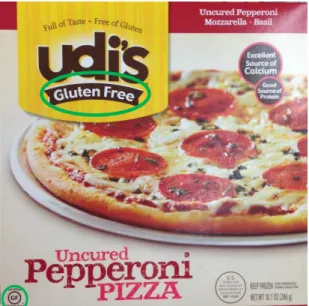
Walmart had the greatest number of gluten-free labeled foods with 93 items, followed by Food Lion with 61 and Aldi with 33. These numbers are based off the inventories of those stores during September of 2014. The foods collected were clearly labeled as gluten-free and had gluten-free certification. An example of this labaling can be seen in Figure 4.
18 are shown in Table 2. The large number of gluten-free options available in the stores appears to have been prompted by the recent popularity of gluten-free diets. It could also be a response to the new regulations which created a standard for the labeling of items that may have already existed in grocery stores, but were simply not labled as gluten-free.
Figure 4. Example of gluten-free labeling and certification on collected food item package.
Furthermore, twelve new recipes for gluten-free dishes were added. Each of the recipes were alternatives to typically gluten-containing dishes. The recipes were inserted into the OLGA database and made acessible for meal planning. The recipes were collected from blogs on
19 Table 1. Grocery Gluten-Free Food Collection Data
Number Collected Number Applicable Relative Frequency %
Aldi 33 29 0.8788 87.88
Food Lion 62 58 0.9355 93.55
Walmart 90 75 0.8333 83.33
Total 185 162 0.8757 87.57
Table 3. Gluten-Free Recipes Crockpot Savory Italian Pork Roast Crockpot Chicken Soup
Pecan Encrusted Tilapia Slow Cooker Sausage Soup Impossibly Easy Breakfast Bake Spinach and Mushroom Lasagna Homemade Gravy
Indian Peanut Stew GF Spinach Mini Muffins Fruited Breakfast Quinoa
Strawberry Oatmeal Breakfast Smoothie Vegan Lentil Curry
Table 2. Types of Gluten Free Foods Entered Food Type No. Relative Frequency %
Chips/Crackers 23 0.1292 12.92
Pretzels 8 0.0449 4.49
Cereals 19 0.1067 10.67
Pizza 9 0.0506 5.06
Ice cream 3 0.0169 1.69
Snack bars 12 0.0674 6.74
Pastries 9 0.0506 5.06
Cookies 14 0.0787 7.87
Dinner Entrees 19 0.1067 10.67
Pasta 26 0.1461 14.61
Baking Ingredients 19 0.1067 10.67
Soup 4 0.0225 2.25
Bread 12 0.0674 6.74
Meat 2 0.0112 1.12
Alt. Flours 2 0.0112 1.12
Quinoa 1 0.0056 0.56
20 The meal plan results for the six personas created in OLGA are listed in Table 4. As expected, the program sucessfully functioned in generating meal plans for all six of the personas. The middle-aged female (celiacfemale33) had the most generated meal plans with a total of 65. This is was because the energy intake goal of 1985 kcal/day for this persona is in the mid-range where most people are and where the largest number of combinations have been generated. The older female persona (celiacfemale56) had the smallest number of meal plans with only 8 total. These numbers reflect the tool’s preconfigured meal plans; the number of meal plans will continue to increase through corwd-sourcing as the tool is used.
Upon further inspection, it was found that the calcium goals for older females were higher than for younger females, while the iron and energy goals were lower. These goals are based off of recommendations for older adults to meet a higher calcium intake than younger adults, while maintaining a lower caloric intake overall. For example, the persona
celiacfemale22 has a personalized calcium target of 1009 mg and an energy target of 2148 kcal which take into account physical activity, lifestyle and body composition in addition age and gender group. Alternatively, the persona celiacfemale56 has a calcium target of 1292 mg and an energy target of 2120 kcal taking into account those same factors. It seems reasonable to expect issues when trying to increase calcium intake while keeping total caloric intake low. For this reason it is important that older adults consume nutrient-dense foods in order to conserve calories while increasing their micronutrient intake. An additional issue that makes generating meal plans for older adults difficult is the lower iron target. The iron target for an older woman is ~8 mg, while for a younger woman the target is ~18 mg. With all of the iron fortification in
21 For each of the personas, OLGA generated more meal plans when the calorie goals were set to 85% of the target energy, while keeping all additional macro- and micronutrient targets the same. Table 4 lists the number of each type of combination (excellent, good, reasonable,
questionable) generated with 100% of the calorie goal and when the calorie goal was reduced to 85% of the original goal. Table 4 also lists the full and the reduced energy intake goals. The overall energy intake goal generated by OLGA is based on a formula which incorporates both age and weight. The generation of more meals at an appropriate calorie level could be
accomplished in two different ways: the formula could be altered to create lower caloric goals or more meal plans with higher total calories could be generated for each of the personas.
22 Table 4. OLGA Results for various user profiles
23 Discussion
The significance of an online gluten-free meal planning tool is great for the portion of the population that has CD or is otherwise sensitive to gluten. The ability of OLGA to generate meal combinations that meet all of the macro- and micronutrient goals of an individual has the
potential to be a valuable guide for following a nutritionally balanced, gluten-free diet. As previously mentioned, avoidance of gluten often leads to the consumption of an imbalanced diet. This could be a great problem, especially for those who are already malnourished due to
absorptive dysfuntion caused by CD. OLGA could not only help to cut down on the
inflammatory intestinal attacks caused by the accidental consumption of gluten, but could also help to renourish those who have not been able to eat a complete diet on their own or with whatever guidance they may have been receiving. Thus a program such as OLGA could not only relieve the burden and confusion involved in consuming a gluten-free diet, but could also improve the overall health of individuals by ensuring that all of their dietary needs are met.
24 The OLGA interface is fairly user-friendly with easy to follow commands such as “Add any new item,” “replace with a similar item,” “select larger portion,” etc. Foods are categorized
by type in order to make finding specific items a simple process. The easy-to-follow design of OLGA was intentional and makes the program a resource that a large segment of the population can operate and understand. The greatest challenge to users comes with understanding what is needed to create a well-balanced meal plan that meets all of an individual’s micro and
macronutrient goals. Without meeting most of these targets, the combinations created will not score in the good to excellent range. As lay people are not expected to know what nutrients a certain food contain and the amount of that nutrient, the “replace with a similar item” option can be used to select a food which has a similar nutrient content. A user could thereby take an existing excellent or good combination and make substitutions using this function to achieve a well-balanced meal.
25 An additional barrier identified while testing OLGA, as mentioned in the results, was the difficulty with finding high calorie meal plans. There were a greater number of meal plans available for reduced caloric intakes for each of the personas given in the results section. This is partially due to the fact that the portions available are much better suited for the creation of a 2000 calorie meal combination than one of significantly higher energy. Therefore, fewer high-calorie meal plans have been generated and made available for selection. It is also more difficult to generate high calorie meal plans without exceeding the goals for some of the micronutrients, such as sodium or iron. In order to overcome this barrier, greater portion sizes and higher-calorie meal plans will need to be included.
Adding more combinations at every calorie level will bring OLGA to its full potential and make it more usable. The highest number of excellent options for any of the personas was 37 for the middle-aged female. The number of excellent combinations for any of the other personas varied anywhere from 2 to 35. Though the goal of this project was to create a tool that works, it is important to note that in moving forward more meal plans need to be generated. As a requirement for creating more appealing options to generate meal plans with, more recipes will also need to be added. Again, this should not be seen as a permanent barrier, however, because of the open-ended design of OLGA.
26 References
1. Mattes, M. (2011, November 11). [Structure of Gluten]. Retrieved from http://grist.org/food/2011-11-10-gluten-why-all-the-fuss/
2. Wieser, H. (2007, April). Chemistry of gluten proteins. Food Microbiology Vol. 24, Issue 2, 115-119.
3. [Wheat Kernel]. (2014). Retrieved from
http://www.breadfordshirebakery.co.uk/p/chemistry-of-bread.html
4. Shewry, P. R., Halford, N. G., Belton, P. S., & Tatham, A. S. (2002). The structure and properties of gluten: an elastic protein from wheat grain. Philosophical Transactions of
the Royal Society B: Biological Sciences, 357(1418), 133–142.
http://doi.org/10.1098/rstb.2001.1024
5. Rubio-Tapia A, Murray J. Gluten-sensitive enteropathy. In: Metcalfe DD, Sampson HA, Simon RA, eds. Food Allergy - Adverse Reactions to Foods and Food Additives. 4th ed. Malden MA: Blackwell Science. 2008:211-22.
6. Hausch, F., et al., Intestinal digestive resistance of immunodominant gliadin peptides.
American Journal of Physiology-Gastrointestinal and Liver Physiology, 2002. 283(4): p.
G996-G1003.
7. Matysiak-Budnik, T., et al., Secretory IgA mediates retrotranscytosis of intact gliadin peptides via the transferrin receptor in celiac disease. Journal of Experimental Medicine, 2008. 205(1): p. 143-154.
27 9. Bethune, M.T. and C. Khosla, Parallels between pathogens and gluten peptides in celiac
sprue. Plos Pathogens, 2008. 4(2)
10.Klöck, C., T.R. DiRaimondo, and C. Khosla, Role of transglutaminase 2 in celiac disease pathogenesis. Seminars in Immunopathology, 2012. 34(4): p. 513-522.
11.Symptoms of Celiac Disease. University of Chicago Medicine Celiac Disease Center. http://www.cureceliacdisease.org/symptoms/.
12.Moulton, Sara. "Grains: Which Grains Contain Gluten?" saramoulton.com. January 25, 2013.. http://saramoulton.com/2013/01/grains-which-grains-contain-gluten/.
13.Wheat: Wheat's Role in the U.S. Diet. USDA ERS. January 13, 2016. http://www.ers.usda.gov/topics/crops/wheat/wheats-role-in-the-us-diet.aspx. 14.Is Barley Gluten-Free? About.com Health. October 8, 2015.
http://celiacdisease.about.com/od/glutenfreegrains/f/Is-Barley-Gluten-Free-Or-Does-Barley-Contain-Gluten.htm.
15.Is Rye Gluten-Free? About.com Health. October 8, 2015.
http://celiacdisease.about.com/od/Gluten-Free-Grains/f/Is-Rye-Gluten-Free-Or-Does-Rye-Contain-Gluten.htm.
16."Gluten-Free Foods Are Often Contaminated." Mercola.com. August 3, 2010.
http://articles.mercola.com/sites/articles/archive/2010/08/03/glutenfree-foods-are-often-contaminated.aspx.
17.Ratner, Amy. "Quaker Oats' Gluten-Free Oatmeal Launches Nationwide in January - Gluten-Free Living." GlutenFree Living. December 4, 2015.
28 18.Gluten and Food Labeling. U.S. Food and Drug Administration. October 18, 2015.
http://www.fda.gov/Food/GuidanceRegulation/GuidanceDocumentsRegulatoryInformati on/Allergens/ucm367654.htm.
19.CDF 7 Day Gluten-Free Meal Plan - Celiac Disease Foundation. (n.d.). Retrieved from https://celiac.org/live-gluten-free/7-day-gluten-free-meal-plan/
20.A Gluten-Free Meal Plan. American Diabetes Association. (n.d.). Retrieved from http://www.diabetes.org/mfa-recipes/meal-plans/2014-01-mp-gluten-free.html 21.7-Day Gluten-Free Meal Plan. Eating Well. (n.d.). Retrieved from
http://www.eatingwell.com/nutrition_health/weight_loss_diet_plans/diet_meal_plans/7_d ay_gluten_free_meal_plan?pC=1400
22.Thompson, Tricia. "Blue Cheese." Gluten Free Dietitian. June 04, 2008. http://www.glutenfreedietitian.com/blue-cheese/.
23.Noah SA, Abdullah SN, Shahar S, Abdul-Hamid H, Khairudin N, Yusoff M, Ghazali R, Mohd-Yusoff N, Shafii NS, Abdul-Manaf Z. DietPal: a Web-based dietary
menu-generating and management system. J Med Internet Res 2004;6(1):e4 PMID 15111270 24.Hong SM, Cho JY, Lee JH, Kim G, Kim MC. NutriSonic web expert system for meal
management and nutrition counseling with nutrient time-series analysis, e-food exchange and easy data transition. Nutr Res Pract 2008;2(2):121-9 PMID 20126376