Study of relationship between Effective Factors in Addiction Tendency
with Psychological Dimensions of Addicts who referred to Health Settings
in Urmia
Nader Aghakhani 1, Hassan Nazari2, Zoleikha Asgarlou3, Soudabeh Niroomand4, Hanieh Asgharian5, Abbas
Zarei6, Rozita Cheraghi7*
1 Assistant professor, Patient Safety Research Center, Urmia University of Medical Sciences, Urmia, Iran 2 Social Determinants of Health Research Center, Urmia University of Medical Sciences, Urmia, Iran 3. Instructor, MSc of Midwifery, Midwifery department of Zanjan University of Medical sciences, Zanjan, Iran 4. Instructor, MSc of Midwifery, Midwifery department of Zanjan University of Medical sciences, Zanjan, Iran 5. Instructor, MSc of Midwifery, Chamran health complex, Tabriz, Iran
6. MSc. Forensic Medicine management, Urmia, Iran
7. Instructor, MSc of Nursing and Midwifery faculty, Urmia University of Medical Sciences, Urmia, Iran
*Corresponding author: Rozita Cheraghi,Urmia University of Medical Sciences, Urmia, Iran, Email: [email protected] Zip code: 5714783734, Tel: +98 4432754991
Abstract
Background & Aims: Drug addiction and dependence is a chronic and recurrent disorder that has profound social, psychological, physical and economic effects that imposes heavy costs on individuals, families and communities as well as degrades personality. Drug addiction is the most widespread concern and preventable health risk in Iran.
Most of resources in Iran are reported from developed researches and theories of foreign researchers and no comprehensive effort has been done in order to evaluate psychological dimensions of drug users in Iran and Urmia society.
Materials & methods: In this study, 400 drug addicts referring to addiction centers of Urmia were studied. Variables of this study include demographic factors and data collection method includes interview and completing questionnaire. Subjects were surveyed by Symptom Checklist- 90-Revised (SCL90R) standard psychiatric questionnaire and researcher made demographic questionnaire in order to investigate psychological problems. Appearance and content validity of researcher made demographic questionnaire were approved by faculty members in terms of factors affecting tendency towards drugs and were obtained through completing questionnaires by some addicts referring to centers; inter reliability was obtained after analyzing odd and even questions. Interviewers were from employees of forensics and faculty members of Urmia University of Medical Sciences. Finally data were analyzed using descriptive and inferential statistics by Spss16.
Results: Result showed that the most common psychological problems in 9 dimensions were respectively included: severe depression, severe anxiety, severe hypochondriasis, obsession-compulsion, extreme interpersonal sensitivity, extreme aggression, severe paranoid, severe phobia and severe psychosis.
Conclusion: The results of such studies can provide basic benefits and valuable information to health care experts in order to raise awareness about factors underlying drug addiction, mental conditions of addicts and affect positively the effectiveness of treatments by preventive measures.
Keywords: Addiction Tendency, Psychological Dimensions, Addicts, Urmia
Received 05 June 2016, accepted for publication 25 September 2016
Introduction
Drug addiction is essentially a neurological injury. In this situation, neurological changes affect human willingness and addict turns to mandatory use of drug at any cost that result in psychological and moral decadence of him/her (1).
Individual effects of drug addiction is not entirely clear but the results of studies in this area show that addiction can affect all of the body organisms so that increasing trend of drug addiction and mental disorders are reported (2).
It is a chronic and recurrent disorder that has profound social, psychological, physical and economic effects imposes heavy costs on individuals, families and communities as well as degrades personality. Drug addiction is the most widespread concern and preventable health risk in Iran (3).
Studies of recent years, especially in western countries have shown high prevalence of psychiatric disorders among addicts to drugs (4).
Using banned drugs and drug abuse among youth is directly related to reduced life, accidents and violence. Psychological and physical addiction to these drugs is a major health problem of communities; if addict is deprived of drug, he/she will be affected by various physical and psychological complications associated with headache, weakness and neurological symptoms, he/she will feel pain in different parts of his/her body feels or he will cry without reason. In some cases, nausea, diarrhea, depression and irritability appears in person. Depression reactions are often associated with restlessness and anxiety and in some cases; suicidal tendency and death desire appear among drug users. Visual errors and sensory mistakes as well as hallucinations and consciousness darkness become evident in persons that must be considered in treatment of drug addicts based on some psychiatrists (5).
Various factors including poverty, family problems, marital problems, unsuitable patterns for synchronization and finally unemployment problem can be considered as the main reasons of addiction; as
theoretical background of study shows that two individual and social categories are major factors of addiction (6).
Addicts get more of drugs from their friends and peers. Smoking and substance use of any kind are related directly with friends and groups relationship. In larger groups, such a model is dependent on social and cultural situations. In dense urban areas, users and non-users of drugs may be friends but don’t transfer their habits to another one (7).
In studies related to drug dependence, psychosocial, etiologic, genetic and biological factors and psychological hypotheses were discussed. 90 percent of drug dependents are affected by mental disorder; however the most common psychiatric diagnoses include alcohol use disorders, major depressive disorder, and antisocial personality disorder and anxiety disorders. 15% of drug addicts attempt for suicide at least once in their lifetime. Since addiction is a complex subject and has psychologically many dimensions, any type of fight against uncontrolled and dangerous growth requires comprehensive and wide-ranging measures in social, economic, cultural and psychological dimensions (8).
Therefore with regard to the prevalence of psychiatric among addicts, we decided to conduct a study to determine psychological problems dimensions on drug addicts referring to addiction treatment center in Urmia in 2013. The results of such studies can provide basic benefits and valuable information to health care experts in order to raise awareness about factors underlying drug addiction, mental conditions of addicts and affect positively the effectiveness of treatments by preventive measures.
Materials and Methods
This study is descriptive. The study population consisted of addicts referring to treatment centers of Urmia. Data collection was done using a questionnaire containing demographic data by interviews. Study tools included Symptom Checklist- 90-Revised (SCL90R)
and demographic questionnaires and options were always, often, sometimes, rarely or never. Variables of this study included demographic factors and data collection method included interview and completing questionnaire. Subjects were surveyed by SCL90R standard psychiatric questionnaire and researcher made demographic questionnaire in order to investigate psychological problems. In this study, psychological problems of these subjects including severe depression, severe anxiety, severe hypochondriasis, obsession-compulsion, extreme interpersonal sensitivity, extreme aggression, severe paranoid, severe phobia and severe psychosis were studied.
Questions were provided by executives and completed by 10 eligible participants of study twice during two weeks in order to determine the reliability of tools; then gained answer were examined two times about any of questions in terms of coherence, continuity and available solidarity was obtained. In general, tools were set in two sections.
The first part of questionnaire contained questions on individual characteristics of patients and the second part included SCl90 questionnaire questions in order to determine the psychological aspects of addicts. Descriptive study was conducted to assess psychosocial addiction. Anonymous questionnaire was given to all people. Descriptive study was conducted in order to assess psychosocial state of addicts, so all subjects filled out questionnaires in the presence of investigators or trained interviewers after sufficient explanation about completion of questionnaires, confidentiality and receiving consent. Meanwhile, those who were illiterate subjects were supported by researcher in order to complete the questionnaire. The subjects consisted of people who had passed at least one month from drug rehabilitation. Measurement instruments of this study included SCL90R standardized test in order to evaluate psychopathology of addicts; individual and social demographic questionnaire included variables such as:
gender, age, education level, and marital status, place of residence, occupation, and so on. SCL90R test contained 90 questions in nine scales of physical complaints, obsession-compulsion, interpersonal sensitivity, hostility, phobic anxiety, depression, anxiety, paranoid thoughts and psychosis that are based on 5-point Likert scale as no, a little, somewhat, very, extremely (23). Inferential and descriptive statistical methods including means compare, chi-square and ANOVA were used in order to evaluate and interpret findings based on research questions; all statistical analyses were carried out by using SPSS computer program.
Data collection method was interview and questionnaire completion. Descriptive statistics were obtained using a questionnaire. Finally SPSS16 software was used for data analysis, so descriptive statistics were obtained using a questionnaire and chi-square test was considered for significance level in comparison, and it was done using data analysis through calculating mean, standard deviation, T-test of independent groups and ANOVA.
Results
In this study, 400 drug addicts referring to treatment centers of Urmia with mean age of 35.2 ± 11.3 years and mean number of siblings 2.19 ± 0.27 were studied. 368 subjects (92%) were living in city and the rest were living in rural areas. 64.25% of subjects were married and 4.25% were divorced and others were single. 38.25% were illiterate or had elementary school, 18% had guidance school, 42% had high school and diploma, and 1.75% had university education. In terms of housing, 28.25% had private housing, 35.25% had leased housing and 36.5% lived in father. 54% of subjects referred for the first time and 47% of addicts reported consumption age between 21 to 25 years and 100% were male.
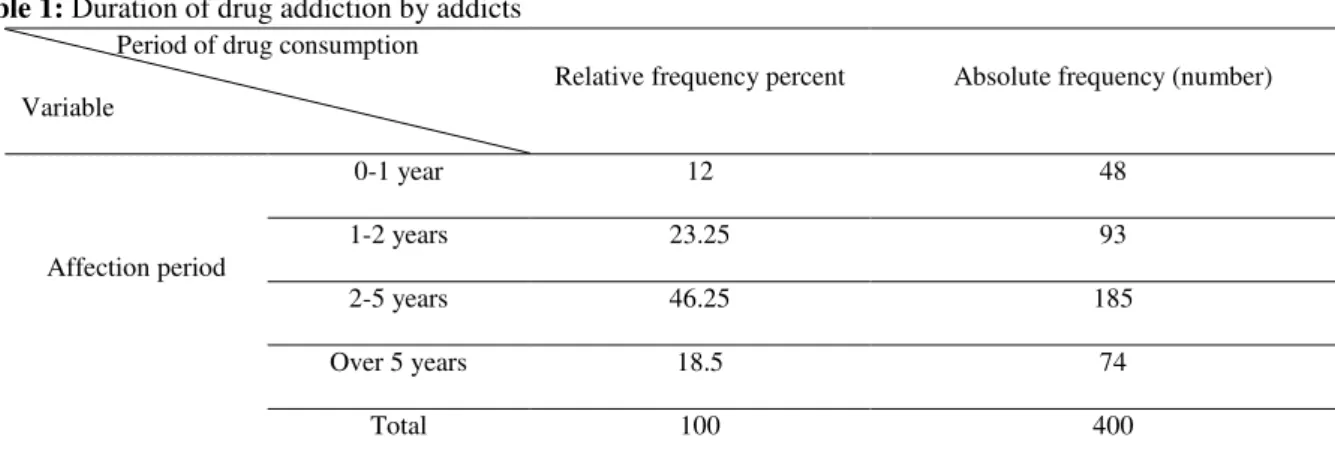
Addiction duration of subjects was as Table 1.
Table 1: Duration of drug addiction by addicts
Absolute frequency (number) Relative frequency percent
Period of drug consumption Variable
48 12
0-1 year
Affection period
93 23.25
1-2 years
185 46.25
2-5 years
74 18.5
Over 5 years
400 100
Total
Table 2: Factors affecting addicts’ trends based on preference
Percent Sum of
scores Factors affecting addicts’ trends (based on preference)
Row
98 392
Friends encouragement and conformity with them 1
93 382
Curiosity 2
92 368
Lack of proper tools for leisure time 3
70 280
Need for euphoria 4
46 184
Lack of control and supervision in families 5
23.5 94
Lack of public awareness from drug abuse effects 6
21.25 85
Free from social pressures such as poverty, working conditions and degree orientation 7
12.5 50
Addiction of other family members 8
11.5 46
Quarrel between parents and children 9
7 28
Lack of interest between parents 10
6.5 26
Lack of education continuance requirements 11
5.5 22
Illiterate or low-literate father 12
4.5 18
Crowded house due to number of people 13
2 8
Lack or absence of father 14
28.25% of subjects had prison history and 71.75% did not have this history.
5.25% of addicts had hospitalization history due to mental illness, depression, anxiety and illusion. However, none of patients mentioned suicidal tendencies in study that was due to their conditions in rehabilitation centers and hope to leave and return to normal life. Some subjects (13%) had history of suicide attempts in previous years. 94.5% of subjects claimed
that they were supported by their family and relatives; so most of them had better relationship with their families due to their action for rehabilitation; in severe cases of addiction, there were hostile behaviors among them.
There was significant relationship between father's level of education and smoking among factors related to people tendency to drug addiction (P = 0.05) and other
demographic factors did not have any effect on this issue.
The analysis of data related to factors affecting addicts’ tendency indicated that friend’s encouragement and conformity with them was the highest reason of addiction (98%) and absence of father was the least reason of addiction (2%). (Table 2).
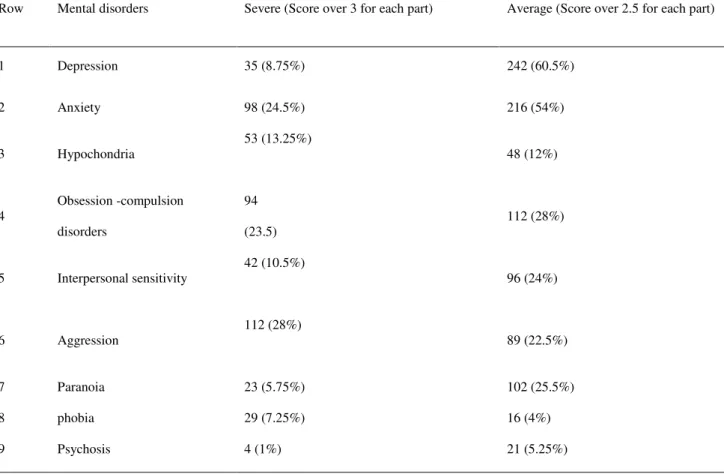
The study showed that the most common psychopathology with 9 dimensions included: anxiety, depression, aggression, obsession-compulsion, paranoid thoughts, interpersonal sensitivity, hypochondriasis, phobias and psychosis.
The results of SCL90R questionnaire showed that 35 subjects (8.75%) suffered from severe depression, 98 subjects (24.5%) suffered from severe anxiety, 53 subjects (13.25%) suffered from severe hypochondriasis, 94 subjects (23.5%) suffered from severe obsession-compulsion, 42 subjects (10.5%)
suffered from severe interpersonal sensitivity, 112 subjects (28%) suffered from severe aggression, 23 subjects (5.75%) suffered from severe paranoid thoughts, 29 subjects (7.25%) suffered from severe phobia and 4 subjects (1%) suffered from severe psychosis (table 3).
A large part of subjects suffered from psychological problems as below.
242 subjects (60.5 percent) suffered from moderate depression, 216 subjects (54%) suffered from moderate anxiety, 48 subjects (12%) suffered from moderate hypochondriasis, 112 subjects (28%) suffered from moderate obsess, 42 subjects (10.1%) suffered from moderate interpersonal sensitivity, 89 subjects (22.5%) suffered from moderate aggression, 102 subjects (25.5%) suffered from moderate paranoid, 16 subjects (4%) suffered from moderate phobia and 21 subjects (5.25%) suffered from moderate psychosis.
Table 3: Psychological state of addicted people obtained from SCL90 questionnaire
Average (Score over 2.5 for each part) Severe (Score over 3 for each part)
Mental disorders Row
242 (60.5%) 35 (8.75%)
Depression 1
216 (54%) 98 (24.5%)
Anxiety 2
48 (12%) 53 (13.25%)
Hypochondria 3
112 (28%) 94
(23.5) Obsession -compulsion
disorders 4
96 (24%) 42 (10.5%)
Interpersonal sensitivity 5
89 (22.5%) 112 (28%)
Aggression 6
102 (25.5%) 23 (5.75%)
Paranoia 7
16 (4%) 29 (7.25%)
phobia 8
21 (5.25%) 4 (1%)
Psychosis 9
figure1: psychological state of addicted people obtained from SCL90 questionnaires
Discussion
Addiction is a physical and mental disease that endanger individual, family and community health in all aspects of life due to its progressive nature; it is experienced as stress with mental and physical symptoms including concerns about burden of addiction, concerns about behavior and physical and psychological health of addict, reduced social communication of family, negative effects on relationship between family members, interpersonal sensitivity and mood or emotional symptoms such as anxiety, depression, feelings of helplessness, anger and guilt (24).
Today, a quarter of deaths are attributable to drug addiction and according to reports, those at high risk of suicide attempts, include addicts, homeless people and people with mental health problems. So that the highest
number of deaths are related to addicts suffering from mental disorders and suicide (25).
Drug addiction is also affected by biological, social, psychological and cultural factors and high rate of comorbidity of this phenomenon and psychiatric disorders is emphasized in etiology such as depression, anxiety and personality disorders (26).
In this regard, epidemiological data show that more than half of people with addiction disorders have mental disorders. A study reported prevalence of mental disorders on addiction 90.3% and the most prominent disorder is anxiety disorder of 31.8%. Also, a relationship was observed between drug dependence and depression disorder (27).
In this study, mean age of addicts referring to treatment centers of Urmia was 11.3 ± 35.2 years and mean number of siblings 2.19 ± 0.27 were studied. 368
subjects (92%) were living in city and the rest were living in rural areas. 64.25% of subjects were married and 4.25% were divorced and others were single. 38.25% were illiterate or had elementary school, 18% had guidance school, 42% had high school and diploma, and 1.75% had university education. In terms of housing, 28.25% had private housing, 35.25% had leased housing and 36.5% lived in father. 54% of subjects referred for the first time and 47% of addicts reported consumption age between 21 to 25 years.
Another study on social status of addicts showed that mean age of subjects was 33.6 years and addicted men were 14 times women. 56.7% were married, 12.4% were illiterate, 33.8% had guidance school and 5.2% had higher education, addiction prevalence in cities was 10.5 times the rural. 20.5% were unemployed and the highest prevalence (28.6 percent) was observed among workers (28). Also, the results of study showed that 84.2% of subjects were in urban areas. Mean age of subjects was 34.41 years and study results showed that 60 to 70 percent were illiterate or less educated and there was no statistically significant relationship between education level and psychological disorders (29).
The study showed that the most common psychopathology with 9 dimensions included: anxiety, depression, aggression, obsession-compulsion, paranoid thoughts, interpersonal sensitivity, hypochondriasis, phobias and psychosis.
Also, 35 subjects (8.75%) suffered from severe depression, 98 subjects (24.5%) suffered from severe anxiety, 53 subjects (13.25%) suffered from severe hypochondriasis, 94 subjects (23.5%) suffered from severe obsession-compulsion, 42 subjects (10.5%) suffered from severe interpersonal sensitivity, 112 subjects (28%) suffered from severe aggression, 23 subjects (5.75%) suffered from severe paranoid thoughts, 29 subjects (7.25%) suffered from severe phobia and 4 subjects (1%) suffered from severe psychosis.
The results of a study based on SCL-90-R test scales showed that mental disorders of addicts group was
higher than normal population in all measures except physical complaints and interpersonal sensitivity (30).
In another study, the highest observed disorders among addicted individuals included Paranoia thoughts, depression, obsession-compulsion, interpersonal sensitivity and physical complaints (29).
In one study, the most common symptoms among subjects included depression, interpersonal sensitivity, anxiety, paranoid thoughts (31).
Extensive studies show that people with mental disease experience drug dependence 2.7 times more than those without mental disorders; interaction between psychological, characteristic and environmental factors affect drug dependence in ways that go beyond the simple properties of drug substances (32).
In current study, 242 subjects (60.5 percent) suffered from moderate depression, 216 subjects (54%) suffered from moderate anxiety, 48 subjects (12%) suffered from moderate hypochondriasis, 112 subjects (28%) suffered from moderate obsess, 42 subjects (10.1%) suffered from moderate interpersonal sensitivity, 89 subjects (22.5%) suffered from moderate aggression, 102 subjects (25.5%) suffered from moderate paranoid, 16 subjects (4%) suffered from moderate phobia and 21 subjects (5.25%) suffered from moderate psychosis.
Another study shows that 15-40% of persons with mental disorder have drug addiction (33).
Having psychological problems leads to impairment of tasks, lack of motivation, anxiety, fear and concern and leads the person to spend a significant portion of its intellectual force for such problems and tend towards drug abuse in order to escape from problems (34).
Various reports of psychiatric disorders in Iran are associated with high incidence of substance abuse (35). According to mental test, there was significant difference between mental health and marital status and period of addiction based on psychological testing (P<0.05). There was no significant relationship between mental health and other demographic variables based on results.
In the case of drug abuse etiology, various factors have been discussed in theory and research such as family, social unrest, peer pressure, genetic, emotional and psychological factors (36).
Mental disorders make difficult drug rehabilitation (37).
In the current study it was found that addicts have had varying degrees of mental health problems. According to studies conducted in America, nearly 50% had comorbidity of mental disorder and addiction and 43 percent had comorbidity of anxiety and addiction (38).
In a study, primary and secondary mental disorders among drug addicts were more than public and three depressives, anxiety and antisocial personality disorders were observed more than any other abnormalities (39).
Comorbidity of depression and drug addiction create serious damages to addict including reduced quality of life and multiple problems in rehabilitation of addicts as well as it imposes enormous social and economic burden to community that suicide among young addicts is at its top (40).
It was found that simultaneous incidence of mental illness and substance use disorders is very common (41). Epidemiological data showed that more than half of people with addiction disorders have mental disorder. Another study showed that 15- 40% of persons with mental disorder have drug addiction (42).
Another study indicated a significant and positive relationship between psychiatric symptoms (depression and anxiety) and psychosocial functioning level and drug abuse and noted that drug abuse and mental disorders are not separate from each other but they are
elements of a collection that are affected by other aspects of life (43).
In one study, the most common disorders among addicted people included paranoia thoughts, depression, obsession-compulsion, interpersonal sensitivity, and physical complaints (29).
Finally, a study suggested that using psychotherapy or behavior therapy may be effective on addicts with mental disorder through suppressing the symptoms of anxiety and depression improving mental and physical health and quality of life. In fact, when signs of mental disorder disappeared, in a new stage, addicts can discriminate between mental disorders and panic attacks and desire to drug abuse and have a greater incentive and less fear for rehabilitation (44).
Conclusion
Finally, given the high rate of mental disorders and its severity among drug-dependent persons, it is essential to pay more attention to this group mental health through activating counseling centers and conducting comprehensive programs in order to improve psychiatric and psychological treatments; it reveals the need for mental health education development and implementation. Accordingly, acknowledgment and organized education are proposed in order to prevent and reduce problems of society and psychological, social and economic problems.
Acknowledgments
This study was financially supported by Forensic Medicine Organization (Code: 119153). We are grateful to all the staff and participants for their participation in this project.
References
1. Lundgren M, Amodeo M, Chassle D. Mental health status, drug treatment use and needle sharing among injection drug users. AIDS Educ Prev 2005; 17(6):
52-3.
2. Ahmadvand A, Ghoreishi F, SepehrManesh Z, Musavi GH. Effect of Methadone on depressing in injection addicts. J Res Behav Sci 2006; 4(1): 7782
(Persian)
3. Hannesdottir H, Tyrfingsson T, Piha J. Psychosocial functioning and psychiatric comorbidity among
substance – abusing Icelandic adolescents. Nord J
Psychiatry 2001; 55 (1): 438.
4. A report about Admission and fallow-up of Addicts in Iran. Tehran: Prevention and Treatment Department of Welfare Organization; 1999. (Persian)
5. Hesser JE. The Adolescent Substance Abuse Survey, Report for statewide Results. Rhode Island: Rhode Island Department of Health office of health statistics; 2000.
6. Hedayati D, AghazadehKh. Psychological Profile of Iranian teen addicts, Ardebil. University of Mohaghegh Ardabil (Faculty of Literature and Science). 2003 (Persian)
7. Wicks-Nelson R, Israel AC. Behavior Disorders of Childhood. 6 edition. Upper Saddle River, NJ:
Prentice Hall; 2005.
8. Sadock Kaplan H, Sadock B. Synopsis of psychiatry. 9th Ed. New York, Williams and Wilkins, 2002.
9. Farrell M, Howes S, Bebhington P, BrughaT,Jenkins R, Meltzer H. Nicotin, alcohol and drug dependence
and psychiatric comorbidity. Br J Psychiatry 2001;
179: 432-7.
10. Batel P. Addiction and schizophrenia. Eur Psychiatr
2000; 15(2): 115-22.
11. Torikka A, Kaltiala L, Heino R, RimpelaA,Rimpela M, Rantanen P. Depression, drinking and substance use among 14 to year old finished adolescents. Nord J Psychiatr 2001;55(5):351-70.
12. Verthein U, Degkwitz P, Karausz M. Mental disorders and the course of opiate dependence. Psychiatr Prax 2000; 27(2): 77 – 85.
13. ParviziFard A, Birashk B. Mood and anxiety disorders and drug abuse in addicts and healthy people. IJPCP 2013; 7(2): 45-54. (Persian)
14. Ghaleiha A, FarhadiNasab A, Zarabian MK, Matinnia N. Comparative Survey of Mental Disorders and Personality Characteristics in Persons With Drug Dependent and Non Drug Dependent in
Hamadan, Iran. Sci J Hamadan Univ Med Sci 2008; 15(2); 42-7. (Persian)
15. Bakhshipour RA, MahmoodAlilou M, Irani S. The Comparison of Personality Traits, Personality Disorders, and Problem-solving Strategies in Self-Introduced Addicts and Normal Population. IJPCP
2008; 14 (3):289-97. (Persian)
16. Drake RE, Wallach MA, Alverson HS, Mueser KT. Psychosocial aspects of substance by clients with severe mental illness. J Nerv Ment Dis 2002; 190
(2): 10060.
17. Dobkin PL, De Cm, Paraherakis A, Gill K. The role of functional social support in treatment retention and outcomes among outpatient adult substanceabusers. Addiction 2002; 97(3):347-56. 18. Skinner W, O'Grady C, Bartha C, Parker
C.Concurrer substance use and mental health disorders.An information guide. Toronto on: the centre for addiction and mental health; 2004. 19. Troisi A, Pasini A, Saracco M, Spalletta G. and pre
university adolescents: Rasht, Iran. Arch Iranian
Med 2007; 10(2): 141-6.
20. Karbasi M, Vakilian M. Adolescent and youth issues. Tehran: Payam Noor University; 1998. (Persian)
21. Akbari A. Problems of Adolescence and Youth. Tehran: Savalan; 2002 (Persian)
22. Ghiasi M. The opinions of addicts about reasons of some peoples’ tendency to drug in Sirjan. Unpublished MS Project. Kerman: Management of Education and Research; 2003. (Persian)
23. Frye S, DaweSh, Harret P, Kowalenko S, Harlen M. Supporting the families of young people with problematic drug use investigating support options. A Report prepared for the Australian national collnicil on drugs. J Clin Psychol 2008; 12(4):5463.
24. MosalaNejad L, Kheshti A, Gholami A. Mental health in pregnancy. J Jahrom Univ Med Sci 2008.5(5):229. (Persian)
25. Nordentoft M. Prevention of suicide and attempted suicide in Denmark. Epidemiological studies of
suicide and intervention studies in selected risk
groups. JAMA 2004; 291: 188796.
26. Narenjiha A. Harm reduction centers role in Tehran in addict’s personal and social improvement.
[Research Report]. Tehran: Daryush Institute; 2004.
(Persian)
27. Kokkevi A, Stefanis C. Drug abuse and psychiatric comorbidity. Comprehensive Psychiatry
1995;36(5):329–37.
28. Rahimi Movaghar A, Mohammad K, Razzaghi EM. Trend of drug abuse situation in Iran: a three-decade suevry. Hakim Med J 2002; 2(3): 171-82. (Persian) 29. Bulhari J. Assessment of drug abuse in Iranian
prisons, Quart J Drug Abuse 2004; 1(3): 226 (Persian)
30. Ghale’ iha A, Farhadinasab A, Zarabian K, Matinnia N. Comparative study of mental disorder and personality traits in drug dependent and non-drug dependent in Hamedan. Sci J Hamedan Univ Med Sci 2008; 15(2): 42-7. (Persian)
31. ParviziFard A, Birashk B, Atefvahid M, Shakeri J. Comorbidity of mood and anxiety disorders and substance abuse among treatment-seeking addicts and normal individuals. IJPCP 2001; 7 (1 and 2): 45 -55. (Persian)
32. Beck AT. Cognitive therapy of substance abuse. Translated by: MA Godarzi. Shiraz: Rahgosha; 2001 (Persian)
33. Bulhari J, Assessment of drug abuse in Iranian prisons. Quart J Drug Abuse 2004; 1(3): 226. (Persian)
34. Devries MW, Wilkerson B. Stress, work and mental health: a global perspective. Acta Neuropsychiatrica 2003: 15(1): 44.
35. HasanShahi M, Ahmadian K. The survey of mental health in addicts. J Fundamen Mental Health 2004;
23(2): 13-9. (Persian)
36. Powell J. Drug and alcohol referrals: Dependence
among the elderly. Compr Psychiatry 2000; 6(7):
61881.
37. Geerken M, Hughes M. Drug use and mental health among a representative national sample of young
adults. Soc Force 1989; 58(4): 572-89.
38. Grant F, Stinson F, Dawson D, Chou S, Dufour M, Compton W, et al. Prevalence and co-occurrence of substance use disorders and independent mood and anxiety disorders. Arch Gen Psychiatry 2004; 61(8):
807-16.
39. Kosten T, Rounsaville B. Psychopathology in opioid
addicts. Psychiatr Clin North Am 1986; 9(2): 51-3. 40. Edward V, Nunes MD, Frances R, Levin M.
Treatment of depression in patients with alcohol or
other drug dependence. JAMA 2004; 21(15): 1887
-96.
41. Glover RW, Gustafson JS. National Dialogue on Co-Occurring Mental Health and Substance Abuse Disorders. Retrieved February 11, 2008 from. 1999. 42. Regier DA, Farmer ME, Rae DS, et al: Comorbidity of mental disorders with alcohol and other drug
abuse, JAMA 1999; 264: 2511-8.
43. Krausz M, Verthein u, Degkwitz P: Psychiatric co morbidity in opiates addicts. Eur Addict Ress 1999; 5(2):55-62.
44. Hesse M. Integrated psychological treatment for substance use and co-morbid anxiety or depression vs. treatment for substance use alone. A systematic review of the published literature. BMC psychiatry
2009;9(1):6.