PLAINFIELD HIGH SCHOOL
PATHFINDER CURRICULUM HANDBOOK
2016 – 2017
TABLE OF CONTENTS
PCSC Mission Statement………..……….. 3
Introduction to Plainfield High School……….………. 3
Message to Students and Families……….……….………… 3
Core 40 Diploma……….………..… 4
Core 40 with Academic Honors Diploma……….……… 5
Core 40 with Technical Honors Diploma……….……….… 6
Courses Taken in Middle School for High School Credit……….………...…. 7
Class Rank – Valedictorian, Salutatorian & “Top 20”………..… 7
Quantitative Reasoning Courses……….……….. 7
Career & Technical Education Courses………..……….………...…. 8
End-of-Course Assessments……….……….… 8
ISTEP+ Grade 10……….9
Grading Scale………9
Grade Point Average (GPA)……… 9
Grade-Weighted Courses………..……….… 9
Advanced Placement (AP) Courses………..… 11
Dual Credit (DC) and Advanced College Project (ACP) Courses……… 11
Testing and Prerequisites for DC & ACP Courses………....……….……..…… 12
College and Career Readiness……….……… 12
College & Career Pathways………..… 13
Naviance Succeed
……… 14
Plainfield Opportunity Academy (POA)………. 14
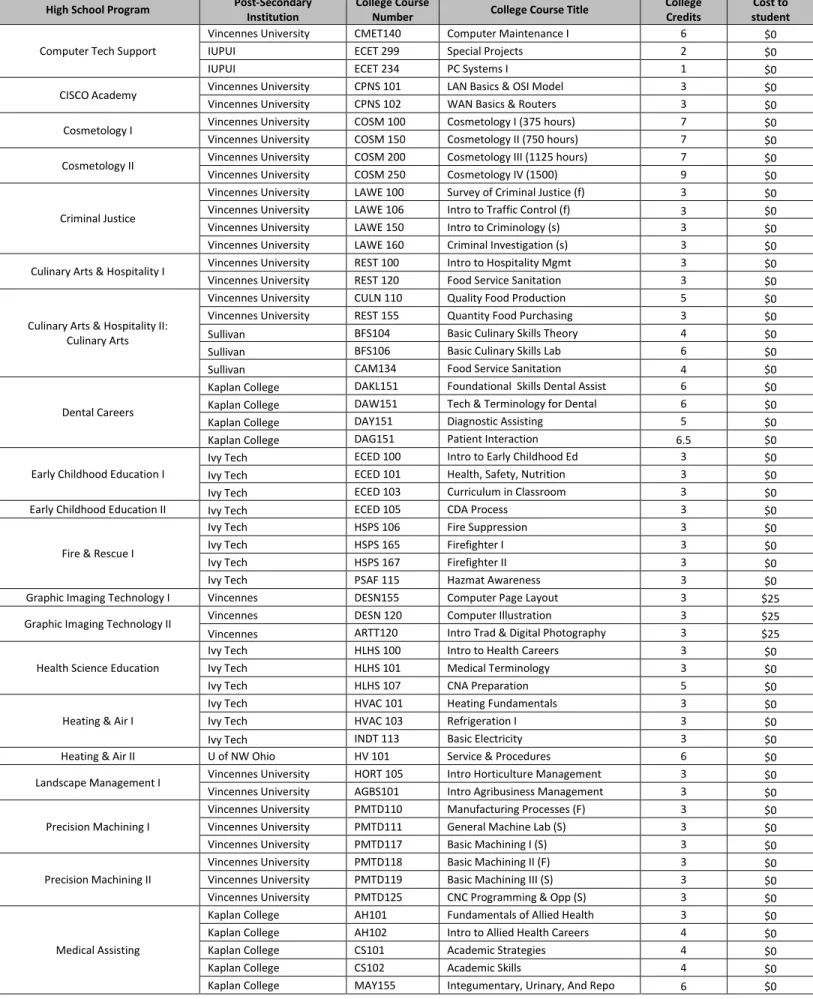
Area 31 Career/Technical Programs……… 14
Policies and Procedures……… 15
Educational Records – Transcripts & Report Cards………….………..……….… 15
Academic Review Committee………. 15
Changes in Pre-enrolled Course Selections………... 15
Dropping and/or Adding Courses………. 14
Incomplete Grades………. 16
Early Graduation…..……… 16
Transfer Students……… 17
Correspondence Credit/Online Courses………. 17
Athletic Eligibility……….… 17
NAIA & NCAA Division I/II Eligibility……… 18
2016-2017 PHS Scheduling Year……….…19
2016-2017 Area 31 Scheduling Year……… 20
Course Descriptions……… 21
Business Education……….… 21
Engineering & Technology Education……… 25
English……….… 28
Family & Consumer Sciences………..…… 34
Fine Arts (Theatre)………. 38
Fine Arts (Visual)………..38
Fine Arts (Music Performance)……….. 44
Mathematics………..… 48
Multidisciplinary……….. 51
Physical Education……….… 52
Science……… 54
Social Studies………. 58
World Languages……….…… 62
Area 31 Vocational Programs………. 64
Appendix A……… 76
Appendix B……… 77
Appendix C……… 78
PLAINFIELD HIGH SCHOOL MISSION STATEMENT
Plainfield High School (PHS) creates a positive educational environment in order to prepare students for their present
and future roles and encourages each individual to develop his or her potential by providing a wide range of curricular,
co-curricular and extracurricular experiences.
INTRODUCTION TO PLAINFIELD HIGH SCHOOL
Plainfield High School is a comprehensive high school with a curriculum designed to allow students to complete
requirements for graduation as prescribed by the Indiana Department of Education and the Plainfield Community School
Corporation, as well as to prepare them for entry into post-secondary institutions, vocational programs, and entry-level
employment.
Plainfield High School has been recognized by the State of Indiana as a Four-Star School. It is accredited by the Indiana
Department of Education. This accreditation ensures that Plainfield High School’s curriculum and programs remain
current and of high quality. This benefits students as they pursue higher education and employment.
MESSAGE TO STUDENTS AND FAMILIES
Plainfield High School is preparing students for the future by delivering instruction at the high school that is infused with
engaging and relevant learning for the 21
stCentury. The
Pathfinder Curriculum Handbook
has been prepared to
familiarize you with curricular opportunities at Plainfield High School and will explain graduation requirements, athletic
eligibility, grading policies, course descriptions, advanced placement and dual-credit opportunities, college and career
readiness resources, as well as any other matters pertaining to curriculum. Each student is encouraged to take time to
focus on career and college goals while planning his/her academic schedule.
Each spring during pre-enrollment, students must make extremely important choices about the courses they will take
the following year. You, the student, are the most important factor in this selection. Although teachers, counselors, and
parents may advise you, it is you personally who is ultimately responsible for correct and wise choices. For that reason,
you must study this guide carefully and give thoughtful consideration to your future goals. The best general advice is to
select those subjects that interest you, understanding that all students must master an academic core of courses in
order to graduate and pursue post-secondary and/or work opportunities.
Most PHS graduates earn a Core 40 with Academic Honors diploma (47 credits), Core 40 with Technical Honors diploma
(47 credits) or Core 40 diploma (40 credits). Students in the classes of 2017 and 2018 must pass the
ISTEP+
End-of-Course Assessments
in
Algebra 1
and
English 10
to earn a high school diploma, while students in the classes of 2019 and
beyond must pass the
ISTEP+ Grade 10 Assessments
in
English/Language Arts
and
Math
to earn a high school diploma.
KEY PRACTICES AT PLAINFIELD HIGH SCHOOL FOR EACH STUDENT:
High personal expectations for each student
A program of studies consisting of a challenging academic core and a career pathway major
Problem-solving activities that actively engage students
Challenging curriculum to serve a diversified student body
Academic studies that teach concepts from the 4-year or 2-year college preparatory curriculum
Blending of academic and career learning for college and career readiness
Advisement including guidance counselors, teachers and parents
GRADUATION REQUIREMENTS AND DIPLOMA TYPES
The completion of a Core 40 diploma is an Indiana graduation requirement and the default diploma for Plainfield High
School. Indiana’s Core 40 curriculum provides the academic foundation all students need to succeed in college and the
workforce. A Core 40 diploma is required for admission to Indiana public colleges offering bachelor’s (4-year) degrees.
A Core 40 curriculum is strongly recommended for admission to public colleges offering associate’s (2-year) degrees and
certificates, or for entry into the workforce.
PLAINFIELD HIGH SCHOOL CORE 40 DIPLOMA GRADUATION REQUIREMENTS
ENGLISH
8 credits
English 9 or English 9 Honors
English 10 or English 10 Honors
English 11 or English 11 CP or English 11 Honors (CHAP) or AP Language
English 12 or English 12 CP or AP Literature
2 credits 2 credits 2 credits 2 credits
MATHEMATICS
6 credits (Earned during grades 9-12)
All students must earn 6 math credits after entering high school. Math credits earned prior to entering grade 9 may meet specific course pre-requisites and may count toward the credit requirements for a diploma, however 6 math credits must be earned during grades 9-12. Additionally, students must be enrolled in a math or quantitative reasoning course during each year of high school.
Algebra I
Geometry
Algebra II
2 credits 2 credits 2 credits
SCIENCE
6 credits
Biology I
Chemistry I Honors or Physics I Honors or Integrated Chemistry-Physics
Any additional Core 40 science course
2 credits 2 credits 2 credits
SOCIAL STUDIES
6 credits
World History & Civilization or AP World History
US History or US History/HIST102 IVY (DC) or US History Honors CHAP/HIST102 IVY (DC)
US Government or AP US Government & Politics or US Government Honors: “We the People”
Economics or AP Microeconomics
2 credits 2 credits 1 credit 1 credit
PHYSICAL EDUCATION
2 credits
Physical Education I or Advanced PE I or Advanced PE I – Football
Physical Education II or Advanced PE II or Advanced PE II – Football
1 credit 1 credit
HEALTH & WELLNESS
1 credit
Health & Wellness Education 1 credit
PCSC LOCAL REQUIREMENT
2 courses
Preparing for College and Careers
Personal Financial Responsibility
PLTW: Introduction to Engineering Design IVY (DC) or
Adv Manufacturing I: Production/MPRO100 MPRO106 ADMF101 IVY (DC)
Digital Applications & Responsibility or Computer Graphics
(Computer Graphics only offered at PCMS and isNOT available for high school credit)
1-3 credits
DIRECTED ELECTIVES
5 credits
World Languages
Fine Arts
Career & Technical Education
5 credits
ELECTIVES 3-5 credits
Academic courses within a college & career pathway are recommended 3-5 credits
40 CREDITS REQUIRED FOR THE CORE 40 DIPLOMA
Students with unique circumstances examined by the Academic Review Committee (see page 15) that prohibit the completion of a Core 40 curriculum, may be able to graduate with less than a Core 40 diploma. In these instances students are not able to opt-out of a Core 40 diploma until December of their junior year.
To graduate with less than the Core 40 diploma, the following formal opt-out process must be followed:
The student, the student’s parent/guardian, and the student’s guidance counselor meet to discuss the student’s progress; The student’s post-secondary plans and 4-year course plan must be reviewed;
The student’s parent/guardian determines whether the student will achieve greater educational benefits by completing the general diploma curriculum or the Core 40 curriculum;
If the decision is made to opt out of completion of the Core 40 curriculum, the student is required to complete the graduation requirements for the general diploma and determine a career/academic sequence that the student will pursue.
PLAINFIELD HIGH SCHOOL CORE 40 w/ACADEMIC HONORS DIPLOMA GRADUATION REQUIREMENTS
ENGLISH
8 credits
English 9 or English 9 Honors
English 10 or English 10 Honors
English 11 or English 11 CP or English 11 Honors (CHAP) or AP Language
English 12 or English 12 CP or AP Literature
2 credits 2 credits 2 credits 2 credits
MATHEMATICS
8 credits (6 credits earned during grades 9-12)
All students must earn 6 math credits after entering high school. Math credits earned prior to entering grade 9 may meet specific course pre-requisites and may count toward the credit requirements for a diploma, however 6 math credits must be earned during grades 9-12. Additionally, students must be enrolled in a math or quantitative reasoning course during each year of high school.
Algebra I
Geometry
Algebra II
Any additional Core 40 math course
2 credits 2 credits 2 credits 2 credits
SCIENCE
6 credits
Biology I
Chemistry I Honors or Physics I Honors or Integrated Chemistry-Physics
Any additional Core 40 science course
2 credits 2 credits 2 credits
SOCIAL STUDIES
6 credits
World History & Civilization or AP World History
US History or US History/HIST102 IVY (DC) or US History Honors CHAP/HIST102 IVY (DC)
US Government or AP US Government & Politics or US Government Honors: “We the People”
Economics or AP Microeconomics
2 credits 2 credits 1 credit 1 credit
WORLD LANGUAGES
6-8 credits
Earn 6 credits in one Core 40 world language OR
Earn 4 credits each in two different Core 40 world languages
6-8 credits
FINE ARTS 2 credits
Earn 2 Core 40 fine arts credits 2 credits
PHYSICAL EDUCATION
2 credits
Physical Education I or Advanced PE I or Advanced PE I – Football
Physical Education II or Advanced PE II or Advanced PE II – Football
1 credit 1 credit
HEALTH & WELLNESS
1 credit
Health & Wellness Education 1 credit
PCSC LOCAL REQUIREMENT
2 courses
Preparing for College and Careers
Personal Financial Responsibility
PLTW: Introduction to Engineering Design IVY (DC) or
Adv Manufacturing I: Production/MPRO100 MPRO106 ADMF101 IVY (DC)
Digital Applications & Responsibility or Computer Graphics
(Computer Graphics only offered at PCMS and isNOT available for high school credit)
1-3 credits
ELECTIVES 3-7 credits
Academic courses within a college & career pathway are recommended 3-7 credits
47 CREDITS REQUIRED FOR THE CORE 40 with ACADEMIC HONORS DIPLOMA In addition to fulfilling the above requirements, students pursuing the Core 40 w/Academic Honors Diploma must:
Earn a grade of a “C-” or better in courses that will count toward the diploma; Have a grade point average of a 2.7 or higher;
Complete ONE of the following:
A) Earn 4 credits in 2 or more AP courses and take corresponding AP exams;
B) Earn 6 verifiable, transcripted college credits via courses designated as dual credit on the State Approved High School Course Titles Summary;
C) Earn a minimum of 3 verifiable, transcripted college credits via courses designated as dual credit on the State Approved High School Course Titles SummaryAND earn 2 credits in AP courses and take corresponding AP exams;
D) Earn a combined score of 1750 or higher on the SAT critical reading, mathematics and writing sections with no less than 530 on each section;
PLAINFIELD HIGH SCHOOL CORE 40 w/TECHNICAL HONORS DIPLOMA GRADUATION REQUIREMENTS
In addition to fulfilling the above requirements, students pursuing the Core 40 w/Technical Honors Diploma must: Earn a grade of a “C-” or better in courses that will count toward the diploma;
Have a grade point average of a 2.7 or higher;
Earn 6 credits in the college and career preparation courses in a state-approved College & Career Pathway and ONE of the following: o State-approved, industry-recognized certification or credential
o Pathway dual credits from courses designated as dual credit on the State Approved High School Course Titles Summary resulting in 6 transcripted college credits
Complete ONE of the following:
A) Any one of the options (A – E) of the Core 40 w/Academic Honors (see page 5);
B) Earn the following scores (or higher) on WorkKeys: Reading for Information – Level 6, Applied Mathematics – Level 6, and Locating Information – Level 5;
C) Earn the following minimum score(s) on Accuplacer: Writing – 80, Reading – 90, Math – 75; D) Earn the following minimum score(s) on Compass: Algebra – 66, Writing – 70, Reading – 80.
ENGLISH
8 credits
English 9 or English 9 Honors
English 10 or English 10 Honors
English 11 or English 11 CP or English 11 Honors (CHAP) or AP Language
English 12 or English 12 CP or AP Literature
2 credits 2 credits 2 credits 2 credits
MATHEMATICS
6 credits (Earned during grades 9-12)
All students must earn 6 math credits after entering high school. Math credits earned prior to entering grade 9 may meet specific course pre-requisites and may count toward the credit requirements for a diploma, however 6 math credits must be earned during grades 9-12. Additionally, students must be enrolled in a math or quantitative reasoning course during each year of high school.
Algebra I
Geometry
Algebra II
2 credits 2 credits 2 credits
SCIENCE
6 credits
Biology I
Chemistry I Honors or Physics I Honors or Integrated Chemistry-Physics
Any additional Core 40 science course
2 credits 2 credits 2 credits
SOCIAL STUDIES
6 credits
World History & Civilization or AP World History
US History or US History/HIST102 IVY (DC) or US History Honors CHAP/HIST102 IVY (DC)
US Government or AP US Government & Politics or US Government Honors: “We the People”
Economics or AP Microeconomics
2 credits 2 credits 1 credit 1 credit
COLLEGE & CAREER PATHWAY
6 credits
6 credits in a related sequence from a career-technical program of study 6 credits
PHYSICAL EDUCATION
2 credits
Physical Education I or Advanced PE I or Advanced PE I – Football
Physical Education II or Advanced PE II or Advanced PE II – Football
1 credit 1 credit
HEALTH & WELLNESS
1 credit
Health & Wellness Education 1 credit
PCSC LOCAL REQUIREMENT
2 courses
Preparing for College and Careers
Personal Financial Responsibility
PLTW: Introduction to Engineering Design IVY (DC) or
Adv Manufacturing I: Production/MPRO100 MPRO106 ADMF101 IVY (DC)
Digital Applications & Responsibility or Computer Graphics
(Computer Graphics only offered at PCMS and isNOT available for high school credit)
1-3 credits
ELECTIVES 9-11 credits
Academic courses within a college & career pathway are recommended 9-11 credits
COURSES TAKEN IN MIDDLE SCHOOL FOR HIGH SCHOOL CREDIT
High school credit will be awarded to middle school students who complete high school courses while in middle school.
The courses will appear on the student’s high school transcript, and the grades will factor into the cumulative GPA.
Students may also repeat these courses for a higher grade. Refer to “Repeating a Course” within the
Policies &
Procedures
portion of this handbook (page 15).
CLASS RANK – VALEDICTORIAN, SALUTATORIAN & “TOP 20”
The weighted cumulative GPA is used to determine class rank at the completion of each semester. The senior
valedictorian (class rank of
1
), senior salutatorian (class rank of
2
), and senior “Top 20” are determined at the end of 8
semesters.
QUANTITATIVE REASONING COURSES
All students earning a Core 40, Core 40 w/Academic Honors (AHD), and/or Core 40 w/Technical Honors (THD) diploma
are required to take a mathematics course or a quantitative reasoning course each year that they are enrolled in high
school. Students receiving a General Diploma must earn two credits in a mathematics course or a quantitative reasoning
course during their junior or senior year.
A quantitative reasoning course is a high school course that "advances a student's ability to apply mathematics in real
world situations and contexts" and that "deepens a student's understanding of high school mathematics standards."
The chart below provides a list of courses at PHS that have been determined to meet the criteria for quantitative
reasoning courses for 2016-2017. Quantitative reasoning courses are also designated as such within course descriptions
throughout this handbook.
BEN DAVIS AREA 31 CAREER CENTER Advanced Manufacturing II
Aerospace Engineering
Construction Trades: HVAC II
Electronics & Computer Technology II
Landscape Management I
Precision Machining I
Precision Machining II
BUSINESS EDUCATION
Introduction to Accounting
AdvBusCC: IntroAcc/ACCT100 VU (DC)
Advanced Accounting
AdvAcct/ACCT100 VU (DC)
Computer Science I
Computer Science II: Programming
Personal Financial Responsibility
ENGINEERING & TECHNOLOGY EDUCATION
PLTW: Civil Engineering & Architecture/DESN105 IVY (DC)
PLTW: Engineering Design & Development
PLTW: Principles of Engineering/DESN104 IVY (DC)
MATHEMATICS Algebra I
Geometry
Algebra II
College Algebra/MATH102 VU (DC)
Trigonometry/MATH104 VU (DC)
Pre-Calculus/Trigonometry Honors
Probability & Statistics
Calculus I/MATHM211 IU (ACP)
AP Calculus AB
AP Calculus BC
AP Statistics
Finite Math
Finite/MATH111 VU (DC)
SCIENCE
Chemistry I Honors
AP Chemistry
Integrated Chemistry-Physics
Physics I Honors
AP Physics 1: Algebra-Based
AP Physics 2: Algebra-Based
SOCIAL STUDIES Economics
CAREER & TECHNICAL EDUCATION COURSES
All students earning a Core 40 diploma must attain at least 5 directed elective credits in order to graduate. Directed
electives are courses in fine arts, world languages, and career & technical education (CTE). Career & technical education
courses specialize in skilled trades, applied sciences, modern technologies, and career preparation. These courses are
meant to prepare students for a wide variety of high-wage, high-skill and high demand careers.
The chart below provides a current listing of CTE courses at PHS for the 2016-2017 school year. Career & technical
education courses are also designated as such within course descriptions throughout this handbook.
BEN DAVIS AREA 31 CAREER CENTER
All Area 31 Career Center courses except American Sign Language I & American Sign Language II are CTE courses
BUSINESS EDUCATION
Introduction to Accounting
AdvBusCC: IntroAcct/ACCT100 VU (DC)
Advanced Accounting
AdvAcct/ACCT100 VU (DC)
Advanced Business Management: School Store
Computer Science I
Computer Science II: Programming
Sports & Entertainment Marketing
Preparing for College & Careers
Marketing in Hospitality
Merchandising
Principles of Marketing
Principles of Marketing/MGMT280 VU (DC)
Computer Tech Support – Instruction
Computer Tech Support – Field Experience
Interactive Media
Entrepreneurship & New Ventures Capstone
Entrepreneurship/ENTRE221 VU (DC)
Work-Based Learning Capstone
ICE – Related Instruction
ICE – On-the-Job Training
ENGINEERING & TECHNOLOGY EDUCATION PLTW: IED/DESN102 IVY (DC)
PLTW: POE/DESN104 IVY (DC)
PLTW: CEA/DESN105 IVY (DC)
PLTW: Engineering Design & Development
Supply Chain Management & Logistics
AdvManI: Production/MPRO100 MPRO106 ADMF101 IVY (DC)
AdvManI: Logistics/MPRO102 MPRO122 MPRO201 IVY (DC)
Warehouse Operations & Materials Handling
FAMILY & CONSUMER SCIENCES Fashion & Textiles Careers I
Fashion & Textiles Careers II
Nutrition & Wellness
Advanced Nutrition & Wellness
Intro to Housing & Interior Design
Child Development
Interpersonal Relationships
Education Professions I
SCIENCE
PLTW: Principles of Biomedical Sciences
PLTW: Human Body Systems
Anatomy & Physiology Honors
SOCIAL STUDIES
AdvSSCC: Criminal Justice I/CRIM101 IVY (DC)
END-OF-COURSE ASSESSMENTS (ECAs)
All students in the class of 2017 and the class of 2018 will take
End of Course Assessments (ECAs)
in English 10, Algebra I,
and Biology to meet graduation testing requirements. Students who do not meet state graduation standards will be
given two additional opportunities to demonstrate proficiency.
English 10
Required passing cut score
360
Algebra 1
Required passing cut score
564
Biology
Passing cut score
509
State law provides that a student who successfully meets the Core 40 requirements may still graduate without passing
the
ECAs
. State law also provides that a student may graduate without passing the
ECAs
by successfully appealing the
student’s test results under criteria adopted by the State Board criteria (IC 20-32-4-4). The student must have:
Taken the graduation test in the subject area or areas in which the student did not achieve a passing score at
least one (1) time every year during his sophomore, junior, and senior years in high school;
Completed
ECA
remediation opportunities provided by the school;
Maintained a minimum attendance rate of 95 percent (excused absences are not counted against the
attendance rate);
Maintain a “C” average (this will include a 1.7 GPA) in the courses required for graduation;
Satisfied any other state and local graduation requirements; and
Obtained a written recommendation supporting the request for the appeal from the student’s teacher(s) in
the subject area(s) in which the student has not achieved a passing score.
For more information on the
End-of-Course Assessments
, visit
http://www.doe.in.gov/assessment/end-course-assessments-ecas
.
ISTEP+ GRADE 10: ENGLISH/LANGUAGE ARTS TEST & MATH TEST
All students in the class of 2019 and the class of 2020 will take the
ISTEP+ Grade 10 English/Language Arts Test
and
ISTEP+
Grade 10 Math Test
at the end of their 10
thgrade year to meet graduation testing Requirements. Students must also take
the
ISTEP+ Grade 10 Science Test
when the student completes Biology I.
GRADING SCALE
Plainfield High School has established the recommended grading scale below. Grading scales are provided to guide
teachers when utilizing professional judgment in evaluating students. The semester grade is the product of a semester’s
worth of coursework. All courses will have a final exam. The final exam will count as 15% (unless otherwise noted) of
the final grade. Questions regarding course grading procedures and standards should be referred to the course
instructor.
GRADE POINT AVERAGE (GPA)
Grade Point Averages (GPAs) are calculated at the end of each semester and are based on semester grades. A student’s
cumulative GPA is the average of all semester grades completed by the student throughout high school. To calculate the
GPA, each semester grade is given a point value. The total points are then added together and divided by the number of
credits attempted (a grade of “F” or “WF” is considered a credit attempted). Each grade receives the following points:
A+
4.000
B+ 3.333
C+ 2.333
D+ 1.333
F
0.000
A
4.000
B
3.000
C
2.000
D
1.000
WF 0.000
A-
3.667
B- 2.667
C- 1.667
D-
0.667
NC No Credit
Honor Roll
3.0 – 3.49 semester GPA
High Honor Roll
3.5 and higher semester GPA
GRADE-WEIGHTED COURSES
Plainfield High School has adopted a
cumulative GPA
weighting system. In this system of weighting courses, points are
added to the cumulative GPA. The weighted cumulative GPA is then used to determine class rank. The add-on formula
used to calculate the points added to the cumulative GPA takes into account the number of grade-weighted credits
earned/semesters a student has completed in high school. The points added will change each semester as more
weighted credits are earned and more semesters toward graduation are completed.
A+
97-100%
B+ 87-89%
C+ 77-79% D+ 67-69%
F 59% and below
A
93-96%
B
83-86%
C
73-76%
D
63-66%
0.167 X number of grade-weighted credits earned
= TOTAL POINTS ADDED TO CUMULATIVE GPA
Semesters Completed
Please Note
: Students who transfer to PHS with honors courses on their transcript will have their transcript reviewed by
the guidance office. Upon verification that the courses target higher ability students, are considered more rigorous and
would prepare a student for the next level, such as Advanced Placement (AP), the course will receive weighted value,
provided it is offered and considered a weighted course at Plainfield High School. AP courses will be transferred and
counted as weighted, provided the course is offered at Plainfield High School.
Grade-weighted courses offered at PHS for the 2016-2017 school year are listed below:
BUSINESS EDUCATIONEntrepreneurship/ENTR221 VU (DC)
Principles of Marketing/MGMT280 VU (DC) ENGINEERING & TECHNOLOGY EDUCATION
MATH
Algebra II Honors
PLTW: Principles of Engineering/DESN104 IVY (DC) Pre-Calculus/Trigonometry Honors PLTW: Civil Engineering & Architecture/DESN105 IVY (DC) College Algebra/MATH102 VU (DC) PLTW: Engineering Design & Development Trigonometry/MATH104 VU (DC)
Finite Math/MATH111 VU (DC)
ENGLISH Calculus I/MATHM211 IU (ACP)
English 9 Honors AP Calculus AB
English 10 Honors AP Calculus BC
English 11 Honors – CHAP AP Statistics
AP Language & Composition
AP Literature & Composition SOCIAL STUDIES Adv Speech/COLLP155 IU (ACP) AP World History
Adv Composition/ENGW131 IU (ACP) US History/HIST102 IVY (DC)
US History Honors-CHAP/HIST102 IVY (DC)
FINE ARTS US Government Honors: “We the People”
AP Art History AP US Government & Politics
AP Studio Art – Drawing Portfolio AP Microeconomics
AP Studio Art – 2D Design Portfolio AdvSSCC: Psychology/PSYC101 IVY (DC)
AP Music Theory AdvSSCC: Sociology/SOCI111 IVY (DC)
AdvSSCC: Criminal Justice I/CRIM101 IVY (DC) SCIENCE
Anatomy & Physiology Honors WORLD LANGUAGES
Chemistry I Honors French IV
AP Chemistry German IV
Physics I Honors Spanish IV
AP Physics 1: Algebra-Based AP Physics 2: Algebra-Based AdvSciCC/BIOLL100 IU (ACP)
ADVANCED PLACEMENT (AP) COURSES
The Advanced Placement (AP) Program is sponsored by the
College Board
, a non-profit membership organization. The
AP Program gives students an opportunity to experience college-level courses and exams while they are still in high
school. The AP tests are scored on a 1 – 5 scale. Through this program, students may earn college credit, accelerated
placement, or both for college. Because AP courses are equivalent to a college level course, students who take AP
courses should expect to spend a considerable amount of time outside the classroom devoted to this rigorous
coursework. As a general rule, expect to spend one hour of work per day outside the class per period. Book rental fees
are usually higher for AP courses because students must purchase their own college textbook.
A new law, PL 91, requires all Indiana public colleges and universities (including all 2-year and 4-year institutions and
accompanying satellites) to award college credits for Indiana secondary school students that earn a score of 3 or higher
on College Board’s AP exam(s). Indiana public colleges and universities may require a score higher than 3 to award
credits for a course that is a requirement for a student’s major; if a university chooses to do so, it must still award a
student elective credits that count toward his/her overall degree requirements to graduate from college. Students
should visit
www.transferIN.net
to see how AP exam scores can transfer into college credits at Indiana colleges and
universities.
Students signed up for AP courses are expected to take the AP exams in May. Presently, the Indiana Department of
Education pays for English, science and math exams for juniors and seniors only, and therefore, there is no cost to PHS
students in these grade levels for these exams. All other tests require a fee; approximately $92 per test. For a complete
course description and other information regarding AP courses visit:
http://apcentral.collegeboard.com/apc/public/courses/descriptions/index.html
.
Advanced Placement courses offered at PHS for the 2016-2017 school year are listed below:
DUAL CREDIT (DC) AND ADVANCED COLLEGE PROJECT (ACP) COURSES
Dual Credit (DC) and Advanced College Project (ACP) courses allow students to earn credit toward a high school diploma
as well as a college degree. Though these courses may seem expensive for a high school class, they offer a significant
savings to many families when compared to tuition at post-secondary institutions. In addition to their financial
advantages, dual credit courses prepare students for the rigor of college work, and help many students qualify for an
Academic Honors Diploma.
Students may take courses on a college campus while in high school. Students must receive approval from the Academic
Review Committee and take all placement examinations required by the university. The student and his/her
parent/guardian are responsible for the cost of the program as well as transportation. PHS offers courses from
Vincennes University (VU), Ivy Tech University (IVY), and Indiana University (IU) taught on the PHS campus both during
the school day and after school hours.
ENGLISH
AP Language & Composition AP Literature & Composition FINE ARTS
AP Art History
AP Studio Art – Drawing Portfolio AP Studio Art – 2D Design AP Music Theory
MATH
AP Calculus AB AP Calculus BC AP Statistics
SCIENCE AP Chemistry
AP Physics 1: Algebra-Based AP Physics 2: Algebra-Based SOCIAL STUDIES
AP World History
AP Government & Politics AP Microeconomics
There are a few details to keep in mind when considering enrolling in dual credit and/or ACP courses:
Some courses have certain criteria that must be met, such as minimum test scores on the PSAT, SAT, ACT or
ACCUPLACER exams. Prerequisites and testing requirements can be found below. Students must meet entry
requirements and take the course for college credit to receive any grade weighting.
Some courses may transfer as college credit, but do not transfer as the identical course at another university.
This is known as “undistributed credit.” But, in most cases, a class will transfer into the accepting university.
Students should visit
www.transferIN.net
to see how available dual credit and ACP courses can transfer to
Indiana colleges and universities.
Tuition cost per credit hour is set by the university and subject to change (
See Appendix A
); Textbooks for dual
credit courses are dictated by the universities and are an additional cost for taking the course.
TESTING and PREREQUISITES for DC & ACP COURSES
The chart below outlines the testing and prerequisite requirements for Dual Credit and Advanced College Project
courses offered at Plainfield High School. Where testing requirements are mandatory in reading, writing or math, only
one qualifying test score is needed in each category.
Course Name College Credit
Hours
Minimum Reading Test Scores
Minimum Writing or English Test Scores
Minimum Math Test Scores
PSAT SAT ACT ACC PSAT SAT ACT
English ACC PSAT SAT ACT ACC Psych/PSYC101 IVY 3 46 460 18 76 46 460 17 80
AdvSSCC: Soc/SOCI111 IVY 3 46 460 18 76 46 460 17 80
CrimeI/CRIM101 IVY 3 46 460 18 76 46 460 17 80
US History/HIST102 IVY 3 46 460 18 76 46 460 17 80
US Hist Hon-CHAP/HIST102 IVY 3 46 460 18 76 46 460 17 80
College Algebra/MATH102 VU 3 70
Trigonometry/MATH104 VU 3 70
Finite Math/MATH111 VU 3 70
AdvBusCC: IntroBus/MGMT100 VU 3 Application only
PrincMktg/MGMT280 VU 3 Application only
AdvBusCC: IntroAcct/ACCT100 VU 3 Application only
AdvAccounting/ACCT100 VU 3 Application only
Entrepreneurship/ENTR221 VU 3 Application only
PLTW: IED/DESN101 IVY 3 Application only
PLTW: POE/DESN104 IVY 3 Application only
PLTW: CEA/DESN105 IVY 3 Application only
AdvManI/MPRO100 IVY 3 Application only
AdvManI/MPRO106 IVY 3 Application only
AdvManI/MPRO102 IVY 3 Application only
AdvMftgI/MPRO122 IVY 3 Application only
AdvMftgI/MPRO201 IVY 3 Application only
AdvMftgI/ADMF101 IVY 3 Application only
AdvSpeech/COLLP155 IU 3 2.7 or higher cumulative GPA
AdvComp/ENGW131 IU 3 2.7 or higher cumulative GPA
CalculusI/MATHM211 IU 4 2.7 or higher cumulative GPA
AdvSciCC: Biology/BIOLL100 IU 5 2.7 or higher cumulative GPA
COLLEGE & CAREER READINESS
Due to the wide variations in college admission requirements, students are urged to check with the admissions office of
prospective colleges and visit prospective colleges’ websites when planning their high school programs. College course
catalogs are available online at most college websites. Most colleges require at least 28 of the credits earned for high
school graduation to be devoted to academic courses. Be aware that college entrance requirements do change. The 11
thand 12
thgrade years are when students should take the SAT and ACT college entrance exams. Additionally, juniors have
the opportunity to earn scholarship monies through the National Merit program by taking the PSAT Examination. For
more information about the SAT and ACT programs, please visit
http://www.collegeboard.com/
and
To prepare for college, students should do the following:
Take recommended college preparatory courses. The preferred curriculum for the best preparation for
college is the Academic Honors Diploma. Indiana Core 40 is the minimum standard to be followed;
Maintain the best possible grades in courses to improve your GPA;
Take the PSAT exam (practice SAT) in the fall of both your sophomore and junior years;
Students are recommended to then take the SAT and/or ACT in the spring of their junior year and once again
in the fall of their senior year. Have SAT and ACT scores sent to Plainfield High School (
CEEB
school code is
152852) as well as to your prospective colleges.
(See Appendix B for 2016-2017 ACT & SAT Test Dates)
Apply to colleges early during fall of the senior year.
Some colleges and highly competitive programs may
require an early application. It is recommended that all students submit college applications by fall break of
their senior year;
Complete the
FAFSA
(
Free Application for Federal Student Aid
) after January 1
stof senior year and submit by
March 10
th, to be considered for state and federal financial aid. Visit
www.fafsa.ed.gov
for more information
on the
FAFSA
.
COLLEGE and CAREER PATHWAYS
The state-approved
Career Clusters and College & Career Pathways
, along with the sequence of courses recommended
for each Pathway and the Course Frameworks, can be accessed by clicking the Career Cluster links below or through
Naviance
. College & Career Pathways provide a way for schools to organize instruction and student experiences around
13 broad categories that encompass virtually all occupations from entry through professional levels. Use this site to
build 4-Year Course Plans & Course Frameworks. Start with a Career Cluster by selecting one of the 13 Career Clusters
below. Then study the Career Pathway Models for the chosen area, and select a more specific Career Pathway from that
Cluster. Visit
www.doe.in.gov/pathways
to learn more about the Indiana College & Career Pathways.
Visit
https://netsolutions.dwd.in.gov/hh50/jobList.aspx
for a listing of the 50 fastest growing, high-wage jobs of
tomorrow. The Hoosier Hot 50 Jobs are ranked on wages and demand in 2020 for the state of Indiana. Even though
Hoosier Hot 50 Jobs focuses on the jobs of tomorrow, there are several jobs that are hot now.
Agriculture Architecture & Construction
Arts, AV Technology & Communication Business & Marketing
Education & Training Health Science
Hospitality & Human Services Information Technology
Manufacturing Public Safety
STEM Transportation