International Journal of Science Engineering and Advance
Technology, IJSEAT, Vol. 4, Issue 10
ISSN 2321-6905
October-2016
A Study on properties of Coconut Oil and shells, an alternative to
Regular Aggregate in Concrete
Dhanala Vinaya1, Gottala Anirudh2
#1. M Tech Scholar, Specialization in Structural Engineering from the Department of Civil Engineering, #2. Assistant Professor, Department of Civil Engineering, Gokul group of Institutions,
Bobbili, vizianagaram, AP, India.
Abstract:
"Sustainable" is being to a great degree fundamental around the globe. The example goes past the demonstration of configuration and construction, since the recognition with the present people is a critical variable for the accomplishment of this inclination. Viable building structures can have a quick repercussions on the concrete of occupation conditions of gatherings. The purpose of this study is to review the utility and practicality of coconut shells as a coarse aggregate as a differentiating alternative to regular aggregate in concrete. A coconut shell has not been endeavored as aggregate in essential concrete. The properties of coconut shells must be alluded to before it can be used as a coarse aggregate as a piece of concrete. This investigation focuses on properties of coconut shells regardless, and a short time later as an auxiliary material.
Keywords: Coconut Shells, concrete, cement, coarse
aggregate, fly ash.
I. Introduction
"Sustainable" is being to a great degree fundamental around the globe. The example goes past the demonstration of configuration and construction, since the cognizance of the present people is a vital variable for the accomplishment of this affinity. Commonsense building structures can have a prompt implications on the advance concrete of occupation conditions of gatherings. Grievously, the extraction of normal aggregates has incited setting up human made quarries that have remarkable biological impact on the nature and environment. Doable materials are right away comprehensively considered and investigated in construction planning investigation. A couple instance of down to earth investigation worldwide are the usage of reused strong aggregates, coal fly searing remains, ground mud piece and pervious paver square system. Further, critical investigation work has been driven on fiber braced strong which is a strong essentially made of a mix of weight driven bond, aggregates, water and fortifying
fibers. The advance for concrete in the construction using run of the mill weight aggregates, for instance, shake and stone profoundly diminishes the regular stone stores and this has hurt the earth in this way bringing on natural disparity. In this manner, there is a need to explore and to find suitable substitution material to substitute the standard stone. In made countries, the construction business ventures have perceived various fake and typical lightweight aggregates (LWA) that have supplanted routine aggregates in this way diminishing the measure of basic people. Regardless, in Asia the construction business is yet to utilize the upside of LWC in the construction of tall building structures. Coconut Shell (CS) are not commonly used as a part of the construction business but instead are routinely dumped as cultivating misuses. The purpose of this study is to spread thoughtfulness regarding coconut strands as a construction material. Regular concrete is a mix of fine aggregates, coarse aggregates, concrete and water. In light of its supportive use, it is used as a piece of building construction and additionally in various zones like avenues, harbors, ranges and various more.The use of concrete is wide. It is a champion amongst the most basic constituent materials. It's comparatively calm, easy to make offers intelligence quality and for beyond any doubt it lays the piece of making and upgrading our bleeding edge society.
Coarse aggregates constitute most of concrete and also contribute the most towards its compressive quality through high atom quality and close particle interlock. Nevertheless, the construction business worldwide is going up against an absence of this regular resource. The reusing of pummeled block work rubble as coarse aggregate in concrete is a captivating credibility on account of its common preferences. It is not only a sensible differentiating alternative to regular coarse aggregate also deals with the huge issue of exchange of destruction of waste. Reusing construction and devastation waste into aggregate would finally provoke less quarries and landfills.
International Journal of Science Engineering and Advance
Technology, IJSEAT, Vol. 4, Issue 10
ISSN 2321-6905
October-2016
A Study on properties of Coconut Oil and shells, an alternative to
Regular Aggregate in Concrete
Dhanala Vinaya1, Gottala Anirudh2
#1. M Tech Scholar, Specialization in Structural Engineering from the Department of Civil Engineering, #2. Assistant Professor, Department of Civil Engineering, Gokul group of Institutions,
Bobbili, vizianagaram, AP, India.
Abstract:
"Sustainable" is being to a great degree fundamental around the globe. The example goes past the demonstration of configuration and construction, since the recognition with the present people is a critical variable for the accomplishment of this inclination. Viable building structures can have a quick repercussions on the concrete of occupation conditions of gatherings. The purpose of this study is to review the utility and practicality of coconut shells as a coarse aggregate as a differentiating alternative to regular aggregate in concrete. A coconut shell has not been endeavored as aggregate in essential concrete. The properties of coconut shells must be alluded to before it can be used as a coarse aggregate as a piece of concrete. This investigation focuses on properties of coconut shells regardless, and a short time later as an auxiliary material.
Keywords: Coconut Shells, concrete, cement, coarse
aggregate, fly ash.
I. Introduction
"Sustainable" is being to a great degree fundamental around the globe. The example goes past the demonstration of configuration and construction, since the cognizance of the present people is a vital variable for the accomplishment of this affinity. Commonsense building structures can have a prompt implications on the advance concrete of occupation conditions of gatherings. Grievously, the extraction of normal aggregates has incited setting up human made quarries that have remarkable biological impact on the nature and environment. Doable materials are right away comprehensively considered and investigated in construction planning investigation. A couple instance of down to earth investigation worldwide are the usage of reused strong aggregates, coal fly searing remains, ground mud piece and pervious paver square system. Further, critical investigation work has been driven on fiber braced strong which is a strong essentially made of a mix of weight driven bond, aggregates, water and fortifying
fibers. The advance for concrete in the construction using run of the mill weight aggregates, for instance, shake and stone profoundly diminishes the regular stone stores and this has hurt the earth in this way bringing on natural disparity. In this manner, there is a need to explore and to find suitable substitution material to substitute the standard stone. In made countries, the construction business ventures have perceived various fake and typical lightweight aggregates (LWA) that have supplanted routine aggregates in this way diminishing the measure of basic people. Regardless, in Asia the construction business is yet to utilize the upside of LWC in the construction of tall building structures. Coconut Shell (CS) are not commonly used as a part of the construction business but instead are routinely dumped as cultivating misuses. The purpose of this study is to spread thoughtfulness regarding coconut strands as a construction material. Regular concrete is a mix of fine aggregates, coarse aggregates, concrete and water. In light of its supportive use, it is used as a piece of building construction and additionally in various zones like avenues, harbors, ranges and various more.The use of concrete is wide. It is a champion amongst the most basic constituent materials. It's comparatively calm, easy to make offers intelligence quality and for beyond any doubt it lays the piece of making and upgrading our bleeding edge society.
Coarse aggregates constitute most of concrete and also contribute the most towards its compressive quality through high atom quality and close particle interlock. Nevertheless, the construction business worldwide is going up against an absence of this regular resource. The reusing of pummeled block work rubble as coarse aggregate in concrete is a captivating credibility on account of its common preferences. It is not only a sensible differentiating alternative to regular coarse aggregate also deals with the huge issue of exchange of destruction of waste. Reusing construction and devastation waste into aggregate would finally provoke less quarries and landfills.
International Journal of Science Engineering and Advance
Technology, IJSEAT, Vol. 4, Issue 10
ISSN 2321-6905
October-2016
A Study on properties of Coconut Oil and shells, an alternative to
Regular Aggregate in Concrete
Dhanala Vinaya1, Gottala Anirudh2
#1. M Tech Scholar, Specialization in Structural Engineering from the Department of Civil Engineering, #2. Assistant Professor, Department of Civil Engineering, Gokul group of Institutions,
Bobbili, vizianagaram, AP, India.
Abstract:
"Sustainable" is being to a great degree fundamental around the globe. The example goes past the demonstration of configuration and construction, since the recognition with the present people is a critical variable for the accomplishment of this inclination. Viable building structures can have a quick repercussions on the concrete of occupation conditions of gatherings. The purpose of this study is to review the utility and practicality of coconut shells as a coarse aggregate as a differentiating alternative to regular aggregate in concrete. A coconut shell has not been endeavored as aggregate in essential concrete. The properties of coconut shells must be alluded to before it can be used as a coarse aggregate as a piece of concrete. This investigation focuses on properties of coconut shells regardless, and a short time later as an auxiliary material.
Keywords: Coconut Shells, concrete, cement, coarse
aggregate, fly ash.
I. Introduction
"Sustainable" is being to a great degree fundamental around the globe. The example goes past the demonstration of configuration and construction, since the cognizance of the present people is a vital variable for the accomplishment of this affinity. Commonsense building structures can have a prompt implications on the advance concrete of occupation conditions of gatherings. Grievously, the extraction of normal aggregates has incited setting up human made quarries that have remarkable biological impact on the nature and environment. Doable materials are right away comprehensively considered and investigated in construction planning investigation. A couple instance of down to earth investigation worldwide are the usage of reused strong aggregates, coal fly searing remains, ground mud piece and pervious paver square system. Further, critical investigation work has been driven on fiber braced strong which is a strong essentially made of a mix of weight driven bond, aggregates, water and fortifying
fibers. The advance for concrete in the construction using run of the mill weight aggregates, for instance, shake and stone profoundly diminishes the regular stone stores and this has hurt the earth in this way bringing on natural disparity. In this manner, there is a need to explore and to find suitable substitution material to substitute the standard stone. In made countries, the construction business ventures have perceived various fake and typical lightweight aggregates (LWA) that have supplanted routine aggregates in this way diminishing the measure of basic people. Regardless, in Asia the construction business is yet to utilize the upside of LWC in the construction of tall building structures. Coconut Shell (CS) are not commonly used as a part of the construction business but instead are routinely dumped as cultivating misuses. The purpose of this study is to spread thoughtfulness regarding coconut strands as a construction material. Regular concrete is a mix of fine aggregates, coarse aggregates, concrete and water. In light of its supportive use, it is used as a piece of building construction and additionally in various zones like avenues, harbors, ranges and various more.The use of concrete is wide. It is a champion amongst the most basic constituent materials. It's comparatively calm, easy to make offers intelligence quality and for beyond any doubt it lays the piece of making and upgrading our bleeding edge society.
International Journal of Science Engineering and Advance
Technology, IJSEAT, Vol. 4, Issue 10
ISSN 2321-6905
October-2016
II. Related work
COCONUT SHELLS:
The coconut palm is a champion amongst the most supportive plants on the planet. Coconut is created in 92countries on the planet. Overall era of coconut is 51 billion nuts from a district of 12 million hectares. South East Asia is seen as the reason for coconut. The four critical players India, Indonesia, Philippines and Sri Lanka contribute 78% of the world creation. Coconut shells have awesome toughness qualities, high quality and scratched range safe properties; it is sensible for long standing use. The examination of Coconut Shells as a possibility for aggregates is another strategy for using the responsibilities a coconut tree will give. The inspiration driving this examination work is to develop a strong with coconut shells as coarse aggregate. The whole component could be called coconut shell aggregate concrete. Generally, the parameters that choose the comparability necessities for the coconut shells bond composite are most prominent hydration temperature, time taken to achieve most noteworthy temperature, extent of the setting times of coconut shells fines-concrete mix, smooth fines-concrete and inhibitory rundown. Inhibitory effect is the measure of the decrease in warmth release in the midst of the exothermic substance method of concrete hydration. The coconut shells concrete likeness was inspected with the properties, for instance, conventional consistency, beginning and last setting times, compressive quality and hydration using the examples of coconut shells fines with bond and impeccable bond.
WASTE MATERIALS IN INDIA:
Everywhere throughout the world distinctive measures went for decreasing the use of crucial aggregates and extending reuse and reusing have been introduced, where it is indeed, financially, or environmentally satisfactory. In this way, in making countries like India, the easygoing division and discretionary business wanders reuse 15–20% of solid misuses in various building materials and parts. As a bit of consolidated solid waste organization orchestrate that fuses reuse, reuse and recovery, the masterminded solid waste, addressing unused resources, may be used as simplicity materials. In a matter of seconds in India, around 960 MT of solid wastes are being made yearly as by-things from present day, mining, city, country and distinctive methodology. Of this, 350 MT are normal wastes from agrarian sources; 290 MT are inorganic misuses of current and mining regions. Regardless, it is
represented that around 600 MT of wastes have been created in India from cultivating sources alone. PRESENT USE OF COCONUT SHELL:
Coconut shells have awesome robustness traits, high strength and scratched spot safe properties; it is suitable for long standing use. Coconut shells are generally used as an embellishment, making luxurious things, house hold utensils, and as a wellspring of activated carbon from its charcoal. The powdered shell is also used as a part of the business endeavors of plastics, glues, and grinding materials and it is extensively used for the amassing of bug repellent as mosquito twists and in agarbathis. The examination of coconut shells as a possibility for aggregates is another technique for using the responsibilities a coconut tree will give. The purpose behind this investigation work is to develop a strong with coconut shells as coarse aggregate.
FLY ASH:
Fly red hot trash is a finely segregated development coming to fruition due to the ignition of ground or powdered bituminous coal or sub-bituminous coal (lignite) and transported by the channel gasses of boilers let pass by beat coal or lignite. It is open in sweeping sums in the country as a waste thing from different warm power stations and mechanical plants using beat coal or lignite as fuel for the boilers. The fruitful usage of fly blazing flotsam and jetsam as a pozzolona in the creation of bond and for part substitution of bond, as an admixture in concrete mortar and concrete and in lime pozzolona mix, has been set up in the country starting late. Late examinations on Indian fly red hot trash have shown more essential degree for their utilization as a construction material. More noticeable utilization of fly slag will incite saving of uncommon construction materials and help with dealing with the issue of exchange of this waste thing from warm power stations. The late examinations have in like manner demonstrated the need to give real amassing methods to fly red hot stays with a specific end goal to yield fly powder of significant worth and consistency which are prime necessities of fly slag for use as a construction material. This standard has been set up to give general heading towards the sensibility of fly searing flotsam and jetsam as a pozzolona and as an admixture for fundamental' mortar and concrete.
III. MATERIALS
International Journal of Science Engineering and Advance
Technology, IJSEAT, Vol. 4, Issue 10
ISSN 2321-6905
October-2016
are utilizing bond, fly cinder, coarse total, fine total, water, and Hcl corrosive.
Bond
Common Portland concrete, 53 review should be fabricated by personally combining calcareous and argillaceous or potentially other silica, alumina or iron oxide bearing materials, blazing them at a clinkering temperature and crushing the resultant clinker in order to create a bond fit for conforming to this standard. No material might be included in the wake of blazing, other than gypsum (normal mineral or concoction, see Note), water, execution improver(s), and not more than a sum of 1.0 percent of air-entraining specialists or different operators including shading specialists, which have turned out to be unsafe.
Composition of OPC:
The chief chemical components of ordinary Portland cement are:
•
Calcium•
Silica•
Alumina•
IronCalcium is usually derived from limestone, marl or chalk while silica, alumina and iron come from the sands, clays & iron ores. Other raw materials may include shale, shells and industrial byproducts.
Advantages of OPC:
•
Gives more flexibility to architects and engineers to design sleeker and economical sections•
Develops high early strength so that form work of slabs and beams can be removed much earlier resulting in faster speed of construction and saving in centering cost.•
Produces highly durable and sound concrete due to very low percentage of alkalis, chlorides, magnesia and free lime in its composition•
Almost a negligible chloride results in restraining corrosion of concrete structure in hostile environmentIdeal Applications of OPC:
•
-rise Buildings, Residential, Commercial & Industrial Complexes•
Roads, runways, bridges and flyovers Defense Constructions•
Pre-stressed concrete structuresFine Aggregate:
Well graded river sand passing through 4.75 mm was used as fine aggregate. It consists of natural sand or, subject to approval, other inert materials
with similar characteristics, or combinations having hard, strong, durable particles.
Coarse Aggregate:
Coarse aggregate shall consist of naturally occurring materials such as gravel, or resulting from the crushing of parent rock, to include natural rock, slag’s, expanded clays and shale’s (lightweight aggregates) and other approved inert materials with similar characteristics, having hard, strong, durable particles, conforming to the specific requirements of this Materials substantially retained on the No. 4 sieve, shall be classified as coarse aggregate.
Fly cinder:
It is otherwise called vent fiery remains, is one of the buildups created incombustion, and involves thefine particles that ascent with theflue gasses. Fiery remains which does not rise is named base cinder. In a modern setting, fly fiery remains as a rule alludes to cinder created amid burning ofcoal. Fly fiery remains is by and large caught by electrostatic precipitatorsor other molecule filtration hardware before the vent gasses come to the smokestacks ofcoal-let go control plants, and together withbottom ashremoved from the base of the heater is for this situation mutually known as coal powder. Contingent on the source and cosmetics of the coal being singed, the segments of fly fiery remains fluctuate extensively, yet all fly slag incorporates significant sums ofsilicon dioxide (SiO2) (bothamorphousandcrystalline) andcalcium oxide (CaO), both being endemic fixings in numerous coal-bearingrock strata.
How Does Fly Ash Protect Concrete?
The joining of Ashtech's Fly Ash minimizes the water request, decreases the drain channels and through pozzolanic action expands the cementations aggravates, all of which increment the solid thickness. These elements yield cement of low penetrability with low inward voids, which significantly enhances the resistance against chloride entrance, sulfate assault and erosion of the steel support.
The advantages of the low water request of Fly Ash cement is of prime significance especially in blend with a low water/concrete proportion – bring down water permits bring down bond for a given quality level. This permits bring down warmth advancement, porosity and shrinkage of the solid.
International Journal of Science Engineering and Advance
Technology, IJSEAT, Vol. 4, Issue 10
ISSN 2321-6905
October-2016
shrinkage and less plausibility of warm splitting. In lessened soluble base silica reactivity, Fly Ash can respond with antacid hydroxides in Portland bond glue, making these inaccessible for response with receptive silica in specific totals. Any dangers of antacid silica response are fundamentally diminished if not totally wiped out.
The utilization of Ashtech's Fly Ash to enhance the specialized properties of the solidified cement has turned into a standard, especially in hot and forceful situations. Advisors and Engineers alike have perceived this with the outcome that Ashtech's Fly Ash has been effectively determined and utilized as a part of the absolute most conspicuous structures in India and the Middle East, where we have worked in close organization and concurrence with cinder assets of South Africa.
Advantages of Fly Ash:
When used as a Portland cement replacement, class c fly ash offers the following advantages when compared to unmodified Portland cement:
• Increased Early And Late Compressive Strengths
• Increased Resistance To Alkali Silica Reaction (ASR) When >15% Is Added • Less Heat Generation During Hydration Increased Pore Refinement
• Decreased Permeability • Decreased Water Demand • Increased Workability • Decreased Cost
Fig 1: fly ash
Coconut shells:
The coconut palm is one of the most useful plants in the world. Coconut is grown in 92countries in the world. Coconut shells are mostly used as an ornament, making fancy items, house hold utensils, and as a source of activated carbon from its charcoal. The powdered shell is also used in the industries of plastics, glues, and abrasive materials and it’swidely used for the manufacture of insect repellent in the form of mosquito coils and in agarbathis. The study of CS as an alternative for aggregates is another way of using the contributions a coconut tree will provide.
Coconut shells which were already broken into two pieces were collected from local temple; air dried for five days approximately at the temperature of 25 to 30 C; removed fiber and husk on dried shells; further broken the shells into small chips manually using hammer and sieved through 12.5mm sieve. The material passed through 12.5mm sieve was used to replace coarse aggregate with coconut shells. The material retained on 12.5mm sieve was discarded.
Specific gravity at saturated surface dry condition of the material was found as
1.30.The sugar present in wood may cause incompatibility between wood and cement. Since the coconut shells aggregates are wood based, to estimate the sugar present in coconut shells, 15fine particles passing through IS sieve 9, IS sieve 15, IS sieve 30 were taken and analyzed without any treatment. Also coconut shells fines passing through IS sieve 15 was taken and analyzed with treatment. Generally, the parameters that determine the compatibility requirements for the coconut shells cement composite are maximum hydration temperature, time taken to attain maximum temperature, ratio of the setting times of coconut shells fines-cement mixture, neat cement and inhibitory index. Inhibitory effect is the measure of the decrease in heat release during the exothermic chemical process of cement hydration. The coconut shells cement compatibility was analyzed with the properties such as normal consistency, initial and final setting times, compressive strength and hydration using the samples of coconut shells fines with cement and neat cement.
Fig 2: Coconut shell Water:
The quality of water is important because contaminants can adversely affect the strength of
International Journal of Science Engineering and Advance
Technology, IJSEAT, Vol. 4, Issue 10
ISSN 2321-6905
October-2016
shrinkage and less plausibility of warm splitting. In lessened soluble base silica reactivity, Fly Ash can respond with antacid hydroxides in Portland bond glue, making these inaccessible for response with receptive silica in specific totals. Any dangers of antacid silica response are fundamentally diminished if not totally wiped out.
The utilization of Ashtech's Fly Ash to enhance the specialized properties of the solidified cement has turned into a standard, especially in hot and forceful situations. Advisors and Engineers alike have perceived this with the outcome that Ashtech's Fly Ash has been effectively determined and utilized as a part of the absolute most conspicuous structures in India and the Middle East, where we have worked in close organization and concurrence with cinder assets of South Africa.
Advantages of Fly Ash:
When used as a Portland cement replacement, class c fly ash offers the following advantages when compared to unmodified Portland cement:
• Increased Early And Late Compressive Strengths
• Increased Resistance To Alkali Silica Reaction (ASR) When >15% Is Added • Less Heat Generation During Hydration Increased Pore Refinement
• Decreased Permeability • Decreased Water Demand • Increased Workability • Decreased Cost
Fig 1: fly ash
Coconut shells:
The coconut palm is one of the most useful plants in the world. Coconut is grown in 92countries in the world. Coconut shells are mostly used as an ornament, making fancy items, house hold utensils, and as a source of activated carbon from its charcoal. The powdered shell is also used in the industries of plastics, glues, and abrasive materials and it’swidely used for the manufacture of insect repellent in the form of mosquito coils and in agarbathis. The study of CS as an alternative for aggregates is another way of using the contributions a coconut tree will provide.
Coconut shells which were already broken into two pieces were collected from local temple; air dried for five days approximately at the temperature of 25 to 30 C; removed fiber and husk on dried shells; further broken the shells into small chips manually using hammer and sieved through 12.5mm sieve. The material passed through 12.5mm sieve was used to replace coarse aggregate with coconut shells. The material retained on 12.5mm sieve was discarded.
Specific gravity at saturated surface dry condition of the material was found as
1.30.The sugar present in wood may cause incompatibility between wood and cement. Since the coconut shells aggregates are wood based, to estimate the sugar present in coconut shells, 15fine particles passing through IS sieve 9, IS sieve 15, IS sieve 30 were taken and analyzed without any treatment. Also coconut shells fines passing through IS sieve 15 was taken and analyzed with treatment. Generally, the parameters that determine the compatibility requirements for the coconut shells cement composite are maximum hydration temperature, time taken to attain maximum temperature, ratio of the setting times of coconut shells fines-cement mixture, neat cement and inhibitory index. Inhibitory effect is the measure of the decrease in heat release during the exothermic chemical process of cement hydration. The coconut shells cement compatibility was analyzed with the properties such as normal consistency, initial and final setting times, compressive strength and hydration using the samples of coconut shells fines with cement and neat cement.
Fig 2: Coconut shell Water:
The quality of water is important because contaminants can adversely affect the strength of
International Journal of Science Engineering and Advance
Technology, IJSEAT, Vol. 4, Issue 10
ISSN 2321-6905
October-2016
shrinkage and less plausibility of warm splitting. In lessened soluble base silica reactivity, Fly Ash can respond with antacid hydroxides in Portland bond glue, making these inaccessible for response with receptive silica in specific totals. Any dangers of antacid silica response are fundamentally diminished if not totally wiped out.
The utilization of Ashtech's Fly Ash to enhance the specialized properties of the solidified cement has turned into a standard, especially in hot and forceful situations. Advisors and Engineers alike have perceived this with the outcome that Ashtech's Fly Ash has been effectively determined and utilized as a part of the absolute most conspicuous structures in India and the Middle East, where we have worked in close organization and concurrence with cinder assets of South Africa.
Advantages of Fly Ash:
When used as a Portland cement replacement, class c fly ash offers the following advantages when compared to unmodified Portland cement:
• Increased Early And Late Compressive Strengths
• Increased Resistance To Alkali Silica Reaction (ASR) When >15% Is Added • Less Heat Generation During Hydration Increased Pore Refinement
• Decreased Permeability • Decreased Water Demand • Increased Workability • Decreased Cost
Fig 1: fly ash
Coconut shells:
The coconut palm is one of the most useful plants in the world. Coconut is grown in 92countries in the world. Coconut shells are mostly used as an ornament, making fancy items, house hold utensils, and as a source of activated carbon from its charcoal. The powdered shell is also used in the industries of plastics, glues, and abrasive materials and it’swidely used for the manufacture of insect repellent in the form of mosquito coils and in agarbathis. The study of CS as an alternative for aggregates is another way of using the contributions a coconut tree will provide.
Coconut shells which were already broken into two pieces were collected from local temple; air dried for five days approximately at the temperature of 25 to 30 C; removed fiber and husk on dried shells; further broken the shells into small chips manually using hammer and sieved through 12.5mm sieve. The material passed through 12.5mm sieve was used to replace coarse aggregate with coconut shells. The material retained on 12.5mm sieve was discarded.
Specific gravity at saturated surface dry condition of the material was found as
1.30.The sugar present in wood may cause incompatibility between wood and cement. Since the coconut shells aggregates are wood based, to estimate the sugar present in coconut shells, 15fine particles passing through IS sieve 9, IS sieve 15, IS sieve 30 were taken and analyzed without any treatment. Also coconut shells fines passing through IS sieve 15 was taken and analyzed with treatment. Generally, the parameters that determine the compatibility requirements for the coconut shells cement composite are maximum hydration temperature, time taken to attain maximum temperature, ratio of the setting times of coconut shells fines-cement mixture, neat cement and inhibitory index. Inhibitory effect is the measure of the decrease in heat release during the exothermic chemical process of cement hydration. The coconut shells cement compatibility was analyzed with the properties such as normal consistency, initial and final setting times, compressive strength and hydration using the samples of coconut shells fines with cement and neat cement.
Fig 2: Coconut shell Water:
International Journal of Science Engineering and Advance
Technology, IJSEAT, Vol. 4, Issue 10
ISSN 2321-6905
October-2016
concrete and cause corrosion of the steel reinforcement. Water used for producing and curing concrete should be reasonably clean and free from deleterious substances such as oil, acid, alkali, salt, sugar, silt, organic matter and other elements which are detrimental to the concrete or steel. If the water is drinkable, it is considered to be suitable for concrete making. Hence, potable tap water was used in this study for mixing and curing.
IV. EXPERIMENTAL PROGRAM
MIX DESIGN
(INDIAN STANDARAD METHOD OF DESIGN)
Bureau of Indian standards, recommended a set of procedure for design of
Concrete mix mainly based on the work done in national laboratories.
•
Grade of concrete :M35 Method used :IS code
method
Water cement ratio : 0.35
Compaction factor : 0.9
Maximum size of aggregate : 20 mm
Specific gravity of cement Sc : 3.1
Specific gravity of fine aggregate
Sfa : 2.67
aggregateSpecific gravity of coarse
Sca : 2.6
•
Water content : 180 kg / m3•
Water content after adjustments = 186 + (186 x 0.03) = 185.39•
From water cement ratio•
Cement content = 185.08 / 0.45 = 501.08•
Fine aggregate content = 631.36•
Coarse aggregate content = 1112.39•
Mix proportion is 501.08 : 631.36 :1112.39
•
Mix proportion is 1 : 1.26 : 2.22V. PLANNING AND EXECUTION:
In this our project we can use the materials which are tested in our laboratory
Casting Of Concrete Cubes, Cylinders and Beams The test moulds are kept ready before preparing the mix. Tighten the bolts of the moulds carefully because if bolts of the moulds are not kept tight the concrete slurry coming out of the mould when vibration takes place. Then moulds are cleaned and oiled on all contact surfaces of the moulds and
initially the constituent materials were weighed and dry mixing was carried out for cement, sand and coarse aggregate and admixtures. This was thoroughly mixed manually to get uniform colour of mix. The mixing duration was 2-5 minutes and then the water was added as per the mix proportion. The mixing was carried out for 3-5 minutes duration. Then the mix poured in to the moulds and then compacted manually using tamping rods. the concrete is
Curing:
The cubes are demoulded after 1 day of casting and then kept in respective solutions for curing at room temperature with a relative humidity of 85% the cubes are taken out from curing after 7days, 28 days and 60 days for testing.
Fig. 3casting of cubes
Curing is a procedure that is adopted to promote the hardening of concrete under conditions of humidity and temperature which are conducive to the progressive and proper setting of the constituent cement. Curing has a major influence on the properties of hardened concrete such as durability, strength, water-tightness, wear resistance, volume stability, and resistance to freezing and thawing. Concrete that has been specified, batched, mixed, placed, and finished can still be a failure if improperly or inadequately cured. Curing is usually the last step in a
International Journal of Science Engineering and Advance
Technology, IJSEAT, Vol. 4, Issue 10
ISSN 2321-6905
October-2016
concrete and cause corrosion of the steel reinforcement. Water used for producing and curing concrete should be reasonably clean and free from deleterious substances such as oil, acid, alkali, salt, sugar, silt, organic matter and other elements which are detrimental to the concrete or steel. If the water is drinkable, it is considered to be suitable for concrete making. Hence, potable tap water was used in this study for mixing and curing.
IV. EXPERIMENTAL PROGRAM
MIX DESIGN
(INDIAN STANDARAD METHOD OF DESIGN)
Bureau of Indian standards, recommended a set of procedure for design of
Concrete mix mainly based on the work done in national laboratories.
•
Grade of concrete :M35 Method used :IS code
method
Water cement ratio : 0.35
Compaction factor : 0.9
Maximum size of aggregate : 20 mm
Specific gravity of cement Sc : 3.1
Specific gravity of fine aggregate
Sfa : 2.67
aggregateSpecific gravity of coarse
Sca : 2.6
•
Water content : 180 kg / m3•
Water content after adjustments = 186 + (186 x 0.03) = 185.39•
From water cement ratio•
Cement content = 185.08 / 0.45 = 501.08•
Fine aggregate content = 631.36•
Coarse aggregate content = 1112.39•
Mix proportion is 501.08 : 631.36 :1112.39
•
Mix proportion is 1 : 1.26 : 2.22V. PLANNING AND EXECUTION:
In this our project we can use the materials which are tested in our laboratory
Casting Of Concrete Cubes, Cylinders and Beams The test moulds are kept ready before preparing the mix. Tighten the bolts of the moulds carefully because if bolts of the moulds are not kept tight the concrete slurry coming out of the mould when vibration takes place. Then moulds are cleaned and oiled on all contact surfaces of the moulds and
initially the constituent materials were weighed and dry mixing was carried out for cement, sand and coarse aggregate and admixtures. This was thoroughly mixed manually to get uniform colour of mix. The mixing duration was 2-5 minutes and then the water was added as per the mix proportion. The mixing was carried out for 3-5 minutes duration. Then the mix poured in to the moulds and then compacted manually using tamping rods. the concrete is
Curing:
The cubes are demoulded after 1 day of casting and then kept in respective solutions for curing at room temperature with a relative humidity of 85% the cubes are taken out from curing after 7days, 28 days and 60 days for testing.
Fig. 3casting of cubes
Curing is a procedure that is adopted to promote the hardening of concrete under conditions of humidity and temperature which are conducive to the progressive and proper setting of the constituent cement. Curing has a major influence on the properties of hardened concrete such as durability, strength, water-tightness, wear resistance, volume stability, and resistance to freezing and thawing. Concrete that has been specified, batched, mixed, placed, and finished can still be a failure if improperly or inadequately cured. Curing is usually the last step in a
International Journal of Science Engineering and Advance
Technology, IJSEAT, Vol. 4, Issue 10
ISSN 2321-6905
October-2016
concrete and cause corrosion of the steel reinforcement. Water used for producing and curing concrete should be reasonably clean and free from deleterious substances such as oil, acid, alkali, salt, sugar, silt, organic matter and other elements which are detrimental to the concrete or steel. If the water is drinkable, it is considered to be suitable for concrete making. Hence, potable tap water was used in this study for mixing and curing.
IV. EXPERIMENTAL PROGRAM
MIX DESIGN
(INDIAN STANDARAD METHOD OF DESIGN)
Bureau of Indian standards, recommended a set of procedure for design of
Concrete mix mainly based on the work done in national laboratories.
•
Grade of concrete :M35 Method used :IS code
method
Water cement ratio : 0.35
Compaction factor : 0.9
Maximum size of aggregate : 20 mm
Specific gravity of cement Sc : 3.1
Specific gravity of fine aggregate
Sfa : 2.67
aggregateSpecific gravity of coarse
Sca : 2.6
•
Water content : 180 kg / m3•
Water content after adjustments = 186 + (186 x 0.03) = 185.39•
From water cement ratio•
Cement content = 185.08 / 0.45 = 501.08•
Fine aggregate content = 631.36•
Coarse aggregate content = 1112.39•
Mix proportion is 501.08 : 631.36 :1112.39
•
Mix proportion is 1 : 1.26 : 2.22V. PLANNING AND EXECUTION:
In this our project we can use the materials which are tested in our laboratory
Casting Of Concrete Cubes, Cylinders and Beams The test moulds are kept ready before preparing the mix. Tighten the bolts of the moulds carefully because if bolts of the moulds are not kept tight the concrete slurry coming out of the mould when vibration takes place. Then moulds are cleaned and oiled on all contact surfaces of the moulds and
initially the constituent materials were weighed and dry mixing was carried out for cement, sand and coarse aggregate and admixtures. This was thoroughly mixed manually to get uniform colour of mix. The mixing duration was 2-5 minutes and then the water was added as per the mix proportion. The mixing was carried out for 3-5 minutes duration. Then the mix poured in to the moulds and then compacted manually using tamping rods. the concrete is
Curing:
The cubes are demoulded after 1 day of casting and then kept in respective solutions for curing at room temperature with a relative humidity of 85% the cubes are taken out from curing after 7days, 28 days and 60 days for testing.
Fig. 3casting of cubes
International Journal of Science Engineering and Advance
Technology, IJSEAT, Vol. 4, Issue 10
ISSN 2321-6905
October-2016
Fig. 4 1) curing in normal water 2) Curing of cubes
in HCL Solution
TESTS FOR SPECIMENS Compressive strength Test
To calculate the compressive strength of concrete cubes the compressive testing machine (CTM) having capacity of 2000KN was used. In this test the strength obtained in tone. The measured compressive strength of the specimen shall be calculated by dividing the maximum load applied to the specimen during the test by the cross sectional area calculated from mean dimensions of the section and shall be expressed to the nearest N/mm2.Out of many test applied to the concrete, this is the utmost important which gives an idea about all the characteristics of concrete. By this single test one judge that whether Concreting has been done properly or not. For cube test two types of specimens either cubes of 15 cm X 15 cm X 15 cm or 10cm X 10 cm x 10 cm depending upon the size of aggregate are used. For most of the works cubical moulds of size 15 cm x 15cm x 15 cm are commonly used. These specimens are tested by compression testing machine after 7 days curing, 14 days curing, 28 days curing and 56 days curing. Load should be applied gradually at the rate of 140 kg/cm2 per minute till the Specimens fails. Load at the failure divided by area of specimen gives the compressive strength of concrete.
Calculations:
= Compressive strength Maximum load/ Area
= P/A
Fig 5: Testing of Cubes Split tensile strength Test:
As we know that the concrete is weak in tension. Tensile strength is one of the basic and important properties of the concrete. The concrete is not usually expected to resist the direct tension because of its low tensile strength and brittle nature. However, the determination of tensile strength of concrete is necessary to determine the load at which the concrete members may crack. The cracking is a form of tension failure. The usefulness of the splitting cube test for assessing the tensile strength of concrete in the laboratory is widely accepted and the usefulness of the above test for control purposes in the field is under investigation. The standard has been prepared with a view to unifying the testing procedure for this type of test for tensile strength of concrete. The load at which splitting of specimen takes place shall then be recorded. The compression testing machine (CTM) having capacity of 150tonne was used for the splitting tensile strength of the concrete cylinders.
Calculations:
The split tensile strength of the specimen calculated from the
Following formula Tsp = (2P/ (πdL)) Where
P= maximum load in tone
L= length of the specimen d= diameter of width of the specimen
Final values are adopted from using standard deviation.
International Journal of Science Engineering and Advance
Technology, IJSEAT, Vol. 4, Issue 10
ISSN 2321-6905
October-2016
Fig. 4 1) curing in normal water 2) Curing of cubes
in HCL Solution
TESTS FOR SPECIMENS Compressive strength Test
To calculate the compressive strength of concrete cubes the compressive testing machine (CTM) having capacity of 2000KN was used. In this test the strength obtained in tone. The measured compressive strength of the specimen shall be calculated by dividing the maximum load applied to the specimen during the test by the cross sectional area calculated from mean dimensions of the section and shall be expressed to the nearest N/mm2.Out of many test applied to the concrete, this is the utmost important which gives an idea about all the characteristics of concrete. By this single test one judge that whether Concreting has been done properly or not. For cube test two types of specimens either cubes of 15 cm X 15 cm X 15 cm or 10cm X 10 cm x 10 cm depending upon the size of aggregate are used. For most of the works cubical moulds of size 15 cm x 15cm x 15 cm are commonly used. These specimens are tested by compression testing machine after 7 days curing, 14 days curing, 28 days curing and 56 days curing. Load should be applied gradually at the rate of 140 kg/cm2 per minute till the Specimens fails. Load at the failure divided by area of specimen gives the compressive strength of concrete.
Calculations:
= Compressive strength Maximum load/ Area
= P/A
Fig 5: Testing of Cubes Split tensile strength Test:
As we know that the concrete is weak in tension. Tensile strength is one of the basic and important properties of the concrete. The concrete is not usually expected to resist the direct tension because of its low tensile strength and brittle nature. However, the determination of tensile strength of concrete is necessary to determine the load at which the concrete members may crack. The cracking is a form of tension failure. The usefulness of the splitting cube test for assessing the tensile strength of concrete in the laboratory is widely accepted and the usefulness of the above test for control purposes in the field is under investigation. The standard has been prepared with a view to unifying the testing procedure for this type of test for tensile strength of concrete. The load at which splitting of specimen takes place shall then be recorded. The compression testing machine (CTM) having capacity of 150tonne was used for the splitting tensile strength of the concrete cylinders.
Calculations:
The split tensile strength of the specimen calculated from the
Following formula Tsp = (2P/ (πdL)) Where
P= maximum load in tone
L= length of the specimen d= diameter of width of the specimen
Final values are adopted from using standard deviation.
International Journal of Science Engineering and Advance
Technology, IJSEAT, Vol. 4, Issue 10
ISSN 2321-6905
October-2016
Fig. 4 1) curing in normal water 2) Curing of cubes
in HCL Solution
TESTS FOR SPECIMENS Compressive strength Test
To calculate the compressive strength of concrete cubes the compressive testing machine (CTM) having capacity of 2000KN was used. In this test the strength obtained in tone. The measured compressive strength of the specimen shall be calculated by dividing the maximum load applied to the specimen during the test by the cross sectional area calculated from mean dimensions of the section and shall be expressed to the nearest N/mm2.Out of many test applied to the concrete, this is the utmost important which gives an idea about all the characteristics of concrete. By this single test one judge that whether Concreting has been done properly or not. For cube test two types of specimens either cubes of 15 cm X 15 cm X 15 cm or 10cm X 10 cm x 10 cm depending upon the size of aggregate are used. For most of the works cubical moulds of size 15 cm x 15cm x 15 cm are commonly used. These specimens are tested by compression testing machine after 7 days curing, 14 days curing, 28 days curing and 56 days curing. Load should be applied gradually at the rate of 140 kg/cm2 per minute till the Specimens fails. Load at the failure divided by area of specimen gives the compressive strength of concrete.
Calculations:
= Compressive strength Maximum load/ Area
= P/A
Fig 5: Testing of Cubes Split tensile strength Test:
As we know that the concrete is weak in tension. Tensile strength is one of the basic and important properties of the concrete. The concrete is not usually expected to resist the direct tension because of its low tensile strength and brittle nature. However, the determination of tensile strength of concrete is necessary to determine the load at which the concrete members may crack. The cracking is a form of tension failure. The usefulness of the splitting cube test for assessing the tensile strength of concrete in the laboratory is widely accepted and the usefulness of the above test for control purposes in the field is under investigation. The standard has been prepared with a view to unifying the testing procedure for this type of test for tensile strength of concrete. The load at which splitting of specimen takes place shall then be recorded. The compression testing machine (CTM) having capacity of 150tonne was used for the splitting tensile strength of the concrete cylinders.
Calculations:
The split tensile strength of the specimen calculated from the
Following formula Tsp = (2P/ (πdL)) Where
P= maximum load in tone
L= length of the specimen d= diameter of width of the specimen
International Journal of Science Engineering and Advance
Technology, IJSEAT, Vol. 4, Issue 10
ISSN 2321-6905
October-2016
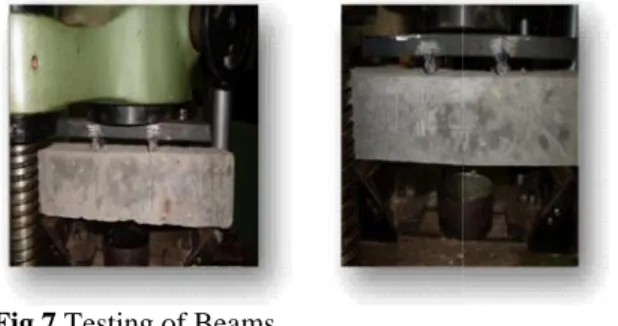
Fig. 6. Testing of cylinders Flexural strength Test:
For this test the beams of dimension 100mmX100mmX500mm were casted. Flexural strength, also known as modulus of rupture, bend strength, or fracture strength [dubious – discuss] a mechanical parameter for brittle material, is defined as a material's ability to resist deformation under load. The transverse bending test is most frequently employed, in which a rod specimen having either a circular or rectangular cross-section is bent until fracture using a three point flexural test technique. The flexural strength represents the highest stress experienced within the material at its moment of rupture. The beam tests are found to be dependable to measure flexural strength. The value of the modulus of rupture depends on the dimensions of the beam and manner of loading. In this investigation, to find the flexural strength by using third point loading. In symmetrical two points loading the critical crack may appear at any section not strong enough to resist the stress with in the middle third, where the banding moment is maximum. Flexural modulus of rupture is about 10 to 20 percent of compressive strength depending on the type, size and volume of coarse aggregate used.
Calculations: Fb= PL/ bd2
Where b= width in cm of specimen
d= depth in cm of specimen at point of failure L= length in cm of specimen on which specimen was supported
P= maximum load in kg applied to specimen Final values are adopted using standard
Fig.7 Testing of Beams Weight Reduction Test:
The initial weights were of the cube measured after demoulding. Then the specimens was stored into solutions of hydrochloric acid concentrations. For each mix, specimens were subjected to hydrochloric acid solution and also in water curing After 28 days of curing, the specimens were dried at room temperature and, the specimens were washed in order to remove the porous layer of the corrosion products such as soft and crystallized acidic materials or calcium salts. Then the final weight of the cube was measured.
Calculations:
Weight Reduction=
Weight of Cube in Water Curing-Weight Of Cube in Acid Curing
VII. RESULTS & DISCUSSIONS V-M35 Grade Conventional Concrete V1-Cement+sand+(85%coarse aggregate+15%ccshells) V2-Cement+sand+(80%coarse aggregate+20%ccshells) V3-Cement+sand+(75%coarseaggregate +25%ccshells)
V1-15-(Cement+15%flyash) +sand+(85% coarse aggregate +15%ccshells)
V1-20-(Cement+20% fly ash)+sand+(85% coarse
aggregate +15%ccshells)
V1-25-(Cement+25%flyash)+sand+(85% coarse aggregate +15%ccshells)
V2-15-(Cement+15%flyash)+sand+(80% coarse aggregate +20%ccshells)
V2-20-(Cement+20%flyash)+sand+(80% coarse aggregate +20%ccshells)
V2-25-(Cement+25%flyash)+sand+(80% coarse aggregate +20%ccshells)
V3-15-(Cement+15%flyash)+sand+(75% coarse aggregate +25%ccshells)
V3-20-(Cement+20%flyash)+sand+(75% coarse aggregate +25%ccshells)
V3-25-(Cement+25%flyash)+sand+(75% coarse aggregate +25%cccshells)
Compressive strength studies
STRENGTH IN N/mm2 7 days 14 days
28 days (in water)
28 days ( in acid) V 34.06 37.5 42.8 43.25 V1 35.5 37.9 42.3 43.40 V2 38.2 39.2 43.18 43.92 V3 34.2 38.16 40.3 43.7 V1-15 32.4 37.36 43 44.01 V1-20 32.4 35 41.9 44.14 V1-25 33.06 35.96 41.5 43.85 V2-15 33.36 36.5 40.1 43.03 V2-20 33.4 37.5 40.9 40.05 V2-25 33.9 38.0 41.5 38.96 V3-15 32.12 36.8 4102 37.92 V3-20 33.1 37.2 42.5 37.40 V3-25 31.99 36.9 40.1 36.8
Table1: Results of compressive strength in water and acid curing after 28 days
International Journal of Science Engineering and Advance
Technology, IJSEAT, Vol. 4, Issue 10
ISSN 2321-6905
October-2016
Fig. 6. Testing of cylinders Flexural strength Test:
For this test the beams of dimension 100mmX100mmX500mm were casted. Flexural strength, also known as modulus of rupture, bend strength, or fracture strength [dubious – discuss] a mechanical parameter for brittle material, is defined as a material's ability to resist deformation under load. The transverse bending test is most frequently employed, in which a rod specimen having either a circular or rectangular cross-section is bent until fracture using a three point flexural test technique. The flexural strength represents the highest stress experienced within the material at its moment of rupture. The beam tests are found to be dependable to measure flexural strength. The value of the modulus of rupture depends on the dimensions of the beam and manner of loading. In this investigation, to find the flexural strength by using third point loading. In symmetrical two points loading the critical crack may appear at any section not strong enough to resist the stress with in the middle third, where the banding moment is maximum. Flexural modulus of rupture is about 10 to 20 percent of compressive strength depending on the type, size and volume of coarse aggregate used.
Calculations: Fb= PL/ bd2
Where b= width in cm of specimen
d= depth in cm of specimen at point of failure L= length in cm of specimen on which specimen was supported
P= maximum load in kg applied to specimen Final values are adopted using standard
Fig.7 Testing of Beams Weight Reduction Test:
The initial weights were of the cube measured after demoulding. Then the specimens was stored into solutions of hydrochloric acid concentrations. For each mix, specimens were subjected to hydrochloric acid solution and also in water curing After 28 days of curing, the specimens were dried at room temperature and, the specimens were washed in order to remove the porous layer of the corrosion products such as soft and crystallized acidic materials or calcium salts. Then the final weight of the cube was measured.
Calculations:
Weight Reduction=
Weight of Cube in Water Curing-Weight Of Cube in Acid Curing
VII. RESULTS & DISCUSSIONS V-M35 Grade Conventional Concrete V1-Cement+sand+(85%coarse aggregate+15%ccshells) V2-Cement+sand+(80%coarse aggregate+20%ccshells) V3-Cement+sand+(75%coarseaggregate +25%ccshells)
V1-15-(Cement+15%flyash) +sand+(85% coarse aggregate +15%ccshells)
V1-20-(Cement+20% fly ash)+sand+(85% coarse
aggregate +15%ccshells)
V1-25-(Cement+25%flyash)+sand+(85% coarse aggregate +15%ccshells)
V2-15-(Cement+15%flyash)+sand+(80% coarse aggregate +20%ccshells)
V2-20-(Cement+20%flyash)+sand+(80% coarse aggregate +20%ccshells)
V2-25-(Cement+25%flyash)+sand+(80% coarse aggregate +20%ccshells)
V3-15-(Cement+15%flyash)+sand+(75% coarse aggregate +25%ccshells)
V3-20-(Cement+20%flyash)+sand+(75% coarse aggregate +25%ccshells)
V3-25-(Cement+25%flyash)+sand+(75% coarse aggregate +25%cccshells)
Compressive strength studies
STRENGTH IN N/mm2 7 days 14 days
28 days (in water)
28 days ( in acid) V 34.06 37.5 42.8 43.25 V1 35.5 37.9 42.3 43.40 V2 38.2 39.2 43.18 43.92 V3 34.2 38.16 40.3 43.7 V1-15 32.4 37.36 43 44.01 V1-20 32.4 35 41.9 44.14 V1-25 33.06 35.96 41.5 43.85 V2-15 33.36 36.5 40.1 43.03 V2-20 33.4 37.5 40.9 40.05 V2-25 33.9 38.0 41.5 38.96 V3-15 32.12 36.8 4102 37.92 V3-20 33.1 37.2 42.5 37.40 V3-25 31.99 36.9 40.1 36.8
Table1: Results of compressive strength in water and acid curing after 28 days
International Journal of Science Engineering and Advance
Technology, IJSEAT, Vol. 4, Issue 10
ISSN 2321-6905
October-2016
Fig. 6. Testing of cylinders Flexural strength Test:
For this test the beams of dimension 100mmX100mmX500mm were casted. Flexural strength, also known as modulus of rupture, bend strength, or fracture strength [dubious – discuss] a mechanical parameter for brittle material, is defined as a material's ability to resist deformation under load. The transverse bending test is most frequently employed, in which a rod specimen having either a circular or rectangular cross-section is bent until fracture using a three point flexural test technique. The flexural strength represents the highest stress experienced within the material at its moment of rupture. The beam tests are found to be dependable to measure flexural strength. The value of the modulus of rupture depends on the dimensions of the beam and manner of loading. In this investigation, to find the flexural strength by using third point loading. In symmetrical two points loading the critical crack may appear at any section not strong enough to resist the stress with in the middle third, where the banding moment is maximum. Flexural modulus of rupture is about 10 to 20 percent of compressive strength depending on the type, size and volume of coarse aggregate used.
Calculations: Fb= PL/ bd2
Where b= width in cm of specimen
d= depth in cm of specimen at point of failure L= length in cm of specimen on which specimen was supported
P= maximum load in kg applied to specimen Final values are adopted using standard
Fig.7 Testing of Beams Weight Reduction Test:
The initial weights were of the cube measured after demoulding. Then the specimens was stored into solutions of hydrochloric acid concentrations. For each mix, specimens were subjected to hydrochloric acid solution and also in water curing After 28 days of curing, the specimens were dried at room temperature and, the specimens were washed in order to remove the porous layer of the corrosion products such as soft and crystallized acidic materials or calcium salts. Then the final weight of the cube was measured.
Calculations:
Weight Reduction=
Weight of Cube in Water Curing-Weight Of Cube in Acid Curing
VII. RESULTS & DISCUSSIONS V-M35 Grade Conventional Concrete V1-Cement+sand+(85%coarse aggregate+15%ccshells) V2-Cement+sand+(80%coarse aggregate+20%ccshells) V3-Cement+sand+(75%coarseaggregate +25%ccshells)
V1-15-(Cement+15%flyash) +sand+(85% coarse aggregate +15%ccshells)
V1-20-(Cement+20% fly ash)+sand+(85% coarse
aggregate +15%ccshells)
V1-25-(Cement+25%flyash)+sand+(85% coarse aggregate +15%ccshells)
V2-15-(Cement+15%flyash)+sand+(80% coarse aggregate +20%ccshells)
V2-20-(Cement+20%flyash)+sand+(80% coarse aggregate +20%ccshells)
V2-25-(Cement+25%flyash)+sand+(80% coarse aggregate +20%ccshells)
V3-15-(Cement+15%flyash)+sand+(75% coarse aggregate +25%ccshells)
V3-20-(Cement+20%flyash)+sand+(75% coarse aggregate +25%ccshells)
V3-25-(Cement+25%flyash)+sand+(75% coarse aggregate +25%cccshells)
Compressive strength studies
STRENGTH IN N/mm2 7 days 14 days
28 days (in water)
28 days ( in acid) V 34.06 37.5 42.8 43.25 V1 35.5 37.9 42.3 43.40 V2 38.2 39.2 43.18 43.92 V3 34.2 38.16 40.3 43.7 V1-15 32.4 37.36 43 44.01 V1-20 32.4 35 41.9 44.14 V1-25 33.06 35.96 41.5 43.85 V2-15 33.36 36.5 40.1 43.03 V2-20 33.4 37.5 40.9 40.05 V2-25 33.9 38.0 41.5 38.96 V3-15 32.12 36.8 4102 37.92 V3-20 33.1 37.2 42.5 37.40 V3-25 31.99 36.9 40.1 36.8
International Journal of Science Engineering and Advance
Technology, IJSEAT, Vol. 4, Issue 10
ISSN 2321-6905
October-2016
GRAPH 1: Variation of Compressive Strength at 28
Days with Replacement of Coconut Shells InCase Of Normal Curing and Acid Curing
GRAPH 2: Variation of Compressive Strength at 28
Days with Addition of Fly Ash and Addition of Coconut Shells In Case Of Normal Curing and Acid Curing:
S.N O
Replacement s ratio’s
28 days cubes wts in water curin g (Kgs)
28 days cubes wts in Hcl acid curin g (Kgs)
% Wt reductio n
1. V 8.64 7.66 11.22%
2. V1 8.54 8.28 2.9%
3. V2 8.23 8.05 2.18%
4. V3 7.65 7.48 2.09%
5. V1’1 8.35 8.18 1.79%
6. V1’2 8.12 7.93 1.6%
7. V1’3 8.15 7.97 2.2%
8. V2’1 8.41 8.28 1.4%
9. V2’2 8.33 8.13 2.04%
10. V2’3 7.81 7.59 2.6%
11. V3’1 7.913 7.78 1.6%
12. V3’2 7.73 7.54 2.35%
13. V3’3 7.96 7.76 2.51%
Table 2: Results of weight reduction percentages
Graph 3: Variation of Flexural Strength at 28 Days
with Addition of Fly Ash and Replacement of Coconut Shells In Case Of Normal Curing:
V. CONCLUSIONS
Results of experiments on compressive strength, split tensile strength, flexural strength and weight reduction for different coconut shells replaced concretes have been presented with those of control concrete. However, performance of coconut shells aggregate concrete having a material variation than normal aggregate concrete.
The main points of this Analysis are
Coconut shell concrete with 20% replacement shown a higher strength than conventional concrete.
Addition of coconut shells decreases workability and addition of fly ash increases workability of coconut shells concrete. Increase in coconut shells percentage decreased densities of the concretes.
Coconut shell concrete with 25% replacement of coconut shells, with this increase of fly ash from 15-25% shows a marginal decrease in concrete strength. But the replacement of coconut shells in place of aggregates and addition of fly ash to cement will increase the strength properties of concrete compared to the normal concrete.
At constant fly ash increase in coconut shell concrete shows a decrement in compressive strength. However, the strength superior to the designed value of concrete.
International Journal of Science Engineering and Advance
Technology, IJSEAT, Vol. 4, Issue 10
ISSN 2321-6905
October-2016
Coconut shell concrete of 20% and the 15% fly ash addition shows increase in split tensile strength. Coconut shell concrete of 20% and the 20% fly ash addition shows increase in Flexural strength.
The replacement of coconut shell as aggregate will decrease the weight of the concrete. Thus light weight concrete is obtained.
For future work the concrete with 20% replacement with coconut shell and 20% addition of fly ash is recommended and the flexural strength analysis is also recommended.
FUTURE SCOPE
The study can be carried out with varying percentage replacement of the material for specific low cost housing applications.
The engineering properties like water absorption, reduction in weight of concrete and study on economic aspects can be carried out.
The effect of temperature on the concrete developed can be studied.
The study can be extended to assess the durability aspects of the concrete with varying replacement proportions.
REFERENCES
1. Concrete Technology theory and practice by M.S.Shetty. Is 456-2000 code,Is 10262-82 code 2. IOSR Journal on Mechanical and Civil Engineering- Coconut Shell As Partial Replacement Of Coarse Aggregate In Concrete.
3. A journal on IJEIT VOLUME 2 ISSUE 12 JUNE 2013 - Comparative study on coconut shell aggregate with conventional concrete.
4. A journal on IJSERVOLUME 4, ISSUE 1 JANUARY 2013- Experimental study on strength characteristics on M25 concrete with partial replacement of cement with fly ash and coarse aggregate with coconut shell.
5. http://civil-resources.blogspot.in/IJEI Journal, Volume 1 Issue 6(October 2012) –Properties of Concrete Shells as Aggregate Replacement. IS: 3812.1981