© International Federation of Red Cross and Red Crescent Societies, Geneva, 2014
Any part of this publication may be cited, copied, translated into other languages or adapted to meet local needs without prior permission from the International Federation of Red Cross and Red Crescent Societies, provided that the source is clearly stated. Requests for commercial reproduction should be directed to the IFRC Secretariat at [email protected] All photos used in this study are copyright of the IFRC unless otherwise indicated.
Cover photo: Noel Celis/Australian Red Cross
P.O. Box 303 CH-1211 Geneva 19 Switzerland
Telephone: +41 22 730 4222 Telefax: +41 22 733 0395 E-mail: [email protected] Web site: www.ifrc.org
Typhoon Haiyan: One-year progress report
Follow us:
Humanity The International Red Cross and Red Cres-cent Movement, born of a desire to bring assistance without discrimination to the wounded on the battle-field, endeavours, in its international and national capacity, to prevent and alleviate human suffering wherever it may be found. Its purpose is to protect life and health and to ensure respect for the human being. It promotes mutual understanding, friendship, cooperation and lasting peace amongst all peoples. Impartiality It makes no discrimination as to nation-ality, race, religious beliefs, class or political opinions. It endeavours to relieve the suffering of individuals, being guided solely by their needs, and to give prior-ity to the most urgent cases of distress.
Neutrality In order to enjoy the confidence of all, the Movement may not take sides in hostilities or engage at any time in controversies of a political, racial, reli-gious or ideological nature.
Independence The Movement is independent. The National Societies, while auxiliaries in the humani-tarian services of their governments and subject to the laws of their respective countries, must always maintain their autonomy so that they may be able at all times to act in accordance with the principles of the Movement.
Voluntary service It is a voluntary relief movement not prompted in any manner by desire for gain. Unity There can be only one Red Cross or Red Cres-cent Society in any one country. It must be open to all. It must carry on its humanitarian work through-out its territory.
Universality The International Red Cross and Red Crescent Movement, in which all societies have equal status and share equal responsibilities and duties in helping each other, is worldwide.
1
Welcome note 3
Foreword 5
A note on reading this report 6
Operational overview 8
The emergency phase 10
The recovery phase 13
Shelter – building back safer 13 Livelihoods – enhancing skills for better opportunities 15 Healthcare – restoring health services 17 Water, sanitation and hygiene promotion –
improved facilities for homes and schools 19 Education – enabling children to stay in school 20 Preparing for future disasters – building community safety
and resilience 21
Accountability 23
Programmatic analysis 25
Financial overview 28
Annex 1.Notes and methodology regarding the programmatic
progress indicators 33
Annex 2.Notes and methodology regarding presentation of
combined financial data 40
Annex 3.Red Cross Red Crescent National Societies and
organizations involved in Typhoon Haiyan relief and recovery efforts 44
When Typhoon Haiyan battered the Philippines in the early morning of 8 November 2013, it was hard to imagine the magnitude of destruction that it would unleash. It was unprecedented – possibly the stron-gest typhoon to ever make landfall in recorded his-tory. Haiyan tore through the Central Visayas region with 300kph winds and heavy rain, triggering floods and mudslides, and causing tsunami-like storm surg-es that dsurg-estroyed coastal villagsurg-es and towns. More than 16 million people lost family members, belong-ings and livelihoods, with 4.1 million forced from their homes to seek refuge elsewhere. Over 1.1 mil-lion houses were damaged or destroyed. The sheer scale of destruction caused to infrastructure, health and community facilities, agriculture and livelihoods significantly undermined the resilience of the affect-ed population.
In the last ten years, the Philippine Red Cross has been transforming itself into a community-based organization of volunteers serving the country. And, from the response of our National Society in the wake of Typhoon Haiyan, the evidence of this transforma-tion is apparent. The Red Cross volunteers have been the backbone of this entire operation. Even before the typhoon struck, they were on standby, ready to re-spond, ready to serve. They have shouldered the bulk of implementing the response and relief operation, and are the lifeline, bringing together the Red Cross Red Crescent with the affected people. Without them, it would be impossible to achieve all we have done. Their dedication and selflessness are a true reflection of what the Philippine Red Cross stands for in being
always first, always ready, always there.
Given the climate and geological challenges that as-sail the Philippines, the Filipino spirit of resilience is robust, strengthened by the whole-hearted commu-nity fortitude and years of rigorous practice. Even while the numbers of death and destruction contin-ued to rise in the aftermath of Haiyan, the affected population were already beginning to restore their homes and rebuild their lives.
This Movement-wide report serves to document a milestone in the collective effort of our Red Cross Red Crescent partners in support of the Philippine Red Cross’ overall emergency response and recovery plan for those affected by Typhoon Haiyan.
I would like to express gratitude to the Red Cross Red Crescent Movement partners for their continuous support to the Philippine Red Cross in its endeavour to bring help and solace to those affected. No less than 136 Participating National Societies together with the International Federation of Red Cross and Red Crescent Societies (IFRC) and the International Committee of the Red Cross (ICRC) have helped us carry through our mandate of delivering life-saving goods and services to the most vulnerable people in the Philippines.
I would also like to thank our donors from other countries, the Filipino people and those who have supported us nationally with cash, in-kind donations, and prayers. It heartens me and, indeed, the whole Red Cross Red Crescent Movement to know that we have the support of the world, our citizens, corpora-tions, and friends abroad in the work that we do. Thank you.
Richard J. Gordon Chairman and Chief Executive Officer Philippine Red Cross Manila
3
sanitation, proper treatment and disposal of waste water, rehabilitating shelters, and restoring people’s livelihoods to ensure that they can meet their basic needs.
Stephen R
yan/Irish Red Cr
5
Working together as one Red Cross Red CrescentMovement has brought the Philippine Red Cross, IFRC, and ICRC even closer together. The solidarity and as-sistance provided to date by all Movement partners is a demonstration our strengths and the ability to mobilize the power of humanity to reduce suffering and ensure respect for human dignity.
In the early days after Typhoon Haiyan, the mobiliza-tion of the Philippine Red Cross with the support of the Red Cross Red Crescent Movement in the Central Visayas region achieved its goal of bringing material assistance and emotional comfort to those who were affected by the disaster. With the help of Red Cross volunteers, families without homes received tents under which they took shelter, blankets for warmth, and mosquito nets for protection. Hot meals were served to those who sought refuge after being dis-placed, jerry cans were distributed to help households store water, and basic health units provided essential health services where needed. Red Cross volunteers and personnel supported traumatized people by talk-ing with them and helptalk-ing reunite family members who had been separated during the disaster. In the emergency phase of this operation, hundreds of thou-sands of households and individuals were reached with Red Cross Red Crescent support.
With the Movement-wide operational framework to guide all partners, the Red Cross Red Crescent Move-ment has provided more than 145,000 households
with emergency shelter materials; 6,081 households with core shelters; 192 classrooms for school chil-dren where they can continue to learn and interact; given out unconditional cash grants to approximately 91,200 households and provided 17,421 people with cash-for-work opportunities to support livelihoods. Rehabilitation and repair of crucial health facilities and schools in various locations are underway. Activi-ties to better equip communiActivi-ties with knowledge and prepare for disasters and health emergencies have already commenced. All these efforts are geared to-wards developing safer and more resilient commu-nities and individuals who are better prepared to re-spond to and cope with disasters.
The intensity of Typhoon Haiyan and the magnitude of its destruction remains unparalleled. In the past twelve months, the work of the Red Cross Red Cres-cent has been both challenging and rewarding. There is little to compare with seeing how people who have suffered such great loss regain their footing and over-come various challenges. While we, as the Red Cross Red Crescent, have made progress in working with communities to rebuild their lives, there is still much to do before communities can be considered fully re-covered.
As the Red Cross Red Crescent, we do not only offer assistance in times of disaster; we offer hope for a better future.
Dr Gwendolyn T. Pang Secretary General Philippine Red Cross Manila
Jaganath Chapagain Director
IFRC Asia Pacific zone office Kuala Lumpur
Alain Aeschlimann Head of Operations
ICRC East and South-East Asia and the Pacific Region Geneva
6
In 2013, the Philippine Red Cross was in midst of responding, together with the Inter-national Committee of the Red Cross (ICRC), to the humanitarian needs stemming from the clashes that broke out in Zamboanga City, south-west Philippines in Sep-tember followed by an earthquake in Bohol in October. Come 8 November, the coun-try was to bear the brunt of the strongest storm to make landfall affecting millions of people. While there have been parallel ongoing operations in-country in response to other crisis and disasters, this report focuses on the outcomes of the collective efforts of the Red Cross Red Crescent Movement, in response to the Typhoon Haiyan (locally known as Yolanda).
In November 2013, the Philippine Red Cross, the International Federation of Red Cross and Red Crescent Societies (IFRC), the ICRC, and Participating National Societ-ies mutually agreed on a coordinated Red Cross Red Crescent Movement approach to relief and recovery initiatives according to their respective mandates, resources and capacities. This commitment was formalized by a Joint Statement signed on 10 November 2013 by the Philippine Red Cross, IFRC and ICRC followed by the Red Cross Red Crescent Movement Summit held in Manila in February 2014. During the sum-mit a Movement-wide operational framework was agreed upon to ensure a single concerted approach among all Red Cross Red Crescent partners; to enable the shar-ing of information, effective harmonization of activities and to ensure overall quality and accountability.
This report comprises programmatic and financial information provided by the Phil-ippine Red Cross, IFRC and ICRC, and the respective Participating National Societies, reflecting a consolidated portrait of the data obtained from all parties. Programme indicators have been used to report against progress and achievements of the Red Cross Red Crescent Movement during the relief and recovery phases through Octo-ber 2014. The financial data in this report presents an overview of the Red Cross Red Crescent contribution in response to Typhoon Haiyan from 8 November 2013 to 31 August 2014.
Updated programmatic data for this report was provided by 13 Participating National Societies, the Philippine Red Cross, IFRC and ICRC. The programmatic indicators il-lustrate the key activities carried out in different sectors during the emergency relief and recovery phases. These do not, however, reflect the complete portfolio of each Red Cross Red Crescent Movement member, given the magnitude of this operation and the broad spectrum of support being provided.
The programmatic information in this report encompasses two phases of the opera-tion: (i) the emergency phase (8 November 2013 through 28 February 2014), and (ii) the recovery phase (1 March 2014 onwards). In reality, however, the line between the two phases is blurred as many activities before and after contain elements of both relief and recovery.
7
During the relief phase, there were multiple disparate sources of information, andit is likely that there are elements that have gone unreported during this period. As such, given the Philippine Red Cross’ continous presence in all aspects of this opera-tion from the start, numbers provided by them have been used for cross-referencing figures reported by other partners. Where this has not been possible, figures have been consolidated and cross-checked against those available with partners.
Data collection for the recovery phase of this operation is more clearly defined and accurately recorded. Again, the Philippine Red Cross data has been used to cross-reference figures reported by all partners. Currently, more methodical ways of data collection are being defined and put in place with the aim of obtaining focused in-formation that will help provide a clearer picture of the impact of this operation’s interventions. As the data methodology continues to be refined to accommodate the evolving operational context, the definitions of some indicators in this report may alter, and as such, will lead to changes in the figures reported in the future.
The financial data reported as of 31 August 2014 shows an analysis of the funds re-ceived and spent for the operation. The financial information presented is reflective of the number of Red Cross Red Crescent Movement members reporting on it. For this report, 27 Participating National Societies and the Philippine Red Cross have pro-vided complete and updated financial information from their headquarters, with the IFRC providing the same from its office in Manila. The ICRC have provided unaudited figures which may change and as such its annual report should be referred to for an overview of the final financial information.
This report is divided into sections, beginning with an overview of the operational situation, the emergency phase, and its evolution into recovery. Indicators on pro-grammatic achievements then follow with a financial overview, supplemented by annexes that provide more detail on both programmatic and financial indicators. A list of Red Cross Red Crescent members who have contributed to the Typhoon Hai-yan relief and recovery effort is included in annex 3.
International Federation of Red Cross and Red Crescent Societies
(IFRC) refers to the IFRC secretariat and all member National Societies collectively.
International Committee of the Red Cross
(ICRC) refers to ICRC’s
head-quarters in Geneva and delegations around the world.
Red Cross Red Crescent Movement
refers to ICRC in addition to the IFRC
secretariat and member National Societies.
IFRC secretariat
refers to the coordinating entity which represents the IFRC
members. In the Typhoon Haiyan operation in the Philippines, the secretariat also
performs an operational role in the implementation of programmes. For the
pur-pose of Movement-wide reporting, the secretariat reports the income, expenditure
and programme results of its operations in support of the Philippine Red Cross.
136 Participating National Societies (15 of which are in-country) together with the IFRC and ICRC have contributed to and are working with the Philippine Red Cross in this response.
8
The Philippine Red Cross’ response to Typhoon Haiyan was immediate, and with the international call for support from the Philippine government, the entire Red Cross Red Crescent Movement came together to further strengthen the National Society’s efforts. In the first four or so months following the typhoon, focus of the response was largely in fulfilling food, emergency shelter, healthcare and medical services, ac-cess to safe water, improved sanitation and essential household needs.
With time, emphasis moved from emergency towards recovery efforts in support of those affected by the disaster. Recovery work includes providing the affected popula-tion with safe shelter, sustainable livelihoods opportunities, access to health, educa-tion and water and sanitaeduca-tion as well as strengthening of disaster response capaci-ties and increasing public awareness on how to reduce risks to disasters.
The Philippine Red Cross continues to take the lead role in Red Cross Red Crescent interventions with the support of the IFRC, ICRC and Participating National Societ-ies. The Red Cross Red Crescent works as one, using the basis of the Movement-wide operational framework, which guides and harmonizes all activity and coordination in this operation.
Findings from assessments carried out in the aftermath of the disaster highlight vul-nerabilities such as pre-existing levels of poverty that hinder affected people from recovering; the need for sustainable livelihoods and safer shelter in tandem with health, education, clean water and sanitation interventions; and, the imperative for increasing resilience, response and coping mechanisms of vulnerable people.
Typhoon Haiyan is but one disaster that besets the Philippines. On average the Phil-ippines is hit by 20 typhoons a year. Throughout the relief and recovery phases, the country, and subsequently, the Philippine Red Cross, has responded to landslides, mudslides, flooding, tropical storms and typhoons, and the threat of volcanic eruptions.
Financial overview
Total
Total Red Cross Red Crescent income as of August 2014
CHF 345.6 million
Total Red Cross Red Crescent expenditure as of August 2014
CHF 104.4 million
Operational overview
No house escaped the impact of the tidal surge and extreme winds that came with Typhoon Haiyan. The typhoon affected 16 million people, claimed more than 6,300 lives, and displaced 4.1 million. The coastal city of Tacloban was the worst affected area.
Mark Munkel/Danish Red Cr
oss
Noel Celis/Australian Red Cr
9
Roles and responsibilities for coordination during the
Haiyan response were established two days after
the Typhoon made landfall and set out in the Joint
Statement of 10 November 2013. All Movement
partners have worked with the Philippine Red Cross
in designated locations supporting the delivery of
shelter, livelihoods, health, water and sanitation,
education and disaster risk reduction initiatives.
Each partner has been allocated targets to deliver
against in relevant sectors.
In February 2014, a Movement-wide operational
framework, setting out three pillars for collective
action within the Red Cross Red Crescent Movement
was finalized. The framework prioritizes:
1. Shared operational objectives, priorities and
common approaches
2. Working effectively together as a Red Cross
Red Crescent Movement with internal and external
partners through strong coordination mechanisms
3. Quality and accountability
The majority of joint activities are planned to be
delivered by the end of 2015.
In addition to this, the Philippine Red Cross has
set up a taskforce at its headquarters as well as
issued technical guidelines for all sectors including
administration and human resources.
Coordinating with the authorities
As auxiliary to the public authorities, the Philippine
Red Cross maintains a strong relationship with
government bodies through participation or
collaboration with the national, provincial, municipal
and barangay (village) disaster risk reduction and
management councils and local government units.
Inter-agency coordination
At country level, Philippine Red Cross and IFRC
participate in humanitarian country team forums held
both during disasters and non-emergency times.
IFRC is working closely with the Cash Learning
Partnership and has established a cross-cluster
cash working group which has been instrumental
in standardizing cash-based programming
interventions across agencies in coordination with
the Philippines government.
Shelter Cluster coordination
The Shelter Cluster is being led by the Government
of Philippines and co-led by the IFRC. Shelter
Cluster Philippines, together with the Department
of Social Welfare and Development, is coordinating
with over 100 partners to ensure that those in need
of assistance receive safe, defined and appropriate
shelter, in a timely manner.
Cheryl Gagalac/IFRC
10
The emergency phase
Powerful winds, heavy rain, and tsunami-like storm surges caused by Haiyan wiped out entire coastal villages and inland towns, affecting more than 16 million people, forcing some four million away from their homes, and killing 6,300. More than 1.1 million families had their homes damaged or destroyed, while countless others had their crops, livestock, and belongings swept away. Hospitals and health facilities, schools and day care centres, water systems, power lines and telecommunications channels were torn apart. Roads, airports and seaports suffered heavy damage, cut-ting off entire communities from much-needed relief assistance.
Prior to Haiyan making landfall, Philippine Red Cross volunteers and staff were sup-porting evacuation efforts and disaster response teams were ready for deployment. Following the typhoon, Red Cross volunteers began distributing food rations, hot meals, essential household relief items, clearing debris, and set up services to restore family links. Relief efforts included hospital and health clinic services, psychosocial
Relief support
Total
Households reached with non-food items
170,968
Households provided with food assistance
388,143
People traced and/or reunited with their families through restoring family
links services
779
Field assessment and coordination team staff in-country (in rotation)
17
Emergency response units staff in-country (in rotation)
271
Regional disaster response team staff in-country (in rotation)
12
11
The Philippine Red Cross has served and lived up
to its commitment to provide quality life-saving
services to protect the life and dignity of the
country’s population for 67 years. Where it used
to be involved in providing only blood and in
implementing disaster-related activities, the National
Society has now adopted a holistic approach to
service delivery to better meet the needs of the
most vulnerable. Today, the Philippine Red Cross
covers six major areas: blood services, disaster
management, safety, health, social, and Red Cross
youth and volunteer services. What has made
the National Society strong over the years is the
hundreds and thousands of individuals who have
selflessly devoted their time and resources to serve
those who are most in need. The Fundamental
Principles guide and inspire all its staff and
volunteers, to whom being a red crosser is more
than just a philosophy but a way of life. This has
made the Philippine Red Cross stand out from
other humanitarian organizations in the country.
Red Cross Red Crescent provided more than one million people with essential, appropriate and timely humanitarian assistance to meet their immediate needs.
support and services to reunite families as well as providing unconditional cash grants.
Additionally, the Red Cross Red Crescent rapidly deployed a field assessment and coordination team (FACT) to assess needs in the affected areas. This was followed by the deployment of 12 emergency response units (ERUs) and additional teams which provided the Philippine Red Cross and national authorities with essential items and services for fixed periods of time. These emergency response units and teams provid-ed non-food relief supplies, mass sanitation, water treatment, basic health services, logistics services, and emergency telecommunications infrastructure. These teams remained operational in the affected areas until February 2014.
Philippine Red Cross also received direct support from domestic and national organi-zations, companies and individuals through cash and in-kind donations.
To date, along with the IFRC and ICRC, there are 15 Participating National Societies in-country collaborating with the Philippine Red Cross in this operation.
Philippine Red Cross – always first, always ready,
always there
The Netherlands Red Cr
12
As a part of its preparedness for response efforts, the Philippine Red Cross has prepo-sitioned stocks of relief items such as dry food rations, blankets, jerry cans, mosquito nets and tarpaulins for distribution. Disaster response teams and Red Cross chapter volunteers were on standby for rapid deployment.
The Philippine Red Cross and its volunteers began distributing food items and hot meals together with essential household items, mosquito nets and tarpaulins to the affected population immediately after the typhoon.
The Red Cross Red Crescent FACT, working together with Philippine Red Cross staff and volunteers, reported that people affected by Haiyan were in dire need of food, shelter, safe drinking water, proper sanitation, and healthcare and medical services. In response, 12 ERUs and additional teams were deployed to support the Philippine Red Cross in providing basic medical and healthcare services, clean water, mass sani-tation, cash grants, relief supplies, and emergency shelter assistance. Working pri-marily through the Red Cross staff and volunteers, and supplemented with the assis-tance of regional disaster response teams, ERUs also received, stored and transported relief goods to affected people in different locations. Emergency telecommunications infrastructure was also set up in hard hit areas to restore communication channels.
The ICRC deployed members from its rapid
deployment unit pool including three restoring
family links (RFL) specialists to Samar and Leyte
and a data administrator delegate who was based
in Philippine Red Cross in Manila. The role of the
ICRC was to facilitate and support the Philippine
Red Cross in their responsibility for implementing
RFL in favour of the affected population. Without
access to electricity, equipment and reinforcements,
it was under challenging circumstances that RFL
assistance commenced. The Philippine Red Cross
RFL teams established welfare desks to facilitate
tracing requests, register displaced persons on “I’m
Alive” lists posted in public locations and to access
short calls to relatives using ICRC satellite phones.
Complementing these activities, the Movement’s
family links website was launched, allowing
independent consultation of those registered as
“I’m Alive”. Of the 35,000 requests received by the
Philippine Red Cross prior to the website launch,
1,083 were registered as tracing enquiries. While 72
per cent of these requests have been resolved, 27
per cent of enquiries did not meet criteria, which
leaves one per cent of cases to be treated.
Restoring Family Links programme helped families reconnect and reunite with their loved ones.
Restoring family links – reuniting families
Br
13
Typhoon Haiyan damaged or destroyed more than 1.1 million homes. Houses madefrom wooden posts, bamboo and nipah (a type of stilt house indigenous to most of the lowland cultures of the Philippines) were ripped apart or swept away. Others with more stable concrete foundations had roofs blown away.
At its peak, more than 100,000 people were housed inside evacuation centres with an estimated 4 million seeking alternative shelter with friends and relatives. In the early months, the Red Cross Red Crescent reached up to 145,000 households with tarpaulins, tents and toolkits to facilitate temporary repairs of damaged homes. The Red Cross Red Crescent have provided 23,169 households with provision of cor-rugated galvanized iron sheets to repair their homes, and 6,081 others with core shelters.
The Red Cross Red Crescent is targeting support mainly at families who are rebuilding their homes or making temporary shelters by providing shelter toolkits, materials and technical advice on how to build back safer. Communities are provided with practical tips for proper fixings of tarpaulins, building stronger foundations and improving bracing. Community members are also provided with flyers that cover all of the learning.
The recovery phase
Shelter – building back safer
Shelter assistance
Total
Households provided with emergency shelter materials
145,081
Households provided with shelter repair assistance (Target: 50,000)
13,506
Households supported with a core shelter (Target: 40,000)
6,081
Carpenters and craftspeople trained in shelter construction
1,816
14
In the recovery phase, build back safer has
become a mantra for the humanitarian sector and
government alike. The build back safer principles
are not a new concept, but have been tailored
especially to suit the local context, i.e. build houses
on strong foundations; tie down the house structure
from the bottom up; brace the house structure
against possible future storms; use strong joints
for the house structure; build a good roof; position
the house safely; keep the house design as simple
in shape as possible; and be prepared for future
disasters.
These principles have been put into action, in
different ways for assistance given for house repairs
and new house construction. To enable house
repairs utilizing build back safer principles, high
quality roof sheeting is provided to the families, with
a cash grant to enable flexibility of purchasing local
building materials and hiring skilled artisans from
the community to undertake repairs. In cases of
new construction, houses are being built with and
through the community and families at every stage
from identifying the location of the houses on their
land to ensuring that families contribute skilled and
unskilled labour to the building process. All materials
specified are durable in nature. Construction of the
houses is monitored by trained volunteers and staff
to ensure that standards are kept consistent.
The Red Cross Red Crescent shelter activities are centred around the building back safer principle. Whether families are participating in the reconstruction of their hous-es, repairing their homes or relocating to safer plachous-es, the main messages revolve around raising awareness about safety. Enabling families to take charge of their hous-ing reconstruction not only enables them to prioritize their needs and make decisions but also gives them ownership of the rehabilitation process, develops their skills and boosts their self-confidence.
Skilled builders such as carpenters and masons in the communities learn the why and how-to of building back safer. Families are also empowered with this knowledge which in turn enhances their resilience and ability to deal with future disasters.
Chairman Richard J. Gordon and Dr Gwendolyn T. Pang, Secretary General of the Philippine Red Cross, hand over a completed house to a family that lost their home in the wake of Typhoon Haiyan.
Increasing community
safety by building back safer
Philippine Red Cr
15
People living in the Central Visayas region work mainly in agriculture, livestockrear-ing, fishing and aquaculture, providing the rest of the country with fish, meat, coco-nut, corn, banana, rice, mango and other food crops. More than half of the fishing community and almost a third of the farming population lost their means to liveli-hood as Haiyan flooded crops with salt water, killed livestock, smashed boats and broke through fish farm enclosures. Many of those who had previously provided agricultural labour to the farms and fisheries found themselves without jobs. In the initial stages, the Red Cross Red Crescent distributed unconditional cash grants to more than 91,000 households to cover their immediate needs. Many of these families also used the money to buy farming tools, fishing nets and poultry, and repair their boats. Communities were key in the removal of debris from living areas, for which they were paid on a daily basis. However, more sustainable solutions were needed to help get these families back on their feet again.
In its bid to help the most vulnerable, the Red Cross Red Crescent worked with local communities to set up recovery committees in their respective barangays (villages). These committees advise and oversee that the affected families receive support through livelihood, shelter and water, sanitation and hygiene promotion interven-tions.
More than 29,000 households have received livelihood support grants to start up income-earning activities.
Livelihoods – enhancing skills for better opportunities
Livelihood support
Total
Households reached with unconditional cash grants
91,282
People supported through the provision of cash-for-work activities
17,421
Households that have benefited from livelihoods support grants
(Target: 50,000)
29,061
16
With the aid of these barangay recovery committees, the Philippine Red Cross has provided households with cash and material assistance for agricultural work such as seeds, tools, livestock, as well as for fish, crustacean or seaweed farming. The distribution of these conditional livelihood assistance grants have served to kick-start small-scale enterprises. In support of community livelihoods, the Red Cross Red Crescent engages skilled workers and craftspeople within their respective com-munities to participate in its integrated recovery interventions such as shelter con-struction.
In order to help sustain the enterprises as well as provide diversified options for employment, the Red Cross Red Crescent also provides opportunities for develop-ing marketable skills through formalized business and vocational traindevelop-ing. The Red Cross Red Crescent will also provide support for community-managed projects that support livelihoods for overall community benefit.
Livelihood recovery programming comprises
three main components namely, household
livelihood assistance, skills training and enterprise
development and community-managed livelihood
projects. Households for the livelihood recovery
programme are selected through community-based
targeting approach. Red Cross vulnerability criteria
is adapted to the local context. A positive bias exists
towards including socially vulnerable households
such as single parent households; households
sheltering elderly and people with disabilities; and
indigenous tribes.
The largest component of the programme is
household livelihood assistance which aims to
provide timely assistance to households to
kick-start the recovery operation. The modality of support
is through conditional cash grants to vulnerable
households. The focus is on replacing assets lost
and restoring livelihood to the pre-disaster levels.
Skills training and enterprise development specifically
target out-of-school youth and address concerns
relating to lack of income generation opportunities
within the vulnerable households. It aims towards
skilling-up youth to be certified for employment or
self-employment and facilitate the latter in setting up
of enterprises. Communities living in urban and
peri-urban areas, which are closer to markets are most
likely to benefit by enterprise development.
The community-managed livelihood projects seek to
address enhancement, protection and diversification
(where possible) of farm and off-farm livelihoods
through collective ventures at the community level.
It aims to leverage resources at the barangay level
and envisage a greater role for the community in
visioning and implementing change as a collective.
Individuals, families, groups and communities affected by disaster know their recovery needs and capacities best. Conditional cash grants pave the way towards self-recovery.
Supporting communities to rebuild their lives
17
In response to the urgent medical needs after the disaster basic healthcare was provided and preventive care strengthened through knowledge sharing and psychosocial support to build resilience in the community.Healthcare – restoring health services
Healthcare
Total
Patients who have received emergency healthcare
28,076
Households reached with essential health-related non-food items
179,629
Rural health facilities in the Central Visayas region have long been the frontline in delivering basic healthcare services to the inhabitants of barangays and municipali-ties, many of which are located in remote areas or are not easily accessible.
More than 2,000 of these facilities were badly damaged due to the typhoon, reducing the availability of and access to necessary healthcare services. Structural damage to health facilities as well as the loss of supplies, equipment, and patient records had a tremendous impact on service delivery. In addition to this, medical staff who themselves were directly affected as a result of losing family and their homes, faced a dramatic increase in workload.
The deployment of Philippine Red Cross volunteers and personnel, supported by in-ternational medical teams helped to fill the gap while initial repairs were made to ex-isting health facilities. During this time, more than 28,000 people received emergency healthcare by the Red Cross Red Crescent, while almost 180,000 households received hygiene kits and mosquito nets to aid safe hygiene practices and prevent the spread of vector-borne diseases.
Asuka Suzuki/Japanese Red Cr
18
Also during the emergency period, at least 14,000 children, adolescents, adults and humanitarian workers were provided with psychosocial support either through in-dividual or group sessions. More than 2,000 community members including health workers and teachers, were empowered with knowledge to provide community healthcare services such as first aid, prevention of diarrhoea, psychosocial support, stress management, and violence prevention.
In order to strengthen community capacity to provide its members basic health-care services, the Red Cross Red Crescent is supporting the training of community members and Red Cross volunteers in community-based health and first aid, and psychosocial support services. Women of reproductive age are being provided with maternal, newborn and child health related information.
The Red Cross Red Crescent are working together with the government and other partners to rehabilitate and reconstruct damaged health facilities.
The Philippine Red Cross developed a recovery
strategy for health that includes the rehabilitation
and reconstruction of 35 health facilities and two
Philippine Red Cross blood services. The facilities
will also be provided with medical and non-medical
equipment. In addition to this, 100 communities
will benefit from the community-based health
and first aid approach and psychosocial support
programme. An assessment tool and selection
criteria was established and used to identify health
facilities along with the community data to cover
the community-based health and first aid and
psychosocial support initiatives.
To be able to further assist in the restoration of
primary healthcare services community health
volunteers including barangay health workers,
health facility staff, personnel and local government
unit representatives will be recruited and trained
on various modules of community-based health
and first aid and other emergency health aspects.
A community action plan will be developed and
implemented together with the community health
committee and communities. The community
health volunteers who are recruited will fall under the
umbrella of Red Cross 143 programme.
Community-based health comprises a comprehensive approach to primary healthcare, first aid and emergency health preparedness whereby communities use simple tools, adapted to local context to address their priority health needs.
Creating healthier communities
19
Water, sanitation and hygiene promotion –
improved facilities for homes and schools
Water, sanitation and hygiene promotion
Total
Volume of debris and rubble removed (cubic metres)
1,910
Amount of drinking water distributed (litres)
24,299,467
Number of water systems repaired or constructed
1,493
Safe drinking water and proper sanitation help to ensure good public health is main-tained while curbing the spread of disease and vermin. Prior to Haiyan, residents in the affected areas used piped water, hand pumps and natural freshwater sources lo-cated in close proximity to their homes. Following the typhoon, many water sources were damaged or contaminated. With the help of the ERUs, the Red Cross Red Cres-cent collectively produced and distributed more than 24 million litres of drinking water to families. At the same time, water systems were being repaired and tested for quality. These water systems have been successfully repaired and restored.
Contributing to long-term development, the Philippine Red Cross is reconstructing and rehabilitating latrines and hand washing facilities in schools and community halls. This is supported with raising awareness among young and school-going chil-dren and community members on how to prevent disease by sharing practical in-formation around the importance of using latrines, washing hands properly, using clean water, and sleeping under a mosquito net as well as clearing potential mos-quito breeding sites. Families are also given household kits to facilitate these practi-cal actions.
Access to safe drinking water was one of the most pressing needs in the aftermath of the typhoon. The Red Cross Red Crescent took treated water and made it safe, and available to people through water storage bladders, tankers and taps. Each person should have access to 15 litres of safe water per day.
Kate Marshall/IFRC
Proper sanitation was not easily accessible among the affected communities even before Haiyan, and the situation further worsened due to the damage caused to the existing infrastructure. Many schools, health facilities and community buildings which had been turned into evacuation centres were unable to cope with the huge demand of displaced people while household facilities had been reduced to rub-ble. Communal sanitation facilities which were in poor condition prior to Haiyan were no longer usable. Together with community members, the Red Cross Red Crescent removed almost 2,000 cubic metres of debris from living and community areas. More than 111,000 people have been reached with hygiene pro-motion activities.
20
Education – enabling children to stay in school
Education
Total
Classrooms that have been rehabilitated or reconstructed (Target: 400)
192
Schools equipped with basic school supplies
20
The loss of livelihoods and income has forced many families to earn money employ-ing whatever means possible. This includes takemploy-ing children out of school to under-take menial tasks in order to help supplement family income. The loss of livelihoods has also meant many families cannot afford to send their children to school.
During the emergency phase, the Red Cross Red Crescent rehabilitated or recon-structed 192 classrooms in 20 schools, providing a learning space for almost 8,000 students across Leyte province. Apart from giving both teachers and students the op-portunity to continue teaching and learning, these classrooms also provided a space for psychosocial support.
In an effort to support community children and teachers in integrating disaster risk reduction into school programmes as well as in the promotion of proper hygiene and sanitation practices, the Red Cross Red Crescent is rehabilitating and re-equipping school facilities. School buildings have served as evacuation centres. The use of these buildings as evacuation centres has meant that countless students were unable to go back to school, delaying their education and in certain cases, forcing them to drop out. The Red Cross Red Crescent is providing basic educational equipment, chairs and tables for schools and student kits, and is supporting the development of voca-tional skills. Two thousand school kits have been distributed to date.
In an effort to get students back into education, the Red Cross Red Crescent has built classrooms for more than 8,000 students across Leyte province.
Nichola Jones/British Red Cr
oss
An estimated 90 per cent of educational facilities in the affected areas suffered some form of dam-age, with the majority in Leyte province. More than 3,200 schools and day care centres were destroyed or damaged, leaving over a million pre-schoolers and school-going children without proper space for learning. This is a setback for a country that has up to 11 per cent drop out rate of secondary school-going children (12 to 15 years old). Most of the children who leave school before finishing their formal education come from families with the lowest economic status.
This lack of formal education is one of the key rea-sons behind the high poverty levels in the region where many rely on daily subsistence through engaging in low income activities or self-employ-ment such as fishing or farming, or as tricycle drivers.
21
Preparing for future disasters – building community safety and resilience
Disaster risk reduction
Total
Communities benefiting from the Red Cross 143 programme
239
Volunteers and community members trained
4,603
The Philippine Red Cross is committed to a “resilience approach” that mergesad-dressing vulnerabilities of communities at risk with building response capacities, and contributing to sustainable development. Programmes build on the existing strengths of communities by further enhancing their capacities to deal with poten-tial disasters.
The Philippine Red Cross through its network of 102 chapters and growing pool of volunteers is present across the country. Training and awareness raising sessions for community members and Philippine Red Cross volunteers including first aid, safer building, psychosocial support, community-based health, vector control, hygiene promotion, and water management are being carried out.
In the current operation, the Philippine Red Cross has mobilized more than 8,000 vol-unteers. While a lot has been achieved, more needs doing in terms of preparing com-munities and enhancing their disaster preparedness and response skills. Through its Red Cross 143 programme, the Philippine Red Cross seeks to empower all 41,105 barangays in the country to be ready to respond to any kind of disaster. Red Cross 143 aims to have 44 volunteers including one leader – a team that is trained in disas-ter preparedness and response, health and community welfare, and voluntary blood donation. This team monitors and shares relevant information with its community, and can provide rapid response in the event of disaster.
In the current operation, the Philippine Red Cross has mobilized more than 8,000 vol-unteers. While a lot has been achieved, more needs doing in terms of preparing com-munities and enhancing their disaster preparedness and response skills. Through its Red Cross 143 programme, the Philippine Red Cross seeks to empower all 41,105 barangays in the country to be ready to respond to any kind of disaster. Red Cross 143 aims to have 44 volunteers including one leader – a team that is trained in disas-ter preparedness and response, health and community welfare, and voluntary blood donation. This team monitors and shares relevant information with its community, and can provide rapid response in the event of disaster.
Under the Red Cross Red Crescent recovery effort, awareness around disaster risk reduction is being established or enhanced by the Red Cross 143 programme in com-munities. Disaster risk reduction is also being included in school programmes. Train-ing for Red Cross staff and volunteers, and the establishment or rehabilitation of warehousing facilities and pre-positioning stocks all contribute towards enhancing community safety and resilience. Philippine Red Cross will continue to further de-velop the managerial and technical skills of managers and senior staff at its acad-emy in Subic Bay.
22
Working together with communities
Philippine Red Cross guidelines on community engagement advocates for the
community-based targeting approach keeping concerns of the affected at
fore-front. In each of the 246 communities that the Philippine Red Cross has reached
out to so far, it set up a barangay recovery committee that comprise of five to
ten community members. The Red Cross vulnerability criteria was shared with
the barangay recovery committee and further adapted to the local realities. This
was done through a participatory process while soliciting views on impact of the
disaster and the coping capacity of the affected population to prioritize most
vulnerable households requiring assistance in shelter and livelihood. This was
shared in an “open assembly” with the entire community not just to validate those
in need of assistance but also to seek opinion on the transparency of the process
both in arriving at the beneficiary criteria and the prioritized household.
Red Cross volunteers and staff were involved in validating the identified beneficiary
households together with the barangay recovery committee to understand,
inform and address any conflicts arising or likely to arise. For many volunteers as
well as the barangay recovery committee members this has been an exercise in
“empowering communities”. The barangay recovery committee has thus been
the point of convergence and oversight of the entire Red Cross relief to recovery
effort across shelter, livelihood, health and water and sanitation issues at the
community level.
Training, awareness-raising and advocacy are important aspects for enhancing individual and community resilience. The Philippine Red Cross seeks to empower 41,105 barangays across the country with knowledge and capacity to reduce the risk of, prepare for and respond to disasters.
Noel Celis/Australian Red Cr
23
Accountability
Assessments, evaluations and audit have been conducted to ensure accountability and transparency to relevant stakeholders.
Engaging communities at each stage of the programming process is a vital prin-ciple in being accountable and also provides a level of transparency in operations which leads to building confidence and trust. The accountability framework for the Typhoon Haiyan operation places the community at the centre. Programmes must respond to the reality of individual communities. This requires that communities are engaged meaningfully at every stage of the cycle, e.g. through assessments, identify-ing underlyidentify-ing vulnerabilities; be sensitive and responsive to community feedback; and establish effective mechanisms to support beneficiary communications.
The IFRC carried out an independent real time evaluation to gauge the relevance and effectiveness of its support provided to the Philippine Red Cross for this opera-tion. The evaluation focused on the overall performance of the response. A separate evaluation on the psychosocial components of the emergency response, including the role of ERUs in provision of psychosocial support was also undertaken.
Stephen R
yan/Irish Red Cr
24
Transparency, accountability and communication to beneficiaries, the general public, donors and governments, including the allocation and management of resources, is part of Red Cross Red Crescent programme delivery.
25
Programmatic analysis
This section provides a summary of the Red Cross Red Crescent’s collective performance data for the Typhoon Haiyan operation in the Philippines. It reports cumulative data from the start of the operation to 10 October 2014.
Programmatic progress indicators
Total
Households provided with emergency shelter materials
145,081
Households reached with non-food items
170,968
Households that have claimed the cash grant component of shelter
repair assistance
14,180
Households receiving corrugated galvanized iron sheets
23,169
Households provided with shelter repair assistance
13,506
Households provided with a core shelter
6,081
Carpenters and craftspeople trained in shelter construction
1,816
Communities reached with participatory approach to safer shelter
awareness
645
Households provided with food assistance
388,143
Households that have received unconditional cash grants (to meet their
immediate needs)
91,282
People supported through the provision of cash-for-work activities
17,421
Households supported with emergency or relief training and skills
development for improvement of livelihoods (emergency phase)
2,187
Households that have been provided with livelihoods support grants
29,061
Households surveyed to establish programme impact and conduct
beneficiary satisfaction analysis
2,419
Patients who have received emergency healthcare
28,076
Households reached with health-related non-food items
179,629
Number of health facilities that have been rehabilitated or reconstructed
and equipped
7
Number of community health members trained in the provision of
healthcare services
2,085
People trained as facilitators or as community health volunteers (using
the community-based health and first aid approach)
138
People reached with psychosocial support
14,340
S
h
e
lt
e
r
L
iv
e
lih
o
o
d
s
H
e
a
lt
h
c
a
re
26
Programmatic progress indicators
Total
Volume of debris and rubble removed (cubic metres)
1,190
Amount of drinking water distributed (in litres)
24,299,467
Water systems repaired or constructed
1,493
Latrines constructed for core shelter or relocation sites
572
Households provided with access to adequate sanitation facilities
2,265
Community facilities provided with improved water and sanitation
facilities
90
People reached through hygiene promotion activities (emergency
phase)
111,659
People reached through hygiene promotion activities (recovery phase)
17,151
Schools equipped with basic supplies
20
Classrooms that have been rehabilitated or reconstructed
192
Students covered (average of 41.5 students per class )
7,968
School kits distributed
2,000
Communities with the Red Cross 143 programme in place
239
Volunteers and community members organized or trained
4,603
Philippine Red Cross chapter or sub-chapter offices established
and/or rehabilitated
4
Logistic centres established
6
People who have been traced and/or reunited with their families
779
Project, programme and operations evaluations completed within the
Typhoon Haiyan operation
7
Projects or programmes actively promoting beneficiary feedback
mechanisms
2,085
E
d
u
c
a
ti
o
n
Disaster risk
reduction
W
ater
, sanitation and
hygiene pr
omotion
Restoring
family links
Cr
27
Programmatic progress indicators
Total
FACT staff who supported the operation in-country since the beginning
of the operation until the end of the reporting period
17
ERU staff who supported the operation in-country since the beginning
of the operation until the end of the reporting period
271
Regional disaster response team members who supported the
operation in-country since the beginning of the operation until the end
of the reporting period
12
Participating National Societies present in the Philippines during this
reporting period
15
Red Cross Red Crescent National Societies supporting the Typhoon
Haiyan operation (human resources, cash or in-kind)
136
M
o
ve
m
e
n
t
su
p
p
o
28
Financial overview
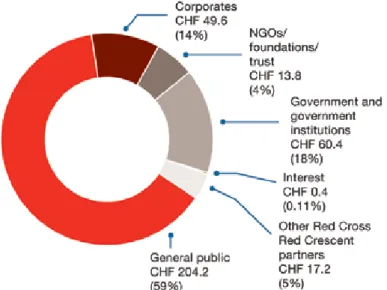
As of 31 August 2014, the Red Cross and Red Crescent Movement1 had raised a total
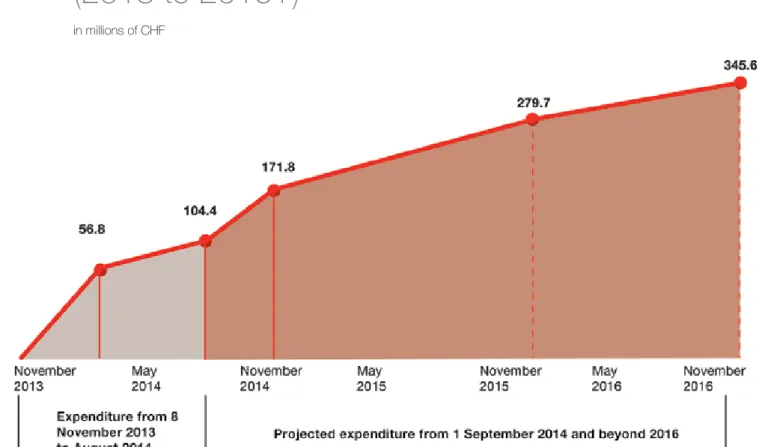
of 345.6 million Swiss francs (CHF) in support of its response operation to Typhoon Haiyan.2 This amount represents an increase of CHF 98 million in income since the
previous reporting period, as a result of new income sources, participation from an additional five Participating National Societies and interest earned. Up until 31 Au-gust 2014, CHF 104.4 million, i.e. 30 per cent of the total income, has been spent. As of 1 September 2014, the projections for expenditure covered the following sectors: shelter and community infrastructure, livelihoods, disaster risk reduction and Na-tional Society development. The majority of the funds received are from the general public, government and government institutions and corporates.
1 The information in this financial summary combines unaudited financial data from 27 Red Cross and Red Crescent National Societies, including Philippine Red Cross, IFRC and ICRC, which provided relief and recovery support through the Philippine Red Cross. These 27 National Societies are from Australia, Austria, Belgium, Canada, Denmark, Finland, France, Hong Kong, Ireland, Japan, South Korea, Montenegro, Myanmar, Netherlands, New Zealand, Norway, Philippines, Qatar, Singapore, Spain, Sweden, Switzerland, Taiwan, Turkey, United Kingdom and United States.
2 Financial reports were received in local currencies and converted to CHF, which is the official reporting currency of the IFRC secretariat. The foreign exchange rates used were derived in the following way: an average exchange rate, covering the period of 8 November 2013 through 31 August 2014, was calculated to translate the income and expenditure; and the spot rate as of 31 August 2014 is used for projected expenditure. The summary table of rates used is included in the financial reporting methodology notes (refer to Annex 2).
3 Each Red Cross Red Crescent National Society and organization has its own, unique financial accounting and coding structure. Therefore, for the purpose of consolidating financial figures, the data supplied by the Red Cross Red Crescent National Societies and organizations were simplified into seven categories, as presented in Figure 2. For definitions and a detailed list of these categories, refer to Annex 2.
Figure 1. Total funds received by the Red Cross
Red Crescent Movement by original sources
29
Figure 2 reflects spending of CHF104.4 million, through 31 August 2014 by programme areas.3 Thelargest amount spent by the Movement members, by programme is in the area of shelter and community infrastructure (CHF 36.7 million), followed by food and livelihoods (CHF 34.8 million).
Figure 2. Total expenses by category
in millions of CHF
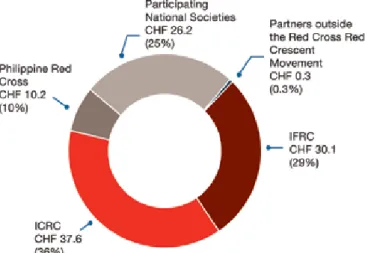
Figure 3 reflects the split of the CHF 104.4 million expenditure among the partners in the Move-ment, i.e. the Philippine Red Cross, IFRC, ICRC, the 27 Participating National Societies and partners outside the Movement. The majority of the expenditure can be attributed to IFRC, ICRC and Par-ticipating National Societies. A small per cent of this expenditure was coordinated and channelled through other humanitarian actors in the field and government agencies to avoid duplication or gaps in the provision of assistance.
Figure 3. Implementers of Red Cross Red
Crescent Movement funding
30
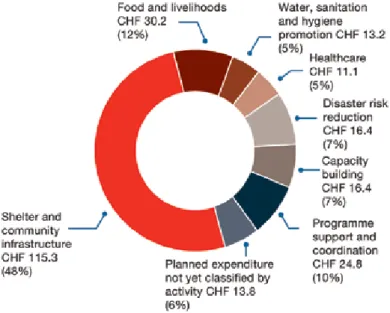
Figure 5 illustrates the estimated spending projections, by sectors starting 1 Septem-ber 2014 continuing into 2016 and beyond.
The projected spending of the remaining balance during the recovery phase is al-located primarily in the programming areas of shelter, community infrastructure, food and livelihoods, and water sanitation and hygiene promotion. There is also con-siderable expenditure planned for longer-term disaster risk reduction and Philippine Red Cross capacity development programmes.
Figure 4. Red Cross Red Crescent Movement
expenditure and forecast combined
(2013 to 2016+)
in millions of CHF
Many of the Participating National Societies have reported that the recovery pro-gramming will continue into 20164 and beyond. The estimated spending forecast is
presented in Figure 4.
4 For purposes of consolidating financial figures, National Societies and organizations were requested to adapt their plans to the timeframe reflected in figure 4.
31
Figure 5. Red Cross Red Crescent Movement
planned expenditure by category
32
As a part of the psychosocial support programme in schools, the Philippine Red Cross volunteers are conducting play activities, art therapy and violence prevention initiatives with children in schools across typhoon-affected areas.
33
Annex 1.
Notes and methodology on the
programmatic progress indicators
The following is a summary of the methodology used to report against all the programme indicators developed for this operation. The programmatic analysis (re-fer to page 25) presents only those indicators for which information is up-to-date.
1. Shelter
1.1 Number of households that have received shelter relief assistance
• Number of households provided with emergency shelter materials
This refers to all households that have received at least one type of emergency shel-ter mashel-terial (tarpaulins, tent or shelshel-ter toolkit). If a household receives several of one or different types of emergency shelter materials, it is counted only once.
• Number of households reached with non-food items
This refers to all households that have received at least one of the following
non-food items: kitchen sets, sleeping mats, jerry cans (10-litre and 20-litre) or blan-kets.
1.2 Number of households that have received shelter repair assistance
• Number of households that have claimed the cash grant component of the shelter repair assistance
This refers to the total number of households that have claimed either the 1st and/ or 2nd cash grant amounting to a total of 10,000 Philippine pesos (PHP).
• Number of households that have received corrugated galvanized iron sheets This refers to the total number of households provided with corrugated galvanized iron sheets.
• Number of households provided with shelter repair assistance
This refers to the total number of households that have completed the shelter repair assistance process with the 1st and/or 2nd cash grant amounting to a total of PHP 10,000 and corrugated galvanized iron sheets, or at least one of these. This number includes households that received cash grants and were later disqualified due to violation of agreement.
1.3 Number of households provided with a core shelter
This refers to the total number of households provided with a core shelter (i.e. wood and half-concrete model and other types) provided by the Red Cross Red Crescent Movement.
1.4 Number of households relocated and provided with a shelter solution
This refers to the total number of households that have been relocated to identified and approved relocation sites, and given a house to live in.
34
1.5 Number of carpenters and craftspeople trained in shelter construction
This includes all skilled labour, carpenters, and craftspeople who have been trained in shelter construction techniques.
1.6 Number of communities reached with participatory approach to safe shelter awareness
This includes the total number of barangays reached with a participatory approach to safe shelter awareness and build back safer orientation and training.
2. Livelihoods
2.1 Number of households that have received livelihood assistance to cover their immediate needs
• Number of households provided with food assistance
If any member of the family receives food rations for up to two to three days, it is considered that the household has been provided with food assistance. Food as-sistance is supplementary food (hot meals or dry rations) provided during an emer-gency situation, and is normally distributed only once.
• Number of households that have received unconditional cash grants
This refers to all households that have received unconditional cash grants to meet their immediate needs during the relief phase.
2.2 Number of people supported through the provision of cash-for-work activities
This refers to the total number of people who have participated in cash-for-work ac-tivities in community-driven projects such as debris removal and shelter construc-tion, among others.
2.3 Number of households that have received support through livelihoods recovery pro-gramme
• Number of households that have been provided with livelihoods support grants This refers to the total number of households that have received conditional cash grants after their individual proposals to support their livelihood was received and approved though a community selection process. The proposals are submitted by individuals to support the start-up of an alternative means of livelihood, enhance previous livelihood assets (e.g. boats, nets, quick growing seeds, replacement tools, fertilizer, etc.) or inputs to diversify income sources (such as small-scale agriculture, animal husbandry, tailoring or other income generation activities).
• Number of households surveyed to establish programme impact and conduct beneficiary satisfaction analysis
This includes all households that are interviewed to establish the impact of the proj-ect and gauge beneficiary satisfaction.