ARTIGO ORIGINAL
ABSTRACT
Introduction: Hysterectomy is one of the most common gynecological procedures and may be performed either by vaginal approach, laparotomy or laparoscopy. Although total laparoscopic hysterectomy has multiple advantages, conflicting major complication rates have been previously reported.
Objectives: To describe our experience performing TLH and to evaluate complication rates.
Material and Methods: A retrospective observational study of all total laparoscopic hysterectomy performed in our department, by the same surgical team, between April 2009 and March 2013 (n = 262), was conducted. Medical records were reviewed for patient characteristics, operating time, uterine weight, post-operative hemoglobin variation, length of hospital stay, and intra and postoperative complications.
Results: Patient average age was 48.9 ± 9.0 years and 49.2% had previous abdominopelvic surgery. The average body mass index was 26.5 ± 4.5 kg/m2 and 42% of women were either overweight or obese. The mean operating time during the total study period was
77.7 ± 27.5 minutes, but it decreased significantly as the surgical team’s training increased. Average uterine weight was 241.0 ± 168.4g and average hospital stay was 1.49 ± 0.9 days. The mean postoperative hemoglobin variation was -1.5 ± 0.8g/dL. The major and minor complication rates were 1.5% (n = 4) and 11.5% (n = 30), respectively. One procedure was converted to laparotomy and two women had a vaginal vault dehiscence. No important urinary tract or bowel injuries occurred.
Conclusions: This study demonstrates that, in experienced hands, total laparoscopic hysterectomy is safe and with low complications rates.
Keywords: Hysterectomy; Laparoscopy; Postoperative Complications; Portugal.
Total Laparoscopic Hysterectomy:
Retrospective Analysis of 262 Cases
Histerectomia Totalmente Laparoscópica: Análise Retrospetiva de 262 Casos
1. Serviço de Ginecologia e Obstetrícia. Hospital de Braga. Braga. Portugal.
2. Instituto de Investigação em Ciências da Vida e da Saúde. Escola de Ciências da Saúde. Universidade do Minho. Braga. Portugal.
3. Departamento de Obstetrícia, Ginecologia e Medicina da Reprodução. Hospital de Santa Maria. Centro Hospitalar Lisboa Norte. Lisboa. Portugal. 4. Faculdade de Medicina. Universidade de Lisboa. Lisboa. Portugal.
Recebido: 30 de Maio de 2013 - Aceite: 09 de Outubro de 2013 | Copyright © Ordem dos Médicos 2014
Cristina NOGUEIRA-SILVA1,2, Samuel SANTOS-RIBEIRO3,4, Sónia BARATA3,4, Conceição ALHO3,4, Filipa OSÓRIO3,4,
Carlos CALHAZ-JORGE3,4
Acta Med Port 2014 Jan-Feb;27(1):73-81
RESUMO
Introdução: A histerectomia é a cirurgia ginecológica major mais frequentemente realizada nos países desenvolvidos, considerando--se três principais vias de abordagem: vaginal, abdominal e laparoscópica. Apesar de múltiplas vantagens, a histerectomia totalmente laparoscópica tem-se associado a controvérsia relativamente à taxa de complicações.
Objectivos: Análise da nossa casuística de histerectomia totalmente laparoscópica e avaliação da taxa de complicações.
Material e Métodos: Análise retrospetiva dos processos clínicos das doentes submetidas a histerectomia totalmente laparoscópica no nosso departamento, pela mesma equipa cirúrgica, entre abril de 2009 e março de 2013 (n = 262).
Resultados: As doentes tinham em média 48,9 ± 9 anos e 49,2% tinha antecedentes de cirurgia abdomino-pélvica. O índice de massa corporal médio era 26,5 ± 4,5 kg/m2, sendo que 42% eram obesas ou tinham excesso de peso. O tempo operatório médio para
realiza-ção da histerectomia totalmente laparoscópica foi 77,7 ± 27,5 minutos, diminuindo significativamente com o aumento da experiência da equipa cirúrgica. O peso médio da peça operatória foi 241 ± 168,4g e a duração média do internamento após a cirurgia foi 1,49 ± 0,9 dias. A diferença entre a hemoglobina pré e pós-operatória foi 1,5 ± 0,8g/dL. A morbilidade major foi 1,5% (n = 4) e a minor 11,5% (n = 30). Salienta-se um caso de conversão para laparotomia e dois casos de deiscência da cúpula vaginal. Não ocorreu nenhuma lesão urinária ou gastrointestinal grave.
Conclusões: Esta série demonstra que, se realizada por uma equipa cirúrgica adequadamente treinada, a histerectomia totalmente laparoscópica é segura e associada a baixa taxa de complicações.
Palavras-chave: Complicações Pós-Operatórias; Histerectomia; Laparoscopia; Portugal.
INTRODUCTION
Hysterectomy is the most frequently performed major
gynaecological procedure in developed countries.1,2 An
incidence of 1:461 women is currently estimated in the USA, corresponding to approximately 600,000 hysterectomies
per year.3-6 In addition, in 2008-2009, 338 hysterectomy
procedures were performed in Canada in women aged 20.2
Since Reich et al. description of the first laparoscopic
hysterectomy in 1989, three major hysterectomy
approaches are considered: vaginal, abdominal and
laparoscopic.7 Several studies have discussed the
advantages, disadvantages and complication rate related
with each type of hysterectomy.4,8-10 Initially, laparoscopic
hysterectomy was associated with a high complication rate,
namely urinary tract lesions.11,12 Vaginal hysterectomy was
considered as first-line approach, whenever possible, given its documented advantages (shorter surgical procedure
35
35 anos a p
rom
ov
er
as
ciê
CA
P
ORT
UGUE
SA
ARTIGO ORIGINAL duration and stay, less postoperative pain, early return to professional activity) and low complication rate. Therefore,
laparoscopic hysterectomy was only to be performed when the vaginal approach was not feasible, in order to avoid the
abdominal hysterectomy.6,8 However, more recent studies
have shown that laparoscopic hysterectomy is safe and
related with a low complication rate.13,14 Donnez et al., upon
analysis of 3,190 laparoscopic hysterectomy procedures, have shown that laparoscopic approach presents multiple advantages when compared to the vaginal and
abdominal approaches, with a similar morbidity.9 Despite
controversy, there is consensus regarding the importance of the learning curve and expertise of the surgical teams in published results, as well as the presence of specific
indications for different hysterectomy approaches.6,9,15-17
Therefore, gynaecologists should acquire adequate skills and training in every approach to hysterectomy, allowing for an individualized choice, taking into consideration surgery
indication, patient’s characteristics and will.17 There are
however evidences that the approach selection is rather based on surgeon’s preference and experience than on
evidence from the literature.18
In Portugal, laparoscopic hysterectomy is not widely
performed. One study carried out by the Colégio de
Especialidade de Ginecologia e Obstetrícia da Ordem dos Médicos (Portuguese College of Obstetricians and
Gynaecologists) revealed that, in 2011, in 34 Portuguese hospitals, only 13% of performed hysterectomy procedures used this approach. The lack of professionals with enough training and experience was identified as the major
restriction to the development of laparoscopic surgery.19
Our study involves the analysis of 262 total laparoscopic hysterectomy (TLH) procedures performed by the same surgical team.
MATERIAL AND METHODS
This is a descriptive, observational and cross-sectional study, with a retrospective analysis of the clinical records of all patients who had undergone TLH performed by the same surgical team and following the same surgical technique,
between the 1st April 2009 and the 31st of March 2013.
Patients attended a follow-up visit at 1, 6 and 12 months after surgery (except surgeries that took place after 31st March 2012, as their follow-up has not yet reached the 12
Table 1 -Major and minor intra and post-operative complications
Major Complications
Ureteral lesion Vesical lesion Bowel perforation
Bleeding requiring blood transfusion
Vaginal cuff hematoma requiring surgical drainage or blood transfusion Major complications related with anaesthesia
Conversion to laparotomy Vaginal cuff dehiscence Pulmonary embolism
Minor Complications
Bleeding* not requiring blood transfusion
Hematoma (with spontaneous drainage) Iatrogenic serosal bowel injury
Infection (urinary, of the pelvic scar or other) or fever (body temperature > 38ºC on first seven days) Deep vein thrombosis
Minor problems related with anaesthesia Urinary incontinence
ARTIGO ORIGINAL
month-period at the time of analysis) and complications and related symptoms were recorded. There was a
non-attendance rate of 1.1% (n = 3) on the first month, 7.3%
(n = 19) at six months and 14.1% (n = 37) at 12 months.
The following parameters were analysed in order to characterize our group of patients: patent’s age; body mass index (BMI); age at menarche and at menopause; use of hormone therapy; parity; medical and surgical history. As regards surgical procedure, the following were assessed: major surgical indication; ancillary surgical procedures; operative time; type of energy system used; use of epigastric trocar; indication for morcellated hysterectomy specimen; weight of hysterectomy specimen; duration of postoperative hospital stay; histopathological diagnosis; pre and postoperative haemoglobin and haematocrit variation; major and minor intraoperative complications (occurring up to 12 months after surgery), using criteria in previously
published case series (Table 1).9,11
Surgical procedure
Upon adequate explanation, an informed consent was signed by all patients before surgery. Patients were admitted on the eve of surgery, and a blood sample was obtained for preoperative blood count and patients underwent bowel preparation. The blood count was re-tested on the first day after surgery.
All surgical procedures were performed under general anaesthesia and using Folley catheter for continuous urinary catheterisation. All patients received intravenous antibiotic prophylaxis with single-dose of cephoxitin (2 g).. Surgery was performed with four skin incisions always including a transumbilical approach, usually using one 10 mm umbilical trocar for optical instruments, two lateral trocars and one 5 mm suprapubic trocar for surgical instruments. An epigastric 10 mm trocar replaced the suprapubic trocar in some situations.
Upon creating an operative field and before TLH, a diagnostic laparoscopy was also performed in order to identify the ureters, followed, when necessary, by adhesiolysis or endometriosis treatment. All TLH were performed using a Clermont-Ferrand uterine manipulator, following the Clermont-Ferrand technique, starting with clamping of the left round ligament; dissection of broad ligament anterior leaf up to the peritoneal vesicouterine fold; division of the posterior leaf of the broad ligament; clamping of the utero-ovarian or infundibulopelvic ligament (with or without preserving adnexae, respectively); similar procedure followed on the right side; dissection of the vesicouterine space pushing the bladder down; bilateral clamping of uterine arteries, cardinal and utero-sacral ligaments; circular colpotomy performed; removal of hysterectomy specimen through vaginal route (with or without the need for morcellation); vaginal cuff closure through the laparoscopic route, with bilateral utero-sacral ligament vaginal vault suspension; ensuring surgical haemostasis, pelvic washing and ureter inspection for peristalsis. Operative time for TLH was considered from the beginning of round ligament
clamping up to the conclusion of vaginal cuff closure.
Statistical analysis
Data were inserted on a database in FileMaker Pro 12
Advanced®. Statistical analysis used SigmaStat® (version
3.5) software. A descriptive analysis was performed, with central tendency and dispersion measures, taking into account the variables used in the study. The results referring to quantitative variables are presented as mean ± standard deviation. Kolmogorov-Smirnov was used for
normality analysis and chi-squareandKruskal–Wallistests
were used for independent samples. A Dunntest was used
for paired multiple comparisons. Statistical significance was
considered for p values < 0.05.
RESULTS
In four years, 549 hysterectomy procedures were performed by the same surgical team. From these, 47.7%
(n = 262) were TLH, 36.4% (n = 200) were abdominal
hysterectomy procedures and 15.9% (n = 87) were vaginal
hysterectomy procedures. As presented in Fig. 1, the number of TLH increased over the studied period of time, while abdominal and vaginal hysterectomy procedures
decreased. In fact, the TLH rate increased from 32.9% (n =
47) in the first year to 53.1% (n = 68) in the fourth year (p <
0.001).
Mean age of the 262 patients who underwent TLH was 48.9 ± 9 (minimum 21; maximum 84). Gynaecological and obstetric medical and surgical history data are presented in
Table 2. We should remark that 15.6% (n = 41) of the patients
were nulliparous, 23.7% (n = 62) were postmenopausal and
17.7% (n = 11) of the patients were on hormone therapy. As
regards medical history, only 32.1% (n = 84) of the patients
were healthy. High blood pressure (24.8%), depression (13.4%) and dyslipidemia (10.3%) were the most commonly associated co-morbidities. Mean BMI was 26.5 ± 4.5 kg/
m2, 14.9% of the patients were obese (n = 39) and 27.1%
(n = 71) were overweight, according to the WHO criteria.20
Figure 1 - Abdominal, vaginal and total laparoscopic hysterectomy rates over the four years of the study
Years
Hysterectomy rate (%)
1st
Abdominal Vaginal Laparoscopic
0 10 20 30 40 50 60 70
ARTIGO ORIGINAL Table 2 - Gynaecological and obstetric, medical and surgical history of patients who underwent TLH
Gynaecological and Obstetric History
Menarche (mean ± SD; min - max) 12.5 ± 1.7 (8 - 17)
Parity
Nulliparous, n (%) 41 (15.6%)
Multiparous, n (%); mean ± SD 221 (84.4%); 1.9 ± 0.8
Childbearing age
Pre-menopausal, n (%) 200 (76.3%)
Post-menopausal, n (%); mean ± SD 62 (23.7%); 50.8 ± 3.6
Medical History
Irrelevant, n (%)
Co-morbidities, n (%)
84 (32.1%)
High blood pressure 65 (24.8%)
Depression 35 (13.4%)
Dyslipidemia 27 (10.3%)
Endocrine disorders 23 (8.8%)
Cancer 17 (6.5%)
Type 2 diabetes mellitus 12 (4.6%)
Respiratory disorders 12 (4.6%)
Venous insufficiency 11 (4.3%)
Cardiovascular disorders 10 (3.8%)
Blood disorders 10 (3.8%)
Others 26 (9.9%)
BMI (mean ± SD; min - max) 26.5 ± 4.5 (19 – 43)
Overweight, n (%) 71 (27.1%)
Obesity, n (%) 39 (14.9%)
Surgical History
Gynaecological surgery (vaginal approach), n (%)
Hysteroscopy 47 (17.9%)
Resectoscopic techniques 14 (5.3%)
Urogynaecology 4 (1.5%)
Cervical conization 3 (1.1%)
Gynaecological surgery (abdominal approach), n (%)
Cesarian delivery 47 (17.9%)
Surgical laparoscopy 36 (13.7%)
Laparotomy 27 (10.3%)
Diagnostic laparoscopy 3 (1.1%)
Non-gynaecological surgery, n (%)
Appendectomy 31 (11.8%)
Cholecistectomy 20 (7.6%)
Others 4 (1.5%)
ARTIGO ORIGINAL
Table 3 - Main surgical indication of patients who underwent TLH
Surgical Indication n %
Myomatous uterus 140 53.4
Endometrial polyposis 28 10.7
Adnexal disorders 27 10.3
Endometriosis 26 9.9
Endometrial hyperplasia 14 5.3
Urogenital prolapse 11 4.2
Isolated adenomyosis 7 2.7
Endometrial cancer 3 1.1
Breast cancer 2 0.8
Cervical cancer 2 0.8
Blood disorder 1 0.4
Cervical dysplasia 1 0.4
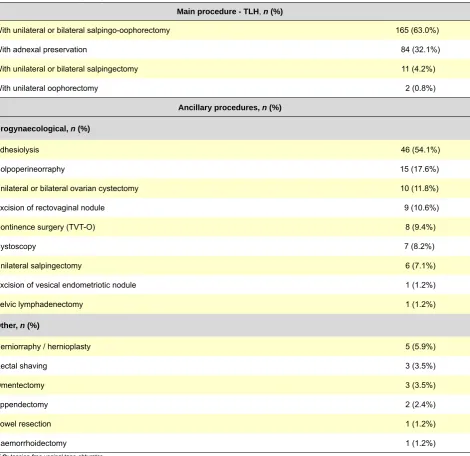
Table 4 - Main and ancillary surgical procedures
Main procedure - TLH, n (%)
With unilateral or bilateral salpingo-oophorectomy 165 (63.0%)
With adnexal preservation 84 (32.1%)
With unilateral or bilateral salpingectomy 11 (4.2%)
With unilateral oophorectomy 2 (0.8%)
Ancillary procedures, n (%)
Urogynaecological, n (%)
Adhesiolysis 46 (54.1%)
Colpoperineorraphy 15 (17.6%)
Unilateral or bilateral ovarian cystectomy 10 (11.8%)
Excision of rectovaginal nodule 9 (10.6%)
Continence surgery (TVT-O) 8 (9.4%)
Cystoscopy 7 (8.2%)
Unilateral salpingectomy 6 (7.1%)
Excision of vesical endometriotic nodule 1 (1.2%)
Pelvic lymphadenectomy 1 (1.2%)
Other, n (%)
Herniorraphy / hernioplasty 5 (5.9%)
Rectal shaving 3 (3.5%)
Omentectomy 3 (3.5%)
Appendectomy 2 (2.4%)
Bowel resection 1 (1.2%)
Haemorrhoidectomy 1 (1.2%)
ARTIGO ORIGINAL
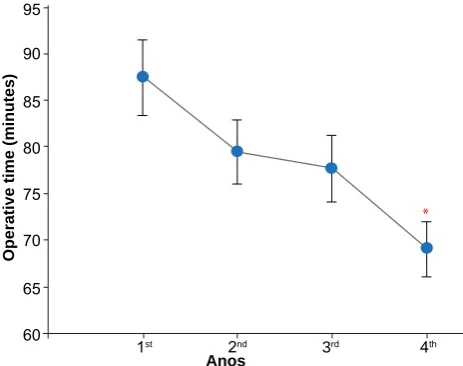
Figure 2 - Mean TLH operative time over the four years of the study. p < 0.05: * vs 1st year
Regarding surgical history, 49.2% (n = 129) of the patients
had undergone at least one previous abdominopelvic
surgery. From these, 17.9% (n = 47) had undergone at
least one previous caesarean section. As regards other
abdominal surgical history, 11.8% of the patients (n = 31)
had been submitted to an appendectomy and 7.6% (n = 20)
to a cholecystectomy.
The main surgical indications were: myomatous uterus (53.4%; symptom-related, namely with dysfunctional uterine bleeding (refractory to medical management), endometrial polyps (10.7%), adnexal pathology (10.3%), endometriosis (9.9%), endometrial hyperplasia (5.3%) and urogenital prolapse (4.2%; uterine prolapse related with myomatous uterus or simultaneous adnexal mass) (Table 3).
TLH was performed with unilateral or bilateral adnexal
surgery in 63% (n = 165) of the patients, with bilateral
adnexal preservation in 32.1% (n = 84), with unilateral
or bilateral salpingectomy in 4.2% (n = 11) and unilateral
oophorectomy in 0.8% (n = 2) (Table 4). Other ancillary
surgical procedures were performed in 32.4% (n = 85)
of the patients (Table 4), mainly including adhesiolysis in 46 patients, ureterolysis in five, surgical excision of endometriotic nodules (of the recto-vaginal septum in nine patients, of bladder and bowel in one patient) and pelvic lymphadenectomy in one patient (a 60-year old with endometrioid-type endometrial adenocarcinoma invading more than half myometrium).
Mean TLH operative time was 77.7 ± 27.5 minutes (minimum 25; maximum 180). As presented in Fig. 2, mean operative time was statistically significantly reduced from the first (87.4 ± 26.8 minutes) to the fourth year (69.1 ± 22.9
minutes) of the study (p < 0.05). Bipolar/monopolar energy
system was used in 93.5% (n = 245) of surgeries (bipolar
energy for clamping, coagulation and dissection procedures; monopolar energy only for circular colpotomy). In addition,
ultrasonic energy (Ultracision®) was used in 4.6% (n = 12)
of surgeries, LigaSure® system in 1.1% (n = 3) and Enseal®
system in 0.8% (n = 2). Taking into account the uterine
dimensions, an epigastric trocar placement was needed
in 15.6% (n = 41) of surgical procedures. Morcellation of
the operative specimen was needed in 30.9% (n = 81)
of surgeries, using the vaginal route in 90.1% (n = 73) of
surgeries. Mean weight of operative specimen was 241 ± 168.4 g (minimum 34; maximum 1,000). Postoperative mean hospital stay was 1.49 ± 0.9 days, with 64.5% of the patients presenting a one-day hospital stay (minimum 1; maximum 8).
As regards histopathological results, the most frequent
were uterine fibroids in 69.1% (n = 181) of the patients,
adenomyosis in 33.6% (n = 88), endometrial polyps in
17.2% (n = 45), ovarian pathology in 14.5% (n = 38) and
endometriosis in 12.6% (n = 33).
Mean pre and postoperative haemoglobin difference was 1.5 ± 0.8 g/dL, with maximum loss of 4.7 g/dL. Haemoglobin
reduction was 3.5g/dL or higher in 3.4% of the patients (n
= 9). As regards mean pre and postoperative haematocrit difference, this was 4.9 ± 2.6%, with a maximum loss of 13.7%.
Major intraoperative complications involved two (0.76%) patients, namely one cardiac arrest during anesthesia induction in one patient with history of thymoma, successfully reversed with CPR and one conversion to laparotomy due to uncontrolled uterine bleeding, without any specific iatrogenic vascular lesion (the same patient with a 4.7 g/dL haemoglobin loss; this is a patient without any history of known coagulation abnormalities) (Table 5). Minor intraoperative complications included bleeding with no indication for blood transfusion in nine patients (3.4%) and two patients (0.76%) with serosal sigmoid iatrogenic laceration, in whom suturing was immediately performed (Table 5).
As regards postoperative major complications, two patients presented dehiscence of the vaginal cuff (0.76%), one with a stage IBG2 endometrial adenocarcinoma (the same patient who underwent pelvic lymphadenectomy) upon brachytherapy session and in the other patient it occurred five months upon surgery, in relation to sexual intercourse. These patients underwent vaginal cuff secondary closure by laparoscopic approach, upon excision of the fibrotic and necrotic tissue excision of cuff edges, allowing for easier healing. Postoperative infectious situations occurred in 15 patients (5.7%) namely 11 (4.2%) with lower urinary tract infections, two (0.76%) febrile cases, one (0.38%) infection of the vaginal cuff and one (0.38%) infection of the umbilical scar, with supra-aponeurotic fistula formation, which was excised three years upon surgery. Four (1.5%) patients presented with stress urinary incontinency, persisting in two patients at 12 months follow-up (Table 5). No vaginal cuff prolapse occurred beyond one year of follow-up. No ureteral or vesical lesion, no re-admission (less than 72 hours upon discharge) nor any intraoperative or immediate postoperative death occurred. Therefore, overall major
morbidity was 1.5% (n = 4) and minor morbidity was 11.5%
(n = 30).
Anos
Operative time (minutes)
1st 60 65 70 75 80 85 90 95
ARTIGO ORIGINAL
DISCUSSION
Laparoscopic hysterectomy was initially criticized due to its technical difficulty, higher operative time and apparent increase in major complications, namely as regards the urinary tract. However, its benefits include less postoperative pain, a reduced hospital stay, an earlier return to professional activity, a short-term increase in quality of life and a better aesthetic outcome, when compared to
abdominal hysterectomy.8,9,15,21,22 From a technical point of
view, laparoscopic approach benefits include high-definition imaging and vision amplification, allowing for an easier
access to the uterine vessels, ureter, rectum and vagina.9
Despite the initial controversy regarding laparoscopic approach-related complication rate, most recent studies are consensual and present TLH as a safe and first-line technique in multiple surgical scenarios, either benign or
malignant.9,10,13,14 However, laparoscopic hysterectomy has
not yet reached the expected implementation in Portugal.19
We present in our study the analysis of 262 TLH
performed by one surgical team in one SNS hospital. Our
results show that upon training and technique establishment, laparoscopic approach became the preferred hysterectomy approach. In fact, and in accordance to other studies, our own experience was that after the first year of experience with the laparoscopic route, it was adopted as the main approach, with a relevant decrease mainly in abdominal
hysterectomy procedures.3,9,23 However, we must stress
that, according to a 2009 Cochrane survey, as well as to the
American Congress of Obstetricians and Gynaecologists (ACOG) recommendations, considering its advantages and low complication rate, vaginal approach remains as first-line approach for hysterectomy. Laparoscopic hysterectomy should therefore be performed whenever vaginal approach is not feasible or indicated, in order to avoid the abdominal
approach.6,8
Considering that hysterectomy is the major gynaecological surgery more commonly performed in
developed countries, at a time when SNS cost reductions
are a major issue, a cost-efficacy evaluation of the different approaches should also be carried out. Every laparoscopic surgery requires specific and expensive equipment and instruments. Preliminary studies have shown that laparoscopic hysterectomy was more expensive when
compared to the abdominal approach.18,24 However, over
the past few years, with more surgical experience and consequently lower complication rates, this financial reality has changed. Minimally-invasive approaches (vaginal and laparoscopic) are associated with a reduced hospital stay, less postoperative pain, transfusional need and infectious complication rates, as well as an earlier return to professional activity, all these factors contributing to an indirect cost reduction associated to the surgical procedure.
Very recently Wright et al. showed that vaginal hysterectomy
is the least expensive method, followed by laparoscopic
hysterectomy.25 In fact, the laparoscopic approach has been
related to reduced costs, when compared to abdominal
Table 5 - Intra and postoperative major and minor complications
Complications n %
Major
Vaginal cuff dehiscence 2 0.76
Major anaesthesia complications 1 0.38
Conversion to laparotomy 1 0.38
Minor
Infective
Urinary tract infection 11 4.20
Fever (body temperature > 38ºC on first 7 days) 2 0.76
Vaginal cuff infection 1 0.38
Umbilical scar infection (with fistula) 1 0.38
Bleeding requiring no blood transfusion 9 3.40
Urinary incontinence 4 1.50
ARTIGO ORIGINAL haemoglobin decrease of 1.5 g/dL. These results are similar to those described by Malzoni et al. of a postoperative
haemoglobin decrease of 1.44 and 1.39 g/dL.16
In our study there was a major complication rate of 1.5% and minor complication rate of 11.5%. There were no ureteral or vesical lesions, bowel perforations or death. This complication rate is comparable with the rates described in literature. In one study of 1,120 laparoscopic
hysterectomy procedures, Karaman et al. described a
major complication rate of 1%.13 Brummer et al. carried
out a multicenter retrospective study in Finland, including 27,827 TLH, in which major complication rate varied from 1.8% between 1992 and 1999 and 1% between 2000
and 2005.23 In addition, Donnez and Donnez described in
their retrospective study with 400 patients who underwent laparoscopic hysterectomy procedure a major complication
rate of 1.5%.10 We should remark that we have considered
as minor complication the occurrence of a serosal sigmoid iatrogenic laceration with immediate suture, which for some
authors would be considered as a normal occurrence.15
In addition, we also considered as morbidity the case of
urinary incontinence, according to the study by Walsh et al.
who considers that vesical dysfunction should be assessed
as a long-term complication of the laparoscopic approach.4
However, previous studies on complication rates have not included this parameter. Regardless of this fact, the minor complication rate that we described is acceptable and is
in line with current literature. For instance, Hoffman et al.
described a 17.6% minor complications rate in their series
of 108 LTH.30
The adopted methodology is a possible limitation in our study as data was obtained from clinical records and as such was dependent on clear and complete information. In addition, this was a retrospective and observational study, without a control group. As such we recognize the need for a prospective study with a control group, the latter including a vaginal or abdominal approach.
CONCLUSIONS
Our study shows that TLH is minimally invasive and is related to a low intra and postoperative complication rate, even in high BMI-patients and when there is a history of abdomino-pelvic surgery. To our knowledge, this is the first Portuguese TLH clinical series and reinforces that, when performed by an adequately-trained surgical team, TLH is a safe procedure, may be performed in an acceptable operating time and is feasible in the presence of a voluminous uterus.
CONFLICTS OF INTEREST
The authors declare that there were no conflicts of interest in writing this manuscript.
FINANCIAL SOURCES
There were no external financial sources in writing this manuscript.
hysterectomy25,26 and apparent financial barriers to the
implementation of laparoscopic hysterectomy should be overcome.
Most patients who underwent TLH presented relevant
medical co-morbidities, a mean BMI of 26.5 kg/m2 (above
ideal body weight-related BMI of 20 – 24.9 kg/m2) and
42% of the patients were overweight or obese. In addition, almost half of the patients (49.2%) had undergone at least one previous abdominopelvic surgery.
The main surgical indications for hysterectomy in our study are in line with what is described in literature, with
uterine fibroids assuming a major role (53.4%).10,18,21,27,28
Histopathological results are also as expected from the major surgical indications, namely fibroids were present in 69.1% of surgical specimens.
Other ancillary procedures were performed, with variable complexities, in 32.4% of the patients. This shows the efficacy of the laparoscopic approach for different surgical procedures in Gynaecology, without the need for conversion to neither a laparotomy nor a second surgical time.
Mean operative time in our study (262 TLH) was 77.7 minutes with a significant decrease from the first to the fourth year of the study. These results are in line with those described by other groups with overall recognized
experience, such as Wattiez et al. and Malzoni et al.15,16 The
Malzoni group, for instance, described a mean operative
time of 80 minutes.16 The operative time described in
our study is significantly lower than the one described by
Santos et al. in one revision of 89 vaginal hysterectomy
procedures assisted by laparoscopy, performed in one Portuguese Gynaecology department, describing a mean
operative time of 120.6 minutes.18 These results show that
with a trained surgical team laparoscopy is not related with an increase of the operating time. In addition these results reinforce, once again, the importance of training and an initial learning curve in relation to laparoscopic procedures. We should emphasize that this operative time has been possible even with a similar or higher uterine weight than
that which is described in the literature.9,21,29 Mean weight
of surgical specimen in our study was 241 g (minimum 34;
maximum 1,000). Donnez et al.,in one revision of 3,190
laparoscopic hysterectomy procedures, described a mean
weight of 230 g.9 In addition, the study by Santos et al. refers
to a mean weight of 138.4 g18 lower than the one described
in our study. These results reinforce that the laparoscopic approach is possible, even in the presence of a voluminous uterus.
Mean postoperative stay was 1.49 ± 0.9 days, in line with
what is described in literature. Malzoni et al., for instance,
have described a study involving 396 and 624 patients with
mean hospital stays of 2.4 and 2.3 days, respectively.16 We
should remark a eight-day postoperative stay regarding one patient with type 3 von Willebrand disease whose hospital stay was extended for haemostasis control and to restore factor VII.
ARTIGO ORIGINAL
soc Gynecol Laparosc. 2004;11:211-8.
17. SOGC clinical guidelines. Hysterectomy. J Obstet Gynaecol Can. 2002;24:37-61.
18. Santos E, Dias I, Varela MF, Freire-de-Oliveira C. Morbidity in laparos-copically assisted vaginal hysterectomies. Acta Obstet Ginecol Port. 2007;1:66-73.
19. Ordem dos Médicos. Um estudo da situação da laparoscopia, em Gi-necologia, no país (2011); [consultado 2013 Mar 23]. Disponível em: https://www.ordemdosmedicos.pt/?lop=conteudo&op=8eefcfdf5990e44 1f0fb6f3fad709e21&id=64c31821603ab476a318839606743bd6. 20. World Health Organization. Obesity: preventing and managing the
glob-al epidemic. Report on a WHO Consultation on Obesity, 3–5 June 1997, Geneva, WHO/NUT/NCD/98.1. Technical Report Series Number 894. Geneva: WHO; 2000.
21. Cho HY, Choi KJ, Lee YL, Chang KH, Kim HB, Park SH. Comparison of two bipolar systems in laparoscopic hysterectomy. JSLS. 2012;16:456-60.
22. Kluivers KB, Hendriks JC, Mol BW, Bongers MY, Bremer GL, de Vet HC, et al. Quality of life and surgical outcome after total laparoscopic hys-terectomy versus total abdominal hyshys-terectomy for benign disease: a randomized, controlled trial. J Minim Invasive Gynecol. 2007;14:145-52. 23. Brummer TH, Seppälä TT, Härkki PS. National learning curve for laparo-scopic hysterectomy and trends in hysterectomy in Finland 2000-2005. Hum Reprod. 2008;23:840-5.
24. Bijen CB, Vermeulen KM, Mourits MJ, de Bock GH. Costs and effects of abdominal versus laparoscopic hysterectomy: systematic review of controlled trials. PLoS One. 2009;4:e7340.
25. Wright KN, Jonsdottir GM, Jorgensen S, Shah N, Einarsson JI. Costs and outcomes of abdominal, vaginal, laparoscopic and robotic hysterec-tomies. JSLS. 2012;16:519-24.
26. Cho HY, Park ST, Kim HB, Kang SW, Park SH.Surgical Outcome and Cost Comparison Between Total Vaginal Hysterectomy and Laparo-scopic Hysterectomy for Uteri Weighing > 500 g. J Minim Invasive Gy-necol. 2014;21:115-9.
27. Broder MS, Kanouse DE, Mittman BS, Bernstein SJ. The appro-priateness of recommendations for hysterectomy. Obstet Gynecol. 2000;95:199-205.
28. Perino A, Cucinella G, Venezia R, Castelli A, Cittadini E. Total laparo-scopic hysterectomy versus total abdominal hysterectomy: an assess-ment of the learning curve in a prospective randomized study. Hum Re-prod. 1999;14:2996-9.
29. Paraiso MF, Ridgeway B, Park AJ, Jelovsek JE, Barber MD, Falcone T, at al. A randomized trial comparing conventional and robotically assisted total laparoscopic hysterectomy. Am J Obstet Gynecol. 2013;208:e1-7. 30. Hoffman CP, Kennedy J, Borschel L, Burchette R, Kidd A. Laparoscopic
hysterectomy: the Kaiser Permanente San Diego experience. J Minim Invasive Gynecol. 2005;12:16-24.
REFERENCES
1. Farquhar CM, Steiner CA. Hysterectomy rates in the United States 1990-1997. Obstet Gynecol. 2002;99:229-34.
2. Canadian Institute for Health Information. Health Care in Canada 2010. Ottawa: CIHI; 2010.
3. Wright JD, Ananth CV, Lewin SN, Burke WM, Lu YS, Neugut AI, et al. Robotically assisted vs laparoscopic hysterectomy among women with benign gynecologic disease. JAMA. 2013;309:689-98.
4. Walsh CA, Walsh SR, Tang TY, Slack M. Total abdominal hysterectomy versus total laparoscopic hysterectomy for benign disease: a meta-anal-ysis. Eur J Obstet Gynecol Reprod Biol. 2009;144:3-7.
5. Whiteman MK, Hillis SD, Jamieson DJ, Morrow B, Podgornik MN, Brett KM, et al. Inpatient hysterectomy surveillance in the United States, 2000-2004. Am J Obstet Gynecol. 2008;198:34:e1-7.
6. ACOG. ACOG Committee Opinion No. 444: choosing the route of hys-terectomy for benign disease. Obstet Gynecol. 2009;114:1156-8. 7. Reich H, DeCaprio J, McGlynn F. Laparoscopic hysterectomy. J Gynecol
Surg. 1989;5:213-6.
8. Nieboer TE, Johnson N, Lethaby A, Tavender E, Curr E, Garry R, et al. Surgical approach to hysterectomy for benign gynaecological disease. Cochrane Database Syst Rev. 2009;3:CD003677.
9. Donnez O, Jadoul P, Squifflet J, Donnez J. A series of 3190 laparo-scopic hysterectomies for benign disease from 1990 to 2006: evalua-tion of complicaevalua-tions compared with vaginal and abdominal procedures. BJOG. 2009;116:492-500.
10. Donnez O, Donnez J. A series of 400 laparoscopic hysterectomies for benign disease: a single centre, single surgeon prospective study of complications confirming previous retrospective study. BJOG. 2010;117:752-5.
11. Garry R, Fountain J, Mason S, Hawe J, Napp V, Abbott J, et al. The eVALuate study: two parallel randomised trials, one comparing laparo-scopic with abdominal hysterectomy, the other comparing laparolaparo-scopic with vaginal hysterectomy. BMJ. 2004;328:129.
12. Johnson N, Barlow D, Lethaby A, Tavender E, Curr E, Garry R. Surgical approach to hysterectomy for benign gynaecological disease. Cochrane Database Syst Rev. 2006;2:CD003677.
13. Karaman Y, Bingol B, Günenç Z. Prevention of complications in laparo-scopic hysterectomy: experience with 1120 cases performed by a single surgeon. J Minim Invasive Gynecol. 2007;14:78-84.
14. Bojahr B, Raatz D, Schonleber G, Abri C, Ohlinger R. Perioperative complication rate in 1706 patients after a standardized laparoscopic supracervical hysterectomy technique. J Minim Invasive Gynecol. 2006;13:183-9.