How to Integrate English Language Teaching and
Academic Study in Chinese-foreign Joint
Bachelor’s Degree Programmes in Local
Universities: The Case of Hubei Engineering
University
Qian Feng
Hubei Engineering University, Xiaogan, Hubei, China
Abstract—This paper made a statistical analysis on the basis of some data coming from a survey in Hubei Engineering University. It discussed about problems in Chinese-foreign Joint Bachelor’s Degree Programmes in Local Universities. Based on EngestrÖm’s activity theory, it further provided some suggestions by focusing on integrating English language teaching and academic study. It expected to bring the outcome (in EngestrÖm’s ending point of the model) of harmony and unity of teachers’ life world, vision of curriculum and classroom activities.
Index Terms—Chinese-foreign joint Bachelor’s Degree programmes, local Universities, activity theory, English language teaching, academic study
I. INTRODUCTION
Chinese-foreign cooperation in running schools is a positive and effective policy in education internationalization, which plays an important role in today's higher education in China. The earliest Chinese-foreign cooperation in running schools can be traced back to the late Qing dynasty's westernization movement, which put forward the concept of “Chinese-style westernization”. It has played a promoting role on higher education in the early modern China. In the early years after liberation, China underwent higher education reform following the pattern of Soviet Union. After the reform and opening up, China ushered in the rapid development of Chinese-foreign cooperation in running schools. In 1995, Chinese Ministry Education issued the Interim Provisions on Chinese-Foreign Cooperation in Running Schools. In 2003, the State Council promulgated the Regulations on Chinese-Foreign Cooperation in Running Schools, which paved the way for legalization and standardization of Chinese-Foreign Cooperation in Running Schools. By the push of globalization of education, more and more colleges and universities in China are promoting the improvement of Chinese-foreign cooperation in running schools in order to cultivate high-level interdisciplinary high-end talents. Outline of China’s National Plan for Medium and Long-term Education Reform and Development (2010-2020) says, “It is essential to reform and develop education by opening it to the outside world, carrying out education exchanges and collaboration at multiple levels and in a broad scope, and raising education’s internationalization level. Advanced concepts and experience in education in the world shall be assimilated to boost education reform and development at home, and to enhance the nation’s global position, influence and competitiveness in the field of education. To meet the requirement of opening up the Chinese economy and society to the world, large numbers of talents shall be cultivated that are imbued with global vision, well-versed in international rules, and capable of participating in international affairs and competition.” Since it is quite a new trend in China, there are few researches on Chinese-foreign joint Bachelor’s Degree programmes in China. Among those few researches, there are three major types. One is the researches on generic taxonomies and overview (Christine & Yang Fujia, 2007). The second type is those on current development of transnational higher education (Lin Jinhui & Liu Zhi-ping, 2007; Ka Ho Mok & Xiaozhou Yu, 2008; Guo Qiang & Zhou Nanping, 2014). The third is on English teaching and learning in joint programmes (Qin Cailing, 2014; Zeng Jianlan, 2015; Chen Bei & Liu Liyun, 2015).
This paper will start from the statistical analysis of Chinese-foreign joint Bachelor’s Degree programmes (hereinafter referred to as joint programmes) in China, especially those joint programmes in local universities in Hubei Province. It will then, taking statistics coming from Hubei Engineering University as the example, discuss further the issues in joint programmes based on Engestrom’s activity theory. And it will focus on how to integrate language teaching and academic study in joint programmes.
II. CURRENT SITUATION OF JOINT PROGRAMMES IN LOCAL UNIVERSITIES IN HUBEI PROVINCE
Hubei province, as one of China's major education provinces, responses positively to the national plan and actively promotes Chinese-foreign cooperation in running schools. But compared with other provinces, it still has not had very big impact. In those local universities in Hubei province, Chinese-foreign cooperation in running schools, especially the joint Bachelor’s Degree programmes are quite new.
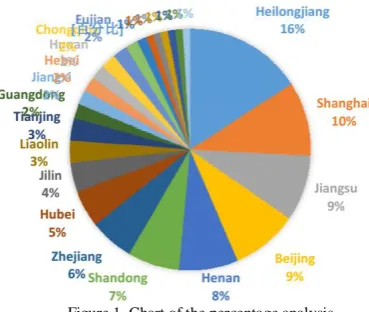
Figure 1. Chart of the percentage analysis
From Figure 1, we can see there are altogether 1084 joint programmes in China, with Hubei accounting for 5%. There are altogether 58 joint programmes in Hubei province, among which only 12 are in local universities, accounting for 1% among national joint programmes. The percentage of joint programmes in local universities among Hubei province is 21%. They mainly concentrated in Huanggang Normal University (3 joint programmes), China Three Gorges University (2), Hubei Engineering University (2), Hubei University of Science and Technology (2), Yangtze River University (1), and Hubei University of Arts and Science (1). The major cooperation countries are the UK, the USA, Japan, New Zealand, Germany and Australia, among which the cooperation with universities in the UK accounts for the largest percentage. Most cooperation models are based on giving priority to Chinese curriculum with introduction of advanced resources from foreign universities. The specific ways are not the same. Basically there are three ways, which are “3 + 1”, “2 + 2” and “4 + 0”. Some of the introduced core major courses are personally taught by foreign teachers. Teaching contents, teaching methods and assessment methods are carried out in accordance with the foreign way completely. Programmes attach great importance to the English teaching and learning.
Those universities in “985 projects” and “211 projects” in Hubei province have certain advantages in terms of funding, geographical position, hardware and software facilities, and ranking. These will help them to attract more excellent foreign resources. The local universities can’t compete with them. The best way to promote joint programmes for local universities is to improve the teaching quality, enhance the level of teachers’ teaching and scientific research ability, and promote the teachers’ personal and professional development.
III. INTEGRATING LANGUAGE LEARNING AND ACADEMIC STUDY IN JOINT PROGRAMMES
In all joint programmes, English is very important not only in guaranteeing normal communication with foreign teachers and in taking in knowledge, but also in personal development. English language teaching content and training objectives should take cultivation of students’ communicative competence and enhancement of students' English application ability as the key point. English language in international education is a tool for them to communicate, to acquire new knowledge, and to find ways to explore unknown fields of research. In local universities, due to many reasons like the cost of studying abroad, students' language level, personal willingness and other factors, only part of students will eventually study abroad. Quite a number of students will remain in China.
A. Methodology
B. Results
A total of 82 students participate in the survey, with 43 freshmen and 39 sophomores. Those three items are as following:
1. Evaluation for bilingual professional courses undertaken by Chinese teachers; 2. Evaluation for amount of English language courses;
3. Evaluation for professional courses undertaken by foreign teachers.
TABLE 1
EVALUATION FOR BILINGUAL PROFESSIONAL COURSES UNDERTAKEN BY CHINESE TEACHERS
options classes
A (taught totally in
English) B (bilingual)
C (taught totally in Chinese)
D (based on complexity of the course and language level of the teacher)
E (other opinions)
sophomores 0 3 23 13 0
freshmen 1 4 14 23 1
Total number 1 7 37 36 1
Percentage 1.2% 8.5% 45.1% 44% 1.2%
In E (other opinions), 1freshman suggests both course books and the language in class should be in Chinese.
Figure 2. Chart of comparison of evaluation for bilingual professional courses undertaken by Chinese teachers between sophomores and freshmen
TABLE 2
EVALUATION FOR AMOUNT OF ENGLISH LANGUAGE COURSES
options
classes A (too much) B (appropriate) C (not enough) D (other opinions)
sophomores 8 25 4 2
freshmen 12 24 3 4
Total number 20 49 7 6
Percentage 24.4% 59.8% 8.5% 7.3%
In D (other opinions), one sophomore thinks the courses are of low quality, the other thinks there are some repetitions between oral and listening course. One freshman suggests to reduce the amount of English language courses, one suggests to strengthen the assessment and the examination, one feels he has learned nothing in class, and one suggests to open some courses on professional English.
Figure 3. Chart of comparison of evaluation for amount of English language courses between sophomores and freshmen
TABLE 3
EVALUATION FOR PROFESSIONAL COURSES UNDERTAKEN BY FOREIGN TEACHERS
options
classes A (Very good) B (Not bad) C (Not good) D (other opinions)
sophomores 2 12 24 1
At the time when the survey was carried out, there are professional courses undertaken by foreign teachers for sophomores. Freshmen haven’t started those courses. One sophomore thought it useless to go into professional courses undertaken by foreign teachers.
C. Data Analysis
In table 1, 45.1% of all students advocated to be taught in Chinese. In figure 2, the numbers of sophomores who advocated that are more than the numbers of freshmen,even though sophomores have undergone a year of language training. 44% thought that whether the course should be taught in Chinese or English should be based on the complexity of the course and the language level of the teacher. The numbers of sophomores are less than that of freshmen. Only 8.5% thought that the course should be taught bilingually. Hardly any student advocated using English in professional courses.
In table 2, 59.8% of all students thought the amount of English language courses is appropriate. 24.4% thought the amount of English language courses is too much for them. In figure 3, the numbers of sophomores who thought like that are less than the numbers of freshmen, because sophomores have undergone a year of language training. 8.5% thought the amount is not enough for them.
In table 3, 61.5% did not think highly of the teaching effect of professional courses undertaken by foreign teachers. 30.8% thought those courses acceptable. Only 5.1% thought those courses had achieved expected effect.
In the further discussion with both students and teachers, the major problems lie in the following aspects. 1. Students can’t adapt completely to professional courses taught in English due to their limited language level. 2. The objective of using English language as a tool for exploration in academic study can’t really be realized due to language teachers’ lack of professional knowledge.
3. There are few professional teachers who can really use English language, foreign teaching styles and foreign teaching philosophy to teach due to their language level and their understanding of western culture and western way of teaching.
4. Those professional courses undertaken by foreign teachers are only added to the Chinese teaching curriculum. There is a misunderstanding. Many Chinese teachers think bilingual courses are courses taught in two languages or in English language. There is no re-integration of professional courses in foreign universities and in China universities.
D. Suggestions
How to integrate language teaching and academic study in joint programmes becomes the key issue. As both manager and teacher of joint programmes in Hubei Engineering University, I am participating directly in the application, running and teaching of the programmes. On the basis of EngestrÖ m’s activity theory (1999), I am trying to put forward the corresponding countermeasures.
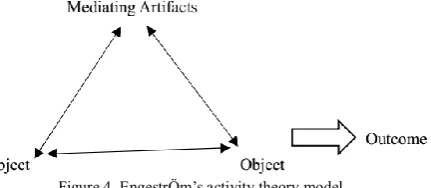
Figure 4. EngestrÖm’s activity theory model
In figure 4, subject refers to the analyst and the analyst’s concept and behavior. Object refers to activities that lead to the final outcome. Object represents the direction of the whole activity system. Mediating artifacts are materials or methods used or applied by an individual or a group to finish all activities. Wu Zongjie (2005) has pointed out that EngestrÖ m’s activity theory system contains four contradictions. Based on this contradiction theory, I am trying to analyze those factors involved in joint programmes.
In joint programmes, subject refers to both teaching staff and administrative staff. Object refers to realization of teaching objectives in joint programmes, which is clearly stated in China’s National Plan for Medium and Long-term Education Reform and Development (2010-2020). “Large numbers of talents shall be cultivated that are imbued with global vision, well-versed in international rules, and capable of participating in international affairs and competition.” Mediating artifacts here refers to different ways, methods and activities adopted to realize the objectives.
communicative competence. The aim of being employed by a domestic company will be of some differences from being in an overseas enterprise or in a multinational company. The third level of contradiction is the one between the dominant activity system and its developmental system. It can refer to the conflicts between the existing Chinese teaching system and a foreign one. It can also refer to the conflicts between the ideal system and the existing system. The last level of contradiction refers to the one between the center activity system and peripheral system. For example, differences between Chinese and western education mode and Chinese and western culture do exist. Differences between Chinese and western ideology and thinking mode and Chinese and western social system can’t be neglected.
The key point here is how to integrate language teaching and academic study in Chinese-foreign joint education programmes in local universities in Hubei province.
1. Promotion of collaborative teaching to strengthen the cooperation
Collaborative teaching advocates the optimal fusion of education resources, which emphasizes on mutual communication, mutual learning, and mutual inspiration between teachers, between teachers and students. In-class assisting tutor model has been being practiced for a period of time in Hubei Engineering University. When the foreign teacher comes to China to teach, a Chinese teaching assistant will be sitting in the classroom. While helping in the process of teaching, Chinese teachers are making classroom observation. The typical foreign teaching model will not involve too many explanation and lecturing. Some spaces are left for students to find solutions through problems set. Various means are applied according to the degree of students’ mastery of knowledge. And constant adjustments are made in class. Classroom teaching is student-centred, with students' participation in different activities. They share knowledge, experiences, ideology and even emotions, which forms a learning community, aiming at mutual development.
2. Project-based Learning in English language courses
According to the Buck Institute for Education (BIE), Project-Based Learning is “a teaching method in which students gain knowledge and skills by working for an extended period of time to investigate and respond to an engaging and complex question, problem, or challenge.” Teaching contents should be closely around the discipline knowledge and information. The teacher acts as guide and adviser, providing opportunities for students’ language output, problem-solving activities, and exploration of knowledge. Based on personal experiences and discipline knowledge, students complete their learning tasks by using English skills, e.g. listening, speaking, reading and writing as the tool. The teaching in joint program should combine language teaching objectives with certain professional contents. Professional knowledge and language skills should be taught at the same time, which puts forward a higher demand on teachers. The teachers in joint programs should not only have comprehensive language knowledge and skills, but also have rich professional discipline knowledge. And at the same time, teachers should have the awareness of adopting different teaching strategies when facing different types of students.
3. Improvement of bilingual professional courses and professional courses in English
Knowledge explanation, group discussion, pair work, simulation class, case investigation and case analysis are all different ways adopted in class. Bilingual professional courses or professional courses in English are not purely language training. These courses should include methodology design and project management. Case study, professional literature reading, science and technology thesis writing, and presentation ability should all be the teaching contents. The cooperation between language teachers and professional teachers should be strengthened. They can form a team, deciding on teaching contents, teaching methods, teaching activities design and establishment of assessment system.
4. Improvement of students assessment
Outline of China’s National Plan for Medium and Long-term Education Reform and Development (2010-2020) says, “We will keep records of students and improve the assessment of comprehensive quality. Diverse evaluation approaches that help promote student development shall be explored to encourage students to be optimistic and independent and become useful persons.” Formative assessment and summative assessment shall be used accordingly. Students’ comprehensive ability shall be the emphasis. Students’ portfolios should be set up, which will help students to monitor their own studies and cultivate autonomous learning ability.
5. Innovation of professional courses and research cooperation
Reasonable introduction of foreign advanced courses involves not only the contents but also research methods, which highlights the theoretical characteristics of professional courses. But this doesn’t mean complete and blind followship. Trade-offs of teaching contents and necessary screening are very important, which must be done based on the characteristics of Chinese course systems and students to ensure the scientificity and effectiveness of teaching. More chances should be provided to the teaching staff to go abroad to learn, to communicate, and to do research in partner universities in foreign countries. Chinese teachers and foreign teachers can have a try to do research together, to develop online courses and videoed courses, to develop resource sharing public courses and distance education.
6. More chances provided for teacher training and professional development
and high-quality education resources. By constant comparison between and summary of teaching and management concepts in both Chinese and western culture, they can improve their teaching and management abilities.
7. Setting up Chinese-foreign cooperative education institution
“GATS will, when WTO member countries implement the agreement, focus on facilitating academic mobility via • Cross-border supply. This mode may include distance education (e-learning) and franchising courses or degrees. It does not necessarily require the physical movement of the consumer or provider.
• Consumption abroad. The consumer moves to the country of the provider. This mode includes traditional student mobility.
• Commercial presence. The service provider establishes facilities in another country including branch campuses and joint ventures with local institutions.
• Presence of natural persons. This mode includes persons, including professors and researchers, who temporarily travel to another country to provide educational services.” (Philip G. Altbach & Jane Knight, 2007)
A Chinese-foreign cooperative education institution is a further cooperation on a higher level and wider range. Two parties of cooperation will both invest in forms of fund, physical objects, land use rights, intellectual property rights and other property. The institution will set up the president or agency head. The foreign teachers and management staff will come into the institution to work together with Chinese teachers and management personnel. It will independently carry out the education teaching activities in accordance with the law. Such deep cooperation is bound to bring in the significant advantages in several aspects as the teachers, teaching facilities, and high degree of internationalization. At present a total of 3 such institutions have been set up in Hubei province. None is set up in local universities. It is both an opportunity and a challenge for local universities. It will be more feasible to seek such further cooperation on the basis of the existing joint programmes.
IV. CONCLUSION
The concrete embodiment of Internationalization of education in China is Chinese-foreign joint education programmes. In the higher education system in China, this new model of running schools has obtained the certain development, which is based on the introduction of foreign advanced educational modes and management experience, combined with the actual situation of its own development. It has become one of the important forms of international cooperation and exchanges. This paper is trying to provide pragmatic suggestions to the promotion of Chinese-foreign joint education programmes based on EngestrÖm’s activity theory and data analysis coming from the case of Hubei Engineering University. It expects to bring the outcome (in EngestrÖm’s ending point of the model) of harmony and unity of teachers’ life world, vision of curriculum and classroom activities.
REFERENCES
[1] Altbach, Philip G. & Knight, Jane. (2007). The Internationalization of Higher Education: Motivations and Realities. Journal of Studies in International Education, Fall/Winter 11. 3-4, 290-305.
[2] Chen, Bei. & Liu Liyun. (2015). The Assessment of English Teaching in Sion-foreign Cooperative Education. Journal of Changchun Normal University, 34. 5, 145-147.
[3] EngestrÖ m, YrjÖ , Miettinen, Reijo & Punamäki-Gitai, Raija-Leena. (1999). Perspectives on activity theory. Cambridge: Cambridge University Press.
Ennew, Christine T. & Yang, Fujia. (2009). Foreign Universities in China: a case study. European Journal of Education, 44. 1, 21-36.
[4] Guo, Qiang. & Zhou, Nanping. (2014). An Analysis and Reflection of Current Situation of Chinese-foreign Joint Bachelor’s Degree Programmes. Academic Forum, 285. 10, 157-162.
[5] Ka, Ho Mok. & Xu, Xiaozhou. (2008). When China Opens to the World: A Study of Transnational Higher Education in Zhejiang, China. Asia Pacific Education Review, 9.4, 393-408.
[6] LIN, Jin-hui & LIU, Zhi-ping. (2007). Importing quality higher educational resources through Chinese-foreign cooperation in running schools. US-China Education Review, 4. 3, 1-7.
[7] Outline of China’s National Plan for Medium and Long-term Education Reform and Development (2010-2020). (2010). http://internationaleducation.gov.au/News/newsarchive/2010/Documents /China_Education_Reform_pdf.pdf. (Accessed 22/3/2016).
[8] Qin, Cailing. (2014). An Investigation of Current Situation of English Courses in Chinese-foreign Joint Education Programmes.
Teaching Practice Research, 14. 3, 191-193.
[9] Weber, Luc E. & Duderstadt, James J. The Globalization of Higher Education. (no date). Archive Ouverte UNIGE. http://archive-ouverte.unige.ch/unige: 32792. (accessed 8/4/2016).
[10] What is Project Based Learning? Buck Institute for Education. (no date). http://bie.org/about/what_pbl (accessed 16/4/2016). [11] Wu, Zongjie. (2005). Teachers’ Knowledge and Curriculum Discourse. Shanghai: Foreign Language Teaching and Research
Press.
[12] Zeng, Jianlan. (2015). A Survey of Autonomous English Learning of Students in Chinese-foreign Joint Education Programmes.
Qian Feng, known as Caron Feng, was born in Xiaogan, China in 1976. She got her Bachelor of Arts in English teaching 1997, Certificate of Teacher’s Qualification in HE 1997, and Master of Arts in Linguistics and Applied Linguistics in Central China Normal University in 2007.