Kahoot! In an EFL Reading Class
Hui-Hua Chiang
Department of Applied Foreign Languages, Central Taiwan University of Science and Technology, Taichung City, Taiwan
Abstract—Game-based learning has attracted considerable attention over the past few years. Mobile apps are welcomed by the digital generation. Debate continues regarding the approach that will most benefit students in English language classrooms, and the impact of mobile applications, particularly on English as a foreign language (EFL) learning, remains unclear. Specifically, little is known about EFL learners’ perceptions of mobile applications. The main purpose of this study was to understand Chinese students’ attitudes toward the application of Kahoot!, a mobile game-based learning app, in a college EFL class in Taiwan. No gender differences were found in students’ perceptions of the use of Kahoot! for English learning. Although the participants expressed positive attitudes towards the application of Kahoot! in the EFL reading class, several negative opinions were expressed regarding the use of Kahoot! as a testing tool. These results provide support for the affective filter hypothesis. Implications for EFL teachers and future research are discussed.
Index Terms—Kahoot!, game-based learning, reading class, adult EFL learners, assessment tool
I. INTRODUCTION
Recently, game-based learning, or gamification, has become a popular trend in education (Graham, 2015; Ismail & Mohammad, 2017), as it achieves more positive effects than traditional learning methods (Wang & Lieberoth, 2016). Although game-based learning is not a new method, when merged with technology, it becomes a powerful teaching and learning approach for the internet generation (Bicen & Kocakoyun, 2018). The appropriate integration of technology into the language classroom has received increasing attention in recent years (Medina & Hurtado, 2017), and studies on game-based learning have generally presented convincing results regarding the benefits of implementing gamification in language learning and teaching. Researchers have strongly suggested that to improve learning, it is necessary to use technology appropriately in language classrooms, especially for gamification (Medina & Hurtado, 2017). While the last five years have witnessed a steady increase in mobile-assisted language learning and research on this topic, the influence and acceptance of mobile-game-assisted language learning is not fully understood (Herodotou, 2018).
II. GAME-BASED LEARNING
Technology is increasingly being integrated into teaching to improve learners’ motivation and their interaction with learning content (Licorish, Owen, Daniel, & George, 2018; Premarathne, 2017; Wang & Lieberoth, 2016; Zarzycka-Piskorz, 2016). The use of educational games to supplement teaching and learning has been steadily increasing over the last few years, and the use of mobile apps is becoming the current state of the art (Licorish et al., 2018). The use of games as learning tools is known as game-based learning or gamification. Licorish et al. (2018) distinguish gamed-based learning and gamification techniques as follows: game-gamed-based learning is a pedagogical approach that involves incidental learning via games to accomplish educational outcomes, whereas gamification techniques refer to methods that engage students in intentional learning through a non-gaming system that integrates game elements. For the purpose of this study, game-based learning, as defined by Licorish et al. (2018), is adopted to solicit the perceptions of students regarding the application of Kahoot! before and after their lessons.
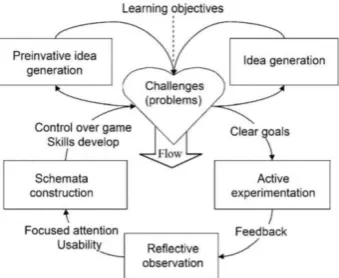
Figure 1. Experiential gaming model (Kiili, 2005).
Previous studies have shown the effectiveness of game-based learning with respect to students’ learning performance (Yien, Hung, Hwang, & Lin, 2011), motivation (Burguillo, 2010; Cerasoli, Nicklin, & Ford, 2014; Ebrahimzadeh & Alavi, 2017; Erhel & Jamet, 2013; Hanus & Fox, 2015; Papastergiou, 2009; Yien et al., 2011; Zarzycka-Piskorz, 2016), engagement in learning (Hakulinen, Auvinen, & Korhonen, 2015; Huizenga, Admiraal, Akkerman, & Dam, 2009; Kiili, 2005; Lee & Hammer, 2011; Poondej & Lerdpornkulrat, 2016; Wang & Lieberoth, 2016), and feedback (Charles, Charles, McNeill, Bustard, & Black, 2011). Many researchers support the potential effectiveness of GSRSs (Plump & LaRosa, 2017; Wichadee & Pattanapichet, 2018), and Kahoot! is one of the most widely used education applications of the 21st century (Licorish et al., 2018; Wichadee & Pattanapichet, 2018).
III. KAHOOT!
The idea of Kahoot! originated from the “Lecture Quiz” developed in 2006 by Dr. Alf Inge Wang, a computer science and game technology professor at the Norwegian University of Technology and Science (NTNU) in Trondheim, and his student, Morten Versvik. Building on Versvik’s master’s research and with the help of co-founders Jamie Brooker, Johan Brand and Asmund Furuseth, Kahoot! was formally launched in August 2013. Within a few months, Kahoot! already had more than a million users. With its mission to make learning fun, engage learners through games, and unlock the learning potential of every learner, the Kahoot! platform is basically free for classroom use. Both teachers and students can create an account to develop and share learning games with others; they can also search millions of public, preexisting Kahoot!s on the platform. After gaining full support from educators and learners, Kahoot! Pro for schools was released for teachers and school administrators and carries a one US dollar per month fee for K-12 teachers. Kahoot! Pro for schools offers features such as collaboration with other teachers, advanced game-creation tools, student progress tracking, and customization with school logos. Kahoot! Plus, a premium paid version, was launched for workplace training purposes in 2017 (see https://Kahoot!.com/welcomeback/). Despite the powerful features of Kahoot! Pro for schools and Kahoot! Plus, this article focuses only on the entirely free version, Kahoot! for schools (Figure 2).
Figure 2. Kahoot! for schools.
Kahoot! in Language Learning
game-based learning app or gamification app (Bicen & Kocakoyun, 2018), is an effective tool that promotes learning by engaging learners through problem learning (Wang & Lieberoth, 2016), meta-cognitive support (Plump & LaRosa, 2017), critical thinking (Bicen & Kocakoyun, 2018; Coca & Slisko, 2013; Johns, 2015), and meaningful and fun activities; by challenging learners in the learning process; and even by reviewing content knowledge (Dellos, 2015; Icard, 2014).
Ismail and Mohammad (2017) applied Kahoot! as a formative assessment tool to promote learning among 113 freshman medical school students in Malaysia. The study investigated the effectiveness of two assessment platforms, Kahoot! and an e-learning portal, and gender differences in Kahoot! use. The results indicated that Kahoot! is effective as an assessment tool because it is easy to use, practical, fun, and enjoyable. Regarding gender differences in Kahoot! use, males seemed to score higher on motivation and knowledge retention than females. Both males and females agreed that using Kahoot! could promote engagement and motivation, enhance the focus on learning, facilitate learning, offer effective feedback and promote reflection. However, the students did not view Kahoot! as a good tool for simplifying complex subjects.
Wichadee and Pattanapichet (2018) conducted a quasi-experimental study with 77 sophomore students at a private university in Thailand to investigate the impact of Kahoot! on students’ learning performance, motivation, and attitudes towards gamification in language learning. Thirty-eight students were assigned to the experimental group, and thirty-nine were assigned to the control group. Ten vocabulary quizzes and five grammar quizzes were designed to help the students review each lesson. The experimental group engaged in Kahoot! assessments, while the control group was tested through traditional paper quizzes. The results showed that students in the experimental group exhibited better learning performance and motivation than students in the control group. Moreover, students in the experimental group expressed positive views and attitudes regarding Kahoot!. They seemed to favor Kahoot! as a learning tool because it made the course more fun, promoted a competitive atmosphere, and increased students’ interest in the lessons.
Medina and Hurtado (2017) conducted a quasi-experimental study with 70 university students on the effectiveness of using Kahoot! for vocabulary learning in the classroom. Vocabulary assessments were administered to the students as a pretest in the fifth week of the research process. Later, the students were divided into a control group and experimental group, each with 35 students. For the experimental group, the vocabulary review assessments were administered via Kahoot! at the end of every unit. The two groups of students took a posttest after ten weeks of the experimental procedure. The results indicated that students in the experimental group performed better on the posttest than those in the control group. On the satisfaction survey regarding using Kahoot! to learn vocabulary, the students agreed that Kahoot! was easy to use (100%), that they enjoyed playing Kahoot! (95%), that Kahoot! kept them on task (84%), and that they preferred to use technology in the classroom (83%). Thus, the authors concluded that Kahoot! improved students’ engagement, motivation, interaction with content, and vocabulary acquisition. Furthermore, they recommended that educators apply Kahoot! to teach any subject, especially vocabulary at the university level.
Licorish et al. (2018) conducted a qualitative study on fourteen university students’ perceptions of Kahoot! as part of an information systems strategy and governance course in New Zealand. Kahoot! served as a tool to understand how students experienced the use of GSRSs and to delve into how Kahoot! influences classroom dynamics and students’ engagement, motivation, and learning process. Kahoot! was used in seven of thirteen lectures that had an average duration of 30 min. Semi-structured interviews were conducted at the end of the course. The results revealed that Kahoot! improved the quality of the learning process in terms of students’ attention, focus, participation, knowledge retention, revision, and enjoyment.
Kahoot! is a positive tool that increases learning energy, competition, and ease of learning (Bicen & Kocakoyun, 2018; Medina & Hurtado, 2017). Furthermore, Kahoot! is a simple assessment tool that teachers can use to create game-based assessments such as quizzes and surveys and track learners’ ongoing formative learning process (Bicen & Kocakoyun, 2018; Ismail & Mohammad, 2017; Johns, 2015; Licorish et al., 2018). It can also be used to facilitate the teaching process before, during, and after instruction, and it can provide real-time learning experiences (Johns, 2015) and contribute to a fun learning environment for learners (Dellos, 2015; Ismail & Mohammad, 2017; Licorish, Li George, Owen, & Daniel, 2017; Licorish et al., 2018; Zarzycka-Piskorz, 2016).
The use of Kahoot! and other gamification techniques or GSRSs has been found to be effective for learners in terms of promoting cognition, motivation (Wang & Lieberoth, 2016; Zarzycka-Piskorz, 2016), engagement (Ismail & Mohammad, 2017; Licorish et al., 2018; Matthews, Matthews, & Alcena, 2015; Wang & Lieberoth, 2016), socialization (Wang, 2015), and interpersonal interactions (Coca & Slisko, 2013; Wang, 2015) through the learning process (Papastergiou, 2009). In addition, related studies have proven that Kahoot! is a beneficial tool for assisting learning (Ismail & Mohammad, 2017). However, Licorish et al. (2018) note that one potential drawback of a game-show learning environment is that students may grow bored once they are accustomed to it; however, because Kahoot! requires only a short amount of time during a class period, it is less likely to result in boredom. Nevertheless, how students feel about using Kahoot! in the classroom remains unclear, especially in the university setting (Licorish et al., 2018).
IV. METHODS A. Purpose of the Study
As mentioned above, previous studies on GSRSs have shown that they are effective in terms of promoting engagement, motivation, and learning performance and are well accepted in K-12 classrooms; however, their use in the university setting has seldom been evaluated. Therefore, the purpose of this study was to investigate the perceptions of EFL learners regarding GSRSs, particularly Kahoot!, by using Kahoot! as an icebreaker and unit review tool. To achieve this aim, the study focused on answering the following questions:
1. What are EFL learners’ general perceptions of Kahoot!?
2. Are there any gender differences in the EFL learners’ perceptions of Kahoot!?
3. What advantages and disadvantages do EFL students perceive regarding the use of Kahoot! as a testing tool in the classroom?
B. Setting
Kahoot! was incorporated into the lessons. Specifically, Kahoot! was used at the beginning each lesson as an ice breaker to arouse interest in the topic and at the end of each lesson to review and reinforce the unit concepts. The questions used in the Kahoot! app were designed or modified based on research on open resources and content knowledge related to the lessons; the question sets typically consisted of 8-10 questions.
C. Participants
In this study, perceptions of the use of Kahoot! in the language classroom were captured using convenience sampling and quantitative methods. Sixty-five sophomore students from a private college agreed to participate in the study. Fourteen male students and forty-six female students who were studying in the department of applied foreign languages participated in the study. The students were told at the beginning of the study that anything they expressed on the survey would not affect their grades and that they were welcome to provide their opinions to aid in improving the use of Kahoot! in the language classroom.
D. Instruments
A questionnaire with a total of 29 questions was adapted from Bicen and Kocakoyun’s (2018) study. Participants responded to questions 1 to 27 on a 5-point Likert-type scale (5-completely agree, 4-agree, 3-no opinion, 2-disagree, and 1-completely disagree); these questions collected students’ perceptions on the application of Kahoot! in the English classroom. Questions 28 and 29 were open-ended questions designed to solicit students’ opinions about the advantages and disadvantages of using Kahoot! as a testing tool.
E. Procedure
Kahoot! was employed in a warm-up activity at the beginning of each unit and to administer a unit quiz at the end of each theme in an English reading class. Unit titles included The Fair Trade Movement, How to Avoid Impulse Shopping, Solar Energy, Hypnosis Help, Aging, and Alzheimer's Disease. When each unit began, the students were told that the Kahoot! activity was just a warm-up to help them assess how much they knew about the selected topic. Each warm-up activity included 8-10 questions with four choices. The students were required to choose an answer to each question from the four options within 20 seconds. The students were told that the scores they achieved on the warm-up Kahoot! activity would not count toward their final grades. The selected articles contained information relevant to the Kahoot! questions. Each unit lasted 2-3 weeks. Before the end of each unit, the same questions used in the warm-up activity were administered to the students through the Kahoot! unit quiz.
V. RESULTS AND DISCUSSION
This paper presents research results regarding students’ perceptions of the implementation of Kahoot! in the language classroom. The results are divided into three sections: first, students’ general perceptions of using Kahoot!; second, gender differences in perceptions of Kahoot!; and third, perceptions of the use of Kahoot! as an assessment tool derived from the open-ended questions. As shown in Table I, 14 males (23%) and 46 females (77%) participated in this study. The participants were mainly females, which may have been due to the convenience sampling method, as the majority of students in the foreign language department are female.
TABLE I. PARTICIPANTS
N % Valid percentage Cumulative percentage
Valid
Male 14 23.3 23.3 23.3
Female 46 76.7 76.7 100.0
Total 60 100.0 100.0
A. General Perceptions of Kahoot!: Effective Learning
theme. As shown in Table II, some of the questions focused on learners’ learning. When comparing the traditional learning environment with Kahoot!, the students seemed to agree that Kahoot! helped them retain what they learned for a longer time (M=4.07, SD=.69). Additionally, the students seemed to have a positive view of Kahoot! in terms of the app’s ability to improve the effectiveness of the course ((M=4.18, SD=.68), promote learning persistence in classroom activities (M=4.17, SD=.67), motivate cooperative learning (M=4.12, SD=.87), achieve active learning (M=4.12, SD=.72), and increase successful learning (M=4.00, SD=.78). Moreover, the students strongly agreed that using Kahoot! can cultivate students' confidence to participate in classroom activities (M=4.23, SD=.56).
TABLE II.
GENERAL PERCEPTIONS OF KAHOOT!:EFFECTIVE LEARNING
Items N Mix Max Mean SD
Q01 Compared with the traditional learning environment, Kahoot! helps students retain
learning for a longer time. 60 2.0 5.0 4.07 .69
Q03 Kahoot! increases successful learning. 60 2.0 5.0 4.00 .78
Q05 Kahoot! motivates cooperative learning. 60 1.0 5.0 4.12 .87
Q06 Kahoot! improves the effectiveness of the course. 60 3.0 5.0 4.18 .68
Q09 Kahoot! can achieve active learning. 60 3.0 5.0 4.12 .72
Q12 Kahoot! can promote learning persistence in classroom activities. 60 3.0 5.0 4.17 .67 Q21 Using Kahoot! can cultivate students' confidence to participate in classroom activities. 60 3.0 5.0 4.23 .56
As shown in Table III, the participants seemed to agree that Kahoot! was a beneficial application that can increase interest in curriculum topics (M=4.32, SD=.70) and make activities more fun (M=4.30, SD=.70).
TABLE III.
PERCEPTIONS OF KAHOOT!:INTEREST
Items N Mix Max Mean SD
Q02 Kahoot! increases interest in curriculum topics. 60 2.0 5.0 4.32 .70
Q04 Kahoot! makes activities more fun. 60 2.0 5.0 4.30 .70
Table IV shows that the participants seemed to strongly agree that using Kahoot! in class encourages learners (M=4.28, SD=.61) and that using Kahoot! in teaching activities can improve learning motivation (M=4.13, SD=.70). Moreover, the incorporation of social media sharing activities can improve learning motivation (M=4.13, SD=.65). Similarly, Kahoot!'s timed answer method can stimulate students' excitement (M=4.25, SD=.75), and Kahoot!'s scoring system motivates students to become one of the top five students (M=4.15, SD=.76).
TABLE IV.
PERCEPTIONS OF KAHOOT!:MOTIVATION
Items N Mix Max Mean SD
Q08 Using Kahoot! in teaching can improve students' learning motivation. 60 3.0 5.0 4.13 .70 Q13 Kahoot!'s timed answer method can stimulate students' excitement. 60 2.0 5.0 4.25 .75 Q18 Through social media sharing activities, learning motivation can be improved. 60 3.0 5.0 4.13 .65 Q19 Kahoot!'s scoring system motivates students to become one of the top five students. 60 2.0 5.0 4.15 .76 Q20 Using Kahoot! in class encourages learners. 60 3.0 5.0 4.28 .61
As Table V shows, the participants agreed that Kahoot! can provide students with richer thematic content (M=4.27, SD=.67), that using Kahoot! in activities enables students to easily comprehend the theme of the course (M=4.20, SD=.63), and that the use of pictures in Kahoot! makes it easier for learners to understand content (M=4.10, SD=.71).
TABLE V.
PERCEPTIONS OF KAHOOT!:LEARNING CONTENT
Items N Mix Max Mean SD
Q14 Kahoot! can provide students with richer thematic content. 59 3.0 5.0 4.27 .67 Q15 The use of pictures in Kahoot! makes it easier for learners to understand content. 60 3.0 5.0 4.10 .71 Q22 Using Kahoot! to carry out activities enables students to easily comprehend the theme
of the course. 60 2.0 5.0 4.20 .63
TABLE VI.
PERCEPTIONS OF KAHOOT!:TAKING TESTS
Items N Mix Max Mean SD
Q24 Using Kahoot! to take a test is better than using a traditional paper and pencil test. 60 1.0 5.0 4.13 .81 Q25 I prefer to take a test with paper and pencil. 60 1.0 5.0 2.93 1.06
Q26 I prefer to use Kahoot! for tests. 60 2.0 5.0 3.87 .79
Q27 Using Kahoot! to take a test is too complicated. 60 1.0 5.0 2.47 1.08
The data presented in Table VII suggest that the meaning of the button colors in Kahoot! is clear (M=4.25, SD=.68), Kahoot! can improve students' ability to think quickly (M=4.23, SD=.65), and the use of video in Kahoot! can attract learners’ attention (M=4.20, SD=.63). In addition, Kahoot! enables learners to express themselves easily (M=4.20, SD=.68), and questioning skills in Kahoot! can provide students with different perspectives (M=4.13, SD=.79). Furthermore, the results revealed that the participants did not agree that Kahoot!’s background music is distracting (M=3.20, SD=1.19).
TABLE VII.
PERCEPTIONS OF KAHOOT!:OTHER
Items N Mix Max Mean SD
Q07 Kahoot! enables learners to express themselves easily. 60 3.0 5.0 4.20 .68 Q10 Questioning skills in Kahoot! can provide students with different perspectives. 60 1.0 5.0 4.13 .79 Q11 Kahoot! can improve students' ability to think quickly. 60 3.0 5.0 4.23 .65 Q16 The use of video in Kahoot! can attract learners' attention. 60 3.0 5.0 4.20 .63 Q17 Kahoot!'s background music is distracting. 60 1.0 5.0 3.20 1.19 Q23 Button color harmony in Kahoot! is obvious. 59 2.0 5.0 4.25 .68
B. Gender Differences in Perceptions of Kahoot!
TABLE VIII.
GENDER DIFFERENCES IN PERCEPTIONS OF KAHOOT!
Qs Gender N Mean SD Mean Difference t value Sig.(2-tailed)
Q1 Male 14 3.929 .92 -.18 -.859 .394
Female 46 4.109 .60
Q2 Male 14 4.214 .98 -.13 -.485 .089
Female 46 4.348 .60
Q3 Male Female 14 46 4.071 3.978 .83 .77 .09 .388 .699
Q4 Male 14 4.286 .83 .02 -.087 .493
Female 46 4.304 .66
Q5 Male 14 3.929 1.00 -.24 -.928 .357
Female 46 4.174 .82
Q6 Male 14 4.143 .86 -.05 -.213 .834
Female 46 4.196 .62
Q7 Male 14 4.214 .80 .019 .089 .930
Female 46 4.196 .65
Q8 Male 14 3.857 .95 -.36 -1.342 .198
Female 46 4.217 .59
Q9 Male Female 14 46 4.000 4.152 .96 .63 -.15 -.557 .585
Q10 Male 14 4.286 .73 .20 .821 .415
Female 46 4.087 .81
Q11 Male 14 4.357 .74 .16 .815 .419
Female 46 4.196 .62
Q12 Male 14 4.143 .77 -.03 -.151 .880
Female 46 4.174 .64
Q13 Male 14 4.357 .84 .14 .607 .546
Female 46 4.217 .73
Q14 Male 14 4.286 .83 .019 .093 .926
Female 46 4.267 .62
Q15 Male 14 4.214 .80 .15 .689 .494
Female 46 4.065 .68
Q16 Male 14 4.071 .83 -.17 -.867 .390
Female 46 4.239 .57
Q17 Male 14 3.286 1.14 .11 .305 .761
Female 46 3.174 1.22
Q18 Male 14 4.000 .78 -.17 -.88 .385
Female 46 4.174 .61
Q19 Male 14 4.214 .80 .08 .361 .719
Female 46 4.130 .75
Q20 Male 14 4.214 .80 -.09 -.393 .699
Female 46 4.304 .55
Q21 Male 14 4.286 .73 .07 .328 .747
Female 46 4.217 .51
Q22 Male 14 4.286 .83 .11 .474 .642
Female 46 4.174 .57
Q23 Male 14 4.357 .74 .13 .641 .524
Female 46 4.222 .67
Q24 Male 14 4.286 .73 .20 .799 .427
Female 46 4.087 .84
Q25 Male 14 2.714 1.07 -.29 -.885 .380
Female 46 3.000 1.05
Q26 Male 14 3.786 .89 -.11 -.434 .666
Female 46 3.891 .77
Q27 Male 14 2.286 .99 -.24 -.712 .479
Female 46 2.522 1.11
*p<.05; **p<.01
C. Advantages of Kahoot! As a Testing Tool
Figure 3. Advantages of Kahoot! as a testing tool.
The students answered Question 28, an open-ended question, enthusiastically and seemed delighted to share their opinions. As the concept map (Figure 3) shows, opinion concepts regarding the advantages of using Kahoot! as a testing tool were classified into six categories: fun, convenient, participation, learning, motivation, and other, as shown in Table IX below. The first column presents these six categories, and the second column includes the opinion concepts associated with the first column. The frequency of each subitem is presented in brackets. There are no duplicate counts between the first and second columns. As Table IX shows, among the opinion concepts related to the advantages of using Kahoot! as a testing tool, the opinion that Kahoot! promotes learning was observed most frequently (26), followed by fun (19), convenient (13), motivation (9), participation (5), and other (3).
TABLE IX.
OPINION CONCEPTS FOR THE ADVANTAGES OF LEARNING ENGLISH VIA KAHOOT!
Opinion Concept (Frequency) Total Frequency
Count
Fun (14) excitement (3) 19
increase interest (1) relaxing(1)
Convenient (7) call roll (2) 13
quick start (4)
Participation (5) participate in class 5
Learning (4) think quickly (6) 26
concentration (4) attraction (3) stimulation (5) memory (4)
Motivation (3) competition (5) 9
reach the goal (1)
Other environmental protection (1) 3
more lively and dynamic than a paper quiz (1) easy to understand (1)
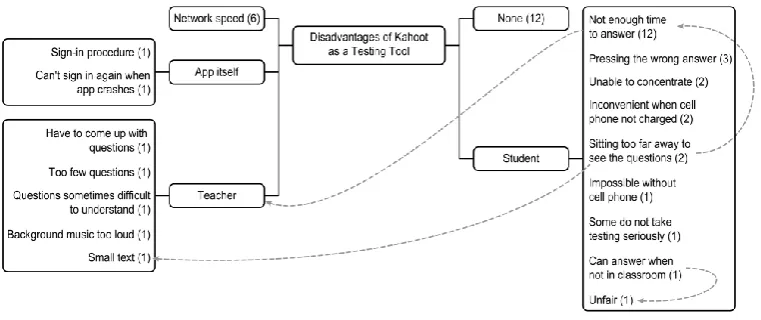
Figure 4. Disadvantages of Kahoot! as a testing tool.
Table X shows that both “no” disadvantages related to learning English through Kahoot! and “not enough time to answer” had a frequency of 12, followed by network speed (6), pressing the wrong answer (3), and various other opinions.
TABLE X.
DISADVANTAGES OF KAHOOT! AS A TESTING TOOL
Opinion Concept (Frequency) Total Frequency
Count
None (12) 12
Student not enough time to answer (12) 25
press the wrong answer (3) unable to concentrate and think (2)
inconvenient when the cell phone is not charged (2) too far away to see the questions (2)
can't play without a cell phone (1) some don't take it seriously (1)
can answer Kahoot! even when not in the classroom (1) unfair (1)
Network speed (6) 6
App itself can't re-sign in when app crashes (1) 2 sign-in procedure (1)
Teacher have to come up with questions (1) 5 too few questions (1)
questions are sometimes difficult to understand (1) background music is too loud (1)
text is too small (1)
VI. DISCUSSION
First, all of the participants had positive perceptions regarding the benefits of Kahoot! for learners and the classroom atmosphere. In other words, the participants enjoyed the game-like learning environment. This finding further supports earlier studies indicating that Kahoot! makes learning more fun and enjoyable (Dellos, 2015; Ismail & Mohammad, 2017; Licorish et al., 2018; Medina & Hurtado, 2017; Wang & Lieberoth, 2016; Zarzycka-Piskorz, 2016). One possible reason for this finding is that students in the digital age are able to access a variety of online content and communication methods, such as social media, videos, games, e-mail, and text. These students feel very comfortable with technology-based applications such as Kahoot! (Kahoot, 2018), and Licorish et al. (2018) mentioned in their study that students feel safer in this kind of game-based learning environment.
Second, the students seemed to accept the use of Kahoot! as an evaluation tool in the classroom. Based on the findings, this study is consistent with previous studies indicating that Kahoot! is a useful assessment tool for teachers when creating quizzes or surveys and for students when taking exams in the classroom (Bicen & Kocakoyun, 2018; Dellos, 2015; Ismail & Mohammad, 2017; Medina & Hurtado, 2017; Plump & LaRosa, 2017). This result implies that the participants accepted the use of Kahoot! as a quiz tool. One possible explanation for this finding is the notion that students who are digital natives reap innumerable benefits from being online, and taking surveys or quizzes via Kahoot! is a multimedia activity even though it involves assessment. Another possible interpretation is that learning through Kahoot! is still something of a novelty for students. Wang (2015) states that the disadvantages of Kahoot! might become apparent if students become bored with gamified technology. It is worth noting that one student mentioned environmental protection issues, which could be related to the benefits of preserving paper when using Kahoot! as a testing tool instead of the traditional pen and paper method.
Some students felt that it was unfair to use Kahoot! as a testing tool or a tool to track attendance, as students can reply on Kahoot! even if they are not in the classroom. Furthermore, in the process of using Kahoot! for a quiz, one or two students became excited and spoke the answers aloud. In addition, cell phones must be well charged before students go to class; otherwise, they may feel excluded from the mobile-based learning environment. Finally, one issue that must be carefully considered when using Kahoot! as a testing tool is the appropriate time allotted to answer each question. The opinion “not enough time to answer” was expressed by both students and teachers. Teachers can establish a response time for each question ranging from 5 to 120 seconds. In this study, all the questions had a response time of 20 seconds. The most appropriate length of time for answering a question may depend on the subject and content. Allowing too little time for each question may cause students to feel frustrated or, as mentioned in Table X, “press the wrong answer (3)” or be “unable to concentrate and think (2).” On the other hand, students may feel bored if given too much time to respond to each item.
In addition to network speed and the challenges of the app itself, teachers who want to adopt Kahoot! as a testing tool in an English class should consider the following. The number of questions should be appropriate, as the opinions expressed in this study indicated that 8-10 questions may be too few for a Kahoot! activity. Font size should be adjusted in accordance with class size to avoid the problem of students being seated too far away to see. Additionally, teachers should ensure that each Kahoot! question is comprehensible and that the volume of the background music is not too loud.
Third, regarding the effectiveness of Kahoot!, the students’ opinions aligned with those reported in a review of the literature that Kahoot! stimulates learning and improves language learning in a game-like competitive environment (Bicen & Kocakoyun, 2018; Dellos, 2015; Ismail & Mohammad, 2017; Licorish et al., 2018; Zarzycka-Piskorz, 2016). It seems likely that these results are in fact due to the influence of the game-based technique, which involves affective factors such as attitude, motivation, and feeling. Previous studies on the affective factors involved in learning a foreign language have found that motivation and anxiety are strongly linked to English achievement (Henter, 2014; Robinson, 2005). The notion of affective factors is based on the affective filter hypothesis proposed in 1982 by linguist Dr. Stephen Krashen in his Monitor Model (Krashen, 1982). The affective filter hypothesis accounts for the effects of emotional variables such as nervousness, boredom, anxiety, and resistance in the success or failure of acquiring a second or foreign language. It is believed that when the invisible affective filter is high, learners may experience negative feelings that can either facilitate or block language production. Affective filters can be lowered through an engaging, interactive, and positive environment in which learners feel motivated, confident, welcomed, etc. (Ataiefar & Sadighi, 2017).
Fourth, the findings are consistent with studies by Pede (2017) and Licorish et al. (2018), who illustrated that learning via Kahoot! can focus attention (Bicen & Kocakoyun, 2018; Licorish et al., 2018; Pede, 2017; Premarathne, 2017) and further increase participation (Bicen & Kocakoyun, 2018; Medina & Hurtado, 2017; Mineo, Ziegler, Gill, & Salkin, 2009; Pede, 2017; Premarathne, 2017) and motivation (Johns, 2015; Medina & Hurtado, 2017; Premarathne, 2017; Zarzycka-Piskorz, 2016). It is worth noting that one participant commented that vocabulary was more memorable if it had appeared previously on Kahoot!. In other words, students may be more likely to remember words that have appeared in questions on the Kahoot! application. This finding may be the result of the benefits that Kahoot! brings to the language classroom, including increased interest, participation, effective learning and motivation. This finding further supports Huang’s (2015) study, which examined vocabulary development through technology and traditional (paper-pencil & textboard (PPT)) methods. Huang found that students in the technology group outscored those in the traditional group.
Lastly, the study surprisingly revealed no statistically significant gender differences in the students’ perceptions of the use of Kahoot! as an English learning tool in the language classroom. In other words, there were no differences found between the genders, and all of the items were rated positively by the participants. Both male and female students strongly agreed that Kahoot! makes learning English interesting and fun, enables students to learn richer content more easily, increases motivation, and encourages engagement. Moreover, they expressed positive perceptions of the use of Kahoot! as an assessment tool. The results of this study differ from those of Ismail and Mohammad (2017), who found that male and female Malaysian medical students had different perceptions of the ability of Kahoot! to motivate students to learn; specifically, males scored higher than females (p<.05) on motivation. Students’ majors, learning content, and even cultural differences may also have different effects on motivation.
VII. CONCLUSIONS
A. Limitations
The limitations of this study derive from its use of convenience sampling and the small sample size. The study is therefore a case study on applying a mobile application, Kahoot!, in an EFL college reading class in Taiwan. The results may not be generalizable to other teaching fields. Larger samples and more interviews are needed as part of future research. There may also be several other factors that influence the effectiveness of Kahoot! and perspectives towards adopting Kahoot!, such as English proficiency, learning styles, preferences for learning or taking a test, and mobile-assisted language learning culture (Cojocnean, 2016).
B. Future Research
As Nacke, Drachen, and Göbel (2010) suggested, qualitative survey-based methods are more suitable than quantitative methods when seeking to solicit learners’ experiences with game-based technology. Thus, in addition to the survey method, interviews could be conducted to elicit learners’ deeper thoughts on the use of Kahoot! in the language classroom. Further studies considering learners’ learning styles that account for mobile-assisted language learning variables need to be undertaken, as several researchers have mentioned that technology-related learning tends to be beneficial for kinesthetic learners (Johns, 2015; Valiente, 2008). Finally, taking English proficiency into consideration may provide EFL educators who are interested in applying Kahoot! in their language classes a more comprehensive reference. Specifically, studying the attitudes of EFL learners with different levels of English proficiency towards learning and testing through Kahoot! and determining the differences among them could be informative. Further studies about applying Kahoot! in EFL learning are needed.
REFERENCES
[1] Ataiefar, F., & Sadighi, F. (2017). Lowering foreign language anxiety through technology: A case of Iranian EFL sophomore students. English Literature and Language Review, 3(4), 23–34.
[2] Bicen, H., & Kocakoyun, S. (2018). Perceptions of students for gamification approach: Kahoot as a case study. International Journal of Emerging Technologies in Learning, 13(2), 22.
[3] Burguillo, J. (2010). Using game theory and competition-based learning to stimulate student motivation and performance.
Computers & Education, 55, 566–575.
[4] Cerasoli, C. P., Nicklin, J. M., & Ford, M. T. (2014). Intrinsic motivation and extrinsic incentives jointly predict performance: A 40-year meta-analysis. Psychological Bulletin, 140(4), 980–1008.
[5] Charles, D., Charles, T., McNeill, M., Bustard, D., & Black, M. (2011). Game-based feedback for educational multi-user virtual environments. British Journal of Educational Technology, 42(4), 638–654.
[6] Coca, D. M., & Slisko, J. (2013). Software socrative and smartphones as tools for implementation of basic processes of active physics learning in classroom: An initial feasibility study with prospective teachers. European Journal of Physics Education, 4(2), 17–24.
[7] Cojocnean, D. (2016). Factors determining students’ low usage of mobile tools in their English vocabulary learning. Porta Linguarum, Monograph, 1, 31–43.
[8] Dellos, R. (2015). Kahoot! A digital game resource for learning. International Journal of Instructional Technology and Distance Learning, 12(4), 49–52.
[9] Ebrahimzadeh, M., & Alavi, S. (2017). The effect of digital video games on EFL students’ language learning motivation.
Teaching English with Technology, 17(2), 87–112.
[10] Erhel, S., & Jamet, E. (2013). Digital game-based learning: Impact of instructions and feedback on motivation and learning effectiveness. Computers & Education, 67, 156–167.
[11] Geer, J. G. (1991). Do open-ended questions measure “salient” issues? Public Opinion Quarterly, 55(3), 360–370.
[12] Graham, K. (2015). Techmatters: Getting into Kahoot!(s): Exploring a game-based learning system to enhance student learning.
LOEX Quarterly, 42(3), 4.
[13] Hakulinen, L., Auvinen, T., & Korhonen, A. (2015). The effect of achievement badges on students’ behavior: An empirical study in a university-level computer science course. International Journal of Emerging Technologies in Learning, 10(1), 12. [14] Hanus, M. D., & Fox, J. (2015). Assessing the effects of gamification in the classroom: A longitudinal study on intrinsic
motivation, social comparison, satisfaction, effort, and academic performance. Computers & Education, 80, 152–161.
[15] Henter, R. (2014). Affective factors involved in learning a foreign language. Procedia - Social and Behavioral Sciences, 127, 373–378.
[16] Herodotou, C. (2018). Mobile games and science learning: A comparative study of 4 and 5 years old playing the game Angry Birds. British Journal of Educational Technology, 49(1), 6–16.
[17] Huang, S. (2015). Mixed-method research on learning vocabulary through technology reveals vocabulary growth in second-grade students. Reading Psychology, 36(1), 1–30.
[18] Huizenga, J., Admiraal, W., Akkerman, S., & Dam, G. t. (2009). Mobile game-based learning in secondary education: Engagement, motivation and learning in a mobile city game. Journal of Computer Assisted Learning, 25(4), 332–344.
[19] Icard, S. B. (2014). Educational technology best practices. International Journal of Instructional Technology and Distance Learning, 11(3), 37–41.
[20] Ismail, M. A.-A., & Mohammad, J. A.-M. (2017). Kahoot: A promising tool for formative assessment in medical education.
Education in Medicine Journal, 9(2), 19–26.
[21] Johns, K. (2015). Engaging and assessing students with technology: A review of Kahoot. The Delta Kappa Gamma Bulletin, 81(4), 89–91.
[23] Kapuler, D. (2015). Top 100 sites and apps of 2014. Tech & Learning. Technology & Learning, 35(6), 14–16.
[24] Kiili, K. (2005). Digital game-based learning: Towards an experiential gaming model. The Internet and Higher Education, 8(1), 13–24.
[25] Kolb, D. A., & Fry, R. (1975). Towards an applied theory of experiential learning. In C. L. Cooper (Ed.), Theories of group processes (pp. 33–57). London, UK: Wiley.
[26] Krashen, S. D. (1982). Principles and practice in second language acquisition. Retrieved from
http://www.sdkrashen.com/Principles_and_Practice/Principles_and_Practice.pdf.
[27] Lee, J. J., & Hammer, J. (2011). Gamification in education: What, how, why bother? Definitions and uses. Exchange Organizational Behavior Teaching Journal, 15(2), 1–5.
[28] Licorish, S., Li George, J., Owen, H., & Daniel, B. (2017). “Go Kahoot!” Enriching classroom engagement, motivation and learning experience with games. In W. Chen, S. Murthy, S. Iyer, B. Jiang, & L. H. Wong (Eds.), Proceedings of the 25th international conference on computers in education (pp. 755–764). Christchurch, New Zealand.
[29] Licorish, S. A., Owen, H. E., Daniel, B., & George, J. L. (2018). Students’ perception of Kahoot!’s influence on teaching and learning. Research and Practice in Technology Enhanced Learning, 13(1), 9–31.
[30] Matthews, J., Matthews, M., & Alcena, F. (2015). EDD-7914–Curriculum teaching and technology. Florida, US: Nova Southeastern University.
[31] Medina, E. G. L., & Hurtado, C. P. R. (2017). Kahoot! A digital tool for learning vocabulary in a language classroom. Revista Publicando, 4(12), 441–449.
[32] Mineo, B. A., Ziegler, W., Gill, S., & Salkin, D. (2009). Engagement with electronic screen media among students with autism spectrum disorders. Journal of Autism and Developmental Disorders, 39(1), 172–187.
[33] Nacke, L., Drachen, A., & Göbel, S. (2010). Methods for evaluating gameplay experience in a serious gaming context.
International Journal of Computer Science in Sport, 19(2), 1–12.
[34] Novak, J. D. (1998). Learning, creating, and using knowledge: Concept maps as facilitative tools in schools and corporations. Mahwah, NJ: Lawrence Erlbaum Associates.
[35] Papastergiou, M. (2009). Digital game-based learning in high school computer science education: Impact on educational effectiveness and student motivation. Computers & Education, 52(1), 1–12.
[36] Pede, J. (2017). The effects of the online game Kahoot on science vocabulary acquisition (Master's thesis). Rowan University, New Jersey, NJ.
[37] Plump, C., & LaRosa, J. (2017). Using Kahoot! in the classroom to create engagement and active learning: A game-based technology solution for elearning novices. Management Teaching Review, 2(2), 151–158.
[38] Poondej, C., & Lerdpornkulrat, T. (2016). The development of gamified learning activities to increase student engagement in learning. Australian Educational Computing, 31(2), 1–16.
[39] Premarathne, P. K. (2017). A study on incorporating gamification into ESL classroom via Kahoot. In Proceedings of the international conference on the humanities (ICH), 2017 faculty of humanities (p. 54). Colombo, Sri Lanka.
[40] Robinson, P. (2005). Aptitude and second language acquisition. Annual Review of Applied Linguistics, 25, 46–73. [41] Siegle, D. (2015). Technology. Gifted Child Today, 38(3), 192–197.
[42] Valiente, C. (2008). Are students using the 'wrong' style of learning? Active Learning in Higher Education, 9(1), 73–91. [43] Wang, A. I. (2015). The wear out effect of a game-based student response system. Computers & Education, 82, 217–227. [44] Wang, A. I., & Lieberoth, A. (2016). The effect of points and audio on concentration, engagement, enjoyment, learning,
motivation, and classroom dynamics using Kahoot. In T. Connolly & L. Boyle (Eds.), Proceedings of the 10th European conference on games based learning, reading (pp. 737–748). Reading, UK.
[45] Wichadee, S., & Pattanapichet, F. (2018). Enhancement of performance and motivation through application of digital games in an English language class. Teaching English with Technology, 18(1), 77–92.
[46] Yien, J. M., Hung, C. M., Hwang, G. J., & Lin, Y. C. (2011). A game-based learning approach to improving students' learning achievements in a nutrition course. Turkish Online Journal of Educational Technology-TOJET, 10(2), 1–10.
[47] Zarzycka-Piskorz, E. (2016). Kahoot it or not? Can games be motivating in learning grammar? Teaching English with Technology, 16(3), 17–36.