Part-time
Programme Code : 41080
2011/2012
DEFINITIVE PROGRAMME DOCUMENT
BEng (Hons) in Electrical Engineering
Bachelor of Engineering (Honours) in
Electrical Engineering
CONTENTS Page
1
Preamble
1
1.1
A Brief History
1
1.2 Credit-Based
Curriculum
1
2
General Information
2
2.1 Programme
Title
2
2.2
Duration and Mode of Attendance
2
2.3 Final
Award
2
2.4
Implementation Dates
2
2.5
Minimum Entrance Requirements
2
2.6 External
Recognition
3
3
Philosophy of the Programme
3
4
Programme Objectives
4
5
Programme Outcomes
4
6
Work-Integrated Education (WIE) and Co-curricular Activities
5
7
Programme Structure
6
7.1
Curricula for Various Levels
7
7.2
Normal Progression Pattern
10
7.3
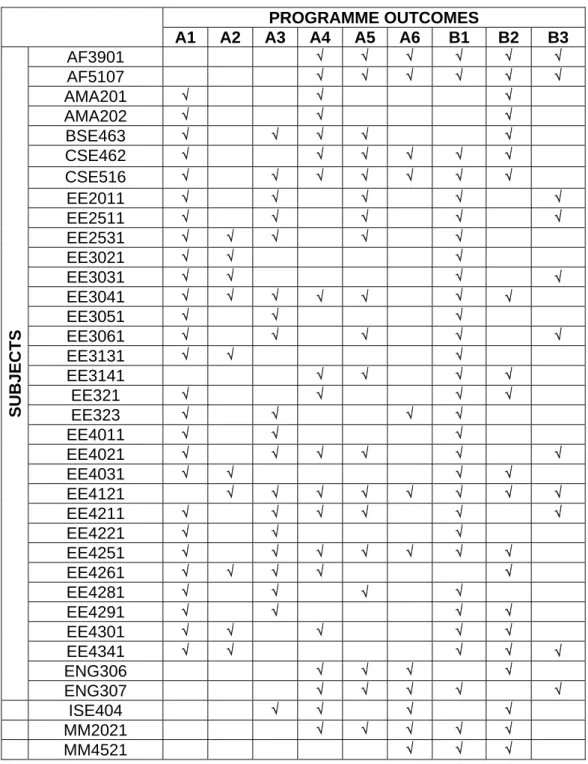
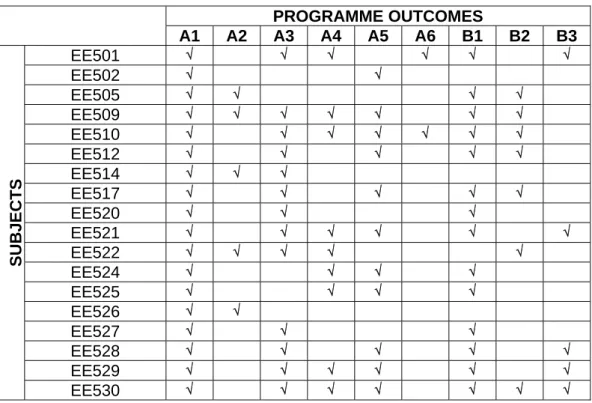
Subject Support to Programme Outcomes
13
8
Admission and Registration
14
8.1 Admission/Registration
14
8.2 Credit
Transfer/Subject
Exemption
14
8.3 Subject
Registration/Add-drop of Subjects
15
9.1 Introduction
16
9.2
Principles of Assessment
16
9.3 Assessment
Methods
17
9.4 Progression/Academic
Probation/Deregistration 17
9.5
Retaking of Subjects
18
9.6
Appeal Against Examination Results
19
9.7 Exceptional
Circumstances
19
9.8
Grades, GPA and Award Classifications
20
9.9
Eligibility for Award
22
9.10 Guidelines for Award Classification
23
Appendix I
Subject Description Forms
Important
This Definitive Programme Document is subject to review and changes which the
Programme Host Faculty/Department can decide to make from time to time.
Students will be informed of the changes as and when appropriate.
1 Preamble
1.1 A Brief History
The Department of Electrical Engineering launched its Part-time Degree programme (PT-BEng
(Hons)) in 1992/93, modelled on the Full-time BEng (Hons) programme. The PT-BEng (Hons)
degree was introduced as a 3-year programme with an intake comprising mainly graduates of the
2-year Higher Diploma Programme from the Polytechnic University. In view of the general
recommendation from the Engineering Council conveyed to the University, the PT-BEng (Hons)
programme in EE was subsequently converted into a 4-year programme, with Higher Certificate
(HC) as the minimum entrance qualification, in 1993/94. Due to the increasing demand of the
BEng (Hons) programme in EE, the Self-Financed Part-time Degree programme (SF
PT-BEng(Hons)) in EE was introduced in 2004/05. This SF PT-BEng (Hons) programme in EE has
exactly the same curriculum and level as the UGC funded PT-BEng (Hons) programme in EE
except the funding model. In 2005 all programmes offered by the university underwent a major
revision with the introduction of outcome-based curriculum and criterion-referenced assessment.
The total number of credits was changed from 72 to 66 in order to give a study effective
programme. In 2007, a minor revision of the curriculum was made and the number of credits was
reverted to 72. In 2008, the curriculum was fine-tuned to align with the revised programme
outcomes. The programme and subject outcomes will be assessed in stages according to a
Learning Outcomes Assessment Plan (LOAP) adopted by the Departmental Learning and
Teaching Committee. In 2009, minor changes in the curriculum were made and new General
Assessment Regulations of the University were adopted.
1.2 Credit-Based
Curriculum
The part-time programme is designed to produce electrical engineering graduates at the same
academic standard, quality and classification levels as the full-time programme. It follows
essentially its full-time counterpart in adopting a credit-based structure, which was a natural
development of the semester structure at the inception of the Part-time programme. This entire
modular proposal successfully passed an internal re-validation in February 1995. The
programme was also accredited by the Hong Kong Institution of Engineers, Hong Kong, and the
Institution of Electrical Engineers, U.K., in 1995. The programme as set out in this document
includes some minor amendments in the curriculum in order to conform to the University-wide
regulations on credit-based programmes.
In a credit-based programme students are able to determine their own pace of study which is
very much in line with modern educational philosophy. Students will be able to make up a
specific programme to suit their personal aspirations within the framework of the PT-BEng
(Hons) curriculum. Being flexible there is no ‘year’ concept in a credit-based system and the
subjects are offered at distinct levels. The subjects in Level 2 must be taken by all students in
the BEng (Hons) programme although some subjects can be deferred until later. Electives
become available in Levels 3 and 4. However, students must take a compulsory set of subjects
which are designed to give vertical integration in electrical engineering studies. Elective
subjects in Level 4 address the career aspirations of graduates and advances in technology.
With the introduction of the credit-based structure, many of the subjects in the Full-time BEng
(Hons) programme will also be made available to the SF PT-BEng (Hons) students. The
Department recognises that it is desirable for the specialist subjects in Level 4 to have common
examination papers for both the FT-BEng (Hons)/MEng and SF PT-BEng (Hons) students in
order to ensure uniformity in the Honours standard. In addition to those shared subjects, specific
subjects tailored to the SF PT-BEng programme are also included in the curriculum, particularly
for Level 2, as the background of the intakes is heterogeneous. The subjects are listed in Table
7.1.1 to 7.1.4, and a typical student progress pattern is illustrated in Table 7.2.1 to 7.2.4.
2 General Information
2.1 Programme
Title
Self-Financed Part-time Bachelor of Engineering (Honours) in Electrical Engineering
2.2 Duration and Mode of Attendance
Normally four years Part-time. The maximum period of registration is 8 years.
2.3 Final
Award
Bachelor of Engineering (Honours) Degree in Electrical Engineering
電機工程學
(
榮譽
)
工學士學位
2.4 Implementation Dates
October, 1992 (initial implementation for the three-year programme)
October, 1993 (first major revision, changed to a four-year programme)
October, 1995 (second major revision to convert the programme from modular to credit-based)
October, 1997 (phase in alignment exercise to adjust the programme to conform to the PolyU
norms)
October, 2001 (minor revision to align with modifications in the full-time programme)
September, 2004 (introduction of the self-financed funding model)
September, 2005 (introduction of the re-vamped 66 credits curriculum)
September, 2007 (introduction of the revised 72 credits curriculum)
September, 2008 (revised outcome-based curriculum, inclusion of compulsory business and
management subjects)
September, 2009 (minor changes in curriculum; changes in General Assessment Regulations
regarding retaking of subjects)
2.5 Minimum
Entrance
Requirements
A Higher Diploma in Electrical Engineering;
OR
A Higher Certificate in Electrical Engineering.
OR
2.6 External
Recognition
This part-time degree programme has been internally validated by the University. It is also
accredited by The Hong Kong Institution of Engineers (HKIE) as meeting the academic
requirements for its Corporate and Graduate Membership.
3 Philosophy of the Programme
The programme aims to fulfil the needs of the majority of graduates who will spend their
working lives in Hong Kong industry engaged in operation, development, design, manufacture,
marketing, maintenance, building services and management. Therefore, considerable thought
and effort has been given to determine what industry expects of degree graduates. The
programme also aims to address the development of the next generation of academic research
workers, but this goal is of secondary importance.
Bearing in mind that engineers may change activities and also employment during their careers,
education to prepare students for working life, rather than their first job, is the aim. Emphasis is
therefore placed on the understanding of fundamental concepts which will always be applicable
and valid. However, the teaching of particular techniques which have a shorter duration of
applicability cannot be neglected either. Applications will change rapidly as technology develops
but the underlying theories remain invariant. It is therefore important not to emphasise training
at the expense of education.
It is our perception that industrial employers want engineers to have a broad-based education, but
at the same time to have adequate specialist knowledge to undertake detailed technical work in
design and production. Therefore, the programme is designed to produce graduates who have
not only developed a thorough understanding of electrical engineering, including
interdisciplinary aspects, but who have also acquired a broad and general appreciation of
engineering activity outside the confines of electrical engineering. The students are guided to
learn the interfaces between specialist engineering areas and to be prepared to work in a
multidisciplinary work environment which usually includes colleagues with other engineering
backgrounds.
At the same time the students must become aware that ‘a good engineering solution’ is one
which fulfils economic and financial criteria as well as the engineering design specification.
This necessitates the study of economics and management with particular reference to
engineering activities, as well as the interrelation between engineering activities and society as a
whole.
Engineers must be able to express themselves clearly, both in verbal and written communications,
therefore the Department has adopted a teaching approach which involves seminars, discussions,
in-class feedback, assessed presentations, demonstrations of project work and formal laboratory
reports in all programmes offered.
The Undergraduate Programme Committee also recognises that it is important to train and
educate our students not only in cognitive ability in technical areas but also in life skills. Hence
students are exposed to situations where they are assisted to learn:
- to develop their intellectual abilities (creative thinking, critical/independent judgement
making, ability to analyse and synthesise, and to cope with real-life conditions such as
indeterminacy, lack of information and time pressure); and
- to develop their social abilities (personal and public relations, team work, handling of
responsibility/authority, etc).
In this undergraduate programme, the knowledge required to bridge between that of the Higher
Certificate holders to that of the first half of the Full-time BEng (Hons) programme is covered in
Level 2, the core knowledge areas are covered in Level 3 and specialisms are introduced in Level
4. All the deferrable subjects must however be completed before any student can graduate and
students must not be under the illusion that deferrable subjects are unimportant. The
credit-based structure described in this booklet has been discussed extensively at both the Departmental
level and Programme Committee level, and both committees reckoned that the students will
benefit from such a structure as the subject materials could be disseminated better and in greater
depth.
4 Programme Objectives
The programme objectives are given as below:
1. To produce students with a broad base of knowledge in the fundamentals of electrical
engineering and its current applications.
2. To prepare students for working life including the skills needed for lifelong learning.
3. To produce engineers with the understanding of their obligations to society.
5 Programme Outcomes
Programme outcomes refer to the intellectual abilities, knowledge, skills and attributes that a
graduate from this programme should possess. To attain the aim of developing all-round
students with professional competence, the programme outcome statements are encompassed in
the following two categories of learning outcomes.
Category A: Professional/academic knowledge and skills
On successful completion of the programme, a student will have shown that he or she can
1. Apply fundamental principles of mathematics, science and engineering to identify, formulate
and solve practical problems in the areas of electrical engineering and related disciplines.
2. Design and conduct experiments with appropriate techniques and tools; and interpret and
analyse the data.
3. Design a system, component or process according to given specifications and requirements in
the areas of electrical engineering and related disciplines.
5. Keep abreast of developments in electrical engineering and related disciplines and be aware of
the need of lifelong learning.
6. Appreciate and understand the ethical, managerial and social responsibilities of a professional
engineer.
Category B: Attributes for all-roundedness
On successful completion of the programme, a student will have shown that he or she can
1. Communicate effectively via graphic, numeric, verbal and written media with proficiency in
both English and Chinese.
2. Be able to reason critically and develop alternative views or solutions.
3. Work in multi-disciplinary teams with professional interpersonal skills.
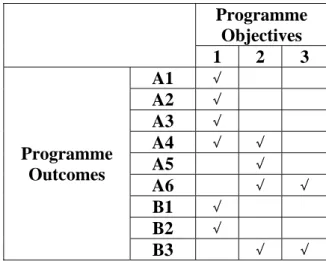
The Programme Outcomes are in line with the Programme objectives and the mapping is shown
in Table 5.
Table 5 Mapping between Programme Objectives and Programme Outcomes
The Subject Learning Outcomes are designed to be in alignment with the Programme Outcomes.
The Subject Learning Outcomes are given in each subject and they can be found in the Subject
Descriptions Forms in Appendix I.
6 Work-Integrated Education (WIE) and Co-curricular Activities
This is a part-time programme and the majority of students have full-time employments in
engineering disciplines. The students are therefore well exposed to the work environment. No
special arrangements therefore need to be made on Work-Integrated Education.
PolyU aspires to develop all its students as all-round graduates with professional competence,
and has identified a set of highly valued graduate attributes as the learning goals for students.
While many of these graduate attributes can be developed through the curricular activities of this
programme, some (including global outlook, interest in local and international affairs,
interpersonal skills, sense of social and national responsibility, cultural appreciation, and
leadership, etc.) are primarily addressed through co-curricular activities offered by faculties,
Programme
Objectives
1 2 3
Programme
Outcomes
A1
√
A2
√
A3
√
A4
√
√
A5
√
A6
√
√
B1
√
B2
√
B3
√
√
departments, and various teaching and learning support units of the University. Students are
encouraged to make full use of such opportunities to develop these attributes.
7 Programme Structure
The time-tabled student hours for each module and the type of activity (lecture [Lt], tutorial [Tu]
and laboratory [Lab]) are given in the Table 7.1.1 to 7.1.4. The abbreviations used in these
tables are:
AF
School of Accounting and Finance
AMA Applied
Mathematics
BSE
Building Services Engineering
CSE
Civil & Structural Engineering
EE Electrical
Engineering
ELC
English Language Centre
ENG Engineering
Faculty
ISE
Industrial and Systems Engineering
MM
Management and Marketing
In general, a normal student in the PT-BEng (Hons) with Higher Certificate at entry must
complete 15, 30 and 27 credits in Levels 2, 3 and 4, respectively. In other words, a student must
complete a total of 72 credits before graduation. For entrants with a Higher Diploma in
Electrical Engineering they will be given credit transfers for a maximum of 24 credits that they
have taken in their Higher Diploma programmes.
S
UBJECT
D
ESCRIPTIONS
Subjects are referenced by a Departmental letter code (e.g. EE corresponds to Electrical
Engineering) followed by a reference number. Each subject is also categorised as non-deferrable
(
Non-Def
), deferrable (
Def
) or
Elective
.
In the reference numbers, the first digit (i.e. 2, 3 or 4) indicates the level of the subject.
‘Non-def
’ are those subjects which form the backbone of the vertical integration and must be
taken by every student in the prescribed semester, unless prevented from doing so due to
noncompliance with prerequisites.
‘Def
’ are those subjects which must be satisfactorily completed before the student becomes
eligible for an award but the timing of the subject is determined by the student. Table 7.2.1 to
7.2.4 show the times (semesters) in which these subjects are recommended to be taken, if the
programme is to be completed in the minimum time.
‘Electives’ are those subjects which are optional. Electives give students choices in composing
their study programme. All elective subjects are deferrable.
7.1 Curricula for Various Levels
HONG KONG POLYTECHNIC UNIVERSITY
PART-TIME BENG (HONS) IN ELECTRICAL
ENGINEERING Level 2 Curriculum Assessment Method Teaching Dept. Contact Hours Credits GPA Weight (Wi) Subject
Code Subject Title Lt/Tu Lab Continuous Examination
EE2011 EE2511 AMA201 EE2531 AMA202 Non-Def Subjects Applied Electromagnetics Circuits and Linear Systems Mathematics I
Def Subjects
Computer Systems Engineering Mathematics II EE EE AMA EE AMA 36 42 42 36 42 12 12 - 12 - 3 3 3 3 3 0.2 0.2 0.2 0.2 0.2 40% 40% 40% 40% 40% 60% 60% 60% 60% 60% Total required 15
Table 7.1.1
HONG KONG POLYTECHNIC UNIVERSITY
PART-TIME BENG (HONS) IN ELECTRICAL
ENGINEERING Level 3 Curriculum Assessment Method Teaching Dept. Contact Hours Credits GPA Weight (Wi) Subject
Code Subject Title Lt/Tu Lab Continuous Examination
EE3021 EE3031 EE3041 EE3051 AF3901 EE3061 EE3131 EE3141 ENG306 ENG307 EE321 EE323 Non-Def Subjects
Electromechanical Energy Conversion Power Electronics and Drives Power Transmission and Distribution Systems and Control
Def Subjects
Economics for Engineers Analysis Methods for Engineers Telecommunication Fundamentals Engineering Project Execution Engineering Management Society and the Engineer Elective (One out of two) (Def Subject)
Electrical Services in Buildings # Software Engineering # EE EE EE EE AF EE EE EE ENG ENG EE EE 36 36 36 38 42 38 39 42 42 42 42 42 12 12 12 8 - 8 6 - - - - - 3 3 3 3 3 3 3 3 3 3 3 3 0.3 0.3 0.3 0.3 0.3 0.3 0.3 0.3 0.3 0.3 0.3 0.3 40% 40% 40% 40% 50% 40% 40% 100% 40% 60% 40% 40% 60% 60% 60% 60% 50% 60% 60% - 60% 40% 60% 60% Total required 33
# Students must choose one of these two subjects.
Note: The Department reserves the right of not offering all electives in each year.
Table 7.1.2
HONG KONG POLYTECHNIC UNIVERSITY
PART-TIME BENG (HONS) IN ELECTRICAL
ENGINEERING Level 4 Curriculum Assessment Method Teaching Dept. Contact Hours Credit s GPA Weigh t (Wi)
Subject Code Subject Title Lt/Tu Lab Continuous Examination
EE4021 EE4031 EE4121 Non-Def Subjects Electrical Machines Power Systems Def Subjects Individual Project EE EE EE 36 38 - 12 8 - 3 3 9 0.5 0.5 0.5 40% 40% 100% 60% 60% - Total required 15
Table 7.1.4
Specialist and Non-Technical Broadening Elective (Def Subject)*
To be chosen from Table 7.1.4
- - - 3 0.5 - -
Total required 9
* SF PT-BEng in EE students must take
THREE
subjects from either the Level 4 Specialist Electives,
Non-Technical Broadening Electives, or the Level 5 MSc subjects offered by EE or other servicing departments as
given in Table 7.1.4.
The student cannot take more than ONE Non-Technical Broadening Elective from
the list of subjects.
Note: The Department reserves the right of not offering all electives in each year.
Table 7.1.3
H
ONGK
ONGP
OLYTECHNICU
NIVERSITYBE
NG(H
ONS)
INE
LECTRICALE
NGINEERINGLevels 4 and 5
Curriculum Assessment Method Teaching Dept. Contact Hours Credits GPA Weight (Wi) SubjectCode Subject Title Lt/Tu Lab Continuous Examination Non-Def Subjects
EE4021 Electrical Machines EE 36 12 3 0.5 40% 60%
EE4031 Power Systems EE 38 8 3 0.5 40% 60%
Def Subjects
EE4121 Individual Project EE - - 9 0.5 100% -
Specialist Elective (Def Subjects)
BSE463 Design of Mechanical Systems in Buildings BSE 36 - 3 0.5 40% 60% EE4011 Digital Control and Signal Processing EE 38 8 3 0.5 40% 60% EE4211 Advanced Power Electronics EE 38 8 3 0.5 40% 60%
EE4221 Applied Digital Control EE 38 8 3 0.5 40% 60%
EE4251 Electric Traction and Drives EE 45 - 3 0.5 40% 60%
EE4261 Fibre Optics EE 36 12 3 0.5 40% 60%
EE4281 Industrial Computer Applications EE 36 12 3 0.5 40% 60%
EE4291 Intelligent Buildings EE 42 - 3 0.5 40% 60%
EE4301 Power System Protection EE 38 8 3 0.5 40% 60%
EE4341 Application of Intelligent Methods in Electrical Engineering EE 48 - 3 0.5 40% 60%
Non-Technical Broadening Electives (Def Subjects)
AF5107 Accounting for Engineers AF 42 - 3 0.5 50% 50%
CSE462 Environmental Impact Assessment– Theory and Practice CSE 42 - 3 0.5 50% 50% CSE516 Urban Transport Planning – Theory and Practice CSE 42 - 3 0.5 40% 60% ISE404 Total Quality Management ISE 28 14 3 0.5 55% 45%
MM4521 China Trade Management MM 42 - 3 0.5 50% 50%
MSc Subjects (Def Subjects)
EE501 Alternative Energy Technologies EE 42 - 3 0.5 40% 60%
EE502 Modern Protection Methods EE 36 12 3 0.5 40% 60%
EE505 Power System Control and Operation EE 42 - 3 0.5 40% 60%
EE509 High Voltage Engineering EE 42 - 3 0.5 40% 60%
EE510 Electrical Traction Engineering EE 36 6 3 0.5 40% 60%
EE512 Electric Vehicles EE 42 - 3 0.5 40% 60%
EE514 Real Time Computing EE 36 6 3 0.5 40% 60%
EE517 Fibre Optic Components EE 39 3 3 0.5 40% 60%
EE520 Intelligent Motion Systems EE 42 - 3 0.5 40% 60%
EE521 Industrial Power Electronics EE 30 12 3 0.5 40% 60%
EE522 Optical Fibre Systems EE 42 - 3 0.5 40% 60%
EE524 Open Electricity Market Operation EE 42 - 3 0.5 40% 60% EE525 Energy Policy and Restructuring of Electricity Supply Industry EE 42 - 3 0.5 40% 60% EE526 Power System Analysis and Dynamics EE 38 8 3 0.5 40% 60% EE527 Auto-tuning for Industrial Processes EE 42 - 3 0.5 40% 60% EE528 System Modelling and Optimal Control EE 33 9 3 0.5 40% 60% EE529 Power Electronics for Utility Applications EE 42 - 3 0.5 40% 60% EE530 Electrical Energy-saving Systems EE 42 - 3 0.5 40% 60%