J Vet Sci 2017, 18(1), 95-99ㆍhttps://doi.org/10.4142/jvs.2017.18.1.95
JVS
Received 18 Jan. 2016, Revised 9 May 2016, Accepted 8 Jun. 2016
*Corresponding authors: Tel: +82-53-950-5964; Fax: +82-53-950-5955; E-mails: [email protected] (SC Park), [email protected] (JW Suh)
†
Present address: Department of Pharmacotherapy and Experimental Therapeutics, UNC Eshelman School of Pharmacy, Chapel Hill, NC 27599, USA
Journal of Veterinary Scienceㆍⓒ 2017 The Korean Society of Veterinary Science. All Rights Reserved.
This is an Open Access article distributed under the terms of the Creative Commons Attribution Non-Commercial License (http://creativecommons.org/licenses/
pISSN 1229-845X eISSN 1976-555X
Probiotic properties and adsorption of
Enterococcus faecalis
PSCT3-7 to vermiculite
Jin-Yoon Kim1, Elias Gebru Awji2,†, Na-Hye Park1, Ji-Yong Park1, Jong-Choon Kim3, Sam-Pin Lee4, Joo-Won Suh5,*, Seung-Chun Park1,*
1Laboratory of Veterinary Pharmacokinetics and Pharmacodynamics, College of Veterinary Medicine, Kyungpook National University, Daegu 41566, Korea 2Lovelace Respiratory Research Institute, Albuquerque, NM 87108, USA
3Laboratory of Veterinary Toxicology, College of Veterinary Medicine, Chonnam National University, Gwangju 61186, Korea 4Department of Food Science and Technology, Keimyung University, Daegu 42601, Korea
5Center for Nutraceutical and Pharmaceutical Materials, Department of Bioscience and Bioinformatics, Myongji University, Yongin 17058, Korea
The probiotic properties of Enterococcus (E.) faecalis PSCT3-7, a new strain isolated from the intestines of pigs fed dietary fiber containing 50% sawdust, were investigated. E. faecalis PSCT3-7 tolerated a pH range of 3 to 8 and 0.3% bile salts, and it inhibited the growth of Salmonella
Typhimurium in a concentration-dependent manner. In addition, E. faecalis showed resistance to several antibacterial agents. Vermiculite, a nutrient and microbial carrier, increased the bile tolerance of the strain. Scanning electron microscope images revealed good adsorption of
E. faecalis PSCT3-7 onto vermiculite. E. faecalis PSCT3-7 represents a potential probiotic candidate to administer with vermiculite to swine.
Keywords: Enterococcus faecalis, Salmonella Typhimurium, lactic acid bacteria, probiotics, swine
The microbial community in the gastrointestinal tract of pigs adapts to high levels of dietary fiber. High-fiber diets increase, through time, the number of cellulolytic bacteria in the intestines of pigs [1,12,15], and pigs fed high-fiber diets will adapt to digest non-starch polysaccharides within 3 to 5 weeks [11].
In ongoing feed-trial studies, we screened several lactic acid bacteria from pigs fed different sources and levels of dietary fiber and undertook morphological, biochemical, and molecular characterization of strains with potential probiotic properties [9,10]. The first aim of the current study was to determine the probiotic properties of a new strain characterized as Enterococcus
(E.) faecalis and designated as E. faecalis PSCT3-7. Probiotics administered to animals are usually incorporated to carrier medium. Vermiculite, an important support and carrier medium for a range of nutrients for animals, is also reported to create a protective envelope around microorganisms [5,14]. Therefore, our second aim was to examine the properties of E. faecalis
PSCT3-7 adsorbed onto vermiculite.
The strain investigated in this study was taken from 23
lactobacilli strains we recently screened from the intestines of pigs fed dietary fiber sources containing 50% sawdust for 4 weeks (Unpublished). The strain was selected as it exhibited the greatest activity of digestive enzymes, including protease, cellulase, phytase, and α-amylase, based on API ZYM system results. Identification of E. faecalis PSCT3-7 was based on morphological and biochemical characterization using a negative catalase reaction, a positive PYR test (Murex Diagnostika, Germany), and the API 20 Strep system (bioMérieux, Germany) as described previously [16]. Its identity was confirmed by MALDI-TOF mass spectrometry and 16S rRNA sequence analysis and comparison with sequences available in the GenBank database using the BLAST algorithm (National Center for Biothechnology Information, USA). Sequence comparisons done by the Korean Culture Center of Microorganisms (Korea) showed 100% similarity of the strain to E. faecalis with the best sequence match with E. faecalis EU708623 (Fig. 1).
Fig. 1. Phylogenetic tree showing sequence-based identification of Enterococcus faecalis PSCT3-7.
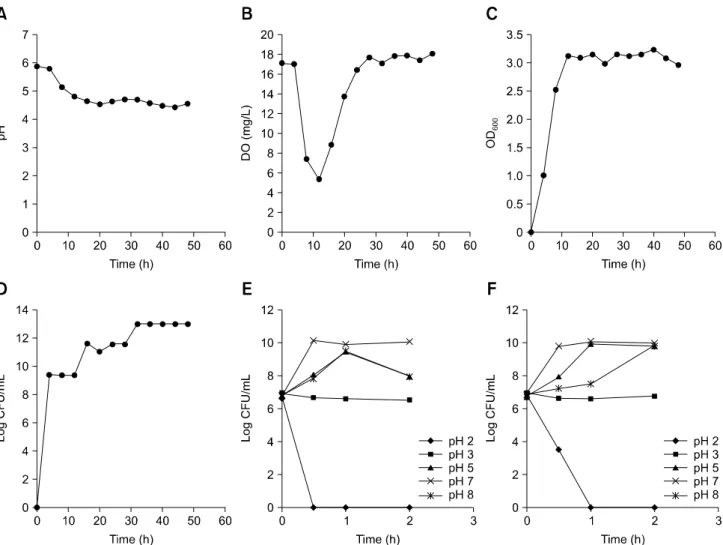
Fig. 2. Growth characteristics of Enterococcus (E.) faecalis PSCT3-7. Changes in pH (A), dissolved oxygen (DO) (B), optical density at 600 nm (OD600) (C), and colony-forming unit per milliliter (CFU/mL) (D) during 48 h fermentation of E. faecalis PSCT3-7. Growth of E. faecalis PSCT3-7 (E) and vermiculite-adsorbed E. faecalis PSCT3-7 (F) in pH-adjusted broth for 2 h at 37oC. The experiments were
performed in triplicate (n = 3).
and dissolved oxygen (DO) were automatically monitored, and the growth of cells was monitored by measuring the optical density at 600 nm (OD600). Bacterial counts were performed by
using one milliliter samples taken throughout the incubation period. During the 48 h incubation period, the pH of the culture
gradually decreased (panel A in Fig. 2) and the level of DO sharply fell from 17 mg/L to 5.3 mg/L during the first 12 h, increased thereafter, and reached 18 mg/mL by 48 h (panel B in Fig. 2). The OD600 results showed a sharp increase, peaked at 12
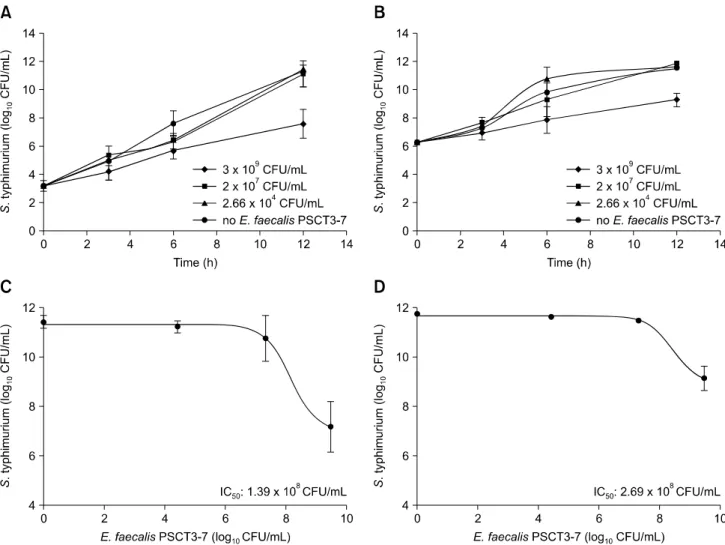
Fig. 3. Inhibitory activity of Enterococcus (E.) faecalis PSCT3-7 against Salmonella Typhimurium growth. Co-culture of E. faecalis
PSCT3-7 with Salmonella Typhimurium at initial inoculum of 103 CFU/mL (A) and 106 CFU/mL (B) showing E. faecalis PSCT3-7
concentration-dependent inhibition of Salmonella Typhimurium growth. (C and D) The minimum level of E. faecalis PSCT3-7 required to inhibit growth of Salmonella Typhimurium by 50% (IC50) when Salmonella Typhimurium was inoculated at 103 CFU/mL (C) and
106 CFU/mL (D) initial levels. The experiments were performed in triplicate (n = 3). *p< 0.05 compared to the results obtained with
control.
Similar to the OD600 changes, E. faecalis PSCT3-7 showed an
initial exponential growth followed by a stationary phase (panel D in Fig. 2).
Acid and bile tolerance tests were performed as described previously [9], in pH-adjusted medium (pH 2–8) or by adding 0.3% bile salts (Sigma, USA) in the medium. E. faecalis
PSCT3-7 tolerated a pH of 3 and grew well in a pH range of 3 to 8 for 2 h (panel E in Fig. 2). Intestinal contents or feed matrix may prevent exposure of probiotic bacteria to bile thereby increasing the survival and functioning of the organism in the gastrointestinal tract [3]. Hence, we tested whether adsorption to vermiculite may improve the acid and bile tolerance of E.
faecalis PSCT3-7 by adding 1% (w/v) vermiculite in the media and found no enhancement in acid tolerance of the strain (panel F in Fig. 2). However, while E. faecalis PSCT3-7 showed
viability for 3 h in medium containing 0.3% bile salts, a longer survival (up to 6 h) of the strain was observed when 1% vermiculite was added in the bile-containing medium (data not shown). The survival and growth of E. faecalis PSCT3-7 over a wide range of pH and in media containing bile salts suggest that the strain can survive and grow both in the acidic environment of the stomach and in the presence of intestinal bile salts.
The inhibitory activity of E. faecalis PSCT3-7 (starting inoculum: 105, 107 or 109 colony-forming unit [CFU]/mL) against
Salmonella enterica serotype Typhimurium (Salmonella
Typhimurium, KCTC 2515, starting inoculum: 103 or 106 CFU/mL
to model early and late infections in pigs) was determined by performing co-culture experiments in triplicate. A one-way ANOVA with Dunnett’s post hoc analysis was performed for
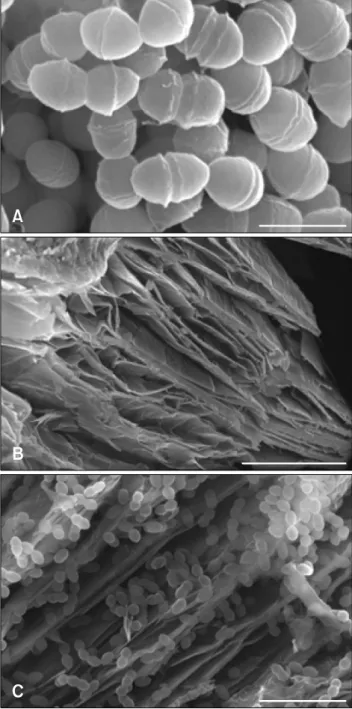
Fig. 4. Scanning electron microscope images of (A) Enterococcus
(E.) faecalis PSCT3-7, (B) vermiculite, and (C) vermiculite-adsorbed
E. faecalis PSCT3-7. Scale bar = 1 m (A), 30 m (B), 5 m (C).
without or with 3 levels of E. faecalis PSCT3-7. Significantly lower Salmonella Typhimurium CFU/mL (p < 0.05) was observed between the highest E. faecalis PSCT3-7 levels (109
CFU/mL) and all other treatments, both at 6 and 12 h post-incubation. While Salmonella Typhimurium CFU/mL continuously decreased in co-cultures with 109 CFU/mL E.
faecalis PSCT3-7, Salmonella Typhimurium cell counts reached more than 1010 CFU/mL by 12 h in experiments with out or 104 or 107 CFU/mL E. faecalis PSCT3-7 (panels A and B in Fig. 3). The CFU/mL of Salmonella Typhimurium in the absence or presence of different levels of E. faecalis PSCT3-7 was fitted with the inhibitor-versus response model built in GraphPad Prism (GraphPad Software, USA), with the equation: Y = Bottom + (Top − Bottom)/(1 + (X/IC50)), where Top and
Bottom are Salmonella Typhimurium CFU/mL in the absence of E. faecalis PSCT3-7 and at maximum growth inhibition in the presence of E. faecalis PSCT3-7, and IC50 is the minimum
level of E. faecalis PSCT3-7 required to inhibit the growth of
Salmonella Typhimurium by 50% in the co-culture experiments. The IC50 values were determined to be 1.39 × 10⁸ and 2.39 × 10⁸
CFU/mL for Salmonella Typhimurium inocula of 103 and 106 CFU/mL, respectively (panels C and D in Fig. 3). Mechanisms for inhibition of Salmonella Typhimurium growth by E. faecalis
PSCT3-7 remain to be described. However, it has been reported that E. faecalis strains adhere to intestinal cells and produce antimicrobial substances [7,13], suggesting that E. faecalis
PSCT3-7 may remain the dominant microflora in intestines; thereby, preventing invasion by Salmonella Typhimurium strains of infected animals. Furthermore, addition of vermiculite in the culture medium did not affect the antibacterial activity of
E. faecalis PSCT3-7 against Salmonella Typhimurium (data not shown), suggesting that vermiculite could be used as a potential carrier for administration of E. faecalis PSCT3-7 to pigs.
Minimum inhibitory concentrations (MIC) of several antibacterial agents against E. faecalis PSCT3-7 were determined according to Clinical and Laboratory Standards Institute guidelines and by using Staphylococcus aureus and Escherichia coli quality control strains [4]. E. faecalis PSCT3-7 showed resistance to several antibacterial agents with MIC (g/mL) values of greater than 512 (colistin, spectinomycin, streptomycin), 256 (chloramphenicol, florfenicol, norfloxacin, novobiocin), 128 (cephalexin), 64 (bacitracin, marbofloxacin), and 32 (gentamycin), while it was susceptible to amoxicillin at a MIC value of 1 g/mL. This resistance pattern may be considered advantageous because probiotic strains with antibiotic resistance could be useful for restoring gut microbiota when administered to animals that are undergoing antibiotic treatment [8].
The ultrastructural morphology of E. faecalis PSCT3-7 was studied by using a scanning electronic microscope (SEM; models S-4300 and EDX-350; Hitachi, Japan). Sample preparations were essentially as described previously [6,16]. The SEM images revealed that E. faecalis PSCT3-7 is spherical
or oval and is divided with perfect symmetry (panel A in Fig. 4). In addition, binary fission of the bacteria was evident in the SEM images.
Probiotics prepared as feed additives should have stability and longevity to ensure extended physiological activity. This can be achieved by encapsulation or by using carrier medium, such as vermiculite [2]. Adsorption of E. faecalis PSCT3-7 onto vermiculite was studied by using a SEM. Vermiculite-adsorbed
method [16]. Panel B in Fig. 4 shows the typical silicate clay with porous and lamellar structures of expanded vermiculite. SEM images show good adsorption capacity of E. faecalis
PSCT3-7 onto 1% vermiculite with several cells adsorbed on the surface of the plate and inside the porous structures (panel C in Fig. 4).
In summary, E. faecalis PSCT3-7 possesses the essential characteristics of a potential probiotic bacterial strain, including the ability to survive in bile salts and at a low pH. Moreover, it has antibacterial activity against Salmonella Typhimurium and good adsorption onto vermiculite. Future studies will further establish the clinical functionality of the strain in piglets challenged with enteric bacteria.
Acknowledgments
This work was supported in part by the Korean Institute of Planning and Evaluation for Technology (IPET) through the Technology Commercialization Support Program (314082-3), funded by the Ministry of Agriculture, Food and Rural Affairs, in part by the Daejeon IRPE Project (R0004266) through the Research and Development for Regional Industry of the Ministry of Trade, Industry and Energy, and in part by the Cooperative Research Program for Agriculture Science & Technology Development (project No. PJ01128901), Rural Development Administration, Republic of Korea.
Conflict of Interest
The authors declare no conflicts of interest.
References
1. Anugwa FOI, Varel VH, Dickson JS, Pond WG, Krook LP. Effects of dietary fiber and protein concentration on growth, feed efficiency, visceral organ weights and large intestine microbial populations of swine. J Nutr 1989, 119, 879-886. 2. Bederska-Łojewska D, Pieszka M. Modulating gastrointestinal
Microflora of pigs through nutrition using feed additives. Ann Anim Sci 2011, 11, 333-335.
3. Begley M, Gahan CG, Hill C. The interaction between bacteria and bile. FEMS Microbiol Rev 2005, 29, 625-651. 4. Clinical and Laboratory Standards Institute. Performance
Standards for Antimicrobial Susceptibility Testing.
Fifteenth informational supplement M100-S15. CLSI, Wayne, 2005.
5. England LS, Lee H, Trevors JT. Bacterial survival in soil: effect of clays and protozoa. Soil Biol Biochem 1993, 25, 525-531.
6. Forestier C, De Champs C, Vatoux C, Joly B. Probiotic activities of Lactobacillus caseirhamnosus: in vitro adherence to intestinal cells and antimicrobial properties. Res Microbiol 2001, 152, 167-173.
7. Franz CMAP, Van Belkum MJ, Holzapfel WH, Abriouel H, Gálvez A. Diversity of enterococcal bacteriocins and their grouping in a new classification scheme. FEMS Microbiol Rev 2007, 31, 293-310.
8. Gueimonde M, Sánchez B, de Los Reyes-Gavilán CG, Margolles A. Antibiotic resistance in probiotic bacteria. Front Microbiol 2013, 4, 202.
9. Kim EY, Kim YH, Rhee MH, Song JC, Lee KW, Kim KS, Lee SP, Lee IS, Park SC. Selection of Lactobacillus sp. PSC101 that produces active dietary enzymes such as amylase, lipase, phytase and protease in pigs. J Gen Appl Microbiol 2007, 53, 111-117.
10. Lee JS, Awji EG, Lee SJ, Tassew DD, Park YB, Park KS, Kim MK, Kim B, Park SC. Effect of Lactobacillus plantarum
CJLP243 on the growth performance and cytokine response of weaning pigs challenged with enterotoxigenic Escherichia coli. J Anim Sci 2012, 90, 3709-3717.
11. Longland AC, Low AG, Quelch DB, Bray SP. Adaptation to the digestion of non-starch polysaccharide in growing pigs fed on cereal or semi-purified basal diets. Br J Nutr 1993, 70, 557-566.
12. Molist F, de Segura AG, Gasa J, Hermes RG, Manzanill EG, Anguita M, Pérez JF. Effects of the insoluble and soluble dietary fibre on the physicochemical properties of digesta and the microbial activity in early weaned piglets. Anim Feed Sci Technol 2009, 149, 346-353.
13. Nueno-Palop C, Narbad A. Probiotic assessment of
Enterococcus faecalis CP58 isolated from human gut. Int J Food Microbiol 2011, 28, 390-394.
14. Pesenti-Barili B, Ferdani E, Mosti M, Degli-Innocenti F. Survival of Agrobacterium radiobacter K84 on various carriers for crown gall control. Appl Environ Microbiol 1991, 57, 2047-2051.
15. Varel VH, Pond WG. Enumeration and activity of cellulolytic bacteria from gestating swine fed various levels of dietary fiber. Appl Environ Microbiol 1985, 49, 858-862. 16. Wellinghausen N, Chatterjee I, Berger A, Niederfuehr A,
Proctor RA, Kahl BC. Characterization of clinical