1
Complaints and claims against osteopaths:
a baseline study of the frequency of complaints 2004–2008
and a qualitative exploration of patients’ complaints
NCOR Adverse Events Project No. 3 (NCOR3)
Final Report October 2011
2 Editors:
Janine Leach, Adam Fiske, Brenda Mullinger, Rachel Ives, Anne Mandy The CONDOR research team
Contact address: Dr Janine Leach
Clinical Research Centre for Health Professions University of Brighton
Aldro Building, 49 Darley Road, Eastbourne, BN20 7UR t 01273 64 3308
f 01273 64 3944
The CONDOR research collaboration between two universities and two osteopathic education institutions was initiated by the call for proposals on adverse events by NCOR in 2007.
3 Acknowledgements
This project was funded by the General Osteopathic Council. We are deeply grateful for the expert advice freely given by the members of the Steering Group: Tim McClune, Bernadette Ranger, David Balen, Paul Grant, Professor Julie Stone, Catherine Goodyear and Asgar Hassanali. Also for the co-operation of the
management and staff of the General Osteopathic Council (notably Kellie Green) and of the Professional Indemnity Insurers – Lisa Lambert at Balens, Asgar Hassanali at Howden, Gareth Millard at Three Counties, and Patricia Woodroff at Towergate-MIA. The research would have not been possible without their input. We are
indebted to Dr Vinette Cross for her assistance with the analysis of the interviews and to Nicky Pont for her excellent transcribing of the interviews.
We are very grateful to the General Medical Council for sharing with us the
classification system they used during the study period, for complaints to the GMC.
4 CONTENTS Acknowledgements 3 Abstract 5 Executive summary 8 Glossary 15 CHAPTERS 1 Introduction 16 2 Literature review 24
3 Access to data about complaints 37
4 Developing a classification system for coding types of complaint
40
5 Trends in complaints against osteopaths between 2004 and 2008
46
6 Understanding why patients complain 60
7 Discussion 84 8 Conclusions 96 References 98 APPENDICES 1. Research team 2. Steering Group
3. The GOsC Process for complaints 4. Gantt Chart
5. Ethical Approval
6. Participating Organisations and data
7. Seibel Classification of complaints used by the General Medical Council
8. Study documents and letters
9. Identifying GOsC formal complaints in Balens’ data
5
ABSTRACT
Introduction
The primary objective of this study was to investigate the frequency and character of complaints made by patients about osteopathic care, and to whom those complaints had been made. The second objective was to gain a greater understanding of the nature of the complaint and the circumstances leading to complaints. The study is one of four pieces of work commissioned by the National Council for Osteopathic
Research to provide evidence of risk associated with osteopathic care. The project was funded by the statutory regulator, the General Osteopathic Council (GOsC); the right of patients to be made as fully aware as possible of any known risks associated with the intervention, before consenting to care, is reflected in their Code of Practice for Osteopaths.
Methods
The project comprised a literature review followed by primary research, in collaboration with the organisations that record or advise on the majority of complaints from osteopathic patients: the regulator, the GOsC; the providers of professional indemnity insurance; and the professional body, the British Osteopathic Association (BOA).
The three stages of the project aimed (1) to create a classification scheme suitable for categorising and coding the types of complaint made by osteopathic patients,
developed using consensus panel methods; (2) to conduct a quantitative analysis of anonymised complaints records supplied by the participating organisations; (3) to use qualitative methods to gain understanding of the nature of complaints through a series of interviews with purposively selected individuals in the participating organisations. A thematic analysis of the transcripts of these interviews was used to generate a conceptual framework about how complaints arise, and why they become formalised.
6 Results
The literature review established that no previous studies had quantified complaints about osteopathy, nor examined patterns in the types of complaints within manual therapy professions. Complaints statistics from the respective regulators show that rates of complaint vary somewhat between professions, with osteopathy being
somewhat low compared to chiropractic (at 211) and high compared to physiotherapy (rates being 68, 211 and 20 per 10,000 p.a. respectively). The research literature on adverse events suggested that serious effects after osteopathic treatment are extremely rare (1 in 500,000 or less frequent) while mild effects are common (up to 8 out of 10 patients).
Anonymised records for 351 complaints from osteopathic patients in the five-year period 2004-2008 were supplied by the participating organisations, of which only 97 were formal complaints to the regulator. With a mean population of 3,731 osteopaths on the GOsC Register, this represented a mean rate of 187 per 10,000 registrants p.a.. A classification system was developed in order to code complaints by type. The pattern of complaints by type showed that the most frequent complaints were related to clinical care (68%), of which a large proportion were adverse events. The second most frequent type of complaint was about conduct and communications (21%). However, there were statistically significant differences (p<0.0001) between
organisations in the distribution of complaints by type. Between 2004 and 2008 there was no statistical evidence of an upward trend, nor any change in the patterns of complaints by type.
The thematic analysis of the five narrative interviews generated a hypothesis that complaints are a complex chain of events: the event that triggers a complaint – most often pain or reaction to treatment or the conduct of the osteopath – is the explicit reason for the complaint, but this will be preceded by underpinning factors, such as unmet or unmanaged expectations. Patients have a desired outcome in mind when they complain. The progress of the initial complaint – whether it is formalised or resolved – depends on the osteopath’s understanding of the patient, their reaction to the discord, and their ability to communicate empathetically.
7 Conclusions
The report provides recommendations for future monitoring of complaints and identifies priorities for future research: these include developing and testing the new classification system; improving on the quality and accuracy of the routinely collected data to assist in evaluation of outcomes; and utilising further sources of quantitative and qualitative data.
Important messages emerged – especially from the interview data – for the
osteopathic profession, for the osteopathic organisations and Insurance Providers, and for policy development. Explicitly listening to users’ complaints is likely to build patients’ confidence in the osteopathic profession. The reports and dissemination strategy should inform the profession, educators, insurers and the public of the findings.
8 EXECUTIVE SUMMARY
This summarises the findings of each chapter. Note that references to the statements made below can be found within the relevant chapter.
1. Introduction
The primary aim of this project was to investigate the frequency and character of complaints made by patients about osteopathic care, and to whom those complaints had been made.
The secondary aim of this project was to gain a greater understanding of the nature of the complaint and the circumstances leading to complaints.
The overall methodological approach was Action Research, which aims to improve a service or professional practice.
Both formal and informal complaints were included; also complaints that resulted in claims.
There are two main pathways for complaints: via the Regulator or via the osteopath and their provider of Indemnity Insurance.
All information on complaints and claims (apart from those that go to Court or Regulator hearings) is confidential and not in the public domain. Statistics are routinely published only for complaints heard by General Osteopathic Council (GOsC) Professional Conduct Committees.
2. A review of evidence on complaints in manual therapies
The scientific literature on complaints and claims within healthcare is limited, mostly concerned with adverse events and complaints against medical doctors. The grey literature yielded contextual information relevant to osteopathy.
The search for published data revealed no papers on malpractice trends in manual therapy professions. The search was hampered by the lack of an indexing term
9
within the research databases for patient complaints, reflecting the novelty of this area of research.
All types of complaints by patients against osteopaths were included. The scope was extended to chiropractic, physiotherapy and other health professions due to the paucity of research evidence overall.
Complaints statistics were published by a number of regulatory bodies in the UK. The number of complaints by patients to the osteopathic regulator, GOsC,
between 2001–2007 was 68 per 10,000 registrants per annum, on average. The comparable rates for chiropractors, dentists and physiotherapists were 211, 45 and 20, respectively.
The number of local complaints about the service was not published for
osteopaths or chiropractors. The rate of local complaints against dentists, logged by the Dental Complaints service, was eleven times greater than the rate of
complaints to the regulator; for NHS-employed professions, local complaints were some fifteen times higher than those to the regulator (the HPC).
An upward trend in litigation, as observed within orthodox medicine, does not appear to have occurred in osteopathy.
Although there is an extensive literature on complaints against doctors, few studies were located which aimed to identify factors causing patients to complain, or to gain understanding of why patients complain. In medicine, physician
characteristics such as low patient satisfaction scores, surgical specialty, and a history of complaints increase the likelihood of complaints. The physician who is able to establish rapport, to be accessible to patients for queries, to meet care expectations and communicate effectively is less likely to receive a complaint. Patient characteristics appear less important, although emergency presentation and living in an urban area may be risk factors.
There was no routine adverse event reporting system within osteopathy; the literature suggested that serious adverse events were very rare (less than 1 in 500,000); mild effects were more frequent. Data collection piloted by a UK training clinic showed mild “additional effects of treatment” were experienced by over 50% of patients 1-7 days after treatment. Education of practitioners in
10
dealing with complaints appropriately, and coping with anger expressed by patients, may be helpful in avoiding conflict and for speedy resolution of complaints.
Adverse events and complaints can provide a learning tool for practitioner education. A pilot system of routine incident reporting has been tested within chiropractic as a learning system.
Key publications about the legal and ethical aspects of handling complaints showed a shift since 1996 towards speedy local resolution of complaints; these principles have been implemented within the NHS over time.
This literature review confirmed that the present study, designed to quantify the frequency of complaints within osteopathy, and to gain understanding of why patients complain, is the first of its kind, providing novel information applicable to all the manual therapy professions.
3. Access to the data
The research critically depended on access to the data on complaints; the research team was fortunate to receive support from all five organisations: the GOsC and the four providers of professional indemnity insurance to osteopaths: Balens, Howden, Three Counties and Towergate-MIA.
Three of the four insurers – Balens, Howden, and Three Counties – viewed the study as a positive step towards risk management and agreed to participate fully. We hope that the study outputs will demonstrate that collaboration is
cost-effective by helping to reduce the frequency of complaints.
The anonymised Events Log Files provided by the participating organisations contained sufficient detail to attempt a quantitative analysis of frequencies and trends, and permitted the complaints to be coded by type.
The study protocol had four stages: a literature review; development of a classification system for type of complaint; statistical analysis of the collated complaints data; and a qualitative interview study of key individuals in the
11
The General Osteopathic Council, the British Osteopathic Association and the providers of professional indemnity insurance to osteopaths, all supplied data and/or made staff time available for interviews or discussion.
An expert Steering Group was a huge asset to this research. It provided representation of all the stakeholders, including users, and not only facilitated collaboration but also provided legal, ethical, academic and user expertise at all stages of the study.
4. Creation of a new system for classification of types of complaint A new “NCOR3” system for classification and coding has been developed
specifically for osteopathic complaints.
The new classification is meaningful to the participating organisations, relates to the professional Code of Practice for Osteopaths produced by the GOsC, and is patient-centred.
The new classification system will enable common standardised recording of complaints within all the participating organisations, in the future.
The use of a common classification in future would facilitate regular monitoring of complaints, making it simpler to combine datasets, to compute frequencies, and to speedily identify those areas within the Code of Practice that generate most complaints. This will mean that information can be fed back promptly to the profession so that remedial action, such as targeted training and education, can take place.
The classification system seemed robust under test when used to code complaints data from several different sources within the study. It has yet to be put to the critical test of routine use by the organisations that deal with complaints.
5. Trends in complaints against osteopaths
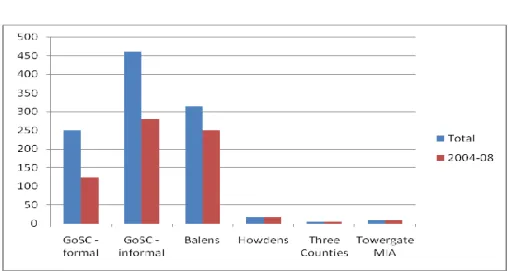
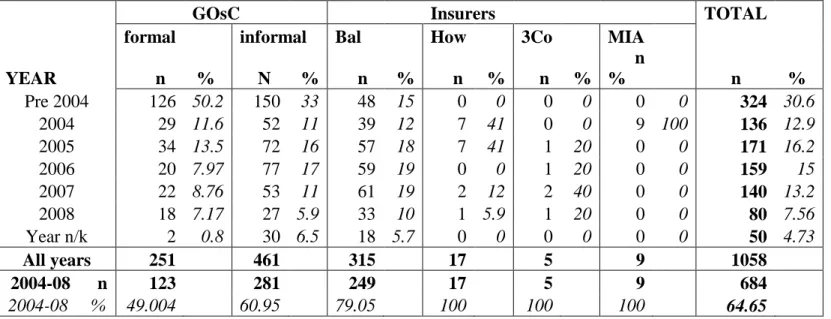
1,058 complaint records were received, of which 684 (65%) were related to the five-year period 2004–08.
12
GOsC formal complaints were excluded from the analysis as there was overlap with records in the Insurer’s files, and more detail was contained within the Insurers’ files; this left 561 complaints in the period 2004–08.
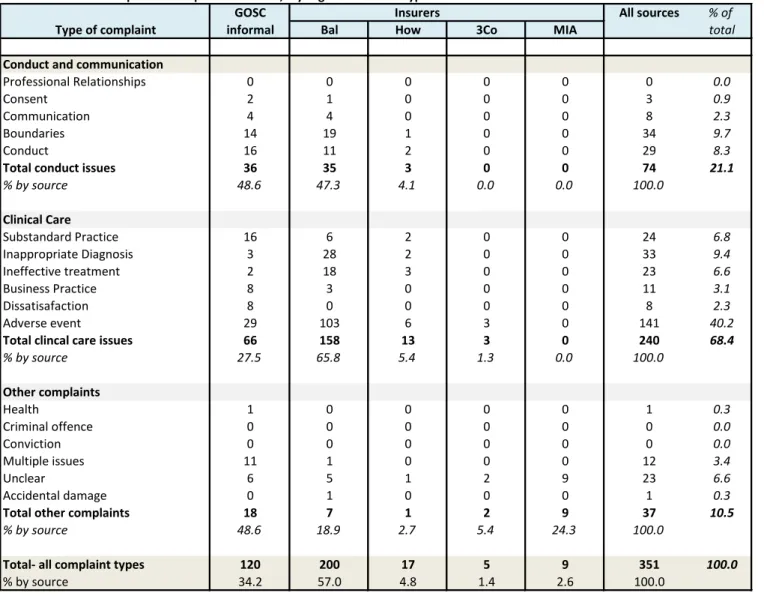
The majority of complaints were made by patients (351, 69%) in the study period 2004–08. These patient-initiated complaints were entered into the subsequent analysis.
The most frequent types of patient complaint fell into the broad categories of Clinical Care (68%) and Conduct/communication issues (21%). There were statistically significant differences (p<0.0001) between the regulator and the insurers in the types of complaint received, with more conduct/communications complaints going to the regulator and more clinical care issues being reported to the insurers, but no clear separation into two distinct groups of complaints reflecting fitness to practise and malpractice claims respectively.
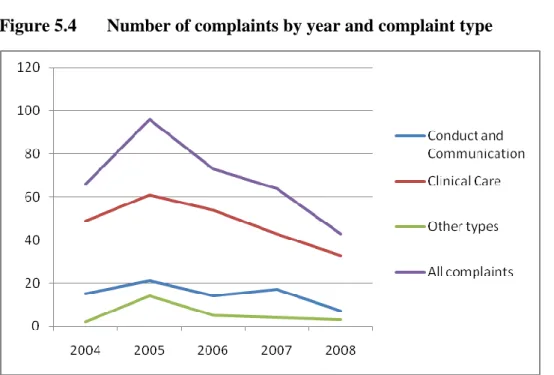
There was no statistical evidence of a temporal trend in overall complaints, in any type of complaint, or in any organisation, over the five-year period.
The number of patient complaints identified in 2004-08 was 351, of which about one third (97) became formal complaints from patients to the regulator. Collation of data from the various sources is essential to obtain a full picture of the
complaints and problems that patients encounter during osteopathic care.
6. Gaining understanding of why patients complain
This part of the project aimed to gain understanding of the nature of complaints and why they arise.
The methodology chosen was qualitative, using narrative interviews with those key individuals in the regulatory body (the GOsC), the professional association (the BOA) and the Insurers, who deal directly with the patient and/or osteopath involved in complaints.
These interviews provided rich data, from which emerged a clear and consistent framework of understanding of complaints, reflecting the depth of understanding of the interviewees based on their long years of experience.
13
The thematic analysis of the five narrative interviews generated a conceptual framework describing the factors involved in patients’ complaints in terms of four concepts: underpinning factors; triggers; desired outcomes; and resolution factors. Two strong cross-cutting themes emerged as affecting all stages of a complaint. These were communication/therapeutic relationship and conflict resolution. The relationship of the four key themes describes why complaints arise and become formalised. The event that triggers a complaint – most often pain or reaction to treatment or the conduct of the osteopath – is the explicit reason for the complaint, but this will be preceded by underpinning factors, such as unmet or unmanaged expectations. Patients have a desired outcome in mind when they complain. The progress of the initial complaint – whether it is formalised or resolved – depends on the osteopath’s understanding of the patient, their reaction to the discord, and their ability to communicate empathetically.
The analysis was validated by the participants as fitting their view of the factors giving rise to complaints.
Complaints are complex, only rarely involving a single event; they are much more likely to arise from a complex chain of circumstances.
The results highlight that the role each of the organisations, and the osteopaths, play in preventing and resolving complaints.
7. Discussion
Regular monitoring and audit of patient complaints is desirable for the future. It critically depends on the collaboration of all providers of osteopathic professional indemnity insurance.
Discussions need to be held between the GOsC and the Insurers with a view to facilitating future monitoring by collecting and coding a number of key data items in a standard way: using and testing the new classification system for type of complaint, and exploring the potential for record linkage.
14
The results have a number of implications for osteopathic practice.
Recommendations have been made to improve recognition of potential high-risk events within a consultation.
Several implications for policy have emerged. The proposed recommendations are for national joint working to develop approved specific information leaflets; targeted training of all osteopaths to prevent and handle complaints more effectively; and collecting formal patient feedback as a continuing professional development (CPD) requirement.
Questions were raised about the current system for handling complaints, including whether a review of the system may be justified.
8. Conclusions
The project has provided rich data about osteopathic complaints. The results provide a baseline for future monitoring of trends.
The project was labour-intensive due to the very large amount of data processing required to analyse the trends.
To facilitate future monitoring, further development of national standards for coding for selected data items is needed.
Further testing is required of the new classification for osteopathic complaints. Further qualitative research is needed to test the hypothesis generated within this
study about why patients complain.
The results and the implications of the results now need to be widely disseminated and discussed.
15 GLOSSARY
BOA British Osteopathic Association
CPD Continuing Professional Development
HC Health Committee of the GOsC
HPC Health Professions Council
GCC General Chiropractic Council
GMC General Medical Council
GOsC General Osteopathic Council
IC Investigating Committee of the GOsC
NCOR National Council for Osteopathic Research
NHS National Health Service of the UK
OEI Osteopathic Educational Institution
PCC Professional Conduct Committee of the GOsC; the results of hearings are published in annual ‘Fitness to Practise’ reports
PI Professional Incompetence: an allegation used by the GOsC Professional Conduct Committee
UPC Unacceptable Professional Conduct: an allegation used by the GOsC Professional Conduct Committee
16 CHAPTER 1 INTRODUCTION
1.1 Aims of the project
The primary aim was to investigate the frequency and character of complaints made by patients about osteopathic care, and to whom those complaints had been made. The second aim was to gain a greater understanding of the nature of the complaint and the circumstances leading to complaints.
The longer term aim of this research project was to provide baseline information about complaints as a basis for future monitoring of trends, and to identify priorities and barriers to future research on this topic, with a view to gaining robust evidence on how to reduce complaints in future.
This project is one of four “NCOR Adverse Events Projects” relating to a number of areas associated with risks, benefits and informed consent, which were commissioned by the General Osteopathic Council (GOsC), through the National Council for
Osteopathic Research (NCOR), in 2007. Information about adverse events in
osteopathic practice is valuable in order that patients can be appropriately informed of risks associated with treatment. The need for osteopaths to inform patients of risks was re-emphasised by the Regulator in the Code of Practice for Osteopaths issued in 2005 (General Osteopathic Council 2005), in which Clause 20 stated:
“You should not only explain the usual inherent risks associated with the particular treatment but also any low risks of seriously debilitating outcomes”.
Prior to this project, information on complaints from patients against osteopaths had not been documented in a systematic way in the UK. The objectives of the project were as follows:
1. To document the evidence that existed about complaints against osteopaths; 2. To assess the feasibility of accessing data about complaints;
3. To collate available data and arrive at a common system of classifying complaints by type;
17
4. To evaluate the frequency of complaints and trends in the data;
5. To gain understanding of why complaints occur from documentary sources or through new data collected in interviews;
6. To develop theory about why complaints occur using qualitative methods; 7. To disseminate results in order to influence and improve practice.
1.2 Methodology
The overall methodological approach was Action Research (Holloway and Wheeler 1997) as the research is embedded in, and aims to improve, a service or professional practice. Both quantitative and qualitative data were collected and synthesised in order to be able to:
adequately describe complaints and claims according to frequency, type, nature and legal and financial outcome;
evaluate any temporal trends in complaints;
gain understanding of the circumstances leading to complaints, particularly those alleging adverse reactions to treatment;
provide reports to feed back to the participants and the professions with implications for practice, policy and training.
1.3 Study Organisation
The study took place between May 2008 and April 2009. The members of the Research Team are listed in Appendix 1. The project was directed by a Steering Group (Appendix 2), which met with the Research Team and Co-applicants five times face to face and provided much further email input. The Steering Group actively assisted in designing appropriate methodology, developing the classification, and advising on execution of the study. The research team reported to the NCOR Grants Governance Committee.
18 1.4 Defining complaints and claims
A complaint may be defined as a communication of dissatisfaction from a complainant which requires a response (Citizens Charter Complaints Task Force 1998).
A claim is usually initiated by a formal communication from the solicitor representing the complainant, alleging harm of some kind, for which the claimant feels some compensation is justified. Most complaints and claims start as an initial
communication made in writing, or by telephone or in person. Such initial
communications were termed “informal complaints” for the purposes of this project. Many informal complaints are not pursued beyond the initial communication. If the complainant proceeds with further action, the informal complaint may become a claim or a complaint made to the governing organisation (formal complaint) or a complaint made to the police.
This study includes all three of the above categories together with all the informal complaints that were not pursued beyond the initial contact.
1.5 To whom can patients complain?
Complaints and claims about osteopathic care can be made through a variety of possible routes (see Figure 1.1). In order to collect data for this study, systematic and accessible records of complaints and claims were needed, hence we focussed on the osteopathic route on the left of the figure, in which patients complain either to their osteopath directly (whether the osteopath is working in private practice, for the NHS, or in an OEI training clinic); or to the regulator (GOsC), the statutory body
established under the Osteopaths Act 1993.
Complaints may also be directed along non-osteopathic routes. Another healthcare professional, such as a GP or a chiropractor, may be the first port of call. Other agents include the police, Citizens Advice Bureaux, firms of litigation solicitors (Life 2005), or patient support charities, such as WITNESS.
19
It was considered that any complaints made initially to non-osteopathic agents would be notified to either the osteopath concerned or to the General Osteopathic Council, in due course, in order for the complaint or claim to proceed. However, investigation of these routes was outside the scope of this pilot study.
1.6 The osteopathic profession route for complaints and claims
The focus of this project was complaints and claims made by osteopathic patients via the osteopathic profession route: either to the regulator (GOsC) or directly to an osteopath and hence to the BOA and the insurer. It was important for this project to have an understanding in some detail of the process and procedures of these two different pathways, shown diagrammatically in Figure 1.2.
20
1.6.1 Complaints or claims made directly to the osteopath
The process for complaints made directly to the practitioner is shown on the left side of Figure1.2. The osteopath ought to inform the insurance broker that provides his/her indemnity insurance, immediately upon receiving a complaint, and the broker will notify the Insurance Company under-writing the relevant part of the policy. Osteopaths may also seek help from their professional body, the British Osteopathic Association (BOA). The insurance provider will negotiate with the complainant or their representative, on behalf of the osteopath. At the time of the study, there were four approved professional indemnity insurance providers for osteopaths: Balens (who provided the BOA scheme), Howden, Three Counties, and Towergate-MIA. These four companies are brokers that facilitate the contracts through insurance companies such as Royal Sun Alliance.
21
If the patient appoints a solicitor to pursue a claim, then the insurer will act for the osteopath and, if appropriate, attempt to resolve the claim using mediation. If the claim proceeds to court, then the insurer will appoint a solicitor to act for the
osteopath. The parties will attempt to resolve the claim before it reaches court – if no agreement is reached, the claim will be decided in the Civil Court.
The outcomes of complaints and claims range from a sizeable financial compensation award to the patient, down to resolution achieved swiftly by the osteopath speaking to the patient. It should be noted that the legal pathways in Scotland and Northern Ireland may differ from those described here for England and Wales.
1.6.2 Complaints made to the GOsC
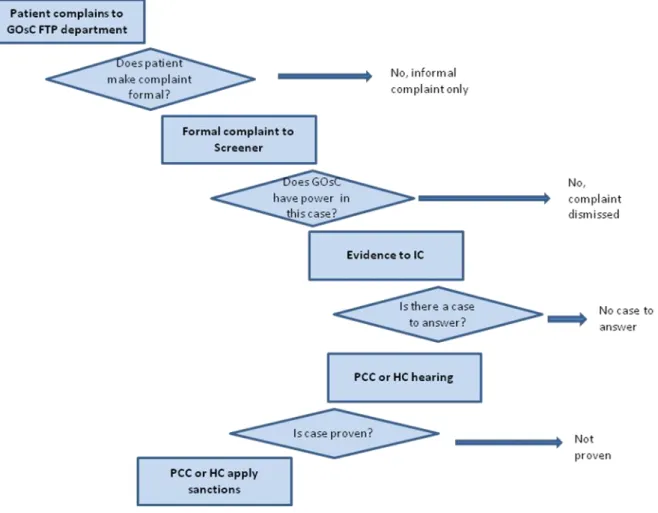
The process followed for complaints made to the General Osteopathic Council (GOsC) is described more fully in Appendix 3. In brief, complaints made to the GOsC follow the path on the right side of Figure 1.2. Initial contact from patients or other agents who are considering whether to make a formal complaint about an osteopath are recorded by the GOsC, provided the osteopath is identified by the complainant. These records are termed ‘informal complaints’ within this project. A member of the GOsC Regulation team will speak with the complainant and provide information on the formal complaints process; a Making a Complaint Form will be provided should they wish to pursue the complaint formally.
Formal complaints received by the GOsC are first considered by a Screener (an osteopathic member of the Investigating Committee (IC)), who determines whether the GOsC has the power to consider the allegations. The Screener will dismiss the complaint if it falls outside of the GOsC’s legal remit. If it is within the GOsC’s power to deal with the complaint, the case is referred to the IC and the osteopath will be notified of the complaint. The allegations are investigated and all relevant
evidence is gathered and put before the IC. The IC will then consider the complaint and decide whether there is a case to answer. Unless the IC decides there is no case to answer, it will refer the complaint to either the Professional Conduct Committee (PCC) or the Health Committee (HC) and the case is prepared for hearing.
22
If the allegations made by the patient involve criminal conduct that has been reported to the police, the GOsC will be notified of this by the police. If there are police investigations, the GOsC will generally delay its own investigations until the conclusion of the criminal proceedings. If the allegations raise immediate concerns for the protection of the public, the IC may convene a hearing to decide whether to suspend the osteopath’s registration on an interim basis whilst the police and the GOsC investigations are carried out. Criminal proceedings (central box in Figure 1.2) involve the police at an early stage; they gather evidence; the evidence is then passed on to the Crown Prosecution Service to decide whether there is sufficient evidence for the case to go to the Criminal Courts.
1.7 Confidential and Public Complaints
Some information about complaints is in the public domain:
all formal complaints to the GOsC that are found proven at a GOsC PCC hearing are reported in the GOsC annual Fitness to Practise Reports, which reveal the identity of the osteopath but not that of the patient;
formal complaints that are considered at an HC hearing are publicised only if the case is proven and there has been a restriction imposed on the osteopath’s practice of osteopathy that patients should be informed about e.g. conditions are attached to the osteopath’s practice or in the case that the osteopath is suspended;
all cases that go to court are public and reveal the identity of the osteopath; the identity of the complainant is also made public except in the case of sexual allegations.
There are many complaints that do not become public, including:
informal complaints made to the GOsC that are not pursued and formal complaints that are dismissed by the Screener: no-one but the patient may be aware of the complaint;
formal complaints made to GOsC that go to the Investigating Committee (IC) and where it is found that there is no case to answer: only the osteopath, their insurer and the complainant may be aware of the complaint;
23
formal complaints that go to a GOsC PCC hearing but are not found proven are not reported unless the osteopath requests that the GOsC publicises the decision. PCC hearings are, however, held in public and so information about the case will have entered the public domain;
formal complaints that are considered at an Health Committee (HC) hearing will be not reported unless restrictions are placed on the osteopath’s practice of osteopathy that patients should be informed about;
complaints made to an osteopath and notified to the insurer: only the insurer, the osteopath and patient may be aware, unless the case goes to court.
Many complaints of the above types may have extensive documentation held by the GOsC or the insurer. These case files are likely to contain highly sensitive personal data including copies of medical records. Access by researchers to such data would, for ethical reasons, require permission from both parties involved – the osteopath and the patient.
Statistics are routinely published only for complaints heard by the GOsC conduct committees.
The purpose of this research was to focus on complaints brought by patients against osteopaths, but it should be remembered that complaints against osteopaths may be brought by other agents, including individuals who are not patients, by organisations, or by the Registrar.
24 CHAPTER 2 LITERATURE REVIEW
2.1 Introduction and Methods
The purpose of the literature review was to: 1. Set the context for this study;
2. Collect and summarise evidence relevant to complaints against osteopaths; 3. Estimate the trends in complaints within healthcare, from published data.
2.1.1 Scope of the review
This research was patient-oriented. It was concerned with complaints made by patients against osteopaths. Complaints against osteopaths made by other health professionals or agencies such as the police were excluded. All types of complaint were considered, reflecting the osteopathic Code of Practice (General Osteopathic Council 2005) which covers the conduct of the osteopath in relation to:
Duty of care Personal standards Contract with the patient
Personal relationships with the patient Access to records
Fees
What the law requires The work environment
Examining and treating intimate areas Financial and commercial activity
Problems with the health of the osteopath What to do if trust breaks down
Data protection
Legal limitations on what an osteopath can do Practice information
25
For the purposes of the literature review, it was useful to distinguish between complaints and claims and adverse events (such as side effects, damage or harm, which a patient may or may not complain about), simply because the published literature on adverse events is extensive. In contrast, the relevant literature on complaints and claims in manual therapies is scant, and found mainly in grey
literature, such as the annual reports of professional regulatory bodies. As this study was the first to investigate this topic within osteopathy, the literature review attempted to cover all relevant published information, which fell broadly into three areas:
statistics on frequencies of complaints, claims and adverse events; evidence on why patients complain; and published information about the principles of effective procedures for considering/investigating patient complaints.
2.1.2 Search Strategy
A wide ranging search for published evidence about complaints against health professionals was conducted on research databases (PubMed, Science Direct, Medline, EMBASE, CINAHL and Psychinfo), as well as using the internet search engine, Google, and professional websites. A variety of search terms were used including synonyms for osteopaths, chiropractors, physiotherapy, patient complaints, malpractice, adverse events, conduct and patient safety. A systematic search proved difficult, because “patient complaint” is an ambiguous term that yielded mostly presenting symptoms, rather than dissatisfaction. “Malpractice”, which is the Mesh term for medical negligence, produced thousands of papers but none within manual therapies. “Patient safety” yielded mainly papers about surgical risk or acquired infection. “Adverse events” papers were mainly about iatrogenic risk estimation or reporting/ detecting systems, rather than patient complaints. However, a number of relevant, recent papers were found; and leads from their bibliographies and related articles were followed up, yielding the literature reviewed here.
2.2 Frequency and trends in complaints in manual therapies
In order to set osteopathy within the context of other UK health professions, statistics on the rates of complaints were extracted for both osteopathy and selected comparable professions, from data published by their regulators. All the statistics presented below
26
relate to complaints made by patients. Complaints made by other agencies such as health professionals, employers or other organisations were excluded as far as possible. Rates have all been standardised to numbers of complaints per 10,000 practitioners per annum to facilitate comparisons.
The frequency of patient complaints concerning osteopathy was found within the reports from the General Osteopathic Council (GOsC): GOsC annual Fitness to Practise reports from 2001 to 2005-06, and the Annual Reports for 2006–07 and 2007–08, available on the GOsC website.
The GOsC reported 18-35 formal complaints each year, with no clear trend since 2001 (Table 2.1). In recent years about half of complaints were found to have “no case to answer”. The total number of registrants (i.e. registered osteopaths) was extracted from the published Registers in order to compute the rate of formal
complaints which ranged from 47 to 100 (mean=68) per10,000 registrants per annum. These figures mean that each year, a formal complaint is made against up to 1% of the profession, half of which will go to formal Committee hearings.
The Osteopaths Act 1993 classified the type of complaint under one of four
categories: Unacceptable Professional Conduct, Professional Incompetence, Criminal Conviction or Health. The reports from the GOsC Fitness to Practise Committee report on complaints in these categories, as well as reporting how the allegations relate to the profession’s Code of Practice (General Osteopathic Council 2005). In 2005–06, the GOsC reported 35 complaints; most included several problem areas within the Code of Practice, the most common areas being duty of care (28, 80 %), communicating with patients (24, 69%), relationships with patients (19, 54%), complaints procedures (17, 49%), and consent (11, 31%).
27
Table 2.1 General Osteopathic Council statistics on formal complaints 2001 2002 2003 2004-05 2005-06 2006-07 2007-08 Formal complaints 21 33 22 27 35 18 23 Found to have a Case to answer 4 16 6 12 15 11 14 % with case to answer 19% 48% 27% 44% 43% 61% 61% Total Registrants* 3089 3300 3452 3610 3731 3845 4016 Rate of complaints** 68 100 64 75 94 47 57
* GOsC Statutory Register of Osteopaths – annual data; ** Rate per 10,000 registrants
The figures from the General Chiropractic Council (GCC) annual reports (Table 2.2) suggest that the rate of formal complaints to the GCC range from 173 to 324 (mean of 211) per 10,000 per annum, about three times higher than that to the GOsC in the same period. A somewhat lower proportion of complaints had “no case to answer”.
Table 2.2. General Chiropractic Council statistics from Annual Reports 2003-04 2004-05 2006 2007 2008 Number of complaints 22 76 64 46 43 No case to answer (%) 11 (50%) 21 (28%) 29 (45%) 16 (35%) 16 (37%) Total Registrants - 2349 2340 2437 2489 Rate of complaints** - 324 274 189 173 ** Rate per 10,000 registrants
28
The chiropractic profession has also conducted some research on claims arising from complaints. A review of 204 malpractice claims to one indemnity insurer (MIA) over a five year period between 1997–2001 (Norman and Thiel 2003) showed that the vast majority were related to treatment rather than conduct. Some 32.8% involved adverse effects of treatment, 28.5% involved negligent/ inappropriate treatment, 21.6%
involved ineffective treatment and 6.4% involved wrong diagnosis. While the
numbers of claims per year suggested only a slight year-on-year increase, there was a steep upward trend in the proportion of adverse effect claims from 12% in 1997 to 43.5% in 2001.
The Health Professions Council (HPC) is the statutory “umbrella” regulator for a number of allied health professions. The HPC covers currently 15 professions including physiotherapy, the largest of the health professions and the most closely comparable to osteopathy. Complaints about the 15 professions are reported in the HPC Fitness to Practise Reports (Health Professions Council 2007). Note that the HPC reports allegations received in a given year, whereas the GOsC reports on cases considered by the IC, PCC and HC committees in a given year. A second difference is that only about one quarter of allegations to the HPC comes directly from members of the public; many come from employers, for example 39% for the period 2002-05. These employer complaints were excluded, even though some represent complaints made by patients to the employer; even if they were included, the rate of overall complaints to the HPC (Table 2.3) appears somewhat lower than the rate to the GOsC. By profession, the rate of allegations between April 2005 and March 2008, per 10,000 registrants per annum, was 16 for occupational therapists, 20 for physiotherapists, and 31 for podiatrists. The highest rate in the HPC was for paramedics at 69. The
physiotherapy rates were considerably lower than those for osteopathy and chiropractic (20, 68 and 211 respectively per 10,000 per annum).
The difference may in part arise because most physiotherapists are employed by the NHS; or because HPC statistics were affected by organisational factors. It is a relatively new regulatory body and the increase in complaints it received over time may have been in part due to increasing public awareness of its existence, and in part due to the steadily increasing number of professions it regulates. There was also an increase over time in the proportion of allegations found to have a “case to answer”, which was 44% in 2004-05, 58% in 2005-06 and 62% in 2007-08.
29
Table 2.3 Health Professions Council statistics from Fitness to Practise Reports, for all the professions on the register (white) and for physiotherapists (blue)
2002-03 2003-04 2004-05 2005-06 2006-07 2007-08 Allegations received 70 134 172 316 322 424 % allegations from the Public
- 21% 17% 22% 24% 25% Number of Registrants 144141 144834 160513 169366 177230 178289 Rate of complaints 5 9 11 19 18 24 Physiotherapy allegations - - 35 79 52 85 % from the public - - - 20% 46% 39% Number of physiotherapists - - 35620 40037 40670 42676 Rate of complaints - - 10 20 13 36
Dentists are comparable in some ways to osteopaths – most practitioners work within private practice. The statutory regulator, the General Dental Council (GDC), registers over 36,000 dentists (almost ten times the number of osteopaths) and handles
complaints about dentists’ fitness to practise.
In 2008, the dental regulator (GDC) reported on 898 complaints, 52% from patients, of which 164 (18%) were referred for formal public hearings. The rate of complaints of (898/36281) or 248 per 10,000 per annum was similar to the GCC (chiropractic) figures above. However, there are differences between the fitness to practise
procedures of the regulators, which may affect the statistics; the GDC operates a two-stage process, with the Investigating Committee able to apply mild sanctions, dismiss or refer for a committee hearing. A rate based on their 164 public hearings (45 per 10,000 p.a.) may offer a more valid comparison with the rates of other regulators. The hearings of the Professional Conduct Committee resulted in serious sanctions for
30
most: erased (23%), suspended (23%), conditions of practice (23%), admonishment (13%), the remaining few percent being concluded or postponed.
2.2.1 Complaints made locally about health care services
The rates published by the various regulators represent only one part of the picture. Many complaints are made locally within the services. These data were not available for osteopathy, but were available for some other professions.
The majority of the allied health professions (under the HPC) are employed within the NHS, where the complaints procedures encourage patients to make their complaints locally to the manager/ employer. The statistics for such NHS complaints were sought; data that were directly comparable to those from the HPC were not found, but the numbers of written complaints, by profession, within the NHS in 2008-09 were published (The Health and Social Care Information Centre 2009). There were 4,056 complaints within the NHS for professions allied to medicine, and 2541 for
ambulance crews, a total of 6,597, some fifteen times the number (424) lodged with the HPC in the same period. These “service” complaints were mainly resolved locally, 73% within the time limit of 25 days. The nature of the complaints made locally within the “service” may well differ from the complaints made to the
regulator. The topics of complaints were not published by profession; but for all NHS complaints in total, the main topics were aspects of clinical treatment (41%), attitude of staff (13%), appointment delays (11%), and communication / information for patients (written or oral) (10%). Not surprisingly, these figures are dominated by complaints against the largest professional groups, doctors and nurses, who had 45% and 22% of all local complaints, respectively.
In 2006, the GDC established an independent Dental Complaints Service (DCS) to handle “local” complaints about service and care within private practices. In 2008–09 the Dental Complaints Service handled 11,485 calls on their hotline, of which 1,870 (11%) were lodged as complaints. The rate of local “service” complaints was thus about 1,870/36,281, about 515 per 10,000 registrants per annum, some eleven times higher than the regulator’s public hearings, above. A proportion of the dental
profession works within the NHS, and the NHS complaints statistics (The Health and Social Care Information Centre 2009) showed 908 written complaints against dentists,
31
increasing the number of service complaints to 2778, some 17 times higher than the “regulator” complaints.
The speed of resolution of local complaints tends to be much faster. For example, over two-thirds of the “service” dental complaints were resolved within a week, either within the practice or with the help of a member of the DCS staff. Only 8 required a hearing before the DCS panel. The speed of the fitness to practise processes of the regulators is typically much slower, for example the average wait for a GDC hearing was over one year, at 75 weeks.
The outcome for the majority of local dental complaints was a refund of fees (57.6%) or an explanation (28%), while a small number of complainants receiving an apology (6.4%) or a contribution towards treatment costs (7.9%).
2.2.2 The effect of the complaints procedures on the published statistics
The intention of complaints procedures within health services is that most complaints should be handled and resolved locally. As the CHRE makes clear
(http://www.chre.org.uk/policyandresearch/ ), the regulatory bodies are not complaints-handling bodies. The regulatory body’s systems are intended to assess fitness to practise of practitioners who may harm patients, in order to protect the public, not to resolve the complaint on behalf of the patient. Two types of complaints systems exist, fulfilling different roles. However, there is overlap between the two systems when registrants are self-employed: the CHRE recognises that the regulator may then handle less serious cases as well as those where there is a threat to public safety. Where the majority of registrants are employed by the NHS, for example the professions regulated by the HPC, there is a clear framework for dealing locally with complaints about the service. The effect of these organisational differences on the rates of complaint, and the routes of complaint, may be substantial.
The introduction of the 2009 report “Listening, responding, improving” (Department of Health 2009) aimed to provide patients with a clear and simple route for
complaints. The impact of this policy may mean even more complaints are elicited and, because of the new structures for independent local resolution of complaints, possibly fewer complaints made to the regulator. In fact, the General Medical Council (GMC) website (November 2009) specifically states that complaints should
32
be resolved locally, except where the patient thinks that the doctor is unfit to practise or is a risk to patients. For professions such as osteopathy, working predominantly in small private practices, local resolution is more challenging, which may mean that a higher proportion of non-serious complaints go to the regulator.
2.3 Frequency of adverse events in manual therapies
Adverse events are only sometimes reported by patients, either as a complaint or as feedback to the practitioner; they may also be reported by other healthcare providers via the medical “yellow card” system – for example, when a doctor assesses the possible causes of a stroke or cerebrovascular accident, or they may emerge in a systematic retrospective case-note review. Most of the literature on adverse events attempts to ascertain them as completely as possible.
Adverse events in healthcare are undoubtedly under-reported. Sari et al. (Sari, Sheldon et al. 2007) found that in a case-note review of 1006 admissions to a large NHS hospital, 110 (11%) of the case notes revealed incidents involving patient harm. Only 5% of these incidents were detected by the routine incident reporting system. Vincent et al. (Vincent, Neale et al. 2001) found a similar rate of 11.7% of patients experiencing adverse events in two acute NHS hospitals, through a case-note review. Half of the events were judged to be preventable, and one-third were moderate or serious events, including death.
The evidence about adverse effects related to osteopathy is currently limited to the effects of spinal manipulation, with the exception of one study on cranial approaches to treatment (Greenman and McPartland 1995; McPartland 1996). The evidence is based on studies in which the manipulation has been carried out by any one of a variety of healthcare professionals (e.g. chiropractors, medical doctors and
physiotherapists) and the methodologies are weak, being mainly surveys, case reports and case series (Gibbons and Tehan 2006; Leach 2006; Snelling 2006; Ernst 2007; Lucas and Moran 2009). Papers by Gibbons and Tehan (Gibbons and Tehan 2006) and Carnes et al. (Carnes, Mars et al. 2010) provide a good overview of the current evidence on risks. Several strong messages emerge. The risks are extremely low. High velocity low amplitude (HVLA) thrust techniques are considered more dangerous than non-impulse techniques. The two most serious complications are
33
stroke/vertebrobasilar accidents (VBA) following neck manipulation and cauda equina after lumbar manipulation. The risk of stroke appears to be about 1 in 500,000 (or 0.00002%) and may be even lower. This can be compared with the risk of serious gastric complications from prolonged use of non-steroidal anti-inflammatory drugs (NSAIDS), which may be as high as 1 in 1,000 (Stevinson and Ernst 2002).
Mild adverse events such as pain and stiffness after manual therapy are common: in a teaching clinic (Rajendran, Mullinger et al. 2009) 93% of participants reported an “additional effect of treatment” at some point in the first 7 days after treatment; 96% of these were rated as mild or moderate. The most common were transient pain (83%); stiffness (47%), headache, tiredness and light-headedness, most commonly at 2 days after treatment. 15% reported their effects as severe at some point during the week. Mild effects such as headache, stiffness, local discomfort, radiating discomfort and fatigue occur in between 30% and 61% of all patients (Ernst 2007; Carnes, Mars et al. 2010).
Mild adverse effects of chiropractic care were included in an investigation of
outcomes of treatment for neck pain (Rubinstein, Leboeuf-Yde et al. 2007) in a cohort of 529 patients experiencing 4891 consultations. Fifty-six percent of patients
recorded an adverse event of some kind, of which 13% were severe. About three-quarters of such after-effects were musculoskeletal or pain-related.
The Australian manipulative physiotherapists conducted a survey about risk and adverse effects in treatment of the cervical spine (Magarey, Rebbeck et al. 2004). The results of the survey showed wide use of cervical thrusts (84.5%) and passive
mobilisation (99.8%). Mild adverse effects such as dizziness occurred at a rate of about 1 per 50,000 thrust procedures and, surprisingly, were equally frequent with passive techniques.
Comparisons between the above studies are hampered by the lack of standard definitions for mild, moderate and serious adverse effects within manual therapies. Using a Delphi study, (Carnes, Mullinger et al. 2010) attempted to develop a standardised terminology using a panel of experts from various healthcare
professions. Classification as minor, moderate or major depended on the severity of the effects (mild, moderate, severe), the duration of the effects (short to long term) and the nature of the effects. The consensus taxonomy, once validated by users, will
34
be useful for classifying adverse events as minor/not adverse, moderate or major in the future.
2.4 Trends in complaints in the NHS
There has been a steep increase in medical negligence litigation since the mid 1980s. One commentator (Harpwood 2001) reported that the number of claims in England doubled between 1983 and 1987; the costs quadrupled between 1976 and 1985; there was a 36% increase in the cost of negligence claims in 2000; and the general rise in the number of claims and the level of damages awarded may represent the growth of a “compensation culture”. Another factor may be the high risk of iatrogenic effects of modern medicine (Vincent, Neale et al. 2001): an estimated 1 in every 14 NHS in-patients suffers an adverse event (Harpwood 2001).
Harpwood (Harpwood 2001) proposed that the hidden agenda behind clinical
governance, with its drive to promote clinical audit and clinical risk management, was to manage the rise in healthcare claims and costs. Increasingly, clinical protocols and practice guidance set out more clearly the standards for medical care, so that
negligence hearings have becoming better defined.
2.5 Why do patients complain?
There is a small amount of published research exploring why complaints occur, most from recent years. None relates to osteopathy. A small number of clinicians generate a disproportionate share of malpractice complaints (Hickson, Federspiel et al. 2002; Stelfox, Gandhi et al. 2005). Low patient satisfaction almost doubled the risk of malpractice lawsuits against physicians in one large teaching hospital in the USA (Stelfox, Gandhi et al. 2005). Rates of complaints were highest for surgeons and seemed to be correlated with the number of prior complaints (Hickson, Federspiel et al. 2002); this review suggested that the risk of complaints was not correlated with patient characteristics, illness complexity, or even physician technical skills. Rather, it was related to the physician’s ability to establish rapport, to be accessible to patients for queries, to administer care consistent with expectations, and to communicate effectively. A recent paper reported that certain patient characteristics were predictive of complaints (Wu, Lai et al. 2009); in a well conducted case-control study in
35
Taiwan, the occurrence of an in-patient complaint was higher for admissions as an emergency, and for patients living in urban rather than rural areas. Compensation (money paid after mediation) was more likely the greater the severity of medical injury.
2.6 Legal and ethical aspects of complaints handling
The legal and ethical principles governing the handling of patients’ complaints have shifted over the past three decades. The changes in the legal and ethical principles have had profound effects not only on attitudes of health care professionals and patients, but also on the systems and processes for handling complaints – and hence on the complaints statistics.
The key milestone in this shift in attitude (Heywood 2010) was laid by Lord Woolf, as the Lord Chief Justice, who introduced the “Access to Justice” report in 1996 (Lord Woolf 1996; Mayberry 2003). This landmark report was designed to revolutionise the civil justice system. It recommended that patients, their advisers and their healthcare providers, should work together more closely to try to resolve disputes cooperatively rather than proceed to litigation. He specifically recommended a pre-action protocol for medical negligence cases, as a way to reduce costs and delays. The protocol encouraged openness and information, timeliness and making both sides aware of their options, with the aim of restoring the patient–healthcare provider relationship. The Woolf reforms have been criticised (Genn 2010; Heywood 2010), as the costs of litigation remain high, yet they have had far-reaching effects.
Complaints within the NHS are now viewed as an active component of the culture of improving healthcare (Department of Health 2009; Parliamentary and Health Service Ombudsman 2009). The emphasis in the NHS (NHS Choices 2009) has shifted towards a more open system which is less threatening to clinicians and encourages local reporting and resolutions of complaints. A responsible healthcare provider has a duty to assist patients in making a complaint if they have a grievance. Similarly, in 2006 the regulator for the dental profession, as noted above, set up an independent Dental Complaints Service to facilitate local resolution of all complaints except those about fitness to practise (Dental Complaints Service 2009).
36
Practitioners need support and training in order to deal effectively with complaints, whatever the size of their organisation. Local resolution is challenging, requiring skills to support patients in making their grievances known, or to deal effectively with angry or emotional patients. A Californian team (Virshup, Oppenberg et al. 1999) has designed a tool to train clinicians in how to cope with the anger that a patient may express in complaints. This comprises tools for self-evaluation and for strategic risk management. Practitioners need education in order to understand patients’
expectations, to ensure they communicate well with patients and improve patient satisfaction, possibly as part of ongoing professional development (BOA British Osteopathic Association 2009).
Safety and quality of health care has an increasingly high profile. Routine incident (adverse event) reporting systems have become the cornerstone of patient safety improvement and quality of care programmes (Meyer, Battles et al. 2003), with occasional case-note review as a useful addition.
Adverse events and complaints can be used as a learning tool for practitioner education. The UK chiropractic profession developed and piloted in 2005 a “reporting and learning system” for reporting patient safety incidents (Thiel and Bolton 2006). Unfortunately, despite intensive communication with the profession, the rate of returns from the 1100 practitioners invited to participate was disappointing, with only seven practitioners sending in reports of incidents in a 4-month period. The reporting system was subsequently christened “PIRLS” and adopted for routine, voluntary use by the College of Chiropractors, an academic organisation; however, the relationship with the professional association is unclear. At present there is no routine reporting system for adverse events in osteopathy, and complaints against practitioners are not fed back to them routinely for reflection. A prospective self-reporting system for osteopathic patients has recently been piloted in the European School of Osteopathy’s training clinic (Rajendran, Mullinger et al. 2009).
37
CHAPTER 3 ACCESS TO DATA ABOUT COMPLAINTS
3.1 Cooperation
The research critically depended on access to the data on complaints that were held by five organisations closely involved with the osteopathic profession – the GOsC and the four providers of professional indemnity insurance – that all provided data; and on the same five organisations together with the professional association, the BOA, that made staff time available for interviews and discussion. The research team was fortunate to receive support from all six organisations. The insurers viewed the study as a positive step towards risk management.
3.2 Types of complaints data held within the organisations
The GOsC and the providers of indemnity insurance all held two types of data on complaints against osteopaths:
1 The Events Log File was a record of all complaints and “incidents” that might initiate a complaint. The file contained a few items of information such as the date of the initial complaining letter or phone call, name of insured osteopath, nature of complaint or claim and financial or other outcome. These files were mainly paper records, but the GOsC and Balens (which covered the largest number of osteopaths; they operated the BOA scheme during this period) had electronic records for recent years.
2 The Case Files were highly confidential, paper-based files associated with those complaints that progressed: each Case File contained all the documents for the case, including correspondence, any legal, court, or hearing documents, and other information such as copies of medical records.
The Events Log Files could readily be anonymised, and did not reveal sufficient detail of the complaint to permit identification of the complainant or the osteopath. These files provided sufficient detail to permit a quantitative analysis of frequencies and trends.
38
However, access to samples of text from the Case Files (our original proposal in order to gain understanding about why patients complain) posed ethical problems. Even if the documentary data provided for the study were totally anonymised, the narrative could potentially reveal the identities. Even if an interpretive analytical approach were used, access to the documents would require informed consent from the patient and osteopath; because of the risk that the subjects or others could recognise the narrative as their own story (see Appendix 5 for more details). In order to obtain ethical approval, access to the Case Files would need to be justified in relation to the Data Protection Act and Human Rights legislation.
Documentary analysis of a small sample of the case files was therefore not possible within the timescale of the project, particularly as we considered that it could be intrusive to request consent from patients for retrospective events. We therefore amended our initial plan for gaining insight into why patients complain, and proposed a series of interviews with staff who had experience of dealing with complaints within the participating organisations. We felt that this methodology was more suitable for the pilot nature of this project, as the interviews would provide a broader perspective and overview than the documentary analysis, and this approach was approved by the Steering Group.
3.3 Protocol for the study
The protocol comprised four stages as outlined here:
Stage I: Literature Review on complaints and claims within manual therapies, and reasons why patients complain. Further details are given in Chapter 2.
Stage II: Development of a Classification Scheme to describe the type of osteopathic complaints. Further details are given in Chapter 4.
Stage III: A quantitative analysis of the collated complaints data from the participating organisations’ Events Log Files, to obtain statistics on frequencies of complaints by type, year and organisation from each supplier. Further details are given in Chapter 5.
39
Stage IV: A qualitative interview study to gain understanding of the nature of complaints; a series of interviews was conducted with purposively selected key individuals in the regulatory body, the indemnity insurers, and the professional body (BOA). Further details are given in Chapter 6.
A Gantt chart showing the timescale for the different stages during the 12 months of the project is shown in Appendix 4.
3.4 Ethics approval
Ethics Approval and Research Governance Approval were granted by the University of Brighton, Faculty of Health and Social Science, Faculty Research Ethics and Governance Committee. Further details are included in Appendix 5.
3.5 Access to the data
Five organisations – the regulator (GOsC), and four providers of indemnity insurance to osteopaths: Balens, Howden, Towergate-MIA, and Three Counties – were
approached formally (see Appendix 8 for copies of the letters used within the study) with a request to release anonymous data on all complaints or incidents over the past 5-10 years for Stage II and III of the study. Further details of the organisations and the data held in their Events Log Files are given in Appendix 6.
Balens converted all of its paper records on initial complaints in 2004-2008 to electronic format specifically for this study and was able to supply most of the data items required for the study. Howden and Three Counties supplied records of each event on paper. Towergate MIA had continued concerns over confidentiality and supplied minimal details.
The organisations were also approached formally to request the collaboration of key individuals in interviews with a researcher for Stage IV of the study. The British Osteopathic Association (BOA) was also approached, because of its role in advising osteopaths about how to respond to complaints.
40
CHAPTER 4 DEVELOPING A CLASSIFICATION SYSTEM FOR CODING TYPES OF COMPLAINT
4.1 Aim
No common standard of classification for osteopathic complaints existed at the start of this study. Complaints were categorised differently within the various
organisations, making collation of the data very difficult. In order to conduct
quantitative analysis to observe patterns, changes and trends over time and over type of complaint, a common system for classification and coding was required. As guiding principles, we considered that it was important to develop a classification that:
was reasonably detailed;
created clearly defined categories that were usable by all the participating organisations;
distinguished complaints according to their basis in law; related to the words patients use when they complain; related to the professional code of practice for osteopaths.
4.2 Methods
The development of the classification system used a form of Focus Group methodology, with the Steering Group acting as a Consensus Panel and Nominal Group during repeated rounds of drafting, review, testing and re-drafting (Ritchie and Lewis 2003). The Steering Group was a multi-disciplinary expert panel with legal, professional, academic, and patient stakeholder expertise.
The Research Team developed the initial draft classification, drawing on the literature review and the data within the Events Log Files from the insurers and the GOsC. The GOsC’s Professional Conduct Committee’s disciplinary hearings reports, and the Code of Practice which sets out the standards of conduct and practice expected of an osteopath, were also sources of data. The researchers used a bottom-up approach, using the wording of actual complaints as a starting point, so that the classification
41
arose as far as possible from the words used by patients. For each proposed category of complaint, sample illustrative quotes were taken from the Events Log Files. Each version of the proposed classification was presented to the Steering Group for discussion. The categories were amended and then reviewed again in an iterative process through several drafts until a final form of the classification was agreed. The final classification was tested by the researchers: it was used to classify all the (anonymous) complaints data which the organisations provided as mainly free text extracts from their Events Log Files. A small number of final modifications and refinements to the classification were made in liaison with the Steering Group.
4. 3 Results
The final “NCOR3” classification system is shown in Table 4.1a, which shows complaints related to Conduct and Communication, Table 4.1b, which shows complaints related to Clinical Care, and Table 4.1c, which shows complaints related to other issues. In each table, the first column is the new proposed standard for Complaint Type; the terms are related closely to the GOsC’s ‘Code of Practice’. The second column (Incidents) contains the main issues or incidents cited by patients as causes of complaint. The third column, Potential Legal Action, shows the most likely legal action that might be pursued following a severe complaint in each group. The fourth column provides some illustrative quotes from the anonymised Events Log File from the GOsC.
In each category, there is a spectrum of severity. If any complaint is severe, then it may be referred to the police with a view to a criminal case, as appropriate, and subject to their further investigation.