RESIDENT PERSPECTIVES ON THE IMPACTS OF SCARCITY OF PRIVATE WELL WATER AT IRONGATE DRIVE, APEX, NC
Sydney Lockhart
A thesis submitted to the faculty at the University of North Carolina at Chapel Hill in partial fulfillment of the requirements for the degree of Master of Science in the Department of Environmental Sciences and Engineering in the Gillings School of Global Public Health.
Chapel Hill 2019
Approved by:
Jacqueline MacDonald Gibson
Jill Stewart
iii ABSTRACT
Sydney Lockhart: Resident perspectives on the impacts of scarcity of private well water at Irongate Drive, Apex, NC
(Under the direction of Jacqueline MacDonald Gibson)
Bordering the wealthy town of Apex, North Carolina, is a majority African-American
neighborhood, Irongate Drive, that does not have town water service and instead relies on
private wells. Residents have long sought access to town water as their wells are running dry.
However, their problems have not been systematically documented. Using a comprehensive
survey and qualitative interviews, this study assesses the frequency of water shortages,
uncovers the effects on daily lives, and reports on water source preferences. I found that 80% of
households have water quantity problems. Respondents reported not having enough water to
cook, flush toilets, shower, wash hands, or do laundry. Annual well maintenance costs averaged
$1,405 and ranged up to $20,000; additional costs included paying for laundromats and paper
plates. More than 75% actively seek municipal water, and none oppose it. These results could
inform assessments of impacts of water access disparities in similar peri-urban communities
iv
TABLE OF CONTENTS
LIST OF TABLES………...….v
LIST OF FIGURES………....vi
LIST OF ABBREVIATIONS……….vii
CHAPTER 1: INTRODUCTION………...……….1
CHAPTER 2: METHODS………...………...6
CHAPTER 3: RESULTS………..11
CHAPTER 4: DISCUSSION………25
CHAPTER 5: CONCLUSION………..27
APPENDIX 1: SHORT FORM SURVEY………...29
APPENDIX 2: INTERVIEW GUIDE………...33
v
LIST OF TABLES
Table 1 – Short Survey Example Questions………..7
Table 2 – Interview Guide Example Questions………..8
Table 3 - Characteristics of Irongate Drive Residents Versus Apex, NC Residents……….12
Table 4 - Summary of Responses to Short Form Survey Questions
vi
LIST OF FIGURES
Figure 1: A map of municipal and extraterritorial water systems
in Wake County, North Carolina with Irongate Drive circled within the map………3
Figure 2: A map of municipal water systems in Apex, North Carolina with Irongate Drive enlarged, showing that it is an extraterritorial jurisdiction without municipal water service………...4
Figure 3: An Irongate Resident standing next to the fire hydrant at the entrance to Irongate Drive……….5
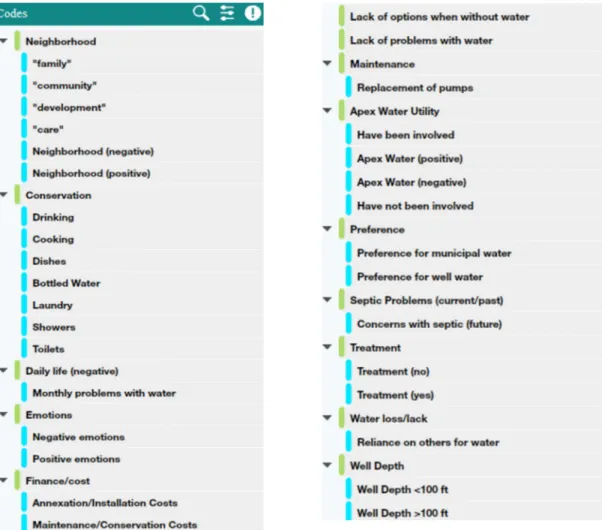
Figure 4: Sections of the qualitative research codebook used in coding excerpts of interviews……….10
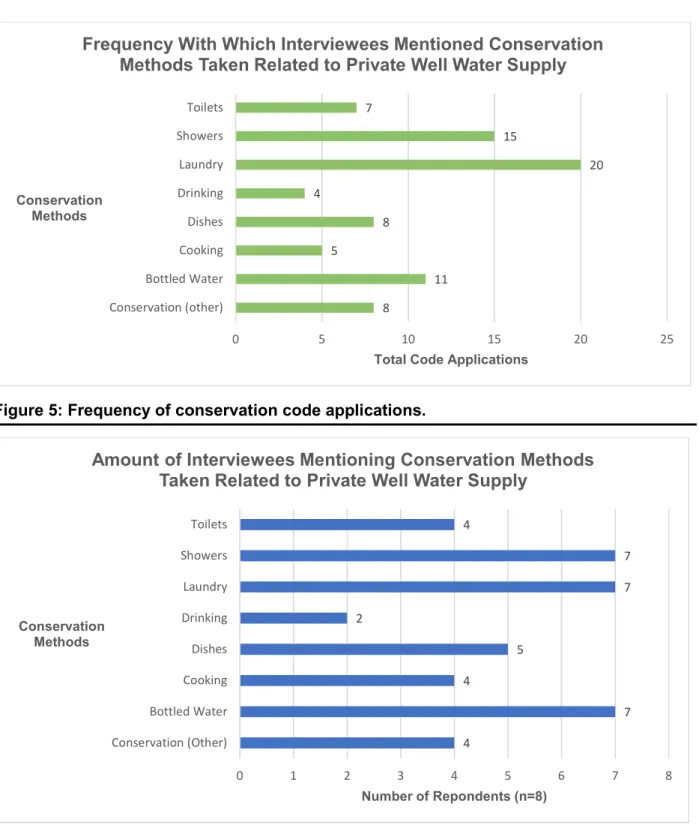
Figure 5: Frequency of conservation code applications……….17
Figure 6: Number of interviewees mentioning conservation methods……….17
Figure 7: Frequency of all conservation code applications per interview………18
Figure 8: Frequency of water quality perception code applications……….19
Figure 9: Frequency of cost code applications………21
vii
LIST OF ABBREVIATIONS
1
CHAPTER 1: INTRODUCTION
A half-century after the Civil Rights Act, institutional racism remains embedded in the
daily lives of minorities (Bailey, 2017). Residential segregation is one manifestation of this
institutional racism. While in the Northeast such segregation typically manifests as
concentrations of Black populations in inner cities, the spatial pattern of segregation is very
different in some nonmetropolitan areas of the South, where large Black populations may live
just beyond corporate borders (Aiken, 1987). Aiken termed this phenomenon “municipal
underbounding.” He noted that such areas may seek annexation into the neighboring
municipality, “only to be resisted by white-controlled city governments.” More recently,
Wilde-Anderson (2008) called such areas “cities inside-out,” writing:
On patches of unincorporated land at the municipal fringe, low-wage workers live
without water or sewage lines, sidewalks or paved roads, drainage or flood
control. Health and safety risks plague local water and soil, as communities rely
on rural-character services in urbanized areas built on environmentally damaged
or disaster-vulnerable land.
Such unincorporated, underbounded communities are not provided with the municipal services,
including connections to the town water and sewer systems, provided to those living within town
limits.
Several studies have identified underbounded communities in North Carolina. These
communities are located within areas called “extraterritorial jurisdictions (ETJs)”. ETJs are
defined as locations outside of the municipality over which the town retains zoning authority but
2
North Carolina, found an 85% to 95% African American population with limited access to
services, such as safe housing, sewer and water, and exposure to unhealthy land uses (Wilson,
2008). One study of ETJs in 75 North Carolina counties found that the odds of having
community water were 85% lower in areas with a 100% black population (Leker, 2018).
Additionally, Leker found that “peri-urban areas lacking service with no black residents were
wealthier than 100% black areas and areas with any percent black greater than 0%.” (2018)
MacDonald Gibson (2014) found that race was a statistically significant predictor of access to
water service in ETJs of Wake County, North Carolina. The study showed that the odds of
exclusion from municipal water service increased by 3.8% with every 10% increase in the
African American proportion of the population within a census block.
Multiple studies have found increased risks of drinking water contamination in
underbounded communities, in comparison to in areas with municipal water service. Stillo et al.
(2017) found that 35.6% of 171 households on private well water in underbounded areas of
Wake County, NC, had microbial contaminants in their water. The study attributed 22% of 114
annual of emergency department visits for acute gastrointestinal illness to the presence of these
contaminants. Heaney, Wing et al. (2013) looked at the drinking water contamination in an ETJ
in Orange County, North Carolina that bordered a landfill using 12 private well samples and 8
public water samples. When looking at water turbidity, fecal coliforms, and E.coli, they found
that all of the private well water samples exceeded at least one or more of the EPA’s national
primary drinking water standards compared to only one of their public drinking water samples,
which had a violation of turbidity.
While these previous studies have reported on water quality problems in underbounded
areas of NC, to our knowledge no prior research has examined problems of water quantity. This
study addresses this gap by documenting water quantity problems in an underbounded
3
with a predominantly Caucasian population. Apex has a 75% Caucasian population with a
median household income of $100,305 compared to the U.S. population, which has a 76%
Caucasian population and a median household income of $57,652 (U.S. Census). Irongate
Drive, a community of 24 houses, borders Apex on two sides (Figure 2). The Apex municipal
water line runs to the entrance of Irongate Drive and its fire hydrant is visible from several of the
houses but does not serve those houses (Figure 3). The neighborhood is generally low income
and predominantly Black (Table 3), and the homes all have private well water and septic
systems. Over the last several years, some residents have found their private wells running low
on water, yet no studies have been conducted to document these water quantity problems.
Figure 1: A map of municipal and extraterritorial water systems in Wake County, North Carolina with Irongate Drive circled within the map.
4
Figure 2: A map of municipal water systems in Apex, North Carolina with Irongate Drive enlarged, showing that it is an extraterritorial jurisdiction without municipal water
5
Figure 3: An Irongate Resident standing next to the fire hydrant at the entrance to Irongate Drive.
This research has four main objectives:
1. document the occurrence of water quantity problems in the Irongate Drive neighborhood, 2. understand how residents are impacted by water quantity problems,
3. determine residents’ perceptions of their private well water, and
6
CHAPTER 2: METHODS
The study operated in four parts: recruit households for an initial survey, recruit
households for an interview based on the survey responses, conduct interviews, and analyze
the results using qualitative research software.
Short Form Survey
The short form survey questions asked for background information on wells and septic
systems. Characteristics of the well, such as age and depth, along with sections on well testing,
demographics, and maintenance covered most of the survey (Table 1). This survey grew from a
previous survey created by Stillo et al. (in review) to understand well water testing in Wake
County, North Carolina. The original survey focused mainly on testing and contaminants and
was 20 pages long. Due to Irongate Drive’s problems with quantity and not necessarily quality of
water, the short form survey adopted for this study aimed to provide a baseline of information on
private wells rather than focus on health behaviors.
Two separate supplementary pages were included with each survey to accompany the
main form. The first was on household income; the city of Apex wished to receive data on
income to gain a better understanding of the financial state of the neighborhood when looking
for grant money to fund water line projects. The second asked for contact information and
gauged interest in participation in a one-on-one interview. The survey respondent was asked if
they would be interested in having someone contact them for a potential interview or for free
7 Table 1: Short Survey Example Questions
Water Quantity Cost
Does your well sometimes fail to provide enough water?
What do you give up when your well fails to provide enough water?
Do you have ways to store water for any times when your well does not provide enough?
Approximately how much do you spend every year to maintain your well, including any water treatment systems?
Approximately how much do you spend every year maintain your septic system? How much would you be willing to pay
toward getting town water and sewer systems?
Well Information and Treatment Annexation Do you have any treatment or filtration
system?
Have any of these contaminants ever been found in your water?
About how old is your well?
At this time, would you want to ask the town for annexation?
Septic Systems Demographic Information
Is your septic system currently causing problems?
Has your septic system ever overflowed into your yard or a neighbor’s yard? How often is your septic tank emptied, if
ever?
Gender Race
Age of household residents
Participant Recruitment
If residents responded to the survey showing interest in the interview, researchers
attempted to recruit them for the interview. Participants could choose either an in-person or a
phone interview. Residents were recruited by calling and emailing participants of the written
survey based on their given contact information, by distributing flyers, and through door-to-door
canvasing. Twenty five dollar gift cards were provided to participants to compensate them for
8 Table 2: Interview Guide Example Questions
Interview
The interview questions, often open ended, aimed to encourage participants to describe
their daily experiences and history with their private wells. Interviewees were asked about their
relationship with the neighborhood, their history with their wells, and what emotions were
evoked concerning certain aspects of their wells. Of 11 survey respondents that showed interest
in having an interview, 8 responded to recruitment methods and subsequently had interviews
conducted. In-person Interviews were conducted with a main researcher accompanied by a
Introduction Well Water Quantity
What do you want us to know about you? What would you like us to reveal about
you in discussing your story?
Is there anything you would like omitted?
Do you have problems with your well? How often have you not had enough
water for your daily needs?
How are your daily activities affected?
Community Septic System
How long have you lived in this community?
Do you have any strong memories associated with this neighborhood? Describe your relationship to this
community. What is this neighborhood like?
Tell me about your experiences with your septic system.
Your Well The Apex Water Utility
What feelings come up for you when you think about your well?
What is it like to have well water? How deep is your well?
Has your experience with your well changed over time? If yes, how?
What are your hopes and concerns for your water?
If you had a choice, would you like to have well water or city water? Why? What have you done so far, if anything, to
get connected to the municipal water system? Can you explain?
Well Water Testing Finance
Have you tested you well water in the past?
What kind of tests did you do?
How often do you think you should test your well?
How do you fell about the cost of your well?
How would you describe the finance of your well?
What feelings come up for you on this subject?
Well Water Quality Perception Closing Do you drink or cook with water from your
tap? Why or why not?
Have you noticed any unusual water tastes, smells, or looks?
Does anything else come to mind? What do you want to come out of this
9
research partner to reduce safety risks. This also allowed for research partners to watch the
interview process directly. Interviews were mainly conducted within the interviewee’s homes,
allowing for a more comfortable atmosphere. However, the interviewees had the option of a
phone interview. Seven interviews were conducted in-person and 1 interview was conducted via
phone. The main researcher recorded the interviews on both their phone and their laptop to
ensure adequate audio quality, though only one audio file from each interview was sent for
transcription. For phone interviews, only laptops captured audio. The phone audio used an
encrypted recording service, and both audio files from the laptop and phone were deleted from
the devices upon upload to the secure university OneDrive. The UNC institutional review board
approved this study (IRB study #18-1713).
Data Analysis
Surveys were analyzed for general information on well quality, well quantity,
demographic information, and preference toward annexation and municipal water systems. The
demographic data was compared to the data from the US Census of 2017 on the city of Apex in
North Carolina (n = 50,451). The researchers used a transcription service and a program called
Dedoose to transcribe and code data from interviews. The research team worked through all
transcripts to remove identifiers and check the quality of the transcriptions, making corrections if
needed. Dedoose allows the user to upload data in a variety of formats. Researchers can then
create a quick and usable codebook and analyze data effectively within an encrypted service
(Figure 4). The interview guide was separated into several sections: introduction, community,
your well, well water testing, well water quality perception, well water quantity, septic system,
the Apex water utility, finance, and closing. Within those sections, key words or topics were
identified for each topic and used as codes in Dedoose. Excerpts from interviews can be tagged
10
from analysis of the tagged excerpts were then used to draw conclusions about the Irongate
community’s main focuses in concerns to their private wells.
11
CHAPTER 3: RESULTS
Characteristics of Study Participants
Table 3 compares 21 survey participants within the Irongate Drive community who
completed the short form survey with data from the City of Apex. The proportion of
African-American participants (78.6%) was much higher than that of the city of Apex (8.6%).
Furthermore, the median age of household members was higher in the Irongate community
(35.9) than in the city of Apex (40.5). Homeownership, rather than renting, was also higher in
Irongate (90.5%) than in Apex (71.9%). The household income survey had 18 responses, giving
a median household income of under $60,000, lower than the median income for Apex
12
Table 3: Characteristics of Irongate Drive Residents Versus Apex, NC Residents Characteristic
Gender (%)
Study Participants (n = 23)
City of Apexa (n = 50451)
Male 43.5 48.1
Female 56.5 51.9
Other 0 0
Age of Household Residents
Study Participants (n = 66)
City of Apexa (n = 50451)
Median 40.5c 35.9
Race (%)
Study Participants (n = 22)
City of Apexa (n = 50451)
Native American 0 0.3
Black / African American 78.6 8.6
Asian / Asian American 0 7.4
Hispanic / Latino 7.1 7.3
White / Caucasian 14.3 74.2d
Other 0 2.9
Prefer Not To Answer 7.1 0
Number of People in Home
Study Participants (n = 21)
City of Apexa (n = 50451)
Median 3 2.8
Home Status (%)
Study Participants (n = 21)
City of Apexa (n = 50451)
Rent 9.5 28.1b
Own 90.5 71.9b
Household Income ($)
Study Participants (n = 18)
City of Apexa (n= 50451)
Median 54,000e 100,305
a2017 U.S. Census
bOwner-occupied housing rate
cAssumptions made for ages listed as ranges dWhite alone, not Hispanic or Latino
eU.S. Census Bureau method used
13
Table 4: Summary of Responses to Short Form Survey Questions Surveyed from Irongate Drive, Apex, NC
Interview Question Statistic Minimum Maximum n
Well Characteristics
Mean well age (yrs) 27.4 + 15.1 0.6 (7 mos.) 55 19
Failure of Well Water Quantity
More than once a year 60% - - 20
Once a year 5% - - 20
Once every __ Years 15% - - 20
Never 20% - - 20
Water Treatments
Yes 38.1% - - 21
No 47.6% - - 21
Don’t Know 14.3% - - 21
Well Water Contaminants Found
Yes 29.4% - - 17
No 11.8% - - 17
Unsure 58.8% - - 17
Annual Well Maintenance
Mean well maintenance cost
1405.3 ±
4396.0 0 20000 19
Municipal Water
Want town water 76.2% - - 21
Unsure about having town
water 14.3% - - 21
Do not want town water 0.0% - - 21
No Response 9.5% - - 21
Willing Municipal Water Payment
Mean payment for upfront for installation
722.1 ±
1142.6 0 1700 16
Mean payment for water bill 24.9 ± 21.1 0 62.5 17
Annexation
Want annexation 61.9% - - 21
Do not want annexation 0.0% - - 21
Unsure about annexation 9.5% - - 21
14 Short Form Survey
Water Shortages and Impacts
Of 20 respondents, 12 reported that their private well failed to provide enough water
more than once a year (60%), 1 reported their well as failing once a year, 3 reported theirs as
failing once every 3 years, and 4 respondents reported that their private well had never failed
(Table 4). Some of When asked which services respondents would give up when their wells
failed to provide enough water, many answered that they would lose the ability to cook, flush
toilets, or shower. In response to an open ended question, one respondent said that their
household members would not be able to use their bathroom, and they would be “giving up
everything.” More than half of the respondents reporting using bottled water or gallon jugs when
there is not enough water to use from the private well. In regards to personal hygiene,
participants were asked how they washed their hands when there was a lack of water. Twelve
of 17 participants responded that they used bottled water to wash their hands, and 5 stated that
they use hand sanitizer or wet wipes. Additionally, one respondent said that they simply don’t
wash their hands without water, and one stated that they used a gas station. This implies a
potential health risk surrounding well water shortages in this community.
Water Quality
Around half (47.6%) of respondents reported not having some sort of water treatment,
and many were unsure of what treatments they had if any (38.1%) (Table 4). Many were unsure
of what, if any, contaminants were found in their wells upon testing (58.8%). The age of wells
varied between half a year and 55 years old with a mean age of 27.4 years. Nineteen
respondents gave annual maintenance costs of wells, which varied greatly, between $0 and
15 Municipal Water and Annexation
Of 21 respondents, 16 wanted to have their community on the municipal water supply
(76.2%). Some did not have a response (9.5%), but no respondent did not want municipal
water. Of those who had unsure responses, they commented that they would like municipal
water “if necessary.” Annexation showed similar patterns, with no respondent rejecting being
annexed to the town of Apex. Thirteen wanted to be annexed to the town (61.9%), but there
were also a high number of blank responses to this question (28.6%) (Table 4).
Willingness to Pay for Municipal Water
Some respondents (4) were hesitant to provide rough estimates on how much they were
willing to pay for a municipal water system or annexation despite their desire for city water.
Sixteen respondents were willing to pay a mean of $722.13 upfront for municipal water
installation and 17 respondents $24.94 monthly for a water bill (Table 4).
Semi-Structured Interviews
Interviews with Irongate Drive residents provided more insight into the daily lives of
residents in regards to their private well water. The interview guide, located in Appendix B, did
not include customized probes, though some probes were used during interviews regarding
current events potentially affecting water supply. These responses delved further into some of
the experiences mentioned in the short form survey.
Water Quantity
Many interviewees communicated a failure of their wells to provide enough water in the
short form surveys. The amount of times interviewees lack water quantity varied; one
interviewee stated “sometimes in the wintertime [the well] goes out completely like a couple of
16
could vary throughout the neighborhood. One resident previously provided gallons of water to
neighbors with less, but eventually could not pump enough from their well to continue this
practice. Despite the varying amount of water loss, interviewees with a long history at Irongate
communicated a consistency in the lack of well water, with one participant saying “I do
remember as a kid we would frequently run out of water.”
Natural disasters also influenced water quantity for residents. Some interviewees
mentioned the negative effect of natural events on their water systems. For example,
Hurricanes Florence and Matthew in 2018 caused power outages across the Irongate
community, preventing well pumps from working. Though many were ready for Hurricane
Florence, the magnitude of Hurricane Matthew left many unprepared. The power remained out
for days, with some participants turning to family or neighbors for a place to stay, even with
family out of town.
Without water, residents use a variety of methods to deal with their situations and
conserve what water they did have (Figure 5). Many interviewees mentioned using laundromats
or relying on relatives and friends to clean their clothes. One said, “Like I said, we still go wash
our clothes somewhere else and bring it back home and dry them.” Their interview partner then
added “Yeah, you got that nice wash machine that kind of dry rotted because you can’t really
use [it].” Showers were also mentioned frequently, with participants attempting to take shorter
showers or not have enough water to take showers at all. One stated “and then when I
worked…I used to take sink showers there too, because I was spending time [at work].” Multiple
interviewees drank bottled water or reported using paper plates or plastic utensils to save water
from cleaning dishes. Not all interviewees mentioned every conservation method. “Drinking”
was mentioned by as few as 2 participants while “bottled water”, “showers” and “laundry” were
each mentioned by 7 participants (Figure 6), The total amount of times interviewees mentioned
17
conservation of water as few as 4 times in an interview while others mentioned conservation 20
times.
Figure 5: Frequency of conservation code applications.
Figure 6: Number of interviewees mentioning conservation methods.
8 11 5 8 4 20 15 7
0 5 10 15 20 25
Conservation (other) Bottled Water Cooking Dishes Drinking Laundry Showers Toilets
Total Code Applications Conservation
Methods
Frequency With Which Interviewees Mentioned Conservation Methods Taken Related to Private Well Water Supply
4 7 4 5 2 7 7 4
0 1 2 3 4 5 6 7 8
Conservation (Other) Bottled Water Cooking Dishes Drinking Laundry Showers Toilets
Number of Repondents (n=8) Conservation
Methods
18
Figure 7: Frequency of all conservation code applications per interview.
Water Quality Perceptions
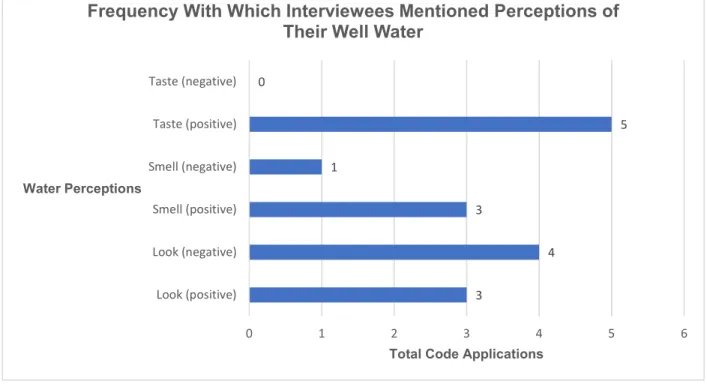
Interviewees had mixed emotions in concerns to the safety and trustworthiness of their
well water (Figure 8). One interviewee compared well and municipal water, saying “we just don’t
trust it cause it’s coming straight from the ground” and that municipal water “goes through
probably so many filters that make it as pure as possible.” Another said “city water's treated. It
meets certain standards” and with well water “you can have totally safe water one day and then
six months later, because of sewage or heavy metals or what have you, it can impact the quality
of water and you don't know unless you get someone to come and test it.”
On the other hand, some interviewees strongly trusted their well water (Figure 8). A
participant stated that, in regards to whether they trusted their water, that they’d “had it tested a
couple of times, and the last time it was tested, we were told that it tested good”. While one
interviewee pointed to the fact that well water comes from the ground as a negative, another
6% 4%
13%
17%
18% 19%
5%
18%
Percentage of Conservation Code Applications By Resource
19
said that they trusted their water “because it’s something natural that comes, you know, even
though it comes from the ground, it’s still something that’s naturally given.”
One participant stated that they wished to be put onto municipal water supply due to the
struggles of their community members, but they would still drink and cook with the well water
due to their taste preference of the well water. A preference toward well water, rather than
municipal water, could be seen in many cases regardless of water quality. No interviewees
reported sickness from their well water. When asked if their water had any unusual tastes,
smells or looks, some noted the presence of sediment which was a sign for them to change
their water filters. Many didn’t notice the smell or taste of their own water, but that of municipal
water (Figure 8). Multiple participants commented on their dislike of additives, like chlorine, that
they could detect from municipal water.
Figure 8: Frequency of water quality perception code applications.
3
4 3
1
5 0
0 1 2 3 4 5 6
Look (positive) Look (negative) Smell (positive) Smell (negative) Taste (positive) Taste (negative)
Total Code Applications Water Perceptions
20 Cost
Cost was also a very important influence on not only interviewees’ personal well
experiences, but on annexation. Overall, cost was mentioned and coded 62 times between all
interviews, and all interviewees discussed cost (Figure 9). This can be compared to the code
applications of well water perceptions, which totaled to 16 (Figure 8). Interviewees mentioned
the cost of annexation and municipal water installation as well was the cost of well maintenance
and water conservation methods. One participant commented how their emotions were affected
by the annexation process, saying they “certainly had a lot of anxiety about how [municipal
water installation] was going to be paid for.” Participants mentioned grants and governmental
assistance when discussing costs for municipal water supply and maintenance. One participant
talked about their community by saying “I think the reasons why they wouldn't join, allow their
property to be annexed and join the town, is because they are afraid of the cost, not so much
the water.” However, only one household in the community has yet to sign the annexation
petition. Annexation and the potential cost to citizens were a consistent worry bothering
residents through most interviews. More still, residents with low water quantity dealt with many
financial issues in their daily lives. Though costs varied between participants, one interviewee
commented “that's 15 bucks a week of doing laundry that we own a perfectly functioning
washing machine that we can't use. We spend probably 15 bucks a month on paper plates and
plastic utensils.” A participant also said that their lack of water supply often caused them to book
hotel rooms when they had nowhere else to go, adding strain to their budget. One interviewee
demonstrated concern for their neighborhood by saying “I’m one of these that again, I’m
concerned about our senior citizens being on fixed incomes…”, speaking in regard to both
annexation and the costs surrounding a lack of well water. One interviewee spent thousands to
try and get well water. They said “They went 832 feet down for my well but that cost me $10,000
and then for them to do the hookup with all this technology that they have to use and going
21
It is also worth mentioning that some interviewees had concerns over the focus on
municipal water installation and not on sewer system installation. They believed that influx of
water from the new system might cause issues in their current septic systems. Despite also
wanting sewer, to deal with this problem, many were concerned about additional costs of a
sewer system. One interviewee said “yeah, $880,000 now just for the sewer system. And we
went whoa, that's a lot of money. But if you want to do it right now, we each have to pay
$16,000 to have it there.”
Figure 9: Frequency of cost code applications. Community Relationships
Questions concerning connections to the community were asked to understand
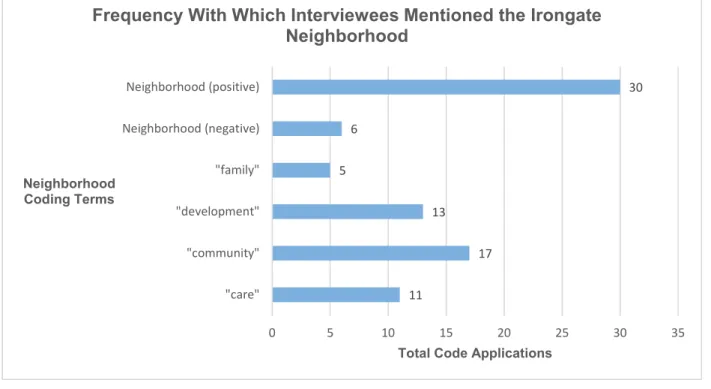
homeowners’ relationships with their neighbors. Interviewees mentioned their neighborhood in a
variety of ways (Figure 10) and mentioned their neighborhood a varying amount of times. These
codes were mainly categorized in specific terms. “Care” involved how neighbors interacted with
each other, often in concern to handling well water problems. For example, one interviewee said
“so we kind of help each other to survive. You get to know them and you find out you got some
0 5 10 15 20 25 30 35 40
Cost (Other) Annexation/Municipal Installation Costs Maintenance/Conservation Costs
Total Code Applications Types of Water
Costs
22
good neighbors. You ask them for help. I call a buddy right there and say look, man, I need your
help. He said okay.” Another said “sometimes I go and help him at the laundromat to wash
clothes because they don’t have the water there to wash so we do, we take care.”
Though most instances of conversation around the neighborhood were positive (Figure
10), some participants mentioned the neighborhood in a negative light, often referring to the
growing development outside the community or concerns about the new changes in the
neighborhood and the potential influx of new neighbors. The current atmosphere in the Irongate
community is one that residents hope to maintain. One resident talked about those currently in
the neighborhood in a positive light, but in discussing new neighbors, they said “So I hope when
the water comes and the sewer that the people that have empty lots, they be very careful of who
they sell to or who they bring in here.” Development was referred to in both positive and
negative ways; development brought more of the city closer to Irongate, but it also impacted the
quiet community. One interviewee discussed the growth of Apex, saying “Apex has really
grown. When I moved here, it was all farmland, nothing but farms all around and I never
dreamed Apex would grow like it’s grown in a thousand years.” One interviewee expressed their
concern with development, stating “…pollution and the whole nine yards and a lot of things are
changing, building as you can see. That subdivision across the street was not there.”
Despite new residents coming into the community, interviewees recognized the
importance of creating strong relationships with one another. One interviewee commented that
“it's nice to be in a place where people know each other for a long time. It's amazing. I love it. In
where I'm from, you know your neighbor. You talk to your neighbor.” Some residents, now
elderly, went to school with one another or had children that went to school together. One
participant stressed the importance of “giving back” to one another after years of being taken
care of by the same individuals still living in the community as retired or elderly residents. Some
23
more recently. Yet still, they found themselves meeting and bonding with their neighbors over
struggles with their private wells.
Figure 10: Frequency of neighborhood code applications. Relationship with Apex Water Utility
Many interviewees felt that their neighbors wanted municipal water supply due to the
quantity of water it would provide, but not necessarily due to the quality or a preference. One of
the biggest obstacles mentioned by interviewees in regards to receiving municipal water supply
concerned cost. Some did not understand the costs the Apex Water Utility gave for water pipe
placement or water bills. Though some knew that the town and researchers were looking for
grants to cover the cost, one interviewee in particular did not feel that the fees the utility
provided made sense for the water service. Many interviewees attended town meetings to gain
insight on the Apex Water Utility and stay updated on changes in grants or land surveying.
Some felt that the Apex Water Utility should be more transparent about the process and costs of
annexation, while others felt that their main contact to the utility was doing a good job at staying
on task and providing updates. Most interviewees hoped for connection to the municipal water
11
17 13 5
6
30
0 5 10 15 20 25 30 35
"care" "community" "development" "family" Neighborhood (negative) Neighborhood (positive)
Total Code Applications Neighborhood
Coding Terms
24
supply, even participants who still had well water; those still with adequate water quantity
expressed their desire for municipal water for the sake of their community and those without
well water. The possibility of not having water in the future was also a factor in how residents
reconciled with being put on municipal water supply. One participant stated “tomorrow, we might
not have water. We don’t know. It might be a year down the road that we say, ‘Oh no, we have
plenty of water. We’re not going to get on Apex water.’ Next year, we might not have any water,
so you don’t know, and if anything, after we get on, if anything happens where there’s no water,
25
CHAPTER 4: DISCUSSION
We sought to gain insight on the experiences of residents at Irongate Drive, Apex, North
Carolina regarding their water quantity. We also sought to assess the impacts of these well
problems, determine their water quality perceptions, and establish whether residents wished to
be annexed to the town of Apex. Results showed a lack of wells producing appropriate
quantities of water in this community, and a variety of ways residents attempt to handle this
problem. Eighty percent of respondents reported problems with their wells, specifically due to
water shortages. Those that didn’t have water quantity issues still recognized the severity of the
water quantity issue in their community. Sixty percent of respondents found their wells failing
multiple times each year, with 70% of respondents describing alternate sanitation methods,
such as the use of bottled water or hand sanitizer to wash hands, as well as failures that
occurred. Participants gave up cooking, washing, toilet flushing, laundry, and more when wells
failed to provide enough water.
Not only does the lack of well water impact individuals, but it affects the close-knit
community as well. The deep history of the neighborhood and the relationships formed there
have created a peaceful, caring community, and residents wish to maintain that atmosphere.
Despite disruption of the neighborhood that might occur with the installation of municipal water,
60% of participants desire annexation to the town of Apex and the services annexation will
provide due to the strain water deficiency has put on the community. Naman (2015) described
the challenge in organizing communities and unifying to raise awareness to a community
problem. Individual differences in levels of need for municipal services can create a fractured
26
Irongate community toward receiving access to municipal services emphasizes the level of need
across the community, and the powerful relationships formed within the neighborhood.
Cost played a major role in how participants interpreted their choices concerning
municipal water supply. When talking about cost, participants often had concerns with payment,
either with their neighbors’ abilities to pay or their own. Residents were also impacted financially
by their lack of water quantity through the many routes taken to compensate for their well
problems. In a study on the factors affecting access to municipal and sewer services in North
Carolina, community members, utility providers, and officials referred to the costs of extending
these services (Naman, 2015). Though opinions differed on costs versus benefits, we can see
how cost remains a constant factor for residents attempting annexation, and that it may be a
shared concern to town officials, limiting their assistance to communities.
Limitations
21 of 24 households completed the survey, the interview portion was optional, meaning
the data were collected from those more willing to participate in the surveys. Those with more
private well problems may have been more willing to come forward as active participants in the
study. Additionally, the low sample size indicates that any inferences of the analysis of the
qualitative interview data, or those more concerned about the issue, may not be adequate in
identifying common beliefs in this population. However, the 8 interviews represented one-third of
the households in the community, and the number of interviews is counterbalanced by the
nearly full participation in the short-form surveys. Though we did not reach data saturation, we
27
CHAPTER 5: CONCLUSION
This study reveals key factors in private well water experiences affecting the lives of
individuals living at Irongate Drive in Apex, NC, a majority African-American community.
Community and history have bound these neighbors together as their well water quantity
influences their daily lives and water decisions. Their interactions with their well water are bound
to its availability. Cost of municipal water supply installment and billing are of concern to
residents as is the wellbeing of other community members.
As this study was under way, the Town of Apex began moving forward with plans to
annex the Irongate Drive community and to extend municipal water lines to each house wishing
to participate. The stories community members reported during neighborhood meetings with
town officials about their experiences with water shortages, combined with data on water
contamination risks supplied by the University of North Carolina and support by civil rights
attorneys, appear to have helped build a case for annexation. Apex was able to obtain a
Community Development Block Grant to support most of the cost of the water supply extension
project. Nonetheless, as of the writing of this thesis, individual households still will be required to
pay nearly $1,800 to connect to the water system. In addition, increase in water usage may
increase the load on household septic systems, but there are as yet no plans to extend sewer
service to the neighborhood.
Although a solution for Irongate’s water problems is underway, other, similar
communities may exist across North Carolina and elsewhere. For example, a 2014 study in
Wake County found that odds of exclusion from municipal well water service increases with an
28
Gibson, 2014). Leker (2018) found that within 8,758 peri-urban blocks selected in 75 North
Carolina counties, 67% of the population were unserved by sewer pipes, 33% by water pipes,
and 28% lacked both sewer and water service. Additionally, Lichter (2007) provided evidence to
show that municipal underbounding and racial exclusion have patterns in many small, southern
towns. These communities are numerous, and may face similar problems with water and sewer.
The drivers affecting their choices in responding to water crises may vary, and each community
may respond to different approaches when seeking annexation and creating relationships with
their nearby municipalities. This research can help inform other communities and municipalities
in how to understand one another to reach the common goal of having enough clean water to
29
APPENDIX 1: SHORT FORM SURVEY
Irongate Drive
Questions to support requests for water and sewer services from the Town of Apex. These will be reported as a summary for the whole neighborhood, not individually.
Collected and summarized by the MacDonald Gibson research group at UNC. Email:
[email protected]. Phone: 919-843-5786. Please mention Irongate in your message.
Questions
Does your well sometimes fail to provide enough water?
More than once a year (please describe _____________________________________) Once a year
Once every ________ years (please fill in) Never
What do you give up when your well fails to provide enough water?
____________________________________________________________________________
How do you wash your hands when there is not enough water?
____________________________________________________________________________
Do you have ways to store water for any times when your well does not provide enough? How?
____________________________________________________________________________
Do you have any treatment or filtration system? No
Yes Type
o Treats water for the whole house o Treats water for one tap
o Counter-top filter (pitcher) o Refrigerator filter
o Other
___________________
o Water softener o Iron filter o Sediment filter o Carbon filter o UV disinfection o Constant chlorination o Reverse osmosis o Don’t know Have any of these contaminants ever been found in your water? Select all that apply.
30
Approximately how much do you spend every year to maintain your well, including any water treatment systems? $__________________
About how old is your well? __________ years
About how old is your septic system? __________ years
Approximately how much do you spend every year to maintain your septic system? $________
Is your septic system currently causing problems? Please describe any current problems.
____________________________________________________________________________
Has your septic system had problems in the past? Please describe any past problems.
____________________________________________________________________________
Has your septic system ever overflowed into your yard or a neighbor’s yard?
____________________________________________________________________________
Has a neighbor’s septic system ever overflowed into your yard?
____________________________________________________________________________
How often is your septic tank emptied, if ever?
____________________________________________________________________________
Does all of your household water go into your septic system?
31
If there was an opportunity to connect to the town water system, would you want to do that?
____________________________________________________________________________
If there was an opportunity to connect to the town sewer system, would you want to do that?
____________________________________________________________________________
How much would you be willing to pay toward getting town water and sewer services? These are only estimates, and you will not be held to these numbers.
upfront toward getting town water service (connection and plumbing fees) ________________
monthly for town water service (water bill) ________________
upfront toward getting town sewer service (connection and plumbing fees) ________________
monthly for town sewer service (sewer bill) ________________
Annexation is a process where residents ask to become part of the town. There are costs to apply for annexation, and your property taxes would increase. However, these increased property taxes would get your home and neighborhood access to town police, fire protection, and recreation facilities. Annexation would also make it easier to connect to town water and sewer. At this time, would you want to ask the town for annexation?
____________________________________________________________________________
32 Do you rent or own your home?
____________________________________________________________________________
How many people live in your home?
____________________________________________________________________________
Ages of household residents (including yourself)
____________________________________________________________________________
Would you describe yourself and members of your household as … (check all that apply)
American Indian / Native American Black / African American
Asian / Asian American Hispanic / Latino White / Caucasian
Other (please specify): ________ Prefer not to answer
Your gender
Female Male Other
33
APPENDIX 2: INTERVIEW GUIDE
Irongate Drive interviews to support requests for water services from the Town of Apex.
Collected and summarized by the MacDonald Gibson research group at UNC. Email:
[email protected]. Phone: 919-843-5786. Please mention Irongate in your message.
Background
Some residents of Irongate Drive do not have enough water for their house and some experience a lot of problems with their septic systems. They are working with the Town of Apex to find solutions and they have asked researchers at UNC to help document the situation.
Thank you for answering the survey questions. The purpose of interviews to tell us more of the stories about your well water and your personal experiences.
We will be offering $25 gift cards for participation the interview, as a thank-you for your time.
May we record this interview? It will only be heard by the researchers as they are analyzing the interviews and writing up the stories. The original recording and the transcript will be kept on a secure computer drive and not shared outside of the research group.
Introduction
What do you want us to know about you?
What would you like us to reveal about you in discussing your story?
o Is there anything you would like omitted?
o We will not include names with the stories, but can we mention other things, like your age or how long you’ve lived in the neighborhood?
Community
How long have you lived in this community?
o Longer than 10 years:
Do you have any strong memories associated with this neighborhood?
Do you remember what this neighborhood was like when you first moved in?
34 Your Well
How old is your well?
How deep is your well?
What feelings come up for you when you think about your well?
What is it like to have well water?
Has your experience with your well changed over time? If yes, how?
o Have your feelings about well water changed over time? If yes, how?
What else can you tell me about well water? How does your well water work?
o Do you have a household water treatment system? If yes:
Do you know what type?
Do you know if it is working properly?
Well Water Testing
Have you tested your well water in the past?
o Is there any reason why you (don’t) test your well?
o When was the last time you had your water tested? o What kind of tests did you do?
o On a scale from 1 to 10, how important do you feel testing is?
o How often do you think you should test your well? o Do you think your neighbors test their wells? Why (not)?
Well Water Quality Perception
Do you drink or cook with water from your tap? Why or why not?
o How much do you trust your well water on a scale from 1 to 10? What are some good things about having well water?
o Bad things?
Have you noticed any unusual water tastes, smells, or looks?
Have you ever gotten sick from your water?
o Do you know if anyone else has gotten sick from their well water?
Well Water Quantity
Do you have problems with your well?
o Have you always had problems with your well? When did your problems first start?
o How often in the past month/year have you not had enough water for your daily needs?
Has this affected you in any way?
How are your daily activities affected? (showers, laundry, cooking, drinking)
35 Has this affected you in any way?
How are your daily activities affected?
What kind of things change for you or your family when this happens?
How do you or your family respond when this happens?
Septic system
Tell me about your experiences with your septic system.
Have you ever been impacted by a neighbor’s septic system?
The Apex Water Utility
What have you done to improve your well water supply?
o What are your hopes in concern to your water?
o What are your fears?
If you had a choice, would you like to have well water or city water? Why?
o Do most of the people in your neighborhood also want (preferred water)? Why (not)?
o If city water preferred:
What have you personally done so far to get connected to the municipal water system? Can you explain?
What do you feel is the biggest obstacle standing between you and the Apex municipal water system?
Finance
How do you feel about the cost of your well?
o Can you explain why?
o How often do you do maintenance or purchase treatments or items for your well? o How would you describe the financing of your well?
Could you estimate how much you spend each year to keep your well running?
What feelings come up for you on this subject?
How about the costs of your septic system?
o How do you feel about maintaining your septic system?
o Could you estimate how much you spend each year to keep your septic system
working?
Closing
What do you want to come out of this interview?
Anything else come to mind?
36 REFERENCES
Aiken, C. S. (1987). Race as a Factor in Municipal Underbounding. Annals of the Association of American Geographers,77(4), 564-579. doi:10.1111/j.1467-8306.1987.tb00181.x
Bailey, Z. D., Krieger, N., Agénor, M., Graves, J., Linos, N., & Bassett, M. T. (2017). Structural racism and health inequities in the USA: Evidence and interventions. The
Lancet,389(10077), 1453-1463. doi:10.1016/s0140-6736(17)30569-x
Heaney, C., Wing, S., & Wilson, S. (2013). Public Infrastructure Disparities and the Microbiological and Chemical Safety of Drinking and Surface Water Supplies in a Community Bordering a Landfill. J Environ Health,75(10), 24-36.
Leker, H. G., & Gibson, J. M. (2018). Relationship between race and community water and sewer service in North Carolina, USA. Plos One,13(3).
doi:10.1371/journal.pone.0193225
Lichter, D. T., Parisi, D., Grice, S. M., & Taquino, M. (2007). Municipal Underbounding:
Annexation and Racial Exclusion in Small Southern Towns*. Rural Sociology,72(1), 47-68. doi:10.1526/003601107781147437
Macdonald Gibson, J., Defelice, N., Sebastian, D., & Leker, H. (2014). Racial Disparities in Access to Community Water Supply Service in Wake County, North Carolina. American Journal of Public Health,104(12). doi:10.2105/ajph.2014.10412e45.1
Naman, J. M., & Gibson, J. M. (2015). Disparities in Water and Sewer Services in North Carolina: An Analysis of the Decision-Making Process. American Journal of Public Health,105(10). doi:10.2105/ajph.2015.302731
Stillo, F., & Gibson, J. M. (2017). Exposure to Contaminated Drinking Water and Health Disparities in North Carolina. American Journal of Public Health,107(1), 180-185. doi:10.2105/ajph.2016.303482
U.S. Census Bureau QuickFacts: Apex town, North Carolina. (n.d.). Retrieved from
37
U.S. Census Bureau QuickFacts: UNITED STATES. (n.d.). Retrieved from
https://www.census.gov/quickfacts/fact/table/US/PST120217
Wilde-Anderson, M. (2008). Cities Inside Out: Race, Poverty, and Exclusion at the Urban Fringe. UCLA Law Review,55(1095). doi:10.2139/ssrn.1007359
Wilson, S. M., Heaney, C. D., Cooper, J., & Wilson, O. (2008). Built Environment Issues in Unserved and Underserved African-American Neighborhoods in North