YORK CITY.
Benjamin Rubin
A thesis submitted to the faculty at the University of North Carolina at Chapel Hill
in partial fulfillment of the requirements for the degree of Master of Arts in the Department of Geography.
Chapel Hill 2015
Approved By:
Elizabeth Ann Olson
Altha Cravey
ABSTRACT
Benjamin Rubin: Becoming Subjects of the Child Welfare System: Parents, Workers, and Institutions of Family Governance in New York City
(Under the Direction of Elizabeth Ann Olson)
Child welfare in the U.S. is frequently characterized by internal contradictions; caught between a
narrow definition of welfare as protection from immediate threat of serious physical harm, and a
more expansive consideration of wellbeing more generally. This project examines the
functioning of New York City’s child welfare system through the professionals within it. It
emphasizes the spatialized nature of the divisions that exist along lines of race and poverty, as
families reliant on public infrastructure in public spaces are more far more vulnerable to
surveillance and reporting. The study attempts to use ethnographic interviews to connect a
parents’ typical experience of the system as unpredictable and precarious, with the structure of
the jobs of those working within ACS, and the variable and unregulated nature of their processes
of professionalization. Lastly, field observations are used to analyze the courtroom as a space
ACKNOWLEDGMENTS
While I am nominally the author of this thesis, to claim it as “mine” would be to ignore
and erase the incredible amount of help and advice from others that was necessary for me to
complete this work. To re-purpose a platitude of child-raising: it takes a village to write a thesis.
First and foremost, I must thank the dozens of people I met with this summer, most of
whom must remain anonymous. I am deeply grateful to everyone I talked to who thought they
could see value in the project, and put me in touch with friends, coworkers, and family who
worked in child welfare. I am thankful to the lawyers, social workers, parent advocates; the
caseworkers, the foster care workers; all of the people who knew that I had nothing to offer in
return, but were willing to meet with me, to open up about their experiences, frustrations, and
insights. I continue to be inspired by the work that you do on behalf of parents. Martin
Guggenheim and Christine Gottlieb at the NYU School of Law generously gave me time and
helped me to work through their analyses. Sandra Killet, Tracey Carter, Wanda Rodriguez,
Damaris Figueroa, Joyce McMillan, and everyone else at CWOP– I am humbled to have been so
readily accepted into your space, and hope that even if this work does not add anything to what
you already know and understand so well, that it at least rings true to you.
The only other people behind this thesis who are on the title page––my committee––must
be recognized for their role in its crafting. My advisor and committee chair, Betsy Olson, read
through draft after draft, pointing out the frequent disconnects between the points I wanted to
woven throughout this work. Peter Redfield has been an encouraging and insightful voice, and a
willing ear, since I took his Ethics and Expertise seminar my first seminar; many of his
suggested readings on family and expertise have been key to my development as an academic. I
was able to work with Altha Cravey in my final semester both as a committee member, and as a
TA. I am thankful for the chance to blend writing and teaching, and to have learned from her in
multiple capacities; both as an academic, and as an activist.
I would like to thank the writing group I was privileged to be a part of. Adam Bledsoe,
Chris Courtheyn, Willie Wright, and Stevie Larson: I cannot tell if I benefitted most by learning
from your work, from your regular insights and edits of my own work, or your unwavering
encouragement. Wonderful friends who read portions of this work––Rachel Cotterman, Darius
Scott, Amy Braun, Ruth Judge, Seth Capron, and Orisanmi Burton––your feedback was
instrumental. And I owe thanks to friends who have willingly endured conversation after
conversation about my project, and always had useful questions and thoughts: Dayuma Camaña,
Aron Sandell, Katie Merriman, Eloisa Berman, Mabel Gergan, among others. I would like to
single out a few colleagues: Pavithra Vaseduven, Orisanmi Burtion, and Stevie Larson. You have
been incredible friends, and mentors. I have learned so much from you about how to be a student
in academia- both how to embrace its possibilities, and to come to term with its limitations. To
everyone: I shudder to imagine how I would have managed through the past two years without
your encouragement, advice, and support.
And lastly, of course, my own parents: I have taken much longer to find my way to, and
through, grad school than you did. I know that many times along the way, as I have changed
paths again and again, you haven’t always been able to understand why, but your support has
TABLE OF CONTENTS
LIST OF FIGURES ... viii
LIST OF ABBREVIATIONS ... ix
Anything Else Doesn’t Matter: An Introduction to the System ... 1
Chapter 1. Governing through Best Interests: Literature Review ... 16
Part 1: The State and Family ... 17
Part 2: Creating Family Experts ... 23
Part 3: Review of Literature on Child Welfare ... 27
Chapter 2. The Price-Tag for Safety: A History of Child Protection ... 34
Part 1: A Chaotic Pendulum (An American Story) ... 36
Part 2: Removing Any Ambiguity (A New York Story) ... 48
Chapter Conclusion ... 59
Chapter 3. A Very Broken system: The Everyday Life of Child Welfare ... 60
Stopping and Frisking Families: Mandated Reporters ... 63
They Need to Act Better Than a Regular Person: Encountering ACS ... 74
It’s Risky to Assert Your Rights: Uncertain and Unreliable ... 83
Chapter 4. The Hardest Job in New York City: Doing Child Protection ... 94
Impossible Demands: The Job of the Caseworker ... 95
A Cookie Cutter Mentality: Conflicts with Management ... 101
Once They Burnt Out: Emotional Wear ... 109
Chapter Conclusion ... 114
Chapter 5. Compliance is King: Making Parents Legible to the Court ... 117
The Inhumanity of the Place: The Space of Family Court ... 118
What the Law Allows: The Embodied Power of Judges ... 125
Parental Competency Test: Making Evidence, Making Judgments ... 133
Chapter Conclusion ... 138
Every Opportunity? Concluding Thoughts ... 140
LIST OF FIGURES
Figure 1: New York City Foster Care Census 1986 - 2004. ... 7
Figure 2: Racial Disproportionality at Progressive Levels of the Child Welfare System (2007) for New York State. ... 10
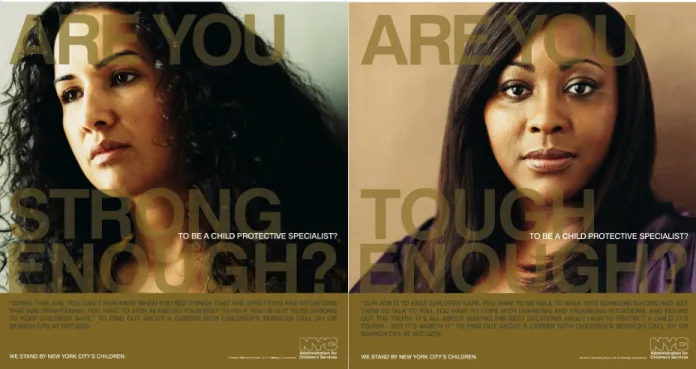
Figure 3: ACS Recruitment Posters. ... 13
Figure 4: New York State law designating mandated reporters.. ... 64
Figure 5 and Figure 6: Citywide SCR Intakes by Reporter Group for 2014 for Mandated
reporter groups (Left) and Non-Mandated (Right). ... 66
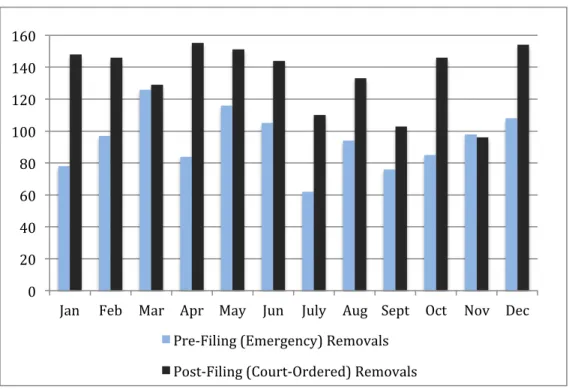
Figure 7: Monthly Article 10 Filings, 2014. ... 80
LIST OF ABBREVIATIONS ACS Administration for Children’s Services
ASFA Adoption and Safe Families Act
CAPTA Child Abuse Prevention and Treatment Act CPM Child Protective Manager
CPS Child Protective Specialist CSC Child Safety Conference
CWOP Child Welfare Organizing Project DCP Division of Child Protection DHS Department of Housing Services FCLS Family Court Legal Services HRA Human Resources Agency
NYCHA New York City Housing Authority OCFS Office of Children and Family Services
PATH Prevention Assistance and Temporary Housing
PRA Personal Responsibility and Work Opportunity Reconciliation Act SCR State Central Registry
Anything Else Doesn’t Matter: An Introduction to the System
So what's hard about this job for me is dealing with the bureaucracy that is ACS. And dealing with how incredibly inefficient and incompetent the government is. And how little any of this seems to be about what’s actually good for kids, and it’s really just about escaping liability in case something bad happens. There's very little attention paid to the trauma that children experience from being moved around a lot, and taken away from their families, and it's almost like the only thing that matter is, like, if their parents don't kill them or hurt them, then it doesn't matter, anything else doesn't matter.
(Joanna*, Attorney for the Child, Family Court)
They just think you’re some type of monster. When you are in the child welfare system, you’re guilty until proven innocent. And you’re never really proven innocent. You’re just branded for the rest of your life as a bad parent.
(Anonymous Mother, from film A Life Changing Visitor: When Children’s Services Knocks, Greer 2014)
I was attending a meeting of parents who were involved in ongoing cases in New York
City’s family court; all of them either struggling to keep or to regain custody of their children.
One woman had turned to the group for help, describing her dilemmas in trying to follow the
directions of her foster care caseworker. Everything has been incredibly inconsistent. She has
had a different judge in each of her last three court visits, who have made three slightly different
rulings. She has been told earlier today (Wednesday) that she must come to the office to sign
documents before a court appearance on Friday, but has not been told what they are or what they
* Unless noted by the inclusion of a last name, all names have been changed to protect the privacy of
concern; she has asked to bring someone to help her understand the documents, and has been
told that this is forbidden. As far as I understand it, this last action is against official policy,
something several other parents also point out. One suggests that perhaps she can take the
document with her to consult with someone. She is afraid to try this, saying that, “anytime I
refuse to sign something they use it against me. They say I’m incompliant.”
As I began to research the child welfare system, experiences with such inflexible
demands and erratically enforced rules were described to me again and again as commonplace;
part of the ordinary routine of suspicious treatment of poor parents. But beneath all of the
complaints of an unfeeling government bureaucracy, child welfare is propelled by a visceral fear
of the very real possibility of harm coming to children, and collective impulses to protect them.
Child protection workers, court officials, and parent’s advocates are all tasked to minimize risks
to children while upholding the rights of the children and their parents.
Mainstream and academic discussions of the state of child welfare depict a system
typified by internal contradictions and conflicting definitions of harm and risk. The vague
definition of the very term “risk” reveals a more profound ambiguity, between child welfare as
concern for the overall wellbeing of the child, and as protection from immediate risk of serious
physical harm. At times these different conceptions may be aligned to satisfy the multiple parties
in child welfare cases; more often they stand in tension with each other. The system is responsive
to issues caused by poverty and material need, but can only respond by bringing families into the
authority of its legal mechanisms. Its primary tools––of services, surveillance, and removal––
cannot address these root causes for large numbers of cases of neglect, and yet they are
repeatedly deployed, as the only tools that child welfare is designed to use. One lawyer describes
So if we're doing what the system says it's trying to do, which is to protect the children who are at serious risk of serious harm, then you actually don't need that many resources. There's a real, but not huge, number of kids who are at serious risk of serious harm. … If we really want to raise the wellbeing of children in New York City, ACS [Administration for Children’s Services] is just not the way to do that. It's the wrong system. And putting more money into ACS isn't going to do that. You would need to put money into access to health care, and access to child care, and housing, and education, and those would be the things to raise the wellbeing.
(Christine Gottlieb, Co-Director, NYU Family Defense Clinic at NYU School of Law)
This analysis was demonstrated consistently by interview participants across the
spectrum of professional roles, and is also repeatedly echoed in many documents of policy
analysis. The starting point for this thesis, then, is to investigate the consequences of this
contradiction. Without accepting it as fact, I do take seriously the assertion that “the system” is
not doing “what [it] says it’s trying to do” - whether or not child welfare is effective in
preventing child abuse, it also claims to have other goals, and has many other impacts on lives,
that are the basis of this study.
Another of the system’s most salient features is the overwhelming unpredictability and
uncertainty that a parent will face once she enters it. She will often be given unclear or
conflicting directives from different people who are in positions of authority over her and her
child, often without a clear guide as to what nominally should be happening, or any way to
ensure that the system will work as it claims to. Some of these inconsistencies and contradictions
can be blamed on individual workers, but many are internal to the system. They must be faced
again and again in new forms and through new situations; by families and the frontline workers
who are faced with daily ethical decisions.
Objectives of Research and of the Thesis
This thesis begins with the aim to describe the system of child protection / child welfare
ways, and to describe it as the outcome of interactions between “top down” policies which
structure and direct, and “bottom up” individual actions, decisions, interpretations, prejudices,
and insights of the professionals who work within it (both working for the system, and
representing parents in opposition to it). Second, I aim to demonstrate that child welfare is
shaped by structural forces, particularly of poverty and race, but it is not determined by them.
Lastly, I will aim to go beyond showing that the nature of child welfare is often contradictory
and inconsistent, and attempt to build an understanding of why it functions as it does.
The child welfare system in New York City is complex and fragmented, comprised of its
child protective agency, named the Administration for Children’s Services (ACS), a family court
system with one court in each of the five boroughs, and over thirty voluntary agencies which
provide services for adoption, foster care, and preventive treatment. It is a system that is by many
accounts dysfunctional, and which has continually been an object of reform throughout its
history (Children’s Rights 2007; Tobis 2013; Wexler 2010). It is a system that is often hidden
from most of the middle and upper class of the city; or ignored until a crisis erupts. My goal in
doing my fieldwork during the summer of 2014 was first to understand this complicated and
confusing system. How did different actors understand and view the system, where did they
agree, and disagree? How did workers understand and evaluate risk; and balance the emotional
harm done to children by removals with the potential danger of inaction? How are the conflicts
and ambiguities of child welfare understood and resolved by the professionals who work in the
Research Questions
1. Research Question 1: Who are the subjects of the child welfare system? How are
families, and parents in particular, made into subjects?
This question asks what the inconsistencies are productive of: it must be answered by
examining what child welfare in designed to do, how those in power evaluate whether it has been
successful or not in achieving those goals, and the response from policymakers and
administrators when it is seen to fail at its goals.
1. Research Question 2: How do workers in child welfare make the practice of child
welfare? How do these practices align with, or contradict, formal institutional goals?
This question asks how inconsistency and unpredictability are produced: it must be answered by
examining how workers are trained formally, but also by comparing their evaluations of child
welfare with its official representations, with its depiction by parents and their advocates, and
with each other.
Structure of the Thesis
I begin in Chapter One with a review of literature relevant to this study, primarily
focusing on theorizations of the family and institutions of family governance, an overview of
literature on the topic of expertise, and a brief summary of the discussions of child welfare
within legal theory. Chapter Two is divided into two parts; the first looking at broad trends in the
history of child welfare in the US, and the second picking several key conjectural moments to
tell the story of ACS and child welfare in New York City. Chapter Three tells the story of the
day to day experiences of parents who become the subject of an ACS investigation, primarily
investigation and the subsequent hearings in family court. This chapter demonstrates, among
other things, that parents are extremely dependent on the individual workers within ACS, and so
in Chapter Four I turn to the job of an ACS caseworker, using interviews with former ACS
employees to examine the structure of the job, and the process of professionalization of its
workers. Chapter Five uses field observations from my visits to family court to describe its role;
I examine the power relations embedded in the space of the court, and the ways that court makes
parents as subjects.
Who Decides What is in a Child’s ‘Best Interests?’ Context for Research
The state of contemporary child welfare in the U.S. has been consistently criticized from
opposing viewpoints: that it dangerously abandons children to potential harm (Bartholet 2000),
and that frequent unnecessary removals harm children and abrogate the rights of parents (Wexler
1995), in many cities acting to target African American communities in particular (Roberts
2002). It is difficult to draw definite conclusions by looking at the national level, as each of the
different branches – child protective investigations, foster care systems, and family courts – are
governed by a mix of federal, state, and municipal laws and policies. However, some things are
consistent across the country.
There are too many children in foster care. This has been agreed on by a wide array of
interests, and has been formulated as a national problem to be solved multiple times. This was
the ‘crisis’ which motivated the law which currently governs foster care and adoption, the 1997
Adoption and Safe Families Act (ASFA), which promotes adoption as the ideal solution to the
crisis (see Fig 1 below for the national trends in the foster care population during the 90’s).
outcomes than adoptions (Doyle Jr. 2012; Williamson and Greenberg 2014), and despite the fact
that what are considered ‘broken adoptions’ continue to be commonplace (Arsham 2013; Post
and Zimmerman 2012), the national landscape of child protection and foster care, structured by
ASFA, is tilted toward adoption and away from family reunification. In addition, both nationally
and in New York City, the majority of child welfare allegations are for neglect rather than abuse
(NYC-ACS 2015; Children’s Rights 2007): even in the eyes of the state institutions, many
removals stand on tenuous grounds. This thesis does not argue against the fact that child abuse
exists; there is wide consensus that many cases do warrant removal of children. Instead, I focus
on the murkier and more difficult cases at the margins, and explore the consequences of treating
a wide range of cases of abuse and neglect with the same set of tools.
Figure 1: New York City Foster Care Census 1986 - 2004. Source: NYC-ACS. Protecting Children and
Strengthening Families: A Plan to Realign New York City’s Child Welfare System, February 2005 (14).
Methodology
The data collection for this thesis took place primarily during a single period of fieldwork
research during October and December. My research is comprised primarily of individual
interviews1: 46 interviews in total, 31 of which were recorded, yielding a total of 360 pages of
transcripts. I also observed family court, primarily in Brooklyn, and in the Bronx and Manhattan
as well. Lastly, I examined many documents, some produced by ACS, some by city agencies,
and many by third party organizations dedicated to child welfare, such as The Child Welfare
Fund and Rise Magazine.
Not all interviews were examined in the same way2. On the one hand, my interviews with
lawyers, administrators, and caseworkers for ACS and other city agencies tended to fit more with
a tradition of studying how experts come to be recognized as such, how they produce accepted
knowledge, and how they work to manage populations (Carr 2010). Emphasizing research with
current and former ACS employees further focuses my study on the culture and effects of
institutions. Within this group, I interviewed six former caseworkers, four current or former
administrators, four voluntary agency (foster care and preventive services) caseworkers, senior
administrators of two of the foster care agencies in the city, one former ACS attorney, and one
judge. Note that changes have been made within ACS continuously since it was created in 1996;
and that the job requirements of the caseworker in particular have not remained constant. I was
only able to interview former workers, all of whom worked during slightly different time
periods, which limits the conclusions that can be drawn from the interviews. For this reason, I
have noted the years that each worker was employed by ACS, and have worked to emphasize
1 All interviews were conducted and handled according to guidelines of UNC’s Institutional Review
Board, and were approved before fieldwork was carried out. See UNC Non-Medical IRB Approval for Study #14-0974.
which are consistent across the interivews, and are less dependent on the specific times during
which they worked.
On the other hand, my work with organizations who represent or are comprised of
parents impacted by ACS fit somewhat more into the mold of critical ethnography, which is
predicated upon recognition of my own positionality as researcher, in order to reject traditional
divisions between researcher and subject which construct the subject as a knowable object
(Madison 2012). I also use this work to explore the possibilities of participatory research for this
project as it continues past the thesis, and to search for opportunities for alignment and
collaboration (Benson and Nagar 2006). Within this group, I interviewed four parent advocates,
seven defense attorneys who represent parents, one attorney for the child, two 18b attorneys3, six
social workers, three program directors, two parents in training to become parent advocates, and
had many informal conversation with parents who were involved in the child welfare system in
some way.
Social Conditions: Poverty and Space, Race and Gender
In certain communities, it’s a near certainty. If you live in public housing, if your children go to public schools, if you use publicly subsidized day care… it’s not even a matter of if you are going to come to the attention of ACS, it’s more a matter of when you are going to come to the attention ACS.
(Mike Arsham, Executive Director of Advocacy, ACS Division of Family Services, quoted from A Life Changing Visitor: When Children’s Services Knocks, Greer 2014)
The social structures that are most visible in this thesis are the socioeconomic status of
the parents––many of whom are poor, often dependent on some form of welfare––and the spaces
3 Article 18b of New York State general municipal law stipulates that the court system provide
compensation to private attorneys to represent indigent clients. Such “18b attorneys” must become members of what is termed an 18b panel, which assigns them to clients – children who are not
in which they live. These are inextricably intertwined in New York City, as neighborhoods
spatially define boundaries which run along lines of class and poverty, but also as certain spaces
and places exist for the express purpose of being used by different classes. This study reveals
that the differentiations between wealth and poverty that take place in spaces of public
institutions, as well as housing, are not passive backgrounds in child protection, but are active
environments, serving as prior conditions which impede or facilitate removal.
Figure 2: Racial Disproportionality at Progressive Levels of the Child Welfare System (2007) for New York State. The Y-axis shows likelihood of experiencing each stage as a ratio to the likelihood for white children. For example, black children in New York State are 2.1 times as likely to be the subject of an SCR report as white children. Of those reported, cases with black children are 2.6 times as likely to be indicated of those reported. Of indicated cases, black children are 5.7 times as likely to removed into foster care as white children, and 7.2 times as likely to be found in foster care (i.e. reunifications and adoptions are slower to happen). Graph by Author. Adapted from “Race and Ethnicity: Path Through the Child Welfare System” (Carrion 2007).
The sense of (spatially created) inevitability evidenced in the quote from an ACS
administrator above was very commonly expressed among interview participants: an almost
unavoidable collision with ACS is set in motion simply by living in certain places marked by
poverty. These spatial divisions are also barriers to visibility: many of the basic facts about ACS, 1.00
2.00 3.00 4.00 5.00 6.00 7.00 8.00
SCR report Indicated Removed to
FC In Foster Care
while widely known and understood in those communities affected, are often not common
knowledge outside of those neighborhoods.
Neither race nor gender form the primary theoretical focus of this study, but they are
inescapable; perpetually breaking through to display their power and un-ignorable importance in
determining outcomes. Race, in particular, acts as a structuring principle for the entire system of
child welfare. It acts, both seen and unseen, to give shape to interactions and to create prior
assumptions that social reality is formed from. On a concrete level, poverty in New York City is
incredibly racialized (Sharkey 2013), and so discussions of poverty and material need necessarily
become about racialized groups, specifically Latino and African American. But race does far
more: it is interwoven in cultural norms of family and child-raising and of proper interactions
with apparatus of government; permeating and organizing even the most basic everyday
interactions. Extreme racial disparities are apparent at every scale – national, state, and city – and
at every level; from reporting to intake, from removal into foster care to adoption out of it.
Figure 2 above shows this increasing disproportionality in New York State; similar analyses
exist in the US, and are even more stark for New York City.
It is also brought up by interview participants, repeatedly, as one of the most important
determinants in the system. One social worker describes racism and racial divisions,
It comes up constantly. … It's almost inevitable, if you're living in the Bronx and you're low-income and Black or Latino, you're going to be pulled into this system in one way or another. … Because there's so much intense scrutiny on this
community that's nothappening in the white middle class community I grew up in. It's just not going to happen. And it's entirely about race.
(Lauren, Social Worker, New York City Family Court)
Another participant, a lawyer with over four decades of experience with New York child
What I saw in 1971 when I was in court is what I see today. That 97% of the children who come into the system are black. The only white children who come into the system have the craziest motherfuckers for parents you'd every want to know. … Because there are so many ways to get that case out of the system kindly, nicely. When they come to court this is because they're butting heads in a way that the agency is absolutely certain the child is in danger staying with this parent. Whereas in the black and brown cases, there's no presumption, in my experience, that there's anything seriously wrong. There often is, and there often isn't. [But] I've never seen a white case in which there wasn't something seriously wrong. Because it would be diverted.
(Martin Guggenheim, Co-Director, NYU Family Law Clinic at NYU School of Law)
These quotes are representative of very commonly expressed views within this study. In the eyes
of participants, then, the racial divides cannot be understood as secondary effects of some other
cause (i.e. of the already existing racial divides in poverty and racialized spaces). Rather, they
understand the extremely racialized effects of the system as effects of more explicit racial bias,
evidence of structural racism within the child welfare system.
Gender is far more complicated in this study. Some people refer to “parents,” others
“clients;” many slip back and forth between these gender neutral terms and the more specific
“mothers.” In the quotes that follow throughout this thesis, this slippage will regularly occur,
without any further discussion of the differences between the terms. Some workers explicitly
refer to the rarity of men:
[In] one case, I mean the whole office, everybody was trying to help this man get
something. Cause it [a male client] was so rare! It was like we had a piece of gold in the building! Cause you hardly ever see that. Yo, we tried to get him in a hotel overnight, and just all kinds of stuff.
(Joyce, ACS Child Protective Specialist, 2008–2012)
This is a complicated dynamic which is underexamined in this thesis; any further study must
consider it carefully, given the implications of making default assumptions about who is able to
be a good caregiver (and who is not), and what a good parent looks like.
There are also race and gender patterns of note in the population of child welfare
and non-white; especially African American, and Caribbean immigrants. All former ACS
workers, and many of those who interact with them, discussed the issue of workers’
positionality; especially the uncomfortable territory of a child welfare system which often
employs poorly paid black workers to remove the children of ever lower income black parents:
My opinion of how they [other caseworkers] see it is, when you're poor and you're on public rolls, you need to just shut the hell up and take your medicine. Because big brother's watching you. You do something wrong, we're going to let you feel it, and you're going to have to sit here and suck it up. And that's kind of how I look at it. And it's even worse a lot of times because the people giving them their medicine look just like them.
(Darius, ACS Child Protective Specialist, 2005–2009)
Of the six caseworkers interviewed in this study, two were men, one of whom was white.
I was not able to obtain any demographic information on caseworkers from ACS. It is interesting
look in a series of recent ACS recruitment ads: of the seven posters, only two portray workers as
men, and all seven appear to be workers of color (see Fig 3 below).
In Closing
What you're also dealing with is people living in the cycle of poverty. … And some of these people, they have a rough time doing what seems to the rest of us to be an easy thing. Some of my clients are very difficult to work with, they need a lot of support. And there's almost no ability on the part of ACS or the agencies to deal with difficult people. Difficult people are at a disadvantage. The person who navigates the child welfare system well, is somebody who can do what they're told. “Go to these classes. If you're angry, keep it to yourself. If you're not happy with the visitation order, just be patient, because in six months we'll get a better visitation order for you.” But people who can't get out of bed in the morning... It surprises me just how much, how inept the agency is in working with difficult people. And isn't that their job? Isn't that the whole point of the system? If you're gonna take it on face value, you're interfering in the lives of the family because there are problems in that family. And if the more difficult the family is, the less able you are to work with them... it's just a completely broken system if you look at it from that perspective.
(Daniel, 18b Attorney, Former Attorney for ACS, Family Court Legal Services)
To what extent is child welfare “a completely broken system,” as this lawyer suggests?
His depiction of a system which seems to work least effectively for exactly those people who
need the most help is a common view held by those interviewed in this study. This again reminds
us of the question of what the goals of a child welfare system are, and should be. Daniel points
out that child welfare seems to be dysfunctional, a broken system, if we try to understand it “at
face value.” In this thesis I have tried to hold together for analysis the official goals of the
various agencies involved, the motivations and interpretations of the workers within those
systems, and the impacts––both intended and not––on the families whose lives it governs. Child
welfare may be able to effectively prevent some degree of abuse and harm, but, within this study,
it is not seen as an effective means of achieving its own stated objectives, of supporting and
helping families.
Daniel’s description of parents who have difficulty complying with orders is descriptive
of the workers in the system as well. This study reveals a consistent theme of people straining at
because they have already been judged to be “difficult people to work with.” The system makes
parents into subjects through disciplinary rules and action; but so too do workers become subject
to its logics and demands. Caseworkers, administrators, parents, supervisors: all are more
successful when “doing what they’re told,” yet constantly chafe at the requirements. If the child
welfare is a broken system––as many other interview participants described it––perhaps it is
broken not because the “difficult people” do poorly, but because the people who do what they’re
told do so well. That is, perhaps it is a system which only appears to work because its subjects
must prioritize following the rules of the system over their own needs and interests.
But if the system is not broken, this is only the case because of those who are able to
resist these pressures, to work with these “difficult families.” In this thesis, I will examine how
different workers evaluate, interpret, and enforce the rules of child welfare, how they decide who
Chapter One
Governing through Best Interests: Literature Review
The theoretical lens of this thesis is built around a larger question: How does ‘the state’
govern ‘the family?’ How do both of these objects (state and family) get constructed? My
research is directed at one side of this question- how does the state construct the family? By
asking how the family is ‘constructed’, I mean to ask how certain ideas of what a ‘normal’
family looks like become produced and circulated, how these norms are enforced, how the state
gains knowledge of individual families, and how expertise on family is developed through means
of assessment and categorization. The state, as well, is not a single monolithic unit: there is no
one “New York City” which acts coherently and consistently. Indeed, I hope that the chapters
which follow will show that it is not always meaningful to speak even of a single “ACS” as an
institution with clear goals and predictable actions. By ‘the state,’ then, I am discussing a variety
of state institutions, rules which govern their actions, and the individual people who act on behalf
of those state institutions.
There are three broad means by which the state comes to govern a particular segment of
the population that I am interested in: first, through the creation of institutions dedicated to their
governance, second, through the development of expert knowledge concerning the governed
populations, and third, through the individual professionals who act to manage them. These are
all interrelated: the professionals are trained and recognized as experts through the institutions
which produce them, expert knowledges rely on data gathered, often through some form of
institutionalization of further interventions. I examine in particular how state institutions for
governing the social body have linked the governance of family with social welfare.
Part 1: The State and Family
How does the state construct and govern family?
A broad literature theorizes the institution of the family as constructed in its current form as a
key part of processes of creating workers for waged labor through dispossession of the peasantry
(Federici 2004), institutionalizing private property and inheritance (Engels and Morgan 1972),
conscripting women into naturalized roles of social reproduction in the domestic sphere (Federici
2004; McDowell and Sharp 1997; Domosh and Seager 2001), undergirding and buttressing
colonial / imperial rule (Stoler 1995), and preparing colonial spaces for integration into a
capitalist world-system (McClintock 1993). In short, the family is widely seen as a key unit of
social governance, and a fruitful unit of analysis.
1. The Family and Institutions of Governance
a. Institutions and New Forms of Power
Michel Foucault analyzes the emergence of contemporary European state institutions in
the mid 18th century as concurrent with new forms of power; which he describes as disciplinary
power and biopower. His goal is to understand shifts in the way individuals are governed as part
of the creation of “the population” as a new object of government. Madness, criminality, and
sexuality became enfolded into institutions designed to achieve a new goal: to manage “the
social body” at large by policing deviance from established social norms. Foucault presents the
prison as an exemplar of disciplinary power; power which acts on the individual body, but is
(Foucault 1995). Punishment became oriented toward reforming and reshaping the prisoner,
rather than inflicting bodily harm as reparation for a crime (the latter privileged under sovereign
power). This is accomplished only by first producing a detailed knowledge of the individual,
both individualizing them in their specificity, but also by ranking and comparing to standards.
Foucault further discusses the shift from disciplinary power to the combined action of
disciplinary and biopower (Foucault 1990). In the mode of biopower, the individual body is
abstracted to become representative of, and represented by, the larger object of the population. If
disciplinary power requires the gathering of information on the individual in order to exercise its
power over him, biopower relies on, and helps create, statistical measures aimed at producing
knowledge of this new object, “the population.” The actual practice of intervention, even if
legitimated by concerns over the population in the abstract, will take place through institutions
created to police individual bodies.
b. Governing Through Family
In his formative work The Policing of Families, French philosopher Jacques Donzelot
identifies new constructions of the family as the key object of intervention and expertise in the
rise of “the social” (Donzelot 1979). The social becomes a new field, not completely public, but
neither wholly private: a set of concerns about the implications that problems of individual
deviance would have for the larger national / social body as a whole. These individual problems
were understood to be the result of failures of family in appropriately conditioning and training
members for public life; thus, as Gilles Deleuze writes in his forward to the book, “the rise of the
social and the crisis of the family are the twofold political effects of these same elementary
Donzelot describes the family as a site of productive discourses: debates over when and
how to manage families were ‘productive’ in that determinations of what social norms of family
life were to be enforced and how to enforce them produced specific institutions, roles for new
kinds of experts, and new standards for what aspects of private life was appropriate for public
examination (Donzelot 1979). The professionalization of social workers, philanthropic missions,
and juvenile courts was a necessary step to enable the state to reach into private family life4.
Thus, the formation of the family as a new object of intervention resulted in the
production of corresponding new modes of governance. These began with normalization and
moralization, disciplining families to police their own members against signs of deviance from
the norms of an ideal population. However, when internal (private) family problems became
public, then the “tutelary complex” of social welfare––juvenile court, social workers, school
teachers, health and hygiene officials, and charity workers––were empowered to enter homes,
acting as another layer of disciplinary power.
Therefore,(1) the family and its governance is intimately tied to governing “the social
body”, so that concerns about society become a concern about family, and vica versa, and (2)
specific mechanisms are created which work on families, but also work to separate them; so that
people are governable as part of a family unit, but also as separable from it. I also point to a
question on the family which is left under-theorized in Donzelot; namely the naturalization of
family as parents and their children. Below I discuss how these conceptions of family become
refracted through a racial lens; but I also stress the fundamental importance of the question for
what follows in this study: throughout the findings chapters, both the interview quotes and my
4 These techniques were seemingly aimed only at the working class family; however, Donzelot argues
analysis of them will make the default assumption that the “family” of a child, in the case of
family court and child welfare, means the child’s parents. As we will see in the history chapter,
the degree to which this is accepted or challenged has serious consequences for how the rights of
“families” are protected.
2. The Family and Race
Donzelot’s analysis, based in France, focuses on the differentiated interventions between
the poles of working class and bourgeois family life. In the U.S., accepted normative forms of
family have not only been divided along similar lines, but have been strongly determined by race
as well; especially divided between white and black family imaginaries. This originates in the
condition of slavery, as enslaved peoples were denied the ability to form family by being denied
the right to parent their children (A. Davis 1971; Spillers 1987).
Hortense Spillers describes how slaves responded by forming alternate kinship relations
in response. These kinship networks proved a resilient form, and proved to be crucial to the
resilience of families in the face of material hardships. Their continued presence is a powerful
“strategy of survival,” as anthropologist Carol Stack terms them (Stack 1975). These differing
conceptions and instantiations of family are based on concrete and often external causes. The
Victorian model of family, e.g., is predicated on a certain level of wage, certain kinds of control
of domestic life, stability of living arrangements (again based on stability of work), and so on.
Thus images of normative families were not only produced, but produced and entrenched within
racial difference.
This is recognized, and pathologized, in contemporary U.S. poverty discourse. The
hyper-fertile and lazy, a resilient trope which developed in the 1970’s and 80’s into the figure of the
“welfare queen.” The welfare queen becomes what Ange-Marie Hancock describes as a “public
identity;” i.e., despite evidence to the contrary, the welfare queen came to represent all welfare
recipients as single, black, unwilling to work (Hancock 2004); and later conflated with the figure
of the teen mother. The welfare queen had become a “cover story:” a term Wahneema Lubiano
uses to describe the utility of the welfare queen as villain, and in facilitating a larger attack on the
welfare state. This image was central to the passage of welfare reform in 1996, explicitly aimed
at fixing family, and especially the black family, by managing the sexuality, pregnancies, and
child-raising practices of women in need of public assistance.
3. Case Study: Family Interventions & Juvenile Court
Racialized assumptions and images dominate contemporary discourse around many of the
social problems and their corresponding governmental solutions outlined by Donzelot. For
example, crises in public education and public health impact different groups of people in a
variety of ways. However, the reactions to these crises are racialized, as blame is focused upon
particular racial groups, especially African Americans, as a signifier of crisis. In other words, as
social crises legitimize and normalize state intervention, the racialization of social crises does so
even more strongly.
Two cases are of particular relevance to this study, and to Donzelot’s theorization as well:
welfare (public assistance), and juvenile court. Both the juvenile courts and governmental
welfare agencies worked to expand and institutionalize the state’s ability to monitor, and
(regulate/govern/administer) domestic life; both were justified as solutions to wider social crises.
The welfare system in the U.S. has acted as a prior substrate for child protection, in that child
and regulate parenting (Bach 2013). Further, the welfare system, which supposedly is about
addressing structural conditions, ends up producing and reinforcing "individual responsibility"
for social crises, albeit always in relation to the collective responsibilities of racialized
populations. However, as welfare assistance is directly addressed in much of the empirical
findings, I focus here on the juvenile court.
Juvenile court was one of the key mechanisms to open up the inner life of families to state
intervention (in the late nineteenth century US), drawing its legitimation from new approaches
for adjudicating the “best interests” of children. The best interests doctrine signaled a sharp shift
away from criminal court, and the creation of a new project: reforming youth and reshaping them
into productive citizens; acting not on their misdeeds, but on their future selves5. Even though
the claimed object of juvenile court was the delinquent youth, the family was also brought into
its realm of judgment. Discourses of individual parental responsibility blamed juvenile
delinquency on failures of parenting: thus the social problem of delinquent youth was seen as a
result of deeper problems within families, particularly families which failed to properly exert
their patriarchal authority to inculcate correct moral values. As Donzelot writes about the
juvenile court system in France, “in principle, the family is there to explain or defend the
behavior of its progeny, but it is thwarted in this role by the implicit or explicit accusation that is
brought against it: it is at least partly to blame for the child’s being there” (108). The solution to
this problem was clear: increased governance of the parenting of families judged as risky or
deviant. New interventions took the form of mechanisms for managing parenting practices:
5 As Foucault notes, this describes a shift in the logic of punishment itself, and the prison, that had begun
Juvenile court solutions pivoted on encouraging middle-class, heterosexual norms of behavior. By way of example, many courts grew in conjunction with family welfare departments. Mothers were provided domestic education to teach them how to clean their houses and watch their children. Parents were scolded for allowing children to work, and fathers were held financially responsible for their wives and children. Juvenile courts often enforced prohibitions on divorce and held divorce, desertion, and lack of a two-parent household as a key two-parental cause of delinquency. In all, Progressive activists emphasized that mothers should watch their children, children should attend school and participate in adult-organized recreation, and fathers should provide strong moral authority. (Brown 2007:225)
Therefore, the power of the new court drew upon familial authority. It reinforced that authority
by enlisting policing into the daily practice of the family's members (to prevent their
reappearance in the court); it also decentered and replaced that familial authority when social
workers from welfare offices entered into the home, or, at its most extreme, when children were
removed from their families.
Part 2: Creating Family Experts 1. Studying Experts
This study follows calls for more examinations of the roles played by experts in
contemporary life, considering them as human subjects themselves, rather than as proxies for
analysis of the institutions they are part of (Boyer 2008). The anthropology of experts represents
an emerging area of study, with many common points of emphasis on the nature of expertise.
Within this framing, expertise is not viewed as a property one possesses, but rather something
which must be acted out: an expert must be recognized as such by others.
In a review of current expertise literature, Anthropologist Summerson Carr points out that
the common framings of expertise studies “consistently assert that expertise manifests in power
expressed by disciplined social actors (i.e., experts and laypeople)” (Carr 2010:18). Thus, expert
opinion relies on official forms of knowledge and continues to create and add to those bodies of
(official) knowledge; knowledge which has the power to make possible certain social
interventions while foreclosing others. These knowledges also “formulate” (19) individuals by
creating ways of describing, categorizing, and making decisions about them. These formulations
of individuals exist in reference to a larger population, which serves as an object of study and
theorization. The processes by which experts are ‘made’ and made valid through institutions – as
they are trained, certified, and employed – is therefore interwoven with the knowledges that
these institutions create.
This (Foucaultian) analysis that emphasizes the effects of expertise risks overlooking the
messy and day-to-day ways that expertise can be constructed and practiced. Contemporary
scholars emphasize ways that expertise is learned, via training processes, and in socialization
with other experts. Expertise is also tenuous- experts must continually re-assert their expertise to
maintain their status. They do this by performing their expertise both to other experts, to the
institutions that give them legitimacy, and to the non-experts who must exist as an audience for
expertise.
2. Expertise makes legible (and apolitical)
Development scholar James C. Scott, in studying processes of state formation and state
rule, suggests that the legibility of a society is “a central problem in statecraft” (10). This drive
for increased legibility begins with simple yet powerful state tools (tax records, cadastral
property maps, e.g.) but becomes expansive, encompassing more details and data as time passes.
position of state knowledge is a privileged and (semi)-sovereign position, even as these state
actions fall short of complete sovereign control6. Scott writes that,
State simplifications … are designed to provide authorities with a schematic view of their society, a view not afforded to those without authority. Rather like U.S. highway
patrolmen wearing mirrored sunglasses, the authorities enjoy a quasi-monopolistic picture of selected aspects of the whole society (Scott 1998:79).
Crucially, this view of society is not complete, as the schematic view simplifies and reduces.
Individuals are not visible in their entirety: legibility works by measuring and recording
information, but also by ignoring or discarding other information as irrelevant.
Expertise in solving problems is also intrinsically linked to the expert’s view of what
constitutes a problem in the first place. The “intelligible field” (J. Ferguson 1990) of expertise –
the bounded set of accepted knowledges of how problems may be defined, and what forms of
intervention are possible – operates by reformulating political questions as technical issues,
reserved for the domain of experts, a process that James Ferguson refers to as “anti-politics.”
This de-politicizing is also described as the “rendering technical” of a problem: “Experts are
trained to frame problems in technical terms. This is their job. Their claim to expertise depends
on their capacity to diagnose problems in ways that match the kinds of solutions that fall within
their repertoire” (Li 2007:10).
For this study, it is important to stress that expertise need not be “technical” in a
quantifiable sense. Nikolas Rose discusses the creation of multiple domains of expertise through
the concurrent creating of specific communities, defined as objects of expertise by the
“problems” they face and which necessitate expert management (Rose 1993; Rose 1996). The
ability to assert that there are a group of people “at-risk” is to make a technical proclamation.
6 Cadastral mapping, for example, does not necessarily lead to the levying of property taxes; but it creates
While the category of “at-risk youth”, for example, is often defined via individual behavior
(defiance, e.g.), its creation as a category is still an act of rendering a problem “anti-political,”
and cloisters it for the intervention of experts (Mitchell 2010).
3. Case Study: Community Psychiatry
In his ethnography of frontline community psychiatry, Paul Brodwin uses the term
“everyday ethics” to describe “the fissures and contradictions which are not articulated in a
consistent system” (Brodwin 2013:4). These everyday ethics surfaced through moments of doubt
and internal conflict. When a client’s wishes (to have greater control over their finances, or to
discontinue a medication) are in conflict with the requirements of the job, each caseworker must
confront the ethics and basic assumptions underpinning their professional role. But often these
moments of conflict are quickly removed from the domain of ethics, and re-framed in technical
terms by their supervisors.
Conflicts between caseworkers and supervisors, therefore, become a central focus of his
analysis; as these are seen as conflicts between different kinds of claim to expertise. Caseworkers
are low-level experts, meant to function as merely an extension of their supervisors- the eyes and
ears reporting back to him7, receiving his orders, and acting as his hands to carry them out. In
contrast, supervisors are psychiatrists, and are granted an authority through their status as experts
in the neuro-chemical model of mental illness underlying all practices at the clinic; the
supervisors’ expertise also produces a certain (chemical) way of reading mental illness. This
power of interpretation is expansive: Brodwin documents supervisors who render technical not
7 As is common in many social services settings, most caseworkers – the lowest status job – are women,
only the clients’ mental illnesses, but their entire range of behaviors. Caseworkerson the other
hand develop an expertise based on personal familiar knowledge of clients, and experience that
they alone can draw on, as the only workers making visits to clients’ homes. This is an uneasy
sort of expertise, not easily generalizable.
Part 3: Review of Literature on Child Welfare 1. Social Theory Literature
The most relevant academic work to this study is Sociologist Jennifer Reich’s Fixing
Families: Parents, Power, and the Child Welfare System (2005). Her detailed ethnography is the
result of years of research on the functioning of the child protective system in an unnamed
county in California8. She finds a complicated system with no clear heroes or villains. There are
many parents in her study who are quite dangerous to their own children. But she also portrays a
system in which over-removing is the norm, as a system she describes as permeated by an
“anti-parent culture.” We see a system that seems to prioritize judgment and adherence to often
punitive or arduous service plans over all else, sometimes achieving the safety of children, and
sometimes not, but in which safety is always ancillary to other functions. Her study is interested
in parents’ experiences, and perceptions of those experiences; and is especially focused on the
power dynamics in the initial encounter between social worker and parent.I summarize her
conclusions relevant for this study in two main threads.
First, she observes a consistent disconnect between the goals for improvement of the
parents, and those of the child protective agency. Even when parents believe that a problem
8 Note that in California, all child protective caseworkers are licensed social workers, which requires both
exists, and that they are in need of some form of help, they do not necessarily see the offered
state services as helpful. She also supports numerous more quantitative studies showing that, for
the most part, services offered to parents are indeed frequently inadequate to address whatever
needs brought them into the system. She writes,
The failures of reunification services to help parents regain and maintain custody of their children … show that the manner in which services are provided is flawed. Currently parents are offered little or no opportunity to participate in the development of their own case plans. Parents often do not identify the same goals for their own recovery as the state identifies for them and do not always understand that fulfilling the state’s requirements– as it demonstrates deference to state values–is what matters most. Indeed, parents find not only that their own definitions are irrelevant, but that they are in fact devalued and
defined as pathological. … From this vantage point, parents must perform acceptance of the goals of state intervention, even as these goals remain foreign in parents’ own
experiential context (Reich 2005:263-4, emphasis added).
Second, and of crucial importance to this study, Reich argues once parents are brought
within the child welfare system, the most important element in determining their fate is their
ability to “perform deference,” writing that “[t]he expectation that parents demonstrate their
willingness to subordinate themselves through a demonstration of deference saturates each stage
of the system” (110-111). That is, from the first contact with the state social worker during the
initial investigation, through the creation of the mandated service plan, to the regular court
appearances to verify parental compliance with the plan, parents are not judged by their
deference to each demand, and each representative, of the system.
[S]ocial workers … adopt a strategy of requiring deference from parents. In the resource-limited and structurally constrained work they perform, deference acts as a shorthand. … Deference communicates that the parent respects the worker’s expertise and authority and would like help.
(109, emphasis added)
Sociologist David Tobis has written another academic account of child welfare, focusing on
the same site and institutions as this study, ACS in New York City. As the founder of a
welfare for over 20 years. His book is an insider’s historical account of change in the system. His
overall argument is that parent advocacy and organizing represents a “strong countervailing
force” which is “beginning to make unprecedented change” (Tobis 2013:xxvii). The narrative of
his book portrays certain events of the last decade – the creation of a parent advisory board, and
increasing numbers of parent advocates – as manifestations of the power of “parents,” taken as a
broad group.
While Tobis and my study both analyze the workings of power in child welfare, his
interpretation of power differs noticeably from the one I have taken. Tobis’ work does not
substantially question the premise of the system of child welfare itself, choosing not to focus on
its underlying ideology, or its interrelation with state governance (and its modes of disciplinary
power and biopower). His argument (greatly simplified) may be characterized as, “If we give
parents a voice, then child welfare can become what it should/intends to be;” a position
consistent with the logic of liberalism: through debate and inclusion everything will work itself
out. This is not to argue that he is incorrect in his analysis. Rather, I wish to point to clear
differences between our approaches. In focusing on the problem of a lack of power that parents
have in child welfare system, he highlights increases to parental power as positive developments.
Without disputing this––groups such as the Bridge Builders and CWOP have made incredible
and important progress, and many other groups are finding success in many different venues
through which they struggle to assert their rights––I instead focus more on ways that many
2. Legal Debate
Child welfare is also discussed in several technical / professional discourses; particularly
social work. However, because this study examines the functioning of the family court, and gains
much of its information through the figures of lawyers, I will focus on briefly outlining some of
the key positions on the state of child welfare within the legal literature.
Blood Bias
Elizabeth Bartholet espouses the viewpoint that is least attached to the importance of
preservation or reunification of families. She has for (for decades) consistently described the
problem with child welfare as a “blood bias:” a fetishization and over-emphasis on the
importance of keeping children with their biological families, despite clear imperatives for
removal. Working from assumption that family preservation is a futile effort the majority of the
time, she argues that adoption provides the logical solution. The fact remains that adoptions are
not common enough to take in all of the children removed; in 2013, there were over 400,000
children in foster care, over 100,000 of which were waiting for adoption, almost half of whom
were adopted (AFCARS 2014). However, she argues that this “is because we have a system that
holds children too long in their homes of origin and in out-of-home care until they have suffered
the kind of damage that makes it hard for them to adjust and to bond in a new family.” (Bartholet
1999:241). This is by far a minority position in the legal literature I have been able to examine.
Somebody’s Children
Martin Guggenheim, at the NYU School of Law, has become identified as one of the
most prominent advocates of “parent’s rights.” This position argues that a large majority of
on legal grounds. He critiques the concept of “children’s rights” over-emphasizes fear and risk,
leading to removals ‘just to be safe.’ In his argument, the framework of children’s rights only
applies to certain rights– specifically the right to be protected from neglectful parents, but not the
right to be protected from state intrusion (foster care). Children have no rights to be part of their
family. For Guggenheim, while this is true in the cases of extreme abuse, it has the effect of
destroying any middle ground: the creation of rights for the children as separate from their
parents facilitates removals, and little to no other rights (Guggenheim 2005).
Destruction of the Black Family
Along with Guggenheim, Dorothy Roberts is recognized as one of the leading scholars in
the field. Both are among the most highly cited lawyers writing on the topic. Both examine the
empirical data to demonstrate that preservation efforts are lacking, both argue that removals are
damaging and happen far too often, but the two diverge in their historical and theoretical
analysis. Guggenheim sees it as first a problem of poverty, and devaluation of the poor- drawing
on history of orphan trains and Brace (see Chapter Two), while Roberts is drawing on history of
control of black bodies, and black women’s bodies (Roberts 2002; Roberts 1999). Roberts’
argument that child welfare is a fundamentally anti-black institution effecting the destruction of
the black family sees child welfare as a part of a much larger tapestry of laws and practices
which have the result of giving poor black women less ability to control their family lives.
Another leading scholar in the field, Laura Briggs, also writes about this contradiction; i.e. that
discourses of abandonment of children in foster care erases their often violent and traumatic
removal from existing family (Briggs 1994). She diverges from both Guggenheim’s and Roberts’