Electrophilic Activation of Carbon-Carbon Bond Unsaturation by Au(I) and Pt(II): Experimental and Theoretical Considerations
Ryan J. Felix
A dissertation submitted to the faculty of the University of North Carolina at Chapel Hill in partial fulfillment of the requirements for the degree of Doctor of Philosophy in the Department of
Chemistry.
Chapel Hill 2013
ii Abstract
RYAN J. FELIX: Electrophilic Activation of Carbon-Carbon Bond Unsaturation by Au(I) and Pt(II): Experimental and Theoretical Considerations
(Under the direction of Michel R. Gagné)
In an attempt to replicate the selectivity demonstrated by enzymes in the cascade cyclization of linear polyenes, the Gagné group has developed Pt(II)-catalyzed systems capable of efficiently creating bi- and tricyclic compounds in a single step. While investigating methylenecyclopropane substrates in an attempt to overcome a steric limitation of these Pt(II) systems, which prevents the use of trisubstituted alkenes, a Au(I)-catalyzed Cope rearrangement was discovered. This system was developed into the first example of an asymmetric Cope rearrangement starting from achiral 1,5-dienes and adds to the relatively young, but rapidly expanding, field of enantioselective gold catalysis. This reaction could be applied to alkyl, aryl, and oxygen- and nitrogen-containing substrates to provide the rearranged products in generally high yields and enantioselectivities. The thermodynamic driving force for this reaction, which takes place at low temperature and provides products with less substituted olefins than are present in the starting material, is relief of ring strain from the cyclopropylidene moiety. Density functional theory calculations, carried out in collaboration with the research group of Dean Tantillo (UC-Davis), provide theoretical and mechanistic insight into this system.
iii
present in a number of natural products. While the substrate scope proved to be limited, this study further developed our understanding of the Au(I)-catalyzed reactivity of methylenecyclopropanes.
iv
v
Acknowledgements
I would like to thank first and foremost Professor Michel R. Gagné for giving me the opportunity to study and work in his laboratory. Without his guidance through the years I don’t honestly know where I would be today. I have deeply appreciated having the freedom to pursue my own ideas. At the same time, Mike always had suggestions ready when I hit a wall and helped me keep up my morale through a few long, long years of unsuccessful project after unsuccessful project. Thank you Dr. Gagné.
I also could not have made it through graduate school without the support of my family, Anthony, Dolores, and Sheila Felix. Always there for me when I needed it most, it has been a blessing to have a family so supportive of my goals and choices, even when they take me halfway across the country.
Dr. Colleen Munro-Leighton has been an invaluable friend and mentor to me while I have pursued my academic and career goals. Colleen helped me get started in Mike’s lab and was always ready and willing to lend a hand in setting up an experiment, jerry-rigging some lab equipment, or just thinking about my chemistry and troubleshooting the problem of the day. Remaining a friend throughout the years since she has left the lab, she has always been a voice of encouragement and wisdom; she is truly wise beyond her (considerable) years. Most recently she has helped me prepare for the next step of my academic career, providing insights and feedback on my innumerable questions and concerns, for which I do not think I can adequately express in words how grateful I am. In fact, I am so grateful I considered taking out the (not so) subtle jab at her (old, old) age. In all honesty though, thank you Colleen.
vi
school and have proven to be valuable assets for the sharing of ideas, resources, and misery. Laura Adduci has been a rock in an (at times) sea of madness, always ready to help out anyone in the lab with logistics or brainstorming, and eager to fix any problem that comes to her attention, no matter how busy she may already be. She can also be convinced to walk with me while I get an early morning or mid-afternoon snack, for which I appreciate the company. Michael Bertucci has also been a fantastic person to work with and know, getting me back into sports and exercise in general, as well as being a great friend whom I am glad to have met. His endless amounts of energy and dedication are inspiring. I am also grateful for having someone in lab that is just as enthusiastic about teaching as I am. I would like to thank Dr. Dieter Weber for getting me started in the field of gold catalysis, which led to my first real success in graduate school. Allison Hulchanski has been a good friend and colleague, in addition to providing me with snacks for my ever-aching sweet tooth. Michael Geier, Ha Nguyen, Marshall Nisbeth, Dr. Stephen Andrews, and Dr. Mee-Kyung Chung have been instrumental in creating the unique environment of the Gagné lab that I have enjoyed so much over my five years at UNC.
I would also like to acknowledge the great teachers that I have had over the course of my academic career who have guided and inspired me along the way: Dr. Albert Matlin (Oberlin College), Dr. Matthew Elrod (Oberlin College), Dr. Catherine Oertel (Oberlin College), Dr. Michael Nee (Oberlin College), and Dr. Jeffrey Johnson (UNC). My mentors and professors from Oberlin have remained a source of information and guidance to this day, for which I am deeply grateful.
vii
Table of
Contents
List of Tables ... ix
List of Schemes ... x
List of Figures ... xii
List of Abbreviations and Symbols ... xv
Chapter 1 - Introduction ... 1
Electrophilic Activation – Lewis Acids ... 1
Hard and Soft Acid and Base Theory ... 12
Carbophilic Activation ... 16
Electrophilic Pt(II) Systems... 26
Electrophilic Au(I) Systems ... 35
Research Objectives ... 38
Chapter 2 - Au(I)-Catalyzed Cope Rearrangement ... 40
Hypothesis – Overcoming Trisubstitution Limitation of Pt(II)-Mediated Cyclizations ... 40
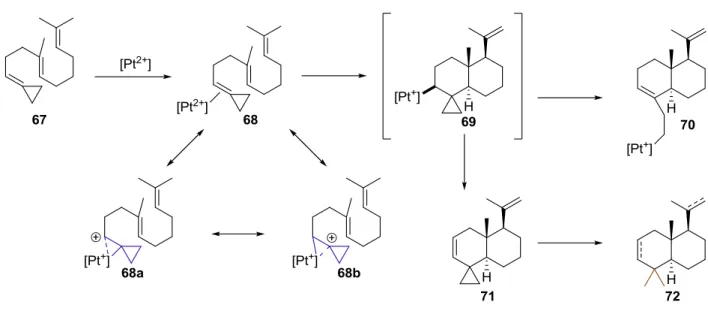
Attempted Biomimetic Synthesis with Pt(II) ... 41
Au(I)-Catalyzed Cope Rearrangement ... 46
Enantioselective Au(I)-Catalyzed Cope ... 48
Asymmetric Cope Rearrangement... 53
Substrate Scope and Limitations ... 55
Thermodynamic and Mechanistic Considerations... 57
Conclusions ... 63
Experimental Section ... 63
Chapter 3 - Au(I)-Catalyzed Ring Expansions ... 85
viii
Medium-Sized Rings ... 86
Initial Explorations ... 88
Product Identification ... 92
Limitations on Substrate Scope ... 103
Thermodynamic and Kinetic Considerations ... 104
Attempted Isolation of a Cyclooctene Product via Substrate Modification ... 107
Conclusions and Future Work ... 110
Experimental Section ... 110
Chapter 4 – Theoretical Exploration of 5-Exo Versus 6-Endo Ring Closures in Transition Metal Catalyzed Cyclizations ... 121
Ring Closure Modes ... 121
5-Exo Cyclizations ... 123
6-Endo Cyclizations ... 127
Nonclassical-Carbocation Transition States ... 129
Conclusions ... 133
Appendix A – 31P NMR Shifts and Pt-P Coupling Constants ... 135
Appendix B – Catalytic Turnover via β-Methoxy Elimination ... 138
Appendix C – Attempted Cyclization of Tetraene Substrates ... 141
ix
List of Tables
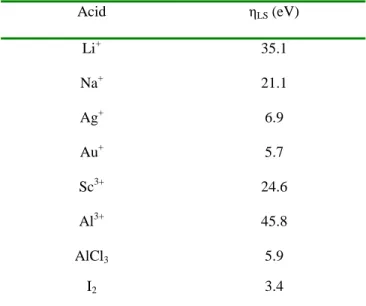
Table 1.1. Hardness parameters, ηLS, for select Lewis acids. ... 14
Table 1.2. Mercury(II) triflate mediated cyclization of polyenes. ... 23
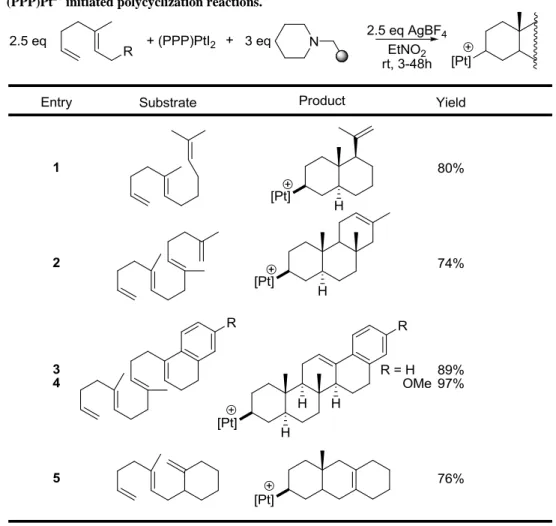
Table 1.3. (PPP)Pt2+ initiated polycyclization reactions... 32
Table 1.4. Substrate scope of catalytic cyclizations with (dppe)PtI2. ... 34
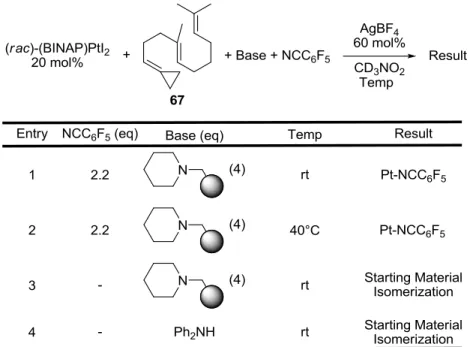
Table 2.1. Attempted cyclization of substrate 67 with (PPP)PtI2. ... 44
Table 2.2. Attempted cyclization of substrate 67 with (rac)-(BINAP)PtI2. ... 45
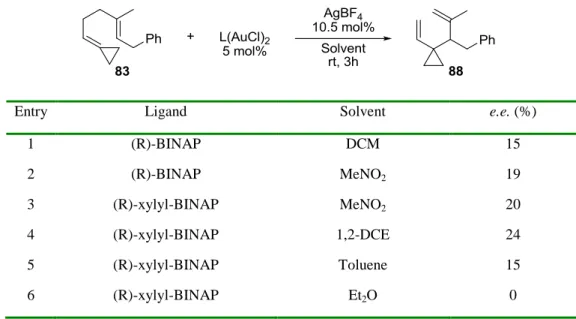
Table 2.3. Solvent effects on the Au(I) catalyzed Cope rearrangement. ... 49
Table 2.4. Temperature effects on the Au(I) catalyzed Cope rearrangement. ... 50
Table 2.5. Counter-ion effects on the Au(I) catalyzed Cope rearrangement. ... 51
Table 2.6. Ligand effects on the Au(I) catalyzed Cope rearrangement. ... 52
Table 2.7. Optimization of Au(I) catalyzed Cope rearrangement with (S )-xylyl-PHANEPHOS(AuCl)2. ... 53
Table 2.8. Substrate scope of Au(I) catalyzed Cope rearrangement. ... 56
Table 2.9. Gas-phase free energies for uncatalyzed Cope rearrangement of substituted methylenecyclopropanes. ... 60
Table 3.1. Carbon and hydrogen atom shifts of compound 135b. ... 93
Table 3.2. Thermodynamics of ring expansion of cyclohexyl substrates. ... 107
Table 4.1. Baldwin’s rules for 4-6 membered rings. ... 121
Table 4.2. Transition states and cationic species relevant to Pt(II) mediated cyclization of 1,5-dienes. ... 131
Table A.1. 31P NMR data for (PPP)Pt2+ complexes. ... 135
Table A.2. 31P NMR data for P2PtI2 complexes. ... 136
x List of Schemes
Scheme 1.1. Control of deprotonation regioselectivity provided by electrophilic activation. ... 2
Scheme 1.2. Ga(OTf)3 catalyzed Friedel-Craft acylation of heteroaromatics. ... 5
Scheme 1.3 Lewis acid catalyzed homoenolate annulation for stereoselective construction of γ-lactams. ... 5
Scheme 1.4. Phase-transfer catalyzed synthesis of β-hydroxy-α-amino acids. ... 8
Scheme 1.5. FeCl3 catalyzed intramolecular Friedel-Craft reaction. ... 9
Scheme 1.6. Electrophilic activation and cyclization of alkynes by Pt(II). ... 10
Scheme 1.7. Palladium(II) catalyzed Cope rearrangement. ... 11
Scheme 1.8. Enzyme catalyzed polyene cascade cyclizations. ... 20
Scheme 1.9. LBA-mediated biomimetic cyclization of polyene substrates. ... 21
Scheme 1.10. Experimental results of cascade cyclizations with LBA 37 and rationalization for observed absolute stereochemistry. ... 22
Scheme 1.11. Catalytic monocyclizations mediated by Hg(OTf)2. ... 24
Scheme 1.12. Pd(II) catalyzed cyclizations of polyene substrates. ... 24
Scheme 1.13. Pd(II) catalyzed cyclization of 1,n-dienes. ... 26
Scheme 1.14. Cyclopropanation reaction catalyzed by an in situ activated Pt(II) complex. ... 28
Scheme 1.15. Polyene cyclization using tridentate (PPP)Pt(II) catalysts. ... 29
Scheme 1.16. Cyclization of a squalene analog with in situ generated (PPP)Pt2+. ... 33
Scheme 1.17. Cyclization of (E)- and (Z)- alkenes with a chiral Pt(II) complex. ... 35
Scheme 1.18. Enantioselective alkoxycyclization catalyzed by a chiral Au(I) complex. ... 37
Scheme 1.19. Enantioselective [4+2] cycloaddition reaction catalyzed by a chiral Au(I)-phosphoramidite complex. ... 38
Scheme 2.1. Isodesmic reaction of methylenecyclopropane with isopropane. ... 40
Scheme 2.2. Synthesis of substrate 67. ... 42
Scheme 2.3. Synthesis of Pt(II) complexes for use in polyene cascade cyclizations. ... 44
xi
Scheme 2.5. Reaction of substrate 67 with other transition metals known to
catalyze the Cope rearrangement. ... 46
Scheme 2.6. Synthesis of substrate 83. ... 48
Scheme 2.7. Synthesis of dienylphenol substrate 91. ... 55
Scheme 2.8. Calculated energy differences between cycloalkylidenes and their expected Cope rearrangement products (using the DFT B3LYP/6-31G(d) method). ... 58
Scheme 3.1. Synthesis of cyclic substrates for creation of medium-sized rings. ... 88
Scheme 3.2. Reaction of substrates 127a/b with Gagosz catalyst. ... 89
Scheme 3.3. Proposed substrate modification to allow isolation of cyclooctene intermediate. ... 108
Scheme 3.4. Attempted synthesis of substrates 140/143. ... 109
Scheme 4.1. Hydroamination reaction catalyzed by [PtCl2(CH2=CH)]2. ... 124
Scheme 4.2. Hydroamination of alkenes catalyzed by (PNP)Pd(II). ... 125
Scheme 4.3. Alkoxyamination of 155. ... 125
Scheme 4.4. Pd(II)-catalyzed furan synthesis via 5-exo cyclization. ... 127
Scheme 4.5. Pd(II)-catalyzed 6-endo ring closure of alkenyl ketones. ... 128
Scheme B.1. Synthesis of substrate 183. ... 138
Scheme B.2. Synthesis of substrates 190, 191, 193, and 194. ... 139
Scheme B.3. β-methoxy elimination from a P2Pt-alkyl. ... 140
xii List of Figures
Figure 1.1. Lewis acid-Lewis base interaction. ... 1
Figure 1.2. Lewis acid promoted allylic tin crotylations. ... 3
Figure 1.3. Cooperative catalysis in the formation of γ-lactams. ... 7
Figure 1.4. Hydrofunctionalization of alkenes catalyzed by late transition metals. ... 11
Figure 1.5. Relative HOMO and LUMO energies of hard and soft Lewis acidic and basic species. . 15
Figure 1.6. Orbital diagram of possible interactions between transition metals and alkene ligands. .. 16
Figure 1.7. Effects of π-backbonding on bond angles and schematic representation of slippage. ... 17
Figure 1.8. Synthetic building blocks of terpene biosynthesis. ... 18
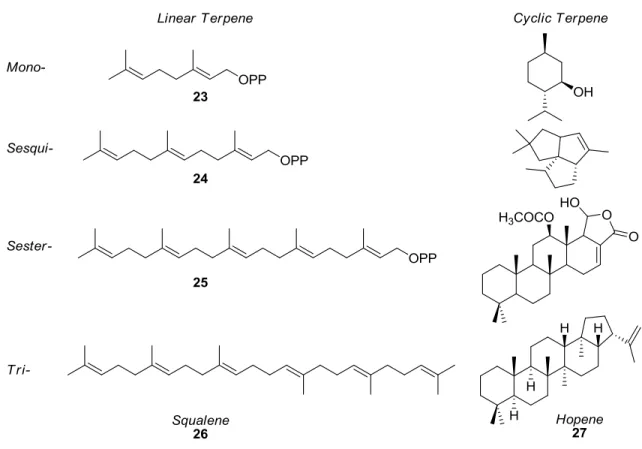
Figure 1.9. Linear and cyclic examples of various classes of terpenes. ... 19
Figure 1.10. Common coordination geometries of Pt(II) and Au(I) ligand (L) complexes. ... 27
Figure 1.11. Triphos derivatives synthesized in order to explore the effect of ligand electron donating ability on Pt(II) initiated cyclizations. ... 30
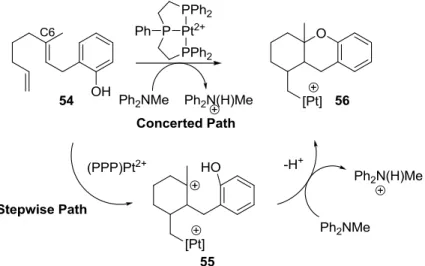
Figure 1.12. Possible mechanistic pathways of Pt(II) initiated cascade cyclization reaction. ... 30
Figure 1.13. Catalytic cycle for Pt(II) initiated polyene cascade cyclizations. ... 33
Figure 1.14. Examples of Au(I) complexes commonly utilized in asymmetric transformations. ... 37
Figure 2.1. Proposed coordination and cyclization modes of methylenecyclopropanes with Pt(II). .. 41
Figure 2.2. Classical Cope rearrangement conditions and representation of the typically chair-like transition state of Cope rearrangements. ... 47
Figure 2.3. Synthesis of phosphine coordinated Au(I) complexes. ... 49
Figure 2.4. Pd(II) catalyzed hetero-Cope rearrangement of allylic trichloroacetimidiates. ... 54
Figure 2.5. Rh(II) catalyzed intermolecular process resembling the Cope rearrangement. ... 54
Figure 2.6. Control substrates tested under Au(I)-catalyzed Cope rearrangement conditions. ... 59
Figure 2.7. Potential mechanistic pathways for the Au(I)-catalyzed Cope rearrangement. ... 61
Figure 2.8. Investigation of Cope rearrangement versus cyclization for substrate 67... 62
Figure 2.9. Relative free energies (kcal/mol) of cyclopropylidene to cyclobutene ring expansion. ... 63
xiii
Figure 3.2. Natural products containing medium-sized rings... 86
Figure 3.3. Substrates employed in attempted synthesis of medium-sized rings. ... 88
Figure 3.4. Selected NOESY correlations in NMR spectrum of 135b. ... 90
Figure 3.5. Natural products with a bicyclo[4.2.0]oct-1-ene core. ... 91
Figure 3.6. Potential mechanistic pathways for rearrangement of compound 127... 92
Figure 3.7. Labeling scheme employed for discussion of NMR spectra of compound 135b. ... 92
Figure 3.8. Full spectrum of HSQC of compound 135b (F2: 8.0-0.0 ppm). ... 94
Figure 3.9. Expanded view of HSQC of 135b (F2: 3.8-0.0 ppm). ... 94
Figure 3.10. COSY spectrum of compound 135b. ... 96
Figure 3.11. Expanded view of COSY of 135b (4.0-0.5 ppm). ... 96
Figure 3.12. Expanded view of COSY of 135b (2.3-0.5 ppm). ... 97
Figure 3.13. HMBC spectrum of 135b. ... 98
Figure 3.14. Expanded view of HMBC of 135b. F1: 150-110 ppm F2: 8.0-0.0 ppm ... 98
Figure 3.15. Expanded view of HMBC of 135b. F1: 80-0 ppm F2: 8.0-0.0 ppm. ... 99
Figure 3.16. Exanded view of HMBC of 135b. F1: 70-0 ppm F2: 4.0-0.0 ppm. ... 99
Figure 3.17. NOESY spectrum of compound 135b. ... 101
Figure 3.18. Expanded view of NOESY spectrum of 135b. (6.0-0.0 ppm). ... 101
Figure 3.19. Expanded view of NOESY spectrum of 135b. (4.0-0.0 ppm). ... 102
Figure 3.20. Expanded view of NOESY spectrum of 135b. (2.25-0.5 ppm). ... 102
Figure 3.21. Expanded view of NOESY spectrum of 135b. (F1: 3.0-2.5 ppm F2: 3.0-1.85 ppm). . 103
Figure 3.22. Proposed rearrangement of 5- and 7-membered ring substrates. ... 103
Figure 3.23. Calculated relative energies (kcal/mol) of structures involved in potential rearrangement pathways of 127a. ... 106
Figure 4.1. Examples of Baldwin’s rules terminology. ... 122
Figure 4.2. Comparison of 5-endo-trig and 5-endo-dig closure modes. ... 123
xiv
Figure 4.4. Potential intermediates for 5-exo and 6-endo cyclizations of compound 151. ... 124
Figure 4.5. Aminotrifluoroacetoxylation of alkenes using PhI(OAc)2. ... 126
Figure 4.6. Closure modes available to Pt(II)-mediated cyclizations of 1,5-dienes. ... 128
Figure 4.7. Nonclassical carbocations involving σ- and π-bonds. ... 130
Figure 4.8. Proposed nonclassical-carbocation-like transition states. ... 130
Figure 4.9. Bicyclic-like character of nonclassical transition states. ... 131
Figure 4.10. Proposed transition states leading to observed ring closure selectivity for Widenhoefer Pd(II) systems. ... 132
Figure 4.11. Bicyclo[n.1.0]-like transition states for cyclization of 1,6-dienes. ... 133
Figure B.1. Potential catalytic turnover via β-hydride elimination. ... 138
Figure C.1. Selected natural products derived from geranylgeranyl diphopshate. ... 141
Figure C.2. Proposed cyclization of substrate 202. ... 142
Figure C.3. Potential explanations for observed failure of 202a to cyclize. ... 144
xv
List of Abbreviations and Symbols
˚C Degrees, in Celsius
α Alpha – Position bound to a metal center
A Electron affinity
aq Aqueous
β Beta – position adjacent to a bound metal center
BINAP 2,2'-Bis(diphenylphosphino)-1,1'-binaphthyl,
Bn Benzyl
ca Circa, approximately
COD 1,5-cyclooctadiene
d Doublet
d# d-orbital electron configuration of a transition metal
δ Delta – change from a standard value
DCE 1,2-dichloroethane
DCM dichloromethane
dd Doublet of doublets
DFT Density functional theory
dppe 1,2-bis(diphenylphosphino)ethane
dr Diastereomeric ratio
E Entgegen, opposite
ee Enantiomeric excess
Endo Endocyclic
Et2O Diethyl ether
EtNO2 Nitroethane
xvi
ηLS Absolute hardness
EtOAC Ethyl acetate
eq equivalents
eV Electronvolts
Exo Exocyclic
g Gram
GC Gas chromatography
h Hours
HNTf2 Bis-trifluoromethanesulfonimide, triflimide
HOMO Highest occupied molecular orbital
HR High resolution
HSAB Hard and soft acids and bases
I Ionization potential
KHMDS Potassium bis(trimethylsilyl)amide
KOtBu Potassium tertiary-butoxide
L Any ligand
LBA Lewis acid assisted chiral Brønsted acid
LUMO Lowest unoccupied molecular orbital
M Any metal
m Multiplet
M+ Molecular ion
mcp Methylenecyclopropane, cyclopropylidene
mCPBA meta-chloroperoxybenzoic acid
Me Methyl
xvii
mg milligrams
MHz Megahertz
Min Minutes
mmol millimoles
mol% Mole percent
MS Mass spectroscopy
m/z Mass-to-charge ratio
NaIO4 Sodium periodate
NHC N-heterocyclic carbene
NMR Nuclear magnetic resonance
OAc Acetate
OMe Methoxy
OTf Trifluoromethanesulfonate, triflate
PHANEPHOS 4,12-Bis(diphenylphosphino)-[2.2]-paracyclophane
Ph Phenyl
PMB Para-methoxybenzyl ether
PNP 2,6-bis((diphenylphopshino)methyl)pyridine
ppm Parts per million
PPP Triphos, bis(diphenylphosphinoethyl)phenylphosphine
π Pi – electrons involved in carbon-carbon multiple bonds
π* Antibonding pi orbital
R Any alkyl substituent
rac Racemic
rt Room temperature
s Singlet
xviii
SEGPHOS 5,5’-bis(diphenylphosphino)-4,4’-1,3-benzodioxole
s-BuLi Secondary-butyl lithium
σ Sigma – electrons involved in carbon-carbon single bonds
t Triplet
TBD 1,5,7-triazabicyclo[4.4.0]dec-5-ene
TDA-1 tris[2-(2-methoxyethoxy)ethyl]amine
TFA Trifluoroacetate
THF Tetrahydrofuran
Tr+ Triphenylmethyl cation, trityl cation
Xylyl 3,5-dimethylphenyl
Chapter 1
- Introduction
Electrophilic Activation – Lewis Acids
Electrophilic activation is the resultant increase in reactivity in a chemical moiety due to the interaction of a lone pair of electrons or a π-bond with an electrophile. This interaction is the donation of a pair of electrons into either a reactive vacant orbital, or an energetically accessible lowest unoccupied molecular orbital on the electrophile. The result is a thermodynamically favorable interaction that increases the polarity of the donor functional group, with a concomitant increase in reactivity toward nucleophiles. The electron donor in these interactions is referred to as a “Lewis base” while the electron acceptor is referred to as a “Lewis Acid.”1
Figure 1.1 shows an example of a Lewis acid-Lewis base interaction in which the carbonyl group is acting as the Lewis base, donating electrons to the positively charged Lewis acid. The reactivity enhancement is easily visualized by the right hand resonance structure in which a full positive charge now rests on the carbonyl carbon.
Figure 1.1. Lewis acid-Lewis base interaction.
This broad definition of a Lewis acid means that every chemical species carrying a net positive charge can function as an electrophile, and therefore includes all metal cations and cationic metal complexes.2 A positive charge is not necessary for a compound to exhibit Lewis acidic properties, however, as demonstrated by the efficacy of neutral boron species for electrophilic activation. This simple and intuitive formulation has proven to be an extremely powerful concept in
1 Lewis, G. N. Valence and the Structure of Atoms and Molecules; The Chemical Catalog Co.: New York, N.Y.,
1923.
2
chemistry, leading to the development of a multitude of stoichiometric and, recently, catalytic reactions enabled by Lewis acids. In addition to the extensive use of alkali metals, alkaline earth metals, and Group 13 elements in Lewis acid applications, recent research has led to the development of organocatalytic Lewis acids and an increasing focus on transition metals as potent sources of electrophilic activation.
One application of Lewis acids is to increase the acidity of hydrogen atoms α to the electron donating moiety. The positive, or partial positive, charge created upon complexation to a Lewis acid inductively activates the α-hydrogen, resulting in more facile deprotonation. This concept was employed by Kessar to deprotonate tertiary amines for use in the synthesis of alkaloid compounds (Scheme 1.1).3 Upon reacting compound 1 with s-BuLi deprotonation occurs exclusively at C4, which forms products 2a when trapped with an electrophile. Treating 1 with the Lewis acid BF3 -etherate prior to deprotonation, however, results in a complete reversal of regioselectivity. The activated complex 1-BF3 undergoes deprotonation at C1 due to the inductive stabilization of the
negative charge by the adjacent positively charged nitrogen. This protocol led to the synthesis of the alkaloid cordrastine, 2b, in 47% yield with no C4 substitution products being observed.
Scheme 1.1. Control of deprotonation regioselectivity provided by electrophilic activation.
3 a) Kol, M.; Rozen, S. Chem. Soc., Chem. Commun.1991, 567. b) Kessar, S. V.; Singh, P. Chem. Rev.1997,
3
Lewis acids have also been employed extensively in enhancing the reactivity of allylic tin compounds.4 The primary method by which these reactions are promoted involves interaction of the Lewis acid with the nucleophilic compound by coordination (see Figure 1.1) to increase polarity. This effect has been studied extensively for allylic tin compounds and the employment of Lewis acids was found to have important implications for both the enhancement of the reaction rate and the stereoselectivity of the products (Figure 1.2). Allylic tin reagents are much less reactive than the analogous alkali and alkaline earth metal compounds but will react with carbonyl compounds under appropriate reaction conditions. For instance, when employing tin in crotylation reactions, the Lewis acidic properties of Sn play a large role and the reaction is known to proceed through the chair-like transition state 3a (Figure 1.2a). When a Lewis acid additive is present, however, the reaction is made more facile and proceeds through the acyclic, antiperiplanar transition state 3b.
Figure 1.2. Lewis acid promoted allylic tin crotylations.
4
When the appropriate Lewis acid is employed, a variety of allylic tin compounds, 4, can be transformed into the syn product isomers, 5, with excellent selectivity.5 This selectivity is generated by alignment of the crotyl reagent, in the acyclic transition state, to reduce steric interactions between the aldehyde R fragment and the R3 substituent (see compound 6, Figure 1.2b). This leads to both (E)- and (Z)-crotyltin compounds giving syn products. These reactions have been employed in natural product synthesis.6
In recent years an increasing amount of focus has been placed on “green” chemistry, which is defined in part by low waste, highly atom economic transformations with minimal environmental impact. With this increasing focus on the use of environmentally benign reagents, the commonly employed and well-studied, but harmful and corrosive, Lewis acids (e.g. AlCl3, BF3) are being discouraged from use in large-scale preparations. Metal trifluoromethanesulfonates (triflates, M(OTf)n) are a promising class of Lewis acids that have been applied to a large variety of organic transformations.7 Many of these Lewis acidic compounds can be used catalytically, recovered, and recycled in subsequent reactions. Showing particular promise for potential large-scale preparations is the Lewis acid Ga(OTf)3.8
In addition to being water-tolerant, Ga(OTf)3 demonstrates high efficiency at low catalyst loadings and is capable of driving a range of reactions such as Friedel-Craft alkylations, hydroxyalkylations and acylations. In many cases excellent yields and chemoselectivity are observed and the catalyst is recyclable. Of particular interest in the pharmaceutical industry is the efficacy Ga(OTf)3 demonstrates in the Friedel-Craft acylation of heteroaromatics (Scheme 1.2).
9
5 a) Keck, G. E.; Abbott, D. E.; Boden, E. P.; Enholm, E. J. Tetrahedron Lett.1984, 25, 3927. b)Matsubara, S.;
Wakamatsu, K.; Morizawa, Y.; Tsuboniwa, N.; Oshima, K.; Nozaki, H. Bull. Chem. Soc. Jpn.1985, 58, 1196. 6 a) Koreeda, M.; Tanaka, Y. Tetrahedron Lett. 1987, 28, 143. b) Paquette, L. A.; Doherty, A. M.; Rayner, C. M. J. Am. Chem. Soc. 1992, 114, 3910.
7 a) Kobayashi, S. Synlett1994, 689. b) Kobayashi, S.; Manabe, K. Acc. Chem. Res.2002, 35, 209. c)
Tschumimoto, T.; Tobita, K.; Hiyama, T.; Fukuzawa, S. J. Org. Chem.1997, 62, 6997. d) Kawada, A.; Mitamura, S.; Kobayashi, S. Chem. Commun.1996, 183. e) Ma, Y.; Qian, C. Tetrahedron Lett.2000, 41, 945.
8 a) Prakash, G. K. S.; Mathew, T.; Olah, G. A. Acc. Chem. Res.2012, 45, 565. b) Prakash, G. K. S.; Yan, P.;
Béla Török, P. Y.; Bucsi, I.; Tanaka, M.; Olah, G. A. Catal. Lett.2003, 85, 1.
5
Scheme 1.2. Ga(OTf)3 catalyzed Friedel-Craft acylation of heteroaromatics.
Lewis acids can also be utilized in asymmetric catalysis. A recent development employs a Lewis acid and an N-heterocyclic carbene (NHC) Lewis base in “cooperative catalysis” for the highly stereoselective construction of γ-lactams (Scheme 1.3).10
Using the inorganic base 1,5,7-triazabicyclo[4.4.0]dec-5-ene (TBD) to deprotonate the imidazolium tetrafluoroborate salt, N-acyl hydrazones (7) could be treated with a wide range of homoenolate equivalents, 8, to produce the lactam products (9) in good yields and high diastereo- and enantioselectivity.
Scheme 1.3. Lewis acid catalyzed homoenolate annulation for stereoselective construction of γ-lactams.
The cooperative nature of this catalytic system comes from the tandem activation of the homoenolate equivalents by the NHC and the electrophilic activation of the N-acyl hydrazine by the Lewis acid (Figure 1.3). The catalytic transformation is initiated by addition of the NHC to 8,
10 a) Raup, D. E. A.; Cardinal-David, B.; Holte, D.; Scheidt, K. A. Nature Chem.2010, 2, 766. b) Cohen, D. T.;
6
7
Figure 1.3. Cooperative catalysis in the formation of γ-lactams.
8
using these types of Lewis acids.11 In 2002, Maruoka used quaternary ammonium salt 9 to synthesize optically active β-hydroxy-α-amino acids (compounds 10, Scheme 1.4). These protocols have the advantage of being experimentally simple and proceeding under mild conditions but examples of enantioselective applications are still limited compared to other areas of asymmetric catalysis.
Scheme 1.4. Phase-transfer catalyzed synthesis of β-hydroxy-α-amino acids.
Transition metals, both early and late, have demonstrated profound capabilities for electrophilic activation. The variety of electronic configurations and reactivity profiles present in the d-block elements allows for a tremendous number of transformations to be mediated. Different oxidation states of the same element can fundamentally change the pathway of a chemical reaction. The ability to bind ligands, most notably organophosphorous compounds, can allow for the fine-tuning of product distributions and selectivities. These ligands impact both the electronic and steric environment of the metal center and provide the potential for asymmetric transformations. This is especially relevant for the late transition metals Pd(II), Pt(II) and Au(I).
The Lewis acidic properties of early transition metals have been known and employed in synthetic chemistry for decades. Variations of the classic Friedel-Craft alkylations catalyzed by FeCl3 are still a point of ongoing research (Scheme 1.5).
12
Iron(III) is capable of many additional electrophilic activation processes, including alkyne activation and couplings and Prins-type
11
a) Ooi, T.; Taniguchi, M.; Kameda, M.; Maruoka, K. Angew. Chem. Int. Ed.2002, 41, 4542. b) Moss, T. A.; Fenwick, D. R.; Dixon, D. J. J. Am. Chem. Soc.2008, 130, 10076. c) Werner, T. Adv. Synth. Catal.2009, 351, 1469. d) Giacalone, F.; Gruttadauria, M.; Agrigento, P.; Noto, R. Chem. Soc. Rev.2012, 41, 2406-2447.
9
cyclizations.13 It also has the advantages of being relatively cheap and environmentally friendly, but has demonstrated limited scope in some systems compared to analogous gold-catalyzed systems.14
Scheme 1.5. FeCl3 catalyzed intramolecular Friedel-Craft reaction.
The ability to activate alkynes is a characteristic shared by many transition metals including Pd(II), Ru(II), Rh(I), Ir(I), Pt(II), Au(I), Cu(I) and Ag(I).15 The cycloisomerization of 1,n-enynes is a common reaction employed for the construction of carbocyclic frameworks, but most transition metals mediate these reactions through simultaneous activation of both the alkyne and alkene, then proceeding through metallacyclic intermediates. Electrophilic activation of an alkyne to render it susceptible to attack by a nucleophile is possible, however, as demonstrated by the work of Murai and co-workers (Scheme 1.6).16 This system was found to be applicable to a wide range of enynes and provided the product compounds in good yields (Scheme 1.6a). The mechanistic pathway is postulated to start with coordination of Pt(II) to the alkyne to form η2
complex 13 (Scheme 1.6b). Nucleophilic attack of the alkene could then proceed through transition state 14 to give bicyclic intermediate 15. From here a ring expansion to a bicyclo[3.2.0] intermediate, followed by alkyl and/or hydride shifts would give the observed products.
13 Plietker, B.; Padrón, J. I.; Martín, V. In Iron Catalysis; Springer Berlin Heidelberg, 2011; Vol. 33; pp 1-26. 14 Nieto-Oberhuber, C.; Paz Munoz, M.; Lopez, S.; Jimenez-Nunez, E.; Nevado, C.; Herrero-Gomez, E.;
Raducan, M.; Echavarren, A. M. Chem. Eur. J.2006, 12, 1677.
15 Michelet, V.; Toullec, P. Y.; Genet, J.-P. Angew. Chem. Int. Ed.2008, 47, 4268.
16 a) Chatani, N.; Morimoto, T.; Muto, T.; Murai, S. Organometallics1996, 15, 901. b) Martín-Matute, B.;
10
Scheme 1.6. Electrophilic activation and cyclization of alkynes by Pt(II).
Much less prevalent in the literature are examples of electrophilic alkene activation. Protocols have been developed using Rh(I) and Ir(I)17 catalysts, but the most studied systems involve the use of Pd(II) and Pt(II) catalysts. In 1980 Overman utilized bis(benzonitrile)palladium(II) chloride to catalyze the Cope rearrangement of 1,5-dienes (Scheme 1.7).18 The reaction is believed to be initiated by complexation of Pd(II) to the less substituted double bond, inducing polarization of the alkene and attack by the more substituted olefin (see structure 16, Scheme 1.7). Overman proposed that the reaction proceeds stepwise through a tertiary carbocation intermediate such as 17, but there has been debate as to whether these types of reactions are concerted or stepwise. A recent computational study has indicated that the reaction may in fact be concerted, especially when the structure lacks cation-stabilizing groups on the more substituted double bond.19 Whether stepwise or concerted, the product is the thermodynamically more stable diene, and these Pd(II)-catalyzed Cope rearrangements proceed efficiently at room temperature in high yields.
17 Yadav, J. S.; Antony, A.; Rao, T. S.; Subba Reddy, B. V. J. Organomet. Chem.2011, 696, 16. 18 Overman, L. E.; Knoll, F. M. J. Am. Chem. Soc.1980, 102, 865.
11
Scheme 1.7. Palladium(II) catalyzed Cope rearrangement.
Evolving from this early work the late transition metals have been employed to electrophilically activate alkenes for a variety of transformations. Prominent use of these systems include hydrofunctionalization of alkenes, which is the addition of H-X across a double bond (X = N, O, C; see Figure 1.4) and polyene cascade cyclizations.20 These reactions efficiently generate molecular complexity and many examples of asymmetric pathways have been demonstrated.
Figure 1.4. Hydrofunctionalization of alkenes catalyzed by late transition metals.
With so many different Lewis acids and Lewis bases, a system for rationalizing experimental observations and predicting reactivity is necessary. One of the most useful conceptualizations for explaining the behavior of Lewis acids and bases is that of the “hard and soft acids and bases” (HSAB) principle.21 This concept explains the chemical reactivity of Lewis acids and bases primarily based on polarizability and electronegativity. Understanding this principle provides insight into the chemoselectivity of a large variety of Lewis acids and can lead to accurate predictions of new chemical phenomena. The next section is focused on the examination of this important concept.
20 a) Liu, C.; Bender, C. F.; Han, X.; Widenhoefer, R. A. Chem. Commun.2007, 3607. b) Chianese, A. R.; Lee,
S. J.; Gagné, M. R. Angew. Chem. Int. Ed.2007, 46, 4042.
12
Hard and Soft Acid and Base Theory
The concept of hard and soft Lewis acids and bases was formalized in 1963 by Pearson, building from contributions to the field by Edwards, Ahrland, Chatt, Davies, and Schwarzenbach.22 Originally conceptualized as a classification system for Lewis acids and bases based on their reactivity profiles, the hard and soft acid and base (HSAB) theory has become an intuitive way to understand reactivity trends in electrophilic and nucleophilic systems. Hard acids and bases were originally defined as being small, nonpolarizable species with a high charge concentration. Soft acids and bases were characterized by being large, polarizable species with a low charge concentration. Polarizability is a measure of how easily the electron cloud is distorted within an atom or molecule. The HSAB principle postulated that soft acids will interact more strongly with soft bases while hard acids will interact more strongly with hard bases. Within this framework the relative hardness of a large number of Lewis acids and bases was determined by analyzing nucleophilic displacement reactions of the type represented in equation 1. Here N is a nucleophilic reagent (a Lewis base) and S-D is a substrate (S, Lewis acid) with a displaceable group (D, also a Lewis base). Keeping the reference base (D) constant allowed the equilibrium constants for the displacement reactions to be compared, giving a qualitative assessment of hardness for a series of Lewis bases (N) and Lewis acids (S).
This formulation of the HSAB principle was more qualitative than quantitative as it provided information about which of two competing reactions will have the larger equilibrium constant, but did not provide data about the absolute value of that constant. Nevertheless, the principle was and continues to be a powerful tool for understanding chemical reactions. It should be noted that there is no absolute cutoff for a “hard” acid versus a “soft” acid and intermediate cases do occur, but dividing chemical species into the two classes can be quite useful. There is also no correlation between soft
13
Lewis bases and weak Brønsted bases, for instance the soft Lewis base RS- binds strongly to H+, but hard Lewis bases will also bind H+ strongly.
Useful generalizations can be made though, especially about metal ions. Hard metal ions will form their most stable complexes with the first ligand atom of each periodic table group (e.g. N > P), while soft metal ions will form their most stable complexes with the second or a subsequent member of each group. For a typical soft metal ion decreasing complex stability for ligand atoms generally follows the order C~S > I > Br > Cl~N > O > F, which follows the increase in electronegativity. Hardness also increases with increasing oxidation state of the metal. For instance Fe3+ is harder than Fe2+ and Pt4+ is harder than Pt2+. The hardness or softness of an element is also affected by the bound ligands. Any group which transfers negative charge density to the Lewis acid center will decrease the hardness.
Also discussed in Pearson’s 1963 report was the π-bonding theory of Lewis acids, which applied mainly to metallic complexes. Soft Lewis acids were considered to have loosely held d-orbital electrons which could form π-bonds with suitable ligands, those having relatively low energy empty d-orbitals such as P, As, S, and I, or unsaturated ligands such as CO and isonitriles. In the latter cases the orbitals employed on the ligands would be antibonding molecular orbitals. Increasing the oxidation state of the metal would lead to the electrons available for this back-donation being lower in energy (more tightly bound to the metal center), and therefore lead to a less favorable π-bonding interaction. Hard Lewis acids, on the other hand, would have relatively tightly bound outer electrons but low energy acceptor orbitals. In this case harder ligands such as O and F, in addition to the σ-interactions, could form π-bonding interactions by donation of electrons into the acceptor orbitals on the metal. The concept of electron back-donation from the metal center to the ligand and its importance to the chemistry of Pt(II) and Au(I) will be discussed further in conjunction with carbophilic activation.
14
bonding while softer species, with their larger size and polarizability, would favor more covalency in their bonding interactions. For hard species this would mean that the interactions are mostly electrostatic in nature; electrostatic interactions rapidly decrease in strength with increasing charge separation. Smaller sized, hard Lewis acids and bases would allow the charge centers to approach closer, enhancing electrostatic interactions. For soft species, typically bearing smaller charge density, the approach needs to be close enough to allow favorable overlap of molecular orbitals. This leads to polarizability, the ability to distort electron clouds and begin forming chemical bonds at greater distances, being a highly important characteristic.
Table 1.1. Hardness parameters, ηLS, for select Lewis acids.
Acid ηLS (eV)
Li+ 35.1
Na+ 21.1
Ag+ 6.9
Au+ 5.7
Sc3+ 24.6
Al3+ 45.8
AlCl3 5.9
I2 3.4
In subsequent studies, to address at least in part the qualitative nature of the HSAB theory, Parr and Pearson introduced the concept of absolute hardness, ηLS, defined as ηLS = ½(I - A) where I is the ionization potential and A is the electron affinity, measured in electronvolts (eV).23 The term ηLS is used here with LS representing a Lewis species to avoid confusion with η used for defining the coordination mode of a metal-ligand interaction. Using this equation and tabulated data they were able to calculate the hardness for a variety of Lewis acids and bases (Table 1.1). It should be noted that the values shown for the ions in Table 1.1 should be considered hypothetical upper limits for
23 a) Parr, R. G.; Pearson, R. G. J. Am. Chem. Soc.1983, 105, 7512. b) Pearson, R. G. J. Chem. Educ.1987, 64,
15
hardness as they are values for isolated ions. For instance the coordination chemistry of Al3+ in aqueous solution will actually involve Al(H2O)n
3+
, and therefore have attenuated hardness. The results do show the significant impact that ligands have on hardness, however, as the calculated value for AlCl3 is a fraction of that for Al
3+ .
This work does provide a way to relate HSAB theory to molecular orbital theory in that it mathematically relates hardness to the HOMO and LUMO energies of molecules and ions. The HOMO of hard species will be low in energy with high energy LUMOs, leading to a large HOMO-LUMO gap. In contrast soft species will have a small HOMO-HOMO-LUMO gap resulting from relatively high energy HOMOs and low energy LUMOs (Figure 1.5).24 Strong chemical bonds result from the interaction of orbitals close in energy. Donation from the high energy HOMO of a soft Lewis base to the low energy LUMO of a soft Lewis acid will result in a strong bond with a high degree of covalency. The large HOMO-LUMO energy gaps of hard species, however, will reduce the effectiveness of these types of bonding interactions, explaining why the bonding is mostly electrostatic in nature.
Figure 1.5. Relative HOMO and LUMO energies of hard and soft Lewis acidic and basic species.
Hard Lewis species can now be characterized by small size, low polarizability, and a large HOMO-LUMO gap. Hard Lewis acids prefer to form complexes with highly electronegative elements of the second row of the periodic table and are most commonly used in synthetic chemistry for oxophilic activation (see Figure 1.1, Scheme 1.3). Soft Lewis species are those characterized by
16
large size, high polarizability, and a small HOMO-LUMO gap. Some of these compounds can be utilized for carbophilic activations in order to mediate synthetically useful transformations involving carbon-carbon π-bonds under mild conditions. Development of highly efficient, selective systems for these types of reactions is an important area of chemistry and the focus of this thesis.
Carbophilic Activation
Carbophilic activation is an increase in reactivity of a carbon-carbon π-bond caused by a soft Lewis acid depriving the π-bond of electron density, inducing a partial positive charge on the unsaturated Lewis base. The most successful Lewis acids employed in carbophilic activation chemistry are the late transition metals Pd(II), Pt(II), and Au(I).2,15,20b A useful model for considering the bonding situation in complexes between transition metals and alkenes or alkynes is the Dewar-Chatt-Duncanson model, which treats the bond as a donor-acceptor interaction between two closed-shell fragments.25
Within this framework a σ-bond is formed from electron donation by the π-system of the ligand into an empty orbital of appropriate symmetry on the metal. A π-bond can also be formed from electron back-donation from the metal center into an antibonding π* orbital on the ligand (Figure 1.6).2 For an alkyne ligand additional interactions are possible through the perpendicular, out-of-plane π-orbitals (bonding and antibonding) and suitable orbitals on the metal center.
Figure 1.6. Orbital diagram of possible interactions between transition metals and alkene ligands.
To quantify the strength of these different interactions, density functional theory (DFT) calculations were carried out on the Au+-acetylene complex [Au+(C2H2)] to determine the
25 a) Chatt, J.; Duncanson, L. A. J. Chem. Soc.1953, 2939. b) Dewar, M. J. S. Bull. Soc. Chim. Fr.1951, 18,
17
contribution of each bonding interaction to the overall complexation energy.26 It was found that the σ interaction accounted for ca. 65% of the total bonding energy, with the in-plane back donation accounting for ca. 27%. The interaction of the out-of-plane π-bond with the metal center accounted for another 7%, while the back donation from the metal to the out-of-plane π* orbital made up only 1% of the bonding energy. It was concluded that alkynes and alkenes are strong two-electron σ-donors to Au(I) and Pt(II), but relatively weak π-acceptors.
These bonding interactions have important effects on the geometry of the unsaturated ligand. Both the σ-interaction and the backbonding interaction with the metal complex act to weaken the π-bond of the unsaturated ligand. This can lead to significant deviations from the ideal π-bond angles of the uncomplexed ligand, as seen in the Pt(0) complex with diphenylacetylene (18) in which the bound ligand’s bond angles, θ, deviate from linearity by 60˚ (Figure 1.7a).2 It was noted above that Pt(II) demonstrates weak back-bonding interactions. Pt(0), however, is able to strongly back-donate electron density into the π* orbital of the alkyne due to its lower oxidation state. It is a characteristic of all transition metals that lower oxidation states lead to stronger the π-backbonding interactions due to population of higher energy donor orbitals on the metal center.27 This causes metals in higher oxidation states, such as Pt(II), to be stronger carbophilic activators than their lower oxidation state analogs. Lower π-backbonding leads to an increased relative electrophilicity of the carbon-carbon multiple bond.
Figure 1.7. Effects of π-backbonding on bond angles and schematic representation of slippage.
While it is valid to consider the ground state complexation of transition metals and alkenes/alkynes as η2 complexes similar to 19, it is now commonly believed that the transition state
18
for nucleophilic addition to the bound ligand involves slippage of the metal center to an η1
binding mode (see Figure 1.4, Figure 1.7b). Partial slippage can occur in the ground state of the complex as well, imparting electrophilicity to the ligand. Slippage also enables electron redistribution throughout the compound as the nucleophile transfers charge through the ligand and onto the metal center, a stabilizing effect when the metal is cationic.
While the utility of oxophilic activations is indisputable in synthetic chemistry, there are entire classes of natural products that can be accessed only by carbophilic activation, foremost among them the natural products derived from terpenes. Terpenes are natural products composed of isoprene units (20), produced biosynthetically from isopentenyl pyrophosphate (21) and dimethylallyl pyrophosphate (22, see Figure 1.8).
Figure 1.8. Synthetic building blocks of terpene biosynthesis.
19
served as attractive research targets for decades, driving innovation in synthetic and computational chemistry.28-29
Figure 1.9. Linear and cyclic examples of various classes of terpenes.
Enzymes are capable of catalyzing the transformation of these linear polyene species into complex cyclic compounds with remarkable control of product stereoselectivity.30 In the case of squalene (26), squalene-hopene cyclase catalyzes the conversion into hopene (27) setting 9 stereocenters in a single reaction (Scheme 1.8a). The cyclization is initated by protonation at C3 by an enzyme-based carboxylic acid moiety. Enzyme-labeling and computational studies have led to the proposal of a hydrogen bonding network within the active site of the cyclase enzyme that increases the acidity of the carboxylic acid sufficiently to allow initial protonation of the terpene (Scheme 1.8b). Cyclization of the ABC rings are believed to be concerted, but proceeds with initial formation
28 a) Razzak, M.; De Brabander, J. K. Nat. Chem. Biol.2011, 7, 865 and references therein. b) Yoder, R. A.;
Johnston, J. N. Chem. Rev.2005, 105, 4730.
29
a) Tantillo, D. J. Nat. Prod. Rep.2011, 28, 1035. b) Tantillo, D. J. J. Phys. Org. Chem.2008, 21, 561. c) Matsuda, S. P. T.; Wilson, W. K.; Xiong, Q. Org. Biomol. Chem. 2006, 4, 530.
30 a) Wendt, K. U.; Schulz, G. E.; Corey, E. J.; Liu, D. R. Angew. Chem. Int. Ed.2000, 39, 2812. b)
20
of a 5-membered C-ring to avoid formation of a secondary carbocation intermediate (Scheme 1.8a).31 Ring expansion to the 6-membered C ring seems to be concerted, but highly asynchronous, with formation of the D ring.
Scheme 1.8. Enzyme catalyzed polyene cascade cyclizations.
A similar pathway is believed to be followed by the D and E ring closures to avoid formation of secondary carbocations. Indeed, a large amount of research has indicated that secondary carbocation intermediates are avoided by complex hydride and alkyl shifts in terpene biosynthesis.29a,31-32 The carbocationic intermediates in these cyclizations are stabilized by aromatic residues in the active site through π-stacking interactions. The cyclization is terminated either by deprotonation by an active site base (as in the case of 27), or by nucleophilic capture of the carbocation by water.
Replicating the level of control that nature exerts over the outcome of these cascade cyclizations is still a daunting challenge in synthetic chemistry. A large part of the difficulty comes from the number of potential rearrangements that are available to carbocationic intermediates in
31
a) Smentek, L.; Hess, B. A., Jr. J. Am. Chem. Soc.2010, 132, 17111. b) Hess, B. A., Jr.; Smentek, L. Org. Lett.2004, 6, 1717. c) Hess, B. A., Jr. Org. Lett.2003, 5, 165.
32 a) Hong, Y. J.; Tantillo, D. J. J. Am. Chem. Soc.2010, 132, 5375. b) Lodewyk, M. W.; Gutta, P.; Tantillo, D.
21
complex carbocyclic frameworks.32 This has led to the search for efficient, highly selective reagents that can be employed in biomimetic polyene cascade cyclizations.
A significant development in this area came with the report of Yamamoto’s Lewis acid-assisted chiral Brønsted acid (LBA) systems.33 These systems combine a Lewis acid with a chiral Brønsted acid to restrict directional access to the proton, in addition to increasing the proton’s acidity. This helped overcome problems in asymmetric synthesis employing only chiral Brønsted acids, such as the conformational flexibility between the proton and its conjugate base and the small steric size of the proton, which allows a large amount of directional approaches to Brønsted basic sites and in turn reduces the reaction selectivity. LBAs were utilized in the first enantioselective biomimetic cyclization of polyprenoids (Scheme 1.9).33a The diastereoselectivity seen in these reactions was generally quite high (ca. 90:10 or greater) but enantioselectivities were moderate in most cases (ca. 50-80%).
Scheme 1.9. LBA-mediated biomimetic cyclization of polyene substrates.
In a subsequent study the Yamamoto group applied LBA systems to polyene substrates with an aprotic terminating group (Scheme 1.10a).33c In this case it was pyrogallol derivatives that were the chiral Brønsted acids paired with SnCl4. Unfortunately without a protic terminating group the selectivity of the reaction was much lower and with most of the LBA complexes employed the major product was the incomplete cyclization product, 35. LBA 37 (Scheme 1.10b) was found to cyclize 32 in the highest enantioselectivity of the desired product (33), but in poor yield. Modest yields of 33 could be obtained with different LBAs, but with little or no enantioselectivity. It was also noted that
33 a) Ishihara, K.; Nakamura, S.; Yamamoto, H. J. Am. Chem. Soc.1999, 121, 4906. b) Ishibashi, H.; Ishihara,
22
in some cases a chlorinated compound of undetermined structure was formed in low yields (36). When these LBA complexes were tested with substrate 28 they gave products with similar selectivity to the BINOL-derived complexes.
Scheme 1.10. Experimental results of cascade cyclizations with LBA 37 and rationalization for observed absolute stereochemistry.
The observed absolute stereochemistry is proposed to come from formation of LBA-ligand complexes such as that show in Scheme 1.10c. The protic O-H bond is fixed in the phenoxy plane by chelation with SnCl4 and hydrogen bonding to the adjacent ethereal oxygen. Steric congestion is believed to cause the substrate (32) to approach the activated proton perpendicular to the phenoxy plane, with the methyl groups positioned away from the bulky carbocycles. While demonstrating the first enantioselective example of a biomimetic polyene cyclization, these systems had the disadvantage of incomplete cyclization with aprotic substrates, as well as most cases requiring a stoichiometric amount of the LBA.
23
Lewis acid was utilized for the bicyclization of a number of polyene substrates (Table 1.2).34 The system was tolerant of oxygen- and sulfur-containing functional groups, providing the product compounds in moderate to good yields. The stable alkyl-mercury bond formed provided a handle for further synthetic elaboration, but also prevented catalytic turnover, requiring use of a stoichiometric amount of mercury, an undesirable feature for large scale preparations.
Table 1.2. Mercury(II) triflate mediated cyclization of polyenes.
These systems could be rendered catalytic in Hg(II) by clever design of the substrate.35 It was discovered that if an acid labile moiety is present (e.g. hydroxyl, ether) protonation of the alkylmercury intermediate (38) with in situ generated triflic acid can lead to demercuration with concomitant release of the conjugate base (e.g. water, alcohol), as shown in Scheme 1.11. Catalyst loadings could be quite low (0.5-1.0 mol%) but the reactions were limited to monocyclizations. The
34 Nishizawa, M.; Takenaka, H.; Nishide, H.; Hayashi, Y. Tetrahedron Lett.1983, 24, 2581.
24
authors also reported no asymmetric induction when chiral auxiliaries were employed for a similar enyne cyclization.
Scheme 1.11. Catalytic monocyclizations mediated by Hg(OTf)2.
While it had been known since Overman’s Pd-catalyzed Cope rearrangement (see Scheme 1.7) that Pd(II) could electrophilically activate carbon-carbon π-bonds it wasn’t until the late 1990’s and early 2000’s that this idea began to be applied towards biomimetic cascade cyclizations. Building off the work of Overman,18 as well as demonstrations of intermolecular additions to electrophilically activated olefins by Vitagliano,36 the Gagné group reported the cyclization of polyene chains into multicyclic compounds using a Pd(II) catalyst (Scheme 1.12).37
Scheme 1.12. Pd(II) catalyzed cyclizations of polyene substrates.
36 a) Hahn, C.; Vitagliano, A.; Giordano, F.; Taube, R. Organometallics1998, 17, 2060. b) Hahn, C.; Morvillo,
P.; Vitagliano, A. Eur. J. Inorg. Chem.2001, 419.
25
Utilizing (PhCN)2PdCl2 as the catalyst and benzoquinone (BQ) as the stoichiometric oxidant, the cyclized products could be obtained in good yield as a mixture of alkene isomers. For instance, the cyclization of 1,5-diene 39 could be performed efficiently under optimized conditions to provide the cyclized product, 40, as a mixture of isomers with minimal formation of the undesired Wacker-type product (41). Under the same conditions 1,6-diene 42 formed the cyclized product, 43, as a mixture of four alkene isomers and gave an additional 20% yield of unidentified alkene isomers. The poor product regioselectivity is attributed to the high propensity of Pd(II) to isomerize alkenes by sequential migratory-insertion/β-hydride elimination reactions.
Further exploration of these Pd(II) systems for polyene cyclizations revealed that the outcome products formed were highly dependent on the structural features of the substrate.38 It was found that while 1,5-diene substrates were reasonably well behaved, alkenes separated by more than 2 methylene units demonstrated poor cyclization reactivity (Scheme 1.13). Reaction of 1,6-diene 44 gave a combined 22% of the desired pinacol rearrangement product (45) and isomerized starting material, in addition to a 45% yield of dehydration/aromatization products. Reaction of 1,8-diene 46 gave, after hydrogenation of the product alkene isomers, only 28% yield of saturated 47. As the reaction pathways and product distributions were strongly affected by the structural features of the substrate these systems demonstrated little sensitivity to optimization attempts through changing reaction conditions.
26
Scheme 1.13. Pd(II) catalyzed cyclization of 1,n-dienes.
Due to the tendency for alkene isomerization and undesirable rearrangement pathways displayed by Pd(II), this system was deemed unsuitable for biomimetic cascade cyclization reactions. Pt(II) and Au(I), however, just one row down in the periodic table, have some distinct characteristics that have allowed them to be used effectively in a number of electrophilic activation reactions, including biomimetic polyene cascades.
Electrophilic Pt(II) Systems
Pt(II) and Au(I) have many similar chemical properties that manifest in their soft Lewis acidic character. Despite this, the two transition metal elements can, and often do, display greatly differing reactivity and this has been used to develop a plethora of novel reaction systems for the electrophilic activation of alkynes, allenes, and alkenes.2,20,39 Indeed, one of the most fundamental ways in which these elements differ is in their preferred complexation geometry. The d8 metal Pt(II) adopts square planar geometry while the d10 Au(I) adopts linear complexation geometries, which has important implications on asymmetric applications as the source of chirality in Au(I) complexes is necessarily held relatively far from the reacting center (Figure 1.10).
27
Figure 1.10. Common coordination geometries of Pt(II) and Au(I) ligand (L) complexes.
However, these two elements also share a lot of chemical properties that help to explain their reactivity profiles which differ significantly from many other transition metal elements. Perhaps the most significant elemental properties on the reactivity of these two metals are the lanthanide contraction and relativistic effects.2,40 The lanthanide contraction is a larger than expected decrease in atomic radii for the lanthanide and post-lanthanide elements due to an increase in the number of protons in the nucleus having a disproportionate attractive effect on the 6s orbitals, a result of population of the weakly shielding 4f orbitals. The result is a contraction of the 6s orbitals towards the nucleus.
Relativistic effects become significant with the heavy, late transition metals where the velocity of electrons becomes significant enough to cause an increase in their mass and a further contraction of the core shell orbitals. This contraction of the atomic s orbitals leads to increased shielding by the core electrons and even more diffuse d and f orbitals.40 The diffuse nature of the d orbitals in these elements has two important implications on reactivity. It can be interpreted as giving Au(I) and Pt(II) their soft Lewis acidic character due to a higher degree of polarizability of these orbitals, allowing better overlap with approaching nucleophiles. This, in conjunction with contraction of the atomic s orbitals, results in shorter bond lengths and stronger bonds. Another important implication is there is less electron-electron repulsion in the diffuse orbitals, leading to the 5d electrons being held especially strongly. Theoretical studies indicate the 5d electrons of Au are actually held more strongly than the 3d electrons of Cu.41 This has an important effect on reactivity as it makes Au(I) and Pt(II) resistant to normal oxidation-reduction processes common to other
40 Gorin, D. J.; Toste, F. D. Nature 2007, 446, 395 and references therein.
28
transition metals such as Pd(II). This leads to broad functional group tolerance and often air and moisture stability for isolable complexes of these metals.
As Pd(II) complexes are highly reactive toward ligand substitution, pathways such as β-hydride elimination become facile processes for catalytic turnover. Pt(II) and Au(I) complexes, however, are relatively inert towards ligand substitutions and tend to form strong alkyl and M-hydride bonds. This leads to less competitive alkene isomerization pathways than in analogous Pd(II) systems, but also necessitates different catalytic turnover methods than the oxidative techniques commonly employed with Pd(II)/Pd0 systems. This makes protonolysis pathways common (especially for Au(I) systems) but also opens up opportunities for more unusual pathways, such as cyclopropanation (Scheme 1.14).42
Scheme 1.14. Cyclopropanation reaction catalyzed by an in situ activated Pt(II) complex.
Cyclopropanation begins with in situ activation of [(PPP)PtMe][BF4] (PPP = triphos, Bis(diphenylphosphinoethyl)phenylphosphine, 50) by protonation and release of methane by HNTf2. Coordination of the active Pt(II) complex to the least substituted double bond of 48 electrophilically activates the alkene, leading to cyclization by attack of the internal alkene. This reaction was found to proceed by both initial 5-exo and 6-endo cyclization modes, as demonstrated by experiments in the
42 a) Kerber, W. D.; Gagné, M. R. Org. Lett.2005, 7, 3379. b) Kerber, W. D.; Koh, J. H.; Gagné, M. R. Org.
29
presence of benzyl alcohol in which carbocations 51a and 51b could both be trapped. In the absence of a base, a hydride shift from the initial cyclization intermediate occurs (to 52a and 52b for 5-exo and 6-endo, respectively), followed by elimination of the Pt-alkyl to produce 49, the same product by either cyclization pathway. Notably, the tridentate triphos (PPP) ligand blocks an open coordination site necessary for β-hydride elimination to occur, resulting in trapping of the carbocation by cyclopropanation. The Pt-center did not proceed through a 5-coordinate Pt(IV) state to undergo β-hydride elimination due to its resistance to oxidation-reduction reactions. Use of a similar P2P system employing a chiral, bidentate diphosphine ligand and a monophosphine ligand to block β-hydride elimination allowed these reactions to be rendered highly enantioselective.43
The triphos ligand was also employed in Pt(II)-mediated biomimetic polyene cyclizations. Reacting diene-phenol 39 with isolable Pt(II) catalyst [(PPP)Pt(NCC6F5)][BF4]2, cyclization proceeded efficiently to provide Pt-alkyl 53 (Scheme 1.15).44 Reduction of the Pt-C bond with NaBH4 provided the product, 40a, in 90% yield and a diastereomeric ratio in excess of 99:1.
Scheme 1.15. Polyene cyclization using tridentate (PPP)Pt(II) catalysts.
The ability of the Pt(II) center to initiate the cascade cyclization was found to be sensitive to the electron donating ability of the phosphine ligands bound to the metal.45 To explore these effects a number of triphos derivatives were synthesized (Figure 1.11). It was found that with the parent triphos ligand and an additive base all substrates investigated would cyclize until only the Pt-alkyl species was detected by 31P NMR. With more strongly electron donating ligands such as EtPPPEt, it was observed that an equilibrium would be established with some of the Pt(II) species present as the
43 Feducia, J. A.; Campbell, A. N.; Doherty, M. Q.; Gagné, M. R. J. Am. Chem. Soc.2006, 128, 13290. 44 Koh, J. H.; Gagné, M. R. Angew. Chem. Int. Ed.2004, 43, 3459.