
An exploratory study to increase the net present value for the hybrid boiler
59
0
0
Full text
(2) Author P. G. (Gijs) Verschuur (s1577417) Bachelor Technische Bedrijfskunde. Stork Thermeq. Company supervisor. Ketelmakerij 2. ir. B. (Bart) Bramer. 7553 ZP Hengelo. Product Line Manager. (088) 089 1100. University of Twente. First supervisor. Drienerlolaan 5. Dr. R.A.M.G. (Reinoud) Joosten. 7522 NB Enschede. Associate Professor IEBIS. (053) 489 9111. Second supervisor Dr. B. (Berend) Roorda Associate Professor IEBIS. 1 CONFIDENTIAL Copyright by Stork Thermeq B.V. All rights reserved. No part of this document may be reproduced, distributed or transmitted in any form or by any means, without the prior written consent of Stork Thermeq B.V.. www.stork.com/thermeq.
(3) Preface I consider myself lucky that I had the privilege of being able to investigate a topic which is in my interest. When students in the Netherlands finish high-school, most of them are obliged to do a research within a subject like mathematics, physics or the Dutch language (profielwerkstuk). It has been more than five years ago since I worked on that project. Even then, green energy and a sustainable environment were already a thing. After struggling to find a topic, I finally came up with an idea that intrigued me. On a basic level, I tried to find out what would happen to the total amount of available energy in the Netherlands if you would invest every euro households spend in PV panels into another sustainable energy source. Now, this topic is still relevant, and this research has some similarities. First and foremost I want to thank Bart Bramer, my company supervisor. He provided the opportunity to do this study and caused me to refind my interest in the topic. Second, I want to thank Reinoud Joosten and Berend Roorda for their constructive, and academic criticism. Although this report is quite technical, a lot of tips and tricks were helpful and made the report what it is right now. Enjoy reading! Gijs Verschuur. 2 CONFIDENTIAL Copyright by Stork Thermeq B.V. All rights reserved. No part of this document may be reproduced, distributed or transmitted in any form or by any means, without the prior written consent of Stork Thermeq B.V.. www.stork.com/thermeq.
(4) Management summary Context This study takes place within in Boiler Projects department of Stork Thermeq, Hengelo. This department developed a hybrid boiler which can run on traditional fuels, like coal or gas, but also electricity. Stork is the leading company concerning this technology. The engineers were able to decrease the changeover time to 10 seconds. But until now, sales disappoint.. Problem explanation and goal of the study The problem cluster provides insight into the causal relations between problems. The general problem is disappointing sales, caused by a low expected savings while using the boiler and an unknown product. The core problem comes up when following the problem cluster. It states: "Do opportunities exist to get electricity from a quicker market, to increase the NPV?". If so, the NPV will increase which may increase the interest of the hybrid boiler. The goal is to make sure the NPV is positive within four years to make sure the hybrid boiler outperforms a traditional boiler. A sub-goal is to obtain knowledge about the different markets for fuels and about boilers, to combine those in a model to calculate NPVs for the new ways of using the hybrid boiler.. Research design The main research question, which impacts the design, is: "Which business case for using the hybrid boiler has the highest NPV when functioning on a different market than the day-ahead market, for the designed powers of 10, 25, and 50 MW?". Three of the six sub-questions relate to an exploratory literature study, the others to the results of the hybrid boiler working on a particular market. In the end, a self-constructed model with data from TenneT generates NPVs for each business case. The literature study consists of information from the companies that regulate the markets and some articles.. Results literature study The literature study exists of two parts. The first part concerns the boiler. A traditional boiler is an industrial instrument with a couple of subparts with the goal of heating water until it becomes steam. The hybrid boiler is a system where a traditional boiler and an electrode boiler are parallelly connected. The electrode boiler provides opportunities like a stand-by function, but also restrictions like the conductivity of the water that goes in the system. The second part concerns both markets. The gas market is called the TTF, which enables a market participant to buy gas for two years upfront to tomorrow. Per period, different markets exist. The closer to real-time the market is, the more volatile the prices get and the lower the traded volumes are. The two factors that influence the daily gas price are the weather and carbon credit costs.. 3 CONFIDENTIAL Copyright by Stork Thermeq B.V. All rights reserved. No part of this document may be reproduced, distributed or transmitted in any form or by any means, without the prior written consent of Stork Thermeq B.V.. www.stork.com/thermeq.
(5) The electricity market is more complicated than the gas market because of balancing. TenneT has the task of balancing the grid at all times. For this purpose, there are two closer to real-time markets than the intra-day market. Those are the imbalance and the reserve market. Each market has its technical requirements and pricing systems. The final markets used, are the imbalance, FCR and aFRR.. Model The model uses only three out of the six electricity markets that showed enough potential in their pricing and technical specifications. The data from TenneT show an opportunity to save money on fuel when the boiler switches from gas to electricity at the right time. The model uses different inputs per business case. The five variables are the gas price, electricity price at the imbalance and reserve market, carbon credit price, designed power, CAPEX and OPEX. The model calculates the NPVs per case, per designed power, per scenario. A difference in discount factor causes the need for different scenarios. Some assumptions simplify the model. Although some assumptions had to be made, the sensitivity analysis and a worst case scenario strengthen the results.. Results Making sure the hybrid boiler functions as an FCR reserve for TenneT gives the highest NPV. The high fee for passively having power available causes the FCR to be significantly the best. The initial investment is earned back within half a year, which results in a met goal. However, the discussion shows some developments which might influence the result in either positive or negative way.. 4 CONFIDENTIAL Copyright by Stork Thermeq B.V. All rights reserved. No part of this document may be reproduced, distributed or transmitted in any form or by any means, without the prior written consent of Stork Thermeq B.V.. www.stork.com/thermeq.
(6) Table of contents 1. Problem description .................................................................................................................................. 8 1.1 About Stork ......................................................................................................................................... 8 1.2 Research context................................................................................................................................. 8 1.3 Reason for research ............................................................................................................................ 9 1.4 Problem statement ........................................................................................................................... 10 1.5 Research design ................................................................................................................................ 12 1.6 Conclusion ......................................................................................................................................... 15 2. Literature study ....................................................................................................................................... 16 2.1 The working of the hybrid boiler ...................................................................................................... 16 2.1.1 The conventional boiler ............................................................................................................. 16 2.1.2 The electrode boiler ................................................................................................................... 18 2.1.3 The hybrid boiler ........................................................................................................................ 19 2.1.4 Conclusion .................................................................................................................................. 20 2.2 Gas market ........................................................................................................................................ 21 2.2.1 Brief introduction and history .................................................................................................... 21 2.2.2 Current system ........................................................................................................................... 21 2.2.3 Markets ...................................................................................................................................... 22 2.2.4 Prices .......................................................................................................................................... 23 2.2.5 Conclusion .................................................................................................................................. 24 2.3 Electricity market .............................................................................................................................. 25 2.3.1 Current system ........................................................................................................................... 25 2.3.2 Balancing .................................................................................................................................... 26 2.3.3 Spot markets and imbalance market ......................................................................................... 28 2.3.4 Reserve markets......................................................................................................................... 30 2.3.5 Differences between the reserve markets ................................................................................ 31 2.3.6 Conclusion .................................................................................................................................. 32 3. Functioning of the hybrid boiler on different electricity markets .......................................................... 33 3.1 Intra-day ............................................................................................................................................ 33 3.2 Imbalance .......................................................................................................................................... 33 3.3 FCR .................................................................................................................................................... 33 3.4 aFRR .................................................................................................................................................. 34 5 CONFIDENTIAL Copyright by Stork Thermeq B.V. All rights reserved. No part of this document may be reproduced, distributed or transmitted in any form or by any means, without the prior written consent of Stork Thermeq B.V.. www.stork.com/thermeq.
(7) 3.5 mFRR ................................................................................................................................................. 35 3.6 Conclusion ......................................................................................................................................... 35 4. Design of the business cases ................................................................................................................... 36 4.1 Definition of the business cases........................................................................................................ 36 4.2 Possible business cases ..................................................................................................................... 36 4.3 The model ......................................................................................................................................... 36 4.4 Differences between the business cases in the model ..................................................................... 43 5. Results of the business cases .................................................................................................................. 44 5.1 The expected savings and NPV per business case per power .......................................................... 44 5.1.1 The worst case scenario concerning the gas price .................................................................... 44 5.2 Sensitivity analysis ............................................................................................................................ 45 5.2.1 Fees for passively having power ................................................................................................ 45 5.2.2 Amount of time the e-boiler is running ..................................................................................... 46 5.2.3 Impact in the difference of the discount factor ......................................................................... 47 5.2.4 Conclusion of the sensitivity analysis......................................................................................... 47 6. Conclusions ............................................................................................................................................. 48 6.1 Conclusions per business case .......................................................................................................... 48 6.1.1 Imbalance ................................................................................................................................... 48 6.1.2 FCR ............................................................................................................................................. 48 6.1.3 Contracted aFRR ........................................................................................................................ 48 6.1.4 Non-contracted aFRR ................................................................................................................. 48 6.2 General conclusion............................................................................................................................ 49 6.3 Recommendations ............................................................................................................................ 49 7. Discussion................................................................................................................................................ 50 8. References .............................................................................................................................................. 53 9. Appendices .............................................................................................................................................. 55 Appendix A: Comparison of the reserves TenneT has from Lampropoulos et al. .................................. 55 Appendix B: Formulas ............................................................................................................................. 56 Appendix C: All NPVs for the three designed powers ............................................................................. 57 Appendix D: List of abbreviations ........................................................................................................... 58. 6 CONFIDENTIAL Copyright by Stork Thermeq B.V. All rights reserved. No part of this document may be reproduced, distributed or transmitted in any form or by any means, without the prior written consent of Stork Thermeq B.V.. www.stork.com/thermeq.
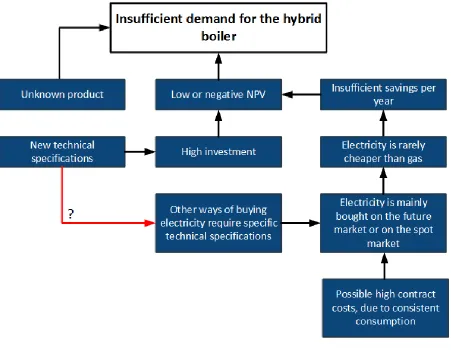
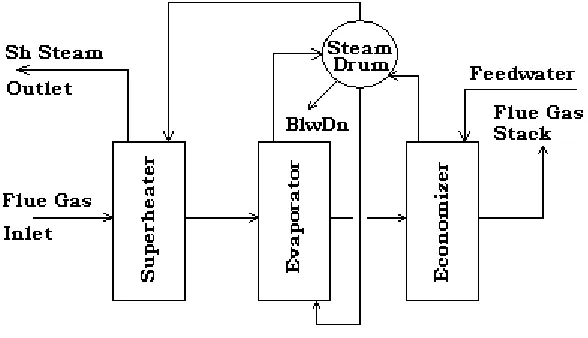
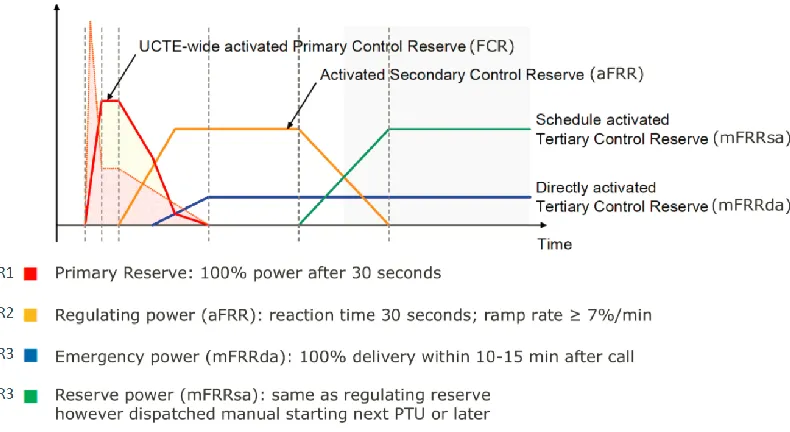
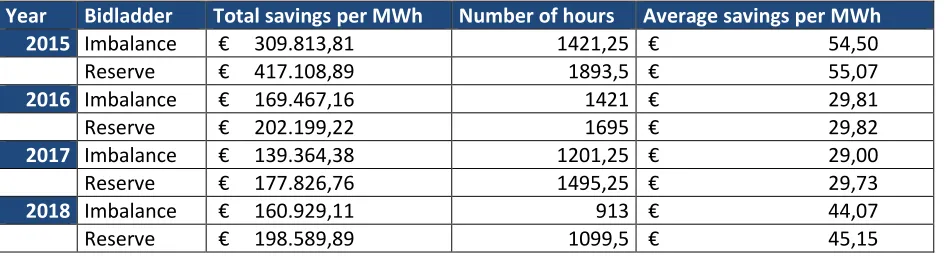
(8) Table of Figures Figure 1: The problem cluster. .................................................................................................................... 10 Figure 2: The scheme of the water flow in a power plant .......................................................................... 17 Figure 3: Flows and parts inside a boiler. ................................................................................................... 17 Figure 4: Schematic working of the TTF. ..................................................................................................... 22 Figure 5: Behaviour of the gas price over 2018 .......................................................................................... 23 Figure 6: Schematic view of the electricity supply chain. ........................................................................... 25 Figure 7: Short term balancing requirements in the electricity grid .......................................................... 28 Figure 8: Example of the imbalance bidladder. .......................................................................................... 30 Figure 9: Screenshot data CBS. ................................................................................................................... 37 Figure 10: Possible savings per bidladder per year..................................................................................... 39 Figure 11: The cash flow dashboard. .......................................................................................................... 43. Table of Tables Table 1: The time frame of different electricity markets. ............................................................................ 9 Table 2: Average price per MWh gas per year............................................................................................ 37 Table 3: The results after analysing both bidladders from 2015 until 2018. .............................................. 38 Table 4: Average price per carbon credit per year. .................................................................................... 38 Table 5: List of assumptions. ....................................................................................................................... 42 Table 6: Differences per business case. ...................................................................................................... 43 Table 7: Differences between Business Cases 1 and 2. .............................................................................. 44 Table 8: Net present values of a 10 MW hybrid boiler. .............................................................................. 57 Table 9: Net present values of a 25 MW hybrid boiler. .............................................................................. 57 Table 10: Net present values of a 50 MW hybrid boiler. ............................................................................ 57. 7 CONFIDENTIAL Copyright by Stork Thermeq B.V. All rights reserved. No part of this document may be reproduced, distributed or transmitted in any form or by any means, without the prior written consent of Stork Thermeq B.V.. www.stork.com/thermeq.
(9) 1. Problem description This section starts with a little introduction on Stork and the context of the research. Section 1.2 and 1.3 give the context and motivation for the research. Next is Section 1.4, where the core problem is determined. The remaining section gives an overview of how the problem is solved and what the research questions for this research are.. 1.1 About Stork Stork B.V. started 150 years ago as a manufacturer of boilers, pumps, steam and others. They played a big part in the Dutch industrial revolution, as they provided a large number of machines. Over the years, many companies or divisions were bought and sold, but in 2010 the company decided to focus on technical maintenance. Therefore, Stork B.V. changed into Stork Technical Services. Although the name implies the company only provides services, there is still some production in the company Stork. The division Stork Thermeq, founded in 1997, is a continuation of Stork Ketels. In Hengelo, Stork produces boilers, burners, and deaerators. Stork Thermeq provides different solutions for industrial systems and has customers all over the world. The department that provided this study is the Boiler Project department of Stork Thermeq.. 1.2 Research context The European, so also the Dutch energy market, is changing considerably as a result of a stringent CO2 policy. Consequently, the share of renewable energy sources is growing significantly, especially of volatile sources such as wind and solar energy. Because of those weather dependent energy sources, the electricity market has become harder to predict. It is technically necessary to keep the input and output close together on the electricity grid, so the need for adjustable power increases as well. Adjustable power is needed to compensate for a surplus of electricity that is in the system. This difference in input and output creates opportunities for companies that already have a kind of energy flexibility. On sunny or windy days, it might be possible that the price for electricity drops below, for example, the price of gas, which makes it more profitable to power a plant with electricity. As a result of the Paris Agreement, industrial users have to invest in new equipment in order to cut CO2 emissions. Stork Thermeq predicted this need and developed a hybrid boiler, which can be powered by electricity and a traditional energy source, for example, natural gas. The engineers were able to achieve a switchover time between energy sources of ten seconds. As far as they know, they are currently the only one capable of designing such a system, so they got a patent. This technology push is developed in advance of actual demand. So, although the engineers did not have any parties that wanted such an installation, they still developed the product because they thought it would sell eventually. Currently, Stork Thermeq has a couple of projects with different customers. These projects focus on the opportunities for the implementation of the hybrid boiler. With a somewhat suddenly developed boiler, some unknowns and problems might pop up. Most of the unknowns are about the functionality and the business model of the hybrid boiler. Because it is new to the market, possible customers do not know the risk of their investment. Second, according to research 8 CONFIDENTIAL Copyright by Stork Thermeq B.V. All rights reserved. No part of this document may be reproduced, distributed or transmitted in any form or by any means, without the prior written consent of Stork Thermeq B.V.. www.stork.com/thermeq.
(10) by CE Delft (2015), potential savings are outstripped by investment costs, operating, and maintenance costs. Berenschot (2017) finds that the economic feasibility of electric boilers in the Netherlands is poor. As possible arguments, they come up with grid connection costs, capacity tariffs and the relatively high power prices for most of the year. Their findings make sense when looking at the prices for gas and electricity. For example, two reports from the European Commission showed that at the end of June 2018, 1 MWh electricity is twice as costly as 1 MWh gas. When investigating the data further, the price of electricity is usually higher than the price of gas. Both aspects cause the demand for the hybrid boiler to not be on the level Stork wants it to be. Right now, an industrial user would not switch to a hybrid or utterly electric boiler, because they do not know how they should implement such a machine and because electricity is more costly than traditional fuels.. 1.3 Reason for research However, there is a particular assumption or method those studies used. They all use the data and the prices of the day-ahead market. The day-ahead market is the traditional market for trading electricity. On this market, producers and customers make an estimation per hour how much electricity they will produce or consume the same hour a day later. All estimations together make a nomination. After the market gathers all the nominations, the price is calculated. The following day, not all expectations are correct. Big consumers of producers cannot always be 100% sure what they are going to produce or consume. Any discrepancies can be fixed on some closer to real-time markets, to even out supply and demand. Table 1 gives an overview of the different markets. Table 1: The time frame of different electricity markets.. Moment of trade Market. Closer to real-time → All other days before Day before Delivery day ENDEX APX Day-ahead APX Intra-day. Real-time Imbalance & reserve. On the intra-day and real-time market, market participants can fix any discrepancies they have after the day-ahead market. As shown in Figure 1, three markets are closer to real-time than the day-ahead market. Those are the intra-day market, the imbalance market and the reserve market. On the intra-day market, market participant trade electricity for the delivery day itself. It enables market participants to correct for shifts in their day-ahead nominations. They often want to do so because the closer to realtime, the more reliable the forecasts get. Because of the short period, intra-day market prices are more volatile than the day-ahead market prices. Second, the imbalance market is a market which includes two kinds of parties. These are TenneT and balance responsible parties (BRPs). Together they make real-time deals when needed. The volatility is also higher on this market compared to the day-ahead and the intra-day market. Last, the reserve market. TenneT, the Transmission System Operator (TSO) for the Dutch grid, has the responsibility to resolve any power imbalances. The electricity grid needs to be balanced at every point in time because electricity cannot be stored. When a calamity happens, TenneT needs to get or lose electricity as soon as possible. A calamity is, for example, a coal-fired power plant which requires unexpected maintenance. Therefore TenneT has balance service providers (BSPs), market participants who provide balancing 9 CONFIDENTIAL Copyright by Stork Thermeq B.V. All rights reserved. No part of this document may be reproduced, distributed or transmitted in any form or by any means, without the prior written consent of Stork Thermeq B.V.. www.stork.com/thermeq.
(11) services. The first earnings a BSP could get are due to the lower prices compared to the day-ahead market, but a BSP can also earn money by being available to produce or consume electricity. The electricity prices are again more volatile than on the day-ahead market. To make it even more complicated, three different reserve markets, dependent on the time interval a BSP can react after a calamity happened. All with different prices. Section 2.3.4 contains an overview of all the differences. Overall, the day-ahead market is not the only way to buy electricity. Other markets might provide lower prices for electricity, because of their higher volatility than the day-ahead market. Since the time in which the hybrid boiler can switch between energy source is so fast, Stork Thermeq expects that the hybrid boiler can run electricity from closer to real-time markets. Because of this opportunity, they want to know whether the investment gets better when the hybrid boiler participates on closer to real-time markets. That is the goal of this study.. 1.4 Problem statement Stork Thermeq has a new hybrid boiler, but the traditional way of functioning does not make it an attractive investment. This causes the main problem Stork has right now, namely insufficient demand. A couple of possible causes provoke this problem. Figure 1 gives an overview.. Figure 1: The problem cluster.. 10 CONFIDENTIAL Copyright by Stork Thermeq B.V. All rights reserved. No part of this document may be reproduced, distributed or transmitted in any form or by any means, without the prior written consent of Stork Thermeq B.V.. www.stork.com/thermeq.
(12) Since a boiler is a significant investment, the net present value is quite important. Net present value (NPV) is the difference between the present value of cash inflows and the present value of cash outflows over a period of time. NPV is used in capital budgeting and investment planning to analyse the profitability of a projected investment or project (NPV, Investopedia). So a low or negative NPV is unwanted because it means that the investment is not profitable enough. In this research, two parts influence the NPV, the savings from investment and the cost of investment. To increase the NPV, either the savings have to rise, or the costs have to go down. In the case of the expenses, Stork Thermeq cannot lower any initial investments. Important to note is that the NPV concerns the value of using the boiler. The hybrid boiler should generate value but how much is caused by the way it a plant uses it. So there have to be improvements on the savings side. The initial idea behind the hybrid boiler is that the e-boiler could take over the traditionally fuelled boiler in case the price of electricity drops under the price of the other fuel. So to get a high NPV, the e-boiler has to be used as often as possible. Regarding the earlier mentioned studies, the price of electricity on the spot markets rarely drops under the price of traditional fuels. That may cause an NPV which is too low. But what will the operating gain be when operating on quicker markets, such as the intra-day, imbalance or reserve market? Operating on quicker markets should be possible since it only takes ten seconds for the boiler to switch energy sources. In Figure 1, the red arrow stands for this opportunity. Do the new technical specifications enable different buying strategies and how does it influence the savings? When this opportunity exists, it creates a win-win scenario in the current electricity supply chain. A hybrid system should be able to cope with the electricity peaks PV parks or wind turbines cause. That is a win for TenneT because they obtain more partners that help in balancing input and output. The second win is for the plant owners since they get the opportunity to buy electricity for a lower price. The opportunity leads to the core problem. Two problems in the problem cluster are not addressed yet. First is the problem of the unknown product. This problem has to do with the knowledge of possible customers that Stork has developed such a system. To be able to solve this problem, the sales or marketing method should be the topic. Subjects like marketing and sales are outside the scope of this research. The second problem is the contract costs. Now, a plant pays a certain tariff for consuming electricity, and the more consistent the consumption is, the lower the contract costs are. When a plant has a predictable need, the contract costs less than when a plant has a variable need. With the implementation of a hybrid boiler, the consumption becomes inconsistent due to a changing use of fuel. Throughout this research, this problem is kept in mind but not researched. The reason not to is due to the specific cases per plant and the bureaucratic atmosphere. To be able to change that situation, discussions have to take place with big players such as TenneT, Eneco, Nuon, et cetera.. 1.4.1 The core problem The core problem of this research is: “Do opportunities exist to get electricity from a quicker market, to increase the NPV?”. Stork Thermeq emphasises this core problem. They conducted a study and found that it would take over 150 years to get an NPV of zero when a plant gets its electricity from the dayahead market. So it would take 150 years to earn back the investment entirely, without making any 11 CONFIDENTIAL Copyright by Stork Thermeq B.V. All rights reserved. No part of this document may be reproduced, distributed or transmitted in any form or by any means, without the prior written consent of Stork Thermeq B.V.. www.stork.com/thermeq.
(13) money until that moment. For a boiler running on traditional fuel, the NPV should be around zero in four years. For the hybrid boiler, it means that the NPV has to be 0 or higher within four years to be a more attractive investment than a traditional one. The expected savings have to increase to higher the NPV. In this research, the goal is to increase the savings by analysing the intra-day market, imbalance, and reserve market, together with what technical specifications they require from a hybrid boiler. The low savings are the core problem, because of the opportunities stated earlier when different markets get analysed. Furthermore, the other ends of the problem cluster, which contains subjects like b2b marketing and the development of a boiler, are less in my field of research.. 1.5 Research design The research design exists out of four parts. The first part explains the way of solving the problem. Followed by the restrictions since there are a lot of opportunities to expand this research to an unworkable size. Then, the method of gathering information is determined. Last, this part ends with the research questions. To compare the savings, the choice for the second fuel is natural gas. This decision makes natural gas the benchmark. Natural gas is one of the less polluting fuels based on CO2 emissions compared to other traditional fuels. Companies that want to invest in durability, therefore, want their second energy source to be natural gas. From now on, every time the term gas gets used, it refers to the fuel natural gas.. 1.5.1 Set up of the research The most important part is to find out whether the hybrid boiler can participate in another market than the day-ahead market. Therefore the technical specifications of the hybrid boiler must be known, together with the knowledge of the different electricity markets. If any opportunities occur, business cases should differ in ways of buying electricity. Participating in different markets causes a difference in NPV. The solution with the highest NPV is, most likely, found in a business case where the electrical part of the boiler takes over the gas part for the largest proportion of time. Appendix B contains the formula for the NPV. The primary method of how the savings get determined causes this expectation. The main savings consists of the amount of time the e-boiler runs, multiplied by the price difference between electricity and gas. To be able to calculate the main savings, the time that the e-boiler takes over, and the price differences need to be known. Per business case, the moment that the price of electricity drops under the price of gas and the moment the e-boiler takes over differs. This difference is essential to keep in mind since it influences the possible expected savings. To determine the differences in the business cases, the model uses the same input for every business case. A property of a boiler to take care of is the designed power of the boiler. It influences two main things, namely the consumptions and the costs. The higher the designed power, the more electricity or gas the hybrid boiler will use. Second, a higher designed power might require extra materials which is needed to build the installation. Generally, boilers Stork designs vary between 10 MW and 50 MW. Since every potential customer of Stork wants a plant-specific solution, the hybrid boiler is not just a product with a predetermined power. Stork can design various iterations of hybrid boilers, including a different power. 12 CONFIDENTIAL Copyright by Stork Thermeq B.V. All rights reserved. No part of this document may be reproduced, distributed or transmitted in any form or by any means, without the prior written consent of Stork Thermeq B.V.. www.stork.com/thermeq.
(14) The power influences the possible savings. In the model, the calculation for the NPV includes three different powers. Those are 10, 25 and 50 MW.. 1.5.2 Restrictions One of the possible restrictions is that some parts of the information might be too technical. Gaining indepth knowledge about boilers takes a lot of time. A boiler has too many different researchable topics, such as thermodynamics, which causes a need for pre-knowledge. The gas and electricity markets also exist out of many topics. Since those topics are quite large, this research included only the most significant parameters. Right now, the parameters are the technical aspects of the markets and their pricing. The second restriction has to do with the savings. Technically, the system can run on both energy sources. This research excludes the use of a combination since it makes the calculation harder to do. It means that if the boiler is running, it runs either on gas or electricity.. 1.5.3 Information sources Most of the information regarding the electricity and gas markets is available in the literature, while the basic knowledge of boilers is within Stork Thermeq. Regarding the requirement of information within Stork Thermeq, there is no particular strategy. My company supervisor provides a lot of information. In case information is needed from someone else, it is no problem because of the open work environment and flat hierarchical structure. The exploratory nature of this study causes the need for literature. Besides the basic knowledge about the boiler and the different markets, the model needs data as input. TenneT provides the required data.. 1.5.4 Research questions The core problem and the scope of the research lead to the main research question. Different subquestions split the main research question into different parts. The order of the sub-questions follows out of the need for specific information. General information about the boiler is the first step of the learning process. The second step is to understand the gas and electricity markets. If everything goes as expected, a business case pops up. The choice of electricity market provides different business cases. Then, a model calculates the NPV. Therefore, after the gathering of information, the next sub-question is about the model. The finished model gives insight into how the possible savings change. The conclusion focuses on the end value and on the technical implications per business model. A recommendation finishes the research. All the different sub-questions support the main research question, which is: Which business case for using the hybrid boiler has the highest NPV when functioning on a different market than the day-ahead market, for the designed powers of 10, 25, and 50 MW?. 13 CONFIDENTIAL Copyright by Stork Thermeq B.V. All rights reserved. No part of this document may be reproduced, distributed or transmitted in any form or by any means, without the prior written consent of Stork Thermeq B.V.. www.stork.com/thermeq.
(15) The sub-questions are: 1. How does the hybrid boiler work? 2. How do the gas markets work? 3. How do the electricity markets work, in terms of requirements for functioning and the prices? a. How does the intra-day market work? b. How does the imbalance market work? c. How do the reserve markets work? d. What are the technical differences between markets? 4. On which markets is the hybrid boiler able to function? a. What are the opportunities per market? b. What are the restraints per market? c. What are suitable markets to be included in the business case? 5. What are the possible business cases? a. What is the definition of the business case? b. What does the model look like and what are the input variables? 6. What is the best business case per 10, 25 and 50 MW? a. What are the expected savings per business case? b. What are the constraints per business case? c. What are the recommendations?. 1.5.5 Stakeholders The only real stakeholder in my research is Stork because it is the company that requested the study. They ultimately want to sell more hybrid boilers and want more insights on how to do so. During the research, my company supervisor made it possible to get data from the other departments when needed. Next, some less important stakeholders exist. Those are possible customers and TenneT. Potential customers are stakeholders because customers think that the hybrid boiler is not a good financial investment to make, although it helps them reduce their CO2 emissions. This is obviously a sales problem. They are more willing to invest in durable options, but as stated in the problem identification, customers are held back in investing in the hybrid boiler by the prices of electricity on the day-ahead market. That might be solved by operating on a different electricity market, but the customer then has to obtain electricity differently. This change is not an easy one, it requires time and more study. The findings will perhaps be used to convince a customer. That makes them a stakeholder. Second, TenneT is a stakeholder because, when hypothetically more plants are going to use a hybrid boiler, the supply and demand on the national high voltage grid change. The change is caused by more industrial partners that can use electricity as input for their plant. So more plants will connect to the electricity grid and because they do not always know their exact consumption, add volatility in the output of electricity. Although the change of volatility in output will not be that big, it might be of a considerable size that it will influence choices that TenneT will make while balancing the grid. TenneT might even desire the increased volatility in the output because it can be used to even out the volatility 14 CONFIDENTIAL Copyright by Stork Thermeq B.V. All rights reserved. No part of this document may be reproduced, distributed or transmitted in any form or by any means, without the prior written consent of Stork Thermeq B.V.. www.stork.com/thermeq.
(16) in the input, caused by PV parks or wind turbines. So a couple of stakeholders exist but only Stork is a stakeholder throughout the research. The reasoning behind it is that Stork is the only problem owner and there is no contact with the other two parties.. 1.6 Conclusion The behaviour of the industry regarding the use of energy is changing. Stork wanted to make use of this change and developed a hybrid boiler. Electricity and a second fuel can power the hybrid boiler. This study uses natural gas as the benchmark. Although there was no actual demand yet, Stork still developed the boiler. The development is a risk since you put money in a technology of which you do not know whether it is profitable. The first studies on the NPV of the hybrid boiler were not as positive as Stork thought. However, all studies use the electricity prices of the day-ahead market to calculate the NPV. The day-ahead market is usually the market of choice, but also different markets on which electricity can get bought exists. As can be seen in the problem cluster, there is insufficient knowledge within Stork to determine whether the NPV is higher when electricity is obtained from another market. Are there opportunities to get electricity from a closer to real-time market to increase the NPV? Opportunities should occur by analysing the technical specifications of the hybrid boiler, the gas market, and the electricity market. The business case uses knowledge on those subjects to in the end calculate an NPV. The corresponding model is going to provide information on which use of the boiler on which market has the most impact on the NPV. The model answers the main research question of the research: “Which business case for using the hybrid boiler has the highest NPV when functioning on a different market than the day-ahead market, for the designed powers of 10, 25, and 50 MW?”. 15 CONFIDENTIAL Copyright by Stork Thermeq B.V. All rights reserved. No part of this document may be reproduced, distributed or transmitted in any form or by any means, without the prior written consent of Stork Thermeq B.V.. www.stork.com/thermeq.
(17) 2. Literature study The theoretical part of the research answers Sub-questions 1 till 3d. The order is in line with the research design. The working of the hybrid boiler is the first part, followed by the gas market and the electricity market. Each of these three sections ends with a conclusion.. 2.1 The working of the hybrid boiler In this part, the working of the hybrid boiler is worked out. To learn about every part of a boiler is quite much since boilers are complex systems. That is why the explanation of the functioning of a boiler is quite general. In the end, the focus lies on the technical aspects of the hybrid boiler regarding its functioning on the different electricity and gas markets. The hybrid boiler is a system in which a classic boiler and an electrode boiler are integrated into one system. So, the first needed knowledge is about a traditional boiler. The second part, the electrode boiler, gives the main differences in comparison to the traditional boiler. The collected information on both boilers enables the explanation of the working of a hybrid system. This section finished with a discussion on the technical requirements and the opportunities.. 2.1.1 The conventional boiler By burning fuel, heat or energy gets released. A boiler uses energy to heat water until it becomes steam. Steam then is used to convert the energy once more in for example electric, kinetic or other forms of energy. Steam is also used to kill the weed in horticulture, or in the wood industry to dry the wood. One of the properties of steam is that it can be overheated, to reach higher temperatures. When heating water in a closed system, energy is put in the system while no energy can escape. The surplus of energy causes water to evaporate. When all the water has evaporated, it does not stay at a temperature of 100 °C. Steam can reach higher temperatures and also higher pressures. This overheated steam can be used for example to generate electricity. Pipes guide the stream to a turbine, which rotates due to the pressure difference. By doing so, it uses the energy in the steam to move. After cooling down, water flows back into the boiler to be heated again. Figure 2 gives an overview of how water flows in a complete system.. 16 CONFIDENTIAL Copyright by Stork Thermeq B.V. All rights reserved. No part of this document may be reproduced, distributed or transmitted in any form or by any means, without the prior written consent of Stork Thermeq B.V.. www.stork.com/thermeq.
(18) Figure 2: The scheme of the water flow in a power plant. As can be seen, water goes in at a low temperature and steam leaves at a high temperature. Figure 2 suggests that it is only the boiler that is increasing the temperature. However Figure 2 does not include a couple of standard parts the boiler consists of. Commonly, those are the economizer, the steam drum, the evaporator and the superheater. Figure 3 shows the working of a boiler. All the different parts have their role in increasing the temperature. Next paragraph contains a more specific explanation per piece.. Figure 3: Flows and parts inside a boiler.. 17 CONFIDENTIAL Copyright by Stork Thermeq B.V. All rights reserved. No part of this document may be reproduced, distributed or transmitted in any form or by any means, without the prior written consent of Stork Thermeq B.V.. www.stork.com/thermeq.
(19) •. •. •. •. Economizer: This part is used to preheat the water before it enters the evaporator. It withdraws heat from the gasses that a burning fuel releases. When for example while burning fossil fuels, flue gasses gets released. The burning takes place in a firebox which is excluded in Figure 3. The firebox would be positioned before in inlet of flue gas. Flue gas is the gas exiting a plant through a flue, which is the space inside a chimney. Flue gas is mostly a combination of nitrogen, carbon dioxide (CO2), water vapour, any oxygen which is not used during the combustion and some different pollutants. Flue gas has a high temperature. To enlarge the efficiency of the boiler, water that is cooled down after it came out of the turbine gets guided through these waste gasses to warm up again. Thereby the waste gasses lose some temperature. Lowering the temperature of the waste gasses is not all about efficiency; legal purposes require this as well. Steam drum: Typically, water does not just consist of water molecules. It contains various other materials, which might influence the pipe system. A drum makes sure that the steam that comes out of the boiler is 100% evaporated water, so with no liquid water particles left. The drum works on the difference in density, so water and steam can be separated. The common term for steam which contains no liquid water particles is dry steam. Evaporator: This is often referred of as the boiler itself. In the evaporator, water gets heated to 100 °C by the heat of the burned fuel. After water leaves the drum, it gets guided through pipes closer to the heat source and back to the drum. Superheater: There is not one standard temperature of steam which industrial processes use. Every plant needs its own temperatures to run as efficiently as possible. A superheater helps to produce overheated steam. Pipes guide steam close to the combustion. The maximum temperature lies around 700 °C. The superheater is closer to the firebox than the evaporator to ensure the highest temperature.. The four parts together give a simplified explanation of the working of the boiler. The study could be expanded, but it is not necessary for this research. There is one technical remark, the explanation is about a water tube boiler. Other types are available in the industry, but this is the type Stork works with the most.. 2.1.2 The electrode boiler This section explains the differences between the classic boiler and the electrode boiler. In terms of what they do, the two are similar. Still, water gets heated until it becomes saturated steam. The main difference is in the way water gets heated. The evaporator is the part that differs. When the term electrode boiler gets used, it means that it is a classic boiler with an electrode evaporator instead of a normal one. A property of water causes the way an electrode boiler works, namely conducting electricity. Conducting electricity, more specific alternating current or AC, through water heats the water. It is possible to reach such temperatures that water becomes steam. The active surface of the electrodes and the conductivity of the water influence the amount of power an electrode boiler has.. 18 CONFIDENTIAL Copyright by Stork Thermeq B.V. All rights reserved. No part of this document may be reproduced, distributed or transmitted in any form or by any means, without the prior written consent of Stork Thermeq B.V.. www.stork.com/thermeq.
(20) Right now, Stork plans to work with an electrode boiler developed by a company in Sweden, named Zeta. The relevant specifications of this steam boiler type are as follows. It can have powers from 3 to 70 MW, running on a minimum voltage of 6 kV while working under the pressure of 10 to 55 bar. The power and pressure fit the requirements of Stork. The range of these variables creates a lot of opportunities for designing plant-specific solutions. Unfortunately, the voltage is a restriction. The unique connection which is needed to connect the boiler to the electricity grid is not nationwide available. In the designs of Stork, it would be a 10 kV connection which is required. The need for such a connection might influence the initial investment since a 10 kV connection needs to be bought. Another restriction which is not in the specifications, but required for a working system, is the water which goes in the system. It needs to be of a certain quality, and it must have a specific conductivity. The restrictions bring a couple of technical challenges which might add extra costs to it - more on this in Section 3. The price of the electrode evaporator is around €750.000,and €800.000,-.. 2.1.3 The hybrid boiler The hybrid boiler consists of earlier mentioned systems. The newness is caused by the way the system is engineered and designed, not by a new machine or a new part that Stork developed. In current designs and plans, the connection of the electrode boiler and the traditional boiler is in parallel. The fact that the connection is parallel means that there is an option to rebuild current traditional boilers into hybrid boilers, by implementing an electrode boiler in the system. Therefore, at least an electrode boiler and some piping are needed. The boiler and the piping cause the minimum of material costs. Optional costs for a system Stork can build also include pumps and nozzles. The fact that the invention is a system of how to implement an electrode boiler, makes the hybrid boiler as developed by Stork, an invention with multiple usages. It can be paired up with all kinds of different boilers which all use different fuels, for example, coal, natural gas, biogas and biomass. So when hypothetically the Netherlands would get rid of natural gas, the product will not become worthless. For now, as also stated in the research design, only a gas-powered evaporator is used as the counterpart of the electrode boiler in the hybrid boiler. A couple of other specifications or technical requirements are worth mentioning. One is the standby function and its ability to switch from energy source quickly. When the boiler runs on gas, the electrode evaporator can go on standby to react as soon as possible when needed. The system is in standby when the water level is under the electrodes while keeping the water warm with a metal spiral. When required, the water level raises to the normal level, which immediately will cause the production of steam. The second technical influence is the required maintenance per year. It does not cost that much, but it influences the cost per year. It comes down to renewing some insulators once per year.. 19 CONFIDENTIAL Copyright by Stork Thermeq B.V. All rights reserved. No part of this document may be reproduced, distributed or transmitted in any form or by any means, without the prior written consent of Stork Thermeq B.V.. www.stork.com/thermeq.
(21) 2.1.4 Conclusion The answer to Sub-question 1 is that the hybrid boiler is a system that consists of a traditional boiler and an electrode boiler. After installing an electrode boiler parallel to the traditional boiler, a hybrid boiler runs on two energy sources. With the implementation of the electrode evaporator, some restrictions pop up which do not exist for a classic boiler. Examples are water conductivity, the need for a particular grid connection, and yearly maintenance costs. On the other side, it creates opportunities with the standby function, which enables a quick switch between the energy source.. 20 CONFIDENTIAL Copyright by Stork Thermeq B.V. All rights reserved. No part of this document may be reproduced, distributed or transmitted in any form or by any means, without the prior written consent of Stork Thermeq B.V.. www.stork.com/thermeq.
(22) 2.2 Gas market This section answers Sub-question 2. Since the layout of the Dutch gas market changed a lot throughout time, the next paragraph contains a short overview. Section 2.2.2 explains the current state of the gas market. The end of this section is an overview of the prices of the last years and concludes this section with the main findings to use in the business case.. 2.2.1 Brief introduction and history Since natural gas was found in Groningen in 1959, the Netherlands became Western Europe’s leading gas supplier. The discovery created a new situation. An excess of gas caused the Netherlands to focus on export. At its top, 80 billion m3 was produced per year. Around 75% got exported to other countries (Schipperus & Mulder, 2015). But the reserves are depleting and the number of earthquakes per year increased. The KNMI registered 124 earthquakes in 2017, compared to 7 in 2002 (Interactieve kaart, NAM). Both aspects did influence the gas market in the Netherlands. Formerly, the focus was exporting gas but after the governmental restrictions the focus became trading. To enhance trading, the Dutch government came up with policy measures which made it possible for the market to become a virtual gas hub. The virtual hub is represented as a virtual trading point neglecting all the physical characteristics of the network (del Valle et al, 2017). A gas hub is the heart, or a roundabout of a gas network, consisting of pipes and liquefied gas terminals. The hub is used as a central pricing point for the network’s natural gas. It caused the gas market to be more liquid and more transparent since more parties are involved in trading.. 2.2.2 Current system The name of the Dutch gas hub is the Title Transfer Facility (TTF), set up in 2003. Gasunie Transport Services (GTS) manages the TTF. They are responsible for the systems and the parties that trade on it. The TTF is a virtual marketplace, where participants get the opportunity to trade gas which is already present in the system. The availability of gas in the system is called entry-paid gas. Using the TFF, gas can switch from its owner before it leaves the grid. With the help of a gas exchange, traders can sell or buy gas on the TTF. Right now, the ICE ENDEX and Powernext are the two power exchanges. A trade gets registered in the form of a nomination. A nomination is an electronic notification stating the volume of gas transferred, the period and the buying and selling parties (TTF, GTS). In 2011 the most recent market model got introduced. The TFF has become the central trading point for all natural gas in the Dutch transmission system, and a new balancing regime has been introduced (Mirrelo & Polo, 2015). Every market party is responsible for keeping its portfolio balanced through buying and selling gas on the TTF. Every market party determines their entries, exits, and trading plans for the day-ahead. GTS then publishes the Program Imbalance Signal (PIS) which is the accumulated balancing position of every participant. All the PISs summed up result in a System Balance Signal (SBS). When the SBS is not equal to zero, a system imbalance occurs. It becomes then the task of GTS to make sure the market gets corrected. A Bid Price Ladder (BPL) helps to fix the market. A BPL is a system that is the last opportunity for participants to sell or buy gas from GTS. The participants that help to solve the imbalance will earn money, the participants who cause it have to pay a fee, based on the costs involved during that particular imbalance situation. Figure 4 shows the schematic working of the TTF. 21 CONFIDENTIAL Copyright by Stork Thermeq B.V. All rights reserved. No part of this document may be reproduced, distributed or transmitted in any form or by any means, without the prior written consent of Stork Thermeq B.V.. www.stork.com/thermeq.
(23) Figure 4: Schematic working of the TTF. (Retrieved January 18, 2019, from https://www.gasunietransportservices.nl/shippers/producten-en-diensten/ttf). When all deals are closed, gas is transported to the end consumer. From the market participants, gas can go to an end consumer, but this is not always the case. Suppliers who do not trade on the TTF can buy their gas from another market participant to sell it to an end consumer.. 2.2.3 Markets The duration of the contract and the traded volume cause a difference in the products traded in different markets. Therefore two different markets exist, the spot market and the forward market. On the spot market, products are traded that provide gas directly or up to 30 days later. The day-ahead and within-day are both submarkets of the spot market. The difference between those markets is the moment on which the market functions. The day-ahead market is used for trading volumes that are used the day after. A gas day starts at 06:00 am and ends 24 hours later. So when contracts are traded on Tuesday, the Wednesday after delivery will happen. The within-day market is the last moment to buy or sell gas, to fix any deviations in the portfolio of the market participants. For this market, the tradeable delivery period is calculated from the time of the beginning of delivery (the next full hour after the conclusion of the trade plus three full hours preliminary lead time) and the end of delivery at 06:00 of the following calendar day. For example, if you want to fix any deviations at 11:30 and instantly close a trade, the gas will be delivered from 15:00 to 6:00. Every market participant trades on different markets or with other participants to create a portfolio. This portfolio is used to buy or sell gas, depending on what the focus of the company is. Examples of market participants are Eneco, De Nederlandse Energie Maatschappij, and Gazprom.. 22 CONFIDENTIAL Copyright by Stork Thermeq B.V. All rights reserved. No part of this document may be reproduced, distributed or transmitted in any form or by any means, without the prior written consent of Stork Thermeq B.V.. www.stork.com/thermeq.
(24) 2.2.4 Prices The leading gas price is TTF price, the price on the day-ahead market. The TTF price is dependent on a couple of factors. The prices at hubs can be viewed as prices resulting from gas-to-gas competition (Hulshof et al, 2015). Fundamental factors affecting demand or supply in the gas market have significant effects on the movements in the day-ahead price. Those factors can be variables like temperature. The colder it gets, the more gas is wanted to heat for example households. A second factor that has some influence on the price of gas is the price for carbon credit. Since the European Union decided that the CO2 emissions had to go down, big plants are now required to get certificates per tonne CO2 they want to produce. These certificates are traded on a market called the EU ETS. Last, the amount of gas needed also influences the price, since bulk discounts play a role in the gas market. The required input of gas is also related to the designed power of the hybrid boiler. The higher the designed power, the more gas it uses per hour. The higher consumption of gas influences the bulk discounts. The set up for the model in Section 4.3.1 gives more information about bulk discounts. Future of the price The prediction for 2019 is that the gas price increases, due to a converting policy of the EU ETS. The policy states that there will be 40% less carbon credit available to be traded (MarktRapport week 51 2018, Nuon). The price in 2017 has increased by 30%. Figure 5 shows this. Since it is usual to buy gas a couple of years upfront, most charts regarding the gas prices include the gas prices for multiple years. The years in the chart stand for the price for gas if you buy it now for that particular year.. Figure 5: Behaviour of the gas price over 2018. (Retrieved January 1,2019 from https://www.nuon.nl/grootzakelijk/energiekenners/business-bibliotheek/marktrapport-2018-51/). 23 CONFIDENTIAL Copyright by Stork Thermeq B.V. All rights reserved. No part of this document may be reproduced, distributed or transmitted in any form or by any means, without the prior written consent of Stork Thermeq B.V.. www.stork.com/thermeq.
(25) The gas price as input for the business case To be able to compare the prices of electricity and gas, historical data from 2015 to 2018 are used. The used price is the TTF price. This choice is due to the availability of data and the volumes that are traded on the different markets. The TTF price in the last years is available, as well as the influence of the total consumption on the bulk discount. The input is the average prices per MWh per year, as published by the CBS. Figure 9 shows these discounts, in Section 4.3.1.. 2.2.5 Conclusion An overview of the findings summarises the answer of sub-question 2. First, the TTF is the Dutch gas hub which makes it possible to trade gas daily. Market participants do so to be able to deliver gas to their customers, since not every plant is trading gas for themselves. A couple of different markets provide the purchase of gas, the day-ahead, the within-day and imbalance market. The markets differentiate by the moment the gas is traded. The closer to real-time the market is, the more volatile the prices get and the lower the traded volumes are. Per supplier and end consumer, the prices are different. The two factors that influence the gas price are the weather and carbon credit costs. The business cases use an average gas price per MWh per year.. 24 CONFIDENTIAL Copyright by Stork Thermeq B.V. All rights reserved. No part of this document may be reproduced, distributed or transmitted in any form or by any means, without the prior written consent of Stork Thermeq B.V.. www.stork.com/thermeq.
(26) 2.3 Electricity market This section contains a couple of sub-questions. Section 2.3.1 gives a brief overview of the current system, with a focus on the balancing activities the transmission system operator (TSO) does. Section 2.3.3 explains the difference in markets by evaluating the price and some technical requirements. The last section contains the most important conclusions. The business case and model use those conclusions to get to an optimal case ultimately.. 2.3.1 Current system In the current Dutch system, six different players are somehow involved in the movement of electricity. This section gives a summary of the six players. To start, Figure 6 provides an overview of the players.. Figure 6: Schematic view of the electricity supply chain.. Generation It starts with the generation of electricity. A couple of options of how electricity is generated are standard in the Netherlands, namely: • • • • • • •. Fossil fuel powered plants. Onshore and offshore wind turbine parks. PV fields and privately held PV systems. Nuclear plant. Hydropower plants. Biomass plants. Plants which implemented a combined heat and power installation.. In 2017, around 70% of the Dutch gross electricity production came from fossil fuels (TenneT, 2017). Trading Big plants want to trade the generated electricity. The abbreviation BRP in Figure 6 stands for balance responsible party. A BRP is a private legal entity that monitors the balance of one or multiple access points to the electricity grid. Every generator and consumer in the grid is obliged to have a contract with a BRP, or alternatively be their own balance responsible party (Market review 2017, TenneT). In general, BRPs have an extensive portfolio where they have contracts with many generators or consumers. BRPs are players that trade on centralised and international markets. Examples of BRPs are Eneco, Stedin, and Nuon.. 25 CONFIDENTIAL Copyright by Stork Thermeq B.V. All rights reserved. No part of this document may be reproduced, distributed or transmitted in any form or by any means, without the prior written consent of Stork Thermeq B.V.. www.stork.com/thermeq.
(27) Transmission The third player is the TSO, TenneT. TenneT is a company 100% owned by the Dutch government, which has the responsibility to control the high-voltage grid. High voltages are voltages from 110 kV and higher. For the lower voltages, DSOs are responsible. Managing the grid means keeping the in- and outputs the same. The frequency of the AC is the difference between the input and output. TenneT is obligated to keep the frequency in the grid between 49,8 and 50,2 Hz. A stable frequency is necessary because electricity cannot be stored, which is caused by the physical properties of electricity. Since TenneT is only a facilitator for the transport of electricity, it is dependent on the behaviour of BRPs. That is why every BRP has to inform TenneT daily what their transactions are going to be. Per imbalance settlement period (ISP), which is 15 minutes, TenneT measures whether any deviations in the portfolio of the BRPs exist. When these deviations occur, BRPs can trade with TenneT to equalise their portfolio. The way TenneT can fix any leftover deviations is by using balancing reserves. Parties that generate or consume electricity when TenneT asks them to have a contract with TenneT mostly. By law, TenneT is obliged to contract a minimum capacity of different reserves to assure sufficient reserves can be activated to fulfil their local demand (Market review 2017, TenneT). More on this in Section 2.3.2. Distribution When the electricity leaves the high voltage grid, the distribution system operators (DSOs) manages it. DSOs are responsible for the construction, maintenance, management and development of the transportation and distribution networks for electricity between the high voltage grid and the customers (Tanrisever, 2015). In total, the country has eight DSOs spread over the country. Metering A metering company registers the actual amounts of electricity which get generated or used. Under the Dutch Electricity Metering Code, based on the Electricity Act of 1998, metering activities may only be outsourced to parties that have been authorised by TenneT to perform such operations. They check whether the delivered power is according to the agreements (Metering responsibility, TenneT). Supply Last, the supplier is the party responsible for the end delivery from households to businesses. A DSO can be a supplier as well, but this is not always the case. The supplier makes money by selling it to the end consumer with a little margin.. 2.3.2 Balancing As stated earlier, TenneT is responsible for keeping the high voltage grid stable. Stabilising the grid is called balancing and can be seen as real-time buying or selling electricity by a TSO (Market review 2017, TenneT). It might happen that BRPs do not meet their promises, but the consequences differ. When you generate more or consume less than scheduled, then there is a certain surplus of electricity. This surplus can be sold for the imbalance price. But when you use more or generate less than scheduled, there is an imbalance shortage. Shortfalls like this can be fixed by paying the imbalance price for the deficit. The imbalance price is dependent on the reserves used. Therefore an understanding of the reserves is needed. 26 CONFIDENTIAL Copyright by Stork Thermeq B.V. All rights reserved. No part of this document may be reproduced, distributed or transmitted in any form or by any means, without the prior written consent of Stork Thermeq B.V.. www.stork.com/thermeq.
(28) Balancing service providers (BSPs) manage the three different reserves. Those are parties that somehow can generate or consume electricity, and have a contract with TenneT how to do so. The reserves are the frequency containment reserve (FCR), the automatic frequency restoration reserve (aFRR) and the manual frequency restoration reserve (mFRR) (Ancillary services, TenneT). The last market, the mFRR, has two submarkets, the mFRRsa and the mFRRda. The difference between those is the way the reserve gets activated, scheduled activation (sa) or direct activation (da). Working as a FCR reserve The FCR is the reserve power that is activated under the control of the primary regulation. The primary control is a locally designed automatic device, which ensures a constant ratio between frequency change and installation or power change within a maximum of 30 seconds (site TenneT). The primary goal of the FCR is to stabilise frequency disturbances in the entire grid. The activation of the reserve goes entirely automated by orders TenneT gives to the contracted systems. Working as an aFRR reserve The second reserve is the aFRR. TenneT mainly uses bids offered by BSPs. They determine how much they can deliver and for which prices. TenneT enters into capacity contracts with BSPs to make sure BSPs place enough bids. More on this on the market explanation of the aFRR. A technical specification of the aFRR is that when your bid is accept, your system has to react within 30 seconds, and needs to have a ramp rate of at least 7%. Working as a mFRRda reserve The mFRRda or incident reserve is used for maintaining the balance in case of incidents and substantial, long-lasting power deviations. A BSP which functions as a mFRRda reserve has an obligation to be able to draw or supply the power agreed from the Dutch grid when TenneT says so. Working as a mFRRsa reserve Last, the mFRRsa looks a lot like the aFRR, but the main difference is the call time. A mFRRsa has to be activated after 15 minutes and indicates what it generates or draws per 15 minutes. This period of 15 minutes is also called a price time unite (PTU). Since this reserve mainly concerns the more significant installations. The lack of no contracted bids is another difference. The reason TenneT has multiple reserves is due to their working and timing. When the FCR needs to run for an hour, it cannot fix any deviations for that next hour. When new deficits occur while all FCR powers are running, the system reacts more slowly. So the reserves gradually take over each other. If the FCR cannot fix the differences, the additional reserves take over. Around 80% of the leftover imbalance after the FCR, is taken over by the aFRR (Lampropoulos, 2018). Figure 7 gives an overview of the different reserves and their call time.. 27 CONFIDENTIAL Copyright by Stork Thermeq B.V. All rights reserved. No part of this document may be reproduced, distributed or transmitted in any form or by any means, without the prior written consent of Stork Thermeq B.V.. www.stork.com/thermeq.
(29) Figure 7: Short term balancing requirements in the electricity grid (Source: internal presentation Stork).. 2.3.3 Spot markets and imbalance market Plants have various ways to obtain electricity. As stated in Section 1.3, the current studies use the prices distracted from the day-ahead market. The order of the discussed markets is their moment in time. This section starts with the day-ahead market and ends with the mFRRsa. The way a BSP or BRP sells or buys electricity defines the working of the market. This research excludes any further from real-time markets than the day-ahead market. Day-ahead market Both the day-ahead and intra-day market are spot markets, regulated by APX. The definition Investopedia (Spot market, Investopedia) gives of a spot market is: “The spot market is where financial instruments, such as commodities and securities, are traded for immediate delivery.” The difference between the two, as their names suggest, is the period in which the market is open. The day-ahead market opens at 00:00 on the day before delivery. From that point, orders may be placed. At 11:00, TenneT releases an available transmission capacity, which will tell the BRPs how much capacity will available be per hour. Last, at 12:00 the auction closes, and the APX software calculates the corresponding prices. They publish the prices at 12:55 and the prices are binding. The format the market uses is a two-sided, double-blind auction. It means that both sellers and buyers may place anonymous orders, with different prices and quantities on an hourly basis. The total sum of those orders results in demand and supply curves for each hour of the next day.. 28 CONFIDENTIAL Copyright by Stork Thermeq B.V. All rights reserved. No part of this document may be reproduced, distributed or transmitted in any form or by any means, without the prior written consent of Stork Thermeq B.V.. www.stork.com/thermeq.
Figure


+7




Related documents
While Thailand’s risk to geological (earthquake) damage is relatively low, except at specific sites (dams), hydrological hazards through extreme weather events (monsoons, typhons,
In considering American Pentecostal worship practice, it is relevant to discuss the means through which power is enacted upon different bodies or participants.. Perhaps the
On behalf of the Grand Prix Drivers Association (GPDA) and all the Formula 1 drivers, I would like to personally thank all of you who took time to complete our Global Fan Survey..
New Jersey Institute of Technology (College of Science and Liberal Arts) New Jersey Institute of Technology (Newark College of Engineering) New Jersey Institute of Technology
V nadaljevanju podajamo pregled naslednjih organizacij in institucij podpornega okolja za podjetništvo v Sloveniji ter njihovega dela, projektov in programov: • Gospodarska
the knowledge of these objects must include detailed information on the geometry of the object structure, 3D algorithms, etc. All approaches mentioned
Transformacija maksimalnog pomaka sustava s jednim stupnjem slobode u maksimalni pomak vrha originalne konstrukcije provodi se modalnim faktorom participa- cije u razini vrha,
The collection documents Fitzhugh's personal and professional life and contains family papers, correspondence, and speeches by Fitzhugh, research files on the black experience
