Proceedings of the 2019 Conference on Empirical Methods in Natural Language Processing 3821
Improving Distantly-Supervised Relation Extraction with
Joint Label Embedding
Linmei Hu1, Luhao Zhang1, Chuan Shi1∗, Liqiang Nie2, Weili Guan3, Cheng Yang1 1Beijing University of Posts and Telecommunications, China
2Shan Dong University, China
3Hewlett Packard Enterprise Singapore, Singapore
{hulinmei,zhangluhao,shichuan}@bupt.edu.cn
{nieliqiang, honeyguan, albertyang33}@gmail.com
Abstract
Distantly-supervised relation extraction has proven to be effective to find relational facts from texts. However, the existing approaches treat labels as independent and meaningless one-hot vectors, which cause a loss of poten-tial label information for selecting valid in-stances. In this paper, we propose a novel multi-layer attention-based model to improve relation extraction with joint label embedding. The model makes full use of both structural information from Knowledge Graphs and tex-tual information from entity descriptions to learn label embeddings through gating integra-tion, while avoiding the imposed noise with an attention mechanism. Then the learned label embeddings are used as another atten-tionover the instances (whose embeddings are also enhanced with the entity descriptions) for improving relation extraction. Extensive ex-periments demonstrate that our model signifi-cantly outperforms state-of-the-art methods.
1 Introduction
Knowledge Graphs (KGs) such as Freebase and DBpedia have shown their strong power in many natural language processing tasks including ques-tion answering (Zhang et al., 2018) and dialog generation (Zhou et al., 2018). However, these KGs are far from complete. Relation extraction, which aims to fill this gap by extracting semantic relationships between entity pairs from plain texts, is thus of great importance.
Most existing supervised relation extraction methods require a large number of labeled train-ing data, which is time-consumtrain-ing and laborious. Distant supervision has been proposed by (Mintz et al.,2009) to address the challenge. It assumes that if two entities have a relation in KGs, then all sentences mentioning the two entities express
∗
Corresponding author: Chuan Shi.
Romania… Its capital and largest city is Bucharest…
include Cluj-Napoca…
Knowledge Graph
Entity Description
Entity Description
A bag of sentences
Method (2)
(a) Existing Methods
(b) Our Proposed Method
Label Embedding
Classifier Att
Att
Classifier Method (3)
Knowledge Graph
A bag of sentences
Att
Textual Relation Embedding
Classifier Method (1)
Att
[image:1.595.310.525.226.406.2]Textual Relation Embedding
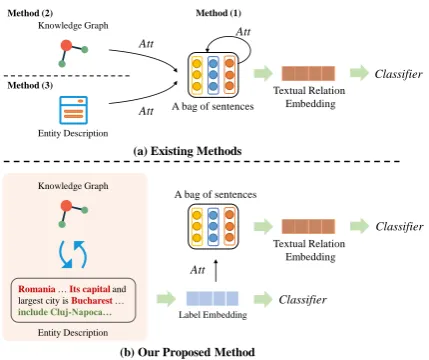
Figure 1: Illustration of comparison of existing meth-ods and our proposed method.
this relation. Thus, distant supervision can auto-matically generate a large number of labeled data without labor cost. Simultaneously, it often suf-fers from wrong labeling problem (Surdeanu et al., 2012;Zeng et al.,2015).
of potential label information. Label embeddings aim to learn representations of labels based on re-lated information. The label embeddings can be used to attend over the bag of instances for relation classification. Additionally, they don’t take advan-tage of both structural information from KGs and textual information from entity descriptions and ignore the imposed noise.
In this paper, we propose a novel multi-layer attention-based model RELE (RelationExtraction with Joint Label Embedding) to improve rela-tion extracrela-tion. Our model integrates both struc-tural information from KGs and textual informa-tion from entity descripinforma-tions with a gating mech-anism to learn label embeddings, while avoiding the imposed noise (highlighted in green) in entity descriptions with anattention mechanism. Then the label embeddings are used as another anten-tionover the bag of instances to select valid ones for improving relation extraction. Note that we also enhance the instance embedding with entity descriptions. The contributions of this paper can be summarized as follows:
• We propose a novel multi-layer attention-based model RELE to improve distantly su-pervised relation extraction with joint label embedding. The label embeddings can be used to attend over the bag of instances for relation classification.
• RELE makes full use of both structural infor-mation from KGs and textual inforinfor-mation of entity descriptions to learn label embeddings through gating integration, while avoiding the imposed noise with attention.
• Extensive experiments on two benchmark datasets have demonstrated that our model significantly outperforms state-of-the-art methods on distantly-supervised relation extraction.
2 Related Work
Our work is mainly related to distant supervision, neural relation extraction and label embedding.
Distant Supervision. Most supervised rela-tion extracrela-tion methods require large-scale labeled training data which are expensive. Distant Super-vision proposed by (Mintz et al.,2009) is an ef-fective method to automatically label large-scale training data under the assumption that if two
entities have a relation in a KG, then all sen-tences mentioning those entities express this rela-tion. The assumption does not work in all cases and causes the mislabeling problem.
MultiR (Hoffmann et al.,2011) and MIMLRE (Surdeanu et al., 2012) introduce multi-instance learning where the instances mentioning the same entity pair are processed at a bag level. How-ever, these methods rely heavily on handcrafted features.
Neural Relation Extraction. With the devel-opment of deep learning, neural networks have proven to be efficient to automatically extract valid features from sentences in recent years. Some re-searches (Zeng et al., 2014, 2015) adopt Convo-lution Neural Networks (CNN) to learn sentence representations automatically. To alleviate the mislabeling problem, attention mechanisms (Lin et al.,2016;Du et al.,2018) have been employed. Apart from that, some studies apply other relevant information to improve relation extraction (Zeng et al., 2017; Vashishth et al., 2018; Han et al., 2018b,a; Ji et al., 2017). For example, RESIDE (Vashishth et al.,2018) utilizes the available side information from knowledge bases, including en-tity types and relation alias information.Han et al. (2018a) proposed a joint representation learning framework of KGs and instances, which lever-ages the KG embeddings to select valid instances. APCNN+D (Ji et al.,2017) exploits the entity de-scriptions as background knowledge for selection of valid instances, and ignores the imposed noise.
Different from the existing works, we propose a novel multi-layer attention-based model RELE with joint label embedding. Our model makes full use of both structural information from KGs and textual information from entity descriptions to learn label embeddings through gating integration, while avoiding the imposed noise with an atten-tion mechanism. The label embeddings are then used asanother attentionover the bag of instances to select valid instances for relation classification.
a novel multi-layer attention-based model to im-prove relation extraction with joint label embed-ding.
3 Preliminaries
In this section, we briefly introduce some nota-tions and concepts used in this paper.
For convenience, we denote a KG as G =
{(h, r, t)}, which contains considerable triplets
(h, r, t)wherehandtare respectively head entity and tail entity, and r denotes the relation. Their embeddings are denoted as(h,r,t).
Formally, given a pair of entities (h, t) in a KG G and a bag of instances (sentences) B =
{s1, s2,· · · , sm}, where each instancesicontains (h, t), the task of relation extractionis to train a classifier based on B to predict the relation label
y of (h, t) from a predefined relation set. If no relation exists, we simply assign NA to it.
To improve relation extraction, we make full use of both the KG G and entity descriptions
D = {d1, d2,· · ·, dn} to learn label embeddings
which can benefit selection of valid instances. For each entity ei, we take the first paragraph of its
corresponding Wikipedia page as its description text di = {w1, w2,· · · , wl}, where wi ∈ V
de-notes the description word,lis the length andV is the vocabulary.
4 Our Proposed Model
In this section, we will detail our proposed multi-layer attention-based model RELE for relation extraction with joint label embedding. Existing methods for relation extraction take labels as inde-pendent and meaningless one-hot vectors, which cause a loss of potential label information for se-lecting valid instances. Additionally, they don’t take full advantage of both structural information from KGs and textual information from entity de-scriptions and ignore the imposed noisy informa-tion.
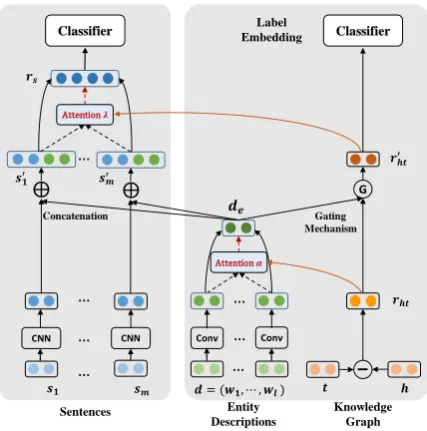
As shown in Figure 2, our model is based on a multi-layer attention, containing two parts: 1) label embedding (shown in the right) and 2) neu-ral relation classification (shown in the left) . The former makes full use of structural information from KGs and textual information from entity de-scriptions to learn label embeddings through gat-ing mechanism, while avoidgat-ing the imposed noise with an attention mechanism. The latter leverages the label embeddings as another attention over the
…
𝒅𝒆
𝒔𝒎
Entity Descriptions
𝒔𝟏 𝒕 𝒉
CNN CNN
𝒓𝒉𝒕 𝒓𝒉𝒕′ 𝒓𝒔
𝒅 = (𝒘𝟏, ⋯ , 𝒘𝒍)
Knowledge Graph Sentences
…
…
…
𝒔𝟏′ 𝒔𝒎′
…
Conv … Conv
… Attention 𝜶 Attention 𝝀
⨁ ⨁ G
Gating Mechanism Concatenation
Label
Embedding Classifier
[image:3.595.309.523.63.279.2]Classifier
Figure 2: Illustration of our multi-layer attention based model RELE.
instances to select valid instances for improving neural relation extraction. Note that we also use the entity descriptions to enhance the representa-tions of instances. We detail the two parts as fol-lows.
4.1 Joint Label Embedding
Label information plays a vital role in selecting valid instances for improving relation extraction. We make full use of both structural information from KGs (Han et al., 2018a) and textual infor-mation from entity descriptions (Ji et al.,2017) to learn label embeddings via gating integration. En-tity descriptions provide rich background knowl-edge for entities (Newman-Griffis et al.,2018) and are supposed to benefit the label embedding and relation extraction. Nevertheless, as shown in Fig-ure 1, entity descriptions may also contain irrel-evant and even misleading information. There-fore, we propose to use KG embeddings to at-tend over the entity descriptions, alleviating the imposed noise. Then a gating mechanism is used to integrate both the KGs and entity descriptions for learning label embeddings.
KG Embedding. We use TransE (Bordes et al., 2013) for KG embedding. Given a triplet(h, r, t), the model aims to learn low-dimensional represen-tations vector for entitiesh,tand the relationship
r into the same vector space, and regards a rela-tionshipr as a translation from the head entityh
be close toh+rif(h, r, t)exists. The score func-tion is defined as :
f(h, r, t) =−kh+r−tk22. (1)
Note that since the true relations in test set are un-known, we simply represent the relation by:
rht=t−h. (2)
In this way, we can also get the relation embed-dings given the entity pairs during testing.
Entity Description Embedding. Then we use the representations of relations rht as attention
over the words of an entity description to reduce the weights of noisy words. Formally, for each en-titye, we learn the representation of its description
d= (w1, w2,· · ·, wl)as follows:
xi=CNN(wi−c−1 2 ,
· · ·,wi+c−1
2 ), (3)
ˆ
xi= tanh(Wx·xi+bx), (4)
αi=
exp(ˆxi·rht)
P
i=1exp(ˆxi·rht)
, (5)
de= l
X
i=1
αixi, (6)
where CNN(·) denotes a convolution layer with window sizecover the word sequence. xi∈RDh is the hidden representation of the wordwi.Wxis
the weight matrix andbxis the bias vector. αiis
the attention weight of the wordwi, which is
com-puted based on the relation embedding rht.
Fi-nally, the text description embeddingde is
com-puted by the weighted average of words.
Gating Integration. We apply a gating mecha-nism (Xu et al.,2016) to integrate the textual entity description embeddingdeand the structural
infor-mation (entity embeddinge) from KGs:
e0=ge+ (1−g)de, (7)
whereg ∈RDw is a gating vector for integration,
e0 ∈ RDw represents the final integrated entity embedding and represents Hadamard product. Consequently, we compute the final label embed-dingl:
l=t0−h0. (8)
Label Classifier. Ideally, each label embedding is supposed to act as an “anchor” for each relation class. To achieve this goal, we consider to train
the learned label embeddings l to be easily clas-sified as the correct relation class. Therefore, we use softmax to get the predicted probabilities of the relation classes:
P(y|D, G) =Softmax(Mkl+bk), (9)
whereMkis the transformation matrix,bk is the
bias.
4.2 Neural Relation Extraction
After obtaining the embeddings of labels and en-tity descriptions, we leverage them to advance the neural relation extraction. We first use the en-tity descriptions to enhance instance embeddings. Then we leverage the label embeddings to attend over the instances to select valid instances for re-lation classification.
Instance Embedding. We enrich the repre-sentation of an instance with the pair of entity descriptions. Firstly, for each word w ∈ s =
{w1,· · · , wn}, its embedding wˆi is initialized as
follows:
ˆ
wi =wi⊕pi1⊕pi2, (10)
wherewiis the pre-trained word vector ofwi,pi1
andpi2are its position embeddings to incorporate
relative distances to two target entities into two
Dp-dimensional vectors respectively (Zeng et al.,
2014). The symbol ⊕ represents concatenation operator.
Then, we choose CNN (Zeng et al.,2014) with window sizecas our encoder to learn the instance embedding considering the text of the instance it-self.
zi=CNN( ˆwi−c−1 2 ,
· · · ,wˆi+c−1
2 ), (11)
[s]j = max{[z1]j,· · ·,[zn]j}, (12)
wheres ∈ RDhis the sentence (instance) embed-ding,[·]j is thej-th value of a vector and function maxdenotes max-pooling.
Finally, we concatenate the original instance embeddingswith the entity descriptions(dh,dt),
obtaining the new instance representations0. For-mally,
s0 =s⊕dh⊕dt. (13)
instances to reduce the weights of noisy instances in the sentence bagB ={s1,· · ·, sm}. Then the
representation of textual relation feature¯sfrom the bagBcan be calculated as weighted average of the instance embeddingss0i:
ˆsi = tanh(Wss0i+bs), (14)
λi =
exp(l·ˆsi)
Pm
j=1exp(l·ˆsi)
, (15)
¯s= m
X
i=1
λis0i, (16)
whereWsis the weight matrix andbsis the bias
vector. λiis the attention score of the instancesi,
computed based on the label embeddingl.
Relation Classifier. Finally, to compute the confidence of each relation class, we feed the rep-resentation of the textual relation¯sinto a softmax classifier after being processed by a linear trans-formation. Formally,
P(y|B) =Softmax(Ms¯s+bs), (17)
whereMs is the transformation matrix, andbsis
the bias.
4.3 Model Training
The objective function of our joint model RELE includes two parts, the loss of label classifierL1
and the loss of relation classifierL2.
Assuming that there areN bags in training set
{B1, B2,· · ·, BN}, and their corresponding
la-bels {y1, y2,· · · , yN}, we exploit cross entropy
for the loss function of label classifierL1:
L1 =−
N
X
i=1
logP(yi|D, G), (18)
The lossL1 aims to train the label embedding to
be classified to the correct relation class.
Similarly, for the loss of relation classifier L2,
we also exploit cross entropy and get:
L2 =−
N
X
i=1
logP(yi|Bi), (19)
Finally, we aim to minimize the loss functionL
with L2-norm:
minL=L1+L2+ηkΘk2, (20)
where η is the regularization coefficient and Θ
denotes the parameters in our model. Stochastic gradient descent (SGD) is used to optimize our model.
5 Experiments
5.1 Datasets
In our experiments, we evaluate our model over the NYT-FB60K dataset (Han et al., 2018a) and GIDS-FB8K dataset (Jat et al.,2018). In the fol-lowing, we detail each dataset.
• NYT-FB60K. The dataset NYT-FB60K (Han et al., 2018a) includes three parts: knowl-edge graphs (FB60K extended from Riedel dataset (Riedel et al., 2010), containing 1,324 relations, 69,512 entities, and 335,350 facts), text corpus (whose sentences are from Riedel dataset, containing 570,088 sentences, 63,696 entities, and 56 relations) and entity descriptions (which are the first paragraphs of the entities’ Wikipedia pages, containing around 80 words on average).
• FB8K. We construct the dataset GIDS-FB8K based on GIDS dataset (Jat et al., 2018). It also contains three parts: knowl-edge graphs (FB8K extended from GIDS dataset, containing 208 relations, 8,917 en-tities, and 38,509 facts), text corpus (whose sentences are from GIDS dataset, contain-ing 16,960 sentences, 14,261 entities, and 5 relations) and entity descriptions (which are the first paragraphs of the entities’ Wikipedia pages, containing around 80 words on aver-age).
5.2 Baselines
We compare our model with the state-of-the-art baselines:
• Mintz (Mintz et al.,2009). A multi-class lo-gistic regression model under distant supervi-sion.
• MultiR (Hoffmann et al., 2011). A prob-abilistic graphical model for multi-instance learning.
• MIMLRE (Surdeanu et al.,2012). A graph-ical model for multi-instance multi-label learning.
• CNN+ATT (Lin et al.,2016). A CNN model with instance-level attention.
0.00 0.05 0.10 0.15 0.20 0.25 0.30 0.35 0.40
Recall
0.3 0.4 0.5 0.6 0.7 0.8 0.9 1.0
Precision
RELE JointD+KATT APCNN+D MIMLRE
Mintz MultiR CNN+ATT RESIDE
(a) NYT-FB60K Dataset
0.0 0.2 0.4 0.6 0.8 1.0
Recall
0.2 0.3 0.4 0.5 0.6 0.7 0.8 0.9 1.0
Precision RELE RESIDE JointD+KATT CNN+ATT APCNN+D
[image:6.595.91.499.76.226.2](b) GIDS-FB8K Dataset
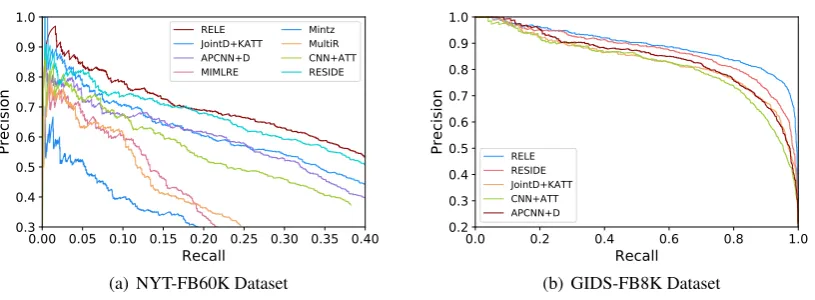
Figure 3: Precision-recall curves for different methods. RELE achieves higher precision over the entire range of recall compared to all the baselines on both datasets.
Parameter Value
Word/Entity/Relation DimensionDw 50
Position DimensionDp 5
Hidden Layer DimensionDh 230
Kernel Sizec 3
Learning Rateα 0.5
Regularization Coefficientη 0.0001
Dropout Probabilityp 0.5
Table 1: Parameter Settings.
• JointD+KATT (Han et al., 2018a). A joint model for knowledge graph embedding and relation extraction.
• Reside (Vashishth et al.,2018). A neural net-work based model which makes use of rel-evant side information and employs Graph Convolution Networks for encoding syntac-tic information of instances.
5.3 Evaluation Metrics
Following previous studies (Lin et al., 2016), our model is evaluated held-out, which compares the relations discovered from test corpus with those in Freebase. We report the Precision-Recall curve and top-N precision (P@N) metric for NYT-FB60K dataset.
For GIDS-FB8K dataset, we report the Precision-Recall curve, F1 score and Mean Av-erage Precision (MAP). We do not use the top-N precision (P@N) metric for the dataset which is small containing only 5 relation classes.
5.4 Parameter Settings
For all the models, we use the pre-trained word embeddings with word2vec tool∗ on NYT corpus for initialization. The embeddings of entities men-tioned in datasets are pre-trained through TransE model. We select the learning rate α among
{0.1,0.01,0.005,0.001} for minimizing the loss. For other parameters, we simply follow the set-tings used in (Lin et al.,2016;Han et al.,2018a) so that it can be fairly compared with these base-lines. Table1shows all the parameters used in our experiment.
5.5 Experiment Results
5.5.1 Precision-Recall Curves on Both Datasets
Figure 3 shows the comparison results in terms of Precision-Recall Curves on NYT-FB60K and GIDS-FB8K datasets. Overall, we observe that: (1) As shown in Figure3(a), the neural network based approaches have more obvious advantages than Mintz, MultiR, and MIMLRE, illustrating the limitation of human-designed features and the ad-vancement of neural networks in relation extrac-tion. (2) APCNN+D using entity descriptions, and JointD+KATT exploiting KGs both outper-form CNN+ATT on both datasets, showing that entity descriptions and KGs are both useful for im-proving the performance of relation extraction un-der distant supervision. RESIDE achieves better performance than APCNN+D and JointD+KATT. It is probably because that RESIDE utilizes more available side information, including entity types and relation alias information. (3) Our model
∗
Test Setttings One Two All
P@N(%) 100 300 500 Mean 100 300 500 Mean 100 300 500 Mean
CNN+ATT 67.3 61.1 56.5 61.6 73.3 62.1 53.5 63.0 74.2 62.4 55.9 64.1 APCNN+D 78.0 67.7 60.6 68.7 77.0 63.3 55.6 65.3 77.0 66.7 63.0 68.9 JointD+KATT 80.0 70.0 64.0 71.3 81.0 67.0 59.6 69.2 84.0 68.7 63.7 71.0 RESIDE 79.0 67.6 57.4 68.0 83.0 70.6 62.6 72.0 84.0 78.5 69.8 77.4
[image:7.595.72.539.64.180.2]RELE 87.0 76.6 67.0 76.8 88.0 73.3 63.2 78.7 88.0 78.6 69.8 78.8
Table 2: Evaluation results P@N of different models using different number of sentences in bags on NYT-FB60K dataset. Here,One,TwoandAllrepresent the number of sentences randomly selected from a bag.
JointD+KATT APCNN+D RESIDE RELE 73
76 79 82 85 88
F1(%) MAP(%)
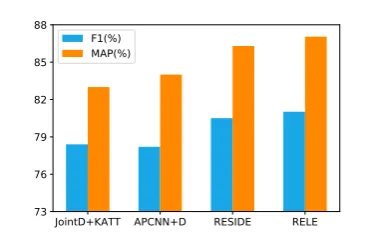
Figure 4: Comparison on GIDS-FB8K dataset.
RELE achieves the best performance compared to all the baselines. We believe the reason is that we make use of potential label information through joint label embedding. The learned label embed-dings are of high quality since we fully exploit both the structural information from KGs and tex-tual information from texts via gating integration while avoiding the imposed noise by an attention mechanism.
5.5.2 P@N Evaluation on NYT-FB60K
Dataset
As shown in Table 2, we report Precision@N of different neural network based approaches on NYT-FB60K dataset. To verify the performance of our model on those entity pairs with few in-stances, we randomly select one, two and all instances for each entity pair, following previ-ous studies (Du et al., 2018; Vashishth et al., 2018). As we can observe: (1) APCNN+D and JointD+KATT both outperform CNN+ATT in all cases, demonstrating the effectiveness of entity de-scriptions and KGs. RESIDE achieves better per-formance than APCNN+D and JointD+KATT by incorporating more side information (e.g., entity types). (2) Our model RELE significantly out-performs all the baselines. The reason is that
P@N(%) 100 300 500 Mean
RELE w/o LE 74.2 62.4 55.9 64.1 RELE w/o ATTe 82.0 75.6 69.6 75.7
RELE w/o LC 81.0 74.0 69.0 74.7
[image:7.595.308.526.236.314.2]RELE 88.0 78.6 69.8 78.8
Table 3: Evaluation results P@N of variant models on NYT-FB60K dataset.
our model learns high quality of label embeddings which play a critical role in relation extraction.
5.5.3 Results on GIDS-FB8K Dataset
Based on the results on the NYT-FB60K dataset, we choose APCNN+D, JointD+KATT and RE-SIDE as representative baselines to compare against our models on the GIDS-FB8K dataset in terms of F1 and MAP. As shown in Figure4, our model consistently achieves better performance, which verifies the effectiveness of our model with joint label embedding. The overall results on GIDS-FB8K dataset show that our model can be well applied to smaller-scale datasets.
5.5.4 Comparison of Variant Models
In order to verify the effectiveness of different modules of our model, we design three variant models:
• RELE w/o LE removes the label embed-ding from RELE, which degenerates to CNN+ATT.
• RELE w/o ATTe removes the attention of
[image:7.595.85.273.237.355.2]𝑠1: In Bucharest, Romania, president Traian Basescu said Sunday night that the entry into …
𝑠2: Last year, it opened offices in Warsaw and Bucharest, the capital of Romania.
𝑠3: … by the presence of two films from Romania, the way I spent … east of Bucharest…
𝑠4:… Ervin a of New York City , on April 18th , age 98 , formerly of Bucharest, Romania.
Triplet(Romania, Bucharest, /location/country/capital)
JointD+ KATT(×)
RELE (√) APCNN+D
[image:8.595.78.525.62.148.2](×) 0 1
Figure 5: A case study for predicting the relation between “Bucharest” and “Romania”. The baselines all predict wrongly while our model gives the right result. The left shows the weights assigned to different sentences by different models. Our model always gives higher weights to correct sentences (shown in red).
Romania is a country located at the crossroads of Central , Eastern , and Southeastern Europe . It borders the Black Sea to the southeast , … , Romania is the 12th largest country and also the 7th most populous ... Its capital and largest city is Bucharest , and other major urban areas include Cluj-Napoca ...
(a) Description text of “Romania”
x
Bucharest is the capital and largest city of Romania , as well as its cultural , industrial , and financial centre . It is located in the southeast of the country , … ,on the banks of the Dambovita River , less than 60 km north of the Danube River and the Bulgarian border.
x (b) Description text of “Bucharest”
Figure 6: Visualization of attention values of words in the descriptions of the entities “Romania” and “Bucharest”.
• RELE w/o LC removes the label classifier. It does not train the label embeddings to be classified to the correct classes.
As shown in Table 3, without label embedding, the performance of RELE w/o LE drops signifi-cantly (more than 10%). It demonstrates the ef-fectiveness of our joint label embedding. If we do not consider the imposed noise in the entity de-scriptions, the performance of RELE w/o ATTe
decreases by around 3% on mean P@N. It demon-strates that the attention of KGs over entity de-scriptions is important for learning high-quality la-bel embeddings. We also explore the performance of RELE w/o LC which does not train the label embeddings to be classified to the correct classes and find that label classifier plays a critical role in label embedding. The performance decreased by around 4% on mean P@N, without label classifier.
5.5.5 Case Study
Figure 5 illustrates an example from the test set of NYT-FB60K. As we can observe, rep-resentative attention-based baselines APCNN+D and JointD+KATT both predict wrong rela-tion labels for the entities, while our model RELE correctly predicts the relation label “ /loca-tion/country/capital”. That is because the base-lines assign relatively low weights to correct sen-tences (s1ands2) and achieve inferior
representa-tions of the textual relation for classification. Our model RELE assigns higher weights to all the cor-rect sentences s1, s2 and s4, demonstrating that
RELE learns high-quality label embeddings. We also provide the insights of the attention of KGs over entity descriptions about “Romania” and “Bucharest”. As shown in Figure 6, the words “capital”, “largest”. and “centre” which are re-lated to the relation are given higher weights. It demonstrates that the attention of KGs over entity descriptions can help reduce the noise in entity de-scriptions and thus improve the label embeddings.
6 Conclusion
Acknowledgement
This work is supported by the National Natural Science Foundation of China (No. 61806020, 61772082, 61702296), the National Key Re-search and Development Program of China (2017YFB0803304), the Beijing Municipal Nat-ural Science Foundation (4182043), the CCF-Tencent Open Fund, and the Fundamental Re-search Funds for the Central Universities.
References
Zeynep Akata, Florent Perronnin, Za¨ıd Harchaoui, and Cordelia Schmid. 2016. Label-embedding for image classification. IEEE Transactions on Pattern Analy-sis and Machine Intelligence, 38:1425–1438.
Antoine Bordes, Nicolas Usunier, Alberto Garcia-Duran, Jason Weston, and Oksana Yakhnenko. 2013. Translating embeddings for modeling multi-relational data. InNIPS, pages 2787–2795.
Jinhua Du, Jingguang Han, Andy Way, and Dadong Wan. 2018. Multi-level structured self-attentions for distantly supervised relation extraction. InEMNLP, pages 2216–2225.
Xiaocheng Feng, Jiang Guo, Bing Qin, Ting Liu, and Yongjie Liu. 2017. Effective deep memory networks for distant supervised relation extraction. InIJCAI, pages 4002–4008.
Xu Han, Zhiyuan Liu, and Maosong Sun. 2018a. Neu-ral knowledge acquisition via mutual attention be-tween knowledge graph and text. In AAAI, pages 4832–4839.
Xu Han, Pengfei Yu, Zhiyuan Liu, Maosong Sun, and Peng Li. 2018b. Hierarchical relation extraction with coarse-to-fine grained attention. In EMNLP, pages 2236–2245.
Raphael Hoffmann, Congle Zhang, Xiao Ling, Luke Zettlemoyer, and Daniel S Weld. 2011. Knowledge-based weak supervision for information extraction of overlapping relations. InACL, pages 541–550.
Sharmistha Jat, Siddhesh Khandelwal, and Partha Talukdar. 2018. Improving distantly supervised re-lation extraction using word and entity based atten-tion. arXiv preprint arXiv:1804.06987.
Guoliang Ji, Kang Liu, Shizhu He, Jun Zhao, et al. 2017. Distant supervision for relation extraction with sentence-level attention and entity descriptions. InAAAI, pages 3060–3066.
Yankai Lin, Shiqi Shen, Zhiyuan Liu, Huanbo Luan, and Maosong Sun. 2016. Neural relation extraction with selective attention over instances. InACL, vol-ume 1, pages 2124–2133.
Mike Mintz, Steven Bills, Rion Snow, and Dan Juraf-sky. 2009. Distant supervision for relation extrac-tion without labeled data. In ACL/IJCNLP, pages 1003–1011.
Denis Newman-Griffis, Albert M Lai, and Eric Fosler-Lussier. 2018. Jointly embedding entities and text with distant supervision.ACL 2018, page 195.
Sebastian Riedel, Limin Yao, and Andrew McCallum. 2010. Modeling relations and their mentions with-out labeled text. InECML/PKDD, pages 148–163.
Jose A Rodriguez-Serrano, Albert Gordo, and Florent Perronnin. 2015. Label embedding: A frugal base-line for text recognition. International Journal of Computer Vision, 113(3):193–207.
Mihai Surdeanu, Julie Tibshirani, Ramesh Nallapati, and Christopher D Manning. 2012. Multi-instance multi-label learning for relation extraction. In
EMNLP-CoNLL, pages 455–465.
Shikhar Vashishth, Rishabh Joshi, Sai Suman Prayaga, Chiranjib Bhattacharyya, and Partha Talukdar. 2018. Reside: Improving distantly-supervised neural rela-tion extracrela-tion using side informarela-tion. InEMNLP, pages 1257–1266.
Guoyin Wang, Chunyuan Li, Wenlin Wang, Yizhe Zhang, Dinghan Shen, Xinyuan Zhang, Ricardo Henao, and Lawrence Carin. 2018. Joint embedding of words and labels for text classification. InACL, volume 1, pages 2321–2331.
Jiacheng Xu, Kan Chen, Xipeng Qiu, and Xuanjing Huang. 2016. Knowledge graph representation with jointly structural and textual encoding. In IJCAI, pages 1318–1324.
Daojian Zeng, Kang Liu, Yubo Chen, and Jun Zhao. 2015. Distant supervision for relation extraction via piecewise convolutional neural networks. In
EMNLP, pages 1753–1762.
Daojian Zeng, Kang Liu, Siwei Lai, Guangyou Zhou, and Jun Zhao. 2014. Relation classification via con-lutional deep neural network. In COLING, pages 2335–2344.
Wenyuan Zeng, Yankai Lin, Zhiyuan Liu, and Maosong Sun. 2017. Incorporating relation paths in neural relation extraction. InEMNLP, pages 1768– 1777.
Yuyu Zhang, Hanjun Dai, Zornitsa Kozareva, Alexan-der J Smola, and Le Song. 2018. Variational reason-ing for question answerreason-ing with knowledge graph. InAAAI, pages 6069–6076.